Thyroglobulin test: normal range, high Tg and after surgery
Thyroglobulin (Tg) comes from thyroid tissue. Here's the normal range with a thyroid, the targets after thyroid-cancer surgery, and why TgAb matters.
Thyroglobulin (Tg) is the protein your thyroid builds its hormones on. Thyroid cells leak a little of it into your blood, so the level mostly reflects how much thyroid tissue you have, how hard TSH is driving it, and whether the gland is inflamed.12 Its main job in medicine comes after thyroid-cancer surgery. With the thyroid removed, Tg should fall close to zero, so a Tg that stays up or climbs again is an early sign of leftover or returning cancer.32
The short version
- With a thyroid in place, a typical adult range is about 1.3–32 ng/mL (ARUP's adult range). Studies of healthy adults put the upper limit between about 25 and 38 ng/mL, depending on the assay.456
- High with a thyroid in place usually means more thyroid tissue or more stimulation: an overactive thyroid, thyroiditis, a goiter or a recent needle biopsy. Doctors use Tg to follow a known thyroid cancer, not to find one.273
- After total thyroidectomy and radioactive iodine, the American Thyroid Association (ATA) calls a Tg under 0.2 ng/mL (measured on thyroid-hormone pills) an excellent response, and over 1 ng/mL with clear imaging a biochemical incomplete response.3
- Always read it with thyroglobulin antibodies (TgAb). About 1 in 5 people with thyroid cancer have them, and they can make Tg read falsely low.3
What thyroglobulin is
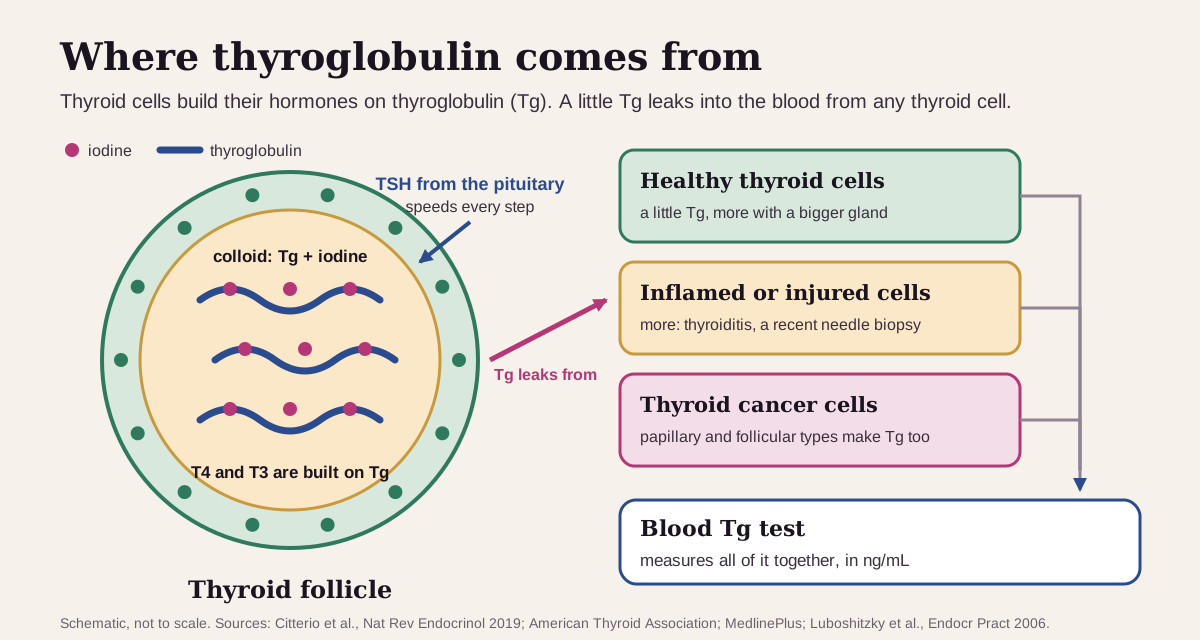
Thyroglobulin is a large protein made only by thyroid cells.9 The cells pack it into the tiny sacs (follicles) that make up the gland. There, iodine is attached to its tyrosine building blocks, and pairs of those iodinated tyrosines join to form the thyroid hormones T4 and T3. TSH, the pituitary's signal to the thyroid, speeds up the whole process.1 (More on the chemistry at the end.)
A small amount of Tg escapes into your blood from any thyroid cell: healthy, inflamed or cancerous.82 That's the key to reading it. The same number means different things depending on how much thyroid you have left.
The ATA files Tg apart from the main thyroid-function tests, TSH and free T4.8 Its main use is follow-up after treatment for differentiated thyroid cancer (the papillary and follicular types). The ATA advises against measuring it before surgery to judge whether a nodule is cancer.3
What's a normal thyroglobulin?
It depends on whether you still have a thyroid.
With a thyroid in place, start with the range printed on your report. Methods differ, so ranges differ: even with a shared calibration standard, two methods can report values up to twofold apart on the same sample.10
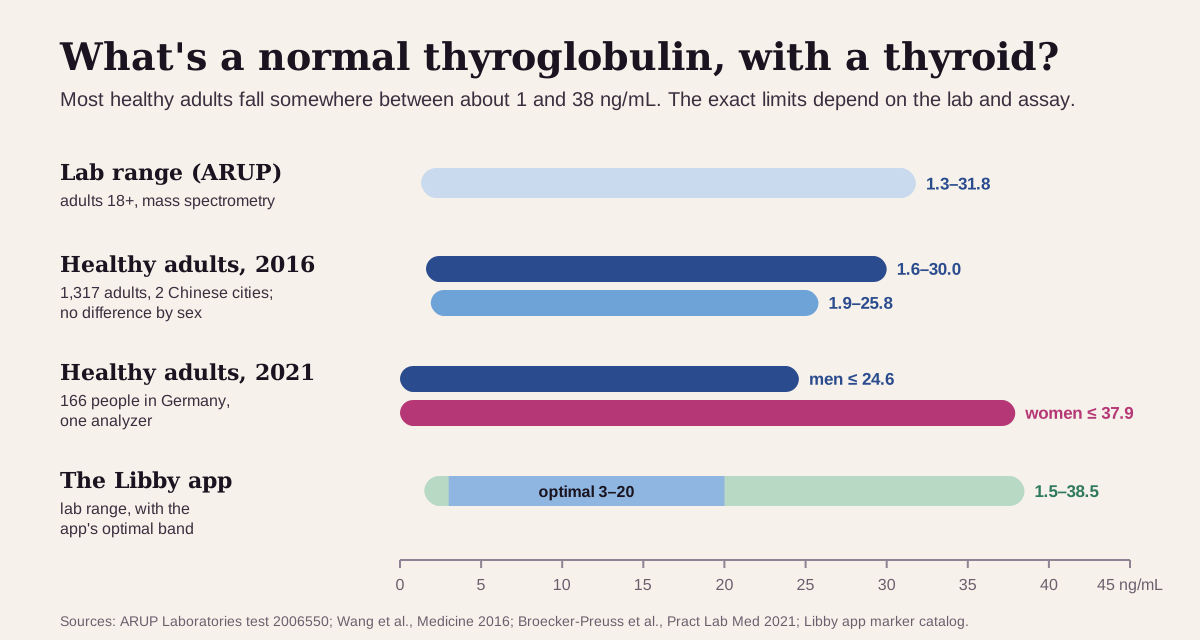
- ARUP Laboratories, a commercial reference lab, lists 1.3–31.8 ng/mL for adults 18 and older, on a mass-spectrometry method.4
- A study of 1,317 adults free of thyroid disease in two Chinese cities found ranges of 1.6–30.0 and 1.9–25.8 ng/mL, with no difference between men and women.5
- A German study of 166 healthy people put the upper limit at 37.9 ng/mL for women and 24.6 for men on one analyzer.6
Tg runs higher with a larger thyroid or a goiter, and it moves with TSH and TgAb too.5
After thyroid removal, the ATA judges Tg against its own, much lower cutoffs, shown in the next section. With no thyroid tissue left, the expected Tg is close to zero.32
"Optimal" thyroglobulin: it depends on how much thyroid you have
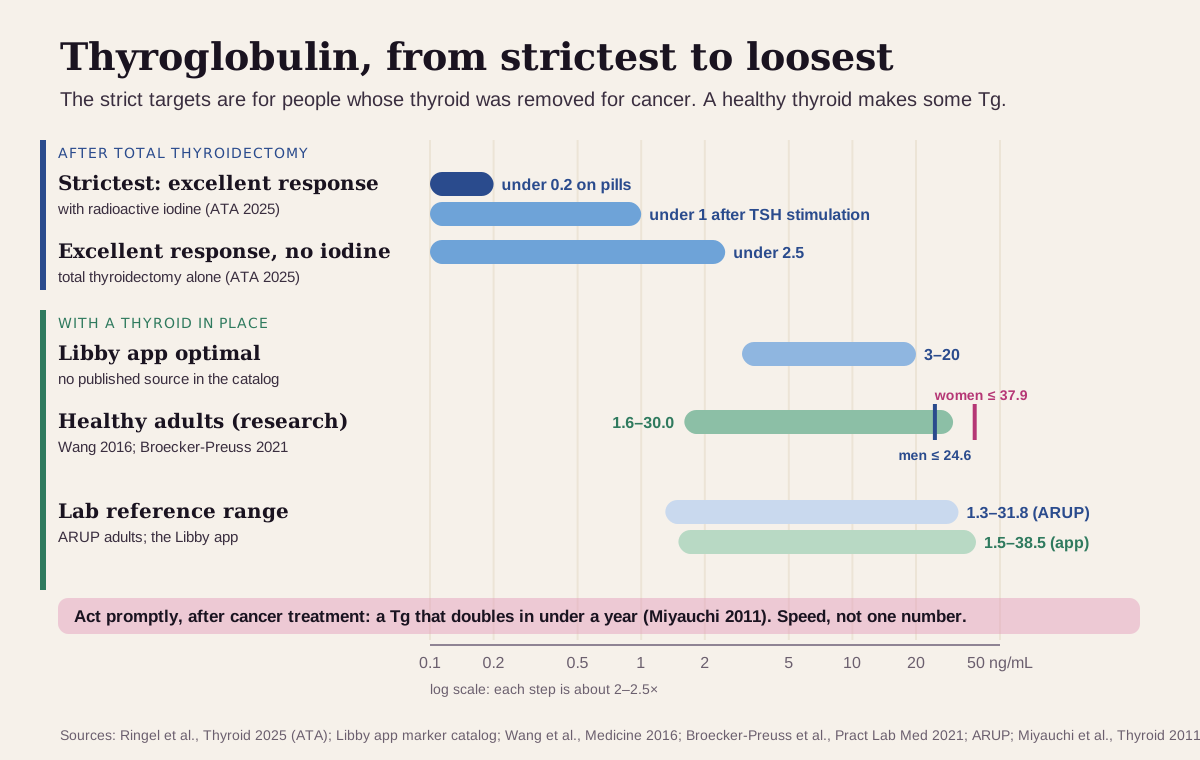
For most markers, "optimal" means a tighter band inside the normal range. For Tg, the strictest targets belong to people whose thyroid was removed for cancer. For everyone else, a healthy gland is supposed to make some. Here's the ladder, from strictest to loosest:
| Target | Thyroglobulin | Applies to | Who uses it |
|---|---|---|---|
| Strictest (excellent response) | under 0.2 ng/mL on thyroid-hormone pills; under 1 after TSH stimulation | total thyroidectomy plus radioactive iodine | American Thyroid Association3 |
| Excellent response, no radioactive iodine | under 2.5 ng/mL | total thyroidectomy alone | American Thyroid Association3 |
| Libby app optimal | 3–20 ng/mL | a thyroid in place | The optimal range shown in the Libby app. The app's catalog records no published source for this band |
| Research "healthy" limits | about 1.6–30 ng/mL; upper limit 24.6 (men) and 37.9 (women) on one assay | a thyroid in place | Wang et al.;5 Broecker-Preuss et al.6 |
| Lab reference range | 1.3–31.8 ng/mL (ARUP, adults); 1.5–38.5 in the Libby app | a thyroid in place | ARUP;4 the Libby app's lab range |
| Act promptly | a Tg that doubles in under a year | after cancer treatment | Miyauchi et al.11 |
Why the low targets after surgery matter:
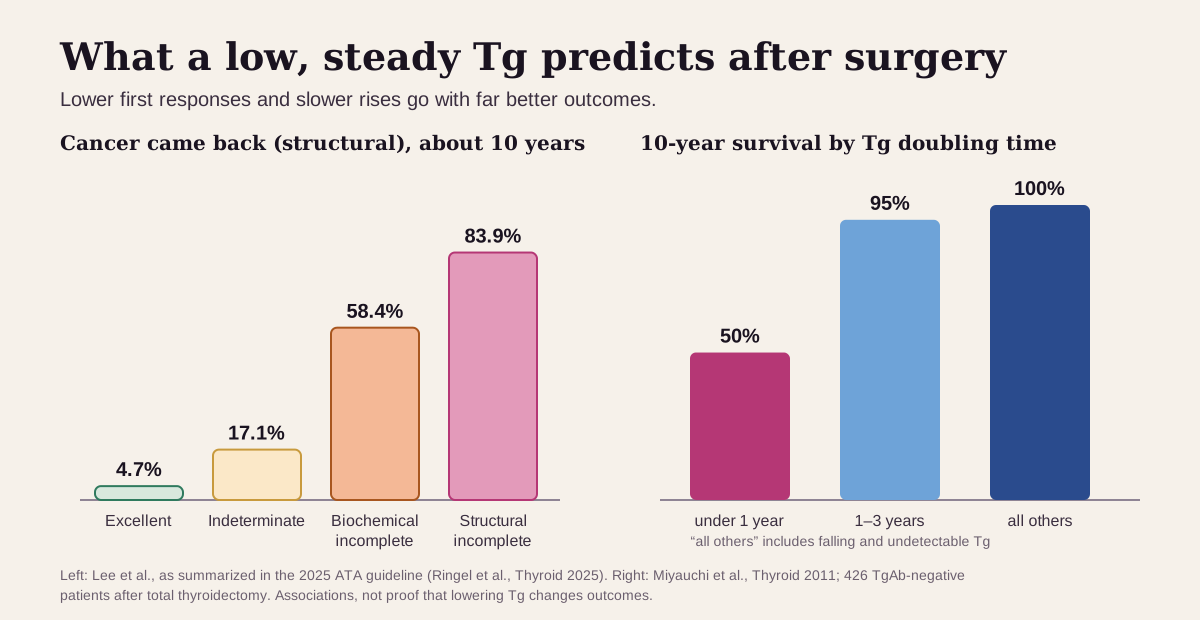
- In one study summarized in the 2025 ATA guideline, patients were followed for about 10 years after their first response to treatment. The cancer came back in 4.7% of those with an excellent response, versus 17.1% with an indeterminate response, 58.4% with a biochemical incomplete response (Tg up, imaging clear) and 83.9% with a structural one.3
- Speed matters as much as level. In 426 patients in Japan after total thyroidectomy, those whose Tg doubled in under a year had 50% thyroid-cancer survival at 10 years, versus 95% when doubling took 1–3 years and 100% in every other group, including those whose Tg was falling or undetectable.11
Keep "optimal" in perspective. With a thyroid in place, a lower Tg mostly signals a smaller or quieter gland, and Tg climbs when iodine intake is too low and when it's too high. In 2,512 schoolchildren in 12 countries, the curve was U-shaped, and a population median under 13 µg/L marked adequate iodine.12 After thyroid-cancer surgery the logic flips: low and steady is the goal, judged on the ATA's cutoffs rather than on any intact-thyroid band.3
What a high thyroglobulin usually means
The first question is whether you still have a thyroid. The answer changes what a number means.
With a thyroid in place
A high Tg usually means more thyroid tissue, more stimulation or more leakage. The usual suspects:
- An overactive thyroid (hyperthyroidism, most often Graves' disease), which makes more Tg.2
- Thyroiditis, inflammation that damages thyroid cells and spills Tg and stored hormone into the blood. The rise is temporary.213
- A larger thyroid or a goiter. Tg tracks thyroid size.5
- A recent needle biopsy. After fine-needle aspiration, Tg rose in 22 of 25 people, and it took up to 15 days to settle.7
- Too little or too much iodine in the diet.12
- Thyroid cancer. Papillary and follicular cancers make Tg too, but so many things raise it that doctors don't use Tg to diagnose cancer.23
A low Tg with a thyroid in place usually points to an underactive thyroid, too much thyroid-hormone medicine, or TgAb pulling the result down.21310
After thyroid-cancer treatment
Here the ATA's response categories do the work. The cutoffs depend on the surgery, whether you had radioactive iodine, and whether TSH was raised for the test:3
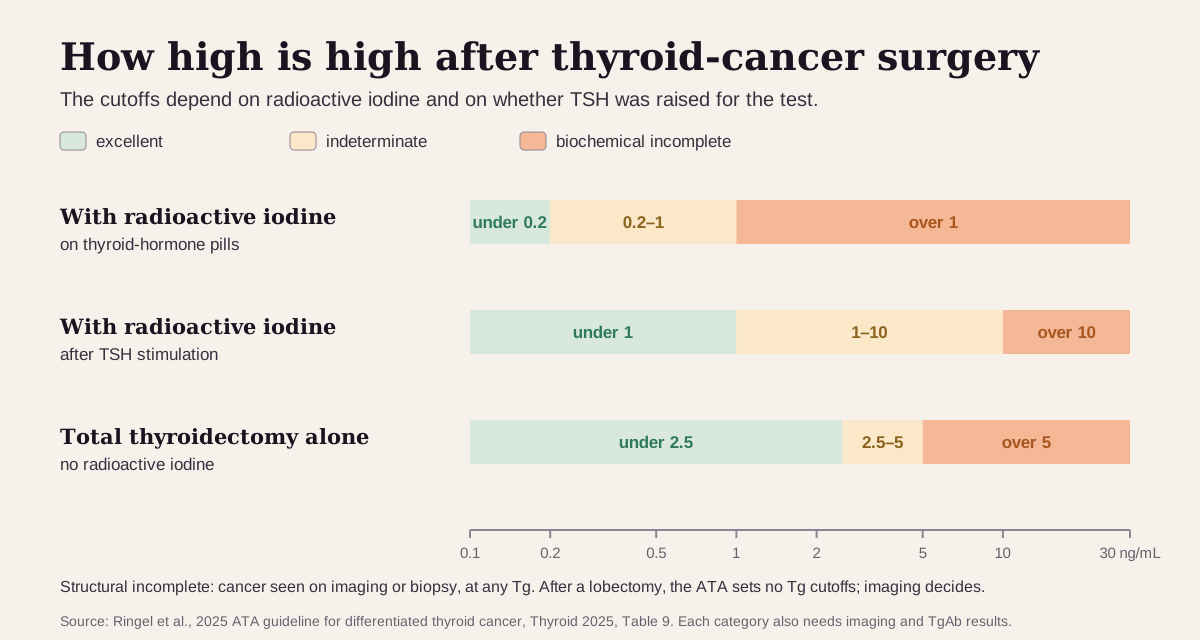
- Excellent: Tg under 0.2 ng/mL on thyroid-hormone pills (under 1 after TSH stimulation; under 2.5 without radioactive iodine), with clear imaging.
- Indeterminate: Tg of 0.2–1 (stimulated 1–10; without radioactive iodine 2.5–5), unclear findings on imaging, or TgAb that's present but stable or falling.
- Biochemical incomplete: Tg above 1 (stimulated above 10; without radioactive iodine above 5), or rising TgAb, with clear imaging.
- Structural incomplete: cancer seen on imaging or biopsy, whatever the Tg.3
After a lobectomy (half the thyroid removed), the remaining lobe keeps making Tg, and the ATA sets no Tg cutoffs for it; imaging decides.3
A detectable Tg after surgery can come from leftover healthy thyroid, a raised TSH, persistent or returning cancer, or a lab artifact. Heterophile antibodies (antibodies that stick to the test's reagents) can make Tg read falsely high.103
Get care promptly if your Tg keeps rising on repeat tests after thyroid-cancer treatment, or if you notice a new lump in your neck, trouble breathing or swallowing, or hoarseness that won't go away.314
Thyroglobulin reads best next to its neighbors
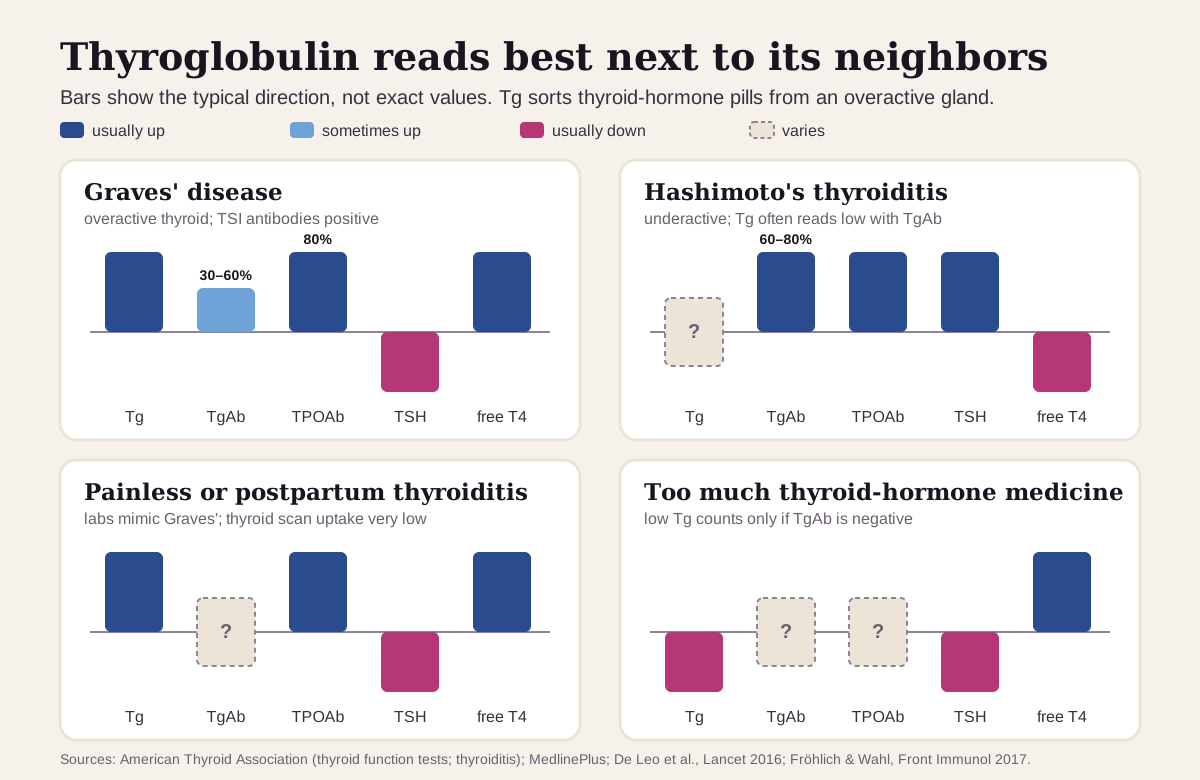
With a thyroid in place, read Tg with TgAb, TPO antibodies (TPOAb), TSH and free T4.8 Tg earns its place in one spot above all: telling too much thyroid-hormone medicine apart from a thyroid that's making too much on its own.13
| If you see… | It often points to… |
|---|---|
| TSH low, free T4 high, Tg high, TPOAb often up, TSH-receptor antibodies (TSI) positive | an overactive thyroid, most often Graves' disease. TPOAb is found in about 80% of people with it138216 |
| TSH high, free T4 low, TPOAb and TgAb up | Hashimoto's thyroiditis, the most common cause of an underactive thyroid. TgAb shows up in 60–80% of people with it81516 |
| The same labs as Graves', but very low uptake on a radioactive-iodine thyroid scan | painless or postpartum thyroiditis, which leaks stored hormone for 1–3 months, can swing to underactive, and in about 80% of people is back to normal within 12–18 months1315 |
| TSH low, free T4 high, Tg low, TgAb negative | too much thyroid hormone taken as medicine1310 |
| After total thyroidectomy: Tg undetectable but TgAb positive | Tg may be falsely low; the TgAb trend and imaging carry more weight310 |
| After total thyroidectomy: Tg rising on repeat tests | possible persistent or returning cancer; the ATA calls for more imaging3 |
How fast thyroglobulin changes
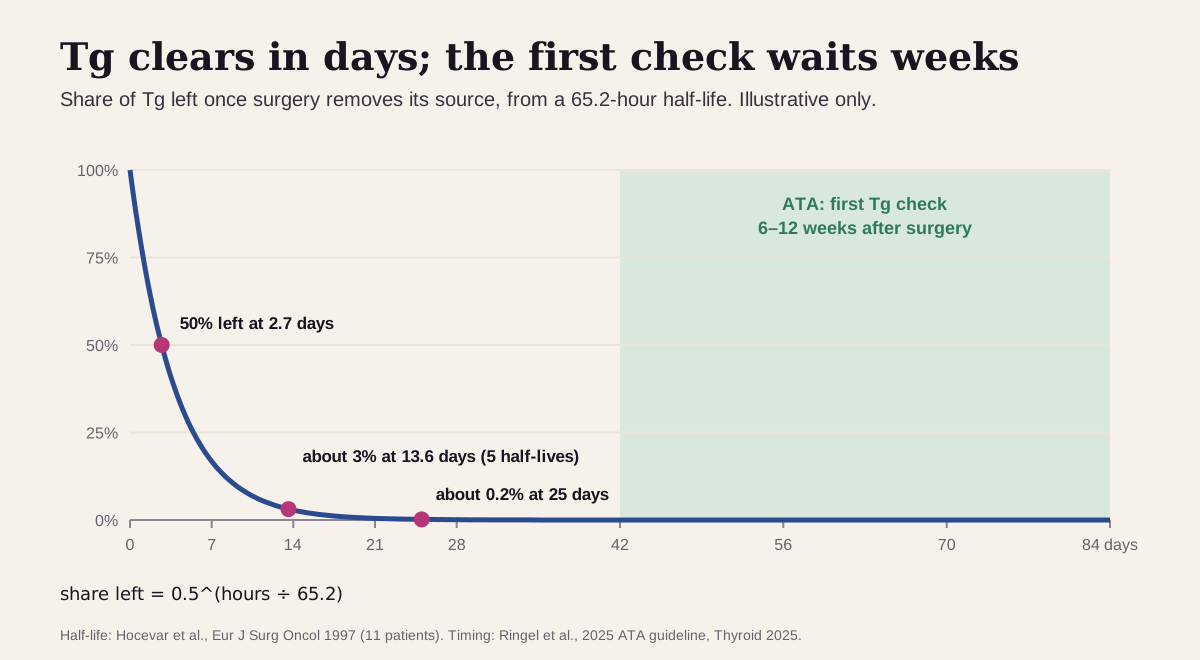
Tg clears in days, not hours. Its half-life in the blood is about 65 hours. In a small study of 11 people, Tg took about 25 days after thyroid surgery to fall below 5–10 ng/mL.9
What that means in practice:
- The first check after surgery waits. The ATA recommends measuring Tg 6–12 weeks after total thyroidectomy.3
- A needle biopsy raises it for up to two weeks.7
- Small changes can be noise. In 19 healthy volunteers tested weekly for five weeks, Tg varied about 15% within each person, and a change had to pass about 43% to count as real.17
- Same lab, same assay. Methods can differ up to twofold, so the ATA recommends following Tg with the same manufacturer's assay, and the same lab when possible.310
- Trends beat snapshots. In Miyauchi's study, how fast a detectable Tg doubled was the only independent predictor of survival once stage, age and sex were accounted for.11
Going deeper: how thyroglobulin builds thyroid hormone
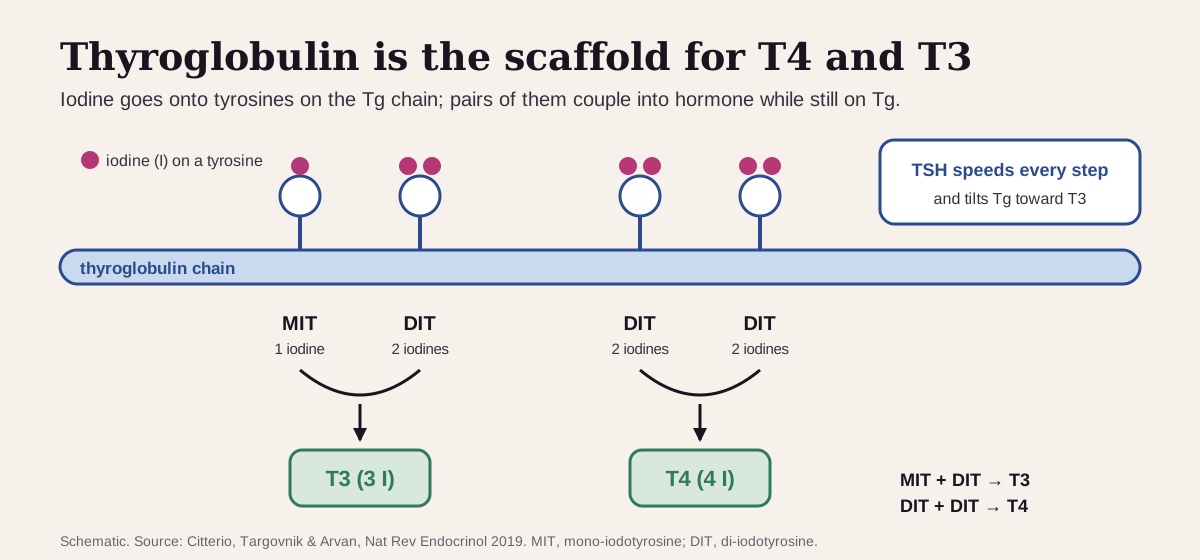
Tg is a scaffold. Inside the follicle, iodine is attached to some of its tyrosine side chains, making mono-iodotyrosine (MIT) and di-iodotyrosine (DIT). Two DITs couple to make T4, and one MIT plus one DIT make T3. The hormones are built while still part of the Tg molecule.1
TSH turns up the whole assembly line. It also changes Tg so that it makes relatively more T3, a shift that matters in iodine deficiency and Graves' disease. Faults in the TG gene itself cause congenital hypothyroidism: 167 different mutations have been described.1
Why TgAb matters so much. Most labs measure Tg with immunoassays, which use antibodies to grab the protein. A patient's own TgAb can get in the way and make Tg read falsely low, so TgAb should be measured in every sample tested for Tg.10 Mass spectrometry (LC-MS/MS) sidesteps some of that interference but has low sensitivity, so imaging still leads when TgAb is present.3
Questions worth asking
- Which Tg cutoffs apply to me: a thyroid in place, a lobectomy, or a total thyroidectomy with or without radioactive iodine?
- Was this Tg drawn on thyroid-hormone pills or after TSH stimulation?
- What was my TgAb on the same sample, and is it rising, stable or falling?
- Was this run on the same lab and assay as my last result?
- What's my ATA response category now, and what would change it?
- If my Tg is rising, how fast is it doubling, and what imaging comes next?
FAQ
What is a normal thyroglobulin level? With a thyroid in place, typical adult ranges run from about 1.3 to 32 ng/mL, depending on the lab.45 After total thyroidectomy and radioactive iodine, the ATA's excellent-response target is under 0.2 ng/mL on thyroid-hormone pills.3
Does a high thyroglobulin mean cancer? With a thyroid in place, usually not. An overactive or inflamed thyroid, a goiter or a recent biopsy are common reasons, and doctors don't use Tg to diagnose cancer.27 After thyroid-cancer treatment, a rising Tg calls for prompt follow-up and imaging.3
Why do I need a thyroglobulin antibody test too? About 1 in 5 people with thyroid cancer have TgAb, and it can make Tg read falsely low. TgAb should be measured in every sample tested for Tg.310
How soon after thyroid surgery should thyroglobulin be checked? The ATA recommends 6–12 weeks after total thyroidectomy. Tg's half-life is about 65 hours, so what surgery released takes weeks to clear.39
This guide is for education. It can't diagnose you or replace care from a clinician who knows your history.
Footnotes
-
Citterio CE, Targovnik HM, Arvan P. The role of thyroglobulin in thyroid hormonogenesis. Nat Rev Endocrinol. 2019;15(6):323–338. Iodination of Tg tyrosines to MIT and DIT, coupling to T4 and T3, TSH regulation, and 167 TG mutations behind congenital hypothyroidism. PubMed ↩ ↩2 ↩3 ↩4 ↩5 ↩6
-
National Library of Medicine. Thyroglobulin. MedlinePlus. What the test is used for, which thyroid conditions raise or lower it, and why it's used to follow cancer rather than diagnose it. MedlinePlus ↩ ↩2 ↩3 ↩4 ↩5 ↩6 ↩7 ↩8 ↩9 ↩10 ↩11 ↩12 ↩13
-
Ringel MD, Sosa JA, Baloch Z, et al. 2025 American Thyroid Association Management Guidelines for Adult Patients with Differentiated Thyroid Cancer. Thyroid. 2025;35(8):841–985. The U.S. specialty guideline. Source for the response criteria (Table 9), the 6–12 week timing, TgAb in about 20% of patients, falsely low immunoassay results, same-assay follow-up, the lobectomy position and the recurrence rates by response. PMC ↩ ↩2 ↩3 ↩4 ↩5 ↩6 ↩7 ↩8 ↩9 ↩10 ↩11 ↩12 ↩13 ↩14 ↩15 ↩16 ↩17 ↩18 ↩19 ↩20 ↩21 ↩22 ↩23 ↩24 ↩25 ↩26 ↩27 ↩28 ↩29 ↩30
-
ARUP Laboratories. Thyroglobulin by LC-MS/MS (test 2006550). Laboratory test directory, accessed September 23, 2026. Reference interval for ages 18 and older: 1.3–31.8 ng/mL; lower limit of detection 0.5 ng/mL. ARUP is a commercial reference laboratory, and the range applies to its own method. aruplab.com ↩ ↩2 ↩3 ↩4 ↩5 ↩6
-
Wang Z, Zhang H, Zhang X, et al. Serum thyroglobulin reference intervals in regions with adequate and more than adequate iodine intake. Medicine (Baltimore). 2016;95(48):e5273. 1,317 adults free of thyroid disease; ranges of 1.6–30.0 and 1.9–25.8 ng/mL, no sex difference. PMC ↩ ↩2 ↩3 ↩4 ↩5 ↩6 ↩7 ↩8
-
Broecker-Preuss M, Mehnert I, Gilman E, et al. Evaluation of a new automated assay for high-sensitivity thyroglobulin measurement and comparison with two established high-sensitivity thyroglobulin assays. Pract Lab Med. 2021;26:e00250. 166 healthy people; upper limits of 37.93 ng/mL (women) and 24.59 (men) on the LIAISON Tg II Gen assay. PMC ↩ ↩2 ↩3 ↩4 ↩5
-
Luboshitzky R, Lavi I, Ishay A. Serum thyroglobulin levels after fine-needle aspiration of thyroid nodules. Endocr Pract. 2006;12(3):264–269. Tg rose in 22 of 25 patients after FNA and returned to baseline by 15 days. PubMed ↩ ↩2 ↩3 ↩4
-
American Thyroid Association. Thyroid Function Tests. Patient brochure. TSH and free T4 patterns in hyper- and hypothyroidism, the two common thyroid antibodies, the stimulatory TSH-receptor antibody (TSI) in Graves' disease, and Tg as a non-primary test. thyroid.org ↩ ↩2 ↩3 ↩4 ↩5 ↩6 ↩7
-
Hocevar M, Auersperg M, Stanovnik L. The dynamics of serum thyroglobulin elimination from the body after thyroid surgery. Eur J Surg Oncol. 1997;23(3):208–210. 11 patients; mean Tg half-life 65.2 hours; Tg below 5–10 ng/mL about 25 days after thyroidectomy. PubMed ↩ ↩2 ↩3 ↩4
-
American Thyroid Association Laboratory Services Committee. Thyroglobulin (Tg) Assays. Up to 2-fold differences between methods despite BCR457 calibration; TgAb should be measured in all samples tested for Tg; TgAb can cause falsely low and heterophile antibodies falsely high results. thyroid.org ↩ ↩2 ↩3 ↩4 ↩5 ↩6 ↩7 ↩8 ↩9
-
Miyauchi A, Kudo T, Miya A, et al. Prognostic impact of serum thyroglobulin doubling-time under thyrotropin suppression in patients with papillary thyroid carcinoma who underwent total thyroidectomy. Thyroid. 2011;21(7):707–716. 426 TgAb-negative patients; 10-year cause-specific survival 50% with a doubling time under 1 year, 95% at 1–3 years, 100% in all other groups. PubMed ↩ ↩2 ↩3 ↩4
-
Zimmermann MB, Aeberli I, Andersson M, et al. Thyroglobulin is a sensitive measure of both deficient and excess iodine intakes in children and indicates no adverse effects on thyroid function in the UIC range of 100-299 μg/L: a UNICEF/ICCIDD study group report. J Clin Endocrinol Metab. 2013;98(3):1271–1280. 2,512 children aged 6–12 in 12 countries; U-shaped Tg curve; population median Tg under 13 μg/L indicates iodine sufficiency. PubMed ↩ ↩2
-
De Leo S, Lee SY, Braverman LE. Hyperthyroidism. Lancet. 2016;388(10047):906–918. Exogenous thyrotoxicosis comes with low serum thyroglobulin; TPO antibodies are almost always present in painless or postpartum thyroiditis, which runs a self-limited course. PMC ↩ ↩2 ↩3 ↩4 ↩5 ↩6 ↩7
-
National Library of Medicine. Thyroid Cancer. MedlinePlus. Symptoms: a lump in the neck, trouble breathing or swallowing, pain when swallowing, and hoarseness that doesn't get better. MedlinePlus ↩
-
American Thyroid Association. Thyroiditis. Patient brochure. Lists anti-thyroid antibodies as the cause of Hashimoto's and of silent (painless) thyroiditis; Hashimoto's as the most common cause of hypothyroidism; a thyrotoxic phase of 1–3 months; and return to normal thyroid function within 12–18 months in about 80%. thyroid.org ↩ ↩2 ↩3
-
Fröhlich E, Wahl R. Thyroid Autoimmunity: Role of Anti-thyroid Antibodies in Thyroid and Extra-Thyroidal Diseases. Front Immunol. 2017;8:521. Anti-TPO in 90–95% of autoimmune thyroid disease (mainly Graves' and Hashimoto's) and 80% of Graves' disease; anti-Tg in 60–80% of Hashimoto's and, in two estimates, 50–60% or 30–40% of Graves' disease. PMC ↩ ↩2 ↩3
-
Mairesse A, Wauthier L, Courcelles L, et al. Biological variation and analytical goals of four thyroid function biomarkers in healthy European volunteers. Clin Endocrinol (Oxf). 2021;94(5):845–850. 19 volunteers sampled weekly for 5 weeks; Tg within-person variation 15.4%, reference change value 42.8%. PubMed ↩
Educational content, not medical advice. Libby is a personal record tool, not a medical service — it doesn't diagnose, treat, or prescribe. Reference ranges vary by lab and by person. Talk to a qualified healthcare professional about your results.
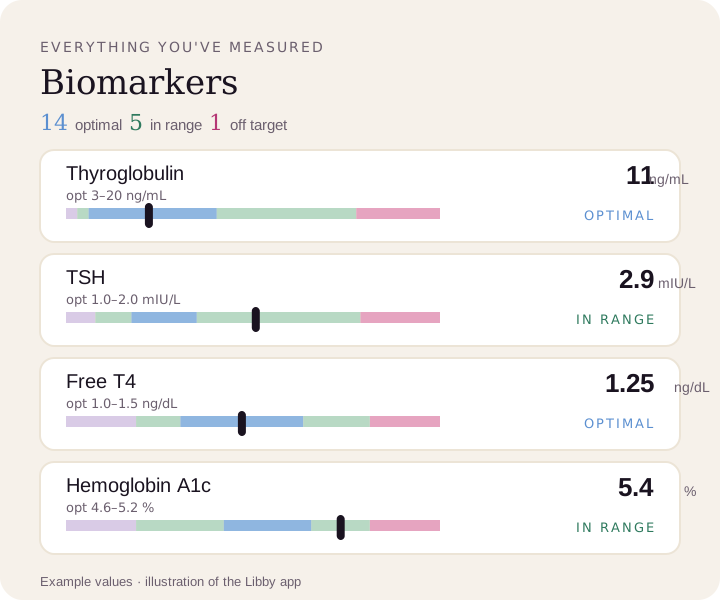
See every thyroid result side by side.
Upload a lab PDF or a photo of your report. Libby puts your thyroglobulin, TSH, free T4 and every other marker on a range, and tracks your trends over time.
View your thyroglobulin ›