Albumin blood test: normal range, low causes, optimal
Albumin is the main protein in your blood. Here's the normal range, what optimizers aim for, why it usually runs low, and how to read it with its neighbors.
Albumin is the main protein in your blood, and your liver makes it. It holds water inside your blood vessels and carries calcium, hormones, vitamins and many medicines around your body.12 A low albumin most often means your body is dealing with inflammation from an illness, injury or chronic disease. Less often it points to liver disease or protein leaking out through the kidneys or gut. A high albumin almost always means your blood was concentrated, usually by dehydration.34
The short version
- Normal: MedlinePlus lists 3.4 to 5.4 g/dL (34–54 g/L), and many labs use 3.5 g/dL as the low cutoff. Check the range on your own report.43
- Optimal: the functional-medicine range shown in the Libby app is 4.0–5.0 g/dL.5 In 1.7 million insurance applicants, the risk of dying over 12 years reached 1.5 times the reference below about 4.1 g/dL in men aged 20–69 and 3.8 g/dL in women, well above the lab cutoff.6
- Low usually means inflammation: an infection, surgery, injury or chronic disease. Liver disease, extra fluid, pregnancy and protein lost through the kidneys or gut are the other common reasons.234
- High almost always means dehydration or a concentrated sample, such as a tourniquet left on too long.34
What albumin is
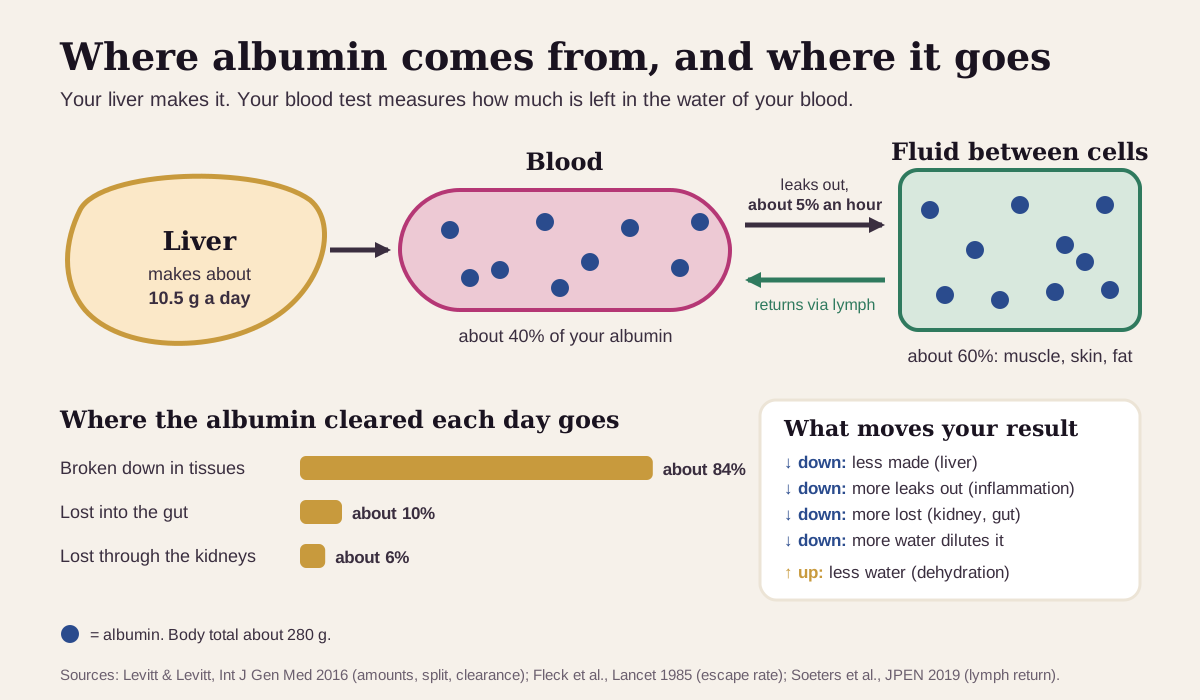
Your liver makes about 10.5 grams of albumin a day, and your body holds about 280 grams in all. Only about 40% of it is in your blood at any moment. The rest sits in the fluid between cells, mostly in muscle, skin, fat and connective tissue.3
Albumin has two big jobs. It works like a sponge that keeps water inside your blood vessels. When there isn't enough, fluid can leak out and collect in your legs, belly or lungs.1 It's also a carrier. It binds fatty acids, bilirubin, bile acids, calcium, zinc, copper and many drugs, and it carries hormones and vitamins.21
Albumin is on the routine panels most people get: the comprehensive metabolic panel (CMP) and the liver panel.1 Many reports also show total protein, which is albumin plus the globulins, proteins that play a big part in your immune system.8
The number on your report is a concentration. It depends on how much albumin is in your blood and how much water it's dissolved in. So four things pull it down: the liver making less, albumin leaking out of the blood into tissues, albumin lost through the kidneys or gut, and extra water diluting it. One thing pushes it up: less water, as in dehydration.32
What's a normal albumin?
Start with the range printed on your report. MedlinePlus lists 3.4 to 5.4 g/dL as normal and notes that ranges vary a little between labs.4 Many labs set the lower limit at 3.5 g/dL, roughly the point below which 2.5% of "healthy" people fall.3
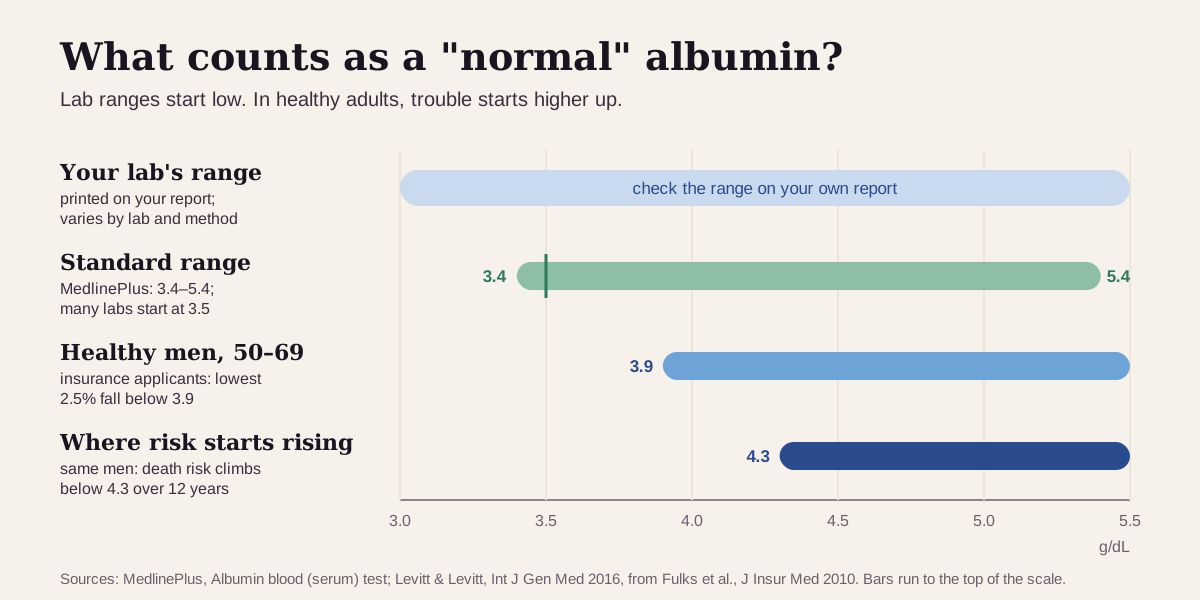
- "Healthy" depends on who you measure. Among apparently healthy men aged 50–69 applying for life insurance, the lowest 2.5% fell below 3.9 g/dL, already above the usual lab cutoff. Their death rate over 12 years started to climb below 4.3 g/dL.3
- The lab method matters. Routine lab methods measure albumin with a dye, either bromocresol green (BCG) or bromocresol purple (BCP). When 14 Dutch labs tested the same 163 samples from people with kidney disease, BCP results matched the reference method 92.7% of the time and BCG results only 66.7%, mostly because BCG read too high.9
Age, posture, pregnancy and fluids shift it too. Albumin drifts down with age and with chronic illness.2 In one study, sitting up for 20 minutes after lying down was enough to push albumin up, and moving from lying down to standing shrank the fluid part of the blood by about 14%.10 Albumin runs lower in pregnancy and after large amounts of IV fluid.4
"Optimal" albumin: what health optimizers aim for
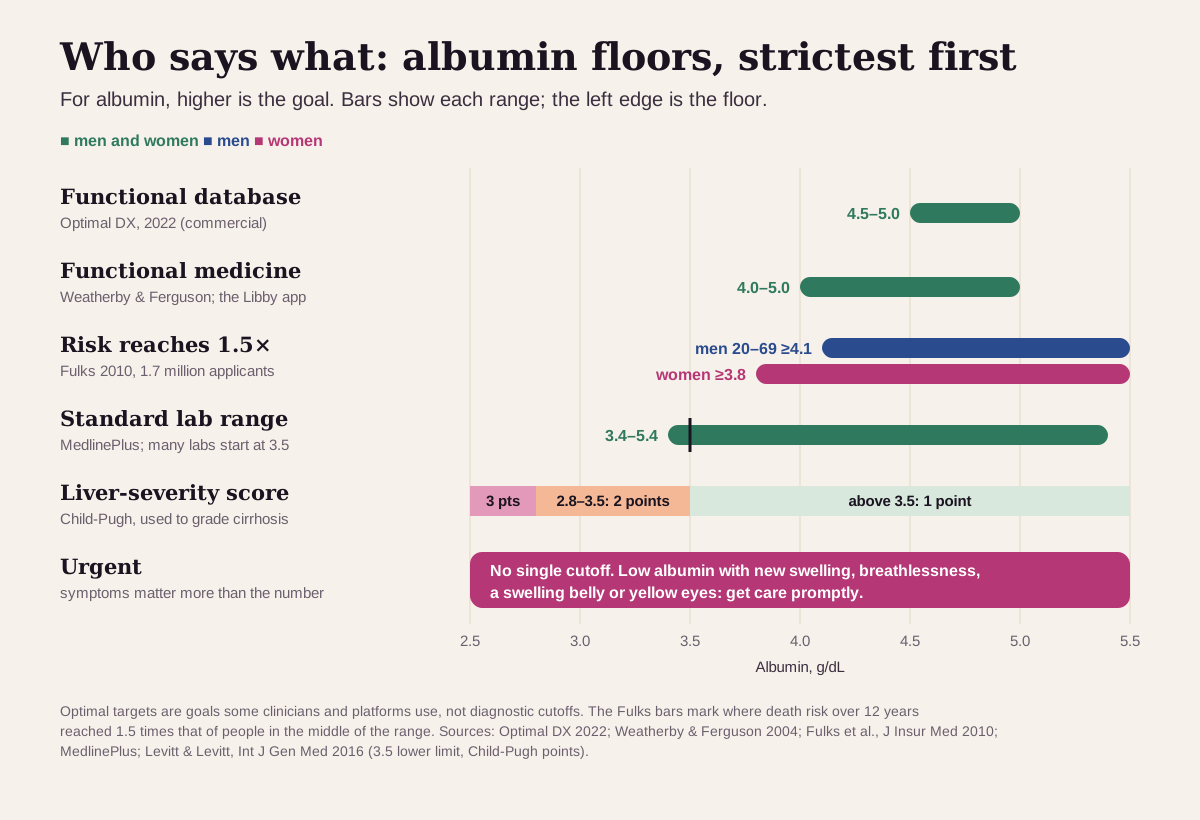
Albumin flips the usual script. For many markers, optimizers aim below the lab's upper limit. For albumin they aim higher, in the upper part of the normal range. Here's the ladder, from strictest to loosest:
| Target | Men | Women | Who uses it |
|---|---|---|---|
| Strictest (functional database) | 4.5–5.0 g/dL | 4.5–5.0 g/dL | Optimal DX's published "optimal functional" goal11 |
| Functional medicine | 4.0–5.0 g/dL | 4.0–5.0 g/dL | The standard functional-medicine textbook range,5 and the optimal range shown in the Libby app |
| Research: death risk reaches 1.5× | below about 4.1 g/dL (ages 20–69) | below about 3.8 g/dL | 1.7 million life-insurance applicants followed for 12 years6 |
| Standard lab range | 3.4–5.4 g/dL, often starting at 3.5 | 3.4–5.4 g/dL, often starting at 3.5 | MedlinePlus;4 common lab practice3 |
| Liver-severity score | 2.8–3.5 g/dL scores 2 points; under 2.8 scores 3 | same | The Child-Pugh score used to grade cirrhosis3 |
| Urgent | no single number | no single number | Low albumin with new swelling, breathlessness or yellow eyes: get care promptly1 |
Why the higher targets aren't just a trend:
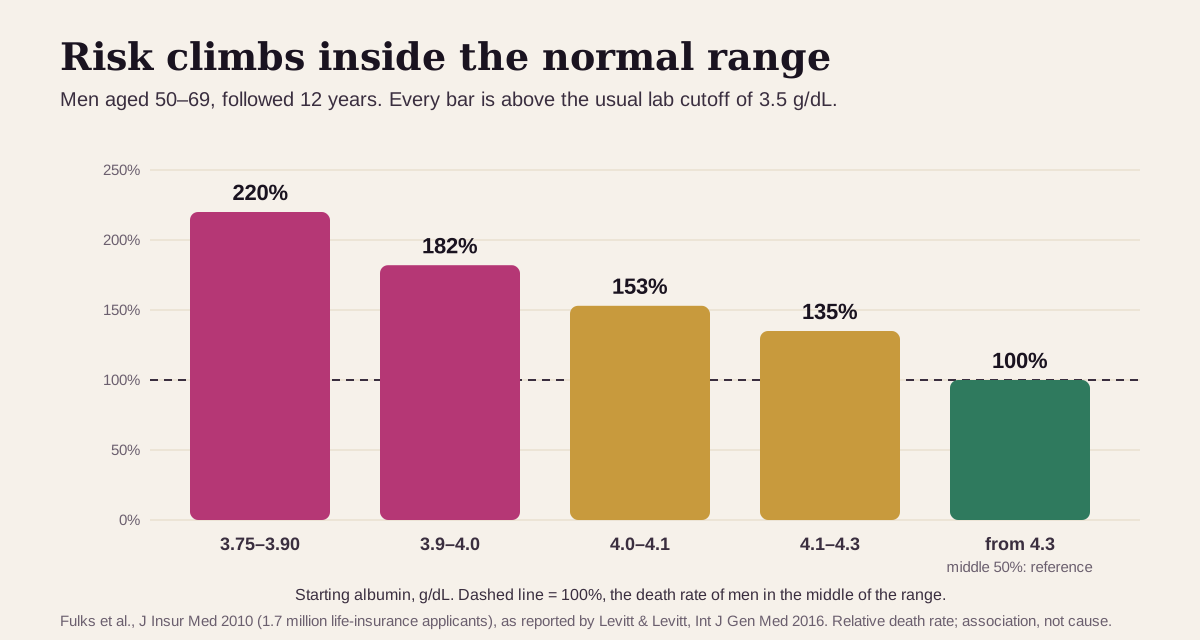
- In the insurance-applicant data, men aged 50–69 with an albumin of 4.1 to 4.3 g/dL, normal on any lab report, died at 135% of the rate of men in the middle of the range. At 4.0–4.1 it was 153%, at 3.9–4.0 182% and at 3.75–3.90 220%.36 On that evidence, Levitt and Levitt argue the lower limit of normal should be 4.3 g/dL, not 3.5.3
- A 2020 meta-analysis of 48 cohort studies with 1.49 million people found that people in the top third of albumin had a 34% lower risk of death from any cause and a 40% lower risk of cardiovascular disease than people in the bottom third.12
Keep "optimal" in perspective. A low-normal albumin is best read as a sign that something, usually inflammation, is going on. Levitt and Levitt conclude that low albumin is a result of ill health rather than a cause, and that treatments aimed at raising the number have shown little benefit.3 The useful move is to find the source of the inflammation.2 At the top end, albumin above your lab's range almost always means dehydration.3
What a low albumin usually means
Inflammation is the most common reason. Protein lost through the kidneys or gut explains only a small minority of low results.32
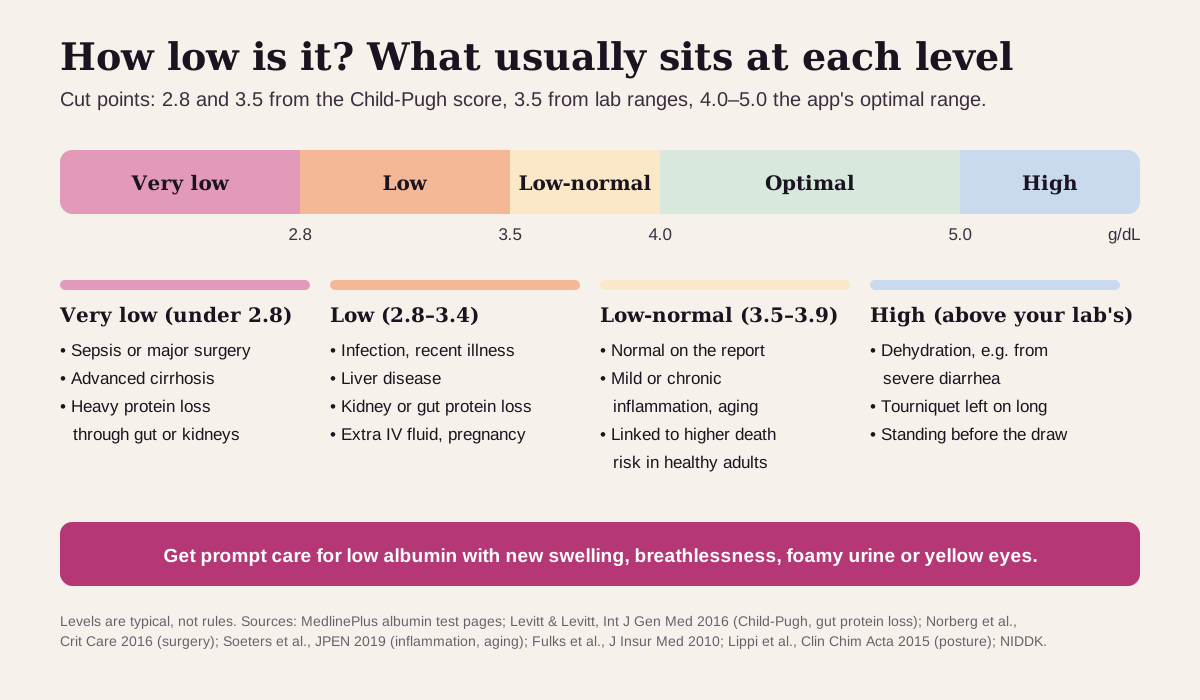
The usual suspects, most common first:
- Inflammation. An infection, surgery, injury or a chronic disease makes small blood vessels leakier, so albumin moves out into the tissues, and it is broken down faster. Albumin falls even while the liver makes more.2 The effect is big: albumin normally escapes the bloodstream at about 5% an hour, and in septic shock that rate rose more than 300%.7 ASPEN, the U.S. clinical nutrition society, says albumin tracks inflammation and should not be used as a nutrition marker.14
- Liver disease. Scarring of the liver (cirrhosis) cuts production, and albumin falls as cirrhosis sets in.15 Sudden liver injury often leaves albumin normal at first, because albumin lasts about three weeks in the blood.15
- Extra fluid and pregnancy. Large amounts of IV fluid dilute albumin, and it runs lower in pregnancy.4
- Protein leaking through the kidneys. Nephrotic syndrome combines protein in the urine, low albumin, swelling and high cholesterol.16
- Protein lost or poorly absorbed in the gut. Crohn's disease, celiac disease and other absorption problems can lower it.41
- Less common: large burns, thyroid disease, a very low-protein diet, or not eating for 24–48 hours.13
Get prompt care if a low albumin comes with new swelling in your legs, around your eyes or in your belly, shortness of breath, foamy urine, or yellow skin or eyes.116
What a high albumin means
Dehydration is the only condition that truly raises albumin, for example after severe diarrhea.31 The sample itself can be concentrated too: a tourniquet left on too long, or standing before the draw.410 Some medicines, including steroids, insulin and hormones, can nudge it up.1
Albumin reads best next to its neighbors
The cause of a low albumin usually shows up in the markers around it. Four common patterns across the same five markers:
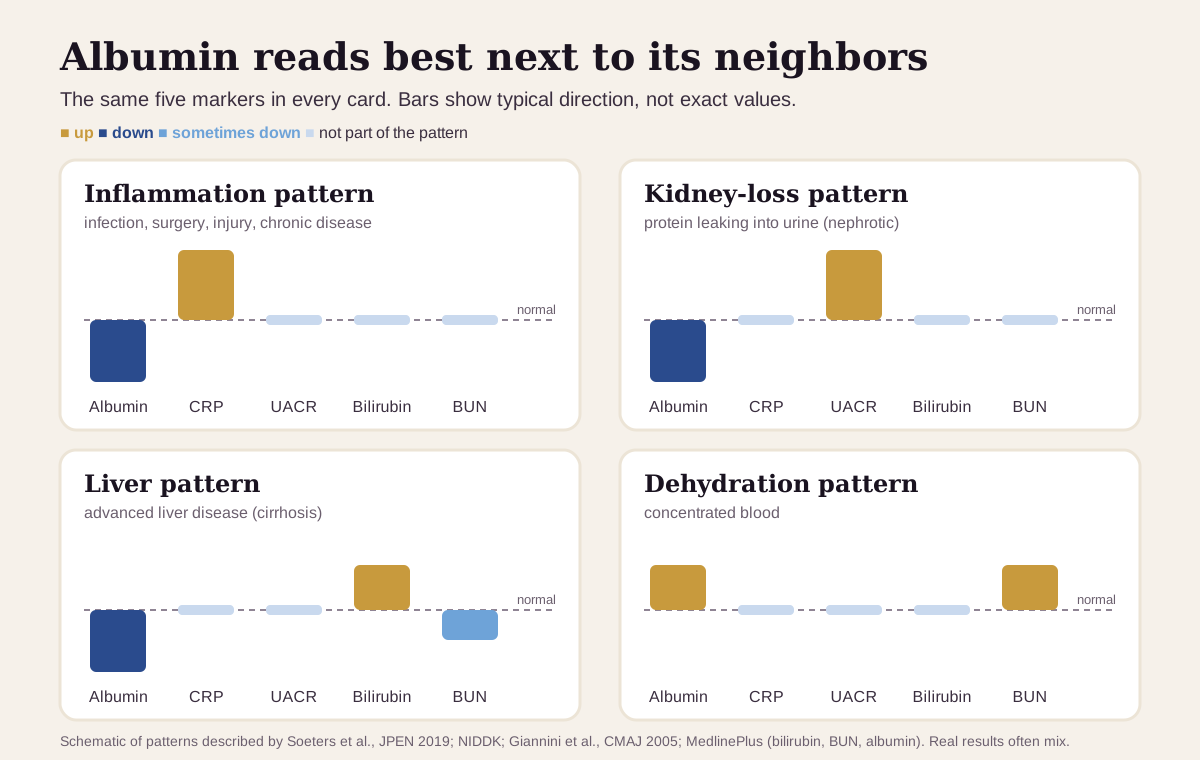
| If you see… | It often points to… |
|---|---|
| Albumin low, CRP high | inflammation: an infection, recent surgery or injury, or a flare of a chronic disease. CRP rises within about 10 hours, and by about 48 hours albumin has fallen as CRP climbed2 |
| Albumin low, urine albumin (UACR) high, often with swelling and high cholesterol | protein leaking through the kidneys (nephrotic syndrome)16 |
| Albumin low, bilirubin high, sometimes with a low BUN | reduced production from advanced liver disease151718 |
| Albumin and BUN both high | dehydration418 |
| Albumin low, liver tests otherwise normal | the liver is very unlikely to be the cause, so look at inflammation, the kidneys (urine albumin), the gut, fluids and diet1524 |
To gauge how well the liver is making proteins, clinicians also check the clotting time (PT/INR). Clotting factors turn over in about a day, so the INR moves long before albumin does.15
How fast albumin changes
Albumin moves on two clocks.
- Minutes to hours: water shifts. Sitting up for 20 minutes after lying down is enough to raise albumin measurably.10 In major abdominal surgery, albumin fell by more than 40%, from 32.8 to 18.7 g/L, in roughly the first four hours, as it leaked into the tissues.13
- Weeks: making and clearing it. Levitt and Levitt put albumin's half-life at about 17 days,3 and Giannini's review at about 20 days.15 So once the cause is fixed, the number climbs back over weeks.
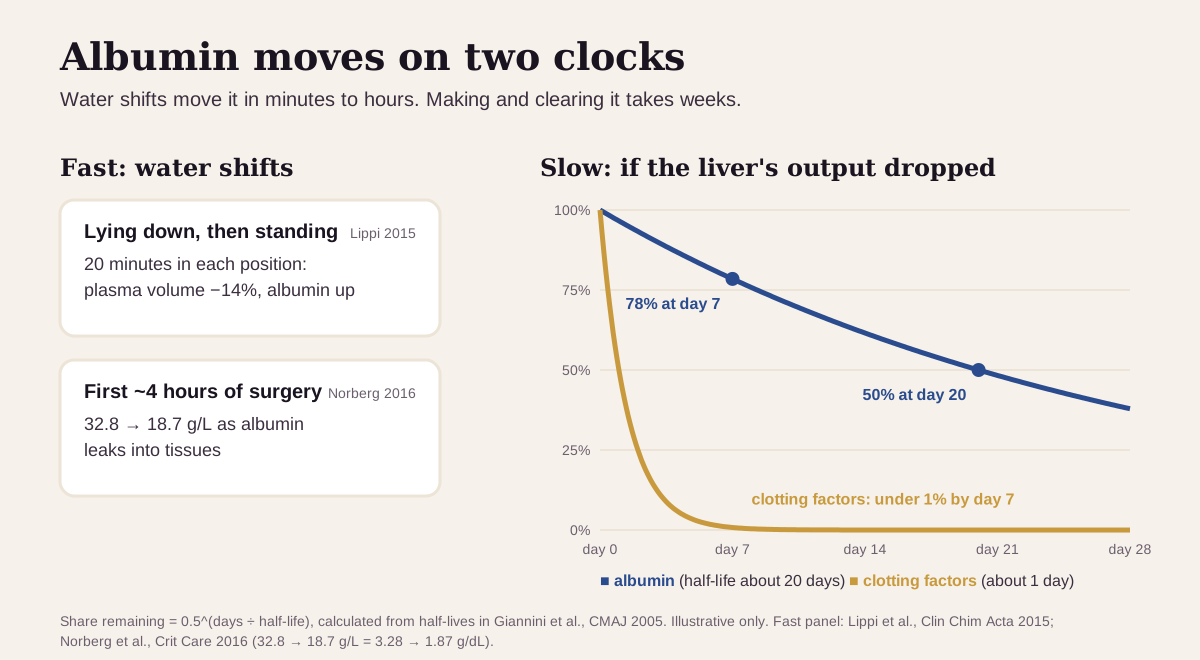
What that means in practice:
- A low result during or right after an illness is worth repeating. Albumin drops with an infection or surgery and rises again as the inflammation settles.2
- Mention recent illness, IV fluids, pregnancy, fasting and medicines when you get tested. Each can move the number.14
- Trends beat snapshots. A rising albumin is a good sign that an illness is settling, and a falling one points the other way.2 Compare results from the same lab when you can, because methods differ.9
Going deeper: where albumin goes
Albumin cycles through your tissues all day. About 5% of the albumin in your blood leaks into the tissues every hour and returns through the lymph, a flow more than 10 times faster than the rate the liver makes or breaks it down.72 Of the albumin cleared each day, about 84% is broken down inside tissues, about 10% is lost into the gut and about 6% through the kidneys.3
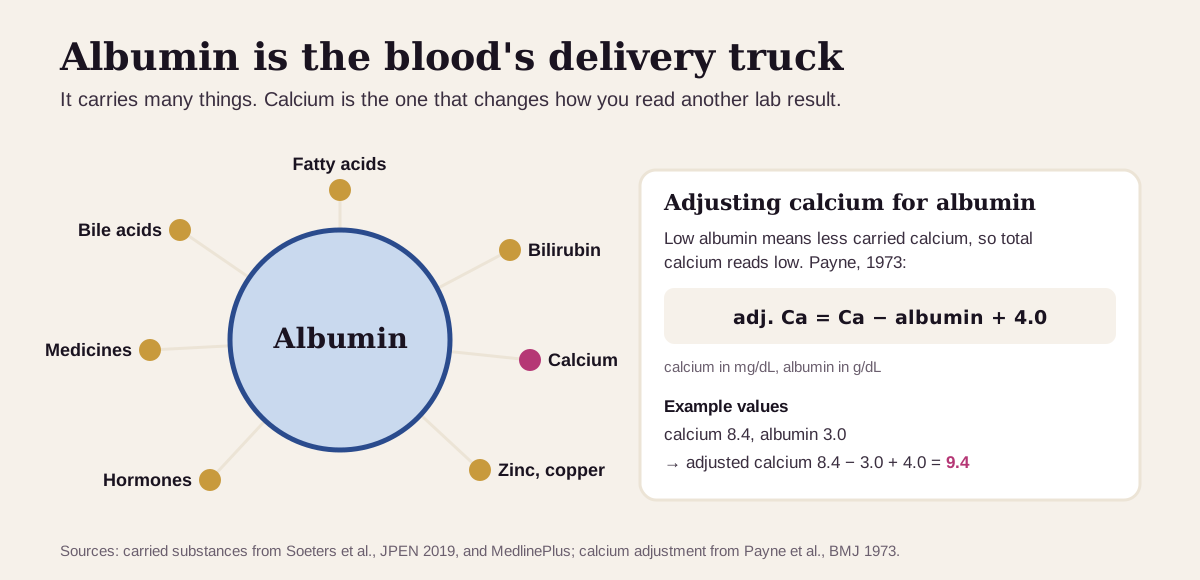
It changes how you read your calcium. Albumin carries calcium, and total calcium tracks albumin closely, so a low albumin pulls down the calcium on your report. Payne's 1973 adjustment corrects for it:19
Adjusted calcium = calcium − albumin + 4.0
It feeds a liver score. The Child-Pugh score, used to grade cirrhosis, adds 1 point for albumin above 3.5 g/dL, 2 points for 2.8–3.5 and 3 points below 2.8, with higher totals meaning a worse outlook.3
Diet moves it in a way most people wouldn't guess. A diet low in protein but adequate in calories lowered albumin by 20–65% over two to four weeks in feeding studies, but a diet short on both calories and protein left albumin production unchanged. That's one reason albumin makes a poor malnutrition test.3
Questions worth asking
- Is my albumin low, low-normal or in the upper part of the range?
- What do my CRP, liver tests and urine albumin show next to it?
- Could a recent infection, surgery or other inflammation explain it, and when should we repeat it?
- Should my calcium result be adjusted for my albumin?
- Do I need a urine albumin (UACR) test to check my kidneys?
- If it stays low, what would we look for next?
FAQ
What is a normal albumin level? MedlinePlus lists 3.4 to 5.4 g/dL, and many labs use 3.5 as the lower cutoff. The optimal range shown in the Libby app is 4.0–5.0 g/dL.45
What is the most common cause of low albumin? Inflammation, from an infection, surgery, injury or chronic disease. Liver disease, extra fluid, pregnancy and protein lost through the kidneys or gut are the other common causes.23
Is low albumin a sign I need more protein? Usually it's a sign of inflammation instead. ASPEN says albumin reflects inflammation and should not be used as a nutrition marker. A diet very low in protein, or not eating for a day or two, can lower it.1431
What does a high albumin mean? Almost always dehydration, or a sample concentrated by a long tourniquet time.34
This guide is for education. It can't diagnose you or replace care from a clinician who knows your history.
Footnotes
-
National Library of Medicine. Albumin Blood Test. MedlinePlus. What albumin does, the common reasons for low and high results, medicines and fasting that move it, and the symptoms of liver and kidney disease. MedlinePlus ↩ ↩2 ↩3 ↩4 ↩5 ↩6 ↩7 ↩8 ↩9 ↩10 ↩11 ↩12 ↩13 ↩14
-
Soeters PB, Wolfe RR, Shenkin A. Hypoalbuminemia: Pathogenesis and Clinical Significance. JPEN J Parenter Enteral Nutr. 2019;43(2):181–193. How inflammation lowers albumin through leakier capillaries and faster breakdown even as synthesis rises, the inverse link with CRP, what albumin binds, and the decline with age and illness. PMC ↩ ↩2 ↩3 ↩4 ↩5 ↩6 ↩7 ↩8 ↩9 ↩10 ↩11 ↩12 ↩13 ↩14 ↩15 ↩16 ↩17 ↩18
-
Levitt DG, Levitt MD. Human serum albumin homeostasis: a new look at the roles of synthesis, catabolism, renal and gastrointestinal excretion, and the clinical value of serum albumin measurements. Int J Gen Med. 2016;9:229–255. The source for the amounts (10.5 g/day made, about 280 g in the body, 40% in the blood), the clearance split, the 17-day half-life, the 3.5 g/dL convention, the insurance-applicant mortality bands, the Child-Pugh points, dehydration as the only cause of a high albumin, and the diet studies. PMC ↩ ↩2 ↩3 ↩4 ↩5 ↩6 ↩7 ↩8 ↩9 ↩10 ↩11 ↩12 ↩13 ↩14 ↩15 ↩16 ↩17 ↩18 ↩19 ↩20 ↩21 ↩22 ↩23 ↩24 ↩25 ↩26 ↩27 ↩28 ↩29
-
National Library of Medicine. Albumin blood (serum) test. MedlinePlus Medical Encyclopedia. Reviewed February 13, 2025. The 3.4–5.4 g/dL normal range, high results from dehydration or a long tourniquet time, and lower results in pregnancy and with large amounts of IV fluid. MedlinePlus ↩ ↩2 ↩3 ↩4 ↩5 ↩6 ↩7 ↩8 ↩9 ↩10 ↩11 ↩12 ↩13 ↩14 ↩15 ↩16 ↩17 ↩18 ↩19
-
Weatherby D, Ferguson S. Blood Chemistry and CBC Analysis: Clinical Laboratory Testing from a Functional Perspective. 2nd ed. Bear Mountain Publishing; 2004. ISBN 978-0976136712. Widely used functional-medicine reference. The Libby app's optimal albumin range, 4.0–5.0 g/dL, is drawn from it. ↩ ↩2 ↩3 ↩4
-
Fulks M, Stout RL, Dolan VF. Albumin and all-cause mortality risk in insurance applicants. J Insur Med. 2010;42(1):11–17. 1,704,566 applicants, 53,211 deaths over a median 12 years; risk reached 1.5 times the reference at about 4.1 g/dL (men 20–69) and 3.8 g/dL (women, and men 70+). PubMed ↩ ↩2 ↩3 ↩4 ↩5 ↩6
-
Fleck A, Raines G, Hawker F, et al. Increased vascular permeability: a major cause of hypoalbuminaemia in disease and injury. Lancet. 1985;1(8432):781–784. Albumin normally leaves the blood at 5% per hour; the rate rose more than 300% in septic shock. PubMed ↩ ↩2 ↩3
-
National Library of Medicine. Total protein. MedlinePlus Medical Encyclopedia. Total protein is albumin plus globulins. MedlinePlus ↩
-
van Schrojenstein Lantman M, van de Logt AE, Prudon-Rosmulder E, et al. Albumin determined by bromocresol green leads to erroneous results in routine evaluation of patients with chronic kidney disease. Clin Chem Lab Med. 2023;61(12):2167–2177. 163 samples at 14 labs: agreement 92.7% for BCP vs 66.7% for BCG. DOI ↩ ↩2
-
Lippi G, Salvagno GL, Lima-Oliveira G, et al. Postural change during venous blood collection is a major source of bias in clinical chemistry testing. Clin Chim Acta. 2015;440:164–168. Nineteen volunteers; plasma volume fell 14.1% from lying to standing, and albumin rose. PubMed ↩ ↩2 ↩3 ↩4 ↩5
-
Optimal DX (ODX Research). You Would Be All Bummin' Without Albumin. April 7, 2022. States "an optimal functional blood chemistry goal for albumin is 4.5–5.0 g/dL" against a standard reference interval of 3.6–5.1 g/dL. A commercial source, listed as what the optimizer community uses. optimaldx.com ↩ ↩2
-
Seidu S, Kunutsor SK, Khunti K. Serum albumin, cardiometabolic and other adverse outcomes: systematic review and meta-analyses of 48 published observational cohort studies involving 1,492,237 participants. Scand Cardiovasc J. 2020;54(5):280–293. Top vs bottom third: all-cause mortality RR 0.66 (0.55–0.77), cardiovascular disease RR 0.60 (0.53–0.67). DOI ↩
-
Norberg Å, Rooyackers O, Segersvärd R, Wernerman J. Leakage of albumin in major abdominal surgery. Crit Care. 2016;20(1):113. Ten patients; plasma albumin fell from 32.8 to 18.7 g/L during the first 253 ± 50 minutes of surgery. PMC ↩ ↩2 ↩3
-
Evans DC, Corkins MR, Malone A, et al. The Use of Visceral Proteins as Nutrition Markers: An ASPEN Position Paper. Nutr Clin Pract. 2021;36(1):22–28. The American Society for Parenteral and Enteral Nutrition's position that albumin reflects inflammation, not nutrition status. PubMed ↩ ↩2
-
Giannini EG, Testa R, Savarino V. Liver enzyme alteration: a guide for clinicians. CMAJ. 2005;172(3):367–379. Albumin's half-life (about 20 days) vs clotting factors (about 1 day), albumin falling in cirrhosis, and low albumin with otherwise normal liver tests pointing away from the liver. PMC ↩ ↩2 ↩3 ↩4 ↩5 ↩6 ↩7 ↩8
-
National Institute of Diabetes and Digestive and Kidney Diseases. Nephrotic Syndrome in Adults. NIH. The four features of nephrotic syndrome, its symptoms, and the urine tests used to find it. NIDDK ↩ ↩2 ↩3 ↩4
-
National Library of Medicine. Bilirubin Blood Test. MedlinePlus. High bilirubin from liver disease or blocked bile ducts. MedlinePlus ↩ ↩2
-
National Library of Medicine. BUN (Blood Urea Nitrogen). MedlinePlus. BUN runs higher with dehydration and lower with liver disease. MedlinePlus ↩ ↩2 ↩3
-
Payne RB, Little AJ, Williams RB, Milner JR. Interpretation of serum calcium in patients with abnormal serum proteins. Br Med J. 1973;4(5893):643–646. The original albumin adjustment for calcium. PMC ↩ ↩2
Educational content, not medical advice.Libby is a personal record tool, not a medical service — it doesn't diagnose, treat, or prescribe. Reference ranges vary by lab and by person. Talk to a qualified healthcare professional about your results.
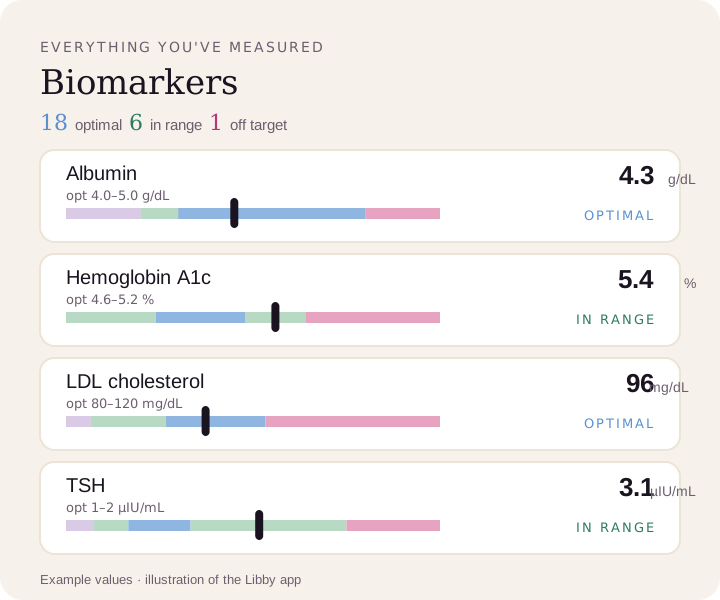
Compare your results to optimal ranges.
Upload a lab PDF or a photo of your report. Libby puts every marker on your lab's range and the optimal range, and tracks your trends over time.
View your albumin ›