AST blood test: normal levels, high causes, and next steps
AST is an enzyme in liver, muscle and red blood cells. What a normal level is, why it runs high, how to read it with ALT and CK, and when it's urgent.
AST (aspartate aminotransferase) is an enzyme that works inside your liver, muscles, heart and red blood cells. When any of those cells are damaged, AST leaks into your blood. A high AST is a common sign that the liver is irritated. Because muscle holds so much of it, the first question for a high AST is often liver or muscle?12
The short version
- Normal: check the upper limit on your report. An international study using the standardized method put a healthy adult AST at 11–34 U/L, with almost no difference between men and women.3 MedlinePlus lists a typical range of 8–33 U/L.4
- Mildly high (under 5 times your lab's upper limit) is common. The usual reasons are fatty liver, alcohol, a hard workout or muscle injury, medicines, and viral hepatitis.15
- Very high (more than 10 times the upper limit) means sudden, intense injury to the liver or to muscle. That needs prompt medical care.12
- Read it next to ALT. AST more than twice ALT often points to alcohol. AST rising with CK points to muscle.12
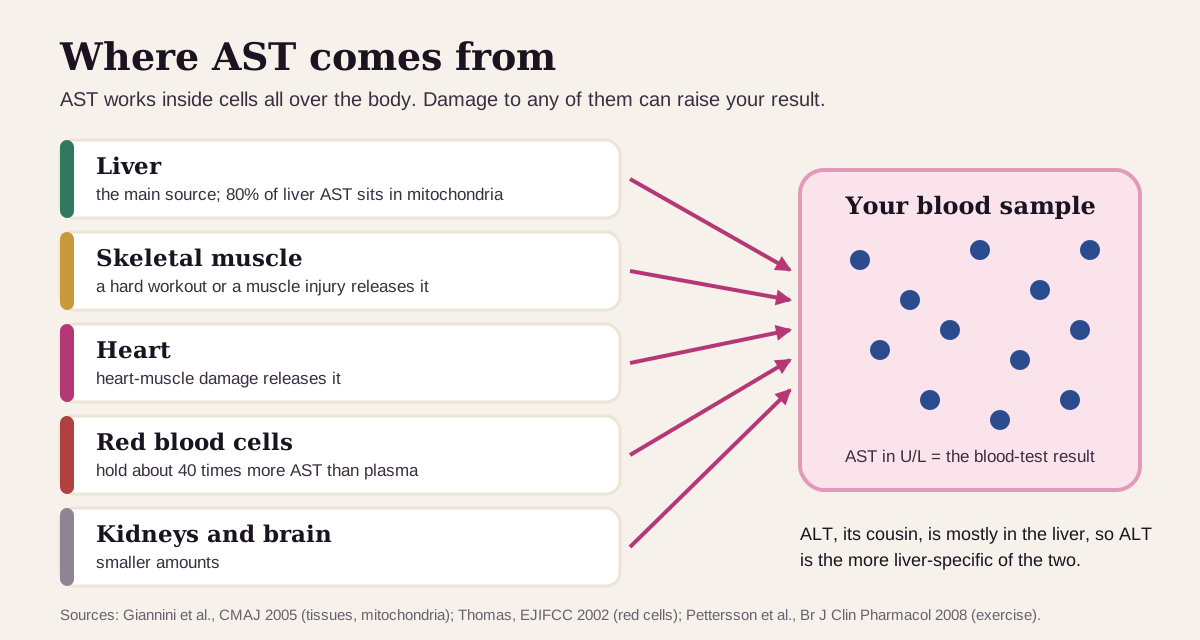
AST works in many tissues. Sources: Giannini 2005;1 Thomas 2002;6 Pettersson 2008.5
What AST is
AST is one of the body's working enzymes. It moves nitrogen from the amino acid aspartate onto another molecule, which links protein breakdown to the cell's energy cycle. (More on the chemistry at the end.)
The liver has a lot of AST, but so do the heart, skeletal muscle, kidneys, brain and red blood cells. Its cousin ALT sits mostly in the liver. That makes ALT the more liver-specific of the two, and AST the wider net.1 Inside a liver cell, about 80% of AST sits in the mitochondria (the cell's power plants) and 20% in the cell fluid.1
AST shows up on routine blood work. It's part of the comprehensive metabolic panel (CMP) and the liver panel, and it's usually ordered with ALT.7
What's a normal AST?
Start with the range printed on your own report. Labs use different methods, so their ranges differ.4
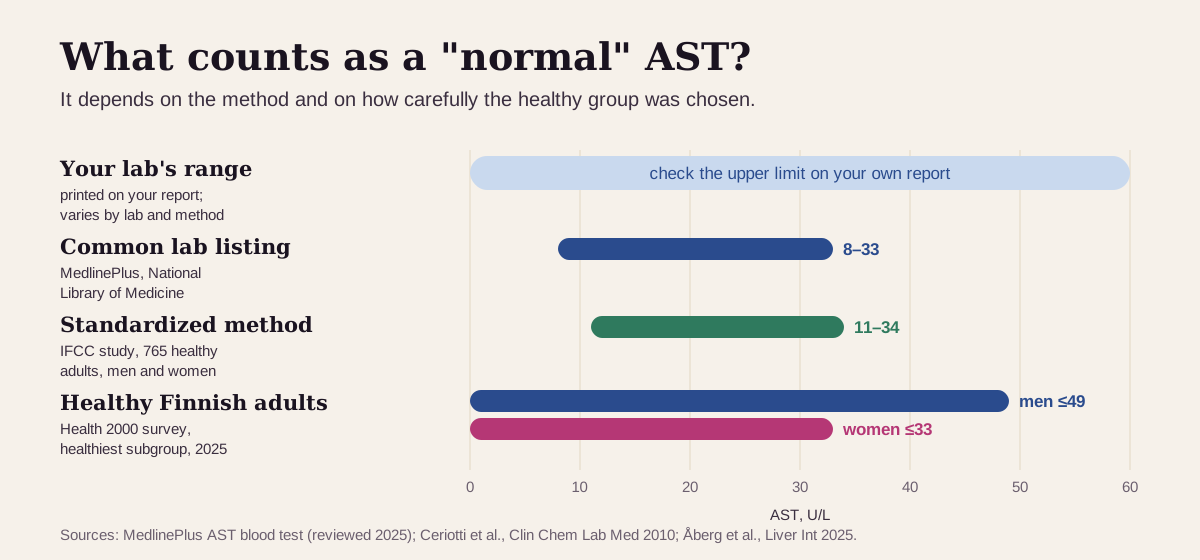
Three ways to define "normal." Sources: MedlinePlus;4 Ceriotti 2010;3 Åberg 2025.8
- The International Federation of Clinical Chemistry (IFCC) measured 765 carefully screened adults aged 18–85 in Milan, Beijing, Bursa and the Nordic countries. It set one range for everyone: 11–34 U/L. Men and women differed by only 1.7 U/L at the top.3
- A 2025 Finnish study took the healthiest adults from 5,412 participants of the national Health 2000 survey and set upper limits of 49 U/L for men and 33 U/L for women.8
The gap between those numbers comes from lab methods and from how strictly each study defined "healthy". That's why your own lab's range is the first comparison, and why trends from the same lab are the most useful.
"Optimal" AST: what health optimizers aim for
Longevity clinics, functional-medicine practitioners and at-home testing companies aim lower than a lab's "normal". Here's the ladder, from strictest to loosest:
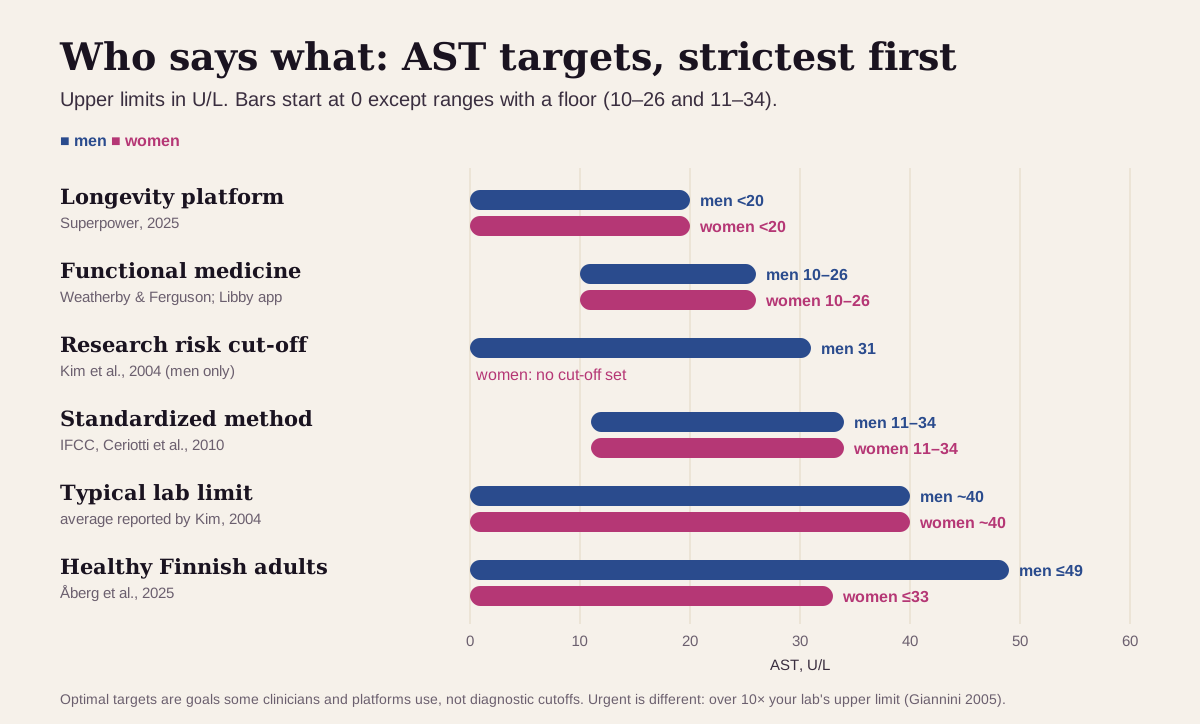
Sources: Superpower 2025;9 Weatherby & Ferguson;10 Kim 2004;11 Ceriotti 2010;3 Åberg 2025.8
| Target | Men | Women | Who uses it |
|---|---|---|---|
| Strictest (longevity platforms) | under 20 U/L | under 20 U/L | Superpower's published optimal range9 |
| Functional medicine | 10–26 U/L | 10–26 U/L | The standard functional-medicine textbook range,10 and the optimal range shown in the Libby app |
| Research risk cut-off | 31 U/L | none set | The level that best predicted death from liver disease in Korean men11 |
| Standardized method | 11–34 U/L | 11–34 U/L | The IFCC reference-interval study3 |
| Typical lab limit | about 40 U/L | about 40 U/L | The average upper limit labs used, per Kim et al. (range 30–50)11 |
| Healthy Finnish adults | up to 49 U/L | up to 33 U/L | Åberg et al., 20258 |
| Urgent | over 10× the upper limit | over 10× the upper limit | Sudden injury: get care promptly1 |
Why the low targets have a basis:
- In a study of 142,055 Korean adults followed for 8 years, people with an AST of 20–29, inside the usual "normal" range, had 2.5 times (men) and 3.3 times (women) the risk of dying from liver disease compared with people under 20. At 30–39, it was 8.0 and 18.2 times. For predicting those deaths in men, AST worked slightly better than ALT.11
- The 2025 Finnish study checked its limits against later liver events. An AST above twice the upper limit carried a more than 5% risk of a major liver event within 10 years, and AST predicted those events better than ALT did.8
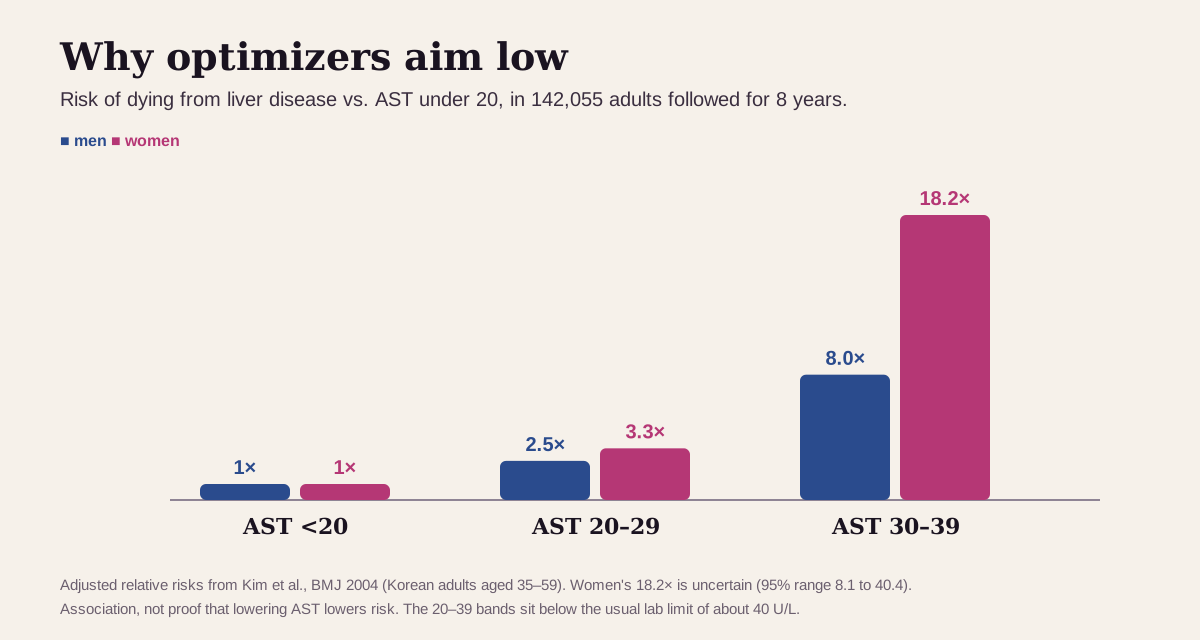
Kim et al., BMJ 2004.11 Association, not proof that lowering AST lowers risk. The women's 18.2× estimate is uncertain (95% range 8.1 to 40.4).
What "optimal" means in practice: it's a target, not a diagnosis. An AST of 30 is a reason to look at the rest of the picture: your ALT, your weight and blood sugar, alcohol, and whether you trained hard in the past week. A low AST is usually normal.7
See your AST against every one of these ranges. Libby shows your lab's range and the optimal range side by side, and tracks your results over time. Upload your blood work and create a free account →
What a high AST usually means
The size of the rise is the first clue. Clinicians group AST and ALT elevations by how many times above the lab's upper limit (ULN) they are: mild (under 5×), moderate (5–10×) and marked (over 10×).1
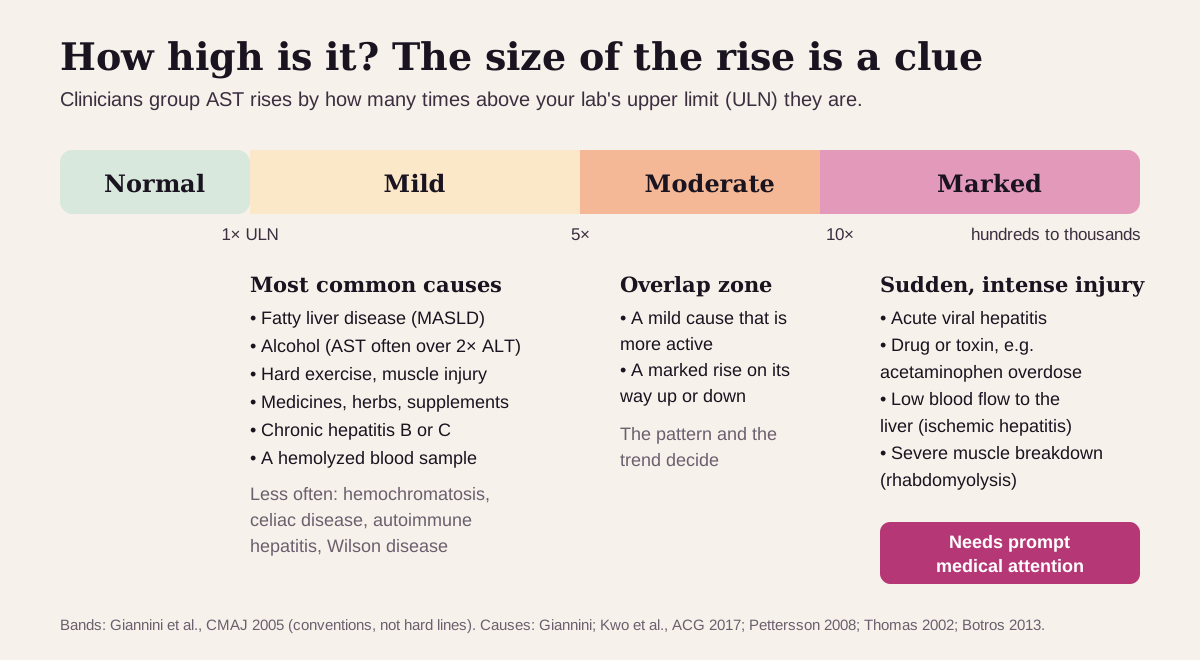
Mild rises usually come from slower, ongoing causes. Marked rises mean sudden injury. Sources: Giannini 2005;1 Kwo 2017;12 Botros & Sikaris 2013.2
Mildly high (under 5× the upper limit): common, usually slow-moving
The usual suspects:
- Fatty liver disease. Now called MASLD (metabolic dysfunction-associated steatotic liver disease), it affects an estimated 25–30% of adults.13 ALT is usually the higher of the two. When AST overtakes ALT in fatty liver, it's a warning sign: an AST/ALT ratio above 1 turned up in 61% of people with advanced scarring versus 24% of those with little or none.1
- Alcohol. Drinking raises AST more than ALT. In a classic study of alcohol-related liver disease, AST was higher than ALT in 92% of patients and more than twice ALT in 70%, and it stayed under 6–7 times the upper limit in 98%.1
- A hard workout or a muscle injury. In one study, 14 healthy men did a single hour of weightlifting. Six had a high AST the next day, all 14 did on days 3–5, and AST and ALT were still raised a week later. GGT, ALP and bilirubin stayed normal. That was muscle, not liver.5 A CK test tells the two apart.2
- Medicines, herbs and supplements. Almost any medicine can shift liver enzymes, and herbal and over-the-counter products are easy to forget.1 Don't stop a prescribed medicine on your own. Bring your full list, supplements included, to your clinician.
- Hepatitis B or C. Both can smolder for years with only a mild rise. The CDC recommends that every adult be tested for hepatitis C at least once14 and for hepatitis B at least once.15
- A hemolyzed sample. Red blood cells hold about 40 times more AST than plasma. If some burst in the tube, AST reads high, often along with potassium and LDH. A redraw can settle it.6
- Less common causes: hemochromatosis (iron overload), celiac disease (up to 10% of otherwise unexplained elevations in one report), autoimmune hepatitis and Wilson disease.112
Very high (over 10× the upper limit): sudden injury
AST in the hundreds or thousands means cells are being injured quickly. Common causes include acute viral hepatitis, a drug or toxin (an acetaminophen overdose is a classic example), and a sudden drop in blood flow to the liver (ischemic hepatitis).1 The part of the liver that gets the least oxygen is also the richest in AST, so low blood flow tends to push AST up more.1
Muscle can do this too. Severe muscle breakdown (rhabdomyolysis) raises AST sharply, and CK is the test that measures it.2 In the weightlifting study, two men reached an AST of 16.0 µkat/L, roughly 960 U/L, from one session.5
Get prompt care if your AST is very high, or if a high AST comes with yellow skin or eyes, dark urine, pale stools, belly pain or swelling, or nausea and vomiting.7 Dark, red or cola-colored urine with muscle pain or weakness after hard exertion can mean rhabdomyolysis, and needs prompt care too.16 AST also rises with heart problems;7 chest pain is an emergency whatever your AST.
In between (5–10×)
This is an overlap zone. It can be a mild cause that is more active, or a big rise on its way up or down. Here the pattern with other tests, and the trend over repeat tests, matter most.1
AST reads best next to its neighbors
AST rarely comes alone. The pattern across your liver panel, plus CK, usually says more than AST does by itself:12
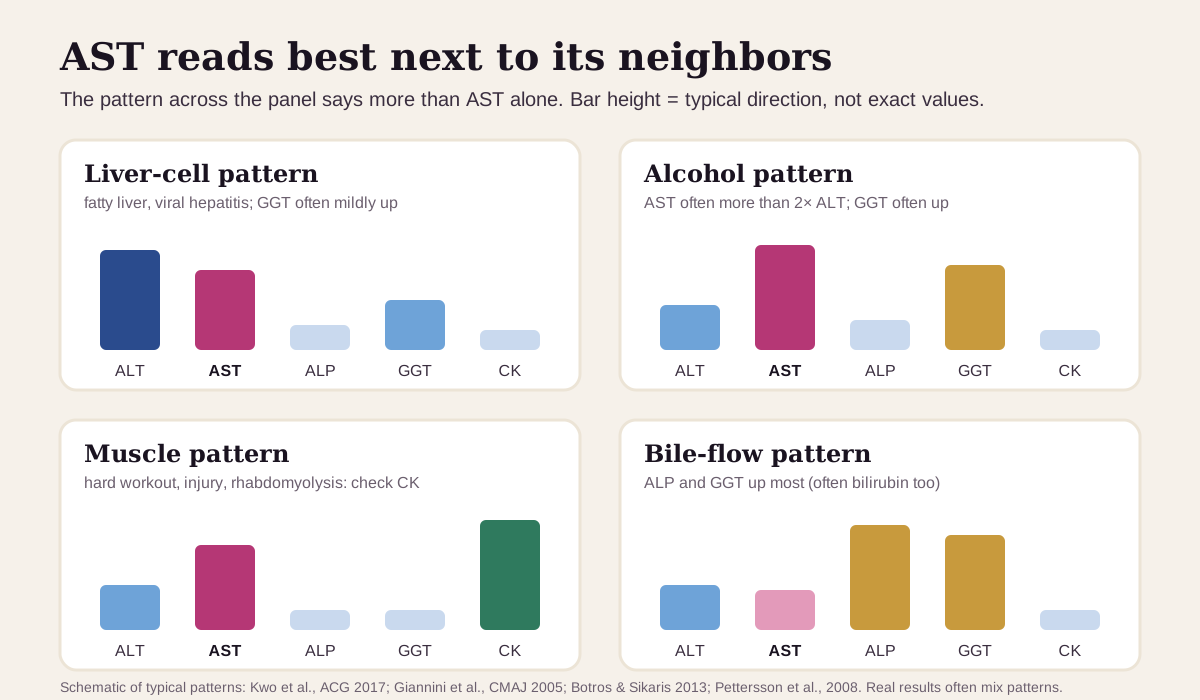
Typical patterns. Real results often mix them. Sources: Kwo 2017;12 Giannini 2005;1 Botros & Sikaris 2013;2 Pettersson 2008.5
| If you see… | It often points to… |
|---|---|
| AST and ALT both up, ALT higher, ALP about normal, GGT normal or mildly up | a liver-cell ("hepatocellular") pattern: fatty liver or viral hepatitis |
| AST more than 2× ALT, often with GGT up | alcohol-related liver injury |
| AST and CK up, ALT up less or later | muscle: a hard workout, a muscle injury, or rhabdomyolysis |
| ALP and GGT up more than AST and ALT | a bile-flow ("cholestatic") pattern: something slowing or blocking bile |
| AST up on its own, with potassium and LDH up | a hemolyzed sample: ask about a redraw |
An AST that is high on its own, with ALT normal, usually comes from outside the liver, such as muscle or red blood cells.216 To see how well the liver is working, look at albumin, bilirubin and a clotting test (PT/INR) instead.12
How fast AST changes
AST clears fast. Its half-life in the blood is about 17 hours, versus about 47 hours for ALT.1 So after an injury stops, AST falls within a few days while ALT lingers.
After exercise the order flips. In the weightlifting study, AST crossed the upper limit at a median of 28 hours and peaked at 96 hours. ALT was slower, at 59 and 120 hours.5
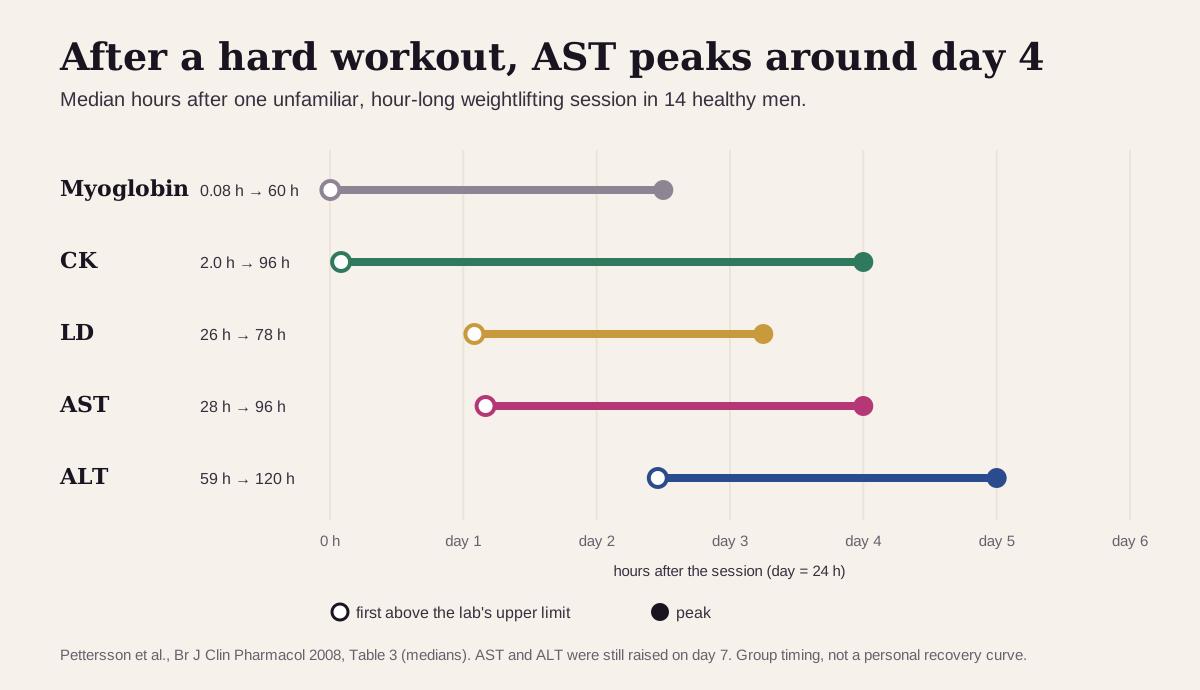
Pettersson et al., 2008, Table 3.5 Group medians in 14 men, not a personal recovery curve.
What that means in practice:
- Mention a hard workout. The AST/ALT ratio was above 1 in every man from 6 hours to 7 days after the session. By days 10–12, ALT had overtaken AST in 12 of the 14, a picture that can look like mild liver disease.5
- Tell whoever orders the test about recent exercise, illness, new medicines or supplements, and alcohol. Each can move AST.51
- Trends beat snapshots. An AST that climbs over several tests tells a different story than one that bounces around in the same place.1 Comparing results works best from the same lab, because methods differ.4
Going deeper: why AST is more than a liver test
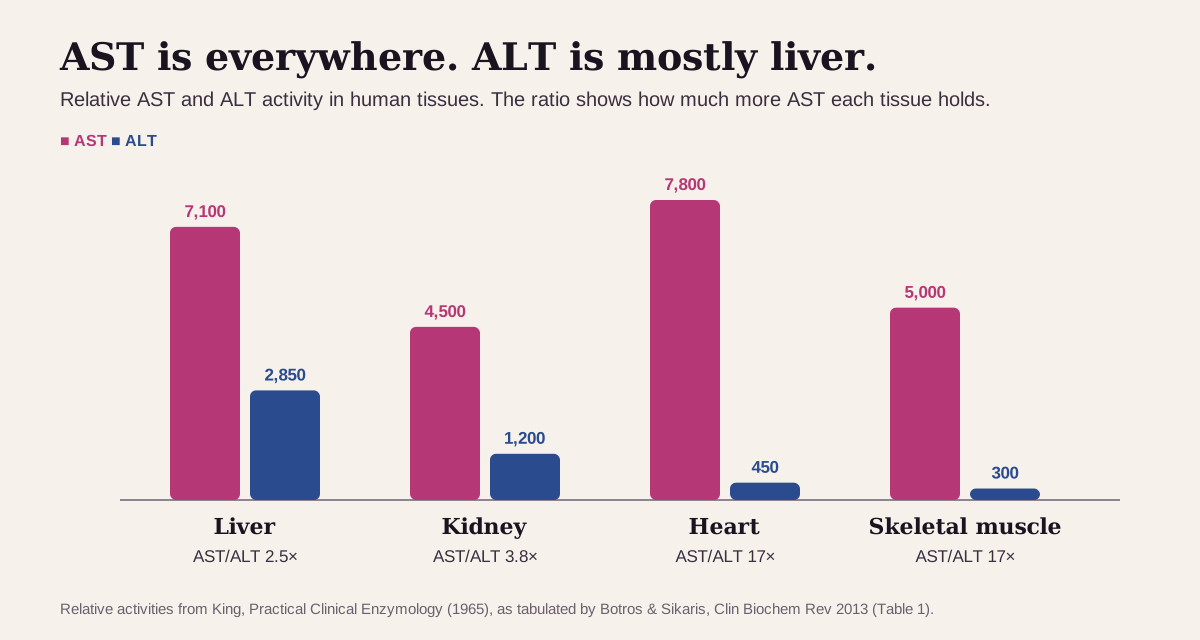
Relative activities from King 1965, as tabulated by Botros & Sikaris 2013.2
AST is a transaminase. It moves an amino group from aspartate onto alpha-ketoglutarate, which makes oxaloacetate and glutamate, two molecules at the heart of the cell's energy cycle. It needs the active form of vitamin B6 (pyridoxal-5′-phosphate) to work.1
Why the AST/ALT ratio carries information. Heart and skeletal muscle hold about 17 times more AST than ALT, and the liver about 2.5 times.2 In a healthy person the two read about the same, because the blood clears AST about twice as fast.2 Injury to AST-rich tissue like muscle, or low B6 (common in heavy drinkers, and it slows ALT more than AST), tips the ratio toward AST.12 The ratio is named after De Ritis, who first described it, and reviewers warn that simple "viral vs alcohol" rules built on it are too simplistic: timing, tissue and the lab method all move it.2
AST also feeds a liver-scarring score. Clinicians combine age, AST, ALT and platelet count into the FIB-4 index:17
FIB-4 = (age × AST) ÷ (platelets × √ALT)
AST sits on top of that fraction, so a rising AST pushes FIB-4 up. A FIB-4 below 1.3 suggests a low risk of advanced scarring (fibrosis), and liver guidelines use it as a first screen in people with fatty-liver risk factors.13
See your own pattern
Everything above gets more useful once you can see it on your results: your AST next to ALT, GGT and CK, across every test you've had, against both the lab range and the optimal range.
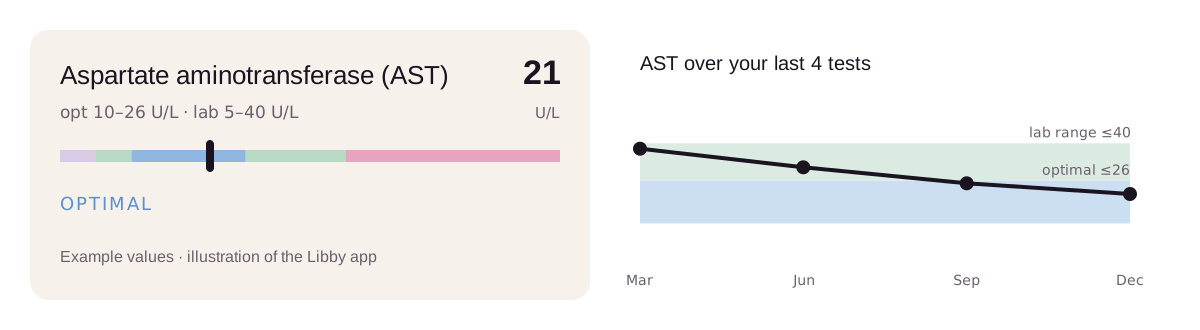
Illustration of the Libby app, with example values.
Upload your blood work and compare every marker to lab and optimal ranges. Where sex- or age-specific ranges exist, Libby uses them. Get started with Libby →
Questions worth asking
- How far above the upper limit is my AST, and is it mild or marked?
- Is my AST higher or lower than my ALT, and what does that ratio suggest here?
- Could a recent workout or muscle injury explain it, and should we check CK?
- Could the sample have been hemolyzed, and is a redraw worth it?
- Should I be tested for hepatitis B and C, if I haven't been?
- Do I have fatty-liver risk factors, and would a FIB-4 or an ultrasound help?
FAQ
What is a normal AST level? It depends on your lab's range. The standardized international range for adults is 11–34 U/L, and MedlinePlus lists 8–33 U/L.34
What's the difference between AST and ALT? Both are liver enzymes, but AST is also plentiful in muscle, heart and red blood cells, while ALT is mostly in the liver. That makes ALT more liver-specific and the AST/ALT pair a useful clue to the source.1
Can exercise raise AST? Yes. In healthy men, a single hour of weightlifting raised AST in all of them by days 3–5, and it stayed up for at least a week.5 A CK test can show whether the source is muscle.
When is a high AST an emergency? Very high levels (over 10 times the upper limit) point to sudden injury and need prompt care. So do yellow skin or eyes, dark urine, belly pain, or dark urine with muscle pain after exertion.1716
This guide is for education. A clinician who knows your history is the right person to interpret your results.
Footnotes
-
Giannini EG, Testa R, Savarino V. Liver enzyme alteration: a guide for clinicians. CMAJ. 2005;172(3):367–379. The source for tissue distribution, the 80% mitochondrial share, the mild/moderate/marked bands, the half-lives (AST ~17 h, ALT ~47 h), the alcohol ratios (from Cohen and Kaplan), the fatty-liver ratio, B6, and the celiac figure. PMC ↩ ↩2 ↩3 ↩4 ↩5 ↩6 ↩7 ↩8 ↩9 ↩10 ↩11 ↩12 ↩13 ↩14 ↩15 ↩16 ↩17 ↩18 ↩19 ↩20 ↩21 ↩22 ↩23 ↩24 ↩25 ↩26
-
Botros M, Sikaris KA. The De Ritis Ratio: The Test of Time. Clin Biochem Rev. 2013;34(3):117–130. Tissue AST and ALT activities (Table 1), clearance, isolated AST and rhabdomyolysis, and the limits of the ratio. PMC ↩ ↩2 ↩3 ↩4 ↩5 ↩6 ↩7 ↩8 ↩9 ↩10 ↩11 ↩12 ↩13
-
Ceriotti F, Henny J, Queraltó J, et al. Common reference intervals for aspartate aminotransferase (AST), alanine aminotransferase (ALT) and γ-glutamyl transferase (GGT) in serum: results from an IFCC multicenter study. Clin Chem Lab Med. 2010;48(11):1593–1601. 765 selected adults, IFCC-standardized methods: AST 11–34 U/L for both sexes. PubMed ↩ ↩2 ↩3 ↩4 ↩5 ↩6
-
National Library of Medicine. Aspartate aminotransferase (AST) blood test. MedlinePlus Medical Encyclopedia. Reviewed January 1, 2025. Normal range 8 to 33 U/L; ranges vary by lab. MedlinePlus ↩ ↩2 ↩3 ↩4 ↩5
-
Pettersson J, Hindorf U, Persson P, et al. Muscular exercise can cause highly pathological liver function tests in healthy men. Br J Clin Pharmacol. 2008;65(2):253–259. 14 men analysed after about an hour of weightlifting; Table 3 gives the median timings. PMC ↩ ↩2 ↩3 ↩4 ↩5 ↩6 ↩7 ↩8 ↩9 ↩10
-
Thomas L. Haemolysis as Influence & Interference Factor. EJIFCC. 2002;13(4):95–98. AST activity in red cells is 40 times that of plasma. PMC ↩ ↩2 ↩3
-
National Library of Medicine. AST Test. MedlinePlus. Updated November 5, 2024. Symptoms of liver damage, causes of a high AST, and why a low AST is usually normal. MedlinePlus ↩ ↩2 ↩3 ↩4 ↩5
-
Åberg F, Jula A, Salomaa V, et al. Updated Reference Limits for Liver Blood Tests With Validation Against Long-Term Liver-Related Outcomes. Liver Int. 2025;45(12):e70440. Finnish Health 2000 survey (5,412 analysed), validated in 20,423 FINRISK participants. AST limits 49 U/L (men) and 33 U/L (women). PMC ↩ ↩2 ↩3 ↩4 ↩5
-
Superpower. Optimal Liver Enzymes: Evidence Based Optimal Ranges for AST & ALT. Last updated December 4, 2025. States an optimal AST of under 20 U/L for both men and women. A commercial source, listed as what the optimizer community uses. superpower.com ↩ ↩2
-
Weatherby D, Ferguson S. Blood Chemistry and CBC Analysis: Clinical Laboratory Testing from a Functional Perspective. 2nd ed. Bear Mountain Publishing; 2004. ISBN 978-0976136712. Widely used functional-medicine reference, and the source of the optimal AST range (10–26 U/L) in the Libby app. ↩ ↩2
-
Kim HC, Nam CM, Jee SH, et al. Normal serum aminotransferase concentration and risk of mortality from liver diseases: prospective cohort study. BMJ. 2004;328(7446):983. 94,533 men and 47,522 women aged 35–59, followed for 8 years. Also reports the average lab upper limit of 40 IU/L (range 30–50) and the 31 IU/L AST cut-off in men. PMC ↩ ↩2 ↩3 ↩4 ↩5
-
Kwo PY, Cohen SM, Lim JK. ACG Clinical Guideline: Evaluation of Abnormal Liver Chemistries. Am J Gastroenterol. 2017;112(1):18–35. The U.S. gastroenterology society's guideline: hepatocellular vs cholestatic patterns and the workup. PubMed ↩ ↩2 ↩3 ↩4 ↩5
-
Rinella ME, Neuschwander-Tetri BA, Siddiqui MS, et al. AASLD Practice Guidance on the clinical assessment and management of nonalcoholic fatty liver disease. Hepatology. 2023;77(5):1797–1835. Prevalence (25–30%) and the FIB-4 <1.3 low-risk cutoff. PMC ↩ ↩2
-
Schillie S, Wester C, Osborne M, et al. CDC Recommendations for Hepatitis C Screening Among Adults — United States, 2020. MMWR Recomm Rep. 2020;69(2):1–17. PMC ↩
-
Conners EE, Panagiotakopoulos L, Hofmeister MG, et al. Screening and Testing for Hepatitis B Virus Infection: CDC Recommendations — United States, 2023. MMWR Recomm Rep. 2023;72(1):1–25. PMC ↩
-
National Library of Medicine. Rhabdomyolysis. MedlinePlus Medical Encyclopedia. Reviewed September 2, 2025. Symptoms, including dark, red or cola-colored urine and muscle weakness. MedlinePlus ↩ ↩2
-
Sterling RK, Lissen E, Clumeck N, et al. Development of a simple noninvasive index to predict significant fibrosis in patients with HIV/HCV coinfection. Hepatology. 2006;43(6):1317–1325. The original FIB-4 paper. PubMed ↩
Educational content, not medical advice.Libby is a personal record tool, not a medical service — it doesn't diagnose, treat, or prescribe. Reference ranges vary by lab and by person. Talk to a qualified healthcare professional about your results.
Compare your results to optimal ranges.
Upload a lab report and Libby shows every marker against your lab's range and the optimal range, with your trends over time.
Upload your blood work ›