ALP blood test: normal levels, high and low causes
ALP is an enzyme from your liver and bones. Here's a normal level, why it runs high or low, how GGT tells liver from bone, and when it's urgent.
ALP (alkaline phosphatase) is an enzyme your liver and your bones release into your blood. A high ALP usually means one of two things: bile is backing up in the liver, or bone is being built or remodeled faster than usual. A second test, GGT, usually tells you which one.12
The short version
- Normal: check the range on your report. A typical adult range is about 40–129 U/L.3 Teenagers run far higher while their bones grow, and ALP rises in the third trimester of pregnancy.4
- High, with a high GGT, points to the liver and bile ducts: a gallstone blocking a duct, a medicine, or a bile-duct disease. High with a normal GGT points to bone: growth, a healing fracture, low vitamin D or Paget disease.12
- Low is less common. The usual reasons are an underactive thyroid, poor nutrition (zinc, magnesium, protein), some bone medicines, or, rarely, an inherited condition called hypophosphatasia.56
- Get care right away for a high ALP with yellow skin or eyes, dark urine, pale stools, fever, or upper-right belly pain lasting hours.7
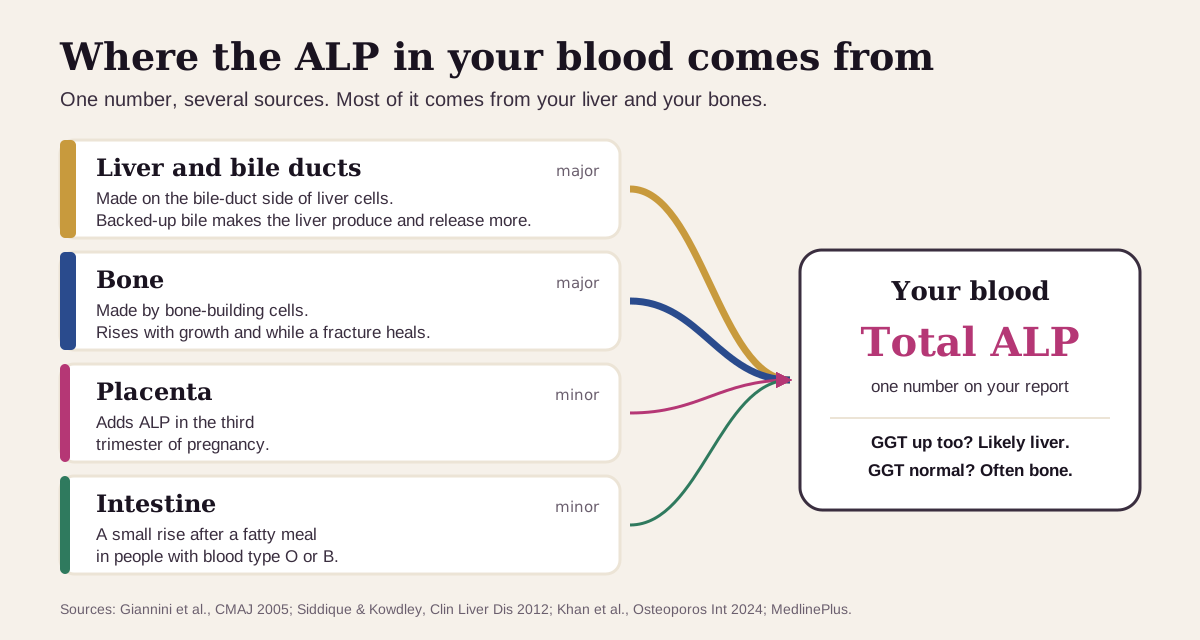
What ALP is
ALP is a family of enzymes that sit on the outside surface of cells and clip phosphate groups off other molecules. They need zinc and magnesium to work.5 (More on the chemistry at the end.)
Almost every tissue makes some,6 but the liver and bone make the most, so a high result is usually traced to one of the two.4 In the liver, ALP lines the bile ducts. When bile backs up, the liver makes and releases more of it, which is why ALP is the classic bile-flow marker.1 In bone, ALP sits on the bone-building cells (osteoblasts) and helps lay down mineral.5
Two smaller sources matter at certain times: the placenta late in pregnancy, and the intestine after a fatty meal in people with blood type O or B.14
ALP is part of the comprehensive metabolic panel (CMP) and the liver panel, so many people first see it on routine checkup blood work.6
What's a normal ALP?
Start with the range printed on your report. Labs use different methods, so their ranges differ.3 MedlinePlus gives 40–129 U/L as a typical adult range.3 One New York hospital lab used 30–115 U/L.8
Healthy adults sit well inside those ranges. In a 2020 analysis of 1,199 healthy-weight U.S. adults from the NHANES national survey, the median ALP was 57 U/L and the middle half ran 47–69 U/L. The upper limits of normal (the 97.5th percentile) ranged from about 94 to 124 U/L across the population groups studied, and every one of them sat above the 91 U/L limit in the analyzer's manual.9
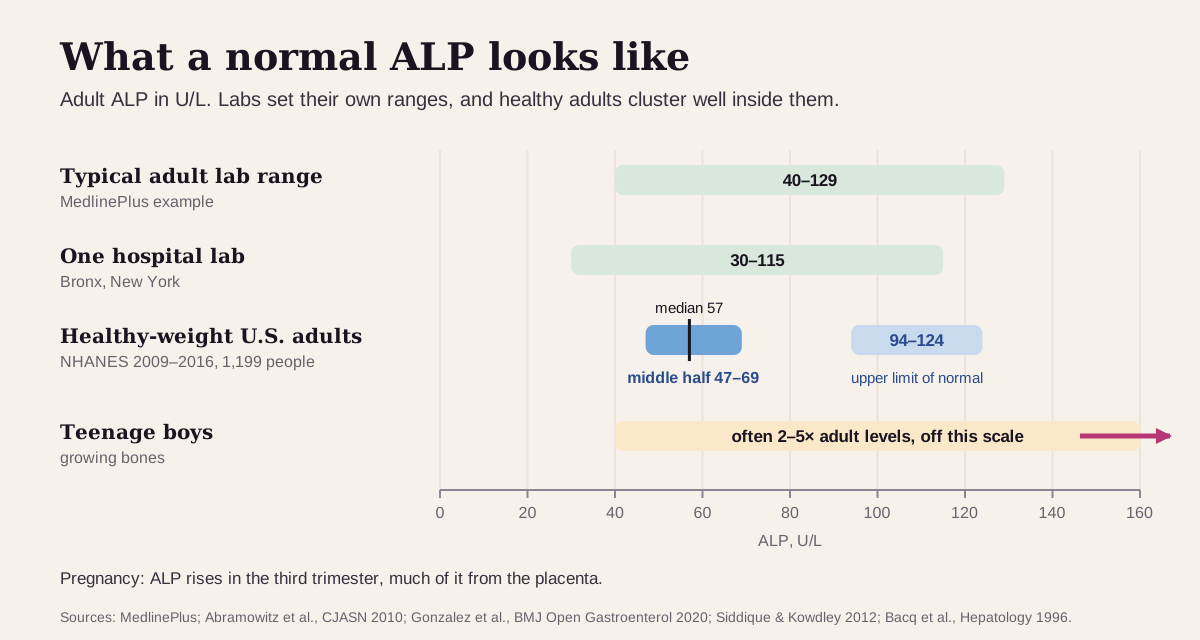
Age and life stage move ALP more than almost anything else:
- Teenagers. ALP in adolescent boys can be 2–5 times the adult level, and it tracks bone growth. It's also mildly raised in the first 3 months of life.4 A teen's result needs an age-matched range.5
- Pregnancy. In a study of 103 pregnant women and 103 matched controls, ALP was significantly higher in the third trimester, much of it from the placenta.101
- Midlife. ALP creeps up between about 40 and 65, especially in women.4
"Optimal" ALP: what health optimizers aim for
Functional-medicine practitioners aim for a narrower window than a lab's "normal". For ALP they set both a ceiling and a floor, because low values matter too. Here's the ladder, from strictest to loosest:
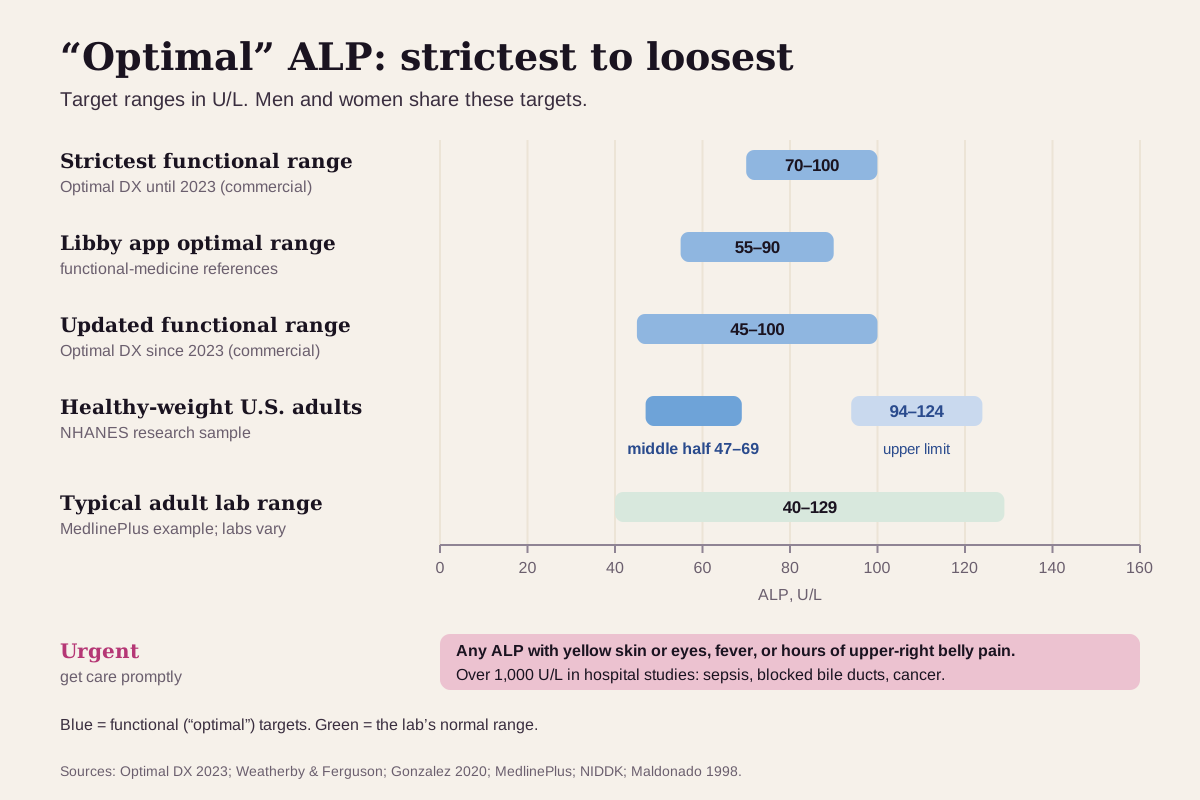
| Target | Men and women | Who uses it |
|---|---|---|
| Strictest (older functional range) | 70–100 U/L | Optimal DX, a functional-medicine lab-analysis company, until 202311 |
| Functional medicine | 55–90 U/L | The optimal range shown in the Libby app, drawn from functional-medicine references12 |
| Updated functional range | 45–100 U/L | Optimal DX since its 2023 literature review11 |
| Research "healthy" adults | middle half 47–69; upper limit about 94–124 U/L | 1,199 healthy-weight U.S. adults in NHANES9 |
| Typical lab range | 40–129 U/L | MedlinePlus's example adult range; your lab's may differ3 |
| Urgent | any level with jaundice, fever or hours of upper-right belly pain; over 1,000 U/L | Signs of a serious gallbladder, liver or pancreas problem;7 seen with sepsis, bile-duct blockage and cancer in hospital patients13 |
Men and women share these targets, and the Libby app uses one optimal range for adult ALP. The American College of Gastroenterology (ACG) reads ALP by its pattern: a rise in ALP that outpaces ALT and AST is its definition of a bile-flow ("cholestatic") pattern.14
Why the ceiling sits near 100:
- In 10,743 outpatients at a New York medical center followed for a median of 6.8 years, people with an ALP of 104 U/L or more had 1.65 times the risk of dying as those at 66 or below, after adjusting for age, diabetes, blood pressure, kidney function, other liver tests and more. At 83–103 U/L the risk was 1.30 times.8
- The link held inside the normal range. Limited to people with an ALP of 115 or less and no liver-test abnormality, the top quarter (92–115 U/L) had 1.37 times the risk of the bottom quarter (63 or less).8
- A 2014 meta-analysis of 19 cohorts with over 9 million people found the same direction: the top third of ALP carried 1.38 times the risk of death of the bottom third, about 3% more per 5 U/L.15
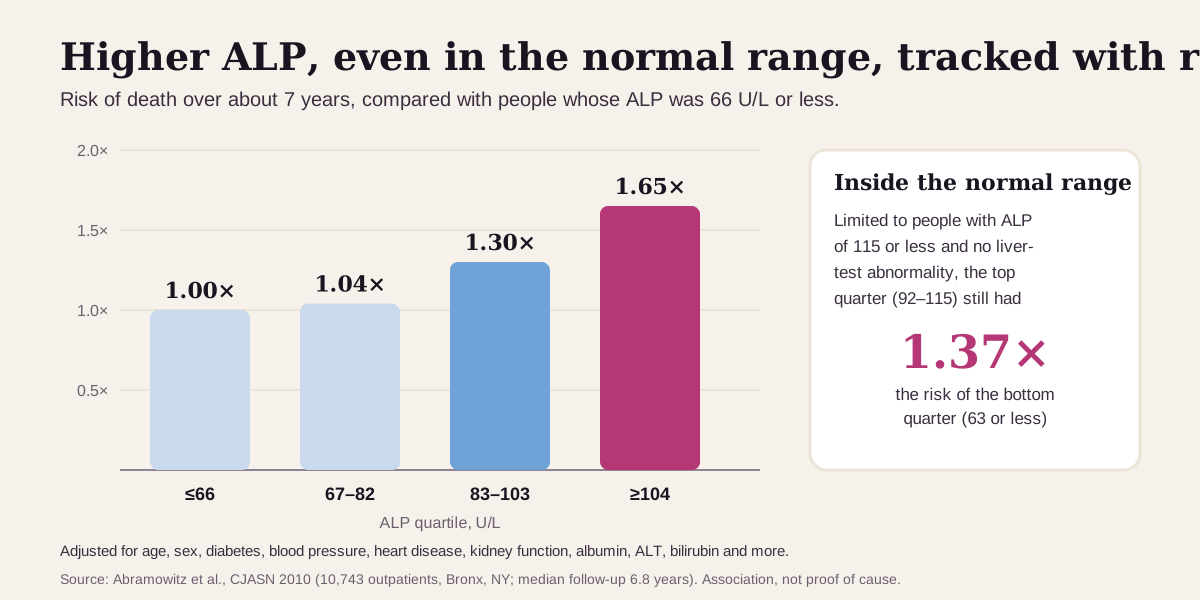
Keep "optimal" in perspective. These are associations. ALP tracks bone turnover and bile flow, so a higher level may flag something else going on (the study authors raise hidden fatty liver as one possibility) rather than cause harm itself.8 An ALP of 110 is a reason to look at the pattern with GGT and your other results, not a diagnosis. The floor matters too: Optimal DX links values under 45 to low zinc or magnesium,11 and a persistently low ALP is the hallmark of hypophosphatasia (see below).5
What a high ALP usually means
First find the source. Liver and bone disease are the most common reasons for a truly raised ALP.1 The quickest way to tell them apart is GGT, another enzyme on most liver panels: GGT rises along with ALP when the liver is the source, and stays normal when the source is bone.21 A normal ALT, AST and bilirubin next to a high ALP also points toward bone.6
Normal life stages: the expected reasons
- Growth. Children and teens have high ALP because their bones are growing.64
- Pregnancy. The placenta adds ALP in the third trimester.101
- A fatty meal. In people with blood type O or B, a fatty meal before the test can cause a small rise.64
Liver and bile ducts: GGT is high too
- A blocked bile duct. A gallstone stuck in the common bile duct is the classic cause: about 90% of people with a stone blocking the duct have a high ALP and GGT. Tumors of the pancreas or bile ducts can do the same.4
- Medicines. Some drugs slow bile flow. Blood-pressure drugs such as ACE inhibitors and hormones such as estrogen are common examples that are easy to overlook.1 Don't stop a prescribed medicine on your own. Bring your full list, supplements included, to your clinician.
- Bile-duct diseases. Primary biliary cholangitis (PBC) mostly affects middle-aged women, and about 60% are diagnosed after a routine test finds a high ALP.4 Primary sclerosing cholangitis (PSC) usually travels with inflammatory bowel disease.1 The ACG recommends testing for both when a liver source is confirmed.14
- Something taking up space in the liver. Sarcoidosis, lymphoma or cancer that has spread to the liver can raise ALP, sometimes as the only sign.1
Bone: GGT is normal
A healing fracture, low vitamin D, soft bones (osteomalacia), Paget disease of bone and cancer that has spread to bone are the usual bone causes. An overactive parathyroid or thyroid can also raise ALP.46
Less common causes outside liver and bone include kidney failure and heart failure.4
When no cause is obvious
A high ALP that stays high without an explanation deserves a proper workup. In a U.S. academic center's review of 260 adults whose isolated high ALP had no obvious cause at first, 57% turned out to have cancer in the liver or bone, 29% had bone disease, and 7% had liver disease no one had suspected.16 Those patients came from a large academic medical center and had no obvious explanation, so the group skews sicker than people who see a mildly high ALP on a checkup. It still shows why "unexplained" is a reason to keep looking.
How high is high?
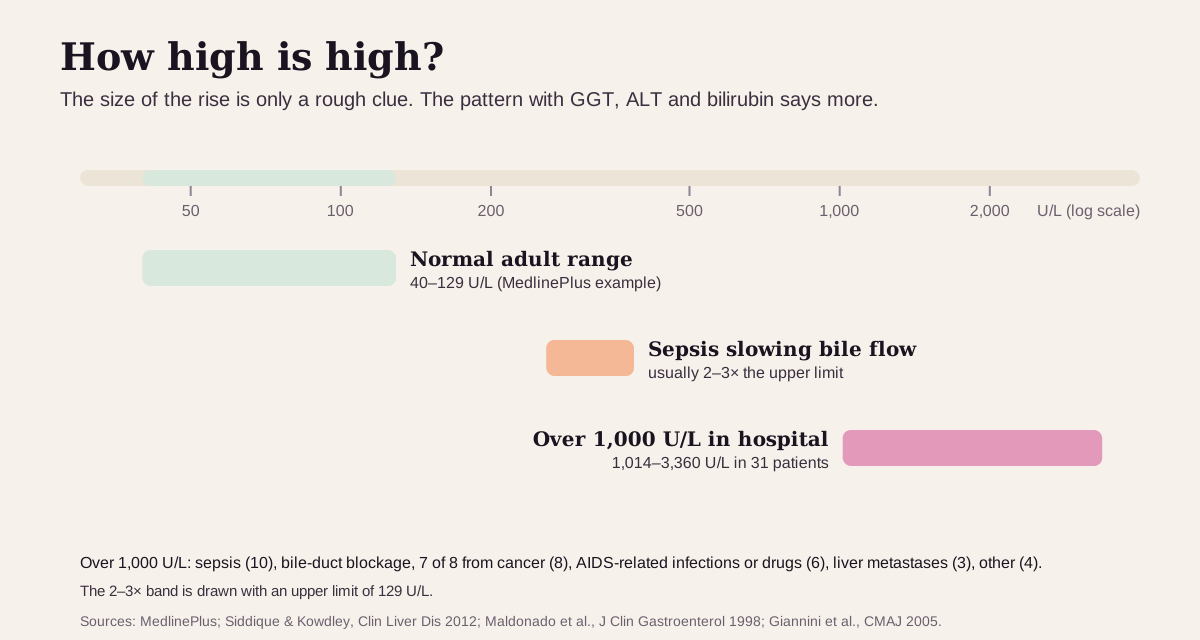
The size of the rise is a rougher clue for ALP than for ALT. One review found the degree of elevation had no specific diagnostic value; the pattern with other tests matters more.1 The extremes still say something:
- Infection spreading through the blood (sepsis) can slow bile flow. ALP then usually runs 2–3 times the upper limit, with bilirubin rising more.4
- In one hospital's review of 31 patients with ALP over 1,000 U/L, the causes were sepsis (10), bile-duct blockage (8, seven of them from cancer), AIDS-related infections or drugs (6), cancer spread to the liver (3) and other liver disease (4).13
Get care right away if a high ALP comes with upper-right belly pain lasting several hours, fever or chills, yellow skin or eyes, nausea and vomiting, or tea-colored urine and light-colored stools. These can be signs of a serious infection or inflammation of the gallbladder, liver or pancreas.7
ALP reads best next to its neighbors
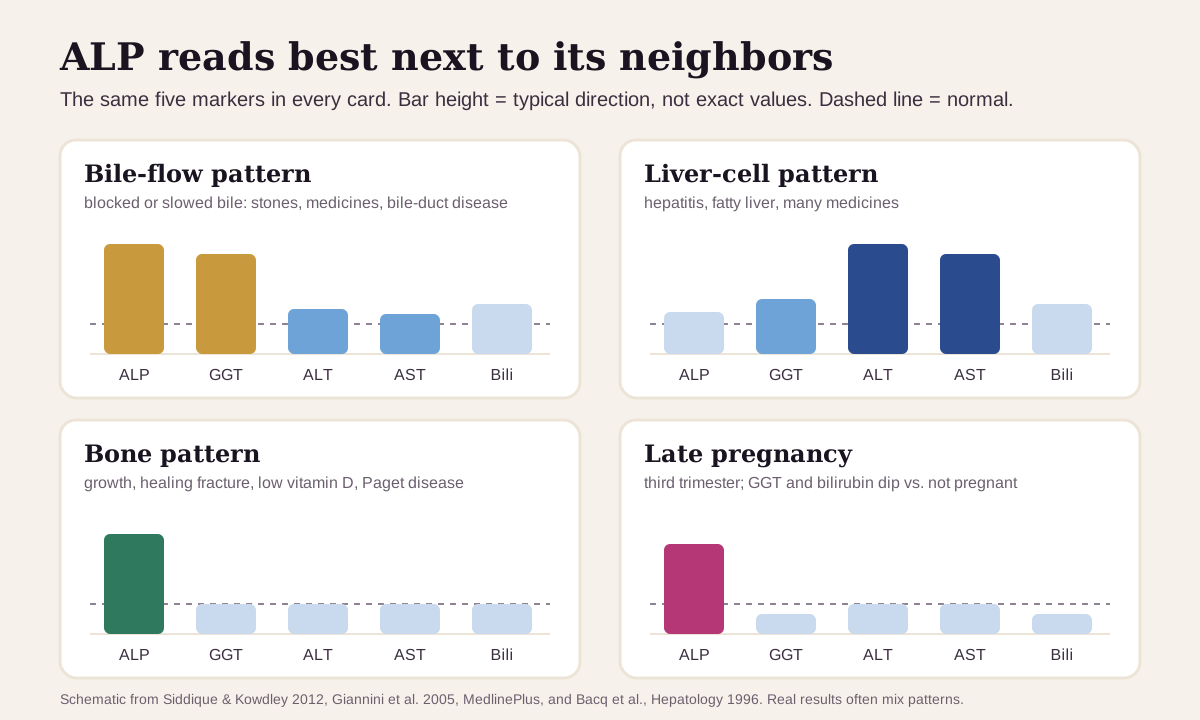
ALP almost always comes with other liver tests. The pattern across them says far more than ALP alone:41
| If you see… | It often points to… |
|---|---|
| ALP and GGT up more than ALT and AST; bilirubin may rise too | a bile-flow ("cholestatic") pattern: a blocked duct, a medicine, or a bile-duct disease |
| ALT and AST up much more than ALP | a liver-cell ("hepatocellular") pattern: hepatitis, fatty liver, many medicines |
| ALP up alone, GGT normal | bone: growth, a healing fracture, low vitamin D, Paget disease |
| ALP up in late pregnancy, GGT and bilirubin lower than in non-pregnant women | normal pregnancy: the placenta adds ALP |
| GGT up a lot, ALP normal or barely up | alcohol: in alcohol-related liver disease GGT can run over 10 times normal, more than 2.5 times the ALP |
To see how well the liver is working, look at albumin, bilirubin and a clotting test (PT/INR). ALP, like ALT, is an enzyme marker rather than a function test.4
Is a low ALP a problem?
Low ALP is less common than high.6 The usual explanations are:5
- Thyroid. In a German study of 849 adults with a low ALP, about 1 in 4 of those without hypophosphatasia had an underactive thyroid.17
- Nutrition. Low zinc, magnesium or protein, malnutrition, celiac disease and vitamin C deficiency.56
- Medicines and illness. Osteoporosis drugs that slow bone turnover, very high vitamin D levels, chemotherapy, and any severe illness, surgery or injury.5
- Other conditions: Wilson disease, pernicious anemia and an underactive parathyroid.56
- The wrong tube. ALP needs magnesium. Blood drawn into a tube with EDTA or oxalate (anticoagulants that bind magnesium) reads falsely low.5
Hypophosphatasia (HPP) is the rare one to know about. It's an inherited shortage of the bone-liver-kidney form of ALP, and a persistently low ALP for your age and sex is its hallmark. In adults it can show up as chronic bone or muscle pain, fractures that heal slowly, calcium crystals in the joints, and dental problems.5 In the German study, 32 of the 849 adults with a low ALP had a documented HPP diagnosis.17 It matters because common osteoporosis drugs (bisphosphonates) can make the bone problem in HPP worse.5
How fast ALP changes
ALP is slow. Its half-life in the blood is about one week. It tends to rise late after a bile duct blocks and fall slowly once the blockage clears.1
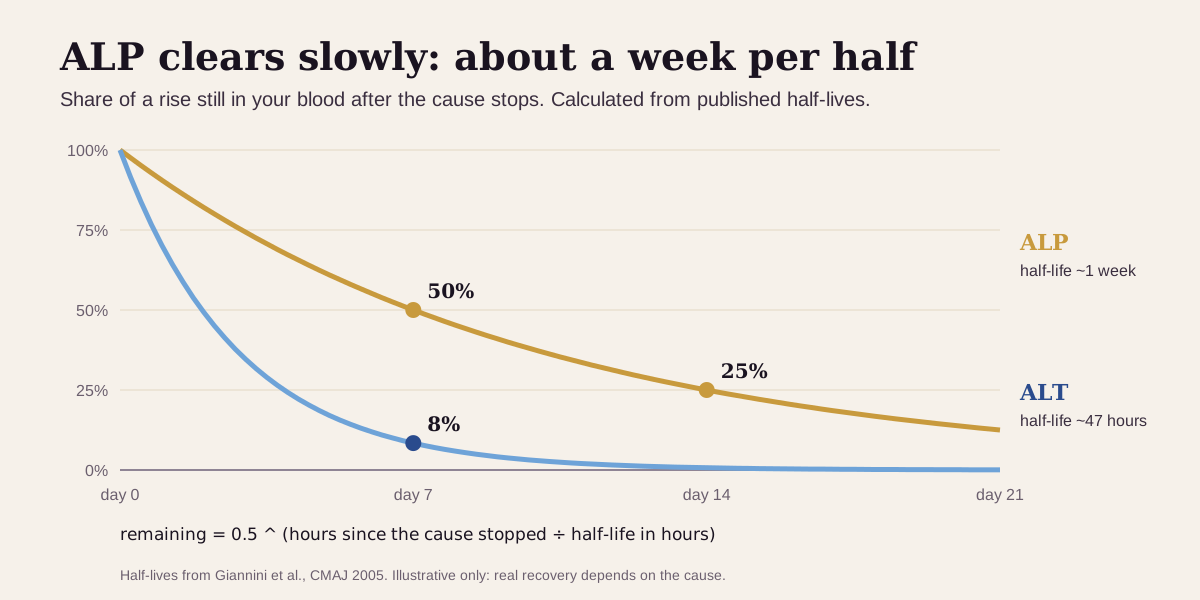
What that means in practice:
- Your own baseline is a sharp yardstick. In a European study that tested 91 healthy adults every week for 10 weeks, a person's ALP varied only about 5% from week to week, while ALP differed by about 25% from one person to the next.18 So a jump from your usual 60 to 110 stands out more than the lab's range alone would suggest.
- Context changes the reading. Mention a recent fracture, pregnancy, new medicines, and what you ate before the test.64 Follow your lab's fasting instructions; ALP is usually drawn with other tests after several hours without food.6
- Trends beat snapshots. Compare results from the same lab when you can, because methods and ranges differ.3
Going deeper: what ALP actually does
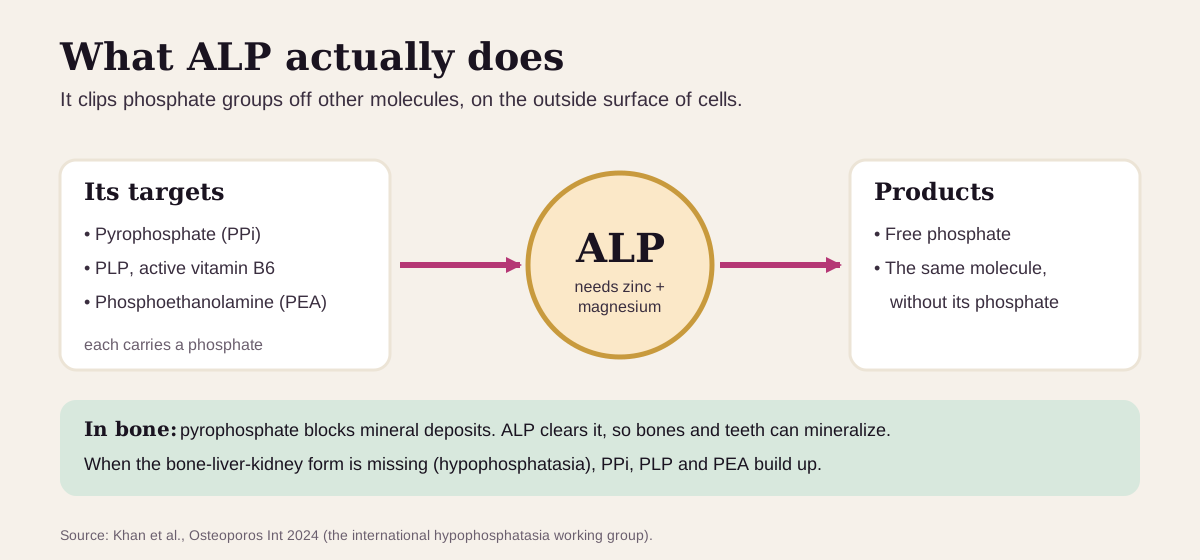
ALP is a phosphatase: it removes phosphate groups from molecules outside the cell. Its three main natural targets are pyrophosphate, PLP (the active form of vitamin B6) and phosphoethanolamine.5
The pyrophosphate job is the important one for bone. Pyrophosphate blocks mineral from being laid down. ALP on the bone-building cells breaks it down, which lets bones and teeth mineralize. When the enzyme is missing, as in hypophosphatasia, pyrophosphate builds up and bones soften.5
One gene makes the ALP of bone, liver and kidney, and it accounts for about 95% of the ALP activity in your blood. The intestine, placenta and germ cells each make a separate form.5 An ALP isoenzyme test can show which part of your body is making the ALP, though not every lab offers it.6
GGT/ALP ratio. In alcohol-related liver disease, GGT can run more than 2.5 times the ALP, a pattern one review calls characteristic.1
Questions worth asking
- Is my ALP from my liver or my bones? Has GGT been checked?
- What do my ALT, AST and bilirubin show next to it?
- Could any of my medicines or supplements be slowing bile flow?
- Should my vitamin D or a bone-specific ALP be checked?
- If my ALP stays high, what's the next step, and would an ultrasound help?
- If my ALP is persistently low, could it be hypophosphatasia, and does that change which osteoporosis treatment is right for me?
FAQ
What is a normal ALP level? It depends on your lab's range. A typical adult range is about 40–129 U/L.3 Healthy-weight U.S. adults have a median around 57 U/L.9
What is the most common cause of a high ALP? Outside of growth and pregnancy, liver and bone disease are the most common causes. A high GGT alongside it points to the liver, and a normal GGT points to bone.12
Can a high ALP be normal? Yes. Growing children and teens, and women in the third trimester of pregnancy, normally have a high ALP. A fatty meal can also nudge it up in people with blood type O or B.610
When is a high ALP an emergency? When it comes with yellow skin or eyes, fever or chills, or upper-right belly pain lasting hours, get care right away.7
This guide is for education. It can't diagnose you or replace care from a clinician who knows your history.
Footnotes
-
Giannini EG, Testa R, Savarino V. Liver enzyme alteration: a guide for clinicians. CMAJ. 2005;172(3):367–379. The source for liver and bone as the main causes, bile-duct ALP and why it rises in cholestasis, the ~1-week half-life, GGT as the tie-breaker, pregnancy and adolescence, medicines, infiltrative disease, and the alcohol GGT/ALP pattern. PMC ↩ ↩2 ↩3 ↩4 ↩5 ↩6 ↩7 ↩8 ↩9 ↩10 ↩11 ↩12 ↩13 ↩14 ↩15 ↩16 ↩17 ↩18 ↩19 ↩20
-
National Library of Medicine. Gamma-glutamyl Transferase (GGT) Test. MedlinePlus. "Only ALP will be elevated in bone disease." MedlinePlus ↩ ↩2 ↩3 ↩4 ↩5 ↩6
-
National Library of Medicine. ALP – blood test. MedlinePlus Medical Encyclopedia. Gives 40–129 IU/L as an example normal range and notes ranges vary by lab. MedlinePlus ↩ ↩2 ↩3 ↩4 ↩5 ↩6 ↩7 ↩8 ↩9
-
Siddique A, Kowdley KV. Approach to a patient with elevated serum alkaline phosphatase. Clin Liver Dis. 2012;16(2):199–229. Age and sex patterns (teen boys 2–5× adults), the non-liver causes table, the hepatocellular/cholestatic pattern table, gallstone and sepsis figures, and PBC. PMC ↩ ↩2 ↩3 ↩4 ↩5 ↩6 ↩7 ↩8 ↩9 ↩10 ↩11 ↩12 ↩13 ↩14 ↩15 ↩16 ↩17 ↩18 ↩19
-
Khan AA, Brandi ML, Rush ET, et al. Hypophosphatasia diagnosis: current state of the art and proposed diagnostic criteria for children and adults. Osteoporos Int. 2024;35(3):431–438. The international HPP working group: the enzyme's cofactors, targets and share of total ALP, causes of low ALP, the EDTA tube effect, and bisphosphonate risk in HPP. PMC ↩ ↩2 ↩3 ↩4 ↩5 ↩6 ↩7 ↩8 ↩9 ↩10 ↩11 ↩12 ↩13 ↩14 ↩15 ↩16 ↩17
-
National Library of Medicine. Alkaline Phosphatase. MedlinePlus lab test information. Causes of high and low ALP, growth, pregnancy, fatty meals, and the isoenzyme test. MedlinePlus ↩ ↩2 ↩3 ↩4 ↩5 ↩6 ↩7 ↩8 ↩9 ↩10 ↩11 ↩12 ↩13 ↩14 ↩15
-
National Institute of Diabetes and Digestive and Kidney Diseases. Symptoms & Causes of Gallstones. NIH. When to seek care right away. NIDDK ↩ ↩2 ↩3 ↩4 ↩5
-
Abramowitz M, Muntner P, Coco M, et al. Serum alkaline phosphatase and phosphate and risk of mortality and hospitalization. Clin J Am Soc Nephrol. 2010;5(6):1064–1071. 10,743 outpatients with normal kidney function, median 6.8-year follow-up; adjusted hazard ratios by ALP quartile. PMC ↩ ↩2 ↩3 ↩4 ↩5 ↩6 ↩7
-
Gonzalez H, Imam Z, Wong R, et al. Normal alkaline phosphatase levels are dependent on race/ethnicity: National Health and Nutrition Examination Survey data. BMJ Open Gastroenterol. 2020;7(1):e000502. 1,199 healthy-weight U.S. adults, NHANES 2009–2016: median 57 U/L, middle half 47–69, upper limits 93.8–123.8 IU/L across groups. PMC ↩ ↩2 ↩3 ↩4 ↩5
-
Bacq Y, Zarka O, Bréchot JF, et al. Liver function tests in normal pregnancy: a prospective study of 103 pregnant women and 103 matched controls. Hepatology. 1996;23(5):1030–1034. ALP higher in the third trimester; GGT and bilirubin lower; AST unchanged. PubMed ↩ ↩2 ↩3 ↩4 ↩5
-
Optimal DX. An Update on Alkaline Phosphatase. June 5, 2023. States that its ALP range moved from 70–100 IU/L to 45–100 IU/L, and links values under 45 to low zinc or magnesium. A commercial source, listed as what the optimizer community uses. optimaldx.com ↩ ↩2 ↩3 ↩4
-
Weatherby D, Ferguson S. Blood Chemistry and CBC Analysis: Clinical Laboratory Testing from a Functional Perspective. 2nd ed. Bear Mountain Publishing; 2004. ISBN 978-0976136712. Widely used functional-medicine reference and one of the sources behind the Libby app's optimal ranges. ↩ ↩2
-
Maldonado O, Demasi R, Maldonado Y, et al. Extremely high levels of alkaline phosphatase in hospitalized patients. J Clin Gastroenterol. 1998;27(4):342–345. 31 inpatients with ALP 1,014–3,360 U/L. PubMed ↩ ↩2 ↩3 ↩4
-
Kwo PY, Cohen SM, Lim JK. ACG Clinical Guideline: Evaluation of Abnormal Liver Chemistries. Am J Gastroenterol. 2017;112(1):18–35. The U.S. gastroenterology society's guideline: defines cholestatic injury and the workup of a liver-source ALP. PubMed ↩ ↩2
-
Kunutsor SK, Apekey TA, Seddoh D, Walley J. Liver enzymes and risk of all-cause mortality in general populations: a systematic review and meta-analysis. Int J Epidemiol. 2014;43(1):187–201. 19 cohorts, over 9.24 million participants. PubMed ↩
-
Jones W, Rockey DC. An observational study of the causes of an isolated elevated alkaline phosphatase level of unclear etiology. Am J Med Sci. 2025;369(3):354–358. 260 adults at one U.S. academic center. PubMed ↩
-
Hoff P, Mann A, Steinmüller M, Aliluev A. Clinical presentation of adults with persistently low alkaline phosphatase activity: a retrospective multicentre, cross-sectional study in Germany. BMJ Open. 2025;15(7):e097235. 849 adults with low ALP; 32 with HPP; 26.6% of the rest hypothyroid. PMC ↩ ↩2
-
Carobene A, Røraas T, Sølvik UØ, et al. Biological Variation Estimates Obtained from 91 Healthy Study Participants for 9 Enzymes in Serum. Clin Chem. 2017;63(6):1141–1150. ALP within-person variation 5.3%, between-person 24.9%. PubMed ↩
Educational content, not medical advice.Libby is a personal record tool, not a medical service — it doesn't diagnose, treat, or prescribe. Reference ranges vary by lab and by person. Talk to a qualified healthcare professional about your results.
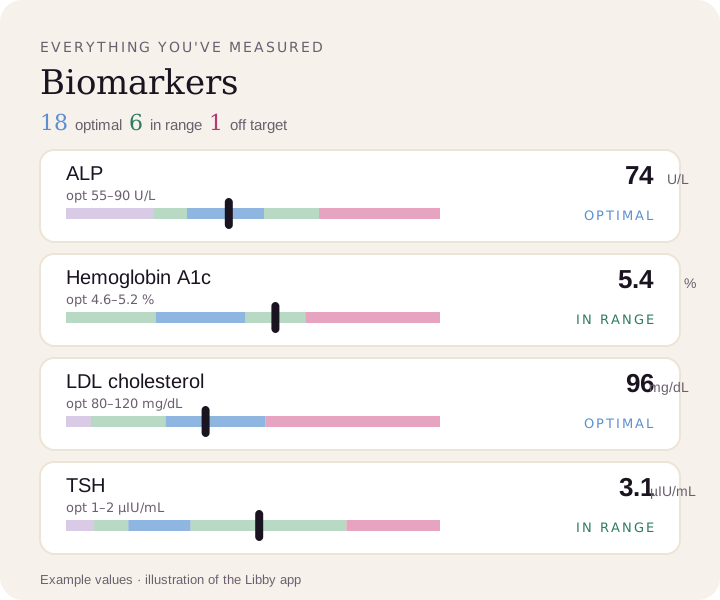
Compare your results to optimal ranges.
Upload a lab PDF or a photo of your report. Libby puts every marker on your lab's range and the optimal range, and tracks your trends over time.
View your ALP ›