ALT blood test: normal levels, high causes, and next steps
ALT is a liver enzyme. Here's what a normal level is, the most common reasons it runs high, how to read it with AST and ALP, and when a high result is urgent.
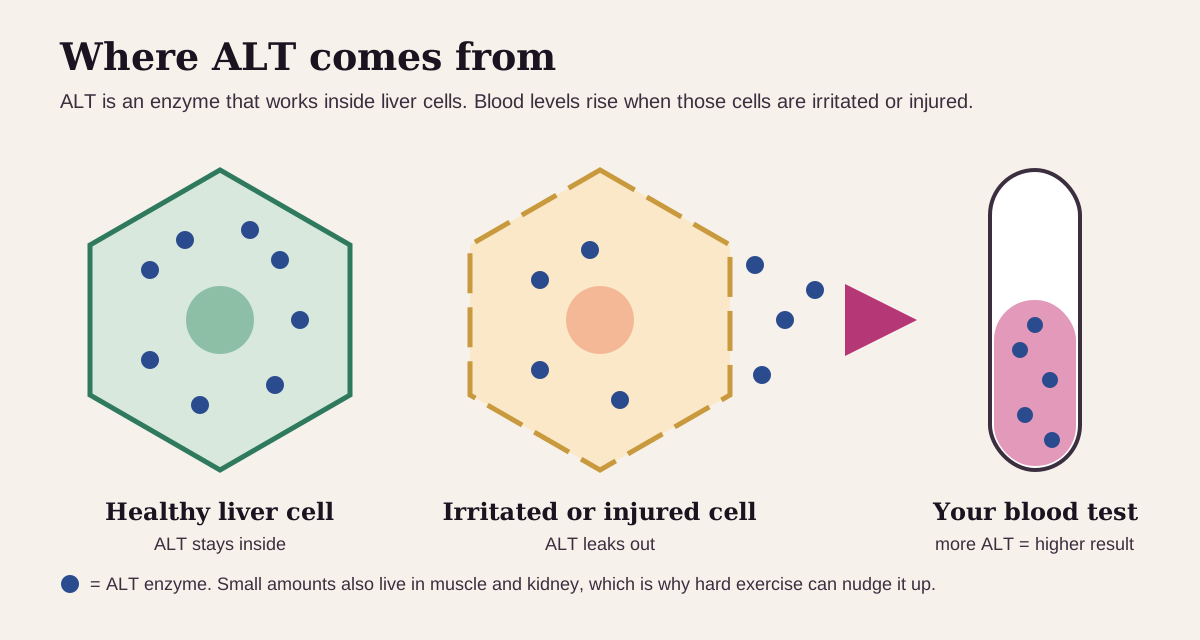
ALT (alanine aminotransferase) is an enzyme that lives mostly inside your liver cells. When those cells are irritated or damaged, ALT leaks into your blood. That makes a high ALT one of the most common early signs that something is bothering your liver, and it's more liver-specific than its cousin AST.1
The short version
- Normal: check the upper limit on your report. Many liver specialists consider a truly healthy ALT to be about 33 U/L or less for men and 25 U/L or less for women, which is lower than many lab ranges.2
- Mildly high (under 5 times your lab's upper limit) is common. The usual reasons are fatty liver, alcohol, medicines or supplements, viral hepatitis, and hard exercise.12
- Very high (more than 10 times the upper limit, often in the hundreds or thousands) means sudden, intense liver injury. That needs prompt medical care.1
- ALT shows injury, not how well your liver is working. Albumin, bilirubin and clotting tests show function.2
What ALT is
ALT is one of the liver's working enzymes. Its job is to move nitrogen from the amino acid alanine onto another molecule, which turns protein building blocks into fuel the liver can burn or convert into glucose. (More on the chemistry at the end.)
Most of your body's ALT sits inside liver cells, with small amounts in muscle and kidney. Its cousin AST is also in the liver, but it is spread through heart, muscle, kidney, brain and red blood cells too. That makes ALT the more liver-specific of the two.1
ALT shows up on routine blood work. It's part of the comprehensive metabolic panel (CMP) and the liver panel, so many people see it for the first time on a yearly checkup, with nothing wrong at all.
What's a normal ALT?
Start with the range printed on your own report. Labs use different methods, so their ranges differ.3
Then know this: many labs' upper limits are higher than what liver specialists consider healthy. Reference ranges come from "normal" populations, and those can include people with undiagnosed liver disease.1 When researchers restrict the reference group to truly healthy people, the upper limit drops.4
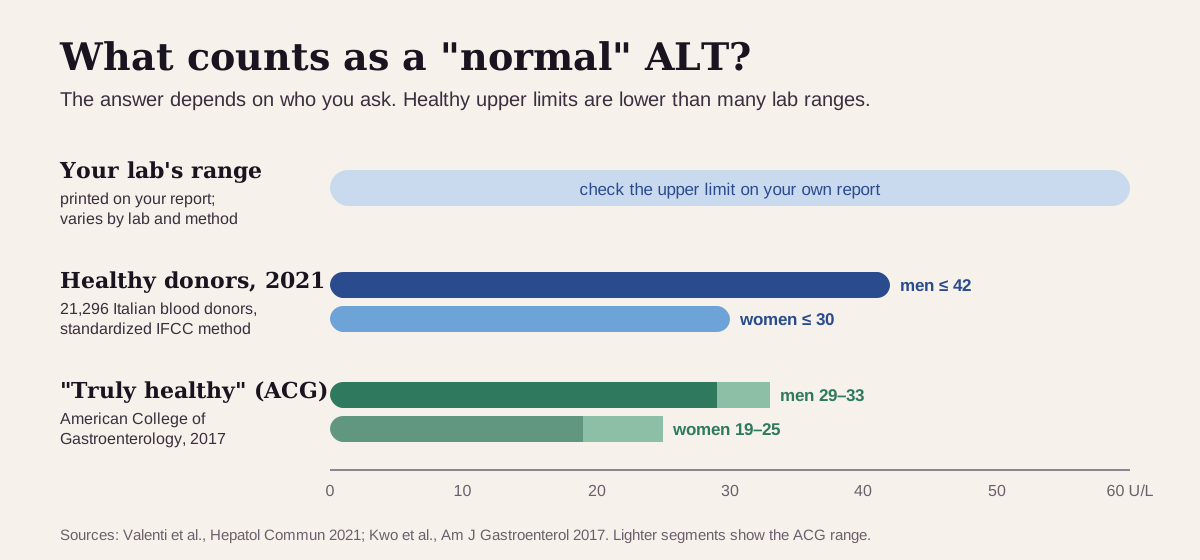
- The American College of Gastroenterology puts a truly healthy ALT at 29–33 U/L for men and 19–25 U/L for women. It recommends looking into levels above that.2
- A 2021 study of 21,296 Italian blood donors, using the newer standardized lab method, set healthy upper limits at 42 U/L for men and 30 U/L for women. These lower limits were better at picking up fatty liver and scarring.4
Men run higher than women. ALT also tends to be higher with a higher body weight, higher blood sugar and lipids, higher blood pressure, and at younger ages.4 That's why the same number can mean slightly different things for different people.
"Optimal" ALT: what health optimizers aim for
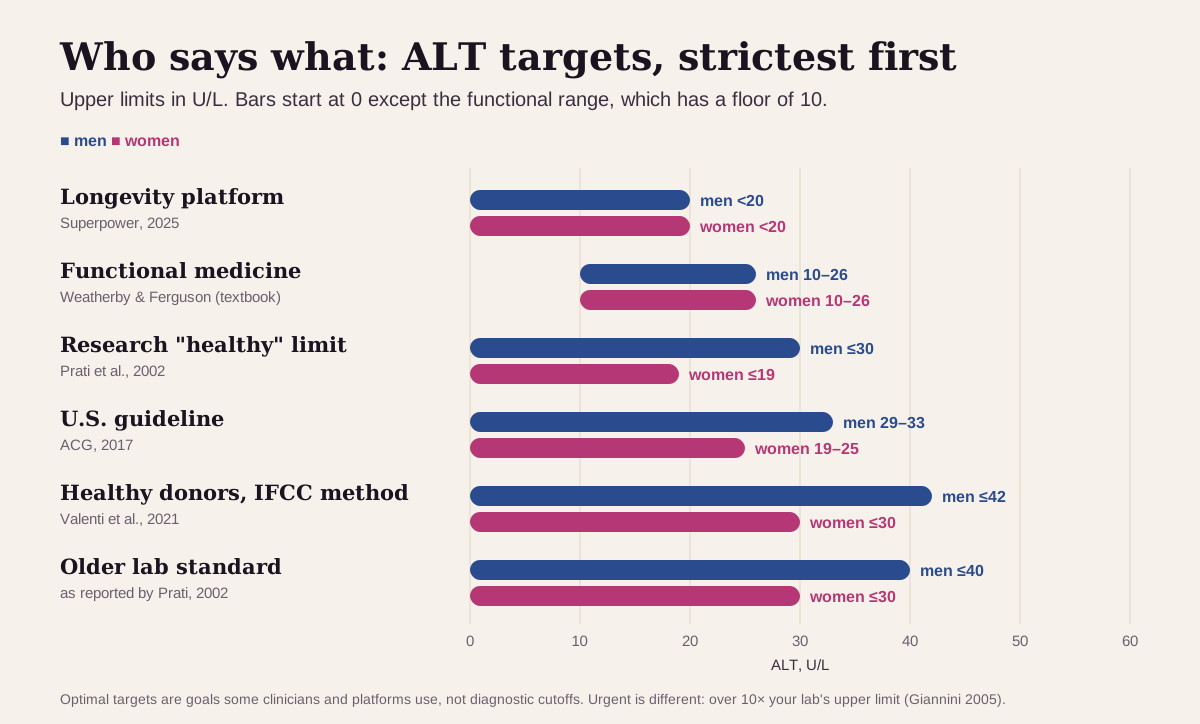
Longevity clinics, functional-medicine practitioners and at-home testing companies aim much lower than a lab's "normal". Here's the full ladder, from strictest to loosest:
| Target | Men | Women | Who uses it |
|---|---|---|---|
| Strictest (longevity platforms) | under 20 U/L | under 20 U/L | Superpower's published optimal range5 |
| Functional medicine | 10–26 U/L | 6–22 U/L | The optimal range shown in the Libby app. The men's band is the standard functional-medicine textbook range (10–26 for both sexes);6 the app sets a lower band for women |
| Research "healthy" limit | 30 U/L or less | 19 U/L or less | Prati et al., who excluded people with hidden liver disease7 |
| U.S. gastroenterology guideline | 29–33 U/L | 19–25 U/L | American College of Gastroenterology2 |
| Older lab standard | up to 40 U/L | up to 30 U/L | The limits Prati's group set out to replace7 |
| Urgent | over 10× the upper limit | over 10× the upper limit | Sudden liver injury: get care promptly1 |
Why the low targets aren't just a trend:
- In a study of 142,055 Korean adults followed for 8 years, people with ALT of 20–29, still well inside the "normal" range, had 2.9 times (men) and 3.8 times (women) the risk of dying from liver disease compared with people under 20. At 30–39, it was 9.5 and 6.6 times.8
- Prati's stricter limits caught far more hepatitis C: 76% vs 55% with the old limits.7
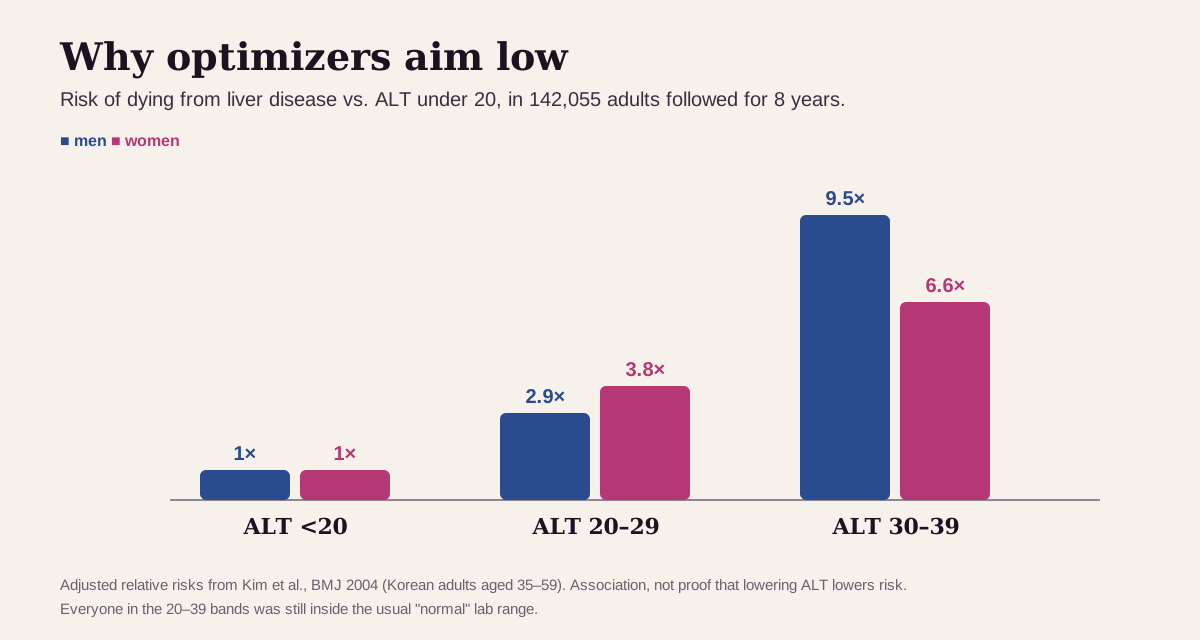
Keep "optimal" in perspective: these are targets, not diagnoses. An ALT of 28 is a reason to look at your weight, blood sugar, alcohol and liver fat. Lower isn't always better, either: in older adults a very low ALT tracks with frailty, which is one reason the functional range has a floor of 10.9
What a high ALT usually means
The size of the rise is the first clue. Clinicians group ALT elevations by how many times above the lab's upper limit (ULN) they are.1
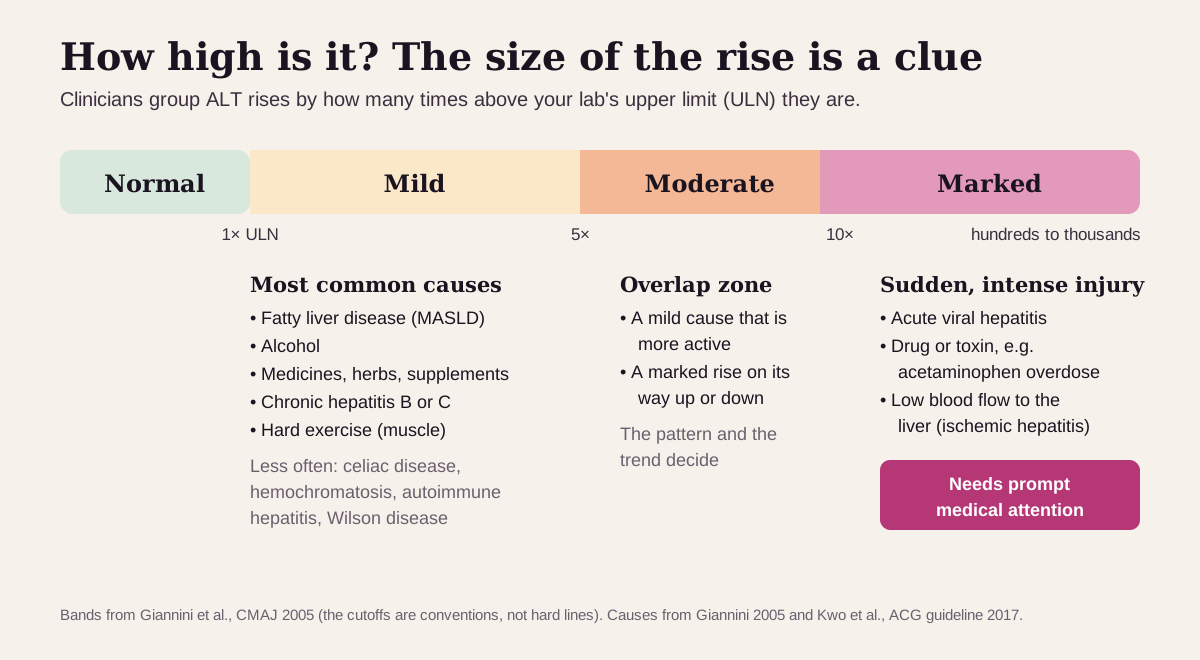
Mildly high (under 5× the upper limit): common, usually slow-moving
The usual suspects:
- Fatty liver disease. Now called MASLD (metabolic dysfunction-associated steatotic liver disease), it affects an estimated 25–30% of adults.10 It usually travels with extra weight around the middle, prediabetes or diabetes, high triglycerides, or high blood pressure. A normal ALT doesn't rule it out: some people with fatty liver damage have normal enzymes.1
- Alcohol. Regular drinking can raise ALT. It typically raises AST even more (see patterns below).1
- Medicines, herbs and supplements. Many common drugs and supplements can raise liver enzymes. The NIH's LiverTox database catalogs them.11 Cholesterol and pain medicines are familiar examples.3 Don't stop a prescribed medicine on your own. Bring your full list, supplements included, to your clinician.
- Hepatitis B or C. Both can smolder for years with only a mild ALT rise. The CDC recommends that every adult be tested for hepatitis C at least once12 and for hepatitis B at least once.13
- Hard exercise. In one study, healthy men who did a single hour of weightlifting had ALT and AST that stayed elevated for at least 7 days.14 That was muscle, not liver. A CK test tells the two apart.
- Less common causes: celiac disease (up to 10% of otherwise unexplained elevations in one report), iron overload (hemochromatosis), autoimmune hepatitis, Wilson disease, and alpha-1 antitrypsin deficiency.12
Very high (over 10× the upper limit): sudden injury
ALT in the hundreds or thousands means liver cells are being injured quickly. Common causes include acute viral hepatitis, a drug or toxin (an acetaminophen overdose is a classic example), and a sudden drop in blood flow to the liver (ischemic hepatitis).1
Get prompt care if your ALT is very high, or if a high ALT comes with yellow skin or eyes, dark urine, pale stools, belly pain or swelling, or nausea and vomiting.3
In between (5–10×)
This is an overlap zone. It can be a mild cause that is more active, or a big rise on its way up or down. Here the pattern with other tests, and the trend over repeat tests, matter most.1
ALT reads best next to its neighbors
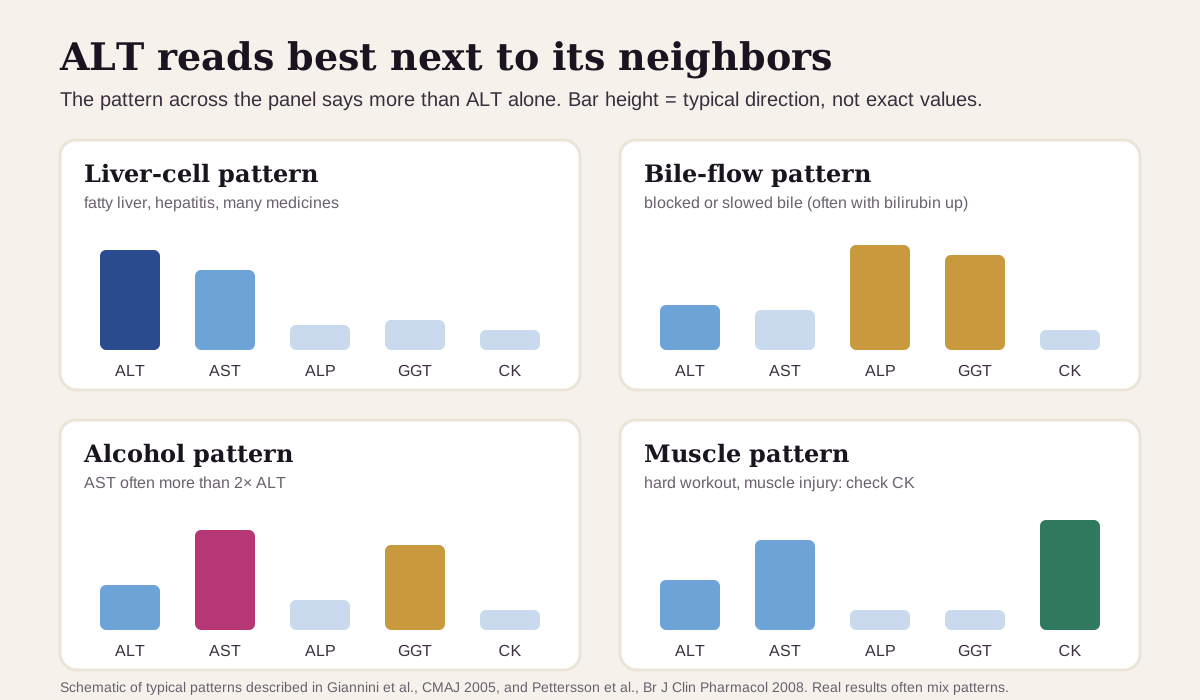
ALT rarely comes alone. The pattern across your liver panel usually says more than ALT does by itself:1
| If you see… | It often points to… |
|---|---|
| ALT and AST both up, ALP about normal | a liver-cell ("hepatocellular") pattern: fatty liver, hepatitis, many medicines |
| ALP and GGT up more than ALT, often bilirubin too | a bile-flow ("cholestatic") pattern: something slowing or blocking bile |
| AST higher than ALT, often more than 2× | alcohol-related liver injury: in one classic study, AST was more than twice ALT in 70% of patients |
| AST and CK up, ALT only mildly up | muscle, e.g. a hard workout or muscle injury |
To see how well the liver is working, look at albumin, bilirubin and a clotting test (PT/INR). ALT doesn't measure function.2
Is a low ALT a problem?
Usually not, at least for your liver. In older adults, very low ALT has been linked to frailty and lower muscle mass. In one hospital study, it was associated with higher mortality.9 It's a marker of overall reserve, not a liver warning.
How fast ALT changes
ALT lingers. Its half-life in the blood is about 47 hours, versus about 17 hours for AST.1 So after an injury stops, AST falls quickly and ALT drifts down over several days.
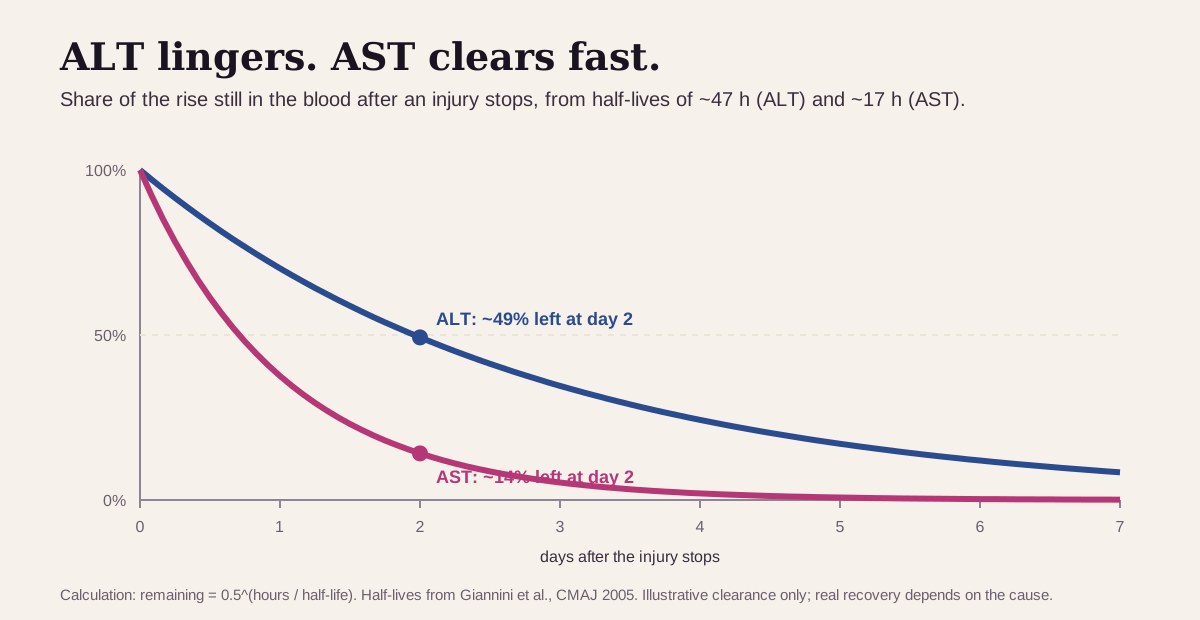
What that means in practice:
- A single mildly high result is often repeated. Things like a hard workout in the past week can push it up temporarily.14 Mention recent exercise, illness, new medicines or supplements, and alcohol when you get tested.
- A level that stays high is worth working up. The ACG recommends evaluating ALT above the healthy range. That usually starts with hepatitis tests, a look at fatty-liver risk factors and alcohol, and a medicine review.2
- Trends beat snapshots. An ALT that climbs over several tests tells a different story than one that bounces around in the same place.1 Comparing results works best from the same lab, because methods differ.3
Going deeper: what ALT actually does
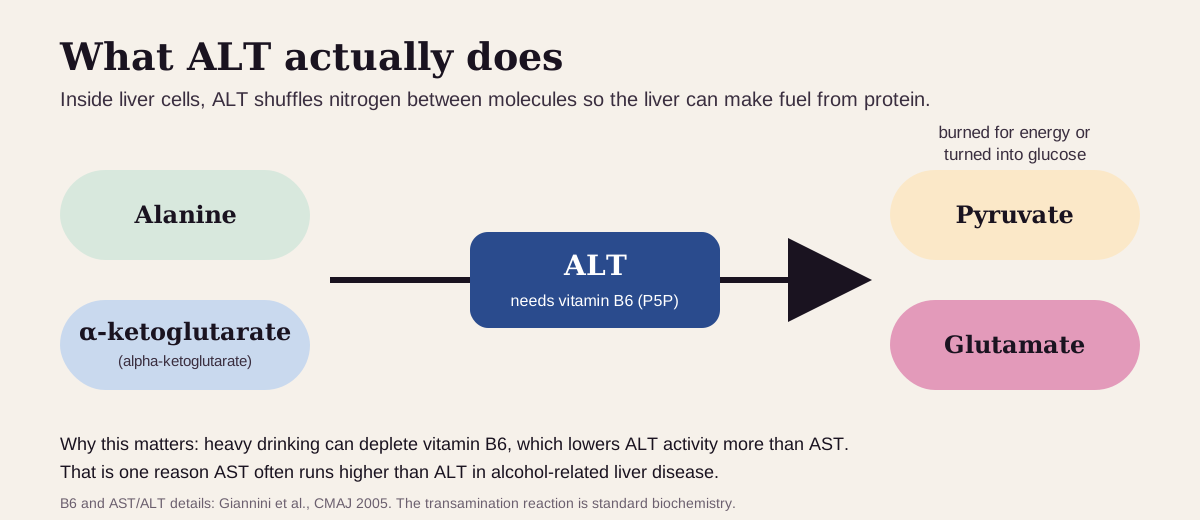
ALT is a transaminase. It moves an amino group from alanine onto alpha-ketoglutarate, which makes pyruvate and glutamate. Pyruvate can be burned for energy or used to build glucose. That's part of how your liver keeps blood sugar steady between meals.
The enzyme needs the active form of vitamin B6 (pyridoxal-5′-phosphate) to work. B6 deficiency cuts ALT activity more than AST activity. This is one reason heavy drinkers, who are often low in B6, tend to show AST higher than ALT.1
Inside the liver cell, ALT sits only in the cell fluid (cytoplasm). AST is split: about 20% in the cytoplasm and 80% in mitochondria. AST is also concentrated in the zone of the liver around its draining veins, so injury there (from low blood flow or some toxins) can raise AST more.1
ALT also feeds a liver-scarring score. Clinicians combine age, AST, ALT and platelet count into the FIB-4 index:15
FIB-4 = (age × AST) ÷ (platelets × √ALT)
A FIB-4 below 1.3 suggests a low risk of advanced scarring (fibrosis). Liver guidelines use it as a first screen in people with fatty-liver risk factors.10 It's a good example of ALT working as part of a pattern, not alone.
Questions worth asking
- How far above the upper limit is my ALT, and is it mild or marked?
- What do my AST, ALP, GGT and bilirubin show next to it?
- Should I be tested for hepatitis B and C, if I haven't been?
- Could any of my medicines or supplements be involved?
- Do I have fatty-liver risk factors, and would a FIB-4 or an ultrasound help?
- When should we repeat it, and what would change the plan?
FAQ
What is a normal ALT level? It depends on your lab's range. Many specialists consider about 33 U/L or less healthy for men and 25 U/L or less for women.2
What is the most common cause of a high ALT? Fatty liver disease is one of the most common. It affects roughly 1 in 4 adults. Alcohol, medicines and supplements, viral hepatitis and hard exercise are the other common causes.101
Can exercise raise ALT? Yes. In healthy men, a single hour of weightlifting kept ALT and AST elevated for at least a week.14 A CK test can show whether the source is muscle.
When is a high ALT an emergency? Very high levels (over 10 times the upper limit) point to sudden liver injury and need prompt care. So do yellow skin or eyes, dark urine, or belly pain with any high ALT.13
This guide is for education. It can't diagnose you or replace care from a clinician who knows your history.
Footnotes
-
Giannini EG, Testa R, Savarino V. Liver enzyme alteration: a guide for clinicians. CMAJ. 2005;172(3):367–379. The source for liver-specificity, the mild/moderate/marked bands, the half-lives (ALT ~47 h, AST ~17 h), B6 and the AST/ALT ratio, and the celiac figure. PMC ↩ ↩2 ↩3 ↩4 ↩5 ↩6 ↩7 ↩8 ↩9 ↩10 ↩11 ↩12 ↩13 ↩14 ↩15 ↩16 ↩17 ↩18 ↩19 ↩20 ↩21 ↩22
-
Kwo PY, Cohen SM, Lim JK. ACG Clinical Guideline: Evaluation of Abnormal Liver Chemistries. Am J Gastroenterol. 2017;112(1):18–35. The U.S. gastroenterology society's guideline. It defines the "true healthy" ALT range and the workup for hepatocellular injury. PubMed ↩ ↩2 ↩3 ↩4 ↩5 ↩6 ↩7 ↩8 ↩9 ↩10 ↩11 ↩12
-
National Library of Medicine. ALT Blood Test. MedlinePlus. Symptoms of liver injury, and why ranges vary by lab. MedlinePlus ↩ ↩2 ↩3 ↩4 ↩5
-
Valenti L, Pelusi S, Bianco C, et al. Definition of Healthy Ranges for Alanine Aminotransferase Levels: A 2021 Update. Hepatol Commun. 2021;5(11):1824–1832. 21,296 blood donors, standardized IFCC method. PMC ↩ ↩2 ↩3 ↩4 ↩5
-
Superpower. Optimal Liver Enzymes: Evidence Based Optimal Ranges for AST & ALT. December 4, 2025. States an optimal ALT of under 20 U/L for both men and women. A commercial source, listed as what the optimizer community uses. superpower.com ↩ ↩2
-
Weatherby D, Ferguson S. Blood Chemistry and CBC Analysis: Clinical Laboratory Testing from a Functional Perspective. 2nd ed. Bear Mountain Publishing; 2004. ISBN 978-0976136712. Widely used functional-medicine reference. Its optimal ALT range is 10–26 U/L. The Libby app uses it for men and a 6–22 U/L band for women. ↩ ↩2
-
Prati D, Taioli E, Zanella A, et al. Updated definitions of healthy ranges for serum alanine aminotransferase levels. Ann Intern Med. 2002;137(1):1–10. Blood donors in Milan with hidden liver disease excluded. Proposed limits of 30 U/L (men) and 19 U/L (women), replacing 40 and 30. PubMed ↩ ↩2 ↩3 ↩4
-
Kim HC, Nam CM, Jee SH, et al. Normal serum aminotransferase concentration and risk of mortality from liver diseases: prospective cohort study. BMJ. 2004;328(7446):983. 94,533 men and 47,522 women aged 35–59, followed for 8 years. PMC ↩ ↩2
-
Gringauz I, et al. Low Blood ALT Activity and High FRAIL Questionnaire Scores Correlate with Increased Mortality and with Each Other. A Prospective Study in the Internal Medicine Department. J Clin Med. 2018;7(11):386. PubMed ↩ ↩2
-
Rinella ME, Neuschwander-Tetri BA, Siddiqui MS, et al. AASLD Practice Guidance on the clinical assessment and management of nonalcoholic fatty liver disease. Hepatology. 2023;77(5):1797–1835. Prevalence (25–30%) and the FIB-4 <1.3 low-risk cutoff. PMC ↩ ↩2 ↩3
-
National Institute of Diabetes and Digestive and Kidney Diseases. LiverTox: Clinical and Research Information on Drug-Induced Liver Injury. NIH. NCBI Bookshelf ↩
-
Schillie S, Wester C, Osborne M, et al. CDC Recommendations for Hepatitis C Screening Among Adults — United States, 2020. MMWR Recomm Rep. 2020;69(2):1–17. PMC ↩
-
Conners EE, Panagiotakopoulos L, Hofmeister MG, et al. Screening and Testing for Hepatitis B Virus Infection: CDC Recommendations — United States, 2023. MMWR Recomm Rep. 2023;72(1):1–25. PMC ↩
-
Pettersson J, Hindorf U, Persson P, et al. Muscular exercise can cause highly pathological liver function tests in healthy men. Br J Clin Pharmacol. 2008;65(2):253–259. After 1 hour of weightlifting, AST and ALT stayed raised for at least 7 days. PMC ↩ ↩2 ↩3 ↩4
-
Sterling RK, Lissen E, Clumeck N, et al. Development of a simple noninvasive index to predict significant fibrosis in patients with HIV/HCV coinfection. Hepatology. 2006;43(6):1317–1325. The original FIB-4 paper. PubMed ↩
Educational content, not medical advice.Libby is a personal record tool, not a medical service — it doesn't diagnose, treat, or prescribe. Reference ranges vary by lab and by person. Talk to a qualified healthcare professional about your results.
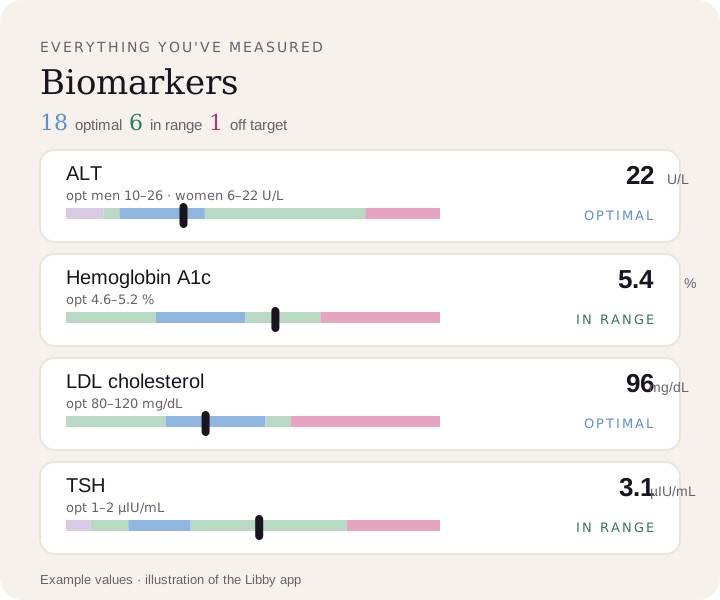
Compare your results to optimal ranges.
Upload a lab PDF or a photo of your report. Libby puts every marker on your lab's range and the optimal range, and tracks your trends over time.
View your ALT ›