Cortisol test: normal levels, high and low causes
Cortisol runs on a daily clock. Here's a normal morning level, what high and low results usually mean, how to read it with ACTH, and when low is urgent.
Cortisol is the hormone your adrenal glands make to keep your blood pressure, blood sugar and inflammation in balance, and it runs on a daily clock. It peaks in the first hour after you wake up and falls to its lowest point late in the evening, so the time of your blood draw matters as much as the number.12 The most common reason for an abnormal result is a steroid medicine, such as prednisone, taken for a long time or stopped suddenly.2
The short version
- Normal (morning blood draw): about 6–19 µg/dL at major U.S. labs (Labcorp: 6.2–19.4), and roughly half that in the afternoon (Labcorp: 2.3–11.9).34 Always read the result against the time it was drawn.
- Low: at 8–9 a.m., a cortisol under 3 µg/dL points to adrenal insufficiency and over 15 makes it unlikely, according to the Endocrine Society.5 The usual reason is steroid medicines (pills, inhalers, injections, creams), which turn down your own production.26
- High: usually timing, stress, illness, hard training, pregnancy or estrogen pills. Cushing syndrome from the body's own cortisol is rare (2–3 new cases per million people a year) and is diagnosed with late-night saliva, 24-hour urine or dexamethasone tests, not a random blood draw.7
- Urgent: low cortisol with vomiting, severe weakness, belly pain, fainting or confusion can be adrenal crisis, a medical emergency.8
What cortisol is
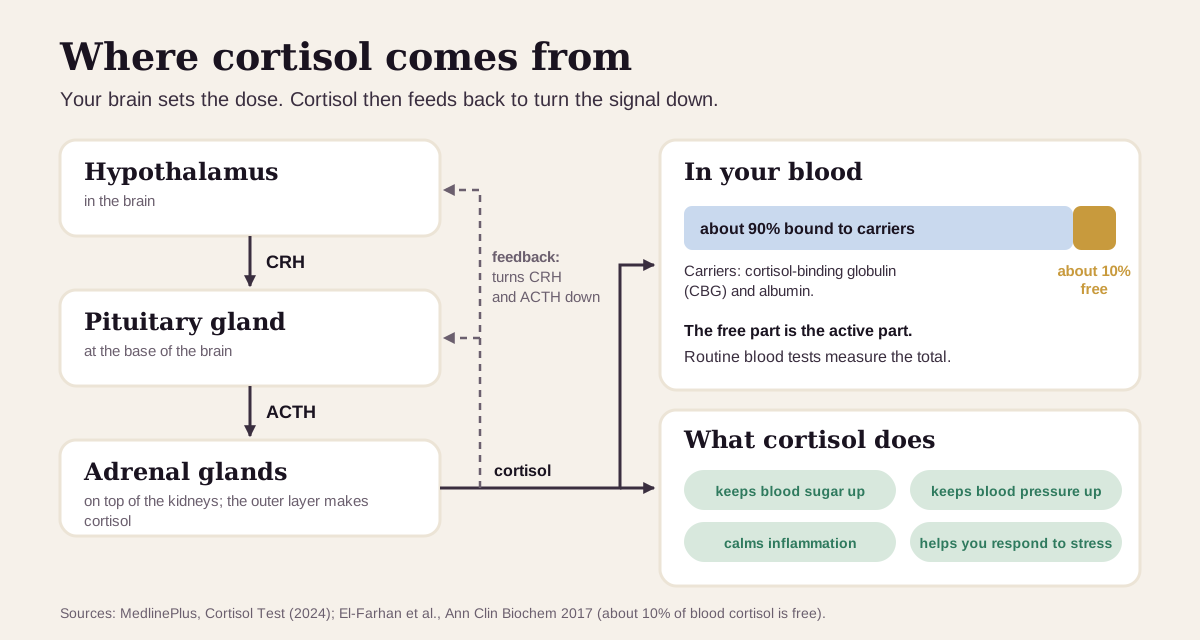
Cortisol is a steroid hormone made in the outer layer of your two adrenal glands, which sit on top of your kidneys. It helps your body respond to stress, keeps blood sugar and blood pressure up, and calms inflammation.2
Your brain sets the dose. The hypothalamus sends a hormone called CRH to the pituitary gland, the pituitary sends ACTH (adrenocorticotropic hormone) to the adrenals, and ACTH tells them how much cortisol to make.2 Cortisol then feeds back to turn that signal down. That loop is why doctors so often read cortisol next to ACTH.
In your blood, most cortisol rides on carrier proteins: cortisol-binding globulin (CBG) and albumin. Only about 10% is free and active, and routine blood tests measure the total.9
The level swings on two clocks: a daily rhythm that peaks around waking and bottoms out late in the evening, and short bursts about every 60–90 minutes.1 (More on blood, saliva and urine tests at the end.)
What's a normal cortisol level?
Start with the time printed on your report. Labs publish separate morning and afternoon ranges, because cortisol by evening is about half the morning level.3
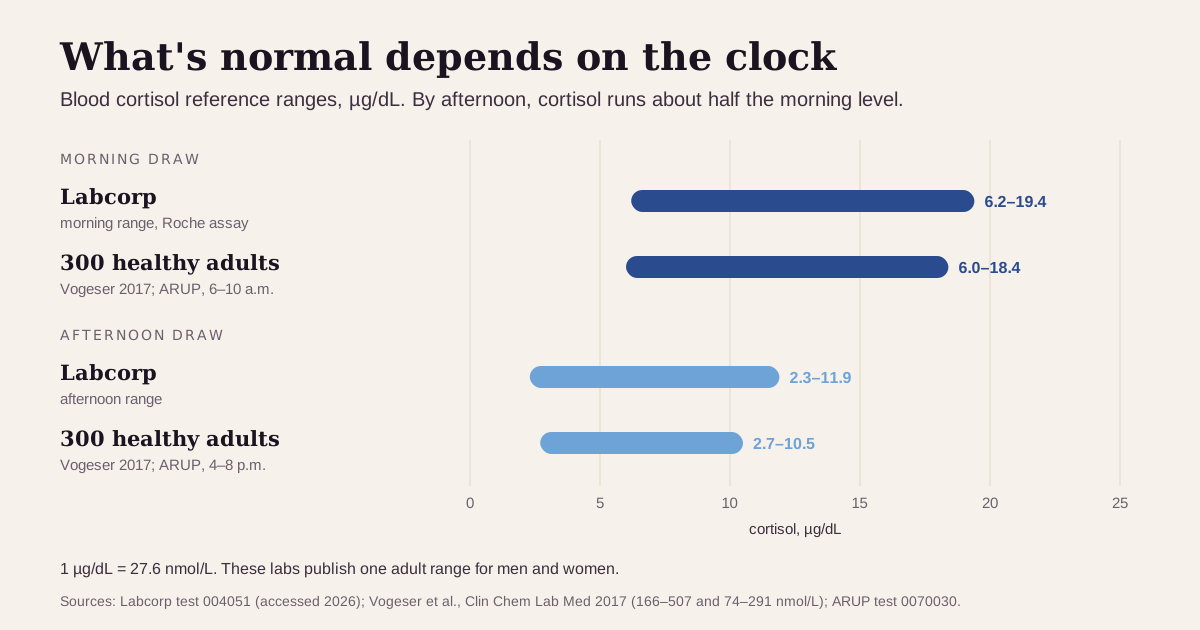
- Labcorp, a large commercial lab, lists 6.2–19.4 µg/dL in the morning and 2.3–11.9 µg/dL in the afternoon.3
- A 2017 study of 300 healthy adults on a newer Roche assay found morning values of 6.0–18.4 µg/dL (166–507 nmol/L) and afternoon values of 2.7–10.5. ARUP Laboratories uses those exact limits for 6–10 a.m. and 4–8 p.m. draws.4
Men and women share the same ranges at these labs. Pregnancy, birth control pills and estrogen therapy raise total cortisol; estrogen does it by raising the carrier protein.37
Test methods have changed, too. Older antibody-based tests read higher than today's, which is why the classic 18 µg/dL cutoff for one adrenal test is now 14–15 on current assays.10 Compare results from the same lab when you can.
"Optimal" cortisol: what health optimizers aim for
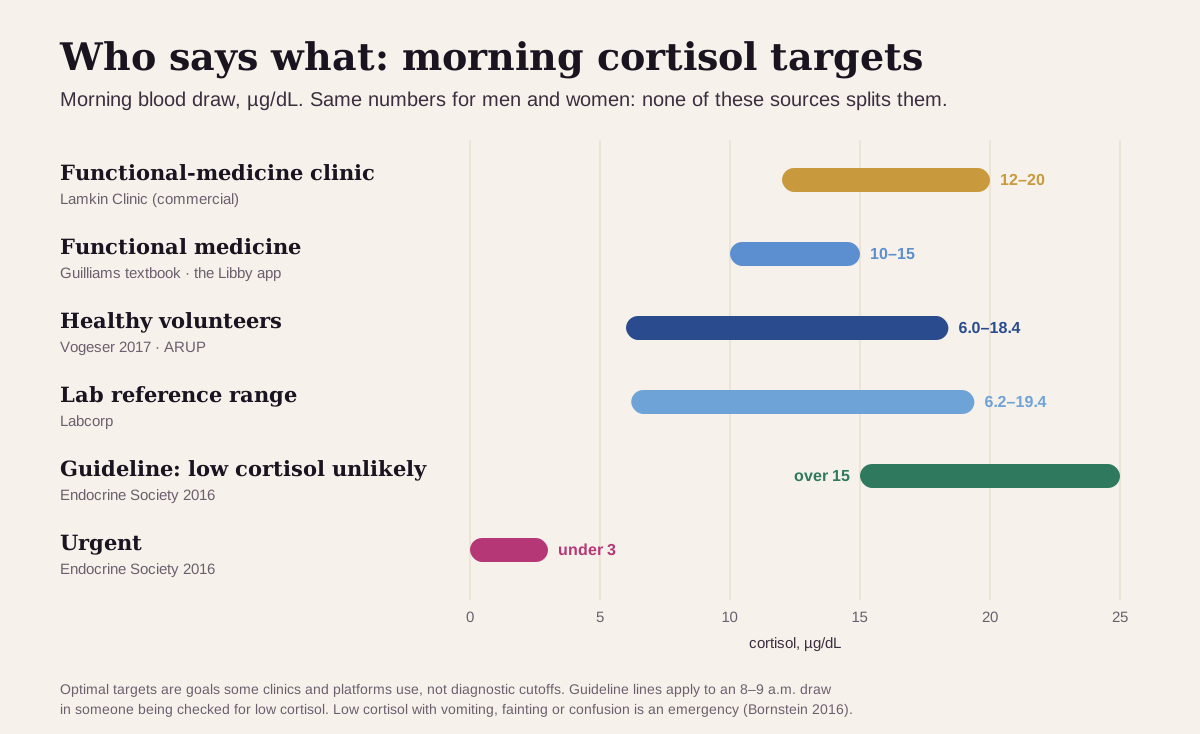
Functional-medicine practitioners and some clinics aim for a narrower morning band than a lab's "normal". Cortisol targets have a floor as well as a ceiling, because too little and too much both cause disease. Here's the ladder for a morning blood draw, from the targets optimizers use down to the urgent line:
| Target | Morning value (men and women) | Who uses it |
|---|---|---|
| Functional-medicine clinic | 12–20 µg/dL | Lamkin Clinic's published "FM Optimal" band for a 7–9 a.m. draw11 |
| Functional medicine | 10–15 µg/dL | A functional-medicine textbook range,12 and the optimal range shown in the Libby app |
| Healthy volunteers | 6.0–18.4 µg/dL | 300 healthy adults on a modern assay, the limits ARUP uses4 |
| Lab reference range | 6.2–19.4 µg/dL | Labcorp's morning range3 |
| Guideline: low cortisol unlikely | over 15 µg/dL | Endocrine Society, for an 8–9 a.m. draw in someone being checked for adrenal insufficiency5 |
| Urgent | under 3 µg/dL | Endocrine Society: points to adrenal insufficiency. With vomiting, fainting or confusion, get emergency care58 |
None of these sources sets different numbers for men and women. For an afternoon draw, the Libby app shows your lab's range.
What the outcome studies show:
- In 4,047 British civil servants (the Whitehall II study) who collected six saliva samples across one day, the waking level showed no link to death over about 6 years. The rest of the day mattered: per standard deviation, a flatter fall from morning to night carried 1.87 times the risk of cardiovascular death, and a higher bedtime cortisol 1.98 times.13
- In 861 Italians aged 65 and older, people in the top third of 24-hour urine cortisol had 5.0 times the risk of dying of heart disease or stroke over about 6 years.14
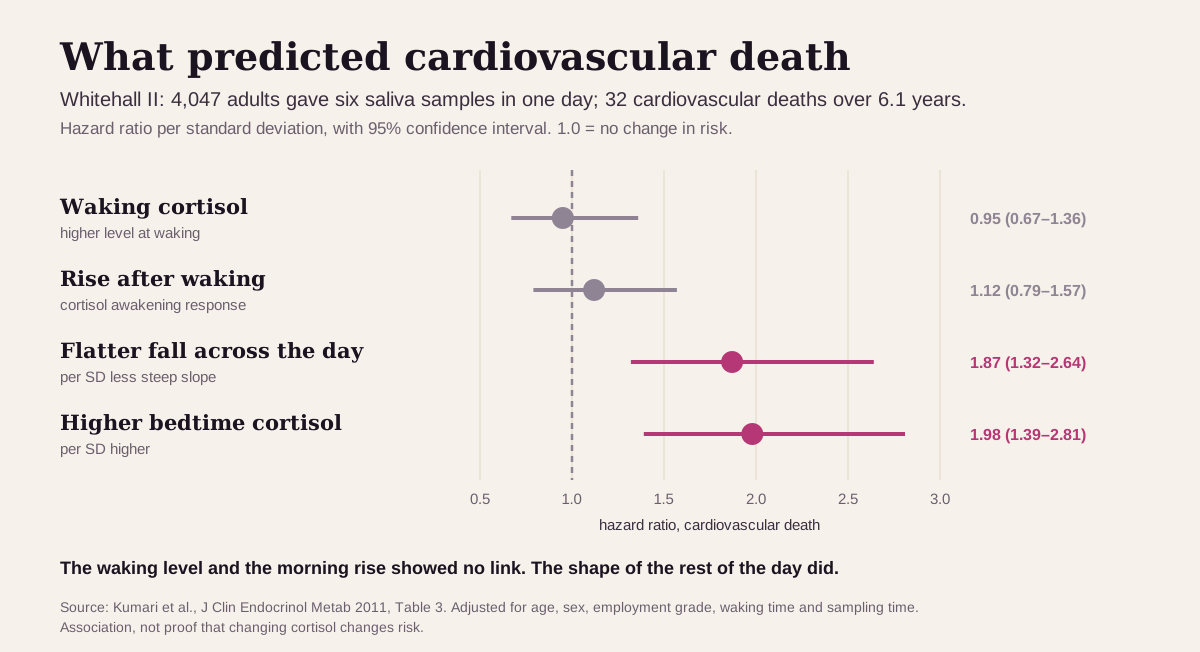
Keep "optimal" in perspective. The functional bands come from clinical textbooks and practice, and the outcome data above point to the daily shape of cortisol more than to one morning number.13 Too little cortisol is dangerous, as the next section shows. And "adrenal fatigue", a label often attached to a low-normal result, has no scientific proof behind it according to the Endocrine Society; a systematic review reached the same conclusion.15
What a low or high cortisol usually means
The time of the draw is the first clue. An afternoon result read against a morning range looks low, and a morning result read against an afternoon range looks high.32
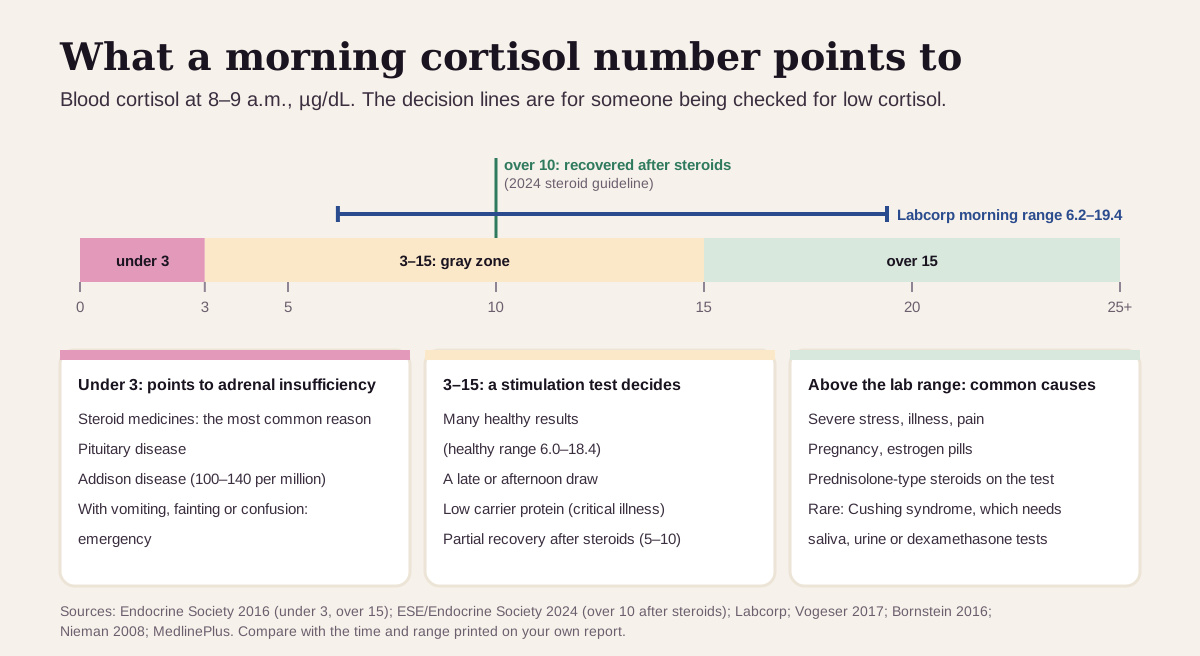
Low cortisol: the usual suspects
- Steroid medicines. They are the most common reason for an abnormal cortisol.2 Prednisone and similar drugs switch off ACTH, and your adrenals go quiet. Pills, injections, inhalers, nasal sprays, joint injections and skin creams can all do it.6 After you stop, the system can take weeks to months to recover. The 2024 European and Endocrine Society guideline treats a morning cortisol above 10 µg/dL as a sign of recovery.6 Don't stop a steroid on your own: stopping suddenly can itself leave you short of cortisol.2
- An afternoon or late draw read against a morning range.3
- Low carrier protein. Critical illness and kidney disease that leaks protein lower CBG and albumin, and total cortisol falls with them.79
- Pituitary problems (central adrenal insufficiency). Pituitary disease, pituitary surgery or a brain injury can cut the ACTH signal.2
- Addison disease (primary adrenal insufficiency). The adrenal glands themselves fail, most often from autoimmune damage (up to 90% of cases in Western countries). It's rare: about 100–140 people per million.8
Get emergency care if low cortisol, a known adrenal problem or recent steroid use comes with severe weakness, vomiting, belly pain, fainting, confusion or very low blood pressure. That can be adrenal crisis, and treatment with hydrocortisone starts before the test results come back.8
High cortisol: the usual suspects
- Timing and stress. A morning draw read against an afternoon range, or severe stress around the test.3
- Pregnancy, birth control pills and estrogen therapy. Estrogen raises CBG, so total blood cortisol rises. On estrogen pills the 24-hour urine test stays normal; in pregnancy it climbs too, up to 3 times by term.73
- Illness, surgery, pain and intense training. Physical stress and intense chronic exercise raise cortisol without any adrenal disease.7
- Some medicines. Prednisone, prednisolone and methylprednisolone can read as cortisol on a common lab test.3 Tell the lab about every medicine, skin creams included.2
- Depression, alcohol use disorder, poorly controlled diabetes and severe obesity. These can raise cortisol enough to mimic Cushing syndrome on screening tests.72
- Rare but important: Cushing syndrome. Outside of steroid medicines, it affects 2–3 new people per million a year. Testing uses two 24-hour urine collections, two late-night saliva tests or a 1 mg overnight dexamethasone test, where a next-morning cortisol above 1.8 µg/dL is abnormal. The Endocrine Society recommends against using a random blood cortisol to test for it.7
Cortisol reads best next to its neighbors
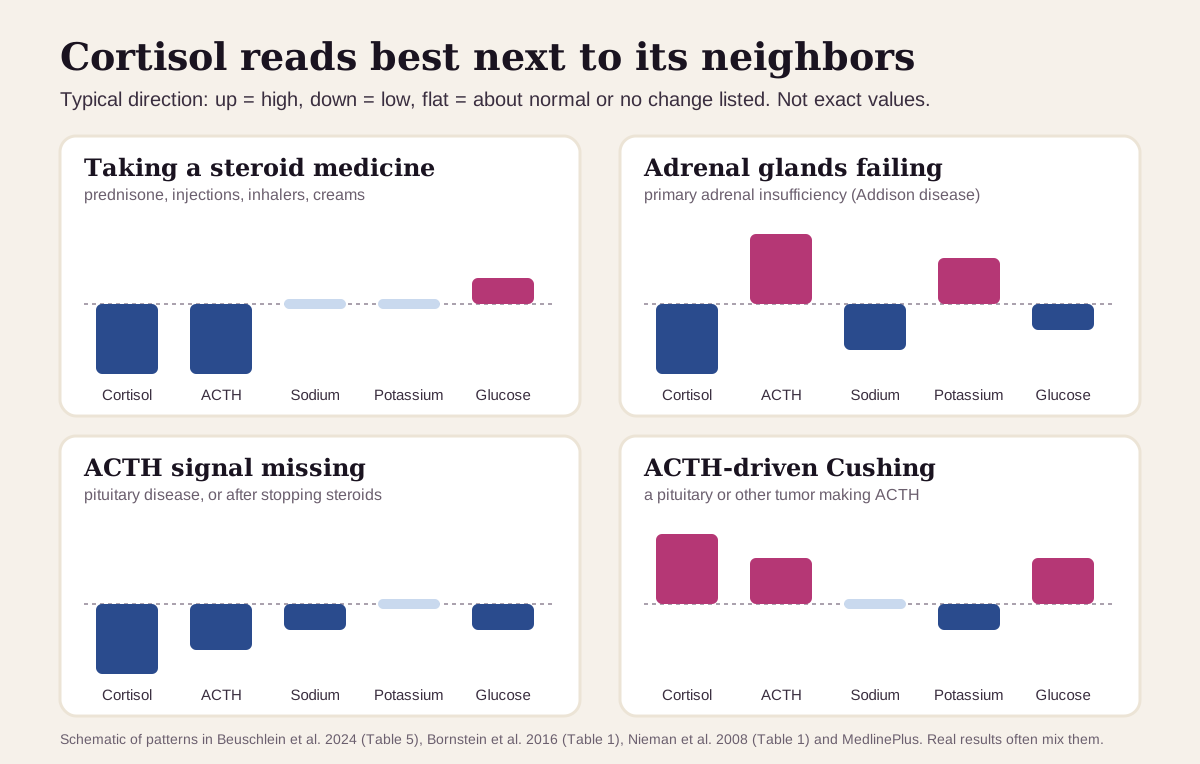
Cortisol tells you that something is off. ACTH tells you where, and the sodium, potassium and glucose on your basic metabolic panel fill in the rest:168
| If you see… | It often points to… |
|---|---|
| Cortisol and ACTH both very low while you take a steroid medicine | the medicine switching off your own supply, the most common cause of a low ACTH |
| Cortisol low, ACTH high (over 2× the upper limit), sodium low, potassium high | the adrenal glands failing: primary adrenal insufficiency (Addison disease) |
| Cortisol low, ACTH low, sodium sometimes low, potassium normal | a missing ACTH signal: central adrenal insufficiency, from pituitary disease or after stopping long-term steroids |
| Cortisol high on the screening tests, ACTH high, potassium sometimes low, glucose high | a tumor making ACTH, in the pituitary (Cushing disease) or elsewhere |
| Cortisol high, ACTH low, no steroid medicines | an adrenal tumor making cortisol on its own |
| Total cortisol high on estrogen pills, 24-hour urine normal | more carrier protein, not more active hormone |
Potassium often separates the two kinds of low cortisol. Aldosterone, the adrenals' salt-keeping hormone, runs mostly on a separate kidney signal. It fails along with the adrenal gland in Addison disease, where a high potassium often follows a low sodium, and keeps working when only ACTH is missing.68
How fast cortisol changes
Cortisol moves in hours. Hydrocortisone, the medicine form of cortisol, has a plasma half-life of 90–120 minutes.6 On top of the daily rhythm, your adrenals release bursts about every 60–90 minutes.1
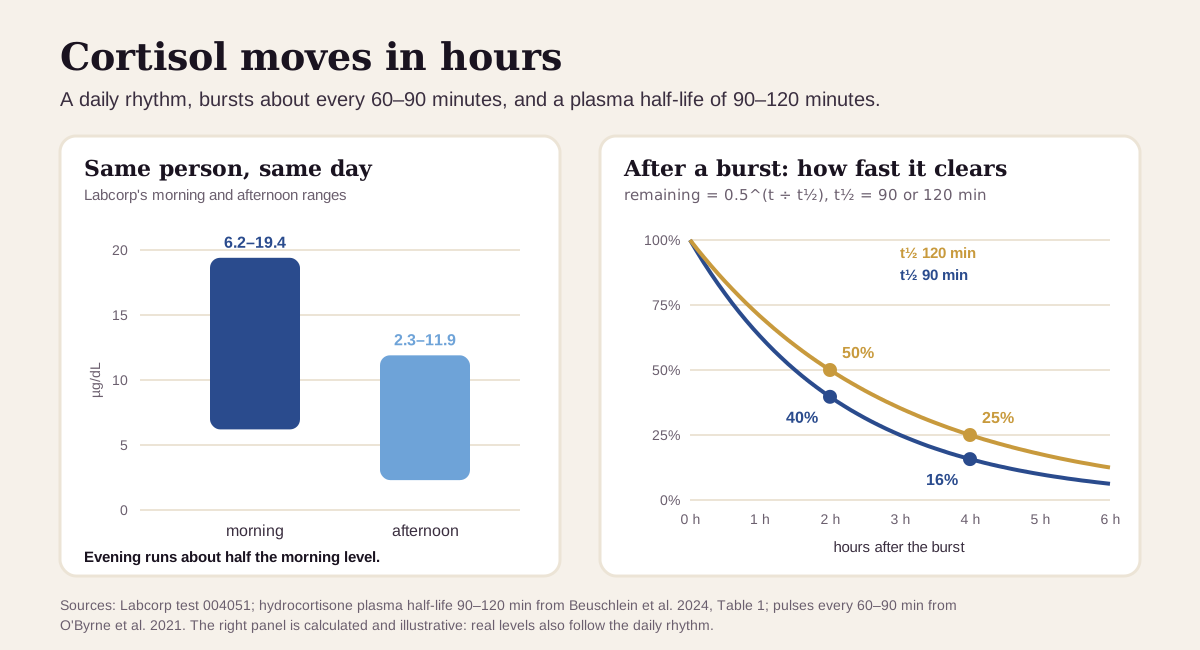
What that means in practice:
- Match the clock. Tests for low cortisol are timed for 8–9 a.m.5 Compare each result with earlier ones drawn at the same time of day, at the same lab.
- Swings are big. In 20 healthy volunteers sampled six times a day for five days, the same person's saliva cortisol at a given hour varied by about 29–57% across the days.17
- Sleep shifts it. Substantial sleep restriction raises late-afternoon and early-evening cortisol without changing the 24-hour total.1
- Recovery after steroids is slow. The system can take weeks to months to come back, so repeat tests are spaced to match.6
- Biotin supplements can interfere with some lab tests. Labcorp asks you to stop biotin at least 72 hours before the draw.3
Going deeper: blood, saliva and urine measure different things
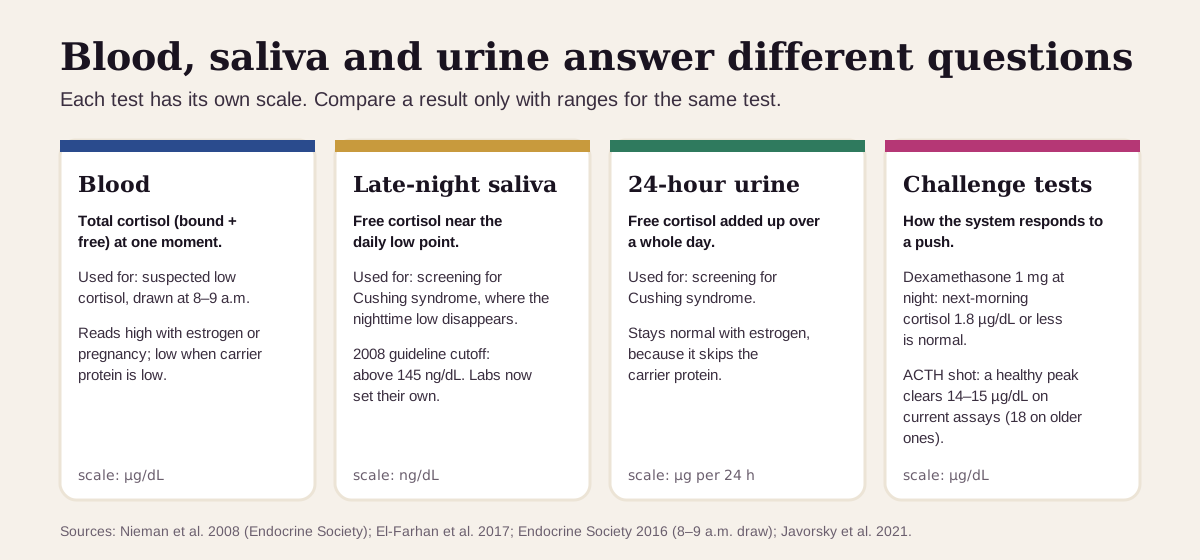
- Blood measures total cortisol, bound plus free, at one moment. A timed morning blood draw is the first test for suspected low cortisol.59
- Late-night saliva captures free cortisol near the daily low point. In Cushing syndrome that nighttime low disappears, so a high late-night result is one of the screening tests. The 2008 guideline used a cutoff of 145 ng/dL, and labs now set their own.79
- 24-hour urine adds up the free cortisol you pass over a whole day, so changes in carrier protein leave it alone.79
- Challenge tests check how the system responds. After 1 mg of dexamethasone late at night, a healthy next-morning cortisol falls to 1.8 µg/dL or less.7 After a shot of synthetic ACTH (cosyntropin), a healthy adrenal peak clears 14–15 µg/dL on current assays, or 18 on older ones.108
Questions worth asking
- What time was my blood drawn, and does the morning or afternoon range apply?
- Could any of my medicines, including inhalers, joint injections, skin creams or birth control pills, be affecting this?
- Should we check ACTH, sodium and potassium alongside it?
- If it's low, do I need an ACTH stimulation test?
- If it's high, would a late-night saliva, 24-hour urine or dexamethasone test answer the question better?
- When should we repeat it, and at what time of day?
FAQ
What is a normal cortisol level? For a morning blood draw, Labcorp puts normal at 6.2–19.4 µg/dL, and 2.3–11.9 in the afternoon.3
What is the most common cause of abnormal cortisol? Steroid medicines taken for a long time, or stopped suddenly.2 They lower your own cortisol and ACTH, and some of them read as cortisol on lab tests.63
Does stress raise cortisol? Yes. Severe stress, illness, surgery, pain and intense exercise all raise it.37 In a large study, how far cortisol fell by bedtime predicted cardiovascular death better than the morning level did.13
When is low cortisol an emergency? When it comes with vomiting, severe weakness, belly pain, fainting, confusion or low blood pressure, especially in someone taking steroids or with a known adrenal problem. That can be adrenal crisis, which needs emergency care.8
This guide is for education. It can't diagnose you or replace care from a clinician who knows your history.
Footnotes
-
O'Byrne NA, Yuen F, Butt WZ, Liu PY. Sleep and Circadian Regulation of Cortisol: A Short Review. Curr Opin Endocr Metab Res. 2021;18:178–186. The daily rhythm, the rise in the first hour after waking, 60–90-minute pulses, and the effect of sleep restriction. PMC ↩ ↩2 ↩3 ↩4
-
National Library of Medicine. Cortisol Test. MedlinePlus. Last updated December 23, 2024. What cortisol does, the most common cause of an abnormal result (steroid medicines), and everyday influences such as stress, pregnancy, exercise and birth control pills. MedlinePlus ↩ ↩2 ↩3 ↩4 ↩5 ↩6 ↩7 ↩8 ↩9 ↩10 ↩11 ↩12 ↩13
-
Labcorp. Cortisol (test 004051). Accessed September 23, 2026. A commercial reference laboratory's published ranges (AM 6.2–19.4, PM 2.3–11.9 µg/dL, Roche assay), the evening-is-half note, and its listed interferences (estrogen, pregnancy, prednisolone-type steroids, severe stress, biotin). labcorp.com ↩ ↩2 ↩3 ↩4 ↩5 ↩6 ↩7 ↩8 ↩9 ↩10 ↩11 ↩12 ↩13 ↩14 ↩15 ↩16 ↩17 ↩18
-
Vogeser M, Kratzsch J, Ju Bae Y, et al. Multicenter performance evaluation of a second generation cortisol assay. Clin Chem Lab Med. 2017;55(6):826–835. Reference ranges from 300 healthy adults: morning 166–507 nmol/L, afternoon 74–291 nmol/L. ARUP Laboratories lists the same intervals in µg/dL. DOI · ARUP ↩ ↩2 ↩3 ↩4 ↩5
-
Fleseriu M, Hashim IA, Karavitaki N, et al. Hormonal Replacement in Hypopituitarism in Adults: An Endocrine Society Clinical Practice Guideline. J Clin Endocrinol Metab. 2016;101(11):3888–3921. At 8–9 a.m., cortisol under 3 µg/dL indicates adrenal insufficiency and over 15 likely excludes it; 18.1 µg/dL = 500 nmol/L. DOI · Endocrine Society ↩ ↩2 ↩3 ↩4 ↩5 ↩6 ↩7 ↩8
-
Beuschlein F, Else T, Bancos I, et al. European Society of Endocrinology and Endocrine Society Joint Clinical Guideline: Diagnosis and Therapy of Glucocorticoid-induced Adrenal Insufficiency. J Clin Endocrinol Metab. 2024;109(7):1657–1683. Suppression by any route, recovery thresholds, the lab pattern on and after steroids, and hydrocortisone's 90–120-minute half-life. PMC ↩ ↩2 ↩3 ↩4 ↩5 ↩6 ↩7 ↩8 ↩9 ↩10
-
Nieman LK, Biller BM, Findling JW, et al. The Diagnosis of Cushing's Syndrome: An Endocrine Society Clinical Practice Guideline. J Clin Endocrinol Metab. 2008;93(5):1526–1540. Incidence, the screening tests and their cutoffs, estrogen and pregnancy effects, and conditions that raise cortisol without Cushing syndrome. PMC ↩ ↩2 ↩3 ↩4 ↩5 ↩6 ↩7 ↩8 ↩9 ↩10 ↩11 ↩12 ↩13
-
Bornstein SR, Allolio B, Arlt W, et al. Diagnosis and Treatment of Primary Adrenal Insufficiency: An Endocrine Society Clinical Practice Guideline. J Clin Endocrinol Metab. 2016;101(2):364–389. Prevalence, causes, the ACTH and electrolyte pattern, and adrenal crisis. PMC ↩ ↩2 ↩3 ↩4 ↩5 ↩6 ↩7 ↩8 ↩9
-
El-Farhan N, Rees DA, Evans C. Measuring cortisol in serum, urine and saliva – are our assays good enough? Ann Clin Biochem. 2017;54(3):308–322. About 10% of blood cortisol is free; saliva and urine track the free fraction. DOI ↩ ↩2 ↩3 ↩4 ↩5
-
Javorsky BR, Raff H, Carroll TB, et al. New Cutoffs for the Biochemical Diagnosis of Adrenal Insufficiency after ACTH Stimulation using Specific Cortisol Assays. J Endocr Soc. 2021;5(4):bvab022. On current assays the stimulation cutoff is 14–15 µg/dL instead of the historical 18. PMC ↩ ↩2
-
Lamkin Clinic. Cortisol (AM). Undated page, accessed September 23, 2026. Lists "FM Optimal (AM) 12 to 20 mcg/dL" for a 7–9 a.m. draw. A commercial source (a functional-medicine practice), listed as what the optimizer community uses. lamkinclinic.com ↩ ↩2
-
Guilliams TG. The Role of Stress and the HPA Axis in Chronic Disease Management. Point Institute; 2015 (2nd ed. 2020). A functional-medicine textbook, cited by the Libby app for its optimal morning cortisol range (10–15 µg/dL). Point Institute ↩ ↩2
-
Kumari M, Shipley M, Stafford M, Kivimaki M. Association of diurnal patterns in salivary cortisol with all-cause and cardiovascular mortality: findings from the Whitehall II study. J Clin Endocrinol Metab. 2011;96(5):1478–1485. 4,047 adults, six saliva samples in one day, 6.1 years of follow-up. PMC ↩ ↩2 ↩3 ↩4
-
Vogelzangs N, Beekman AT, Milaneschi Y, et al. Urinary cortisol and six-year risk of all-cause and cardiovascular mortality. J Clin Endocrinol Metab. 2010;95(11):4959–4964. 861 adults aged 65 and older in the InCHIANTI study. PMC ↩
-
Endocrine Society. Adrenal Fatigue. January 25, 2022. endocrine.org · Cadegiani FA, Kater CE. Adrenal fatigue does not exist: a systematic review. BMC Endocr Disord. 2016;16(1):48. PMC ↩
-
National Library of Medicine. ACTH blood test. MedlinePlus Medical Encyclopedia. Reviewed April 24, 2025. The normal morning ACTH range and what a high or low ACTH points to. MedlinePlus ↩ ↩2 ↩3
-
Danese E, Padoan A, Negrini D, et al. Diurnal and day-to-day biological variation of salivary cortisol and cortisone. Clin Chem Lab Med. 2024;62(11):2287–2293. 20 healthy volunteers, six saliva samples a day for five days. PubMed ↩
Educational content, not medical advice.Libby is a personal record tool, not a medical service — it doesn't diagnose, treat, or prescribe. Reference ranges vary by lab and by person. Talk to a qualified healthcare professional about your results.
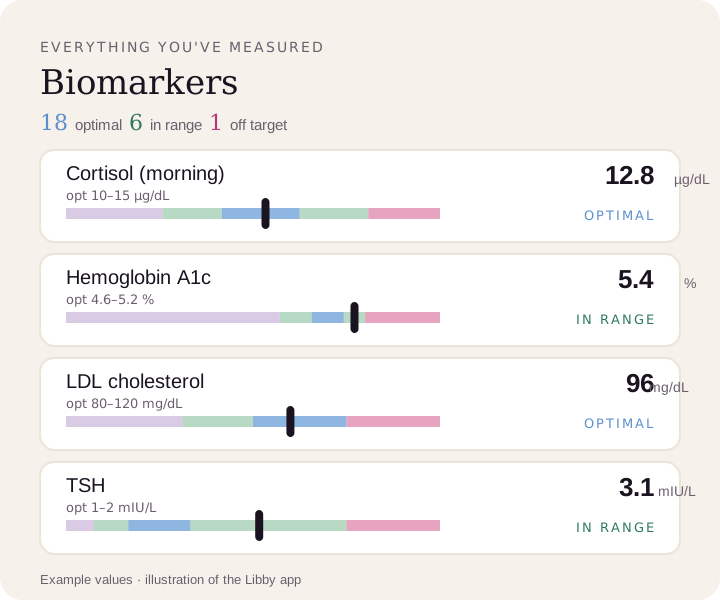
Compare your results to optimal ranges.
Upload a lab PDF or a photo of your report. Libby puts every marker on your lab's range and the optimal range, and tracks your trends over time.
View your cortisol ›