CK blood test: normal levels, high causes, and next steps
CK is a muscle enzyme. Here's what a normal level is, why a hard workout can push it into the thousands, how to read it with AST and ALT, and when it's urgent.
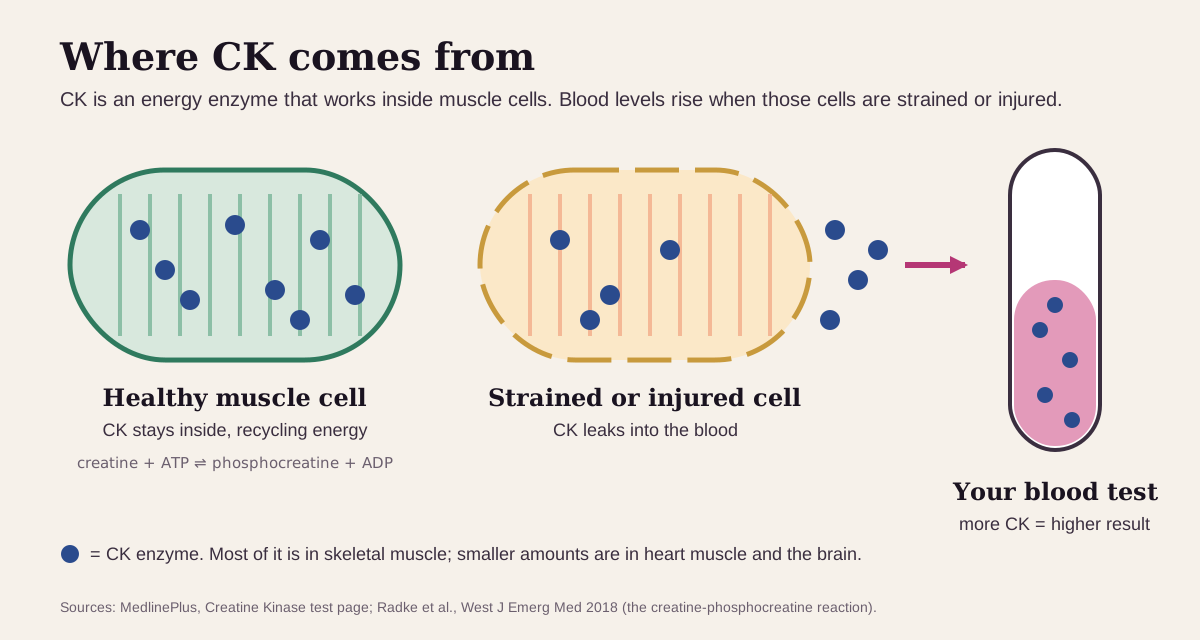
CK (creatine kinase) is an energy enzyme that lives mostly inside your skeletal muscles. When muscle cells are strained or injured, CK leaks into your blood. That makes CK the standard blood test for muscle damage, and a hard workout in the past week is one of the most common reasons it runs high.12
The short version
- Normal: check the range on your report. Labcorp's adult range is 49–439 U/L for men aged 18 to 50 and 32–182 U/L for women. Men, younger adults and muscular people run higher.34
- Mildly high is common after a hard or unfamiliar workout, a fall, a shot into a muscle, or a medicine such as a statin. One tough session can keep CK up for a week.56
- Very high (over 5 times your lab's upper limit, or over 1,000 U/L) is the lab definition of rhabdomyolysis, fast muscle breakdown. With dark urine, severe muscle pain, swelling or weakness, get care now.7
- CK is a muscle marker. AST and ALT also leak from muscle, so a high CK next to a high AST usually means muscle, not liver.8
What CK is
CK is one of muscle's energy enzymes. It moves a high-energy phosphate between creatine and ATP, the cell's energy currency: creatine + ATP ⇌ phosphocreatine + ADP. At rest, CK banks spare energy as phosphocreatine. In a sudden effort, phosphocreatine rapidly remakes ATP where the muscle needs it.9 (More on the chemistry at the end.)
Most of your CK sits in skeletal muscle, the muscles you move with. There is some in heart muscle and a little in the brain. Everyday wear and tear lets a small amount into your blood; damaged muscle lets much more out.1
CK is easy to mix up with creatinine, a waste product that sits nearby on many reports and is used to check the kidneys.7 They are different tests. Clinicians usually order CK for muscle pain or weakness, dark urine, an injury, or muscle symptoms on a statin.1
What's a normal CK?
Start with the range printed on your own report. CK ranges vary more than most, because a normal CK depends on your age, sex, how much muscle you have and how active you are.1 The ranges below come from Labcorp, a large commercial lab that publishes its reference tables.3
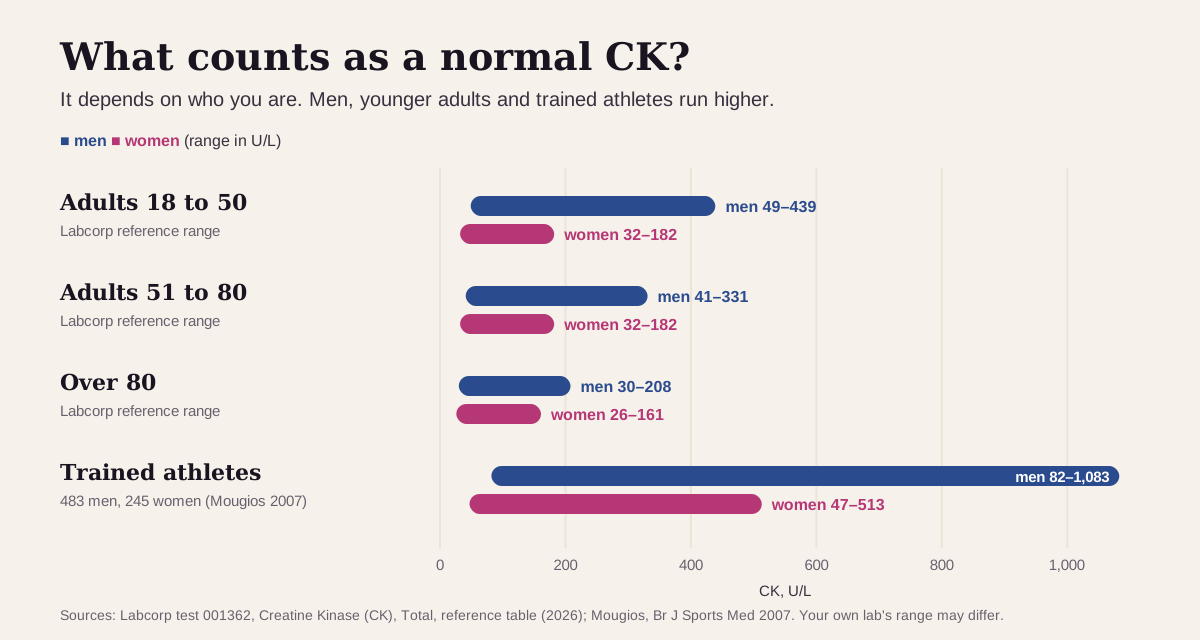
- Sex. Labcorp's upper limit for men aged 18 to 50 is 439 U/L, versus 182 U/L for women.3
- Age. CK falls with age in men. Labcorp's upper limit for men drops from 439 (ages 18 to 50) to 331 (51 to 80) and 208 (over 80).3 In a U.S. survey of 10,096 adults, less muscle explained most of that drop.4
- Muscle and training. In the same survey, bigger arm muscles went with a higher CK.4 Among 483 male and 245 female Greek athletes, the normal range reached 1,083 U/L in men and 513 U/L in women, about twice the limits for moderately active non-athletes.10
- Self-reported ancestry groups. In the U.S. survey, 29.8% of Black men had a CK above the lab's upper limit, versus 5.6% of white men, and body size didn't explain the gap.4 European neurologists recommend separate upper limits for this reason.5 A flag on one result can be a false alarm.
"Optimal" CK: what health optimizers aim for
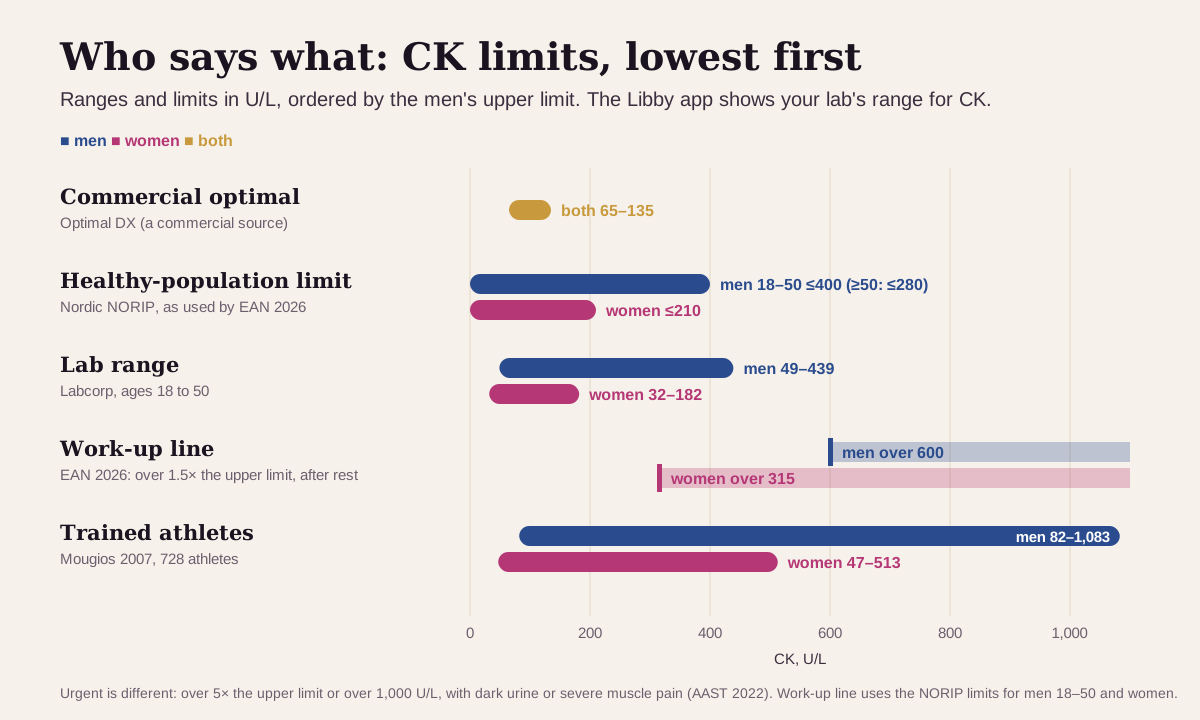
Some testing companies use a band far narrower than any lab range. For CK, the Libby app shows your lab's range and sets no separate optimal band. Here's the full ladder, lowest first:
| Target | Men | Women | Who uses it |
|---|---|---|---|
| Commercial optimal | 65–135 U/L | 65–135 U/L | Optimal DX's published "ODX range"11 |
| Healthy-population limit | up to 400 U/L (ages 18–50), 280 U/L (50+) | up to 210 U/L | The Nordic reference project, recommended by the 2026 European neurology (EAN) guideline5 |
| Lab range | 49–439 U/L (ages 18–50) | 32–182 U/L | Labcorp3 |
| Work-up line | still over 1.5× the upper limit after rest | still over 1.5× the upper limit after rest | EAN guideline: look further5 |
| Trained athletes | 82–1,083 U/L | 47–513 U/L | Mougios, 728 Greek athletes10 |
| Urgent | over 5× the upper limit or 1,000 U/L, with symptoms | over 5× the upper limit or 1,000 U/L, with symptoms | Lab definition of rhabdomyolysis7 |
Why anyone aims low:
- In a Dutch study of 362 adults with normal blood pressure, followed for 10 years, the 143 who developed high blood pressure had started with an average CK of 148 IU/L, versus 120 IU/L in those who stayed normal. Both averages sit inside Labcorp's adult ranges.123
- A review of 10 studies with 34,578 people found CK linked to blood pressure in 9 of its 11 papers. The odds of high blood pressure were 1.2 to 3.9 times higher in the high-CK groups.13 Both papers come from one research group, and the lead author holds a related patent.
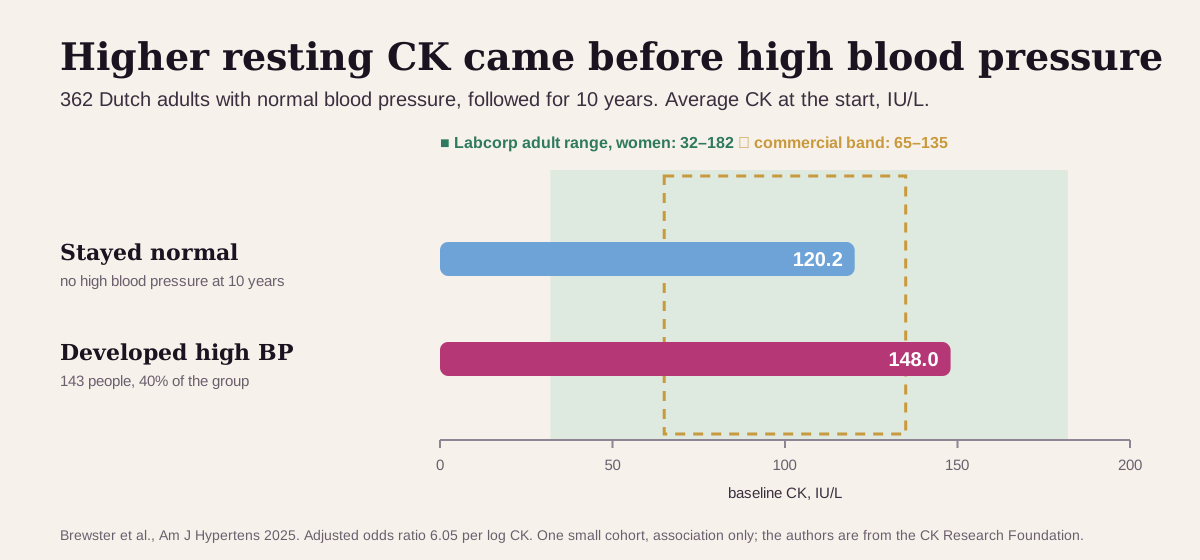
Keep "optimal" in perspective. CK's low targets rest on associations, with no trial of lowering CK behind them. A muscular person or an athlete can sit well above 150 and be perfectly healthy.10 Lower isn't better by default, either: a low CK mostly reflects less muscle.4 For CK, the most useful line is your own trend on your lab's range.
What a high CK usually means
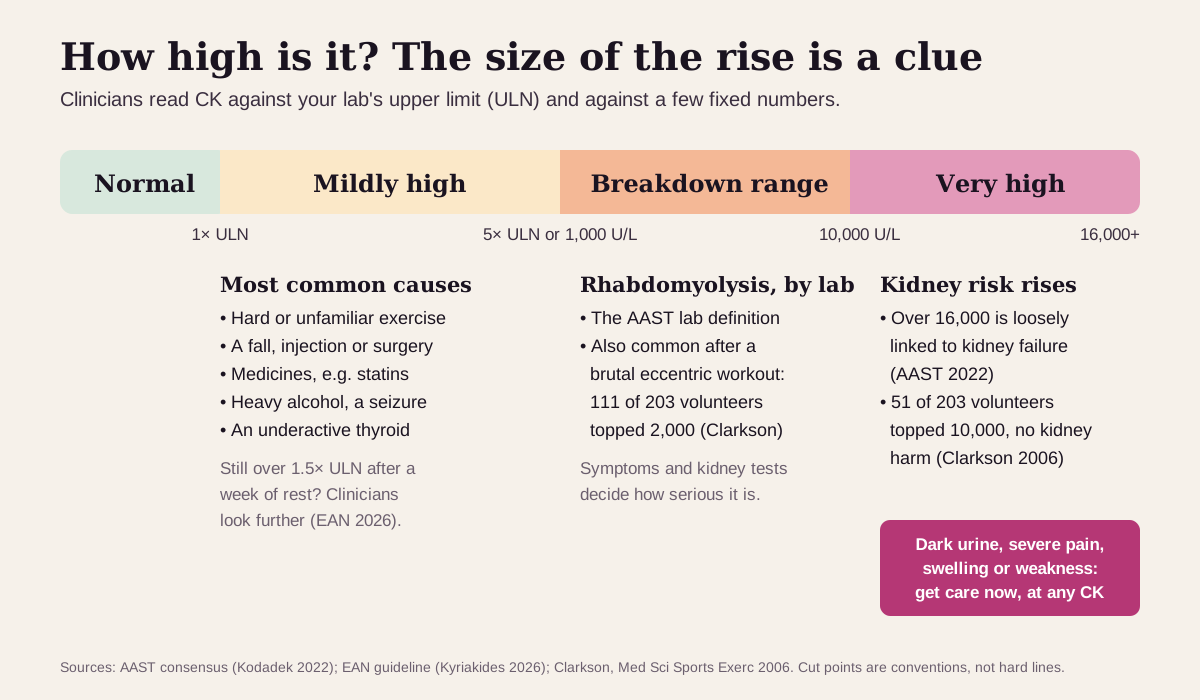
The size of the rise is the first clue. Clinicians read CK against the lab's upper limit of normal (ULN) and against a few fixed numbers.75
Mildly high: common, usually temporary
The usual suspects, most common first:
- Hard or unfamiliar exercise. CK can climb to 30 times the upper limit within 24 hours of strenuous activity, then drift down over the next week. The rise is bigger in people who aren't used to that kind of exercise.2 In one study, a single hour of weightlifting pushed CK past 10,000 U/L in 8 of 14 healthy young men.6
- A fall, a shot into a muscle, surgery or a seizure. Anything that bruises or overworks muscle counts.53
- Medicines. Statins are the familiar example: up to 5% of users develop a raised CK, typically 2 to 10 times the upper limit.2 Fibrates and several other drugs can do it too.5 Don't stop a prescribed medicine on your own. Bring your full list, supplements included, to your clinician.
- Heavy alcohol, or drugs such as cocaine.5
- An underactive thyroid. It often brings cramps, aches, weakness and a mild to moderate CK rise, which usually settles 1 to 2 months after treatment starts.2
- Less common causes: inflammatory muscle disease (myositis), inherited muscle conditions, viral infections, and macro-CK, a harmless form of CK that clears slowly. Macro-CK explains about 4% of symptom-free rises.25
Very high: muscle breakdown (rhabdomyolysis)
Over 5 times the upper limit, or over 1,000 U/L, is the lab definition of rhabdomyolysis. Muscle contents, including potassium and myoglobin, spill into the blood, and kidney injury is the most common serious complication.7
The number alone is a rough guide to danger. After a hard eccentric arm workout, 51 of 203 healthy volunteers topped 10,000 U/L with no change in their kidney tests.14 In hospital patients, values over 16,000 U/L are loosely linked with kidney failure.7
Get care now if a high CK, a recent brutal workout or a muscle injury comes with dark brown, red or tea-colored urine, severe muscle pain, swelling, or weakness. Don't wait for a number.71
Still high after rest?
The 2026 EAN guideline repeats CK after at least 72 hours, preferably a week, without exercise or CK-raising drugs. If it's still over 1.5 times the upper limit, it recommends looking further.5 Most rises settle: in a large Norwegian community study, 70% of unexpected high CKs were normal after 3 days of rest.2
CK reads best next to its neighbors
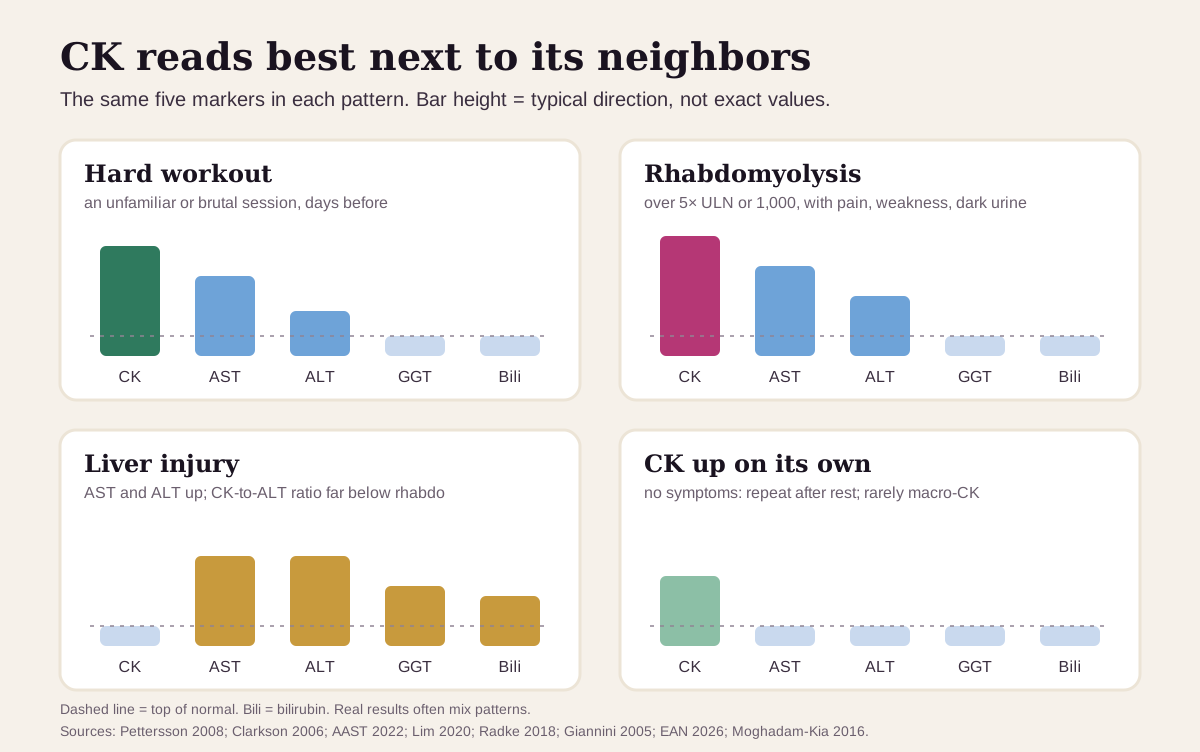
CK is the muscle marker. AST and ALT come from both muscle and liver, while GGT and bilirubin point to the liver. The pattern across the panel tells you which one is talking:815
| If you see… | It often points to… |
|---|---|
| CK very high, AST up more than ALT, GGT and bilirubin normal | a hard workout in the past week, or a muscle injury. After weightlifting, AST and ALT stayed high for at least 7 days while GGT and bilirubin stayed normal. |
| CK over 5× the upper limit or 1,000 U/L, AST and ALT up, sometimes creatinine too, with muscle pain, weakness or dark urine | rhabdomyolysis: muscle breakdown, sometimes straining the kidneys |
| AST and ALT up, CK low relative to ALT, GGT or bilirubin up | the liver. In one study the CK-to-ALT ratio was about 37 in muscle breakdown but about 6 in acetaminophen overdose. |
| CK up on its own, no symptoms, everything else normal | a leftover from exercise, a medicine, or, rarely, macro-CK: repeat after a week of rest |
Why this matters: a high AST or ALT after the gym can look like a liver problem. GGT is absent from muscle, and bilirubin rarely rises from muscle injury alone, so a high CK with a normal GGT and bilirubin points to muscle.8 The ratio evidence comes from Radke and colleagues,9 and the weightlifting pattern from Pettersson and colleagues.6
Is a low CK a problem?
Usually not. A low CK mostly tracks lower muscle mass. In the U.S. survey, CK was lower in older men and in underweight men, and less muscle explained the drop with age.4 CK also runs lower in pregnancy.3 The one catch: in someone with little muscle, a normal CK is less reassuring if a muscle disease is suspected.4
How fast CK changes
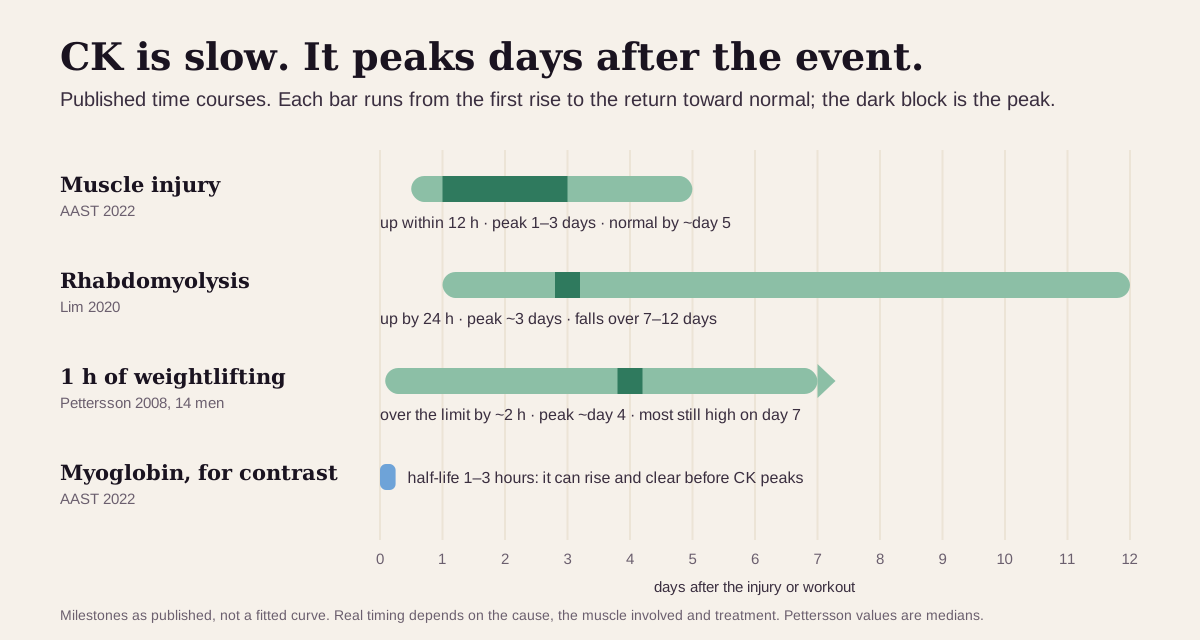
CK is slow. After a muscle injury it rises within 12 hours, peaks at 1 to 3 days, and returns to normal in about 5 days.7 After a bigger injury it can take 7 to 12 days to fall.8 Myoglobin, another muscle protein, has a half-life of only 1 to 3 hours, so it can rise and clear before CK peaks.7
What that means in practice:
- Timing matters. A hard session on Sunday can still show on Thursday. After an hour of weightlifting, CK peaked at a median of 4 days, and most men were still above the limit on day 7.6 Your clinician may ask you to skip intense exercise and alcohol for a few days before the test.1
- A repeat after rest settles most questions. The EAN guideline waits at least 72 hours, preferably a week.5
- Trends beat snapshots. A CK that falls after a known injury tells a different story from one that stays high at rest. The kidneys clear CK and the liver clears ALT, so the two fall at different speeds.8 After thyroid treatment, CK usually settles in 1 to 2 months; after stopping a statin it can take weeks to months.2
Going deeper: the reaction and the three forms of CK
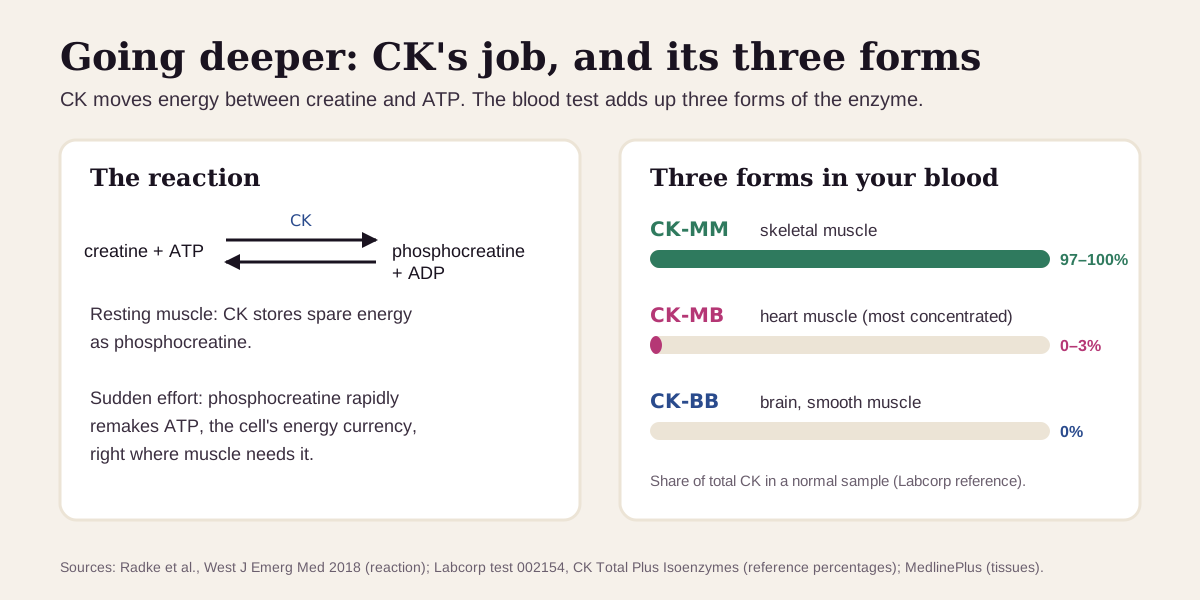
CK comes in three forms. CK-MM is the skeletal-muscle form, CK-MB is most concentrated in heart muscle, and CK-BB is found in the brain and smooth muscle.1 In Labcorp's reference, 97–100% of the CK in a normal sample is CK-MM, 0–3% is CK-MB and 0% is CK-BB.16
CK-MB was once the heart-attack test. Today a troponin test does that job, because it's better at finding heart-muscle damage.1 Exercise, injections, seizures and an underactive thyroid raise total CK but usually leave CK-MB normal.16
Macro-CK is CK stuck to an antibody or another protein. The complex is too big to clear quickly, so the blood level runs high with no muscle damage. A lab finds it with CK electrophoresis.2 On standard tests, macro-CK often reads as a CK-MB share over 25% of total CK, versus 6–20% in a heart attack.5
Questions worth asking
- How far above the upper limit is my CK, and did I exercise hard, fall or get a shot into a muscle in the week before the test?
- Should we repeat it after a week without hard exercise?
- Could any of my medicines or supplements, such as a statin, be involved?
- What do my AST, ALT, GGT and bilirubin show next to it?
- Should my thyroid be checked?
- Are my kidney tests normal, and which symptoms should bring me in right away?
FAQ
What is a normal CK level? Check your report's range. Labcorp uses 49–439 U/L for men aged 18 to 50 and 32–182 U/L for women. Men, younger adults and athletes run higher.310
Can exercise raise CK? Yes, a lot. After a hard eccentric arm workout, 111 of 203 healthy volunteers had a CK over 2,000 U/L four days later, with no change in kidney tests.14 A high CK can last a week after one tough session.6
What CK level is dangerous? Over 5 times the upper limit, or over 1,000 U/L, is the lab definition of rhabdomyolysis. Dark urine, severe muscle pain, swelling or weakness matter more than the number: get care now if you have them.7
Can a statin raise CK? Yes. Up to 5% of statin users have a raised CK, usually 2 to 10 times the upper limit.2 Talk to your prescriber before changing anything.
This guide is for education. It can't diagnose you or replace care from a clinician who knows your history.
Footnotes
-
National Library of Medicine. Creatine Kinase. MedlinePlus. Where CK lives, what raises it, the symptoms that prompt the test, test preparation, the three forms, and why troponin replaced CK for heart attacks. MedlinePlus ↩ ↩2 ↩3 ↩4 ↩5 ↩6 ↩7 ↩8 ↩9
-
Moghadam-Kia S, Oddis CV, Aggarwal R. Approach to asymptomatic creatine kinase elevation. Cleve Clin J Med. 2016;83(1):37–42. Exercise rises of up to 30× the upper limit, the 70% normal-on-repeat figure, statins, macro-CK and hypothyroidism. PMC ↩ ↩2 ↩3 ↩4 ↩5 ↩6 ↩7 ↩8 ↩9 ↩10
-
Labcorp. Creatine Kinase (CK), Total, test 001362. Current age- and sex-specific reference table (18–50 years: 49–439 U/L men, 32–182 U/L women), and notes on exercise, injections and pregnancy. A commercial laboratory's published test catalog; page opened September 23, 2026. labcorp.com ↩ ↩2 ↩3 ↩4 ↩5 ↩6 ↩7 ↩8 ↩9 ↩10 ↩11 ↩12
-
George MD, McGill NK, Baker JF. Creatine kinase in the U.S. population: Impact of demographics, comorbidities, and body composition on the normal range. Medicine (Baltimore). 2016;95(33):e4344. 10,096 NHANES adults: age, sex, body composition and self-reported race-ethnicity. PMC ↩ ↩2 ↩3 ↩4 ↩5 ↩6 ↩7
-
Kyriakides T, Aleksovska K, Angelini C, et al. EAN 2024 Guideline on the Diagnostic Approach to Oligo/Asymptomatic HyperCKemia. Eur J Neurol. 2026;33(2):e70493. The European Academy of Neurology's guideline: healthy-population upper limits (Nordic NORIP: 400 U/L men 18–50, 280 men 50+, 210 women), repeat after at least 72 hours, work-up above 1.5× the upper limit, and its table of non-muscle causes. PMC ↩ ↩2 ↩3 ↩4 ↩5 ↩6 ↩7 ↩8 ↩9 ↩10 ↩11 ↩12 ↩13 ↩14 ↩15
-
Pettersson J, Hindorf U, Persson P, et al. Muscular exercise can cause highly pathological liver function tests in healthy men. Br J Clin Pharmacol. 2008;65(2):253–259. One hour of weightlifting: CK, AST and ALT raised for at least 7 days, GGT and bilirubin normal; median CK peak at 96 hours. PMC ↩ ↩2 ↩3 ↩4 ↩5 ↩6 ↩7
-
Kodadek L, Carmichael SP II, Seshadri A, et al. Rhabdomyolysis: an American Association for the Surgery of Trauma Critical Care Committee Clinical Consensus Document. Trauma Surg Acute Care Open. 2022;7(1):e000836. The lab definition (over 5× the upper limit or 1,000 IU/L), the CK time course, myoglobin's 1–3 hour half-life, symptoms, and kidney risk. PMC ↩ ↩2 ↩3 ↩4 ↩5 ↩6 ↩7 ↩8 ↩9 ↩10 ↩11 ↩12 ↩13 ↩14
-
Lim AK. Abnormal liver function tests associated with severe rhabdomyolysis. World J Gastroenterol. 2020;26(10):1020–1028. How AST and ALT from muscle mimic liver injury, why GGT and bilirubin help, and the CK time course. PMC ↩ ↩2 ↩3 ↩4 ↩5 ↩6 ↩7
-
Radke JB, Algren DA, Chenoweth JA, et al. Transaminase and Creatine Kinase Ratios for Differentiating Delayed Acetaminophen Overdose from Rhabdomyolysis. West J Emerg Med. 2018;19(4):731–736. CK's role in the phosphocreatine reaction; CK-to-ALT ratio 37.1 in rhabdomyolysis versus 5.77 in acetaminophen overdose. PMC ↩ ↩2 ↩3 ↩4
-
Mougios V. Reference intervals for serum creatine kinase in athletes. Br J Sports Med. 2007;41(10):674–678. 483 male and 245 female athletes; ranges 82–1,083 and 47–513 U/L. PMC ↩ ↩2 ↩3 ↩4 ↩5 ↩6
-
Optimal DX. Creatine Kinase (Metabolic biomarkers). Lists a "standard range" of 44–196 U/L and its own "ODX range" of 65–135 U/L. A commercial source, listed as what the optimizer community uses; page opened September 23, 2026. optimaldx.com ↩ ↩2 ↩3
-
Brewster LM, van den Born BJ, Galenkamp H, van Montfrans GA. Creatine Kinase and New-Onset Hypertension: A 10-Year Follow-Up Study. Am J Hypertens. 2025;38(12):1120–1128. 362 adults without hypertension at baseline; baseline CK 148.0 vs 120.2 IU/L in those who did and did not develop it. PubMed ↩ ↩2
-
Brewster LM, Karamat FA, van Montfrans GA. Creatine Kinase and Blood Pressure: A Systematic Review. Med Sci (Basel). 2019;7(4):58. 10 studies, 34,578 participants; the lead author declares a related patent. PMC ↩
-
Clarkson PM, Kearns AK, Rouzier P, Rubin R, Thompson PD. Serum creatine kinase levels and renal function measures in exertional muscle damage. Med Sci Sports Exerc. 2006;38(4):623–627. 203 volunteers after 50 maximal eccentric arm contractions: 111 over 2,000 U/L and 51 over 10,000 U/L, with no rise in kidney measures. PubMed ↩ ↩2 ↩3 ↩4
-
Giannini EG, Testa R, Savarino V. Liver enzyme alteration: a guide for clinicians. CMAJ. 2005;172(3):367–379. ALT is the more liver-specific enzyme; AST is also in muscle; GGT and conjugated bilirubin as liver signals. PMC ↩ ↩2
-
Labcorp. Creatine Kinase (CK), Total Plus Isoenzymes, test 002154. Reference percentages (CK-MM 97–100%, CK-MB 0–3%, CK-BB 0%) and when total CK rises without CK-MB. A commercial laboratory's published test catalog; page opened September 23, 2026. labcorp.com ↩ ↩2 ↩3
Educational content, not medical advice.Libby is a personal record tool, not a medical service — it doesn't diagnose, treat, or prescribe. Reference ranges vary by lab and by person. Talk to a qualified healthcare professional about your results.
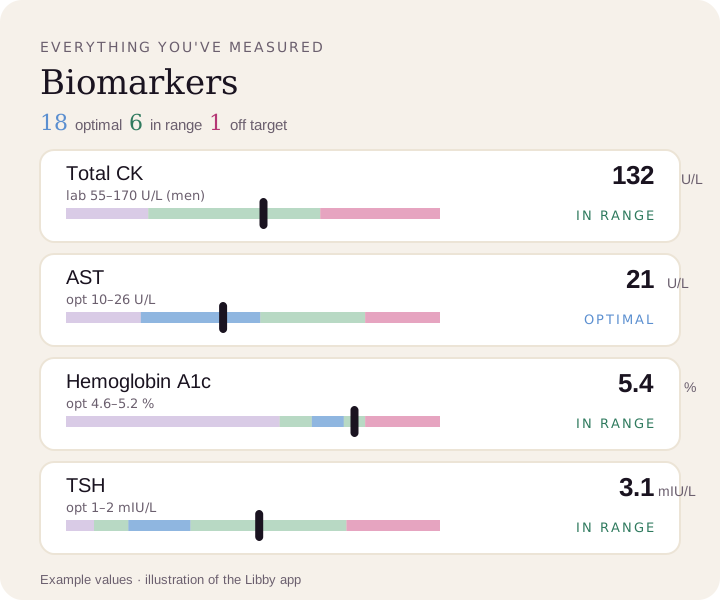
See every result against your lab's range.
Upload a lab PDF or a photo of your report. Libby puts every marker on your lab's range, adds an optimal range where one exists, and tracks your trends over time.
View your CK ›