Cystatin C blood test: normal range, high results, eGFR
Cystatin C is a kidney filtration marker that muscle barely moves. What's normal, what a high result means, how it pairs with creatinine, and when it's urgent.
Cystatin C is a small protein that nearly every cell in your body releases at a steady rate, and your kidneys clear it from the blood. When your kidneys filter less, cystatin C builds up. Muscle barely moves it, so it gives a second, independent read on kidney filtration next to creatinine, and the two together give the most accurate everyday estimate.12
The short version
- Normal: check the range on your report. ARUP Laboratories, a large U.S. reference lab, uses 0.61–0.95 mg/L for adults.3 In healthy blood donors tested with a standardized method, the range ran 0.62–1.04 mg/L for men and 0.58–1.00 mg/L for women.4
- High usually means your kidneys are filtering less. The most common lasting cause is chronic kidney disease, mostly from diabetes and high blood pressure. It affects more than 1 in 7 U.S. adults.5 Prednisone-type steroids, an overactive thyroid, inflammation, smoking and extra body fat can push cystatin C up on their own.26
- Urgent: a cystatin C-based eGFR under 15 is kidney failure. That's a cystatin C of about 3.4–3.6 mg/L at age 50. A rising result with little or no urine, new swelling or shortness of breath needs prompt care.278
- Its strength is independence from muscle. Creatinine rises with muscle, meat and creatine; cystatin C barely does. When the two disagree, the combined eGFR is the most accurate read.29
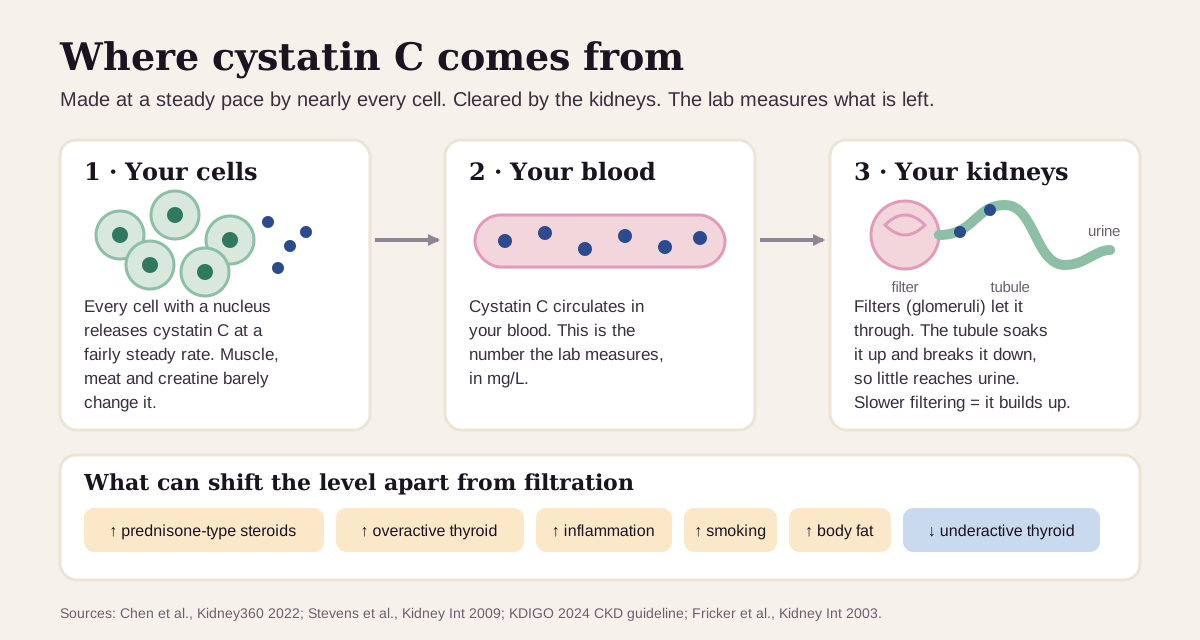
What cystatin C is
Cystatin C belongs to a family of proteins that keep protein-cutting enzymes in check: it blocks enzymes called cathepsins.10 It's small (13 kilodaltons), and every cell with a nucleus makes it at a fairly constant rate.1
Your kidneys handle it in a tidy way. The glomeruli, the kidney's tiny filters, let it straight through. Cells in the next stretch of tubing, the proximal tubule, then soak it up and break it down, so only small amounts end up in urine.111 That leaves one main thing setting the level in your blood: how fast your kidneys filter.
GFR (glomerular filtration rate) is how much blood those filters clean each minute. Measuring it directly takes a special test with an injected tracer, so labs estimate it instead.2 Put cystatin C into an equation with your age and sex and you get eGFRcys. Combine it with creatinine and you get eGFRcr-cys, which the U.S. National Institute of Diabetes and Digestive and Kidney Diseases (NIDDK) calls preferred and more accurate than creatinine alone.7 (The equation is at the end.)
Why a second marker? Creatinine comes from muscle, so it runs high in bodybuilders and low in people who have lost muscle, whatever their kidneys are doing. KDIGO (Kidney Disease: Improving Global Outcomes), the international kidney guideline group, recommends the combined eGFR when a creatinine-only estimate is likely to be off and the answer affects care.2 Cystatin C reagents cost more: about $5–10 per test versus about $0.50 for creatinine in the U.S., which is one reason it's ordered less often.1
What's a normal cystatin C?
Start with the range printed on your report. Labs use different machines and reagents. In a 2023 comparison, two standardized reagents agreed well from 0.85 to 4.40 mg/L but poorly below 0.85.12
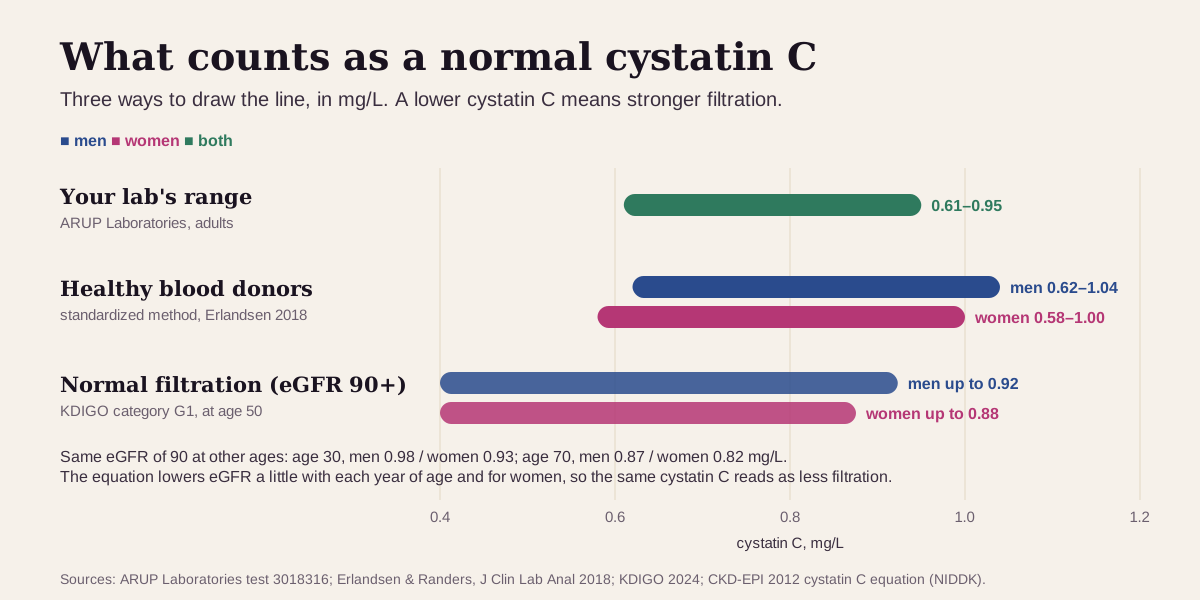
- ARUP Laboratories uses 0.61–0.95 mg/L for adults 18 and older, the same for men and women.3
- A Danish study of 304 healthy blood donors aged 17–66, using a method traceable to the international reference material, found 0.62–1.04 mg/L in men and 0.58–1.00 mg/L in women, with no significant difference between the sexes.4
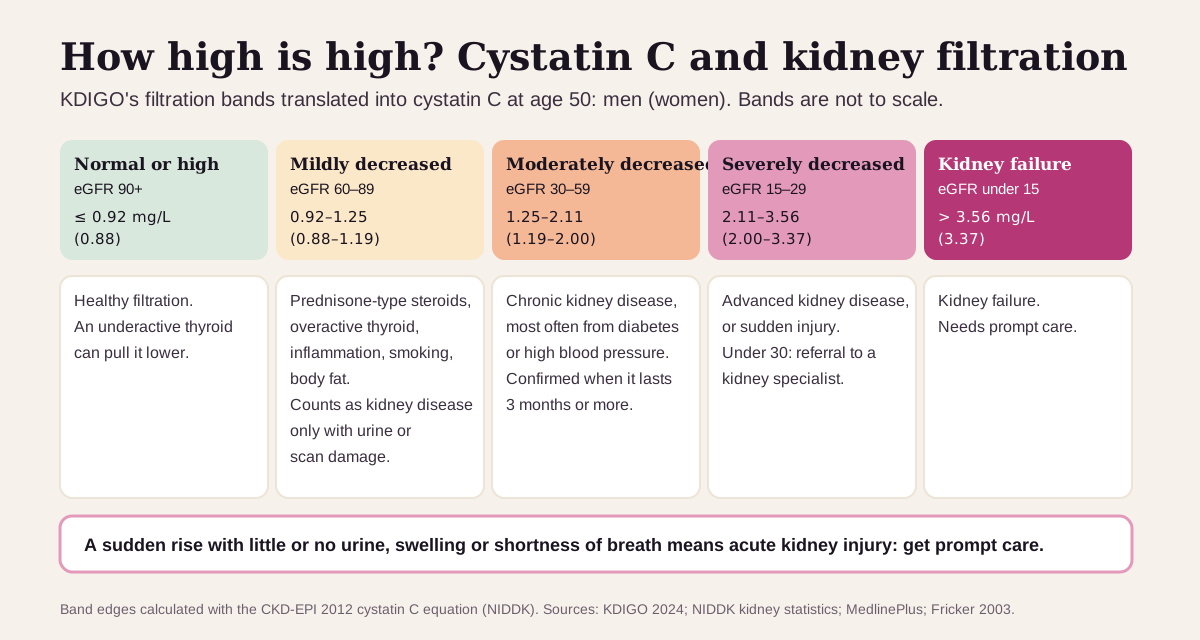
- KDIGO's "normal or high" filtration, an eGFR of 90 or more, works out to a cystatin C of about 0.92 mg/L or less for a 50-year-old man and 0.88 or less for a 50-year-old woman.27
Age and sex nudge it a little. At the same measured filtration, Stevens and colleagues found cystatin C ran 9.2% lower in women and 4.3% lower for every 20 years of age.11 The eGFR equation still trims 0.4% per year of age and 6.8% for women. So the same cystatin C gives a slightly lower eGFR as you get older.7
"Optimal" cystatin C: what health optimizers aim for
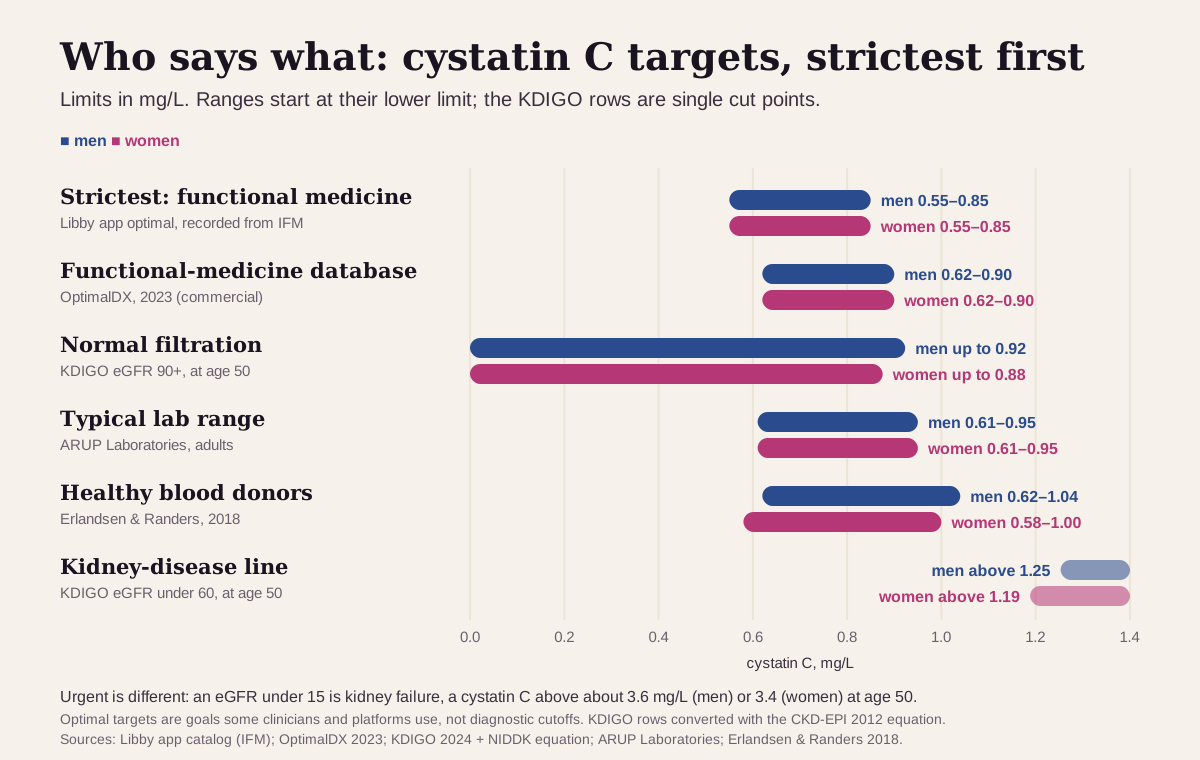
Functional-medicine practitioners and testing companies read cystatin C more strictly than a lab flag does. Their targets top out at 0.85–0.90 mg/L. Here's the full ladder, from strictest to loosest:
| Target | Men | Women | Who uses it |
|---|---|---|---|
| Strictest (functional medicine) | 0.55–0.85 mg/L | 0.55–0.85 mg/L | The optimal range shown in the Libby app, recorded from the Institute for Functional Medicine13 |
| Functional-medicine database | 0.62–0.90 mg/L | 0.62–0.90 mg/L | OptimalDX's published "ODX range," a commercial source14 |
| Guideline "normal" filtration | up to about 0.92 mg/L | up to about 0.88 mg/L | KDIGO's eGFR 90+ category, converted at age 50 with the CKD-EPI 2012 equation27 |
| Typical lab range | 0.61–0.95 mg/L | 0.61–0.95 mg/L | ARUP Laboratories' adult reference interval3 |
| Research "healthy" limit | 0.62–1.04 mg/L | 0.58–1.00 mg/L | 304 healthy blood donors, standardized method4 |
| Guideline kidney-disease line | above about 1.25 mg/L | above about 1.19 mg/L | eGFR under 60 for 3 months or more (KDIGO), converted at age 5027 |
| Urgent | above about 3.6 mg/L | above about 3.4 mg/L | eGFR under 15, kidney failure (KDIGO), converted at age 5027 |
Why lower looks better:
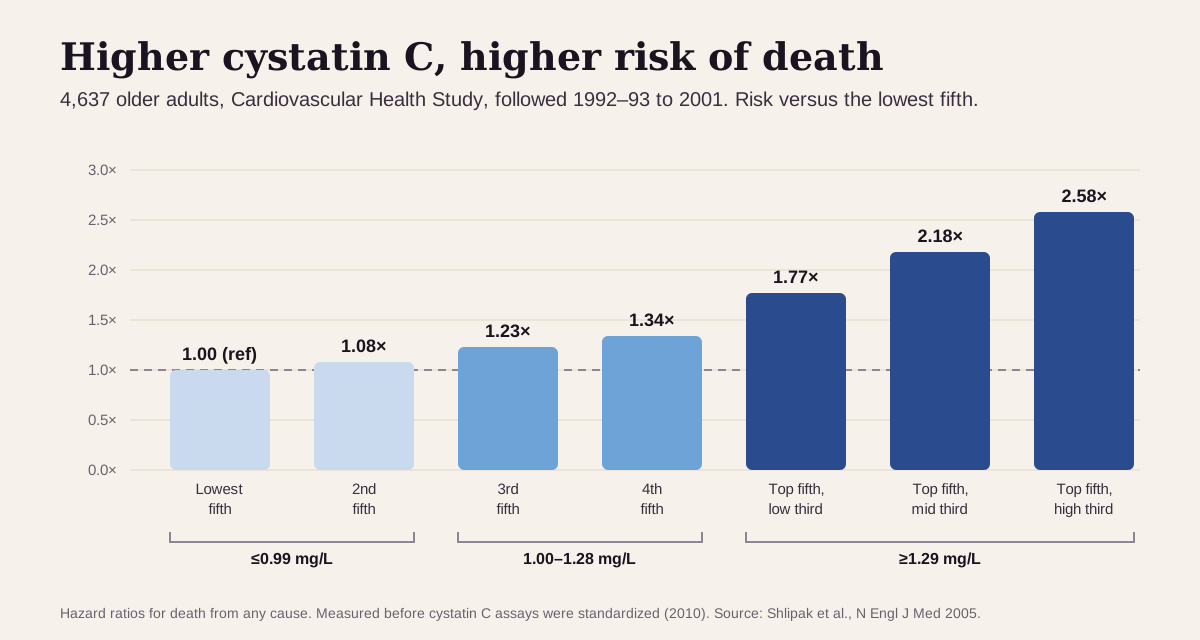
- In the Cardiovascular Health Study, researchers measured cystatin C in 4,637 older adults in 1992–93 and followed them to 2001. Compared with the lowest fifth, the risk of death rose step by step: 1.23 and 1.34 times in the middle fifths (cystatin C 1.00–1.28 mg/L), and 1.77 to 2.58 times in the top fifth (1.29 mg/L and up). Creatinine showed a J-shaped pattern instead of a steady climb.15
- In pooled data from more than 90,000 people in 11 general-population studies, cystatin C put 14% below an eGFR of 60, against 10% with creatinine. The people it moved to a worse category had a higher risk of kidney failure.1
Keep "optimal" in perspective: these are targets, not diagnoses. A cystatin C of 0.98 is a reason to look at your blood pressure, blood sugar and a urine albumin test, which KDIGO pairs with eGFR.2 Lower isn't automatically better, either. An underactive thyroid pulls cystatin C down,6 and below 0.85 mg/L two standardized lab reagents agreed poorly in a 2023 comparison, so small differences down there mean little.12
What a high cystatin C usually means
The size of the rise is the first clue. Through the eGFR equation, every cystatin C value maps onto one of KDIGO's filtration categories:27
Mildly high (about 0.9–1.25 mg/L at age 50): the kidneys, or a side effect
The usual suspects:
- Mildly lower filtration. An eGFR of 60–89 is "mildly decreased". KDIGO counts it as kidney disease only when a urine test or scan shows damage too.2
- Things that raise cystatin C apart from filtration. KDIGO lists extra
body fat, smoking, thyroid disease, excess glucocorticoid (prednisone-type)
hormones and chronic inflammation.2
- An overactive thyroid: in 13 people with hyperthyroidism, cystatin C averaged 1.32 mg/L at diagnosis and fell to 0.95 after treatment, while creatinine rose.6
- Prednisone-type steroids (glucocorticoids): in 305 patients, higher prednisolone doses pushed eGFRcys further below eGFRcr. The gap grew notable from about 0.17 mg per kg per day, roughly 12 mg a day for a 70 kg adult.16 Don't stop a prescribed medicine on your own; bring your list to your clinician.
- Diabetes and inflammation: at the same measured filtration, diabetes went with 8.5% higher cystatin C, and higher CRP (C-reactive protein, an inflammation marker) and white-cell counts and lower albumin went with higher levels too.11
Moderately high (about 1.25–2.1 mg/L at age 50): usually chronic kidney disease
- Chronic kidney disease (CKD) is the usual reason. It means an eGFR under 60, or signs of damage such as albumin in the urine, lasting 3 months or more.2 Diabetes and high blood pressure are the two most common causes. About 1 in 3 people with diabetes and 1 in 5 with high blood pressure have kidney disease, and as many as 9 in 10 people with CKD don't know it.5
- Cystatin C is good at settling borderline cases. Among people whose creatinine eGFR was 45–59, cystatin C moved 42% to a lower category and 24% to a higher one.1
Very high (above about 2.1 mg/L at age 50): advanced or sudden loss
- An eGFR under 30 is one of KDIGO's reasons for referral to a kidney specialist, and under 15 is kidney failure.2
- A sudden rise points to acute kidney injury. Triggers include very low blood pressure from dehydration, bleeding or serious infection, a blocked urinary tract, and some medicines, including NSAID pain relievers, certain antibiotics and IV contrast dye.8
Get prompt care if a high cystatin C comes with little or no urine, swelling in your legs, ankles or feet, shortness of breath, confusion or other changes in mental state, or nausea and vomiting.8
What about a low result?
By the equation, a low cystatin C simply means a high eGFR.7 The exception worth knowing is an underactive thyroid, which pulls cystatin C down: in 9 people with hypothyroidism it averaged 0.84 mg/L and rose to 1.10 after treatment, while creatinine fell.6 When cystatin C and creatinine move in opposite directions, thyroid tests are worth a look.
Cystatin C reads best next to its neighbors
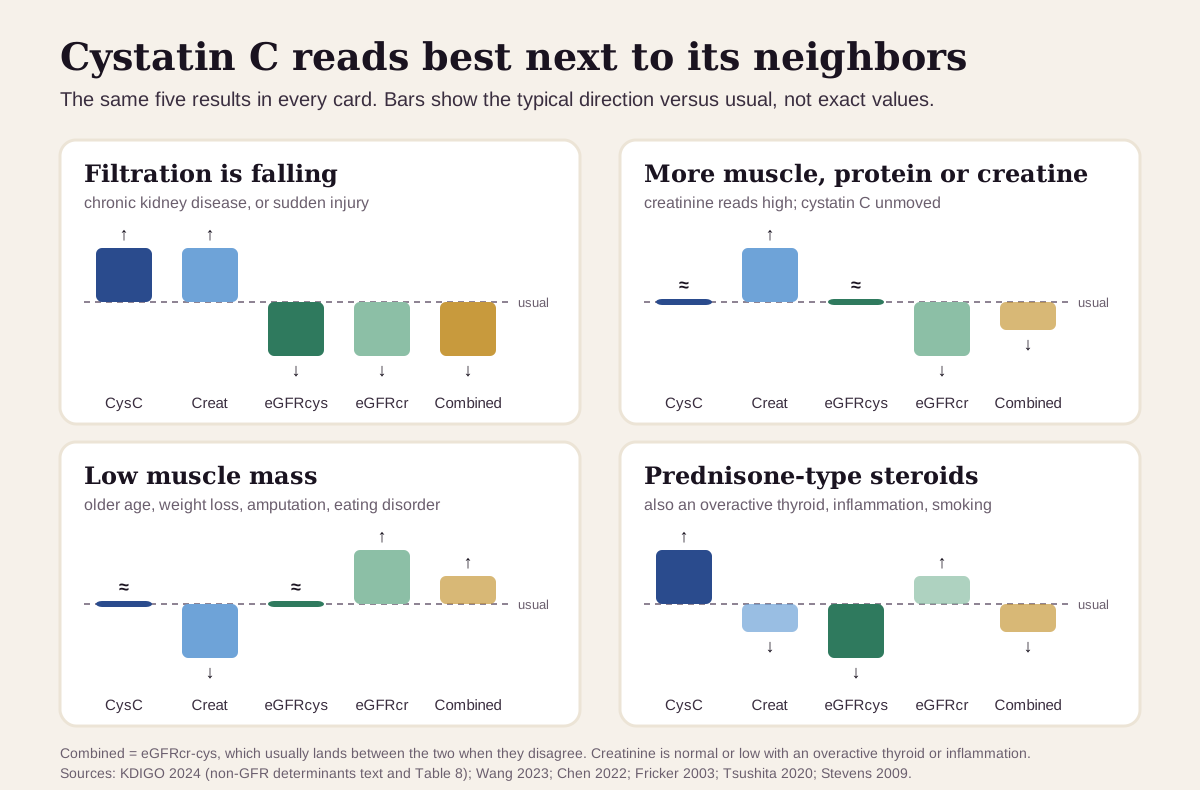
Cystatin C almost always comes with a creatinine from the same blood draw, and many reports print three eGFRs. KDIGO says the direction and size of the gap between eGFRcr and eGFRcys are informative. In a study of 4,050 people, 30% had a gap of 15 or more.29
| If you see… | It often points to… |
|---|---|
| Cystatin C and creatinine both up, eGFRcys and eGFRcr both low and close together | a real drop in filtration: chronic kidney disease or, if sudden, acute kidney injury |
| Creatinine up, cystatin C normal (eGFRcys higher than eGFRcr) | creatinine pushed up by muscle, a high-protein diet, creatine supplements, or a medicine that slows creatinine's exit; with a normal urine albumin, cystatin C could "un-diagnose" kidney disease here |
| Creatinine low, cystatin C about usual (eGFRcys lower than eGFRcr) | low muscle mass from older age, weight loss, an eating disorder or amputation, making creatinine look better than filtration really is |
| Cystatin C up, creatinine normal or low | prednisone-type steroids, an overactive thyroid, inflammation, smoking or extra body fat raising cystatin C; check thyroid tests and the medicine list |
The last two rows can look alike on paper, since both put eGFRcys below eGFRcr. Your history tells them apart: weight and muscle loss point to the first; a steroid prescription or abnormal thyroid tests point to the second.29
When they disagree, the combined number usually wins. In the group where eGFRcys ran lower, eGFRcr overestimated measured GFR by 13.4 and eGFRcys underestimated it by 9.9 mL/min/1.73 m². The combined eGFRcr-cys landed closest in both directions.9 A gap with eGFRcys lower is also linked to frailty, heart-failure hospitalization, heart disease, kidney failure and death.9
Filtration and kidney damage are separate questions. KDIGO pairs eGFR with a urine albumin test (the albumin-to-creatinine ratio, or UACR) for anyone at risk.2
How fast cystatin C changes
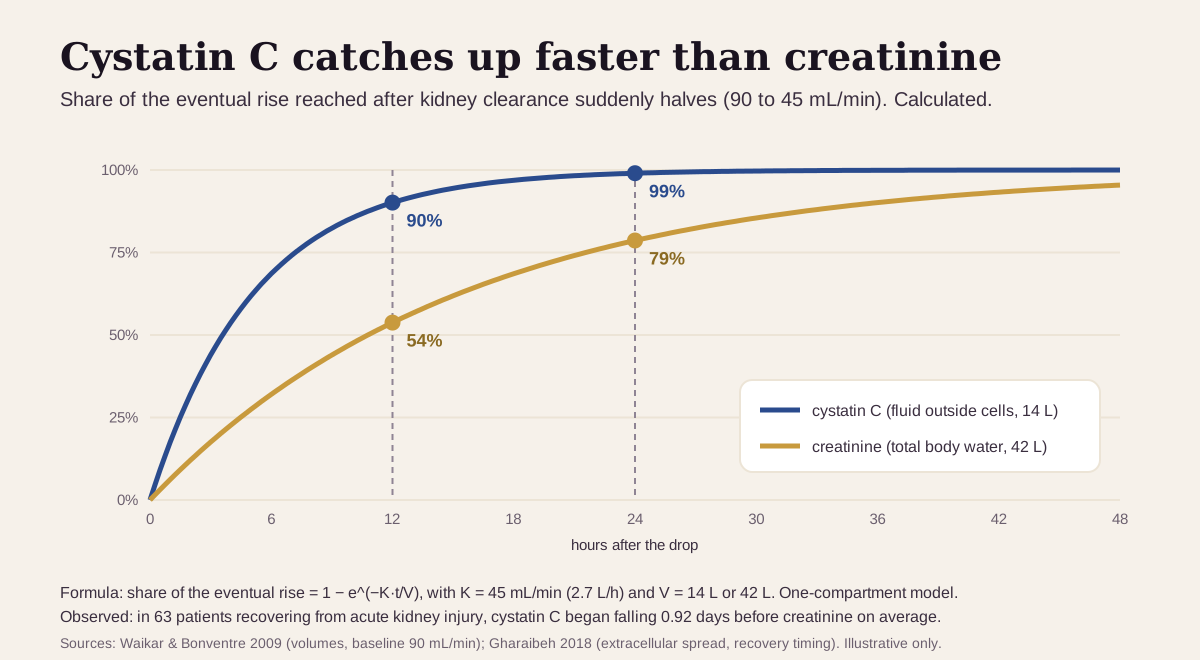
Cystatin C moves faster than creatinine. It spreads only through the fluid outside your cells, about a third of the space creatinine fills, so it reaches its new level about three times faster after filtration changes.171
What that means in practice:
- It signals recovery sooner. In 63 hospital patients recovering from acute kidney injury, cystatin C started falling before creatinine in 68%, on average 0.92 days earlier.17
- Small wobbles are normal. KDIGO puts the everyday variation of eGFRcys at about 5.3%. For people with kidney disease, a change of more than 20% goes beyond that and deserves a look.2
- Mention prednisone-type steroids and thyroid treatment when you get tested. Both can move cystatin C apart from any change in filtration.166
- Compare like with like. Reagents still differ at the low end, so trends work best from the same lab.12 Labcorp, a commercial lab, prefers overnight fasting for its cystatin C test; follow your own lab's instructions.3
- Trends beat snapshots. Kidney disease is defined by results that last 3 months or more, and KDIGO advises repeating an unexpected result to confirm it.2
Going deeper: the equation behind eGFRcys
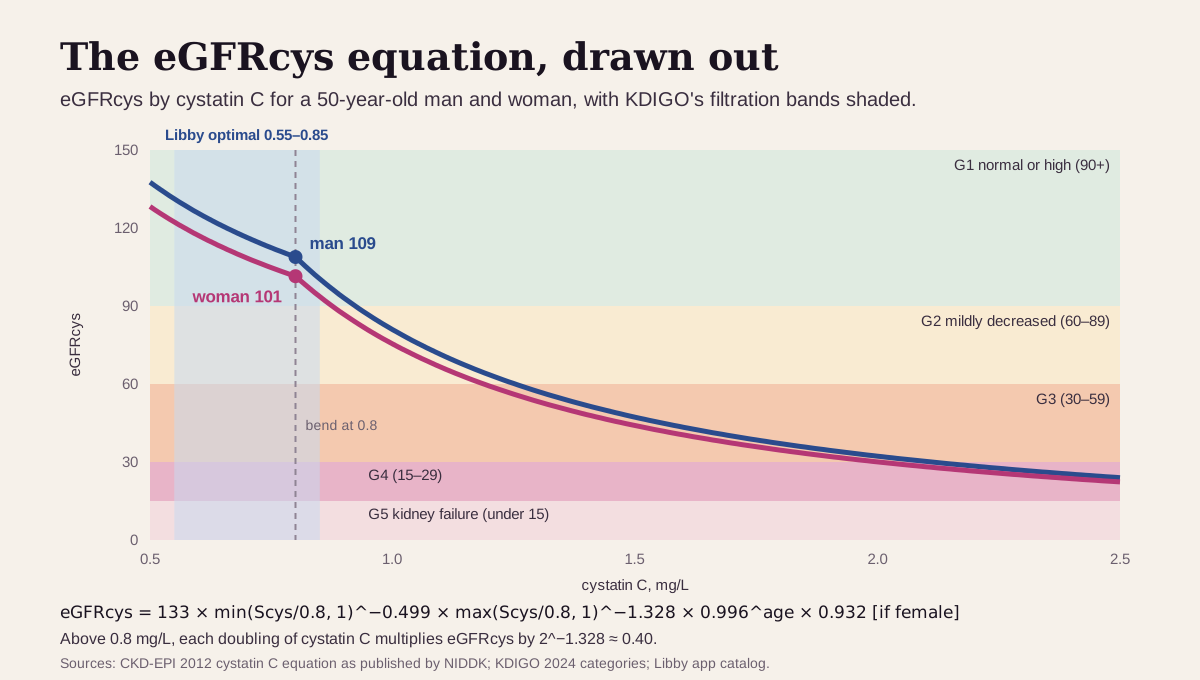
NIDDK publishes the 2012 CKD-EPI cystatin C equation:7
eGFRcys = 133 × min(Scys/0.8, 1)^−0.499 × max(Scys/0.8, 1)^−1.328 × 0.996^age × 0.932 [if female]
The equation bends at 0.8 mg/L. Above it, each doubling of cystatin C multiplies eGFRcys by 2^−1.328, about 0.40, a 60% drop. At age 50, a cystatin C of 0.8 gives an eGFRcys of about 109 for a man and 101 for a woman.
The combined 2021 equation adds standardized creatinine and has no race term. NIDDK reports that 90.5–90.8% of combined estimates land within 30% of measured GFR, against 85.3% for cystatin C alone.7 eGFRcys itself was built without a race term because cystatin C is produced more uniformly across populations than creatinine.1
The numbers only line up across labs because of a shared yardstick: a certified reference material, ERM-DA471/IFCC, released in 2010. All major U.S.-approved reagent makers now calibrate to it.1
Questions worth asking
- What are my eGFRcys, eGFRcr and combined eGFR, and how far apart are the first two?
- Could my muscle mass, diet, creatine or a medicine be skewing my creatinine?
- Could a prednisone-type steroid, my thyroid, smoking or inflammation be raising my cystatin C?
- Should I have a urine albumin test (UACR) too?
- Is this a one-off, or has it stayed at this level for 3 months or more?
- If a medicine dose depends on my kidney function, would a measured GFR help?
FAQ
What is a normal cystatin C level? Check your lab's range. ARUP uses 0.61–0.95 mg/L for adults, and healthy blood donors ran up to 1.04 mg/L for men and 1.00 for women.34
Is cystatin C better than creatinine? It's much less affected by muscle and diet. Prednisone-type steroids, thyroid disease, inflammation and body fat affect it instead, so using both gives the most accurate estimate.29
What causes a high cystatin C? Most often lower kidney filtration, usually from chronic kidney disease due to diabetes or high blood pressure. Prednisone-type steroids, an overactive thyroid, inflammation, smoking and extra body fat can raise it too.52
When is a high cystatin C urgent? An eGFR under 15, a cystatin C around 3.4–3.6 mg/L at age 50, is kidney failure. A rising result with little urine, swelling or shortness of breath needs prompt care.28
This guide is for education. It can't diagnose you or replace care from a clinician who knows your history.
Footnotes
-
Chen DC, Potok OA, Rifkin D, Estrella MM. Advantages, Limitations, and Clinical Considerations in Using Cystatin C to Estimate GFR. Kidney360. 2022;3(10):1807–1814. doi:10.34067/KID.0003202022. Nephrology review: production by all nucleated cells, tubular handling, the non-GFR factors table, cost, extracellular distribution, reclassification in 90,000+ people, and the 2010 reference material. PMC ↩ ↩2 ↩3 ↩4 ↩5 ↩6 ↩7 ↩8 ↩9 ↩10 ↩11
-
Kidney Disease: Improving Global Outcomes (KDIGO) CKD Work Group. KDIGO 2024 Clinical Practice Guideline for the Evaluation and Management of Chronic Kidney Disease. Kidney Int. 2024;105(4S):S117–S314. doi:10.1016/j.kint.2023.10.018. The international guideline: GFR categories, the 3-month rule, when to use cystatin C (Table 8), the non-GFR factors that affect cystatin C, eGFR variability and referral at eGFR under 30. KDIGO ↩ ↩2 ↩3 ↩4 ↩5 ↩6 ↩7 ↩8 ↩9 ↩10 ↩11 ↩12 ↩13 ↩14 ↩15 ↩16 ↩17 ↩18 ↩19 ↩20 ↩21 ↩22 ↩23 ↩24 ↩25 ↩26 ↩27 ↩28 ↩29
-
Laboratory test directories: ARUP Laboratories, Cystatin and Creatinine With eGFR (test 3018316), adult reference interval 0.61–0.95 mg/L, ARUP; and Labcorp, a commercial laboratory, Cystatin C With eGFR (test 121265), "Overnight fasting is preferred," Labcorp. Accessed September 23, 2026. ↩ ↩2 ↩3 ↩4 ↩5 ↩6 ↩7
-
Erlandsen EJ, Randers E. Reference intervals for plasma cystatin C and plasma creatinine in adults using methods traceable to international calibrators and reference methods. J Clin Lab Anal. 2018;32(6):e22433. doi:10.1002/jcla.22433. 152 men and 152 women, blood donors aged 17–66. PMC ↩ ↩2 ↩3 ↩4 ↩5 ↩6
-
National Institute of Diabetes and Digestive and Kidney Diseases. Kidney Disease Statistics for the United States. NIH; last reviewed September 2024. More than 1 in 7 U.S. adults have CKD; diabetes and high blood pressure are the two most common causes; up to 9 in 10 are unaware. NIDDK ↩ ↩2 ↩3 ↩4
-
Fricker M, Wiesli P, Brändle M, Schwegler B, Schmid C. Impact of thyroid dysfunction on serum cystatin C. Kidney Int. 2003;63(5):1944–1947. doi:10.1046/j.1523-1755.2003.00925.x. 22 patients followed from diagnosis to normal thyroid levels. PubMed ↩ ↩2 ↩3 ↩4 ↩5 ↩6
-
National Institute of Diabetes and Digestive and Kidney Diseases. eGFR Equations for Adults. NIH. The 2012 CKD-EPI cystatin C and 2021 creatinine–cystatin C equations, their P30 accuracy, and the statement that using both markers is preferred. NIDDK ↩ ↩2 ↩3 ↩4 ↩5 ↩6 ↩7 ↩8 ↩9 ↩10 ↩11 ↩12 ↩13 ↩14 ↩15 ↩16
-
National Library of Medicine. Acute kidney failure. MedlinePlus Medical Encyclopedia. Review date May 6, 2024. Causes and symptoms of sudden kidney injury. MedlinePlus ↩ ↩2 ↩3 ↩4
-
Wang Y, Adingwupu OM, Shlipak MG, et al. Discordance Between Creatinine-Based and Cystatin C-Based Estimated GFR: Interpretation According to Performance Compared to Measured GFR. Kidney Med. 2023;5(10):100710. doi:10.1016/j.xkme.2023.100710. 4,050 people with measured GFR. PMC ↩ ↩2 ↩3 ↩4 ↩5 ↩6 ↩7
-
National Library of Medicine. CST3 gene. MedlinePlus Genetics. Cystatin C is a cysteine protease inhibitor that blocks cathepsins. MedlinePlus ↩
-
Stevens LA, Schmid CH, Greene T, et al. Factors other than glomerular filtration rate affect serum cystatin C levels. Kidney Int. 2009;75(6):652–660. doi:10.1038/ki.2008.638. 3,418 people with kidney disease and measured GFR. PMC ↩ ↩2 ↩3 ↩4
-
Lee HS, Bae GE, Lee JE, Park HD. Effect of Two Cystatin C Reagents and Four Equations on Glomerular Filtration Rate Estimations After Standardization. Ann Lab Med. 2023;43(6):565–573. doi:10.3343/alm.2023.43.6.565. 148 participants; the reagents agreed from 0.85 to 4.40 mg/L. PMC ↩ ↩2 ↩3
-
Institute for Functional Medicine. Clinical practice guidelines and Advanced Practice Modules (range as recorded in the Libby app's marker catalog; member-only modules not opened for this article). The Libby app's cystatin C optimal range is 0.55–0.85 mg/L. IFM ↩ ↩2
-
OptimalDX. Biomarkers of Kidney Function: Cystatin C. Published June 19, 2023; updated November 2, 2023. Lists a "Standard Range: 0.5 – 1.00 mg/L" and "The ODX Range: 0.62 – 0.90 mg/L". A commercial source, listed as what the optimizer community uses. optimaldx.com ↩ ↩2
-
Shlipak MG, Sarnak MJ, Katz R, et al. Cystatin C and the risk of death and cardiovascular events among elderly persons. N Engl J Med. 2005;352(20):2049–2060. doi:10.1056/NEJMoa043161. Cardiovascular Health Study, 4,637 participants. PubMed ↩ ↩2
-
Tsushita H, Tanaka R, Suzuki Y, Sato Y, Itoh H. Effects of dose and type of corticosteroids on the divergence between estimated glomerular filtration rates derived from cystatin C and creatinine. J Clin Pharm Ther. 2020;45(6):1390–1397. doi:10.1111/jcpt.13235. 305 patients (1,318 courses); prednisolone cutoff 0.170 mg/kg/day. PubMed ↩ ↩2 ↩3
-
Gharaibeh KA, Hamadah AM, El-Zoghby ZM, et al. Cystatin C Predicts Renal Recovery Earlier Than Creatinine Among Patients With Acute Kidney Injury. Kidney Int Rep. 2018;3(2):337–342. doi:10.1016/j.ekir.2017.10.012. 63 patients; explains the extracellular spread and roughly 3-times-faster approach to steady state. PMC ↩ ↩2 ↩3
-
Waikar SS, Bonventre JV. Creatinine kinetics and the definition of acute kidney injury. J Am Soc Nephrol. 2009;20(3):672–679. doi:10.1681/ASN.2008070669. Model inputs: baseline clearance 90 mL/min, 42 L total volume, 14 L outside cells. PMC ↩
Educational content, not medical advice.Libby is a personal record tool, not a medical service — it doesn't diagnose, treat, or prescribe. Reference ranges vary by lab and by person. Talk to a qualified healthcare professional about your results.
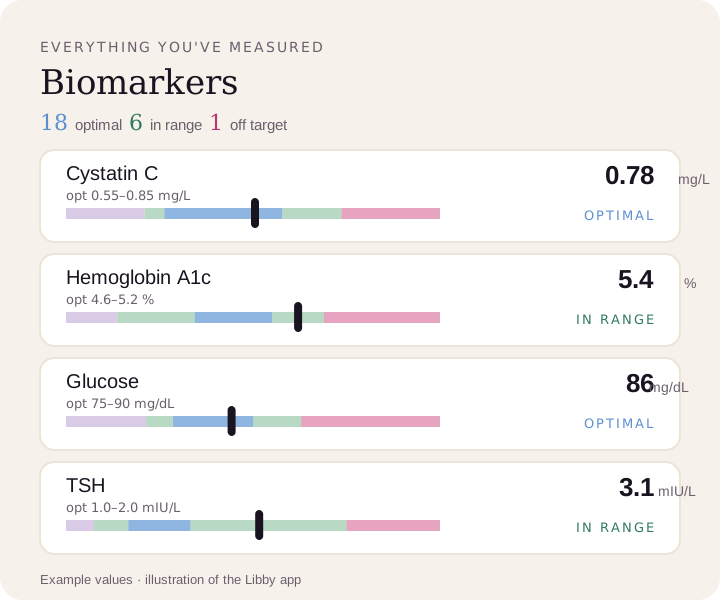
Compare your results to optimal ranges.
Upload a lab PDF or a photo of your report. Libby puts every marker on your lab's range and the optimal range, and tracks your trends over time.
View your cystatin C ›