eGFR and creatinine: normal ranges, low eGFR causes
eGFR shows how well your kidneys filter, and it's calculated from creatinine. What's normal, what a low eGFR usually means, and when it's urgent.
eGFR (estimated glomerular filtration rate) is the everyday measure of how well your kidneys filter your blood, and it's calculated from creatinine, a waste product your muscles make. The lab measures creatinine in your blood, then runs it through an equation with your age and sex. When your kidneys filter less, creatinine builds up and eGFR falls.12
The short version
- Normal: an eGFR of 90 or higher is "normal or high" in the international kidney guideline (KDIGO). 60–89 is common, especially with age, and counts as kidney disease only when a urine test or scan shows damage too.1 A typical creatinine range is 0.7–1.3 mg/dL for men and 0.5–0.95 mg/dL for women.3
- Low eGFR or high creatinine: the most common lasting cause is chronic kidney disease, usually from diabetes or high blood pressure. It affects more than 1 in 7 U.S. adults, and as many as 9 in 10 of them are unaware of it.4 More muscle, creatine supplements, a cooked-meat meal and a marathon raise creatinine too.567
- Urgent: creatinine up 0.3 mg/dL or more within 48 hours, or to 1.5 times your baseline within 7 days, is acute kidney injury. An eGFR under 15 is kidney failure.81
- One result is a snapshot. Chronic kidney disease means an eGFR under 60, or signs of damage such as albumin in the urine, that last at least 3 months.1
What creatinine and eGFR are
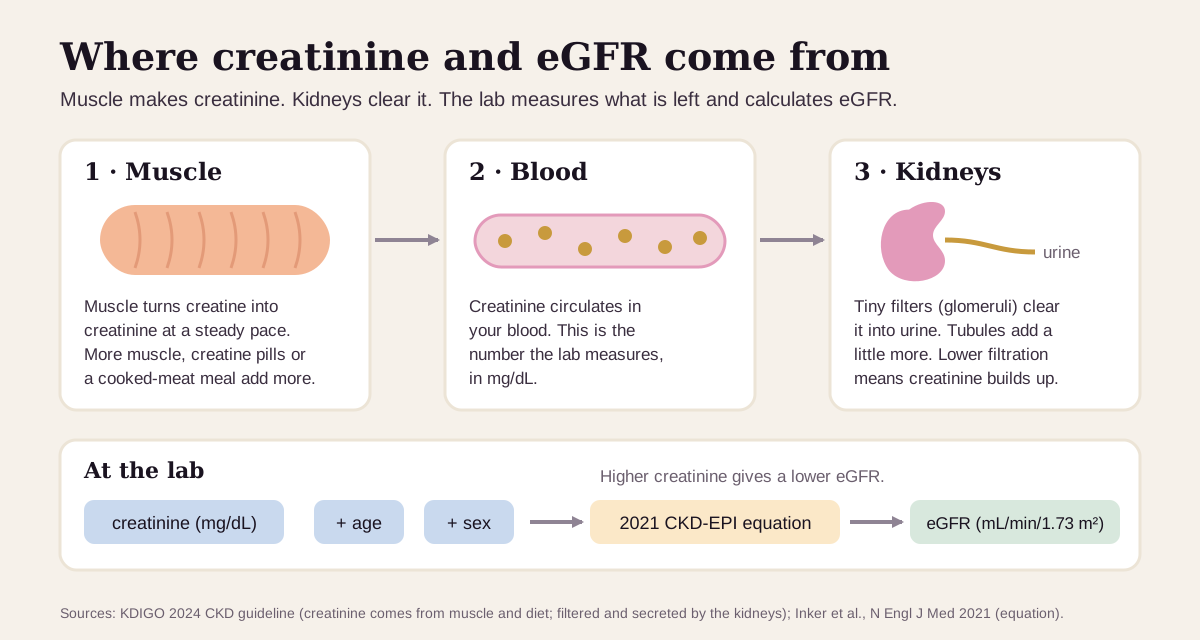
Your muscles store quick energy as creatine. A steady trickle of it breaks down into creatinine, a waste product your kidneys clear from the blood. The more muscle you have, the more creatinine you make, and meat and creatine supplements add some too.1
Your kidneys' tiny filters, the glomeruli, strain creatinine out of the blood, and the tubules downstream secrete a little extra into the urine.1 GFR (glomerular filtration rate) is how much blood those filters clean each minute. Measuring it directly takes a special test with an outside tracer, so labs estimate it instead.1
That estimate is eGFR. U.S. labs now use the 2021 CKD-EPI equation, which turns your creatinine, age and sex into a filtration rate. It has no race term: its authors call race "a social and not a biologic construct." In the validation study, 85% or more of estimates landed within 30% of measured GFR.2 (The equation itself is at the end.)
Creatinine is part of the routine metabolic panels, and most labs print the eGFR right next to it, so many people meet both numbers on a yearly checkup.
What's a normal eGFR?
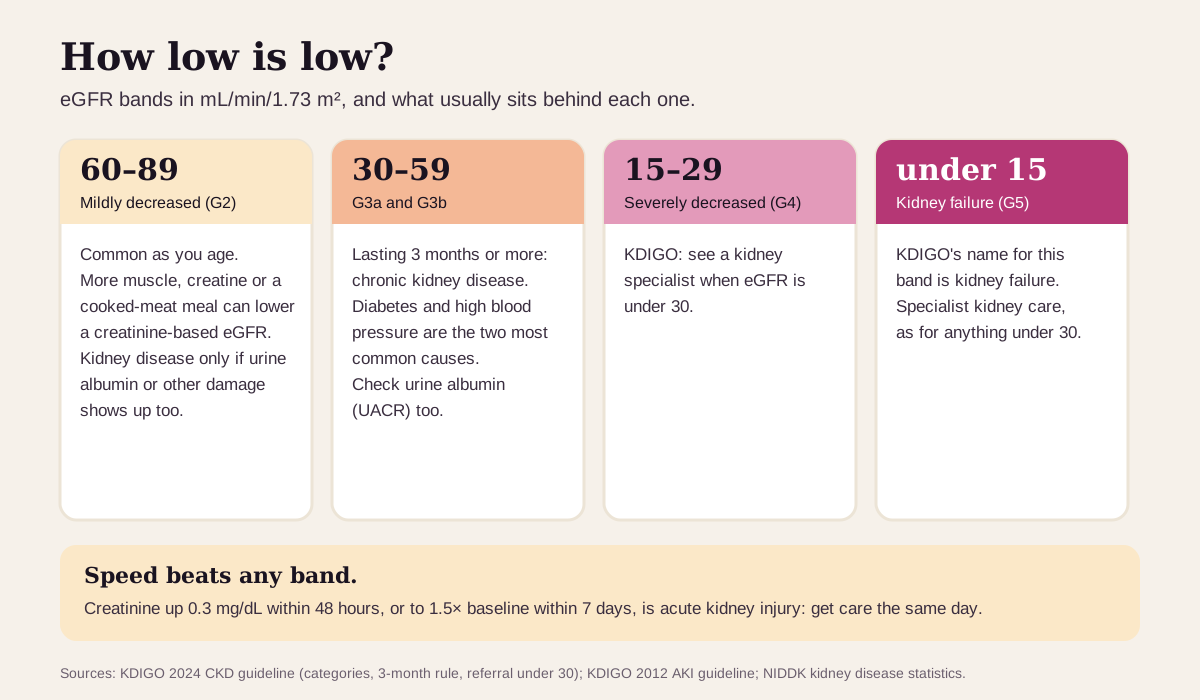
The international kidney guideline group KDIGO (Kidney Disease: Improving Global Outcomes) sorts eGFR into six categories:1
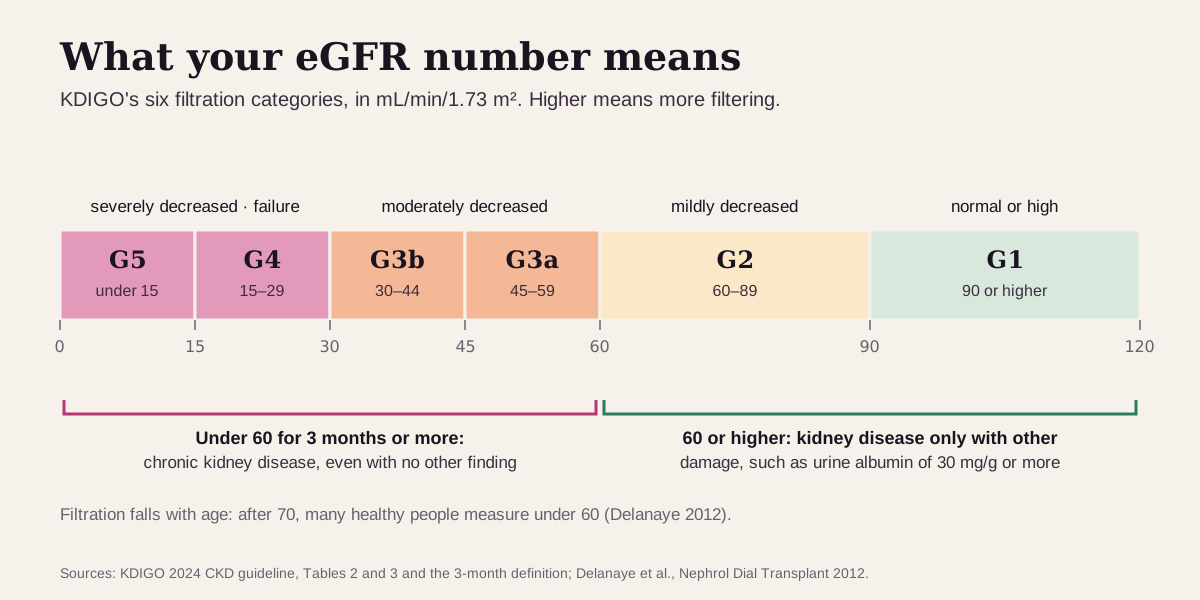
- 90 or higher (G1) is "normal or high".
- 60–89 (G2) is "mildly decreased". KDIGO counts it as chronic kidney disease only when other damage shows up too, such as a urine albumin-to-creatinine ratio of 30 mg/g or more.1
- Under 60 for 3 months or more is chronic kidney disease, whatever the other tests show.1
Age matters. Filtration falls as you get older. A review of the healthy-population data concluded that after 70, values under 60 could be considered normal.9 The equation builds some of this in: it trims eGFR by a factor of 0.9938 for each year of age.2
For creatinine, MedlinePlus lists a typical normal result of 0.7–1.3 mg/dL for men and 0.5–0.95 mg/dL for women. Women usually run lower because they tend to carry less muscle.3 Labs differ, so start with the range printed on your own report.
"Optimal" eGFR and creatinine: what health optimizers aim for
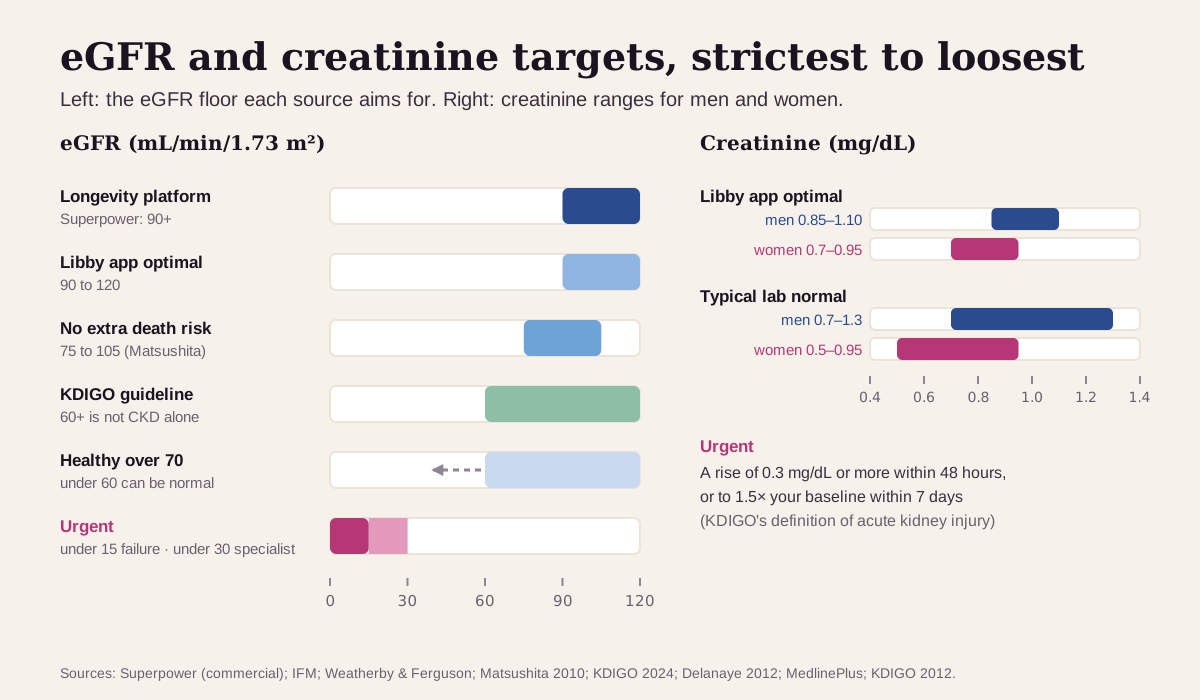
Longevity clinics, functional-medicine practitioners and at-home testing companies read kidney numbers more strictly than a lab flag does. For eGFR the targets cluster at the top of the scale; for creatinine they sit in a narrow band. Here's the ladder, from strictest to loosest:
| Target | eGFR (mL/min/1.73 m²) | Creatinine, men | Creatinine, women | Who uses it |
|---|---|---|---|---|
| Strictest (longevity platforms) | 90 or higher | mid-to-upper lab range | mid-to-upper lab range | Superpower's published eGFR and creatinine pages10 |
| Functional / app optimal | 90 to 120 | 0.85–1.10 mg/dL | 0.7–0.95 mg/dL | The optimal range shown in the Libby app. The app's catalog credits the eGFR band to the Institute for Functional Medicine11 (its floor of 90 is KDIGO's "normal or high" cutoff1) and the creatinine range to Weatherby & Ferguson's functional-medicine textbook12 |
| Research "no extra risk" | 75 to 105 | – | – | The Chronic Kidney Disease Prognosis Consortium's pooled cohorts13 |
| Guideline | 60 or higher, if no other damage | – | – | KDIGO1 |
| Typical lab range | – | 0.7–1.3 mg/dL | 0.5–0.95 mg/dL | MedlinePlus3 |
| Healthy older adults | under 60 can be normal after 70 | – | – | Delanaye and colleagues9 |
| Urgent | under 15 (kidney failure); under 30, see a kidney specialist | up 0.3 mg/dL in 48 hours, or to 1.5× baseline in 7 days | same | KDIGO18 |
Why aim for the top of the range:
- In a pooled analysis of 105,872 adults in 14 general-population cohorts, death risk was flat between an eGFR of 75 and 105. Compared with an eGFR of 95, it was 1.18 times as high at 60, 1.57 times at 45 and 3.14 times at 15.13
- The same analysis found risk climbing with urine albumin well below the 30 mg/g damage cutoff: 1.20 times at 10 mg/g and 1.63 times at 30 mg/g, compared with 5 mg/g.13
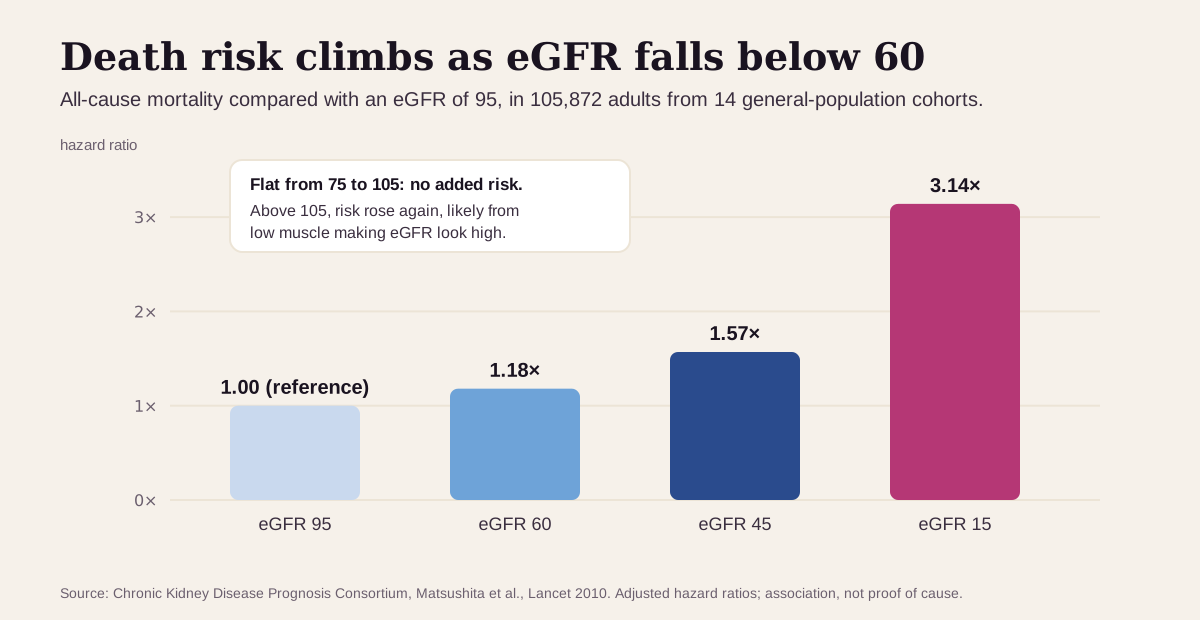
Keep "optimal" in perspective: these are targets, not diagnoses. An eGFR of 84 in a 65-year-old with a clean urine test is common, and the guideline counts it as healthy.19 Higher isn't always better, either. In the same pooled data, death risk rose again above 105, and the authors pointed to low muscle mass from ill health, which lowers creatinine and makes eGFR look better than it is.13 Creatinine works the same way: Superpower puts optimal creatinine in the mid-to-upper part of the lab range for people with normal muscle, well above the bottom.10
What a low eGFR or high creatinine usually means
Two questions come first: how low, and how fast. A slow drift over months points to a lasting cause. A jump over days points to a sudden one.18
Slow and lasting: chronic kidney disease
The usual suspects:
- Diabetes and high blood pressure. These are the two most common causes of kidney disease. About 1 in 3 people with diabetes and 1 in 5 with high blood pressure have it.4
- Age. Filtration falls as you get older, and many healthy people over 70 measure under 60.9
- Less common causes: a blocked urinary tract, kidney infection, and reduced blood flow to the kidneys.3
Creatinine up, kidneys fine
Creatinine comes from muscle, so anything that adds creatinine lowers a creatinine-based eGFR without the kidneys changing at all.1
- A cooked-meat meal. In one study of 32 people, median creatinine rose from 80.5 to 101 µmol/L one to two hours after cooked meat, and median eGFR fell from 84 to 59.5. A meat-free meal had little effect.5 KDIGO suggests waiting at least 12 hours after meat or fish before the test.1
- Creatine supplements. Across 19 randomized trials plus one crossover trial, creatine raised creatinine by an average 0.13 mg/dL, with no significant change in urea or eGFR.6
- More muscle. Bodybuilders and heavy trainers make more creatinine. KDIGO notes that a cystatin C-based eGFR may be the better read when extra muscle is the only reason.1
- A marathon or ultramarathon. Creatinine rose by an average 29 µmol/L (about 0.3 mg/dL) right after the race, and was back to baseline within 48 hours wherever it was retested.7
- Dehydration. Losing body fluid raises both creatinine and BUN.314
- Medicines. Some drugs slow the tubules' extra secretion of creatinine and nudge the number up without harming the kidneys.1 Don't stop a prescribed medicine on your own. Bring your full list, supplements included, to your clinician.
Sudden jumps: acute kidney injury
Creatinine that rises 0.3 mg/dL or more within 48 hours, or to 1.5 times your baseline within 7 days, meets KDIGO's definition of acute kidney injury. So does urine output under 0.5 mL per kilogram per hour for 6 hours.8 Common triggers include very low blood pressure from dehydration, bleeding or a severe infection, a blocked urinary tract, and some medicines, such as NSAID pain relievers, certain antibiotics and IV contrast dye.15
Get care the same day if your creatinine has jumped quickly, or if a high creatinine or low eGFR comes with little or no urine, swelling in your legs, ankles or feet, shortness of breath, confusion, or nausea and vomiting.815
eGFR reads best next to its neighbors
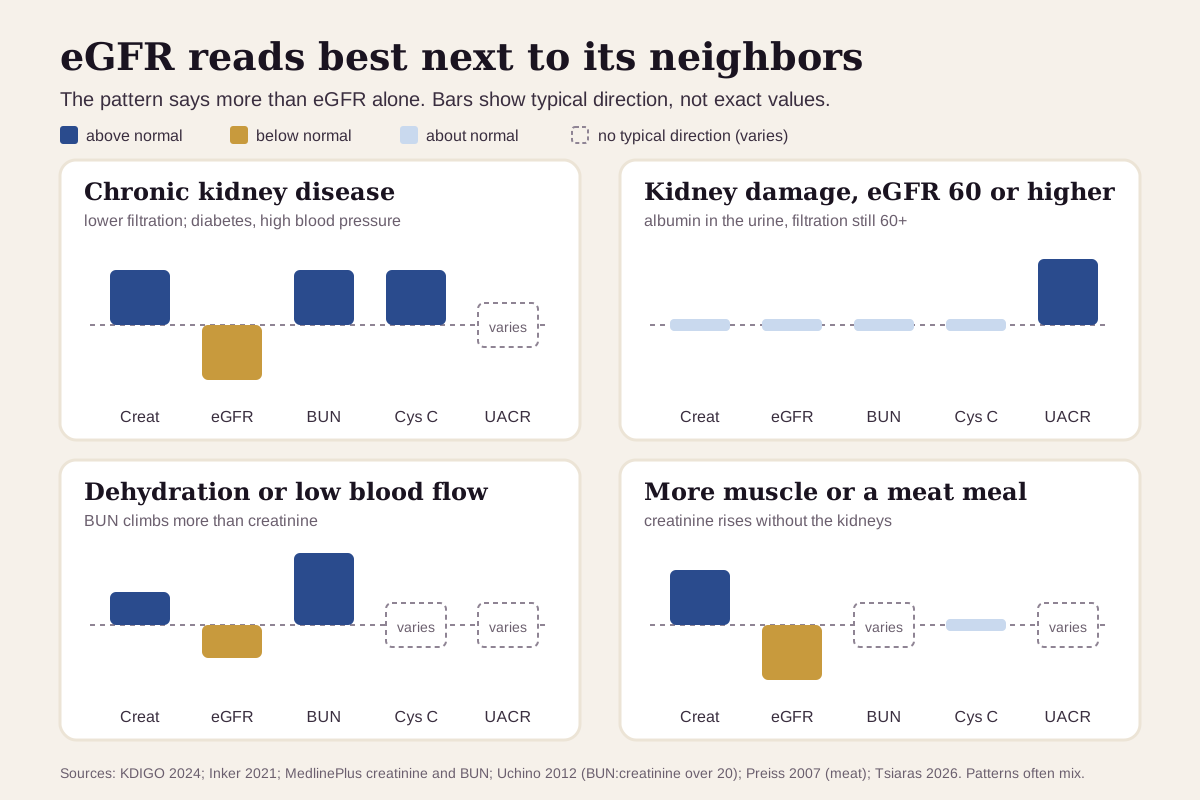
eGFR comes from creatinine, so it inherits creatinine's blind spots. Reading it next to BUN, cystatin C and urine albumin sorts out most of them:1
| If you see… | It often points to… |
|---|---|
| Creatinine up, eGFR down, cystatin C up too | truly lower filtration: chronic kidney disease if it lasts 3 months, most often from diabetes or high blood pressure |
| Urine albumin (UACR) 30 mg/g or more, eGFR 60 or higher | kidney damage that shows in the urine while eGFR is still 60 or higher; KDIGO counts it as chronic kidney disease once it has lasted 3 months |
| BUN up more than creatinine (a BUN-to-creatinine ratio over 20) | the classic sign of dehydration or low blood flow to the kidneys, though one study of 3,641 hospital patients with kidney injury found the ratio a weak guide |
| Creatinine up, cystatin C normal | creatinine from muscle, creatine or a meat meal rather than the kidneys; KDIGO calls a cystatin C-based or combined eGFR the better read, and a measured GFR the answer when a decision hinges on it |
Cystatin C has its own quirks. Higher body fat, smoking, an over- or underactive thyroid, steroid medicines and chronic inflammation can move it.1 That's why KDIGO recommends the combined creatinine–cystatin C eGFR when the creatinine-only number is likely off and the result will change a decision. The combined equation was also the more accurate one in the 2021 validation.12
Is a low creatinine or a high eGFR a problem?
Usually it reflects less muscle. MedlinePlus lists muscle loss from aging or a long illness, and malnutrition, as the usual reasons for a low creatinine.3 A low creatinine makes the equation return a high eGFR that can overstate how well the kidneys filter. In the pooled cohort data, an eGFR above 105 carried higher death risk, which the authors linked to low muscle mass from ill health.13 It's a marker of muscle and overall reserve more than a kidney warning.
How fast creatinine and eGFR change
Creatinine lags. When filtration drops suddenly, creatinine takes time to build to its new level. In Waikar and Bonventre's mass-balance model, it took about 34 hours to settle after kidney clearance was halved in someone with normal kidneys, and about 139 hours in someone starting with stage 3 kidney disease.17
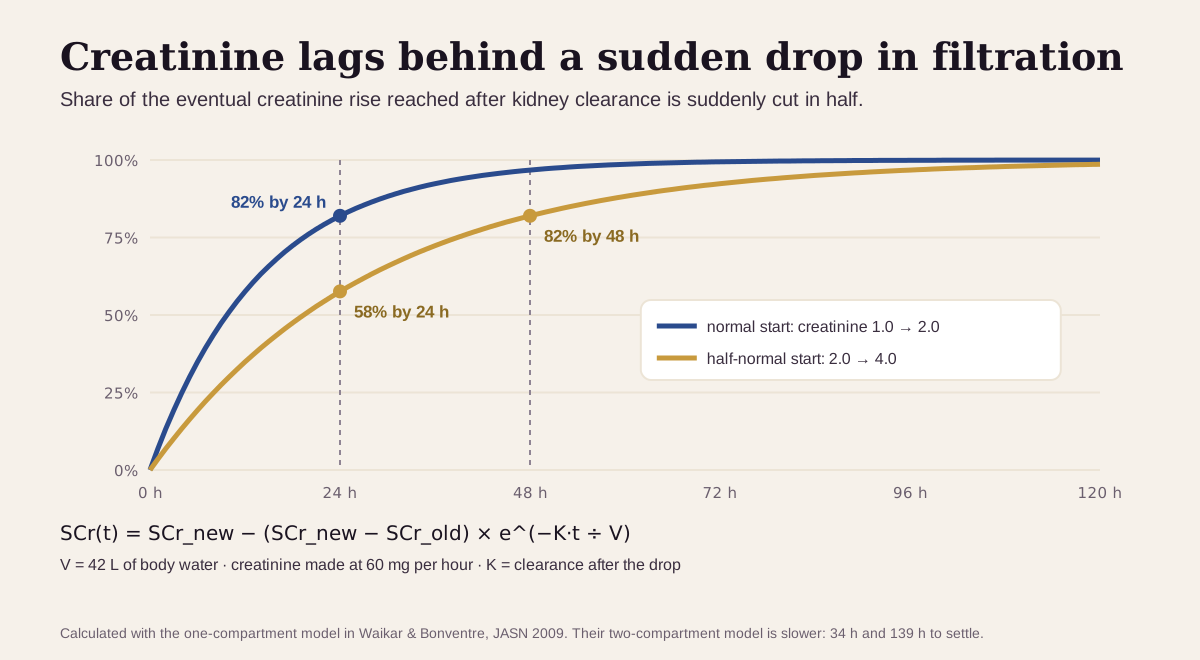
What that means in practice:
- Hours: a cooked-meat meal moves creatinine within 1–2 hours.5 Mention recent meals, workouts and supplements when you get tested.
- Days: a marathon rise fades within 48 hours.7 After a sudden kidney injury, creatinine keeps climbing for a day or more before it shows the full drop.17
- A change has to be big to count. For people with chronic kidney disease, KDIGO says a change in eGFR of more than 20% between tests exceeds normal variability and deserves a look.1
- Trends beat snapshots. Chronic kidney disease needs 3 months of evidence by definition, so the useful view is a line, not a dot.1 Compare results from the same lab when you can, because ranges and methods differ.3
Going deeper: how the equation works
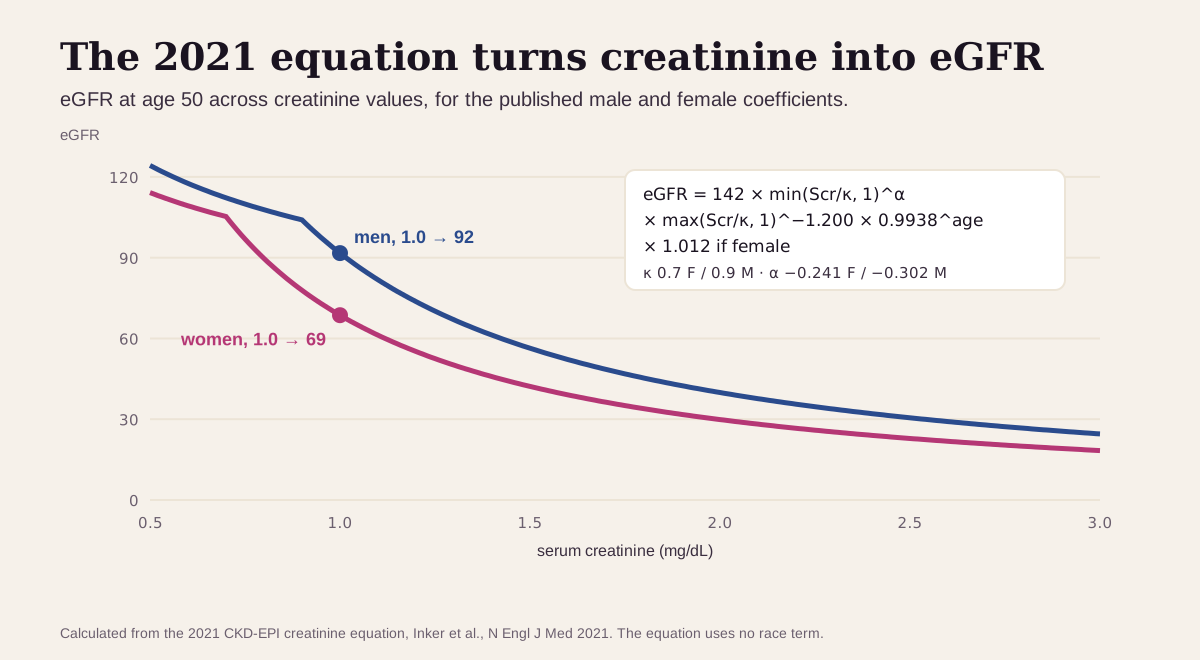
The 2021 CKD-EPI creatinine equation, from Inker and colleagues, is:2
eGFR = 142 × min(Scr/κ, 1)^α × max(Scr/κ, 1)^−1.200 × 0.9938^age × 1.012 (if female)
Three things fall out of it:
- The curve is steep past the bend. Once creatinine passes κ, each doubling multiplies eGFR by 2^−1.2, about 0.44. At age 50, a man's eGFR is about 92 at a creatinine of 1.0 and about 40 at 2.0.2
- Age lowers eGFR on its own. The 0.9938 term trims about 0.6% per year, so the same creatinine gives a lower eGFR at 70 than at 30.2
- Sex enters as fitted coefficients. Women get a different κ and α plus a 1.012 multiplier, all fit from the development data of 8,254 people.2
Measured GFR is the gold standard. It tracks how fast the blood clears an outside filtration marker, and KDIGO recommends it when a treatment decision hinges on the exact number and the estimates disagree.1
Questions worth asking
- Is this a one-off result, or has my eGFR been under 60 for 3 months or more?
- What does my urine albumin-to-creatinine ratio (UACR) show?
- Could muscle, creatine, a meat meal, a hard race or dehydration explain this creatinine?
- Would a cystatin C test or a combined eGFR change the plan?
- Do my blood sugar, blood pressure or medicines need a closer look for my kidneys?
- When should we repeat it, and what change would worry you?
FAQ
What is a normal eGFR? An eGFR of 90 or higher is "normal or high" in the KDIGO guideline. 60–89 counts as kidney disease only with other signs of damage, and many healthy adults over 70 measure lower.19
What is the most common cause of a low eGFR? Chronic kidney disease, most often from diabetes or high blood pressure. It affects more than 1 in 7 U.S. adults, and most of them are unaware of it.4
Can exercise or protein raise creatinine? Yes. A marathon raised creatinine by about 29 µmol/L on average, back to baseline within 48 hours.7 A cooked-meat meal cut median eGFR from 84 to 59.5 within two hours.5 Creatine supplements raise creatinine by about 0.13 mg/dL.6
When is a high creatinine an emergency? When it rises 0.3 mg/dL or more within 48 hours, or to 1.5 times baseline within a week, or comes with little or no urine, swelling or shortness of breath. That's acute kidney injury, and it needs same-day care.815
This guide is for education. It can't diagnose you or replace care from a clinician who knows your history.
Footnotes
-
Kidney Disease: Improving Global Outcomes (KDIGO) CKD Work Group. KDIGO 2024 Clinical Practice Guideline for the Evaluation and Management of Chronic Kidney Disease. Kidney Int. 2024;105(4S):S117–S314. The international kidney guideline: the CKD definition (3 months), the G1–G5 and A1–A3 categories, what moves creatinine and cystatin C, the 12-hour meat wait, the >20% change rule and referral under 30. PubMed · KDIGO ↩ ↩2 ↩3 ↩4 ↩5 ↩6 ↩7 ↩8 ↩9 ↩10 ↩11 ↩12 ↩13 ↩14 ↩15 ↩16 ↩17 ↩18 ↩19 ↩20 ↩21 ↩22 ↩23 ↩24 ↩25 ↩26 ↩27 ↩28 ↩29 ↩30 ↩31
-
Inker LA, Eneanya ND, Coresh J, et al. New Creatinine- and Cystatin C-Based Equations to Estimate GFR without Race. N Engl J Med. 2021;385(19):1737–1749. The 2021 CKD-EPI equation, its coefficients and its accuracy (85% or more of estimates within 30% of measured GFR). PMC ↩ ↩2 ↩3 ↩4 ↩5 ↩6 ↩7 ↩8 ↩9 ↩10
-
National Library of Medicine. Creatinine blood test. MedlinePlus Medical Encyclopedia. Reviewed July 13, 2025. Typical normal ranges for men and women, and the common reasons for high and low results. MedlinePlus ↩ ↩2 ↩3 ↩4 ↩5 ↩6 ↩7 ↩8 ↩9
-
National Institute of Diabetes and Digestive and Kidney Diseases. Kidney Disease Statistics for the United States. NIH. More than 1 in 7 U.S. adults (35.5 million) have chronic kidney disease; diabetes and high blood pressure are the two most common causes. NIDDK ↩ ↩2 ↩3 ↩4
-
Preiss DJ, Godber IM, Lamb EJ, Dalton RN, Gunn IR. The influence of a cooked-meat meal on estimated glomerular filtration rate. Ann Clin Biochem. 2007;44(Pt 1):35–42. 32 people; cystatin C was generally unchanged by food. PubMed ↩ ↩2 ↩3 ↩4 ↩5
-
Tsiaras A, Loufopoulos G, Theodoridis X, et al. The Effect of Creatine Supplementation on Kidney Function: A Systematic Review and Meta-Analysis of Randomized Controlled Trials. J Ren Nutr. 2026 (online ahead of print). 19 randomized trials plus one crossover trial; the authors call for trials longer than a year. PubMed ↩ ↩2 ↩3 ↩4
-
Hodgson LE, Walter E, Venn RM, et al. Acute kidney injury associated with endurance events—is it a cause for concern? A systematic review. BMJ Open Sport Exerc Med. 2017;3(1):e000093. 17 marathon and ultramarathon studies, 568 runners. PMC ↩ ↩2 ↩3 ↩4
-
Kidney Disease: Improving Global Outcomes (KDIGO) Acute Kidney Injury Work Group. KDIGO Clinical Practice Guideline for Acute Kidney Injury. Kidney Int Suppl. 2012;2(1):1–138. The standard definition of acute kidney injury: a creatinine rise of 0.3 mg/dL within 48 hours or to 1.5 times baseline within 7 days. KDIGO ↩ ↩2 ↩3 ↩4 ↩5 ↩6 ↩7 ↩8
-
Delanaye P, Schaeffner E, Ebert N, et al. Normal reference values for glomerular filtration rate: what do we really know? Nephrol Dial Transplant. 2012;27(7):2664–2672. Filtration declines with age; after 70, values under 60 could be considered normal. PubMed ↩ ↩2 ↩3 ↩4 ↩5 ↩6 ↩7
-
Superpower. Estimated Glomerular Filtration Rate (eGFR) test, last updated August 31, 2026, and Creatinine test, last updated September 1, 2026. Calls an eGFR of 90 or above the normal adult range, and places optimal creatinine in the mid-to-upper part of the reference range for people with normal muscle mass. A commercial source, listed as what the optimizer community uses. superpower.com (eGFR) · superpower.com (creatinine) ↩ ↩2 ↩3
-
Institute for Functional Medicine. Clinical practice guidelines and Advanced Practice Modules (range as recorded in the Libby app's marker catalog; member-only modules not opened for this article). The source the catalog records for the eGFR optimal range the app shows, 90–120 mL/min/1.73 m². ifm.org ↩ ↩2
-
Weatherby D, Ferguson S. Blood Chemistry and CBC Analysis: Clinical Laboratory Testing from a Functional Perspective. 2nd ed. Bear Mountain Publishing; 2004. ISBN 978-0976136712. Widely used functional-medicine reference. The Libby app's marker catalog records it as the source of the creatinine optimal range the app shows, 0.85–1.10 mg/dL for men and 0.7–0.95 mg/dL for women (range as recorded in the catalog; the book was not opened for this article). ↩ ↩2
-
Chronic Kidney Disease Prognosis Consortium; Matsushita K, van der Velde M, Astor BC, et al. Association of estimated glomerular filtration rate and albuminuria with all-cause and cardiovascular mortality in general population cohorts: a collaborative meta-analysis. Lancet. 2010;375(9731):2073–2081. 105,872 adults in 14 cohorts; the flat zone from 75 to 105 and the rise above 105. PMC ↩ ↩2 ↩3 ↩4 ↩5 ↩6 ↩7
-
National Library of Medicine. BUN - blood test. MedlinePlus Medical Encyclopedia. Reviewed May 19, 2025. Normal range (6–20 mg/dL) and the reasons BUN runs high or low. MedlinePlus ↩ ↩2
-
National Library of Medicine. Acute kidney failure. MedlinePlus Medical Encyclopedia. Causes and symptoms of acute kidney injury. MedlinePlus ↩ ↩2 ↩3
-
Uchino S, Bellomo R, Goldsmith D. The meaning of the blood urea nitrogen/creatinine ratio in acute kidney injury. Clin Kidney J. 2012;5(2):187–191. The traditional ratio cutoff of 20, tested in 3,641 hospital patients with kidney injury. PMC ↩
-
Waikar SS, Bonventre JV. Creatinine kinetics and the definition of acute kidney injury. J Am Soc Nephrol. 2009;20(3):672–679. Mass-balance model of how creatinine rises after a sudden drop in clearance; volume 420 dL, generation 60 mg per hour. PMC ↩ ↩2 ↩3
Educational content, not medical advice.Libby is a personal record tool, not a medical service — it doesn't diagnose, treat, or prescribe. Reference ranges vary by lab and by person. Talk to a qualified healthcare professional about your results.
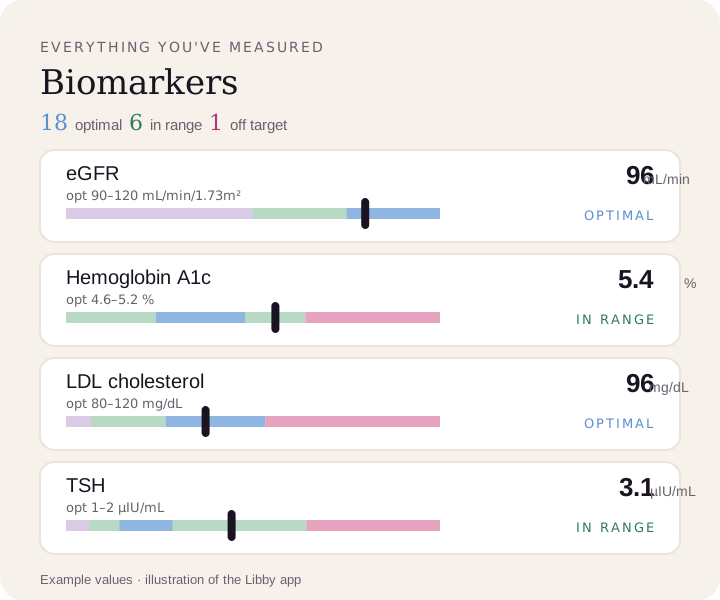
Compare your results to optimal ranges.
Upload a lab PDF or a photo of your report. Libby puts every marker on your lab's range and the optimal range, and tracks your trends over time.
View your eGFR ›