Estradiol blood test: normal levels, high and low causes
Estradiol (E2) is your main estrogen. See normal levels for men and women, what high or low results usually mean, and how to read E2 with FSH and LH.
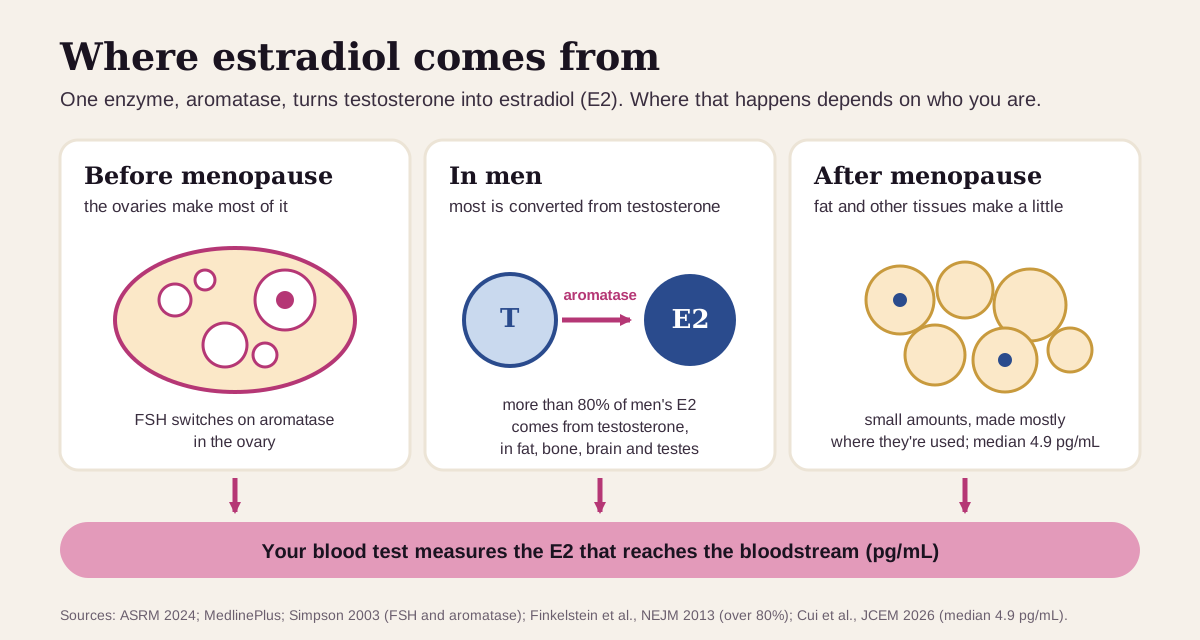
Estradiol (E2) is the main estrogen in your body during the reproductive years. Before menopause, the ovaries make most of it, and the level climbs and falls with each menstrual cycle.12 Men make E2 too: more than 80% of it is converted from testosterone.3 After menopause, the level drops to a few pg/mL.4
The short version
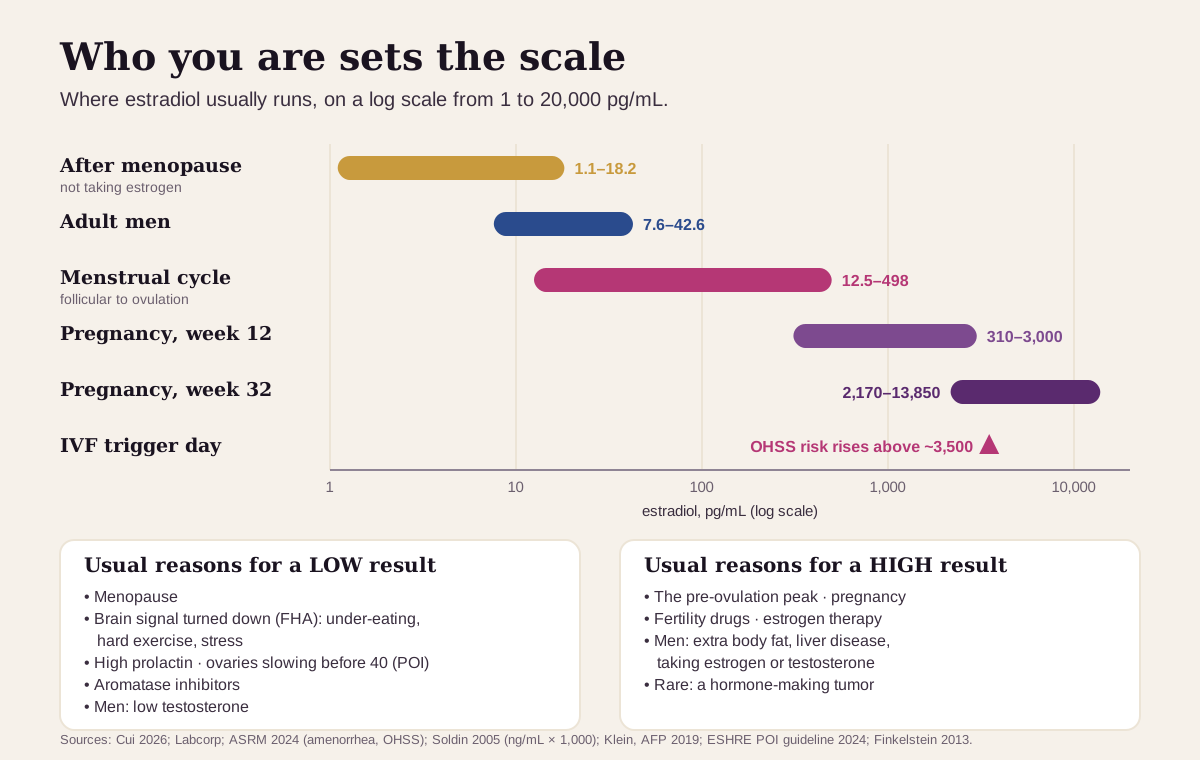
- Normal depends on who you are and when you test. Labcorp's ranges run 7.6–42.6 pg/mL for adult men, 12.5–166 in the first half of the cycle and 85.8–498 around ovulation.5 After menopause, a pooled study of 7,206 women found a median of 4.9 pg/mL.4
- Low E2 in a woman who should still be cycling usually comes from one of three places: the ovaries winding down (menopause, or before 40, premature ovarian insufficiency), the brain turning its signal down (under-eating, hard training, stress), or a high prolactin.26 In men, low E2 usually travels with low testosterone.3
- High E2 is normal around ovulation and in pregnancy, and expected on estrogen therapy or fertility drugs. In men, the usual reasons are extra body fat, liver disease, and taking estrogen or testosterone; a hormone-making tumor is rare.53
- No E2 number is an emergency on its own. The one number to know is from IVF: an E2 above about 3,500 pg/mL on the day of the trigger shot flags a higher risk of ovarian hyperstimulation syndrome (OHSS).7
What estradiol is
Your body makes three main estrogens. Estradiol (E2) is the main one before menopause: it helps release an egg each cycle, thickens the lining of the uterus, and supports brain and bone health. Estrone (E1) is made mostly by body fat and the adrenal glands, and it takes over as the main estrogen after menopause. Estriol (E3) comes from the placenta and rises in pregnancy.1
Every estrogen is built from an androgen (a "male" hormone) by one enzyme, aromatase. Aromatase turns testosterone into estradiol and androstenedione into estrone.5 In the ovary, the pituitary hormone FSH switches aromatase on, which is why E2 and FSH are read together.9 (More on the chemistry at the end.)
E2 matters in men as well. In a trial of 400 healthy men whose own hormones were shut off, blocking the testosterone-to-E2 step led to more body fat and bone loss, and, together with low testosterone, weaker sexual function.310
What's a normal estradiol?
Start with the range printed on your report, then add the context your lab can't see: your sex, where you are in your cycle, pregnancy, menopause, and any hormones you take.1
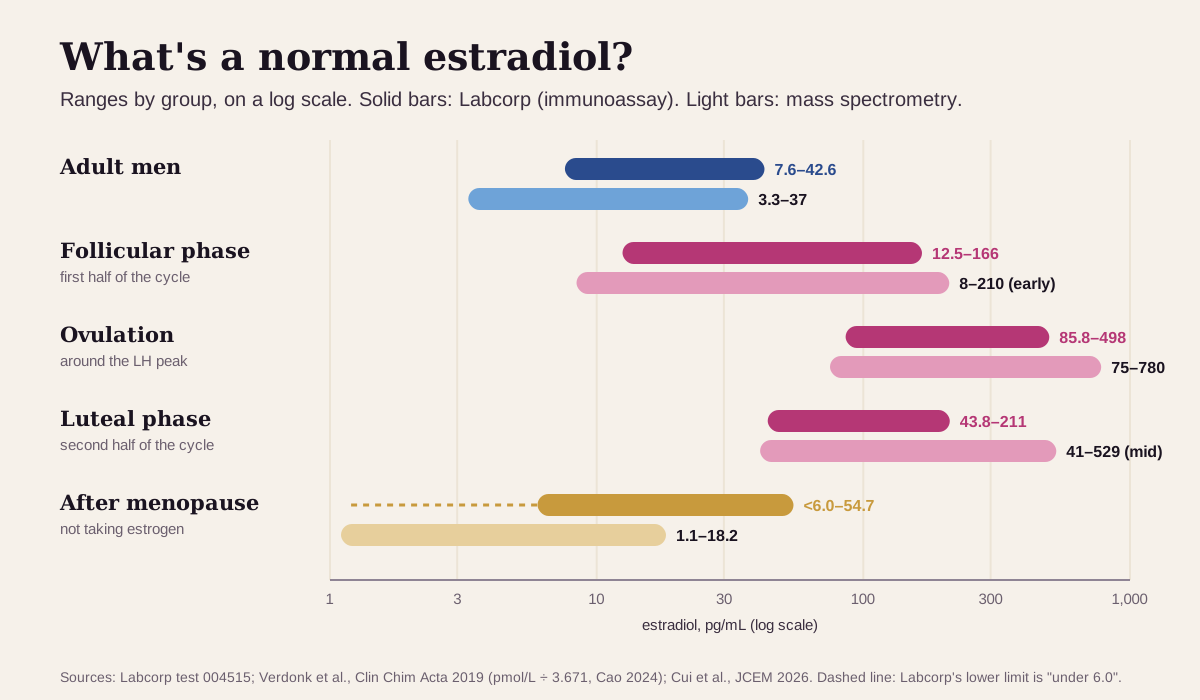
- Labcorp's adult ranges are 7.6–42.6 pg/mL for men; for women, 12.5–166 in the follicular phase (the first half of the cycle), 85.8–498 at ovulation, 43.8–211 in the luteal phase and under 6.0 to 54.7 after menopause.5
- Mass spectrometry (LC-MS/MS), the more exact method, gives lower numbers at the low end. A study traceable to the CDC reference method found 3.3–37 pg/mL in 64 men and under 7.1 pg/mL after menopause.11
- After menopause, a pooled study of 7,206 women not taking estrogen, harmonized to the CDC method, found 1.1–18.2 pg/mL, median 4.9. In women with a BMI under 30 it was 1.1–12.5, median 4.1. E2 rose with body mass index, not with age.4
Low results are the hardest to measure. When 76 New York labs tested the same donor samples, their average was 34% too high at 24.1 pg/mL and 40% too high at 28.4 pg/mL, but within 5% at 94 and 127 pg/mL.8 Compare results from the same lab and method when you can.
"Optimal" estradiol: what health optimizers aim for
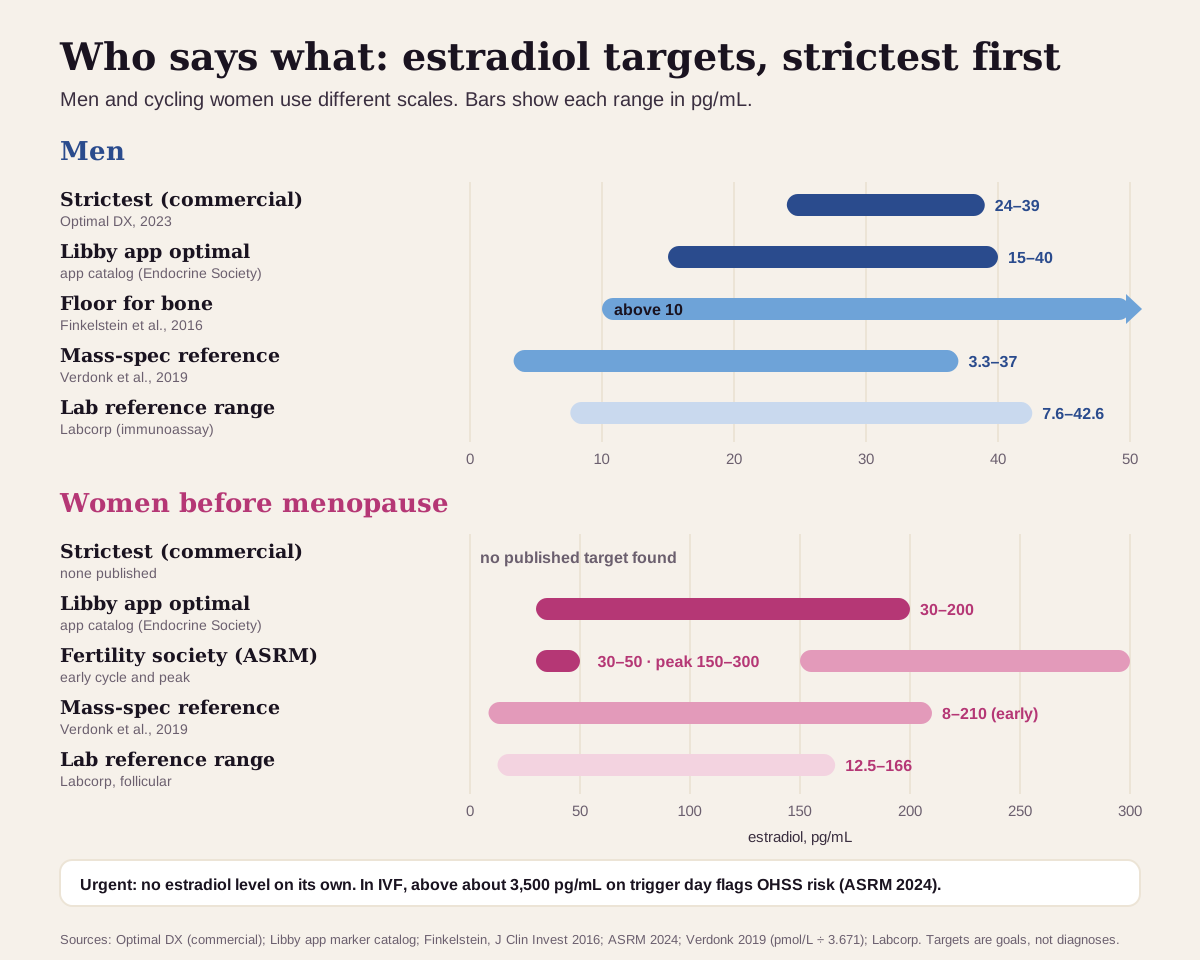
For most markers, the optimizer target is a ceiling. E2 has a band with a floor, and for women it moves with the cycle. So the ladder splits men from women who are still cycling:
| Target | Men | Women before menopause | Who uses it |
|---|---|---|---|
| Strictest (commercial) | 24–39 pg/mL | no published target found | Optimal DX, functional blood-chemistry software12 |
| App optimal | 15–40 pg/mL | 30–200 pg/mL | The optimal range shown in the Libby app, which its catalog attributes to Endocrine Society guidance13 |
| Research floor for bone | above 10 pg/mL | after menopause: above 5 pg/mL | Finkelstein 2016 (men);10 Cummings 1998 (women 65 and over)14 |
| Fertility-society norms | n/a | 30–50 early in the cycle; 150–300 at the peak | American Society for Reproductive Medicine (ASRM)2 |
| Mass-spectrometry reference | 3.3–37 pg/mL | 8–210 early in the cycle | Verdonk 2019, converted from pmol/L11 |
| Lab reference range | 7.6–42.6 pg/mL | 12.5–166 (follicular) | Labcorp5 |
| Urgent | none by number alone | none by number alone; in IVF, above ~3,500 at the trigger flags OHSS risk | ASRM OHSS guideline7 |
What the evidence behind the floor shows:
- Men's bones need a minimum. In a trial of 400 men aged 20–50 whose own hormones were switched off, markers of bone breakdown rose when E2 fell below 10 pg/mL, and the risk looked greater below 5. E2 above 10 generally prevented it.10
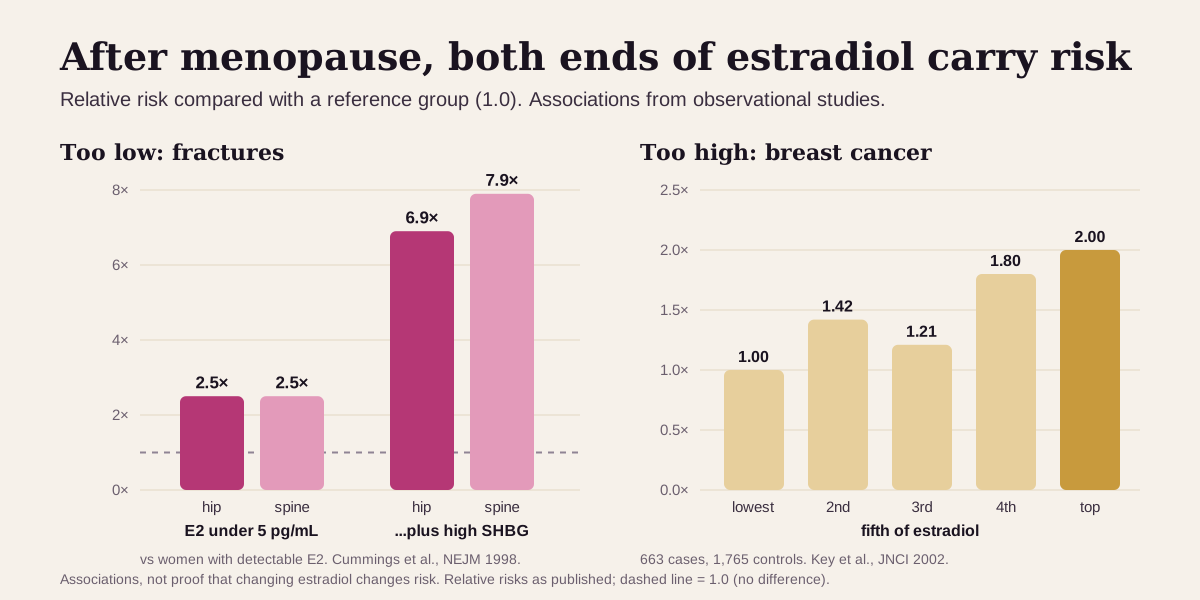
- Women's bones too. Among women 65 and over not taking estrogen, those with an E2 too low to detect (under 5 pg/mL) had 2.5 times the risk of a hip fracture and 2.5 times the risk of a spine fracture. With a high SHBG as well, it was 6.9 and 7.9 times.14
- After menopause, higher has a cost. In nine pooled studies, women in the top fifth of E2 had 2.0 times the breast-cancer risk of women in the bottom fifth.15
Keep "optimal" in perspective: these are targets, not diagnoses. Before menopause, one E2 number mostly tells you where you were in your cycle that day. The best-known guideline target, 100–200 pg/mL for transgender women on estradiol, fared poorly in a 2025 review of 49 studies: none showed that hitting it gave better results.16 For men, the goal is balance with testosterone, which the neighbors section below shows.
What a low or high estradiol usually means
Who you are sets the scale. A normal E2 after menopause is under 20 pg/mL; late in pregnancy it runs in the thousands.417
Low estradiol in women: the usual suspects
When periods stop in a woman who isn't pregnant, the cause sits in one of a few places. In ASRM's breakdown of missed periods, the ovaries account for about 40%, the hypothalamus (the brain's hormone control center) 35%, and the pituitary 17%.2
- Menopause. For people 45 and over with typical symptoms, NICE advises identifying perimenopause and menopause from the symptoms, and advises against using an E2 test for it.18
- Functional hypothalamic amenorrhea (FHA). The brain turns down its signal to the ovaries during under-eating, weight loss, hard exercise or stress. E2 usually sits below 30 pg/mL, close to menopausal levels.219
- High prolactin. Prolactin, the milk hormone, dampens the pituitary's signal and lowers E2. Common causes are medicines such as antipsychotics, pregnancy and a small pituitary tumor.26
- Premature ovarian insufficiency (POI). The ovaries slow down before 40, in about 3.5% of women. It's diagnosed by at least 4 months of missed or irregular periods plus an FSH above 25 IU/L; a low E2 alongside adds confirmation.20
- Medicines. Aromatase inhibitors for breast cancer push E2 very low. Birth control pills and menopause hormone therapy also change estrogen results, so list them when you test.51
Low estradiol in men
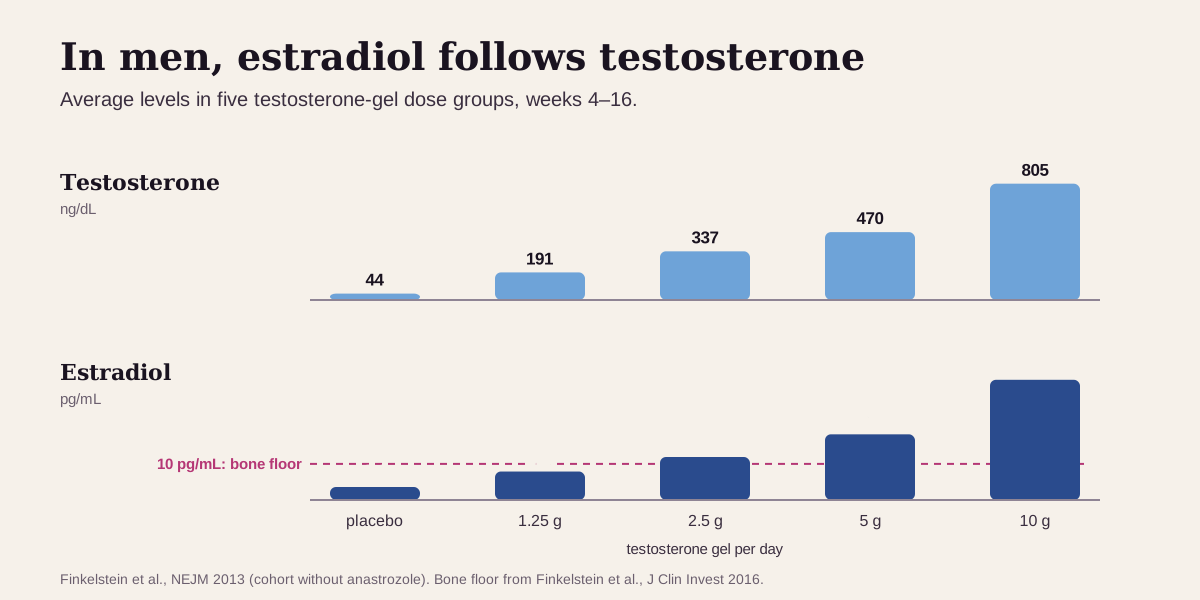
In men, E2 follows testosterone. In one trial, men given testosterone gel at five doses reached average E2 levels of 3.6, 7.9, 11.9, 18.2 and 33.3 pg/mL as testosterone rose from 44 to 805 ng/dL.3 So a low E2 usually means low testosterone, or a medicine that blocks aromatase. Below 10 pg/mL, bone loss becomes a concern.10
High estradiol
- In women, the common reasons are normal ones: the pre-ovulation peak (150–300 pg/mL by ASRM's figures, up to 498 in Labcorp's range), pregnancy, fertility drugs and estrogen therapy.251 Pregnancy dwarfs everything else: E2 averaged about 870 pg/mL at week 12 and 6,180 by week 32.17
- In men, Labcorp lists extra body fat (fat tissue carries aromatase), slower clearance by a diseased liver, taking estrogen, and rarely an estrogen-making tumor. These are also the classic causes of breast swelling (gynecomastia).5 Testosterone therapy raises E2 along with testosterone.3
- Less common: a normal or high E2 with irregular periods can point to polycystic ovary syndrome (PCOS, now also called polyendocrine metabolic ovarian syndrome, PMOS) or, rarely, a hormone-making ovarian or adrenal tumor.52
Get prompt care during or just after fertility treatment if you have severe belly pain or swelling, shortness of breath, fainting, or a weight gain of more than 1 kg (about 2 lb) in a day. These are signs of severe OHSS.7 See a clinician soon for vaginal bleeding after menopause, or for new, painful breast swelling in a man.15
Estradiol reads best next to its neighbors
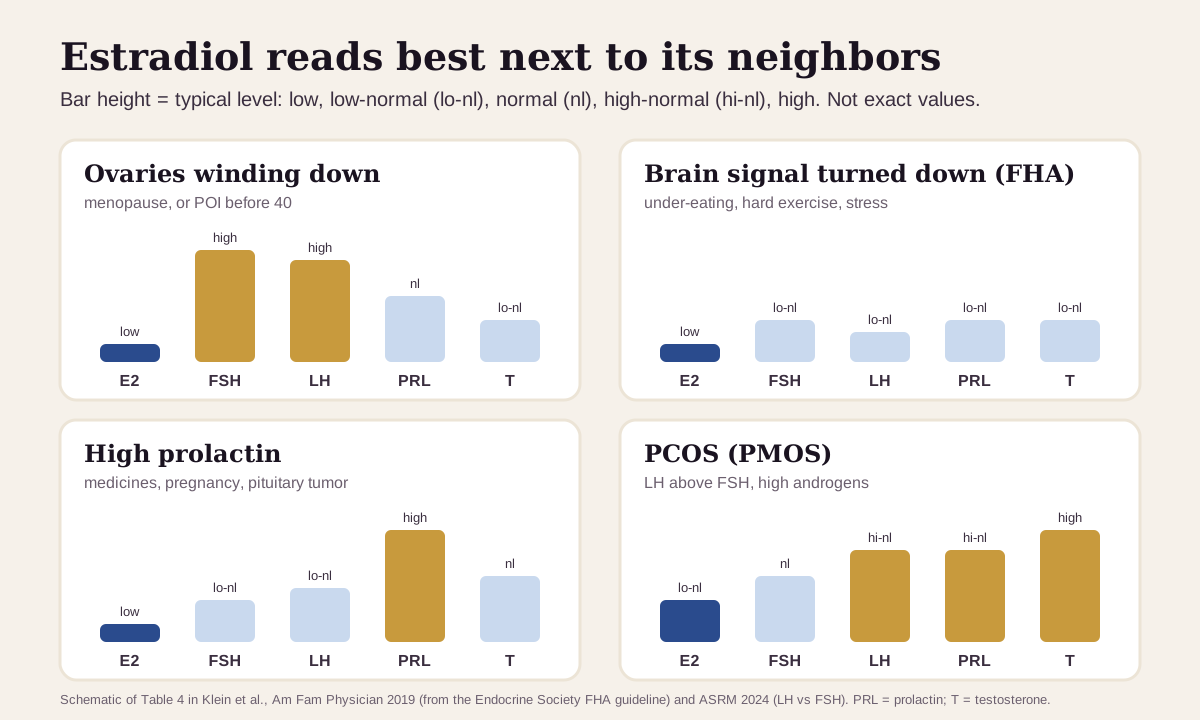
E2 is the ovaries' output. FSH and LH are the pituitary's orders to the ovaries, and prolactin and testosterone point to two common disruptors. Read together, they show where a problem sits:62
| If you see… | It often points to… |
|---|---|
| E2 low, FSH and LH high (above 15 IU/L) | the ovaries winding down: menopause, or POI before 40 (FSH above 25 IU/L) |
| E2 low, FSH and LH low or low-normal, LH often lower than FSH | the brain turning its signal down (FHA): under-eating, weight loss, hard exercise, stress |
| E2 low, prolactin high | prolactin suppressing the cycle: medicines, pregnancy, a pituitary tumor |
| E2 in the normal range, often at an early-cycle level; LH higher than FSH; testosterone high or high-normal | PCOS (PMOS) |
In men, the key neighbor is testosterone. E2 rises and falls with it, so when both are high, extra testosterone (often from therapy) is being converted to E2. The balance matters too: a normal E2 with a low testosterone tips the ratio toward estrogen and can cause breast swelling. In aging men, E2 tracks bone density better than testosterone does.35
How fast estradiol changes
E2 moves by the day, and after a dose, by the hour.1121
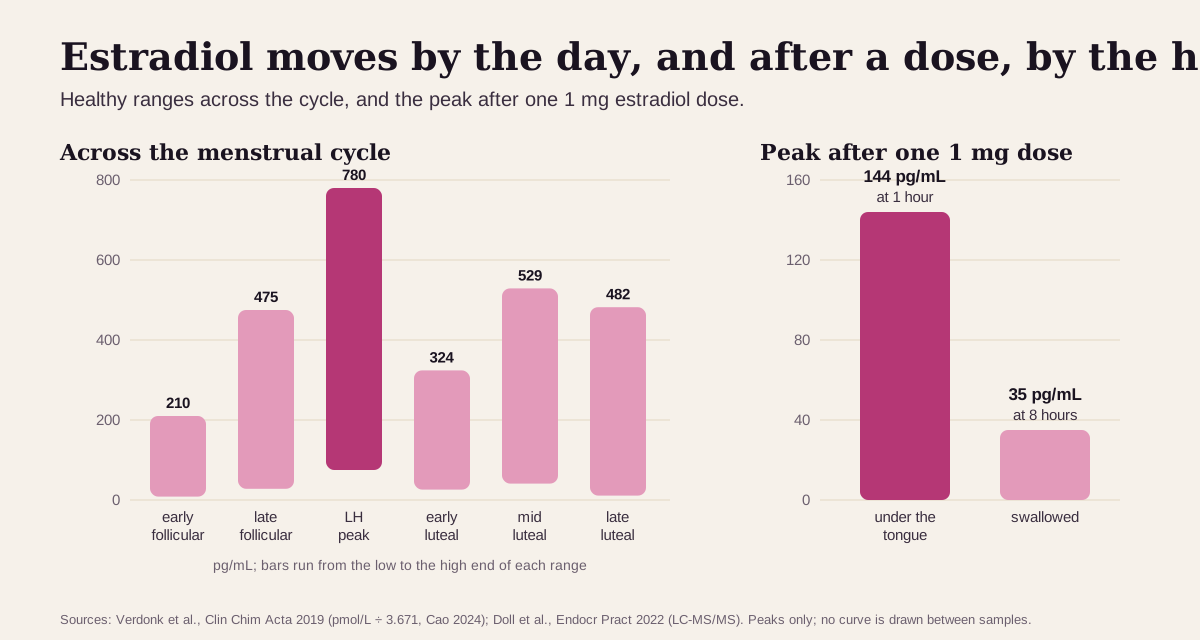
- Across the cycle. In 30 women sampled every day, the healthy range ran 8–210 pg/mL early in the follicular phase, 75–780 at the LH peak and 41–529 in the mid-luteal phase.11 Always note your cycle day with the result.
- Within a day, it's steadier. In 266 people sampled over several hours, E2 varied by about 13%, and the first morning value was only 2.1% above the day's average. LH was far jumpier (28%).22
- After a dose, timing is everything. A single 1 mg estradiol tablet under the tongue peaked at 144 pg/mL after 1 hour; swallowed, it peaked at 35 pg/mL after 8 hours.21 On hormone therapy, write down when you took your last dose.
- In pregnancy, E2 rose about sixfold by week 32 and was back to near undetectable a year after birth.17
Trends beat snapshots. Compare results taken at the same point in the cycle (or the same time after a dose), at the same lab.18
Going deeper: how your body makes estradiol
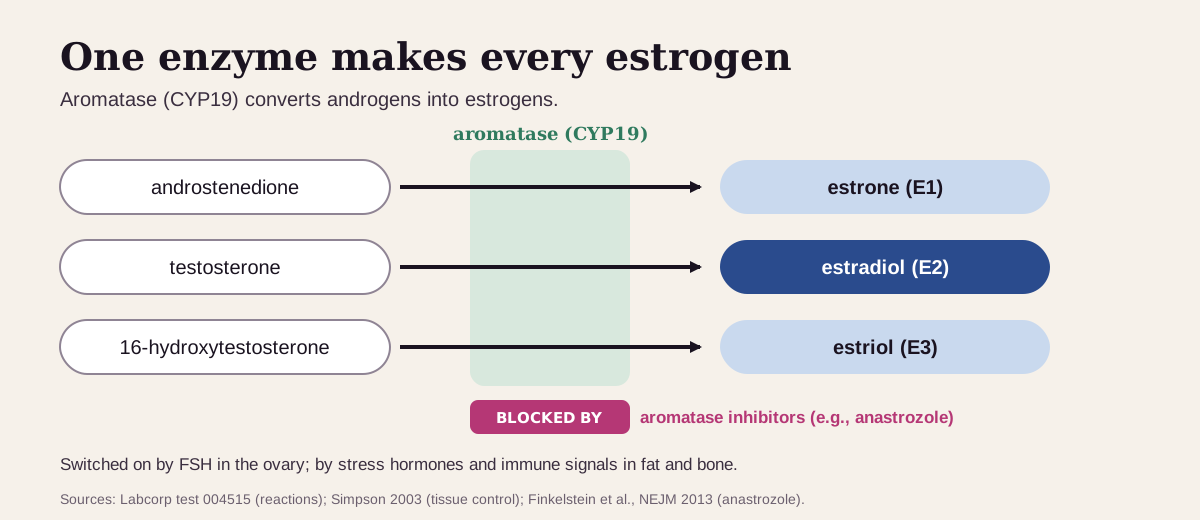
Aromatase (the gene is called CYP19) is the only way your body makes estrogen from androgens. Each tissue switches it on with its own signal. In the ovary, FSH turns it on. In fat and bone, stress hormones and immune signals do.9 That's why body fat raises E2 in men and after menopause.45
After menopause and in men, much of the E2 is made and used locally, in fat, bone and brain, and only the overflow reaches the blood. Estrogen inside breast tissue can be at least ten times the level in blood.9 So a blood E2 is a good gauge of the ovaries before menopause, and a rougher gauge of what individual tissues see after it.
Aromatase inhibitors such as anastrozole block this step. In the men's trial, adding anastrozole held E2 at 1.0–2.8 pg/mL at every testosterone dose.3 Levels that low need a sensitive method, usually mass spectrometry, to be measured accurately.5
Questions worth asking
- Where was I in my cycle, or how long after my last dose, when this was drawn?
- What do my FSH, LH and prolactin show next to my E2?
- Was this measured by immunoassay or mass spectrometry, and should the next test use the same lab?
- If my periods have stopped, could under-eating, training load or stress be involved?
- For men: what are my testosterone and E2 together, and is my E2 above 10 pg/mL for bone health?
- When should we repeat it, and at what point in my cycle?
FAQ
What is a normal estradiol level? It depends on your sex and cycle. Labcorp's ranges are 7.6–42.6 pg/mL for men, 12.5–166 in the follicular phase and 85.8–498 at ovulation. After menopause, most women run under 20 pg/mL.54
What does high estradiol mean in men? The usual reasons are extra body fat, liver disease, and taking estrogen or testosterone. A hormone-making tumor is rare.53
Can an estradiol test tell me I'm in menopause? Over 45 with typical symptoms, NICE advises against using an E2 test for this: your symptoms and age are the guide. Before 40, low E2 with an FSH above 25 IU/L supports premature ovarian insufficiency.1820
What causes low estradiol in young women? Most often the brain turning down its signal to the ovaries (under-eating, hard exercise, stress), a high prolactin, or the ovaries slowing early.220
This guide is for education. It can't diagnose you or replace care from a clinician who knows your history.
Footnotes
-
National Library of Medicine. Estrogen Levels Test. MedlinePlus. What E1, E2 and E3 are, what estradiol does, and why men and women are tested. MedlinePlus ↩ ↩2 ↩3 ↩4 ↩5 ↩6 ↩7
-
Practice Committee of the American Society for Reproductive Medicine. Current evaluation of amenorrhea: a committee opinion. Fertil Steril. 2024;122(1):52–61. The U.S. fertility society's workup of missed periods: cause shares, normal cycle E2 (30–50 early, 150–300 at the peak), E2 under 30 pg/mL in FHA, and LH higher than FSH in PMOS. ASRM ↩ ↩2 ↩3 ↩4 ↩5 ↩6 ↩7 ↩8 ↩9 ↩10 ↩11 ↩12 ↩13
-
Finkelstein JS, Lee H, Burnett-Bowie SA, et al. Gonadal steroids and body composition, strength, and sexual function in men. N Engl J Med. 2013;369(11):1011–1022. 400 healthy men aged 20–50; more than 80% of men's E2 comes from testosterone. PMC ↩ ↩2 ↩3 ↩4 ↩5 ↩6 ↩7 ↩8 ↩9 ↩10 ↩11 ↩12
-
Cui J, Hankinson SE, Matsumoto AM, et al. Establishment of harmonized international reference ranges for plasma estradiol concentrations in postmenopausal women. J Clin Endocrinol Metab. 2026;111(10):2745–2755. 7,206 women in five cohorts, harmonized to the CDC reference method. PMC ↩ ↩2 ↩3 ↩4 ↩5 ↩6 ↩7 ↩8
-
Labcorp. Estradiol, test 004515 (Roche ECLIA). Labcorp is a commercial laboratory. Its reference ranges by sex, cycle phase and menopause, and its notes on aromatase, causes of high E2 in men, PCOS and low-level measurement. labcorp.com ↩ ↩2 ↩3 ↩4 ↩5 ↩6 ↩7 ↩8 ↩9 ↩10 ↩11 ↩12 ↩13 ↩14 ↩15 ↩16 ↩17 ↩18 ↩19 ↩20
-
Klein DA, Paradise SL, Reeder RM. Amenorrhea: a systematic approach to diagnosis and management. Am Fam Physician. 2019;100(1):39–48. Table 4 (adapted from the Endocrine Society's FHA guideline) gives the hormone pattern for each cause. AAFP ↩ ↩2 ↩3 ↩4
-
Practice Committee of the American Society for Reproductive Medicine. Prevention of moderate and severe ovarian hyperstimulation syndrome: a guideline. Fertil Steril. 2024;121:230–245. E2 above 3,500 pg/mL at the trigger as a risk factor, and the warning signs of severe OHSS. ASRM ↩ ↩2 ↩3 ↩4
-
Cao ZT, Rej R, Vesper H, Astles JR. Accuracy-based proficiency testing for estradiol measurements. Clin Biochem. 2024;124:110700. 76 New York labs, five donor samples; the source of the 3.671 conversion factor. PMC ↩ ↩2 ↩3 ↩4
-
Simpson ER. Sources of estrogen and their importance. J Steroid Biochem Mol Biol. 2003;86(3–5):225–230. How aromatase is switched on in the ovary, fat and bone, and local estrogen in breast tissue. PubMed ↩ ↩2 ↩3 ↩4
-
Finkelstein JS, Lee H, Leder BZ, et al. Gonadal steroid-dependent effects on bone turnover and bone mineral density in men. J Clin Invest. 2016;126(3):1114–1125. E2 above 10 pg/mL generally prevented bone loss. PMC ↩ ↩2 ↩3 ↩4 ↩5
-
Verdonk SJE, Vesper HW, Martens F, et al. Estradiol reference intervals in women during the menstrual cycle, postmenopausal women and men using an LC-MS/MS method. Clin Chim Acta. 2019;495:198–204. Daily samples in 30 women, plus 64 men and 33 postmenopausal women, traceable to the CDC reference method. DOI ↩ ↩2 ↩3 ↩4 ↩5 ↩6 ↩7
-
Optimal DX. Hormone Biomarkers: Estradiol in Men. Published August 26, 2022; updated November 1, 2023. States an "ODX Range" of 24–39 pg/mL for men. A commercial source, listed as what the optimizer community uses. optimaldx.com ↩ ↩2
-
Endocrine Society. Clinical practice guidelines (various publications). The Libby app's marker catalog records estradiol optimal ranges of 15–40 pg/mL for men and 30–200 pg/mL for women and attributes them to Endocrine Society guidance; no single guideline stating these numbers was opened for this article. endocrine.org ↩ ↩2
-
Cummings SR, Browner WS, Bauer D, et al. Endogenous hormones and the risk of hip and vertebral fractures among older women. N Engl J Med. 1998;339(11):733–738. Women 65 and over not taking estrogen. PubMed ↩ ↩2 ↩3
-
Key T, Appleby P, Barnes I, Reeves G; Endogenous Hormones and Breast Cancer Collaborative Group. Endogenous sex hormones and breast cancer in postmenopausal women: reanalysis of nine prospective studies. J Natl Cancer Inst. 2002;94(8):606–616. 663 cases and 1,765 controls. PubMed ↩ ↩2
-
Winston-McPherson GN, Thomas TA, Krasowski MD, et al. Estradiol concentrations for adequate gender-affirming feminizing therapy: a systematic review. LGBT Health. 2025;12(7):477–489. 49 studies; no evidence that the 100–200 pg/mL guideline range improves outcomes. PubMed ↩
-
Soldin OP, Guo T, Weiderpass E, et al. Steroid hormone levels in pregnancy and 1 year postpartum using isotope dilution tandem mass spectrometry. Fertil Steril. 2005;84(3):701–710. 52 women sampled at weeks 12, 22 and 32 and a year after birth. PMC ↩ ↩2 ↩3 ↩4
-
National Institute for Health and Care Excellence. Menopause: identification and management (NG23), recommendation 1.3.4. NICE ↩ ↩2
-
Gordon CM, Ackerman KE, Berga SL, et al. Functional hypothalamic amenorrhea: an Endocrine Society clinical practice guideline. J Clin Endocrinol Metab. 2017;102(5):1413–1439. FHA is linked with stress, weight loss and excessive exercise. PubMed ↩
-
Panay N, Anderson RA, Bennie A, et al. Evidence-based guideline: premature ovarian insufficiency. Hum Reprod Open. 2024;2024(4):hoae065. ESHRE, ASRM, CREWHIRL and IMS: prevalence 3.5%, diagnosis by 4 months of disordered cycles and FSH above 25 IU/L. PMC ↩ ↩2 ↩3
-
Doll E, Gunsolus I, Thorgerson A, et al. Pharmacokinetics of sublingual versus oral estradiol in transgender women. Endocr Pract. 2022;28(3):237–242. Single 1 mg doses in 10 women, measured by LC-MS/MS. PubMed ↩ ↩2 ↩3
-
Abbara A, Adams S, Phylactou M, et al. Quantifying the variability in the assessment of reproductive hormone levels. Fertil Steril. 2024;121(2):334–345. 266 people with frequent sampling over several hours. PubMed ↩
Educational content, not medical advice.Libby is a personal record tool, not a medical service — it doesn't diagnose, treat, or prescribe. Reference ranges vary by lab and by person. Talk to a qualified healthcare professional about your results.
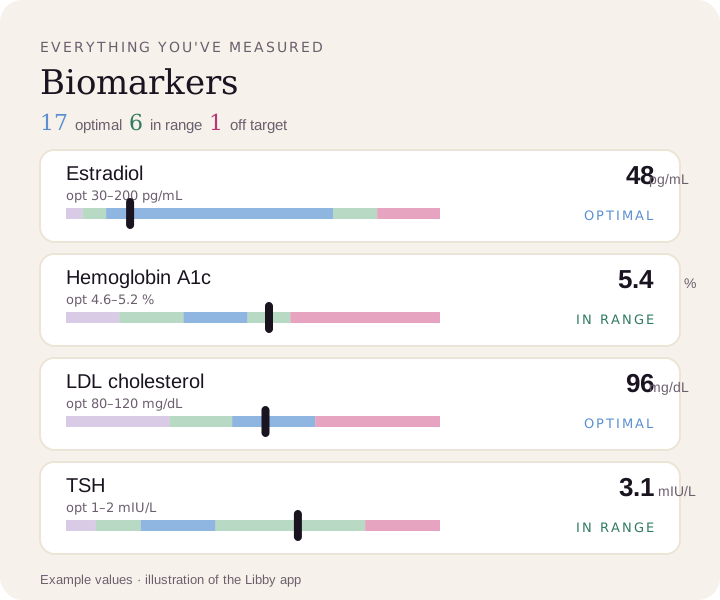
Compare your results to optimal ranges.
Upload a lab PDF or a photo of your report. Libby puts every marker on your lab's range and the optimal range, and tracks your trends over time.
View your estradiol ›