Free T4 blood test: normal range, high and low causes
Free T4 is the unbound thyroid hormone in your blood. Here's what a normal level is, what optimizers aim for, why it runs low or high, and when it's urgent.
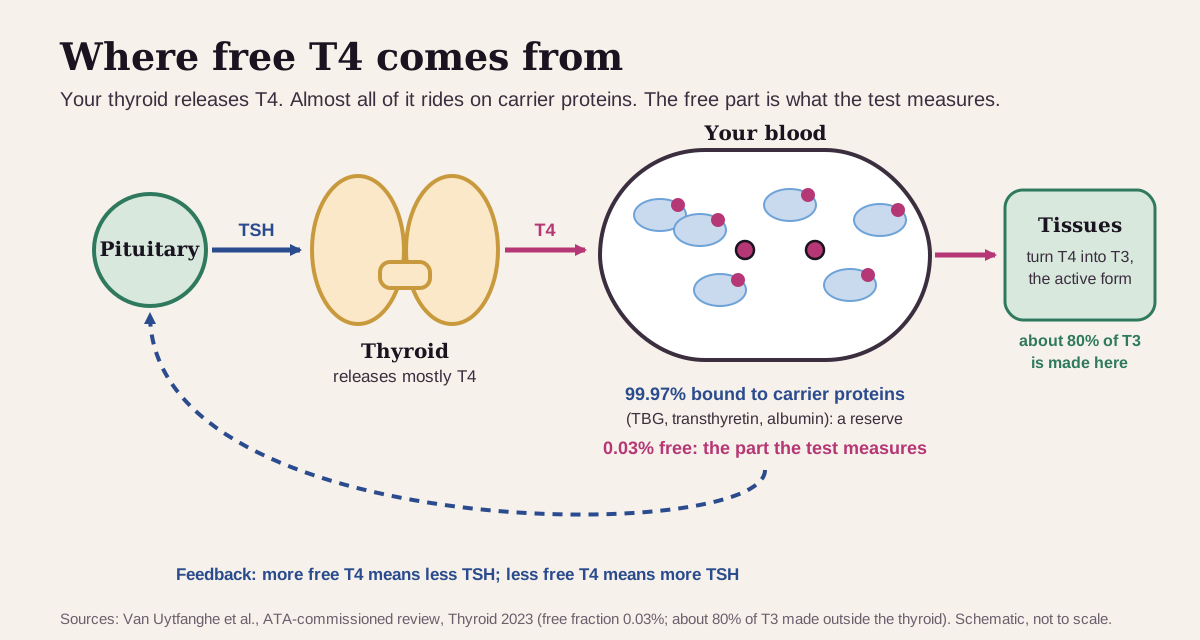
Free T4 is the small share of your thyroid hormone that floats unattached in your blood, ready to enter your cells. Your thyroid makes mostly T4 (thyroxine). About 99.97% of it rides on carrier proteins, and the free 0.03% is the part your tissues can use.1 Read next to TSH, free T4 tells you whether a thyroid problem is mild or overt.23
The short version
- Normal: check the range on your report, because test methods differ. A common U.S. adult range is 0.82–1.77 ng/dL.4 Functional-medicine practitioners aim for 1.0–1.5,5 and the largest outcome study found the lowest heart and death risk at about 1.05–1.15 (13.5–14.8 pmol/L).6
- Low free T4 with a high TSH means an underactive thyroid, most often from Hashimoto's disease. High free T4 with a low TSH means an overactive thyroid, most often from Graves' disease.23
- Emergency: a thyroid problem with fever, a racing heart and confusion, or with extreme drowsiness and a low body temperature, needs emergency care. Doctors recognize these crises by their symptoms.783
- Free T4 separates mild from overt. A high TSH with a normal free T4 is subclinical (mild) hypothyroidism. A high TSH with a low free T4 is overt hypothyroidism.2
What free T4 is
Your thyroid runs on a feedback loop. The pituitary gland sends TSH (thyroid-stimulating hormone) to the thyroid, and the thyroid answers mostly with T4. Your tissues then turn T4 into T3, the active form.10 About 80% of the T3 in your blood is made this way, outside the thyroid.1 (More on that at the end.)
Almost all T4 travels bound to three carrier proteins: thyroxine-binding globulin (TBG), transthyretin and albumin. That bound T4 is a reserve. Only about 0.03% floats free, and the free fraction is the part that can enter cells.1 Carrier-protein levels shift, in pregnancy for example, and that moves total T4 more than free T4. That's why the American Thyroid Association's lab review recommends measuring free T4 rather than total T4.1
The pituitary watches free T4 closely. The relationship is log-linear: a small change in free T4 produces a large change in TSH, so TSH is the more sensitive first test.11 Free T4 is the confirmation. It shows whether thyroid hormone itself is low or high, and it's the key test when the pituitary is the problem.12
What's a normal free T4?
Start with the range printed on your report. Free T4 is hard to measure: it's a tiny free fraction balanced against a large bound pool, and different test kits give different numbers on the same blood.1
- A common U.S. adult range is 0.82–1.77 ng/dL, the reference interval Labcorp publishes for adults. Children and newborns have their own ranges.4
- Results for the same blood can differ by up to 50% depending on the test maker's reagents and equipment, according to a 2023 review commissioned by the American Thyroid Association.1
- In a 2025 CDC study, 21 free T4 methods measured the same 40 donor samples. Routine automated tests read a median 20% lower than the CDC's reference method. Only 21 of the 40 samples were classified the same way (low, normal or high) by every method.9
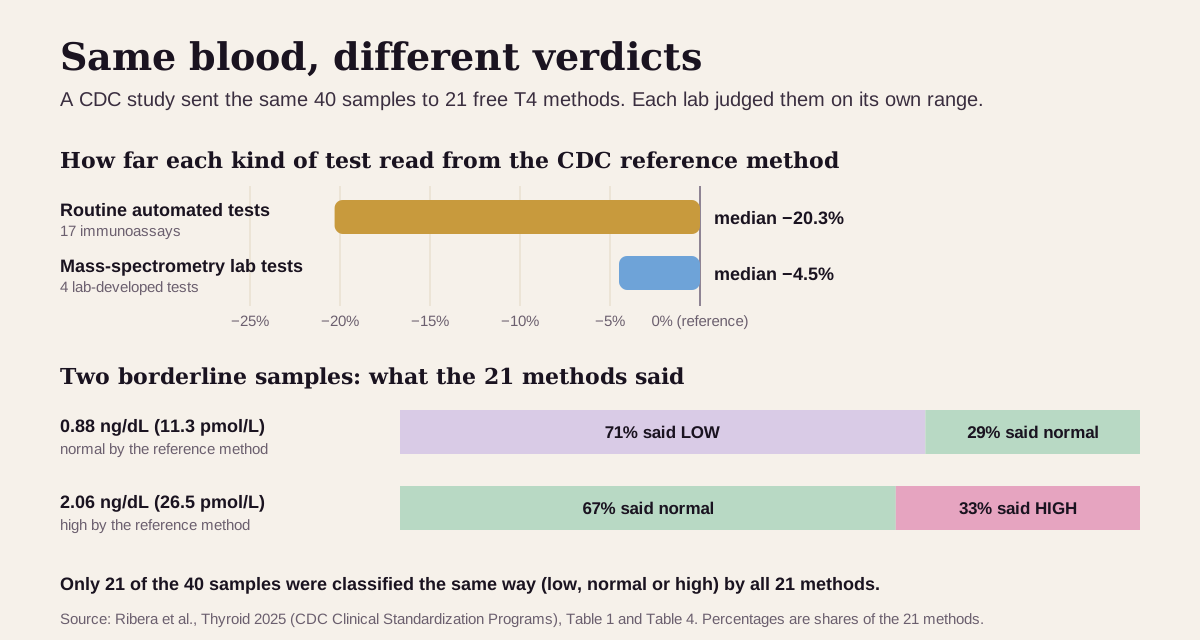
So compare free T4 results from the same lab when you can, and read each one against that lab's range.19
Pregnancy changes the picture. TBG rises in pregnancy. In one study of five routine test kits, results in pregnant women ran 7–29% higher, relative to a mass-spectrometry method, than they did in non-pregnant women.13 If you're pregnant, ask whether your lab's range applies to pregnancy.
"Optimal" free T4: what health optimizers aim for
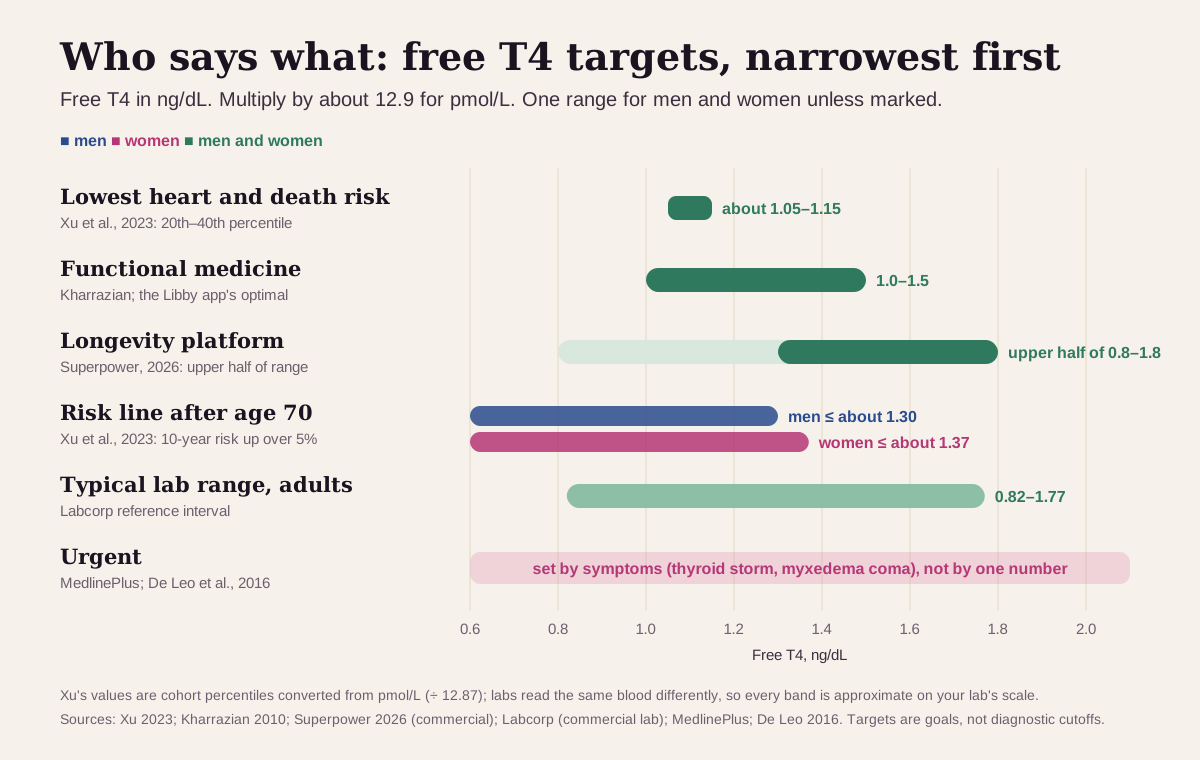
Optimizers disagree about where free T4 should sit. Functional medicine aims for the middle of the range, one longevity platform aims for the upper half, and the largest outcome study found the lowest risk in the lower-middle. Here's the ladder, from narrowest to widest:
| Target | Free T4 (ng/dL) | Who uses it |
|---|---|---|
| Lowest heart and death risk | about 1.05–1.15 (13.5–14.8 pmol/L) | Xu et al., 134,346 adults in 26 cohorts: the 20th–40th percentile band6 |
| Functional medicine | 1.0–1.5 | Functional thyroid references such as Kharrazian,5 and the optimal range shown in the Libby app |
| Longevity platform | upper half of the lab range | Superpower, which cites 0.8–1.8 as the normal range14 |
| Risk line after age 70 | men about 1.30 or less, women about 1.37 or less | Above these levels (the 75th percentile in men, the 85th in women), 10-year risk of heart disease or death rose by more than 5%6 |
| Typical lab range (adults) | 0.82–1.77 | Labcorp's published reference interval4 |
| Urgent | set by symptoms | Thyroid storm is diagnosed from symptoms;3 it and myxedema coma are emergencies78 |
Why the targets sit inside the range:
- In 134,346 adults without overt thyroid disease, people in the top fifth of free T4 had 1.34 times the risk of dying from any cause and 1.57 times the risk of dying from heart disease, compared with people in the 20th–40th percentile.6
- In 30,085 adults with normal thyroid function, those in the highest quarter of free T4 had 1.45 times the risk of atrial fibrillation (an irregular heart rhythm) of those in the lowest quarter.15
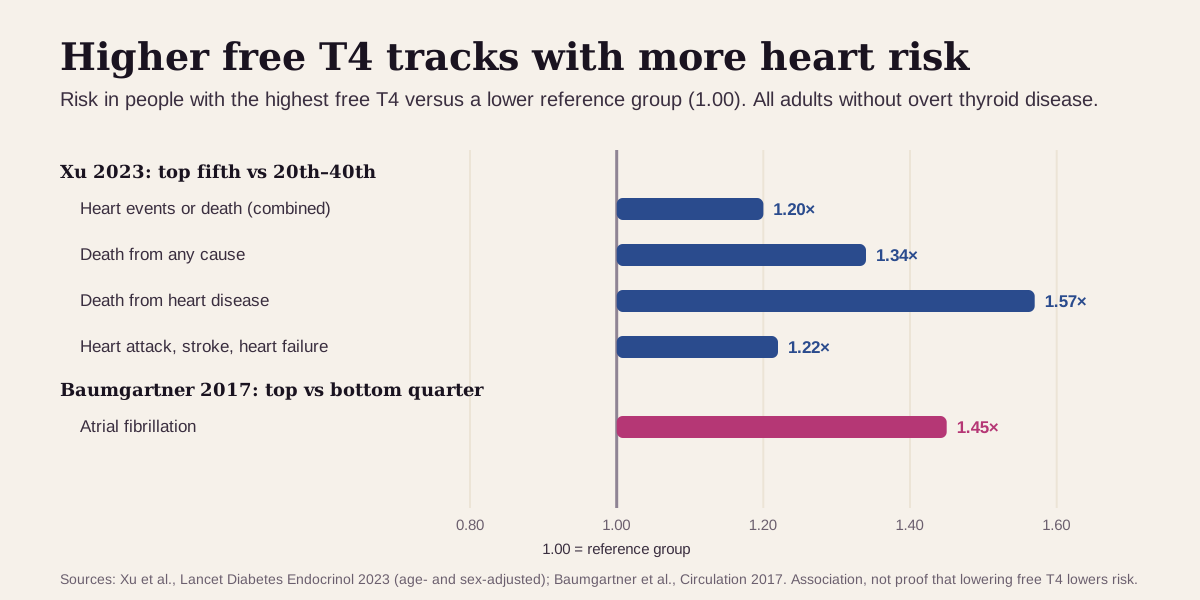
Keep "optimal" in perspective. These are targets, not diagnoses. The Xu study found a J shape: risk also rose at the low end, so lower is no automatic win.6 Because labs read the same blood differently, a band from one study or book is a rough guide on your lab's scale.9 Your own trend on the same lab is the most useful comparison. If you take thyroid medicine, the American Thyroid Association's treatment guideline stresses avoiding overtreatment, especially in older adults.16
What a low or high free T4 usually means
Read it next to TSH. The pair tells you where the problem sits.23
Low free T4: usually an underactive thyroid
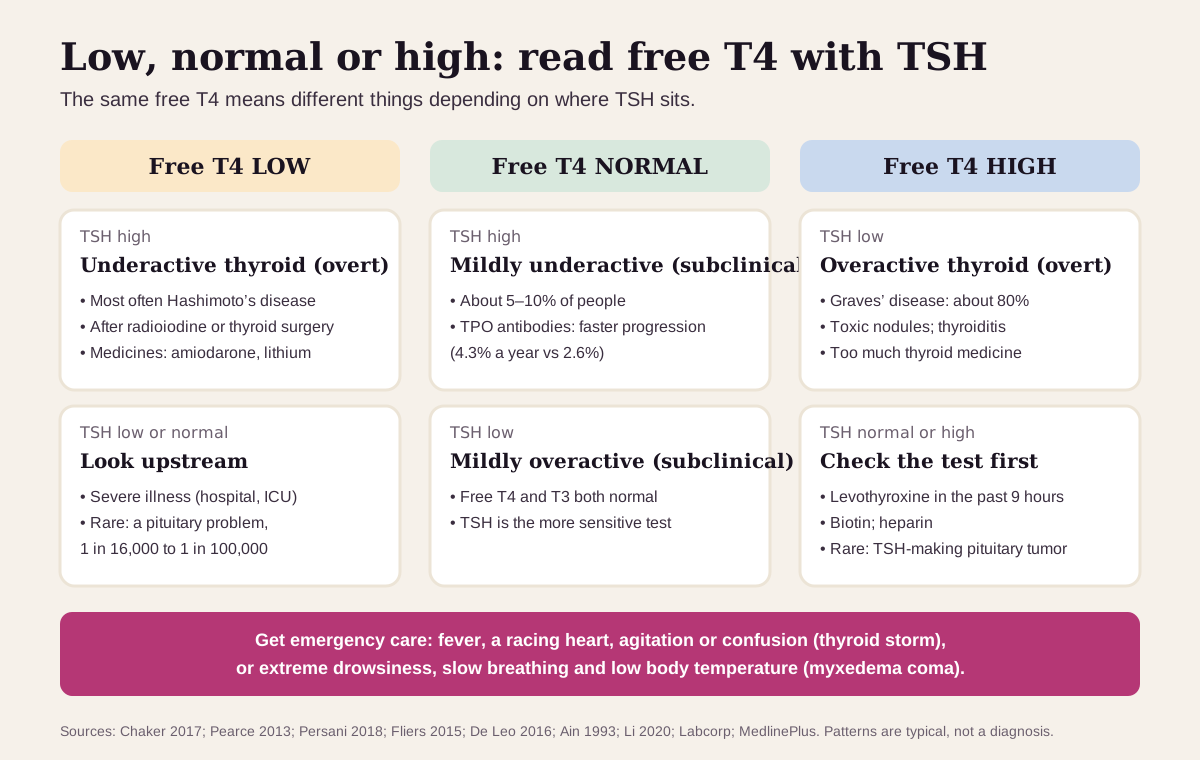
With a high TSH, a low free T4 means overt hypothyroidism, an underactive thyroid.2 The usual suspects:
- Hashimoto's disease. Where diets have enough iodine, this autoimmune condition is the most common cause. Most people with it have TPO (thyroid peroxidase) antibodies.2
- Treatment for another thyroid problem. Radioiodine, thyroid surgery and radiation to the neck all can cause it. In a meta-analysis of 32 studies, 20% of people became hypothyroid after half the thyroid was removed.2
- Medicines. Amiodarone, lithium, some cancer immunotherapies and tyrosine kinase inhibitors are known causes.2 Don't stop a prescribed medicine on your own. Bring your full list to your clinician.
- Iodine. Severe iodine deficiency causes it, and so can too much iodine.2
With a low or normal TSH, a low free T4 points upstream:
- Severe illness. People in intensive care often have low T3, low T4 and a normal or slightly low TSH. This is called nonthyroidal illness.10
- A pituitary or hypothalamus problem (central hypothyroidism). It's rare, about 1 in 16,000 to 1 in 100,000 people. European guidelines ask for the pattern to be confirmed on two separate tests.12
Normal free T4 with an abnormal TSH: the mild forms
- TSH high, free T4 normal is subclinical hypothyroidism, found in about 5–10% of people. It progresses to overt disease in about 4.3% a year when TPO antibodies are positive, versus 2.6% when they're negative.17
- TSH low, free T4 and T3 normal is subclinical hyperthyroidism.3
High free T4: usually an overactive thyroid
With a low TSH, a high free T4 means overt hyperthyroidism or another cause of too much thyroid hormone.3 The usual suspects:
- Graves' disease. This autoimmune condition causes about 80% of hyperthyroidism where diets have enough iodine.3
- Toxic nodules, one or more thyroid lumps that make hormone on their own. They cause about half of cases in iodine-deficient areas and are more common in older people.3
- Thyroiditis. Painless and postpartum thyroiditis leak stored hormone for a while, then often swing to an underactive phase before recovering.3
- Too much thyroid hormone by mouth, including a levothyroxine dose that's too high.316
With a normal or high TSH, a high free T4 is unusual. Check the test first:
- Levothyroxine timing. In one study, free T4 ran about 13–15% higher in blood drawn at routine visits than in blood drawn just before the next dose, and stayed above baseline for about 9 hours after a dose.18
- Biotin supplements. On tests that use biotin chemistry, high-dose biotin can push free T4 falsely high and TSH falsely low.191 Labcorp's instructions for this test ask patients to stop high-dose biotin at least 72 hours before the blood draw.4
- Heparin, a blood thinner, can affect the free T4 result. Labcorp asks that samples not be drawn during or soon after it.4
- Rare causes: a TSH-making pituitary tumor, or resistance to thyroid hormone.3
Get emergency care if a thyroid problem comes with fever, a racing or pounding heart, agitation, confusion or diarrhea (possible thyroid storm), or with extreme drowsiness or unresponsiveness, slow breathing and a low body temperature (possible myxedema coma). Thyroid storm is diagnosed from symptoms, whatever the free T4, and both are emergencies.783
Free T4 reads best next to its neighbors
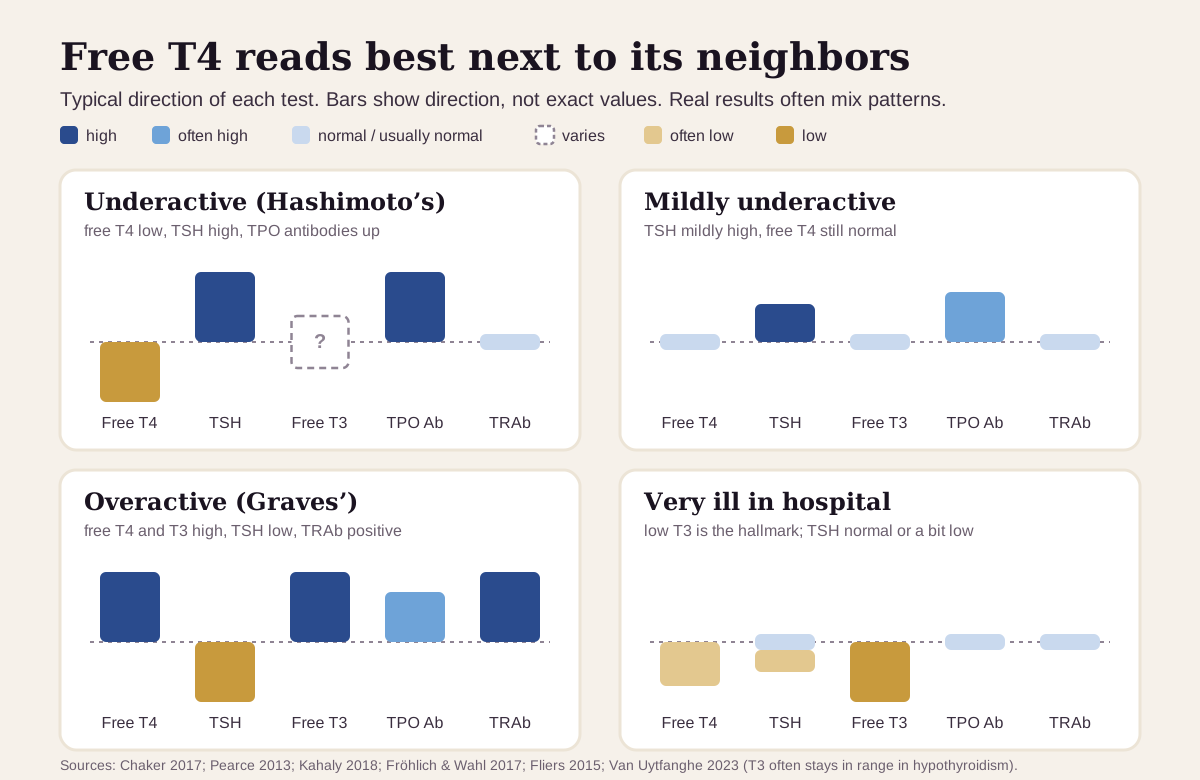
The pattern across your thyroid panel says more than free T4 does by itself:23
| If you see… | It often points to… |
|---|---|
| Free T4 low, TSH high, TPO antibodies positive | Hashimoto's disease, the most common cause of an underactive thyroid where diets have enough iodine; TPO antibodies show up in 90–95% of autoimmune thyroid disease220 |
| TSH high, free T4 normal | subclinical (mild) hypothyroidism; positive TPO antibodies raise the yearly risk of progressing to overt disease to 4.3%17 |
| Free T4 and free T3 high, TSH low, TRAb positive | Graves' disease: TRAb tests pick it up with 97% sensitivity and 98% specificity11 |
| Free T4 high, TSH low, TRAb negative | another source of excess hormone: toxic nodules, thyroiditis (TPO antibodies are almost always present in painless and postpartum thyroiditis) or too much thyroid medicine311 |
| Free T4 low, TSH low or normal | severe illness or a pituitary problem; a low T3 on its own points to illness1012 |
| Free T4 high, TSH normal | test timing or interference first (a levothyroxine dose, biotin, heparin), then rare causes181943 |
Free T3 gets a question mark in the Hashimoto's card: T3 often stays within range in hypothyroidism, so the American Thyroid Association's lab review calls it of limited value there.1
How fast free T4 changes
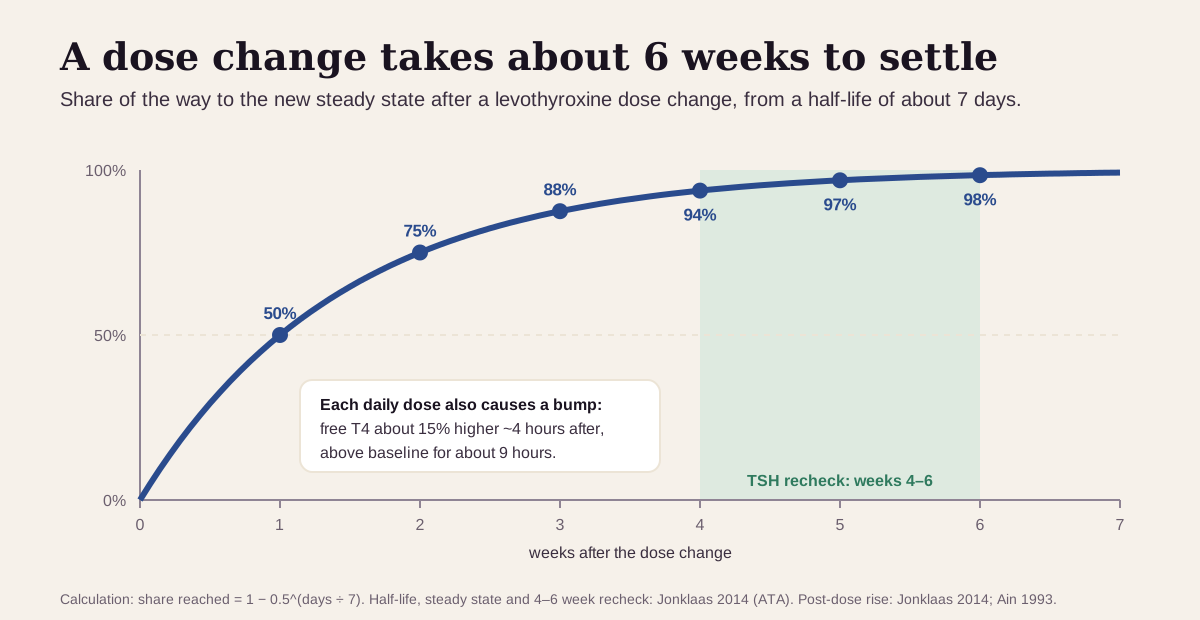
T4 moves slowly. Levothyroxine, the T4 medicine, has a half-life of about 7 days. After a dose change, T4 and TSH take about 6 weeks (five to six half-lives) to settle, and the American Thyroid Association guideline rechecks TSH 4–6 weeks after any dose change.16
What that means in practice:
- Timing matters if you take levothyroxine. Free T4 peaks about 15% higher about 4 hours after a dose.16 Tell your clinician when you took your last dose, and keep the timing the same from test to test.18
- TSH lags. After a big change in thyroid status, TSH can take weeks to months to catch up, so free T4 is checked alongside it early in treatment.1
- Serious illness shifts the whole panel. A result taken in intensive care reflects the illness as much as the thyroid, and telling the two apart can be hard.10
- Trends beat snapshots when they come from the same lab, because methods differ.9
Going deeper: from T4 to T3
The human thyroid releases about 14 molecules of T4 for every one of T3.16 Most T3 is made later, in your tissues, by enzymes called deiodinases (types 1 and 2) that clip one iodine atom off T4. About 80% of circulating T3 comes from this conversion.12
That conversion is why the panel shifts in different ways:
- In serious illness, deiodinase activity changes. A low T3 is the hallmark of nonthyroidal illness.110
- On levothyroxine alone, all of your T3 comes from converting the pill's T4. People on levothyroxine run a higher ratio of free T4 to T3 than people without thyroid disease. Some have a high free T4 with a T3 below the range, even when TSH is normal.216
- In Graves' disease, the thyroid itself is overactive, so both free T4 and T3 rise. In milder cases, only free T3 may be high.11
How labs measure it. Most labs estimate free T4 with an automated competitive immunoassay, a fast test that estimates the free fraction without physically separating it. Reference labs separate the free fraction first (equilibrium dialysis) and measure it with mass spectrometry. Competitive free T4 immunoassays are more sensitive to drug and binding effects, which is part of why methods disagree.19
Questions worth asking
- Is my free T4 low, normal or high on this lab's range, and what does my TSH show next to it?
- Should we check TPO antibodies, or TSH-receptor antibodies if my free T4 is high?
- Could my last levothyroxine dose, a biotin supplement or a recent illness have affected this result?
- If I'm pregnant or planning to be, does this lab's range apply to me?
- If I take thyroid medicine, where do you want my free T4 and TSH, and when should we recheck after a dose change?
- Can we compare this result with earlier ones from the same lab?
FAQ
What is a normal free T4 level? It depends on your lab's method. A common U.S. adult range is 0.82–1.77 ng/dL.4 Functional-medicine practitioners aim for 1.0–1.5 ng/dL.5
What does a low free T4 mean? With a high TSH, it means an underactive thyroid, most often from Hashimoto's disease. With a low or normal TSH, it points to severe illness or, rarely, the pituitary.21210
What does a high free T4 mean? With a low TSH, it usually means an overactive thyroid, most often from Graves' disease. A recent levothyroxine dose or a biotin supplement can also push the number up.31819
Is free T4 or TSH more important? TSH is the more sensitive first test. Free T4 shows how far a problem has gone and is the key test when the pituitary is involved.1112
This guide is for education. It can't diagnose you or replace care from a clinician who knows your history.
Footnotes
-
Van Uytfanghe K, Ehrenkranz J, Halsall D, et al. Thyroid Stimulating Hormone and Thyroid Hormones (Triiodothyronine and Thyroxine): An American Thyroid Association-Commissioned Review of Current Clinical and Laboratory Status. Thyroid. 2023;33(9):1013–1028. The ATA-commissioned laboratory review. Source for the 0.03% free fraction, the carrier proteins, about 80% of T3 made outside the thyroid, the "up to 50%" method differences, competitive free T4 assays, T3 in hypothyroidism and nonthyroidal illness, and TSH lag. PMC ↩ ↩2 ↩3 ↩4 ↩5 ↩6 ↩7 ↩8 ↩9 ↩10 ↩11 ↩12 ↩13 ↩14
-
Chaker L, Bianco AC, Jonklaas J, Peeters RP. Hypothyroidism. Lancet. 2017;390(10101):1550–1562. Definitions of overt and subclinical hypothyroidism, Hashimoto's as the most common cause, TPO antibodies, the causes panel and levothyroxine T4:T3 ratios. PMC ↩ ↩2 ↩3 ↩4 ↩5 ↩6 ↩7 ↩8 ↩9 ↩10 ↩11 ↩12 ↩13 ↩14 ↩15 ↩16
-
De Leo S, Lee SY, Braverman LE. Hyperthyroidism. Lancet. 2016;388(10047):906–918. Graves' disease as about 80% of hyperthyroidism in iodine-sufficient areas, toxic nodules, thyroiditis, TSH-secreting adenomas, and thyroid storm as a clinical diagnosis. PMC ↩ ↩2 ↩3 ↩4 ↩5 ↩6 ↩7 ↩8 ↩9 ↩10 ↩11 ↩12 ↩13 ↩14 ↩15 ↩16 ↩17 ↩18 ↩19
-
Labcorp. Thyroxine (T4) Free, Direct (test 001974): reference range, biotin and heparin instructions. Opened September 23, 2026. A commercial laboratory; its adult reference interval is 0.82–1.77 ng/dL. labcorp.com ↩ ↩2 ↩3 ↩4 ↩5 ↩6 ↩7 ↩8 ↩9
-
Kharrazian D. Why Do I Still Have Thyroid Symptoms? When My Lab Tests Are Normal. Elephant Press; 2010. ISBN 978-0985690403. A functional-medicine thyroid reference, and the first source behind the free T4 optimal range (1.0–1.5 ng/dL) in the Libby app's marker catalog. ↩ ↩2 ↩3 ↩4
-
Xu Y, Derakhshan A, Hysaj O, et al. The optimal healthy ranges of thyroid function defined by the risk of cardiovascular disease and mortality: systematic review and individual participant data meta-analysis. Lancet Diabetes Endocrinol. 2023;11(10):743–754. 134,346 adults in 26 cohorts; lowest risk at the 20th–40th percentile of free T4 (median 13.5–14.8 pmol/L). PMC ↩ ↩2 ↩3 ↩4 ↩5 ↩6 ↩7 ↩8
-
National Library of Medicine. Thyroid storm. MedlinePlus Medical Encyclopedia. Symptoms, and why it is an emergency. MedlinePlus ↩ ↩2 ↩3 ↩4 ↩5
-
National Library of Medicine. Hypothyroidism. MedlinePlus Medical Encyclopedia. Myxedema crisis (myxedema coma) signs, and why it is an emergency. MedlinePlus ↩ ↩2 ↩3 ↩4 ↩5
-
Ribera A, Sugahara O, Buchannan T, et al. Evaluation of the Current State of Thyroid Hormone Testing in Human Serum: Results of the Free Thyroxine and Thyrotropin Interlaboratory Comparison Study. Thyroid. 2025;35(5):471–484. CDC Clinical Standardization Programs study of 21 free T4 methods on 40 donor samples; source for the median biases, the uniform-classification count and the paired pmol/L–ng/dL values. PubMed ↩ ↩2 ↩3 ↩4 ↩5 ↩6 ↩7 ↩8
-
Fliers E, Bianco AC, Langouche L, Boelen A. Thyroid function in critically ill patients. Lancet Diabetes Endocrinol. 2015;3(10):816–825. Low T3, low T4 and normal or slightly low TSH in intensive-care patients (nonthyroidal illness syndrome). PMC ↩ ↩2 ↩3 ↩4 ↩5 ↩6 ↩7 ↩8
-
Kahaly GJ, Bartalena L, Hegedüs L, et al. 2018 European Thyroid Association Guideline for the Management of Graves' Hyperthyroidism. Eur Thyroid J. 2018;7(4):167–186. The log-linear free T4–TSH relationship, free T4 and T3 in overt hyperthyroidism, and TSH-receptor antibody sensitivity (97%) and specificity (98%). PMC ↩ ↩2 ↩3 ↩4 ↩5 ↩6
-
Persani L, Brabant G, Dattani M, et al. 2018 European Thyroid Association (ETA) Guidelines on the Diagnosis and Management of Central Hypothyroidism. Eur Thyroid J. 2018;7(5):225–237. Prevalence of 1:16,000 to 1:100,000, and low free T4 with inappropriately low or normal TSH confirmed on two tests. PMC ↩ ↩2 ↩3 ↩4 ↩5 ↩6
-
Jansen HI, van Herwaarden AE, Huijgen HJ, et al. Pregnancy disrupts the accuracy of automated fT4 immunoassays. Eur Thyroid J. 2022;11(6):e220145. Five immunoassays vs LC-MS/MS in 30 pregnant women and 30 controls; the immunoassays deviated 7–29% more in pregnancy. PMC ↩
-
Superpower. Thyroid Test: Complete Guide to TSH, T3, T4, and Free T4 Test: Complete Guide to Results. Published April 18, 2026; updated September 1, 2026. States that free T4 "should be in the upper half of the reference range" and gives a normal range of 0.8–1.8 ng/dL. A commercial source, listed as what some optimizers use. superpower.com and superpower.com ↩ ↩2
-
Baumgartner C, da Costa BR, Collet TH, et al. Thyroid Function Within the Normal Range, Subclinical Hypothyroidism, and the Risk of Atrial Fibrillation. Circulation. 2017;136(22):2100–2116. 30,085 participants from 11 cohorts; atrial fibrillation hazard ratio 1.45 for the highest vs lowest free T4 quartile. PMC ↩ ↩2
-
Jonklaas J, Bianco AC, Bauer AJ, et al. Guidelines for the treatment of hypothyroidism: prepared by the American Thyroid Association Task Force on Thyroid Hormone Replacement. Thyroid. 2014;24(12):1670–1751. Source for the ~7-day half-life, the ~15% free T4 peak about 4 hours after a dose, 6 weeks to steady state, the 4–6 week TSH recheck, the 14:1 T4:T3 secretion ratio and avoiding overtreatment. PMC ↩ ↩2 ↩3 ↩4 ↩5 ↩6 ↩7
-
Pearce SH, Brabant G, Duntas LH, et al. 2013 ETA Guideline: Management of Subclinical Hypothyroidism. Eur Thyroid J. 2013;2(4):215–228. Prevalence of about 5–10%, the definition, and progression of 4.3% a year with positive TPO antibodies vs 2.6% without. PMC ↩ ↩2 ↩3 ↩4
-
Ain KB, Pucino F, Shiver TM, Banks SM. Thyroid hormone levels affected by time of blood sampling in thyroxine-treated patients. Thyroid. 1993;3(2):81–85. In 51 outpatients on levothyroxine, free T4 was 12.7–14.5% higher in random samples than in samples drawn more than 22 hours after the dose, and stayed elevated for 9 hours after a dose. PubMed ↩ ↩2 ↩3 ↩4 ↩5 ↩6
-
Li D, Ferguson A, Cervinski MA, Lynch KL, Kyle PB. AACC Guidance Document on Biotin Interference in Laboratory Tests. J Appl Lab Med. 2020;5(3):575–587. High biotin causes positive interference in competitive immunoassays and negative interference in sandwich immunoassays. PubMed ↩ ↩2 ↩3 ↩4
-
Fröhlich E, Wahl R. Thyroid Autoimmunity: Role of Anti-thyroid Antibodies in Thyroid and Extra-Thyroidal Diseases. Front Immunol. 2017;8:521. TPO antibodies in 90–95% of autoimmune thyroid disease and 80% of Graves' disease; TSH-receptor antibodies in 90% of Graves' disease and about 10% of Hashimoto's. PMC ↩ ↩2
Educational content, not medical advice.Libby is a personal record tool, not a medical service — it doesn't diagnose, treat, or prescribe. Reference ranges vary by lab and by person. Talk to a qualified healthcare professional about your results.
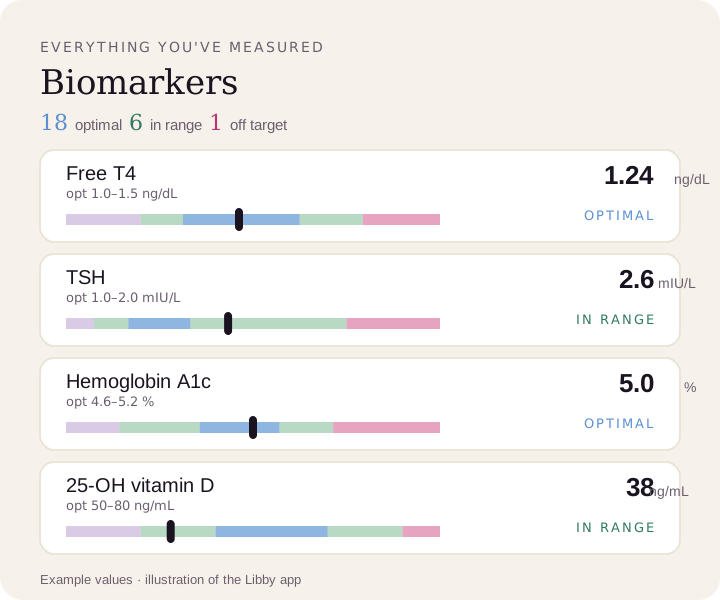
Compare your results to optimal ranges.
Upload a lab PDF or a photo of your report. Libby puts every marker on your lab's range and the optimal range, and tracks your trends over time.
View your free T4 ›