Testosterone test: normal levels, low T causes, next steps
What a normal testosterone level is for men and women, the optimal ranges people aim for, the most common causes of low T, and when a result is urgent.
Testosterone is the main male sex hormone, and women make it too, in much smaller amounts. In men it comes mostly from the testes, on orders from the pituitary gland. It helps drive sex drive, sperm, muscle, bone and red blood cell production.12 A blood test shows how much is circulating, and that number moves with the time of day, food, sleep, body weight and some medicines.
The short version
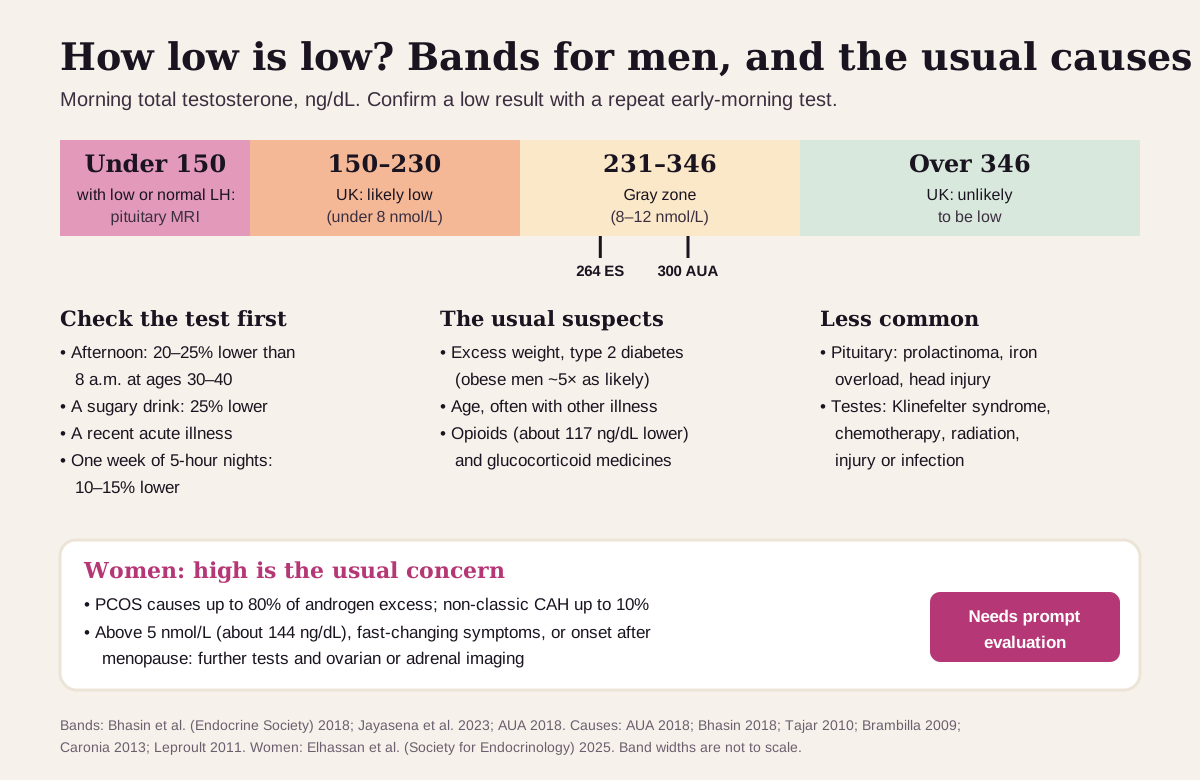
- Normal for adult men: Labcorp and other labs use 264–916 ng/dL, the range in 1,185 healthy, non-obese men aged 19–39. U.S. guidelines call it low below about 264–300 ng/dL on two early-morning tests, together with symptoms.342
- Normal for women is far lower: about 10–57 ng/dL in a mass-spectrometry study of 985 women aged 20–80.5
- Low testosterone in men most often comes with excess weight and type 2 diabetes, opioid or steroid medicines, or a test taken in the afternoon or after eating. Testicular damage and pituitary tumors are less common.267
- Get it looked at promptly if a man's level is under 150 ng/dL with a low or normal LH, or a woman's is above 5 nmol/L (about 144 ng/dL) or her symptoms are changing fast.48
What testosterone is
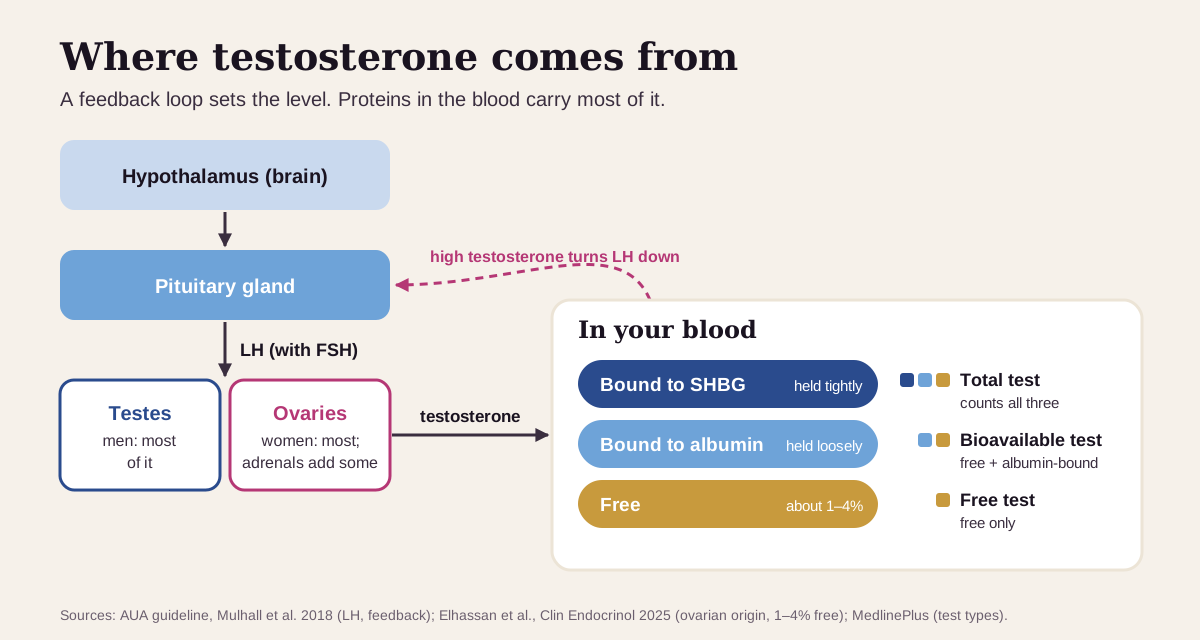
Testosterone is a steroid hormone run by a feedback loop. In men, the pituitary gland at the base of the brain releases luteinizing hormone (LH), which tells the testes to make testosterone. As testosterone rises, it feeds back to turn LH down, like a thermostat. LH's partner, follicle-stimulating hormone (FSH), drives sperm production.2
In women, LH drives testosterone production in the ovaries, which make most of it; the adrenal glands add a smaller share.8
Most testosterone in the blood rides on proteins. Only about 1–4% floats free. The rest is bound tightly to sex hormone-binding globulin (SHBG) or loosely to albumin.8 A standard total testosterone test counts all of it. That's why SHBG matters: conditions that lower SHBG, such as obesity and type 2 diabetes, can pull total testosterone below the normal range while free testosterone stays normal.4
What's a normal testosterone level?
Start with the range on your own report, and check which test it is: total, free or bioavailable testosterone each have their own range.1
Men. Many labs now use a harmonized range of 264–916 ng/dL. It comes from 1,185 healthy, non-obese men aged 19–39 in two U.S. and European studies, with every sample calibrated to the CDC's reference method. The middle value was 531 ng/dL.3 Labcorp prints that same 264–916 for every adult man from age 20 up.10
Guidelines draw the "low" line in slightly different places, and all of them ask for symptoms and a repeat morning test before calling it low:
- The Endocrine Society uses the harmonized lower limit, 264 ng/dL, measured in the morning after an overnight fast.4
- The American Urological Association (AUA) uses below 300 ng/dL on two early-morning tests.2
- The UK Society for Endocrinology calls under 8 nmol/L (about 231 ng/dL) likely low, 8–12 nmol/L (about 231–346 ng/dL) a gray zone, and over 12 nmol/L (about 346 ng/dL) unlikely to be low.11
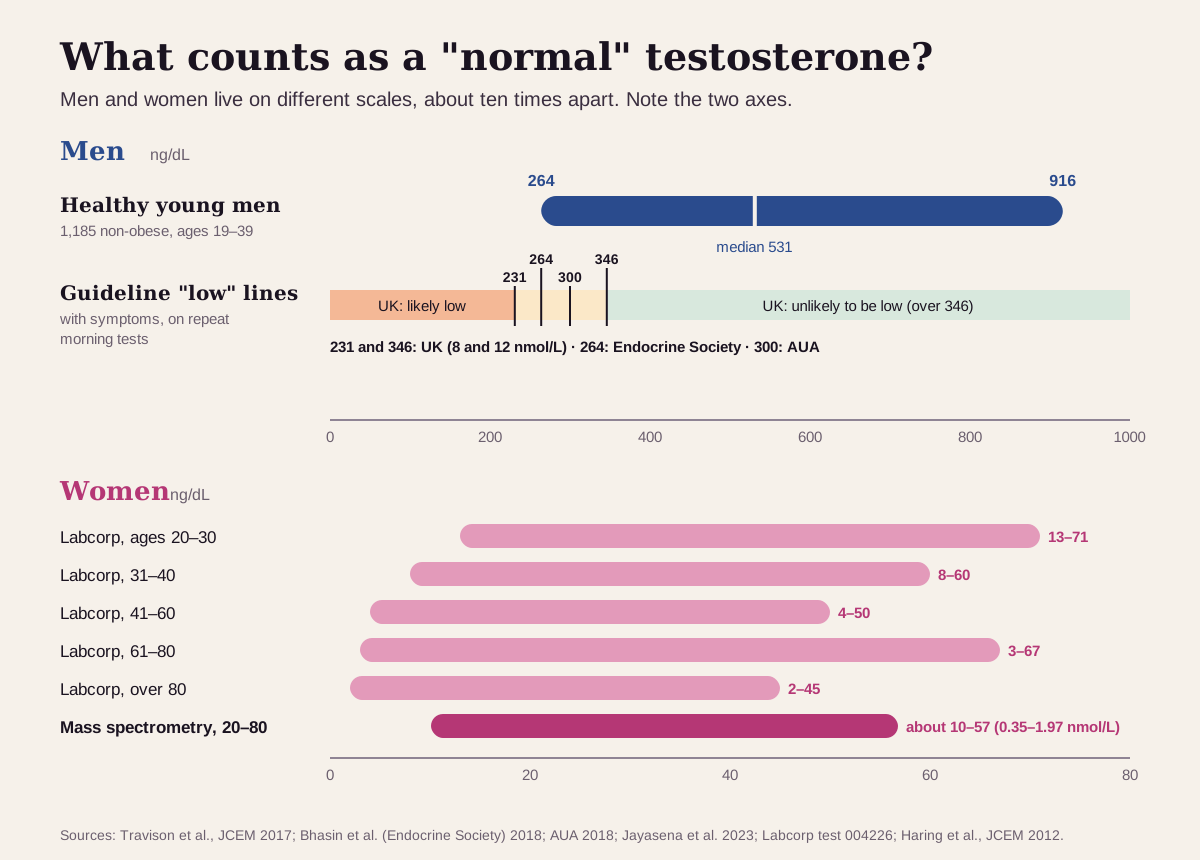
Women. Labcorp's range is 13–71 ng/dL at ages 20–30, 8–60 ng/dL at 31–40 and 4–50 ng/dL at 41–60.10 A study of 985 German women aged 20–80, measured by mass spectrometry, put the whole-life range at 0.35–1.97 nmol/L (about 10–57 ng/dL), with a clear decline by age.5 For women, the Society for Endocrinology recommends a mass-spectrometry (LC-MS/MS) test, because many standard tests are biased at these low levels.8
Age matters for men too. In the Massachusetts Male Aging Study, men aged 40–70 lost about 1.6% of their total testosterone a year, and 2–3% of their bioavailable testosterone, over 7–10 years of follow-up. Men in good health, with no chronic illness, prescription medicines, obesity or heavy drinking, had androgen levels 10–15% higher.12
"Optimal" testosterone: what health optimizers aim for
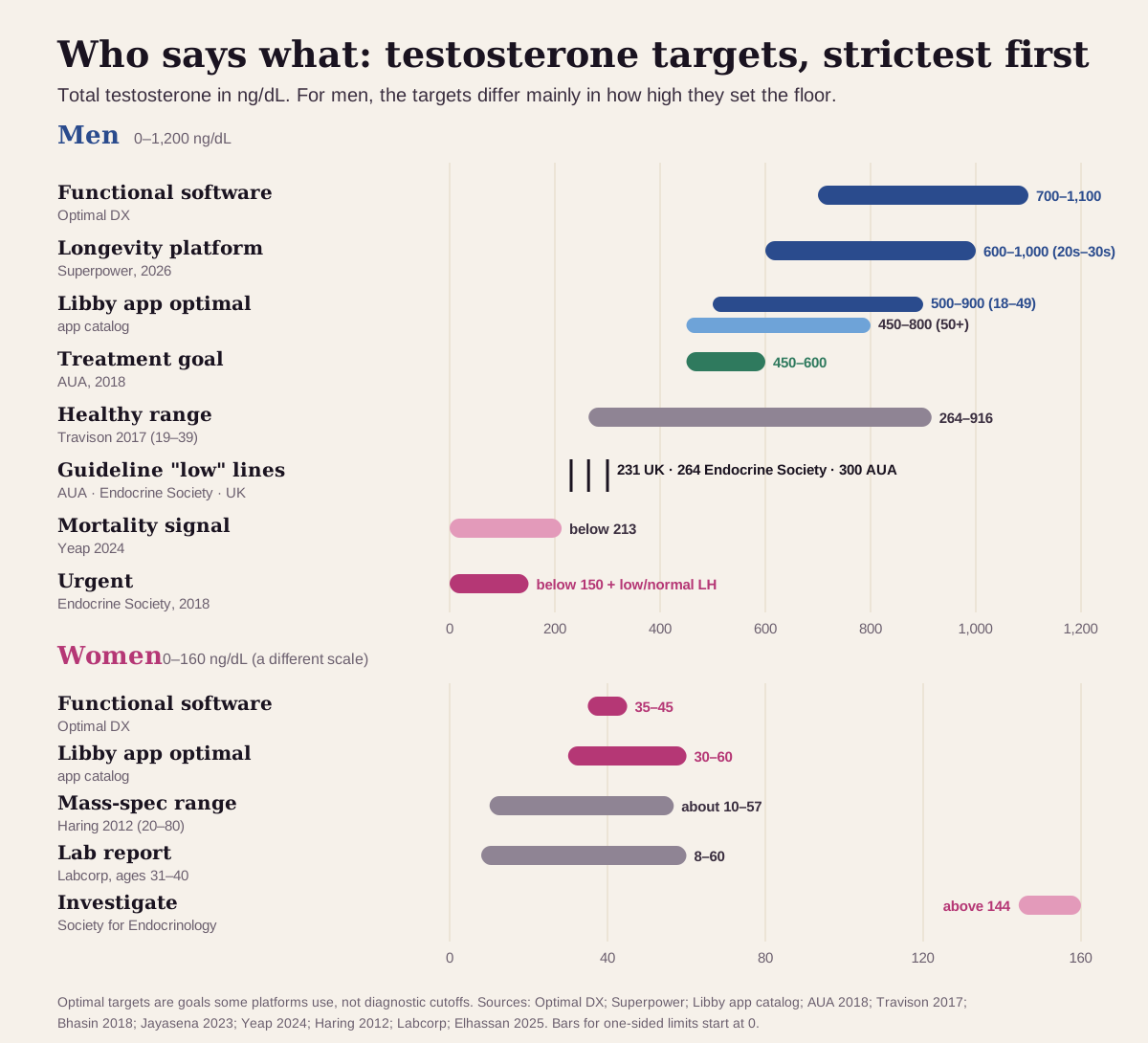
Longevity clinics and functional-medicine platforms aim higher than a lab's low line: for men, their targets raise the floor well above 264–300 ng/dL. Here's the full ladder, strictest first:
| Target | Men | Women | Who uses it |
|---|---|---|---|
| Strictest (functional software) | 700–1,100 ng/dL | 35–45 ng/dL | Optimal DX's published "ODX Range"13 |
| Longevity platform | 600–1,000 ng/dL in your 20s and 30s; above 450–500 after 40 | no published target found | Superpower's testosterone guide14 |
| App optimal | 500–900 ng/dL (ages 18–49); 450–800 ng/dL (50 and over) | 30–60 ng/dL | The optimal range shown in the Libby app, which its catalog attributes to Endocrine Society guidance15 |
| Treatment goal | 450–600 ng/dL | — | AUA's definition of success on testosterone therapy, the middle third of the normal range2 |
| Healthy reference range | 264–916 ng/dL (ages 19–39) | about 10–57 ng/dL | Travison et al.;3 Haring et al., by mass spectrometry5 |
| Lab report | 264–916 ng/dL (all adult ages) | 8–60 ng/dL at 31–40 (varies by age) | Labcorp10 |
| Guideline line | low: under 264–300 ng/dL; UK: under 231 | high: above an age-specific reference range | Endocrine Society,4 AUA,2 UK;11 Society for Endocrinology (women)8 |
| Urgent | under 150 ng/dL with low or normal LH | over 5 nmol/L (about 144 ng/dL) | Pituitary imaging (Endocrine Society);4 ovarian and adrenal imaging (UK)8 |
What the evidence behind the targets shows:
- Symptoms start around the low line. In the European Male Ageing Study of 3,369 men aged 40–79, poor morning erections, low desire and erectile dysfunction became more likely as total testosterone fell through 8–13 nmol/L (about 230–370 ng/dL). The authors defined late-onset hypogonadism as three sexual symptoms plus a total testosterone under 11 nmol/L (320 ng/dL).16
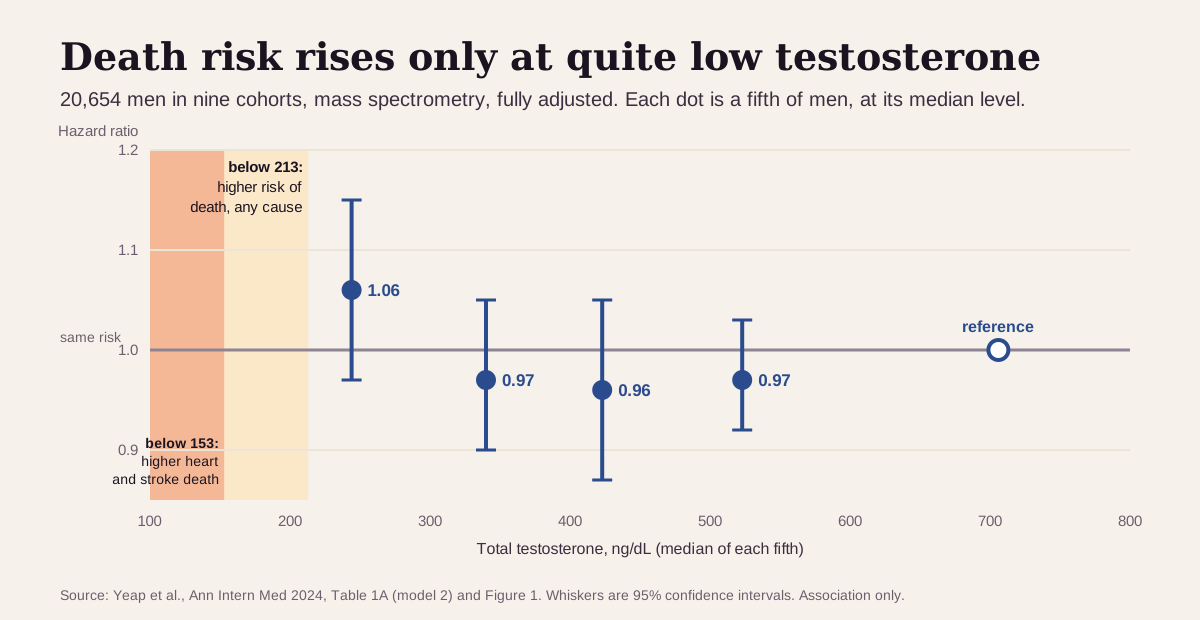
- Death risk rises only at quite low levels. A 2024 pooled analysis of 20,654 men in nine cohorts, all measured by mass spectrometry, found that after adjusting for age, weight, smoking, diabetes and other factors, men in the lowest fifth (median 244 ng/dL) had about the same risk of death as men in the top fifth (median 706 ng/dL). Risk was clearly higher only below 213 ng/dL for death from any cause and below 153 ng/dL for cardiovascular death.9
Keep "optimal" in perspective: these are targets, not diagnoses. The hard outcome data flag risk at clearly low levels, and even for men on treatment, the Endocrine Society aims for the mid-normal range.94 More isn't automatically better. Testosterone therapy can push hematocrit above 54%, thickening the blood, and guidelines call for action when it does.42 In women, higher testosterone travels with metabolic risk: type 2 diabetes becomes more common above about 1.5 nmol/L (about 43 ng/dL).8
What a low testosterone usually means
First, check the test itself. Testosterone peaks in the morning. In men aged 30–40 it ran 20–25% lower at 4 p.m. than at 8 a.m., and half of the men with an afternoon reading under 300 ng/dL (12 of 24) were normal on every morning test.7 A sugary drink lowers it too: after a 75 g glucose drink, testosterone fell 25% on average, and 10 of 66 men with normal levels dipped into the low range.17 Illness lowers it for a while, which is why the Endocrine Society advises against testing during or right after an acute illness.4 That's why guidelines ask for two early-morning tests, fasting in the Endocrine Society's version.42
The usual suspects in men, most common first:
- Excess weight and type 2 diabetes. Obese men are almost five times as likely to have low testosterone. In one study, nearly a third of overweight or obese men were under 300 ng/dL, compared with 6.4% of men at a normal weight; in another, 24.5% of men with diabetes were low versus 12.6% without it.2 Part of this is low SHBG, and part is a quieter signal from the brain.46
- Age, often together with other illness. Among 3,369 European men aged 40–79, 11.8% had low testosterone with a low or normal LH (the brain signal), and 2.0% had it with a high LH (the testes). Obesity was linked mainly to the first kind, and age to the second.6
- Medicines. Men taking opioids for pain for at least 30 days had testosterone about 117 ng/dL lower than men who weren't.2 Glucocorticoid (steroid) medicines are on the same lists.42 Don't stop a prescribed medicine on your own. Bring the list to your clinician.
- Short sleep. In a small study, one week of 5-hour nights lowered daytime testosterone by 10–15% in 10 healthy young men.18
- Less common causes: a prolactin-secreting pituitary tumor (prolactinoma), other pituitary disease, iron overload (hemochromatosis), head injury, and, on the testes side, Klinefelter syndrome (the most common inherited cause), chemotherapy, radiation, injury or infection of the testes.24
See a clinician promptly if your testosterone is under 150 ng/dL with a low or normal LH: the Endocrine Society recommends a pituitary MRI.4 The same goes for a persistently high prolactin, which the AUA says needs an endocrine evaluation.2
What a high testosterone usually means
In women, the usual cause is polycystic ovary syndrome (PCOS). It affects 8–13% of women of reproductive age and accounts for up to 80% of androgen excess. It typically shows up as extra facial or body hair, acne, scalp hair thinning and irregular periods.81 Non-classic congenital adrenal hyperplasia, an inherited adrenal condition, accounts for up to 10%.8 Rare ovarian or adrenal tumors are the reason for the red flags below.
In men, the causes MedlinePlus lists are steroid use, a tumor of the testes, and adrenal conditions such as congenital adrenal hyperplasia.1 On testosterone therapy, the number to watch alongside it is hematocrit: the AUA recommends acting at 54% or higher.2
Get prompt care if a woman's testosterone is above 5 nmol/L (about 144 ng/dL), or if androgen symptoms are progressing quickly, such as a deepening voice or fast-spreading hair growth, or start after menopause. The UK's 2025 guideline calls for further tests and ovarian or adrenal imaging.8
Testosterone reads best next to its neighbors
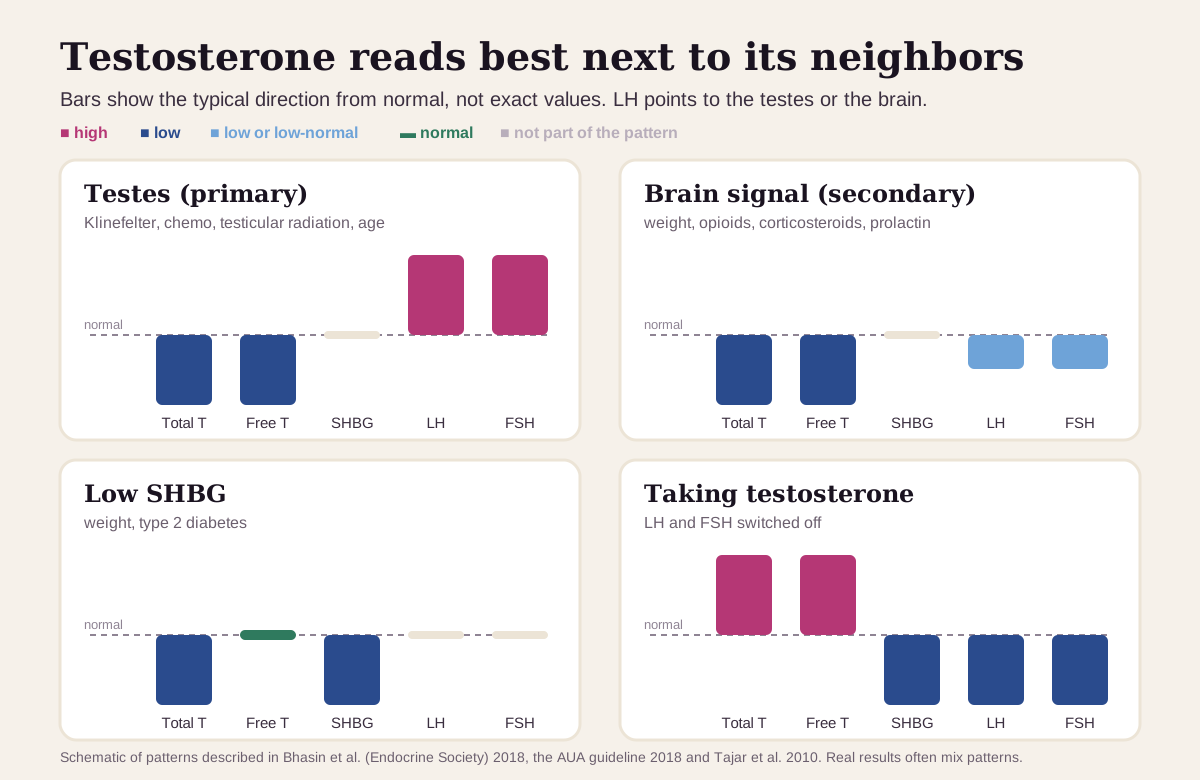
A testosterone result tells you how much. LH, FSH and SHBG usually tell you why. The Endocrine Society recommends measuring LH and FSH, and the AUA LH, in men with low testosterone, because the direction of LH points to the testes or the brain:42
| If you see… | It often points to… |
|---|---|
| Low testosterone, high LH and FSH | the testes ("primary hypogonadism"): Klinefelter syndrome, chemotherapy, testicular radiation, injury, or age |
| Low testosterone, low or low-normal LH and FSH | the brain signal ("secondary hypogonadism"): excess weight, opioids, corticosteroids, a high prolactin or pituitary disease |
| Low total testosterone and low SHBG, normal free testosterone | weight or type 2 diabetes lowering SHBG, with the free hormone still normal |
| High testosterone, suppressed LH and FSH | taking testosterone, which switches off the body's own LH and FSH signal (on a well-adjusted prescription, testosterone itself may sit in the normal range) |
| High testosterone and low SHBG in a woman | PCOS, often with insulin resistance |
Free testosterone earns its place when total testosterone sits near the line (the Endocrine Society says roughly 200–400 ng/dL) or when SHBG is off, for example low with obesity or diabetes, or high with aging, liver disease or an overactive thyroid.4
How fast testosterone changes
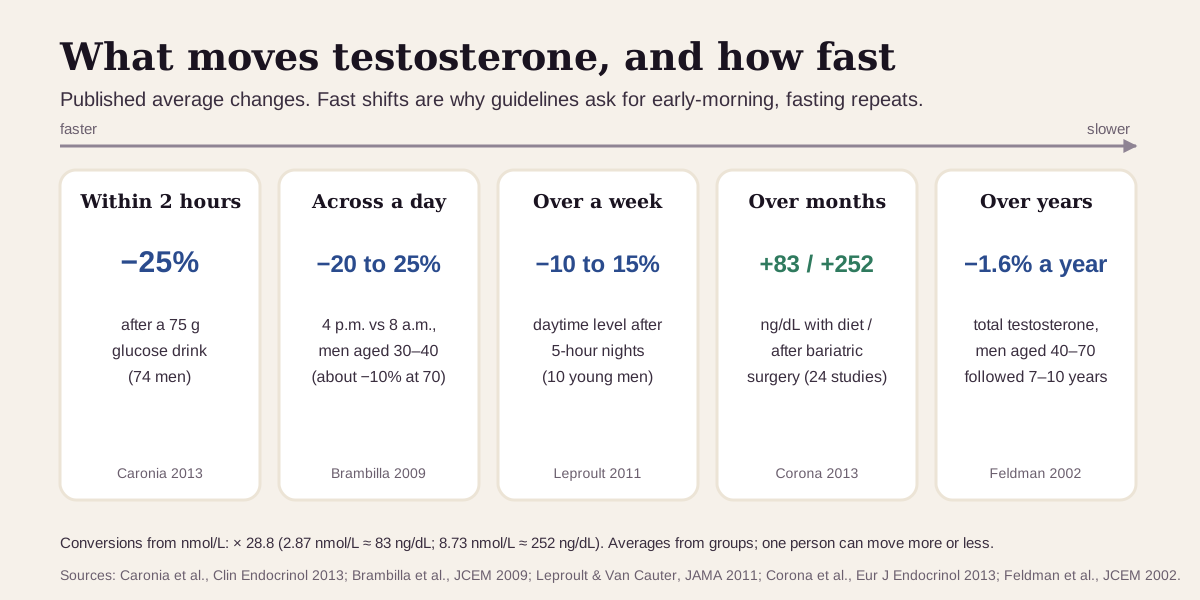
- Within hours: time of day and a recent meal can each shift a result by a fifth or more.717
- Over months: losing weight raises testosterone. In a meta-analysis of 24 studies, low-calorie diets raised total testosterone by 2.87 nmol/L (about 83 ng/dL) on average and bariatric surgery by 8.73 nmol/L (about 252 ng/dL). The more weight people lost, the bigger the rise.19
- Over years: about 1.6% a year in middle-aged men.12
- Trends beat snapshots. Compare morning results from the same lab: the UK statement notes that testosterone tests vary between methods, and a low value usually needs a repeat.11
Going deeper: total, free and bioavailable
- Total testosterone counts everything: free, SHBG-bound and albumin-bound.
- Free testosterone is the unbound 1–4%.8
- Bioavailable testosterone is free testosterone plus the part loosely bound to albumin and other proteins besides SHBG.1
How free testosterone is measured matters a lot. The Endocrine Society recommends equilibrium dialysis, or a calculation from total testosterone, SHBG and albumin, and calls direct "analog" free testosterone tests inaccurate.4 Labcorp's "Testosterone, Free, Direct" is an analog immunoassay, with an adult male range of 8.7–25.1 pg/mL at ages 30–39.10 A calculated free testosterone uses a different scale: the European study above set its low line at 220 pmol/L, about 64 pg/mL.16 So a free testosterone number only means something next to its own method and range.
In women with suspected PCOS, clinicians often use the free androgen index (FAI):8
FAI = total testosterone ÷ SHBG
Questions worth asking
- Was my test taken in the early morning and fasting, and should we repeat it?
- What are my LH and FSH, and do they point to my testes or my pituitary?
- Is my SHBG high or low, and should my free testosterone be calculated?
- Could my weight, sleep or any of my medicines be lowering it?
- If I'm a woman with a high result, do I need a mass-spectrometry test?
- If I'm on testosterone, what are my hematocrit and my target range?
FAQ
What is a normal testosterone level for a man? Many labs, Labcorp among them, use 264–916 ng/dL, the range in healthy, non-obese men aged 19–39. Guidelines call it low below about 264–300 ng/dL on two early-morning tests, with symptoms.342
What is a normal testosterone level for a woman? Far lower than for men: about 10–57 ng/dL by mass spectrometry, and Labcorp uses 8–60 ng/dL at ages 31–40. Levels fall with age.510
What is the most common cause of low testosterone? In men, excess weight and type 2 diabetes are the most common links, along with opioid and steroid medicines and tests taken in the afternoon or after eating.267
When is a testosterone result urgent? In men, a level under 150 ng/dL with a low or normal LH calls for a pituitary check. In women, a level above 5 nmol/L (about 144 ng/dL) or fast-changing symptoms need prompt tests for an ovarian or adrenal cause.48
This guide is for education. It can't diagnose you or replace care from a clinician who knows your history.
Footnotes
-
National Library of Medicine. Testosterone Levels Test. MedlinePlus. What testosterone does in both sexes, the symptoms of low testosterone in men and high testosterone in women, total vs free vs bioavailable tests, and the common causes of high and low results. MedlinePlus ↩ ↩2 ↩3 ↩4 ↩5
-
Mulhall JP, Trost LW, Brannigan RE, et al. Evaluation and Management of Testosterone Deficiency: AUA Guideline. J Urol. 2018;200(2):423–432. The U.S. urology guideline: the 300 ng/dL cutoff, two early-morning tests, LH to tell testes from pituitary, obesity, diabetes and opioid figures, the 450–600 ng/dL treatment goal, and acting at hematocrit ≥54%. PubMed · AUA full text ↩ ↩2 ↩3 ↩4 ↩5 ↩6 ↩7 ↩8 ↩9 ↩10 ↩11 ↩12 ↩13 ↩14 ↩15 ↩16 ↩17 ↩18 ↩19 ↩20 ↩21 ↩22
-
Travison TG, Vesper HW, Orwoll E, et al. Harmonized Reference Ranges for Circulating Testosterone Levels in Men of Four Cohort Studies in the United States and Europe. J Clin Endocrinol Metab. 2017;102(4):1161–1173. 1,185 healthy, non-obese men aged 19–39; 2.5th–97.5th percentiles 264–916 ng/dL, median 531. PMC ↩ ↩2 ↩3 ↩4 ↩5 ↩6
-
Bhasin S, Brito JP, Cunningham GR, et al. Testosterone Therapy in Men With Hypogonadism: An Endocrine Society Clinical Practice Guideline. J Clin Endocrinol Metab. 2018;103(5):1715–1744. Morning fasting tests, the 264 ng/dL harmonized limit, LH and FSH to separate primary from secondary causes, the SHBG and cause tables, free testosterone methods, pituitary imaging under 150 ng/dL, and erythrocytosis over 54%. PubMed ↩ ↩2 ↩3 ↩4 ↩5 ↩6 ↩7 ↩8 ↩9 ↩10 ↩11 ↩12 ↩13 ↩14 ↩15 ↩16 ↩17 ↩18 ↩19 ↩20 ↩21 ↩22
-
Haring R, Hannemann A, John U, et al. Age-specific reference ranges for serum testosterone and androstenedione concentrations in women measured by liquid chromatography-tandem mass spectrometry. J Clin Endocrinol Metab. 2012;97(2):408–415. 985 women aged 20–80; total testosterone 0.35–1.97 nmol/L. PubMed ↩ ↩2 ↩3 ↩4 ↩5 ↩6
-
Tajar A, Forti G, O'Neill TW, et al. Characteristics of secondary, primary, and compensated hypogonadism in aging men: evidence from the European Male Ageing Study. J Clin Endocrinol Metab. 2010;95(4):1810–1818. Secondary 11.8%, primary 2.0%; BMI of 30 or more linked to secondary (relative risk ratio 8.74). PubMed ↩ ↩2 ↩3 ↩4 ↩5 ↩6
-
Brambilla DJ, Matsumoto AM, Araujo AB, McKinlay JB. The effect of diurnal variation on clinical measurement of serum testosterone and other sex hormone levels in men. J Clin Endocrinol Metab. 2009;94(3):907–913. 66 Boston men aged 30–80; 20–25% lower at 4 p.m. than 8 a.m. at ages 30–40, about 10% at 70. PMC ↩ ↩2 ↩3 ↩4 ↩5
-
Elhassan YS, Hawley JM, Cussen L, et al. Society for Endocrinology Clinical Practice Guideline for the Evaluation of Androgen Excess in Women. Clin Endocrinol (Oxf). 2025;103(4):540–566. Ovarian origin of most testosterone in women, 1–4% free, LC-MS/MS testing, PCOS and CAH shares, the 5 nmol/L threshold, and the free androgen index. PMC ↩ ↩2 ↩3 ↩4 ↩5 ↩6 ↩7 ↩8 ↩9 ↩10 ↩11 ↩12 ↩13 ↩14 ↩15
-
Yeap BB, Marriott RJ, Dwivedi G, et al. Associations of Testosterone and Related Hormones With All-Cause and Cardiovascular Mortality and Incident Cardiovascular Disease in Men: Individual Participant Data Meta-analyses. Ann Intern Med. 2024;177(6):768–781. 20,654 men in nine cohorts, mass spectrometry, at least 5 years of follow-up. PMC ↩ ↩2 ↩3 ↩4 ↩5
-
Labcorp. Testosterone, Total (test 004226) and Testosterone, Free, Direct (test 144980). Reference ranges by sex and age: men 264–916 ng/dL from age 20; women 13–71 (20–30), 8–60 (31–40), 4–50 (41–60), 3–67 (61–80), 2–45 (over 80). A commercial laboratory; its ranges are reference intervals. Labcorp 004226 · Labcorp 144980 ↩ ↩2 ↩3 ↩4 ↩5 ↩6 ↩7
-
Jayasena CN, de Silva NL, O'Reilly MW, et al. Standardising the biochemical confirmation of adult male hypogonadism; a joint position statement by the Society for Endocrinology and Association of Clinical Biochemistry and Laboratory Medicine. Ann Clin Biochem. 2023;60(4):223–227. The UK action levels: under 8 nmol/L likely low, 8–12 gray zone, over 12 unlikely low. PMC ↩ ↩2 ↩3 ↩4 ↩5 ↩6
-
Feldman HA, Longcope C, Derby CA, et al. Age trends in the level of serum testosterone and other hormones in middle-aged men: longitudinal results from the Massachusetts male aging study. J Clin Endocrinol Metab. 2002;87(2):589–598. 1,156 men followed 7–10 years; total testosterone down 1.6% a year. PubMed ↩ ↩2 ↩3
-
Optimal DX. Hormone Biomarkers: Total Testosterone in Men (published August 17, 2022; updated November 12, 2024) and Total Testosterone in Women (published August 17, 2022; updated November 2, 2023). States an "ODX Range" of 700–1,100 ng/dL for men and 35–45 ng/dL for women. A commercial source, listed as what the optimizer community uses. Men · Women ↩ ↩2
-
Superpower. Normal Testosterone Levels: Reference Ranges & Optimal Values. Published April 18, 2026; updated August 31, 2026. Says men in their 20s and 30s "typically function best" at 600–1,000 ng/dL and suggests staying above 450–500 ng/dL after 40. A commercial source, listed as what the optimizer community uses. superpower.com ↩ ↩2
-
Endocrine Society. Clinical practice guidelines (various publications). The Libby app's marker catalog records total testosterone optimal ranges of 500–900 ng/dL for men aged 18–49, 450–800 ng/dL for men 50 and over, and 30–60 ng/dL for women, and attributes them to Endocrine Society guidance. The Endocrine Society's 2018 guideline, opened for this article, gives 264–916 ng/dL as a reference range and a mid-normal treatment goal, and states no 500–900 band. endocrine.org ↩ ↩2
-
Wu FC, Tajar A, Beynon JM, et al. Identification of late-onset hypogonadism in middle-aged and elderly men. N Engl J Med. 2010;363(2):123–135. European Male Ageing Study, 3,369 men aged 40–79; sexual symptoms rose as total testosterone fell through 8–13 nmol/L. PubMed ↩ ↩2
-
Caronia LM, Dwyer AA, Hayden D, et al. Abrupt decrease in serum testosterone levels after an oral glucose load in men: implications for screening for hypogonadism. Clin Endocrinol (Oxf). 2013;78(2):291–296. 74 men; a 75 g glucose drink lowered testosterone 25%. PubMed ↩ ↩2 ↩3
-
Leproult R, Van Cauter E. Effect of 1 week of sleep restriction on testosterone levels in young healthy men. JAMA. 2011;305(21):2173–2174. 10 men, 5-hour nights, daytime testosterone down 10–15%. PMC ↩ ↩2
-
Corona G, Rastrelli G, Monami M, et al. Body weight loss reverts obesity-associated hypogonadotropic hypogonadism: a systematic review and meta-analysis. Eur J Endocrinol. 2013;168(6):829–843. 24 studies; total testosterone up 2.87 nmol/L with diet and 8.73 nmol/L after bariatric surgery. PubMed ↩ ↩2
Educational content, not medical advice.Libby is a personal record tool, not a medical service — it doesn't diagnose, treat, or prescribe. Reference ranges vary by lab and by person. Talk to a qualified healthcare professional about your results.
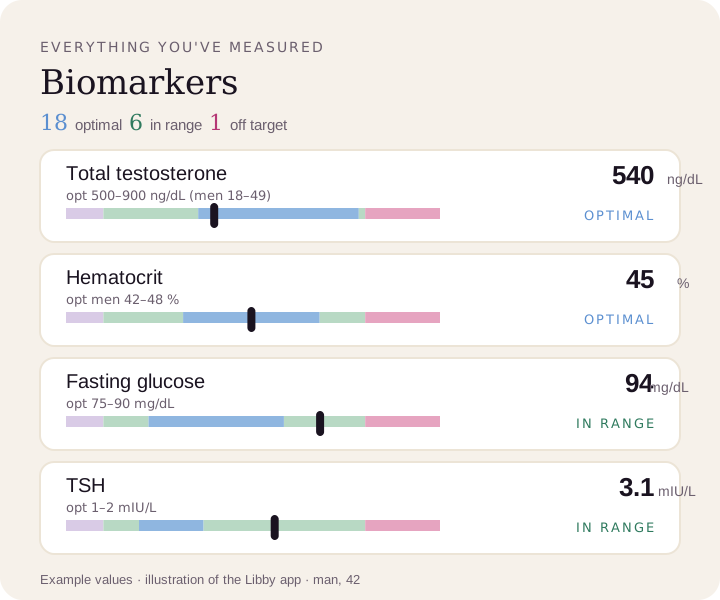
Compare your results to optimal ranges.
Upload a lab PDF or a photo of your report. Libby puts each marker on a reference range and, where one exists, an optimal range, and tracks your trends over time.
View your testosterone ›