Free T3 test: normal range, optimal levels, high and low
Free T3 is the active thyroid hormone. Here's the normal and optimal range, what high or low usually means, and how to read it with TSH and free T4.
Free T3 (free triiodothyronine) is the active thyroid hormone, measured in the small unbound form that can enter your cells. Your thyroid makes mostly T4, a storage form, and your liver and other tissues turn it into T3. A high free T3 with a low TSH usually means an overactive thyroid. A low free T3 usually reflects illness, eating much less, or a medicine, and it's often the last thyroid test to fall when the thyroid itself slows down.12
The short version
- Normal: check the range on your report. On the common Roche test, Labcorp puts adult free T3 at 2.0–4.4 pg/mL.3 The Libby app shows 3.2–4.4 pg/mL as optimal, from a functional-medicine textbook.4
- High with a low TSH usually means an overactive thyroid. Graves disease is the most common cause, and T3 often rises before T4 does.51
- Low usually comes from acute or chronic illness, eating much less, or medicines like glucocorticoid steroids and amiodarone. In an underactive thyroid, free T3 is often the last test to drop, so TSH and free T4 lead that diagnosis.612
- Urgent: high thyroid hormone plus fever, a pounding heart, confusion or agitation can be thyroid storm, a medical emergency. Call 911.7
What free T3 is
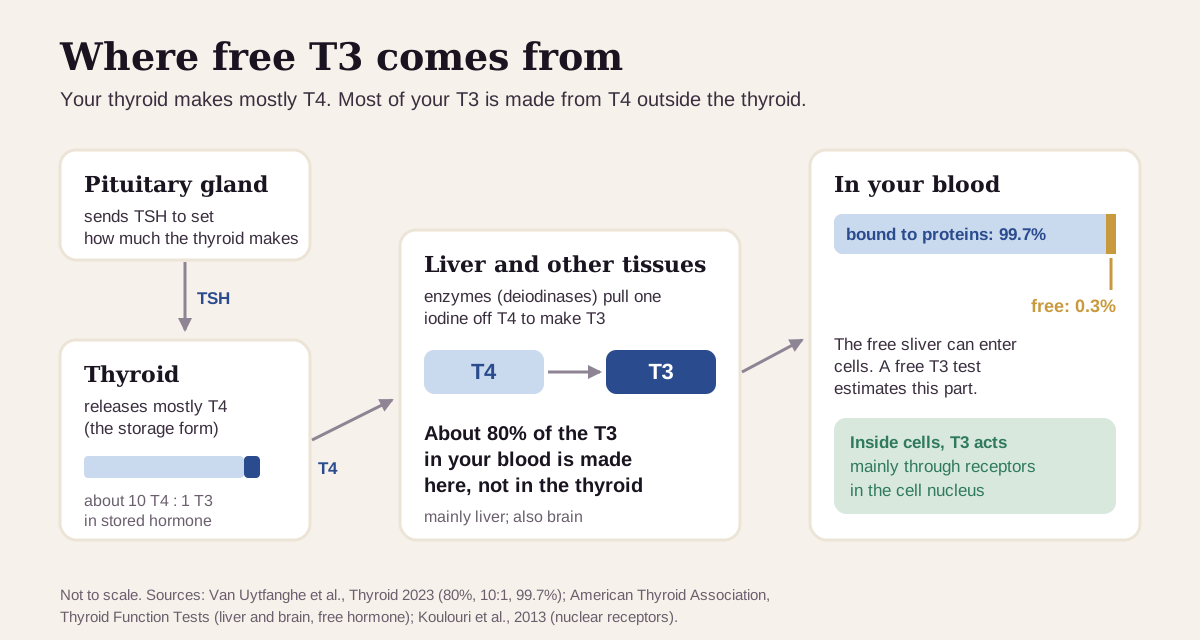
Your pituitary gland sends TSH (thyroid-stimulating hormone) to tell the thyroid how much hormone to make. The thyroid answers mostly with T4 (thyroxine), about ten T4 for every T3 in its stored hormone. About 80% of the T3 in your blood is made outside the thyroid, by enzymes called deiodinases that pull one iodine off T4.1 That happens mainly in the liver and in tissues where T3 acts, such as the brain.2
T3 is the hormone that does the work. It enters cells and acts mainly through receptors in the cell nucleus.6 In blood, 99.7% of T3 rides on carrier proteins.1 The free sliver is the part that can enter and affect your tissues, and that's what a free T3 test estimates.2
Free T3 is a tricky measurement. T3 circulates at lower levels than T4 and binds more loosely, so routine free T3 tests are less precise than free T4 tests, and many labs prefer to run total T3 (bound plus free) instead.1 You'll usually see free T3 on a "full thyroid panel" next to TSH and free T4.
What's a normal free T3?
Start with the range printed on your own report. The same test on different manufacturers' machines can give different numbers, so every method needs its own range.1
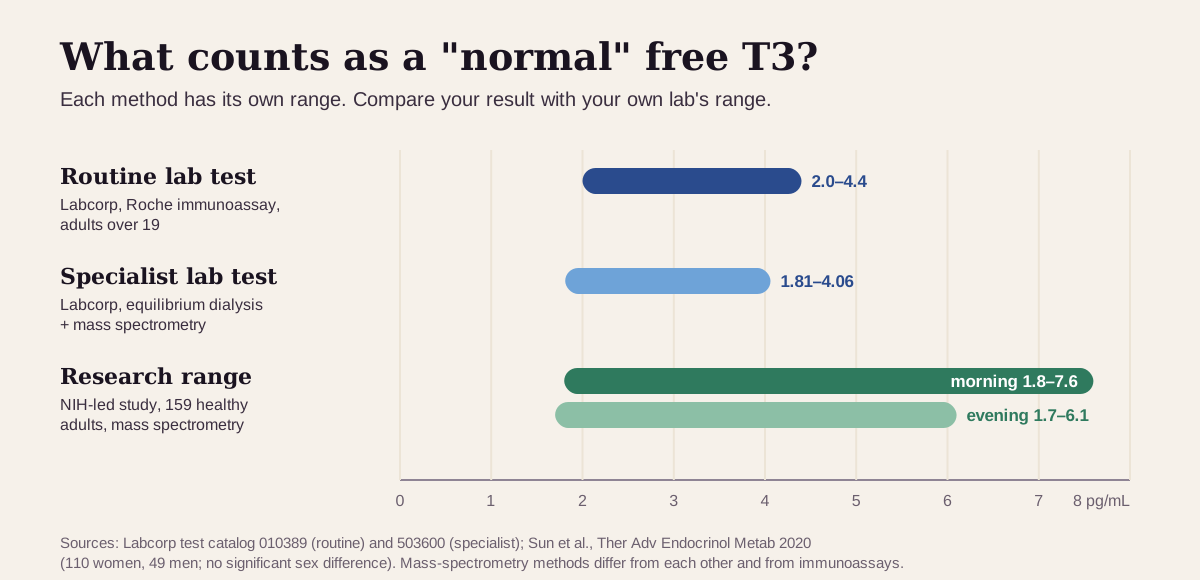
- Routine test (most labs): Labcorp's Roche immunoassay puts adults over 19 at 2.0–4.4 pg/mL. Children run higher: 2.7–5.2 at ages 6–10 and 2.3–5.0 at ages 11–19.3
- Specialist test: Labcorp's equilibrium-dialysis mass-spectrometry method, which filters out the bound hormone first, gives 1.81–4.06 pg/mL for adults and children over 10. In pregnancy it gives 1.6–3.3 in the first trimester and 1.0–3.2 in the third.8
- Research range: an NIH-led study measured 110 healthy women and 49 healthy men with a mass-spectrometry method. Its range was 1.8–7.6 pg/mL in the morning and 1.7–6.1 in the evening, and it found no significant difference between men and women.9
Free T3 falls through the day. In that same study, evening samples ran lower than morning samples, so the authors recommend separate morning and evening ranges.9
"Optimal" free T3: what health optimizers aim for
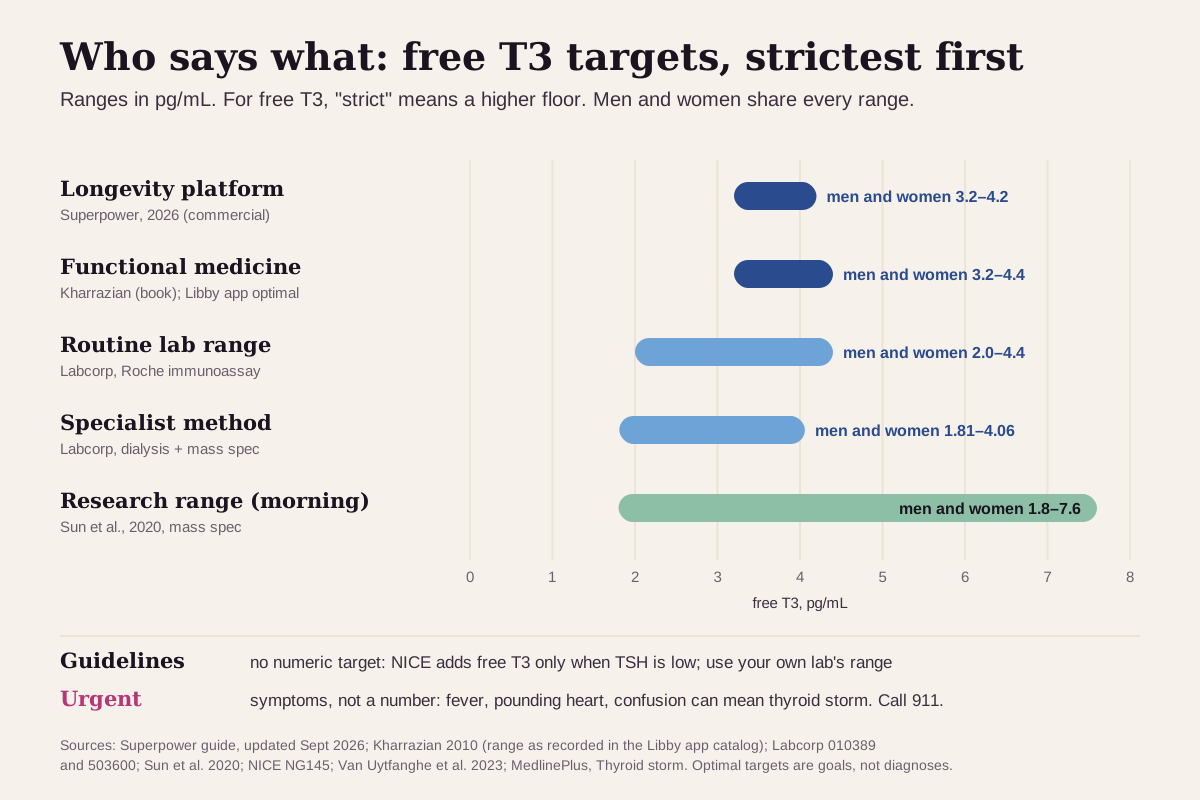
Functional-medicine practitioners and longevity platforms aim for the upper part of the lab range.10 For free T3, "strict" means a higher floor. Here's the ladder, from strictest to loosest:
| Target | Men and women | Who uses it |
|---|---|---|
| Strictest (longevity platform) | 3.2–4.2 pg/mL | Superpower's "upper third" of the range10 |
| Functional medicine | 3.2–4.4 pg/mL | A widely read functional-medicine thyroid book,4 and the optimal range shown in the Libby app |
| Routine lab range | 2.0–4.4 pg/mL | Labcorp, adults over 19, Roche immunoassay3 |
| Specialist method | 1.81–4.06 pg/mL | Labcorp Endocrine Sciences, dialysis plus mass spectrometry8 |
| Research range | 1.8–7.6 pg/mL (morning) | NIH-led study of healthy volunteers, a different mass-spectrometry method9 |
| Guidelines | no numeric target | NICE adds free T3 only when TSH is low; use your own lab's range111 |
| Urgent | symptoms, not a number | Thyroid storm: fever, pounding heart, confusion. Call 9117 |
No source in this ladder splits adults by sex, and the NIH-led study found no sex difference.9
Why optimizers aim for the upper part of the range:
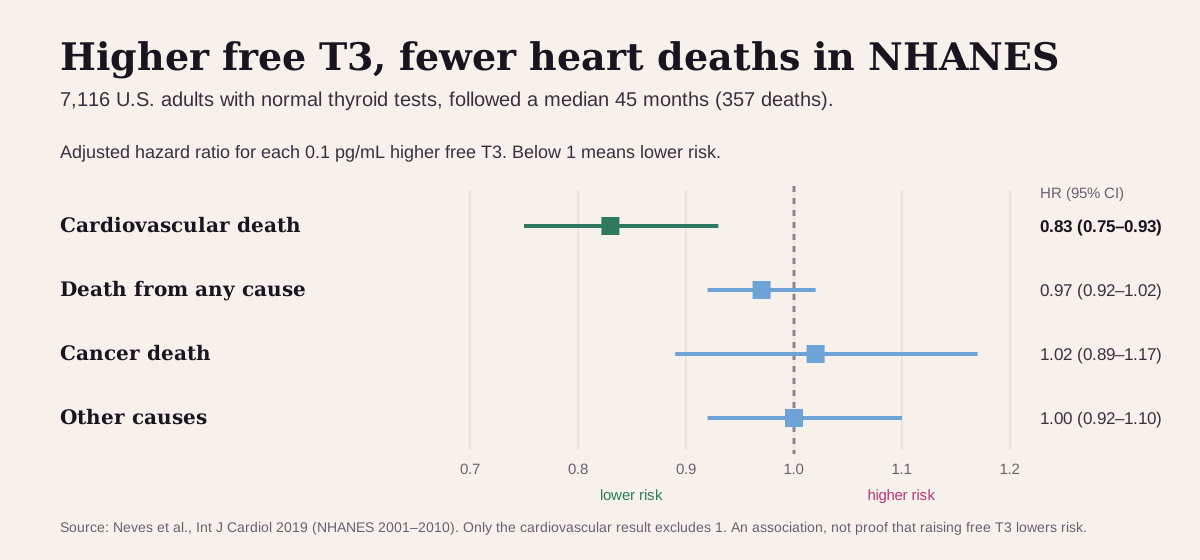
- In 7,116 U.S. adults from the NHANES survey, all with thyroid tests in the normal range, lower free T3 went with more deaths from heart disease over a median of 45 months. After adjusting for other risks, each 0.1 pg/mL higher free T3 came with 17% lower cardiovascular mortality (hazard ratio 0.83). The link with death from all causes faded after adjustment (0.97).12
- In critically ill adults, a low-thyroid-hormone pattern showed up in a median 58% of patients across 25 studies (6,869 people) and went with 2.21 times the odds of dying in the hospital.13
Keep "optimal" in perspective: it's a target, not a diagnosis. Low free T3 often tracks how sick or underfed the body is. Treating that pattern with thyroid hormone lacks compelling evidence in most people with illness.6 Higher isn't automatically better either. In the Leiden Longevity Study, people in their 90s whose parents lived longest had lower free T3 and free T4 and a higher TSH.14 And a free T3 above the range is how an overactive thyroid shows up, with risks such as an irregular heartbeat and thinning bones.5
What a high or low free T3 usually means
Read free T3 with TSH first. NICE, the UK guideline body, starts with TSH and adds free T4 and free T3 when TSH is low. When TSH is high, it adds free T4 only.11
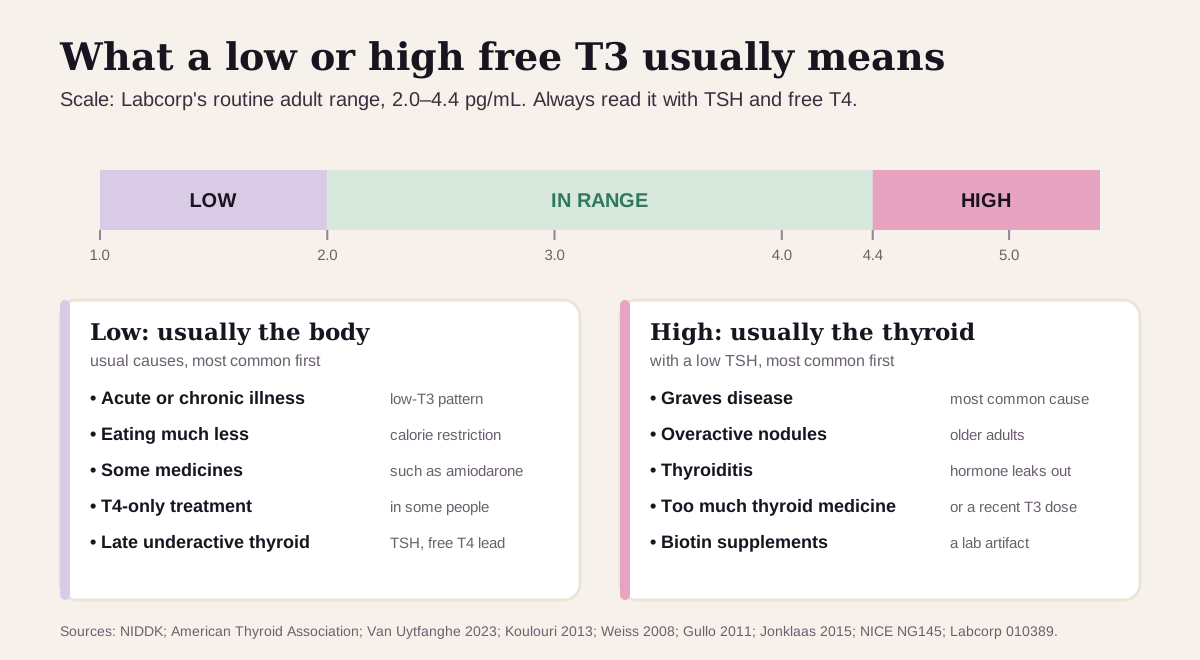
High free T3: usually an overactive thyroid
About 1 in 100 Americans aged 12 and over has hyperthyroidism.5 The usual suspects:
- Graves disease, an autoimmune condition, is the most common cause.5
- Overactive thyroid nodules, found most often in older adults.5
- Thyroiditis, inflammation that lets stored hormone leak out: after giving birth (postpartum), with a painful swollen thyroid (subacute), or painless.5
- Too much thyroid medicine or too much iodine.5 If you take T3 (liothyronine) or desiccated thyroid, timing matters: in one study, T3 peaked 2.5 hours after a dose.15 Tell your clinician when you took your last dose.
- "T3-only" overactivity. T3 often rises before T4, so some people with a low TSH have a high T3 and a normal free T4.21 That's why guidelines add free T3 when TSH is low.11
- A lab artifact. High-dose biotin supplements can throw off thyroid tests, high or low. Labcorp asks people to stop biotin at least 72 hours before this test.113
Call 911 if you have an overactive thyroid and develop fever, agitation or confusion, a pounding heart, shaking, sweating or diarrhea. These can be signs of thyroid storm, a life-threatening emergency.7
Low free T3: usually the body, not the thyroid
The usual suspects:
- Being sick. A T3 below the range is the hallmark of "nonthyroidal illness," a low-T3 state that can start within 24 hours of getting ill. It shows up with sepsis, surgery, heart attack, burns, cancer, chronic liver and kidney disease, and poor nutrition or starvation.16 NICE advises against thyroid testing during an acute illness unless the thyroid may be the cause.11
- Eating much less. In a year-long trial, calorie restriction lowered T3 by about 10 ng/dL, while similar fat loss from exercise did not.16
- Medicines that slow T4-to-T3 conversion: amiodarone, steroids (glucocorticoids), propranolol, propylthiouracil and X-ray contrast agents. They tend to lower T3 and raise reverse T3.1 With amiodarone, free T4 often climbs while free T3 stays in range.6
- T4-only thyroid treatment (levothyroxine). In 1,811 people without a thyroid who had a normal TSH on levothyroxine, free T3 ran lower and free T4 higher than in healthy controls. 15.2% had a free T3 below the controls' range.17 Don't change a thyroid dose on your own. Bring your results to the clinician who prescribes it.
- An underactive thyroid (hypothyroidism). Free T3 is often the last test to fall: people can be severely hypothyroid with a high TSH, a low free T4 and a normal T3.2 TSH and free T4 make that diagnosis.11
Free T3 reads best next to its neighbors
The pattern across your thyroid panel says far more than free T3 alone:26
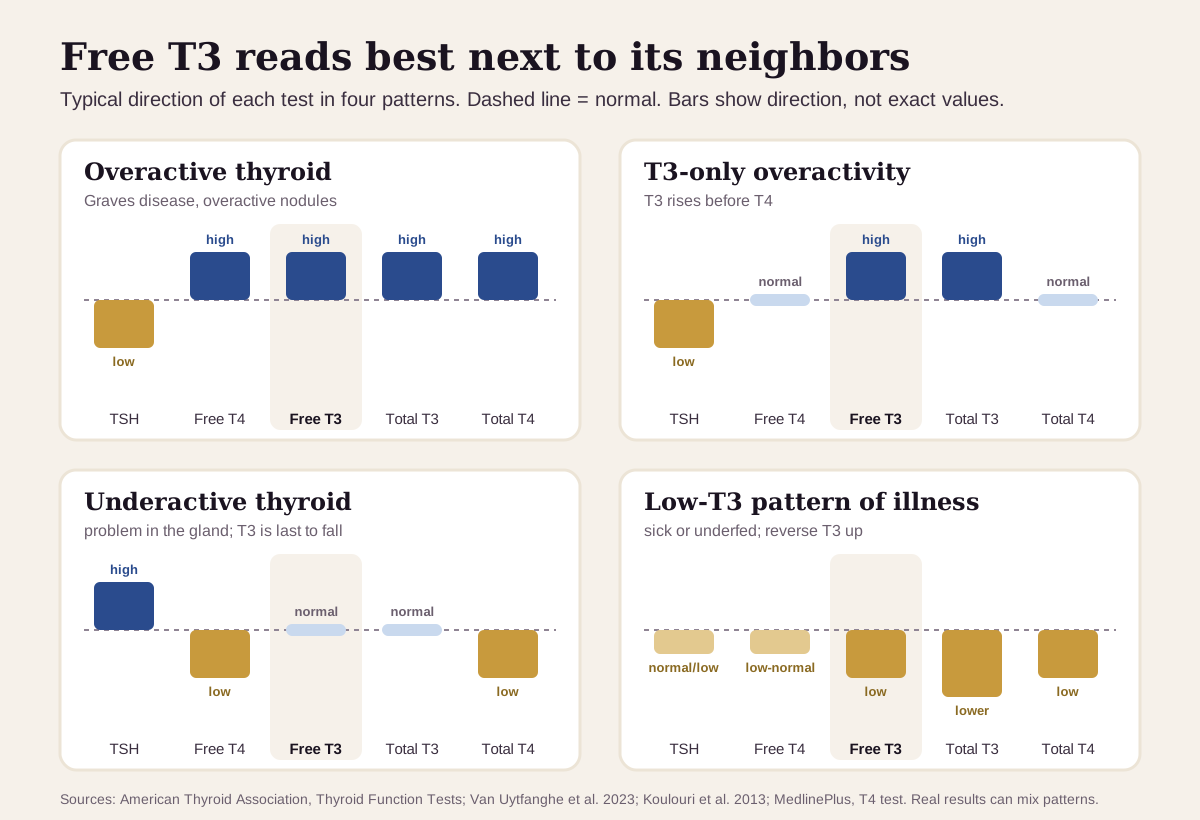
| If you see… | It often points to… |
|---|---|
| Low TSH, high free T4, high free T3 | an overactive thyroid, most often Graves disease215 |
| Low TSH, normal free T4, high free T3 | "T3-only" overactivity, which can be an early stage, because T3 rises before T421 |
| High TSH, low free T4, free T3 still normal | an underactive thyroid: T3 is the last to fall21 |
| Low free T3 and total T3, TSH normal or low, free T4 low-normal | the low-T3 pattern of illness or poor nutrition; reverse T3 is usually high6 |
| Normal TSH, free T4 at the top of the range, free T3 low-normal, on levothyroxine | T4-only treatment: some people turn less T4 into T3171 |
| Low or low-normal free T3, high reverse T3, on amiodarone, glucocorticoid steroids or propranolol | a medicine slowing T4-to-T3 conversion16 |
How fast free T3 changes
T3 turns over in about a day. Its half-life is about 1 day in people with normal thyroid function, shorter in an overactive thyroid (0.63 days) and longer in an underactive one (1.38 days), as reported in Jonklaas 2015.15 So free T3 can move within days.
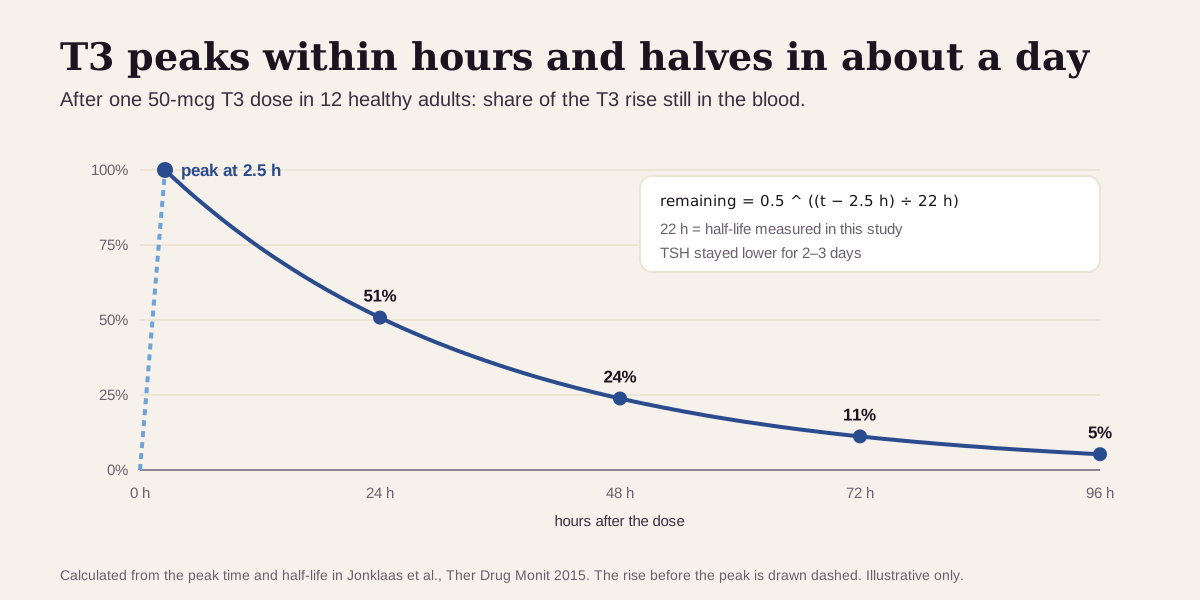
What that means in practice:
- Dose timing moves the number. In healthy volunteers given one 50-mcg T3 dose, T3 peaked at 2.5 hours and the calculated half-life was 22 hours. TSH stayed lower for 2–3 days.15 If you take T3, draw blood at a consistent time relative to your dose.
- Illness moves it fast. T3 can drop within 24 hours of a new illness.6 A low free T3 drawn while you were sick is worth repeating once you're well.
- Time of day matters a little. Morning free T3 runs higher than evening free T3.9 Test at the same time of day to compare.
- Trends beat snapshots. Compare results from the same lab and method, since methods differ.1 NICE suggests waiting at least 6 weeks before repeating thyroid tests when symptoms change.11
Going deeper: T4, T3 and reverse T3
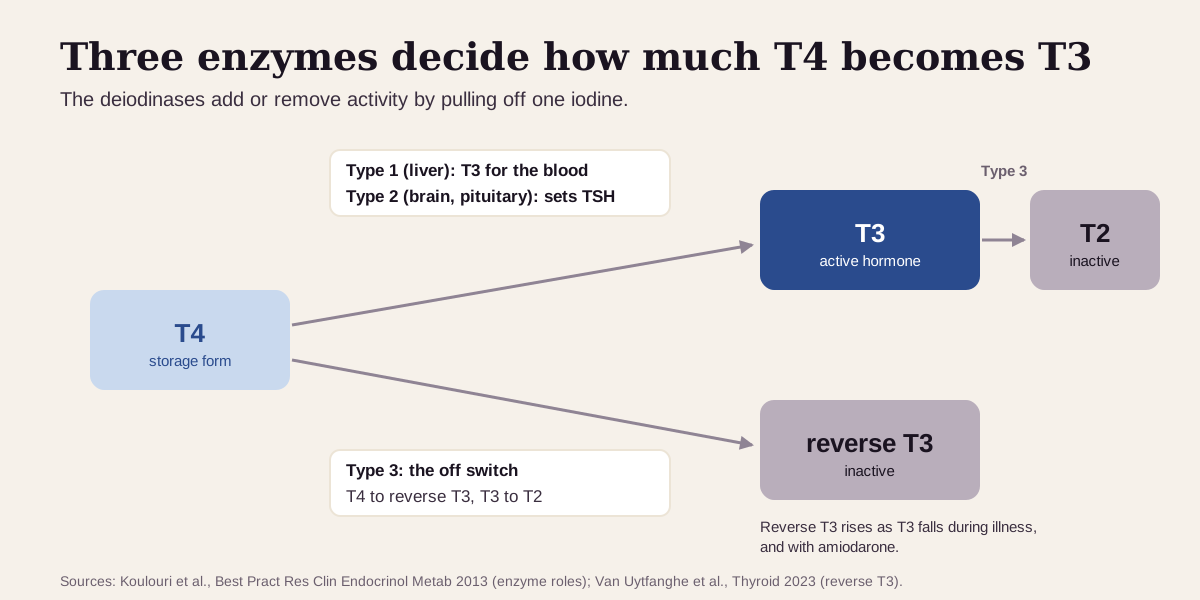
Three enzymes, the deiodinases, set how much T4 becomes T3. Type 1, in the liver, makes T3 for the blood. Type 2 makes T3 inside the hypothalamus and pituitary, which is how the brain senses thyroid status and sets TSH. Type 3 is the off switch: it turns T4 into reverse T3 and T3 into T2, both inactive.6
Reverse T3 gets a lot of attention online. It rises as T3 falls during illness, and medicines like amiodarone raise it.1 The American Thyroid Association says measuring it adds nothing to diagnosing an underactive thyroid in healthy people outside the hospital. A 2023 laboratory review found no evidence for using it to guide T4 or T3 treatment.21
Free vs total T3. Total T3 counts the bound hormone too, so it shifts when carrier proteins change, as in pregnancy or with birth-control pills.2 Free T3 avoids that, but routine free T3 assays are less precise. That's why a 2023 review for the American Thyroid Association prefers total T3 when a T3 level is needed.1
Questions worth asking
- What were my TSH and free T4 on the same draw, and which pattern do they fit?
- Was my free T3 measured while I was sick, fasting or dieting hard?
- Could any of my medicines or supplements, including biotin, affect it?
- If I take thyroid medicine, when should I take my dose relative to the blood draw?
- Would total T3 be more reliable than free T3 for my question?
- When should we repeat it, and should it be the same lab?
FAQ
What is a normal free T3 level? It depends on your lab's method. On the common Roche test, Labcorp's adult range is 2.0–4.4 pg/mL. The Libby app shows 3.2–4.4 pg/mL as the optimal range.34
What does a high free T3 mean? With a low TSH, it usually means an overactive thyroid. Graves disease is the most common cause. Too much thyroid medicine and thyroiditis are others.5
What does a low free T3 mean? Most often, illness, eating much less, or a medicine that slows T4-to-T3 conversion. In an underactive thyroid, free T3 is often the last test to fall.612
When is free T3 an emergency? When high thyroid hormone comes with fever, a pounding heart, confusion or agitation. That can be thyroid storm: call 911.7
This guide is for education. It can't diagnose you or replace care from a clinician who knows your history.
Footnotes
-
Van Uytfanghe K, Ehrenkranz J, Halsall D, et al. Thyroid Stimulating Hormone and Thyroid Hormones (Triiodothyronine and Thyroxine): An American Thyroid Association-Commissioned Review of Current Clinical and Laboratory Status. Thyroid. 2023;33(9):1013–1028. The source for ~80% of T3 made outside the thyroid, the 10:1 T4:T3 ratio, 99.7% protein binding, free T3 assay precision, T3 rising before T4, and the drug table. PMC ↩ ↩2 ↩3 ↩4 ↩5 ↩6 ↩7 ↩8 ↩9 ↩10 ↩11 ↩12 ↩13 ↩14 ↩15 ↩16 ↩17 ↩18 ↩19 ↩20 ↩21 ↩22 ↩23 ↩24
-
American Thyroid Association. Thyroid Function Tests. Patient information on T4-to-T3 conversion, T3 in hyper- and hypothyroidism, and reverse T3. thyroid.org ↩ ↩2 ↩3 ↩4 ↩5 ↩6 ↩7 ↩8 ↩9 ↩10 ↩11 ↩12 ↩13 ↩14 ↩15 ↩16
-
Labcorp. Triiodothyronine (T3), Free (test 010389). Roche cobas electrochemiluminescence immunoassay; age-specific ranges in pg/mL and the 72-hour biotin instruction. Labcorp is a commercial clinical laboratory, cited for its own published test catalog; the Libby app uses its standard ranges. labcorp.com ↩ ↩2 ↩3 ↩4 ↩5 ↩6 ↩7 ↩8
-
Kharrazian D. Why Do I Still Have Thyroid Symptoms? When My Lab Tests Are Normal. Elephant Press; 2010. ISBN 978-0985690403. A widely read functional-medicine thyroid book. The Libby app's marker catalog records its optimal free T3 range as 3.2–4.4 pg/mL (the book was not opened for this article). ↩ ↩2 ↩3 ↩4
-
National Institute of Diabetes and Digestive and Kidney Diseases. Hyperthyroidism (Overactive Thyroid). Prevalence, causes and complications. niddk.nih.gov ↩ ↩2 ↩3 ↩4 ↩5 ↩6 ↩7 ↩8 ↩9 ↩10
-
Koulouri O, Moran C, Halsall D, Chatterjee K, Gurnell M. Pitfalls in the measurement and interpretation of thyroid function tests. Best Pract Res Clin Endocrinol Metab. 2013;27(6):745–762. The source for the deiodinases, T3 as the main active hormone, and the illness pattern. PMC ↩ ↩2 ↩3 ↩4 ↩5 ↩6 ↩7 ↩8 ↩9 ↩10 ↩11 ↩12 ↩13 ↩14
-
National Library of Medicine. Thyroid storm. MedlinePlus Medical Encyclopedia. Symptoms, and why it's an emergency. MedlinePlus ↩ ↩2 ↩3 ↩4
-
Labcorp Endocrine Sciences. Triiodothyronine (T3), Free, Dialysis and LC/MS-MS (test 503600). Equilibrium dialysis plus mass spectrometry; ranges for adults and pregnancy. A commercial clinical laboratory, cited for its own published test catalog. labcorp.com ↩ ↩2 ↩3 ↩4
-
Sun Q, Avallone L, Stolze B, et al. Demonstration of reciprocal diurnal variation in human serum T3 and rT3 concentration demonstrated by mass spectrometric analysis and establishment of thyroid hormone reference intervals. Ther Adv Endocrinol Metab. 2020;11:2042018820922688. 110 healthy women and 49 healthy men; morning and evening ranges; no sex differences. PMC ↩ ↩2 ↩3 ↩4 ↩5 ↩6 ↩7
-
Superpower. Free T3 Normal Range: What Your Levels Mean. Published April 18, 2026; updated September 1, 2026. Says many practitioners favor "the upper third — roughly 3.2–4.2 pg/mL." A commercial source, listed as what the optimizer community uses. superpower.com ↩ ↩2 ↩3
-
National Institute for Health and Care Excellence. Thyroid disease: assessment and management (NG145), recommendations 1.2.6–1.2.11. Published 2019, updated October 2023. nice.org.uk ↩ ↩2 ↩3 ↩4 ↩5 ↩6 ↩7
-
Neves JS, Leitão L, Baeta Baptista R, et al. Lower free triiodothyronine levels within the reference range are associated with higher cardiovascular mortality: An analysis of the NHANES. Int J Cardiol. 2019;285:115–120. 7,116 adults, median follow-up 45 months, 357 deaths. PubMed ↩ ↩2
-
Vidart J, Jaskulski P, Kunzler AL, et al. Non-thyroidal illness syndrome predicts outcome in adult critically ill patients: a systematic review and meta-analysis. Endocr Connect. 2022;11(2):e210504. 25 studies, 6,869 patients. PMC ↩
-
Rozing MP, Houwing-Duistermaat JJ, Slagboom PE, et al. Familial longevity is associated with decreased thyroid function. J Clin Endocrinol Metab. 2010;95(11):4979–4984. 859 nonagenarian siblings from 421 families. PubMed ↩
-
Jonklaas J, Burman KD, Wang H, Latham KR. Single-dose T3 administration: kinetics and effects on biochemical and physiological parameters. Ther Drug Monit. 2015;37(1):110–118. 12 healthy adults, 50 mcg liothyronine; peak at 2.5 hours, 22-hour half-life; cites Nicoloff 1972 for half-lives by thyroid status. PMC ↩ ↩2 ↩3 ↩4
-
Weiss EP, Villareal DT, Racette SB, et al. Caloric restriction but not exercise-induced reductions in fat mass decrease plasma triiodothyronine concentrations: a randomized controlled trial. Rejuvenation Res. 2008;11(3):605–609. T3 fell 9.8 ng/dL with calorie restriction. PMC ↩
-
Gullo D, Latina A, Frasca F, et al. Levothyroxine monotherapy cannot guarantee euthyroidism in all athyreotic patients. PLoS One. 2011;6(8):e22552. 1,811 treated patients and 3,875 controls. PMC ↩ ↩2
-
National Library of Medicine. Thyroxine (T4) Test. MedlinePlus. What high and low T4 results usually mean. MedlinePlus ↩
Educational content, not medical advice.Libby is a personal record tool, not a medical service — it doesn't diagnose, treat, or prescribe. Reference ranges vary by lab and by person. Talk to a qualified healthcare professional about your results.
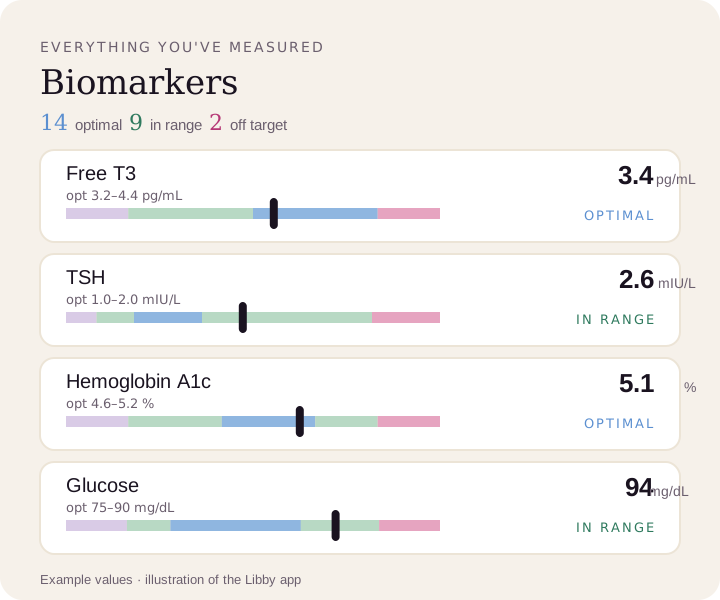
Compare your results to optimal ranges.
Upload a lab PDF or a photo of your report. Libby puts every marker on your lab's range and the optimal range, and tracks your trends over time.
View your free T3 ›