TSH blood test: normal range, high and low causes
TSH is your pituitary's signal to your thyroid. Here's what a normal TSH is, what optimizers aim for, why it runs high or low, and when it's urgent.
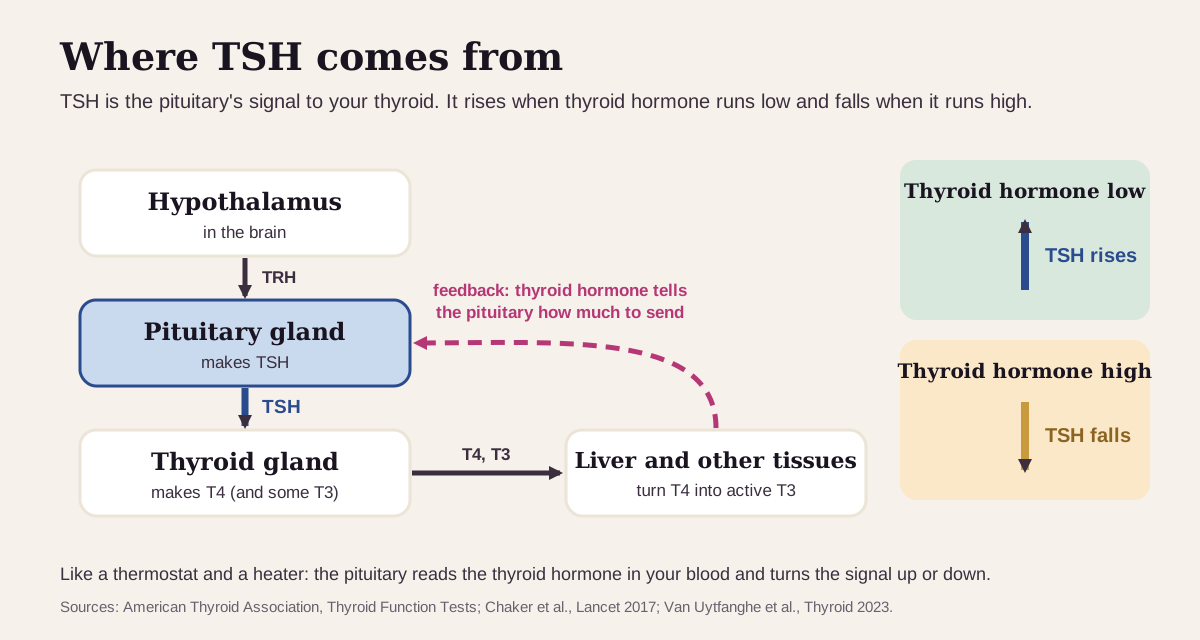
TSH (thyroid-stimulating hormone) is the signal your pituitary gland sends to tell your thyroid how hard to work. When thyroid hormone runs low, the pituitary turns the signal up and TSH rises. When thyroid hormone runs high, TSH falls. Small changes in thyroid hormone cause large swings in TSH, which makes it the most sensitive first test of how your thyroid is doing.12
The short version
- Normal: most labs use about 0.4–4.0 mIU/L.34 The Libby app's optimal range is 1.0–2.0, and the largest outcome study found the lowest heart and death risk at about 1.9–2.9.5
- High TSH usually means an underactive thyroid, most often from Hashimoto's disease. Low TSH usually means an overactive thyroid (most often Graves' disease) or too high a dose of thyroid medicine.46
- Act on it: most guidelines treat a TSH above 10, and a TSH under 0.1 carries the highest risk of atrial fibrillation.57 Fever, a pounding heart and confusion, or unresponsiveness and a low body temperature, are an emergency.8
- Read it with free T4. High TSH with low free T4 means the thyroid is underactive. Low TSH with low free T4 points to the pituitary instead.2
What TSH is
Your thyroid runs on a feedback loop. The hypothalamus, in the brain, sends a signal called TRH to the pituitary gland. The pituitary sends TSH to the thyroid. The thyroid answers with mostly T4, plus some T3, and your liver and other tissues turn T4 into T3, the active form. (More on the chemistry at the end.)24
The American Thyroid Association compares it to a thermostat and a heater. When the pituitary sees too little T4, it sends more TSH. When T4 climbs high enough, it shuts TSH off.2 The relationship is steep: a small change in free T4 produces a large change in TSH, so TSH usually moves first.9
That is why TSH is the usual first thyroid test on routine blood work. It works this way as long as the pituitary and hypothalamus are healthy.1 Problems there cause under 1% of underactive-thyroid cases.4
What's a normal TSH?
Start with the range printed on your own report. TSH tests from different manufacturers can differ by up to 50% on the same blood, so each lab sets its own range.1
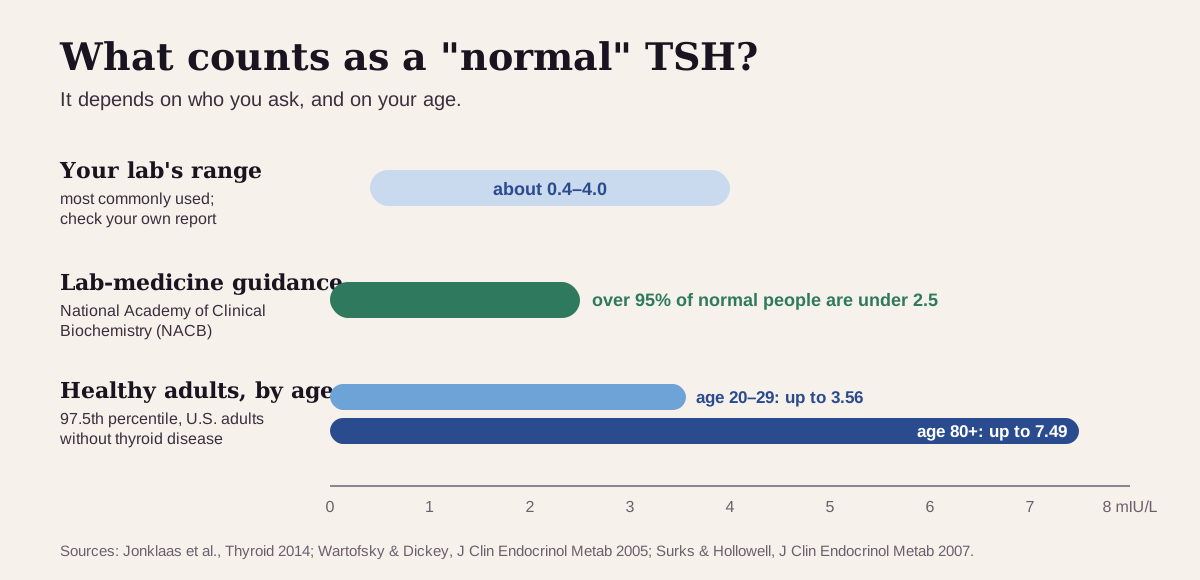
- The most commonly used range is about 0.4–4.0 mIU/L. The American Thyroid Association's treatment guideline uses the same numbers.34
- The upper limit is debated. Laboratory guidance from the National Academy of Clinical Biochemistry found that more than 95% of normal people have a TSH below 2.5. Endocrinologists Wartofsky and Dickey argued that most people above that line have early Hashimoto's.10
- TSH drifts up with age. In U.S. adults without thyroid disease, the top of the healthy range (97.5th percentile) was 3.56 at ages 20–29 and 7.49 at 80 and over. Seventy percent of older people with a TSH above 4.5 were still inside the range for their age.11
- Pregnancy lowers it. TSH is often a little low during the first three months of pregnancy.12
"Optimal" TSH: what health optimizers aim for
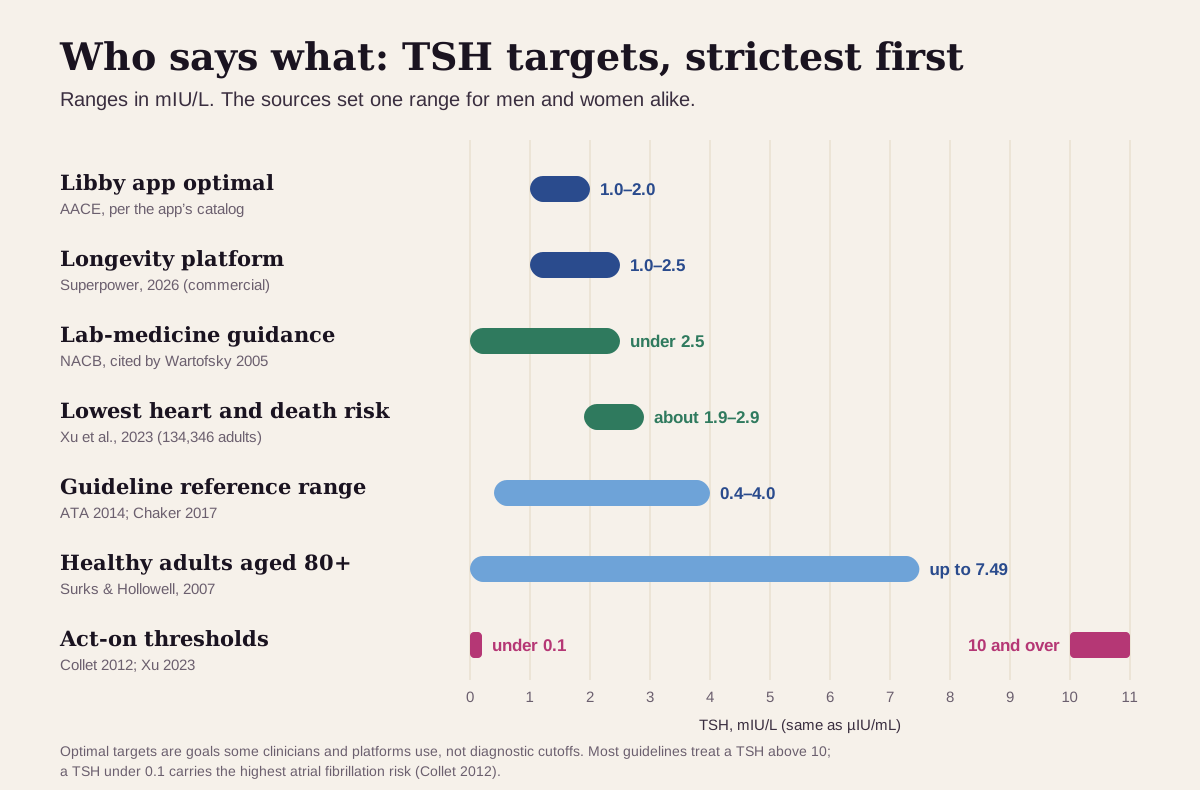
Some practitioners and longevity platforms aim for a tighter band in the lower half of the lab range. Here's the full ladder, from strictest to loosest:
| Target | TSH (mIU/L) | Who uses it |
|---|---|---|
| Libby app optimal | 1.0–2.0 | The optimal range shown in the Libby app. The app's marker catalog credits the American Association of Clinical Endocrinology |
| Longevity platform | 1.0–2.5 | The optimal range cited by Superpower13 |
| Lab-medicine "healthy" limit | under 2.5 | National Academy of Clinical Biochemistry, as cited by Wartofsky and Dickey10 |
| Lowest heart and death risk | about 1.9–2.9 | Xu et al., 134,346 adults in 26 cohorts5 |
| Guideline reference range | 0.4–4.0 | American Thyroid Association treatment guideline3 |
| Healthy adults aged 80+ | up to 7.49 | Surks and Hollowell, U.S. national survey data11 |
| Act on it | under 0.1, or over 10 | Highest atrial fibrillation risk under 0.1;7 most guidelines treat above 105 |
Why the low targets exist:
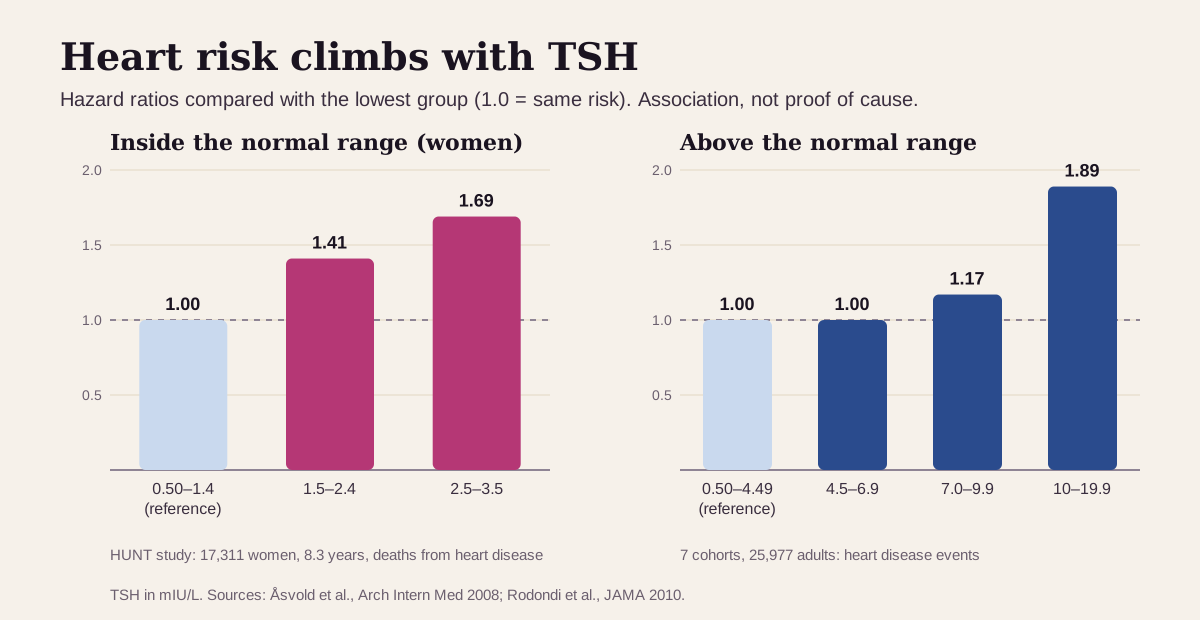
- In Norway's HUNT study of 17,311 women followed for about 8 years, women with a TSH of 1.5–2.4 had 1.41 times, and those at 2.5–3.5 had 1.69 times, the risk of dying from heart disease compared with women at 0.50–1.4. Every one of those values sits inside the normal range. In men, the trend was too small to be statistically significant.14
- Above the range, the risk climbs faster. Pooling 25,977 adults from 7 cohorts, heart-disease events were no more common at a TSH of 4.5–6.9 (1.00 times), slightly more common at 7.0–9.9 (1.17), and 1.89 times as common at 10–19.9.15
Keep "optimal" in perspective. The largest outcome study, 134,346 adults, found the lowest risk at a TSH of about 1.9–2.9, higher than the 1.0–2.0 optimal band. People in the bottom fifth of TSH had 1.09 times the risk of death from any cause.5 Too low carries real risks too: a TSH under 0.45 with normal hormones was linked to 1.68 times the rate of atrial fibrillation, highest under 0.1.7 And treatment has limits. In a trial of 737 adults aged 65 and over with a mildly high TSH (6.4 on average), thyroid medicine brought TSH down but improved neither symptoms nor tiredness after a year.16 A TSH of 3 is a reason to check free T4 and antibodies, and to watch the trend.
What a high or low TSH usually means
Direction comes first, then size. TSH moves opposite to thyroid hormone, so a high TSH points to too little hormone and a low TSH to too much.2
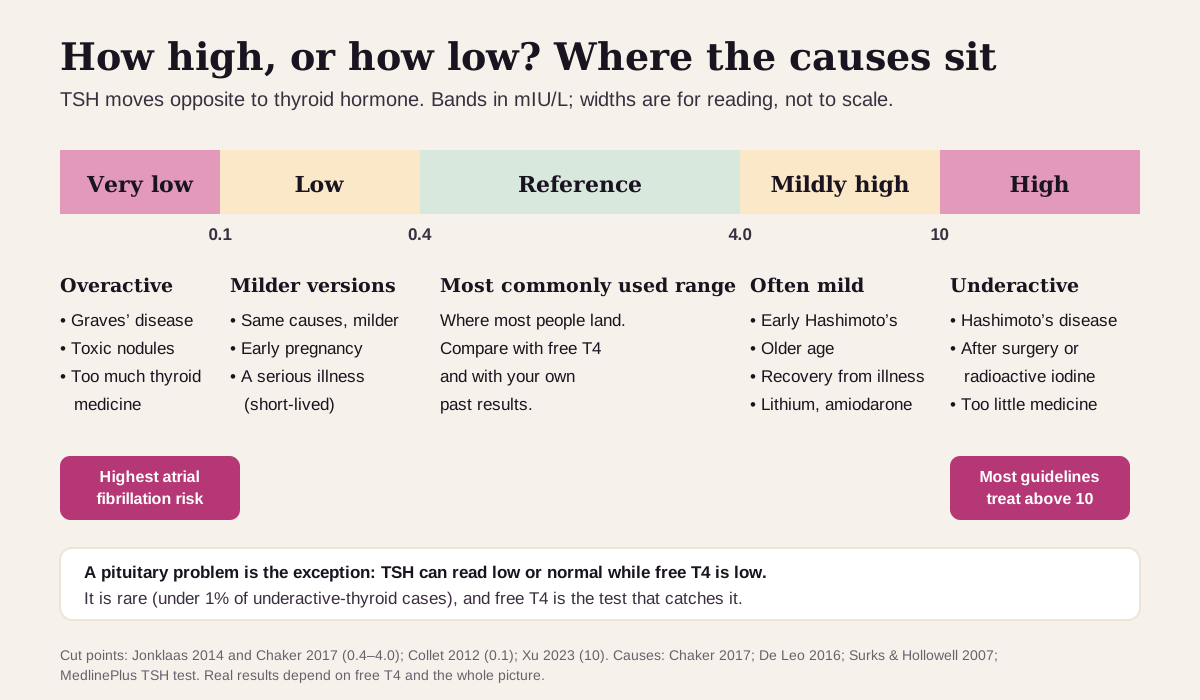
High TSH: the usual suspects
- Hashimoto's disease. This autoimmune condition is the most common cause of an underactive thyroid wherever iodine intake is adequate. Most people with it have raised TPO antibodies, which are also found in about 11% of the general population.412
- Getting older. In adults without thyroid disease, 40% of people aged 80 and over had a TSH above 2.5, versus 10.6% of people in their twenties.11
- Recovery from a serious illness. TSH can dip during a serious illness, then rise for a while during recovery.124
- Medicines. About 14% of people who take amiodarone, a heart-rhythm drug, develop an underactive thyroid. In one large study, 6% of people starting lithium needed thyroid medicine within 18 months.4 Keep taking a prescribed medicine and bring your full list, supplements included, to your clinician.
- Thyroid surgery or radioactive iodine. About 80% of people treated for Graves' disease with radioactive iodine eventually develop an underactive thyroid. In a meta-analysis, 20% did after having half the thyroid removed.4
- Too little thyroid medicine. In a U.K. study of people taking levothyroxine for 5 years, more than 10% had a TSH above 10.4
- Less common: a pituitary tumor that makes TSH, iodine deficiency, and lab interference from antibodies in the blood (about 0.4% of tests on some methods).641
Low TSH: the usual suspects
- Graves' disease. The most common cause of an overactive thyroid. Antibodies that switch on the TSH receptor drive the gland, and the pituitary shuts TSH down in response.69
- Overactive nodules (toxic nodular goiter). The next most common cause, and more common in older adults.6
- Too much thyroid medicine. In the same U.K. study, almost 6% of people on levothyroxine for 5 years had a TSH below 0.1.4
- Thyroiditis, including after pregnancy. Inflammation releases stored hormone for a while, then often swings to an underactive phase.6
- Early pregnancy or a serious illness, which can lower TSH for a short time.12
- Rare but important: a pituitary problem. Here TSH reads low or normal while free T4 is low, so free T4 is the test that catches it.24
- Biotin supplements can make thyroid results look abnormal. The American Thyroid Association advises skipping biotin for 2 days before a thyroid blood test.2
Get care now if you have an overactive thyroid and develop fever, agitation or confusion, a pounding heart, shaking, sweating or diarrhea. That can be thyroid storm, and it's an emergency: call 911. Severe underactivity can cause myxedema crisis: a low body temperature, slowed breathing, low blood pressure or unresponsiveness also need emergency care.8
TSH reads best next to its neighbors
TSH tells you which way the thyroid is leaning. Free T4, free T3 and two antibody tests tell you why:24
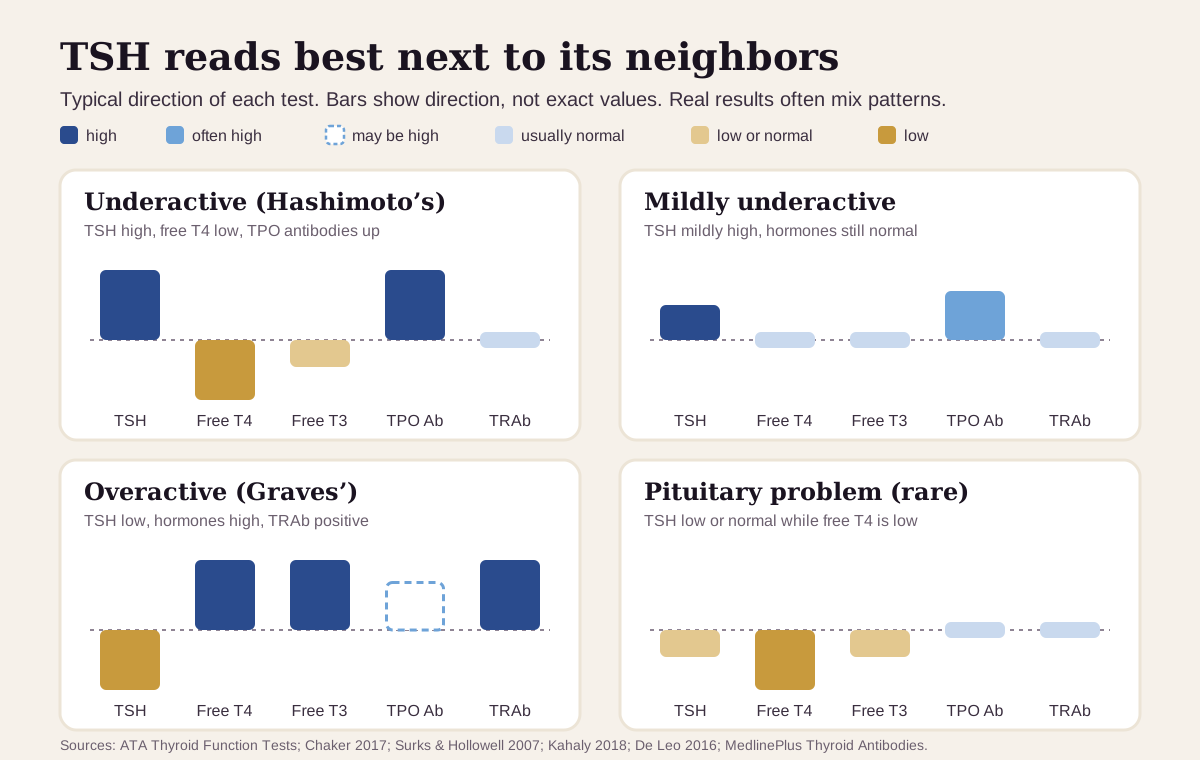
| If you see… | It often points to… |
|---|---|
| TSH high, free T4 low, TPO antibodies positive | an underactive thyroid from Hashimoto's disease. T3 can still be normal, because it's the last test to fall |
| TSH mildly high, free T4 and T3 normal | a mildly underactive ("subclinical") thyroid. Positive TPO antibodies raise the odds it progresses |
| TSH low, free T4 and free T3 high, TSH-receptor antibodies positive | an overactive thyroid from Graves' disease. The receptor-antibody test picks up about 97% of cases |
| TSH low, free T4 normal, only T3 high | a milder overactive thyroid in which only T3 is raised |
| TSH low or normal, free T4 low | a pituitary problem: rare, and a pattern where TSH alone misleads |
In the mildly underactive group, antibodies are common: among 40–49-year-olds with a TSH above 4.5, 67% had thyroid antibodies. At 80 and over, about 41% did, which fits a TSH that rises with age on its own.11
How fast TSH changes
TSH lags. It can take weeks to months to catch up after thyroid hormone changes.1 When treatment for Graves' disease starts, many people reach normal hormone levels in 3–4 weeks, while TSH often stays suppressed for several months.9
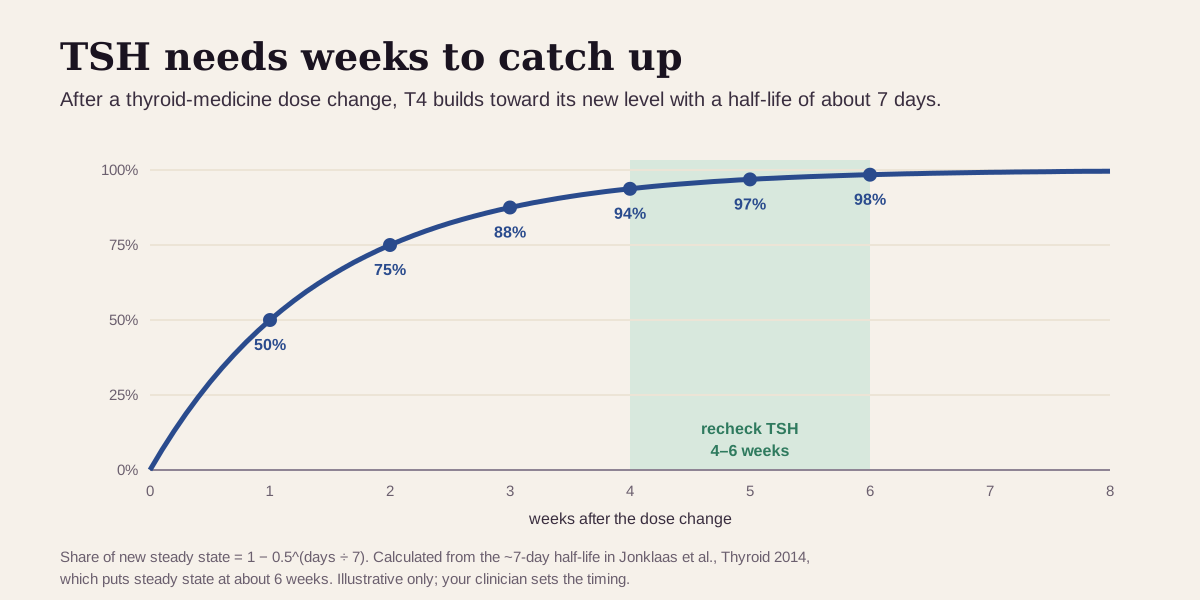
What that means in practice:
- After a dose change, TSH is rechecked in 4–6 weeks. Levothyroxine has a half-life of about 7 days, and T4 and TSH settle after about 6 weeks.3
- Timing around a dose matters for free T4. Free T4 peaks about 15% higher roughly 4 hours after a levothyroxine dose.3 Note when you took your pill when you get tested.
- TSH has a daily and seasonal rhythm. It runs higher toward the evening, and higher in winter and spring.4 A thyroid-lab review from the ATA rates these rhythms as minor next to age, pregnancy and medicines.1
- Trends beat snapshots. Your own TSH varies about 18% from test to test, half as much as the 36% spread between people. Your personal normal is a narrow slice of the lab's range.1 Comparing results works best from the same lab, because methods differ.1
Going deeper: the thermostat math
TSH and free T4 follow a log-linear relationship: each small step in free T4 multiplies TSH rather than adding to it. That is why a small shift in free T4, still inside its normal range, can move TSH a lot. It is also why clinicians use TSH to screen and add free T4 to classify the result.19
Most T4 and T3 in your blood rides on carrier proteins. The free hormone is the small unbound share that can enter your cells. Estrogen, from pregnancy or birth-control pills, raises the carrier proteins. That pushes total T4 and T3 up while free T4 usually stays normal, which is why TSH and free T4 are the tests to ask for.2
Your set point is partly inherited. Twin and repeat-sampling studies attribute 30% to 65% of the variation in TSH, free T4 and free T3 to genes, which is one reason a stable personal baseline beats a population cutoff.1
Questions worth asking
- Where does my TSH sit in the lab's range, and how does it compare with my last results?
- Should we check free T4, and free T3 if TSH is low?
- Would TPO or TSH-receptor antibodies help explain the result?
- Could any of my medicines or supplements, including biotin, be involved?
- If I take thyroid medicine, how long after my last dose change was this drawn?
- When should we repeat it, and what would change the plan?
FAQ
What is a normal TSH level? Most labs use about 0.4–4.0 mIU/L. The Libby app's optimal range is 1.0–2.0, and the largest outcome study found the lowest risk at about 1.9–2.9.35
What is the most common cause of a high TSH? Hashimoto's disease, an autoimmune condition that slowly lowers thyroid output. Age, recovery from illness, medicines such as lithium, and too little thyroid medicine are the other common causes.411
What does a low TSH mean? Usually an overactive thyroid, most often from Graves' disease or overactive nodules, or a thyroid-medicine dose that's too high. Early pregnancy can lower it too.6412
When is a TSH result urgent? A TSH over 10 or under 0.1 needs a prompt conversation with your clinician. Fever, confusion and a pounding heart, or unresponsiveness and a low body temperature, are emergencies.578
This guide is for education. It can't diagnose you or replace care from a clinician who knows your history.
Footnotes
-
Van Uytfanghe K, Ehrenkranz J, Halsall D, et al. Thyroid Stimulating Hormone and Thyroid Hormones (Triiodothyronine and Thyroxine): An American Thyroid Association-Commissioned Review of Current Clinical and Laboratory Status. Thyroid. 2023;33(9):1013–1028. The ATA's review of thyroid testing: the log-linear TSH–free T4 link, the weeks-to-months lag, results differing by up to 50% between assays, within-person variation of 18% vs 36% between people, 30–65% heritability, and interference. PMC ↩ ↩2 ↩3 ↩4 ↩5 ↩6 ↩7 ↩8 ↩9 ↩10
-
American Thyroid Association. Thyroid Function Tests. The society's patient guide to the feedback loop, what each TSH and free T4 combination indicates, T3 and antibody tests, and biotin. thyroid.org ↩ ↩2 ↩3 ↩4 ↩5 ↩6 ↩7 ↩8 ↩9 ↩10 ↩11
-
Jonklaas J, Bianco AC, Bauer AJ, et al. Guidelines for the treatment of hypothyroidism: prepared by the American Thyroid Association Task Force on Thyroid Hormone Replacement. Thyroid. 2014;24(12):1670–1751. The 0.4–4.0 mIU/L reference range, the ~7-day levothyroxine half-life, steady state at about 6 weeks, rechecking 4–6 weeks after a dose change, and the ~15% free T4 peak 4 hours after a dose. PMC ↩ ↩2 ↩3 ↩4 ↩5 ↩6 ↩7 ↩8 ↩9 ↩10
-
Chaker L, Bianco AC, Jonklaas J, Peeters RP. Hypothyroidism. Lancet. 2017;390(10101):1550–1562. Causes and how common they are, the 0.4–4.0 range, central hypothyroidism, amiodarone and lithium, and over- and under-treatment rates. PMC ↩ ↩2 ↩3 ↩4 ↩5 ↩6 ↩7 ↩8 ↩9 ↩10 ↩11 ↩12 ↩13 ↩14 ↩15 ↩16 ↩17 ↩18 ↩19 ↩20
-
Xu Y, Derakhshan A, Hysaj O, et al. The optimal healthy ranges of thyroid function defined by the risk of cardiovascular disease and mortality: systematic review and individual participant data meta-analysis. Lancet Diabetes Endocrinol. 2023;11(10):743–754. 134,346 adults in 26 cohorts; lowest risk at the 60th–80th TSH percentiles (median 1.90–2.90 mIU/L). PMC ↩ ↩2 ↩3 ↩4 ↩5 ↩6 ↩7 ↩8 ↩9
-
De Leo S, Lee SY, Braverman LE. Hyperthyroidism. Lancet. 2016;388(10047):906–918. Graves' disease as the most common cause of hyperthyroidism, followed by toxic nodular goiter, and thyroiditis. PMC ↩ ↩2 ↩3 ↩4 ↩5 ↩6 ↩7 ↩8
-
Collet TH, Gussekloo J, Bauer DC, et al. Subclinical hyperthyroidism and the risk of coronary heart disease and mortality. Arch Intern Med. 2012;172(10):799–809. 52,674 adults in 10 cohorts; atrial fibrillation risk highest with TSH under 0.10. PMC ↩ ↩2 ↩3 ↩4 ↩5 ↩6
-
National Library of Medicine. Thyroid storm; Hypothyroidism (myxedema crisis). MedlinePlus Medical Encyclopedia. Emergency symptoms of both. Thyroid storm · Hypothyroidism ↩ ↩2 ↩3
-
Kahaly GJ, Bartalena L, Hegedüs L, Leenhardt L, Poppe K, Pearce SH. 2018 European Thyroid Association Guideline for the Management of Graves' Hyperthyroidism. Eur Thyroid J. 2018;7(4):167–186. The inverse log-linear TSH–free T4 relationship, T3-only hyperthyroidism, TSH-receptor antibody sensitivity (97%) and specificity (98%), and TSH staying suppressed for months after treatment starts. PMC ↩ ↩2 ↩3 ↩4 ↩5 ↩6
-
Wartofsky L, Dickey RA. The evidence for a narrower thyrotropin reference range is compelling. J Clin Endocrinol Metab. 2005;90(9):5483–5488. Cites National Academy of Clinical Biochemistry guidance that more than 95% of normal individuals have a TSH below 2.5 mU/L. PubMed ↩ ↩2 ↩3 ↩4
-
Surks MI, Hollowell JG. Age-specific distribution of serum thyrotropin and antithyroid antibodies in the US population: implications for the prevalence of subclinical hypothyroidism. J Clin Endocrinol Metab. 2007;92(12):4575–4582. NHANES III: the 97.5th percentile rises from 3.56 (ages 20–29) to 7.49 (80+), and antibody rates by age. PubMed ↩ ↩2 ↩3 ↩4 ↩5 ↩6 ↩7 ↩8 ↩9
-
National Library of Medicine. TSH (Thyroid-stimulating hormone) Test. MedlinePlus. Hashimoto's as the most common cause of hypothyroidism, and the effects of pregnancy, age over 80 and serious illness. MedlinePlus ↩ ↩2 ↩3 ↩4 ↩5 ↩6
-
Superpower. Normal TSH Levels: What Your Results Mean. Published April 18, 2026; updated August 31, 2026. States: "Some practitioners target a narrower optimal range of 1.0 to 2.5 mIU/L." A commercial source, listed as what the optimizer community uses. superpower.com ↩ ↩2
-
Åsvold BO, Bjøro T, Nilsen TI, Gunnell D, Vatten LJ. Thyrotropin levels and risk of fatal coronary heart disease: the HUNT study. Arch Intern Med. 2008;168(8):855–860. 17,311 women and 8,002 men followed for a median of 8.3 years. PubMed ↩ ↩2
-
Rodondi N, den Elzen WP, Bauer DC, et al. Subclinical hypothyroidism and the risk of coronary heart disease and mortality. JAMA. 2010;304(12):1365–1374. Individual data from 55,287 adults in 11 cohorts; heart-disease events analyzed in 25,977. PMC ↩ ↩2
-
Stott DJ, Rodondi N, Kearney PM, et al. Thyroid Hormone Therapy for Older Adults with Subclinical Hypothyroidism. N Engl J Med. 2017;376(26):2534–2544. The TRUST trial: 737 adults aged 65 and over, no benefit on symptoms or tiredness at 1 year. PubMed ↩
-
National Library of Medicine. Thyroid Antibodies. MedlinePlus. TPO antibodies in Hashimoto's disease, and TPO and TSH-receptor antibodies in Graves' disease. MedlinePlus ↩
Educational content, not medical advice.Libby is a personal record tool, not a medical service — it doesn't diagnose, treat, or prescribe. Reference ranges vary by lab and by person. Talk to a qualified healthcare professional about your results.
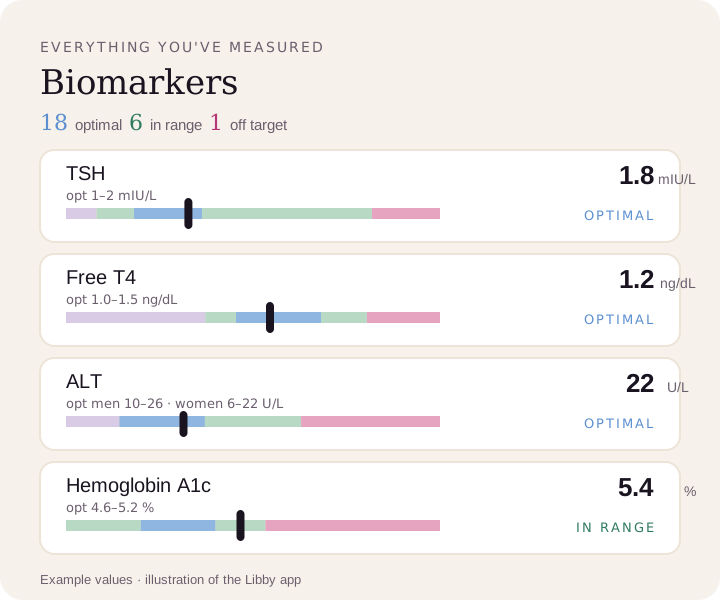
Compare your results to optimal ranges.
Upload a lab PDF or a photo of your report. Libby puts every marker on your lab's range and the optimal range, and tracks your trends over time.
View your TSH ›