Ferritin blood test: normal levels, low and high causes
Ferritin shows how full your iron stores are. Here's what's normal and optimal, why it runs low or high, how to read it with iron saturation, and when to act.
Ferritin is the protein your body stores iron in, and the blood level is the best everyday gauge of how full your iron tank is. A low ferritin almost always means your stores are running out, even if your hemoglobin is still normal.12 A high ferritin is trickier: inflammation, fatty liver and heavy drinking push it up far more often than true iron overload does.34
The short version
- Low: under 15 ng/mL means your iron stores are empty. That's the World Health Organization's cutoff for healthy adults.5 Under 30 usually means low stores, and British and American gut specialists use 45 as the practical cutoff when someone is anemic.67
- Low ferritin usually comes from blood loss or extra need: heavy periods, pregnancy, a low-iron diet, or slow bleeding in the gut, which matters most in men and after menopause.6
- High (over 150 for women or 200 for men) usually means inflammation, fatty liver, metabolic syndrome or alcohol. Only about 1 in 10 high results in routine care turn out to be iron overload.53
- Pair it with transferrin saturation. Low ferritin with low saturation points to iron deficiency. High ferritin with a saturation of 45% or more is when doctors look for hemochromatosis, an inherited iron overload.64
What ferritin is
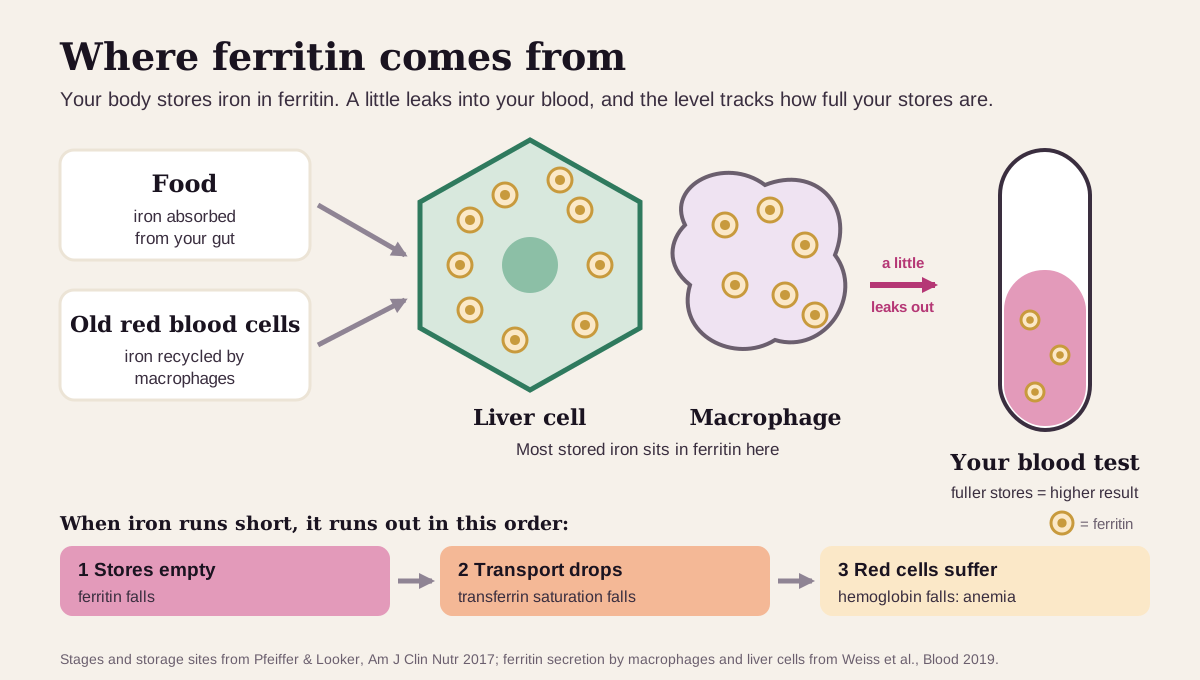
Ferritin is the protein your cells use to store iron in a safe form, which limits the damage loose iron can do.3 One ferritin molecule can hold up to about 4,500 iron atoms. Transferrin, the protein that carries iron through your blood, holds two.9 (More on the chemistry at the end.)
Most of your stored iron sits in ferritin inside liver cells and inside macrophages, the immune cells that recycle old red blood cells. A small amount of ferritin spills into your blood, and that level rises and falls with the size of your stores.28 That's why one blood test can estimate how much iron you have in reserve.
Iron runs out in a set order. Your stores empty first, and ferritin falls. Next, the iron in transit drops, which shows up as a low transferrin saturation. Only then does hemoglobin fall and anemia appear.2 So ferritin is the earliest warning on a routine blood test.
Ferritin is also an acute-phase protein: your body makes more of it during any kind of inflammation.38 That's the main reason a high result needs a second look.
What's a normal ferritin?
Start with the range printed on your own report, because labs differ. MedlinePlus lists common ranges of 30–400 ng/mL for men and 13–150 ng/mL for women, and the British Society of Gastroenterology (BSG) notes that most labs put their lower limit somewhere between 15 and 30.106
Then know this: the low end of most lab ranges is set very low. In MedlinePlus's words, the lower your ferritin, even within the normal range, the more likely you are short on stored iron.10
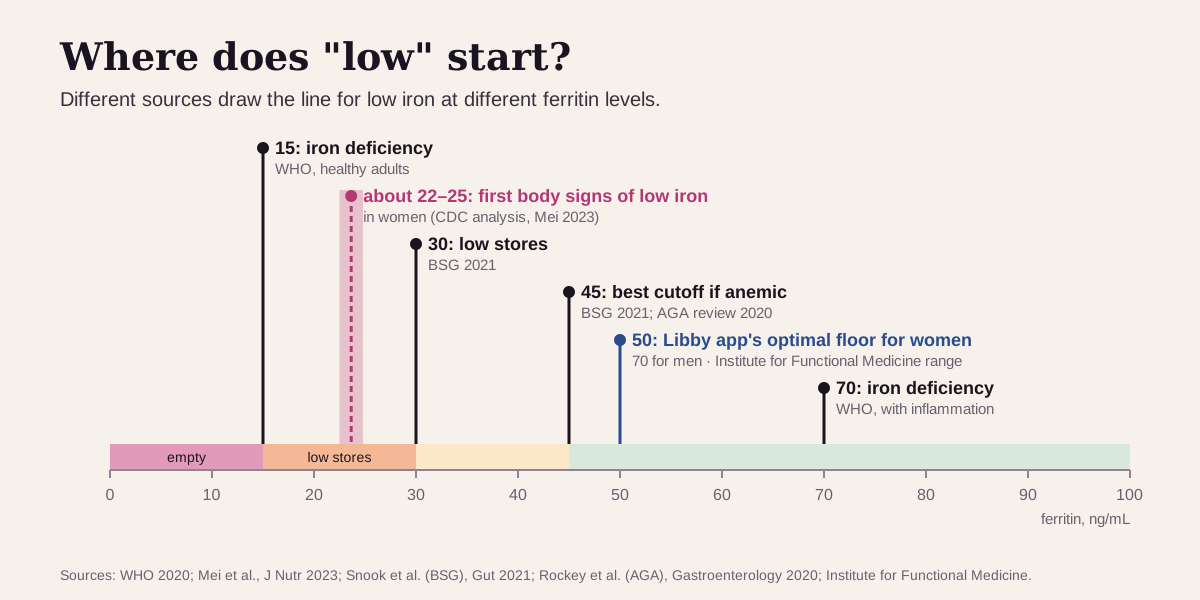
- The World Health Organization (WHO) defines iron deficiency in healthy adults as ferritin under 15. It flags over 150 in women and over 200 in men as a possible sign of iron overload.5
- A CDC team studying 4,639 healthy, nonpregnant U.S. women found the first body signals of iron shortage (hemoglobin starting to fall, a red-cell iron marker starting to rise) at ferritin of about 22–25, well above 15.11
- The BSG calls ferritin under 30 low stores. In people who are already anemic, both the BSG and the American Gastroenterological Association (AGA) found 45 gives the best balance between catching iron deficiency and avoiding false alarms.67
- Inflammation moves the line. With an infection or inflammation, the WHO counts ferritin under 70 as possible iron deficiency.5
Ranges run higher for men than for women. In women, menstrual losses, pregnancy and a low-iron diet are the main reasons stores run low.106
"Optimal" ferritin: what health optimizers aim for
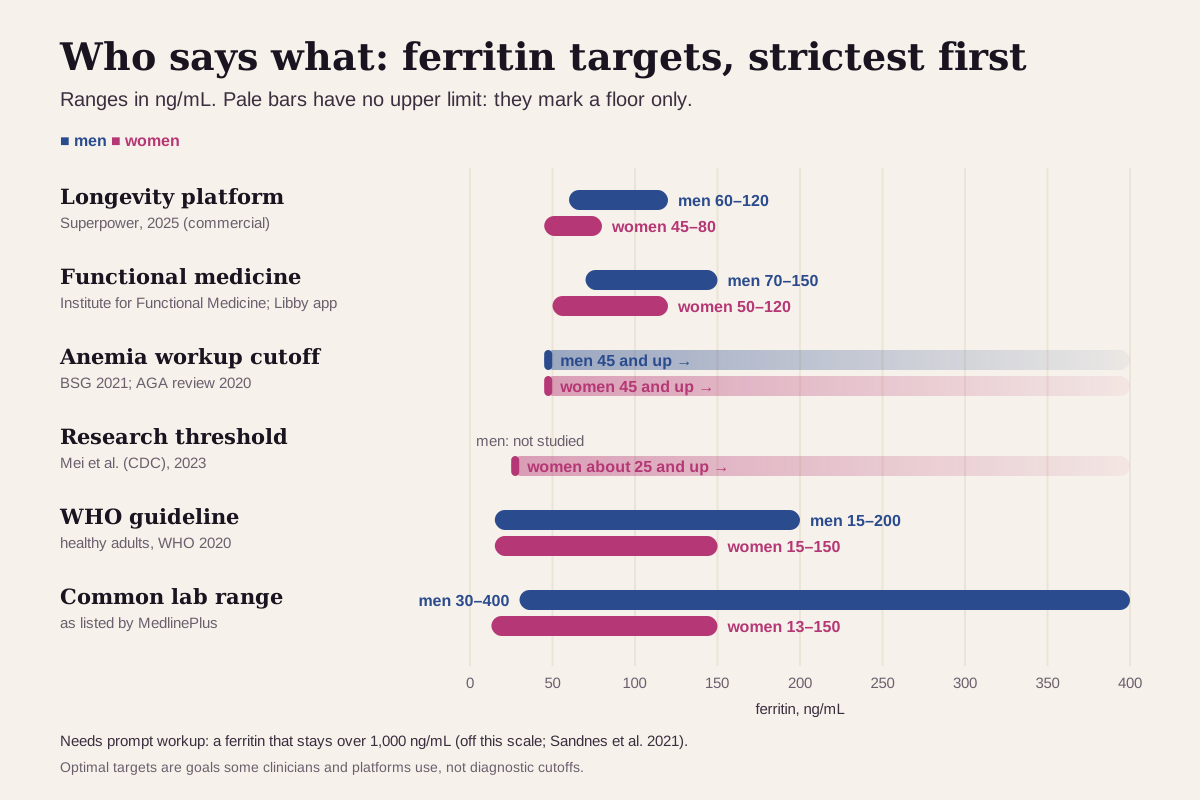
For ferritin, "optimal" is mostly about the floor. Optimizers want iron in reserve, well above the level where deficiency gets diagnosed, and most also set a ceiling. Here's the full ladder, from strictest to loosest:
| Target | Men | Women | Who uses it |
|---|---|---|---|
| Strictest (longevity platform) | 60–120 ng/mL | 45–80 ng/mL | Superpower's published optimal range13 |
| Functional medicine | 70–150 ng/mL | 50–120 ng/mL | The optimal range shown in the Libby app, whose catalog credits it to the Institute for Functional Medicine12 |
| Anemia workup cutoff | 45 and up | 45 and up | BSG and AGA: below 45 points to iron deficiency in someone who's anemic67 |
| Research threshold | not studied | about 25 and up | CDC analysis of U.S. survey data: where hemoglobin starts to fall11 |
| WHO guideline (healthy adults) | 15–200 ng/mL | 15–150 ng/mL | Under 15 is iron deficiency; above the top number, check for overload5 |
| Common lab range | 30–400 ng/mL | 13–150 ng/mL | Typical ranges listed by MedlinePlus10 |
| Needs prompt workup | over 1,000 | over 1,000 | A ferritin that stays over 1,000 warrants specialist referral3 |
Why the higher floors aren't just a trend:
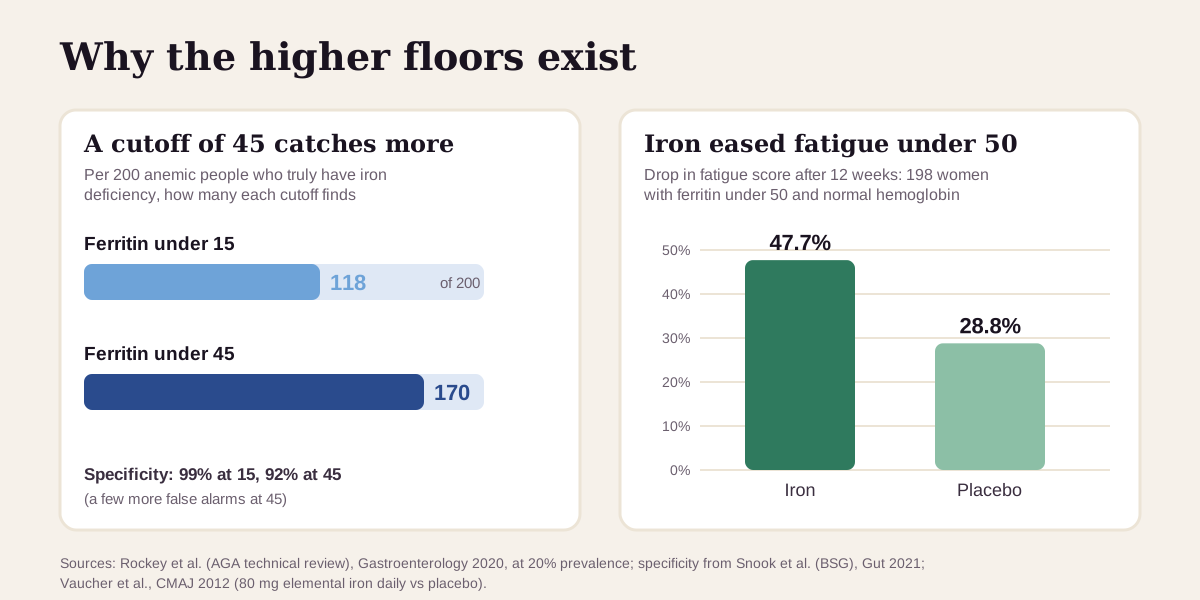
- In a trial of 198 women with fatigue, normal hemoglobin and ferritin under 50, 12 weeks of iron cut fatigue scores by 47.7%, against 28.8% with a placebo. The authors concluded that iron should be considered for women with unexplained fatigue and ferritin under 50.14
- A cutoff of 45 instead of 15 catches far more iron deficiency. In the AGA's analysis, for every 200 anemic people who truly have iron deficiency, a cutoff of 15 finds 118 and a cutoff of 45 finds 170. The cost is a few more false alarms: specificity drops from 99% to 92%.76
Keep "optimal" in perspective: these are targets, not diagnoses. A ferritin of 35 with heavy periods and tiredness is worth raising with your clinician. More isn't better at the top, either. Above the WHO's 150 (women) or 200 (men), the question becomes inflammation, liver fat or overload, and people treated for hemochromatosis are brought down to 50–100 ng/mL.54
What a low ferritin usually means
A low ferritin means your iron stores are low. The British Society for Haematology says a low ferritin "invariably" indicates reduced iron stores.1 The real question is why. Blood is rich in iron, so the causes come down to losing blood, needing more, or taking in or absorbing too little.6
The usual suspects:
- Heavy or long periods. Menstrual loss is the common cause in women before menopause, often with pregnancy and a low-iron diet adding to it.6
- Pregnancy. It's one of the main reasons young women run low, and the WHO gives pregnancy its own cutoff.56
- A low-iron diet, or tea, coffee or calcium with meals, which reduce how much iron you absorb.6
- Blood donation. Without iron, two in three donors still hadn't refilled their stores 24 weeks after a single donation.15
- Slow bleeding in the gut. In men and after menopause, iron deficiency anemia often comes from blood loss in the digestive tract. About a third of these people have an underlying problem, most often in the gut, and iron deficiency can be the first sign of bowel or stomach cancer.6 That's why doctors look for the source.
- Less common causes: celiac disease (found in 3–5% of iron deficiency anemia), weight-loss surgery, long-term acid-reducing medicines, H. pylori infection, and anti-inflammatory pain relievers (NSAIDs).6
Iron treatment refills the stores, and the BSG pairs it with a search for the cause.6
Get emergency care if low iron comes with black, tarry stools or a lot of blood in your stool, vomiting blood, feeling lightheaded or dizzy from bleeding, or chest pain or trouble breathing.16
What a high ferritin usually means
Two clues sort it out: how high the number is, and your transferrin saturation.13
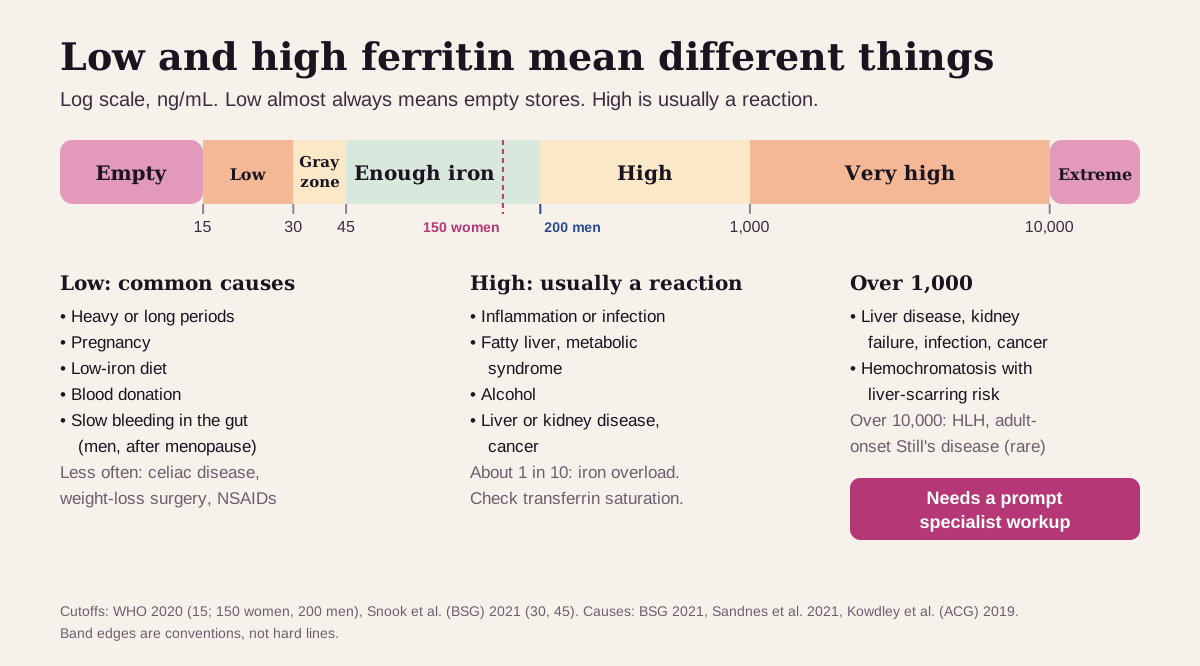
Above 150–200: usually a reaction, not overload
Only about 10% of high ferritin results in routine practice come from iron overload. The rest usually trace to inflammation, metabolic syndrome, chronic alcohol use, cell damage or cancer.3
The usual suspects:
- Inflammation or infection. Any inflammation can raise ferritin, including infections, autoimmune flares and surgery.31710
- Fatty liver and metabolic syndrome. Extra weight, insulin resistance and liver fat raise ferritin. The American College of Gastroenterology (ACG) notes that fatty liver and alcohol-related liver disease are more common causes of a high ferritin than hemochromatosis.4
- Alcohol. Daily drinking commonly raises ferritin to a level under 1,000, a pattern seen in up to 40–70% of people with long-term heavy drinking.310
- Liver disease, kidney disease and cancer, through inflammation and cell damage.13
- Iron overload. Hereditary hemochromatosis is the most common single-gene disorder in northern European populations (about 0.5%). Transfusions and iron infusions can also load the body with iron.3 In hemochromatosis the transferrin saturation runs high: a saturation over 45% flags 97.9–100% of people with the classic gene pattern.4
Over 1,000: get it worked up
A ferritin that stays over 1,000, or a high ferritin with abnormal liver tests, warrants a prompt specialist workup, whatever your transferrin saturation. Both are linked to liver scarring and more serious causes.3 In hemochromatosis, the ACG suggests a liver biopsy to check for scarring when ferritin is over 1,000.4 Levels over 10,000 raise rare conditions such as hemophagocytic lymphohistiocytosis (HLH) and adult-onset Still's disease, though liver disease, kidney disease, infection and cancer can also get there.3
Ferritin reads best next to its neighbors
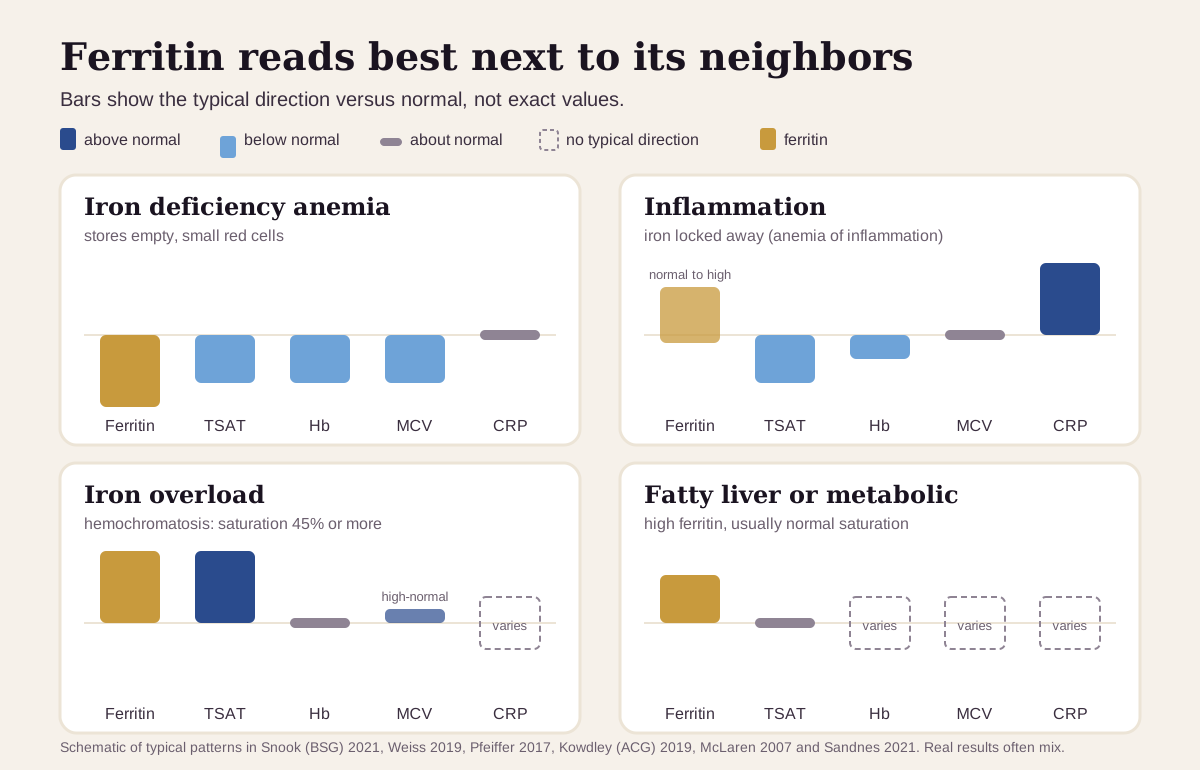
Ferritin tells you about your stores. The pattern with transferrin saturation, hemoglobin, red-cell size and CRP usually tells you why:68
| If you see… | It often points to… |
|---|---|
| Low ferritin and low saturation, with low hemoglobin and small red cells (low MCV) | iron deficiency anemia |
| Low ferritin with normal hemoglobin | iron deficiency caught early: stores are emptying before anemia appears |
| Normal or high ferritin (often over 100), low saturation, high CRP, mild to moderate anemia with normal-size cells | anemia of inflammation, where the body locks iron away |
| High ferritin and saturation of 45% or more | possible iron overload such as hemochromatosis: the next step is often a gene test |
| High ferritin, usually with a normal saturation, plus extra weight, insulin resistance or liver fat | a reaction to fatty liver or metabolic syndrome; daily drinking can look similar |
Inflammation and iron deficiency often overlap. The BSG notes that a ferritin over 150 is unlikely to hide true iron deficiency, even with inflammation. Below that, clinicians read ferritin alongside CRP and saturation,6 and the WHO uses a higher cutoff of 70 when inflammation is present.5
How fast ferritin changes
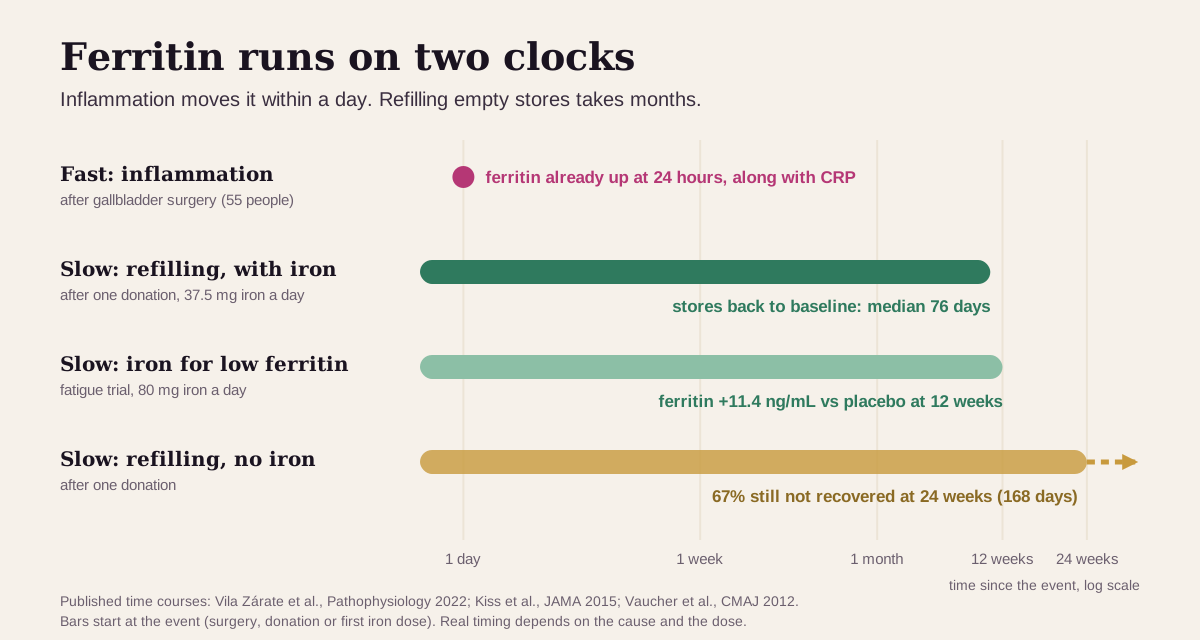
Ferritin runs on two clocks:
- Fast (hours to days): inflammation. In 55 people having gallbladder surgery, ferritin had risen by the next day, along with CRP.17 A recent infection, flare or operation can push your result up for a while.
- Slow (weeks to months): refilling stores. After one blood donation, donors taking a low-dose iron pill got their stores back in a median of 76 days. Without iron, 67% had still not recovered after 168 days.15 In the fatigue trial, 12 weeks of iron raised ferritin by 11.4 ng/mL more than placebo.14
What that means in practice:
- Test when you're well, or tell your clinician about a recent infection, flare or surgery. The WHO says inflammation markers such as CRP should be checked along with ferritin.5
- Trends beat snapshots. A high ferritin from alcohol, fatty liver or inflammation tends to bounce around. Hemochromatosis gives a steadier number that creeps up over time.3
- Compare results from the same lab. When one study ran the same samples on four widely used lab analyzers, the results varied between machines with a median coefficient of variation of 22.9%.19
Going deeper: how your body controls iron
Ferritin is built from 24 subunits of two kinds, called H and L.9 The ferritin in your blood is mostly secreted by macrophages and liver cells, and it carries little iron itself. It mirrors your stores rather than delivering them.89
The conductor is hepcidin, an iron hormone made by the liver. Full stores and a high saturation raise hepcidin, which blocks iron absorption from the gut and keeps iron locked inside macrophages.8 Inflammation raises hepcidin too, through signals such as interleukin-6, and at the same time boosts ferritin production. That's why inflammation gives the telltale combination of high ferritin and low saturation.8
Two formulas help clinicians read the iron panel:
TSAT (%) = serum iron ÷ total iron-binding capacity (TIBC) × 100
Transferrin saturation is the ratio of iron to the blood's iron-binding capacity.2 When inflammation clouds the picture, some clinicians add the soluble transferrin receptor (sTfR), which rises when red-cell factories are short of iron:
sTfR index = sTfR ÷ log₁₀(ferritin)
An index below 1 points to inflammation alone. Above 2 points to inflammation plus true iron deficiency, with some overlap in between.86
Questions worth asking
- Is my ferritin low enough to explain how I feel, and what's my transferrin saturation?
- What's the likely cause of my low iron, and do I need tests for blood loss or celiac disease?
- Could inflammation be propping my ferritin up? Should we check CRP?
- If my ferritin is high, is my transferrin saturation 45% or more?
- Could fatty liver, alcohol or metabolic factors explain a high ferritin, and should we check my liver tests?
- When should we repeat it, and what number would change the plan?
FAQ
What is a normal ferritin level? It depends on your lab. MedlinePlus lists 30–400 ng/mL for men and 13–150 ng/mL for women. Under 15 means empty stores, and the BSG treats under 30 as low stores.106
What ferritin level is too low? The WHO defines iron deficiency as under 15 in healthy adults, or under 70 with inflammation. The BSG and AGA use 45 as the practical cutoff in someone who's anemic.567
What causes a high ferritin? Most often inflammation, fatty liver or metabolic syndrome, alcohol, or liver disease. Iron overload explains only about 1 in 10 high results. Transferrin saturation helps tell them apart.31
Can you be low in iron with a normal ferritin? Yes, when inflammation props ferritin up. The WHO counts ferritin under 70 as possible iron deficiency when inflammation or infection is present.5
This guide is for education. It can't diagnose you or replace care from a clinician who knows your history.
Footnotes
-
Cullis JO, Fitzsimons EJ, Griffiths WJ, Tsochatzis E, Thomas DW; British Society for Haematology. Investigation and management of a raised serum ferritin. Br J Haematol. 2018;181(3):331–340. The U.K. hematology guideline on high ferritin and the role of transferrin saturation. PubMed ↩ ↩2 ↩3 ↩4 ↩5
-
Pfeiffer CM, Looker AC. Laboratory methodologies for indicators of iron status: strengths, limitations, and analytical challenges. Am J Clin Nutr. 2017;106(Suppl 6):1606S–1614S. Iron stores, transport iron and functional iron, and the order in which they run out. PMC ↩ ↩2 ↩3 ↩4 ↩5 ↩6
-
Sandnes M, Ulvik RJ, Vorland M, Reikvam H. Hyperferritinemia—A Clinical Overview. J Clin Med. 2021;10(9):2008. The 10% overload figure, the causes of high ferritin, the over-1,000 referral advice, and the alcohol and hemochromatosis figures. PMC ↩ ↩2 ↩3 ↩4 ↩5 ↩6 ↩7 ↩8 ↩9 ↩10 ↩11 ↩12 ↩13 ↩14 ↩15 ↩16 ↩17
-
Kowdley KV, Brown KE, Ahn J, Sundaram V. ACG Clinical Guideline: Hereditary Hemochromatosis. Am J Gastroenterol. 2019;114(8):1202–1218. Transferrin saturation over 45% in 97.9–100% of C282Y homozygotes; fatty liver and alcohol-related liver disease as more common causes of high ferritin; the 50–100 ng/mL treatment goal; biopsy above 1,000. PubMed ↩ ↩2 ↩3 ↩4 ↩5 ↩6 ↩7 ↩8
-
World Health Organization. WHO guideline on use of ferritin concentrations to assess iron status in individuals and populations. Geneva: WHO; 2020 (published 21 April 2020). ISBN 978-92-4-000012-4. The global definitions: iron deficiency under 15 µg/L in apparently healthy adults and under 70 µg/L with infection or inflammation; risk of iron overload over 150 µg/L (women) and 200 µg/L (men); measure an inflammation marker alongside ferritin. WHO ↩ ↩2 ↩3 ↩4 ↩5 ↩6 ↩7 ↩8 ↩9 ↩10 ↩11 ↩12 ↩13 ↩14
-
Snook J, Bhala N, Beales ILP, et al. British Society of Gastroenterology guidelines for the management of iron deficiency anaemia in adults. Gut. 2021;70(11):2030–2051. The source for the 15/30/45 cutoffs and their specificity, "above 150 unlikely" with inflammation, and the causes of iron deficiency. PMC ↩ ↩2 ↩3 ↩4 ↩5 ↩6 ↩7 ↩8 ↩9 ↩10 ↩11 ↩12 ↩13 ↩14 ↩15 ↩16 ↩17 ↩18 ↩19 ↩20 ↩21 ↩22 ↩23 ↩24
-
Rockey DC, Altayar O, Falck-Ytter Y, Kalmaz D. AGA Technical Review on Gastrointestinal Evaluation of Iron Deficiency Anemia. Gastroenterology. 2020;159(3):1097–1119. The evidence review behind the American Gastroenterological Association's 45 ng/mL cutoff, including the true-positive counts per 1,000 people tested. PMC ↩ ↩2 ↩3 ↩4 ↩5 ↩6 ↩7 ↩8
-
Weiss G, Ganz T, Goodnough LT. Anemia of inflammation. Blood. 2019;133(1):40–50. Ferritin under 30 in true iron deficiency versus over 100 in anemia of inflammation; microcytic versus normocytic anemia; hepcidin; the sTfR index. PMC ↩ ↩2 ↩3 ↩4 ↩5 ↩6 ↩7 ↩8 ↩9
-
Wang W, Knovich MA, Coffman LG, Torti FM, Torti SV. Serum ferritin: Past, present and future. Biochim Biophys Acta. 2010;1800(8):760–769. Ferritin's 24-subunit structure, capacity of up to 4,500 iron atoms, and iron-poor serum ferritin. PMC ↩ ↩2 ↩3
-
National Library of Medicine. Ferritin Blood Test and Ferritin blood test (encyclopedia). MedlinePlus. Common ranges (men 30–400 ng/mL, women 13–150 ng/mL), "the lower the ferritin level, even within the normal range," and the causes of high ferritin. MedlinePlus · MedlinePlus lab test ↩ ↩2 ↩3 ↩4 ↩5 ↩6 ↩7 ↩8
-
Mei Z, Addo OY, Jefferds MED, et al. Comparison of Current World Health Organization Guidelines with Physiologically Based Serum Ferritin Thresholds for Iron Deficiency in Healthy Young Children and Nonpregnant Women Using Data from the Third National Health and Nutrition Examination Survey. J Nutr. 2023;153(3):771–780. CDC authors; 4,639 nonpregnant women; thresholds of 24.8 µg/L (hemoglobin) and 22.5 µg/L (zinc protoporphyrin). PMC ↩ ↩2 ↩3 ↩4
-
Institute for Functional Medicine. Clinical practice guidelines and Advanced Practice Modules (range as recorded in the Libby app's marker catalog; member-only modules not opened for this article). The catalog credits its ferritin optimal range to IFM: 70–150 ng/mL for men, 50–120 ng/mL for women. ifm.org ↩ ↩2 ↩3
-
Superpower. Optimal Ferritin: Evidence Backed Range for Ferritin. Last updated December 4, 2025. States an optimal ferritin of 45–80 ng/mL for women and 60–120 ng/mL for men. A commercial source, listed as what the optimizer community uses. superpower.com ↩ ↩2
-
Vaucher P, Druais PL, Waldvogel S, Favrat B. Effect of iron supplementation on fatigue in nonanemic menstruating women with low ferritin: a randomized controlled trial. CMAJ. 2012;184(11):1247–1254. 198 women, ferritin under 50 µg/L, 80 mg of elemental iron daily or placebo for 12 weeks. PMC ↩ ↩2 ↩3 ↩4
-
Kiss JE, Brambilla D, Glynn SA, et al. Oral iron supplementation after blood donation: a randomized clinical trial. JAMA. 2015;313(6):575–583. 215 donors followed for 168 days after one whole-blood donation, with or without 37.5 mg of iron daily. PMC ↩ ↩2 ↩3
-
National Library of Medicine. Gastrointestinal bleeding. MedlinePlus Medical Encyclopedia. When to call 911 for signs of bleeding. MedlinePlus ↩
-
Vila Zárate C, Martín González C, González Álvarez RJ, et al. Ferritin, Serum Iron and Hemoglobin as Acute Phase Reactants in Laparoscopic and Open Surgery of Cholecystectomy: An Observational Prospective Study. Pathophysiology. 2022;29(4):583–594. 55 patients sampled before and 24 hours after surgery. PMC ↩ ↩2 ↩3
-
McLaren CE, Barton JC, Gordeuk VR, et al. Determinants and characteristics of mean corpuscular volume and hemoglobin concentration in white HFE C282Y homozygotes in the hemochromatosis and iron overload screening study. Am J Hematol. 2007;82(10):898–905. Mean MCV 94.4 vs 89.7 fL (women) and 95.3 vs 91.2 fL (men) in C282Y homozygotes versus controls. PubMed ↩
-
Braga F, Pasqualetti S, Frusciante E, et al. Harmonization Status of Serum Ferritin Measurements and Implications for Use as Marker of Iron-Related Disorders. Clin Chem. 2022;68(9):1202–1210. Four measuring systems, 39 serum pools, median between-system CV of 22.9%. PubMed ↩
Educational content, not medical advice.Libby is a personal record tool, not a medical service — it doesn't diagnose, treat, or prescribe. Reference ranges vary by lab and by person. Talk to a qualified healthcare professional about your results.
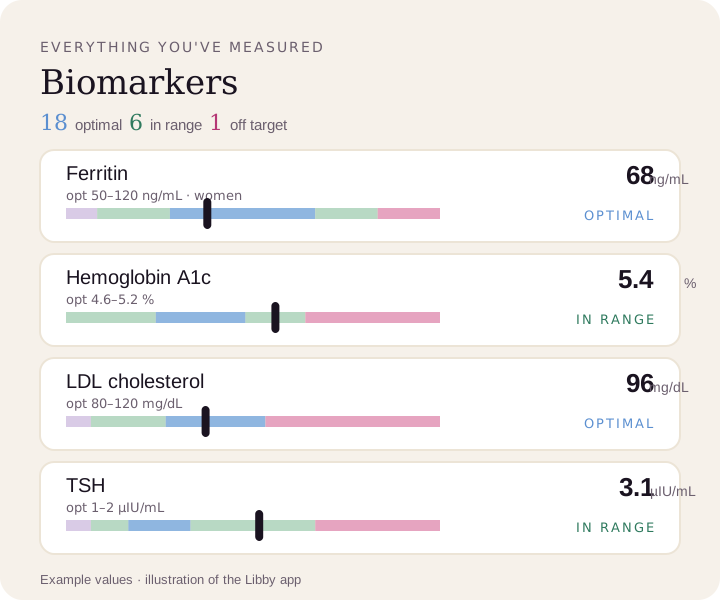
Compare your results to optimal ranges.
Upload a lab PDF or a photo of your report. Libby puts every marker on your lab's range and the optimal range, and tracks your trends over time.
View your ferritin ›