Vitamin B12 test: what low, normal and high levels mean
Vitamin B12 keeps your nerves and red blood cells healthy. Here's a normal level, why it runs low, how MMA settles a borderline result, and when to act fast.
Vitamin B12 is a vitamin your body needs to build red blood cells and keep your nerves working, and the blood test shows how much of it is circulating. You get B12 only from food or supplements, and absorbing it takes several steps that start in your stomach. When B12 runs low, it's usually because one of those steps is failing (most often with age-related stomach changes or autoimmune gastritis), because of a medicine such as metformin, or because a diet has no animal foods and no supplement.12
The short version
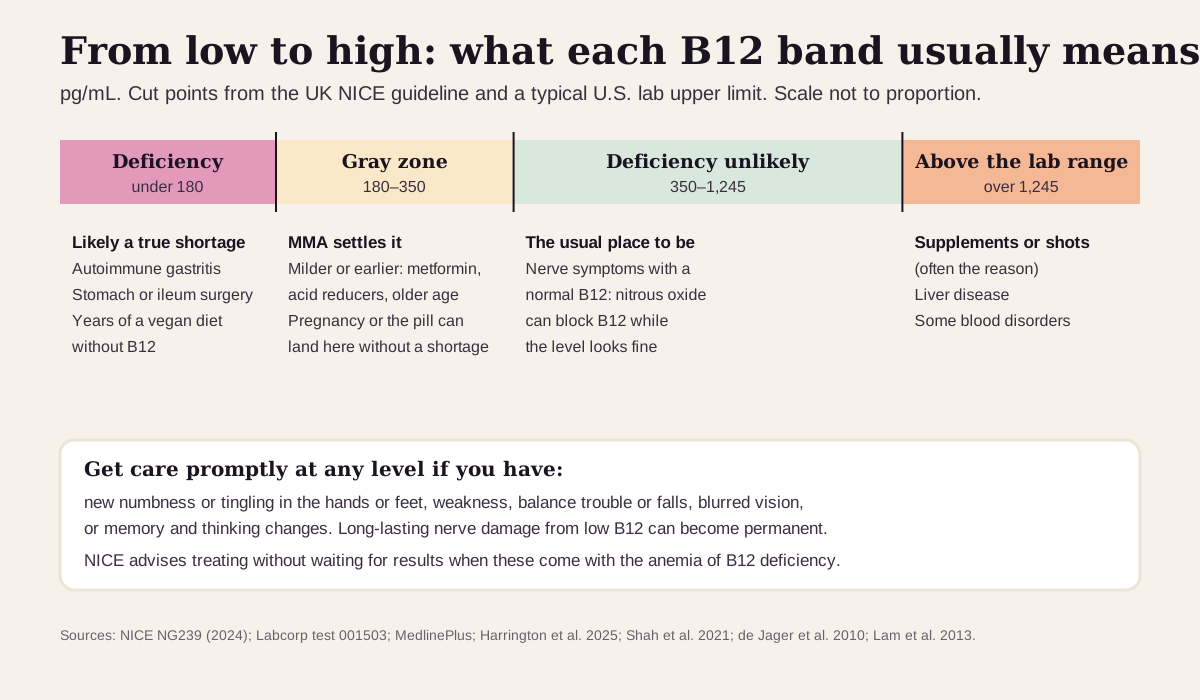
- Normal: check the range on your report. A typical U.S. range is 232–1,245 pg/mL.3 The UK's NICE guideline calls under 180 pg/mL deficient, 180–350 a gray zone, and above 350 unlikely to be deficient.2
- Low usually means trouble absorbing B12 (autoimmune gastritis, stomach or bowel surgery, long-term metformin or acid reducers) or a vegan diet with no B12 from supplements or fortified foods.21
- Urgent: new numbness or tingling, weakness, balance trouble, blurred vision or memory changes with a low or borderline B12 need prompt care. Nerve damage can start before any anemia, and it can become permanent.21
- Borderline? A second test, methylmalonic acid (MMA), usually settles it: a high MMA points to a real shortage. Weaker kidneys and older age raise MMA too.21
What vitamin B12 is
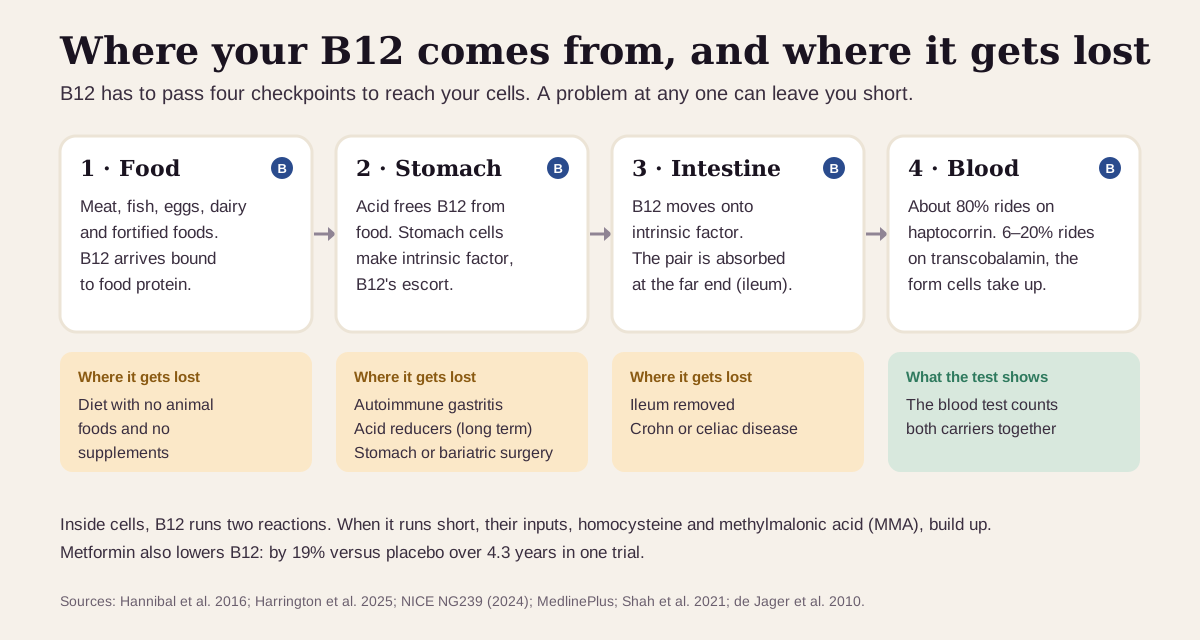
B12 (also called cobalamin) is a helper molecule for just two enzymes. One recycles homocysteine, an amino acid, back into methionine, with folate's help. The other works inside your mitochondria, the cell's power plants, where it converts a molecule called methylmalonyl-CoA into fuel. When B12 runs short, the inputs to both reactions pile up: homocysteine and methylmalonic acid (MMA).1 That's why those two tests so often sit next to B12 on a lab report. (More on the chemistry at the end.)
You need only 2–3 micrograms a day,1 but getting it in takes teamwork. Stomach acid frees B12 from food protein. Stomach cells make intrinsic factor, a protein that escorts B12 through the gut. The pair is absorbed at the far end of the small intestine, the ileum.42 A problem at any step can leave you short, even on a good diet.
In your blood, about 80% of B12 rides on a carrier called haptocorrin. Cells take up only the 6–20% riding on transcobalamin, often called "active B12". The standard test counts both carriers together.41
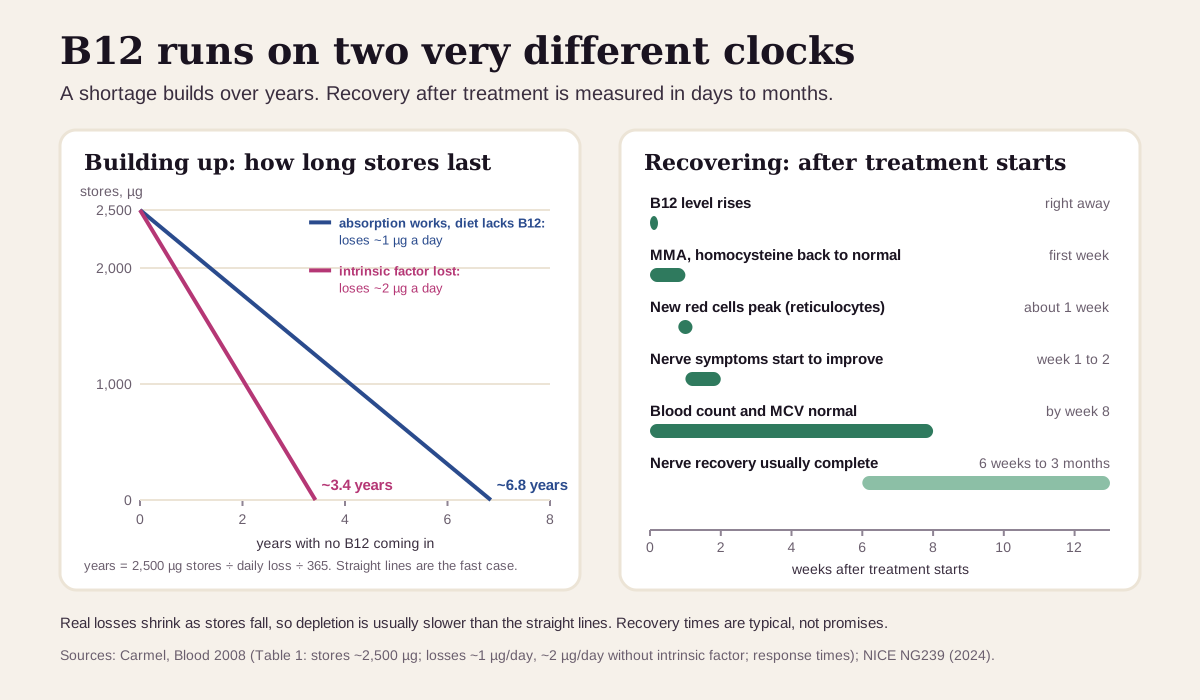
Your body also keeps a large reserve: about 2,500 micrograms, against a daily loss of about 1 microgram. That's why a shortage usually takes years to show up.7
What's a normal vitamin B12?
Start with the range printed on your own report. B12 tests run on different machines, and their ranges differ. Labcorp, a large commercial lab, uses 232–1,245 pg/mL;3 MedlinePlus lists 299–1,054 pg/mL.8 In one Danish study, blood from the same 129 donors produced three different ranges on three brands of analyzer.9
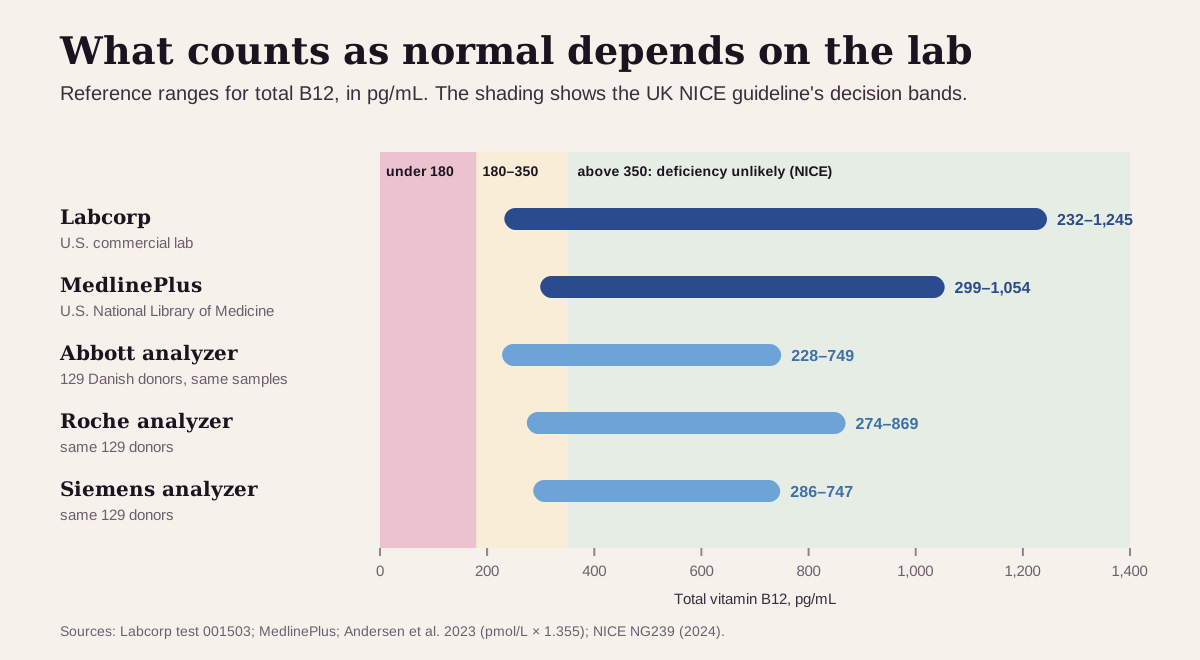
The clearest decision bands come from the UK's NICE guideline (2024) for adults over 16:2
- Under 180 pg/mL: confirmed deficiency.
- 180–350 pg/mL: a gray zone, "possible deficiency". NICE suggests an MMA test for people in this zone who have symptoms.
- Above 350 pg/mL: deficiency is unlikely.
NICE also lets labs use their own validated cutoffs, which is one more reason to compare results from the same lab over time.
A few things move the number without changing your real B12 status. Pregnancy drops total B12 by about half, mostly because the carrier haptocorrin falls, so NICE prefers the "active B12" test in pregnancy.12 Birth control pills lower it too: in U.S. survey data, women aged 19–39 on the pill averaged 290 pmol/L versus 412 for non-users (about 393 vs 558 pg/mL).102 And recent supplements or injections push it up, even while the cause of a shortage is still there.2
"Optimal" vitamin B12: what health optimizers aim for
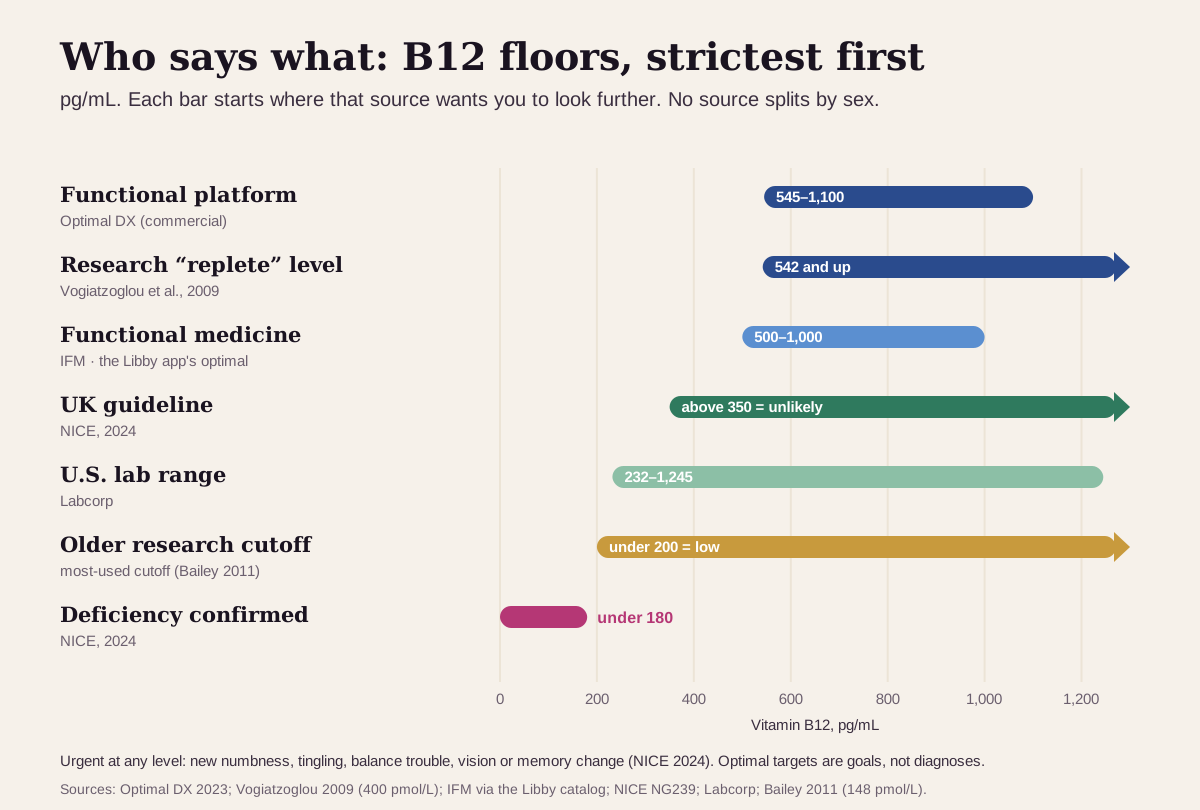
Functional-medicine practitioners and testing platforms want B12 well above a lab's floor. Because the risk with B12 sits at the low end, this ladder ranks floors: the level below which each source says to look further. Here's the full ladder, from strictest to loosest:
| Target | Level (pg/mL) | Who uses it |
|---|---|---|
| Strictest (functional platform) | 545–1,100 | Optimal DX, which sells lab-analysis software to practitioners11 |
| Research "replete" level | 542 and up | Vogiatzoglou et al.: in 6,946 Norwegians, MMA started rising once B12 fell below 400 pmol/L (542 pg/mL)12 |
| Functional medicine | 500–1,000 | The optimal range shown in the Libby app, from the Institute for Functional Medicine13 |
| UK guideline | above 350 = deficiency unlikely; 180–350 = gray zone | NICE, 20242 |
| Typical U.S. lab range | 232–1,245 | Labcorp; also the reference range in the Libby app's marker catalog3 |
| Older research cutoff | under 200 = low | The most-used cutoff in B12 studies (148 pmol/L)10 |
| Urgent | any level, with nerve symptoms | NICE: start treatment without waiting for results when nerve symptoms come with the anemia of B12 deficiency2 |
Why the higher targets exist:
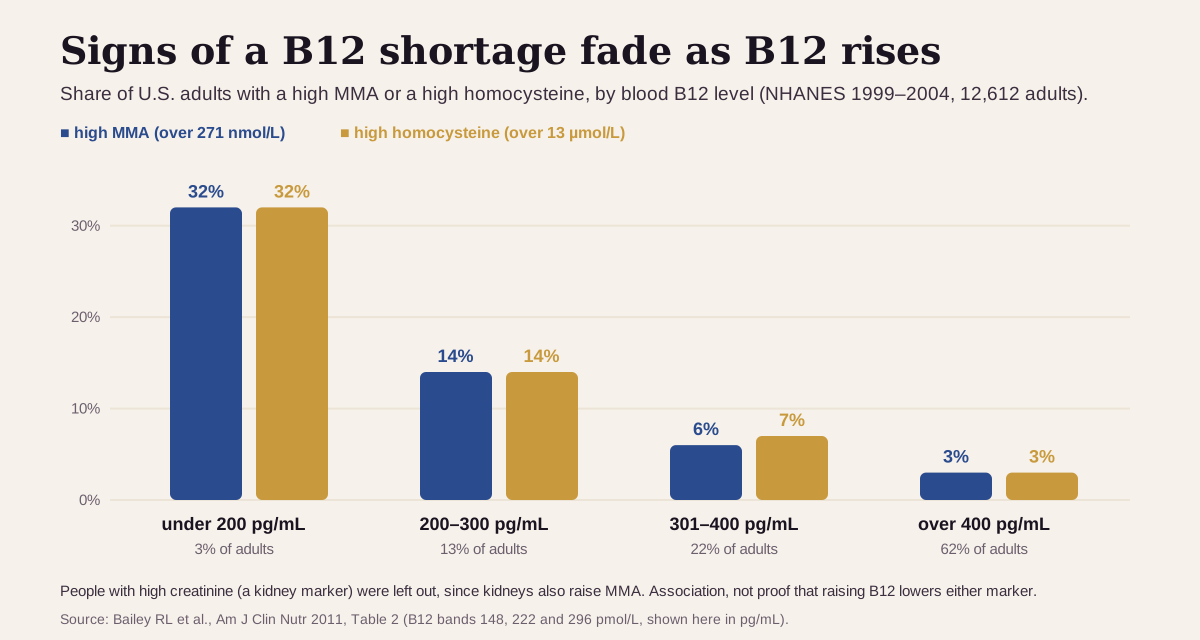
- In 12,612 U.S. adults, the share with a high MMA fell from 32% at a B12 under 200 pg/mL to 14% at 200–300, 6% at 301–400 and 3% above 400. High homocysteine followed the same curve: 32, 14, 7 and 3%.10
- In 6,946 Norwegians, MMA started to climb once B12 fell below 400 pmol/L (about 542 pg/mL), well inside most lab ranges.12
- In 107 older adults followed for 5 years, those with B12 in the bottom third (under 308 pmol/L, about 417 pg/mL) had 6 times the odds of faster brain shrinkage than those in the top third. The study was small, so the uncertainty is wide (95% CI 1.25–30.5).14
Keep "optimal" in perspective: these are targets, not diagnoses. A B12 of 380 pg/mL is a reason to check MMA. In the same U.S. data, about 80% of people at 200–400 pg/mL had a normal MMA.10 More isn't automatically better either. In one hospital study (median age 79), a B12 that stayed at 1,000 pg/mL or higher, with no known cause, was linked to a later solid-cancer diagnosis (hazard ratio 5.9); a one-off high result showed no clear link.15 The app's optimal band tops out at 1,000.
What a low vitamin B12 usually means
The number is the first clue, and MMA is the second. A result in the gray zone plus a high MMA points to a real shortage.28
The usual suspects
- Stomach changes with age, and autoimmune gastritis. Atrophic gastritis, a thinning of the stomach lining that cuts acid and intrinsic factor, affects up to 15% of U.S. adults. In its autoimmune form, the immune system attacks the cells that make intrinsic factor. Its late stage, pernicious anemia, affects about 0.15–1% of people.5 In older adults, stomach changes and low intake are the main causes of a shortage.1
- Metformin. In a 4.3-year trial in people with type 2 diabetes, metformin lowered B12 by 19% versus placebo and raised the risk of deficiency by 7.2 percentage points.6 Keep taking a prescribed medicine, and ask your prescriber whether to check B12.
- Acid reducers. In a study of more than 210,000 people, two or more years of a proton pump inhibitor (PPI) was linked to 65% higher odds of B12 deficiency, and an H2 blocker to 25% higher odds.16
- A diet with no animal foods. B12 comes naturally from meat, fish, eggs and dairy. A vegan diet without fortified foods or a supplement is a well-known cause.21
- Surgery on the stomach or bowel. Deficiency is highly likely after removal of the stomach or the end of the small intestine unless B12 is replaced, and many weight-loss operations raise the risk too.2
- Less common causes: celiac or Crohn disease;8 recreational nitrous oxide, which can block B12 while the blood level still looks normal;12 and medicines such as colchicine, phenobarbital, pregabalin, primidone and topiramate.2
Get prompt care if a low or borderline B12 comes with new numbness or tingling in your hands or feet, weakness, balance trouble or falls, blurred vision, or memory and thinking changes.28 Delayed treatment raises the chance of permanent nerve damage.1 If you're breastfeeding and low in B12, your baby can become deficient too, and untreated deficiency in infants can cause permanent brain damage.17
A high B12
Above the lab range, a high B12 often reflects supplements or injections, which raise the number quickly.21 Other causes include liver disease and some blood disorders (myeloproliferative disorders such as polycythemia vera).8 If your B12 stays high and you take no B12, ask why: the persistent pattern is the one linked to other illness.15
Vitamin B12 reads best next to its neighbors
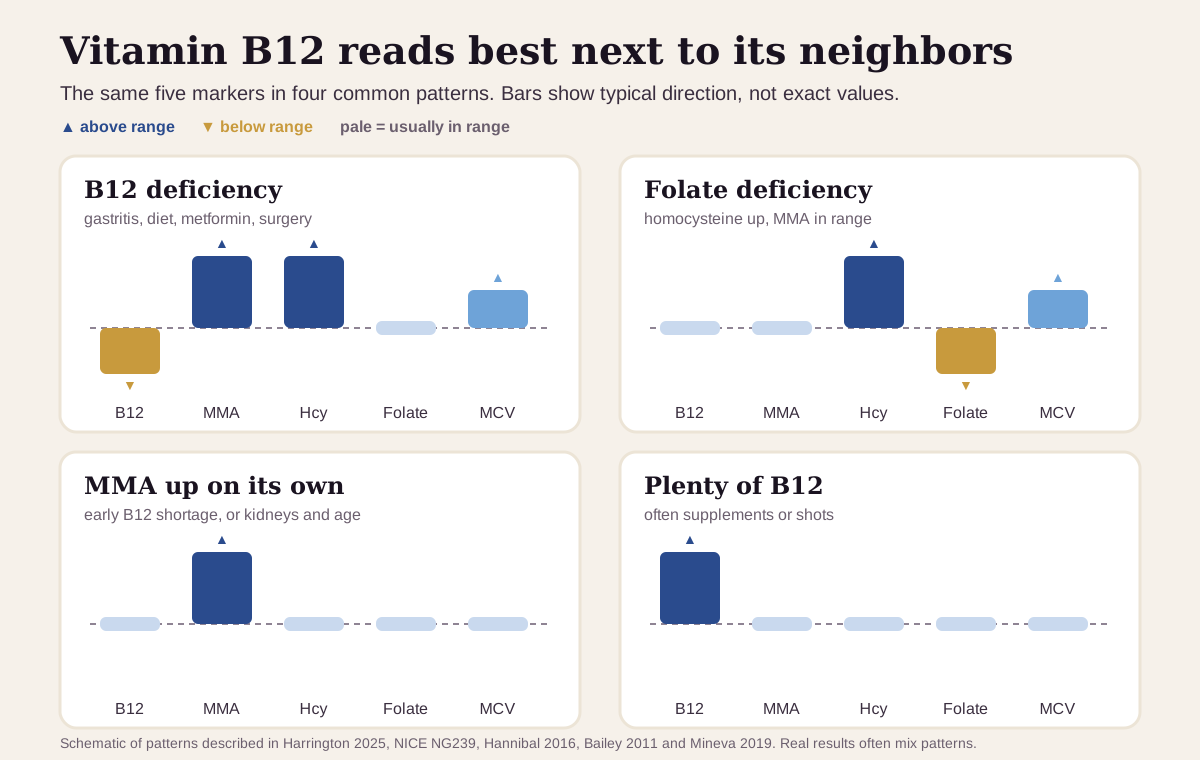
B12 on its own is a rough gauge. Read it next to MMA, homocysteine, folate and MCV (mean corpuscular volume, the average size of your red cells), and the pattern usually says more than B12 does by itself:12
| If you see… | It often points to… |
|---|---|
| B12 low, MMA and homocysteine both high, MCV often high | a true B12 shortage. In U.S. survey data, people with low B12 and a high MMA averaged an MMA of 813 nmol/L104 |
| Homocysteine high, MMA normal, folate low, MCV often high | folate deficiency: folate feeds the homocysteine reaction but plays no part in the MMA one214 |
| MMA high on its own, B12 in range | an early B12 shortage, or MMA raised by weaker kidneys or age (especially over 70). Kidney tests such as creatinine help tell them apart101812 |
| B12 high, MMA and homocysteine normal | plenty of B12, often from supplements or shots. In the U.S. data, only 3% of people with B12 above 400 pg/mL (mid-range or higher) had a high MMA101 |
A normal blood count is no all-clear. Nerve problems from low B12 can come first, and 13–27% of people with pernicious anemia have little or no anemia.72
How fast B12 changes
B12 runs on two clocks. Your body stores about 2,500 micrograms and loses about 1 microgram a day, or about 2 a day when intrinsic factor is gone. So a shortage usually takes years to build, even after intake stops.7
What that means in practice:
- Get tested before you start a supplement if you can, and tell whoever orders the test about any B12 you take. The level rises right away with treatment, which hides the starting number.72
- After treatment starts, MMA and homocysteine usually normalize within the first week, new red cells peak at about a week, and the blood count is normal by week 8. Nerve symptoms can start improving within 2 weeks, and improvement can take up to 3 months.72
- Small changes are mostly noise. In healthy people tested weekly, B12 wobbled by about 7% on its own, and a change needed to be about 20% to count as real.19 Compare results from the same lab, since analyzers differ.9
Going deeper: why MMA and homocysteine rise
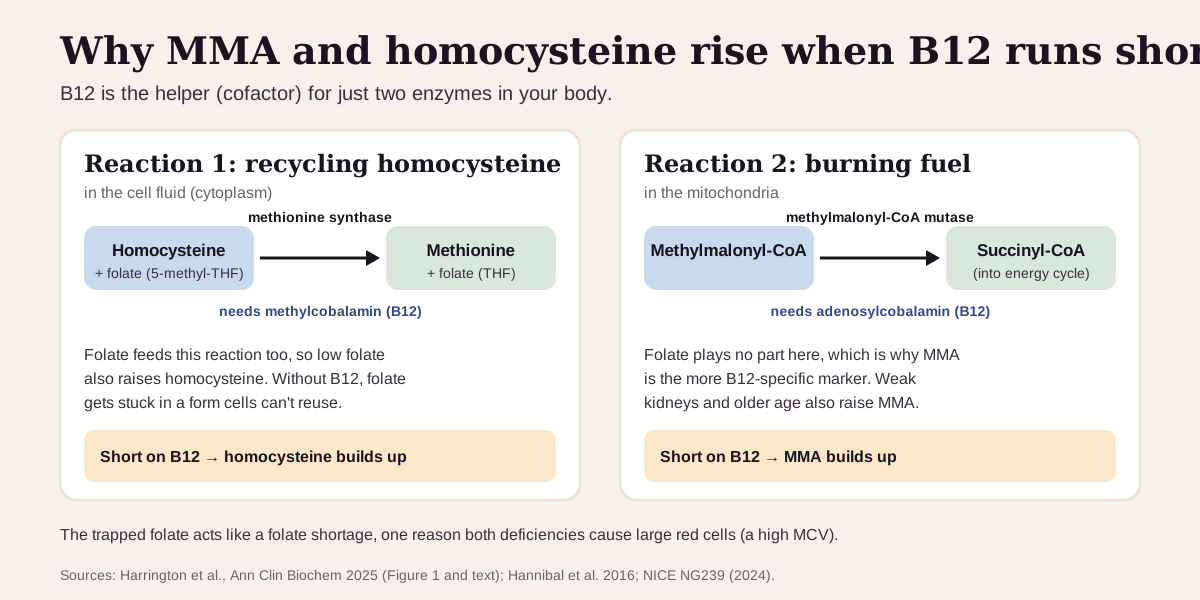
B12 works in two forms. Methylcobalamin helps the enzyme methionine synthase move a methyl group from folate onto homocysteine, which makes methionine. Adenosylcobalamin helps methylmalonyl-CoA mutase, inside the mitochondria, turn methylmalonyl-CoA into succinyl-CoA. Low B12 stalls both, so homocysteine and MMA build up.1
The first reaction explains the overlap with folate. Without B12, folate gets stuck in its methyl form, and cells behave as if they were short of folate. Low B12 and low folate therefore cause the same large-red-cell (macrocytic) anemia,14 while only B12 affects MMA. That's why MMA is the more B12-specific test.1
Active B12 (holotranscobalamin) measures only the transcobalamin-bound share that cells take up. NICE reads it as deficient under 25 pmol/L, a gray zone at 25–70, and deficiency unlikely above 70.2 It's the preferred first test in pregnancy, when haptocorrin falls.21
Questions worth asking
- Is my B12 in the gray zone, and should we check MMA?
- Could any of my medicines, such as metformin or an acid reducer, be lowering it?
- Could I have autoimmune gastritis, and would an intrinsic factor antibody test help?
- What do my MCV and hemoglobin show next to it?
- Are my kidneys working well enough to read my MMA at face value?
- If we treat it, when should we recheck, and what would tell us it's working?
FAQ
What is a normal vitamin B12 level? It depends on your lab. A typical U.S. range is 232–1,245 pg/mL.3 The UK's NICE guideline treats above 350 pg/mL as deficiency unlikely and 180–350 as a gray zone.2
What is the most common cause of low B12? Poor absorption, most often from stomach changes with age or autoimmune gastritis, plus medicines such as metformin and long-term acid reducers. A vegan diet without supplements is the main dietary cause.156
Can you have B12 deficiency with a normal blood count? Yes. Nerve symptoms can come before anemia, and NICE warns against ruling out deficiency just because anemia or large red cells are absent.27
Is a high B12 dangerous? Often it reflects supplements or shots. A B12 that stays high without an obvious cause is worth raising with your clinician, since liver disease and some blood disorders can push it up.815
This guide is for education. A clinician who knows your history is the right person to diagnose and treat you.
Footnotes
-
Harrington DJ, Stevenson E, Sobczyńska-Malefora A. The application and interpretation of laboratory biomarkers for the evaluation of vitamin B12 status. Ann Clin Biochem. 2025;62(1):22–33. A laboratory-medicine review: the two B12 enzymes, MMA and homocysteine confounders, pregnancy, nitrous oxide and the risk of permanent nerve damage with delay. PMC ↩ ↩2 ↩3 ↩4 ↩5 ↩6 ↩7 ↩8 ↩9 ↩10 ↩11 ↩12 ↩13 ↩14 ↩15 ↩16 ↩17 ↩18 ↩19 ↩20 ↩21 ↩22 ↩23 ↩24 ↩25
-
National Institute for Health and Care Excellence. Vitamin B12 deficiency in over 16s: diagnosis and management (NG239). Published March 6, 2024. The UK guideline: the 180/350 ng/L total-B12 bands, active-B12 bands, risk factors, symptoms, and when to treat without waiting. NICE ↩ ↩2 ↩3 ↩4 ↩5 ↩6 ↩7 ↩8 ↩9 ↩10 ↩11 ↩12 ↩13 ↩14 ↩15 ↩16 ↩17 ↩18 ↩19 ↩20 ↩21 ↩22 ↩23 ↩24 ↩25 ↩26 ↩27 ↩28 ↩29 ↩30 ↩31 ↩32 ↩33 ↩34 ↩35
-
Labcorp. Vitamin B12 (test 001503). Reference range 232–1,245 pg/mL. A commercial laboratory; this is also the reference range in the Libby app's marker catalog. labcorp.com ↩ ↩2 ↩3 ↩4 ↩5 ↩6 ↩7
-
Hannibal L, Lysne V, Bjørke-Monsen AL, et al. Biomarkers and Algorithms for the Diagnosis of Vitamin B12 Deficiency. Front Mol Biosci. 2016;3:27. Carrier shares (~80% haptocorrin, 6–20% transcobalamin), the absorption steps, macrocytosis, and kidneys raising MMA. PMC ↩ ↩2 ↩3 ↩4 ↩5 ↩6 ↩7 ↩8
-
Shah SC, Piazuelo MB, Kuipers EJ, et al. AGA Clinical Practice Update on the Diagnosis and Management of Atrophic Gastritis: Expert Review. Gastroenterology. 2021;161(4):1325–1332.e7. Atrophic gastritis in up to 15% of U.S. adults; pernicious anemia 0.15–1%. PMC ↩ ↩2 ↩3 ↩4
-
de Jager J, Kooy A, Lehert P, et al. Long term treatment with metformin in patients with type 2 diabetes and risk of vitamin B-12 deficiency: randomised placebo controlled trial. BMJ. 2010;340:c2181. 390 patients on insulin, metformin 850 mg three times a day for 4.3 years. PMC ↩ ↩2 ↩3 ↩4
-
Carmel R. How I treat cobalamin (vitamin B12) deficiency. Blood. 2008;112(6):2214–2221. Body stores (~2,500 µg), daily losses (~1 µg, ~2 µg without intrinsic factor), and response times after treatment. PMC ↩ ↩2 ↩3 ↩4 ↩5 ↩6 ↩7 ↩8
-
National Library of Medicine. Vitamin B12 level. MedlinePlus Medical Encyclopedia. Reviewed January 10, 2026. Normal range 299–1,054 pg/mL, nerve symptoms, MMA to confirm, and causes of high and low results. MedlinePlus ↩ ↩2 ↩3 ↩4 ↩5 ↩6 ↩7 ↩8
-
Andersen SL, Hansen AB, Hindersson P, et al. Vitamin B12 reference intervals. Dan Med J. 2023;70(6):A12220771. The same 129 blood donors gave 168–553, 202–641 and 211–551 pmol/L on three analyzers. PubMed ↩ ↩2 ↩3
-
Bailey RL, Carmel R, Green R, et al. Monitoring of vitamin B-12 nutritional status in the United States by using plasma methylmalonic acid and serum vitamin B-12. Am J Clin Nutr. 2011;94(2):552–561. NHANES 1999–2004, 12,612 adults; Table 2 gives MMA and homocysteine by B12 band. PMC ↩ ↩2 ↩3 ↩4 ↩5 ↩6 ↩7 ↩8 ↩9 ↩10
-
Optimal DX. Optimal B12 Levels: Functional Medicine. Updated November 1, 2023. States an optimal serum B12 of 545–1,100 pg/mL and to "investigate further if below 545 pg/mL". A commercial source, listed as what the optimizer community uses. optimaldx.com ↩ ↩2
-
Vogiatzoglou A, Oulhaj A, Smith AD, et al. Determinants of plasma methylmalonic acid in a large population: implications for assessment of vitamin B12 status. Clin Chem. 2009;55(12):2198–2206. 6,946 Norwegians; MMA rose below a B12 of 400 pmol/L, and with age and creatinine. PubMed ↩ ↩2 ↩3 ↩4
-
Institute for Functional Medicine. Clinical practice guidelines and Advanced Practice Modules (range as recorded in the Libby app's marker catalog; member-only modules not opened for this article). https://www.ifm.org ↩ ↩2
-
Vogiatzoglou A, Refsum H, Johnston C, et al. Vitamin B12 status and rate of brain volume loss in community-dwelling elderly. Neurology. 2008;71(11):826–832. 107 adults aged 61–87, followed for 5 years; odds ratio 6.17 for the bottom B12 third. PubMed ↩
-
Lacombe V, Chabrun F, Lacout C, et al. Persistent elevation of plasma vitamin B12 is strongly associated with solid cancer. Sci Rep. 2021;11(1):13361. 688 hospital patients, median age 79; persistent B12 of 1,000 ng/L or more, hazard ratio 5.90 (95% CI 2.79–12.45). PMC ↩ ↩2 ↩3
-
Lam JR, Schneider JL, Zhao W, et al. Proton pump inhibitor and histamine 2 receptor antagonist use and vitamin B12 deficiency. JAMA. 2013;310(22):2435–2442. 25,956 people with B12 deficiency and 184,199 without, Kaiser Permanente Northern California; odds ratios 1.65 (PPIs) and 1.25 (H2 blockers). PubMed ↩ ↩2
-
Centers for Disease Control and Prevention. Vitamin B12 and Breastfeeding. Updated March 27, 2026. Mothers at risk (vegan diet, bariatric surgery, pernicious anemia, some gut disorders) and the risk of permanent brain damage in untreated infants. CDC ↩
-
Mineva EM, Sternberg MR, Zhang M, et al. Age-specific reference ranges are needed to interpret serum methylmalonic acid concentrations in the US population. Am J Clin Nutr. 2019;110(1):158–168. MMA rises with age (especially 70 and over) and with weaker kidneys, while B12 changes little. PMC ↩ ↩2
-
Brokner M, Hager HB, Lindberg M. Biological variation of holotranscobalamin and cobalamin in healthy individuals. Scand J Clin Lab Invest. 2017;77(6):433–436. 15 volunteers tested weekly for 10 weeks; within-person variation 6.7%, reference change value 20.1%. PubMed ↩
Educational content, not medical advice.Libby is a personal record tool, not a medical service — it doesn't diagnose, treat, or prescribe. Reference ranges vary by lab and by person. Talk to a qualified healthcare professional about your results.
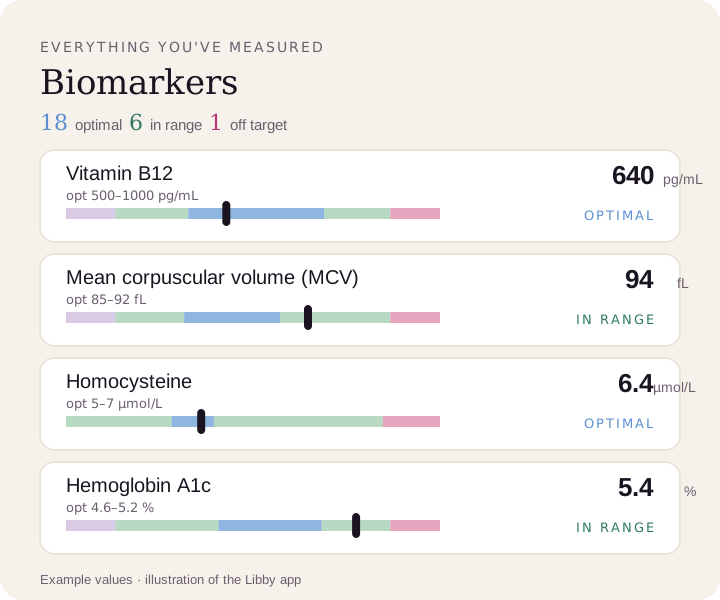
Compare your results to optimal ranges.
Upload a lab PDF or a photo of your report. Libby puts every marker on your lab's range and the optimal range, and tracks your trends over time.
View your B12 ›