Homocysteine test: normal levels, high causes, next steps
Homocysteine is an amino acid that B vitamins and your kidneys clear. What is normal, what optimizers aim for, why it runs high, and how to read it with B12.
Homocysteine is an amino acid your cells make when they use methionine, a building block of protein. Three B vitamins (folate, B12 and B6) clear it quickly, so a healthy level is low. A high homocysteine most often means you're short on folate or vitamin B12, or your kidneys are clearing less of it.12
The short version
- Normal: check the upper limit on your report. Most adult lab ranges stop at about 15 µmol/L (Labcorp uses 14.5 up to age 60). The median U.S. adult sits at about 8, and the Libby app's optimal range is 5–7.324
- Moderately high (16–30) is common. The usual reasons are low folate or vitamin B12, kidneys filtering less, an underactive thyroid, some medicines, and smoking.51
- Very high (over 100) is rare and usually an inherited disorder (homocystinuria) that needs specialist testing. See a clinician promptly for any high result with numbness or tingling in your hands or feet.51
- Homocysteine rises with low B12 and with low folate. Its partner test MMA (methylmalonic acid) rises with low B12 only, so the two together tell the causes apart.6
What homocysteine is
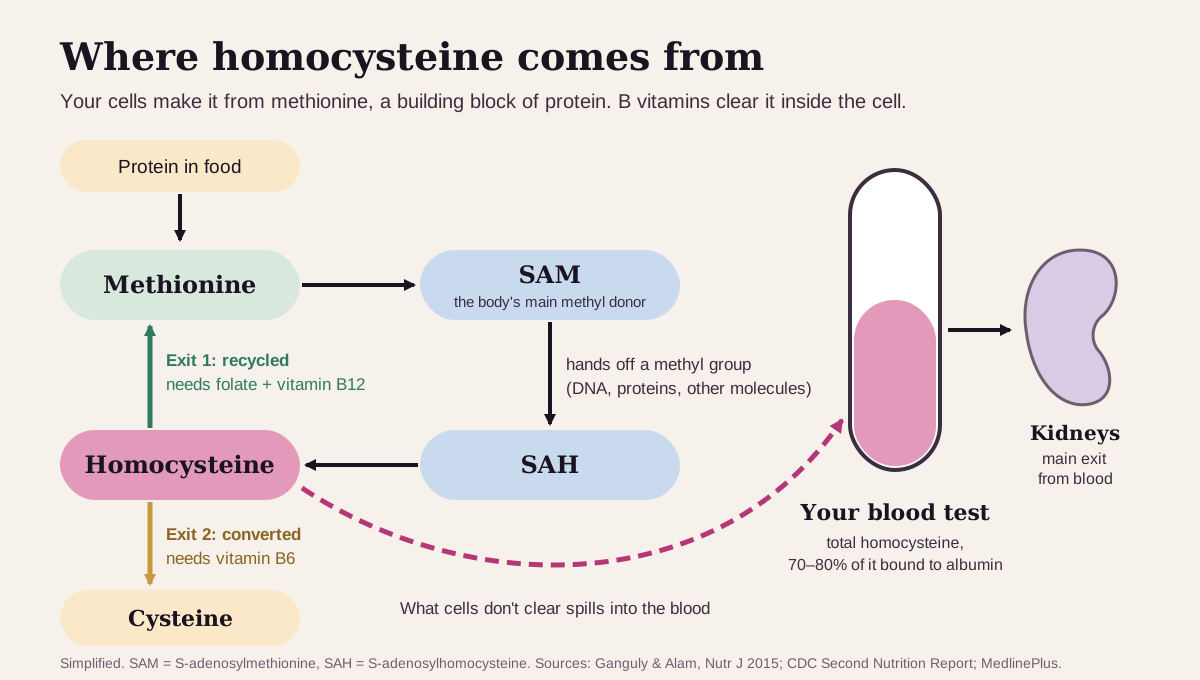
Your body makes homocysteine from methionine, an amino acid that's plentiful in animal protein. Along the way, methionine becomes SAM, the main donor of "methyl groups" that cells attach to DNA, proteins and other molecules. Once SAM hands off its methyl group, what's left breaks down to homocysteine.5
Homocysteine then has two exits. It can be recycled back into methionine, a step that needs folate and vitamin B12, or converted into cysteine by an enzyme that needs vitamin B6.15 When either exit slows, homocysteine spills into your blood. The kidneys are the main route out of the blood, which is why kidney function moves the number too.5
In blood, 70–80% of homocysteine is stuck to proteins, mainly albumin. The test measures all of it together, which is why reports call it total homocysteine.5
Clinicians usually order it for one of three reasons: to check for low B12 or folate, to help diagnose the rare inherited disorder homocystinuria, or as extra information for someone with heart or blood-vessel disease or its risk factors. MedlinePlus reserves it for people with a reason like these, rather than routine heart screening for everyone.1
What's a normal homocysteine?
Start with the range printed on your own report. Labcorp, a large commercial lab, uses 0–14.5 µmol/L for adults aged 18 to 60, with higher upper limits after 60 (up to 21.3 over age 80).3 Clinical reviews describe a normal fasting level as about 5–15 µmol/L, or 5–12 with some immunoassay methods, and call anything above 15 hyperhomocysteinemia.5
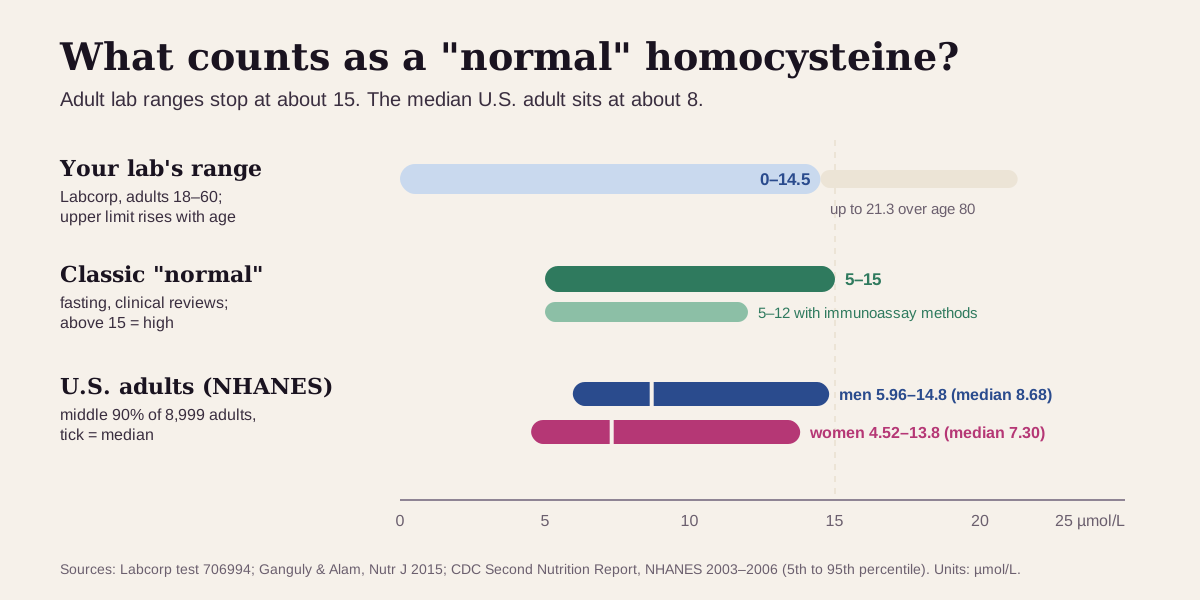
Where do most people sit? In a CDC survey of 8,999 U.S. adults (NHANES 2003–2006), the median was 8.0 µmol/L, and 95% of adults were below 14.3.2
- Men run higher than women: a median of 8.7 vs 7.3.2 Women's levels rise after menopause.1
- Age pushes it up: the median was 7.1 at ages 20–39 and 9.8 at 60 and older. Above 13 µmol/L, a common survey cutoff for "high," sat 1.9% of adults aged 20–39 and 18.5% of those 60 and older.2
- Diet moves the whole population: after the U.S. began adding folic acid to enriched grains in 1998, average homocysteine fell by about 10%.2
"Optimal" homocysteine: what health optimizers aim for
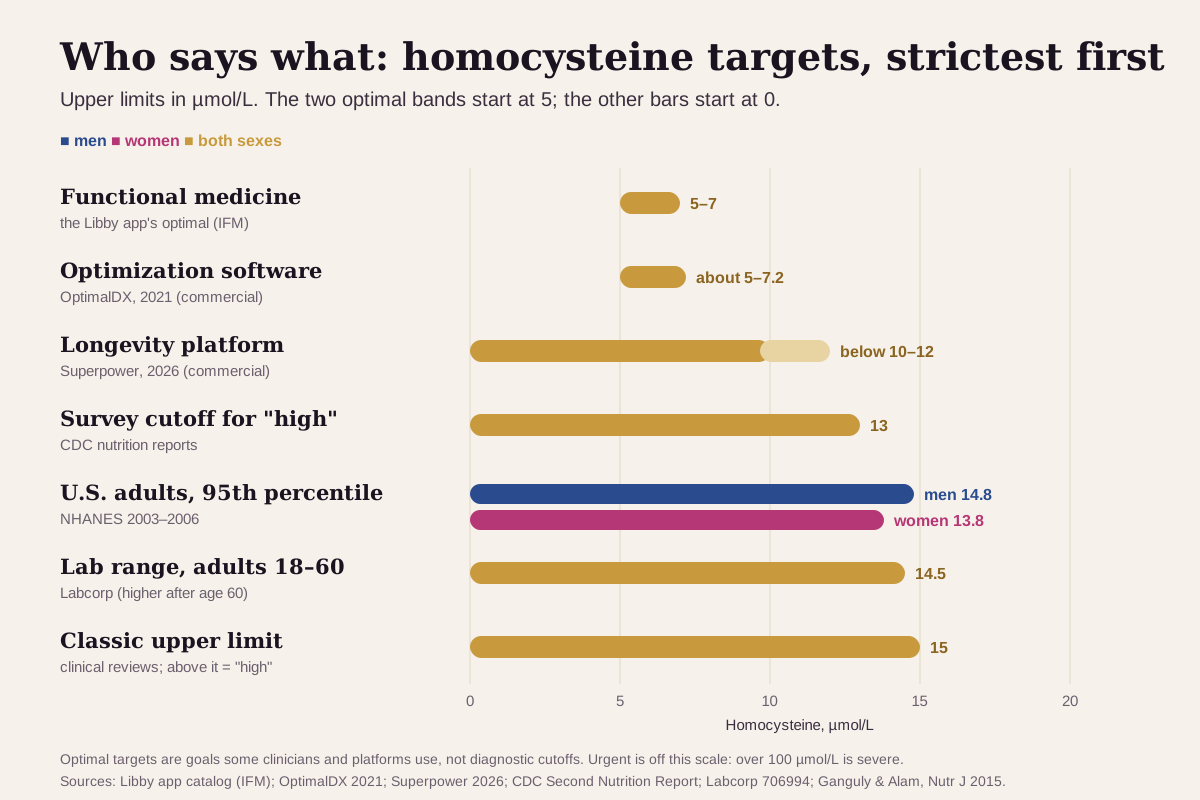
Functional-medicine clinicians and longevity platforms aim well below the lab's upper limit. Here's the full ladder, from strictest to loosest:
| Target | Men | Women | Who uses it |
|---|---|---|---|
| Functional medicine | 5–7 µmol/L | 5–7 µmol/L | The optimal range shown in the Libby app, from the Institute for Functional Medicine4 |
| Optimization software | about 5–7.2 | about 5–7.2 | OptimalDX's published optimal goal7 |
| Longevity platform | below 10–12 | below 10–12 | Superpower, which calls this "more favorable" with less formal consensus than the lab flag8 |
| Survey "high" cutoff | 13 or less | 13 or less | The cutoff for an elevated level in CDC nutrition reports2 |
| U.S. adults, 95th percentile | 14.8 | 13.8 | NHANES 2003–20062 |
| Lab range, ages 18–60 | up to 14.5 | up to 14.5 | Labcorp; higher limits after 603 |
| Classic upper limit | 15 | 15 | Clinical reviews; above it is hyperhomocysteinemia5 |
| Urgent | over 100 | over 100 | Severe; usually an inherited disorder that needs specialist testing5 |
Why the low targets exist:
- In the Hordaland study of 4,766 Norwegians aged 65–67, followed for about 4 years, people at 12.0–14.9 µmol/L, still under the usual upper limit, had 2.1 times the risk of cardiovascular death of people under 9. At 20 or higher it was 3.5 times. Deaths from other causes rose in step: 1.9 and 3.6 times.9
- In the same study, each 5 µmol/L higher was linked to a 49% higher risk of dying from any cause.9
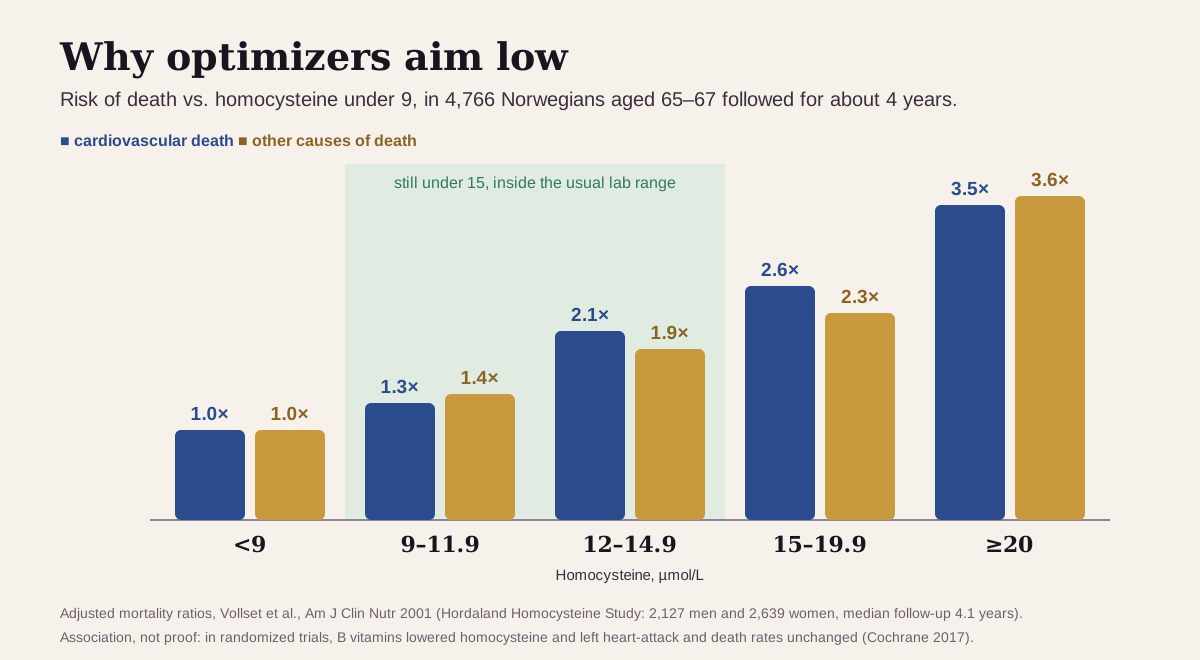
Keep "optimal" in perspective. Homocysteine is the rare marker where lowering the number was tested head-on, and the results were mostly disappointing. A Cochrane review of 15 randomized trials in 71,422 people found that B vitamins lowered homocysteine and left heart attacks and deaths unchanged, with a small drop in strokes (4.3% vs 5.1%).10 So read a high result as a clue to a cause you can check, such as low B12 or folate, the kidneys or the thyroid, more than as a number to chase. The low end has a floor too: the app's optimal band starts at 5, and OptimalDX treats under 4 as low.47
What a high homocysteine usually means
The size of the rise is the first clue. Clinical reviews sort high levels into three bands above 15 µmol/L: moderate (16–30), intermediate (31–100) and severe (over 100).5
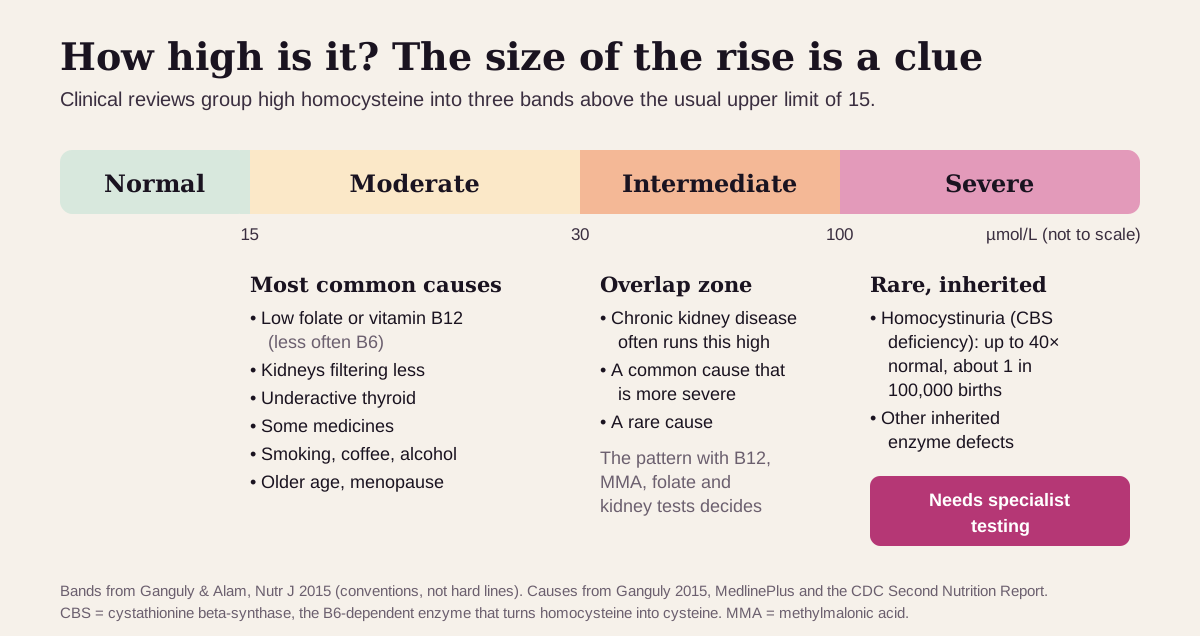
Moderately high (16–30): common and usually checkable
The usual suspects:
- Low folate or vitamin B12. These are the vitamins that recycle homocysteine, and a shortfall of either pushes it up. In one study, it was high in 95.9% of 434 episodes of B12 deficiency and 91% of 123 episodes of folate deficiency.6 Older adults often absorb less B12 from food, and malnutrition and alcohol use disorder raise the risk too.1 Low B6 plays a smaller part.5
- Kidneys filtering less. The kidneys are the main exit from the blood. Across 41 studies of 26,617 people, homocysteine rose as kidney filtration fell.11
- An underactive thyroid. Hypothyroidism is on the list of conditions that raise homocysteine.15
- Medicines. Drugs that interfere with folate, B6 or B12 can raise it.5 Don't stop a prescribed medicine on your own. Bring your full list, supplements included, to your clinician.1
- Smoking, coffee, alcohol, older age and menopause all nudge it up.51
- A tube that sat too long. Red cells keep releasing homocysteine into a blood sample until the lab separates it. At room temperature that adds about 0.7 µmol/L per hour.12 (More in how fast it changes.)
Very high (over 100): rare and inherited
Levels this high usually point to an inherited enzyme defect. The best known is homocystinuria from cystathionine beta-synthase (CBS) deficiency, which can raise homocysteine up to 40-fold and affects about 1 in 100,000 births. Untreated, about half of these patients have a stroke, heart attack or clot before age 30.5 Symptoms usually start in childhood: eyesight problems, blood clots and weak bones. Most U.S. newborns are screened for it.1
See a clinician promptly if your homocysteine is far above your lab's range, or if a high result comes with numbness or tingling in your hands or feet, fatigue or weakness, or sores on your tongue or in your mouth. Those can be signs of low B12 or folate.1
In between (31–100)
This is an overlap zone. Chronic kidney disease often runs well above the moderate band, and a common cause can simply be more severe.5 Here the pattern with B12, MMA, folate and kidney tests, and a properly handled repeat, matter most.
Homocysteine reads best next to its neighbors
A high homocysteine tells you a clearing step is slow. The markers around it tell you which one:62
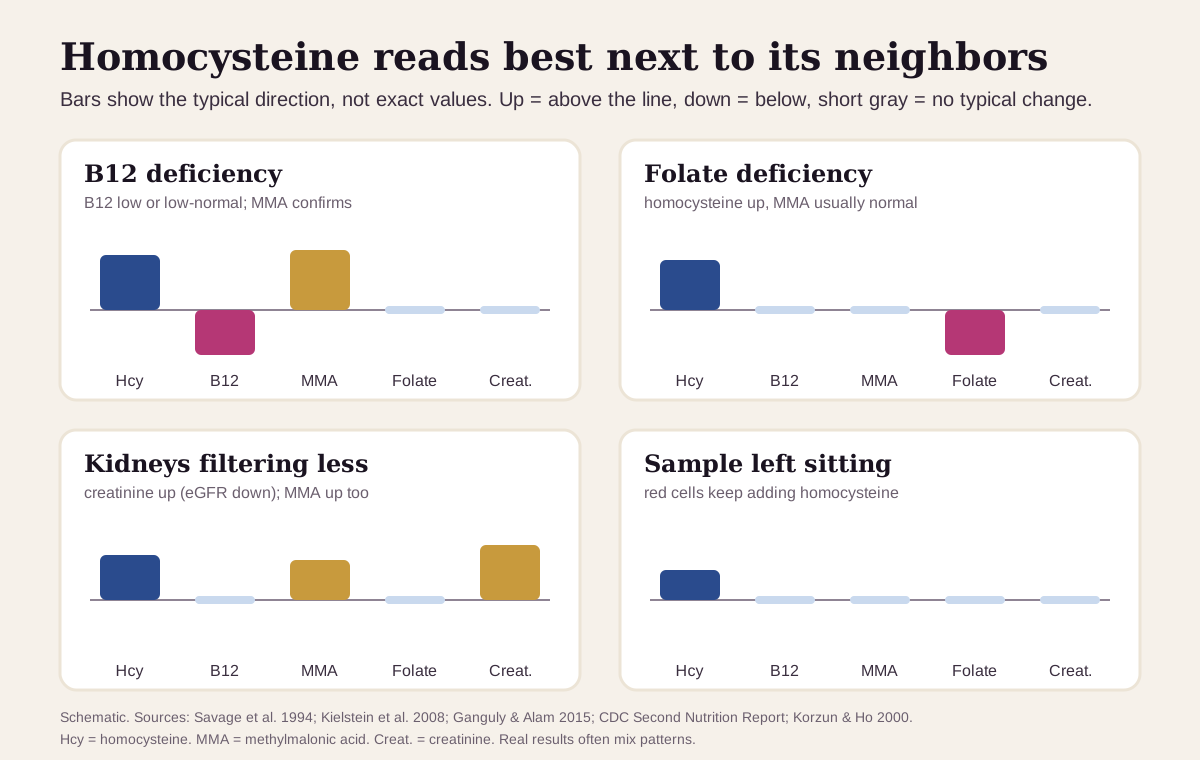
| If you see… | It often points to… |
|---|---|
| Homocysteine and MMA both up, B12 low or low-normal | vitamin B12 deficiency: MMA was high in 98.4% of B12-deficient episodes in one large study62 |
| Homocysteine up, folate low, MMA normal | folate deficiency: MMA rose in only 12.2% of folate-deficient patients, almost all of them with kidney trouble or low blood volume6 |
| Homocysteine and MMA up, creatinine up (eGFR down) | kidneys clearing less: both markers rise when filtration falls1125 |
| Homocysteine up alone, B12, folate, MMA and kidney tests normal | check how the sample was handled and repeat it; then look at thyroid, vitamin B6, medicines and smoking121 |
| Homocysteine and MMA both normal | clinically significant B12 deficiency is very unlikely: ruled out "with virtual certainty" in the same study6 |
One more reason to read the whole panel: B12 deficiency can hide behind a normal blood count. In the same study, 28% of B12-deficient patients had a normal hematocrit and 17% a normal MCV.6
Is a low homocysteine a problem?
Usually not. Low is the expected state: your body clears homocysteine quickly when B vitamins are plentiful.1 Very low values are uncommon. OptimalDX, citing a lab reference manual, calls a level under 4 µmol/L low, and the Libby app's optimal band starts at 5.74 If yours is lower than that, mention your supplements and diet at your next visit.
How fast homocysteine changes
Homocysteine runs on two clocks. A blood sample can drift up in hours. Your body's level moves over weeks.
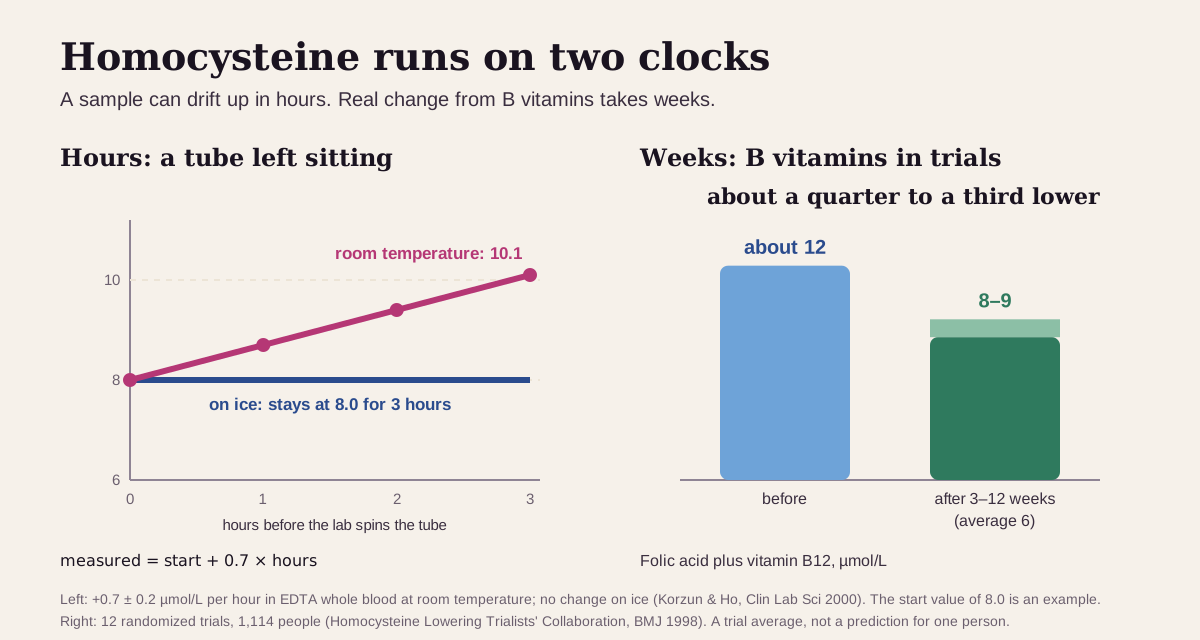
What that means in practice:
- In the tube (hours). Blood left at room temperature gained 0.7 µmol/L per hour. Blood kept on ice held steady for 3 hours.12 Labcorp asks for the sample to be spun right away, or iced and spun within an hour, and prefers a fasting sample.3 A surprise high from a sample that sat is worth repeating.
- After exercise. Across 22 studies, a single bout of exercise raised homocysteine by about 1.2 µmol/L on average. Regular resistance training lowered it by about 1.5; aerobic training showed no clear effect.14 Mention a hard workout before your draw.
- With B vitamins (weeks). In 12 randomized trials lasting 3 to 12 weeks, folic acid lowered homocysteine by about 25%, B12 took off another 7%, and B6 added no significant effect. Together, folic acid and B12 would typically move a level of about 12 down to 8–9 µmol/L. People who started higher dropped more: 39% in the top fifth vs 16% in the bottom fifth.13
- Trends beat snapshots. Compare results from the same lab, drawn the same way (fasting, processed promptly).3 A steady climb over several tests says more than any one reading.
Going deeper: the chemistry, and MTHFR
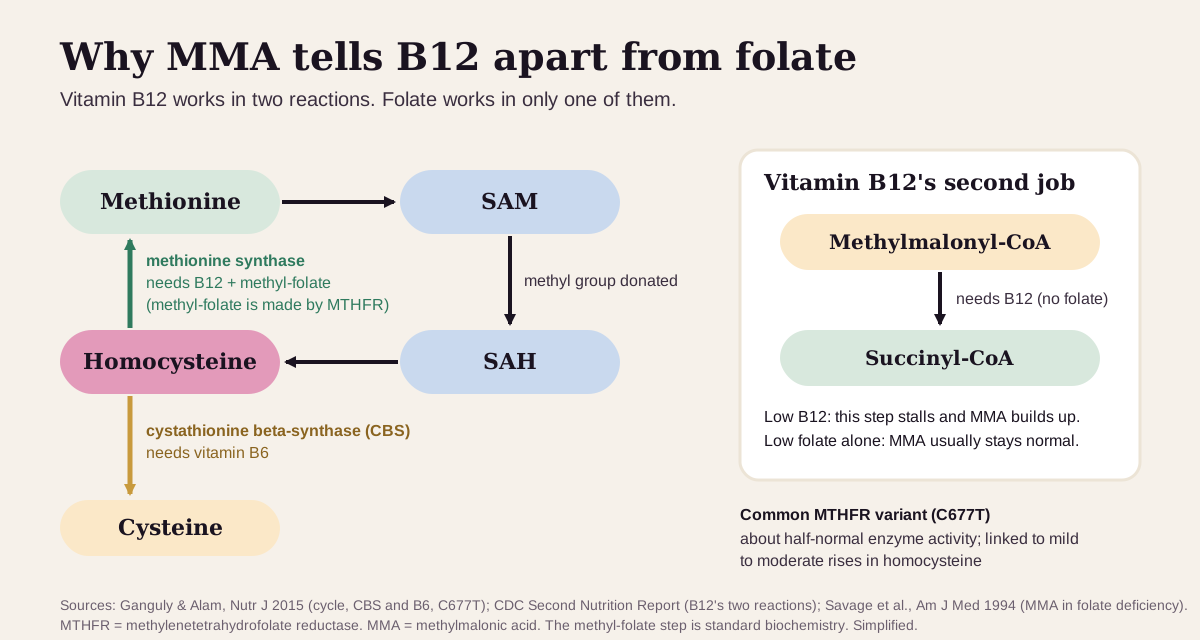
Methionine becomes SAM (S-adenosylmethionine), the cell's main methyl donor. After SAM hands off its methyl group it becomes SAH (S-adenosylhomocysteine), which splits into homocysteine and adenosine.5 From there, methionine synthase recycles homocysteine back to methionine using vitamin B12 and a folate form. Cystathionine beta-synthase (CBS), which needs vitamin B6, sends it toward cysteine instead.25
Vitamin B12 also has a second job that folate has no part in: it converts methylmalonyl-CoA into succinyl-CoA. When B12 runs short, that step stalls too and methylmalonic acid (MMA) builds up. That is why MMA separates B12 deficiency from folate deficiency.26
MTHFR (methylenetetrahydrofolate reductase) is a folate-processing enzyme. A common variant, C677T, has about half-normal activity and is linked to mild to moderate rises in homocysteine.5 Testing for it gets a lot of attention online. The American College of Medical Genetics and Genomics says MTHFR testing has minimal clinical use and advises against ordering it in a routine workup for blood clots.15
Questions worth asking
- How far above the upper limit is my homocysteine, and was the sample fasting and processed promptly?
- What do my vitamin B12, folate and MMA show?
- How are my kidneys (creatinine, eGFR) and my thyroid?
- Could any of my medicines or supplements be involved?
- If it's high, what's the most likely cause, and what would we treat?
- When should we repeat it, and should it be at the same lab?
FAQ
What is a normal homocysteine level? Most adult lab ranges stop at about 15 µmol/L (Labcorp uses 14.5 up to age 60). The median U.S. adult is about 8, and the Libby app's optimal range is 5–7.324
What is the most common cause of high homocysteine? Low folate or vitamin B12 is the classic cause, and lower kidney function is the other big one. An underactive thyroid, some medicines, smoking and older age also raise it.6111
Do B vitamins lower homocysteine? Yes. In trials, folic acid lowered it by about a quarter within weeks, and B12 added a little more.13 In large trials that lowering left heart attacks and deaths unchanged, so the real value is fixing a deficiency when there is one. Ask your clinician before you start supplements.10
Is high homocysteine bad for my heart? Higher levels are linked to more cardiovascular deaths.9 B-vitamin trials that lowered homocysteine found only a small drop in strokes, so treat a high result as a clue to its cause.10
This guide is for education, not a diagnosis. Bring your results to a clinician who knows your history.
Footnotes
-
National Library of Medicine. Homocysteine Test. MedlinePlus. What the test is used for, symptoms of low B12 or folate, causes of a high level, and homocystinuria. MedlinePlus ↩ ↩2 ↩3 ↩4 ↩5 ↩6 ↩7 ↩8 ↩9 ↩10 ↩11 ↩12 ↩13 ↩14 ↩15 ↩16 ↩17
-
Centers for Disease Control and Prevention. Second National Report on Biochemical Indicators of Diet and Nutrition in the U.S. Population, chapter 1: Water-Soluble Vitamins. NHANES 2003–2006 homocysteine percentiles (Tables 1.6.a.2 and 1.6.c), the 13 µmol/L cutoff, the fall after folic acid fortification, and B12's two reactions. CDC ↩ ↩2 ↩3 ↩4 ↩5 ↩6 ↩7 ↩8 ↩9 ↩10 ↩11 ↩12 ↩13 ↩14 ↩15 ↩16 ↩17 ↩18 ↩19 ↩20
-
Labcorp. Homocyst(e)ine, test 706994. Adult reference ranges by age (0–14.5 µmol/L at 18–60, up to 21.3 over 80), sample handling and fasting. A commercial reference laboratory. labcorp.com ↩ ↩2 ↩3 ↩4 ↩5 ↩6 ↩7 ↩8
-
Institute for Functional Medicine. Clinical practice guidelines and Advanced Practice Modules (range as recorded in the Libby app's marker catalog; member-only modules not opened for this article). https://www.ifm.org ↩ ↩2 ↩3 ↩4 ↩5 ↩6
-
Ganguly P, Alam SF. Role of homocysteine in the development of cardiovascular disease. Nutr J. 2015;14:6. The source for the pathway, the 5–15 µmol/L normal range, the moderate/intermediate/severe bands, CBS deficiency, MTHFR C677T and the kidney route. PMC ↩ ↩2 ↩3 ↩4 ↩5 ↩6 ↩7 ↩8 ↩9 ↩10 ↩11 ↩12 ↩13 ↩14 ↩15 ↩16 ↩17 ↩18 ↩19 ↩20 ↩21 ↩22 ↩23 ↩24 ↩25 ↩26
-
Savage DG, Lindenbaum J, Stabler SP, Allen RH. Sensitivity of serum methylmalonic acid and total homocysteine determinations for diagnosing cobalamin and folate deficiencies. Am J Med. 1994;96(3):239–246. 434 episodes of B12 deficiency and 123 of folate deficiency. PubMed ↩ ↩2 ↩3 ↩4 ↩5 ↩6 ↩7 ↩8 ↩9 ↩10 ↩11
-
ODX Research. Homocysteine: Highs, Lows, and Optimals. Optimal DX blog. August 19, 2021. States "An optimal goal for homocysteine would be ~5-7.2 umol/L" and, citing Mosby's lab reference, that below 4 is low. A commercial source, listed as what the optimizer community uses. optimaldx.com ↩ ↩2 ↩3 ↩4
-
Superpower. Homocysteine and the Methylation Cycle It Tracks. Published November 15, 2025; updated August 31, 2026. States that "many clinicians consider values below 10–12 µmol/L more favorable." A commercial source, listed as what the optimizer community uses. superpower.com ↩ ↩2
-
Vollset SE, Refsum H, Tverdal A, Nygård O, Nordrehaug JE, Tell GS, Ueland PM. Plasma total homocysteine and cardiovascular and noncardiovascular mortality: the Hordaland Homocysteine Study. Am J Clin Nutr. 2001;74(1):130–136. 2,127 men and 2,639 women aged 65–67, median follow-up 4.1 years. PubMed ↩ ↩2 ↩3 ↩4
-
Martí-Carvajal AJ, Solà I, Lathyris D, Dayer M. Homocysteine-lowering interventions for preventing cardiovascular events. Cochrane Database Syst Rev. 2017;8(8):CD006612. 15 randomized trials, 71,422 participants: heart attack RR 1.02, death RR 1.01, stroke RR 0.90. PMC ↩ ↩2 ↩3
-
Kielstein JT, Salpeter SR, Buckley NS, Cooke JP, Fliser D. Two cardiovascular risk factors in one? Homocysteine and its relation to glomerular filtration rate. A meta-analysis of 41 studies with 27,000 participants. Kidney Blood Press Res. 2008;31(4):259–267. Pooled correlation of 0.37 between homocysteine and 1/GFR. PubMed ↩ ↩2 ↩3 ↩4
-
Korzun WJ, Ho QV. Stability of plasma total homocysteine concentrations in EDTA-whole blood kept on ice. Clin Lab Sci. 2000;13(4):196–198. Room-temperature samples rose 0.7 ± 0.2 µmol/L per hour; iced samples were stable for 3 hours. PubMed ↩ ↩2 ↩3 ↩4 ↩5
-
Homocysteine Lowering Trialists' Collaboration. Lowering blood homocysteine with folic acid based supplements: meta-analysis of randomised trials. BMJ. 1998;316(7135):894–898. 12 trials, 1,114 people, treatment 3–12 weeks (mean 6). PMC ↩ ↩2 ↩3
-
Deminice R, Ribeiro DF, Frajacomo FT. The effects of acute exercise and exercise training on plasma homocysteine: a meta-analysis. PLoS One. 2016;11(3):e0151653. 22 acute-exercise studies, 520 participants. PMC ↩
-
Hickey SE, Curry CJ, Toriello HV. ACMG Practice Guideline: lack of evidence for MTHFR polymorphism testing. Genet Med. 2013;15(2):153–156. The U.S. medical genetics society's guideline. PubMed ↩
Educational content, not medical advice.Libby is a personal record tool, not a medical service — it doesn't diagnose, treat, or prescribe. Reference ranges vary by lab and by person. Talk to a qualified healthcare professional about your results.
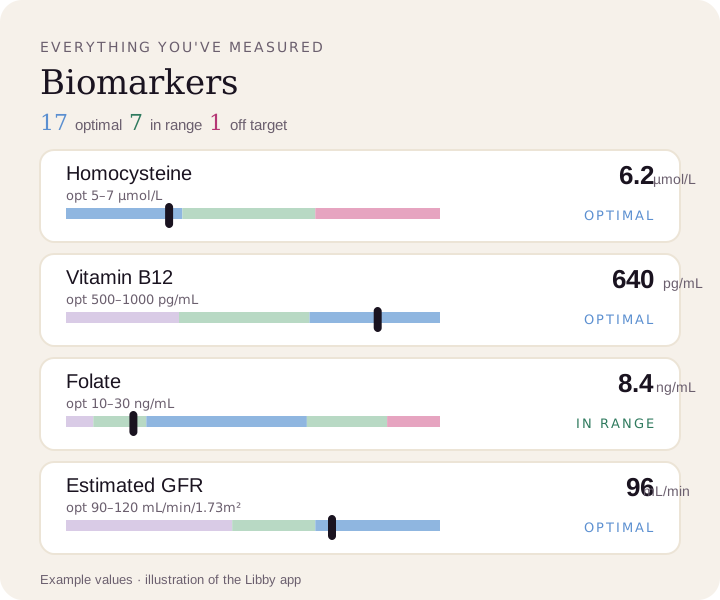
Compare your results to optimal ranges.
Upload a lab PDF or a photo of your report. Libby puts each marker on your lab's range and, where one exists, the optimal range, and tracks your trends over time.
View your homocysteine ›