HDL cholesterol: normal levels, low and high causes
HDL is the "good" cholesterol. Here's what a normal level is, why it runs low, when a high HDL stops helping, and how to read it with triglycerides.
HDL cholesterol is the cholesterol carried by HDL, the small particles that collect extra cholesterol from your cells and bring it back to your liver. That's how it earned the name "good cholesterol". A low HDL is one of the classic signs of higher heart risk, and it usually travels with high triglycerides and insulin resistance. A very high HDL is a different story: in large studies, death rates start climbing again at about 80 mg/dL and above.12
The short version
- Normal: at least 40 mg/dL for men and 50 mg/dL for women. The U.S. cholesterol guideline counts 60 or higher as protective.13
- Low usually comes with high triglycerides, extra weight, inactivity, type 2 diabetes or smoking. Some medicines lower it too: beta-blockers, anabolic steroids and progestins.1
- Very high (80 or more) brings no extra protection. In U.S. and Danish studies, death rates rose again at the top.24 An HDL under 20 is rare and worth a specialist workup.5
- HDL is a marker, not a lever. Across 31 trials, drugs that raised it brought no significant drop in heart deaths, so treatment targets LDL cholesterol instead.61
What HDL cholesterol is
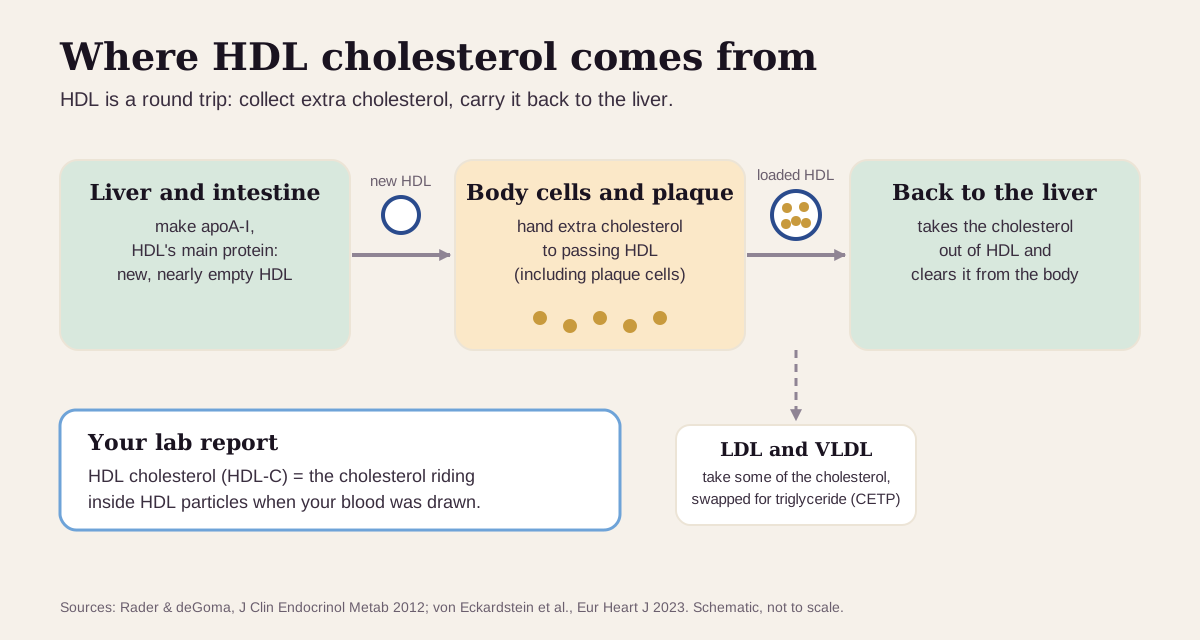
Cholesterol travels through your blood inside particles called lipoproteins. HDL (high-density lipoprotein) is the smallest and densest kind. Your liver and intestine make its main protein, apoA-I. The new particles pull extra cholesterol out of cells, including the cholesterol-stuffed immune cells in artery plaque, and carry it back to the liver to be cleared. This round trip is called reverse cholesterol transport.57
Your HDL cholesterol (HDL-C) result is the amount of cholesterol riding in those particles. It's a snapshot of the cargo, not a speedometer for the round trip.7
HDL is on every standard lipid panel, next to total cholesterol, LDL and triglycerides. Many reports also list non-HDL cholesterol: total cholesterol minus HDL, which is the cholesterol in LDL and the other plaque-building particles.89
What's a normal HDL?
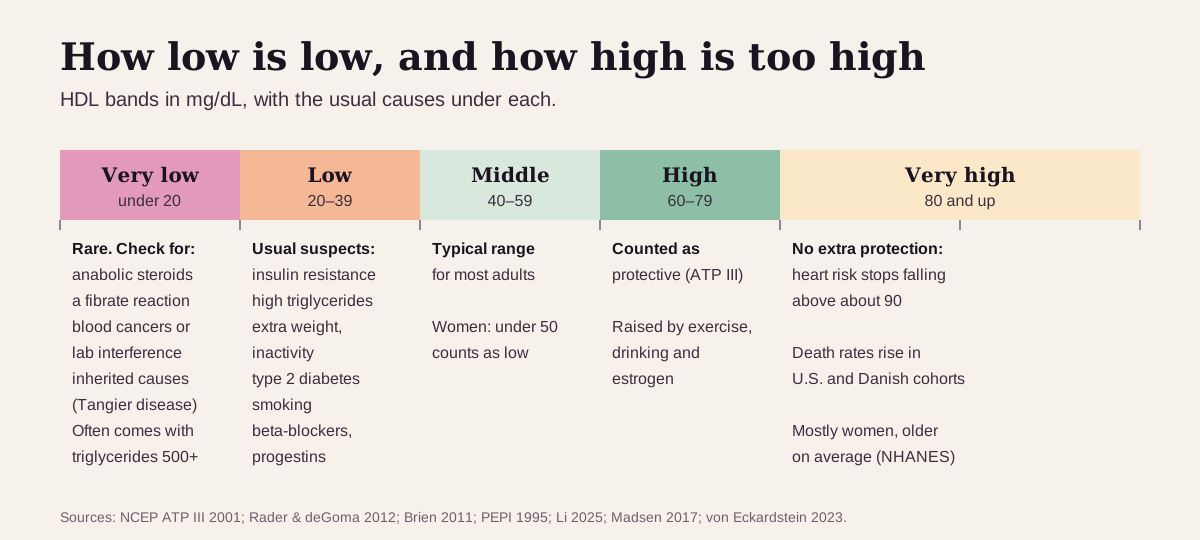
Higher is generally better, up to a point. The U.S. cholesterol guideline (NCEP ATP III) calls an HDL under 40 mg/dL low and a major heart-disease risk factor. It counts 60 or higher as a "negative" risk factor, one that cancels out another risk factor in the tally.1
Women run higher than men, so their bar is higher too. MedlinePlus lists a healthy HDL as more than 40 mg/dL for men and more than 50 for women, and more than 45 for people 19 and younger. The same 40/50 split defines low HDL in the metabolic syndrome.31
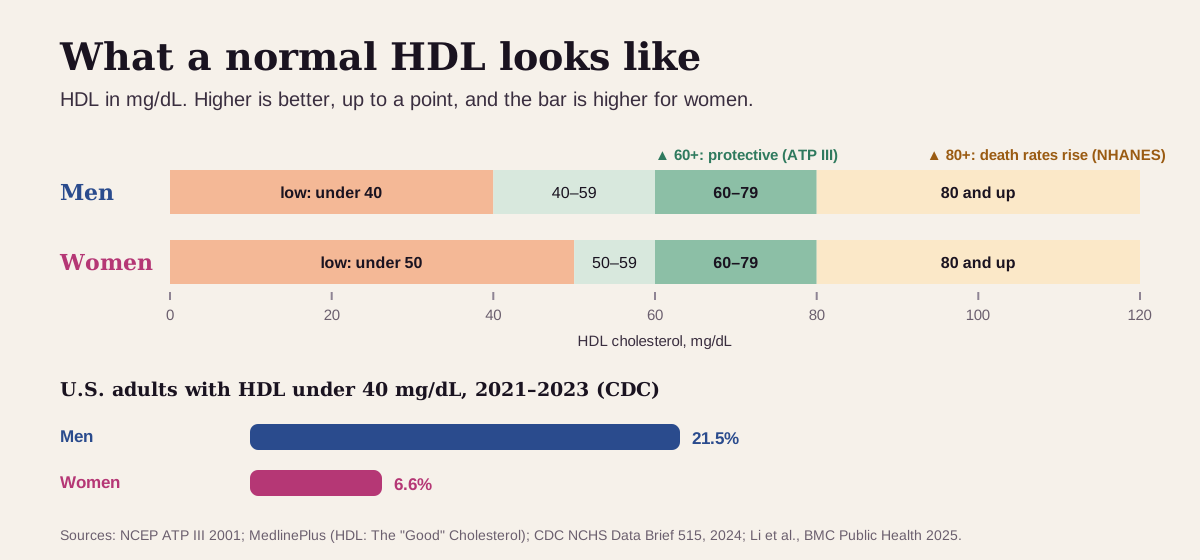
- In U.S. adults surveyed in 2021–2023, 21.5% of men and 6.6% of women had an HDL under 40 mg/dL, according to the CDC.10
- A joint European lab guideline flags an HDL of 40 mg/dL or less as abnormal, on a fasting or a nonfasting sample.8
Your report may print its own range. The CDC notes that clinicians put your exact HDL and total cholesterol into a heart-risk score, rather than reading either against a single cutoff.10
"Optimal" HDL: what health optimizers aim for
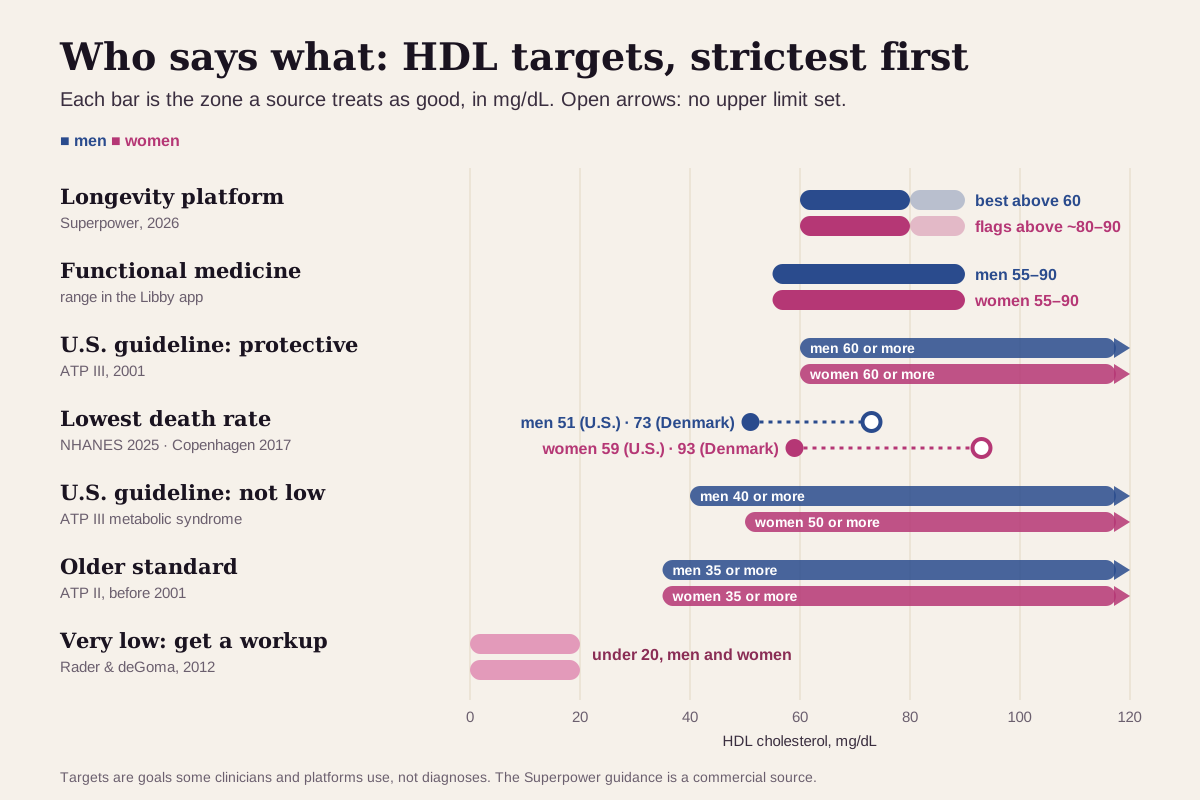
HDL is unusual among lab markers: the healthiest zone has a floor and a ceiling. Here's the ladder, strictest first:
| Target | Men | Women | Who uses it |
|---|---|---|---|
| Strictest (longevity platform) | best above 60, flag above ~80–90 | best above 60, flag above ~80–90 | Superpower's published guidance11 |
| Functional medicine | 55–90 mg/dL | 55–90 mg/dL | The optimal range shown in the Libby app, the same for men and women, with a ceiling at 9012 |
| U.S. guideline, "protective" | 60 mg/dL or more | 60 mg/dL or more | ATP III counts it as a negative risk factor1 |
| Lowest death rate in large studies | 51 (U.S.) to 73 (Denmark) | 59 (U.S.) to 93 (Denmark) | NHANES2 and the Copenhagen studies4 |
| U.S. guideline, "low" | under 40 mg/dL | under 50 mg/dL | ATP III metabolic-syndrome cutoffs1 |
| Older standard | under 35 mg/dL | under 35 mg/dL | The low-HDL cutoff before 2001 (ATP II), as ATP III reports it1 |
| Very low: get a workup | under 20 mg/dL | under 20 mg/dL | Rare; worth checking for medicines, blood cancers and inherited causes5 |
Why the floor and the ceiling exist:
- The floor. In 302,430 people from 68 studies, heart disease was about 2.7 times as common in the bottom third of HDL as in the top third (6.4 vs 2.4 events per 1,000 person-years). Each 15 mg/dL higher HDL went with 22% lower heart-disease risk after adjusting for other risk factors.13
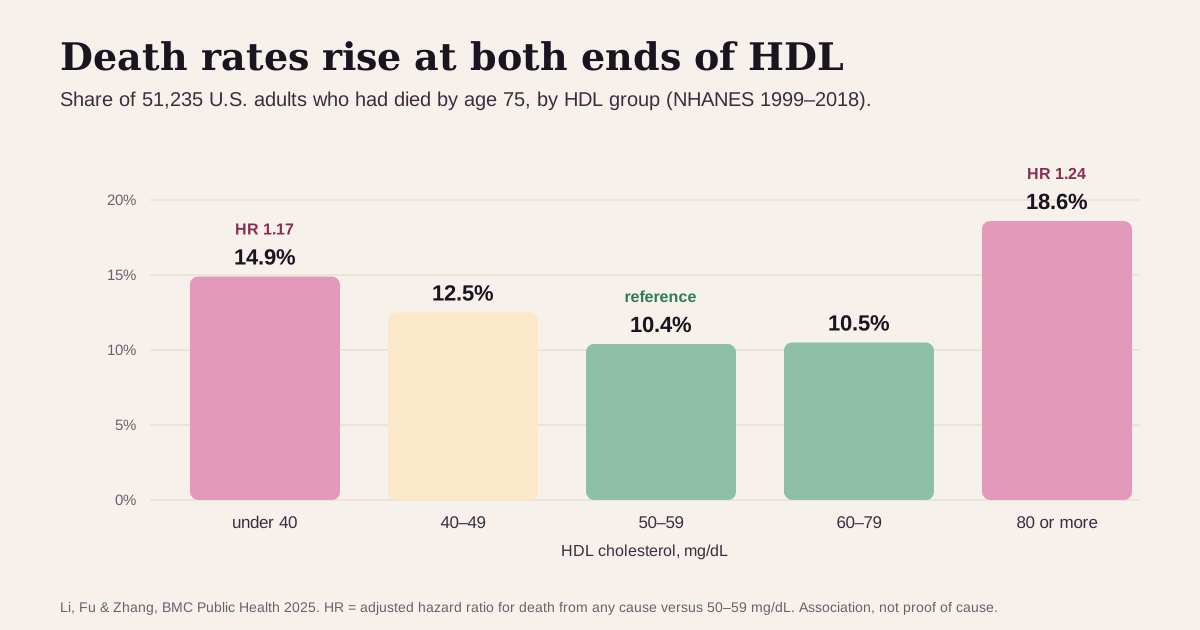
- The ceiling. In 51,235 U.S. adults followed for a median of 9 years, people with HDL of 80 or more had a 24% higher death rate than people at 50–59, and people under 40 had a 17% higher rate. By age 75, 18.6% of the very-high group had died, versus 10.4% of the 50–59 group.2
- In the Copenhagen studies of 116,508 adults, men with HDL of 116 mg/dL or more had about twice the death rate of men at the lowest-risk level (hazard ratio 2.06). For women at 135 or more, it was 1.68.4
- Heart risk itself stops falling at about 90 mg/dL, according to a 2023 European Heart Journal review.7
Keep "optimal" in perspective: these are targets, not diagnoses. For HDL, the optimizer target and the guideline mostly agree. The longevity platform we checked keeps the guideline's 40/50 floors, likes values above 60, and flags the same 80–90 zone where death rates climb in cohorts.112 For a low HDL with metabolic risk factors, the guideline's first-line fix is weight loss and more physical activity, which improve the other risk factors too.1
What a low or very high HDL usually means
A low HDL is common and usually part of a bigger metabolic picture. A very high HDL is less common and has its own short list of causes.
Low HDL (under 40 for men, under 50 for women): the usual suspects
The U.S. cholesterol guideline lists the common causes, and most of them are tied to insulin resistance:1
- High triglycerides, extra weight and inactivity. These travel together. When your blood is crowded with triglyceride-rich particles, HDL trades its cholesterol for their triglyceride, and HDL levels fall. That's why a low HDL so often mirrors high triglycerides.17
- Type 2 diabetes.1
- Smoking. Quitting raises HDL by about 4 mg/dL on average, and the rise comes quickly.16
- A very high-carbohydrate diet, more than 60% of calories.1
- Some medicines: beta-blockers, anabolic steroids and progestins.1 Don't stop a prescribed medicine on your own. Bring your full list to your clinician.
- Being male. In the CDC survey, a low HDL was more than three times as common in men as in women.10
- A serious infection. In sepsis, HDL drops sharply, and it returns to normal after the acute phase in people who recover.17
Very low HDL (under 20): rare, and worth a workup
An HDL under 20 usually comes with triglycerides above 500 mg/dL. When triglycerides are normal, a clinical review in the Journal of Clinical Endocrinology & Metabolism lists what to check: anabolic steroids (which can cut HDL by more than half), a rare reaction to fibrate drugs, blood cancers, a lab interference from abnormal antibodies (paraproteins), and inherited conditions such as Tangier disease.5
High and very high HDL: what raises it
- Alcohol. In drinking trials, alcohol raised HDL by about 3.6 mg/dL on average, more at higher doses.14
- Estrogen. Estrogen therapy raised HDL by 5.6 mg/dL over 3 years in the PEPI trial of postmenopausal women.15
- Regular exercise raises it modestly (see how fast it changes).18
- Being a woman. In NHANES, 80% of people with an HDL of 80 or more were women, and they were older on average (52 years, versus 45 to 48 in the other groups).2
Above about 90 mg/dL, extra HDL stops tracking with less heart disease, and very high levels go with more deaths in large studies.72 A very high result is a reason to look at alcohol and the rest of your panel.
Get care now for symptoms, never for this number. Call 911 for chest pressure or pain lasting more than a few minutes, shortness of breath, or discomfort spreading to the arms, back, neck or jaw.3
HDL reads best next to its neighbors
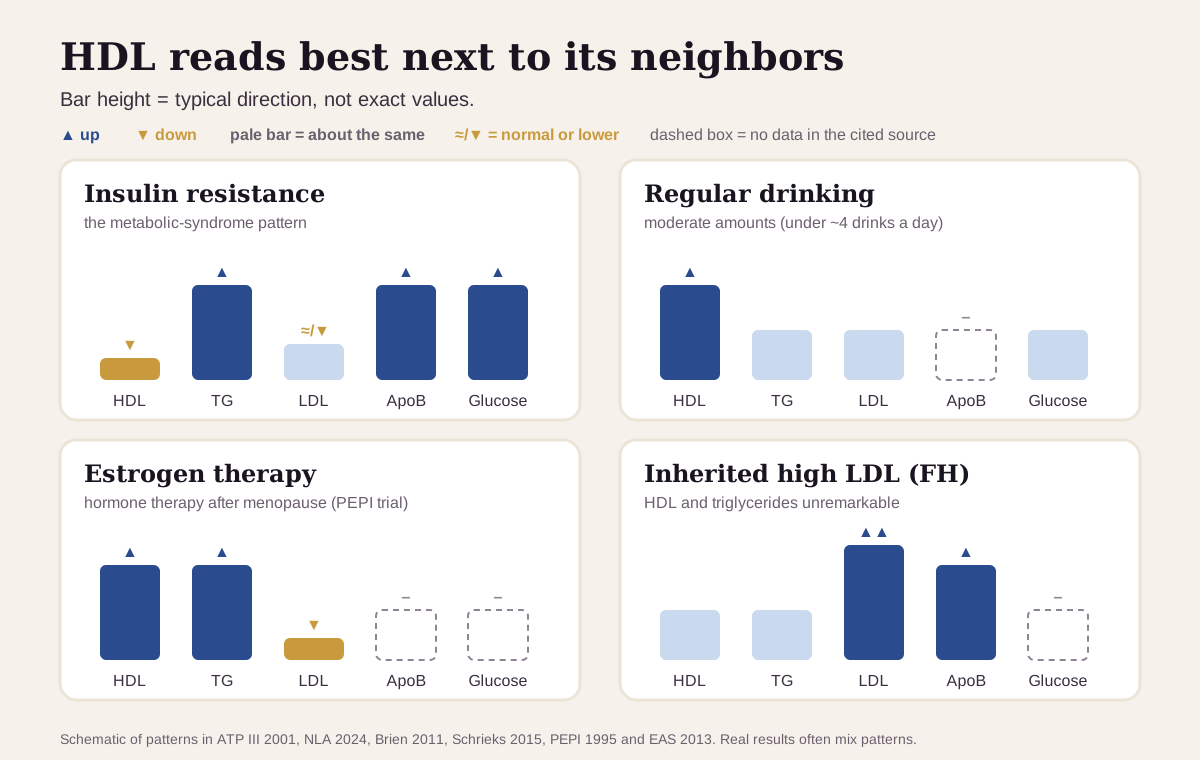
HDL rarely tells the story alone. Read it with triglycerides, LDL, ApoB and fasting blood sugar:
| If you see… | It often points to… |
|---|---|
| Low HDL + high triglycerides, LDL normal or low but ApoB high, often higher blood sugar | insulin resistance and the metabolic syndrome19 |
| HDL up, with triglycerides, LDL and blood sugar about the same | regular drinking, which raises HDL (more at higher doses)1419 |
| HDL up + triglycerides up + LDL down | estrogen therapy after menopause15 |
| Very high LDL and ApoB (total cholesterol 310 or more), HDL and triglycerides unremarkable | inherited high LDL (familial hypercholesterolemia): the high LDL drives the risk209 |
| HDL under 20, triglycerides not severely high | a rare cause: anabolic steroids, a drug reaction, a blood cancer, lab interference or an inherited condition5 |
A low HDL with high triglycerides often hides extra plaque-building particles. With insulin resistance, LDL cholesterol can look normal or even low while the particle count, measured as ApoB, runs high.9 That's one reason to ask about an ApoB test when your HDL is low and your triglycerides are high.
How fast HDL changes
HDL moves slowly and modestly. Most everyday changes shift it by a few mg/dL:
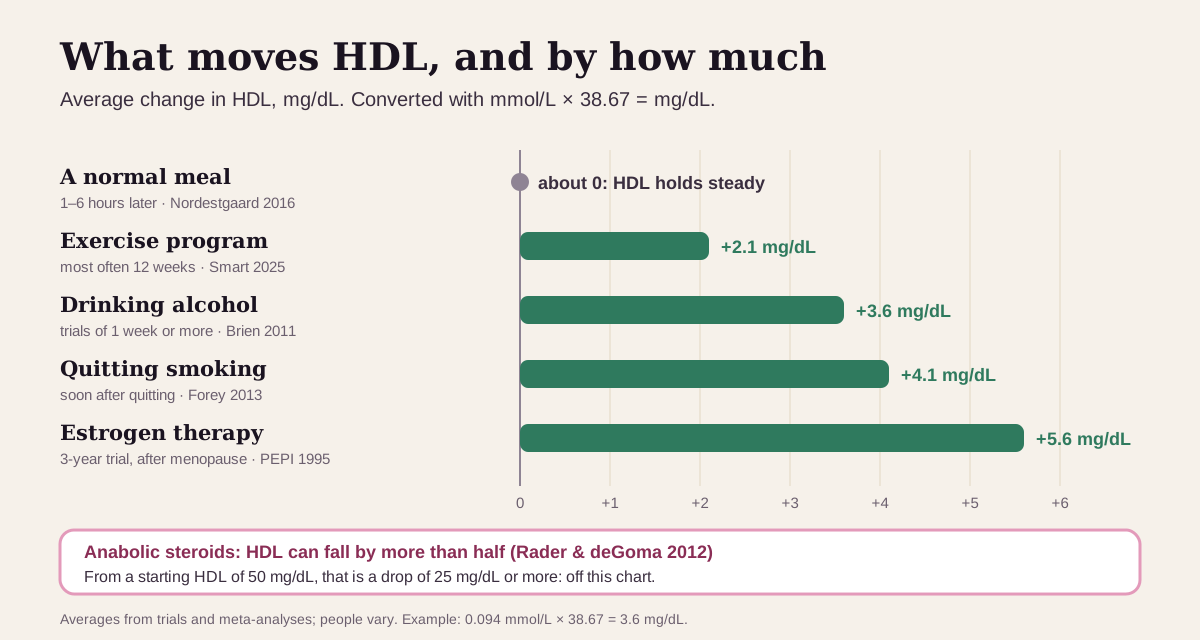
- A meal: HDL held steady in the hours after normal meals, while triglycerides rose by up to 26 mg/dL. You can test HDL without fasting.8
- Exercise: in 148 trials, exercise programs (12 weeks was the most common length) raised HDL by 2.1 mg/dL on average.18
- Quitting smoking: about +4 mg/dL, soon after quitting.16
- Alcohol: about +3.6 mg/dL in drinking trials.14
- Anabolic steroids: can cut HDL by more than half. A drop from a fibrate reaction resolved within about a month of stopping the drug.5
- A serious infection: a sharp drop that recovers afterward.17
What that means in practice:
- Trends beat snapshots. Most lifestyle changes move HDL by 2–4 mg/dL, so compare results over months, ideally from the same lab.181614
- A big, sudden drop stands out. A fall of 10 mg/dL or more is larger than any lifestyle effect above. Recent illness, a new medicine or steroid use are the first things to ask about.517
Going deeper: why raising HDL hasn't prevented heart attacks
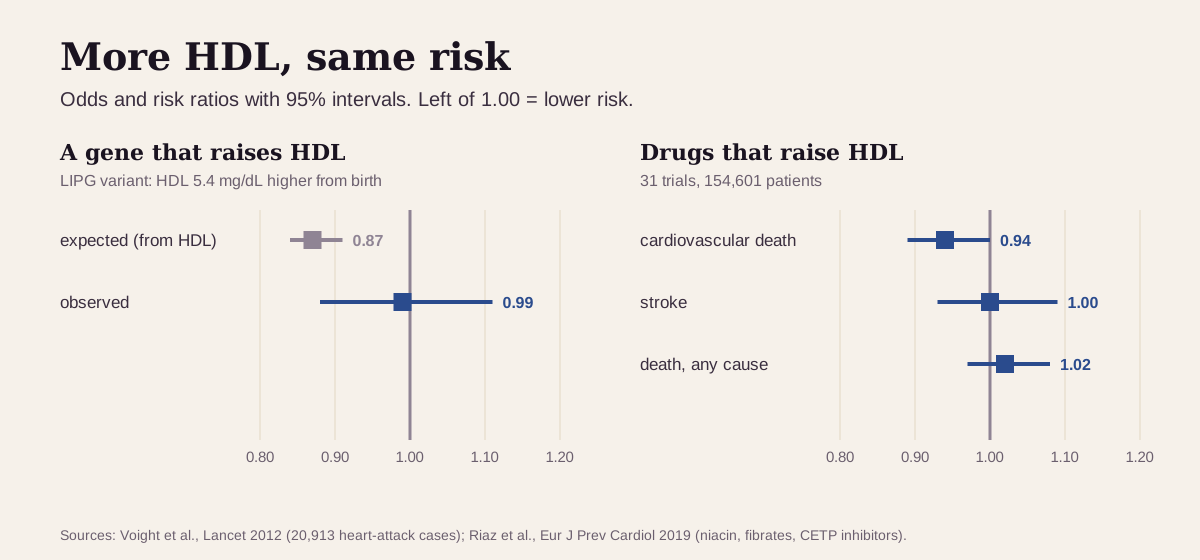
Two kinds of evidence changed how cardiologists see HDL:
- Genes. About 2.6% of people carry a variant in the endothelial lipase gene (LIPG) that raises HDL by about 5.4 mg/dL from birth. Based on the usual HDL-risk link, carriers should have had 13% lower odds of a heart attack. Their odds were the same as everyone else's (odds ratio 0.99, in 20,913 heart-attack cases and 95,407 controls).21
- Drugs. In 31 trials with 154,601 patients, drugs that raise HDL (niacin, fibrates and CETP inhibitors) made no significant difference to cardiovascular deaths, strokes or overall deaths. Fibrates cut heart attacks somewhat, a benefit that disappeared when patients also took a statin.6
The current view, summed up in a 2023 European Heart Journal review: a low HDL mostly signals too many triglyceride-rich particles, the ones that do the damage, rather than causing the damage itself.7 HDL has other jobs too, such as soaking up bacterial toxins. That may be one reason both very low and very high HDL track with more infections.7
The triglyceride-to-HDL ratio. Divide your triglycerides by your HDL, both in mg/dL. In a study of 258 overweight adults, a ratio of 3.0 or higher picked out insulin resistance about as well as the full metabolic-syndrome checklist.22
Questions worth asking
- Is my HDL low, and are my triglycerides and blood sugar high along with it?
- Would an ApoB test help, given my HDL and triglycerides?
- Could any of my medicines, such as beta-blockers, hormones or steroids, be moving my HDL?
- If my HDL is very high, does my alcohol intake explain it?
- If my HDL is under 20, what should we check?
- What's my overall heart-risk score using my exact HDL and total cholesterol?
FAQ
What is a good HDL level? At least 40 mg/dL for men and 50 for women. The U.S. guideline counts 60 or higher as protective. Above about 90, extra HDL brings no added heart benefit.17
What causes low HDL? Most often insulin resistance: high triglycerides, extra weight, inactivity and type 2 diabetes. Smoking and some medicines lower it too.1
Can HDL be too high? Yes. In large U.S. and Danish studies, people with very high HDL (80 or more in the U.S. study; 97 or more for men and 135 or more for women in the Danish one) had higher death rates. The reason is still unclear.24
Do I need to fast for an HDL test? Usually no. HDL holds steady after a normal meal. Your clinician may still ask you to fast if your triglycerides matter for the visit.8
This guide is for education. It can't diagnose you or replace care from a clinician who knows your history.
Footnotes
-
Expert Panel on Detection, Evaluation, and Treatment of High Blood Cholesterol in Adults. Executive Summary of the Third Report of the National Cholesterol Education Program (NCEP) Expert Panel on Detection, Evaluation, and Treatment of High Blood Cholesterol in Adults (Adult Treatment Panel III). JAMA. 2001;285(19):2486–2497. The U.S. HDL categories (under 40 low, 60 or more high), the change from ATP II's under-35 cutoff, the metabolic-syndrome cutoffs, and the causes of low HDL. NHLBI summary · PubMed ↩ ↩2 ↩3 ↩4 ↩5 ↩6 ↩7 ↩8 ↩9 ↩10 ↩11 ↩12 ↩13 ↩14 ↩15 ↩16 ↩17 ↩18 ↩19 ↩20 ↩21 ↩22
-
Li S, Fu Z, Zhang W. Association of high-density lipoprotein cholesterol with all-cause and cause-specific mortality in the general population: insights from NHANES 1999-2018. BMC Public Health. 2025;25(1):1123. 51,235 U.S. adults; U-shaped risk, lowest at 51 mg/dL (men) and 59 (women). PMC ↩ ↩2 ↩3 ↩4 ↩5 ↩6 ↩7 ↩8 ↩9 ↩10 ↩11 ↩12
-
National Library of Medicine. HDL: The "Good" Cholesterol; Heart Attack. MedlinePlus. Healthy HDL levels by age and sex, and heart-attack symptoms. HDL · Heart attack ↩ ↩2 ↩3 ↩4
-
Madsen CM, Varbo A, Nordestgaard BG. Extreme high high-density lipoprotein cholesterol is paradoxically associated with high mortality in men and women: two prospective cohort studies. Eur Heart J. 2017;38(32):2478–2486. 116,508 Danish adults; lowest death rate at 73 mg/dL (men) and 93 (women). PubMed ↩ ↩2 ↩3 ↩4 ↩5
-
Rader DJ, deGoma EM. Approach to the patient with extremely low HDL-cholesterol. J Clin Endocrinol Metab. 2012;97(10):3399–3407. The under-20 workup, anabolic steroids, fibrate reactions, lab interference, inherited causes, and how HDL is made. PMC ↩ ↩2 ↩3 ↩4 ↩5 ↩6 ↩7 ↩8 ↩9 ↩10
-
Riaz H, Khan SU, Rahman H, et al. Effects of high-density lipoprotein targeting treatments on cardiovascular outcomes: A systematic review and meta-analysis. Eur J Prev Cardiol. 2019;26(5):533–543. 31 randomized trials, 154,601 patients. PMC ↩ ↩2 ↩3
-
von Eckardstein A, Nordestgaard BG, Remaley AT, Catapano AL. High-density lipoprotein revisited: biological functions and clinical relevance. Eur Heart J. 2023;44(16):1394–1407. How HDL moves cholesterol, why heart risk flattens above about 90 mg/dL, and low HDL as a marker of triglyceride-rich particles. PMC ↩ ↩2 ↩3 ↩4 ↩5 ↩6 ↩7 ↩8
-
Nordestgaard BG, Langsted A, Mora S, et al. Fasting is not routinely required for determination of a lipid profile: clinical and laboratory implications including flagging at desirable concentration cut-points. Eur Heart J. 2016;37(25):1944–1958. HDL unchanged after meals; the 40 mg/dL flag; non-HDL cholesterol. PMC ↩ ↩2 ↩3 ↩4 ↩5
-
Soffer DE, Marston NA, Maki KC, et al. Role of apolipoprotein B in the clinical management of cardiovascular risk in adults: An Expert Clinical Consensus from the National Lipid Association. J Clin Lipidol. 2024;18(5):e647–e663. One ApoB per plaque-building particle; insulin resistance lowers LDL cholesterol while ApoB stays high; familial hypercholesterolemia (type IIa) has ApoB of 120 mg/dL or more with triglycerides under 133. PMC ↩ ↩2 ↩3 ↩4 ↩5
-
National Center for Health Statistics. NCHS Data Brief No. 515: total and HDL cholesterol in U.S. adults, August 2021–August 2023. Centers for Disease Control and Prevention; November 2024. Low HDL (under 40 mg/dL) in 13.8% of adults, 21.5% of men and 6.6% of women. CDC ↩ ↩2 ↩3 ↩4
-
Superpower. HDL Cholesterol biomarker page (last updated September 1, 2026) and "HDL Cholesterol: Why Higher Isn't Always Safer" (last updated August 31, 2026). States that benefit "is often strongest when HDL is above 60 mg/dL" and flags HDL "above roughly 80 to 90 mg/dL". A commercial source, listed as what the optimizer community uses. Biomarker page · Guide ↩ ↩2 ↩3
-
Institute for Functional Medicine. Clinical practice guidelines and Advanced Practice Modules (range as recorded in the Libby app's marker catalog; member-only modules not opened for this article). The source of the app's optimal HDL range of 55–90 mg/dL for men and women. https://www.ifm.org ↩ ↩2
-
Emerging Risk Factors Collaboration; Di Angelantonio E, Sarwar N, Perry P, et al. Major lipids, apolipoproteins, and risk of vascular disease. JAMA. 2009;302(18):1993–2000. 302,430 people from 68 studies: hazard ratio 0.78 for heart disease per 15 mg/dL higher HDL. PMC ↩
-
Brien SE, Ronksley PE, Turner BJ, et al. Effect of alcohol consumption on biological markers associated with risk of coronary heart disease: systematic review and meta-analysis of interventional studies. BMJ. 2011;342:d636. HDL +0.094 mmol/L (3.6 mg/dL) with a dose response; LDL, total cholesterol and triglycerides unchanged below 60 g/day. PMC ↩ ↩2 ↩3 ↩4 ↩5 ↩6 ↩7
-
The Writing Group for the PEPI Trial. Effects of estrogen or estrogen/progestin regimens on heart disease risk factors in postmenopausal women. The Postmenopausal Estrogen/Progestin Interventions (PEPI) Trial. JAMA. 1995;273(3):199–208. 875 women for 3 years: estrogen alone raised HDL 5.6 mg/dL; active treatments lowered LDL 14.5–17.7 and raised triglycerides 11.4–13.7 mg/dL. PubMed ↩ ↩2 ↩3 ↩4 ↩5
-
Forey BA, Fry JS, Lee PN, et al. The effect of quitting smoking on HDL-cholesterol - a review based on within-subject changes. Biomark Res. 2013;1(1):26. Average rise of 0.107 mmol/L (4.1 mg/dL), appearing soon after quitting. PMC ↩ ↩2 ↩3 ↩4
-
Li M, Barros-Pinkelnig M, Arbous SM, et al. High-density lipoprotein: a biomarker and therapeutic target in sepsis. Crit Care. 2025;29:453. HDL falls sharply in sepsis and normalizes after the acute phase. PMC ↩ ↩2 ↩3
-
Smart NA, Downes D, van der Touw T, et al. The Effect of Exercise Training on Blood Lipids: A Systematic Review and Meta-analysis. Sports Med. 2025;55(1):67–78. 148 randomized trials, 8,673 people: HDL +2.11 mg/dL. PMC ↩ ↩2 ↩3 ↩4
-
Schrieks IC, Heil AL, Hendriks HF, et al. The effect of alcohol consumption on insulin sensitivity and glycemic status: a systematic review and meta-analysis of intervention studies. Diabetes Care. 2015;38(4):723–732. Fasting glucose unchanged across 14 trials. PubMed ↩ ↩2
-
Nordestgaard BG, Chapman MJ, Humphries SE, et al. Familial hypercholesterolaemia is underdiagnosed and undertreated in the general population: guidance for clinicians to prevent coronary heart disease. Eur Heart J. 2013;34(45):3478–3490a. The European Atherosclerosis Society consensus: total cholesterol of 8 mmol/L (310 mg/dL) or more, with HDL and triglycerides "generally unremarkable". PMC ↩ ↩2
-
Voight BF, Peloso GM, Orho-Melander M, et al. Plasma HDL cholesterol and risk of myocardial infarction: a mendelian randomisation study. Lancet. 2012;380(9841):572–580. The LIPG variant: expected odds ratio 0.87, observed 0.99. PMC ↩ ↩2
-
McLaughlin T, Abbasi F, Cheal K, et al. Use of metabolic markers to identify overweight individuals who are insulin resistant. Ann Intern Med. 2003;139(10):802–809. The triglyceride-to-HDL cut-point of 3.0 (mg/dL). PubMed ↩
Educational content, not medical advice.Libby is a personal record tool, not a medical service — it doesn't diagnose, treat, or prescribe. Reference ranges vary by lab and by person. Talk to a qualified healthcare professional about your results.
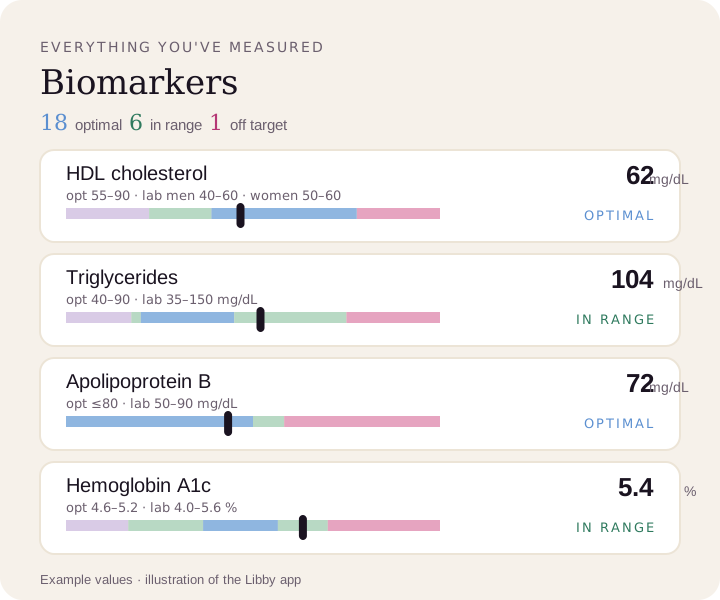
Compare your results to optimal ranges.
Upload a lab PDF or a photo of your report. Libby puts every marker on your lab's range and the optimal range, and tracks your trends over time.
View your HDL ›