Triglycerides: normal levels, high causes, and next steps
Triglycerides are the fat in your blood. Here's what a normal level is, why they run high, how to read them with HDL and LDL, and when a result is urgent.
Triglycerides are the main form of fat in your blood. They carry energy from your meals and from your liver to your muscles and fat tissue. A high level most often travels with extra weight, a diet heavy in sugar, too much alcohol, or insulin resistance, and a very high level can inflame the pancreas.12
The short version
- Normal: under 150 mg/dL after fasting, or under 175 mg/dL if you had eaten. Health optimizers aim for under 100.23
- Borderline to high (150–499 mg/dL) is common: up to 1 in 4 adults has high triglycerides. The usual reasons are extra weight, inactivity, sugary drinks and refined carbs, insulin resistance or type 2 diabetes, alcohol, and some medicines.21
- Very high (500 mg/dL or more) raises the risk of acute pancreatitis. Call your clinician promptly, and get care right away for severe belly pain.24
- Triglycerides react to your last meal. A normal meal raises them by about 26 mg/dL on average, for up to about 6 hours.35
What triglycerides are
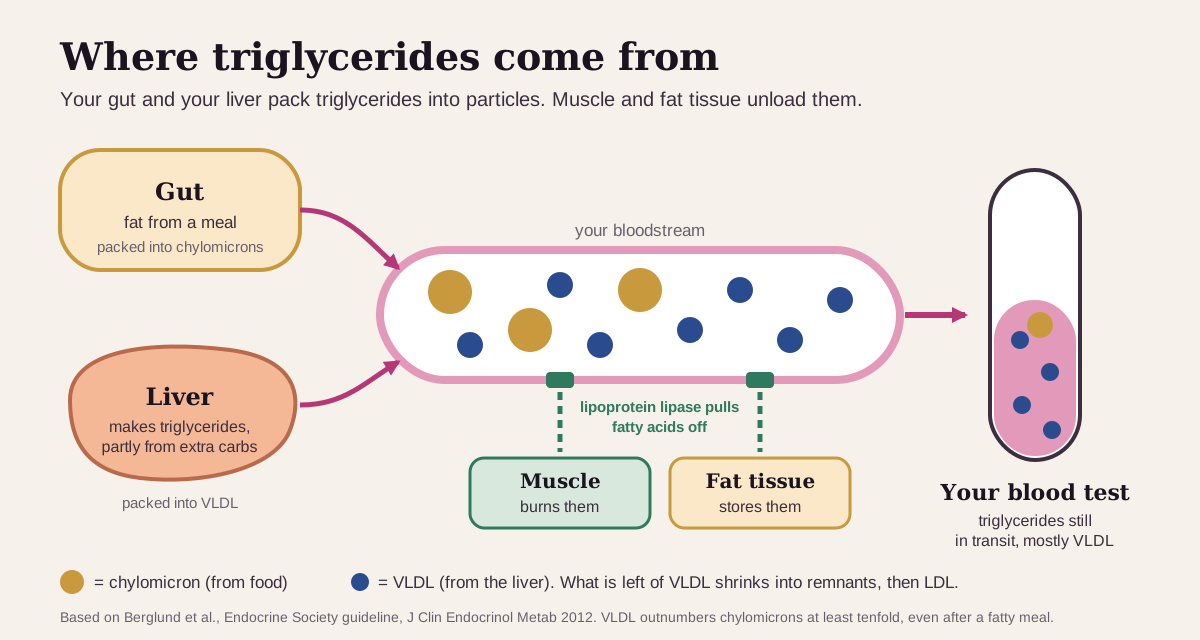
Triglycerides are your body's densest form of stored energy. Fat from a meal is packed in your gut into particles called chylomicrons. Your liver makes triglycerides too, partly from extra carbohydrate, and ships them out in particles called VLDL (very-low-density lipoprotein).1
As those particles travel, an enzyme on the walls of your small blood vessels, lipoprotein lipase, pulls fatty acids off them and passes them into your cells.1 Your body uses them for energy or stores them in your fat cells for later.7 What's left of a VLDL particle shrinks into a remnant and eventually becomes LDL.1
Your blood test measures the triglycerides still riding in those particles at the moment of the draw. Most of that is VLDL: even after a fatty meal, VLDL outnumbers chylomicrons at least tenfold.1 Triglycerides are part of every standard lipid panel, alongside total cholesterol, HDL and LDL.7
What's a normal triglyceride level?
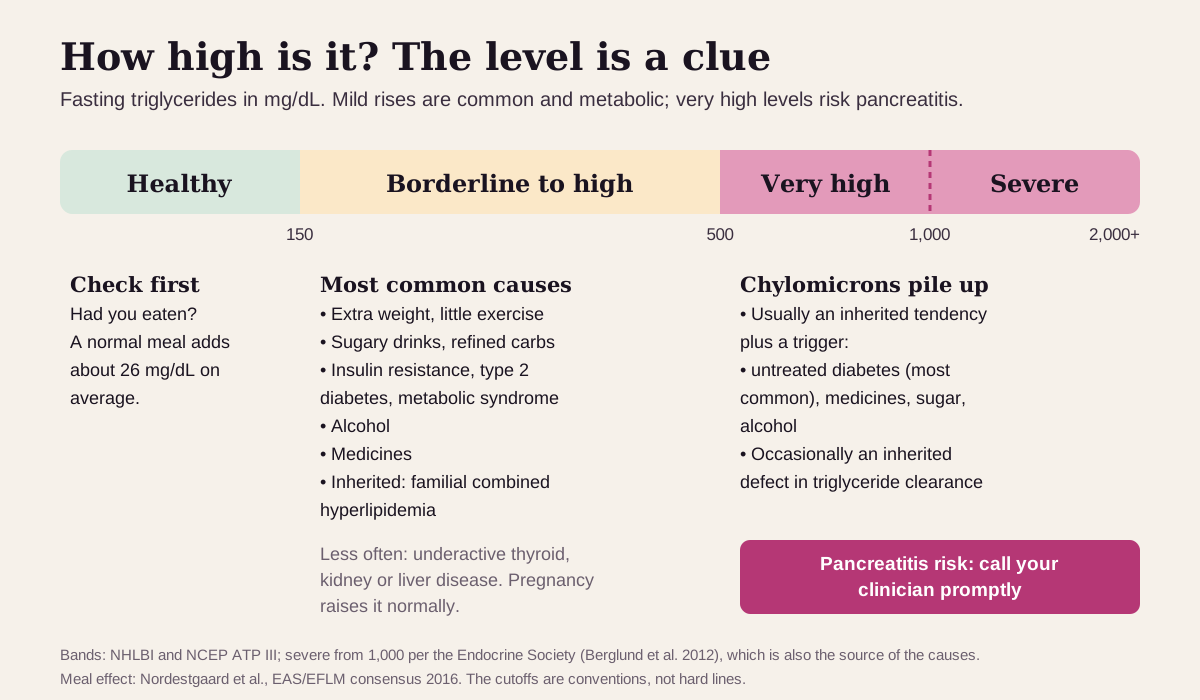
For adults, the U.S. National Heart, Lung, and Blood Institute (NHLBI) sorts fasting triglycerides into four bands:2
- Healthy: under 150 mg/dL
- Borderline high: 150–199 mg/dL
- High: 200–499 mg/dL
- Very high: 500 mg/dL and above
These are the categories many lab reports print. They come from the NCEP ATP III cholesterol program.17 Children and teens (ages 10–19) have a lower line: under 90 mg/dL.2
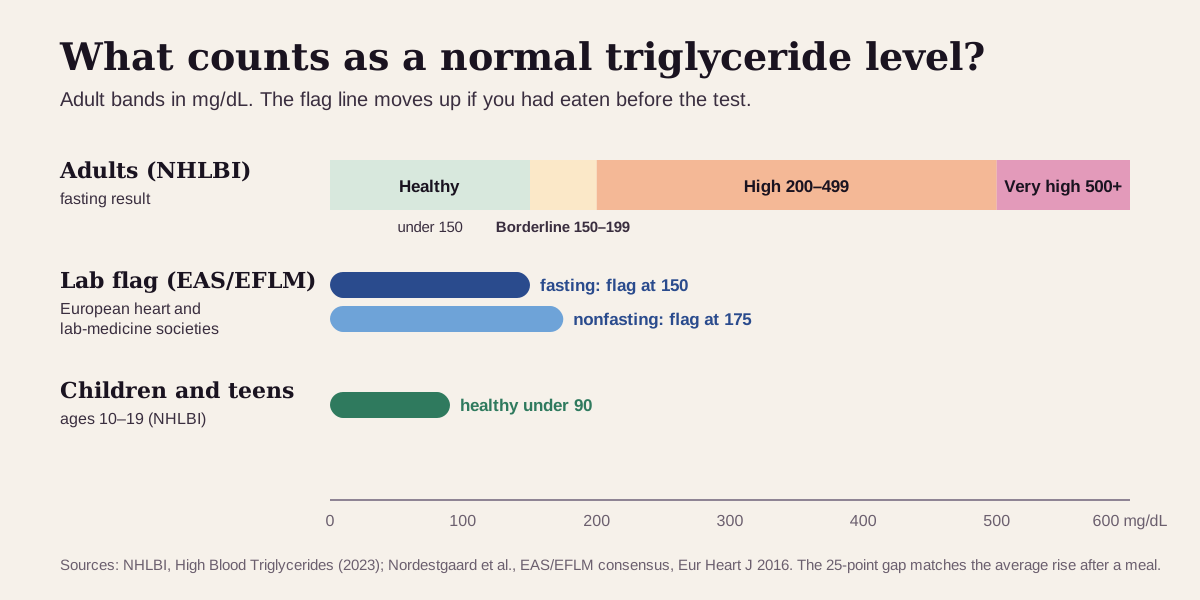
Whether you ate changes the line. European heart and lab-medicine societies recommend nonfasting lipid panels for most people. They flag a nonfasting triglyceride at 175 mg/dL or more, and a fasting one at 150. The 25-point gap matches the average rise after a normal meal.3 The NHLBI also treats nonfasting levels that stay above 175 as a heart risk.2 Your clinician may still ask you to fast for 9 to 12 hours.7
High triglycerides are common. The NHLBI says up to 1 in 4 adults has them.2 With the 175 flag, about 27% of adults in a typical Western or Northern European country would have a flagged nonfasting result.3
"Optimal" triglycerides: what health optimizers aim for
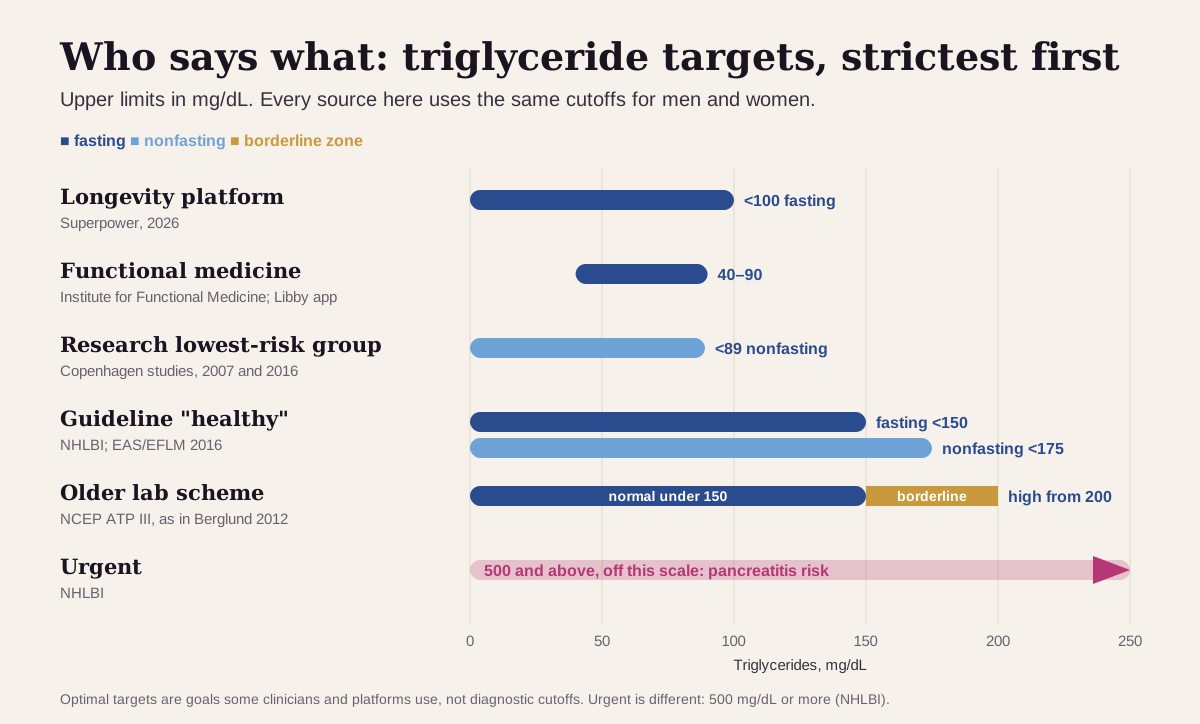
Longevity platforms and functional-medicine practitioners aim well below the lab's 150. Here's the full ladder, from strictest to loosest:
| Target | Level (mg/dL) | Who uses it |
|---|---|---|
| Longevity platforms | under 100, fasting | Superpower's published optimal range8 |
| Functional medicine | 40–90 | The optimal range shown in the Libby app, whose catalog credits it to the Institute for Functional Medicine9 |
| Research lowest-risk group | under 89, nonfasting | The comparison group in the Copenhagen heart-attack and pancreatitis studies1011 |
| Guideline "healthy" | under 150 fasting; under 175 nonfasting | NHLBI and the European EAS/EFLM consensus23 |
| Older lab scheme | 150–199 is only "borderline"; "high" starts at 200 | NCEP ATP III, still printed on many reports17 |
| Urgent | 500 or more | Pancreatitis risk rises: call your clinician promptly2 |
Every source in this ladder uses the same cutoffs for men and women.
Why the low targets aren't just a trend:
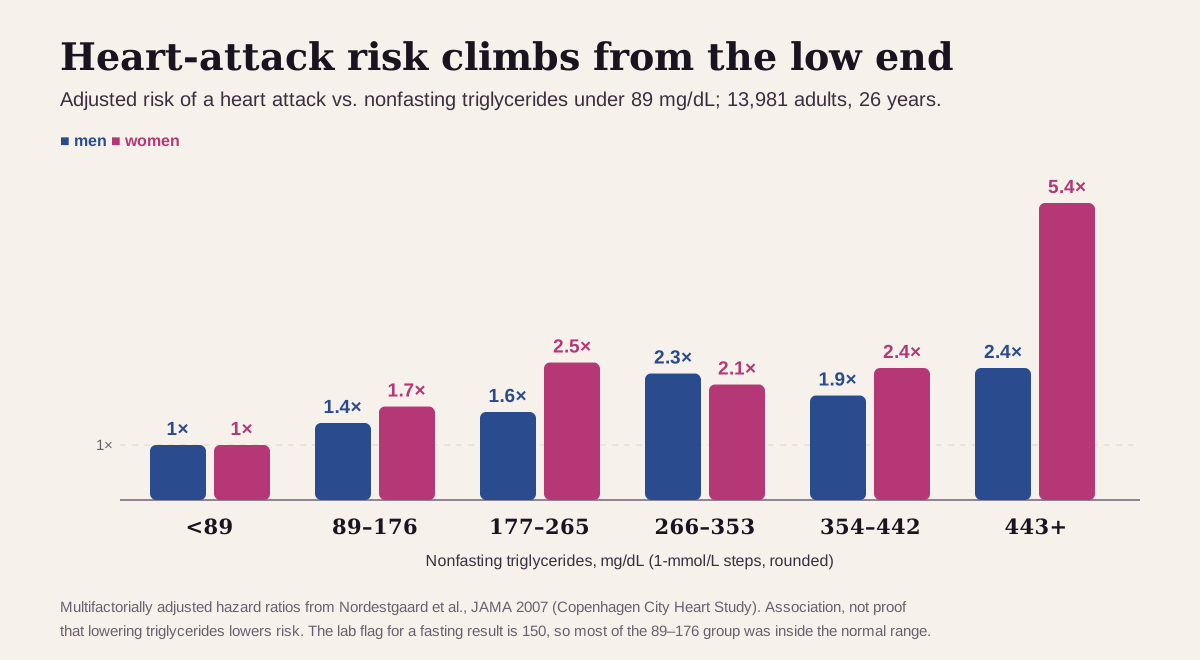
- In the Copenhagen City Heart Study, 13,981 adults were followed for an average of 26 years. Compared with nonfasting triglycerides under 89 mg/dL, a level of 89–176, which is mostly inside the "normal" range, carried 1.7 times (women) and 1.4 times (men) the adjusted risk of a heart attack. At 443 or more, it was 5.4 and 2.4 times.10
- In a Stanford study of 258 overweight adults, a fasting triglyceride of 130 mg/dL or more was one of the best simple flags for insulin resistance.12
Keep "optimal" in perspective: these are targets, not diagnoses. A fasting triglyceride of 130 is a reason to look at your weight, your waist, your blood sugar, sugary drinks and alcohol.112 The functional range in the Libby app also has a floor of 40 mg/dL.9
What a high triglyceride level usually means
Start with one question: had you eaten? A normal meal raises triglycerides by about 26 mg/dL on average, and the rise lasts 5 to 6 hours.35 A nonfasting 165 and a fasting 165 are different results.
Borderline to high (150–499 mg/dL): common, usually metabolic
The usual suspects:
- Extra weight, too little exercise, and a diet heavy in sugar and refined carbs. The Endocrine Society says this explains much of the rise in triglycerides during adult life, and it names sugar-sweetened drinks specifically.1
- Insulin resistance, metabolic syndrome and type 2 diabetes. These are the most common settings for high triglycerides.1 They often come with a low HDL and a blood sugar over 100 (see patterns below).
- Alcohol. Drinking too much raises triglycerides.21
- Medicines. Examples include thiazide diuretics, beta-blockers, oral estrogen, isotretinoin, corticosteroids, some HIV medicines, immunosuppressants and antipsychotics.1 Don't stop a prescribed medicine on your own. Bring your full list to your clinician.
- Inherited patterns. Familial combined hyperlipidemia raises triglycerides and LDL together, and it runs with early heart disease.1
- Less common causes: an underactive thyroid, kidney disease, liver disease and autoimmune disorders.12 Pregnancy raises triglycerides normally: by the third trimester they can be 200% or more above pre-pregnancy levels.1
Very high (500 mg/dL and up): pancreatitis risk
At these levels, chylomicrons pile up in the blood. Usually that's an inherited tendency plus a trigger. The most common trigger is untreated diabetes; medicines, sugar and alcohol are others.1 Occasionally, it's an inherited defect in the system that clears triglycerides.1
- The NHLBI links levels over 500 mg/dL to acute pancreatitis.2
- The Endocrine Society calls 1,000–1,999 mg/dL severe and 2,000 or more very severe. It says pancreatitis can be prevented by keeping triglycerides below 1,000.1
- European guidance asks labs to refer anyone over 880 mg/dL to a lipid specialist.3
- The risk climbs well before 500. In 116,550 Danish adults, pancreatitis risk was 2.3 times higher at 177–265 mg/dL and 8.7 times higher at 443 or more, compared with under 89.11
Very high levels can also cause bumps on the skin (eruptive xanthomas), belly pain and short-term memory loss.12
Get care right away for severe or worsening belly pain (often in the upper belly, spreading to the back), nausea and vomiting, fever or chills, a fast heartbeat, shortness of breath, or yellow skin or eyes.4 A triglyceride of 500 or more is worth a prompt call to your clinician even without symptoms.2
Triglycerides read best next to their neighbors
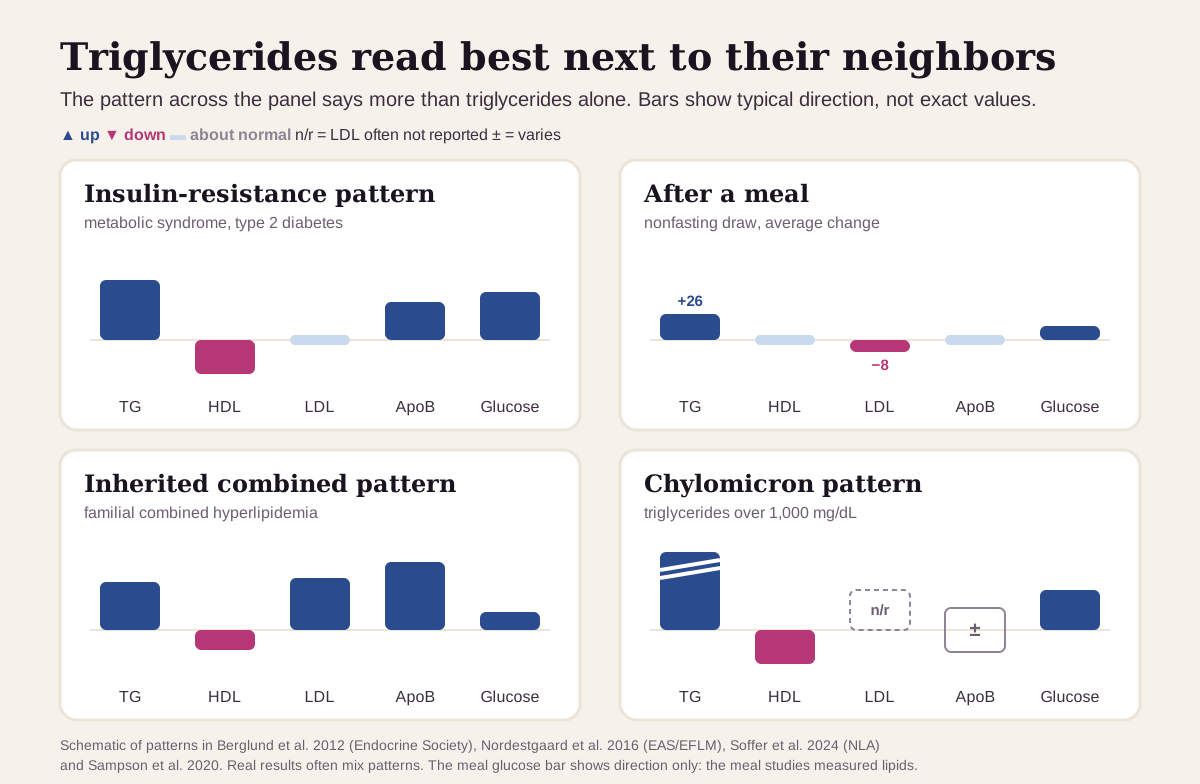
Your triglyceride level makes more sense next to HDL, LDL, ApoB and blood sugar. The pattern across them usually says more than triglycerides alone:
| If you see… | It often points to… |
|---|---|
| Triglycerides up, HDL down, blood sugar over 100, ApoB up while LDL looks normal | insulin resistance or metabolic syndrome; in one study, a triglyceride-to-HDL ratio of 3.0 or more flagged insulin resistance |
| Triglycerides a little up, LDL a little down, HDL and ApoB unchanged | a recent meal: on average about +26 mg/dL for triglycerides and −8 mg/dL for LDL |
| Triglycerides and LDL both up, ApoB high | familial combined hyperlipidemia, especially with early heart disease in the family; HDL is often low and blood sugar often a little high too |
| Triglycerides over 1,000, HDL low, LDL "not calculated" | a buildup of chylomicrons, often an inherited tendency plus untreated diabetes, alcohol or a medicine |
Sources for the rows: Berglund 2012,1 McLaughlin 2003,12 EAS/EFLM 2016,3 NLA 202413 and Sampson 2020.6
Triglycerides and LDL both up? Guidelines ask clinicians to rule out secondary causes, including an underactive thyroid, which raises LDL and sometimes triglycerides.1 A high TSH most often means an underactive thyroid.14
How fast triglycerides change
Triglycerides move more with meals than anything else on your lipid panel. After a normal meal, triglycerides rise by about 26 mg/dL on average, while LDL and total cholesterol move by about 8.3 In 25,656 Danish adults, blood triglycerides stayed above fasting levels for 5–6 hours after a meal, and the triglyceride carried inside LDL and HDL stayed up for 6–7 hours.5
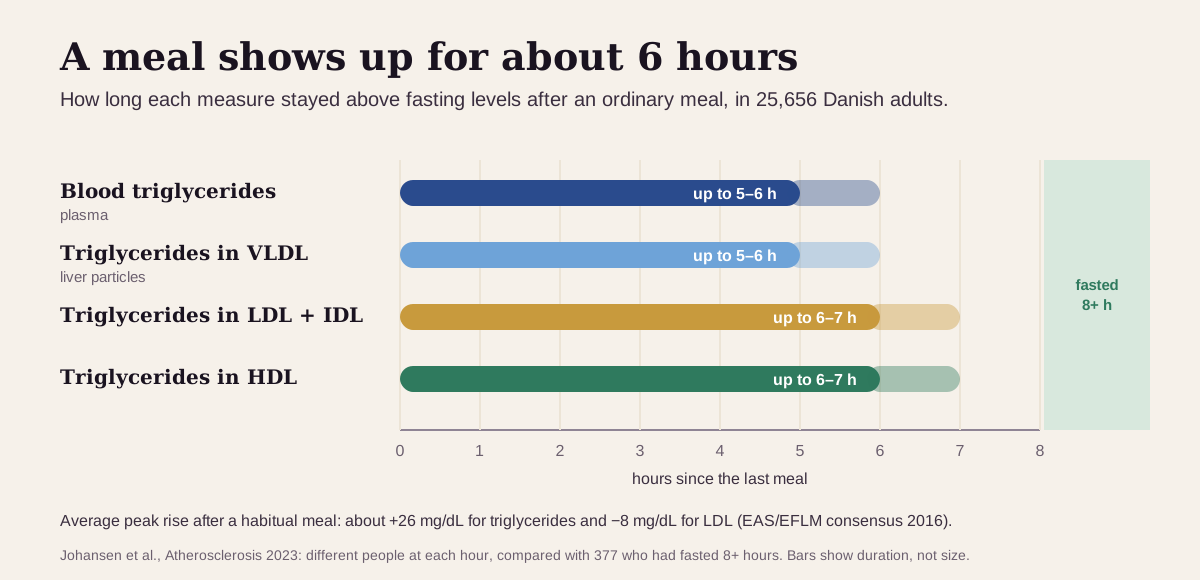
What that means in practice:
- Tell the lab when you last ate. Compare fasting results with fasting results. If a nonfasting triglyceride comes back over 440 mg/dL, European guidance suggests repeating the test fasting.3
- Very high levels spike after fatty meals. Above 1,000 mg/dL, a single fat-rich meal can push triglycerides up quickly.1
- Lifestyle comes first. For mild to moderate high triglycerides, the Endocrine Society recommends diet changes, more activity and weight loss as the first treatment, and cutting sugary drinks is part of it.1
- Trends beat snapshots. A level that falls over several tests taken the same way tells you more than any single number.
Going deeper: triglycerides and your LDL number
Most labs calculate LDL instead of measuring it. The classic shortcut is the Friedewald equation:6
LDL-C = total cholesterol − HDL-C − (triglycerides ÷ 5)
That last term is the weak point. It assumes VLDL always carries the same ratio of cholesterol to triglyceride, and it drifts as triglycerides rise.613 Labs usually stop reporting a calculated LDL once triglycerides reach 400 mg/dL. The newer Sampson (NIH) equation stays as accurate up to 800 as Friedewald is below 400.6 ApoB, which is measured directly, sidesteps the problem: high triglycerides, obesity and insulin resistance can leave LDL looking low while ApoB stays high.13
The triglyceride-to-HDL ratio is a quick insulin-resistance clue. Divide triglycerides by HDL, both in mg/dL. In McLaughlin's study of 258 overweight adults, a ratio of 3.0 or more flagged insulin resistance about as well as the full metabolic-syndrome criteria did.12
Questions worth asking
- Was this sample fasting, and should we repeat it fasting?
- Is my level borderline, high or very high, and does that change the plan?
- What do my HDL, LDL, ApoB and fasting glucose show next to it?
- Could any of my medicines be raising it?
- Should I be checked for diabetes, thyroid, kidney or liver problems?
- Does anyone in my family have very high triglycerides or early heart disease?
FAQ
What is a normal triglyceride level? For adults, under 150 mg/dL after fasting, or under 175 mg/dL if you had eaten. Health optimizers aim for under 100.238
Do I need to fast for a triglyceride test? Often not. European societies recommend nonfasting lipid panels for most people; a normal meal adds about 26 mg/dL on average. Your clinician may still ask you to fast for 9 to 12 hours.37
What is the most common cause of high triglycerides? Extra weight, too little exercise and a diet heavy in sugar and refined carbs, often with insulin resistance or type 2 diabetes. Alcohol and some medicines are other common causes.1
When are triglycerides dangerous? At 500 mg/dL or more, the risk of acute pancreatitis rises. Get care right away for severe belly pain, vomiting or fever.24
This guide is for education. It can't diagnose you or replace care from a clinician who knows your history.
Footnotes
-
Berglund L, Brunzell JD, Goldberg AC, et al. Evaluation and treatment of hypertriglyceridemia: an Endocrine Society clinical practice guideline. J Clin Endocrinol Metab. 2012;97(9):2969–2989. The Endocrine Society's guideline: how triglycerides travel, the NCEP ATP III and Endocrine Society categories, secondary causes, metabolic syndrome, familial combined hyperlipidemia, pregnancy, chylomicronemia and first-line lifestyle treatment. PMC ↩ ↩2 ↩3 ↩4 ↩5 ↩6 ↩7 ↩8 ↩9 ↩10 ↩11 ↩12 ↩13 ↩14 ↩15 ↩16 ↩17 ↩18 ↩19 ↩20 ↩21 ↩22 ↩23 ↩24 ↩25 ↩26 ↩27 ↩28
-
National Heart, Lung, and Blood Institute. High Blood Triglycerides. NIH; updated April 19, 2023. The adult and child categories, how common high triglycerides are, the nonfasting 175 line and the 500 pancreatitis line. NHLBI ↩ ↩2 ↩3 ↩4 ↩5 ↩6 ↩7 ↩8 ↩9 ↩10 ↩11 ↩12 ↩13 ↩14 ↩15 ↩16 ↩17 ↩18 ↩19 ↩20
-
Nordestgaard BG, Langsted A, Mora S, et al. Fasting is not routinely required for determination of a lipid profile: a joint consensus statement from the European Atherosclerosis Society and European Federation of Clinical Chemistry and Laboratory Medicine. Eur Heart J. 2016;37(25):1944–1958. The average change after a meal (+26 mg/dL triglycerides, −8 mg/dL LDL, HDL and ApoB unchanged), the 150/175 flags, the 440 fasting-repeat line and the 880 referral line. PMC ↩ ↩2 ↩3 ↩4 ↩5 ↩6 ↩7 ↩8 ↩9 ↩10 ↩11 ↩12 ↩13 ↩14 ↩15
-
National Institute of Diabetes and Digestive and Kidney Diseases. Symptoms & Causes of Pancreatitis. NIH. When to seek care right away. NIDDK ↩ ↩2 ↩3
-
Johansen MØ, Moreno-Vedia J, Balling M, Davey Smith G, Nordestgaard BG. Triglyceride content increases while cholesterol content decreases in HDL and LDL+IDL fractions following normal meals: The Copenhagen General Population Study of 25,656 individuals. Atherosclerosis. 2023;383:117316. How long triglycerides stay above fasting levels after ordinary meals. PMC ↩ ↩2 ↩3 ↩4
-
Sampson M, Ling C, Sun Q, et al. A new equation for calculation of low-density lipoprotein cholesterol in patients with normolipidemia and/or hypertriglyceridemia. JAMA Cardiol. 2020;5(5):540–548. The Friedewald equation, why labs stop reporting LDL at triglycerides of 400 mg/dL, and the unit conversion. PMC ↩ ↩2 ↩3 ↩4 ↩5 ↩6
-
National Library of Medicine. Triglycerides Test. MedlinePlus. Fasting instructions and the categories printed on many reports. MedlinePlus ↩ ↩2 ↩3 ↩4 ↩5 ↩6
-
Superpower. Triglycerides: What Your Fasting Number Reveals. Published November 15, 2025; updated August 31, 2026. States an optimal fasting triglyceride of under 100 mg/dL. A commercial source, listed as what the optimizer community uses. superpower.com ↩ ↩2 ↩3
-
Institute for Functional Medicine. Clinical practice guidelines and Advanced Practice Modules (range as recorded in the Libby app's marker catalog; member-only modules not opened for this article). The catalog credits its optimal triglyceride range to IFM: 40–90 mg/dL. ifm.org ↩ ↩2 ↩3
-
Nordestgaard BG, Benn M, Schnohr P, Tybjaerg-Hansen A. Nonfasting triglycerides and risk of myocardial infarction, ischemic heart disease, and death in men and women. JAMA. 2007;298(3):299–308. 7,587 women and 6,394 men from Copenhagen, mean follow-up 26 years. PubMed ↩ ↩2 ↩3 ↩4
-
Pedersen SB, Langsted A, Nordestgaard BG. Nonfasting mild-to-moderate hypertriglyceridemia and risk of acute pancreatitis. JAMA Intern Med. 2016;176(12):1834–1842. 116,550 Danish adults, median follow-up 6.7 years. PubMed ↩ ↩2
-
McLaughlin T, Abbasi F, Cheal K, Chu J, Lamendola C, Reaven G. Use of metabolic markers to identify overweight individuals who are insulin resistant. Ann Intern Med. 2003;139(10):802–809. In 258 overweight adults, triglycerides of 130 mg/dL or more and a triglyceride-to-HDL ratio of 3.0 or more were the best simple flags for insulin resistance. PubMed ↩ ↩2 ↩3 ↩4
-
Soffer DE, Marston NA, Maki KC, et al. Role of apolipoprotein B in the clinical management of cardiovascular risk in adults: An Expert Clinical Consensus from the National Lipid Association. J Clin Lipidol. 2024;18(5):e647–e663. Why high triglycerides and insulin resistance can hide a high ApoB behind a normal LDL, and the ApoB patterns of familial combined hyperlipidemia and chylomicronemia. PMC ↩ ↩2 ↩3 ↩4
-
National Institute of Diabetes and Digestive and Kidney Diseases. Thyroid Tests. NIH. What a high TSH usually means. NIDDK ↩
Educational content, not medical advice.Libby is a personal record tool, not a medical service — it doesn't diagnose, treat, or prescribe. Reference ranges vary by lab and by person. Talk to a qualified healthcare professional about your results.
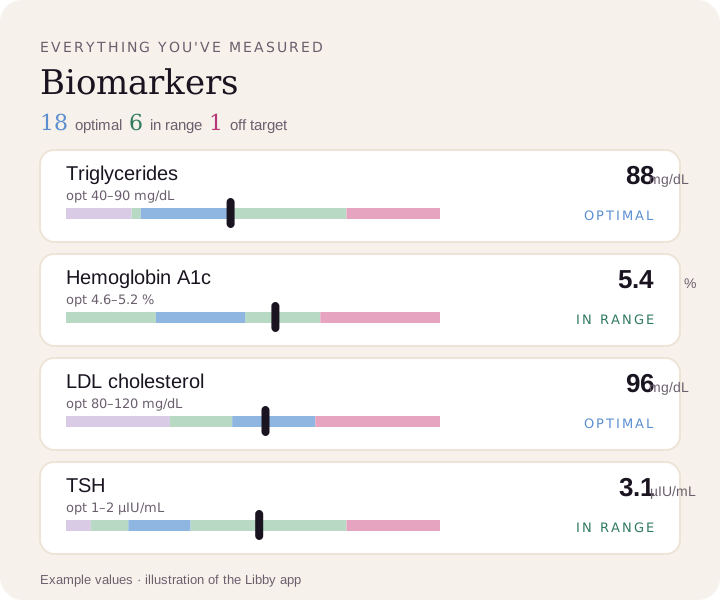
Compare your results to optimal ranges.
Upload a lab PDF or a photo of your report. Libby puts every marker on your lab's range and the optimal range, and tracks your trends over time.
View your triglycerides ›