Lp(a) blood test: normal levels, high risk, next steps
Lp(a) is an inherited cholesterol particle. Here's a normal level, the optimal targets, what a high result means for heart risk, and how to read the units.
Lp(a), short for lipoprotein(a), is an LDL-like cholesterol particle with an extra protein attached, and your genes set most of your level. A high Lp(a) raises your risk of heart attack, stroke and a narrowed aortic valve, even when your LDL cholesterol looks fine.1 About 1 in 5 people have a high level, yet testing rates are low.2
The short version
- Low risk: under 30 mg/dL, or under 75 nmol/L if your lab counts particles. The typical adult sits far below that: the median in 460,506 UK Biobank adults was about 20 nmol/L.23
- High: 50 mg/dL or 125 nmol/L and up. The 2026 U.S. cholesterol guideline ties that to about 1.4 times the long-term risk of heart attack or stroke, and 250 nmol/L to at least twice the risk. It's usually inherited, so your family may have it too.421
- The urgent case is symptoms, never the number: chest pressure, shortness of breath, or sudden weakness or numbness on one side of the body means call 911.56
- Check the unit first. mg/dL weighs the particles and nmol/L counts them. Compare your result only with targets in the same unit; there's no reliable factor to switch between them.7
What Lp(a) is
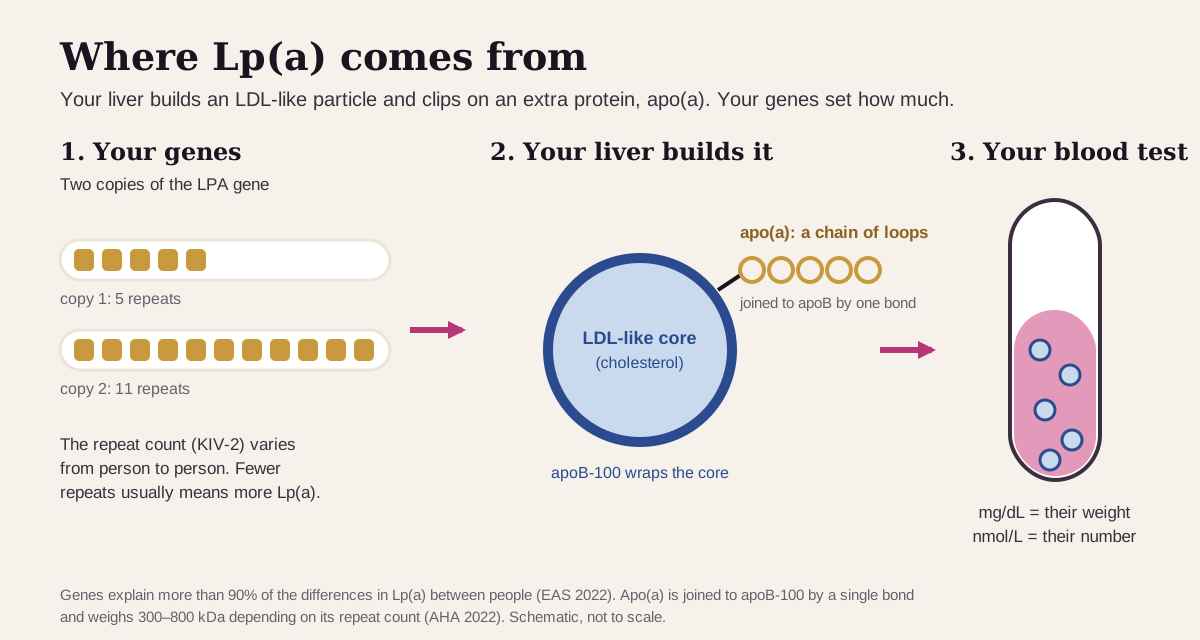
Cholesterol travels through your blood inside particles. The best known is LDL. Lp(a) is an LDL-like particle with one extra protein, apo(a), bolted onto it. Like every LDL-type particle, it carries a single apoB-100, the protein that wraps LDL.8 Apo(a) hangs off that apoB, joined by a single chemical bond.7
Apo(a) is built from a chain of loop-shaped units called kringles. One of them, kringle IV type 2 (KIV-2), repeats a different number of times from person to person, so apo(a) comes in many sizes, from about 300 to 800 kDa. People with fewer repeats make a smaller apo(a) and usually have much more Lp(a) in their blood.71
Your genes set your level. More than 90% of the difference in Lp(a) between people comes from the LPA gene, more than for any other lipoprotein. The gene is fully switched on by age 2, and most children reach their adult level by about age 5.1 That's why the 2026 U.S. guideline says to measure Lp(a) at least once in adulthood, and why it calls repeat testing generally unnecessary.4
Lp(a) harms arteries in more than one way. It can lodge in the artery wall, where apo(a) grips the wall's scaffolding. It also carries oxidized fats (oxidized phospholipids) that trigger inflammation and calcium buildup.7 Genetic studies back a direct cause-and-effect link with heart disease and with aortic stenosis, a stiffening and narrowing of the heart's main outflow valve.1 In a Swedish cohort, each copy of one LPA gene variant raised the risk of developing aortic stenosis by 68%.9
What's a normal Lp(a)?
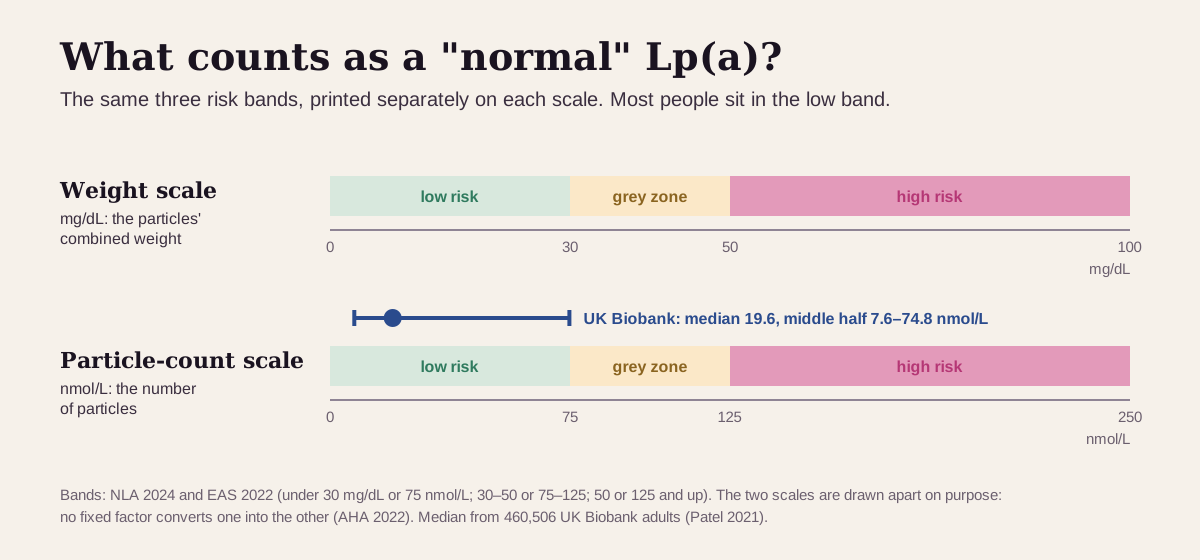
Most people have a low Lp(a), and a minority have a lot. Levels range from under 0.1 to over 300 mg/dL (under 0.2 to 750 nmol/L).1 In 460,506 UK Biobank adults, the median was 19.6 nmol/L, and the middle half fell between 7.6 and 74.8. About 1 in 8 people without heart disease had 150 nmol/L or more.3
U.S. and European experts use the same three bands:21
- Low risk: under 30 mg/dL (under 75 nmol/L).
- Grey zone (intermediate): 30–49 mg/dL (75–124 nmol/L). It matters more when you have other risk factors.
- High risk: 50 mg/dL (125 nmol/L) and up.
Men and women are similar. Women run about 5–10% higher on average, and their levels tend to rise at menopause. Fasting leaves it unchanged.1
Averages differ between groups of people, but the risk per unit is similar. In UK Biobank, median levels were 16, 19, 31 and 75 nmol/L in Chinese, White, South Asian and Black participants. Yet each extra 50 nmol/L raised heart and artery risk by a similar 7–11% in the White, South Asian and Black groups, and guidelines apply the same cutoffs to everyone.32
"Optimal" Lp(a): what health optimizers aim for
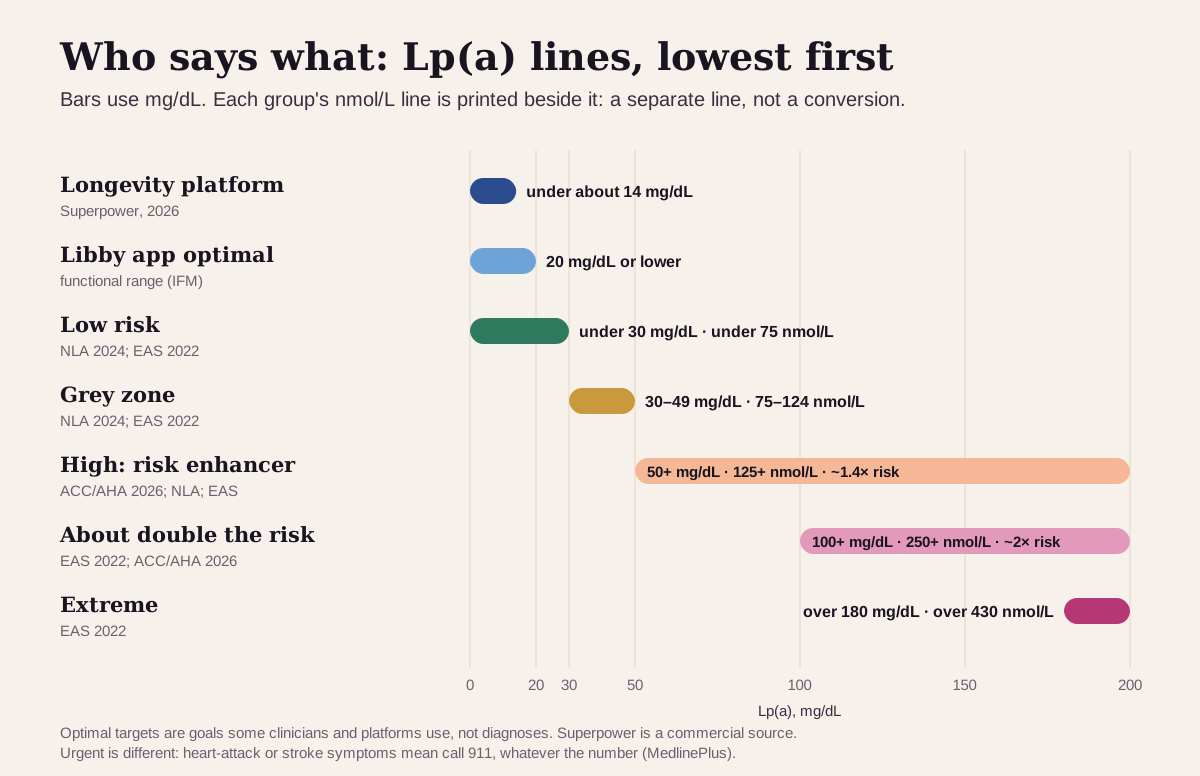
For Lp(a), lower is better, and optimizers aim below the guideline's low-risk line. Here is the full ladder, from the strictest target to the highest-risk line:
| Line | mg/dL | nmol/L | Who uses it |
|---|---|---|---|
| Strictest (longevity platform) | under about 14 | — | Superpower's published "often described as optimal" level10 |
| Functional range | 20 or lower | — | The optimal range shown in the Libby app, recorded from the Institute for Functional Medicine11 |
| Low risk | under 30 | under 75 | National Lipid Association (NLA) and European Atherosclerosis Society (EAS)21 |
| Grey zone | 30–49 | 75–124 | NLA "intermediate risk"; EAS "grey zone"21 |
| High (a risk enhancer) | 50 or more | 125 or more | 2026 ACC/AHA guideline: about 1.4× the long-term risk of heart attack or stroke4 |
| About double the risk | 100 or more | 250 or more | EAS (100 mg/dL, about 250 nmol/L);1 ACC/AHA (250 nmol/L, at least 2×)4 |
| Extreme | over 180 | over 430 | EAS: lifetime risk like untreated familial hypercholesterolemia1 |
| Urgent | heart-attack or stroke symptoms | heart-attack or stroke symptoms | Call 911, whatever the number56 |
Why the low targets aren't just a trend:
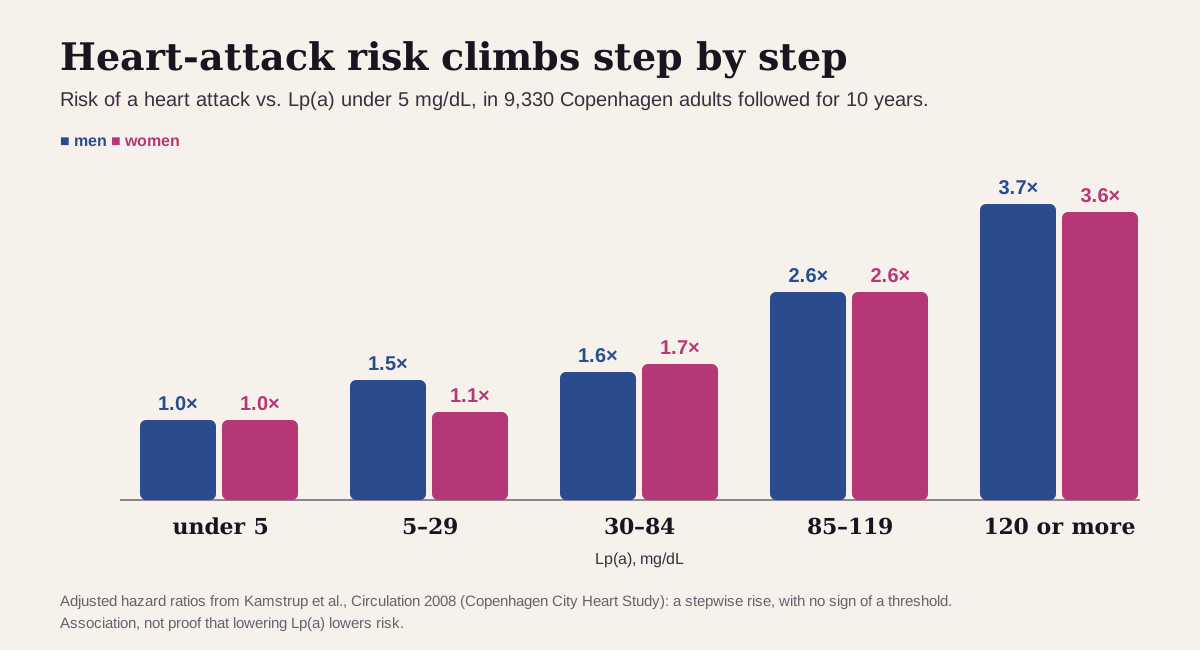
- In the Copenhagen City Heart Study, 9,330 adults were followed for 10 years. Compared with people under 5 mg/dL, heart-attack risk was 1.6 times (men) and 1.7 times (women) higher at 30–84 mg/dL, and 3.7 and 3.6 times higher at 120 mg/dL or more. Risk rose step by step, with no sign of a threshold.12
- In UK Biobank, risk rose in a straight line across the whole range: an 11% higher risk of heart and artery disease for every 50 nmol/L, over 11 years.3
- High Lp(a) adds risk even when LDL is very low. In the Copenhagen General Population Study, people at 50 mg/dL or more had a higher risk of major heart and artery events than people under 10 mg/dL, even with an LDL cholesterol under 70 mg/dL.1
Keep "optimal" in perspective: it's a target, not a diagnosis, and lowering Lp(a) itself is still unproven. In September 2026 the first big outcome trial, Lp(a)HORIZON (8,323 people with heart disease), reported that the experimental drug pelacarsen lowered Lp(a) but failed to reduce major heart and artery events. Other outcome trials are still running.13 Very low levels have their own question mark: people in the lowest fifth have about 38% more type 2 diabetes than people in the top fifth, though a gene study suggests the low level itself is unlikely to be the cause.114
So today, a high Lp(a) mostly changes how hard you and your clinician work on everything else. The EAS points to observational data where people with high Lp(a) and a healthy "cardiovascular health score" had a third of the risk of people with high Lp(a) and an unhealthy one.1
What a high Lp(a) usually means
Usually, it means you inherited it. Because genes set more than 90% of the differences between people, a high result usually says more about your family than about your habits.1
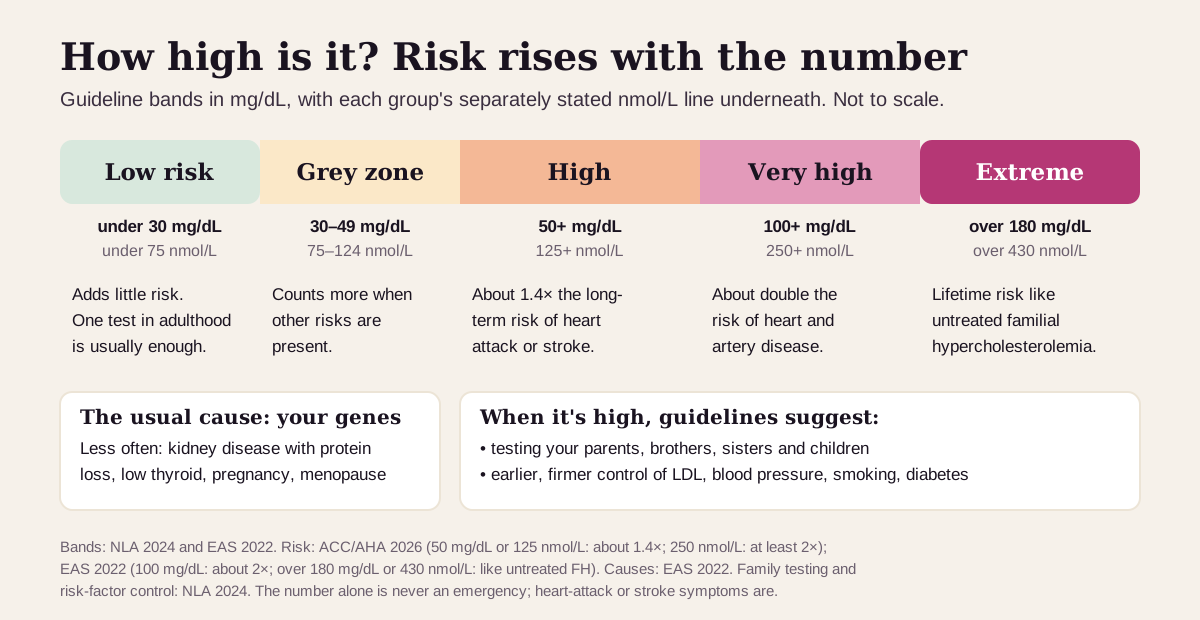
The causes, most common first:
- Your genes. This is the usual reason. Because it runs in families, the NLA recommends testing the parents, brothers, sisters and children of anyone with a high level.2
- Kidney disease with protein loss. Nephrotic syndrome, where the kidneys leak protein into the urine, can raise Lp(a) 3–5 times.1 In one study, people with it averaged 69 mg/dL versus 18 in healthy controls, and levels fell from 90 to 31 mg/dL when the kidney disease went into remission.15 Peritoneal dialysis roughly doubles it.1
- An underactive thyroid (hypothyroidism) raises it; treatment brings it down 5–20%.1
- Pregnancy about doubles it for a while, and levels tend to rise at menopause.1
- Some medicines. Growth-hormone treatment can double it, and some HIV medicines raise it. Statins may nudge it up slightly, but the EAS says to keep taking them, because their heart benefit far outweighs that.1 Don't stop a prescribed medicine on your own; bring your list to your clinician.
- Inflammation. Several inflammatory conditions raise it. Severe, sudden illness such as sepsis or major burns lowers it.1
What guidelines suggest when it's high
This is general education; your clinician tailors it to you.
- Test your family. Close relatives may share it.21
- Work harder on the risks you can change. The NLA and EAS recommend earlier, more intensive control of LDL cholesterol and every other risk factor, such as blood pressure, smoking and diabetes.21 After the pelacarsen result, the NLA repeated that advice and urged everyone to keep measuring Lp(a).13
- Some cholesterol medicines lower it a little. PCSK9 inhibitors lower Lp(a) by about 15–30% as well as LDL.1 In a large trial of one of them, people with an Lp(a) above the median tended to get a bigger drop in coronary events (23% vs 7%).16
- Apheresis, a blood-filtering procedure, is FDA-approved for a narrow group: familial hypercholesterolemia with coronary or leg-artery disease, an Lp(a) still at 60 mg/dL or more and an LDL of 100 or more despite full treatment.2
- Niacin: the EAS advises against it for lowering Lp(a).1
Get care now for heart-attack or stroke symptoms, whatever your Lp(a): chest discomfort that feels like pressure, squeezing, fullness or pain; shortness of breath; pain in the arms, back, neck, jaw or upper stomach; or sudden numbness or weakness of the face, arm or leg, trouble speaking or seeing, or loss of balance. Call 911.56
Is a low Lp(a) a problem?
For your heart, low is good news. The main open question is the diabetes link above: very low levels travel with somewhat more type 2 diabetes, but the gene study points away from low Lp(a) as the cause.14 Liver disease also lowers Lp(a), because the liver makes it.1
Lp(a) reads best next to its neighbors
Read Lp(a) next to your lipid panel. The pattern across five markers usually says more than Lp(a) alone:
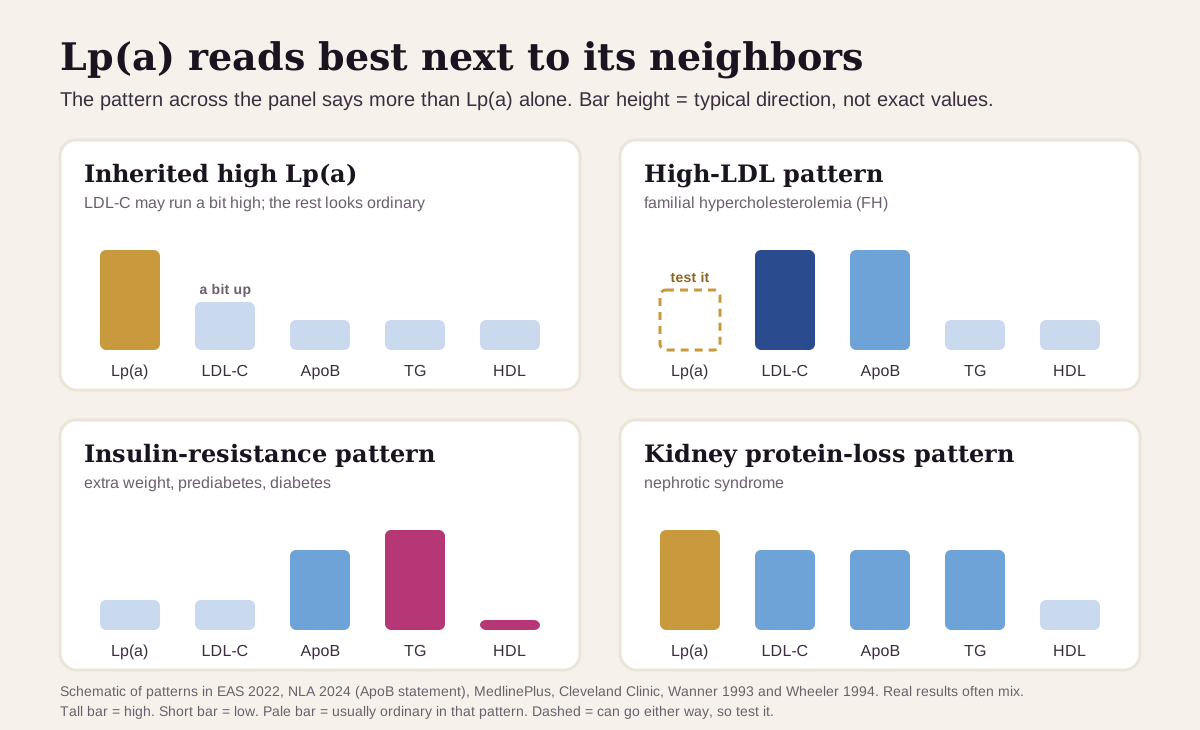
| If you see… | It often points to… |
|---|---|
| Lp(a) high, ApoB and triglycerides ordinary, LDL cholesterol ordinary or a little high | inherited high Lp(a): a risk the usual cholesterol numbers miss; even ApoB can stay normal81 |
| LDL cholesterol and ApoB high (ApoB 120 mg/dL or more), triglycerides normal | too many LDL particles; with ApoB this high, familial hypercholesterolemia (FH) is one cause to look for. Check Lp(a) too; EAS recommends testing it in FH81 |
| Triglycerides and ApoB up, HDL low, LDL cholesterol ordinary | the insulin-resistance pattern of extra weight, prediabetes and diabetes. Lp(a) is mostly (over 90%) set by your genes, so it usually sits outside this pattern8171 |
| Lp(a), LDL cholesterol, ApoB and triglycerides all up, with protein in the urine | kidney disease with protein loss (nephrotic syndrome), which can raise Lp(a) about 3–5 times1820191 |
| Very high Lp(a) with an LDL that looks like FH | Lp(a)'s own cholesterol counted inside LDL. In earlier studies, 15–25% of people labeled probable or definite FH were reclassified once it was accounted for1 |
Lp(a) hides inside your LDL number. Labs can't separate the cholesterol in Lp(a) from the cholesterol in LDL, so they report both as LDL cholesterol. The EAS calls that Lp(a) cholesterol a statin-resistant part of LDL: statins leave Lp(a) about where it was, so a high Lp(a) can keep LDL from falling as far as expected.1
How fast Lp(a) changes
Slowly, if at all. Because your genes set it, Lp(a) stays in about the same place for years. In 12,202 UK Biobank adults retested about 4.4 years apart, the two results agreed closely overall.21 Movement clustered near the cutoffs:
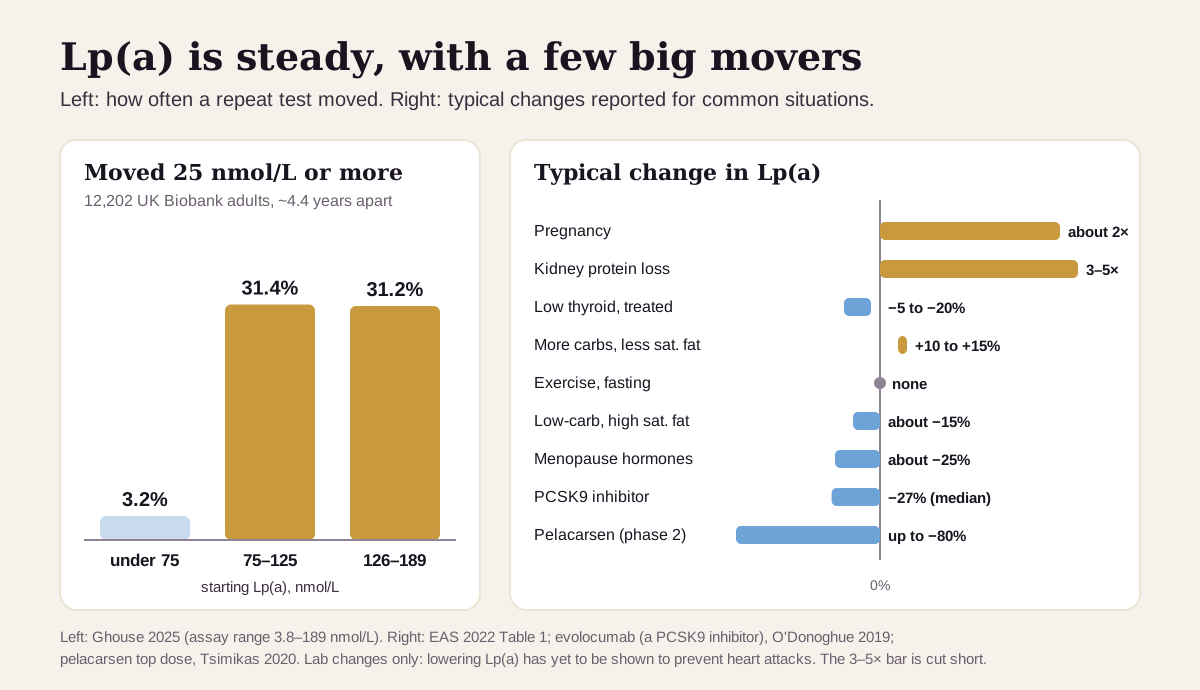
- Only 3.2% of people who started under 75 nmol/L moved 25 nmol/L or more, versus 31% of those who started between 75 and 189.21 So a result near a cutoff is the one most likely to shift on a retest.
- Serial measurements in the same person can vary by up to 20%, which is why the AHA suggests averaging two results for some people.7
- The EAS names kidney or liver disease and acute infections as exceptions where a repeat test can be worth it.1
What moves it, and by how much:
- Diet and exercise barely move it. Exercise and fasting have little or no effect. Swapping saturated fat for carbohydrates or unsaturated fat raises it about 10–15%, and a low-carb, high-saturated-fat diet lowers it about 15%. Diet still matters for your overall heart risk.1
- Hormones: postmenopausal hormone therapy lowers it about 25%; pregnancy about doubles it.1
- Medicines: a PCSK9 inhibitor lowered it a median 27% in the FOURIER trial.16 Experimental drugs lower it far more: pelacarsen by up to 80% in a six-month trial.22 A bigger drop in the number is still a separate question from fewer heart attacks.13
Going deeper: why the two units don't convert
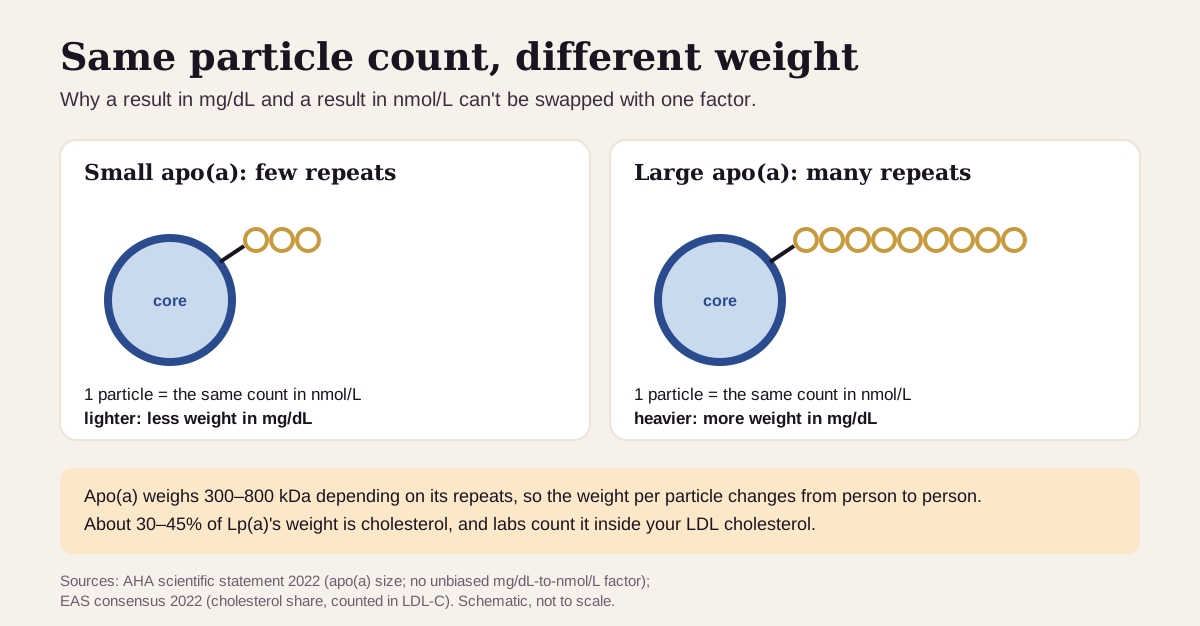
A result in nmol/L counts particles. A result in mg/dL weighs them. Since apo(a) ranges from about 300 to 800 kDa, one particle can weigh much more in one person than in another. The AHA says plainly that there is no unbiased conversion factor between the two units.7 That's why the U.S. guideline states its high line twice, as 50 mg/dL or 125 nmol/L, instead of giving a formula.4
The same size problem trips up the tests themselves. Most labs measure Lp(a) with antibodies against apo(a), and some methods over- or under-read depending on apo(a) size. Newer methods calibrated across many apo(a) sizes reduce that error.7 For a trend, compare results from the same lab, in the same unit.
You carry two copies of the LPA gene, one from each parent, and your blood level is the sum of both. Most people make two sizes of apo(a), and the smaller one is usually present at the higher level.7 Fewer than 23 KIV repeats marks a small apo(a) and a markedly higher Lp(a).1
Lp(a) also carries cholesterol, about 30–45% of its weight. Labs count it inside LDL cholesterol, and the EAS advises against routinely subtracting it, with one exception: suspected familial hypercholesterolemia with a high Lp(a).1
Questions worth asking
- Is my result in mg/dL or nmol/L, and which guideline line fits that unit?
- With my Lp(a), what are my 10-year and lifetime risks of heart attack and stroke?
- Given my Lp(a), how low should my LDL cholesterol or ApoB be?
- Should my parents, brothers, sisters or children be tested?
- Could kidney disease, my thyroid or a medicine be raising it?
- Is a clinical trial of an Lp(a)-lowering drug an option for me?
FAQ
What is a normal Lp(a) level? Under 30 mg/dL, or under 75 nmol/L, is low risk. 50 mg/dL or 125 nmol/L and up is high. Between them is a grey zone.21
Can I lower my Lp(a) with diet or exercise? Barely. Genes set more than 90% of it, and exercise has little or no effect. Healthy habits still lower your overall heart risk, which matters more when Lp(a) is high.14
Is high Lp(a) genetic? Should my family be tested? Yes, it's mostly inherited. The NLA recommends testing the parents, siblings and children of anyone with a high level.2
Can I convert mg/dL to nmol/L? No reliable factor exists, because Lp(a) particles differ in weight from person to person. Use the guideline line stated in your report's unit.7
This guide is for education. It can't diagnose you or replace care from a clinician who knows your history.
Footnotes
-
Kronenberg F, Mora S, Stroes ESG, et al. Lipoprotein(a) in atherosclerotic cardiovascular disease and aortic stenosis: a European Atherosclerosis Society consensus statement. Eur Heart J. 2022;43(39):3925–3946. The European expert consensus: genetics (>90%), the rule-out/grey-zone/rule-in bands, 100 mg/dL ≈ double risk, >180 mg/dL ≈ FH, the table of non-genetic influences, the diabetes meta-analysis and Lp(a)-cholesterol in LDL-C. PMC ↩ ↩2 ↩3 ↩4 ↩5 ↩6 ↩7 ↩8 ↩9 ↩10 ↩11 ↩12 ↩13 ↩14 ↩15 ↩16 ↩17 ↩18 ↩19 ↩20 ↩21 ↩22 ↩23 ↩24 ↩25 ↩26 ↩27 ↩28 ↩29 ↩30 ↩31 ↩32 ↩33 ↩34 ↩35 ↩36 ↩37 ↩38 ↩39 ↩40 ↩41 ↩42 ↩43 ↩44 ↩45 ↩46
-
Koschinsky ML, Bajaj A, Boffa MB, et al. A focused update to the 2019 NLA scientific statement on use of lipoprotein(a) in clinical practice. J Clin Lipidol. 2024;18(3):e308–e319. Measure once in every adult; low <75 nmol/L (30 mg/dL), intermediate 75–125 (30–50), high ≥125 (50); ~1 in 5 people; cascade screening; the apheresis indication. PubMed ↩ ↩2 ↩3 ↩4 ↩5 ↩6 ↩7 ↩8 ↩9 ↩10 ↩11 ↩12 ↩13 ↩14 ↩15 ↩16
-
Patel AP, Wang M, Pirruccello JP, et al. Lp(a) (Lipoprotein[a]) Concentrations and Incident Atherosclerotic Cardiovascular Disease: New Insights From a Large National Biobank. Arterioscler Thromb Vasc Biol. 2021;41(1):465–474. 460,506 UK Biobank adults, 11.2 years: median 19.6 nmol/L, HR 1.11 per 50 nmol/L. PMC ↩ ↩2 ↩3 ↩4 ↩5
-
American College of Cardiology. ACC/AHA Issue Updated Guideline for Managing Lipids, Cholesterol. March 13, 2026. Summary of the 2026 ACC/AHA multisociety dyslipidemia guideline (Blumenthal RS, Morris PB, Gaudino M, et al. Circulation. 2026;153(17):e1154–e1276): measure Lp(a) once; 125 nmol/L or 50 mg/dL ≈ 1.4× risk; 250 nmol/L ≥ 2×; repeat testing generally not needed. acc.org · Guideline on PubMed ↩ ↩2 ↩3 ↩4 ↩5 ↩6 ↩7 ↩8
-
National Library of Medicine. Heart Attack. MedlinePlus. Last updated September 10, 2026. Symptoms and when to call 911. MedlinePlus ↩ ↩2 ↩3
-
National Library of Medicine. Stroke. MedlinePlus. Last updated July 28, 2025. Sudden symptoms and when to call 911. MedlinePlus ↩ ↩2 ↩3
-
Reyes-Soffer G, Ginsberg HN, Berglund L, et al. Lipoprotein(a): A Genetically Determined, Causal, and Prevalent Risk Factor for Atherosclerotic Cardiovascular Disease: A Scientific Statement From the American Heart Association. Arterioscler Thromb Vasc Biol. 2022;42(1):e48–e60. Particle structure, apo(a) size (300–800 kDa), oxidized phospholipids, assay problems and the absence of an unbiased mg/dL-to-nmol/L factor. PMC ↩ ↩2 ↩3 ↩4 ↩5 ↩6 ↩7 ↩8 ↩9 ↩10
-
Soffer DE, Marston NA, Maki KC, et al. Role of apolipoprotein B in the clinical management of cardiovascular risk in adults: An Expert Clinical Consensus from the National Lipid Association. J Clin Lipidol. 2024;18(5):e647–e663. Elevated Lp(a) "not always accompanied by apoB elevation"; insulin resistance lowers LDL-C while ApoB stays high; the FH pattern (ApoB ≥120, TG <133). PMC ↩ ↩2 ↩3 ↩4 ↩5
-
Thanassoulis G, Campbell CY, Owens DS, et al. Genetic associations with valvular calcification and aortic stenosis. N Engl J Med. 2013;368(6):503–512. The LPA variant rs10455872 and incident aortic stenosis (HR 1.68 per allele). PMC ↩
-
Superpower. Lipoprotein (a) biomarker page. Last updated September 1, 2026. "Values below about 14 mg/dL are often described as optimal." A commercial source, listed as what the optimizer community uses. superpower.com ↩ ↩2
-
Institute for Functional Medicine. Clinical practice guidelines and Advanced Practice Modules (range as recorded in the Libby app's marker catalog; member-only modules not opened for this article). The Libby app's Lp(a) optimal range is 20 mg/dL or lower. https://www.ifm.org ↩ ↩2
-
Kamstrup PR, Benn M, Tybjaerg-Hansen A, Nordestgaard BG. Extreme lipoprotein(a) levels and risk of myocardial infarction in the general population: the Copenhagen City Heart Study. Circulation. 2008;117(2):176–184. 9,330 adults followed 10 years; hazard ratios by Lp(a) band for men and women. PubMed ↩ ↩2
-
National Lipid Association. Top Line Results from the Phase 3 Lp(a)HORIZON Trial. September 14, 2026: pelacarsen lowered Lp(a) but did not reduce major cardiovascular events in 8,323 patients; keep measuring Lp(a) and managing other risk factors; other outcome trials (OCEAN(a)-Outcomes, ACCLAIM-Lp(a), MOVE-Lp(a)) continue. lipid.org · Sponsor announcement: Novartis, September 4, 2026 novartis.com ↩ ↩2 ↩3
-
Kamstrup PR, Nordestgaard BG. Lipoprotein(a) concentrations, isoform size, and risk of type 2 diabetes: a Mendelian randomisation study. Lancet Diabetes Endocrinol. 2013;1(3):220–227. Low Lp(a) linked to type 2 diabetes, but low concentration alone did not look causal. PubMed ↩ ↩2
-
Wanner C, Rader D, Bartens W, et al. Elevated plasma lipoprotein(a) in patients with the nephrotic syndrome. Ann Intern Med. 1993;119(4):263–269. 62 patients vs 91 controls; the fall with remission. PubMed ↩ ↩2
-
O'Donoghue ML, Fazio S, Giugliano RP, et al. Lipoprotein(a), PCSK9 Inhibition, and Cardiovascular Risk. Circulation. 2019;139(12):1483–1492. FOURIER: evolocumab lowered Lp(a) a median 26.9%; 23% vs 7% coronary risk reduction above vs at or below the median Lp(a). PubMed ↩ ↩2 ↩3
-
National Library of Medicine. Metabolic Syndrome. MedlinePlus. Last updated March 25, 2024. High triglycerides and low HDL cholesterol as risk factors. MedlinePlus ↩ ↩2
-
National Library of Medicine. Nephrotic syndrome. MedlinePlus Medical Encyclopedia. Reviewed September 2, 2025. Protein in the urine with high cholesterol and triglyceride levels. MedlinePlus ↩ ↩2
-
Cleveland Clinic. Apo B Test. Nephrotic syndrome among the conditions that raise ApoB. Cleveland Clinic ↩ ↩2
-
Wheeler DC, Bernard DB. Lipid abnormalities in the nephrotic syndrome: causes, consequences, and treatment. Am J Kidney Dis. 1994;23(3):331–346. Total cholesterol, triglycerides, VLDL and LDL cholesterol are characteristically raised; HDL may be normal; Lp(a) may be elevated. PubMed ↩ ↩2
-
Ghouse J, Ahlberg G, Albertsen Rand S, et al. Within-person stability of lipoprotein(a) concentration. Eur Heart J. 2025;46(12):1159–1161. 12,202 UK Biobank adults, median 4.4 years apart; assay range 3.8–189 nmol/L. PMC ↩ ↩2 ↩3
-
Tsimikas S, Karwatowska-Prokopczuk E, Gouni-Berthold I, et al. Lipoprotein(a) Reduction in Persons with Cardiovascular Disease. N Engl J Med. 2020;382(3):244–255. Phase 2: mean decreases of 35% to 80% by dose, vs 6% on placebo. PubMed ↩ ↩2
Educational content, not medical advice.Libby is a personal record tool, not a medical service — it doesn't diagnose, treat, or prescribe. Reference ranges vary by lab and by person. Talk to a qualified healthcare professional about your results.
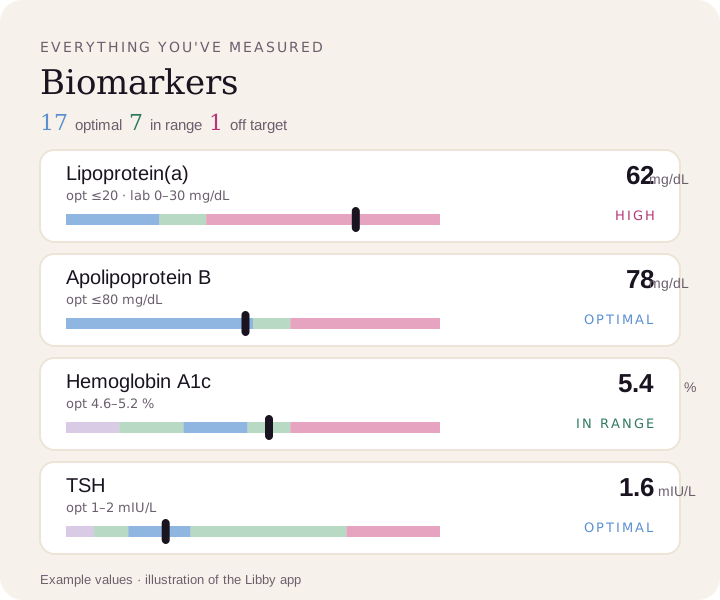
See your Lp(a) next to the markers you can move.
Upload a lab PDF or a photo of your report. Libby puts every marker on your lab's range, shows an optimal range where the app has one (for Lp(a), results in mg/dL), and tracks your trends over time.
View your Lp(a) ›