Absolute basophil count: normal range, highs and lows
Basophils are the rarest white blood cell. Here's a normal basophil count, what a high or low result usually means, and when a high count needs a closer look.
The absolute basophil count tells you how many basophils, the rarest white blood cell, are in each microliter of your blood. Basophils make up fewer than 1 in 100 of your white cells.1 They carry the IgE receptors that drive allergies and release histamine when they are triggered.2 A slightly high count is common and usually passes. A clearly high count alongside a high white count is a well-known clue to a bone-marrow disorder, most often chronic myeloid leukemia (CML).12
The short version
- Normal: an international expert group puts the usual upper limit at 100 cells/µL (0.1 ×10³/µL); some labs use 50.2 In 95 healthy adults counted by flow cytometry, the range was 14–87 cells/µL.3
- Mildly high (100–400 cells/µL) usually reflects allergy, asthma, inflammation, smoking, an infection or simple counting noise. It often settles on a repeat test.415
- Clearly high (over 400 cells/µL, especially with a high white count) calls for a prompt look for a bone-marrow cause. In a Mayo Clinic series, everyone at 480 or more had one.1
- Low or zero usually reflects how few basophils there are to count. Steroid medicines and severe allergic reactions also pull basophils out of the blood within hours.26
What basophils are
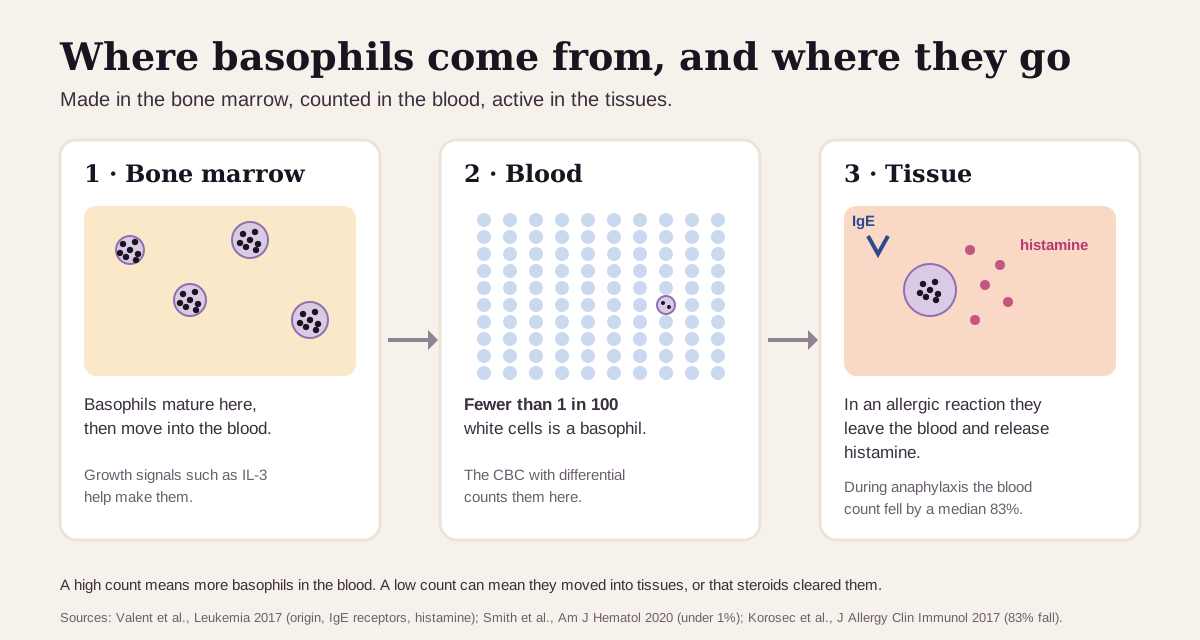
Basophils are white blood cells that mature in your bone marrow and then travel in the blood. Their main growth signal is a messenger called interleukin-3 (IL-3).2 They share a key feature with the mast cells in your tissues: both carry receptors for IgE, the antibody behind allergies. When an allergen links up with that IgE, basophils release histamine and other chemicals.2
They are the rarest white cell, under 1% of the total.1 That scarcity shapes the whole test. A lab machine sees only a handful of basophils in each sample, so the count wobbles from one run to the next more than the common white cells do.52
You'll find basophils on a complete blood count (CBC) with differential, which sorts your white cells into five types: neutrophils, lymphocytes, monocytes, eosinophils and basophils.4 Most people see the number on routine blood work, with nobody looking for basophils in particular.
Read the absolute count, not the percent. Many reports show both. The absolute count is the percent multiplied by your total white count: a white count of 6.0 ×10³/µL with 1% basophils gives 0.06 ×10³/µL, or 60 cells/µL. If your total white count rises or falls, the percent can move while the absolute count stays put.
What's a normal basophil count?
Start with the range printed on your report, because labs set their own limits.2 Then compare it with these reference points:
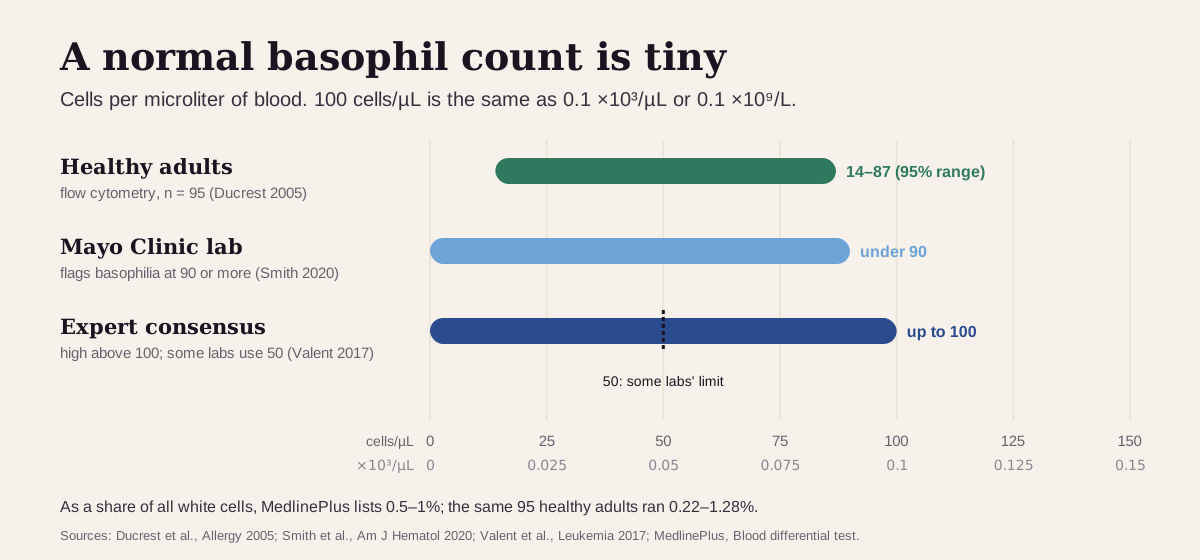
- An international expert group defines a high count, called basophilia, as more than 100 cells/µL. It notes that some labs set the line lower, at 50.2
- Mayo Clinic's lab flags basophilia at 90 cells/µL or more (0.09 ×10³/µL).1
- In 95 healthy adults whose basophils were counted precisely by flow cytometry, the 95% range was 14–87 cells/µL. As a share of white cells, it was 0.22–1.28%.3 MedlinePlus lists 0.5–1% as a normal share.4
The sources here give one range for everyone, with no separate limits for men and women.
"Optimal" basophils: what health optimizers aim for
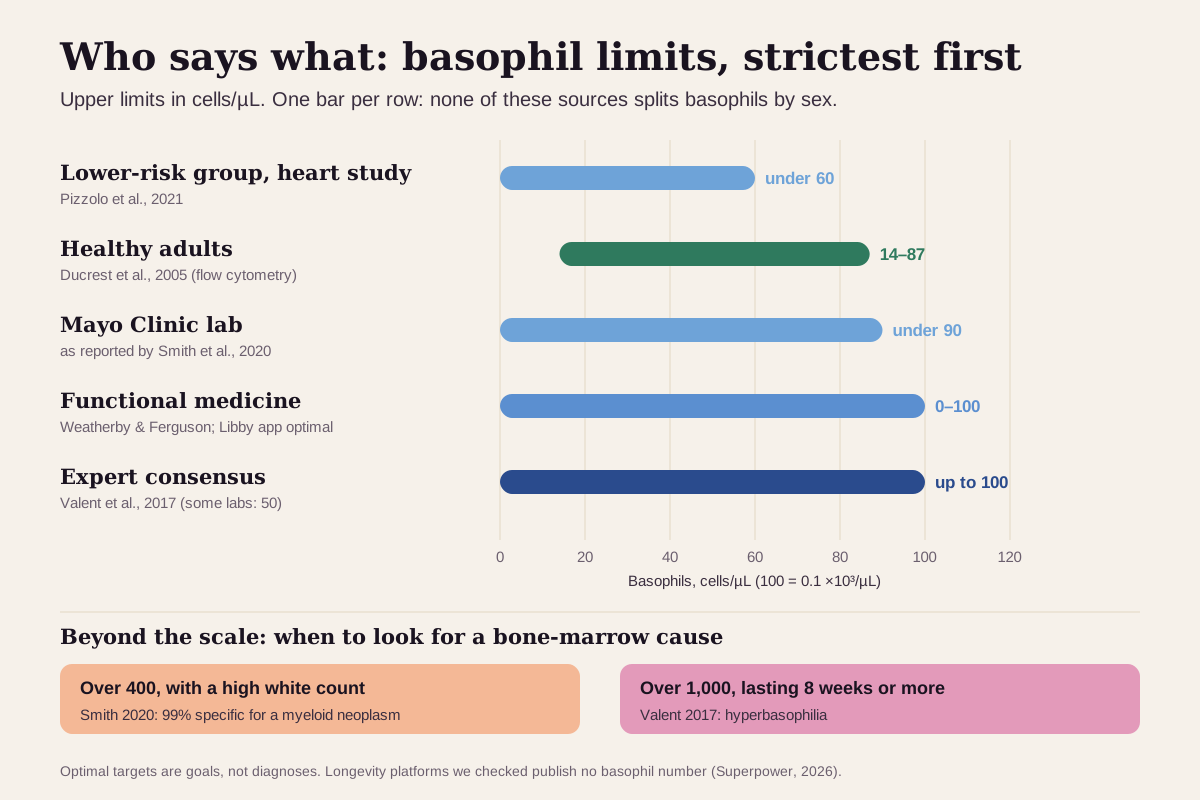
Functional-medicine practitioners aim for a basophil count in the low part of the normal range. For basophils the ladder is short, because the "optimal" ceiling sits right at a typical lab limit:
| Target | Basophils (cells/µL) | Who uses it |
|---|---|---|
| Lower-risk group in a heart study | under 60 | Pizzolo et al.: people with stable heart disease below 60 had lower death rates7 |
| Research "healthy" range | 14–87 | Ducrest et al., 95 healthy adults counted by flow cytometry3 |
| Mayo Clinic lab | under 90 | Flags basophilia at 90 or more1 |
| Functional medicine | 0–100 (0–0.1 ×10³/µL) | The standard functional-medicine textbook range,8 and the optimal range shown in the Libby app |
| Expert-consensus upper limit | up to 100 (some labs 50) | Valent et al., an international working group2 |
| Look for a bone-marrow cause | over 400, with a high white count | Smith et al., Mayo Clinic: 99% specific for a myeloid neoplasm1 |
| Hyperbasophilia | over 1,000, lasting 8 weeks or more | Valent et al.: almost always a myeloid neoplasm2 |
Why a low-normal target has some support:
- In a study of 823 adults with stable coronary heart disease followed for a median of 61 months, people with basophils of 60 cells/µL or more, a level inside most lab ranges, had about twice the death rate (hazard ratio 2.05) of people under 20. After adjusting for age, sex, smoking, diabetes, blood pressure, cholesterol, kidney function and CRP, the risk was still 1.78 times higher.7
- The counts in between (20–39 and 40–60) carried no clear extra risk.7
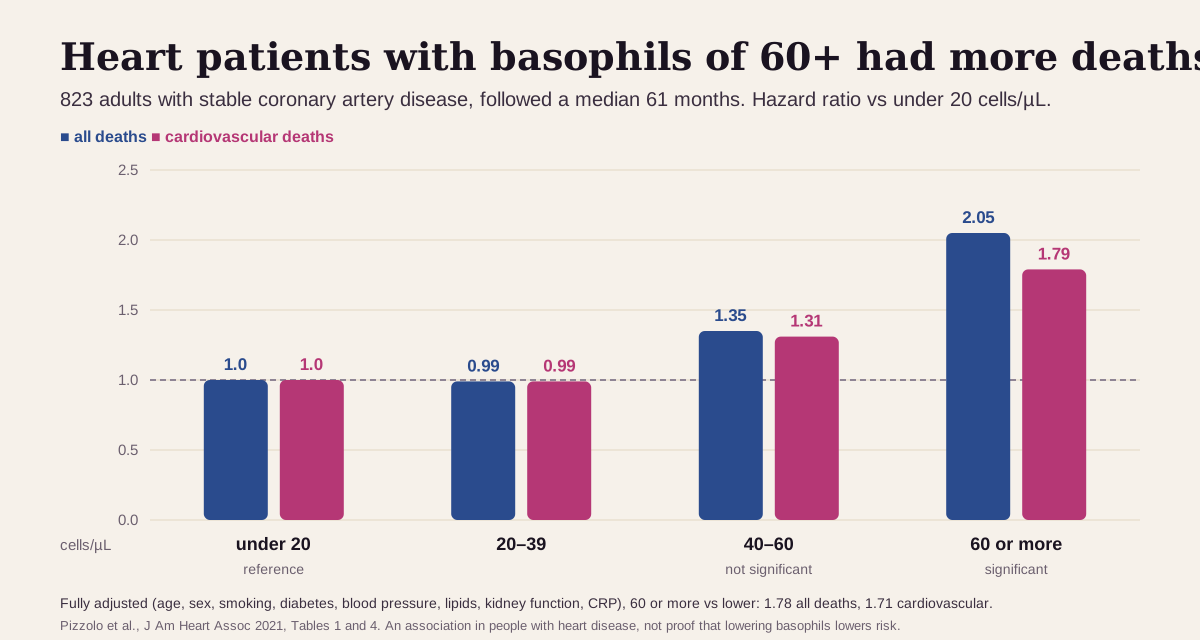
Keep "optimal" in perspective. The heart-study link comes from one group of people with heart disease, and it shows an association, not proof that a lower count protects you. Lower also has limits: in a Korean study of 1,878 people with COPD, a low basophil percentage went with higher 10-year mortality.9 And the longevity-testing companies we checked publish no basophil number. Superpower's page says optimal values "typically sit at the low end of the reference range."10
What a high basophil count usually means
The size of the rise is the first clue. A count a little over 100 means something different from a count over 400, and a count over 1,000 is a different category again.12
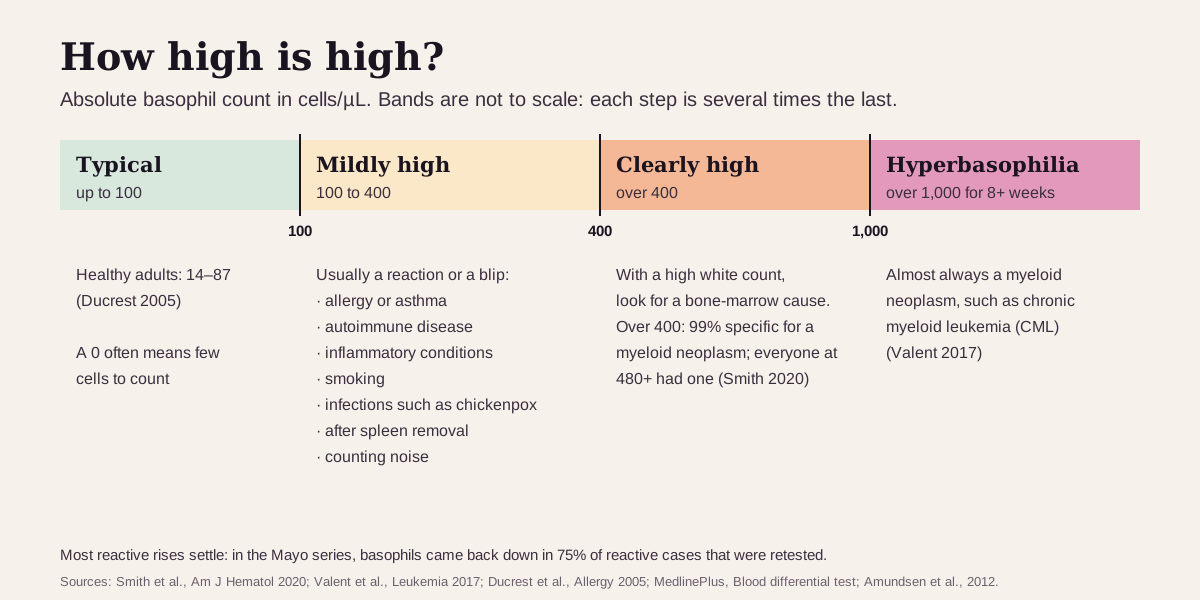
Mildly high (100–400 cells/µL): usually a reaction or a blip
The usual suspects:
- Counting noise. Lab machines measure basophils far less precisely than other white cells: in one comparison of three analyzers, repeat runs of the same sample varied by 25–50%.5 A single mild flag often reads differently on a second count.2
- Allergy and asthma. MedlinePlus lists an allergic reaction among the causes of a raised basophil share.4 In allergic disease, basophils usually stay normal or rise only slightly. Eosinophils rise more.211
- Autoimmune and inflammatory disease, such as the connective-tissue diseases doctors call collagen vascular disease.41
- Smoking. Tobacco use was one of the most common associated conditions in the Mayo series.1
- Infections, such as chickenpox, and life after spleen removal.41
Most of these rises pass. In a Mayo Clinic series of 382 adults with a high white count and high basophils, about a third had no identifiable cause, and among people whose rise was a reaction to something else, basophils came back down in 3 of 4 who were retested.1
Clearly high (over 400 cells/µL): look for a bone-marrow cause
A high count paired with a high white count is where the odds shift toward the bone marrow. In the same Mayo series, half the patients turned out to have a myeloid neoplasm, a cancer or pre-cancer of the blood-forming cells: CML in 104, and other types such as essential thrombocythemia, polycythemia vera and myelofibrosis in the rest.1 A basophil count over 400 was 99% specific for one of these conditions, and everyone at 480 or more had one.1 Those were people already being tested for CML, so the numbers show how seriously to take a clearly high count rather than anyone's personal odds.
A count over 1,000 cells/µL that lasts at least 8 weeks is called hyperbasophilia. An international expert group says it is almost always linked to a myeloid neoplasm.2
CML itself often causes few symptoms early on. Most people learn they have it from blood tests done for other reasons.12 Testing looks for the Philadelphia chromosome, the BCR-ABL gene change, in blood or bone marrow.121
Get emergency care for trouble breathing, swelling of the face, eyes or tongue, fainting, or hives with dizziness: signs of anaphylaxis, whatever your basophil count.13 See a clinician soon if a high basophil count comes with a high white count, pressure under your left ribs (a swollen spleen), fevers, night sweats, easy bruising or deep tiredness.12
Is a low or zero basophil count a problem?
Usually it says more about the test than about you. Basophils are so scarce that a result of 0 or 10 often means the analyzer found very few in the drop it sampled.25 Real drops happen too:
- Steroid medicines. In healthy volunteers, one 64 mg dose of methylprednisolone cut basophils by two-thirds within 5 hours, and they were back to normal at 24 hours.6 Prednisone suppresses them in the same way.14
- A severe allergic reaction. During anaphylaxis, the blood basophil count fell by a median of 83%, likely because the cells moved out of the blood and into the tissues.6
- Acute infection, cancer or a severe injury can also lower the basophil share.4
Basophils read best next to their neighbors
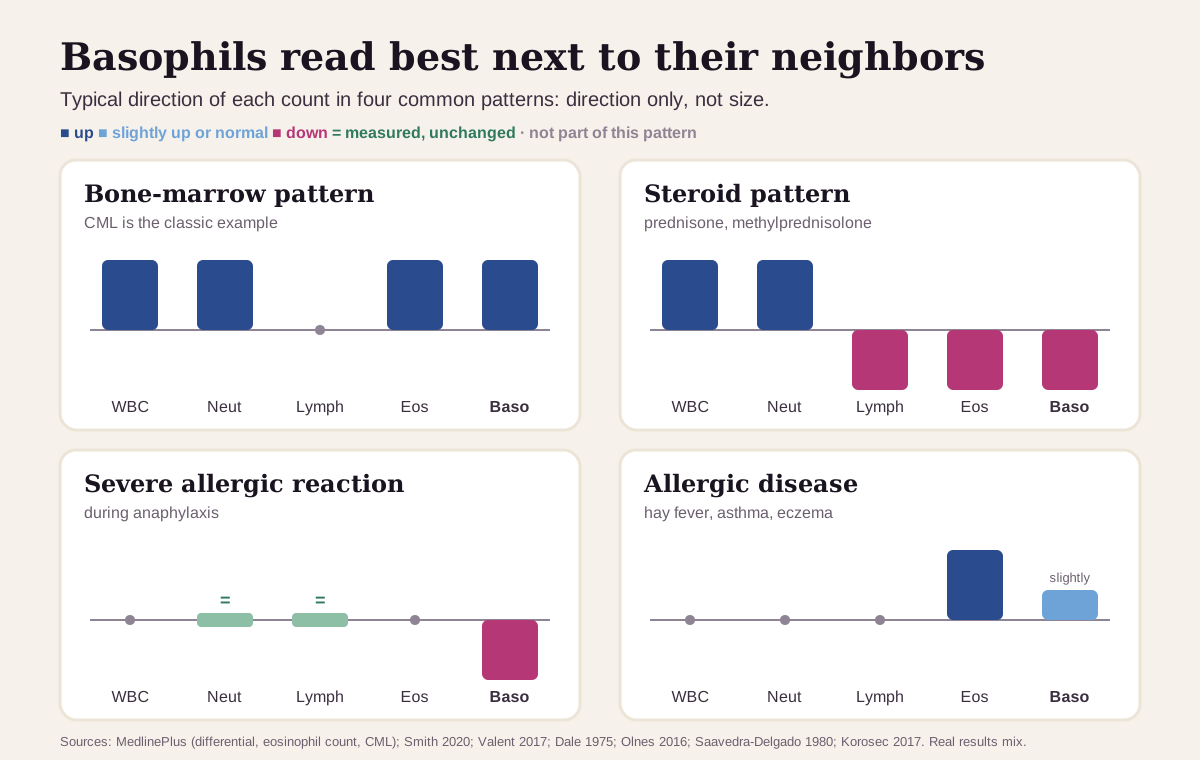
Basophils rarely change alone. The pattern across your white-cell counts usually says more than basophils do by themselves:
| If you see… | It often points to… |
|---|---|
| Basophils, eosinophils and neutrophils all up, with a high white count | a bone-marrow (myeloproliferative) pattern, CML most classically: ask about a hematology review4111212 |
| Basophils, eosinophils and lymphocytes down, neutrophils up | a steroid medicine such as prednisone or methylprednisolone151611614 |
| Basophils sharply down during a severe allergic reaction, neutrophils and lymphocytes steady | most likely basophils leaving the blood for the tissues6 |
| Eosinophils up, basophils normal or a little up | allergic disease such as hay fever, asthma or eczema112 |
| Basophils a little up on one test, everything else normal | counting noise or a passing reaction: a repeat usually settles it512 |
How fast basophils change
Basophils move within hours. A steroid dose, a hard workout or an allergic reaction can each shift the count between breakfast and dinner:
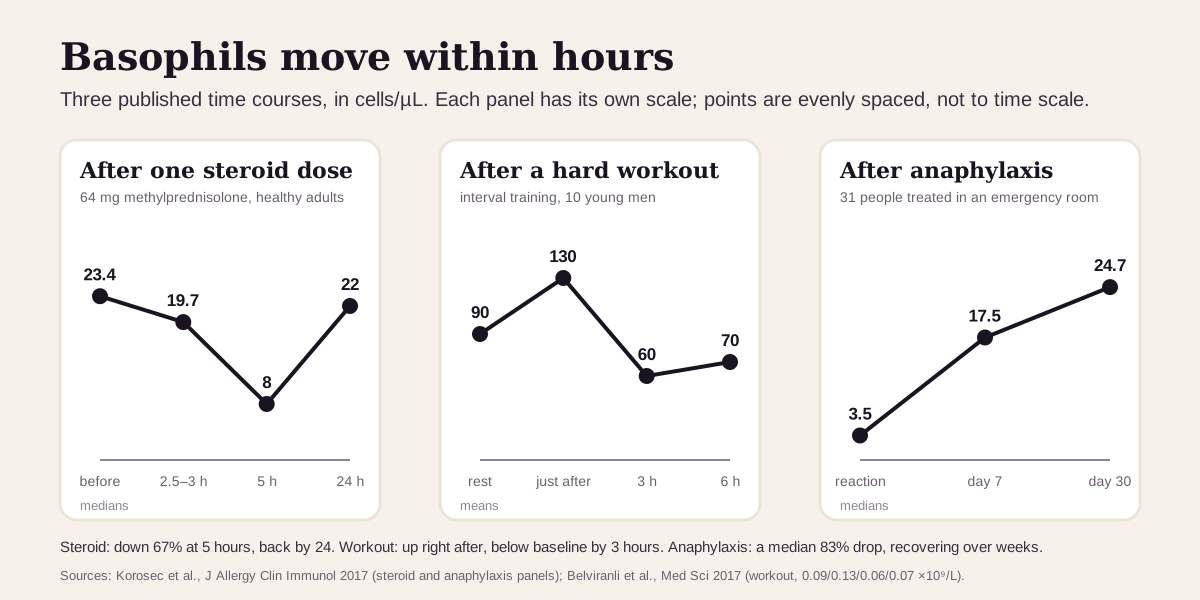
- After a steroid dose: 23.4 → 8 cells/µL at 5 hours, back to 22 by the next day (median, healthy adults).6
- After a hard workout: in 10 young men doing interval training, the average rose from 90 to 130 cells/µL right after exercise, then fell to 60 three hours later.17
- After anaphylaxis: 3.5 cells/µL during the reaction, 17.5 a week later and 24.7 a month later (medians).6
What that means in practice:
- A single mild flag is usually repeated. Mention any steroid medicine, a recent allergic reaction, a hard workout or an illness when you get retested.617
- Persistence is the point. The expert definition of hyperbasophilia requires a high count that lasts at least 8 weeks, because passing reactions come and go.2
- Trends beat snapshots, and the same lab beats a new one. Different analyzers give different basophil counts for the same blood.35
Going deeper: why basophils are hard to count
Basophils are rare, so each analyzer run sees only a few of them, and small errors loom large:
- In 112 patient samples, two analyzers undercounted basophils by about 50% compared with flow cytometry. Two overcounted some samples that contained abnormal white cells.5
- In the flow-cytometry study behind the healthy range, two widely used analyzers gave basophil counts that showed no correlation with each other. One gave erratic results, the other a rough estimate.3
- A manual count on a blood smear helps when the analyzer flags the sample. Because basophils are so rare, experts recommend counting at least 500 white cells on the smear to get a reliable basophil percentage.2
Count versus function. The CBC tells you how many basophils are in the blood. Allergy specialists and researchers use a separate test, the basophil activation test, which measures activation markers such as CD63 and CD203c on the cell surface.26 The two answer different questions: how many basophils you have, and how they react.
Questions worth asking
- Is my basophil count high on its own, or are my white count, neutrophils, eosinophils or platelets high too?
- How far above the limit is it: a little over 100, or over 400?
- Could a steroid medicine, a recent allergic reaction, an infection or smoking explain it?
- When should we repeat the CBC, and from the same lab?
- Would a blood smear review help?
- If it stays high, should I have a BCR-ABL test or see a hematologist?
FAQ
What is a normal absolute basophil count? Most labs use an upper limit of about 100 cells/µL (0.1 ×10³/µL), and some use 50. Healthy adults counted precisely ran 14–87 cells/µL.23
Is a basophil count of 0 bad? Usually it reflects how rare basophils are and how few the analyzer sampled. Steroid medicines and severe allergic reactions can also lower the count for a few hours to days.26
Do high basophils mean cancer? Usually a mild rise is a reaction to allergy, inflammation, smoking or infection, and it often settles. A count over 400 cells/µL with a high white count needs prompt evaluation for a bone-marrow cause such as CML.1
Do allergies raise basophils? Ongoing allergic disease leaves basophils normal or slightly high, while eosinophils rise more. During a severe allergic reaction, basophils actually fall, most likely because they leave the blood.26
This guide is for education. It can't diagnose you or replace care from a clinician who knows your history.
Footnotes
-
Smith CJ, Kluck LA, Ruan GJ, et al. The differential diagnosis of basophilia in patients undergoing BCR-ABL testing. Am J Hematol. 2020;95(9):E216–E217. 382 Mayo Clinic adults with a high white count and basophilia: under 1% of white cells are basophils, Mayo's lab flags basophilia at 0.09 ×10⁹/L, 50% had a myeloid neoplasm (CML in 104), a count over 0.40 ×10⁹/L was 99.0% specific, everyone at 0.48 or more had one, and 75.4% of retested reactive cases resolved. PMC ↩ ↩2 ↩3 ↩4 ↩5 ↩6 ↩7 ↩8 ↩9 ↩10 ↩11 ↩12 ↩13 ↩14 ↩15 ↩16 ↩17 ↩18 ↩19 ↩20 ↩21 ↩22 ↩23 ↩24
-
Valent P, Sotlar K, Blatt K, et al. Proposed diagnostic criteria and classification of basophilic leukemias and related disorders. Leukemia. 2017;31(4):788–797. An international consensus group. Basophil biology (bone-marrow origin, IL-3, IgE receptors, histamine, CD63/CD203c), basophilia over 100/µL (some labs 50), counting at least 500 cells, allergic disease with normal or slightly raised basophils, and hyperbasophilia over 1,000/µL for at least 8 weeks. PMC ↩ ↩2 ↩3 ↩4 ↩5 ↩6 ↩7 ↩8 ↩9 ↩10 ↩11 ↩12 ↩13 ↩14 ↩15 ↩16 ↩17 ↩18 ↩19 ↩20 ↩21 ↩22 ↩23 ↩24 ↩25 ↩26 ↩27 ↩28 ↩29 ↩30
-
Ducrest S, Meier F, Tschopp C, Pavlovic R, Dahinden CA. Flowcytometric analysis of basophil counts in human blood and inaccuracy of hematology analyzers. Allergy. 2005;60(11):1446–1450. 95 healthy adults: 95% reference intervals of 0.014–0.087 ×10⁹/L and 0.22–1.28%; two analyzers disagreed. PubMed ↩ ↩2 ↩3 ↩4 ↩5 ↩6 ↩7 ↩8 ↩9
-
National Library of Medicine. Blood differential test. MedlinePlus Medical Encyclopedia. Reviewed February 3, 2025. Normal shares (basophils 0.5–1%) and the causes of higher and lower counts of each white-cell type. MedlinePlus ↩ ↩2 ↩3 ↩4 ↩5 ↩6 ↩7 ↩8 ↩9 ↩10 ↩11
-
Amundsen EK, Henriksson CE, Holthe MR, Urdal P. Is the blood basophil count sufficiently precise, accurate, and specific? Three automated hematology instruments and flow cytometry compared. Am J Clin Pathol. 2012;137(1):86–92. 112 patient samples; within-run variation of 25–50%, and undercounting by about 50% on two instruments. PubMed ↩ ↩2 ↩3 ↩4 ↩5 ↩6 ↩7
-
Korosec P, Turner PJ, Silar M, et al. Basophils, high-affinity IgE receptors, and CCL2 in human anaphylaxis. J Allergy Clin Immunol. 2017;140(3):750–758.e15. Anaphylaxis: median basophils 3.5, 17.5 and 24.7 cells/µL at the reaction, day 7 and day 30 (median fall 83%), with neutrophils and lymphocytes unchanged. Healthy volunteers after 64 mg methylprednisolone: 23.4, 19.7, 8 and 22 cells/µL at baseline, 2.5–3 h, 5 h and 24 h. PMC ↩ ↩2 ↩3 ↩4 ↩5 ↩6 ↩7 ↩8 ↩9 ↩10 ↩11 ↩12 ↩13 ↩14
-
Pizzolo F, Castagna A, Olivieri O, et al. Basophil blood cell count is associated with enhanced factor II plasma coagulant activity and increased risk of mortality in patients with stable coronary artery disease. J Am Heart Assoc. 2021;10(5):e018243. 823 patients (80% men, mean age 62), median follow-up 61 months; basophil quartile hazard ratios and the fully adjusted 1.78. PMC ↩ ↩2 ↩3 ↩4 ↩5
-
Weatherby D, Ferguson S. Blood Chemistry and CBC Analysis: Clinical Laboratory Testing from a Functional Perspective. 2nd ed. Bear Mountain Publishing; 2004. ISBN 978-0976136712. Widely used functional-medicine reference, and the source of the Libby app's optimal basophil range of 0–0.1 ×10³/µL. ↩ ↩2
-
Park HJ, Song Y, Kim Y, et al. Low levels of serum albumin and blood basophils as 10-year mortality predictors in a nationwide Korean COPD cohort. Sci Rep. 2025;15(1):43924. 1,878 patients with COPD; a low basophil percentage predicted 10-year mortality (hazard ratio 0.655; Kaplan-Meier cut-off 2%). PubMed ↩
-
Superpower. Basophils. Last updated September 1, 2026. Says optimal basophil values "typically sit at the low end of the reference range" and gives no number. A commercial source, listed as what the optimizer community uses. superpower.com ↩
-
National Library of Medicine. Eosinophil count - absolute. MedlinePlus Medical Encyclopedia. Reviewed January 28, 2025. Eosinophils rise with allergic disease (hay fever, asthma, eczema) and fall with steroid medicines. MedlinePlus ↩ ↩2 ↩3 ↩4 ↩5
-
National Library of Medicine. Chronic myelogenous leukemia (CML). MedlinePlus Medical Encyclopedia. Reviewed January 29, 2026. Blood-count findings, symptoms and the Philadelphia-chromosome test. MedlinePlus ↩ ↩2 ↩3 ↩4 ↩5
-
National Library of Medicine. Anaphylaxis. MedlinePlus Medical Encyclopedia. Reviewed January 20, 2026. Symptoms and when to call 911. MedlinePlus ↩
-
Saavedra-Delgado AM, Mathews KP, Pan PM, Kay DR, Muilenberg ML. Dose-response studies of the suppression of whole blood histamine and basophil counts by prednisone. J Allergy Clin Immunol. 1980;66(6):464–471. 15 healthy men; 50 mg prednisone markedly suppressed circulating basophils. PubMed ↩ ↩2 ↩3
-
Dale DC, Fauci AS, Guerry D IV, Wolff SM. Comparison of agents producing a neutrophilic leukocytosis in man: hydrocortisone, prednisone, endotoxin, and etiocholanolone. J Clin Invest. 1975;56(4):808–813. Prednisone and hydrocortisone raised blood neutrophils by about 4,000 cells/mm³. PubMed ↩ ↩2
-
Olnes MJ, Kotliarov Y, Biancotto A, et al. Effects of systemically administered hydrocortisone on the human immunome. Sci Rep. 2016;6:23002. 20 healthy volunteers: neutrophils rose and lymphocytes and monocytes fell within hours of hydrocortisone. PMC ↩ ↩2
-
Belviranli M, Okudan N, Kabak B. The effects of acute high-intensity interval training on hematological parameters in sedentary subjects. Med Sci (Basel). 2017;5(3):15. 10 young men; basophils 0.09, 0.13, 0.06 and 0.07 ×10⁹/L at rest, right after, 3 h and 6 h. PMC ↩ ↩2 ↩3
Educational content, not medical advice.Libby is a personal record tool, not a medical service — it doesn't diagnose, treat, or prescribe. Reference ranges vary by lab and by person. Talk to a qualified healthcare professional about your results.
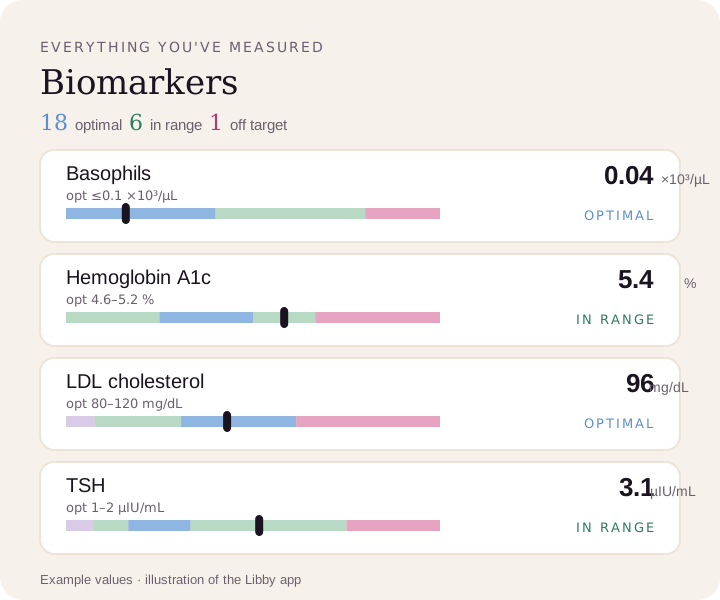
Compare your results to optimal ranges.
Upload a lab PDF or a photo of your report. Libby puts every marker on your lab's range and the optimal range, and tracks your trends over time.
View your basophils ›