Absolute eosinophil count (AEC): normal, high and low
Eosinophils are white cells tied to allergy and parasites. Here's a normal count, the usual causes of a high one, the optimal range, and when it's urgent.
Your absolute eosinophil count (AEC) is the number of eosinophils, a type of white blood cell, in each microliter of your blood. Eosinophils become active in allergic diseases and some infections, especially parasitic worms.12 So a high count most often points to a medicine, an allergic condition like asthma or eczema, or, after time abroad, a parasite.23 A low count usually reflects steroids, stress hormones or a sudden illness.21
The short version
- Normal: under about 500 cells/µL on most reports. Healthy adults usually run far lower, around 100–120, with 95% under about 330.145
- Mildly high (500 to 1,499) is common, turning up in 1–2% of people.6 The usual reasons are medicines, allergic conditions (asthma, hay fever, eczema), and parasites if you've lived in or traveled to places where worms are common.23
- 1,500 or more on two tests at least two weeks apart is hypereosinophilia, which needs a full workup. A high count with chest pain, shortness of breath or fainting needs prompt care.467
- Read the absolute count, not the percentage. A low total white count makes the eosinophil percentage look high even when the real number is normal.2
What an eosinophil count is
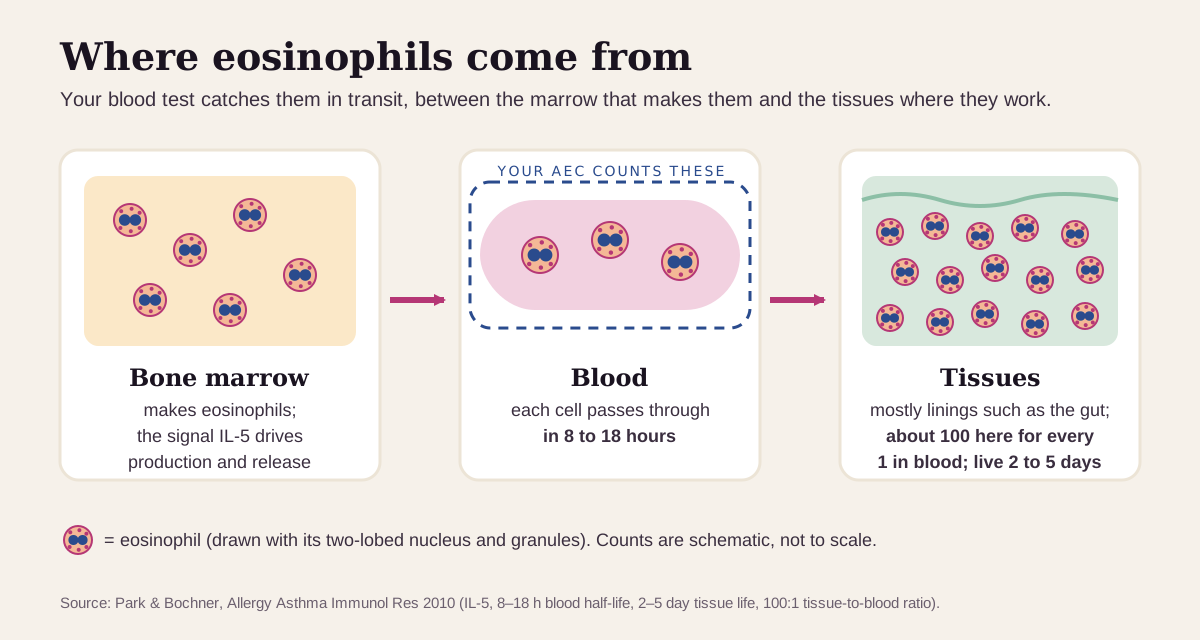
Eosinophils are white blood cells made in your bone marrow. A signaling protein called interleukin-5 (IL-5) is their main driver: it pushes the marrow to make them and to release them into the blood.8
They pass through quickly. Each eosinophil spends only 8 to 18 hours in your bloodstream before moving into tissues, where it lives for 2 to 5 days.8 For every eosinophil in your blood, about 100 sit in tissues, mostly in linings that face the outside world, such as the gut.8 There they help fight parasites and drive the allergic inflammation of asthma, nasal polyps and some gut diseases.2
The AEC is part of a complete blood count (CBC) with differential, the breakdown of your white cells by type. Your report may list eosinophils twice: as a count (the AEC) and as a percentage of all white cells. The lab gets the count by multiplying the percentage by your total white count.1 The count is the number to read.2
What's a normal eosinophil count?
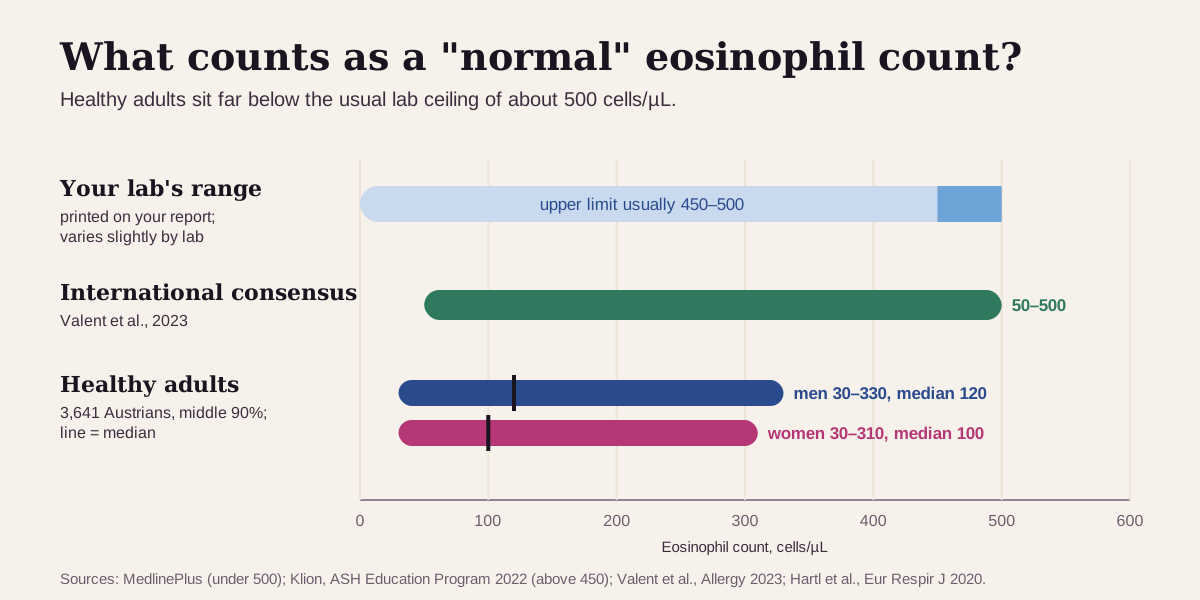
Start with the range on your own report. Reports and reviews put the upper limit at about 450 to 500 cells/µL, and ranges vary slightly from lab to lab.61 An international consensus group puts a normal count at 50 to 500 cells/µL and calls anything above 500 eosinophilia.4
Healthy people usually sit well below that ceiling. In a random sample of 11,042 Austrians, researchers set aside everyone with asthma, a positive allergy skin test, current smoking, COPD, obesity or metabolic syndrome. In the 3,641 healthy adults left, the median count was 120 cells/µL for men and 100 for women, and 95% were under 330 and 310.5
Several everyday things push the count up. In the same Austrian study, asthma roughly doubled the odds of a high count (odds ratio 2.05). Current smoking (1.72), a positive allergy skin test (1.64), COPD (1.56), metabolic syndrome (1.41), male sex (1.36) and obesity (1.16) also raised it, and the effects added up. In adults, age made no difference.5
"Optimal" eosinophil count: what health optimizers aim for
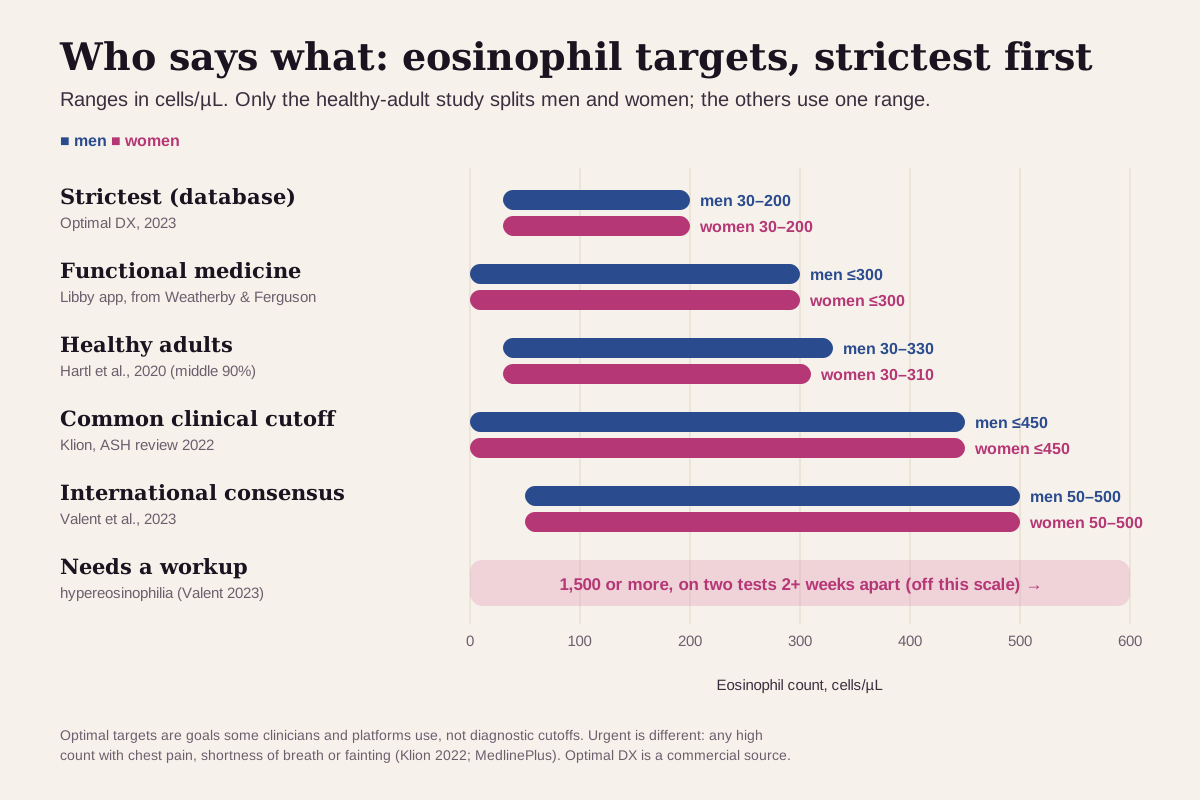
Functional-medicine practitioners and testing companies aim for the low end of normal. Here's the full ladder, from strictest to loosest:
| Target | Men | Women | Who uses it |
|---|---|---|---|
| Strictest (functional-medicine database) | 30–200 cells/µL | 30–200 cells/µL | Optimal DX's published range9 |
| Functional medicine | 300 cells/µL or lower | 300 cells/µL or lower | The optimal range shown in the Libby app, recorded from the Weatherby & Ferguson functional-medicine textbook10 |
| Research "healthy" range | 30–330 (median 120) | 30–310 (median 100) | Hartl et al., 3,641 healthy Austrian adults5 |
| Common clinical cutoff | above 450 is high | above 450 is high | The eosinophilia cutoff in an American Society of Hematology review6 |
| International consensus | 50–500; above 500 is eosinophilia | 50–500; above 500 is eosinophilia | Valent et al., 20234 |
| Needs a workup | 1,500 or more on two tests 2+ weeks apart | same | Hypereosinophilia46 |
| Urgent | any high count with chest pain, shortness of breath or fainting | same | Possible heart involvement: get care promptly67 |
Why the low targets have a basis:
- In a Dutch general-population study of 5,383 people followed for 30 years, those with a count of 275 or more, well inside the lab range, had 1.4 times the risk of dying from any cause. That held after accounting for age, sex, smoking and lung function.11 In the same cohort, eosinophilia went with 1.7 times the risk of cardiovascular death.12
- In the Copenhagen General Population Study, people with asthma and a count above 290 had 1.55 times the rate of attacks severe enough for a hospital stay, compared with those under 180.13 People with COPD and a count above 340 had 1.76 times the rate of severe flare-ups.14
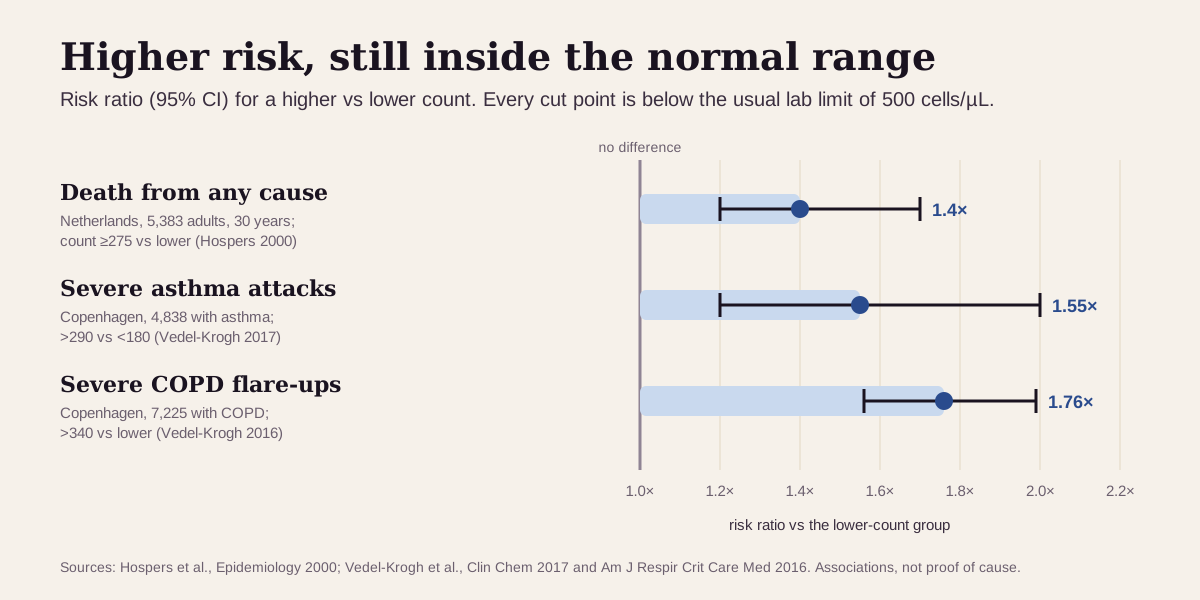
Keep "optimal" in perspective: these are targets, not diagnoses. A count of 400 is a reason to think about allergies, asthma control, smoking and recent medicines. Lower isn't automatically better, either. Near-zero counts go with steroid treatment and acute illness: in 177 people admitted to intensive care, a count under 50 picked out infection with 80% sensitivity and 91% specificity.15
What a high eosinophil count usually means
The size of the rise is the first clue. Clinicians group eosinophil counts into bands:4
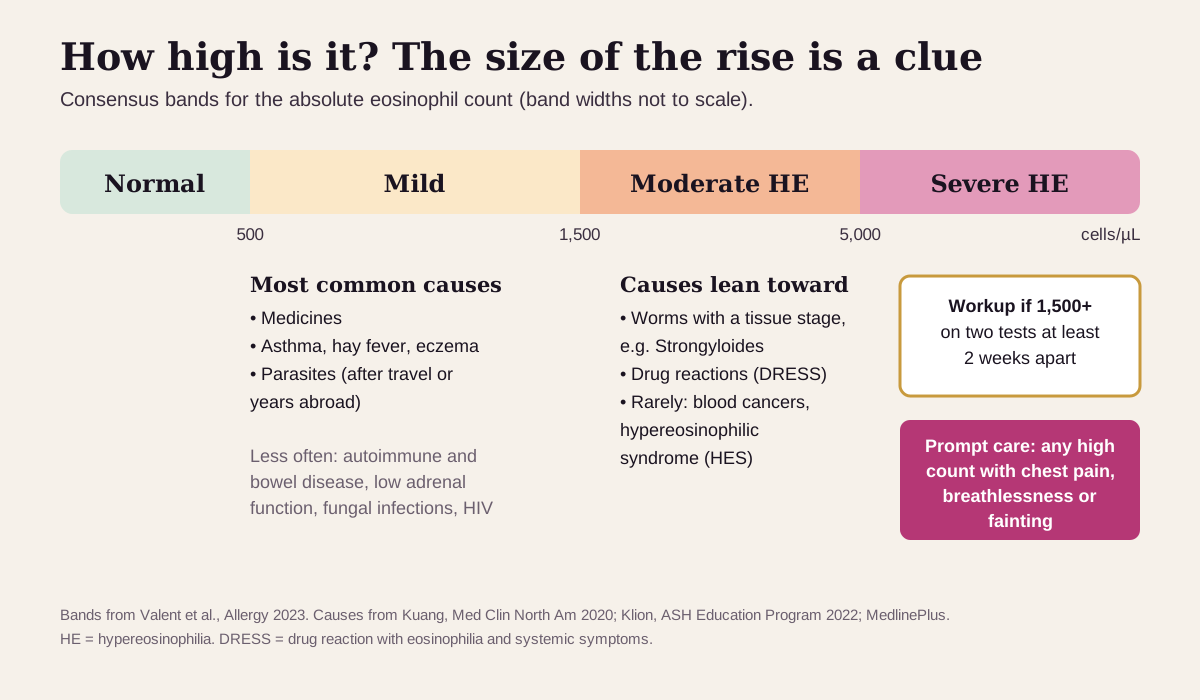
Mildly high (500–1,499): common, usually explained
Where you've lived and traveled sorts the causes. People from high-income countries without significant travel most often have an allergic, autoimmune or other non-infectious cause. Travelers and people from places where worms are common most often have a parasite.3
The usual suspects:
- Medicines. A review from the U.S. National Institutes of Health names medicines as the most common cause of persistent eosinophilia in wealthy countries.2 Any drug or supplement can do it, and reactions range from a quiet blood finding to a life-threatening illness called DRESS (see the box below).6 Stop a prescribed medicine only with your clinician; bring your full list, supplements included.
- Allergic conditions. Asthma, hay fever, eczema and chronic sinusitis with nasal polyps typically cause a mild to moderate rise.26
- Parasites. Worldwide, parasitic worms (helminths) are the most common cause.2 Worms with a stage that travels through tissue are the ones most linked to very high counts.6 One, Strongyloides, matters most: steroid treatment can make it spread through the body, so specialists test for it before steroids if there's any possible exposure, "no matter how remote."6
- Less common causes: autoimmune and inflammatory conditions such as inflammatory bowel disease and sarcoidosis, low adrenal function, fungal infections, HIV, and blood cancers such as leukemia and lymphoma.61
1,500 and up (hypereosinophilia): needs a workup
A count of 1,500 or more on two tests at least two weeks apart is hypereosinophilia.4 It's rare: an estimated 0.3 to 6.3 cases per 100,000 people in the U.S.6 The causes overlap with the list above but lean toward worms with a tissue stage, serious drug reactions and, rarely, blood cancers or a hypereosinophilic syndrome (HES).6
Why it matters: eosinophils that stay very high can move into organs and damage them. The consensus lists scarring in the heart and lungs, blood clots, skin changes, and lung, gut and nerve involvement.4 So specialists check your prior blood counts, medicines and travel, then tests such as vitamin B12 and tryptase, and a bone marrow biopsy if nothing else explains it.6 People with hypereosinophilia and no organ involvement may simply be monitored.6
Get prompt care if a high eosinophil count comes with chest pain, shortness of breath, a racing heart or fainting (signs the heart may be involved), or with a fever, a spreading rash and facial swelling in the weeks after starting a new medicine (a drug reaction called DRESS).762
Is a low eosinophil count a problem?
Usually not. The normal range in the NIH review starts at zero.2 The count drops fast with steroid medicines: in 20 healthy volunteers given one IV dose of methylprednisolone, eosinophils fell within 4 hours.16 Your own stress hormone, cortisol, lowers it too, and so can heavy drinking.1
A count near zero also shows up with acute bacterial infection,2 which is why intensive-care doctors have studied it as a clue to sepsis.15 One practical catch: steroids and a bacterial infection can mask a high count, so a normal result during either may be normal only for now.2
Eosinophils read best next to their neighbors
The rest of your white-cell count usually tells you more than the eosinophil number alone:
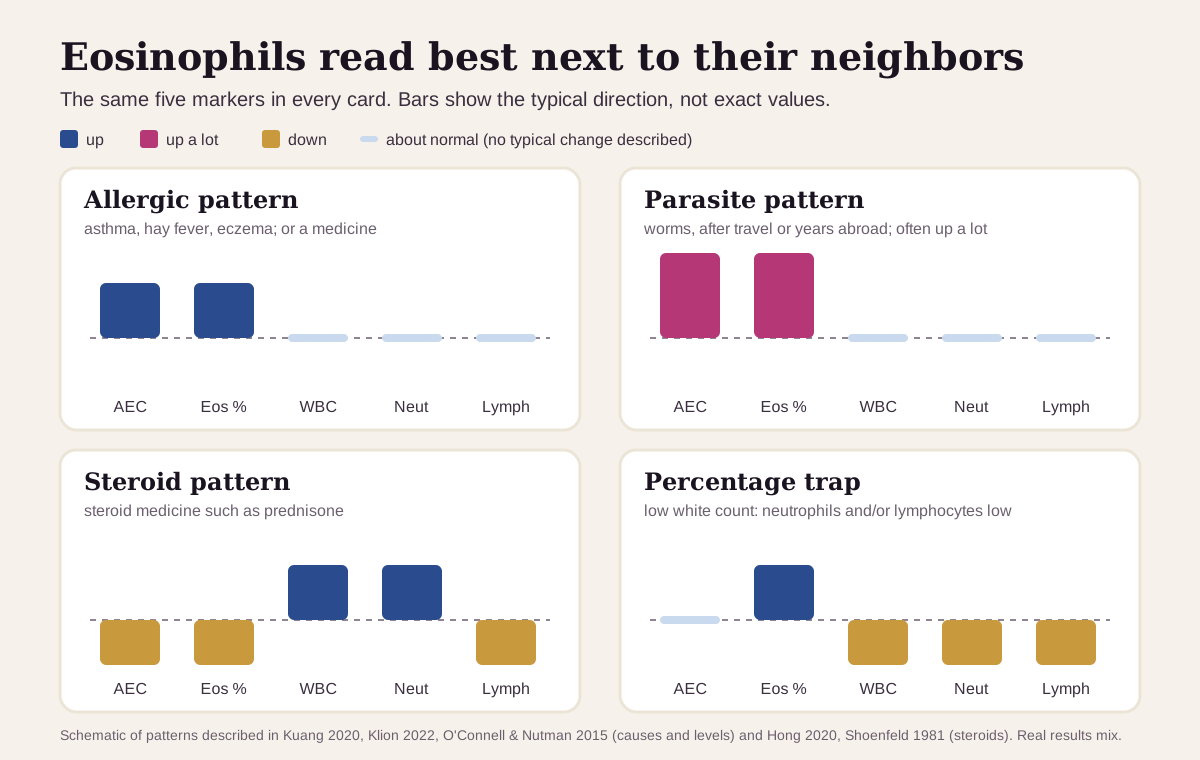
| If you see… | It often points to… |
|---|---|
| AEC up, usually mildly (500–1,499), other white cells normal | an allergic condition (asthma, hay fever, eczema) or a medicine; both can push it past 1,500 |
| AEC higher, sometimes over 1,500, after travel or years abroad | parasitic worms, especially those with a tissue stage |
| Eosinophils near zero, neutrophils and total white count up, lymphocytes down | steroid medicine such as prednisone (your own cortisol lowers eosinophils too); more than 6% band forms (young neutrophils) can point to infection instead |
| Eosinophil % high, AEC normal, total white count low | a percentage trap: the other white cells are low, and the eosinophils are normal |
| AEC 1,500 or more on two tests 2+ weeks apart, no clear cause | a hematology workup: B12, tryptase, bone marrow |
The steroid row comes from studies of the drugs themselves. After one IV dose in healthy volunteers, the share of neutrophils rose and the shares of lymphocytes and eosinophils fell within 4 hours.16 On prednisone, the total white count can pass 20,000/mm³ from the first day, mostly from neutrophils.17
How fast eosinophils change
Eosinophils move fast. Each one spends only 8 to 18 hours in the blood.8 So the count can shift within hours, while the eosinophils in your tissues change on a slower clock.
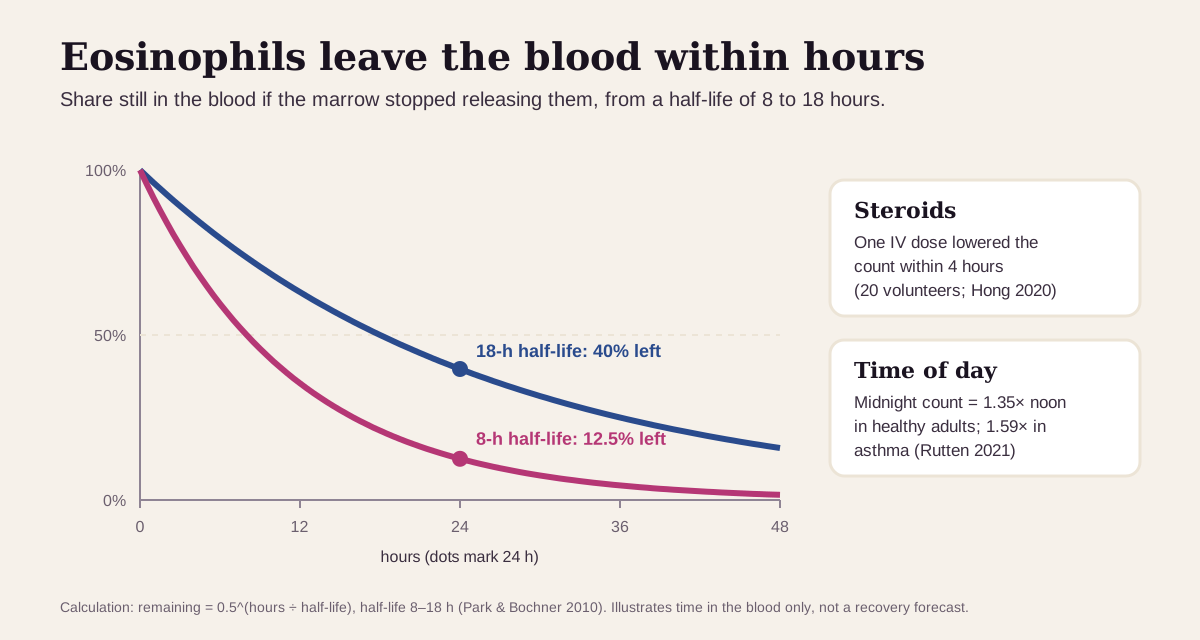
What that means in practice:
- Steroids drop it within hours by sending eosinophils back to the bone marrow.16
- Time of day matters. In healthy adults, the midnight count averaged 1.35 times the noon count; in people with asthma, 1.59 times. Midday draws tend to catch the daily low.18
- One high result is a starting point. Hypereosinophilia is defined on two tests at least two weeks apart.4
- Some causes fade slowly. After a drug reaction like DRESS, full recovery can take weeks to months. After treatment for Strongyloides, counts in one study had fallen at six months but had not always normalized.2
- Trends beat snapshots. Specialists start by pulling your prior blood counts, because a count that has been high for years, or keeps climbing, tells a different story than a one-off.6
Going deeper: counts, percentages and tissue
The math. The lab multiplies your total white count by the eosinophil percentage:21
AEC = total white count × eosinophil % ÷ 100
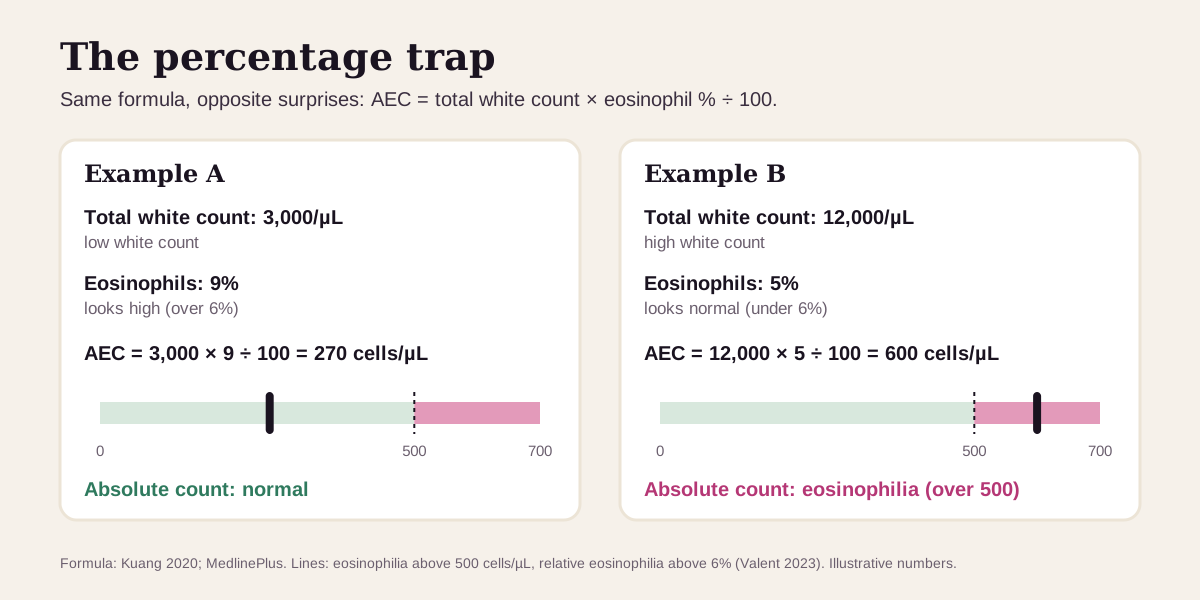
That's why the consensus defines eosinophilia by the count (above 500) and calls a percentage above 6% only "relative" eosinophilia.4 A low total white count raises the eosinophil percentage without adding a single eosinophil, and a high white count does the reverse.2
Blood versus tissue. With about 100 eosinophils in tissue for every one in blood,8 the two can disagree. Eosinophilic esophagitis, an allergic disease of the food pipe, is diagnosed from a tissue sample, and the blood count is often only slightly raised.2 The 2023 consensus even recognizes a tissue-only form of hypereosinophilic syndrome in people whose blood count stays under 1,500.4
HES, defined. A hypereosinophilic syndrome needs three things: hypereosinophilia in the blood or a tissue, organ damage caused by it, and no other disease that better explains the damage.4
Drugs that target IL-5. Asthma biologics show how central IL-5 is. Mepolizumab and reslizumab block IL-5 and sharply lower the count. Benralizumab, which targets the IL-5 receptor on eosinophils, removes them almost completely.6 If you take one, a very low count is the expected result.
Questions worth asking
- Is my absolute count high, or only the percentage?
- Could any of my medicines or supplements be raising it?
- Do my asthma, allergies or eczema explain this level?
- Given where I've lived or traveled, should I be tested for parasites such as Strongyloides?
- Should we repeat it, and does the time of day or a recent steroid dose matter?
- If it stays above 1,500, what would the workup include?
FAQ
What is a normal absolute eosinophil count? Under about 500 cells/µL (0.5 ×10⁹/L) on most reports. Healthy adults usually run around 100 to 120.15
What is the most common cause of a high eosinophil count? In wealthy countries, medicines and allergic conditions such as asthma, hay fever and eczema. Worldwide, it's parasitic worms.2
Is a low eosinophil count bad? Usually not. Steroid medicines, stress hormones, heavy drinking and acute infections lower it, often within hours.116
When is a high eosinophil count an emergency? When it comes with chest pain, shortness of breath or fainting, or with fever, a spreading rash and facial swelling after a new medicine. A count of 1,500 or more on repeat tests needs a workup even without symptoms.672
This guide is for education. It can't diagnose you or replace care from a clinician who knows your history.
Footnotes
-
National Library of Medicine. Eosinophil count - absolute. MedlinePlus Medical Encyclopedia. The under-500 normal value, how the count is calculated, and the common causes of high and low counts. MedlinePlus ↩ ↩2 ↩3 ↩4 ↩5 ↩6 ↩7 ↩8 ↩9 ↩10 ↩11 ↩12 ↩13
-
Kuang FL. Approach to Patients with Eosinophilia. Med Clin North Am. 2020;104(1):1–14. NIH review: the AEC formula, why percentages mislead, medicines as the most common cause in wealthy countries and parasites worldwide, masking by steroids and infection, and DRESS. PMC ↩ ↩2 ↩3 ↩4 ↩5 ↩6 ↩7 ↩8 ↩9 ↩10 ↩11 ↩12 ↩13 ↩14 ↩15 ↩16 ↩17 ↩18 ↩19 ↩20 ↩21 ↩22
-
O'Connell EM, Nutman TB. Eosinophilia in Infectious Diseases. Immunol Allergy Clin North Am. 2015;35(3):493–522. How travel and origin sort parasitic from allergic and other causes. PMC ↩ ↩2 ↩3 ↩4
-
Valent P, Klion AD, Roufosse F, et al. Proposed refined diagnostic criteria and classification of eosinophil disorders and related syndromes. Allergy. 2023;78(1):47–59. The international consensus behind the normal range (0.05–0.5 ×10⁹/L), the eosinophilia bands, hypereosinophilia (≥1.5 on two tests ≥2 weeks apart) and the HES definition. PMC ↩ ↩2 ↩3 ↩4 ↩5 ↩6 ↩7 ↩8 ↩9 ↩10 ↩11 ↩12 ↩13 ↩14 ↩15 ↩16
-
Hartl S, Breyer MK, Burghuber OC, et al. Blood eosinophil count in the general population: typical values and potential confounders. Eur Respir J. 2020;55(5):1901874. 11,042 randomly sampled Austrians; medians and 5th–95th percentiles in 3,641 healthy adults. PubMed ↩ ↩2 ↩3 ↩4 ↩5 ↩6 ↩7
-
Klion AD. Approach to the patient with suspected hypereosinophilic syndrome. Hematology Am Soc Hematol Educ Program. 2022;2022(1):47–54. American Society of Hematology education review: eosinophilia above 0.45 ×10⁹/L in 1–2% of people, the causes of marked eosinophilia, Strongyloides testing, the workup, and when treatment is urgent. PMC ↩ ↩2 ↩3 ↩4 ↩5 ↩6 ↩7 ↩8 ↩9 ↩10 ↩11 ↩12 ↩13 ↩14 ↩15 ↩16 ↩17 ↩18 ↩19 ↩20 ↩21 ↩22
-
National Library of Medicine. Myocarditis. MedlinePlus Medical Encyclopedia. Symptoms of heart inflammation: chest pain, shortness of breath, rapid heart rate, fainting. MedlinePlus ↩ ↩2 ↩3 ↩4
-
Park YM, Bochner BS. Eosinophil Survival and Apoptosis in Health and Disease. Allergy Asthma Immunol Res. 2010;2(2):87–101. IL-5 and the marrow, the 8–18 hour blood half-life, the 2–5 day tissue life span and the 100:1 tissue-to-blood ratio. PMC ↩ ↩2 ↩3 ↩4 ↩5 ↩6 ↩7
-
Optimal DX. Biomarkers of Immunity: Eosinophils. Published June 27, 2023; updated November 1, 2023. Lists "The ODX Range" for absolute eosinophils as 0.03–0.2 ×10³/µL (30–200 cells/µL); the page's text elsewhere gives 0.03–0.3. A commercial source, listed as what the optimizer community uses. optimaldx.com ↩ ↩2
-
Weatherby D, Ferguson S. Blood Chemistry and CBC Analysis: Clinical Laboratory Testing from a Functional Perspective. 2nd ed. Bear Mountain Publishing; 2004. ISBN 978-0976136712. Widely used functional-medicine reference (range as recorded in the Libby app's marker catalog; the book was not opened for this article). The catalog records it as the source of the Libby app's optimal absolute eosinophil range: 0.3 ×10³/µL (300 cells/µL) or lower. ↩ ↩2
-
Hospers JJ, Schouten JP, Weiss ST, Postma DS, Rijcken B. Eosinophilia is associated with increased all-cause mortality after a follow-up of 30 years in a general population sample. Epidemiology. 2000;11(3):261–268. 5,383 Dutch adults; eosinophilia defined as ≥275 cells/mm³. PubMed ↩ ↩2
-
Hospers JJ, Rijcken B, Schouten JP, Postma DS, Weiss ST. Eosinophilia and positive skin tests predict cardiovascular mortality in a general population sample followed for 30 years. Am J Epidemiol. 1999;150(5):482–491. PubMed ↩
-
Vedel-Krogh S, Fallgaard Nielsen S, Lange P, Vestbo J, Nordestgaard BG. Association of Blood Eosinophil and Blood Neutrophil Counts with Asthma Exacerbations in the Copenhagen General Population Study. Clin Chem. 2017;63(4):823–832. 4,838 people with asthma. PubMed ↩ ↩2
-
Vedel-Krogh S, Nielsen SF, Lange P, Vestbo J, Nordestgaard BG. Blood Eosinophils and Exacerbations in Chronic Obstructive Pulmonary Disease. The Copenhagen General Population Study. Am J Respir Crit Care Med. 2016;193(9):965–974. 7,225 people with COPD. PubMed ↩ ↩2
-
Abidi K, Khoudri I, Belayachi J, et al. Eosinopenia is a reliable marker of sepsis on admission to medical intensive care units. Crit Care. 2008;12(2):R59. 177 ICU patients. PMC ↩ ↩2
-
Hong SG, Sato N, Legrand F, et al. Glucocorticoid-induced eosinopenia results from CXCR4-dependent bone marrow migration. Blood. 2020;136(23):2667–2678. 20 healthy volunteers, one 250 mg IV dose of methylprednisolone, blood counts before and 4 hours after. PMC ↩ ↩2 ↩3 ↩4 ↩5 ↩6
-
Shoenfeld Y, Gurewich Y, Gallant LA, Pinkhas J. Prednisone-induced leukocytosis. Influence of dosage, method and duration of administration on the degree of leukocytosis. Am J Med. 1981;71(5):773–778. 80 patients: a neutrophil-driven rise in white count with fewer eosinophils and lymphocytes. PubMed ↩ ↩2
-
Rutten B, Young S, Rhedin M, et al. Eosinophil-derived neurotoxin: A biologically and analytically attractive asthma biomarker. PLoS One. 2021;16(2):e0246627. Blood drawn every 4 hours for 24 hours in 10 healthy adults and 20 with asthma. PMC ↩ ↩2
Educational content, not medical advice.Libby is a personal record tool, not a medical service — it doesn't diagnose, treat, or prescribe. Reference ranges vary by lab and by person. Talk to a qualified healthcare professional about your results.
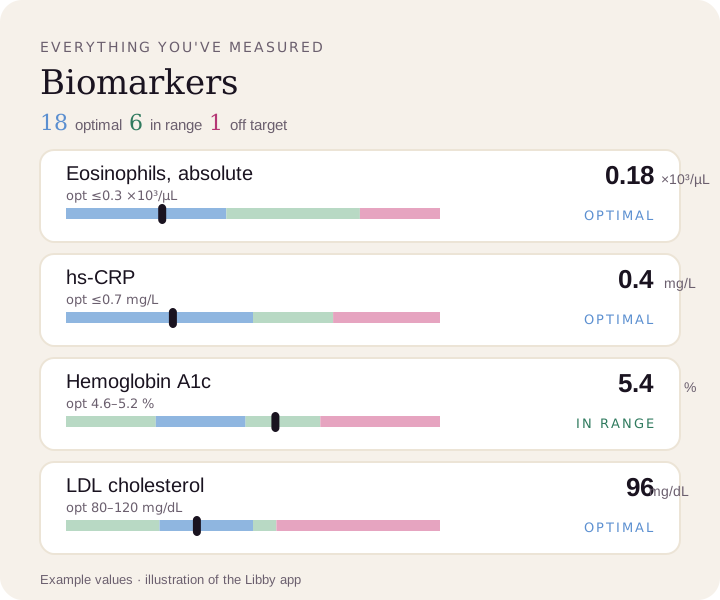
Compare your results to optimal ranges.
Upload a lab PDF or a photo of your report. Libby puts every marker on your lab's range and the optimal range, and tracks your trends over time.
View your eosinophil count ›