Absolute lymphocyte count: normal, low, high and optimal
Lymphocytes are your B, T and NK immune cells. Here's a normal absolute count, what a low or high result usually means, and when it needs a closer look.
Your absolute lymphocyte count (ALC) is how many lymphocytes, the B, T and natural killer (NK) cells of your immune system, are in your blood right now. Lymphocytes make up about 20% to 40% of your white blood cells.1 The count moves with infections, stress, steroid medicines and hard exercise, so a single low or high result is common. A count that stays out of range is the one worth working up.21
The short version
- Normal: the U.S. National Heart, Lung, and Blood Institute (NHLBI) puts a normal adult count at about 1.0 to 4.8. The optimal range shown in the Libby app is 1.5 to 3.0.13
- Low (lymphopenia) usually follows an acute infection, a steroid medicine, surgery or other physical stress. A count that stays low points toward causes like HIV, autoimmune disease, poor nutrition or cancer treatment.145
- High (lymphocytosis) is most often a viral infection, such as mono. In adults, a count that stays at 5.0 or above gets a blood smear and flow cytometry to check for chronic lymphocytic leukemia (CLL).26
- Get care promptly if an abnormal count comes with frequent or unusual infections, fever, night sweats, weight loss, swollen lymph nodes or easy bruising.17
What lymphocytes are
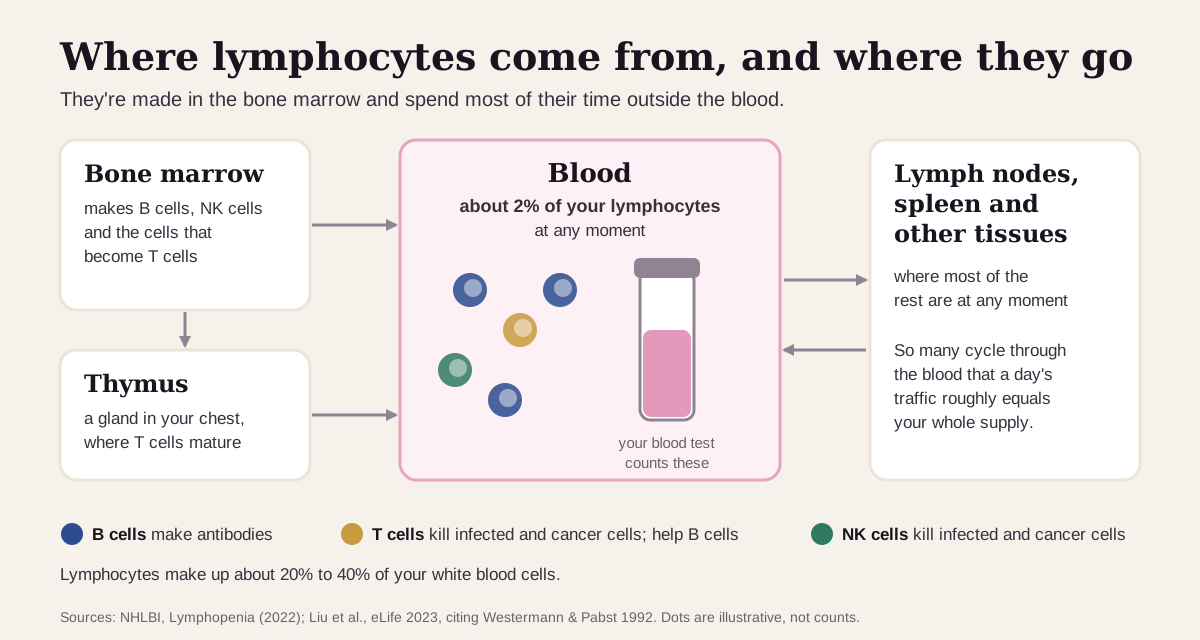
Lymphocytes are the immune cells that make antibodies and hunt down infected cells. There are three kinds:1
- B cells are made in the bone marrow. They make antibodies.
- T cells mature in the thymus, a gland in your chest. They kill virus-infected and cancer cells, and they help B cells make antibodies.
- Natural killer (NK) cells kill cancer cells and virus-infected cells directly.
Your blood carries only a small, moving share of them. By one widely cited estimate, about 2% of your lymphocytes are in your blood at any moment. The rest sit in lymph nodes, the spleen and other tissues. So many cycle through the blood that a day's traffic roughly equals every lymphocyte in your body.8 That's why the count can swing within hours: cells shift between the blood and the tissues long before your body makes or loses any.49
The ALC comes from a CBC with differential, which counts each type of white cell. It usually needs no special preparation.10
What's a normal absolute lymphocyte count?
Start with the range printed on your report. Labs use different machines and reference groups, so their ranges differ.
For adults, the common benchmarks sit close together:
- The NHLBI calls about 1.0 to 4.8 K/µL normal for adults, and says a provider may diagnose lymphopenia below 1.5.1
- A study of 187 healthy adults in Barcelona, on a current Sysmex analyzer, set the range at 1.3 to 3.4.11
- In 108,135 Danish adults, the middle 95% ran from 1.1 to 3.7, with a median of 2.1.12
Children run much higher. In the Canadian CALIPER study of healthy children, the range was 3.3 to 8.8 under age 1 and fell to 1.1 to 3.6 by ages 15 to 20.13 Adults drift lower again with age.12
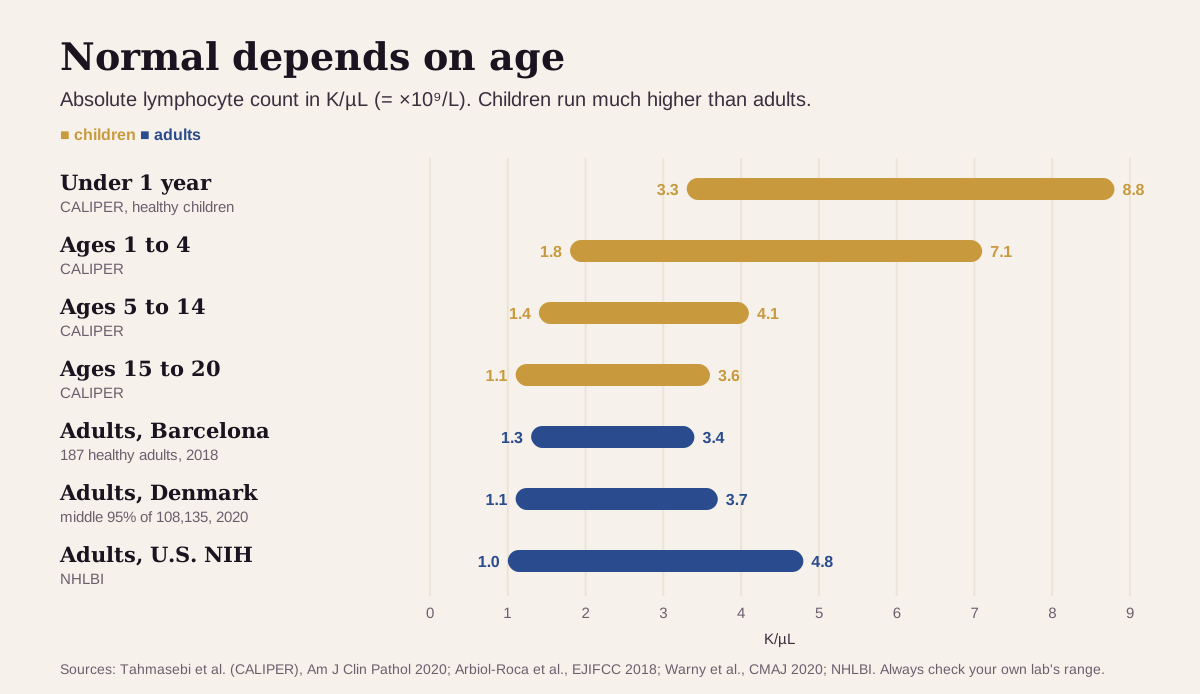
The sources above give one range for men and women, so this guide uses one range for both.
"Optimal" lymphocytes: what health optimizers aim for
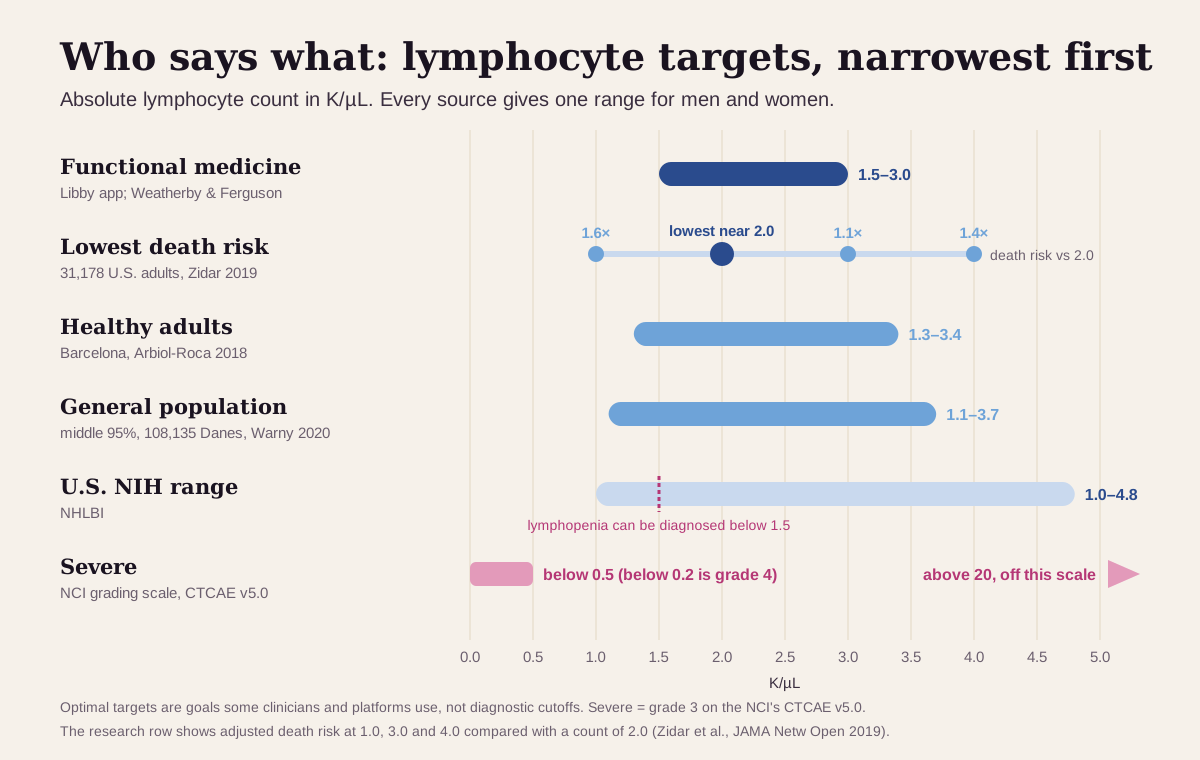
Optimizers aim for the middle of the normal range. Lymphocytes have a floor and a ceiling, so the ladder runs from the narrowest band to the widest:
| Target | Range (K/µL) | Who uses it |
|---|---|---|
| Functional medicine | 1.5–3.0 | The optimal range shown in the Libby app, whose catalog credits it to the Weatherby & Ferguson textbook3 |
| Lowest death risk (research) | about 2.0 | 31,178 U.S. adults: risk was lowest near 2.0 and rose on both sides14 |
| Healthy adults | 1.3–3.4 | Healthy Barcelona volunteers, current analyzer11 |
| General population | 1.1–3.7 | The middle 95% of 108,135 Danish adults12 |
| U.S. NIH range | 1.0–4.8 | NHLBI; lymphopenia can be diagnosed below 1.51 |
| Severe | below 0.5, or above 20 | Grade 3 on the National Cancer Institute's (NCI) grading scale; below 0.2 is grade 415 |
Superpower's page puts it in words rather than numbers.16 The narrowest numeric target is the functional-medicine range of 1.5 to 3.0.
Why the middle is the target:
- In 31,178 U.S. adults followed for up to 12 years, death risk was lowest at a count near 2.0. Compared with 2.0, a count of 1.0 carried 1.6 times the risk, 3.0 carried 1.1 times and 4.0 carried 1.4 times. One adult in five had a count of 1.5 or less.14
- In 108,135 Danish adults, a count below 1.1 went with 1.63 times the risk of death over a median of 9 years. A count above 3.7 went with 1.17 times.12
- In the same Danish cohort, a low count went with 1.41 times the risk of a hospital stay for infection and 1.70 times the risk of dying of one.17
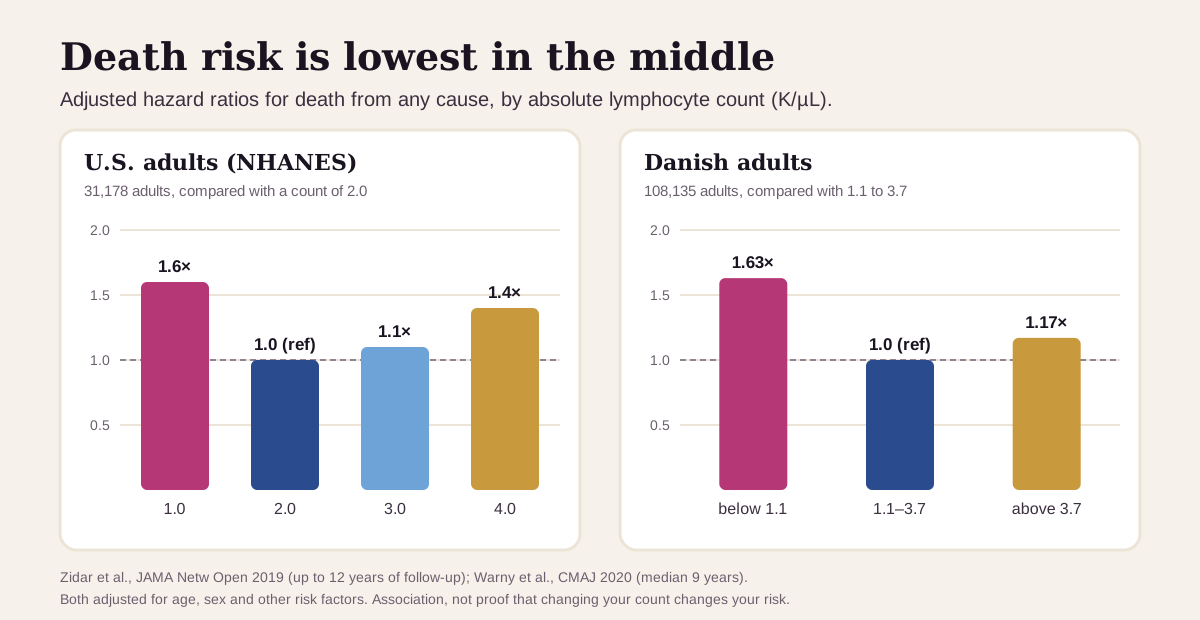
Keep "optimal" in perspective: it's a target, not a diagnosis. A single count of 1.3 during a bad cold is a different story from a count that sits at 1.3 for years. The risk in these studies grew when a low count came with other warning signs: in the U.S. study, people who scored high on a combined score of low lymphocytes, high RDW and high CRP (markers of stressed blood production and inflammation) had 3.2 times the risk of death.14 Higher carries risk too: the curve rises again above 3.0.1412
What a low or high count usually means
How far out of range it is, and whether it stays there, are the first clues.
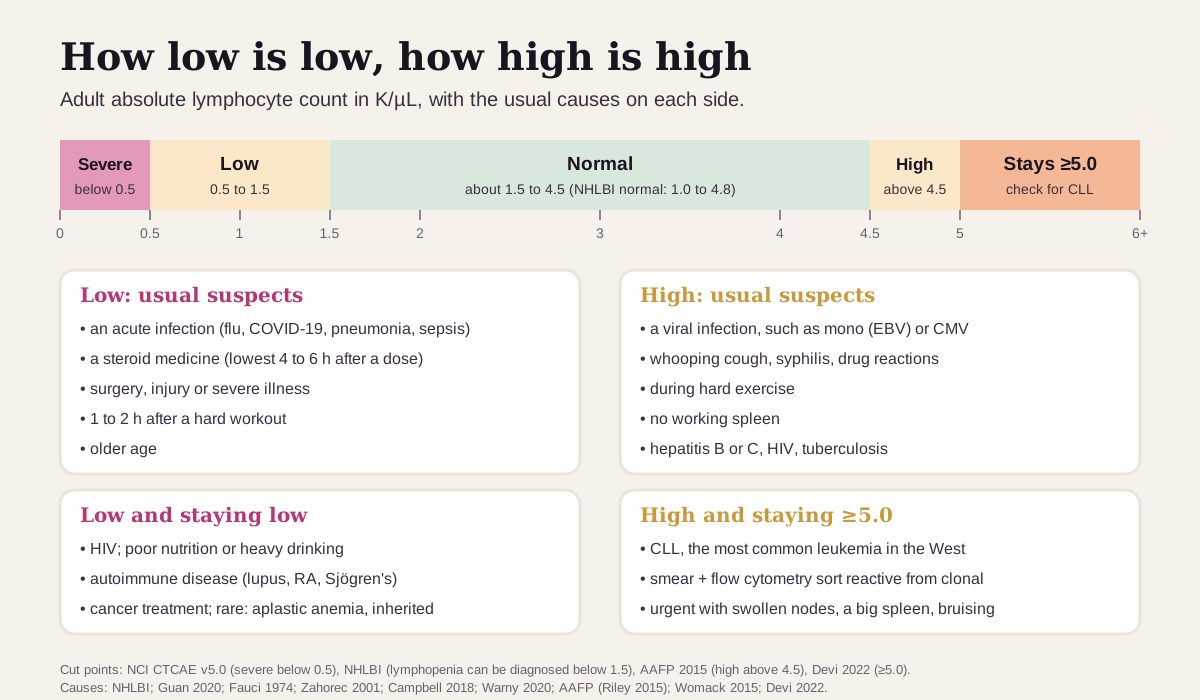
Low (lymphopenia): the usual suspects
- An acute infection. Flu, COVID-19, pneumonia and sepsis can all push lymphocytes down.1 In one study of 1,099 people hospitalized with COVID-19, 83.2% had a low count on admission.18
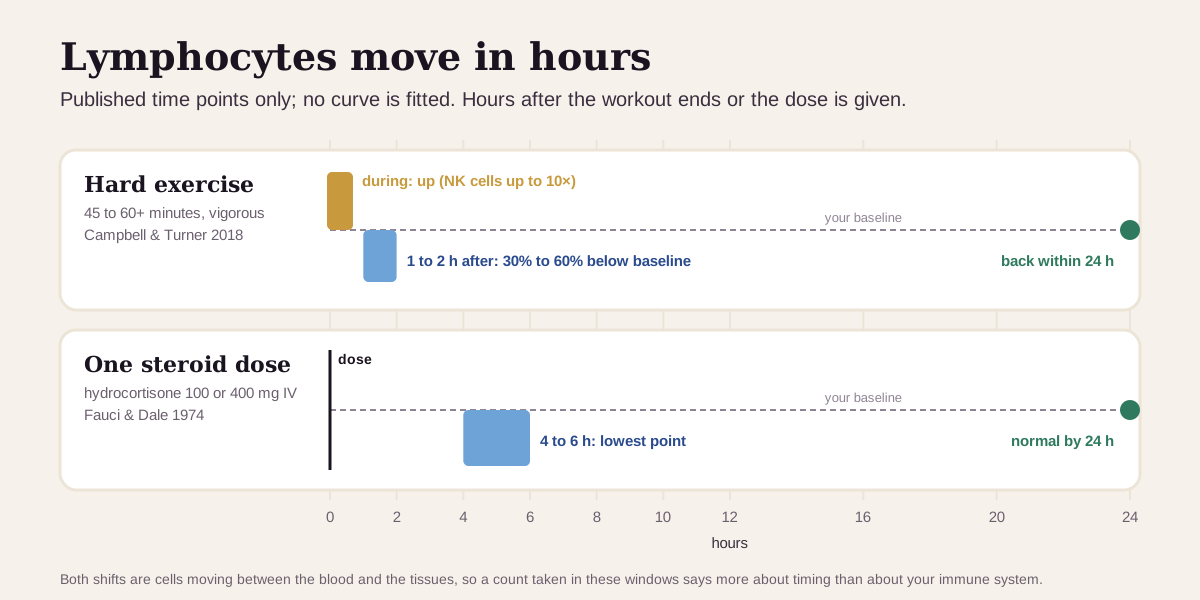
- A steroid medicine. A single IV dose of hydrocortisone dropped lymphocytes to their lowest point 4 to 6 hours later, and counts were back to normal by 24 hours. The cells moved out of the blood into other tissues.4 Steroid treatment in general is a known cause.1 Don't stop a prescribed steroid on your own; tell your clinician you take it.
- Surgery, injury and severe illness. After planned bowel surgery, lymphocytes fell from 28% to 10% of white cells while neutrophils rose from 62% to 84%.5
- A hard workout in the last few hours. Lymphocytes drop 30% to 60% below baseline 1 to 2 hours after vigorous exercise, then recover within a day.9
- Older age. Counts drift down as adults age.12
Lasting causes, which a repeat test helps sort out:1
- HIV, the most common infection that leads to lymphopenia. HIV destroys CD4 T cells.119
- Poor nutrition and heavy drinking. Poor nutrition is the main risk factor worldwide.
- Autoimmune disease, such as lupus, rheumatoid arthritis and Sjögren's.
- Cancer treatment, radiation and bone marrow transplant.
- Rare but important: blood cancers such as Hodgkin lymphoma, aplastic anemia, and inherited immune deficiencies such as SCID and DiGeorge syndrome.
High (lymphocytosis): the usual suspects
Clinicians call a count above about 4.5 high.7 A UK clinical review uses 5.0.2
- A viral infection. This is the most common cause.2 Mono (from the Epstein-Barr virus) is the classic example: lymphocytes make up at least half of the white cells, with at least 10% "atypical" ones. A count below 4.0 makes mono unlikely.20 Cytomegalovirus, mumps, rubella and hepatitis A can do it too.2
- Whooping cough (pertussis), syphilis and allergic drug reactions.7
- Hard exercise, while you're doing it. NK cells can rise up to 10-fold.9
- No working spleen, for example after it's removed. The white count rises, mostly from lymphocytes.7
- Chronic infections: hepatitis B or C, HIV and tuberculosis.2
A high count is more often harmless in children than in adults.7 In adults, a count that stays above 5.0 needs a closer look. CLL is the most common leukemia in the Western world, with a median age at diagnosis of 70, and most cases are found this way: as a high count on a routine blood test.2 A blood smear and flow cytometry tell a reactive rise from a clonal one.27
Get prompt care if an abnormal count comes with any of these: infections that keep coming back, are unusual, or linger;1 fever over 100.4°F (38°C), night sweats or unexplained weight loss; swollen lymph nodes; an enlarged spleen; or easy bruising or bleeding.7
Lymphocytes read best next to their neighbors
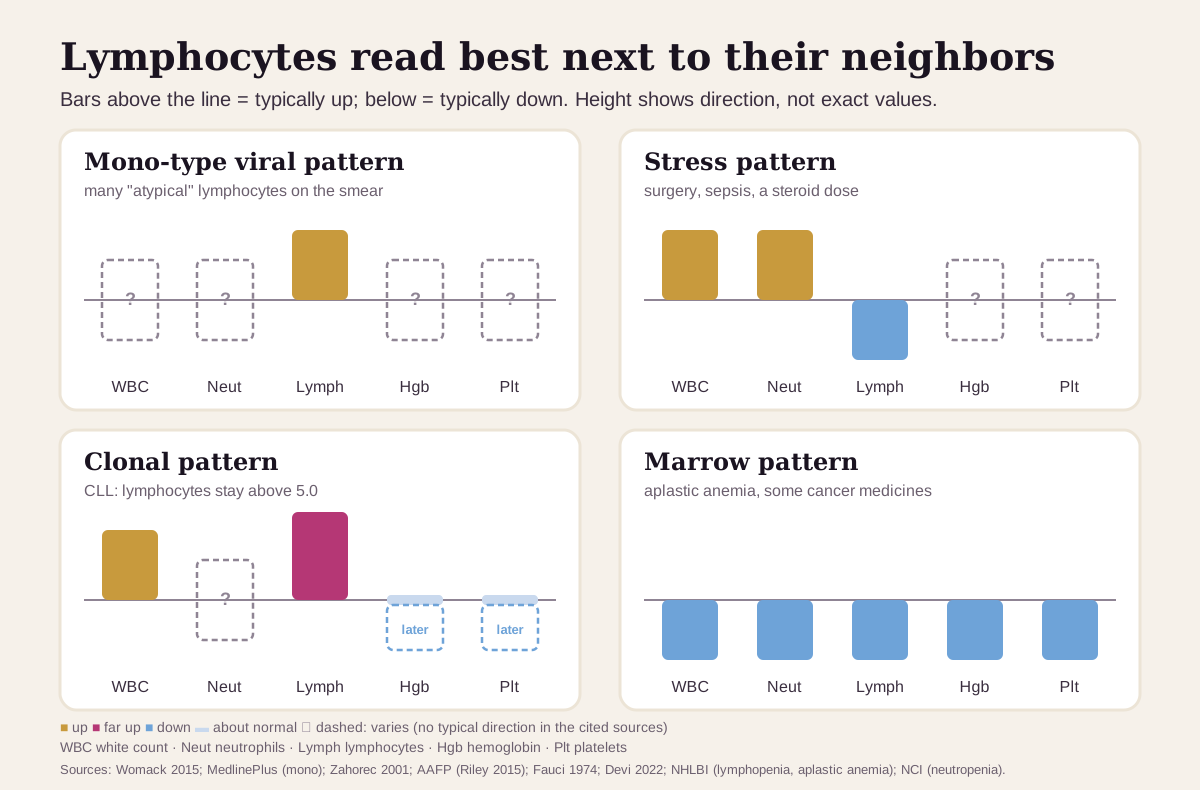
Your ALC arrives with the rest of the CBC. The pattern across it says more than lymphocytes alone:
| If you see… | It often points to… |
|---|---|
| Lymphocytes up, many "atypical" on the smear | a viral infection such as mono20 |
| Neutrophils up, lymphocytes down, white count up | physical stress: surgery, severe infection, sepsis or a steroid medicine5741 |
| Lymphocytes above 5.0 and staying there, cells look the same on the smear | a clonal B-cell process such as CLL; hemoglobin and platelets usually fall in later stages27 |
| Lymphocytes, neutrophils, hemoglobin and platelets all low | the bone marrow is falling behind: aplastic anemia or some cancer medicines22123 |
How fast lymphocytes change
Lymphocytes move in hours. There's no single half-life, because most of the change is cells shifting between the blood and the tissues:
What that means in practice:
- A single odd result is often repeated. Mention a recent workout, illness, surgery or steroid dose when you get tested.94
- A count that stays out of range is worth working up. A persistently high count gets a smear and flow cytometry;2 a persistently low one gets a look at infections (including HIV), medicines, nutrition and immune conditions.1
- Trends beat snapshots. The count is fairly steady from year to year: in the Danish study, repeat counts about 10 years later still tracked the first ones (a regression dilution ratio of 0.68, where 1.0 is a perfect match).12 So a steady drift across several tests tells you more than one number.
Going deeper: counts, percentages and ratios
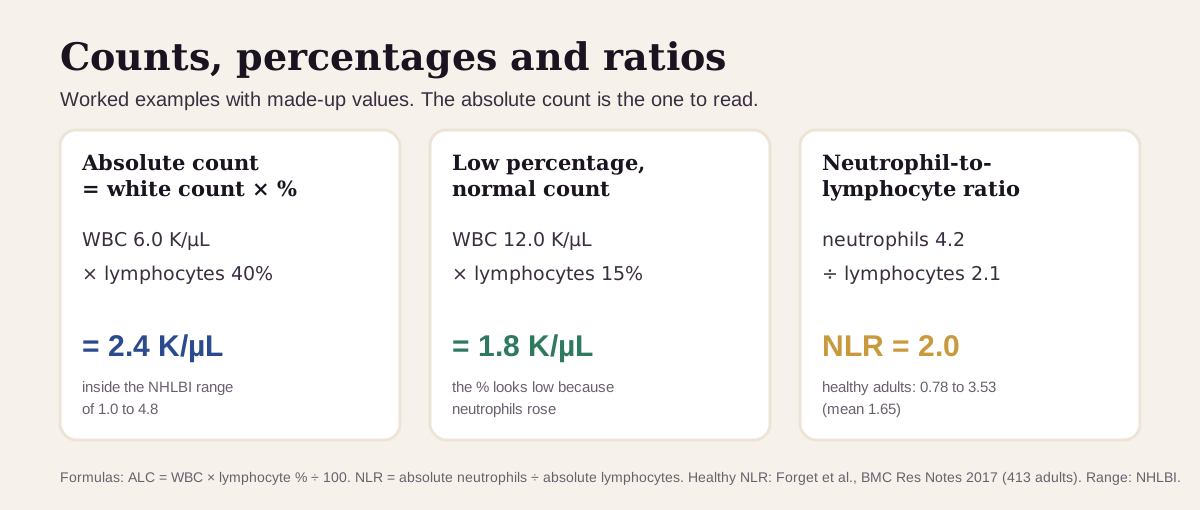
Read the absolute count, not the percentage. Your report often shows lymphocytes twice: as a percentage of white cells and as an absolute count.10 The absolute count is the percentage times the white count:
ALC = white blood cell count × lymphocyte % ÷ 100
When neutrophils surge during an infection, the lymphocyte percentage can look low even though the absolute count is normal. The reverse happens when neutrophils drop.
The neutrophil-to-lymphocyte ratio (NLR) divides your absolute neutrophils by your absolute lymphocytes. Stress and severe infection push it up fast, because neutrophils rise as lymphocytes fall.5 In 413 healthy working adults, NLR ran from 0.78 to 3.53, with an average of 1.65.24
Lymphocyte subsets are separate tests. A CD4 count measures one kind of T cell and is mostly used to track HIV.19 Flow cytometry sorts all the subsets and can spot a clonal population.12
Small clonal B-cell populations are common with age. Monoclonal B-cell lymphocytosis (MBL) means a clonal B-cell population below 5.0 K/µL with no other signs of a blood cancer. The low-count form shows up in about 5% of adults over 40 on standard flow cytometry and rarely turns into CLL. The high-count form becomes CLL that needs treatment at about 1% to 2% a year.6
Questions worth asking
- Is my absolute count out of range, or only the percentage?
- What did my neutrophils, white count, hemoglobin and platelets do at the same time?
- Could a recent illness, workout, surgery or steroid medicine explain it?
- Should we repeat the CBC, and when?
- If it stays high, would a blood smear or flow cytometry help?
- If it stays low, should I be tested for HIV, or checked for other causes?
FAQ
What is a normal absolute lymphocyte count? The NHLBI calls about 1.0 to 4.8 K/µL normal for adults. The optimal range in the Libby app is 1.5 to 3.0. Children run higher.1313
What does a low lymphocyte count mean? Most often a recent infection, a steroid medicine, surgery or other physical stress. A count that stays low can point to HIV, autoimmune disease, poor nutrition or cancer treatment.14
What causes a high absolute lymphocyte count? A viral infection, such as mono, is the most common cause. In adults, a count that stays at 5.0 or above gets checked for CLL.220
Can exercise change my lymphocyte count? Yes. Lymphocytes rise during hard exercise, fall 30% to 60% below baseline 1 to 2 hours after, and recover within 24 hours.9
This guide is for education. It can't diagnose you or replace care from a clinician who knows your history.
Footnotes
-
National Heart, Lung, and Blood Institute. Lymphopenia: What is lymphopenia?, Causes and risk factors, Symptoms, and Diagnosis. NIH; last updated May 31, 2022. The three lymphocyte types, 20–40% of white cells, causes (poor nutrition the main risk factor worldwide; HIV the most common infection), symptoms, and the adult normal range (1,000–4,800 cells/µL; lymphopenia below 1,500). NHLBI · Causes · Diagnosis ↩ ↩2 ↩3 ↩4 ↩5 ↩6 ↩7 ↩8 ↩9 ↩10 ↩11 ↩12 ↩13 ↩14 ↩15 ↩16 ↩17 ↩18 ↩19 ↩20 ↩21 ↩22 ↩23 ↩24
-
Devi A, Thielemans L, Ladikou EE, Nandra TK, Chevassut T. Lymphocytosis and chronic lymphocytic leukaemia: investigation and management. Clin Med (Lond). 2022;22(3):225–229. Lymphocytosis at 5.0 ×10⁹/L or more, most often transient viral infection; transient and persistent causes; CLL median age 70, usually found incidentally; cytopenias depend on disease extent. PMC ↩ ↩2 ↩3 ↩4 ↩5 ↩6 ↩7 ↩8 ↩9 ↩10 ↩11 ↩12 ↩13 ↩14
-
Weatherby D, Ferguson S. Blood Chemistry and CBC Analysis: Clinical Laboratory Testing from a Functional Perspective. 2nd ed. Bear Mountain Publishing; 2004. ISBN 978-0976136712. Widely used functional-medicine reference. The Libby app credits its 1.5–3.0 ×10³/µL optimal range for absolute lymphocytes to this book (range as recorded in the Libby app's marker catalog; book not opened for this article). ↩ ↩2 ↩3 ↩4
-
Fauci AS, Dale DC. The effect of in vivo hydrocortisone on subpopulations of human lymphocytes. J Clin Invest. 1974;53(1):240–246. Single IV dose of 100 or 400 mg; lowest lymphocyte and monocyte counts at 4–6 hours, normal by 24 hours; redistribution out of the circulation. PMC ↩ ↩2 ↩3 ↩4 ↩5 ↩6 ↩7 ↩8
-
Zahorec R. Ratio of neutrophil to lymphocyte counts: rapid and simple parameter of systemic inflammation and stress in critically ill. Bratisl Lek Listy. 2001;102(1):5–14. After planned colorectal surgery, neutrophils rose from 62.5% to 84.4% and lymphocytes fell from 28.1% to 10.3% of white cells. PubMed ↩ ↩2 ↩3 ↩4 ↩5
-
Strati P, Shanafelt TD. Monoclonal B-cell lymphocytosis and early-stage chronic lymphocytic leukemia: diagnosis, natural history, and risk stratification. Blood. 2015;126(4):454–462. An ALC of 5 ×10⁹/L or more as the threshold for further investigation; low-count MBL in about 5% of adults over 40; high-count MBL progresses at 1–2% a year. PMC ↩ ↩2
-
Riley LK, Rupert J. Evaluation of Patients with Leukocytosis. Am Fam Physician. 2015;92(11):1004–1011. Lymphocytosis above 4,500/mm³; causes (viral infections, pertussis, syphilis, hypersensitivity, asplenia, leukemia and lymphoma); benign more often in children; corticosteroids and stress raise the white count; red-flag findings. AAFP · PubMed ↩ ↩2 ↩3 ↩4 ↩5 ↩6 ↩7 ↩8 ↩9 ↩10 ↩11
-
Liu C, Zhou J, Kudlacek S, Qi T, Dunlap T, Cao Y. Population dynamics of immunological synapse formation induced by bispecific T cell engagers predict clinical pharmacodynamics and treatment resistance. eLife. 2023;12:e83659. States that only 2% of lymphocytes are in the blood, citing Westermann and Pabst (1992). PMC ↩ ↩2
-
Campbell JP, Turner JE. Debunking the Myth of Exercise-Induced Immune Suppression: Redefining the Impact of Exercise on Immunological Health Across the Lifespan. Front Immunol. 2018;9:648. Lymphocytosis during exercise (NK cells up to 10-fold), a 30–60% fall 1–2 hours after, recovery within 24 hours. PMC ↩ ↩2 ↩3 ↩4 ↩5 ↩6
-
National Library of Medicine. Blood Differential. MedlinePlus. The differential reports each white-cell type as an amount and/or a percentage; no special preparation. MedlinePlus ↩ ↩2
-
Arbiol-Roca A, Imperiali CE, Montserrat MM, et al. Reference intervals for a complete blood count on an automated haematology analyser Sysmex XN in healthy adults from the southern metropolitan area of Barcelona. EJIFCC. 2018;29(1):48–54. Adult lymphocyte range 1.3–3.4 ×10⁹/L (n = 187). PMC ↩ ↩2 ↩3 ↩4
-
Warny M, Helby J, Nordestgaard BG, Birgens H, Bojesen SE. Incidental lymphopenia and mortality: a prospective cohort study. CMAJ. 2020;192(2):E25–E33. 108,135 Copenhagen adults; reference range 1.1–3.7 ×10⁹/L (2.5th–97.5th percentile), median 2.1; mortality HR 1.63 below 1.1 and 1.17 above 3.7; counts decline with age; repeat counts after a median of 10.5 years. PMC ↩ ↩2 ↩3 ↩4 ↩5 ↩6 ↩7 ↩8 ↩9 ↩10
-
Tahmasebi H, Higgins V, Bohn MK, Hall A, Adeli K. CALIPER Hematology Reference Standards (I). Am J Clin Pathol. 2020;154(3):330–341. Healthy Canadian children, Beckman Coulter DxH 900; four age bands for the absolute lymphocyte count. PMC ↩ ↩2 ↩3
-
Zidar DA, Al-Kindi SG, Liu Y, et al. Association of Lymphopenia With Risk of Mortality Among Adults in the US General Population. JAMA Netw Open. 2019;2(12):e1916526. NHANES 1999–2010, 31,178 adults; U-shaped risk with its minimum near 2,000/µL; HR 1.6 at 1,000, 1.1 at 3,000 and 1.4 at 4,000/µL; lymphopenia with high RDW and CRP, HR 3.2. PMC ↩ ↩2 ↩3 ↩4 ↩5 ↩6
-
National Cancer Institute. Common Terminology Criteria for Adverse Events (CTCAE) v5.0. 2017. Lymphocyte count decreased: grade 3 below 0.5 and grade 4 below 0.2 ×10⁹/L; lymphocyte count increased: grade 3 above 20,000/mm³. The NCI's grading scale for side effects in cancer care. NCI ↩ ↩2 ↩3
-
Superpower. Lymphocytes: Best Biomarkers to Monitor. Last updated September 1, 2026. Gives a normal adult range of 1,000–4,800 cells/µL and describes optimal as "comfortably mid-range", with no number. A commercial source, listed as what the optimizer community uses. superpower.com ↩
-
Warny M, Helby J, Nordestgaard BG, Birgens H, Bojesen SE. Lymphopenia and risk of infection and infection-related death in 98,344 individuals from a prospective Danish population-based study. PLoS Med. 2018;15(11):e1002685. HR 1.41 for infection and 1.70 for infection-related death below 1.1 ×10⁹/L. PMC ↩
-
Guan WJ, Ni ZY, Hu Y, et al. Clinical Characteristics of Coronavirus Disease 2019 in China. N Engl J Med. 2020;382(18):1708–1720. 1,099 hospitalized patients; lymphocytopenia in 83.2% on admission. PMC ↩
-
National Library of Medicine. CD4 Lymphocyte Count. MedlinePlus. Last updated April 7, 2025. A separate test of helper T cells, mostly used in HIV. MedlinePlus ↩ ↩2
-
Womack J, Jimenez M. Common questions about infectious mononucleosis. Am Fam Physician. 2015;91(6):372–376. Lymphocytes at least 50% and atypical lymphocytes at least 10% (Hoagland criteria); a count under 4,000/mm³ makes mono unlikely. PubMed ↩ ↩2 ↩3 ↩4
-
National Library of Medicine. Mononucleosis. MedlinePlus Medical Encyclopedia. The white count "will be higher or lower than normal" in mono. MedlinePlus ↩
-
National Heart, Lung, and Blood Institute. Aplastic Anemia. NIH; last updated March 24, 2022. The bone marrow makes fewer red cells, white cells and platelets; causes include some chemotherapy medicines. NHLBI ↩ ↩2
-
National Cancer Institute. Infection and Neutropenia during Cancer Treatment. NIH. "During chemotherapy, there will be times in your treatment cycle when the number of white blood cells (called neutrophils) is particularly low." NCI ↩ ↩2
-
Forget P, Khalifa C, Defour JP, Latinne D, Van Pel MC, De Kock M. What is the normal value of the neutrophil-to-lymphocyte ratio? BMC Res Notes. 2017;10(1):12. 413 healthy working adults; mean NLR 1.65, normal 0.78–3.53. PMC ↩ ↩2
Educational content, not medical advice.Libby is a personal record tool, not a medical service — it doesn't diagnose, treat, or prescribe. Reference ranges vary by lab and by person. Talk to a qualified healthcare professional about your results.
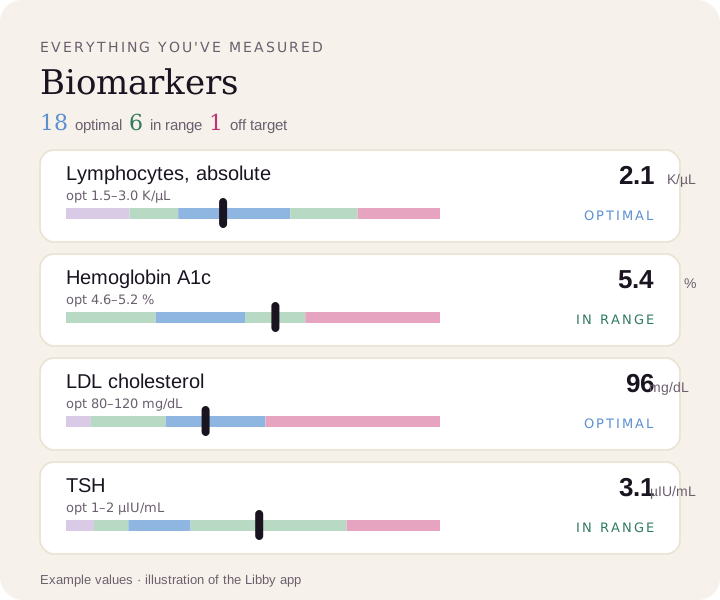
Compare your results to optimal ranges.
Upload a lab PDF or a photo of your report. Libby puts every marker on your lab's range and the optimal range, and tracks your trends over time.
View your lymphocytes ›