Absolute monocyte count: normal range, highs and lows
Monocytes are white blood cells that clean up and call in help. Here's a normal count, why it runs high or low, and when a result needs a closer look.
Your absolute monocyte count is the number of monocytes in your blood: white blood cells that eat germs, clear away dead cells and call in the rest of the immune system.1 A mildly high count usually follows a recent infection, inflammation or recovery, and it settles on its own. A count that stays high for months, especially next to anemia or low platelets, is the one that deserves a closer look.2
The short version
- Normal: check the range on your report. For adults it's usually about 0.2–0.8 × 10⁹/L (200–800 cells per microliter).2 The optimal range in the Libby app is 0.2–0.6.3
- Mildly high is common and usually temporary. The usual reasons are a recent infection or illness, recovery, hard exercise, stress and pregnancy.24
- Worth a specialist's look: a high count that lasts more than 3 months, especially with anemia, low platelets or immature cells on the report.25
- Low (under 0.2) often follows a steroid dose or a severe sudden illness, and bounces back within hours to days. A count that stays very low is rare and needs a workup.678
What monocytes are
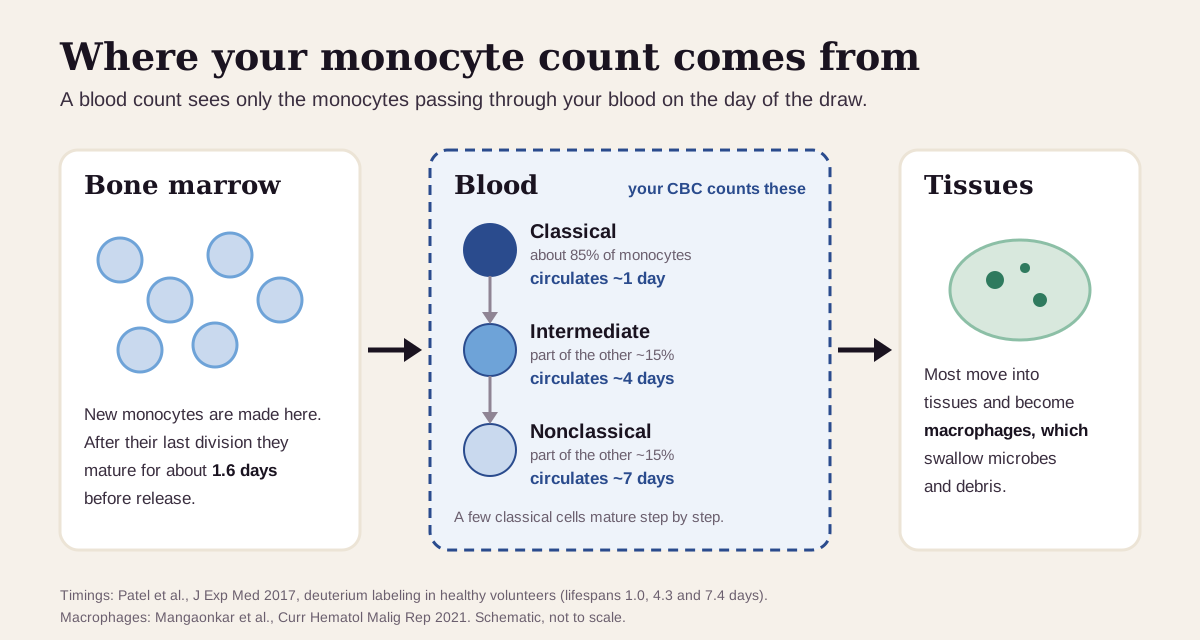
Monocytes are one of the five kinds of white blood cell on a blood count "differential." They kill bacteria and viruses, boost the immune response and clear away dead cells.1 In your tissues they mature into macrophages, the cleanup crew that swallows microbes and debris.2
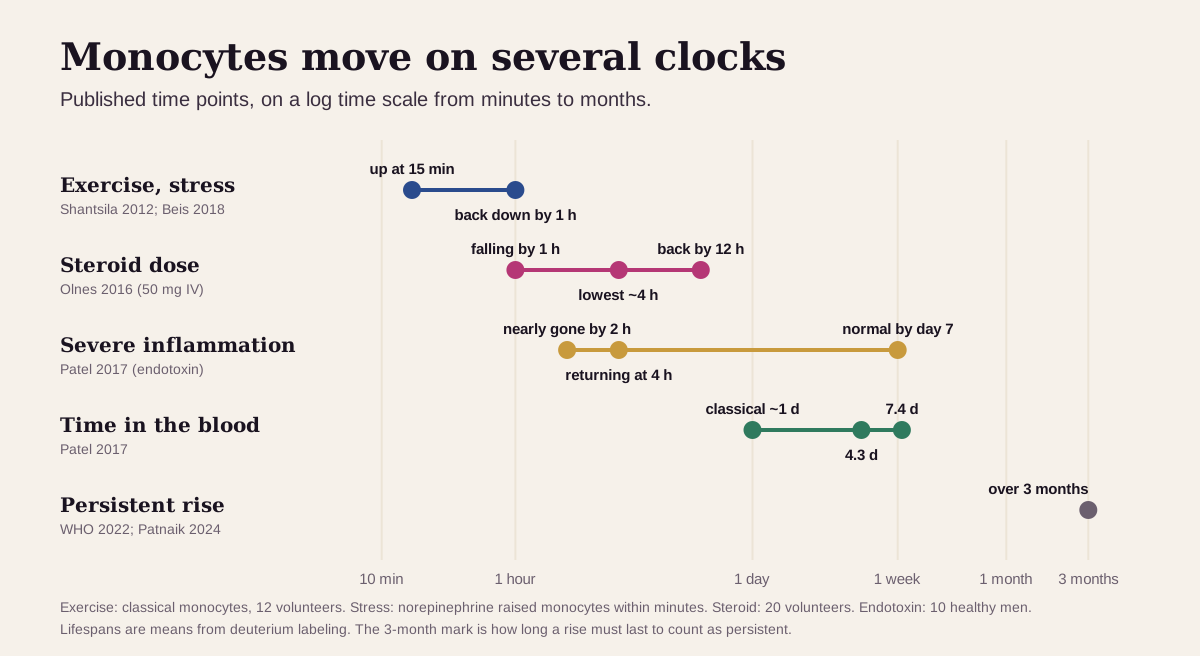
They are built in your bone marrow. After their last cell division, new monocytes wait about 1.6 days in the marrow before they're released. Once in the blood, the main type ("classical" monocytes, about 85% of the total) circulates for only about a day before moving into tissues. A few mature into longer-lived types that circulate for about 4 and 7 days.7 (More on the types at the end.)
So the number on your report is a snapshot of a fast-moving stream. That's why it can change within hours, and why a single result matters less than the pattern and the trend.
What's a normal monocyte count?
Start with the range printed on your own report. For adults, a typical range is 0.2–0.8 × 10⁹/L. Men tend to run slightly higher than women.2
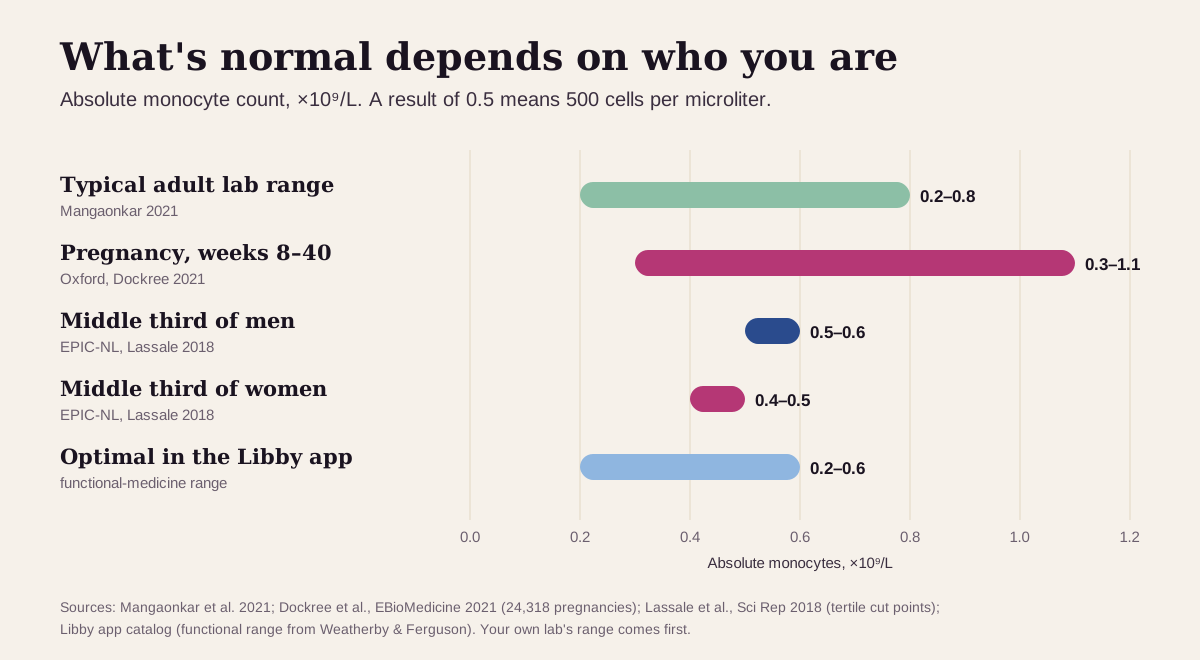
- Pregnancy raises it. In an Oxford study of 24,318 pregnancies (80,637 blood counts), the normal range was 0.3–1.1 × 10⁹/L. Its upper limit sat 38% above the non-pregnant range and held steady from week 8 to week 40.4
- Men run a little higher. In a Dutch cohort of 14,362 adults, the middle third of men had counts of 0.5–0.6, and the middle third of women 0.4–0.5.9
- Children need children's ranges. A Canadian study of 566 healthy children and teens found age-specific differences in 39 of 47 blood-count measures, so a child's result should be read against a pediatric range.10
"Optimal" monocyte count: what health optimizers aim for
Functional-medicine practitioners and longevity-testing companies aim for the middle or lower part of the lab range, away from its top. Here's the full ladder, from strictest to loosest:
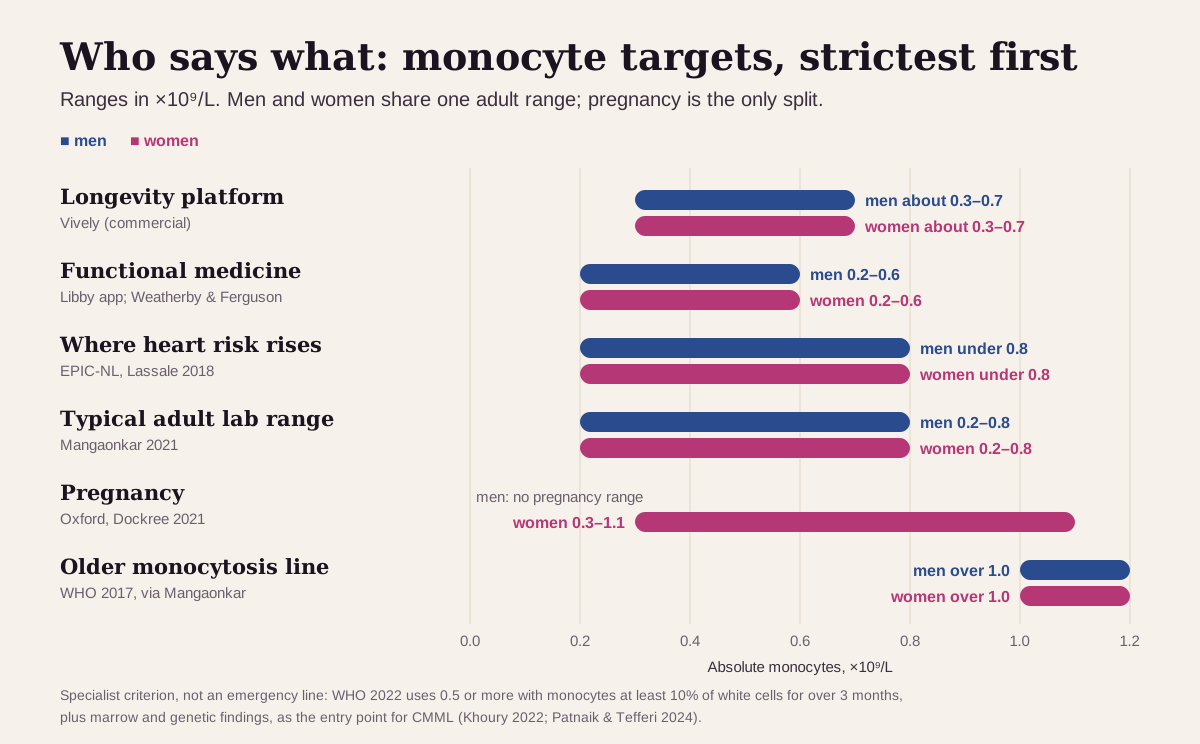
| Target | Men | Women | Who uses it |
|---|---|---|---|
| Longevity platforms | about 0.3–0.7 | about 0.3–0.7 | Vively's published "optimal zone".11 Superpower puts optimal in the "mid to lower portion" of 200–800 cells/µL, without a number13 |
| Functional medicine | 0.2–0.6 | 0.2–0.6 | The optimal range shown in the Libby app, whose catalog credits it to the Weatherby & Ferguson textbook3 |
| Where heart risk rises | below 0.8 | below 0.8 | EPIC-NL: 0.8 or more carried 48% higher cardiovascular risk9 |
| Typical adult lab range | 0.2–0.8 | 0.2–0.8 | Standard adult reference range2 |
| Pregnancy | n/a | 0.3–1.1 | Oxford pregnancy reference range4 |
| Older "monocytosis" line | over 1.0 | over 1.0 | WHO 2017, when it lasts over 3 months and monocytes are over 10% of white cells2 |
| Specialist criterion | 0.5 or more, ≥10% of white cells, for 3+ months | same | WHO 2022 entry criterion for CMML, a rare blood cancer. It also requires marrow and genetic findings125 |
Sources give one adult range for men and women. The only split that changes the numbers is pregnancy.4
Why the lower targets aren't just a trend:
- In the EPIC-NL study of 14,362 Dutch adults followed for 11.4 years, the 7% with a monocyte count of 0.8 or more had 1.48 times the risk of heart attack, stroke and other cardiovascular disease, compared with people at 0.2–0.8. The top third of counts carried 1.21 times the risk of the bottom third.9
- In 1,111 Australian adults, each step up in monocyte count (one standard deviation) came with 1.4 times the odds of plaque in the neck arteries, after accounting for the usual risk factors.14
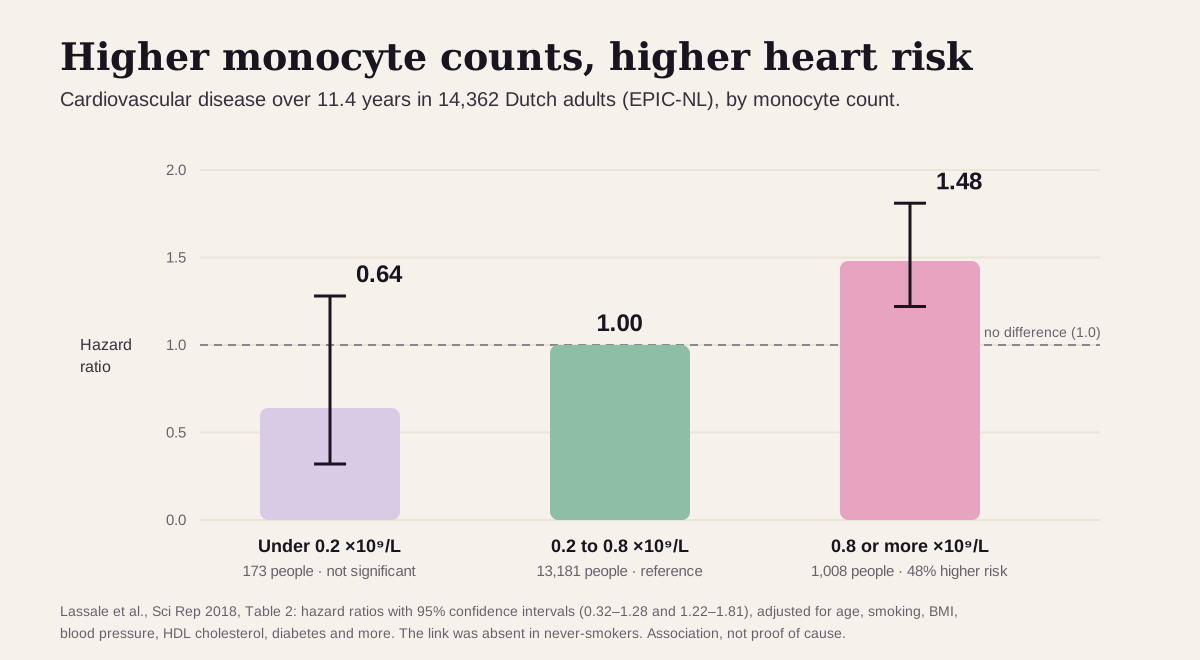
Keep "optimal" in perspective. In EPIC-NL the link was strongest in current smokers, was absent in people who had never smoked, and faded once total white count was taken into account.9 In the much larger UK Biobank (478,259 people), neutrophils, another white cell, carried the most consistent heart signal.15 So a count of 0.75 is a nudge to look at smoking and inflammation, rather than a problem in itself. Lower isn't better either: a very low count comes with its own infection risks.8
What a high monocyte count usually means
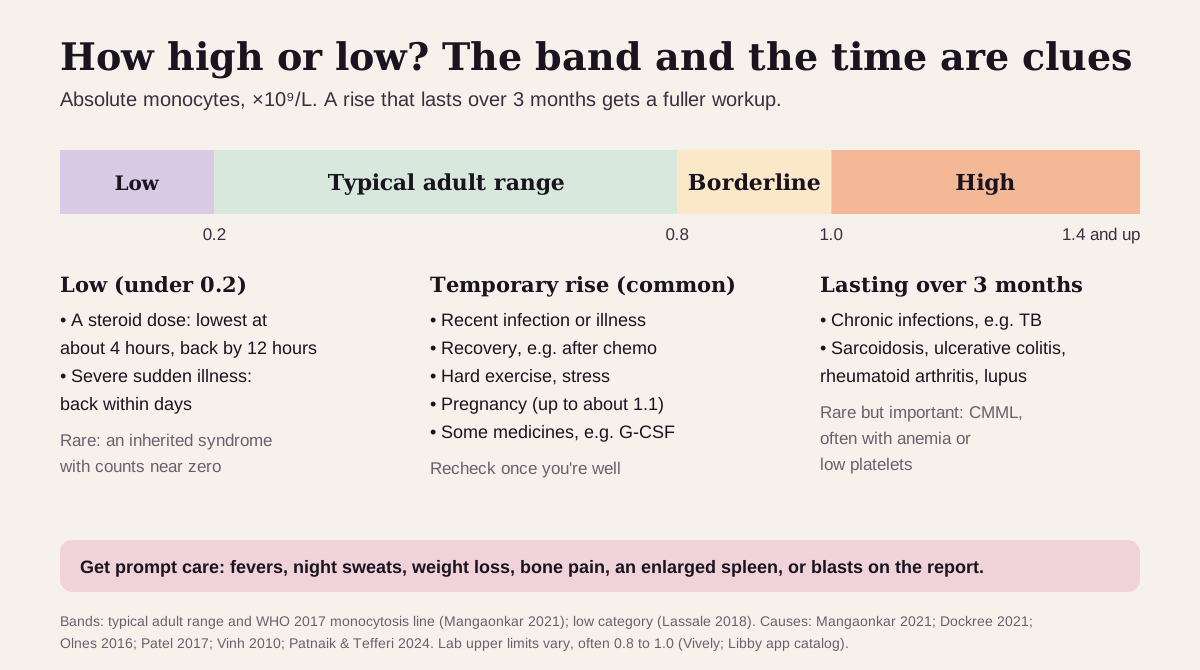
How long it lasts is the first clue. A rise that fades is usually a reaction to something. A rise that lasts more than 3 months gets a fuller workup.2
Mildly high, usually temporary
The usual suspects, most common first:
- A recent infection or illness. In one Swiss emergency department, more than a quarter of patients had a high monocyte count. People with infections or breathing illnesses were the most likely to.2 The practical step is to repeat the count once you're well.
- Recovery. Monocytes can run high while the marrow recovers, for example after chemotherapy.2 After a severe inflammatory shock, the marrow restocks the blood with new monocytes within hours.7
- Hard exercise and stress. In healthy volunteers, the main type of monocyte rose 15 minutes after exercise and fell back within an hour.16 The stress hormone norepinephrine raises monocytes within minutes.17
- Pregnancy. The upper limit rises to about 1.1.4
- Medicines and other stresses. G-CSF (a drug that boosts white cells), steroids in some people, a removed spleen and a recent heart attack can all raise monocytes.2 Don't stop a prescribed medicine on your own. Bring your full list to your clinician.
Persistently high (over 3 months)
- Long-running infections such as tuberculosis, syphilis, brucellosis and malaria.2
- Inflammatory and autoimmune disease: sarcoidosis, ulcerative colitis, rheumatoid arthritis and lupus.2
- Rare but important: CMML (chronic myelomonocytic leukemia). It affects about 4 people per 100,000 a year, is most often diagnosed around age 73–75, and is more common in men.5 Specialists consider it when monocytes stay at 0.5 or more and at least 10% of white cells for over 3 months. The diagnosis then rests on a bone marrow exam and genetic tests.125
Get prompt care if a high or low monocyte count comes with fevers, drenching night sweats, unexplained weight loss, bone pain or an enlarged spleen, or if your report also shows anemia, low platelets, or blasts or other immature cells.25
What a low monocyte count usually means
A count under 0.2 × 10⁹/L is low. About 1 in 80 adults in the EPIC-NL cohort had one.9
- A steroid dose. In 20 healthy volunteers given intravenous hydrocortisone, monocytes started falling within an hour, bottomed out at about 4 hours, and were back to normal by 12 hours after the lower dose.6
- A severe, sudden illness. When healthy volunteers were given a small dose of bacterial toxin, circulating monocytes almost vanished within 2 hours, started returning at 4 hours, and were back to normal by day 7.7
- Rare but important: a count that stays near zero. In one inherited syndrome described in 18 patients, monocytes averaged 13 cells per microliter. Those patients had unusual infections, and half later developed a marrow disorder or leukemia.8
Monocytes read best next to their neighbors
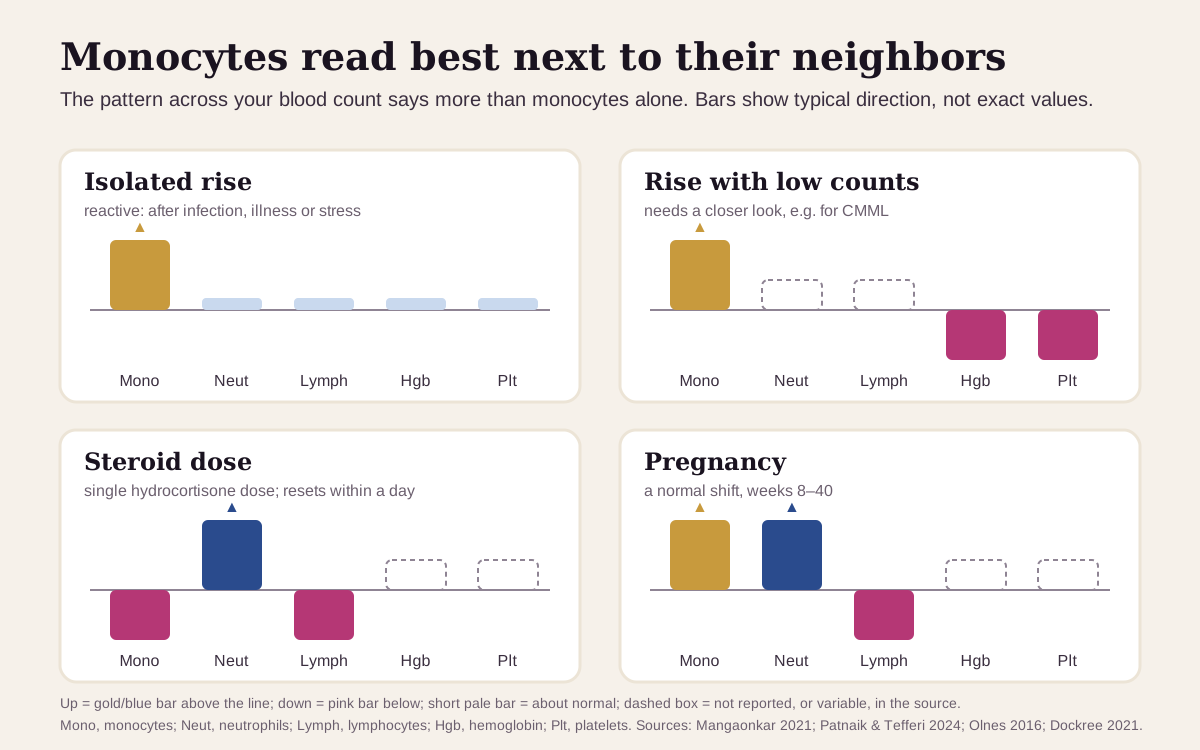
Monocytes rarely move alone. The pattern across your blood count usually says more than the monocyte number by itself:2
| If you see… | It often points to… |
|---|---|
| Monocytes up, everything else normal | a reactive rise after infection, illness or stress. Repeat once you're well; if it's still up and a smear looks normal, a repeat at about 3 months2 |
| Monocytes up with anemia or low platelets | a reason for a blood specialist's look, including a smear and often a marrow exam, to check for a marrow disorder such as CMML25 |
| Monocytes and lymphocytes down, neutrophils up | a steroid dose in the past day. After a single hydrocortisone dose, counts reset within about 12–24 hours6 |
| Monocytes and neutrophils up, lymphocytes down, while pregnant | the normal shift of pregnancy. Mild anemia and low platelets are also common in pregnancy4 |
How fast monocytes change
Monocytes move on several clocks at once. Some changes take minutes, some take days, and the one that matters most for a diagnosis takes months.
What that means in practice:
- One mildly high result is often repeated. Exercise or stress in the past hour, a steroid dose in the past day, or a recent infection can all move it. Mention them when you get tested.1662
- An isolated rise gets a 3-month recheck. If monocytes are the only thing off and the smear looks normal, a repeat blood count in about 3 months is a common next step. A rise that resolves points to a reactive cause.2
- Trends beat snapshots. A count that drifts upward over several tests tells a different story than one that bounces around the same level.2
Going deeper: percentages and the three kinds of monocyte
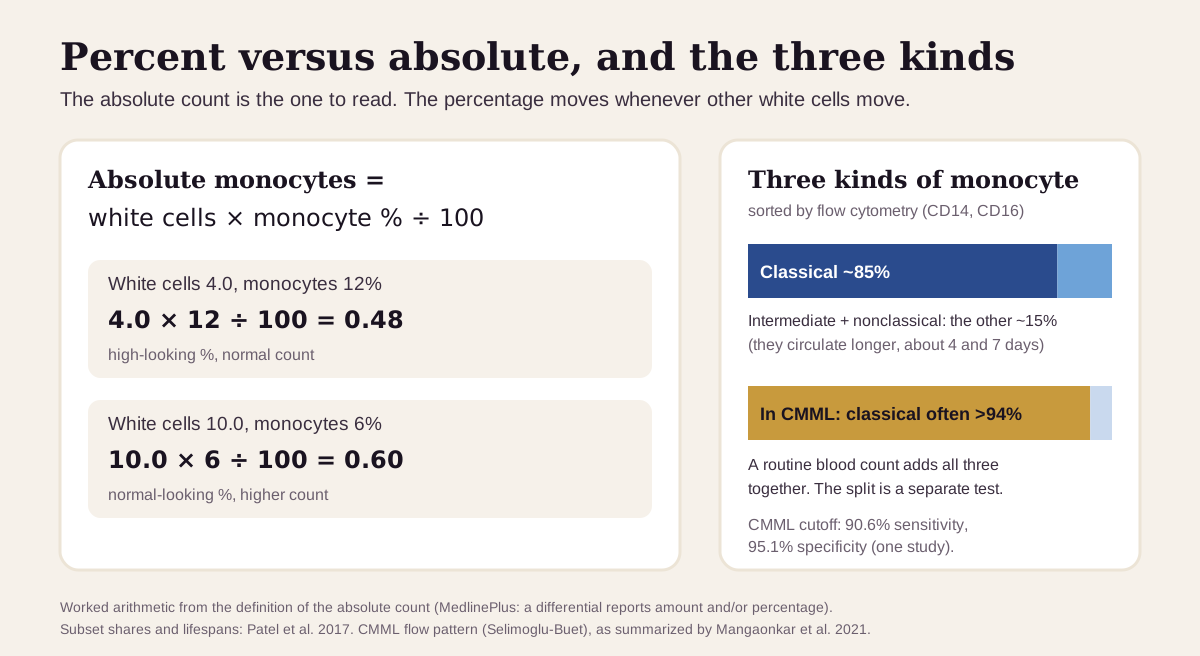
The absolute count is the one to use. Your report may show monocytes as a percentage of white cells, as an absolute count, or both.1 The absolute count is the percentage applied to your total white count:
Absolute monocytes = white blood cells × monocyte % ÷ 100
A monocyte percentage of 12% sounds high, but with 4.0 white cells it gives an absolute count of 0.48, right in the middle of the normal range. A percentage of 6% with 10.0 white cells gives 0.60. The percentage moves whenever another white cell rises or falls, while the absolute count tracks monocytes themselves.
There are three kinds of monocyte. Specialized tests (flow cytometry) sort them by two surface markers, CD14 and CD16. Classical monocytes make up about 85% of the total; intermediate and nonclassical monocytes make up the other 15% and live longer.7 A routine blood count adds them all together. In CMML the classical share typically climbs above 94%, which one study found picked out the disease with 90.6% sensitivity and 95.1% specificity. That's why hematologists sometimes order this "monocyte repartition" test.2
Questions worth asking
- Is my monocyte count high or low on my own lab's range, and by how much?
- What do my neutrophils, lymphocytes, hemoglobin and platelets show next to it?
- Could a recent infection, workout, stress or steroid dose explain it?
- Should we repeat it once I'm well, or in 3 months?
- If it stays high, would a blood smear or a hematology referral help?
- Do any of my medicines affect white blood cells?
FAQ
What is a normal absolute monocyte count? For adults it's usually about 0.2–0.8 × 10⁹/L (200–800 cells per microliter), but check your lab's range. In pregnancy it runs up to about 1.1.24
What is the most common cause of high monocytes? A recent infection or illness, or recovery from one. Hard exercise, stress and pregnancy can raise it too. A rise that lasts more than 3 months gets a fuller workup.24
Can a high monocyte count mean cancer? Rarely. CMML affects about 4 people per 100,000 a year, and specialists look for it when monocytes stay high for more than 3 months, usually with other blood-count changes.512
Why is my monocyte count low? Common reasons are a recent steroid dose, which lowers monocytes for several hours, and a severe sudden illness. A count that stays near zero is rare and needs a workup.678
This guide is for education. It can't diagnose you or replace care from a clinician who knows your history.
Footnotes
-
National Library of Medicine. Blood Differential. MedlinePlus. What monocytes do, and that a differential reports each white cell as an amount and/or a percentage. MedlinePlus ↩ ↩2 ↩3
-
Mangaonkar AA, Tande AJ, Bekele DI. Differential Diagnosis and Workup of Monocytosis: A Systematic Approach to a Common Hematologic Finding. Curr Hematol Malig Rep. 2021;16(3):267–275. A Mayo Clinic review: the adult range (0.2–0.8), reactive and clonal causes, and the stepwise workup, including the 3-month recheck. PMC ↩ ↩2 ↩3 ↩4 ↩5 ↩6 ↩7 ↩8 ↩9 ↩10 ↩11 ↩12 ↩13 ↩14 ↩15 ↩16 ↩17 ↩18 ↩19 ↩20 ↩21 ↩22 ↩23 ↩24 ↩25 ↩26 ↩27 ↩28 ↩29 ↩30 ↩31
-
Weatherby D, Ferguson S. Blood Chemistry and CBC Analysis: Clinical Laboratory Testing from a Functional Perspective. 2nd ed. Bear Mountain Publishing; 2004. ISBN 978-0976136712. Widely used functional-medicine reference. The Libby app credits its 0.2–0.6 × 10⁹/L optimal range for absolute monocytes to this book (range as recorded in the Libby app's marker catalog; book not opened for this article). ↩ ↩2 ↩3 ↩4
-
Dockree S, Shine B, Pavord S, et al. White blood cells in pregnancy: reference intervals for before and after delivery. EBioMedicine. 2021;74:103715. 24,318 pregnancies in Oxford; monocytes 0.3–1.1 × 10⁹/L from week 8 to week 40. PMC ↩ ↩2 ↩3 ↩4 ↩5 ↩6 ↩7 ↩8 ↩9 ↩10 ↩11 ↩12
-
Patnaik MM, Tefferi A. Chronic myelomonocytic leukemia: 2024 update on diagnosis, risk stratification and management. Am J Hematol. 2024;99(6):1142–1165. Sustained monocytosis over 3 months, incidence about 4 per 100,000 a year, median age 73–75, and the blood-count changes that raise concern. PMC ↩ ↩2 ↩3 ↩4 ↩5 ↩6 ↩7 ↩8 ↩9 ↩10
-
Olnes MJ, Kotliarov Y, Biancotto A, et al. Effects of Systemically Administered Hydrocortisone on the Human Immunome. Sci Rep. 2016;6:23002. 20 healthy volunteers; monocytes fell within an hour and recovered by 12 hours after 50 mg. PMC ↩ ↩2 ↩3 ↩4 ↩5 ↩6 ↩7 ↩8
-
Patel AA, Zhang Y, Fullerton JN, et al. The fate and lifespan of human monocyte subsets in steady state and systemic inflammation. J Exp Med. 2017;214(7):1913–1923. Deuterium labeling in healthy volunteers: 1.6 days in the marrow, circulating lifespans of 1.0, 4.3 and 7.4 days, and the endotoxin time course. PMC ↩ ↩2 ↩3 ↩4 ↩5 ↩6 ↩7 ↩8 ↩9 ↩10
-
Vinh DC, Patel SY, Uzel G, et al. Autosomal dominant and sporadic monocytopenia with susceptibility to mycobacteria, fungi, papillomaviruses, and myelodysplasia. Blood. 2010;115(8):1519–1529. 18 patients with a mean monocyte count of 13.3 cells/µL. PMC ↩ ↩2 ↩3 ↩4 ↩5
-
Lassale C, Curtis A, Abete I, et al. Elements of the complete blood count associated with cardiovascular disease incidence: Findings from the EPIC-NL cohort study. Sci Rep. 2018;8(1):3290. 14,362 adults followed for 11.4 years; monocytes of 0.8 or more carried a hazard ratio of 1.48. PMC ↩ ↩2 ↩3 ↩4 ↩5 ↩6 ↩7 ↩8 ↩9
-
Tahmasebi H, Higgins V, Bohn MK, Hall A, Adeli K. CALIPER Hematology Reference Standards (I). Am J Clin Pathol. 2020;154(3):330–341. 566 healthy children and teens; age-specific differences in 39 of 47 measures. PubMed ↩
-
Vively. Monocytes Blood Test: What Low, High and Optimal Monocytes Levels Mean. Accessed September 2026. Gives an optimal zone of about 0.3–0.7 × 10⁹/L. A commercial source, listed as what the optimizer community uses. vively.com.au ↩ ↩2 ↩3
-
Khoury JD, Solary E, Abla O, et al. The 5th edition of the World Health Organization Classification of Haematolymphoid Tumours: Myeloid and Histiocytic/Dendritic Neoplasms. Leukemia. 2022;36(7):1703–1719. Lowered the CMML monocyte cutoff from 1.0 to 0.5 × 10⁹/L, with at least 10% monocytes. PMC ↩ ↩2 ↩3 ↩4
-
Superpower. Monocytes, Absolute. Last updated September 1, 2026. Puts optimal values in the "mid to lower portion" of 200–800 cells/µL and publishes no exact cutoff. A commercial source, listed as what the optimizer community uses. superpower.com ↩
-
Chapman CM, Beilby JP, McQuillan BM, et al. Monocyte count, but not C-reactive protein or interleukin-6, is an independent risk marker for subclinical carotid atherosclerosis. Stroke. 2004;35(7):1619–1624. 1,111 community adults; odds ratio 1.4 per standard deviation. PubMed ↩
-
Welsh C, Welsh P, Mark PB, et al. Association of Total and Differential Leukocyte Counts With Cardiovascular Disease and Mortality in the UK Biobank. Arterioscler Thromb Vasc Biol. 2018;38(6):1415–1423. 478,259 participants; neutrophils showed the most consistent link. PubMed ↩
-
Shantsila E, Tapp LD, Wrigley BJ, et al. The effects of exercise and diurnal variation on monocyte subsets and monocyte-platelet aggregates. Eur J Clin Invest. 2012;42(8):832–839. Classical monocytes up 15 minutes after exercise and down at 1 hour; counts stable up to 2 hours after the draw. PubMed ↩ ↩2 ↩3
-
Beis D, von Känel R, Heimgartner N, et al. The Role of Norepinephrine and α-Adrenergic Receptors in Acute Stress-Induced Changes in Granulocytes and Monocytes. Psychosom Med. 2018;80(7):649–658. Stress-test and infusion studies in healthy men. PubMed ↩ ↩2
Educational content, not medical advice.Libby is a personal record tool, not a medical service — it doesn't diagnose, treat, or prescribe. Reference ranges vary by lab and by person. Talk to a qualified healthcare professional about your results.
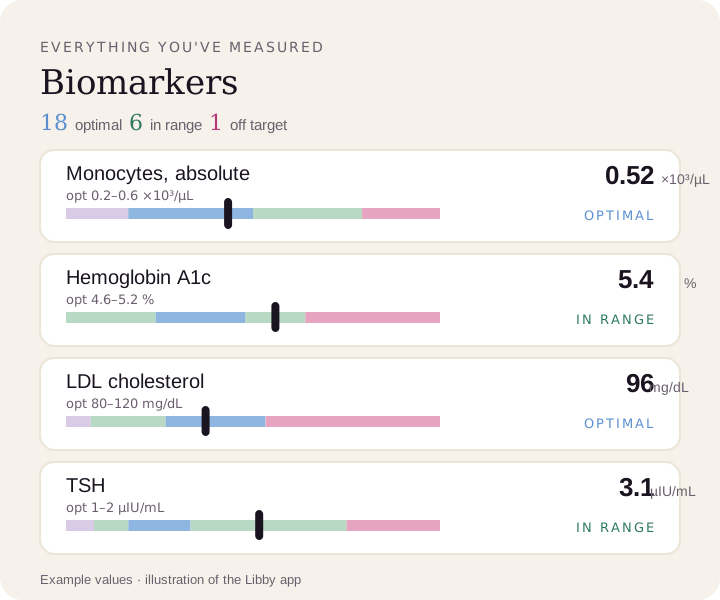
Compare your results to optimal ranges.
Upload a lab PDF or a photo of your report. Libby puts every marker on your lab's range and the optimal range, and tracks your trends over time.
View your monocyte count ›