Absolute neutrophil count (ANC): normal, low and high
ANC counts the infection-fighting neutrophils in your blood. The normal range, why it runs low or high, how to read it with your CBC, and when to act.
Your absolute neutrophil count (ANC) is the number of neutrophils, your main infection-fighting white blood cells, in a sample of your blood. Your bone marrow makes 50 to 100 billion of them every day.1 A low ANC means fewer germ fighters on patrol. A high ANC usually means your body is reacting to an infection, stress, a medicine or inflammation.2
The short version
- Normal: roughly 1.5 to 7.0 ×10⁹/L for adults. Below 1.5 is called neutropenia (some definitions use 1.8 for adults), and above 7.0 is neutrophilia. Your lab's own range is printed on your report.32
- Mildly low (1.0–1.5) is common. The usual reasons are a recent viral illness, a medicine, or a naturally lower baseline such as the Duffy-null blood type.45
- High usually means infection, physical or emotional stress, smoking, a steroid medicine or inflammation.2
- Below 0.5 is severe neutropenia. With a fever, chills or a sore throat, that needs urgent care.36
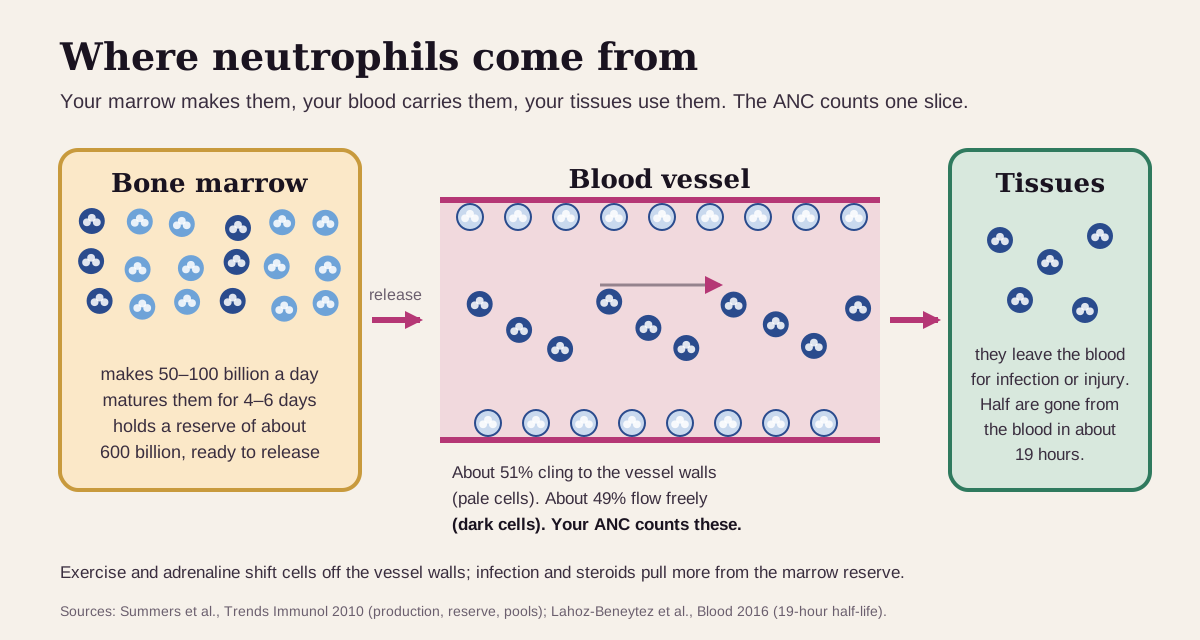
What your ANC measures
Neutrophils make up about 40–60% of your white blood cells, more than any other type.2 They are the first responders of your immune system: they leave the blood for infected or injured tissue and kill germs there.1
Their life runs like a conveyor belt:17
- Made and stored in the bone marrow. A new neutrophil matures for 4–6 days. The marrow keeps a reserve of about 600 billion ready to release.
- Carried in the blood. About half flow freely. The other half cling loosely to the walls of small blood vessels (the "marginated" pool).
- Out into the tissues. Half of the neutrophils in your blood leave it within about 19 hours.
Your ANC counts only the free-flowing cells in the tube. That's why it can jump within hours. Exercise and stress hormones shake the wall-hugging cells loose, and the marrow can release its reserve fast.12
Your report may also show a neutrophil percentage, the neutrophils' share of all white cells. The ANC is the actual count, and the clinical cut points in this guide are set on the count.3 (The math is at the end.)
What's a normal ANC?
Start with the range printed on your report. One U.S. academic hospital, for example, uses 1.92 to 7.60 ×10⁹/L.8 Clinicians use broader cut points. The European neutropenia guideline calls an ANC below 1.5 neutropenia from age 1 through adulthood, and World Health Organization definitions use 1.8 for adults.3 A review in American Family Physician defines neutrophilia as above 7.0.2
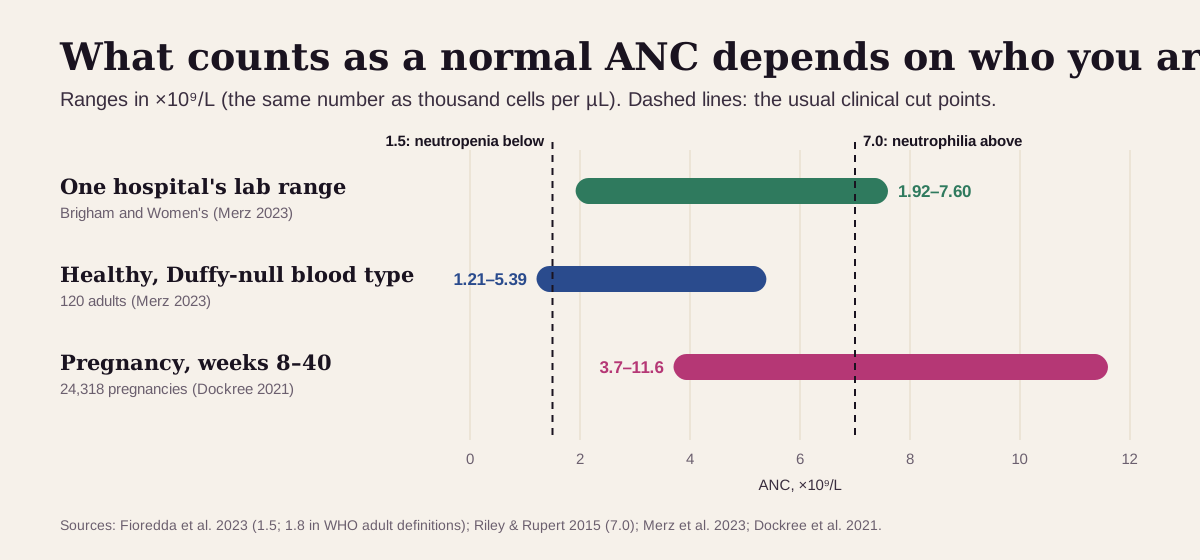
Two groups have a different normal:
- People with the Duffy-null blood type. People with this blood type often have a lower ANC with no added infection risk. The American Society of Hematology calls it Duffy-null associated neutrophil count (DANC).5 In 120 healthy adults with the Duffy-null type at a Boston hospital, the middle 95% of results ran from 1.21 to 5.39. Their median was 2.82, against 4.75 for the hospital's usual reference group.8 The European guideline notes that some people of African and Middle Eastern descent have healthy counts of 0.5 to 1.5.3 A blood test for Duffy status, rather than ancestry, is what tells you.5
- Pregnancy. In 24,318 pregnancies in Oxford, the normal ANC ran from 3.7 to 11.6 between weeks 8 and 40, a 55% rise. After birth, total white counts settled to pre-pregnancy levels by about day 21.9
Men and women share one adult range in these sources. Babies under 1 year have a lower cut point for neutropenia, 1.0.3
"Optimal" ANC: what health optimizers aim for
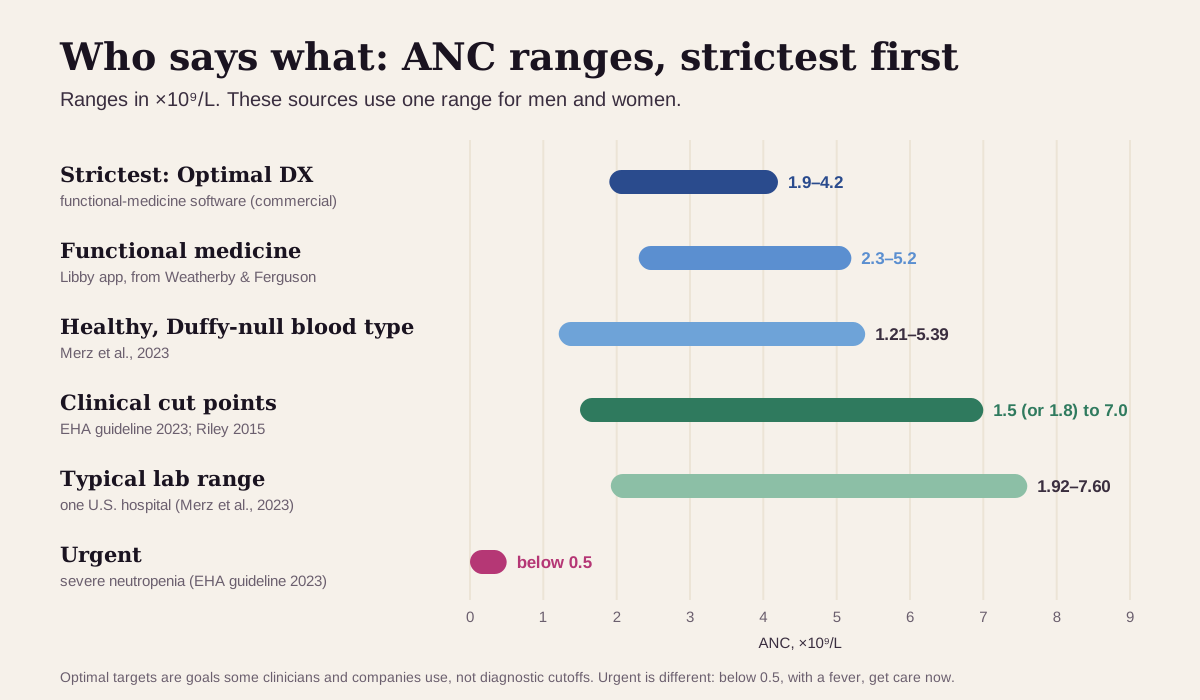
Functional-medicine practitioners aim for the middle of the lab range, trimming both ends. Here's the full ladder, from strictest to loosest:
| Target | ANC (×10⁹/L) | Who uses it |
|---|---|---|
| Strictest (functional-medicine software) | 1.9–4.2 | Optimal DX's published "ODX range"10 |
| Functional medicine | 2.3–5.2 | The optimal range shown in the Libby app, recorded from the Weatherby & Ferguson functional-medicine textbook11 |
| Healthy, Duffy-null blood type | 1.21–5.39 | Research range from 120 healthy adults8 |
| Clinical cut points | 1.5 (or 1.8) to 7.0 | Neutropenia below, neutrophilia above32 |
| Typical lab range | 1.92–7.60 | One U.S. academic hospital's reference range8 |
| Urgent | below 0.5 | Severe neutropenia: with a fever, get care now36 |
Why the narrower targets aren't just a trend:
- A higher count inside the normal range tracks with heart disease. In 775,231 English adults followed for a median of 3.8 years, an ANC of 6–7 compared with 2–3 (both "normal") went with 2.0 times the rate of heart failure, 1.95 times peripheral artery disease and 1.8 times sudden coronary death. Risk was already higher at 3–4.12
- A lower count tracks with blood disorders. In more than 370,000 Danish primary-care patients, the lower the ANC, the higher the odds of a blood cancer being diagnosed: odds ratios of 3.2 at 1.5–1.8, 8.7 at 1.0–1.5 and 46 below 1.0. Low counts also went with more viral infections.13
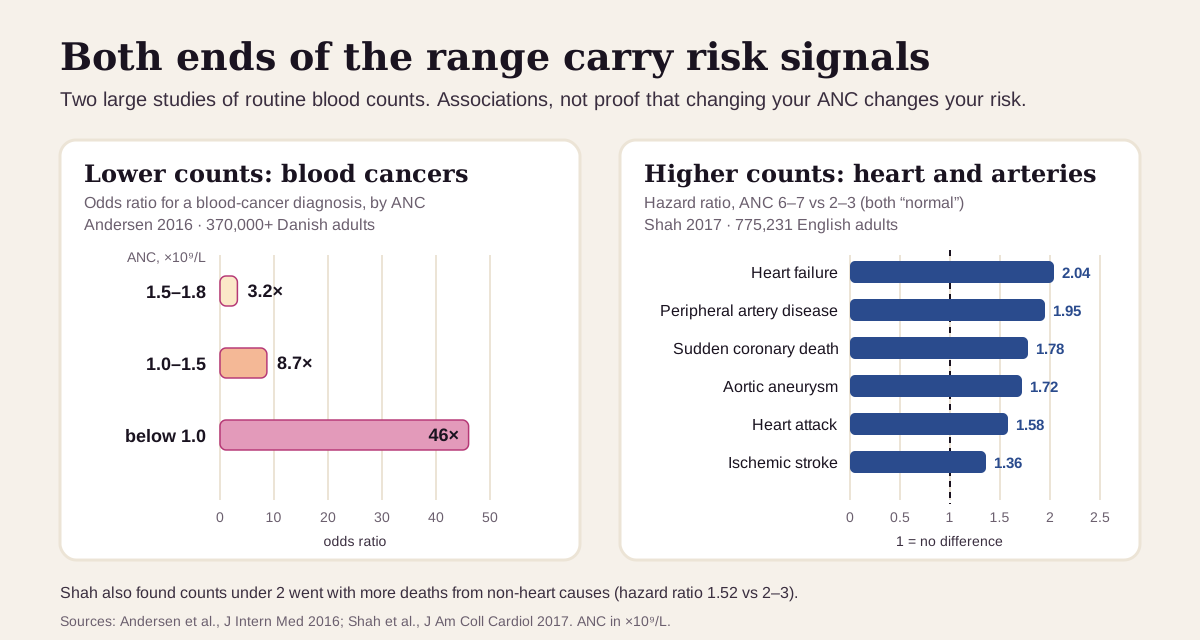
Keep "optimal" in perspective: these are targets, not diagnoses. A single high-normal result can come from a hard workout or the time of day (see how fast it changes).1415 Lower isn't automatically better, either. In the same English study, counts under 2 went with a higher rate of death from non-heart causes (1.5 times), while a low count from the Duffy-null blood type is healthy.125
What a low ANC usually means
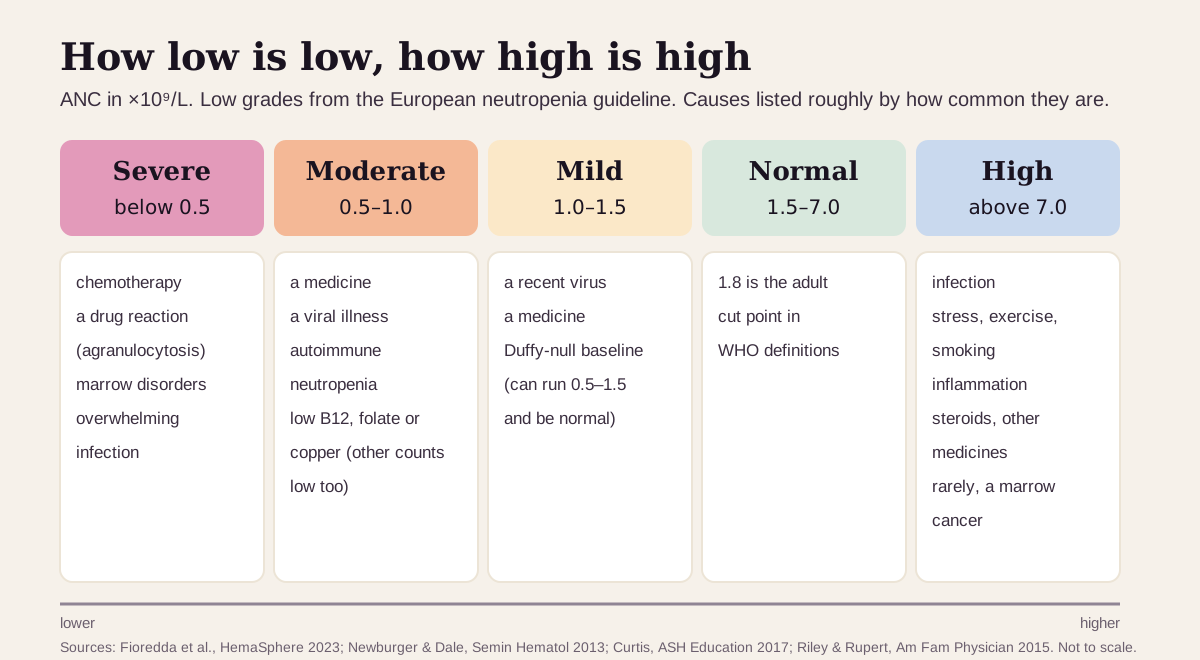
The depth of the dip is the first clue. The European neutropenia guideline grades a low ANC as mild (1.0–1.5), moderate (0.5–1.0) or severe (below 0.5). Those grades come mostly from infection risk in people on chemotherapy.3
Mildly or moderately low: the usual suspects
- A recent viral illness. Viruses are the most common cause of a short-term dip, and almost any virus can do it. Mononucleosis is a familiar example. The dip is usually temporary.4
- Your baseline. Some people run low all their lives, most often because of the Duffy-null blood type.5 A mild low count that stays stable over time, with the rest of the blood count normal, fits this pattern.3
- Medicines. Chemotherapy is the best-known cause.6 A few other drugs can rarely trigger a sudden, severe drop, usually weeks to months after the first dose. The most often linked include the antithyroid drugs methimazole (thiamazole) and carbimazole, clozapine, sulfasalazine, the antibiotics co-trimoxazole and amoxicillin, and metamizole. This reaction is rare: about 2 to 15 cases per million people.16 Don't stop a prescribed medicine on your own. Call the prescriber.
- Low vitamin B12, folate or copper. These usually lower red cells and platelets too.4
- Rare but important: bone marrow disorders such as myelodysplastic syndrome, leukemia and aplastic anemia; autoimmune neutropenia; and an overwhelming bacterial infection that drains the marrow's reserve.413
Get care now if your ANC is below 0.5, or you're on cancer treatment, and you have a fever of 100.5 °F (38 °C) or higher, chills, a sore throat, mouth sores, a cough or pain when you urinate.6 The same goes for fever, chills or a sore throat with a low count after starting a new medicine.16
What a high ANC usually means
Most high counts are the body doing its job. The American Family Physician review lists the non-cancer causes in rough order of how common they are:2
- Infection, especially bacterial. Young "band" neutrophils often appear on the smear, called a "left shift".
- Stress on the body or mind: hard exercise, surgery, an injury, an emotional shock such as a panic attack, and smoking.
- Chronic inflammation, such as rheumatoid arthritis or inflammatory bowel disease.
- Medicines: corticosteroids such as prednisone, beta-agonists, lithium, epinephrine and white-cell growth factors.
Pregnancy and obesity also push the count up.29
Steroids deserve a note. Prednisone can push the white count above 20 ×10⁹/L within a day, mostly as neutrophils. Band forms above 6% and "toxic" granules point toward infection instead, because they're rare with steroids.17
Rare but important: leukemias and other marrow cancers (myeloproliferative neoplasms). A total white count above 100 ×10⁹/L is almost always one of these. The same review flags a high count that comes with night sweats, weight loss, easy bruising, a low hemoglobin, abnormal platelets, mostly immature cells on the smear, or a white count above 30 ×10⁹/L for a prompt hematology review.2
ANC reads best next to its neighbors
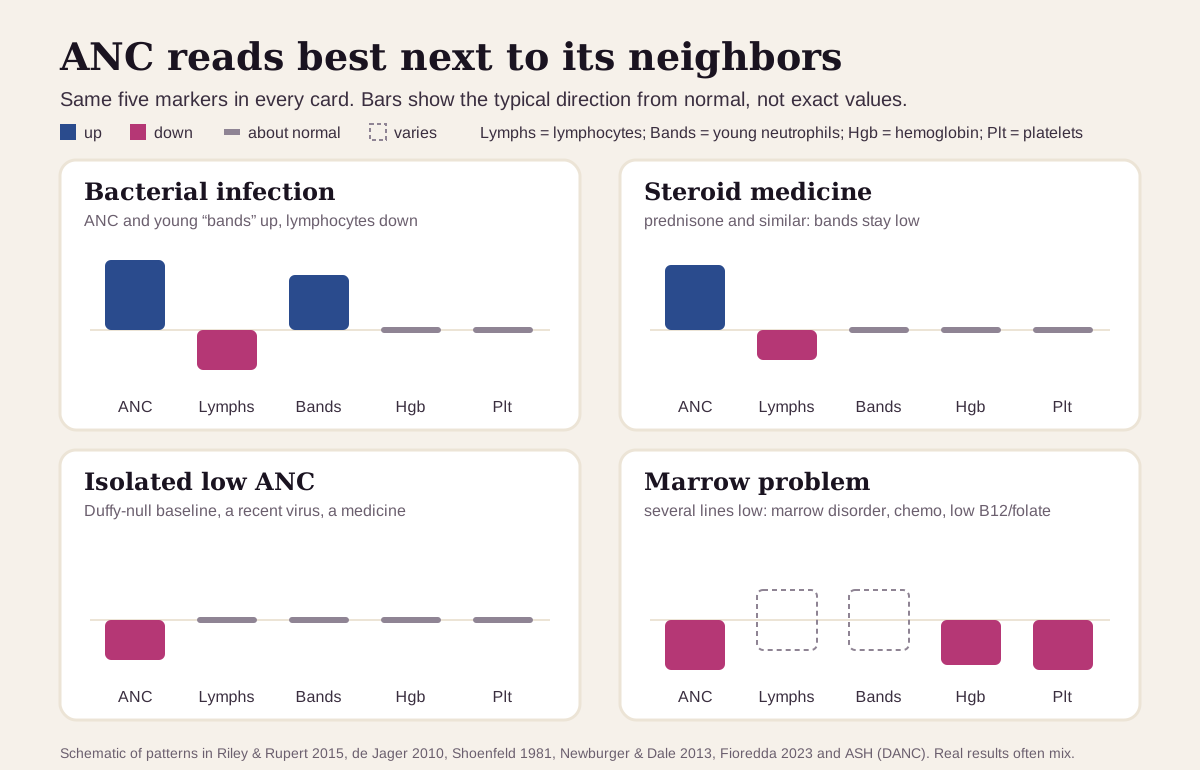
The rest of your blood count usually says more than ANC does by itself. These are the four most common patterns:
| If you see… | It often points to… |
|---|---|
| ANC up with bands up, lymphocytes down | a bacterial infection: in one emergency-room study, lymphocytes averaged 0.8 ×10⁹/L in people with bacteria in the blood vs 1.2 in similar patients whose blood cultures were negative |
| ANC up, few bands, lymphocytes and eosinophils down | a steroid medicine such as prednisone |
| ANC mildly low, everything else normal, stable over time | a Duffy-null baseline; if it's new, a recent virus or a medicine |
| ANC low with low hemoglobin and/or platelets | a marrow problem, chemotherapy, or low B12, folate or copper |
| ANC high with low hemoglobin, abnormal platelets or mostly immature cells | a primary bone marrow process that needs a hematology review |
A related number, the neutrophil-to-lymphocyte ratio (NLR), is the ANC divided by the lymphocyte count. In the same emergency-room study it averaged 20.9 in people with bacteria in the blood, against 13.2 in similar emergency patients whose blood cultures were negative.18
How fast ANC changes
ANC is one of the jumpiest numbers on a blood count. Neutrophil counts "may vary considerably over short periods of time," with activity, exercise, eating or just the time of day.4
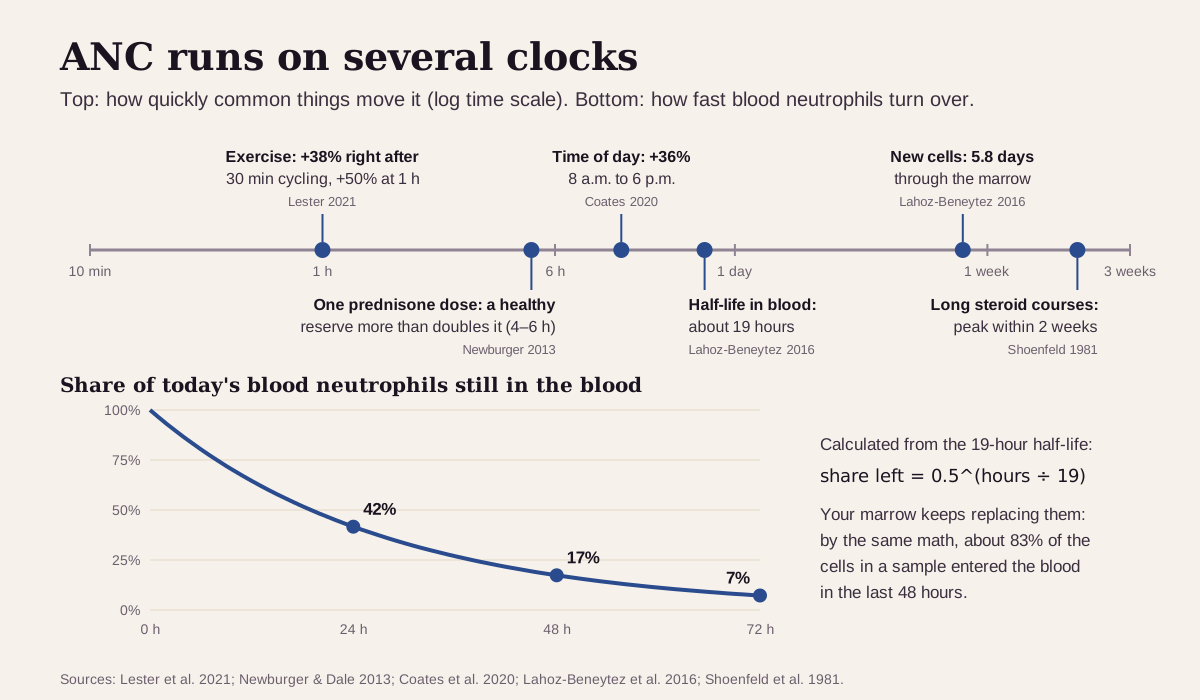
- Minutes: in 13 healthy young adults, 30 minutes of cycling raised neutrophils by 38% right away. They were still 50% above baseline an hour later.14
- Hours: in 7,157 healthy volunteers, average neutrophil counts were 36% higher at 6 p.m. than at 8 a.m.15 Clinicians test the marrow's reserve by giving one dose of prednisone and repeating the count 4–6 hours later. A healthy reserve more than doubles it.4
- Days: half of your blood neutrophils turn over in about 19 hours, and new ones take about 5.8 days to pass through the marrow.7
- Weeks: the dip after a virus is usually temporary.4 On long steroid courses, the white count peaks within two weeks.17
What that means in practice:
- Repeat tests under the same conditions: the same time of day, no hard workout just before, and ideally not while you're sick. Mention recent illness, exercise, smoking and medicines when you get tested.415
- One odd result is often repeated before anyone acts. Several measurements are needed to define how low a count really is.4
- Trends beat snapshots. A mild low count that holds steady over time reads very differently from one that keeps falling.3
Going deeper: the math and the Duffy gene
ANC = total white blood cell count × neutrophil % ÷ 100.2
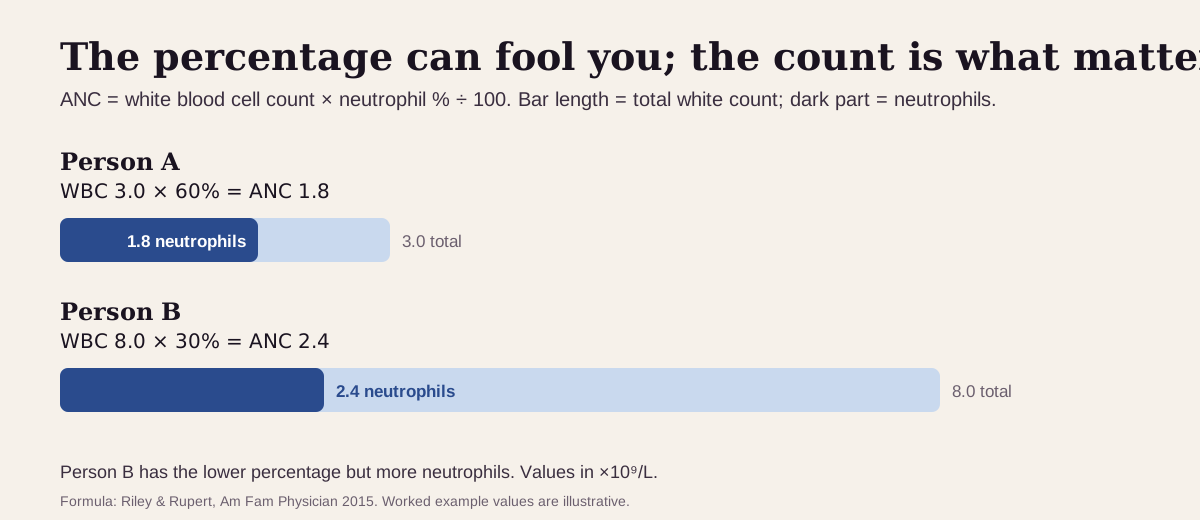
A white count of 3.0 with 60% neutrophils gives an ANC of 1.8. A white count of 8.0 with 30% neutrophils gives 2.4. The second person has the lower percentage but more neutrophils. That's why the count is the number to read.
Why the Duffy-null blood type lowers ANC. The Duffy protein sits on red blood cells and binds chemokines, the chemical signals that steer white cells. A single-letter change in the ACKR1 gene switches the protein off. The same change protects against one malaria parasite, Plasmodium vivax.8 The European guideline names the variant (rs2814778).3 People with it have enough neutrophils in the body overall, with fewer circulating in the blood at any moment.8
How long does a neutrophil live? Older studies put its blood half-life at 4 to 18 hours, and early heavy-water studies suggested more than 3 days. A 2016 reanalysis with a faster label settled on about 19 hours.7
Questions worth asking
- How far outside the range is my ANC, and is it mild, moderate or severe?
- Is this new, or have my earlier blood counts looked the same?
- Are my hemoglobin, platelets and other white cells normal?
- Could a recent illness, a hard workout, smoking or one of my medicines explain it?
- Would a Duffy blood-type test help explain a low count?
- When should we repeat it, and under what conditions?
FAQ
What is a normal absolute neutrophil count? For adults, roughly 1.5 to 7.0 ×10⁹/L (1,500 to 7,000 per microliter), though your lab's range may differ. Functional-medicine targets are narrower: the Libby app's optimal range, which its catalog records from a functional-medicine textbook, is 2.3 to 5.2.3211
What ANC is dangerously low? Below 0.5 ×10⁹/L (500 per microliter) is severe neutropenia. With a fever, chills or a sore throat, get urgent care.36
Can stress or exercise raise ANC? Yes. Stress hormones and exercise shift neutrophils off the vessel walls into the flowing blood. After 30 minutes of cycling, one study saw a 50% rise that lasted at least an hour.114
Why is my ANC low when I feel fine? The most common reasons are a recent viral illness and a naturally lower baseline, such as the Duffy-null blood type, which carries no added infection risk.45 A repeat test and the rest of your blood count are the next step.4
This guide is for education. It can't diagnose you or replace care from a clinician who knows your history.
Footnotes
-
Summers C, Rankin SM, Condliffe AM, Singh N, Peters AM, Chilvers ER. Neutrophil kinetics in health and disease. Trends Immunol. 2010;31(8):318–324. The source for daily production (5–10 × 10¹⁰ cells), the marrow reserve (about 6 × 10¹¹ cells), the 4–6 day maturation, the 49%/51% free-flowing and marginated pools, and exercise and adrenaline shifting cells into circulation. PMC ↩ ↩2 ↩3 ↩4 ↩5
-
Riley LK, Rupert J. Evaluation of Patients with Leukocytosis. Am Fam Physician. 2015;92(11):1004–1011. Defines neutrophilia (above 7.0), orders the non-cancer causes by frequency, and lists the findings that call for a hematology review. AAFP · PubMed ↩ ↩2 ↩3 ↩4 ↩5 ↩6 ↩7 ↩8 ↩9 ↩10 ↩11 ↩12 ↩13 ↩14 ↩15 ↩16
-
Fioredda F, Skokowa J, Tamary H, Spanoudakis M, et al. The European Guidelines on Diagnosis and Management of Neutropenia in Adults and Children: A Consensus Between the European Hematology Association and the EuNet-INNOCHRON COST Action. HemaSphere. 2023;7(4):e872. The current European guideline: neutropenia cut points (1.5, and 1.8 for adults in WHO definitions), the mild/moderate/severe grades and their chemotherapy origin, and the Duffy (ACKR1) variant. PMC ↩ ↩2 ↩3 ↩4 ↩5 ↩6 ↩7 ↩8 ↩9 ↩10 ↩11 ↩12 ↩13 ↩14 ↩15 ↩16 ↩17 ↩18
-
Newburger PE, Dale DC. Evaluation and management of patients with isolated neutropenia. Semin Hematol. 2013;50(3):198–206. Viral infections as the most common cause of a temporary dip, day-to-day variability, B12/folate/copper deficiency, and the prednisone test of marrow reserve. PMC ↩ ↩2 ↩3 ↩4 ↩5 ↩6 ↩7 ↩8 ↩9 ↩10 ↩11 ↩12 ↩13 ↩14
-
American Society of Hematology. Duffy-null Associated Neutrophil Count (DANC). People with the Duffy-null blood type often have a lower ANC with no increased risk of infection. hematology.org ↩ ↩2 ↩3 ↩4 ↩5 ↩6 ↩7
-
National Cancer Institute. Infection and Neutropenia during Cancer Treatment. Signs of infection that need urgent attention during treatment. cancer.gov ↩ ↩2 ↩3 ↩4 ↩5
-
Lahoz-Beneytez J, Elemans M, Zhang Y, Ahmed R, et al. Human neutrophil kinetics: modeling of stable isotope labeling data supports short blood neutrophil half-lives. Blood. 2016;127(26):3431–3438. Blood half-life about 19 hours and marrow transit 5.8 days. PMC ↩ ↩2 ↩3 ↩4
-
Merz LE, Osei MA, Story CM, Freedman RY, Smeland-Wagman R, Kaufman RM, Achebe MO. Development of Duffy Null-Specific Absolute Neutrophil Count Reference Ranges. JAMA. 2023;329(23):2088–2089. 120 healthy adults with the Duffy-null phenotype: range 1.21–5.39, median 2.82 vs 4.75; the hospital's standard range 1.92–7.60. PMC ↩ ↩2 ↩3 ↩4 ↩5 ↩6 ↩7 ↩8
-
Dockree S, Shine B, Pavord S, Impey L, Vatish M. White blood cells in pregnancy: reference intervals for before and after delivery. EBioMedicine. 2021;74:103715. 24,318 pregnancies, 80,637 results; pregnancy neutrophil range 3.7–11.6 ×10⁹/L. PMC ↩ ↩2 ↩3
-
Optimal DX. Biomarkers of Immunity: Neutrophils. Published April 3, 2023; updated November 6, 2023. States an "ODX range" for absolute neutrophils of 1.90–4.20 ×10⁹/L, against a standard range of 1.50–7.8. A commercial source, listed as what the optimizer community uses. optimaldx.com ↩ ↩2
-
Weatherby D, Ferguson S. Blood Chemistry and CBC Analysis: Clinical Laboratory Testing from a Functional Perspective. 2nd ed. Bear Mountain Publishing; 2004. ISBN 978-0976136712. Widely used functional-medicine reference (range as recorded in the Libby app's marker catalog; the book was not opened for this article). The catalog records it as the source of the Libby app's optimal ANC range: 2.3–5.2 ×10³/µL. ↩ ↩2 ↩3
-
Shah AD, Denaxas S, Nicholas O, Hingorani AD, Hemingway H. Neutrophil Counts and Initial Presentation of 12 Cardiovascular Diseases: A CALIBER Cohort Study. J Am Coll Cardiol. 2017;69(9):1160–1169. 775,231 adults; hazard ratios for ANC 6–7 vs 2–3, and higher non-cardiovascular death below 2. PMC ↩ ↩2 ↩3
-
Andersen CL, Tesfa D, Siersma VD, Sandholdt H, et al. Prevalence and clinical significance of neutropenia discovered in routine complete blood cell counts: a longitudinal study. J Intern Med. 2016;279(6):566–575. More than 370,000 Danish primary-care patients; odds ratios for blood cancers of 3.23, 8.69 and 46.03 as ANC fell. PubMed ↩ ↩2 ↩3
-
Lester A, Vickers GL, Macro L, Gudgeon A, Bonham-Carter A, Campbell JP, Turner JE. Exercise-induced amplification of mitogen-stimulated oxidative burst in whole blood is strongly influenced by neutrophil counts during and following exercise. Physiol Rep. 2021;9(17):e15010. Randomized crossover in 13 adults: neutrophils up 38% right after 30 minutes of cycling and 50% an hour later. PMC ↩ ↩2 ↩3 ↩4
-
Coates S, Wang D, Pierscionek T, Fernandes S, Djumanov D, Lorch U, Täubel J. Time- and Race-Specific Haematological Reference Intervals for Healthy Volunteer Trials: A Retrospective Analysis of Pooled Data From Multiple Phase I Trials. Front Pharmacol. 2020;11:314. 13,332 samples from 7,157 healthy volunteers; mean neutrophils 36% higher at 6 p.m. than 8 a.m. PMC ↩ ↩2 ↩3 ↩4
-
Curtis BR. Non-chemotherapy drug-induced neutropenia: key points to manage the challenges. Hematology Am Soc Hematol Educ Program. 2017;2017(1):187–193. Incidence (2.4–15.4 per million), the drugs most often linked, timing and symptoms. PMC ↩ ↩2 ↩3
-
Shoenfeld Y, Gurewich Y, Gallant LA, Pinkhas J. Prednisone-induced leukocytosis. Influence of dosage, method and duration of administration on the degree of leukocytosis. Am J Med. 1981;71(5):773–778. 80 patients on prednisone: white counts above 20,000 from day 1, peaks within two weeks, lymphopenia, and bands above 6% as a sign of infection instead. PubMed ↩ ↩2 ↩3 ↩4
-
de Jager CP, van Wijk PT, Mathoera RB, de Jongh-Leuvenink J, van der Poll T, Wever PC. Lymphocytopenia and neutrophil-lymphocyte count ratio predict bacteremia better than conventional infection markers in an emergency care unit. Crit Care. 2010;14(5):R192. Lymphocytes 0.8 vs 1.2 ×10⁹/L and NLR 20.9 vs 13.2 with and without bacteremia. PMC ↩ ↩2
Educational content, not medical advice.Libby is a personal record tool, not a medical service — it doesn't diagnose, treat, or prescribe. Reference ranges vary by lab and by person. Talk to a qualified healthcare professional about your results.
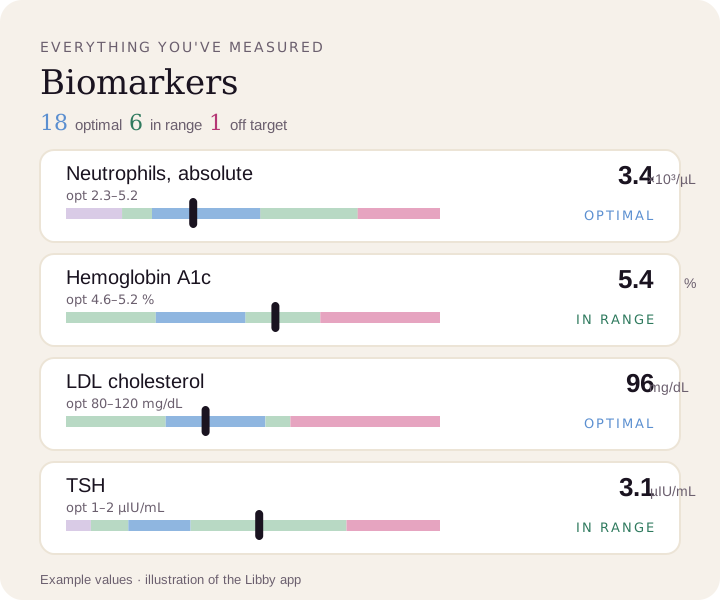
Compare your results to optimal ranges.
Upload a lab PDF or a photo of your report. Libby puts every marker on your lab's range and the optimal range, and tracks your trends over time.
View your ANC ›