aPTT blood test: normal range, long and short results
aPTT times how fast your plasma clots. Here's the normal range, what a long or short result usually means, how to read it with PT, and when it's urgent.
aPTT (activated partial thromboplastin time) measures how many seconds a sample of your blood plasma takes to clot in a test tube. It checks one branch of your clotting system, the factors your liver makes for the "intrinsic" side of the chain. A long aPTT most often traces to a blood thinner such as heparin, a problem with the blood sample, a lupus anticoagulant or a low clotting factor.123
The short version
- Normal: use the range on your report, because each lab sets its own. Labcorp's adult range is 23–34 seconds,4 and the Libby app shades 25–35 seconds as optimal.
- Long (prolonged) usually means heparin or another blood thinner, a tube that was filled short, a lupus anticoagulant, or a low clotting factor such as factor VIII. A mixing study tells a missing factor from a blocker.35
- Very long is urgent. One published list of critical lab values flags an aPTT of 75 seconds or more, and more than 2.5 times the upper limit in people on heparin.6
- Short is most often a side effect of a hard blood draw. When it's real, it's linked to blood clots: in a 13-year study of 13,880 adults, the shortest quarter had 2.8 times the clot risk of the longest.78
What aPTT is
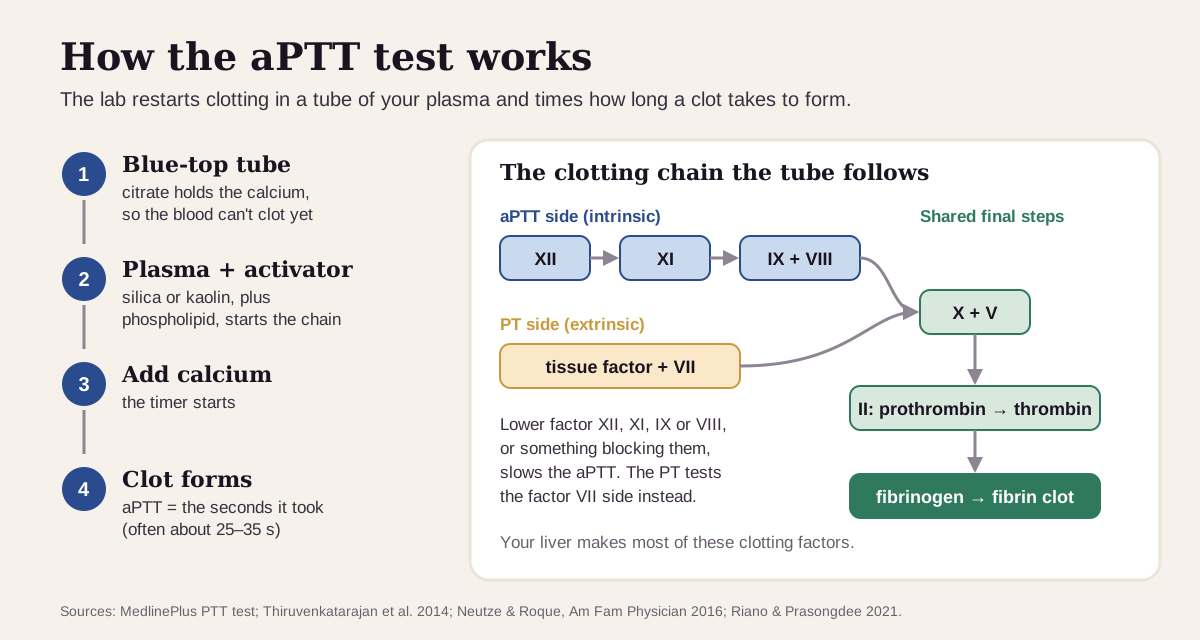
Your blood clots through a chain of proteins called clotting factors. Each one switches on the next, and the last step turns fibrinogen into strands of fibrin that hold a clot together. Your liver makes most of these factors.1
The aPTT recreates part of that chain in a tube. Blood goes into a blue-top tube with sodium citrate, which ties up calcium so the sample stays liquid.4 The lab then mixes your plasma with an activator such as silica or kaolin, plus phospholipid, adds calcium back and times how long a clot takes to form.2
The activator switches on factor XII, which starts the "intrinsic" side of the chain: factors XI, IX and VIII. Those feed into the shared final steps (factors X, V, prothrombin and fibrinogen). The aPTT slows down when almost any of these factors runs low, with one exception: factor VII, which the PT (prothrombin time) test covers instead.2310
Clinicians order an aPTT to look into unexplained bruising or bleeding, to monitor the blood thinner heparin, before surgery in people with a bleeding history, and to check for clotting problems tied to lupus and antiphospholipid syndrome. No special preparation is needed.1
What's a normal aPTT?
Start with the range printed on your report. aPTT results aren't standardized across labs the way the PT is (through the INR), because each lab's reagent behaves a little differently.2 Labcorp, a national commercial lab, uses 23–34 seconds for adults over 16. Its ranges change with age, not sex: babies aged 1–11 months run 30–39 seconds.4
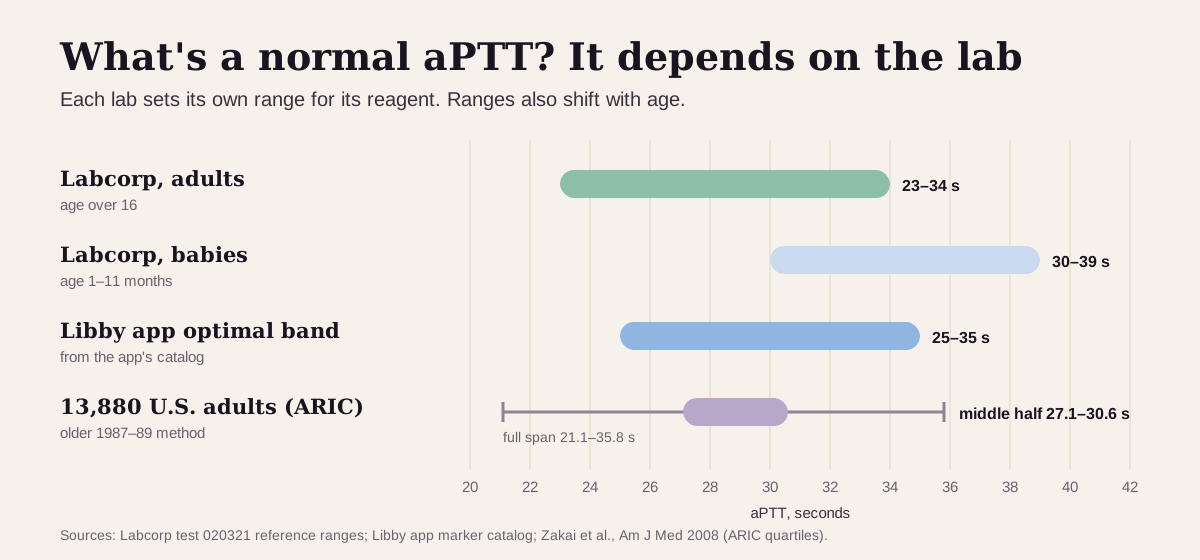
A large U.S. study of aPTT and later health, the ARIC study, measured it in 13,880 middle-aged adults in 1987–89. Half of them fell between 27.1 and 30.6 seconds on that study's reagent. Women, older people, people with a higher body weight and people with more factor VIII tended to run shorter.8
"Optimal" aPTT: aim for the middle, not an edge
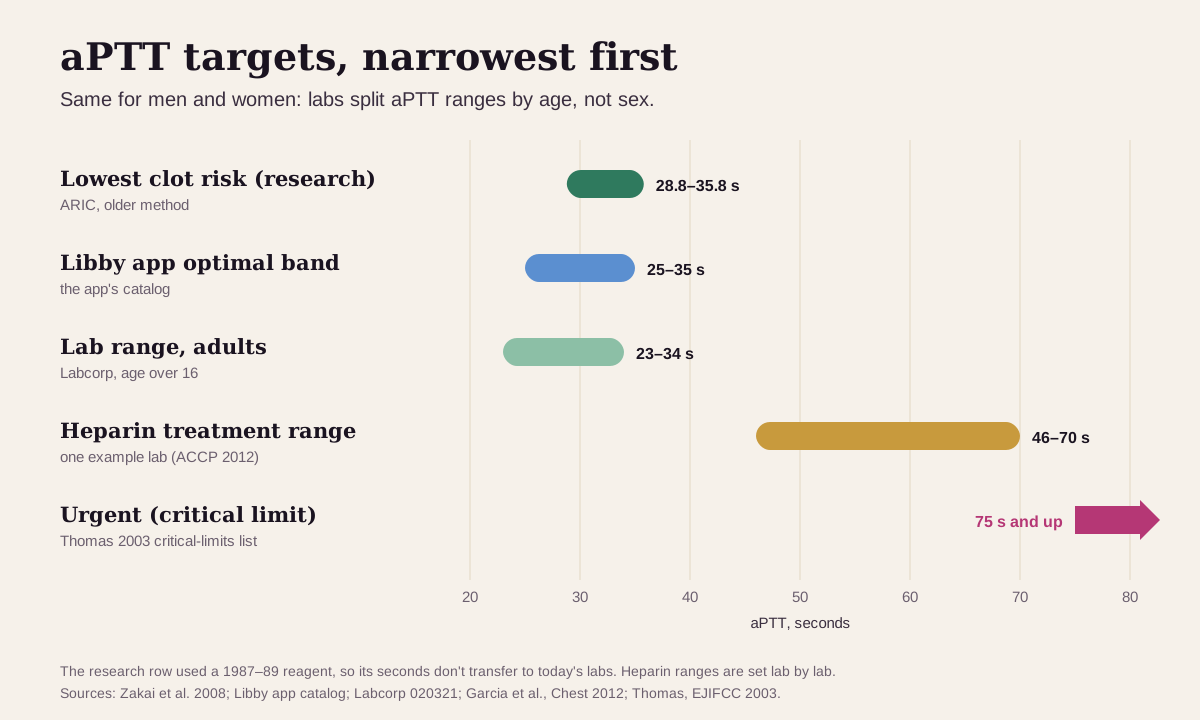
Longevity-testing platforms mostly leave aPTT alone. Superpower's public "What we test" list, which covers ALT, ferritin and platelets, has no aPTT or PT entry.11 So the useful question is which part of the normal range carries the least risk. Here is the ladder, narrowest first:
| Target | Men and women | Who uses it |
|---|---|---|
| Lowest clot risk in research | 28.8–35.8 s (older method) | The longer half of normal results in ARIC, where clots were least common8 |
| Libby app optimal band | 25–35 s | The optimal range shown in the Libby app, inside the app's default lab range of 22–38 s; its top sits one second above Labcorp's adult limit |
| Lab reference range | 23–34 s (adults) | Labcorp, a commercial lab; your own lab's range may differ4 |
| Heparin treatment | 1.5–2.5 × control (46–70 s at one example lab) | An older rule from a 1970s study; labs now set their own range1213 |
| Urgent | 75 s or more; on heparin, over 2.5 × the upper limit | A published list of critical lab values6 |
The evidence behind "the middle":
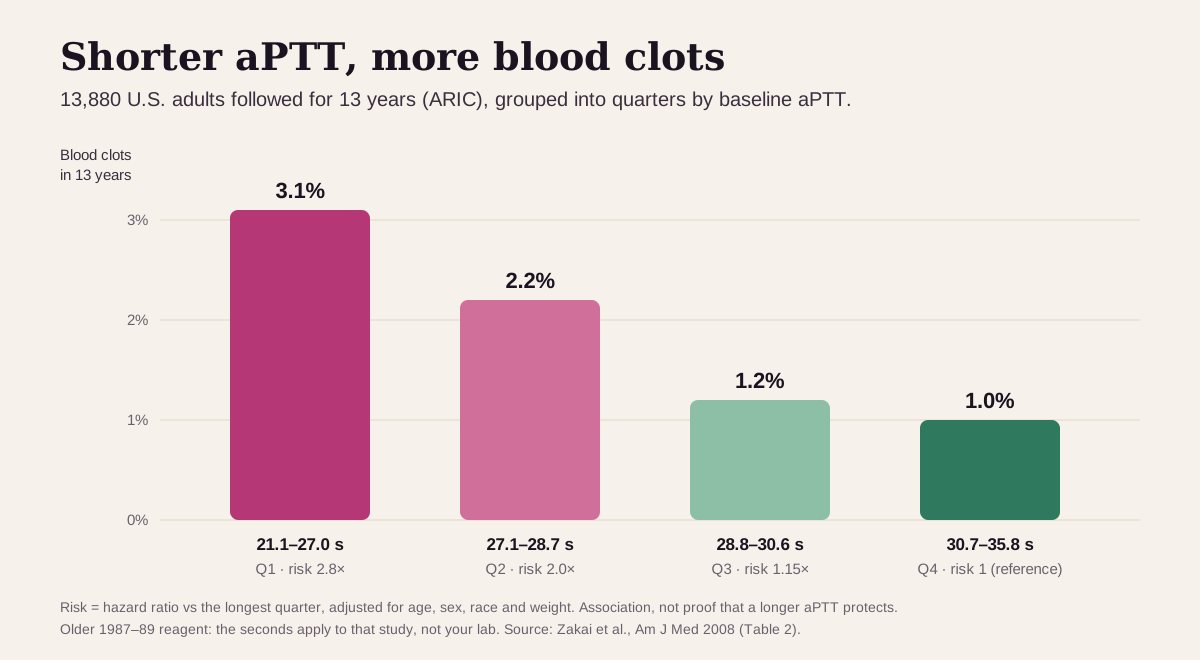
- In ARIC, over 13 years, 3.1% of people in the shortest quarter (21.1–27.0 seconds) had a blood clot in a vein, versus 1.0% in the longest quarter (30.7–35.8 seconds). Adjusted for age, sex, race and weight, that was 2.8 times the risk.8
- An Italian study of 605 people with a past clot and 1,290 controls found the same thing: an aPTT ratio below the 5th percentile carried 2.4 times the odds of a clot. High factor VIII explained only part of it.9
Keep "optimal" in perspective. Longer is only better up to your lab's upper limit: past it, a long aPTT means a missing factor, a blocker or a blood thinner, and ARIC set aside its longest 2.5% of results (35.6 seconds and up) to keep lupus anticoagulants out of the analysis.8 The target is a result comfortably inside your own lab's range, confirmed on a good sample.
What a long aPTT usually means
How long it runs is the first clue. A result just over your lab's limit has a different list of usual causes than one in the heparin range, or one past 75 seconds.614
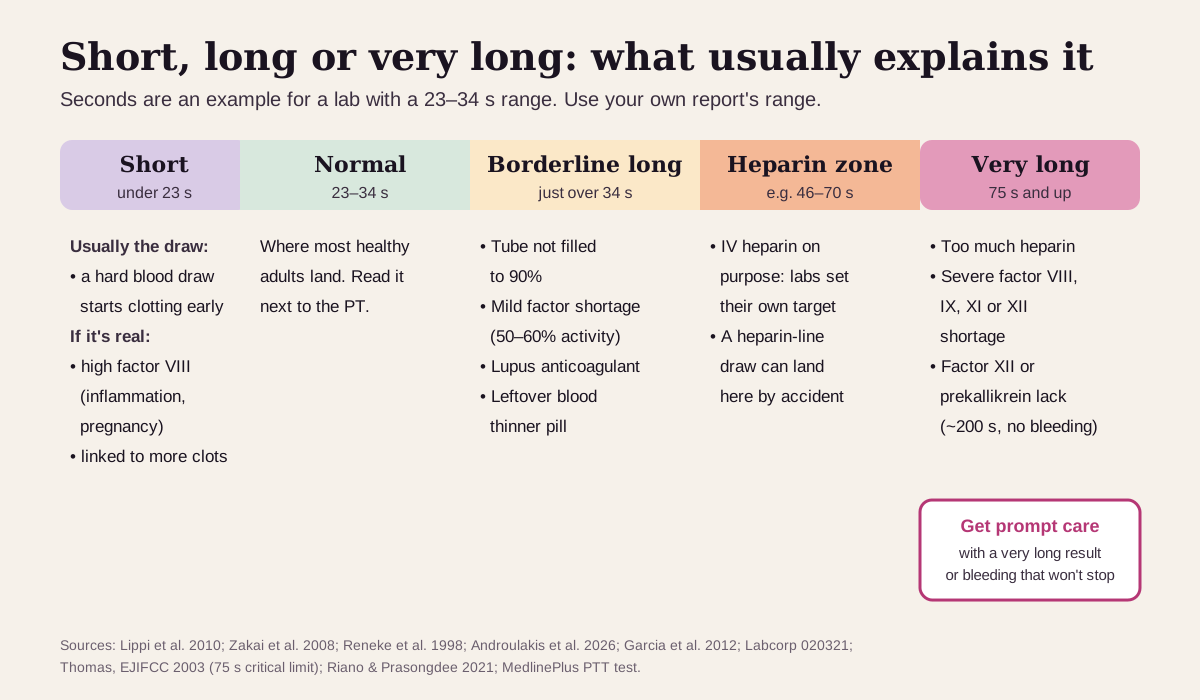
The usual suspects:
- Blood thinners. Heparin lengthens the aPTT, which is why the test is used to monitor it.12 Dabigatran (Pradaxa) often lengthens it too. For factor Xa blockers such as rivaroxaban and apixaban, the PT is the preferred routine test, but even small leftover amounts of these drugs can nudge an aPTT just past the limit.1514
- The sample itself. The tube needs to be at least 90% full, because extra citrate slows the test. In one study, most tubes filled below 90% gave a falsely long aPTT.516 Blood drawn from an arm with a heparin line can carry heparin into the tube, and a very high hematocrit (over 55%) needs a tube with less citrate.416
- Lupus anticoagulant. Despite the name, it's an antibody that slows clotting in the tube while raising the risk of clots and miscarriages in the body. A special lupus-sensitive test (LA-PTT) and other tests confirm it.1
- A low clotting factor. Von Willebrand disease is the most common inherited bleeding disorder, and it can lower factor VIII enough to nudge the aPTT up. Hemophilia A and B (low factor VIII or IX) and factor XI deficiency are the others.31 Depending on the reagent, a factor running at 50–60% of normal can already push the result past the limit.14
- Liver disease or low vitamin K. Both lengthen the PT as well. A long PT with a normal aPTT points to vitamin K; both long puts liver disease on the list.3117
- Less common: an antibody against factor VIII (an acquired inhibitor), certain leukemias, and DIC, where clotting runs out of control and uses up the factors.3117
- Rare but surprising: people who lack factor XII or prekallikrein can have an aPTT of around 200 seconds and no bleeding problem at all.10
Get prompt care if your aPTT is very long, or if a long aPTT comes with bleeding that won't stop, bleeding for a long time after minor cuts, or bruising you can't explain. Pain, swelling or warmth in an arm or leg can signal a clot: get it checked promptly.16
What a short aPTT usually means
Most often, the draw. A slow or difficult blood draw can start clotting inside the tube before the test, so the leading cause of a short aPTT is the sample. Labs suggest repeating it on a fresh sample before reading anything into it.7
If it stays short, it usually reflects high levels of clotting factors, especially factor VIII, as happens with inflammation, pregnancy and some cancers, or the early stage of DIC.18 A repeatable short aPTT has also been linked to heart attack, thyroid disease and diabetes, and to blood clots, as the ARIC numbers above show.78
aPTT reads best next to its neighbors
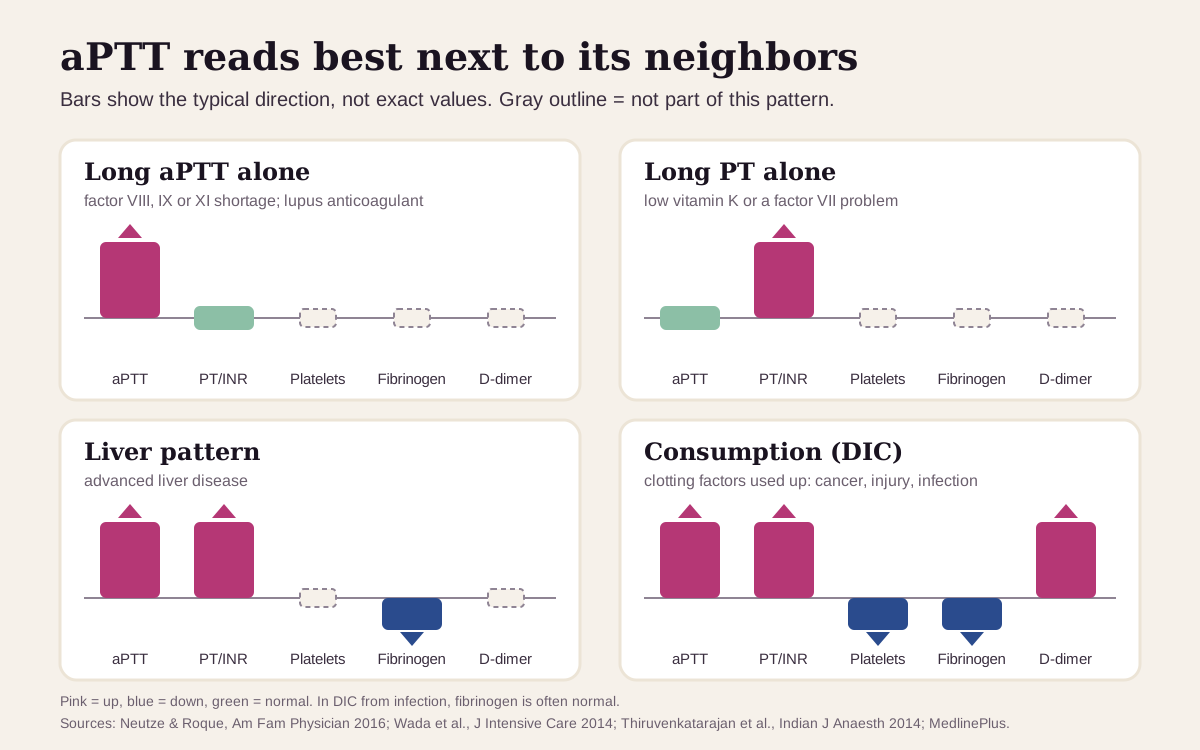
aPTT rarely comes alone. It's usually ordered with the PT/INR, and the pair splits clotting problems into four quadrants.31 Add platelets, fibrinogen and D-dimer, and the common patterns come into focus:
| If you see… | It often points to… |
|---|---|
| Long aPTT, normal PT | the intrinsic side: low factor VIII, IX or XI, or a blocker such as a lupus anticoagulant; a mixing study tells a shortage from a blocker.3 Heparin lengthens it too and is ruled out first114 |
| Long PT, normal aPTT | the factor VII side: low vitamin K or a factor VII problem; uncommon in people checked for unexplained bleeding.3 Warfarin lengthens the PT too, which is why the PT/INR tracks it218 |
| Both long | liver disease, DIC, or a problem with a shared factor (X, V, prothrombin, fibrinogen)314 |
| Both long, with low platelets, low fibrinogen and high D-dimer | consumption: DIC. Fibrinogen stays normal in most DIC from infection3172 |
| Slightly long aPTT in someone who feels well | a short-filled tube, a draw from an arm with a heparin line, or a leftover blood thinner: repeat it on a good sample first5414 |
| Normal PT and aPTT, but a bleeding history | a platelet problem, most often von Willebrand disease3 |
| Short aPTT | a difficult draw first; if repeatable, high clotting factors, especially factor VIII, from inflammation or pregnancy718 |
How fast aPTT changes
The aPTT has no half-life of its own. It reflects whatever is in the tube at the moment of the draw, so it moves as fast as its cause does.
Heparin is the fastest mover. Its half-life grows with the dose: about 30 minutes after an IV dose of 25 units/kg, 60 minutes at 100 units/kg and 150 minutes at 400 units/kg.12 An aPTT on heparin can change within hours, and labs test those samples within about an hour of the draw.164
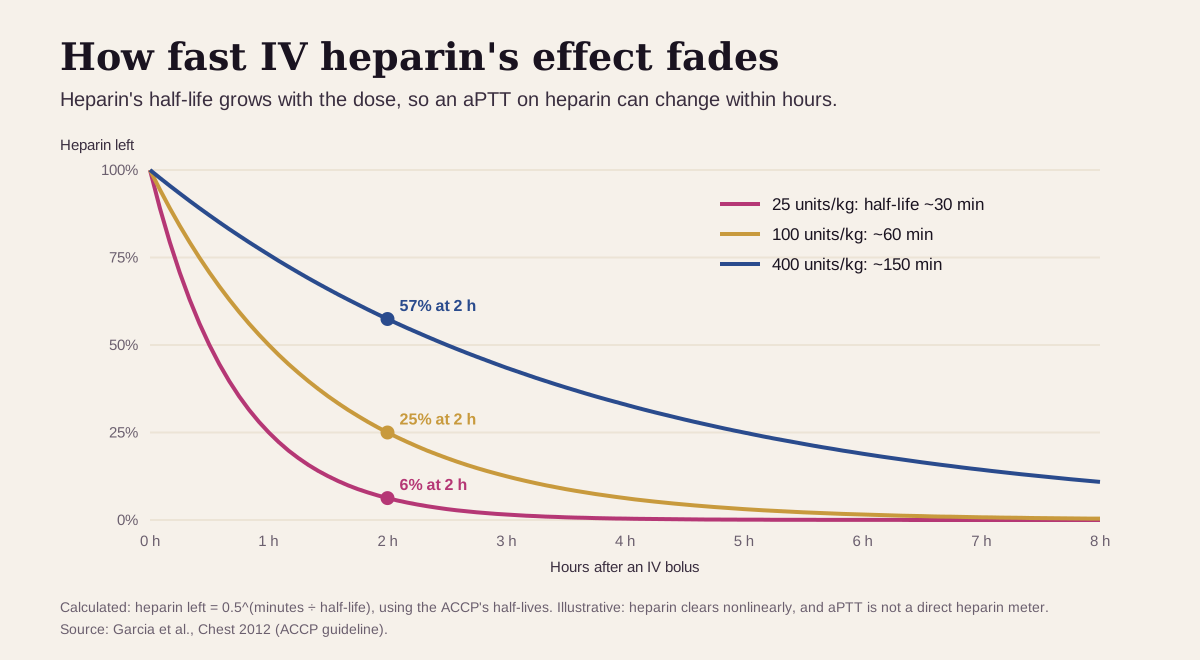
What that means in practice:
- In healthy people, aPTT is steady. In 92 healthy adults tested weekly for 10 weeks at six European labs, a person's aPTT varied by less than 5% on average.19 A big jump between two tests usually has a reason.
- Repeat a surprise before acting on it. Guidance for both borderline-long and short results is the same: confirm on a fresh, well-filled sample first.147
- Trends beat snapshots, within one lab. The same heparin level can read anywhere from 48 to 108 seconds depending on the reagent and machine,12 so compare results from the same lab when you can.
Going deeper: mixing studies and the contact system
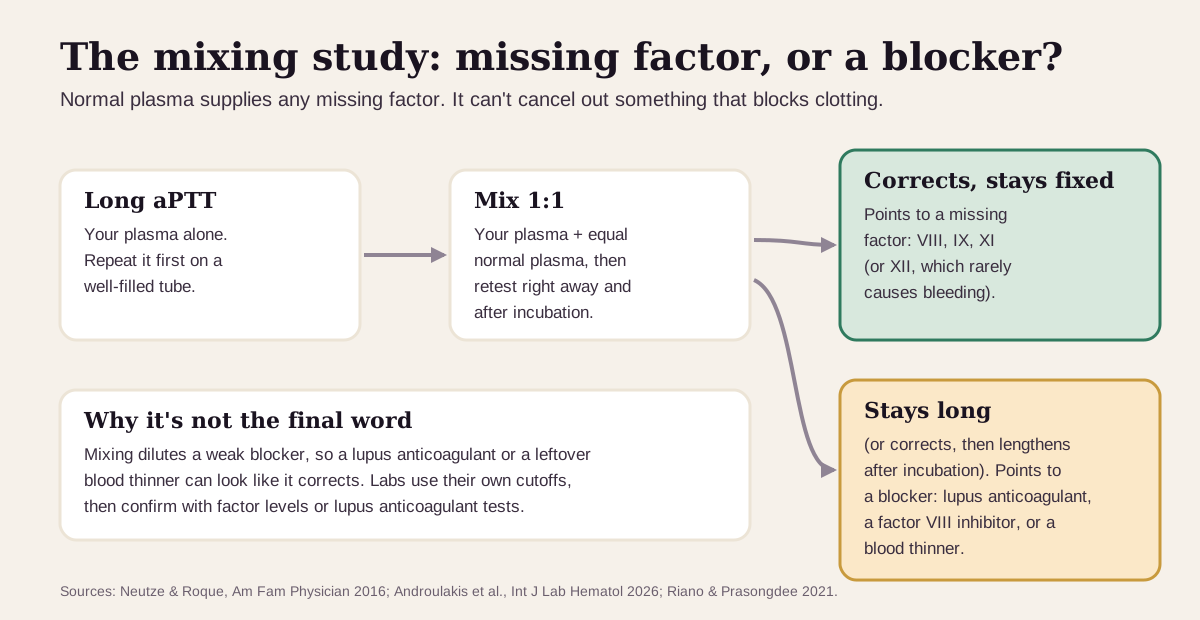
When a long aPTT stays long on a good sample, the next step is usually a mixing study. The lab mixes your plasma 1:1 with normal plasma and runs the test again, right away and after incubation. If the time corrects and stays corrected, normal plasma supplied a factor you were short on. If it stays long, or corrects and then lengthens after incubation, something in your plasma is blocking clotting, such as a lupus anticoagulant or a factor VIII inhibitor.3
Mixing has limits. Diluting your plasma also dilutes a weak blocker, so a mild lupus anticoagulant or a leftover blood thinner can look like it corrects. Each lab uses its own cutoffs, then confirms with factor levels or lupus anticoagulant testing.314
Why the tube test and the body disagree. The test starts with factor XII, which switches on when it touches a charged surface such as silica or kaolin. Researchers once assumed factor XII and its partners were needed to stop bleeding, until people missing them turned out to have no bleeding tendency at all, despite a dramatically long aPTT.10 The same gap explains how a lupus anticoagulant can lengthen the tube test while raising clot risk in the body.1
How heparin monitoring changed. The classic target, an aPTT 1.5–2.5 times the control, came from a 1970s study and was never confirmed in randomized trials.12 Because reagents vary so much, the International Society on Thrombosis and Haemostasis now prefers an anti-Xa test for heparin and says any lab that uses the aPTT must set its own heparin range.13
Questions worth asking
- Was this aPTT a screening test, or was it checking a blood thinner?
- Could the sample explain it: was the tube full, and was it drawn from a line?
- Could any of my medicines, including heparin, dabigatran, rivaroxaban or apixaban, affect it?
- What do my PT/INR, platelets and fibrinogen show next to it?
- If it stays long on a repeat, would a mixing study, factor levels or lupus anticoagulant testing help?
- Does my own or my family's bleeding history change the plan before a procedure?
FAQ
What is a normal aPTT? It depends on your lab's range. Labcorp uses 23–34 seconds for adults, and many labs sit in the mid-20s to mid-30s.42
What causes a high aPTT? The most common causes are heparin and other blood thinners, a tube that was filled short, a lupus anticoagulant, and a low clotting factor such as factor VIII in von Willebrand disease or hemophilia.351
Is a short aPTT bad? Usually it's a sign the blood draw was difficult, so it's repeated. A short aPTT that holds up is linked to a higher risk of blood clots: 2.8 times in the ARIC study.78
What's the difference between PT and aPTT? The PT covers the factor VII side of clotting and tracks warfarin. The aPTT covers factors XII, XI, IX and VIII and tracks heparin. Both share the final steps, so reading them together narrows the cause.3181
This guide is for education. It can't diagnose you or replace care from a clinician who knows your history.
Footnotes
-
National Library of Medicine. Partial Thromboplastin Time (PTT) Test. MedlinePlus. Last updated July 14, 2026. Uses, preparation, causes of long and short results, lupus anticoagulant, and bleeding and clot symptoms. MedlinePlus ↩ ↩2 ↩3 ↩4 ↩5 ↩6 ↩7 ↩8 ↩9 ↩10 ↩11 ↩12 ↩13 ↩14 ↩15 ↩16 ↩17 ↩18
-
Thiruvenkatarajan V, Pruett A, Adhikary SD. Coagulation testing in the perioperative period. Indian J Anaesth. 2014;58(5):565–572. How the aPTT is run, its blind spot for factor VII, why it isn't standardized, and fibrinogen and D-dimer in DIC and liver disease. PMC ↩ ↩2 ↩3 ↩4 ↩5 ↩6 ↩7 ↩8 ↩9 ↩10
-
Neutze D, Roque J. Clinical Evaluation of Bleeding and Bruising in Primary Care. Am Fam Physician. 2016;93(4):279–286. The four PT/aPTT quadrants, the mixing study, and von Willebrand disease as the most common inherited cause. AAFP ↩ ↩2 ↩3 ↩4 ↩5 ↩6 ↩7 ↩8 ↩9 ↩10 ↩11 ↩12 ↩13 ↩14 ↩15 ↩16 ↩17 ↩18 ↩19
-
Labcorp. Prothrombin Time (PT) and Partial Thromboplastin Time (PTT), test 020321. Reference ranges by age (adults over 16: 23–34 s), 3.2% citrate, 90% minimum fill, citrate adjustment above 55% hematocrit, and no draws from a heparin-line arm. A commercial laboratory's published test catalog. labcorp.com ↩ ↩2 ↩3 ↩4 ↩5 ↩6 ↩7 ↩8 ↩9 ↩10
-
Reneke J, Etzell J, Leslie S, Ng VL, Gottfried EL. Prolonged prothrombin time and activated partial thromboplastin time due to underfilled specimen tubes with 109 mmol/L (3.2%) citrate anticoagulant. Am J Clin Pathol. 1998;109(6):754–757. Most tubes filled below 90% gave a prolonged aPTT. PubMed ↩ ↩2 ↩3 ↩4 ↩5
-
Thomas L. Critical Limits of Laboratory Results for Urgent Clinician Notification. EJIFCC. 2003;14(1):11–18. Lists an aPTT of 75 s as a critical limit, and more than 2.5 times the upper limit in people on heparin. PMC ↩ ↩2 ↩3 ↩4 ↩5 ↩6
-
Lippi G, Salvagno GL, Ippolito L, Franchini M, Favaloro EJ. Shortened activated partial thromboplastin time: causes and management. Blood Coagul Fibrinolysis. 2010;21(5):459–463. Collection problems as the leading cause, and the conditions a confirmed short aPTT is linked to. PubMed ↩ ↩2 ↩3 ↩4 ↩5 ↩6 ↩7
-
Zakai NA, Ohira T, White R, Folsom AR, Cushman M. Activated partial thromboplastin time and risk of future venous thromboembolism. Am J Med. 2008;121(3):231–238. 13,880 ARIC adults followed a median of 13.1 years; quartile ranges, clot rates and hazard ratios. PMC ↩ ↩2 ↩3 ↩4 ↩5 ↩6 ↩7 ↩8 ↩9 ↩10 ↩11 ↩12 ↩13
-
Tripodi A, Chantarangkul V, Martinelli I, Bucciarelli P, Mannucci PM. A shortened activated partial thromboplastin time is associated with the risk of venous thromboembolism. Blood. 2004;104(12):3631–3634. 605 patients and 1,290 controls; odds ratio 2.4. PubMed ↩ ↩2
-
Riano I, Prasongdee K. A Rare Cause of Isolated Prolonged Activated Partial Thromboplastin Time: An Overview of Prekallikrein Deficiency and the Contact System. J Investig Med High Impact Case Rep. 2021;9:23247096211012187. Contact activation by silica or kaolin, and a markedly long aPTT (around 200 s) without bleeding. PMC ↩ ↩2 ↩3 ↩4 ↩5 ↩6
-
Superpower. What we test. Checked September 23, 2026: the list includes ALT, ferritin and platelets but no aPTT, PTT or PT. A commercial source, cited to show what the optimizer community tests. superpower.com ↩
-
Garcia DA, Baglin TP, Weitz JI, Samama MM. Parenteral anticoagulants: Antithrombotic Therapy and Prevention of Thrombosis, 9th ed: American College of Chest Physicians Evidence-Based Clinical Practice Guidelines. Chest. 2012;141(2 Suppl):e24S–e43S. Heparin half-lives of 30, 60 and 150 minutes, the history of the 1.5–2.5 rule, and the 48–108 s spread across reagents. PMC ↩ ↩2 ↩3 ↩4 ↩5 ↩6 ↩7
-
Gouin-Thibault I, Frere C, Castellucci LA, et al. How to monitor and manage unfractionated heparin in practice (Part 1)? Guidance from the SSC of the ISTH. J Thromb Haemost. 2026;24(8):3051–3062. Prefers anti-Xa (0.30–0.70 U/mL) and requires a local range when the aPTT is used. DOI ↩ ↩2 ↩3
-
Androulakis N, Nioti E, Dilintas A, Kalpadakis C. How I Investigate Borderline Prolonged aPTT: An Integrated Laboratory Approach to Mixing Studies and Factor Analysis. Int J Lab Hematol. 2026;48(5):951–960. Factor levels of 50–60%, leftover DOACs, repeat testing, and the limits of 1:1 mixing. PMC ↩ ↩2 ↩3 ↩4 ↩5 ↩6 ↩7 ↩8 ↩9 ↩10
-
Samuelson BT, Cuker A, Siegal DM, Crowther M, Garcia DA. Laboratory Assessment of the Anticoagulant Activity of Direct Oral Anticoagulants: A Systematic Review. Chest. 2017;151(1):127–138. Dabigatran often lengthens the aPTT; the PT is preferred for factor Xa inhibitors. PMC ↩
-
Magnette A, Chatelain M, Chatelain B, Ten Cate H, Mullier F. Pre-analytical issues in the haemostasis laboratory: guidance for the clinical laboratories. Thromb J. 2016;14:49. The 90% fill rule, the 1:9 citrate ratio, and testing within 4 hours (1 hour on heparin). PMC ↩ ↩2 ↩3
-
Wada H, Matsumoto T, Yamashita Y. Diagnosis and treatment of disseminated intravascular coagulation (DIC) according to four DIC guidelines. J Intensive Care. 2014;2(1):15. Table 2: long PT, high D-dimer, low fibrinogen and low platelets in DIC. PMC ↩ ↩2 ↩3 ↩4
-
National Library of Medicine. Prothrombin Time Test and INR (PT/INR). MedlinePlus. Last updated May 15, 2024. The PT tracks warfarin and checks for liver problems and low vitamin K. MedlinePlus ↩ ↩2 ↩3
-
Aarsand AK, Kristoffersen AH, Sandberg S, et al. The European Biological Variation Study (EuBIVAS): Biological Variation Data for Coagulation Markers Estimated by a Bayesian Model. Clin Chem. 2021;67(9):1259–1270. 92 healthy adults, 10 weekly samples; within-person variation under 5% for aPTT. PubMed ↩
Educational content, not medical advice.Libby is a personal record tool, not a medical service — it doesn't diagnose, treat, or prescribe. Reference ranges vary by lab and by person. Talk to a qualified healthcare professional about your results.
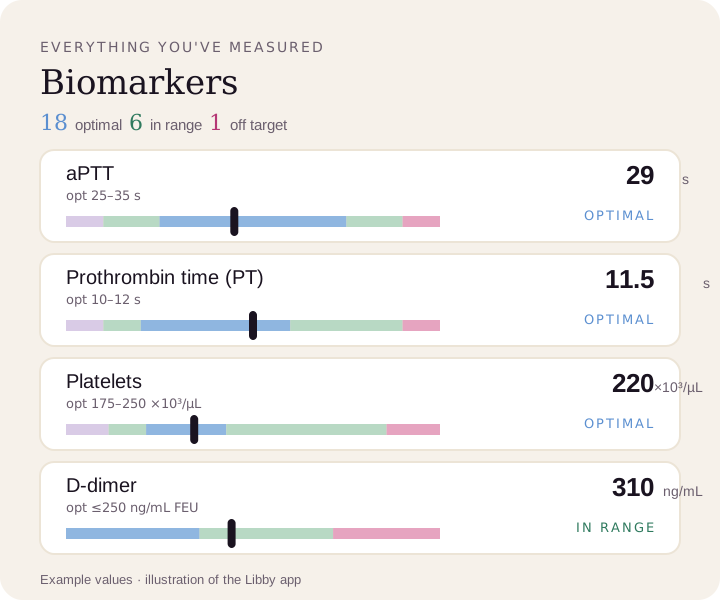
Compare your results to optimal ranges.
Upload a lab PDF or a photo of your report. Libby puts every marker on your lab's range and the optimal range, and tracks your trends over time.
View your aPTT ›