Amylase blood test: normal range, high and low causes
Amylase is a starch-digesting enzyme from your pancreas and salivary glands. What's normal, why it runs high or low, and when a high result is urgent.
Amylase is the enzyme that starts breaking down starch, and the blood test measures the small amount that leaks into your bloodstream from your salivary glands and pancreas. A high amylase most often raises the question of pancreatitis, but slow kidneys, inflamed salivary glands and a harmless quirk called macroamylase push it up too. For pancreatitis itself, lipase is the better test.12
The short version
- Normal: use the range on your report. Adult ranges run from about 30 to 110 U/L (Labcorp uses 31–110 U/L; a six-lab European study found 28–100 U/L), the same for men and women.23
- Mildly high often comes from outside the pancreas: kidney disease, salivary glands, macroamylase, other belly problems and some medicines. Kidney-related rises usually stay under 3 times the upper limit.12
- Over 3 times your lab's upper limit with severe upper-belly pain is one of the markers of acute pancreatitis. That needs care now.1
- Lipase is the better pancreas test. It's more specific and stays high longer, and the American College of Gastroenterology prefers it.1
What amylase is
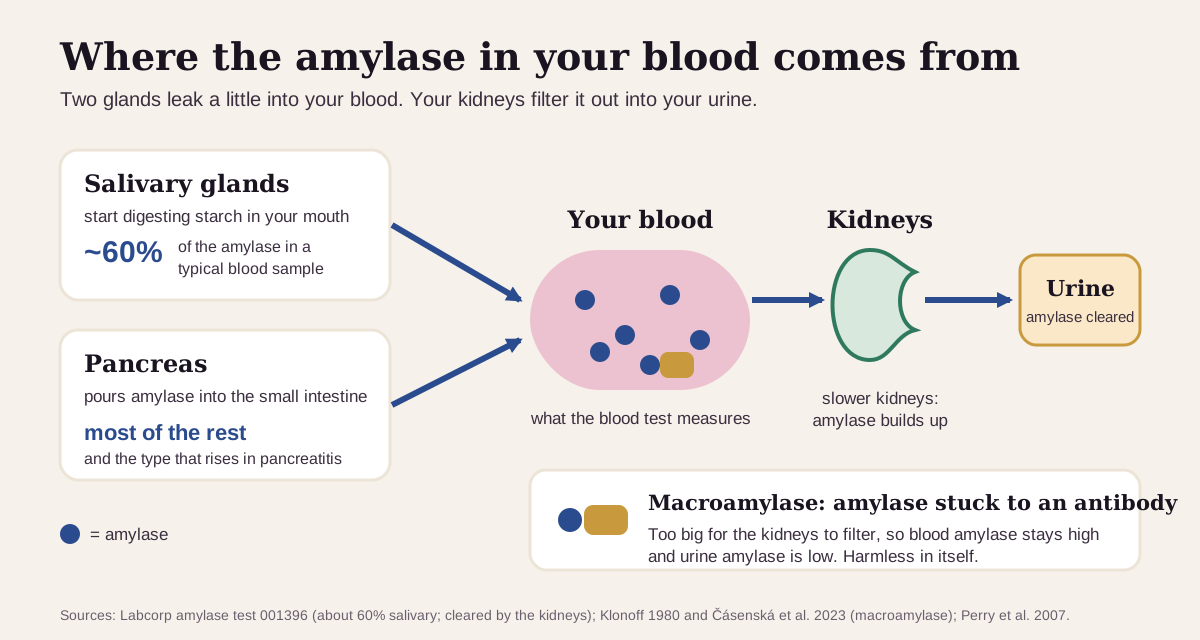
Amylase is a digestive enzyme: it splits starch into shorter sugars your gut can absorb. Your salivary glands make one form, which starts on bread or rice while you chew. Your pancreas makes another and pours it into your small intestine.67 (More on the chemistry at the end.)
A little of both forms leaks into your blood. About 60% of the amylase in a typical blood sample is the salivary type; most of the rest comes from the pancreas.2 Your kidneys filter amylase out of your blood and into your urine, so kidney function shapes the result too.2
Clinicians usually order amylase when someone has belly pain, especially pain that could be pancreatitis. It's also used to follow chronic pancreatitis and some salivary gland problems.6
What's a normal amylase?
Start with the range printed on your report. Labs use different methods, and their amylase ranges differ:
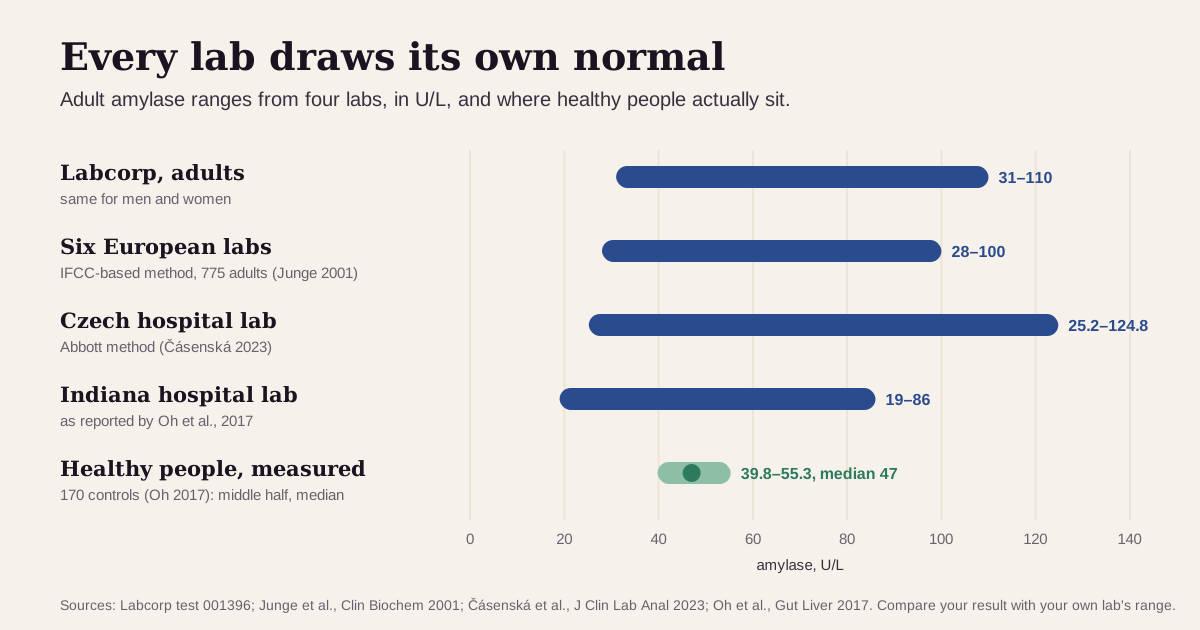
- Labcorp, a large U.S. lab, uses 31–110 U/L for everyone over age 1.2
- A study across six European labs, using the method recommended by the International Federation of Clinical Chemistry (IFCC), found 28–100 U/L in 775 people.3
- When researchers measured 170 healthy adults in Indiana, the median was 47 U/L, and the middle half fell between 39.8 and 55.3.8
Men and women share the same range. Labcorp lists identical limits for both.2 Age matters at the very start of life: babies between 1 and 6 months run much lower, at 8–71 U/L on Labcorp's scale.2 Moderate rises can show up in a normal pregnancy.2
"Optimal" amylase: what health optimizers aim for
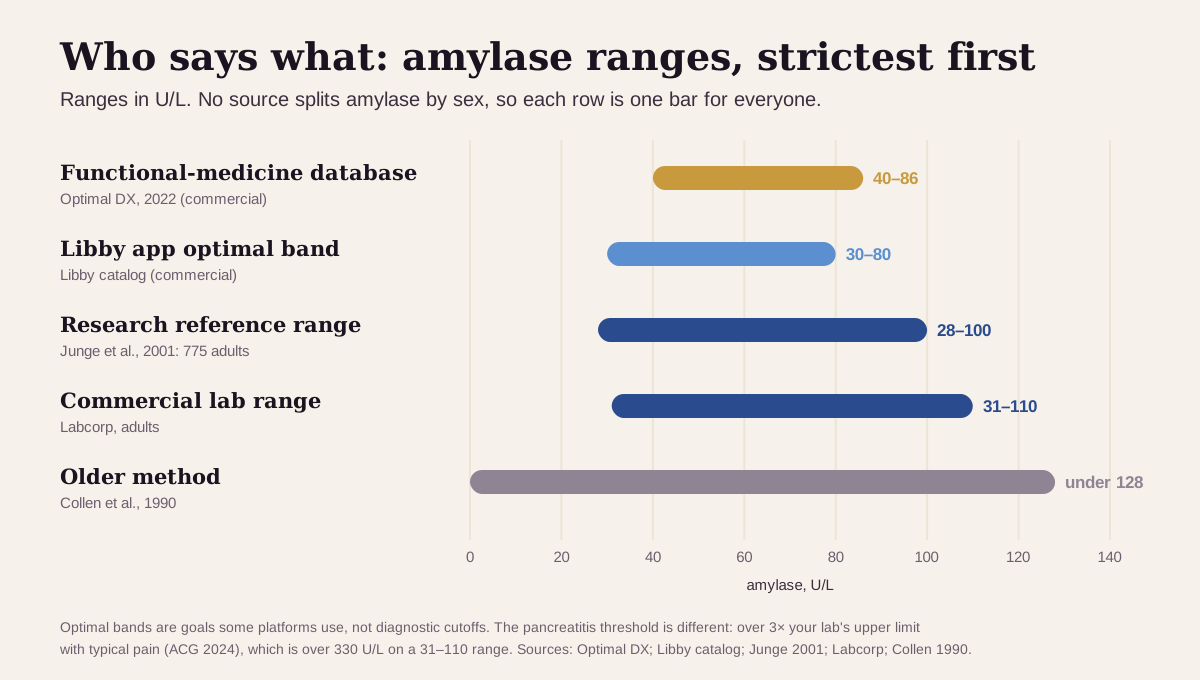
No medical society publishes a "healthy" amylase target the way liver specialists do for ALT. Functional-medicine sources narrow the lab range from both ends, mostly to flag a low amylase. Here's the ladder, from strictest to loosest:
| Target | Men and women | Who uses it |
|---|---|---|
| Strictest (functional-medicine database) | 40–86 U/L | Optimal DX's published "ODX Range"9 |
| Libby app optimal band | 30–80 U/L | The optimal range the Libby app shows for amylase10 |
| Research reference range | 28–100 U/L | 775 adults across six European labs3 |
| Commercial lab range | 31–110 U/L | Labcorp, adults2 |
| Older method | under 128 IU/L | The normal limit in a 1990 kidney study11 |
| Pancreatitis threshold | over 3× your lab's upper limit | With typical belly pain: get care now1 |
None of these sources splits amylase by sex.
Why optimizers set a floor:
- In 170 healthy adults, median amylase was 47 U/L. In 99 people with early chronic pancreatitis it was 34, and in 112 with calcified chronic pancreatitis it was 30. A cutoff of 40 U/L best separated early disease from health, the same number as Optimal DX's floor. Paired with a low lipase, a low amylase was specific (89%) but caught only 37% of early cases.8
- Among 1,475 adults at routine check-ups in Japan, fatty liver showed up on ultrasound in 42.4% of people with amylase of 30–59 IU/L, versus 22.5% of those at 90–200 IU/L.12
- A 2024 review of 19 studies and 15,097 people linked low amylase to diabetes, metabolic syndrome, chronic pancreatitis, fatty liver and obesity.13
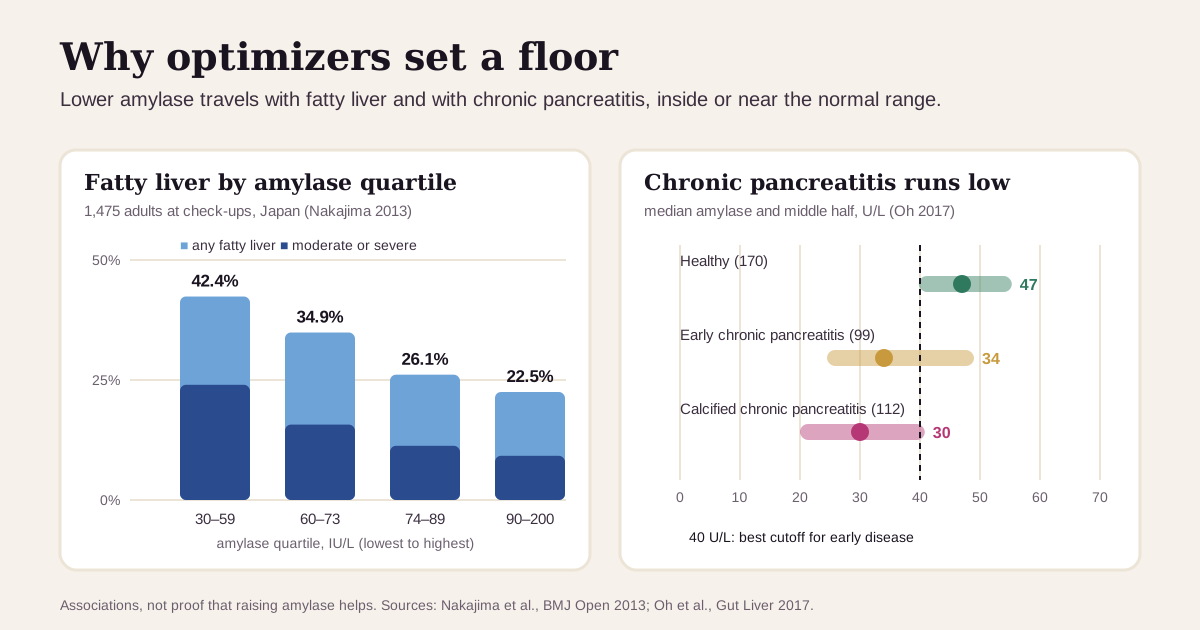
Keep "optimal" in perspective. These studies show a link, and no study has shown that raising amylase improves health. A low amylase is a nudge to look at weight, blood sugar and liver fat, and at the pancreas if you have digestive symptoms. At the top end, what matters is the size of the rise and whether you have symptoms, which is the next section.
What a high amylase usually means
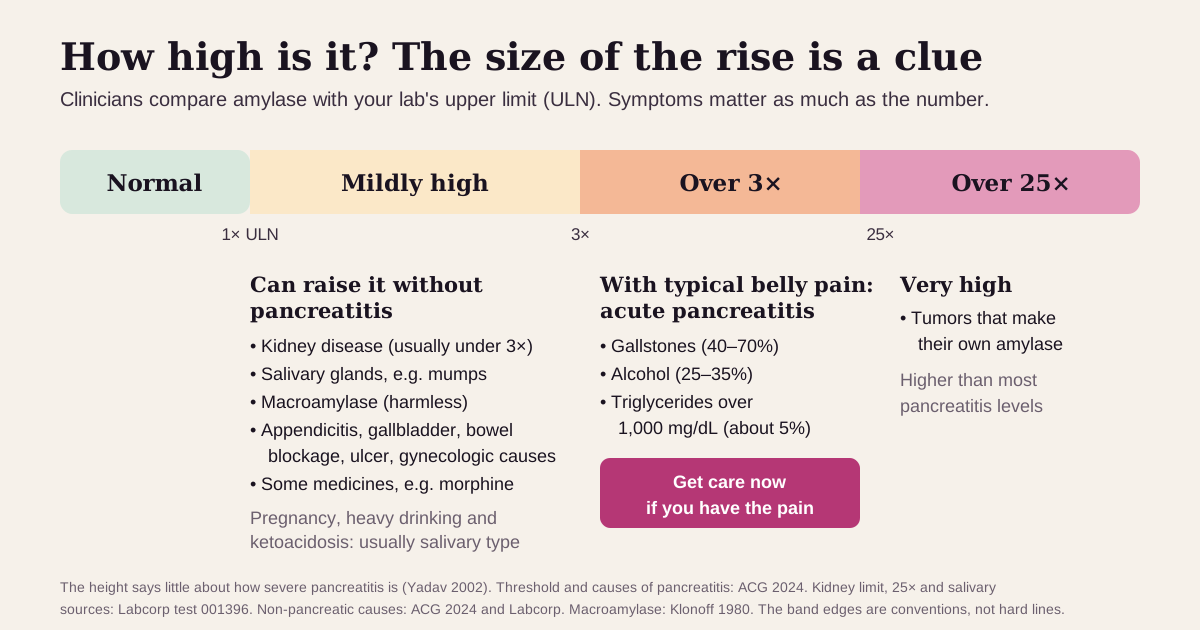
The size of the rise, and whether you have belly pain, are the first clues. Clinicians compare amylase with your lab's upper limit (ULN).1
Mildly high, no belly pain: often outside the pancreas
The usual suspects:
- Kidney disease. Your kidneys clear amylase. In a study of 128 people with reduced kidney function, amylase stayed normal until kidney filtering (creatinine clearance) fell below 50 mL/min.11 Labcorp notes that kidney-related rises usually stay under 3 times the upper limit.2
- Salivary glands. Inflamed salivary glands raise amylase; mumps is the classic example.2 In heavy drinkers, in pregnancy and in diabetic ketoacidosis, the extra amylase is usually the salivary type.2
- Macroamylase. Here amylase is stuck to an antibody, too big for your kidneys to filter, so it builds up in your blood. It's harmless in itself, though it sometimes travels with autoimmune disease. It turns up in about 2.5% of people with a high amylase and 1% of healthy people.45
- Other belly problems. Appendicitis, an inflamed gallbladder, a blocked or oxygen-starved bowel, a peptic ulcer and gynecologic problems can all raise amylase.1
- Medicines. Morphine and a long list of other drugs can raise it.2 Don't stop a prescribed medicine on your own. Bring your full list to your clinician.
Over 3× the upper limit, with belly pain: think pancreatitis
Acute pancreatitis is diagnosed when two of three things are present: typical pain (constant upper-belly pain, often boring through to the back), amylase or lipase over 3 times the upper limit, and typical findings on a scan.1 The most common causes are gallstones (40–70%) and alcohol (25–35%). Triglycerides over 1,000 mg/dL cause about 5% of cases.1
Two things surprise people. Up to one in five people with pancreatitis have a normal amylase when they arrive at the hospital, which is one reason lipase is preferred.1 And the height of the number says little about how severe the attack is.14
Get care now if you have severe or constant upper-belly pain, especially pain that spreads to your back, with nausea and vomiting, fever, a fast heartbeat, or yellow skin or eyes, whatever your amylase shows.61
Very high (over 25×)
Amylase more than 25 times the upper limit is often found when a tumor makes its own amylase. Those levels run higher than most pancreatitis.2
Is a low amylase a problem?
Low amylase is uncommon.6 Causes include chronic pancreatitis that has damaged the cells that make it, cystic fibrosis and liver disease.6 Low amylase also travels with fatty liver, diabetes and metabolic syndrome, as the studies above show.13
Two lab quirks can push a result falsely low: very fatty (lipemic) blood from high triglycerides, and blood collected in oxalate or citrate tubes.2
Amylase reads best next to its neighbors
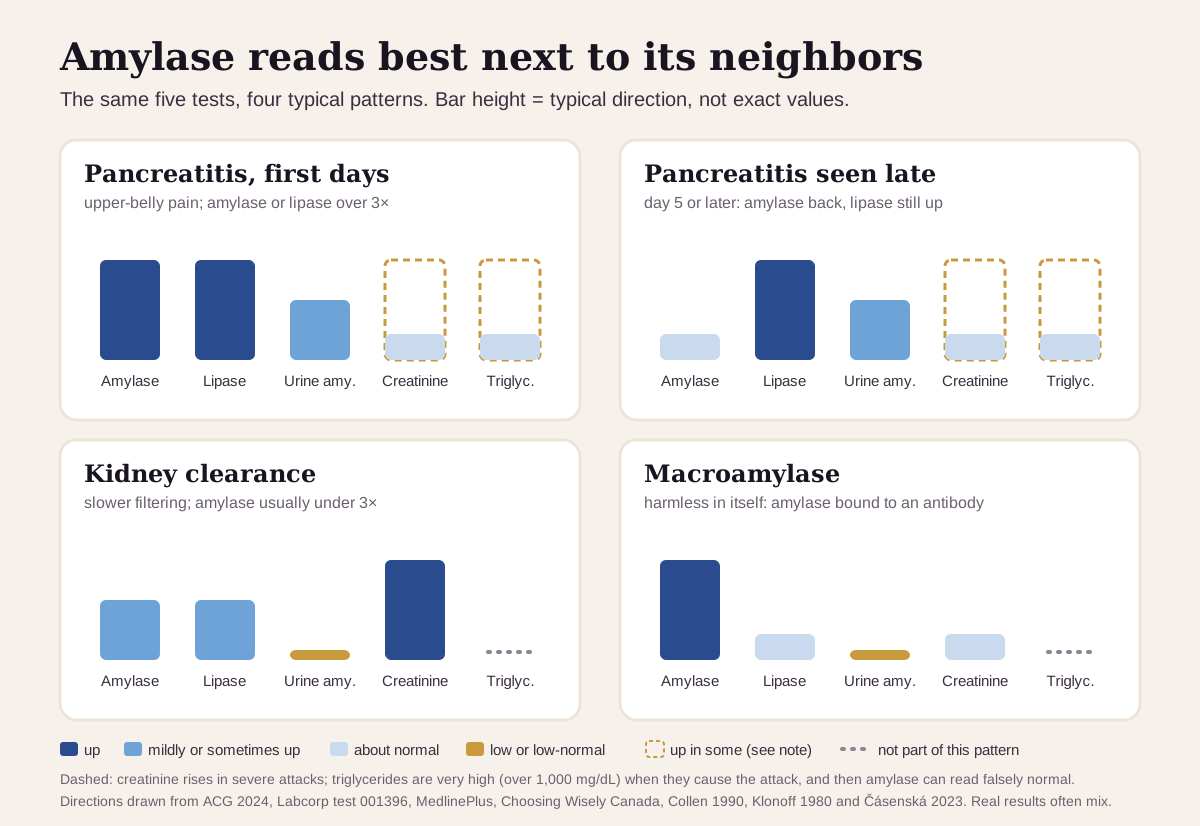
Amylase alone rarely tells you where it came from. The pattern with lipase, urine amylase, creatinine and triglycerides often narrows it down:
| If you see… | It often points to… |
|---|---|
| Amylase and lipase both over 3× the upper limit, with upper-belly pain | acute pancreatitis; lipase is the more reliable of the two1 |
| Lipase still high, amylase already back to normal, pain for several days | pancreatitis caught late: amylase clears within 3–5 days, lipase lingers115 |
| Amylase mildly high, creatinine high (slower kidney filtering), lipase normal or high | slower kidney clearance112 |
| Amylase high, lipase and creatinine normal, urine amylase low, no symptoms | macroamylase, harmless in itself and confirmed with special lab tests452 |
| Pancreatitis with triglycerides over 1,000 mg/dL, gallstones and alcohol ruled out | very high triglycerides as the cause; amylase can read falsely normal in that fatty blood12 |
How fast amylase changes
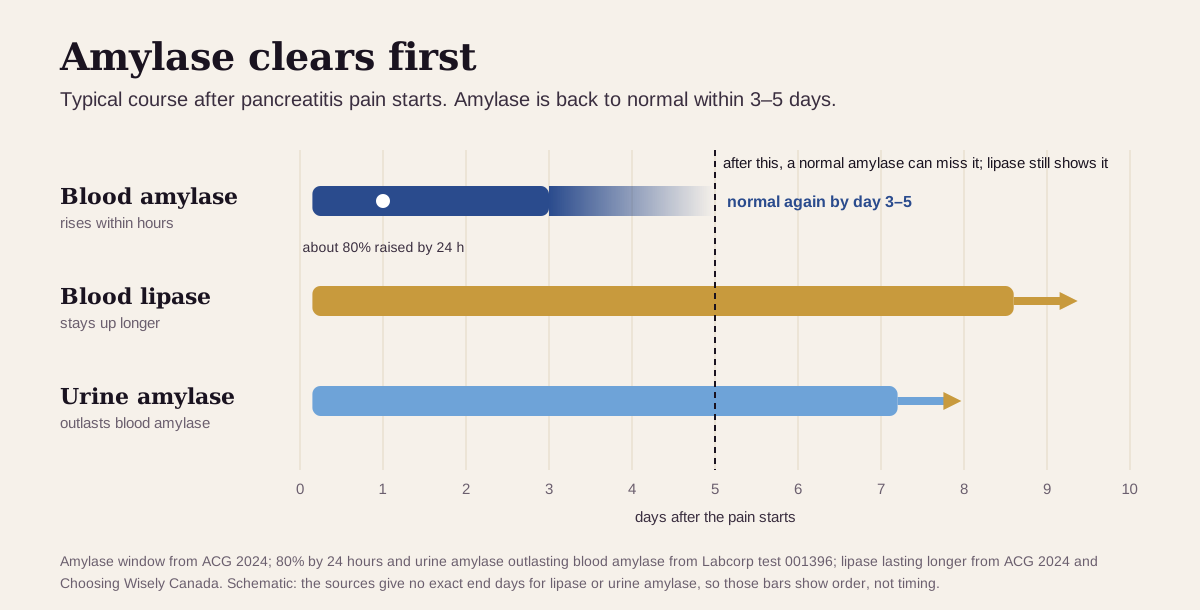
In pancreatitis, amylase rises within a few hours of the pain starting and returns to normal within 3–5 days. Lipase stays high longer.1 About 80% of people with acute pancreatitis have a raised amylase within 24 hours.2 Urine amylase stays up longer than blood amylase.2
What that means in practice:
- Timing matters. Several days into the pain, a normal amylase can miss pancreatitis, and lipase covers that window.115 Choosing Wisely Canada advises against ordering amylase on top of lipase to look for pancreatitis.15
- Daily checks add little once pancreatitis is diagnosed. Enzyme levels track poorly with recovery.14
- Your own amylase is steady. In 91 healthy adults tested weekly for 10 weeks, each person's amylase moved about 7% around their own average, while people differed from one another by about 30%.16 So a change against your own earlier results can say more than a comparison with the population range. Compare results from the same lab.
- Prepare the same way each time. MedlinePlus advises no alcohol for 24 hours before the test, and your clinician may ask you to fast for 2 hours.6
- A mild rise that persists without symptoms is the classic time to check kidney function, lipase and, if those look fine, macroamylase.45
Going deeper: what amylase actually does
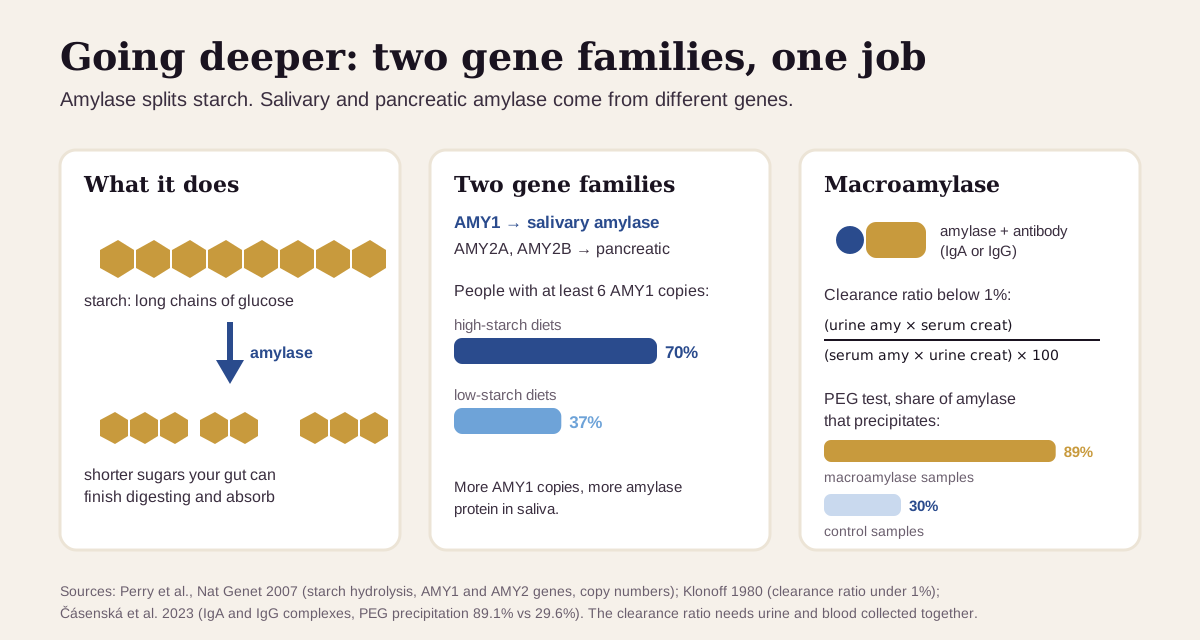
Amylase is the enzyme responsible for starch hydrolysis, the chemical splitting of starch into smaller sugars.7 Humans carry two gene families for it: AMY1 makes the salivary form, and AMY2A and AMY2B make the pancreatic form.7
The number of AMY1 copies varies from person to person, and people with more copies make more amylase in their saliva. In one study, 70% of people from populations with high-starch diets had at least 6 copies, versus 37% from low-starch populations.7 Salivary amylase keeps working in your stomach and intestine after you swallow, adding to what the pancreas supplies.7
Macroamylase, up close. In one lab series the antibody was IgA in three cases and IgG in two.5 Because the complex is too big to filter, less amylase reaches the urine than creatinine would predict. Clinicians compare the two with the amylase-to-creatinine clearance ratio:
ACCR (%) = (urine amylase × serum creatinine) ÷ (serum amylase × urine creatinine) × 100
A ratio below 1% is the classic clue to macroamylase.4 Labs confirm it with a precipitation test (PEG): in one series, 89% of the amylase precipitated in confirmed cases, versus about 30% in control samples.5
Questions worth asking
- How far above the upper limit is my amylase: under or over 3 times?
- Was lipase checked, and what did it show?
- Could my kidney function explain a mild rise?
- If it stays high and I feel fine, should we test for macroamylase?
- Could a medicine, alcohol or a salivary gland problem be involved?
- If it's low, are my blood sugar, triglycerides and liver worth a look?
FAQ
What is a normal amylase level? It depends on your lab's range. Adult ranges run from about 30 to 110 U/L: Labcorp uses 31–110 U/L, and a six-lab European study found 28–100 U/L.23
What causes a high amylase? Acute pancreatitis is the most important cause. Kidney disease, salivary gland problems, macroamylase, other belly problems and some medicines can raise it too.12
Is lipase better than amylase? For pancreatitis, yes. The American College of Gastroenterology prefers lipase, and Choosing Wisely Canada advises against ordering both to look for pancreatitis.115
When is a high amylase an emergency? Over 3 times the upper limit with severe upper-belly pain needs care now. So does severe belly pain with vomiting, fever or yellow eyes, whatever the number.16
This guide is for education. It can't diagnose you or replace care from a clinician who knows your history.
Footnotes
-
Tenner S, Vege SS, Sheth SG, et al. American College of Gastroenterology Guidelines: Management of Acute Pancreatitis. Am J Gastroenterol. 2024;119(3):419–437. The U.S. gastroenterology society's guideline: the two-of-three diagnosis with the over-3× threshold, why lipase is preferred, the 3–5 day amylase window, the causes of pancreatitis, and other causes of a high amylase. PMC ↩ ↩2 ↩3 ↩4 ↩5 ↩6 ↩7 ↩8 ↩9 ↩10 ↩11 ↩12 ↩13 ↩14 ↩15 ↩16 ↩17 ↩18 ↩19 ↩20 ↩21 ↩22 ↩23
-
Labcorp. Amylase (test 001396). Test catalog, reviewed September 23, 2026. A commercial laboratory's published ranges (31–110 U/L over age 1, identical for men and women) and interpretation: about 60% salivary, kidney-related rises, the 25× tumor level, and the tube and lipemia effects. labcorp.com ↩ ↩2 ↩3 ↩4 ↩5 ↩6 ↩7 ↩8 ↩9 ↩10 ↩11 ↩12 ↩13 ↩14 ↩15 ↩16 ↩17 ↩18 ↩19 ↩20 ↩21 ↩22 ↩23 ↩24 ↩25 ↩26 ↩27 ↩28 ↩29
-
Junge W, Wortmann W, Wilke B, et al. Development and evaluation of assays for the determination of total and pancreatic amylase at 37 °C according to the principle recommended by the IFCC. Clin Biochem. 2001;34(8):607–615. Six European labs; reference range 28–100 U/L in 775 people. PubMed ↩ ↩2 ↩3 ↩4 ↩5 ↩6
-
Klonoff DC. Macroamylasemia and other immunoglobulin-complexed enzyme disorders. West J Med. 1980;133(5):392–407. The classic review: clearance ratio under 1%, found in 2.5% of people with a high amylase and 1% of healthy people. PMC ↩ ↩2 ↩3 ↩4 ↩5 ↩6 ↩7 ↩8
-
Čásenská J, Franeková J, Mačinga P, Jabor A. Significant elevations of serum amylase caused by macroamylase: case reports and detection possibilities. J Clin Lab Anal. 2023;37(5):e24859. Normal lipase and creatinine, low urine amylase, IgA and IgG complexes, and PEG results. PMC ↩ ↩2 ↩3 ↩4 ↩5 ↩6 ↩7 ↩8 ↩9
-
National Library of Medicine. Amylase Test. MedlinePlus. What the test is for, symptoms of pancreatitis, low-amylase causes and test preparation. MedlinePlus ↩ ↩2 ↩3 ↩4 ↩5 ↩6 ↩7 ↩8
-
Perry GH, Dominy NJ, Claw KG, et al. Diet and the evolution of human amylase gene copy number variation. Nat Genet. 2007;39(10):1256–1260. PMC ↩ ↩2 ↩3 ↩4 ↩5 ↩6
-
Oh HC, Kwon CI, El Hajj II, et al. Low Serum Pancreatic Amylase and Lipase Values Are Simple and Useful Predictors to Diagnose Chronic Pancreatitis. Gut Liver. 2017;11(6):878–883. 170 healthy controls, 99 non-calcific and 112 calcific chronic pancreatitis. PMC ↩ ↩2 ↩3 ↩4
-
Optimal DX. Enzyme Biomarkers: Amylase. ODX Research; published July 2022. States a "Standard Range" of 21–103 U/L and an "ODX Range" of 40–86 U/L. A commercial source, listed as what the optimizer community uses. optimaldx.com ↩ ↩2
-
Libby Health. Marker catalog: amylase, reviewed September 23, 2026. The app's optimal band for amylase is 30–80 U/L, a curated range with no textbook or study attached to it yet. A commercial source (our own app). libby.health ↩ ↩2
-
Collen MJ, Ansher AF, Chapman AB, Mackow RC, Lewis JH. Serum amylase in patients with renal insufficiency and renal failure. Am J Gastroenterol. 1990;85(10):1377–1380. 128 people with reduced kidney function; amylase rose once creatinine clearance fell below 50 mL/min, and lipase paralleled it. PubMed ↩ ↩2 ↩3 ↩4 ↩5
-
Nakajima K, Oshida H, Muneyuki T, et al. Independent association between low serum amylase and non-alcoholic fatty liver disease in asymptomatic adults: a cross-sectional observational study. BMJ Open. 2013;3(1):e002235. 1,475 adults; fatty liver by amylase quartile. PMC ↩ ↩2
-
Jalal M, Gbadegesin SA, Tehami N, Nakajima K. What is the clinical significance of low serum amylase? Systematic review of the conditions associated with low serum amylase. Frontline Gastroenterol. 2024;15(2):154–161. PMC ↩ ↩2
-
Yadav D, Agarwal N, Pitchumoni CS. A critical evaluation of laboratory tests in acute pancreatitis. Am J Gastroenterol. 2002;97(6):1309–1318. Enzyme levels predict neither severity nor cause, and daily measurements add nothing once pancreatitis is diagnosed. PubMed ↩ ↩2 ↩3
-
Choosing Wisely Canada. Medical Biochemistry: "Don't order amylase in addition to lipase to detect pancreatitis." Lipase is more sensitive and specific and stays elevated longer. choosingwiselycanada.org ↩ ↩2 ↩3 ↩4 ↩5 ↩6
-
Carobene A, Røraas T, Sølvik UØ, et al. Biological Variation Estimates Obtained from 91 Healthy Study Participants for 9 Enzymes in Serum. Clin Chem. 2017;63(6):1141–1150. Within-person variation 6.8%, between-person 30.4% for amylase. PubMed ↩
Educational content, not medical advice.Libby is a personal record tool, not a medical service — it doesn't diagnose, treat, or prescribe. Reference ranges vary by lab and by person. Talk to a qualified healthcare professional about your results.
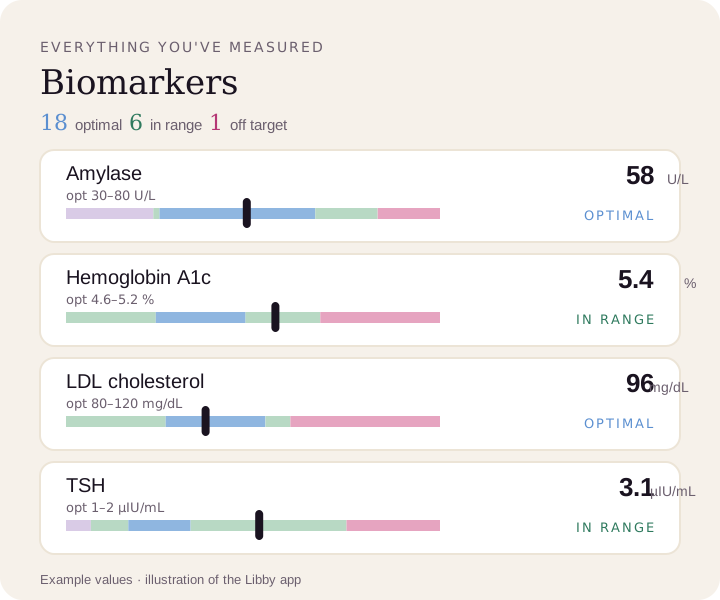
Compare your results to optimal ranges.
Upload a lab PDF or a photo of your report. Libby puts every marker on your lab's range and, where one exists, the optimal range, and tracks your trends over time.
View your amylase ›