Anion gap blood test: normal range, high and low causes
The anion gap is a quick math check on your electrolytes. What's normal, why it runs high or low, how to read it with bicarbonate and albumin, and when to act.
The anion gap is a number your lab calculates from your electrolytes: sodium minus chloride and bicarbonate. The leftover stands for the charged particles a routine panel leaves out, mostly the blood protein albumin. A high gap most often means an acid is building up in your blood. A low gap most often means a lab error or low albumin.12
The short version
- Normal: use the range on your report, because it depends on your lab's analyzer. Studies of healthy adults on modern equipment put it anywhere from 3–11 to 10–18 mmol/L.345 The Libby app shows 7–12 mmol/L as optimal.6
- High most often means metabolic acidosis, an acid building up: lactate, ketones (as in diabetic ketoacidosis), kidney failure or a poison. A lab or sample problem can also push it up.17
- A gap of 20 or more is a strong sign of real acid build-up in hospital studies. Get care promptly, and urgently if you also have vomiting, fast or deep breathing, or confusion.8910
- Low most often comes from a lab error or low albumin. Each 1 g/dL drop in albumin lowers the gap by about 2.5.111
What the anion gap is
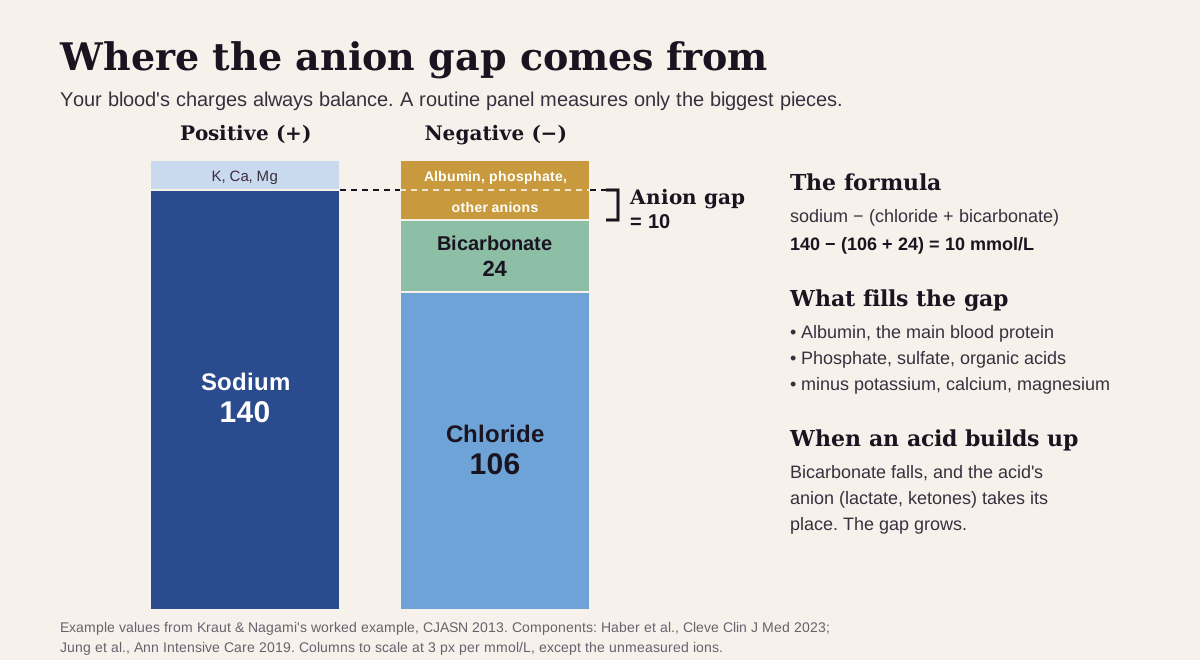
Your blood always carries equal amounts of positive and negative charge. A standard chemistry panel measures the biggest pieces: sodium on the positive side, and chloride and bicarbonate on the negative side. Subtract the two negatives from the positive and you get the anion gap:2
Anion gap = sodium − (chloride + bicarbonate)
The gap is filled by charged particles the panel leaves out. Most of it is albumin, a blood protein that carries negative charge, plus phosphate. Potassium, calcium and magnesium sit on the positive side and pull the other way.27
Some labs add potassium to the formula. On the same blood, that version reads about 4 points higher, so check which one your report uses before you compare ranges.45
The gap appears on many electrolyte panels, basic and comprehensive metabolic panels (BMP and CMP), and kidney panels, and it needs no special preparation.9 Clinicians use it to sort out acid problems, to catch lab errors, and as a clue to a few blood-protein disorders.1
What's a normal anion gap?
Start with the range printed on your own report. The gap is built from three measurements, and labs make them on different analyzers, so their ranges differ.912
The biggest shift came with ion-selective electrodes, the sensors most analyzers now use. They read chloride a little higher, which pulled the whole range down:312
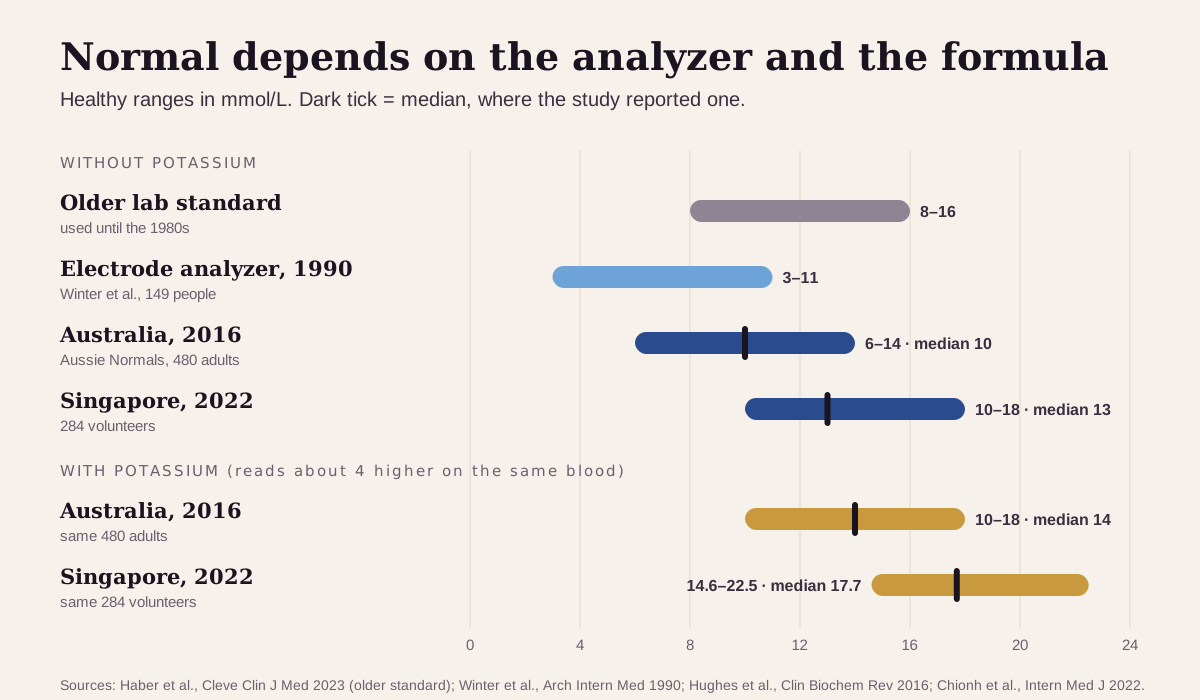
- Until the 1980s, labs used 8–16 mmol/L.23
- A 1990 study on a then-new electrode analyzer found 3–11 mmol/L, with most healthy people at 6 or below.3
- The Australian "Aussie Normals" study of 480 healthy adults found 6–14 mmol/L (median 10) without potassium and 10–18 with it.4
- A 2022 Singapore study of 284 health-screening volunteers found 10–18 mmol/L (median 13), and 14.6–22.5 with potassium.5
A review in the Clinical Journal of the American Society of Nephrology sums it up: whatever the method, healthy people's gaps can span 8 to 10 points, so your own lab's range is the one that counts.12
Men and women run about the same. The Singapore study found differences by sex, body weight and albumin, but each was only about 1 mmol/L.5
"Optimal" anion gap: what health optimizers aim for
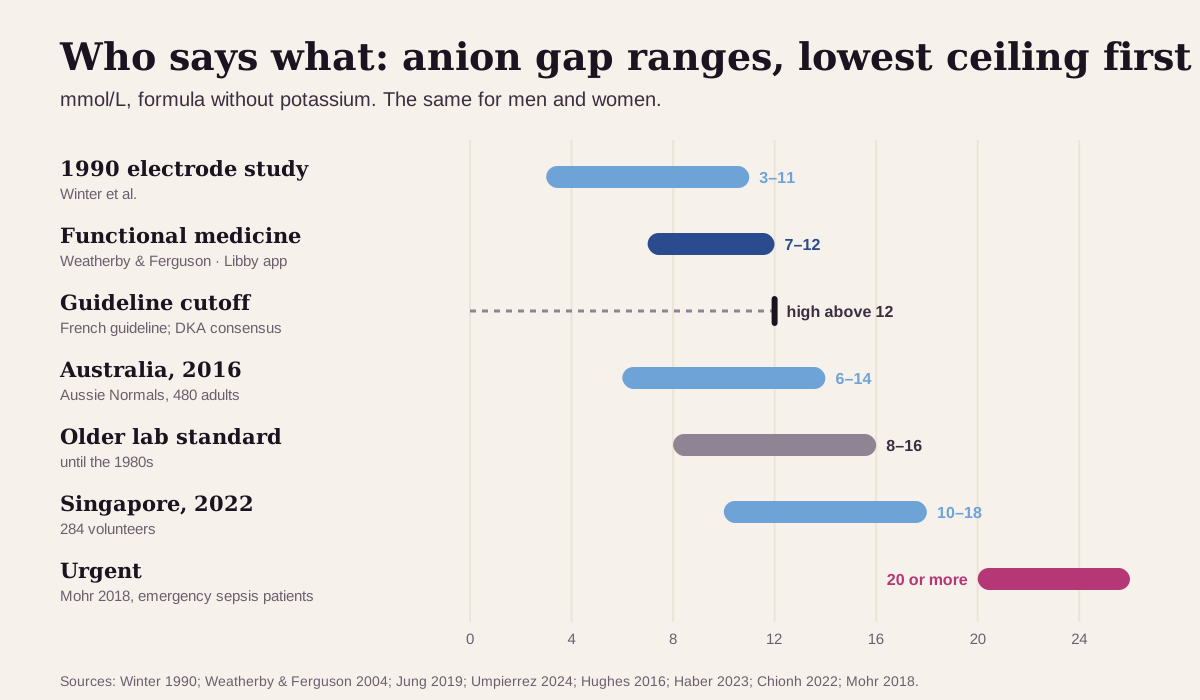
For the anion gap, the "optimal" question is mostly about where normal ends. Here is every range, from the lowest ceiling to the highest, all using the formula without potassium:
| Target | Range (mmol/L) | Who uses it |
|---|---|---|
| Research range, 1990 electrode analyzer | 3–11 | Winter et al., healthy volunteers and blood donors3 |
| Functional medicine | 7–12 | The optimal range shown in the Libby app, which its marker catalog credits to a standard functional-medicine textbook6 |
| Guideline cutoff for "high" | above 12 | The threshold "most authors" use, per the French intensive-care guideline,7 and the 2024 diabetes-crisis consensus10 |
| Research range, Australia 2016 | 6–14 | Aussie Normals, 480 healthy adults4 |
| Older lab standard | 8–16 | The range labs used until the 1980s23 |
| Research range, Singapore 2022 | 10–18 | 284 health-screening volunteers5 |
| Urgent | 20 or more | In 4,159 emergency patients with sepsis, a gap this high was a strong sign of a lactate above 48 |
The ladder is the same for men and women. The Libby app's 7–12 range fits the formula without potassium, which most U.S. textbooks use.12
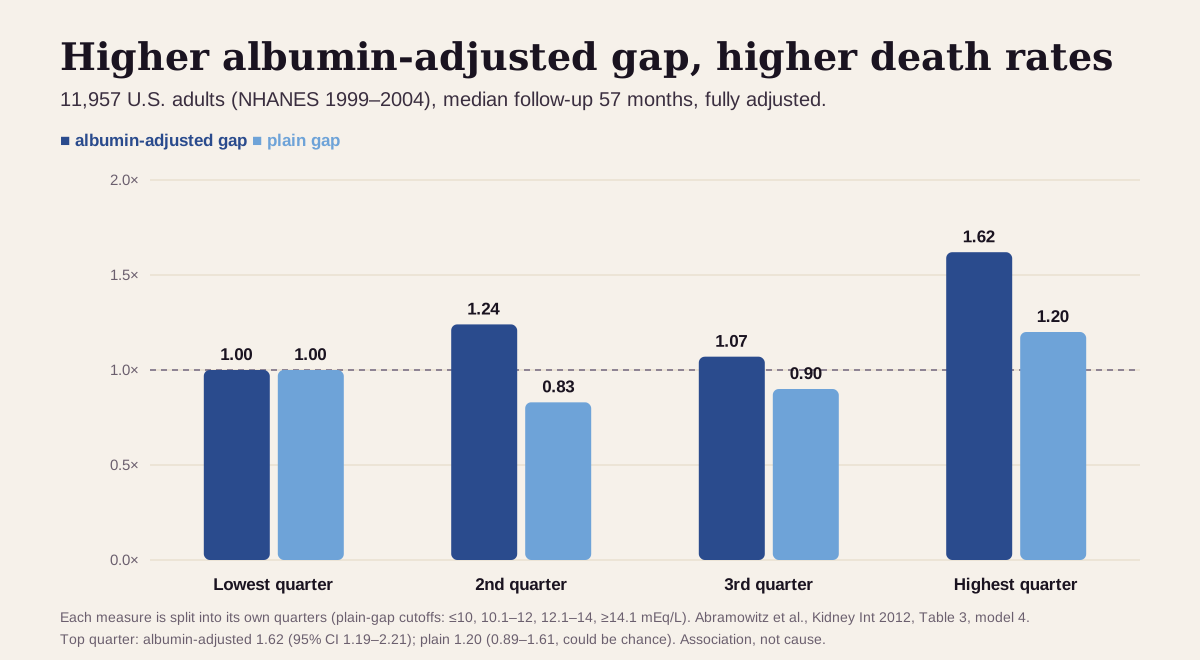
Why a lower gap might matter: in U.S. national survey data (NHANES), a higher gap inside the normal range tracked with worse health.
- In 11,957 adults followed for a median of about 5 years, people in the highest quarter of the albumin-adjusted anion gap had 1.62 times the death rate of those in the lowest quarter. That was after adjusting for kidney function, diabetes, high blood pressure, smoking and more. The plain gap, not adjusted for albumin, showed a weaker link (1.20 times) that could have been chance.13
- In 2,714 adults aged 20 to 49, each standard-deviation step up in the gap came with 1.30 times the odds of low fitness on an exercise test. Their average gap was 10.3.14
- In 5,043 healthy adults, those in the highest fifth of the gap had systolic blood pressure 3.73 mm Hg higher than those in the lowest fifth.15
Keep "optimal" in perspective: these are targets, not diagnoses. A gap of 13 on one test is a reason to look at the rest of the panel and your albumin, and to compare with your earlier results. A very low gap is no prize either: it usually means low albumin or a lab error.1
What a high anion gap usually means
A high gap usually means an acid is building up. The acid uses up bicarbonate, and its leftover negative part, such as lactate, takes bicarbonate's place. Bicarbonate falls, chloride stays about the same, and the gap widens point for point.127
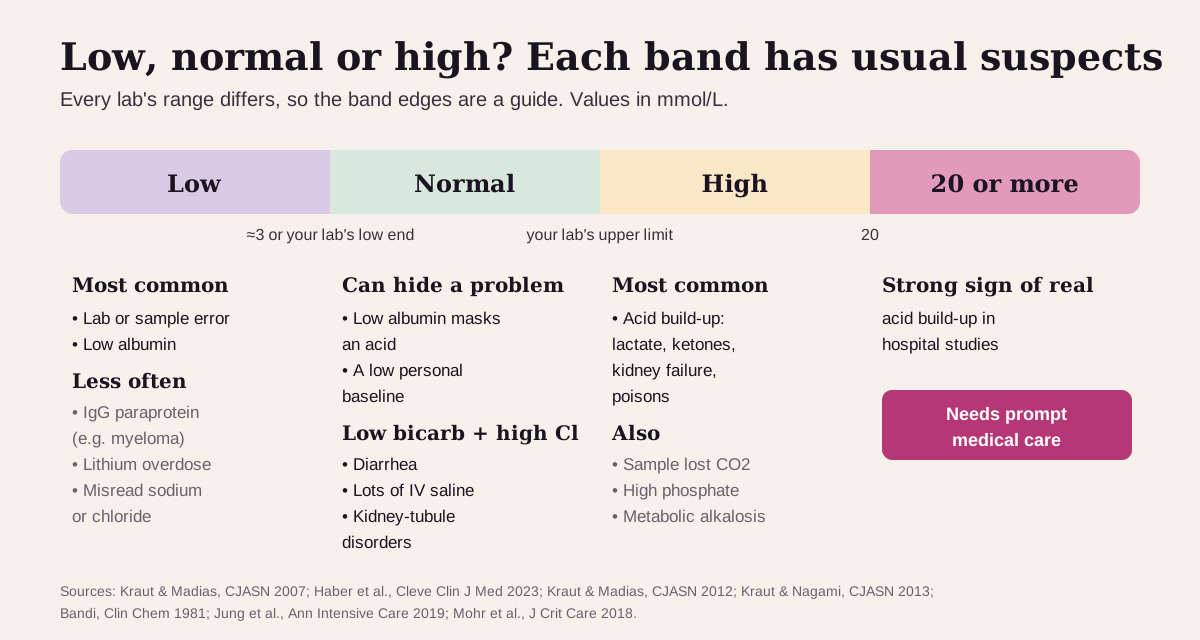
The usual suspects
- Lactate. Lactic acid builds up when tissues run short of oxygen, as in shock from infection (sepsis), blood loss or a failing heart. Seizures, severe anemia, liver failure, alcohol, the diabetes drug metformin and intense exercise can raise it too.7
- Ketones. Diabetic ketoacidosis (DKA) is the classic case: a glucose of 200 mg/dL or more (or known diabetes), high ketones, and low bicarbonate. Heavy drinking with vomiting, starvation and the severe vomiting of some pregnancies can also raise ketones.10
- Kidney disease. Failing kidneys hold on to acids. In NHANES, the plain gap rose only once kidney function (eGFR) fell below 45.13
- Poisons and overdoses. Methanol, antifreeze (ethylene glycol) and an aspirin (salicylate) overdose each add their own acid.79
- A lab or sample problem. Bicarbonate escapes as CO2 gas from a tube that is left open or only partly filled. One study measured losses of 2–6 mmol/L during routine processing, and up to 8 in open sample cups. Every point of bicarbonate lost adds a point to the gap.16
- Less common: a high phosphate, some paraproteins, or metabolic alkalosis (the opposite problem, too little acid) can nudge the gap up.1
Get care now if a high anion gap comes with vomiting, belly pain, shortness of breath or deep, heavy breathing, a very fast heartbeat, or confusion. In DKA, nausea, vomiting and belly pain affect more than half of patients.910 Treat a gap of 20 or more as urgent too.8
Low bicarbonate with a normal gap
This is acid trouble of a different kind. Bicarbonate is lost, chloride rises one for one to replace it, and the gap stays put. Diarrhea, large amounts of IV salt water (saline), and some kidney-tubule disorders are the classic causes.17
What a low anion gap usually means
Confirm it first. Measurement error is the most common cause of a low gap, so a new low result is usually repeated.2 Clinicians often call a gap of 3 mmol/L or less low.2
After that, the usual suspects:
- Low albumin. Albumin makes up most of the normal gap, so when it falls, the gap falls: about 2.5 points for every 1 g/dL. Poor nutrition, liver disease, inflammation and losses through the kidneys or gut lower albumin.211
- Extra positive charge. Some antibodies made in excess by a plasma-cell disorder such as multiple myeloma (IgG paraproteins) carry a positive charge and lower the gap. So does lithium, in an overdose. A low gap with normal albumin is a reason to look for these.21
- A misread sodium or chloride. Very high triglycerides or protein can make sodium read falsely low. Bromide, iodide or a salicylate overdose can be misread as chloride.2
The anion gap reads best next to its neighbors
The gap is arithmetic on three numbers, so the story is in which one moved. Read it with bicarbonate, chloride, sodium and albumin from the same draw:12
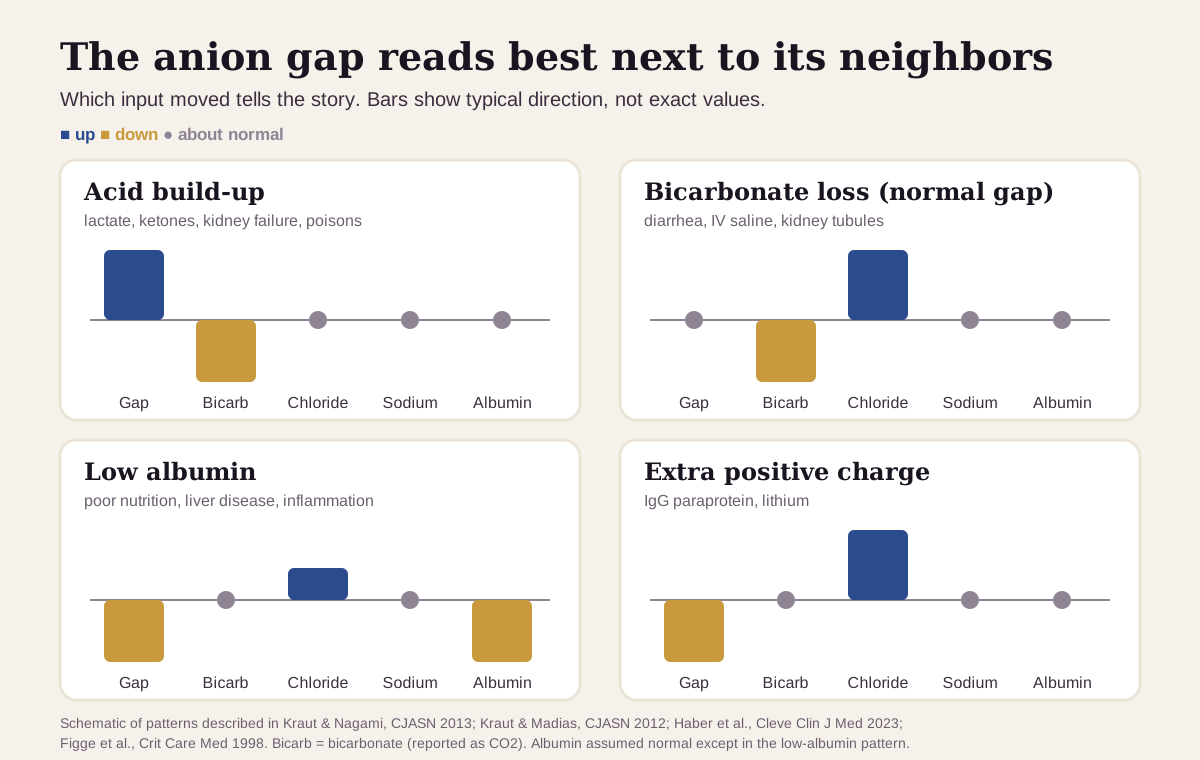
| If you see… | It often points to… |
|---|---|
| Gap up, bicarbonate down, chloride about normal | an acid building up: lactate, ketones, kidney failure or a poison.127 With a glucose of 200 mg/dL or more, or known diabetes, ketones are checked for diabetic ketoacidosis10 |
| Bicarbonate down, chloride up, gap normal | bicarbonate lost and replaced by chloride: diarrhea, large amounts of IV saline, kidney-tubule disorders17 |
| Gap low, albumin low | low albumin may explain it. Add about 2.5 to the gap for each 1 g/dL of albumin below 4: if the adjusted gap lands in range, it does2 |
| Gap low, albumin normal, chloride up | extra positive charge, such as an IgG paraprotein or lithium, or a substance misread as chloride2 |
| Gap up once, bicarbonate low, nothing else off | possibly a sample that lost CO2 before testing: a prompt repeat from a full tube can help sort it out16 |
How fast the anion gap changes
The gap has no half-life of its own. It moves as fast as its inputs. DKA can build over hours to a few days,10 and a capped tube less than half full can lose more than 2 mmol/L of CO2 in 2 hours.16
Your own baseline matters most. Healthy gaps span 8 to 10 points, so a real rise can stay inside the "normal" range:12
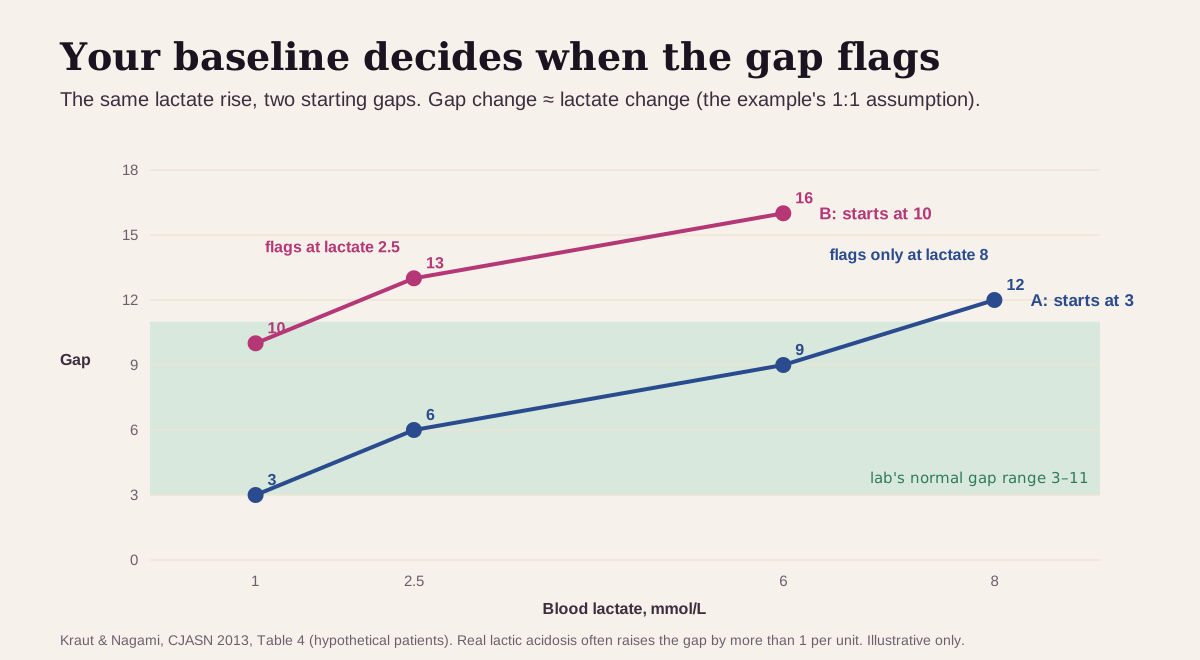
- In that example, a person whose usual gap is 3 can have a lactate of 6 mmol/L, well above normal, with a gap of 9 that still reads normal. The gap only flags once lactate reaches 8.
- A person whose usual gap is 10 flags at a lactate of just 2.5.
- In hospital studies, only 44–58% of patients with a raised lactate had a high gap.12
What that means in practice:
- Trends beat snapshots. Compare each result with your own earlier ones, from the same lab, because methods differ.12
- A single odd result is often repeated, especially a new low one.2
- Lactate and ketones are measured directly when they're the question. The gap is too blunt a tool to rule them out.1210
Going deeper: albumin and the "corrected" gap
Because albumin carries so much of the normal gap, low albumin can hide an acid. Figge and colleagues, studying 152 critically ill patients, derived a correction:11
Adjusted gap = measured gap + 2.5 × (normal albumin − measured albumin)
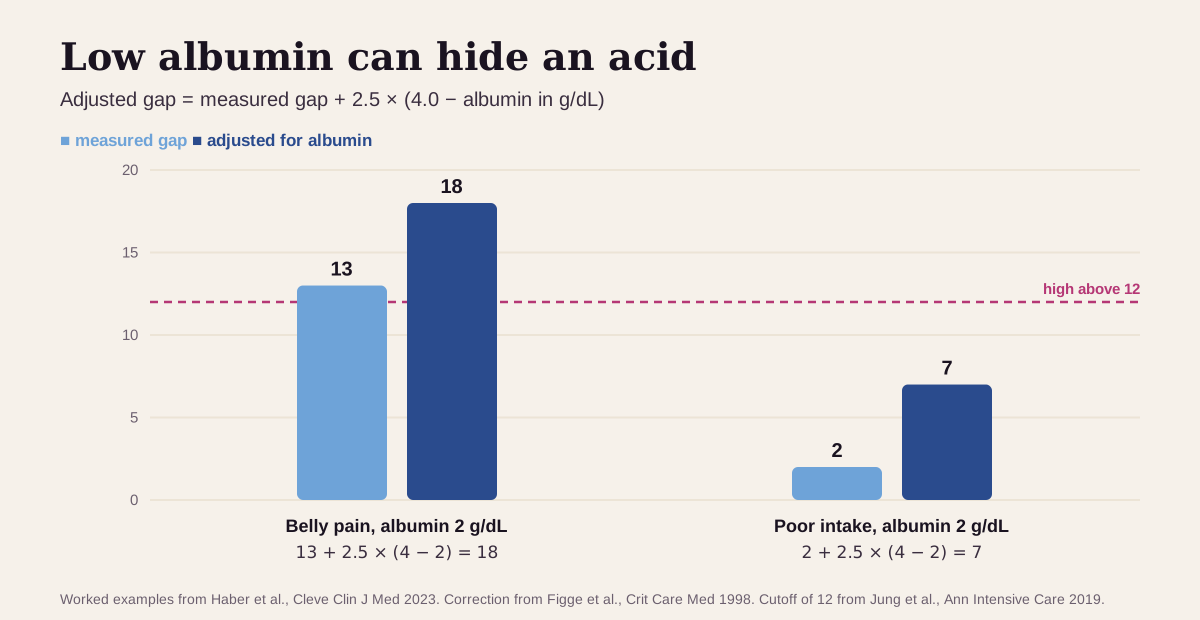
In one worked example from the Cleveland Clinic Journal of Medicine, a patient with belly pain had a gap of 13, which looks normal. With an albumin of 2 g/dL, it adjusts to 18, high enough to prompt a lactate test and a search for an abdominal emergency.2
The French intensive-care guideline recommends the albumin-corrected gap when sorting out a confirmed acidosis.7 It is still a rough tool: in hospital studies, even the corrected gap caught only 75–94% of raised lactates.12
Potassium matters at the extremes. If potassium rises from 3.5 to 6.5, the usual formula, which leaves potassium out, is off by 3 points.12
Questions worth asking
- Which formula does my lab use, with or without potassium, and what's its range?
- Which input moved: sodium, chloride or bicarbonate?
- What is my albumin, and does it change how you read my gap?
- Should we measure lactate, ketones or kidney function directly?
- If my gap is low and my albumin is normal, should we look for a paraprotein?
- How does this compare with my earlier results from the same lab?
FAQ
What is a normal anion gap? It depends on your lab's analyzer and formula. Studies of healthy adults on modern equipment range from about 3–11 to 10–18 mmol/L without potassium. The Libby app shows 7–12 mmol/L as optimal.3456
What causes a high anion gap? Most often an acid building up: lactate, ketones (as in diabetic ketoacidosis), kidney failure or a poison. A lab or sample problem can also raise it.17
What causes a low anion gap? Most often a lab error or low albumin. Less often an IgG paraprotein, lithium, or a misread sodium or chloride.12
When is a high anion gap an emergency? When it comes with vomiting, belly pain, fast or deep breathing, a racing heart or confusion, or when it's 20 or more.9108
This guide is for education. It can't diagnose you or replace care from a clinician who knows your history.
Footnotes
-
Kraut JA, Madias NE. Serum anion gap: its uses and limitations in clinical medicine. Clin J Am Soc Nephrol. 2007;2(1):162–174. The nephrology review behind the lists of common high and low causes (low: lab error, low albumin, paraproteins, lithium, bromide; high: metabolic acidosis, lab error, metabolic alkalosis, high phosphate). PubMed ↩ ↩2 ↩3 ↩4 ↩5 ↩6 ↩7 ↩8 ↩9 ↩10
-
Haber LA, Dhaliwal G, Lo L, Rizzuto G. Evaluating a low anion gap: a practical approach. Cleve Clin J Med. 2023;90(10):619–623. What fills the gap, the history of the 8–16 range, the ≤3 definition, and the causes of a low gap with worked examples. PMC ↩ ↩2 ↩3 ↩4 ↩5 ↩6 ↩7 ↩8 ↩9 ↩10 ↩11 ↩12 ↩13 ↩14 ↩15 ↩16 ↩17 ↩18 ↩19 ↩20 ↩21
-
Winter SD, Pearson JR, Gabow PA, Schultz AL, Lepoff RB. The fall of the serum anion gap. Arch Intern Med. 1990;150(2):311–313. 29 healthy volunteers and 120 blood donors on an electrode analyzer: 3–11 mmol/L, replacing 8–16. PubMed ↩ ↩2 ↩3 ↩4 ↩5 ↩6 ↩7 ↩8 ↩9
-
Hughes D, Koerbin G, Potter JM, et al. Harmonising reference intervals for three calculated parameters used in clinical chemistry. Clin Biochem Rev. 2016;37(3):105–111. The Aussie Normals study: 480 healthy adults, 6–14 mmol/L without potassium and 10–18 with it. PMC ↩ ↩2 ↩3 ↩4 ↩5 ↩6 ↩7
-
Chionh CY, Poh CB, Roy DM, et al. Serum anion gap revisited: a verified reference interval for contemporary use. Intern Med J. 2022;52(9):1531–1537. 284 health-screening volunteers in Singapore: 10–18 mmol/L without potassium, 14.6–22.5 with it; subgroup differences of about 1 mmol/L. PubMed ↩ ↩2 ↩3 ↩4 ↩5 ↩6 ↩7 ↩8
-
Weatherby D, Ferguson S. Blood Chemistry and CBC Analysis: Clinical Laboratory Testing from a Functional Perspective. 2nd ed. Bear Mountain Publishing; 2004. ISBN 978-0976136712. Widely used functional-medicine reference. The Libby app's marker catalog credits this textbook for its optimal anion gap range of 7–12 mmol/L (range as recorded in the catalog; the book was not opened for this article). ↩ ↩2 ↩3 ↩4
-
Jung B, Martinez M, Claessens YE, et al. Diagnosis and management of metabolic acidosis: guidelines from a French expert panel. Ann Intensive Care. 2019;9(1):92. The >12 threshold, what fills the gap, the acids that raise it, the causes of high lactate, and the albumin-corrected gap. PMC ↩ ↩2 ↩3 ↩4 ↩5 ↩6 ↩7 ↩8 ↩9 ↩10 ↩11 ↩12
-
Mohr NM, Vakkalanka JP, Faine BA, et al. Serum anion gap predicts lactate poorly, but may be used to identify sepsis patients at risk for death: a cohort study. J Crit Care. 2018;44:223–228. 4,159 emergency patients with sepsis; a gap of 20 or more had a likelihood ratio of 7.0 for a lactate above 4. PubMed ↩ ↩2 ↩3 ↩4 ↩5 ↩6
-
National Library of Medicine. Anion Gap Blood Test. MedlinePlus. Symptoms of acidosis, the panels that include the gap, and why ranges vary by lab. MedlinePlus ↩ ↩2 ↩3 ↩4 ↩5 ↩6
-
Umpierrez GE, Davis GM, ElSayed NA, et al. Hyperglycaemic crises in adults with diabetes: a consensus report. Diabetologia. 2024;67(8):1455–1479. Diagnostic criteria for DKA, the >12 gap, symptoms, and why the gap is no longer used to judge recovery. PMC ↩ ↩2 ↩3 ↩4 ↩5 ↩6 ↩7 ↩8
-
Figge J, Jabor A, Kazda A, Fencl V. Anion gap and hypoalbuminemia. Crit Care Med. 1998;26(11):1807–1810. 152 critically ill patients and 9 controls; the source of the 2.5-per-g/dL albumin correction. PubMed ↩ ↩2 ↩3 ↩4 ↩5
-
Kraut JA, Nagami GT. The serum anion gap in the evaluation of acid-base disorders: what are its limitations and can its effectiveness be improved? Clin J Am Soc Nephrol. 2013;8(11):2018–2024. Normal spans of 8–10 points, the effect of electrodes and potassium, the lactate-sensitivity studies, and the worked baseline example. PMC ↩ ↩2 ↩3 ↩4 ↩5 ↩6 ↩7 ↩8 ↩9 ↩10 ↩11 ↩12 ↩13 ↩14 ↩15 ↩16
-
Abramowitz MK, Hostetter TH, Melamed ML. The serum anion gap is altered in early kidney disease and associates with mortality. Kidney Int. 2012;82(6):701–709. NHANES 1999–2004, 11,957 adults, median follow-up 57 months. PMC ↩ ↩2 ↩3
-
Abramowitz MK, Hostetter TH, Melamed ML. Lower serum bicarbonate and a higher anion gap are associated with lower cardiorespiratory fitness in young adults. Kidney Int. 2012;81(10):1033–1042. NHANES 1999–2004, 2,714 adults aged 20–49. PMC ↩
-
Taylor EN, Forman JP, Farwell WR. Serum anion gap and blood pressure in the National Health and Nutrition Examination Survey. Hypertension. 2007;50(2):320–324. 5,043 adults without hypertension, diabetes or heart disease. PubMed ↩
-
Bandi ZL. Estimation, prevention, and quality control of carbon dioxide loss during aerobic sample processing. Clin Chem. 1981;27(10):1676–1681. CO2 losses of 2–6 mmol/L in routine processing and up to 8 in open cups. PubMed ↩ ↩2 ↩3
-
Kraut JA, Madias NE. Differential diagnosis of nongap metabolic acidosis: value of a systematic approach. Clin J Am Soc Nephrol. 2012;7(4):671–679. Chloride replacing bicarbonate one for one; diarrhea, saline and kidney-tubule causes. PMC ↩ ↩2 ↩3
Educational content, not medical advice.Libby is a personal record tool, not a medical service — it doesn't diagnose, treat, or prescribe. Reference ranges vary by lab and by person. Talk to a qualified healthcare professional about your results.
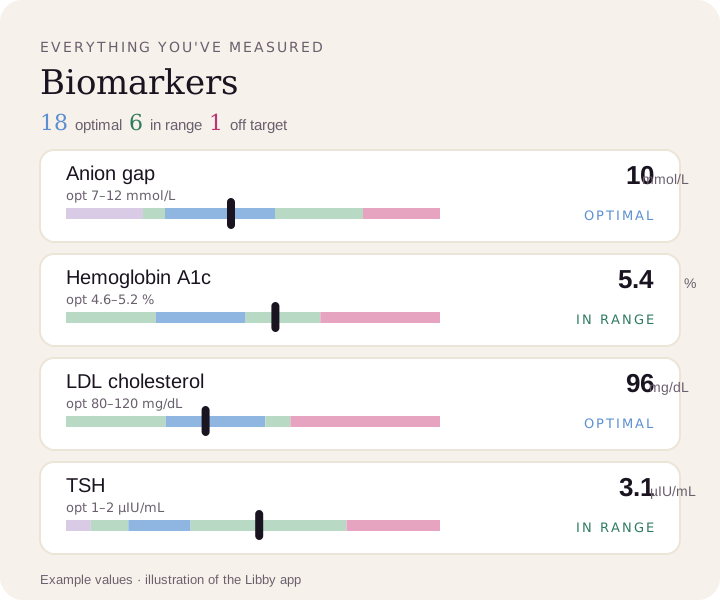
Compare your results to optimal ranges.
Upload a lab PDF or a photo of your report. Libby puts every marker on your lab's range and the optimal range, and tracks your trends over time.
View your anion gap ›