Bilirubin blood test: normal levels and why it runs high
Bilirubin comes from old red blood cells. Normal levels, why it runs high (often Gilbert syndrome), how to read it next to ALT and ALP, and when it's urgent.
Bilirubin is the yellow pigment your body makes when it recycles old red blood cells. Your liver picks it up, makes it water-soluble and sends it out in bile. A high result means one step is backed up: too many red cells breaking down, a liver that processes bilirubin slowly, or bile that drains poorly. In a healthy adult with normal liver enzymes, the most common reason is Gilbert syndrome, a benign inherited trait.12
The short version
- Normal: most labs print a total bilirubin range of about 0.1–1.2 mg/dL, with direct bilirubin under 0.3 mg/dL. The American College of Gastroenterology notes total bilirubin is usually below 1.1 mg/dL.31
- Mildly high, mostly "indirect", liver enzymes normal (usually under 3 mg/dL): most often Gilbert syndrome, found in 3–7% of Americans. Fasting or an illness can push it up 2- to 3-fold.14
- High "direct" bilirubin points to the liver or the bile ducts: hepatitis, alcohol, medicines, or a gallstone blocking a bile duct.15
- Get prompt care for yellow eyes or skin (jaundice, usually visible from about 2–3 mg/dL), dark urine, pale stools, belly pain with fever, or confusion.35
What bilirubin is
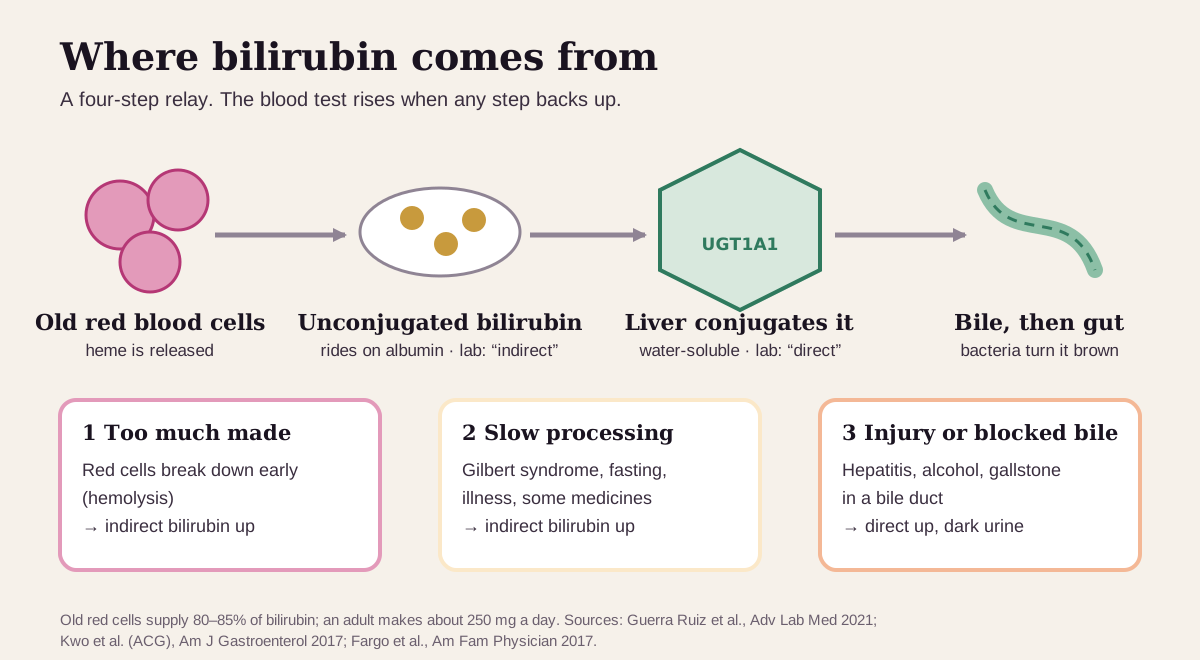
Red blood cells live about 120 days.6 When old ones are retired, their hemoglobin is broken down, and the heme part becomes bilirubin. Old red cells supply 80–85% of it; the rest comes from other heme proteins, such as myoglobin.2 An average adult makes about 250 mg a day.5
That first form, unconjugated bilirubin, is fat-soluble. It rides to the liver stuck to the blood protein albumin. Liver cells then attach a sugar acid to it (conjugation), which makes it water-soluble so it can leave in bile. In the gut, bacteria turn it into the pigments that make stool brown.21
Your report can show three numbers:
- Total bilirubin: everything together. It's part of the comprehensive metabolic panel (CMP) and the liver panel.1
- Direct bilirubin: mostly the conjugated, water-soluble form.2
- Indirect bilirubin: total minus direct, which is mostly the unconjugated form. It usually makes up about 70% of the total.12
Only the conjugated form dissolves in water, so only it spills into urine. That's why dark, tea-colored urine points to a liver or bile problem, not to extra production.12
What's a normal bilirubin?
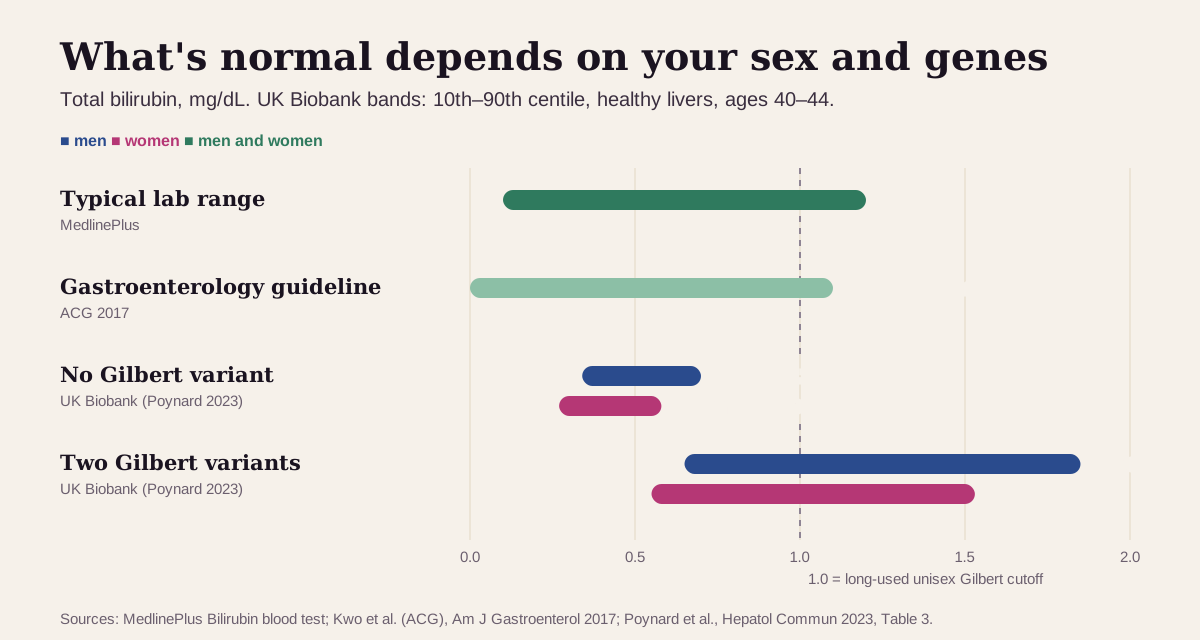
Start with the range on your own report. MedlinePlus lists a typical adult range of 0.1–1.2 mg/dL for total bilirubin and under 0.3 mg/dL for direct.3 The American College of Gastroenterology (ACG) says total bilirubin is usually below 1.1 mg/dL, and that, unlike ALT, bilirubin ranges have been consistent from lab to lab.1
Two things move your personal "normal":
- Sex. Men run higher. In 138,125 UK Biobank adults with healthy livers, the 90th centile for people without the Gilbert gene variant was 0.67–0.70 mg/dL in men and 0.53–0.58 mg/dL in women across ages 40–70.7
- Genes. People with two copies of the common Gilbert variant of the UGT1A1 gene ran far higher: at ages 40–44 their 90th centile reached 1.85 mg/dL in men and 1.53 in women. With the usual unisex cutoff of 1.0 mg/dL, only 3.7% of women were labeled as having Gilbert syndrome, versus 10% with sex-, age- and gene-adjusted limits.7
"Optimal" bilirubin: what health optimizers aim for
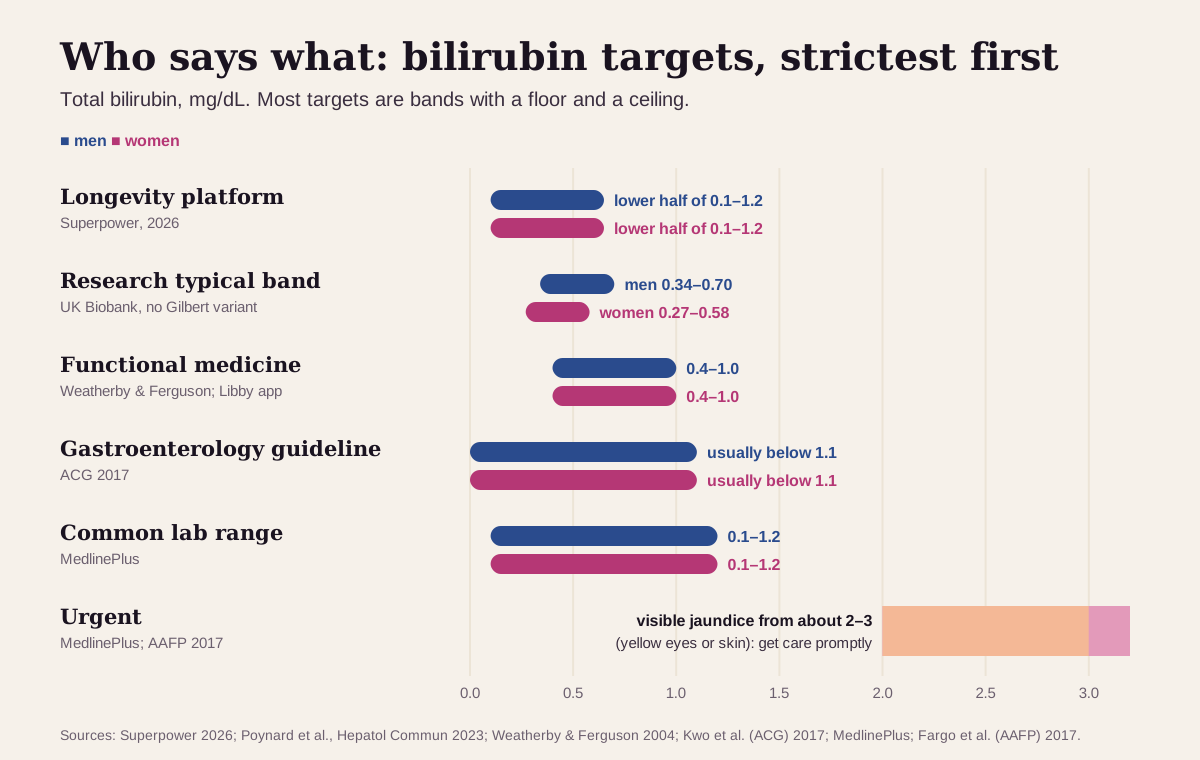
Bilirubin is a band marker. Optimal ranges put a ceiling on it, and the one in the Libby app also has a floor of 0.4 mg/dL. There's a reason optimizers watch the floor: in large studies, a low bilirubin tracks with more heart disease.89 Here's the ladder, from the strictest upper limit to the loosest:
| Target | Men | Women | Who uses it |
|---|---|---|---|
| Strictest (longevity platform) | lower half of 0.1–1.2 mg/dL | lower half of 0.1–1.2 mg/dL | Superpower's published optimal range10 |
| Research "typical healthy" band | 0.34–0.70 mg/dL | 0.27–0.58 mg/dL | UK Biobank, 10th–90th centile, ages 40–44, no Gilbert variant7 |
| Functional medicine | 0.4–1.0 mg/dL | 0.4–1.0 mg/dL | The optimal range shown in the Libby app, which its marker catalog credits to the standard functional-medicine textbook11 |
| U.S. gastroenterology guideline | usually below 1.1 mg/dL | usually below 1.1 mg/dL | American College of Gastroenterology1 |
| Common lab range | 0.1–1.2 mg/dL | 0.1–1.2 mg/dL | MedlinePlus; the long-used Gilbert cutoff is 1.0 mg/dL37 |
| Urgent | visible jaundice, about 2–3 mg/dL and up | same | Yellow eyes or skin: get care promptly35 |
Why optimizers care about the floor:
- In 130,052 UK adults about to start a statin, with no liver or heart disease, a bilirubin of 0.3 mg/dL carried 18% more cardiovascular events, 34% more heart attacks and 33% more deaths than 0.6 mg/dL, after adjusting for the usual risk factors. The curve was L-shaped: risk climbed at the low end and flattened above that.8
- In men in that study, cardiovascular events ran at 215 per 10,000 person-years in the lowest tenth of bilirubin (0.06–0.35 mg/dL) versus 163 in the highest tenth (1.1–2.3 mg/dL).8
- A meta-analysis of 12 population studies with 9,378 cardiovascular cases found 7% lower risk for each standard-deviation step up in bilirubin.9
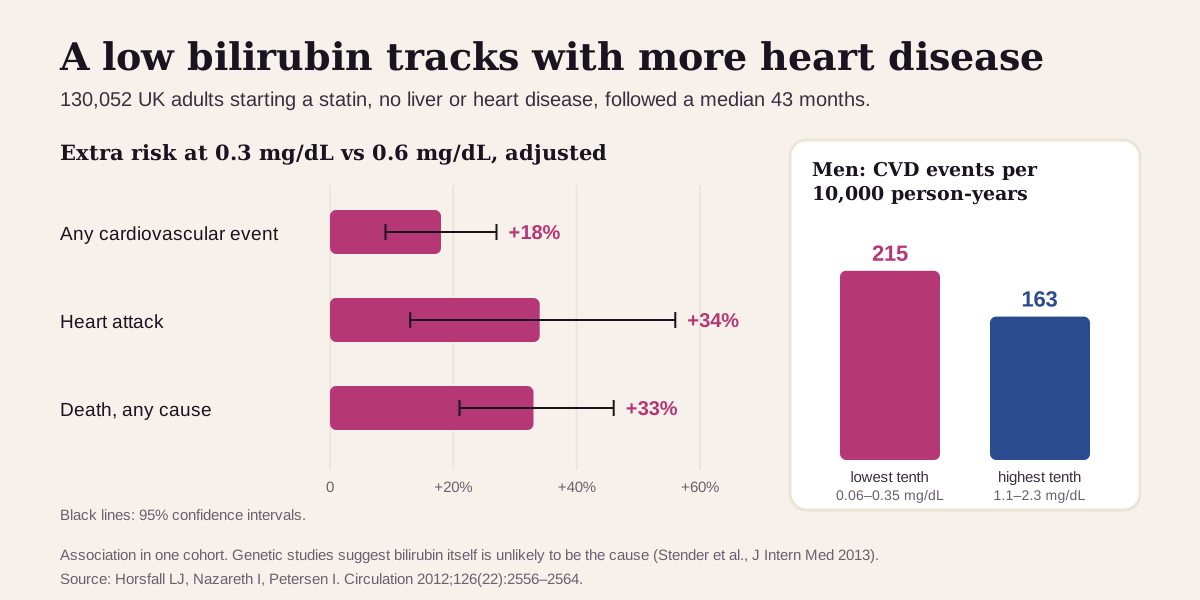
Keep "optimal" in perspective. Genes that roughly double bilirubin for a lifetime left heart-disease risk unchanged: odds ratio 1.01 across 14,711 cases and 60,324 controls.12 So a low bilirubin looks more like a marker of other risk than a cause, and trying to raise it by fasting makes little sense. Higher is no prize either: in UK Biobank, the one link that held up after adjustment and genetic testing was more gallstones (odds ratio 1.50) in men with Gilbert-level bilirubin.7
What a high bilirubin usually means
The first clue is which part is high. The ACG recommends splitting an elevated total into direct and indirect bilirubin, because the two point to different problems.1 The second clue is how high it goes.
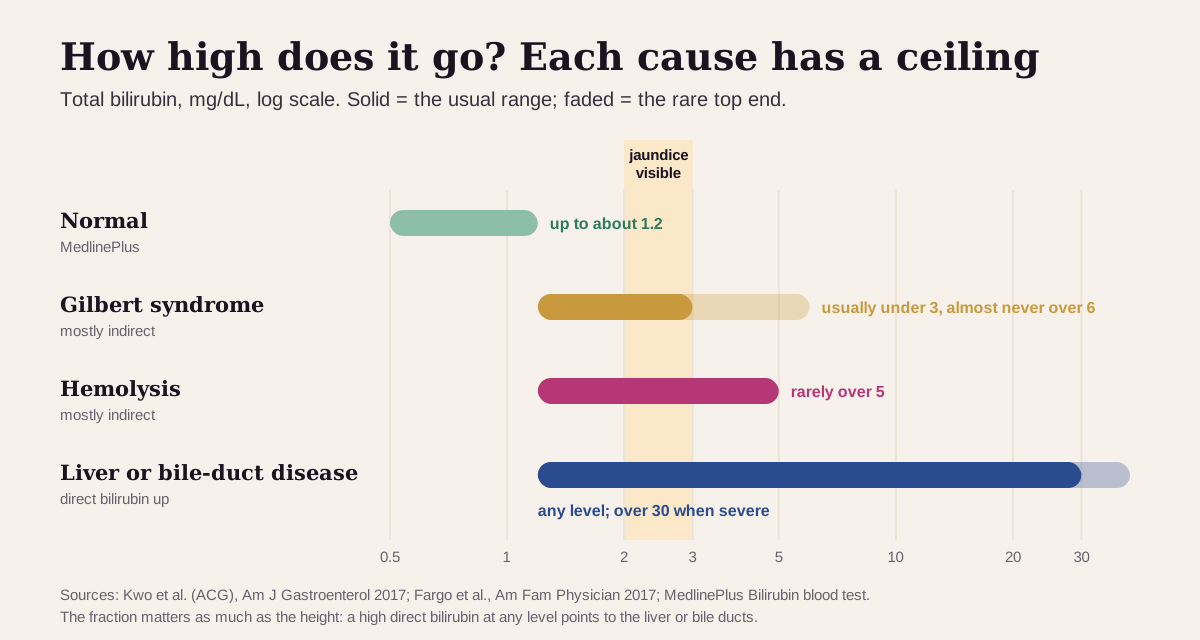
Mostly indirect, with normal liver enzymes: common and usually harmless
The usual suspects:
- Gilbert syndrome. The most common cause of a high indirect bilirubin, affecting 3–7% of Americans.14 The liver's conjugating enzyme works at about 30% of normal.4 Total bilirubin is usually under 3 mg/dL and almost never over 6.1 It flares with fasting, illness, dehydration, hard exercise and menstruation.4 When medicines and red-cell breakdown are ruled out and ALT, AST and ALP are normal, the ACG says a presumptive diagnosis can be made, and further testing is routinely unnecessary.1
- Fasting or illness. Either can raise indirect bilirubin 2- to 3-fold, and it falls again with eating.1
- Red cells breaking down early (hemolysis). More heme means more bilirubin. Bilirubin from hemolysis rarely tops 5 mg/dL unless the kidneys or liver are also struggling or the hemolysis is sudden and severe.1 Low hemoglobin, a high reticulocyte count and LDH, and a low haptoglobin give it away.61
- Medicines. Some drugs slow the conjugating enzyme; protease inhibitors are the classic example.5 MedlinePlus adds that some medicines, certain foods and strenuous exercise can nudge bilirubin up.13 Don't stop a prescribed medicine on your own; bring the full list to your clinician.
- Less common: a large bruise being reabsorbed, and bone-marrow problems where red cells are made badly.14
Direct bilirubin up: the liver or the bile ducts
Conjugated bilirubin is nearly absent from healthy blood. It climbs once the liver has lost at least half its capacity to excrete it.14 A high direct bilirubin usually means liver damage or a blocked bile duct.1
- Liver-cell causes: in a study of more than 700 adults with new jaundice, 55% had a cause inside the liver, such as viral hepatitis, alcohol-related liver disease or drug-induced liver injury. Fatty liver disease can raise bilirubin once it has progressed to scarring.5
- Bile-flow causes: the other 45% had causes outside the liver, including gallstones, red-cell breakdown and cancer. A gallstone lodged in the common bile duct accounted for 14% of new jaundice, and cancers for 6.2%.5 Narrowed bile ducts and cancer of the pancreas or gallbladder are on the list too.3
- Rare inherited types: in Dubin-Johnson and Rotor syndromes, direct bilirubin is about half the total and every other liver test is normal.1
Severe liver damage can push total bilirubin past 30 mg/dL.1
Get prompt care if your eyes or skin turn yellow, or if a high bilirubin comes with dark urine, pale or clay-colored stools, itching, belly pain, fever or weight loss.513 Go to emergency care for jaundice with confusion, unusual sleepiness or easy bleeding: those can mean sudden liver failure.1
Bilirubin reads best next to its neighbors
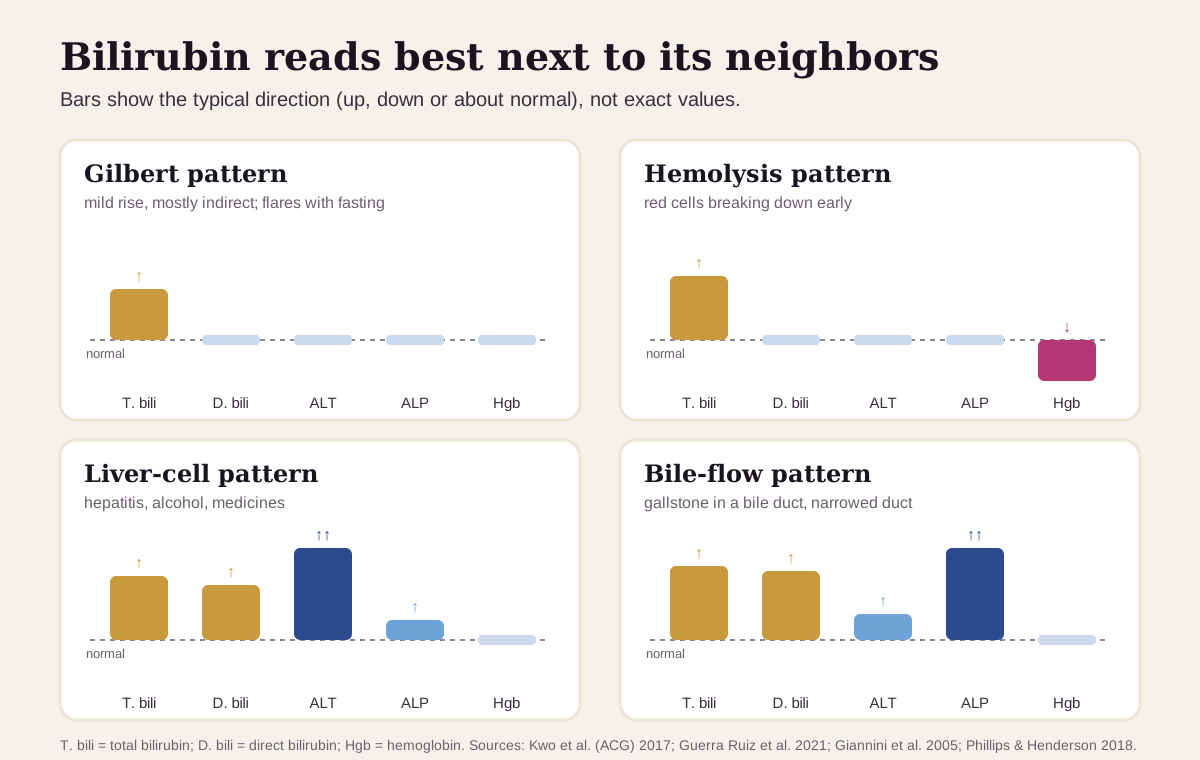
Bilirubin rarely comes alone. Read it next to direct bilirubin, ALT, ALP and hemoglobin, and the pattern usually tells you which step of the relay is backed up:12
| If you see… | It often points to… |
|---|---|
| Total bilirubin mildly up (usually under 3 mg/dL), mostly indirect, with normal ALT, ALP and hemoglobin | Gilbert syndrome, especially if it rises after fasting or illness |
| Indirect bilirubin up with low hemoglobin, plus high reticulocytes and LDH and low haptoglobin | red cells breaking down early (hemolysis) |
| Direct bilirubin up, with ALT and AST raised far more than ALP (relative to their normal limits) | a liver-cell ("hepatocellular") pattern: hepatitis, alcohol, medicines |
| Direct bilirubin up, with ALP (and GGT) up more than ALT | a bile-flow ("cholestatic") pattern: a gallstone in a bile duct, a narrowed duct, other bile-flow disease |
When direct bilirubin and ALP are both up, the ACG recommends an ultrasound to look for widened bile ducts.1
Is a low bilirubin a problem?
Usually not by itself. MedlinePlus says a low bilirubin is usually no cause for concern, and lists some antibiotics, birth control pills, sleeping pills and seizure medicines as possible reasons.13 There's no agreed lower limit; the most common research cutoff is 0.58 mg/dL (10 µmol/L).7 Low bilirubin tracks with more heart disease in cohort studies,8 but in UK Biobank neither low bilirubin nor Gilbert-level bilirubin changed 15-year survival once other factors were accounted for.7 It's a marker, not a target.
How fast bilirubin changes
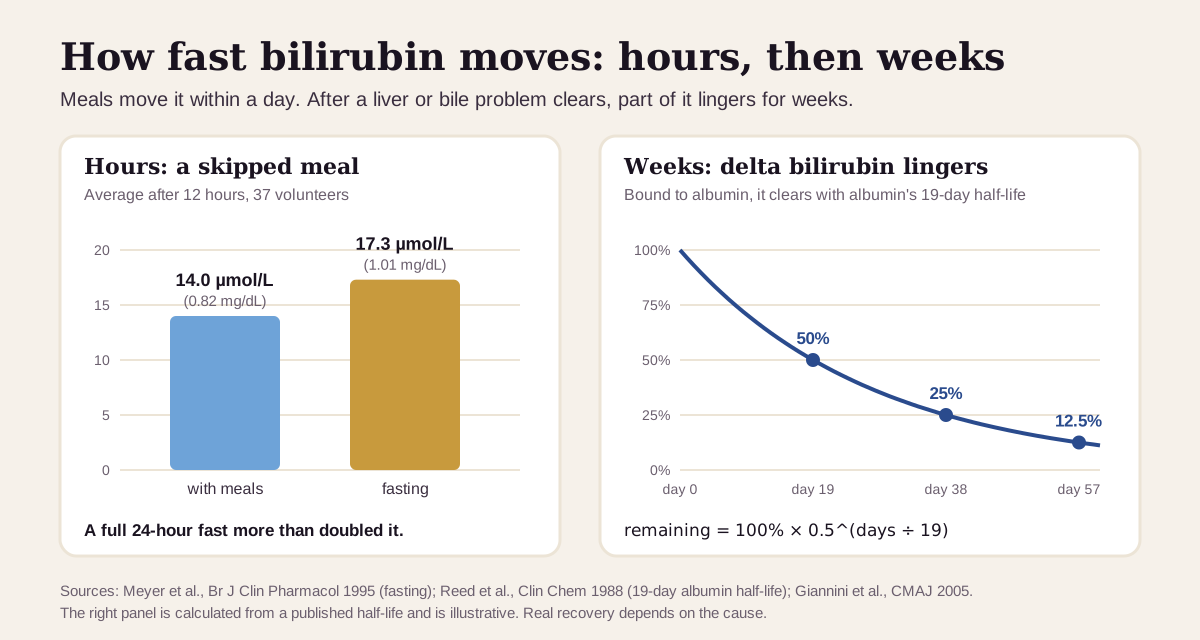
Within a day. In a crossover study of 37 healthy volunteers, bilirubin bottomed out about 4 hours after supper. Twelve hours into a fast it averaged 17.3 µmol/L (1.01 mg/dL), versus 14.0 µmol/L (0.82 mg/dL) on the day the same people kept eating. A full 24-hour fast more than doubled it.15
Over weeks, after a liver or bile problem clears. Bilirubin falls in two steps: fast at first, then slowly. The slow part is delta bilirubin, conjugated bilirubin that has fused to albumin and now lasts as long as albumin does.14 Human albumin has a half-life of about 19 days.16
What that means in practice:
- A single mildly high result is usually repeated. The ACG advises repeating the panel to confirm an abnormal result before a workup.1 Mention a long fast, a recent illness, a hard workout or new medicines when you get tested.413
- A slow fall after hepatitis or a bile blockage can be normal. Delta bilirubin was 8–90% of the total in people with liver-cell and bile-flow jaundice, and it made up a bigger share as the jaundice faded. It can keep the blood level up after bilirubin has cleared from the urine.17
- Trends beat snapshots. An isolated, steady mild rise with normal enzymes fits Gilbert syndrome. A rise alongside ALT or ALP fits the liver-cell or bile-flow patterns instead.1
Going deeper: direct, indirect and delta
The chemistry. An enzyme called heme oxygenase opens the heme ring into biliverdin, releasing iron and carbon monoxide. Biliverdin reductase turns that into orange-yellow bilirubin. In the liver, the enzyme UGT1A1 adds glucuronic acid, making bilirubin mono- and diglucuronide.27
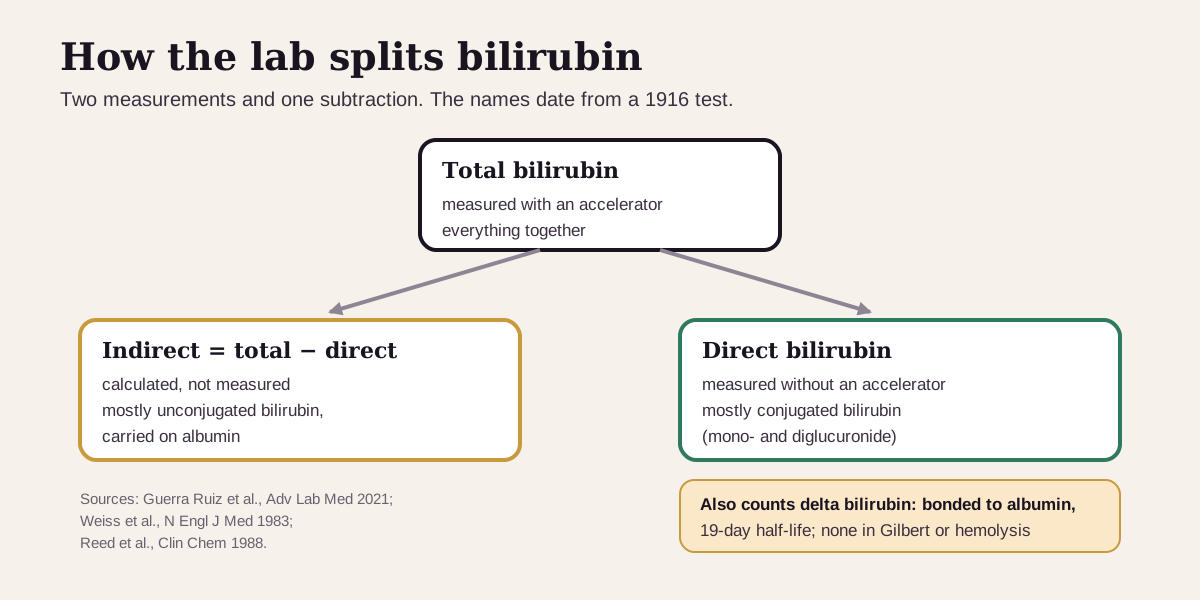
Why "direct" and "indirect"? The names come from a 1916 test. Conjugated bilirubin reacts with the test chemical right away ("direct"). Unconjugated bilirubin needs an accelerator first. Labs measure total (with the accelerator) and direct (without it), then calculate indirect as the difference.2
Delta bilirubin is conjugated bilirubin that has bonded permanently to albumin. It shows up when the liver struggles to excrete conjugated bilirubin; researchers found none in healthy volunteers or in people with Gilbert syndrome or hemolysis. It reacts in the direct test,17 so direct bilirubin can lag for weeks after recovery.1416
Gilbert syndrome's gene. In Europeans, the usual cause is an extra "TA" repeat in the UGT1A1 gene's promoter (7 repeats instead of 6), inherited from both parents.7
Questions worth asking
- Is my high bilirubin mostly direct or indirect?
- Are my ALT, AST, ALP and hemoglobin normal next to it?
- Could this be Gilbert syndrome, and was I fasting or ill when it was drawn?
- Could any of my medicines or supplements be raising it?
- If direct bilirubin is high, do I need an ultrasound?
- When should we repeat it, and what would change the plan?
FAQ
What is a normal bilirubin level? Most labs use about 0.1–1.2 mg/dL for total bilirubin and under 0.3 mg/dL for direct. The ACG notes total bilirubin is usually below 1.1 mg/dL.31
What is the most common cause of a high bilirubin? In an otherwise healthy adult with normal liver enzymes, Gilbert syndrome. It affects 3–7% of Americans and raises mostly indirect bilirubin, usually to under 3 mg/dL.14
Can fasting raise bilirubin? Yes. A 24-hour fast more than doubled bilirubin in healthy volunteers, and fasting or illness can raise indirect bilirubin 2- to 3-fold.151
When is a high bilirubin an emergency? Yellow skin or eyes, dark urine, pale stools, belly pain with fever, or confusion with jaundice all need prompt care.51
This guide is for education. It can't diagnose you or replace care from a clinician who knows your history.
Footnotes
-
Kwo PY, Cohen SM, Lim JK. ACG Clinical Guideline: Evaluation of Abnormal Liver Chemistries. Am J Gastroenterol. 2017;112(1):18–35. The U.S. gastroenterology society's guideline: usual total below 1.1 mg/dL, indirect ~70% of total, fractionating a high total, Gilbert (3–7%, usually under 3 mg/dL), fasting 2–3-fold, hemolysis rarely over 5, and the liver-cell and bile-flow patterns. DOI ↩ ↩2 ↩3 ↩4 ↩5 ↩6 ↩7 ↩8 ↩9 ↩10 ↩11 ↩12 ↩13 ↩14 ↩15 ↩16 ↩17 ↩18 ↩19 ↩20 ↩21 ↩22 ↩23 ↩24 ↩25 ↩26 ↩27 ↩28 ↩29 ↩30 ↩31 ↩32 ↩33 ↩34
-
Guerra Ruiz AR, Crespo J, López Martínez RM, et al. Measurement and clinical usefulness of bilirubin in liver disease. Adv Lab Med. 2021;2(3):352–372. Laboratory-medicine review of bilirubin's pathway, the direct/indirect method and the hemolysis and cholestasis patterns. PMC ↩ ↩2 ↩3 ↩4 ↩5 ↩6 ↩7 ↩8 ↩9 ↩10 ↩11 ↩12
-
National Library of Medicine. Bilirubin blood test. MedlinePlus Medical Encyclopedia. Reviewed February 13, 2025. Normal ranges (total 0.1–1.2 mg/dL, direct under 0.3), jaundice from about 2.0 mg/dL, causes, and newborn considerations. MedlinePlus ↩ ↩2 ↩3 ↩4 ↩5 ↩6 ↩7 ↩8 ↩9 ↩10 ↩11 ↩12
-
National Library of Medicine. Gilbert syndrome. MedlinePlus Genetics. Frequency (3–7% of Americans), ~30% enzyme function, and the usual triggers. MedlinePlus ↩ ↩2 ↩3 ↩4 ↩5 ↩6
-
Fargo MV, Grogan SP, Saguil A. Evaluation of Jaundice in Adults. Am Fam Physician. 2017;95(3):164–168. Jaundice above 3 mg/dL, ~250 mg made daily, causes of new jaundice (55% intrahepatic, 45% extrahepatic; bile-duct stones 14%, cancers 6.2%) and warning symptoms. AAFP ↩ ↩2 ↩3 ↩4 ↩5 ↩6 ↩7 ↩8 ↩9 ↩10 ↩11
-
Phillips J, Henderson AC. Hemolytic Anemia: Evaluation and Differential Diagnosis. Am Fam Physician. 2018;98(6):354–361. The standard hemolysis tests: low haptoglobin, high LDH and reticulocytes, high unconjugated bilirubin. AAFP ↩ ↩2 ↩3
-
Poynard T, Deckmyn O, Peta V, et al. Clinical and genetic definition of serum bilirubin levels for the diagnosis of Gilbert syndrome and hypobilirubinemia. Hepatol Commun. 2023;7(10):e0245. 138,125 healthy-liver UK Biobank adults: centiles by sex, age and UGT1A1 genotype, Gilbert prevalence in women, and survival and gallstone findings. PMC ↩ ↩2 ↩3 ↩4 ↩5 ↩6 ↩7 ↩8 ↩9 ↩10 ↩11
-
Horsfall LJ, Nazareth I, Petersen I. Cardiovascular events as a function of serum bilirubin levels in a large, statin-treated cohort. Circulation. 2012;126(22):2556–2564. 130,052 UK patients, median 43 months, 7,850 cardiovascular events. DOI ↩ ↩2 ↩3 ↩4 ↩5
-
Kunutsor SK, Bakker SJ, Gansevoort RT, Chowdhury R, Dullaart RP. Circulating total bilirubin and risk of incident cardiovascular disease in the general population. Arterioscler Thromb Vasc Biol. 2015;35(3):716–724. PREVEND cohort plus a meta-analysis of 12 prospective studies (pooled RR 0.93 per 1-SD). PubMed ↩ ↩2
-
Superpower. Total Bilirubin. Last updated September 1, 2026. Gives a normal range of 0.1–1.2 mg/dL with optimal levels "in the lower half of that range." A commercial source, listed as what the optimizer community uses. superpower.com ↩ ↩2
-
Weatherby D, Ferguson S. Blood Chemistry and CBC Analysis: Clinical Laboratory Testing from a Functional Perspective. 2nd ed. Bear Mountain Publishing; 2004. ISBN 978-0976136712. Widely used functional-medicine reference. The Libby app's marker catalog credits it as the source of the optimal range the app shows, 0.4–1.0 mg/dL (range as recorded in the app's catalog; the book itself was not opened for this article). ↩ ↩2
-
Stender S, Frikke-Schmidt R, Nordestgaard BG, Grande P, Tybjaerg-Hansen A. Genetically elevated bilirubin and risk of ischaemic heart disease: three Mendelian randomization studies and a meta-analysis. J Intern Med. 2013;273(1):59–68. Genetic evidence that bilirubin itself is unlikely to protect the heart. DOI ↩
-
National Library of Medicine. Bilirubin Blood Test. MedlinePlus Lab Tests. Symptoms that prompt testing, and medicines, foods and strenuous exercise that can raise bilirubin. MedlinePlus ↩ ↩2 ↩3 ↩4
-
Giannini EG, Testa R, Savarino V. Liver enzyme alteration: a guide for clinicians. CMAJ. 2005;172(3):367–379. Conjugated bilirubin rises once half of excretory capacity is lost; the two-step fall driven by delta bilirubin; less common unconjugated causes. PMC ↩ ↩2 ↩3 ↩4 ↩5
-
Meyer BH, Scholtz HE, Schall R, et al. The effect of fasting on total serum bilirubin concentrations. Br J Clin Pharmacol. 1995;39(2):169–171. Randomized crossover in 37 healthy volunteers. PMC ↩ ↩2 ↩3
-
Reed RG, Davidson LK, Burrington CM, Peters T Jr. Non-resolving jaundice: bilirubin covalently attached to serum albumin circulates with the same metabolic half-life as albumin. Clin Chem. 1988;34(10):1992–1994. Source of the 19-day human albumin half-life. PubMed ↩ ↩2 ↩3
-
Weiss JS, Gautam A, Lauff JJ, et al. The clinical importance of a protein-bound fraction of serum bilirubin in patients with hyperbilirubinemia. N Engl J Med. 1983;309(3):147–150. Delta bilirubin in 200 patients with high bilirubin. DOI ↩ ↩2 ↩3
Educational content, not medical advice.Libby is a personal record tool, not a medical service — it doesn't diagnose, treat, or prescribe. Reference ranges vary by lab and by person. Talk to a qualified healthcare professional about your results.
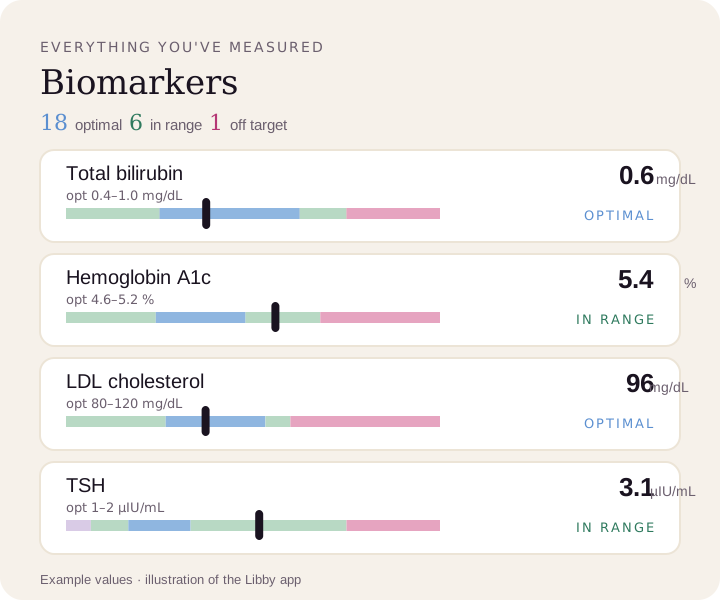
Compare your results to optimal ranges.
Upload a lab PDF or a photo of your report. Libby puts every marker on your lab's range and the optimal range, and tracks your trends over time.
View your bilirubin ›