BNP and NT-proBNP: normal levels, high causes, next steps
BNP and NT-proBNP rise when the heart is strained. What's normal by age, what else raises them, how to read them with other tests, and when it's urgent.
BNP and NT-proBNP are two pieces of one hormone that your heart releases when its walls are stretched by extra pressure or fluid. The harder the heart is straining, the higher they climb. That makes them the standard first blood test when someone is short of breath and heart failure is a possibility.12
The short version
- Normal: outside the hospital, a BNP under 35 pg/mL or an NT-proBNP under 125 pg/mL makes heart failure unlikely. Both rise with age, and younger women run higher than younger men.13
- Mildly high results are common. Besides heart failure, the usual reasons are older age, atrial fibrillation, kidney disease and lung problems. Obesity pushes both numbers down.14
- Very high: the UK guideline sends anyone with suspected heart failure and an NT-proBNP over 2,000 ng/L for specialist review and a heart ultrasound within 2 weeks. Sudden breathlessness or chest pain needs emergency care, whatever the number.45
- BNP and NT-proBNP are different tests with different numbers. NT-proBNP runs about 6 times higher, so compare each one only with itself.1
What BNP and NT-proBNP are
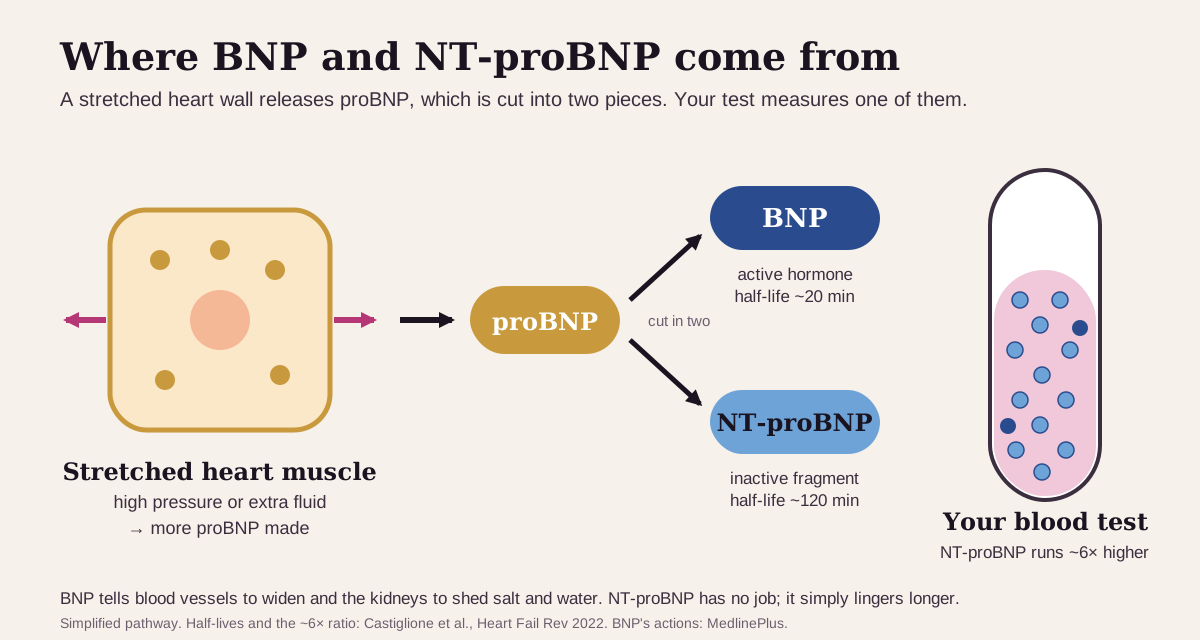
Your heart muscle makes a hormone precursor called proBNP. When the walls of the heart's pumping chambers are stretched, by high pressure or too much fluid, the cells make more of it and release it into the blood. On the way out, proBNP is cut into two pieces:1
- BNP (B-type natriuretic peptide) is the working hormone. It tells your blood vessels to open wider and your kidneys to flush out salt and water, which takes load off the heart.2
- NT-proBNP (N-terminal proBNP) is the leftover fragment. It has no job of its own, but it stays in the blood longer, so its numbers run higher.1
BNP is sometimes called brain natriuretic peptide, because researchers first found it in the brain. Your heart is what makes and releases it.2
Clinicians order these tests mostly for symptoms that could be heart failure: shortness of breath, swelling in the belly, legs, feet or neck veins, tiredness, a cough, or trouble sleeping flat. They're also used to follow people who already have heart failure. No fasting or other preparation is needed.2
What's a normal BNP or NT-proBNP?
Start with the range printed on your own report. Labs use different machines and set different limits, and NT-proBNP ranges usually climb with age.6
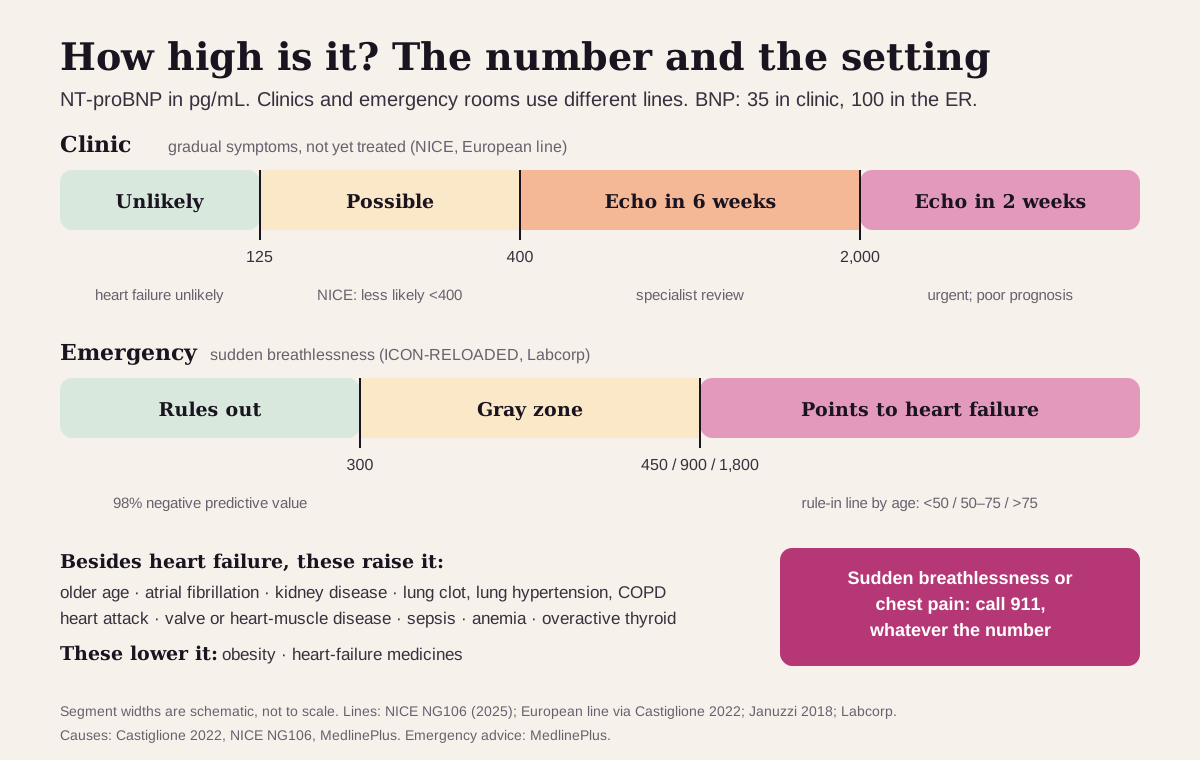
Then know the two lines heart specialists use for someone with gradual symptoms, seen outside the hospital. European heart-failure guidelines put them at BNP under 35 pg/mL and NT-proBNP under 125 pg/mL.1 Below those lines, heart failure is unlikely. Above them, it's possible, and the usual next step is a specialist review and an echocardiogram (a heart ultrasound).14
Age and sex matter a lot. In a Scottish study of 18,356 adults with no known heart disease, the healthy upper limit for NT-proBNP (the 97.5th centile) was 104 pg/mL in men and 196 in women under 30, rising to 195 and 299 at ages 50–59. At 80 and older, 81% of the men and 77% of the women were above 125.3
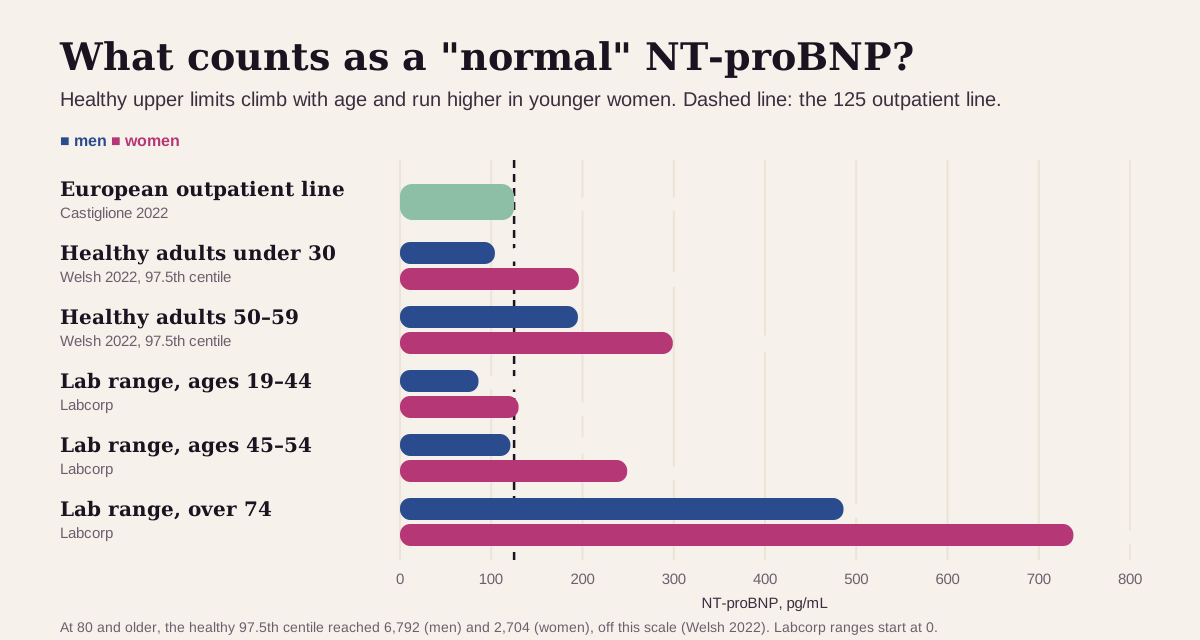
Young women run higher than young men: in the same study, 9.8% of women under 30 were already above 125, versus 1.4% of men.3 Commercial lab ranges show the same climb. Labcorp's upper limit for NT-proBNP goes from 86 pg/mL (men) and 130 (women) at ages 19–44 to 486 and 738 over age 74.6
"Optimal" BNP and NT-proBNP: what health optimizers aim for
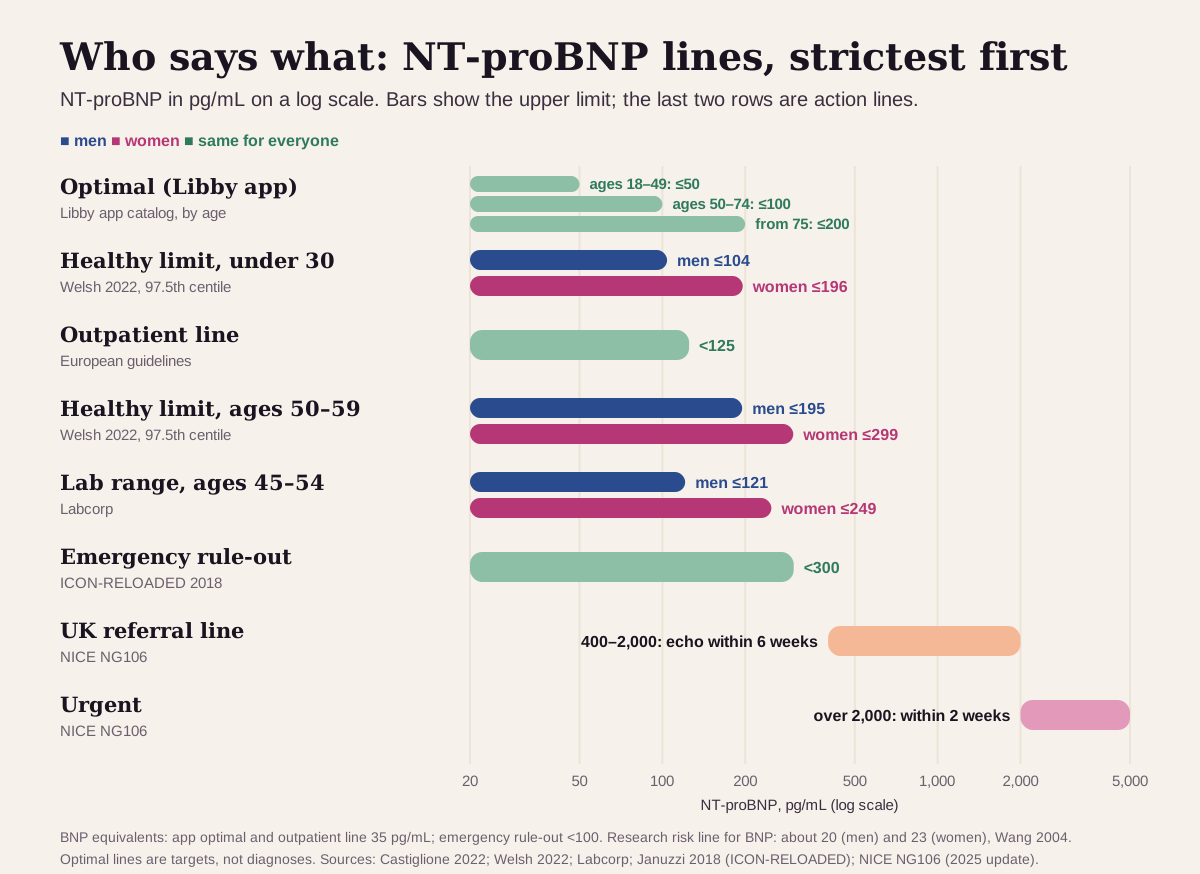
For many markers, the optimal range sits far below the lab range. For BNP, the optimal band shown in the Libby app is the same line cardiologists use, 35 pg/mL or lower,1 and research on healthy people points lower still. For NT-proBNP, the app sets its optimal band by age: 50 or lower at ages 18–49, 100 or lower at 50–74 and 200 or lower from 75. Before 75, that's stricter than the 125 outpatient line. Here's the NT-proBNP ladder, strictest first:
| Target | BNP (pg/mL) | NT-proBNP (pg/mL) | Who uses it |
|---|---|---|---|
| Strictest (research risk line) | men about 20, women about 23 | not set | Framingham: above this, more heart failure, atrial fibrillation, stroke and death8 |
| Optimal (Libby app) | 35 or lower | 50 or lower at ages 18–49; 100 or lower at 50–74; 200 or lower from 75 | The optimal range shown in the Libby app, set by age for NT-proBNP |
| Outpatient line | under 35 | under 125 | European heart-failure guidelines, for gradual symptoms seen outside the hospital1 |
| Healthy-population limit | not set | men 104, women 196 under 30; men 195, women 299 at 50–59 | 97.5th centile in 18,356 Scottish adults without heart disease3 |
| Lab reference range | set by your lab | men 121, women 249 at 45–54; men 486, women 738 over 74 | Labcorp's published ranges6 |
| Emergency rule-out | under 100 | under 300 | For sudden breathlessness in the emergency room17 |
| Urgent | no UK line | over 2,000 | UK: specialist review and heart ultrasound within 2 weeks4 |
Why aim low:
- In the Framingham Heart Study, 3,346 adults without heart failure were followed for about 5 years. A BNP above the 80th percentile, just 20 pg/mL in men and 23 in women, came with 1.6 times the risk of death, 1.9 times the risk of atrial fibrillation, 2.0 times the risk of stroke or mini-stroke (TIA) and 3.1 times the risk of heart failure, after adjusting for the usual risk factors. The authors saw excess risk well below the levels used to diagnose heart failure.8
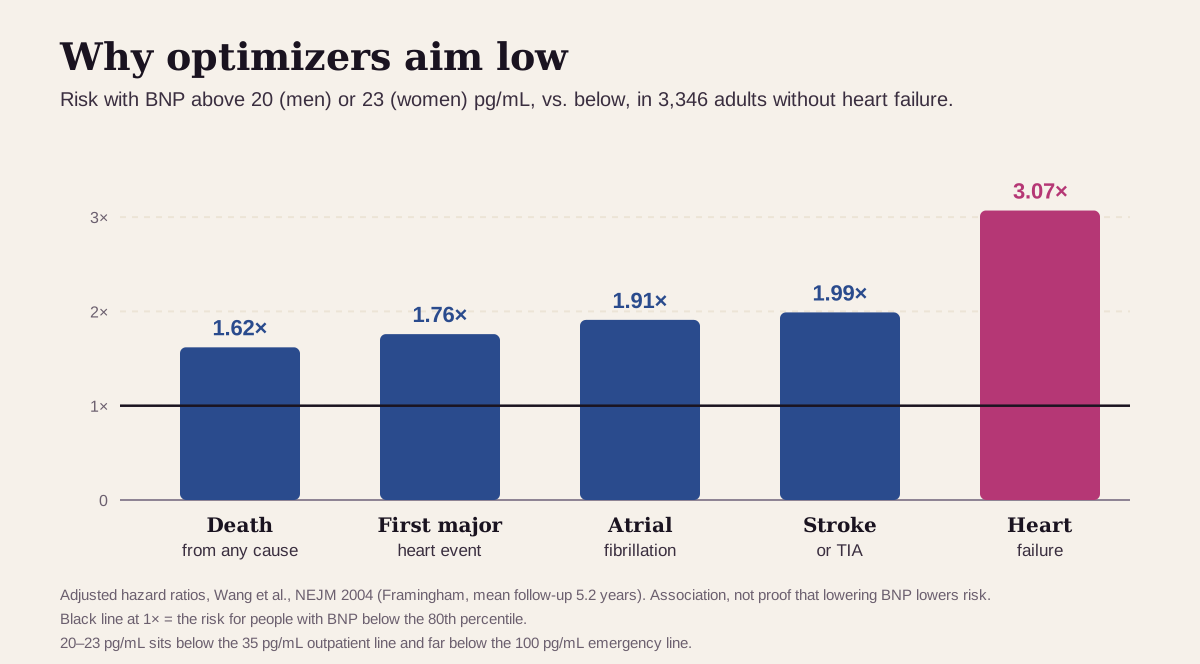
Keep "optimal" in perspective: these are screening lines, not treatment targets. In the GUIDE-IT trial, doctors adjusted heart-failure medicines to push NT-proBNP under 1,000. Patients did no better than with usual care: 37% in each group were hospitalized for heart failure or died of cardiovascular causes.9 A result above 125 is a reason to look at the heart, blood pressure, rhythm and kidneys. A low result in someone with obesity can hide real strain (see below).1
What a high BNP or NT-proBNP usually means
The size of the number is the first clue, and the setting sets the scale. Guidelines use one set of lines for gradual symptoms seen in a clinic and a higher set for sudden breathlessness in the emergency room.14
Heart failure: the main reason
Heart failure means the heart has trouble pumping enough blood to meet the body's needs. In most cases, the higher the result, the more serious the heart failure.2 The UK's NICE guideline treats an NT-proBNP over 2,000 ng/L as a sign of poor prognosis and asks for specialist review within 2 weeks.4
Other common reasons
The usual suspects besides heart failure:142
- Older age. Levels climb faster after 50, even in healthy people.3
- Atrial fibrillation and other irregular heart rhythms.
- Kidney disease. The kidneys clear NT-proBNP, so it builds up when they slow down. In one review, the median cutoff used for diagnosing sudden heart failure was 1,980 pg/mL in people with reduced kidney function, versus 450 in people with normal kidneys.10
- Lung problems: a blood clot in the lung (pulmonary embolism), high blood pressure in the lungs (pulmonary hypertension) and COPD.
- Other heart disease: a heart attack, valve disease or heart-muscle disease.
- Whole-body stress: sepsis, anemia and an overactive thyroid.
- Sacubitril/valsartan (Entresto). This heart-failure medicine raises BNP, but not NT-proBNP, because it blocks the enzyme that breaks BNP down. In the PARADIGM-HF trial, BNP doubled in 18% of patients in the first 8–10 weeks.11 Because the drug itself pushes BNP up, NT-proBNP is the clearer test to follow on this medicine.1
Get emergency care now (call 911) if breathing trouble comes on suddenly or makes it hard to talk, or if you have chest pain, heaviness or pressure, or pain spreading to an arm, the jaw or the back.125 See a clinician soon if you're short of breath at rest or with light activity, wake up at night breathless, need to sleep propped up, or notice new swelling in your legs, feet or belly.122
Is a low result a problem?
A low BNP or NT-proBNP is usually good news. In someone with symptoms, it makes heart failure unlikely.2 Two catches:
- Obesity lowers both tests, so a normal result can hide heart strain. Some experts propose cutoffs about 50% lower in people with obesity.12
- Some heart failure runs with normal numbers. In a Mayo Clinic study of people tested for unexplained breathlessness, 157 of 420 people with a stiff-heart type of heart failure (HFpEF, heart failure with preserved ejection fraction) had an NT-proBNP under 125. They still had 2.7 times the risk of death or a heart-failure hospital stay compared with people without heart failure.13
So if symptoms continue, a low number is a reason to keep looking.
BNP and NT-proBNP read best next to their neighbors
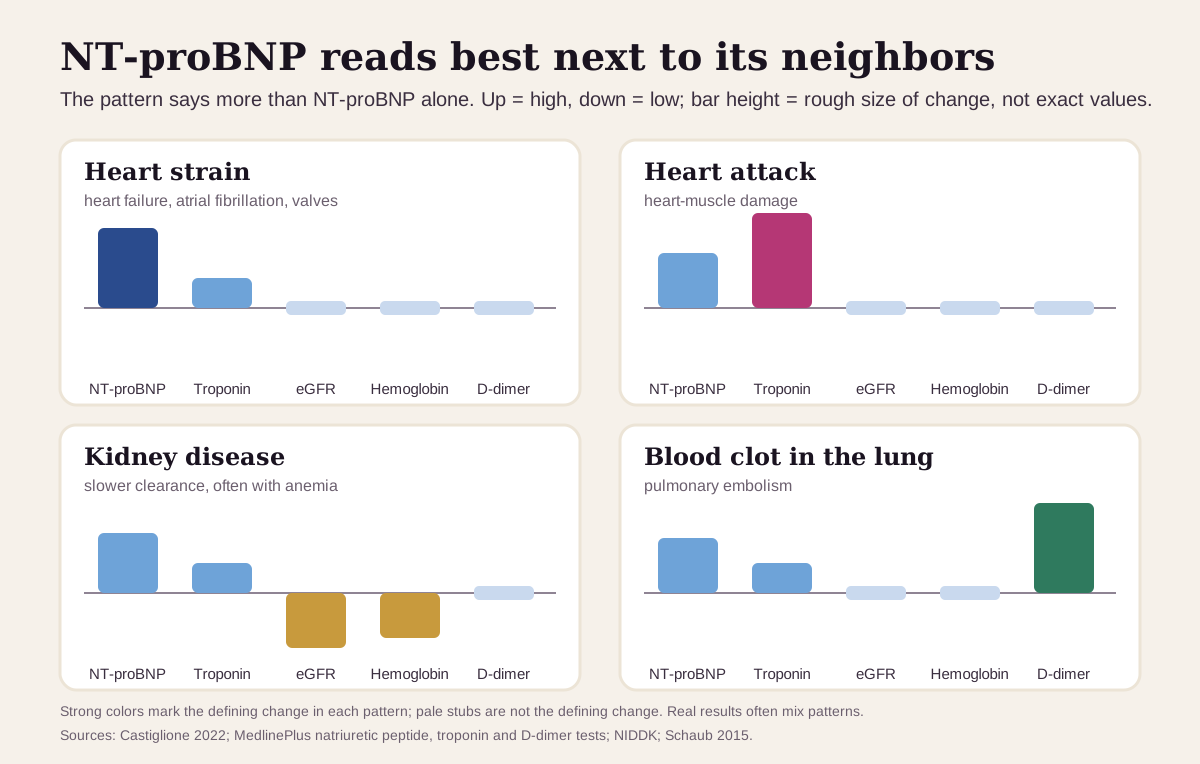
BNP and NT-proBNP tell you how strained the heart is. The tests around them help show why:12
| If you see… | It often points to… |
|---|---|
| NT-proBNP high, troponin normal or slightly up | heart strain: heart failure, atrial fibrillation or valve disease |
| Troponin very high, NT-proBNP up too | heart-muscle damage, most often a heart attack |
| NT-proBNP up, eGFR down, hemoglobin low | kidney disease: slower clearance, often with the anemia kidney disease can cause |
| NT-proBNP and troponin up, D-dimer high | possibly a blood clot in the lung (pulmonary embolism), which needs imaging to confirm |
| BNP rising while NT-proBNP holds steady or falls | the first weeks on sacubitril/valsartan (Entresto) |
Troponin is the heart-damage test: very high troponin most often means a heart attack, while heart failure, kidney disease and a blood clot in the lung can also raise it.5 Damaged kidneys make less of the hormone that drives red-cell production, so anemia is common in kidney disease: an estimated more than 1 in 7 people with kidney disease have it.15
How fast BNP and NT-proBNP change
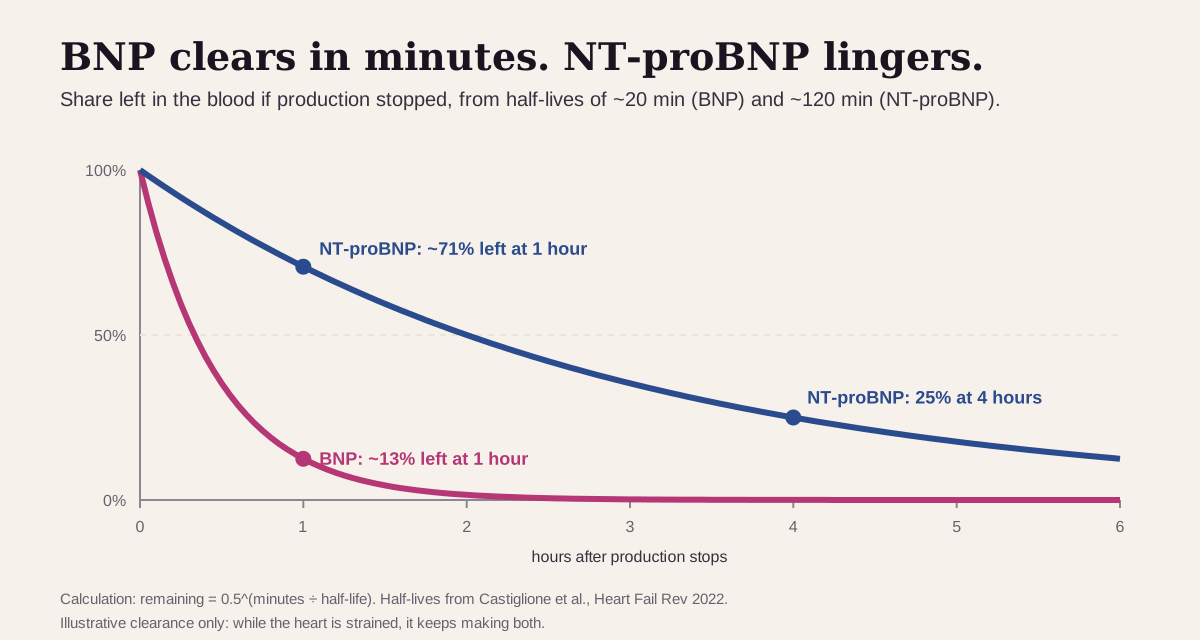
BNP clears in minutes; NT-proBNP lingers for hours. Their half-lives in the blood are about 20 minutes and 120 minutes.1 So when strain eases, BNP falls first.
What that means in practice:
- Expect some noise. NT-proBNP varied by about 22% from test to test in the same healthy or stable person in one study, so a change had to reach about 62% to clearly mean something.16
- Trends beat snapshots. Compare results from the same lab and the same test. A BNP and an NT-proBNP from different visits aren't comparable.1
- Mention biotin. High-dose biotin supplements can interfere with some NT-proBNP tests. Labcorp asks patients to stop biotin at least 72 hours before the blood draw.6 Check with your clinician first, and don't stop a prescribed medicine on your own.
Going deeper: two pieces of one hormone
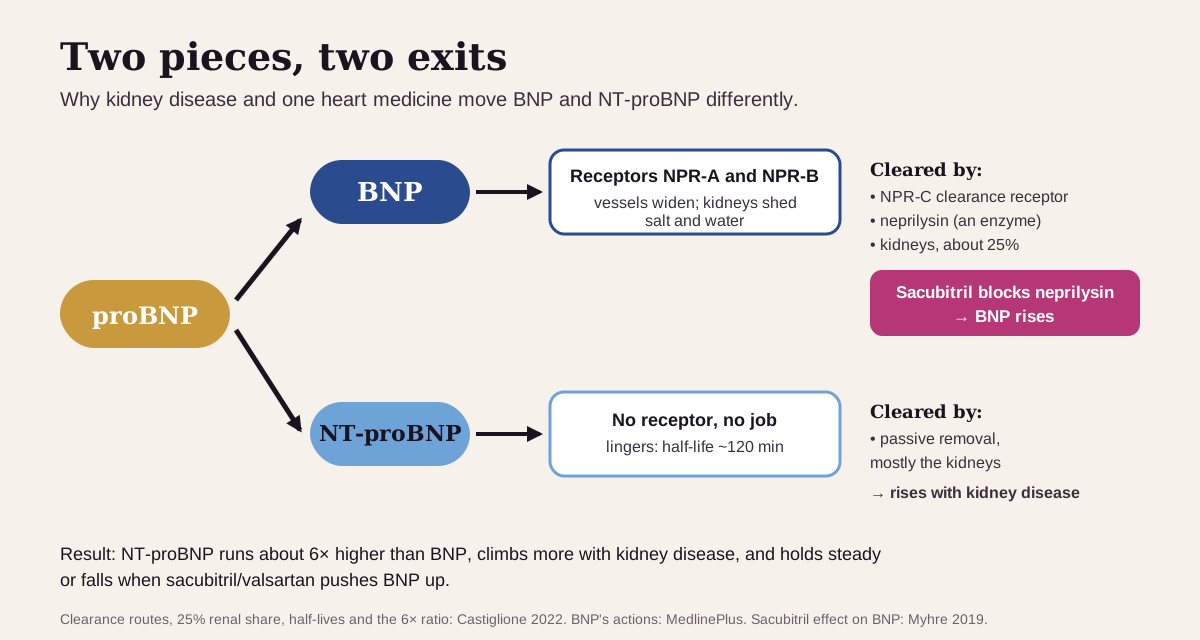
BNP binds natriuretic peptide receptors A and B (NPR-A and NPR-B).1 That signal tells blood vessels to widen and the kidneys to flush out salt and water.2 About 25% of BNP leaves unchanged through the kidneys. The rest is cleared by a "clearance" receptor (NPR-C) or broken down by an enzyme called neprilysin. NT-proBNP has no receptor. It's removed passively, mostly by the kidneys.1
That split explains three things that confuse people:
- NT-proBNP runs about 6 times higher than BNP, because it clears more slowly.1
- Kidney disease pushes NT-proBNP up more, because the kidneys are its main exit.110
- Sacubitril raises BNP only. It blocks neprilysin, which breaks down BNP and plays no part in clearing NT-proBNP.111
Questions worth asking
- Was this a BNP or an NT-proBNP, and which range did my lab use for my age and sex?
- Is my result above the outpatient line (35 for BNP, 125 for NT-proBNP), and do I need an echocardiogram?
- Could my heart rhythm, kidney function, thyroid or a lung problem explain it?
- I take sacubitril/valsartan. Should we follow NT-proBNP instead of BNP?
- My result is low, but I'm still short of breath. What else should we check?
- When should we repeat it, and how big a change would matter?
FAQ
What is a normal NT-proBNP level? Outside the hospital, under 125 pg/mL makes heart failure unlikely. Healthy upper limits rise with age and run higher in younger women, so check your lab's range too.13
What is a normal BNP level? Under 35 pg/mL for gradual symptoms seen outside the hospital, and under 100 pg/mL for sudden breathlessness in the emergency room.1
Does a high BNP mean heart failure? Often, but other things raise it too: older age, atrial fibrillation, kidney disease, a blood clot in the lung and sepsis. An echocardiogram and other tests sort out the cause.12
Can weight affect BNP and NT-proBNP? Yes. Obesity lowers both, so a normal result in someone with obesity can hide heart strain.12
This guide is for education. It can't diagnose you or replace care from a clinician who knows your history.
Footnotes
-
Castiglione V, Aimo A, Vergaro G, Saccaro L, Passino C, Emdin M. Biomarkers for the diagnosis and management of heart failure. Heart Fail Rev. 2022;27(2):625–643. A review that sets out the European Society of Cardiology cutoffs (BNP under 35 and NT-proBNP under 125 ng/L for chronic heart failure; under 100 and 300 for acute), the causes that raise or lower both peptides, half-lives of 20 and 120 minutes, and how each is cleared. PMC ↩ ↩2 ↩3 ↩4 ↩5 ↩6 ↩7 ↩8 ↩9 ↩10 ↩11 ↩12 ↩13 ↩14 ↩15 ↩16 ↩17 ↩18 ↩19 ↩20 ↩21 ↩22 ↩23 ↩24 ↩25 ↩26 ↩27 ↩28 ↩29 ↩30 ↩31 ↩32 ↩33 ↩34 ↩35
-
National Library of Medicine. Natriuretic Peptide Tests (BNP, NT-proBNP). MedlinePlus. Last updated December 4, 2023. What the tests are for, heart-failure symptoms, why obesity lowers results, and other conditions that raise them. MedlinePlus ↩ ↩2 ↩3 ↩4 ↩5 ↩6 ↩7 ↩8 ↩9 ↩10 ↩11 ↩12 ↩13 ↩14
-
Welsh P, Campbell RT, Mooney L, et al. Reference Ranges for NT-proBNP (N-Terminal Pro-B-Type Natriuretic Peptide) and Risk Factors for Higher NT-proBNP Concentrations in a Large General Population Cohort. Circ Heart Fail. 2022;15(10):e009427. 18,356 adults without cardiovascular disease in Generation Scotland; age- and sex-specific medians and 97.5th centiles. PMC ↩ ↩2 ↩3 ↩4 ↩5 ↩6 ↩7 ↩8
-
National Institute for Health and Care Excellence. Chronic heart failure in adults: diagnosis and management (NG106). Published 2018, last updated September 3, 2025. The UK guideline's NT-proBNP referral lines (400 and 2,000 ng/L) and the factors that raise or lower natriuretic peptides. NICE · PubMed Bookshelf record ↩ ↩2 ↩3 ↩4 ↩5 ↩6 ↩7 ↩8 ↩9
-
National Library of Medicine. Troponin Test. MedlinePlus. Last updated October 30, 2023. Heart-attack symptoms and when to call 911, and the other conditions that raise troponin, including heart failure, chronic kidney disease and pulmonary embolism. MedlinePlus ↩ ↩2 ↩3 ↩4
-
Labcorp. NT-proBNP (test 143000). Reference intervals by age and sex, suggested acute rule-in cut points of 450, 900 and 1,800 pg/mL by age, and the 72-hour biotin instruction. A commercial laboratory's published test page. labcorp.com ↩ ↩2 ↩3 ↩4 ↩5 ↩6 ↩7
-
Januzzi JL Jr, Chen-Tournoux AA, Christenson RH, et al. N-Terminal Pro-B-Type Natriuretic Peptide in the Emergency Department: The ICON-RELOADED Study. J Am Coll Cardiol. 2018;71(11):1191–1200. 1,461 breathless patients at 19 emergency departments; NT-proBNP under 300 pg/mL had 98.0% negative predictive value for acute heart failure. PubMed ↩ ↩2 ↩3
-
Wang TJ, Larson MG, Levy D, et al. Plasma natriuretic peptide levels and the risk of cardiovascular events and death. N Engl J Med. 2004;350(7):655–663. 3,346 Framingham participants without heart failure, followed a mean of 5.2 years. PubMed ↩ ↩2 ↩3
-
Felker GM, Anstrom KJ, Adams KF, et al. Effect of Natriuretic Peptide-Guided Therapy on Hospitalization or Cardiovascular Mortality in High-Risk Patients With Heart Failure and Reduced Ejection Fraction: A Randomized Clinical Trial. JAMA. 2017;318(8):713–720. GUIDE-IT: 894 patients, target NT-proBNP under 1,000 pg/mL, stopped early for futility. PMC ↩
-
Schaub JA, Coca SG, Moledina DG, et al. Amino-Terminal Pro-B-Type Natriuretic Peptide for Diagnosis and Prognosis in Patients With Renal Dysfunction: A Systematic Review and Meta-Analysis. JACC Heart Fail. 2015;3(12):977–989. Median diagnostic cutpoint 1,980 pg/mL with renal dysfunction versus 450 with preserved function. PMC ↩ ↩2 ↩3
-
Myhre PL, Vaduganathan M, Claggett B, et al. B-Type Natriuretic Peptide During Treatment With Sacubitril/Valsartan: The PARADIGM-HF Trial. J Am Coll Cardiol. 2019;73(11):1264–1272. Median BNP rose from 202 to 235 ng/L after 8–10 weeks and doubled in 18% of patients, while large NT-proBNP rises were extremely rare. PMC ↩ ↩2 ↩3
-
National Library of Medicine. Breathing difficulty. MedlinePlus Medical Encyclopedia. Reviewed April 1, 2025. When breathlessness needs emergency care and when to see a provider. MedlinePlus ↩ ↩2
-
Verbrugge FH, Omote K, Reddy YNV, Sorimachi H, Obokata M, Borlaug BA. Heart failure with preserved ejection fraction in patients with normal natriuretic peptide levels is associated with increased morbidity and mortality. Eur Heart J. 2022;43(20):1941–1951. Invasive exercise testing at Mayo Clinic; 157 HFpEF patients with NT-proBNP under 125 ng/L had a hazard ratio of 2.74 versus controls. PMC ↩
-
National Library of Medicine. D-Dimer Test. MedlinePlus. Why D-dimer rises with blood clots such as pulmonary embolism, and its other causes. MedlinePlus ↩
-
National Institute of Diabetes and Digestive and Kidney Diseases. Anemia in Chronic Kidney Disease. NIH. Last reviewed September 2020. Damaged kidneys make less erythropoietin; an estimated more than 1 in 7 people with kidney disease have anemia. NIDDK ↩ ↩2
-
Meijers WC, van der Velde AR, Muller Kobold AC, et al. Variability of biomarkers in patients with chronic heart failure and healthy controls. Eur J Heart Fail. 2017;19(3):357–365. 28 healthy people and 83 with stable heart failure; NT-proBNP within-person variation 21.8% and reference change value 61.7%. PMC ↩
Educational content, not medical advice.Libby is a personal record tool, not a medical service — it doesn't diagnose, treat, or prescribe. Reference ranges vary by lab and by person. Talk to a qualified healthcare professional about your results.
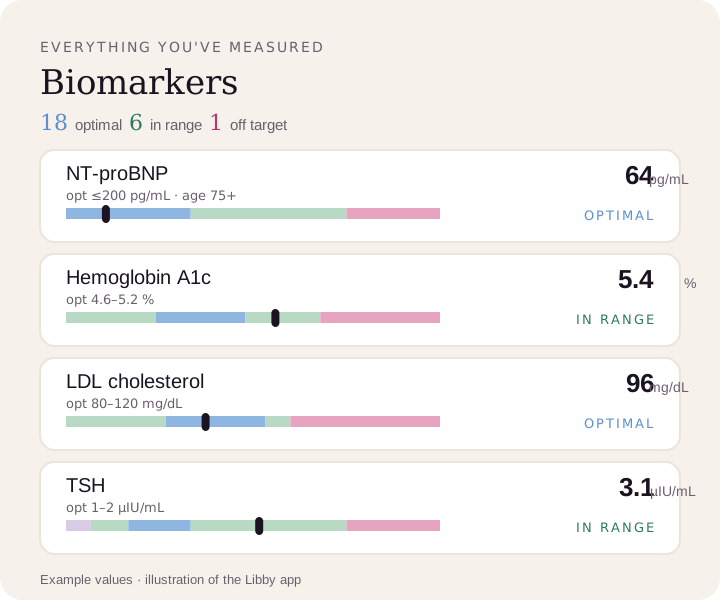
Compare your results to optimal ranges.
Upload a lab PDF or a photo of your report. Libby puts every marker on your lab's range and the optimal range, and tracks your trends over time.
View your BNP and NT-proBNP ›