BUN blood test: normal levels, high causes, and next steps
BUN measures urea, the waste your liver makes from protein. Here's a normal level, why it runs high or low, and how to read it next to creatinine.
BUN (blood urea nitrogen) measures urea, the waste your liver makes when it breaks down protein. Your kidneys filter urea out of your blood. So BUN rises when your kidneys clear less, when you're low on fluid, or when there's more protein to break down, and it falls when there's less.12
The short version
- Normal: Cleveland Clinic lists 8–24 mg/dL for adult men and 6–21 mg/dL for adult women. Check the range on your own report. The functional-medicine range shown in the Libby app is narrower: 10–16 mg/dL.23
- Mildly high is common. The usual reasons are low fluid (dehydration), a protein-rich diet, medicines such as steroids, and reduced kidney function.241
- BUN and creatinine up together usually means the kidneys are filtering less. BUN up on its own points upstream of the kidneys: fluid, protein, bleeding in the upper gut, or medicines.25
- Get care now for little or no urine, new confusion, black or tarry stools, or vomit that looks like coffee grounds, whatever your BUN is.67
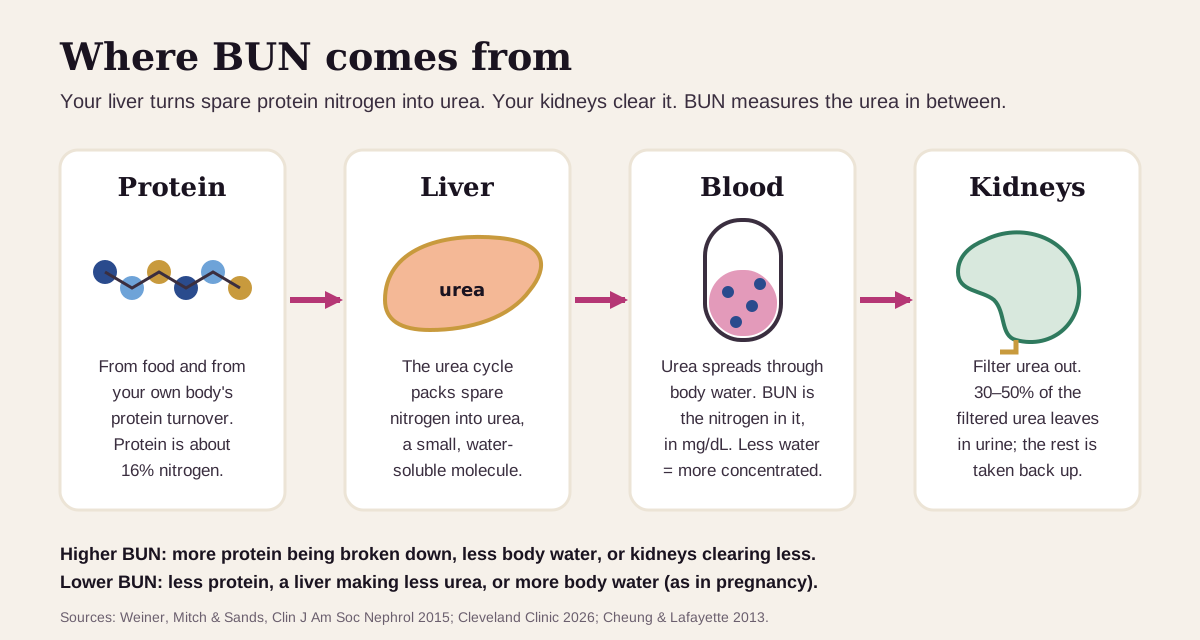
What BUN is
Protein is about 16% nitrogen. When your body burns amino acids (protein's building blocks) for fuel, the liver strips off their nitrogen and packs it into urea. Urea travels in the blood to the kidneys, which filter it into urine. Urea carries most of the nitrogen your kidneys excrete; ammonia carries about a tenth as much.1 (More on the chemistry at the end.)
BUN measures the nitrogen inside that circulating urea. Four things shape it at once: how much protein is being broken down, how much urea the liver makes, how much water the urea is dissolved in, and how fast the kidneys clear it.1
The kidneys handle urea in an unusual way. They filter it freely, then take a good share back: in general only 30–50% of the filtered urea leaves in the urine. Vasopressin, the body's water-saving hormone, opens urea channels deep in the kidney so more is taken back up.1 That's one reason BUN can climb faster than creatinine when you're low on fluid.5
BUN is part of the basic and comprehensive metabolic panels (CMP), so most people first see it on routine blood work.4
What's a normal BUN?
Start with the range printed on your own report. BUN ranges vary with age and sex, and labs set their own.24
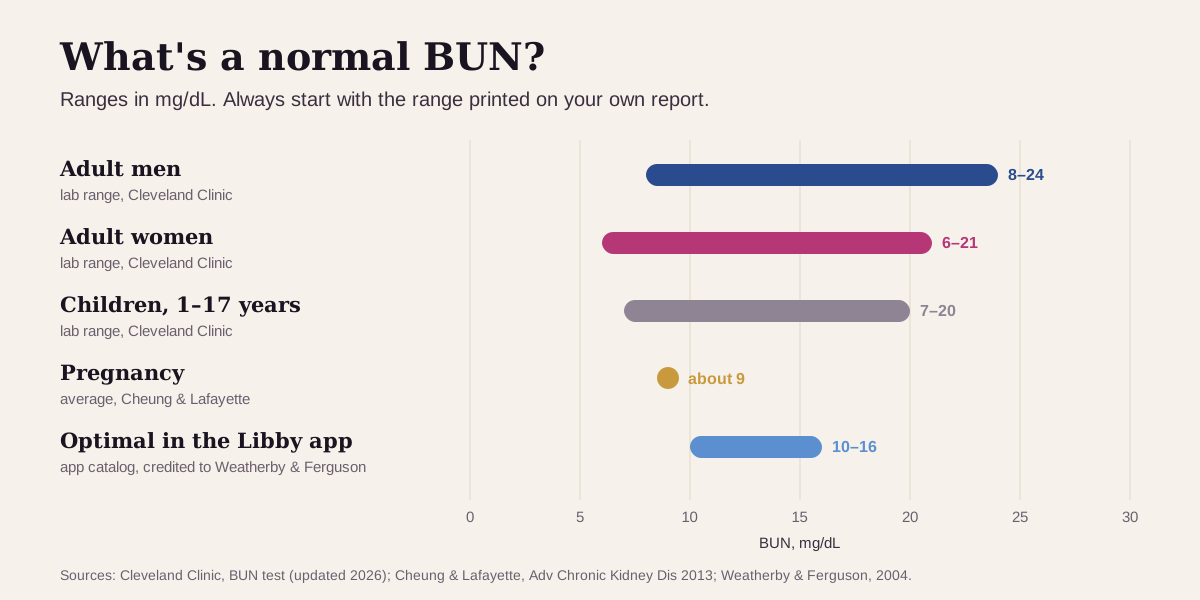
- Cleveland Clinic lists 8–24 mg/dL for adult men, 6–21 mg/dL for adult women and 7–20 mg/dL for children aged 1–17.2
- Age and sex matter. BUN usually rises with age, and men run a little higher than women.42
- Pregnancy lowers it. Kidney filtration rises by about 50%, and BUN averages about 9 mg/dL.9
- Food and water move it. More protein pushes it up; more body water dilutes it.12
"Optimal" BUN: what health optimizers aim for
Functional-medicine practitioners aim for a narrower band in the middle of the lab range. They read the top of the range as a sign of low fluid or kidney strain, and the bottom as a sign of too little protein.10 Here's the full ladder, from strictest to loosest:
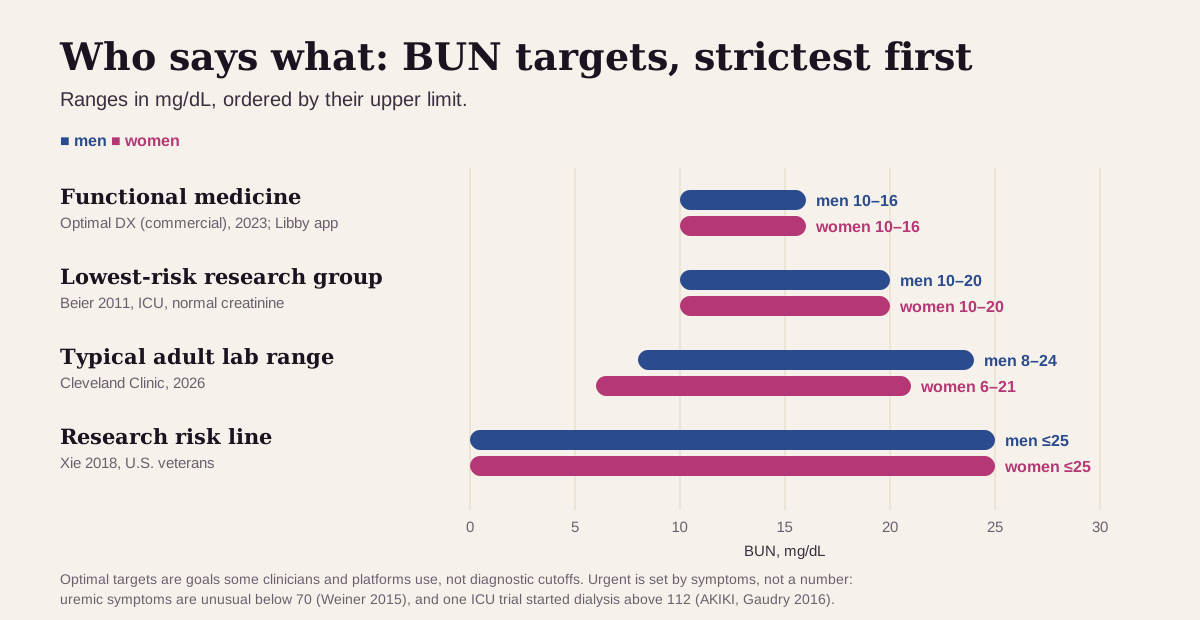
| Target | Men | Women | Who uses it |
|---|---|---|---|
| Strictest (functional medicine) | 10–16 mg/dL | 10–16 mg/dL | Optimal DX, a practitioner database from the Weatherby textbook's author,10 and the optimal range shown in the Libby app, whose catalog credits it to the Weatherby & Ferguson textbook3 |
| Lowest-risk research group | 10–20 mg/dL | 10–20 mg/dL | Beier et al.: ICU patients with normal creatinine did best in this band11 |
| Typical adult lab range | 8–24 mg/dL | 6–21 mg/dL | Cleveland Clinic2 |
| Research risk line | 25 or less | 25 or less | Xie et al.: above 25, the risk of developing diabetes rose12 |
| Urgent | symptoms decide | symptoms decide | Little or no urine, confusion, black stools: get care now67 |
Why the lower targets have evidence behind them:
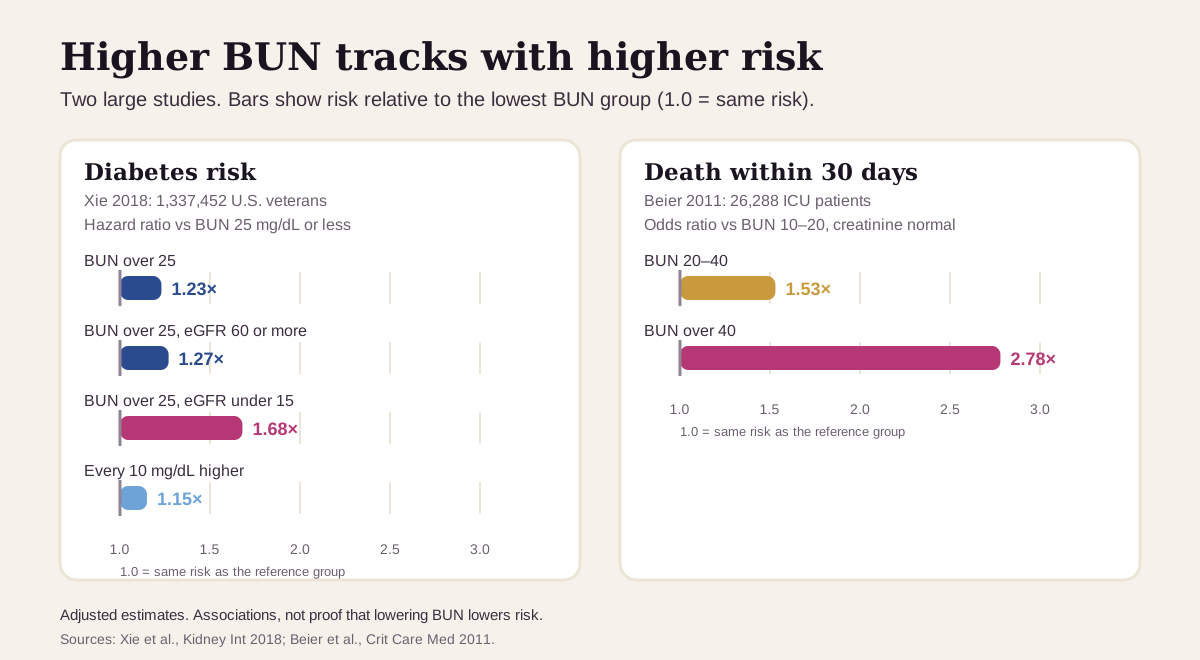
- In 1,337,452 U.S. veterans followed for about 5 years, a BUN over 25 came with a 23% higher risk of developing diabetes, after accounting for kidney function. In people whose kidney function was healthy (eGFR 60 or more), the risk was 27% higher. Each extra 10 mg/dL of BUN added 15%.12
- Among 26,288 ICU patients whose creatinine was normal, a BUN of 20–40 came with 1.5 times the odds of dying within 30 days, and a BUN over 40 with 2.8 times, compared with 10–20.11
- In 541 people hospitalized for heart failure, those in the top quarter of BUN had 2.3 times the risk of dying during about a year of follow-up. BUN predicted this better than creatinine did.14
Keep "optimal" in perspective: these are targets, not diagnoses. A BUN of 22 is a reason to look at your fluid intake, your protein intake, your medicines and your kidney numbers (creatinine and eGFR). Lower isn't always better, either. A BUN under the range usually means very little protein in the diet, and functional-medicine sources flag that end too.210
What a high BUN usually means
The first clue is creatinine. Creatinine, a waste product from muscle, is cleared by the kidneys too. When BUN and creatinine rise together, the kidneys are usually filtering less. When BUN rises on its own, the cause is usually upstream: fluid, protein, bleeding or medicines.2155
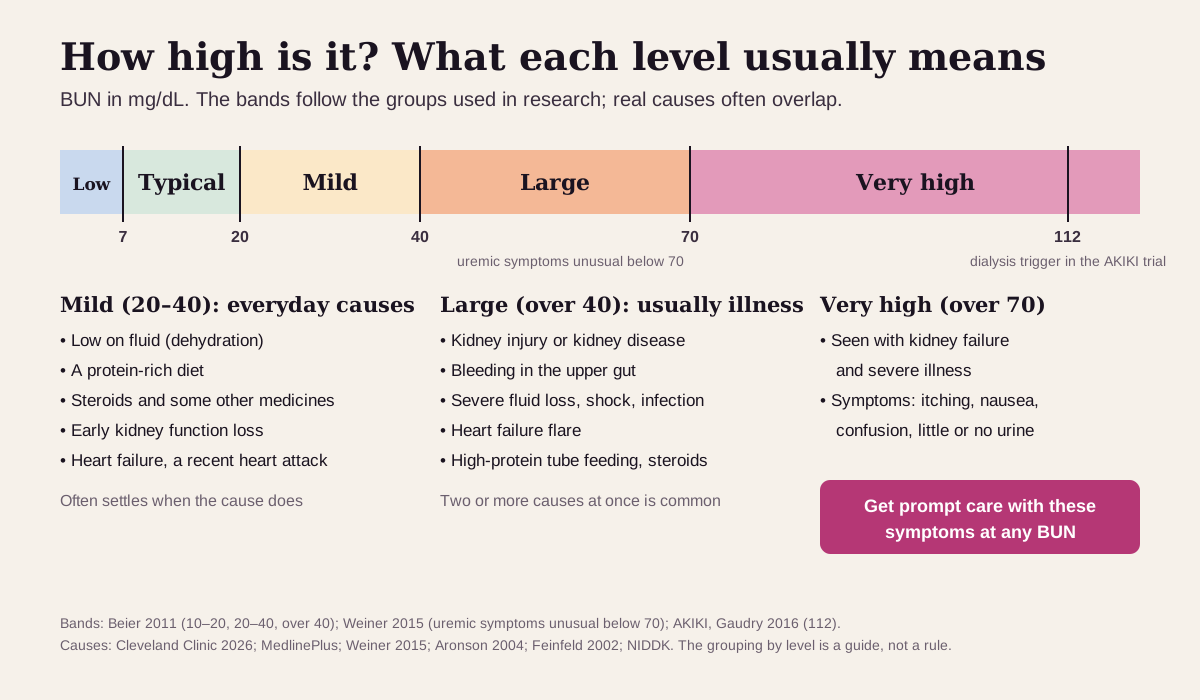
Mildly high (about 20–40 mg/dL): usually everyday causes
The usual suspects:
- Low on fluid. Dehydration concentrates urea, and the kidneys take more of it back.21 Long, hard exercise can do it: right after a marathon or half marathon, BUN rose by 2.8 mg/dL on average in 147 runners.17
- A protein-rich diet. Urea production tracks the protein you eat.12
- Medicines. Steroids (glucocorticoids) raise BUN.1 Cleveland Clinic also names carbamazepine, methotrexate and tetracycline.2 Don't stop a prescribed medicine on your own. Bring your full list to your clinician.
- Reduced kidney function. Early kidney disease usually has no symptoms, which is one reason BUN is on routine panels.4 Kidney disease is diagnosed with eGFR and a urine albumin test, so ask about both.18
- Heart problems. A recent heart attack can raise BUN.4 In heart failure, BUN reflects the strain on blood flow to the kidneys, and it tracks with outcomes.14
- Less common causes: burns, a blocked urinary tract, and physical stress.2
Large rises (over 40): usually illness, often several causes at once
Big rises usually stack causes. In one study of 19 ICU patients whose BUN passed 100 mg/dL while creatinine stayed at 5 or less, 16 had two or more: low fluid volume (9 patients), heart failure (8), shock (6), a high-protein diet or feeding (8), infection (14), high-dose steroids (2) and bleeding in the gut (2).16
Bleeding in the upper gut (the stomach or the first part of the small intestine) raises BUN more than creatinine. In a 2026 meta-analysis of 17 studies, the BUN-to-creatinine ratio averaged about 11 points higher in upper than in lower GI bleeding. A ratio over 30 pointed to an upper source with 89% specificity, though it caught only 39% of upper bleeds.19
Very high (over 70): kidney failure and severe illness
In chronic kidney disease, symptoms from waste buildup (uremia) are unusual while BUN stays below 70 mg/dL.1 As kidney function fails, symptoms can include itching, nausea, poor appetite, swelling, confusion and making little urine.6 In the AKIKI trial of ICU patients with severe kidney injury, a BUN above 112 mg/dL was one of the triggers for starting dialysis.13
Get prompt care if you make little or no urine, feel newly confused, or have new swelling in your legs. The same goes for black or tarry stool, bright red blood in vomit, vomit that looks like coffee grounds, or feeling faint or dizzy. These matter at any BUN.67
Is a low BUN a problem?
Usually not. A low BUN mostly reflects a low-protein diet, a small body frame, or extra body water. Pregnancy lowers it too.29 Less often it comes from serious liver disease, since the liver makes urea, or from malnutrition. In both cases albumin, another protein the liver makes, often runs low too.420
BUN reads best next to its neighbors
BUN blends four processes into one number. The markers printed next to it on the same panel show which one moved:215
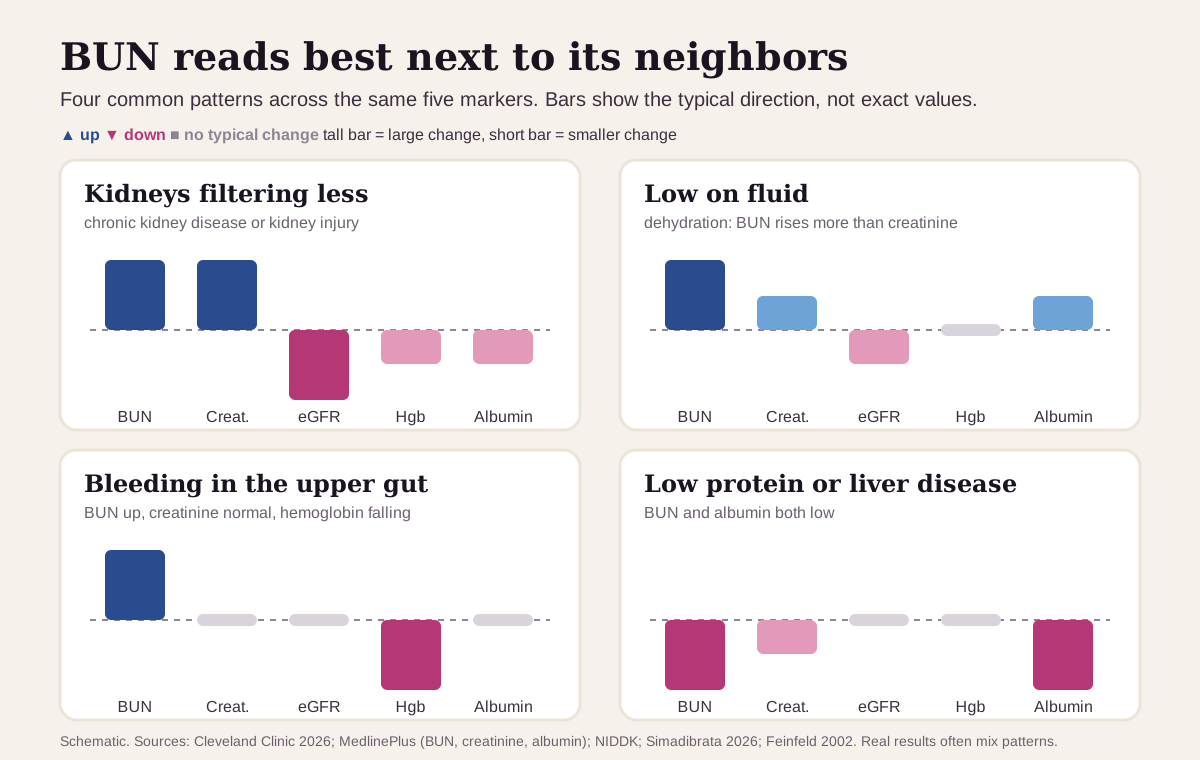
| If you see… | It often points to… |
|---|---|
| BUN and creatinine both up, eGFR down | the kidneys filtering less: chronic kidney disease or kidney injury. Anemia (low hemoglobin) often travels with kidney disease, and albumin can drift low as damaged kidneys leak it into urine |
| BUN up more than creatinine, albumin on the high side | low on fluid. Heart failure, steroids and a high-protein diet can also lift BUN faster than creatinine |
| BUN up, creatinine normal, hemoglobin falling | bleeding in the upper gut. Black or tarry stools are a warning sign of GI bleeding |
| BUN and albumin both low | low protein intake or liver disease. Creatinine can run low too |
| BUN and creatinine both lower than usual in pregnancy | normal pregnancy: BUN averages about 9 mg/dL and creatinine about 0.5 mg/dL |
Sources for the table: Cleveland Clinic and MedlinePlus for the kidney pattern;2420 MedlinePlus albumin, Uchino et al. and Feinfeld et al. for the fluid pattern;20516 Simadibrata et al. and NIDDK for bleeding;197 MedlinePlus albumin and creatinine for low protein and liver disease;2015 and Cheung & Lafayette for pregnancy.9
About the BUN-to-creatinine ratio. Many reports print BUN divided by creatinine. A ratio of about 10–15 is typical.16 A ratio over 20 has traditionally been read as low fluid or low blood flow to the kidneys. In a study of 3,641 hospital patients with kidney injury, though, about half had a ratio over 20, and the ratio failed to separate the causes. Patients with the higher ratio also died more often: 29.9% vs 18.4%.5 Treat it as a hint, read next to the full panel.
How fast BUN changes
BUN moves with fluid, food, exercise and illness, so it wobbles more than many lab values. Within one healthy person, results scatter about 14% around their own average from test to test (the within-person variation, or CVI, is 13.9%).21
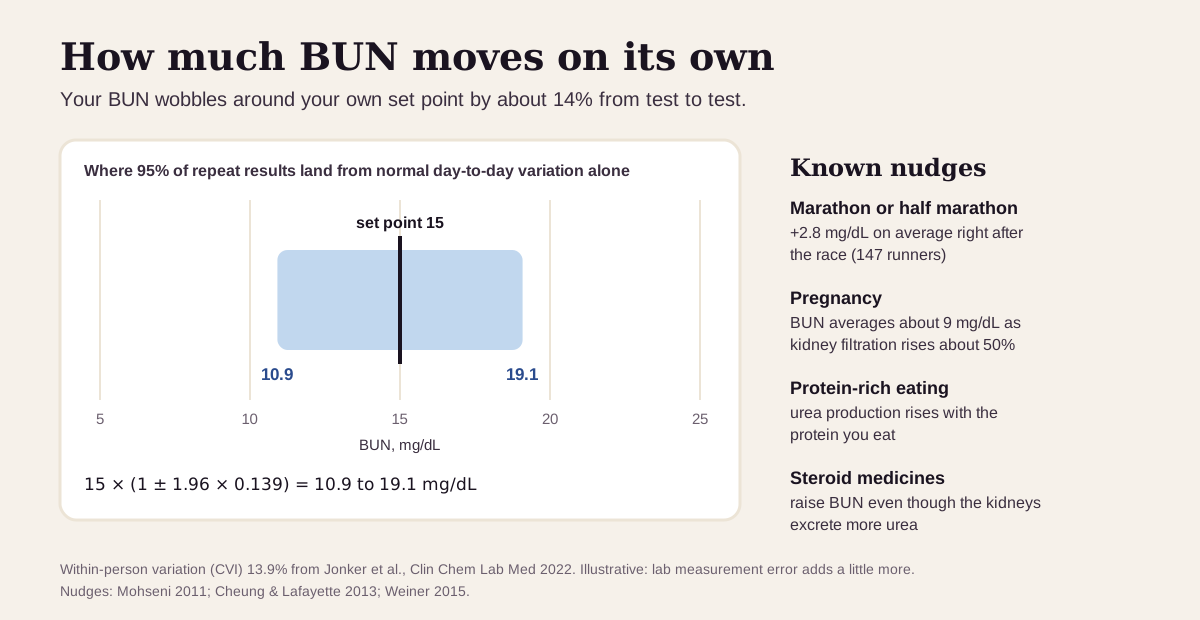
What that means in practice:
- A single borderline result is worth repeating. From a set point of 15 mg/dL, normal variation alone spans about 11 to 19.21 Mention a recent hard workout, a high-protein day, illness or low fluid intake when you get tested.171
- Fasting: BUN alone usually needs no special preparation. The same blood draw often includes tests that do, so follow your clinician's instructions.4
- Trends beat snapshots. In healthy people, creatinine is usually fairly stable over time.15 A BUN that climbs while creatinine holds steady points away from the kidneys; a BUN that climbs with creatinine points toward them.2
Going deeper: urea, nitrogen and units
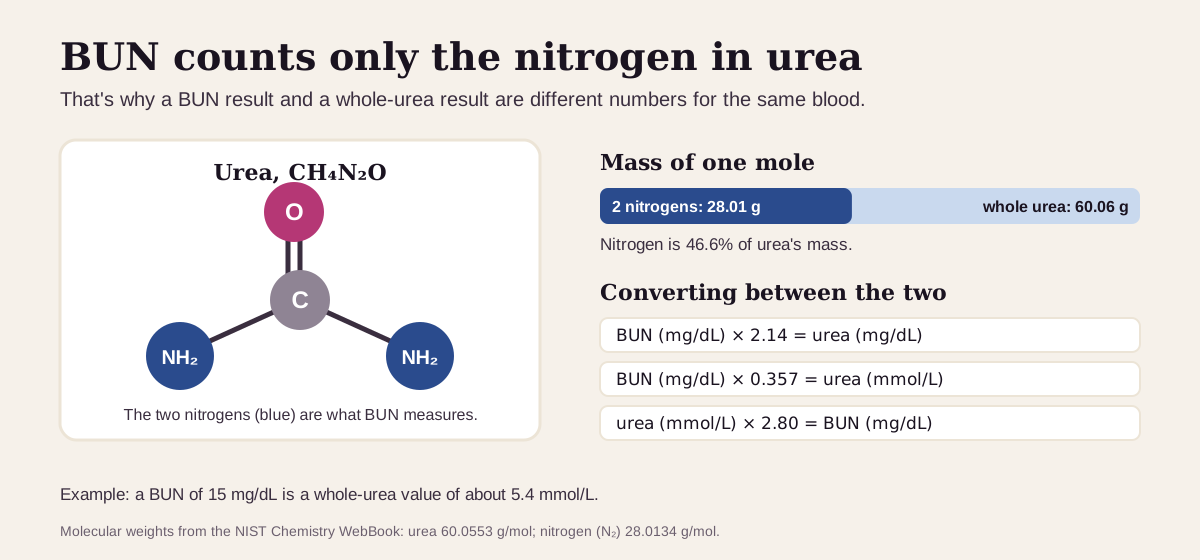
Urea is a small molecule, CH₄N₂O, with two nitrogen groups. BUN counts only those nitrogens. A mole of urea weighs 60.06 g, and its two nitrogens weigh 28.01 g, or 46.6% of it.8 That gives the conversions:
BUN (mg/dL) × 2.14 = urea (mg/dL) · BUN (mg/dL) × 0.357 = urea (mmol/L) · urea (mmol/L) × 2.80 = BUN (mg/dL)
The ratio changes with the units, too. A U.S. BUN-to-creatinine ratio of 20 (both in mg/dL) equals about 0.081 when a lab divides urea in mmol/L by creatinine in µmol/L.5 Compare ratios only when you know both units.
Urea tracks protein intake closely. Because urea output rises and falls with the protein you eat, kidney specialists use it to check whether people with chronic kidney disease are eating the protein they've been prescribed.1 Steroid medicines are a telling exception to the kidney-only story: they make the kidneys excrete more urea, yet BUN still rises, because they raise urea production even more.1
Questions worth asking
- Is my BUN high on its own, or together with creatinine and eGFR?
- What's my BUN-to-creatinine ratio, and what do you make of it with the rest of my panel?
- Could fluid intake, a high-protein diet or a recent hard workout explain this result?
- Should we check my kidneys directly with eGFR and a urine albumin test?
- Could any of my medicines, such as steroids, be raising it?
- When should we repeat it, and should I be well hydrated and on my usual diet that day?
FAQ
What is a normal BUN level? Cleveland Clinic lists 8–24 mg/dL for adult men and 6–21 mg/dL for adult women. Use the range on your own report. The optimal range shown in the Libby app is 10–16 mg/dL.23
Can dehydration raise BUN? Yes. Low fluid concentrates urea and makes the kidneys take more of it back, so BUN often rises more than creatinine. Albumin can read high too.120
Does eating a lot of protein raise BUN? Yes. The liver turns the nitrogen from protein into urea, so urea production rises with the protein you eat.12
When is a high BUN an emergency? When it comes with little or no urine, confusion, new swelling, or signs of bleeding such as black stools or coffee-ground vomit. In kidney disease, uremic symptoms are unusual below 70 mg/dL.671
This guide is for education. It can't diagnose you or replace care from a clinician who knows your history.
Footnotes
-
Weiner ID, Mitch WE, Sands JM. Urea and Ammonia Metabolism and the Control of Renal Nitrogen Excretion. Clin J Am Soc Nephrol. 2015;10(8):1444–1458. A nephrology review of how urea is made and handled: protein is 16% nitrogen, 30–50% of filtered urea is excreted, vasopressin increases urea reabsorption, steroids raise BUN, and uremic symptoms are unusual below 70 mg/dL. PMC ↩ ↩2 ↩3 ↩4 ↩5 ↩6 ↩7 ↩8 ↩9 ↩10 ↩11 ↩12 ↩13 ↩14 ↩15 ↩16 ↩17 ↩18 ↩19 ↩20
-
Cleveland Clinic. Blood Urea Nitrogen (BUN) Test. Medically reviewed; updated June 8, 2026. Adult ranges by sex (men 8–24, women 6–21, children 7–20 mg/dL) and the common causes of high and low results. Cleveland Clinic ↩ ↩2 ↩3 ↩4 ↩5 ↩6 ↩7 ↩8 ↩9 ↩10 ↩11 ↩12 ↩13 ↩14 ↩15 ↩16 ↩17 ↩18 ↩19 ↩20 ↩21 ↩22 ↩23 ↩24 ↩25 ↩26
-
Weatherby D, Ferguson S. Blood Chemistry and CBC Analysis: Clinical Laboratory Testing from a Functional Perspective. 2nd ed. Bear Mountain Publishing; 2004. ISBN 978-0976136712. Widely used functional-medicine reference. The Libby app credits its 10–16 mg/dL optimal BUN range to this book (range as recorded in the Libby app's marker catalog; book not opened for this article). ↩ ↩2 ↩3 ↩4 ↩5
-
National Library of Medicine. BUN (Blood Urea Nitrogen). MedlinePlus. Causes of high and low results, age and sex effects, preparation, and why BUN is on the CMP. MedlinePlus ↩ ↩2 ↩3 ↩4 ↩5 ↩6 ↩7 ↩8 ↩9 ↩10
-
Uchino S, Bellomo R, Goldsmith D. The meaning of the blood urea nitrogen/creatinine ratio in acute kidney injury. Clin Kidney J. 2012;5(2):187–191. 20,126 hospital patients, 3,641 with kidney injury; the traditional ratio cutoff of 20 (0.081 in SI units) failed to separate causes. PMC ↩ ↩2 ↩3 ↩4 ↩5 ↩6
-
National Institute of Diabetes and Digestive and Kidney Diseases. What Is Kidney Failure? NIH. The symptoms of kidney failure. NIDDK ↩ ↩2 ↩3 ↩4 ↩5
-
National Institute of Diabetes and Digestive and Kidney Diseases. Symptoms & Causes of GI Bleeding. NIH. Emergency symptoms of acute GI bleeding, and anemia from chronic bleeding. NIDDK ↩ ↩2 ↩3 ↩4 ↩5 ↩6
-
National Institute of Standards and Technology. NIST Chemistry WebBook, SRD 69: urea (CH₄N₂O, 60.0553 g/mol) and nitrogen (N₂, 28.0134 g/mol). Urea · Nitrogen ↩ ↩2 ↩3
-
Cheung KL, Lafayette RA. Renal physiology of pregnancy. Adv Chronic Kidney Dis. 2013;20(3):209–214. Kidney filtration rises about 50% in pregnancy; average BUN about 9.0 mg/dL and creatinine about 0.5 mg/dL. PMC ↩ ↩2 ↩3 ↩4 ↩5 ↩6
-
Optimal DX. Biomarkers of Kidney Function: Blood Urea Nitrogen (BUN). Published October 27, 2022; updated November 2, 2023. States an optimal BUN of 10–16 mg/dL (standard range 7–25). A commercial source, listed as what the optimizer community uses. optimaldx.com ↩ ↩2 ↩3 ↩4
-
Beier K, Eppanapally S, Bazick HS, et al. Elevation of blood urea nitrogen is predictive of long-term mortality in critically ill patients independent of "normal" creatinine. Crit Care Med. 2011;39(2):305–313. 26,288 ICU patients with creatinine 0.80–1.30 mg/dL; adjusted 30-day odds ratios 1.53 (BUN 20–40) and 2.78 (over 40) vs 10–20. PMC ↩ ↩2 ↩3 ↩4 ↩5
-
Xie Y, Bowe B, Li T, Xian H, Yan Y, Al-Aly Z. Higher blood urea nitrogen is associated with increased risk of incident diabetes mellitus. Kidney Int. 2018;93(3):741–752. 1,337,452 U.S. veterans without diabetes, median follow-up 4.93 years. PubMed ↩ ↩2 ↩3 ↩4
-
Gaudry S, Hajage D, Schortgen F, et al. Initiation Strategies for Renal-Replacement Therapy in the Intensive Care Unit. N Engl J Med. 2016;375(2):122–133. The AKIKI trial: 620 ICU patients with severe kidney injury; the delayed arm started dialysis at a BUN above 112 mg/dL, among other triggers. PubMed ↩ ↩2 ↩3
-
Aronson D, Mittleman MA, Burger AJ. Elevated blood urea nitrogen level as a predictor of mortality in patients admitted for decompensated heart failure. Am J Med. 2004;116(7):466–473. 541 patients; adjusted relative risk 2.3 for the top vs bottom BUN quartile. PubMed ↩ ↩2
-
National Library of Medicine. Creatinine Test. MedlinePlus. Causes of high and low creatinine, and its stability over time in healthy people. MedlinePlus ↩ ↩2 ↩3 ↩4 ↩5
-
Feinfeld DA, Bargouthi H, Niaz Q, Carvounis CP. Massive and disproportionate elevation of blood urea nitrogen in acute azotemia. Int Urol Nephrol. 2002;34(1):143–145. The normal ratio of 10–15, and the causes in 19 ICU patients with BUN of 100 or more. PubMed ↩ ↩2 ↩3 ↩4 ↩5
-
Mohseni M, Silvers S, McNeil R, et al. Prevalence of hyponatremia, renal dysfunction, and other electrolyte abnormalities among runners before and after completing a marathon or half marathon. Sports Health. 2011;3(2):145–151. BUN rose 2.8 mg/dL on average across 147 paired samples. PMC ↩ ↩2 ↩3
-
National Institute of Diabetes and Digestive and Kidney Diseases. Chronic Kidney Disease Tests & Diagnosis. NIH. Kidney disease is checked with a GFR blood test and a urine albumin test. NIDDK ↩ ↩2
-
Simadibrata DM, Koo TH, Murlidhar M, et al. Blood Urea Nitrogen-to-Creatinine Ratio to Differentiate Upper From Lower Gastrointestinal Bleeding: A Systematic Review and Meta-Analysis. J Gastroenterol Hepatol. 2026;41(2):477–487. 17 studies. PubMed ↩ ↩2 ↩3
-
National Library of Medicine. Albumin Blood Test. MedlinePlus. Low albumin with liver disease, kidney disease and malnutrition; high albumin with dehydration. MedlinePlus ↩ ↩2 ↩3 ↩4 ↩5 ↩6
-
Jonker N, Aslan B, Boned B, et al. Critical appraisal and meta-analysis of biological variation estimates for kidney related analytes. Clin Chem Lab Med. 2022;60(4):469–478. The European Federation of Clinical Chemistry's pooled within-person variation for urea: 13.9% (95% CI 9.5–14.4). DOI ↩ ↩2 ↩3
Educational content, not medical advice.Libby is a personal record tool, not a medical service — it doesn't diagnose, treat, or prescribe. Reference ranges vary by lab and by person. Talk to a qualified healthcare professional about your results.
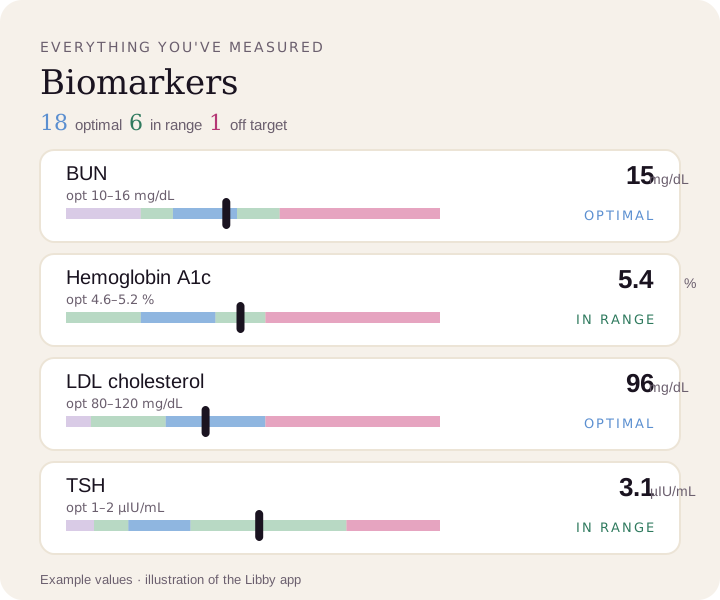
Compare your results to optimal ranges.
Upload a lab PDF or a photo of your report. Libby puts every marker on your lab's range and the optimal range, and tracks your trends over time.
View your BUN ›