C-peptide test: normal levels, high and low causes
C-peptide shows how much insulin your pancreas makes. Here's the normal range, what high and low results usually mean, and how to read it with blood sugar.
C-peptide is a small protein your pancreas releases every time it makes insulin, one for one. That makes it a receipt for the insulin your own body produces. A high C-peptide usually means your pancreas is working overtime to keep blood sugar down. A low one, when blood sugar is high, means it's making too little.12
The short version
- Normal (fasting): labs differ, from about 0.3–3.3 to 1.1–4.4 ng/mL. In 1,050 metabolically healthy adults, 95% fell between 0.63 and 2.17 ng/mL.234
- High usually means extra insulin to overcome insulin resistance, which travels with extra weight, prediabetes and type 2 diabetes. A recent meal and weaker kidneys also push it up.251
- Low with high blood sugar means the pancreas is making little insulin, as in type 1 diabetes or long-standing type 2. Under 0.24 ng/mL (80 pmol/L) is very low.6
- Read it next to the blood sugar drawn at the same time. A low C-peptide is expected after an overnight fast. One that stays up during a low blood sugar is a pattern that needs a medical workup.27
What C-peptide is
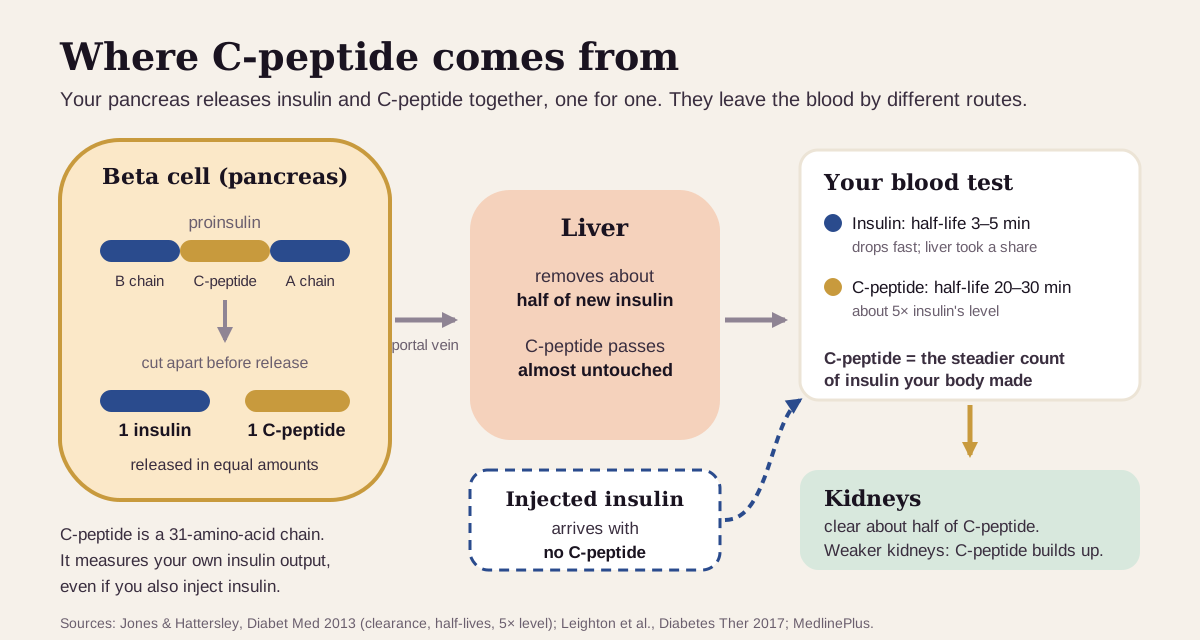
Your pancreas makes insulin in its beta cells, first as a longer molecule called proinsulin. Before release, the cell snips out the middle link, a 31-amino-acid chain called C-peptide ("connecting peptide"). One insulin and one C-peptide leave the cell together, in equal amounts.51 (More on test types and units at the end.)
Injected insulin arrives with no C-peptide attached. So C-peptide measures the insulin your own pancreas makes, even in someone who injects insulin.2
The two molecules take different routes out of the body, and that's why C-peptide is the steadier measure:1
- The liver removes about half of new insulin on its first pass. C-peptide goes through the liver almost untouched.
- C-peptide lasts longer: a half-life of 20–30 minutes, versus 3–5 minutes for insulin. It circulates at about five times insulin's concentration.
- The kidneys clear about half of C-peptide. When kidney function drops, C-peptide builds up.
Doctors order it to sort out type 1 from type 2 diabetes when the type is unclear, to see how much insulin the pancreas still makes, to find the cause of low blood sugar, and to follow an insulin-making tumor after surgery.26 Functional-medicine clinicians also read a fasting C-peptide as a gauge of how hard your pancreas is working.8
What's a normal C-peptide?
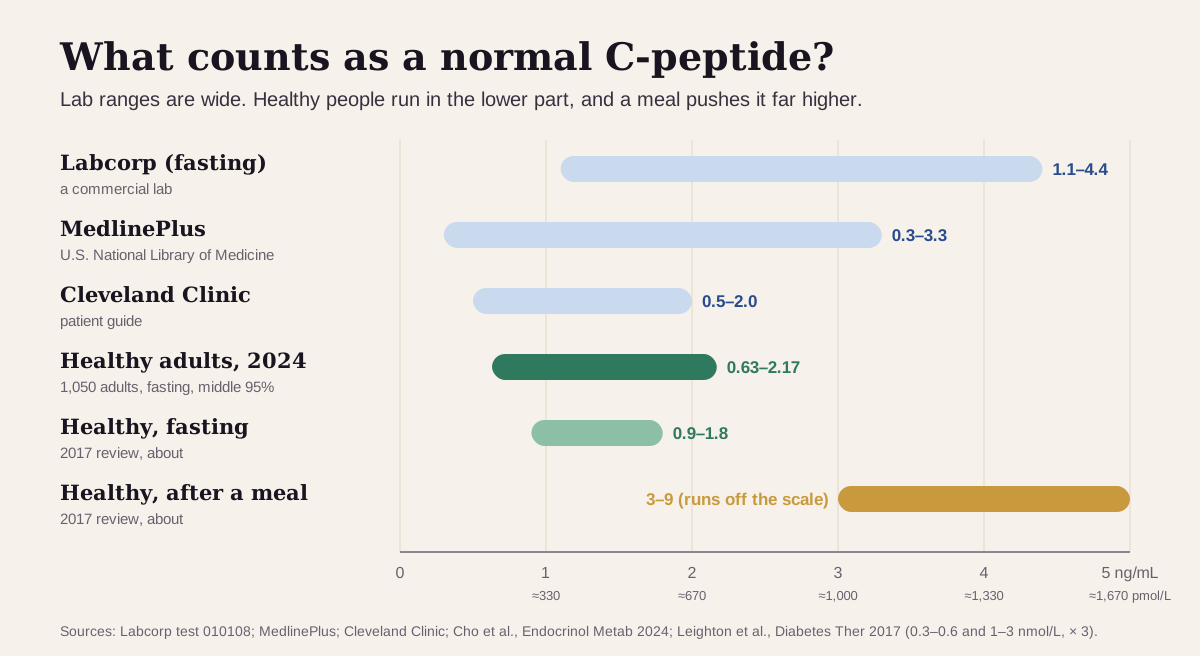
Start with the range printed on your report, and check whether you were fasting. Labs use different methods, so their ranges vary a lot:
- Labcorp, a commercial lab: 1.1–4.4 ng/mL, for fasting samples.3
- MedlinePlus (U.S. National Library of Medicine): 0.3–3.3 ng/mL, and it notes that ranges vary by lab.2
- Cleveland Clinic: 0.5–2.0 ng/mL.9
Food moves it most. A 2017 review in Diabetes Therapy puts healthy fasting levels at 0.3–0.6 nmol/L (about 0.9–1.8 ng/mL), rising to 1–3 nmol/L (about 3–9 ng/mL) after a meal.5 So a sample drawn after lunch can sit well above a fasting range with nothing wrong.
Healthy people sit in the lower part of most lab ranges. A 2024 study measured fasting C-peptide in 1,050 healthy Korean adults after screening out anyone with a fasting glucose of 100 mg/dL or more or an A1C of 5.7% or more. The middle 95% ran from 0.63 to 2.17 ng/mL: 0.61–2.28 for men and 0.64–2.09 for women. Men ran slightly higher.4
"Optimal" C-peptide: what health optimizers aim for
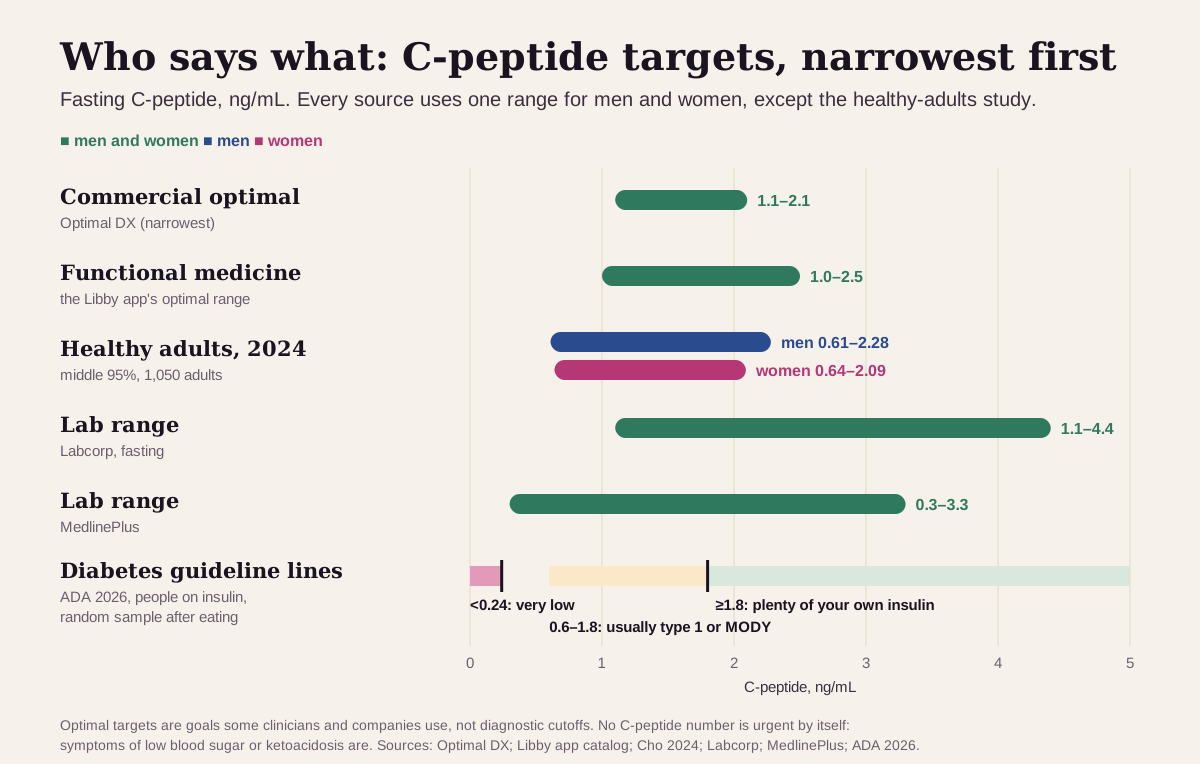
Functional-medicine practitioners aim for a fasting C-peptide in the lower middle of the lab range: enough to show a working pancreas, and low enough to show it's keeping up without strain. Here's the ladder, narrowest range first:
| Target | Men | Women | Who uses it |
|---|---|---|---|
| Narrowest (commercial) | 1.1–2.1 ng/mL | 1.1–2.1 ng/mL | Optimal DX's published optimal range8 |
| Functional medicine | 1.0–2.5 ng/mL | 1.0–2.5 ng/mL | The optimal range shown in the Libby app, whose catalog credits it to the Institute for Functional Medicine10 |
| Research "healthy" range | 0.61–2.28 ng/mL | 0.64–2.09 ng/mL | Middle 95% of 1,050 healthy adults, fasting4 |
| Typical lab range | 1.1–4.4 or 0.3–3.3 ng/mL | same | Labcorp (fasting) and MedlinePlus32 |
| Diabetes guideline lines (people on insulin) | 1.8 or more: plenty of your own insulin. 0.6–1.8: usually type 1 or MODY. Under 0.24: very low | same | American Diabetes Association 20266 |
| Urgent | no C-peptide number alone | no C-peptide number alone | Symptoms of low blood sugar (around 55 mg/dL or lower) or of ketoacidosis: get care now711 |
Why the low targets aren't just a trend:
- In 5,153 U.S. adults without diabetes, followed for a median of 14.4 years, a higher fasting C-peptide went with more deaths. Compared with the lowest quarter (about 1.25 ng/mL or less), people at about 2.0–2.95 ng/mL had 1.57 times the risk of dying from any cause, and people at about 2.95 ng/mL or more had 1.72 times the risk, after adjusting for other risk factors. For heart and blood-vessel deaths, the top quarter's risk was 1.60 times.12
- A second analysis of the same national survey, in 5,902 adults without diabetes, found 1.80 times the risk of death from any cause and 3.20 times the risk of cardiovascular death in the top quarter versus the bottom.13
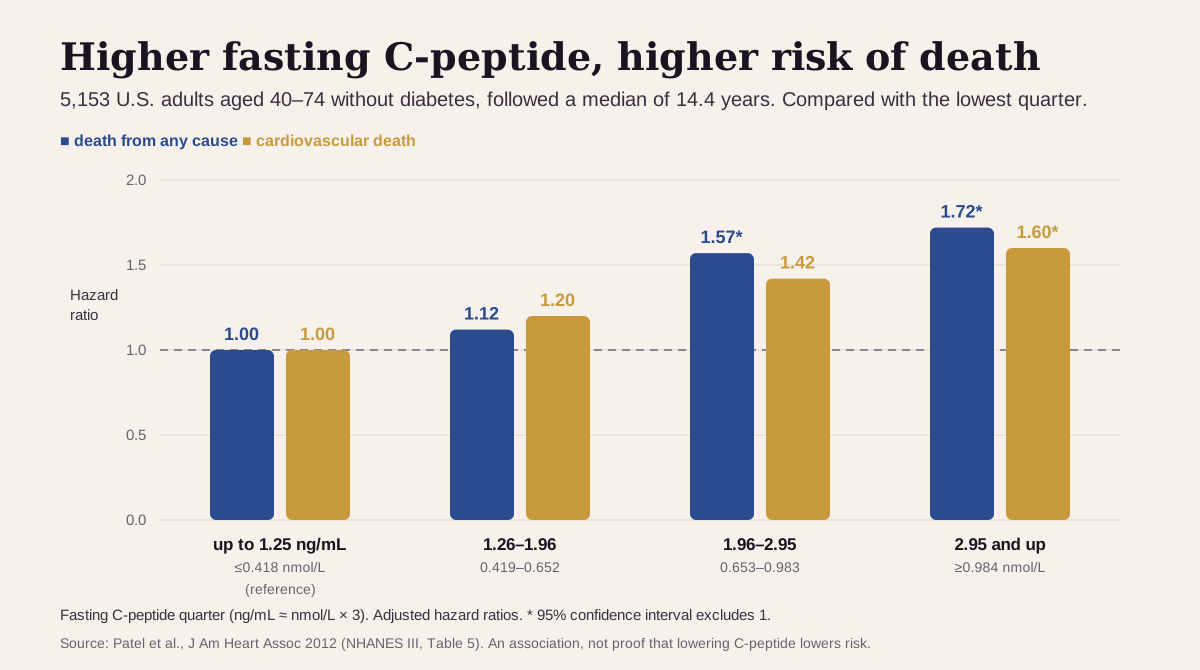
Keep "optimal" in perspective. These are associations: a fasting C-peptide of 2.8 is a reason to look at your weight, A1C, fasting glucose and kidney function, not a diagnosis. And past a point, lower stops being better, because C-peptide is your own insulin output. In the Diabetes Control and Complications Trial (DCCT), people with type 1 diabetes who still made a little (a meal-stimulated level above 0.2 nmol/L, about 0.6 ng/mL) had less eye and kidney damage, fewer severe lows, and an A1C about 0.9 points lower.141 Both optimal ranges above have a floor, at 1.0 and 1.1 ng/mL.
What a high or low C-peptide usually means
The same-time blood sugar is the first clue. Your pancreas should make more insulin when blood sugar is high and switch it off when blood sugar is low. So the same C-peptide can be healthy or a problem, depending on the glucose next to it.21
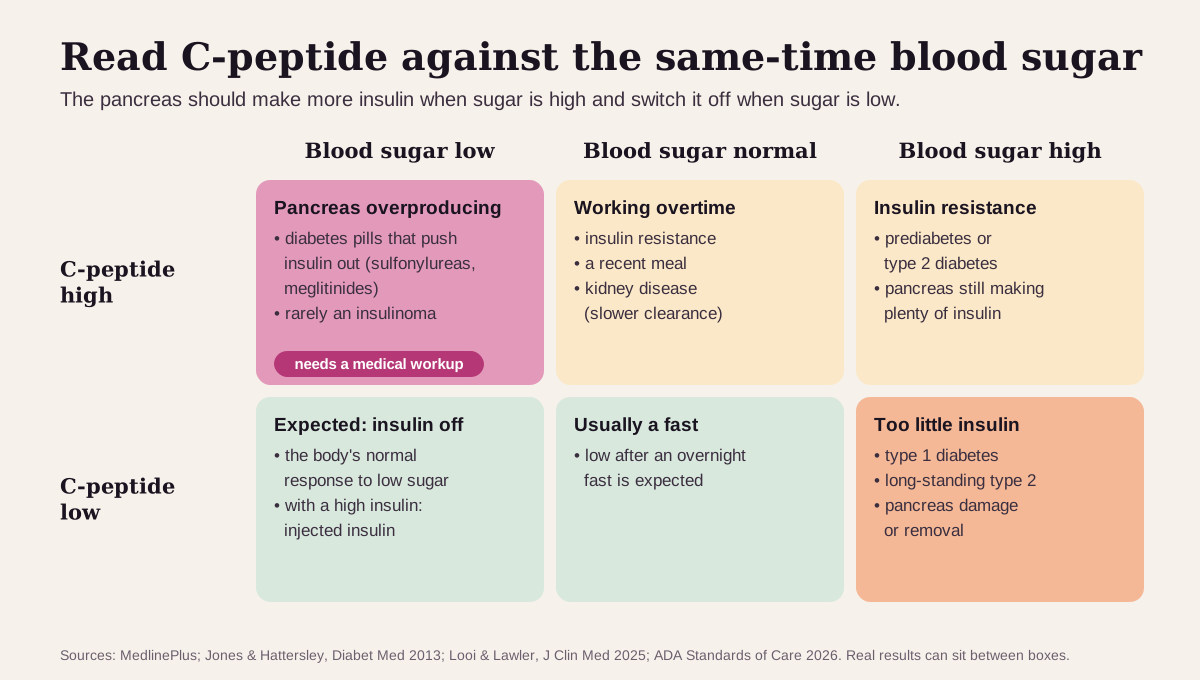
High C-peptide: usually extra insulin, sometimes slow clearance
The usual suspects:
- Insulin resistance. When muscle, liver and fat respond weakly to insulin, the pancreas makes more to keep blood sugar normal. It travels with extra weight, prediabetes and type 2 diabetes.25
- A recent meal. Levels after eating run several times higher than fasting levels (1–3 versus 0.3–0.6 nmol/L), so a nonfasting sample often reads high.5
- Kidney disease. The kidneys clear about half of C-peptide, so weaker kidneys raise it without any extra insulin being made.1
- Diabetes pills that push the pancreas. Sulfonylureas and meglitinides make the pancreas release more insulin, so C-peptide rises with it.7
- Less common: Cushing's syndrome and low blood potassium.2 Rare: an insulinoma, an insulin-making tumor with fewer than 4 new cases per million people a year. It causes repeated low blood sugar.7
Low C-peptide: little insulin being made
- Fasting or low blood sugar. After an overnight fast, blood sugar and insulin are naturally low, so a low C-peptide is expected.2
- Type 1 diabetes. The immune system destroys the beta cells, and C-peptide falls toward undetectable.6 Most people with type 1 have low levels by 3–5 years after diagnosis.1
- Long-standing type 2 diabetes. Type 2 involves a slow, progressive loss of insulin output, so levels can fall over the years.26
- Injected insulin. Extra insulin from shots lowers blood sugar, and your own production switches off.27
- Pancreas damage or removal, from pancreatitis or surgery.6
- Less common: a severe infection, Addison disease and liver disease.2
In diabetes, the level helps decide the type. In someone on insulin whose diabetes type is unclear, the American Diabetes Association reads a random C-peptide drawn within 5 hours of eating: 1.8 ng/mL (600 pmol/L) or more means the pancreas still makes a good amount of its own insulin; 0.6–1.8 usually fits type 1 diabetes or MODY (an inherited form), though long-standing type 2 can land here too; and under 0.24 (80 pmol/L) is very low.6 A very low level means the body depends on insulin shots to prevent ketoacidosis.1
Get care now for symptoms of low blood sugar (shakiness, sweating, a fast heartbeat, confusion or a seizure), or of ketoacidosis (deep, fast breathing, fruity breath, vomiting, belly pain or drowsiness). If you use insulin, never skip or stop it on your own: missed insulin doses can trigger ketoacidosis.211
A C-peptide test isn't used to diagnose diabetes. Glucose and A1C tests do that job.2
C-peptide reads best next to its neighbors
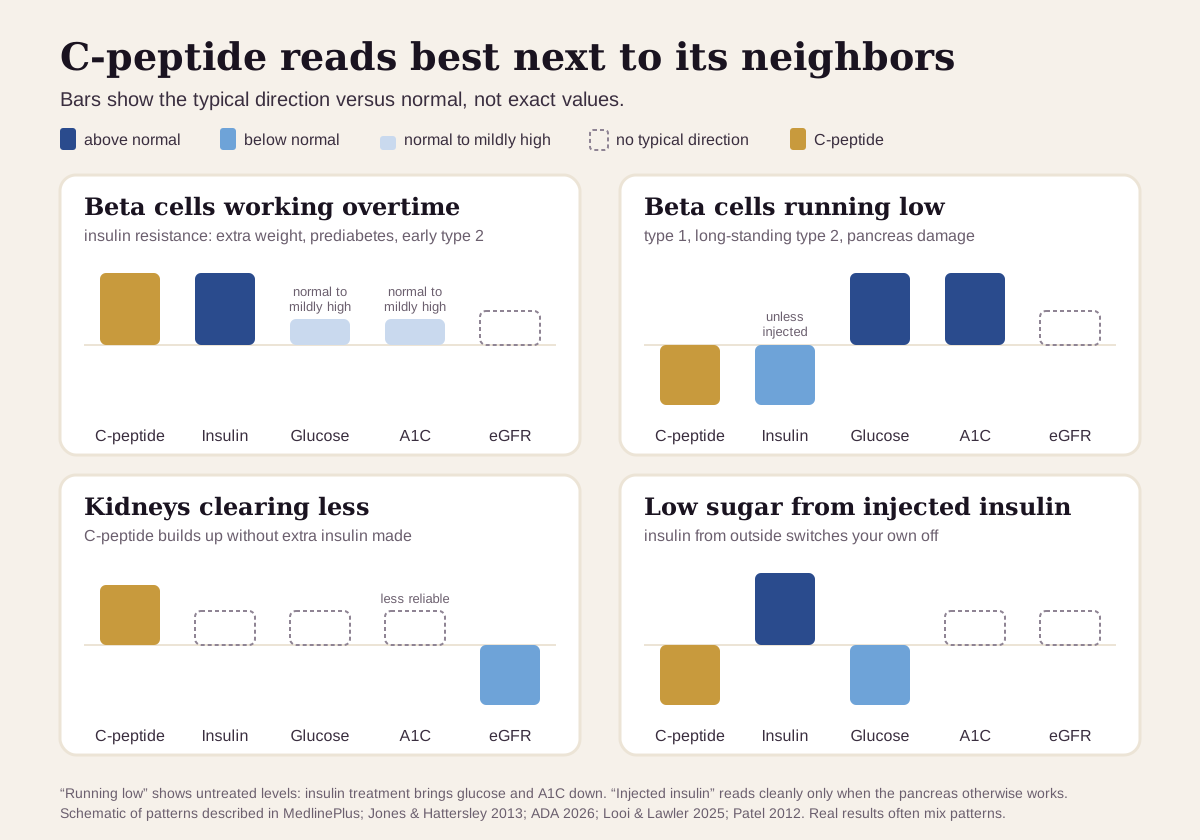
C-peptide rarely tells the story alone. Its partners are the glucose drawn at the same time, insulin, A1C and your kidney function (eGFR). The pattern across them usually says more than C-peptide does by itself:17
| If you see… | It often points to… |
|---|---|
| C-peptide and insulin both high, glucose normal or a little high | beta cells working overtime against insulin resistance: common with extra weight, prediabetes and early type 2 diabetes |
| C-peptide low, glucose and A1C high | a pancreas making too little insulin: type 1 diabetes, long-standing type 2, or pancreas damage |
| C-peptide high, eGFR low | slower kidney clearance, which raises C-peptide without extra insulin (A1C is also less reliable in kidney failure) |
| Low blood sugar, high insulin, low C-peptide | insulin from outside the body, such as an injection, in someone whose pancreas otherwise works |
| Low blood sugar, with insulin and C-peptide not switched off (normal or high) | the body's own insulin running too high: a sulfonylurea or meglitinide pill, or less often a cause in the pancreas or gut, such as low sugar after gastric bypass surgery or a rare insulinoma. A drug screen separates the pills from the rest |
When doctors look for the cause of low blood sugar in someone without diabetes, they draw glucose, insulin, C-peptide, proinsulin, beta-hydroxybutyrate (a ketone) and a screen for diabetes pills during an episode, plus insulin antibodies. The pattern shows up only while sugar is low.151
How fast C-peptide changes
Within minutes to hours. C-peptide's half-life is 20–30 minutes, so it tracks what your pancreas did over the past hour or two. It climbs after a meal and drops when blood sugar falls.15 That's why fasting matters.
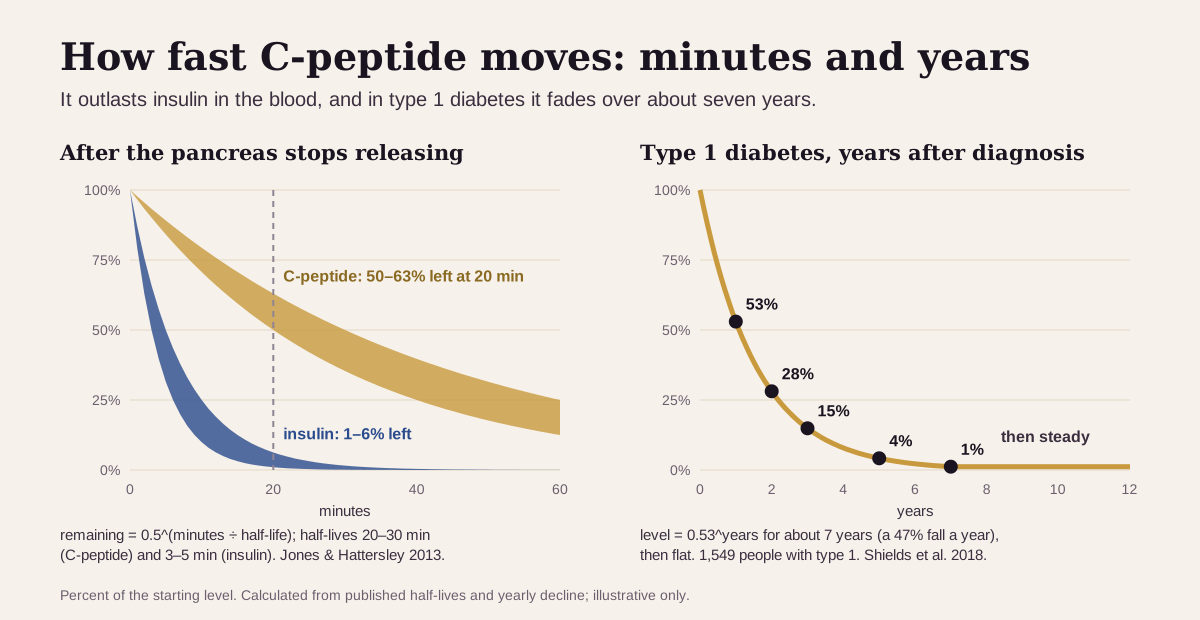
- Day to day. Even in healthy people fasting under the same conditions, C-peptide varied about 24% from day to day over 12 days.17 A change from 1.6 to 1.9 ng/mL can be noise.
- After a diabetes emergency. The ADA advises against testing C-peptide within 2 weeks of a hyperglycemic emergency.6
- Over years in type 1 diabetes. C-peptide falls about 47% a year for about 7 years, then holds steady for decades. That's why the test helps most 3–5 years after diagnosis.161
- Trends beat snapshots. Repeat under the same conditions: fasting, same time of day, same lab. Values near a cutoff call for caution, and the ADA suggests repeating a result under 1.8 ng/mL if you were fasting or your glucose was under 70 mg/dL.16
Going deeper: stimulated tests, urine tests and units
Stimulated tests ask the pancreas to show what it can do. Doctors give a standard liquid meal or an injection of glucagon, then measure C-peptide. For sorting out diabetes type, the ADA accepts a simple random sample within 5 hours of eating, with the glucose measured at the same time.65 A same-time glucose above about 8 mmol/L (144 mg/dL) counts as stimulated.1
Urine C-peptide. About 5% of the C-peptide your pancreas makes comes out in urine unchanged, versus 0.1% of insulin. A urine C-peptide-to-creatinine ratio collected after a home meal can help separate type 1 diabetes of more than 5 years from MODY. In one study, a cutoff of 0.2 nmol/mmol had 97% sensitivity and 96% specificity.1
Why the numbers look so different between labs. C-peptide is reported in three units. The conversion is 1 nmol/L = 1,000 pmol/L ≈ 3 ng/mL, so the ADA's 600 pmol/L is 1.8 ng/mL.16 Methods also differ between labs, which is why a trend works best from one lab.2
C-peptide and insulin resistance. A fasting C-peptide can feed an estimate of insulin resistance (a HOMA model). Research studies usually measure insulin directly instead, and a high C-peptide with high blood sugar only suggests insulin resistance.1
Questions worth asking
- Was my sample fasting, and what was my glucose at the same time?
- How does my C-peptide line up with my fasting insulin, glucose and A1C?
- Could my kidney function be pushing it up?
- If it's high, should we look for insulin resistance or prediabetes?
- If I use insulin, does my C-peptide change what type of diabetes I have or my treatment?
- Could any of my medicines be affecting it, and when should we repeat it?
FAQ
What is a normal C-peptide level? It depends on your lab and on whether you fasted. Common fasting lab ranges run from about 0.3–3.3 to 1.1–4.4 ng/mL. Healthy adults mostly fall between about 0.6 and 2.2 ng/mL.234
Does a high C-peptide mean insulin resistance? Often. A high fasting C-peptide usually means the pancreas is making extra insulin to keep blood sugar normal. A recent meal, kidney disease and some diabetes pills also raise it.217
Can you have diabetes with a normal C-peptide? Yes. Many people with type 2 diabetes have a normal or high C-peptide, because insulin resistance is a big part of their problem. Diabetes itself is diagnosed with glucose or A1C.26
Does injected insulin raise C-peptide? No. Injected insulin contains no C-peptide, and by lowering blood sugar it can switch off your own production. That's exactly why C-peptide measures the insulin your body makes.27
This guide is for education. It can't diagnose you or replace care from a clinician who knows your history.
Footnotes
-
Jones AG, Hattersley AT. The clinical utility of C-peptide measurement in the care of patients with diabetes. Diabet Med. 2013;30(7):803–817. The main clinical review: equal release with insulin, half-lives (20–30 vs 3–5 min), liver and kidney clearance, unit conversion, insulin-deficiency cutoffs, urine testing, and the DCCT summary. PMC ↩ ↩2 ↩3 ↩4 ↩5 ↩6 ↩7 ↩8 ↩9 ↩10 ↩11 ↩12 ↩13 ↩14 ↩15 ↩16 ↩17 ↩18 ↩19 ↩20 ↩21 ↩22 ↩23
-
National Library of Medicine. C-Peptide Test (last updated June 25, 2025) and Insulin C-peptide test (reviewed January 25, 2026). MedlinePlus. Normal range 0.3–3.3 ng/mL, the causes of high and low levels, and symptoms of low blood sugar. MedlinePlus test page · MedlinePlus encyclopedia ↩ ↩2 ↩3 ↩4 ↩5 ↩6 ↩7 ↩8 ↩9 ↩10 ↩11 ↩12 ↩13 ↩14 ↩15 ↩16 ↩17 ↩18 ↩19 ↩20 ↩21 ↩22 ↩23 ↩24 ↩25 ↩26
-
Labcorp. C-Peptide, test 010108. A commercial laboratory's published test page: fasting reference range 1.1–4.4 ng/mL. Accessed September 23, 2026. labcorp.com ↩ ↩2 ↩3 ↩4 ↩5 ↩6
-
Cho J, Cho HC, Ryu OH, et al. Reference Standards for C-Peptide in Korean Population: A Korean Endocrine Hormone Reference Standard Data Center Study. Endocrinol Metab (Seoul). 2024;39(3):489–499. 1,050 healthy adults with normal fasting glucose and A1C; fasting 2.5th–97.5th percentiles overall and by sex. PMC ↩ ↩2 ↩3 ↩4 ↩5 ↩6
-
Leighton E, Sainsbury CA, Jones GC. A Practical Review of C-Peptide Testing in Diabetes. Diabetes Ther. 2017;8(3):475–487. Healthy fasting (0.3–0.6 nmol/L) and after-meal (1–3 nmol/L) levels, test types, and the link to insulin resistance. PMC ↩ ↩2 ↩3 ↩4 ↩5 ↩6 ↩7 ↩8 ↩9
-
American Diabetes Association Professional Practice Committee. 2. Diagnosis and Classification of Diabetes: Standards of Care in Diabetes—2026. Diabetes Care. 2026;49(Suppl 1):S27–S49. The U.S. diabetes guideline. Its classification pathway gives the 600, 200 and 80 pmol/L lines and the 2-week rule. PMC ↩ ↩2 ↩3 ↩4 ↩5 ↩6 ↩7 ↩8 ↩9 ↩10 ↩11 ↩12 ↩13 ↩14 ↩15
-
Looi E, Lawler HM. Non-Diabetic Hypoglycemia: Evaluation and Management in Adults. J Clin Med. 2025;14(13):4393. Symptoms near 55 mg/dL; injected insulin suppresses C-peptide while diabetes pills and insulinomas raise it; insulinoma incidence. PMC ↩ ↩2 ↩3 ↩4 ↩5 ↩6 ↩7 ↩8 ↩9 ↩10
-
Optimal DX. Biomarkers of Blood Glucose Regulation: C-peptide. ODX Research, undated; accessed September 23, 2026. States an optimal fasting range of 1.10–2.10 ng/mL (standard range 0.8–3.85). A commercial source, listed as what the optimizer community uses. optimaldx.com ↩ ↩2 ↩3
-
Cleveland Clinic. C-Peptide Test. Last updated October 3, 2022. Normal range 0.5–2.0 ng/mL. Cleveland Clinic ↩ ↩2
-
Institute for Functional Medicine. Clinical practice guidelines and Advanced Practice Modules (range as recorded in the Libby app's marker catalog; member-only modules not opened for this article). The catalog credits its C-peptide optimal range to IFM: 1.0–2.5 ng/mL, the same for men and women. ifm.org ↩ ↩2
-
National Library of Medicine. Diabetic ketoacidosis. MedlinePlus (reviewed January 10, 2025). Symptoms, and missed insulin doses as a trigger. MedlinePlus ↩ ↩2
-
Patel N, Taveira TH, Choudhary G, Whitlatch H, Wu WC. Fasting serum C-peptide levels predict cardiovascular and overall death in nondiabetic adults. J Am Heart Assoc. 2012;1(6):e003152. 5,153 adults aged 40–74 from NHANES III, median follow-up 14.4 years; adjusted hazard ratios by quartile. PMC ↩ ↩2 ↩3
-
Min JY, Min KB. Serum C-peptide levels and risk of death among adults without diabetes mellitus. CMAJ. 2013;185(9):E402–E408. 5,902 adults aged 40 and older from NHANES III. PMC ↩
-
Steffes MW, Sibley S, Jackson M, Thomas W. Beta-cell function and the development of diabetes-related complications in the Diabetes Control and Complications Trial. Diabetes Care. 2003;26(3):832–836. Residual C-peptide and less retinopathy, nephropathy and severe hypoglycemia in type 1 diabetes. PubMed ↩
-
Cryer PE, Axelrod L, Grossman AB, et al. Evaluation and management of adult hypoglycemic disorders: an Endocrine Society Clinical Practice Guideline. J Clin Endocrinol Metab. 2009;94(3):709–728. The tests to draw during a low blood sugar. PubMed ↩
-
Shields BM, McDonald TJ, Oram R, et al. C-Peptide Decline in Type 1 Diabetes Has Two Phases: An Initial Exponential Fall and a Subsequent Stable Phase. Diabetes Care. 2018;41(7):1486–1492. 1,549 people with type 1 diabetes: a 47% yearly fall for about 7 years, then stable. PMC ↩ ↩2
-
Widjaja A, Morris RJ, Levy JC, et al. Within- and between-subject variation in commonly measured anthropometric and biochemical variables. Clin Chem. 1999;45(4):561–566. 12 healthy adults sampled fasting on 12 consecutive days; C-peptide biological variation 24%. PubMed ↩
Educational content, not medical advice.Libby is a personal record tool, not a medical service — it doesn't diagnose, treat, or prescribe. Reference ranges vary by lab and by person. Talk to a qualified healthcare professional about your results.
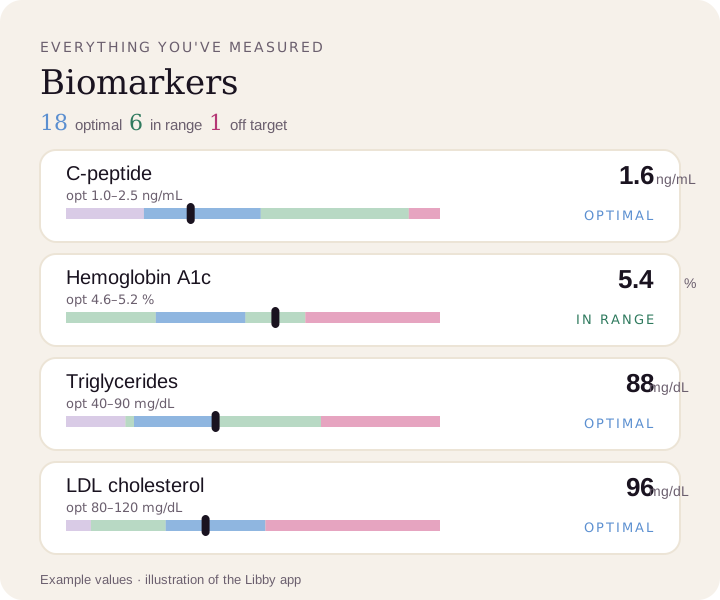
Compare your results to optimal ranges.
Upload a lab PDF or a photo of your report. Libby puts every marker on your lab's range and the optimal range, and tracks your trends over time.
View your C-peptide ›