Calcium blood test: normal range, high and low causes
Blood calcium is tightly controlled. Here's the normal range, the usual reasons it runs high or low, how to read it with PTH and albumin, and when it's urgent.
The calcium on your blood test is the small share of your body's calcium that circulates in your blood. About 99% of your calcium is stored in your bones and teeth. The 1% in your blood keeps your nerves, muscles and heart working, and your body holds it in a narrow range.1 When it drifts out of that range, one more test, PTH (parathyroid hormone), sorts out most of the causes.23
The short version
- Normal: check the range on your report. Most U.S. labs use about 8.5 to 10.2 mg/dL.4 The optimal range in the Libby app is narrower: 9.2 to 10.0.5
- High usually means an overactive parathyroid gland or cancer. Together they cause about 90% of high calcium. Other causes include thiazide water pills, lithium, and calcium or vitamin D supplements.26
- Low: look at albumin first. It's the blood protein that carries calcium, and when it's low the total reads low while the active calcium can stay normal. True low calcium most often comes from vitamin D deficiency or underactive parathyroid glands.3
- Urgent: 14 mg/dL or higher, or below 7.6, or any low calcium with tingling, muscle spasms or a seizure. That needs care now.27
What calcium is
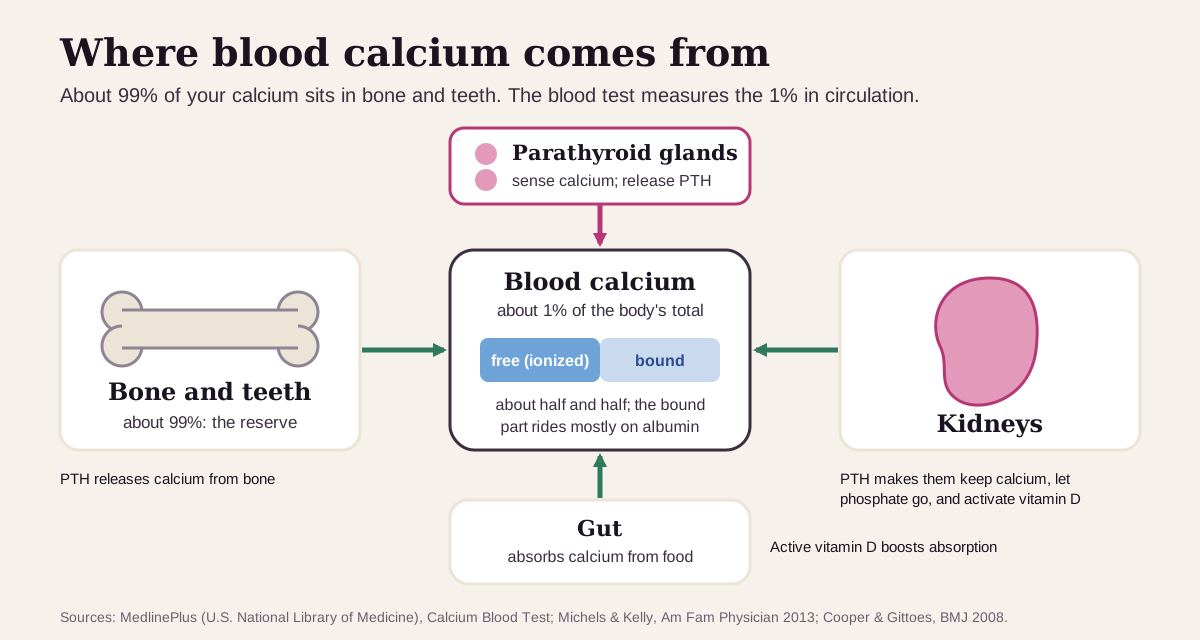
Calcium is one of the most important minerals in your body, and almost all of it is in your skeleton: about 99% sits in bones and teeth. The rest circulates in your blood, where it helps your nerves, muscles and heart work and helps release hormones.1
Your body guards that blood level closely. Four small parathyroid glands sit in your neck behind the thyroid.8 They sense calcium. When it dips, they release PTH, which frees calcium from bone, tells the kidneys to hold on to calcium and let phosphate go, and helps the kidneys make active vitamin D. Active vitamin D raises how much calcium you absorb from food. When calcium rises, PTH is switched off.9
About half of the calcium in your blood is free (also called ionized), the form that does the work. The other half is bound to proteins, mostly albumin.13 The routine test, part of the basic and comprehensive metabolic panels (BMP and CMP), measures total calcium: both halves together. A separate ionized calcium test measures only the free part.1
What's a normal calcium?
Start with the range printed on your own report. Labs use slightly different methods, so their ranges differ, but only by a few tenths:10
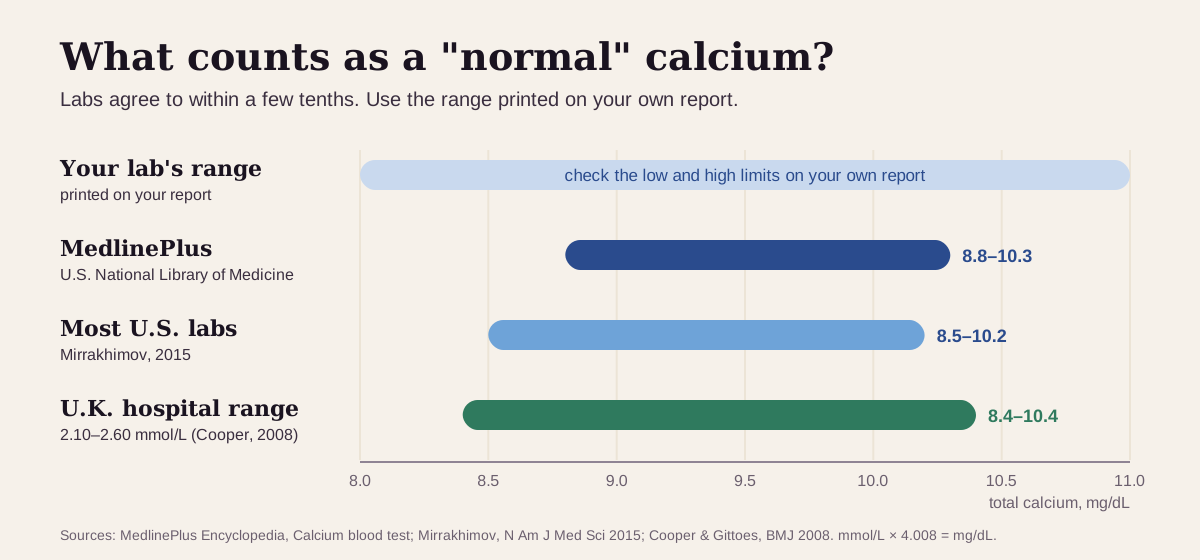
- MedlinePlus, from the U.S. National Library of Medicine, lists 8.8 to 10.3 mg/dL (2.20 to 2.58 mmol/L).10
- Most U.S. labs use about 8.5 to 10.2 mg/dL, according to a 2015 review.4
- A U.K. hospital range is 2.10 to 2.60 mmol/L, about 8.4 to 10.4 mg/dL.3
Calcium is one of the steadiest numbers on your panel. In 30 healthy adults tested every week for 10 weeks, each person's calcium moved only about 1.7% from week to week.11 So small differences carry meaning. A change of about half a point is bigger than normal wobble (more below).
"Optimal" calcium: what health optimizers aim for
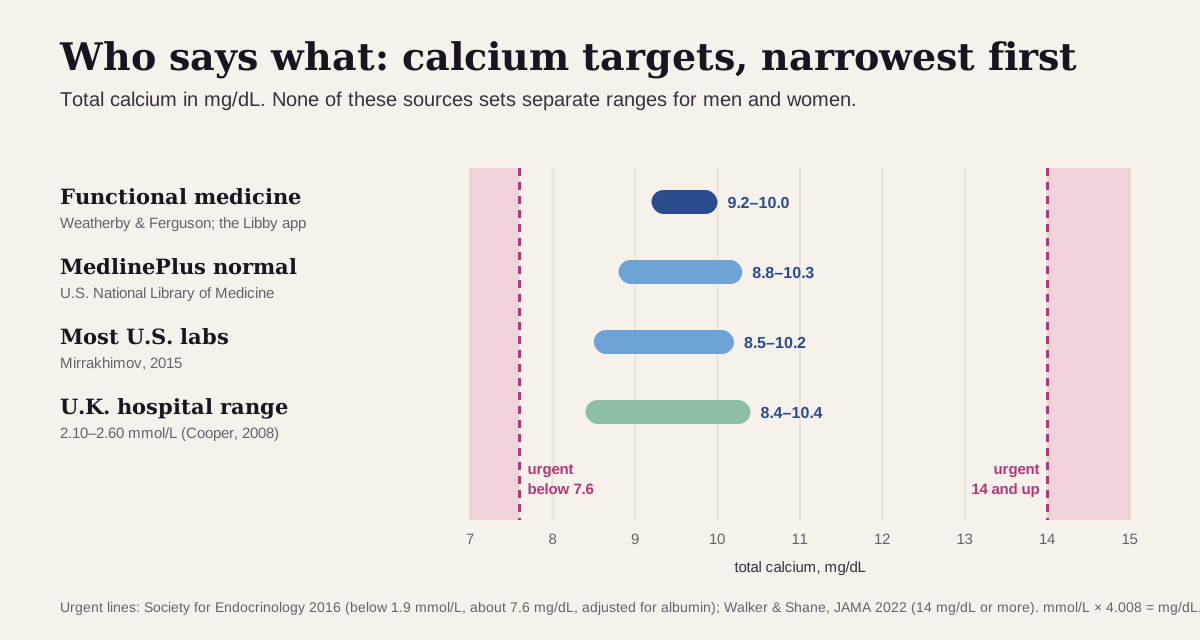
Functional-medicine practitioners aim for a narrower band than the lab range. Here's the ladder, from narrowest to widest:
| Target | Men and women | Who uses it |
|---|---|---|
| Functional medicine | 9.2–10.0 mg/dL | The optimal range shown in the Libby app, which its marker catalog credits to the standard functional-medicine textbook5 |
| U.S. government patient reference | 8.8–10.3 mg/dL | MedlinePlus, U.S. National Library of Medicine10 |
| Typical U.S. lab | 8.5–10.2 mg/dL | Most U.S. laboratories4 |
| U.K. hospital range | 2.10–2.60 mmol/L (8.4–10.4 mg/dL) | A U.K. clinical review in the BMJ3 |
| Watch-and-wait line | less than 1 mg/dL above the upper limit | With an overactive parathyroid, people over 50 in this zone with no kidney or bone problems may be watched rather than treated2 |
| Urgent | below 7.6 mg/dL, or 14 and above | Low: the Society for Endocrinology's emergency line (1.9 mmol/L, adjusted for albumin).7 High: severe hypercalcemia2 |
Why a tighter band? The outcome evidence points at the top of the normal range:
- In the Swedish AMORIS study, 441,738 adults were followed for a median of 21 years. People in the top fifth of calcium (9.6 mg/dL or more, adjusted for albumin) had 1.41 times the risk of dying of heart and blood-vessel disease of people in the bottom fifth (9.0 or less). Their risk of a non-fatal heart attack was 1.19 times as high.12
- Genes point the same way. In 184,305 people, each 0.5 mg/dL of genetically higher calcium came with 25% higher odds of coronary artery disease and 24% higher odds of a heart attack.13
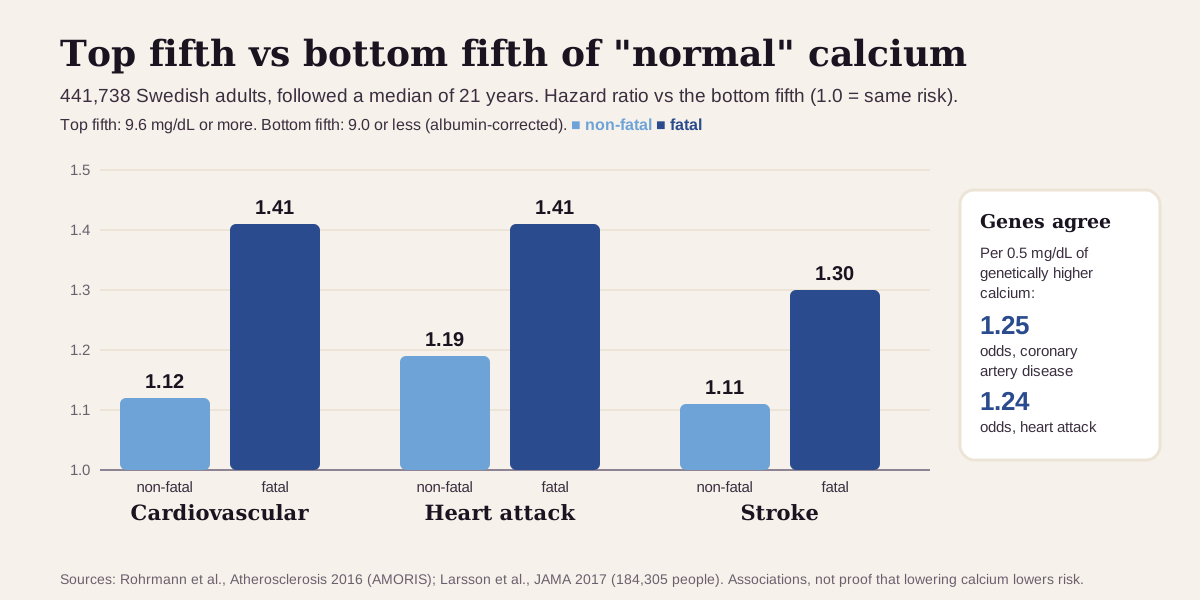
Keep "optimal" in perspective: these are targets, not diagnoses. The outcome studies speak to the top of the range. AMORIS's comparison group, the bottom fifth, sat at 9.0 or below, under the functional floor of 9.2.12 And a truly low calcium is its own problem, usually a sign that vitamin D or the parathyroid glands are falling short (see below).3
What a high calcium usually means
High calcium (hypercalcemia) affects about 1% of people worldwide. Two causes account for about 90% of it: an overactive parathyroid gland and cancer. PTH is the test that tells them apart.2
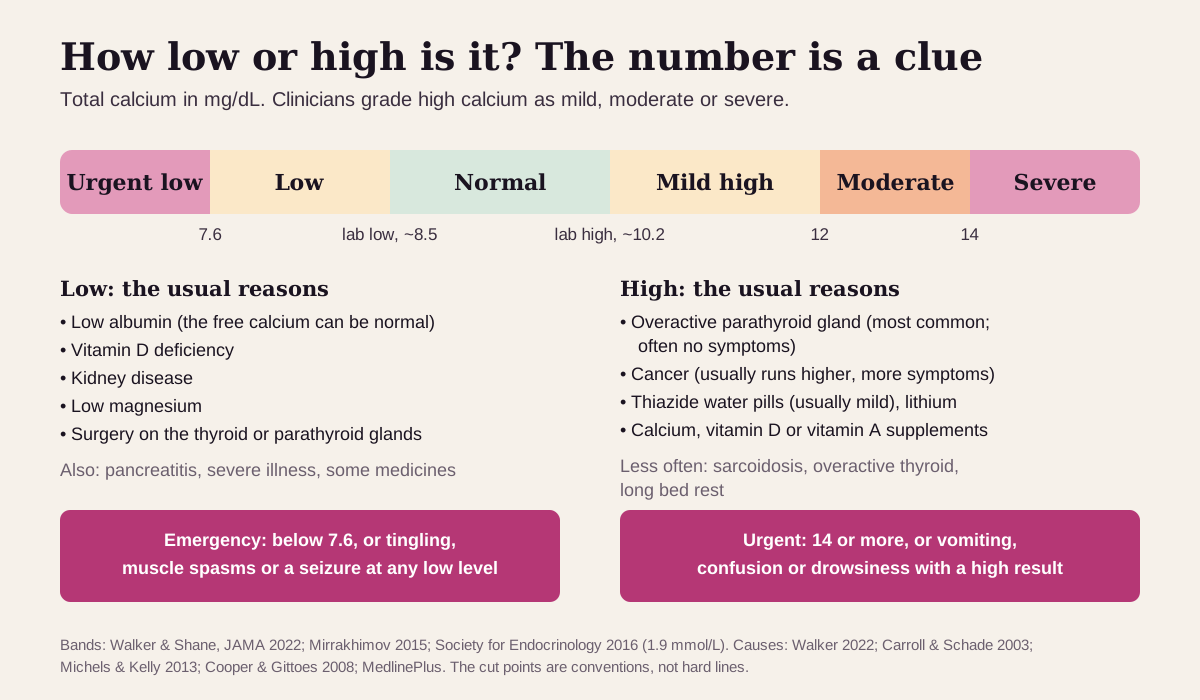
Mildly high calcium (under 12 mg/dL) usually causes no symptoms. About 1 in 5 people notice fatigue or constipation.2
The usual suspects:
- An overactive parathyroid gland (primary hyperparathyroidism). It's the most common cause in people who aren't in the hospital, and it's often found by chance on routine blood work.9 In about 80% of cases, one gland has a benign growth (an adenoma) making too much PTH.6 High calcium is most common in women over 50, and in most of them this is the cause.8 PTH comes back high, or "normal" when it should be switched off.2
- Cancer. Some cancers release a PTH look-alike protein (PTHrP). Others, such as multiple myeloma and breast cancer, break down bone.6 Cancer-related calcium usually runs higher and causes more symptoms, and PTH is suppressed.42
- Medicines and supplements. Thiazide water pills (usually a mild rise), lithium, and calcium, vitamin D or vitamin A supplements.26 Don't stop a prescribed medicine on your own. Bring your full list, supplements included, to your clinician.
- Low fluids. Calcium can read high when your body is low on water.8
- Less common: sarcoidosis and other granuloma-forming diseases, an overactive thyroid, long bed rest, and inherited conditions.26 Some newer medicines, stopping the bone drug denosumab, and ketogenic diets are linked too, but together they cause under 1% of cases.2
Get urgent care if your calcium is 14 mg/dL or higher, or if a high calcium comes with nausea or vomiting, confusion, unusual sleepiness, or signs of dehydration.2
What a low calcium usually means
Check albumin first. Low albumin, from liver disease, malnutrition or many other illnesses, shrinks the bound half of your calcium. The total reads low while the free calcium can be normal.13 Many reports add a "corrected" calcium to adjust for this (more on that below).
True low calcium (hypocalcemia), from the most common causes down:
- Vitamin D deficiency. It's the most common cause of low calcium in primary care.3 PTH rises to hold calcium up, phosphate is low or normal, and 25-hydroxy vitamin D is low.9
- Underactive parathyroid glands (hypoparathyroidism). This most often follows surgery on the thyroid or parathyroid glands.3 PTH is low and phosphate is high.9
- Kidney disease. PTH and phosphate both run high.9
- Low magnesium. Your parathyroid glands need magnesium to release PTH, so low calcium is hard to fix until magnesium is corrected. Causes include poor nutrition with long-term heavy drinking, long-lasting diarrhea and diuretics.3 Acid-reducing PPI medicines can also cause it.7
- Also: pancreatitis, large blood transfusions and some medicines, such as high-dose IV bisphosphonates. Low calcium is common in serious illness: one review puts it at 18% of hospital patients and 85% in intensive care.73
Get care now if your calcium is below 7.6 mg/dL (1.9 mmol/L), or if any low calcium comes with tingling around the mouth or in the fingers, muscle cramps or spasms, or a seizure. The Society for Endocrinology treats that as a medical emergency.71
Calcium reads best next to its neighbors
The pattern across PTH, albumin, phosphate and vitamin D usually says more than calcium does by itself:23
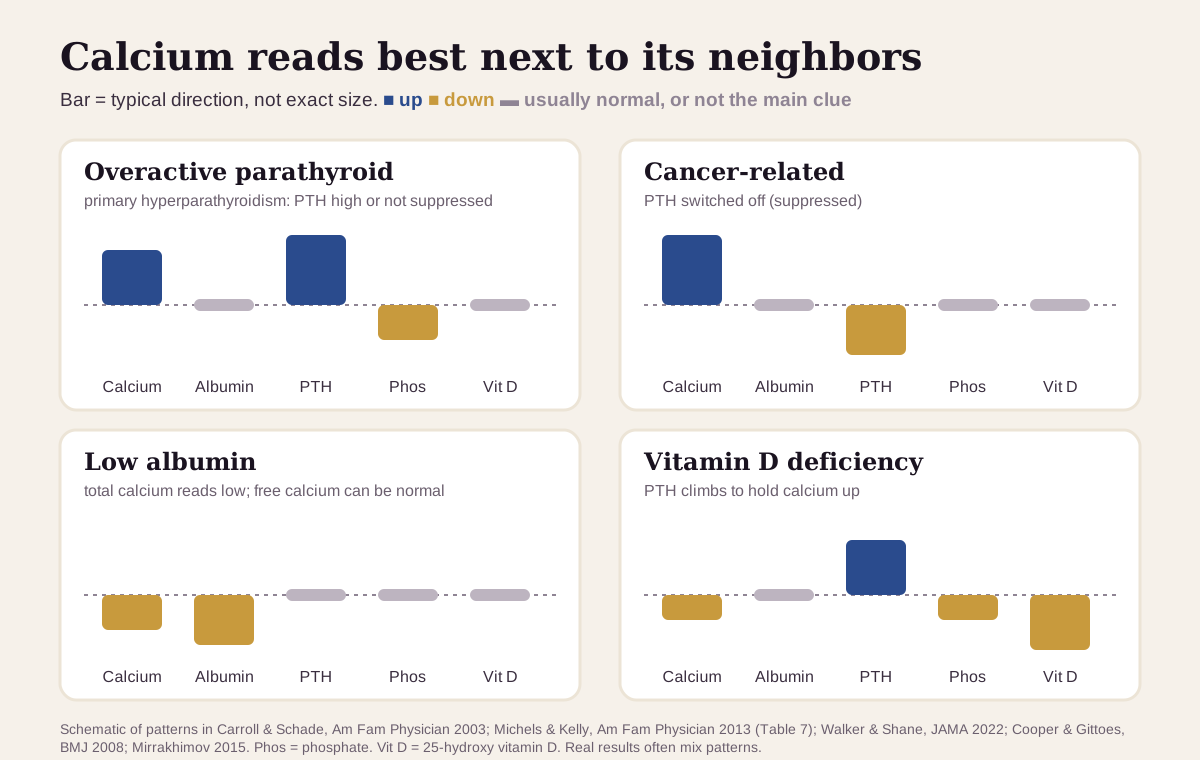
| If you see… | It often points to… |
|---|---|
| High calcium with a high or "normal" PTH, phosphate low | an overactive parathyroid gland (primary hyperparathyroidism) |
| High calcium with a suppressed PTH (under about 20 pg/mL, depending on the lab) | a cause outside the parathyroids, most often cancer; also too much vitamin D or granuloma diseases like sarcoidosis |
| Low total calcium with low albumin | less bound calcium; the free calcium can be normal, and an ionized calcium test settles it |
| Low calcium, high PTH, low 25-hydroxy vitamin D | vitamin D deficiency |
| Low calcium, high PTH, high phosphate | chronic kidney disease |
| Low calcium, low PTH, high phosphate, often after neck surgery | underactive parathyroid glands (hypoparathyroidism) |
Read PTH against calcium, not by itself. When calcium is high, PTH should be switched off, so a PTH in the "normal" range points to the parathyroid glands.24 When calcium is truly low, PTH should be high, and a "normal" PTH is a clue too.3
How fast calcium changes
PTH reacts within minutes. In a classic experiment in six healthy blood donors, a 5.5% drop in free calcium raised PTH by 400% within 10 minutes.14 That tight loop is why calcium barely moves in a healthy person: about 1.7% from week to week.11
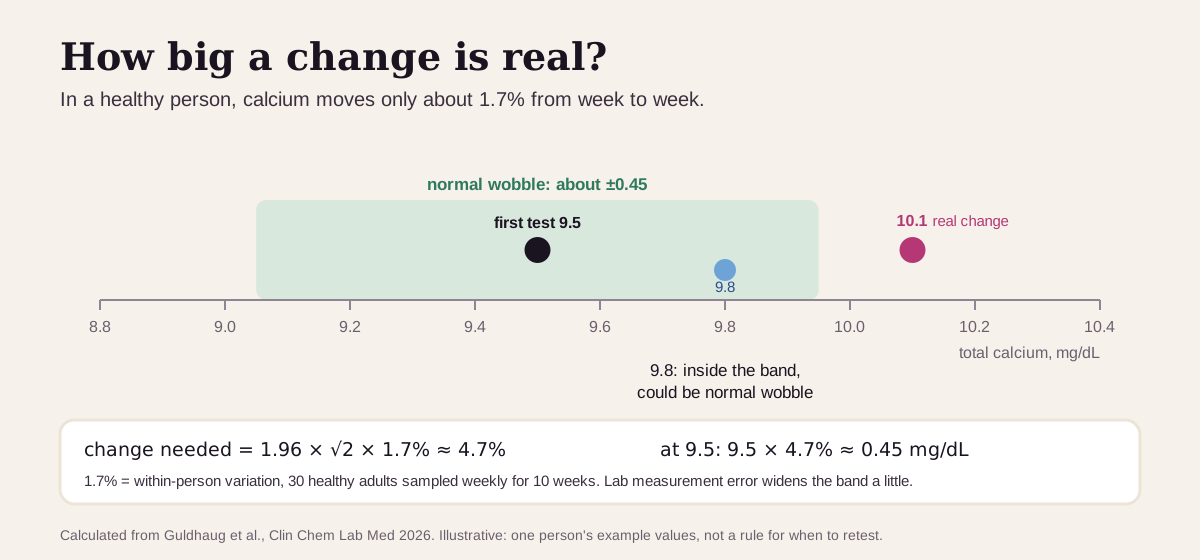
What that means in practice:
- A change of about half a point is real. Because calcium is so steady, two results that differ by more than about 0.45 mg/dL (at a level near 9.5) differ by more than normal wobble.11 Compare results from the same lab when you can, because methods differ.10
- Some things move it temporarily. Being low on fluids can push it up,8 and a fall in albumin can pull the total down.3 Tell whoever orders the test about everything you take, especially vitamin D. You may be asked to pause some supplements first.1
- An overactive parathyroid often moves slowly. For people over 50 whose calcium is less than 1 mg/dL above the upper limit and who have no kidney or bone problems, watching with repeat tests may be appropriate.2
- Trends beat snapshots. A calcium that climbs past that wobble band test after test tells a different story than one that bounces around the same number.11
Going deeper: free calcium, albumin and corrected calcium
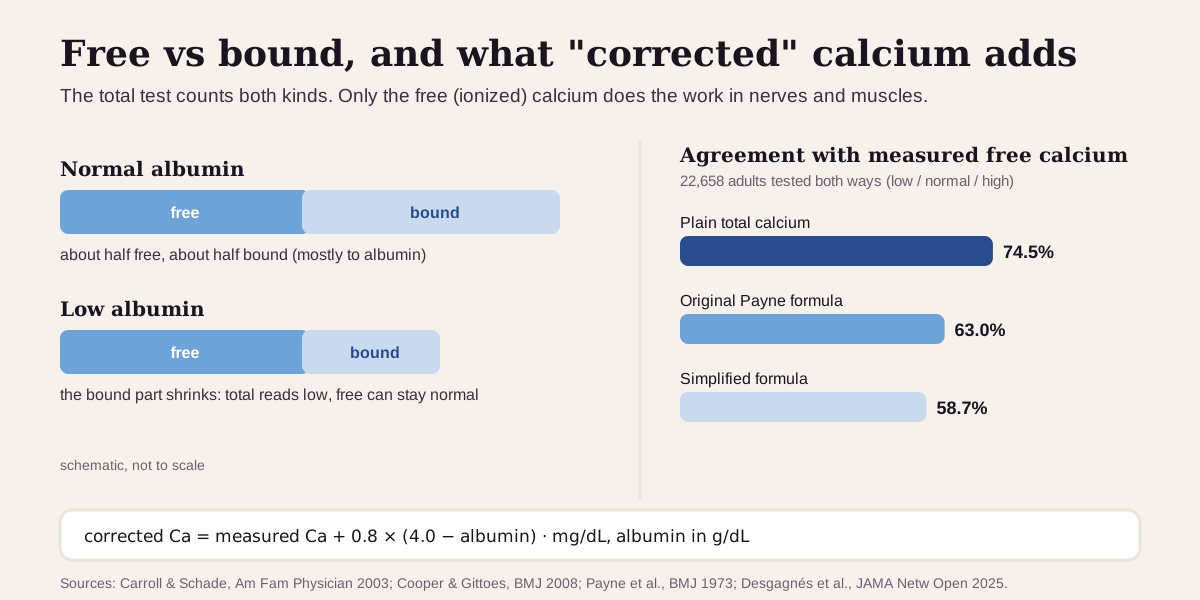
Only the free, ionized calcium is biologically active.3 Because the total test also counts calcium stuck to albumin, many labs report a corrected (albumin-adjusted) calcium:6
Corrected calcium = measured calcium + 0.8 × (4.0 − albumin)
The idea dates to 1973, when researchers derived a formula from 200 blood samples sent for liver tests.15 It's still widely used. But a 2025 study of 22,658 adults who had both tests at once found that plain total calcium matched their measured free-calcium status best: 74.5% agreement, versus 63.0% for the original Payne formula and 58.7% for the simplified one above. The formulas did worst when albumin was low, the very case they're meant to fix.16
When the answer really matters, such as in serious illness, clinicians measure ionized calcium directly.31 That's also the test used when total calcium comes back abnormal or during surgery.1
Questions worth asking
- Is my result total or ionized calcium, and what was my albumin on the same test?
- If my calcium is high, what is my PTH, and is it high, normal or suppressed?
- Should we check my vitamin D (25-hydroxy vitamin D), phosphate, magnesium and kidney function?
- Could any of my medicines or supplements, such as a thiazide, lithium, calcium or vitamin D, be involved?
- How does this result compare with my earlier ones from the same lab?
- When should we repeat it, and what would change the plan?
FAQ
What is a normal calcium level? It depends on your lab. Most U.S. labs use about 8.5 to 10.2 mg/dL, and MedlinePlus lists 8.8 to 10.3.410
What is the most common cause of high calcium? An overactive parathyroid gland (primary hyperparathyroidism). Together with cancer, it causes about 90% of high calcium, and a PTH test tells the two apart.2
Can low albumin make calcium look low? Yes. About half of blood calcium rides on proteins, mostly albumin, so low albumin lowers the total reading, and the free calcium can still be normal. An ionized calcium test settles it.3
When is calcium an emergency? A calcium of 14 mg/dL or more, especially with vomiting or confusion, needs urgent care. So does a calcium below 7.6, or any low calcium with tingling, spasms or a seizure.27
This guide is for education. It can't diagnose you or replace care from a clinician who knows your history.
Footnotes
-
National Library of Medicine. Calcium Blood Test. MedlinePlus. Last updated December 2, 2024. About 1% of body calcium is in the blood; bound and free calcium are normally present in about equal amounts; total calcium is part of the BMP and CMP; the ionized test for abnormal totals, serious illness and surgery; symptoms and preparation. MedlinePlus ↩ ↩2 ↩3 ↩4 ↩5 ↩6 ↩7 ↩8 ↩9
-
Walker MD, Shane E. Hypercalcemia: A Review. JAMA. 2022;328(16):1624–1636. Prevalence (about 1%), mild (under 12 mg/dL) and severe (14 mg/dL or more) hypercalcemia, the 90% share of primary hyperparathyroidism and malignancy, PTH as the key first test, and the observation criteria. PubMed ↩ ↩2 ↩3 ↩4 ↩5 ↩6 ↩7 ↩8 ↩9 ↩10 ↩11 ↩12 ↩13 ↩14 ↩15 ↩16 ↩17 ↩18 ↩19 ↩20 ↩21
-
Cooper MS, Gittoes NJ. Diagnosis and management of hypocalcaemia. BMJ. 2008;336(7656):1298–1302. U.K. normal range, albumin correction, causes of low calcium and how often they occur, and the role of PTH and magnesium. PMC ↩ ↩2 ↩3 ↩4 ↩5 ↩6 ↩7 ↩8 ↩9 ↩10 ↩11 ↩12 ↩13 ↩14 ↩15 ↩16 ↩17 ↩18 ↩19 ↩20 ↩21 ↩22
-
Mirrakhimov AE. Hypercalcemia of Malignancy: An Update on Pathogenesis and Management. N Am J Med Sci. 2015;7(11):483–493. The usual U.S. lab range (8.5–10.2 mg/dL), mild/moderate/severe grades, and why PTH should be suppressed in cancer-related hypercalcemia. PMC ↩ ↩2 ↩3 ↩4 ↩5 ↩6 ↩7 ↩8 ↩9 ↩10
-
Weatherby D, Ferguson S. Blood Chemistry and CBC Analysis: Clinical Laboratory Testing from a Functional Perspective. 2nd ed. Bear Mountain Publishing; 2004. ISBN 978-0976136712. Widely used functional-medicine reference. The Libby app's marker catalog credits it as the source of the optimal calcium range the app shows, 9.2–10.0 mg/dL (range as recorded in the app's catalog; the book itself was not opened for this article). ↩ ↩2 ↩3
-
Carroll MF, Schade DS. A Practical Approach to Hypercalcemia. Am Fam Physician. 2003;67(9):1959–1966. The albumin-correction formula, low phosphate in PTH-driven hypercalcemia, PTHrP, parathyroid adenomas (80%) and common medicine causes. AAFP ↩ ↩2 ↩3 ↩4 ↩5 ↩6 ↩7 ↩8
-
Turner J, Gittoes N, Selby P; Society for Endocrinology Clinical Committee. Society for Endocrinology Endocrine Emergency Guidance: Emergency management of acute hypocalcaemia in adult patients. Endocr Connect. 2016;5(5):G7–G8. Severe hypocalcaemia (below 1.9 mmol/L, or symptoms at any low level) is a medical emergency. PMC ↩ ↩2 ↩3 ↩4 ↩5 ↩6 ↩7 ↩8
-
National Library of Medicine. Hypercalcemia. MedlinePlus Medical Encyclopedia. Reviewed January 25, 2026. The four parathyroid glands, low fluids as a cause, and hypercalcemia being most common in women over 50. MedlinePlus ↩ ↩2 ↩3 ↩4
-
Michels TC, Kelly KM. Parathyroid Disorders. Am Fam Physician. 2013;88(4):249–257. How PTH controls calcium, primary hyperparathyroidism as the most common cause of high calcium in outpatients, and lab patterns in low calcium (Table 7). AAFP ↩ ↩2 ↩3 ↩4 ↩5 ↩6
-
National Library of Medicine. Calcium blood test. MedlinePlus Medical Encyclopedia. Reviewed November 6, 2025. Normal values 8.8 to 10.3 mg/dL (2.20 to 2.58 mmol/L), varying slightly by lab. MedlinePlus ↩ ↩2 ↩3 ↩4 ↩5 ↩6 ↩7
-
Guldhaug NA, Røys EÅ, Viste K, et al. Biological variation and inter-relation between key calcium homeostasis biomarkers. Clin Chem Lab Med. 2026;64(5):1124–1132. 30 healthy volunteers sampled weekly for 10 weeks; within-person variation of calcium 1.7%. The ±4.7% band in the figure is calculated from that value. PubMed ↩ ↩2 ↩3 ↩4 ↩5
-
Rohrmann S, Garmo H, Malmström H, Hammar N, Jungner I, Walldius G, Van Hemelrijck M. Association between serum calcium concentration and risk of incident and fatal cardiovascular disease in the prospective AMORIS study. Atherosclerosis. 2016;251:85–93. 441,738 participants, median follow-up 21 years, albumin-corrected calcium. PubMed ↩ ↩2 ↩3
-
Larsson SC, Burgess S, Michaëlsson K. Association of Genetic Variants Related to Serum Calcium Levels With Coronary Artery Disease and Myocardial Infarction. JAMA. 2017;318(4):371–380. Mendelian randomization in 184,305 people. PMC ↩ ↩2
-
Toffaletti J, Cooper DL, Lobaugh B. The response of parathyroid hormone to specific changes in either ionized calcium, ionized magnesium, or protein-bound calcium in humans. Metabolism. 1991;40(8):814–818. PubMed ↩
-
Payne RB, Little AJ, Williams RB, Milner JR. Interpretation of serum calcium in patients with abnormal serum proteins. Br Med J. 1973;4(5893):643–646. The original albumin-adjustment formula, from 200 specimens sent for liver function tests. PMC ↩ ↩2
-
Desgagnés N, King JA, Kline GA, Seiden-Long I, Leung AA. Use of Albumin-Adjusted Calcium Measurements in Clinical Practice. JAMA Netw Open. 2025;8(1):e2455251. 22,658 Alberta adults with total and ionized calcium measured at the same time. PMC ↩ ↩2
Educational content, not medical advice.Libby is a personal record tool, not a medical service — it doesn't diagnose, treat, or prescribe. Reference ranges vary by lab and by person. Talk to a qualified healthcare professional about your results.
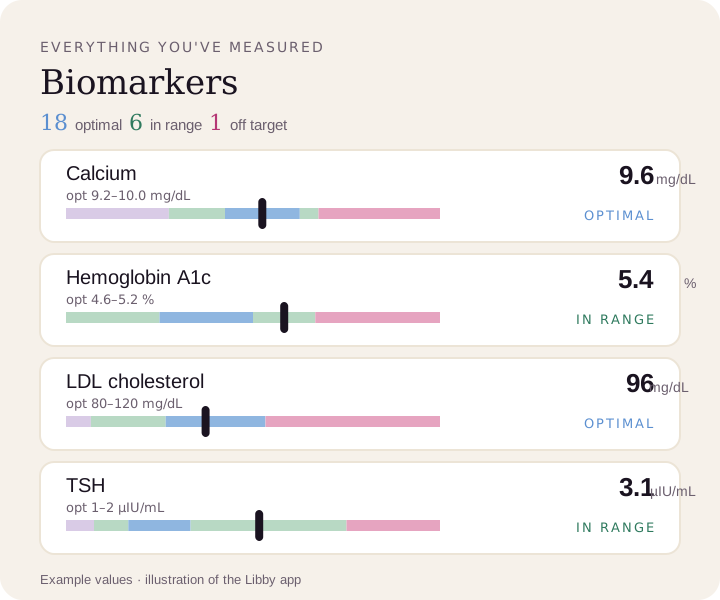
Compare your results to optimal ranges.
Upload a lab PDF or a photo of your report. Libby puts every marker on your lab's range and the optimal range, and tracks your trends over time.
View your calcium ›