Troponin test: normal levels, high results, next steps
Troponin is the blood test for heart-muscle injury. Here's what's normal on each test, what a high result usually means, and when it's an emergency.
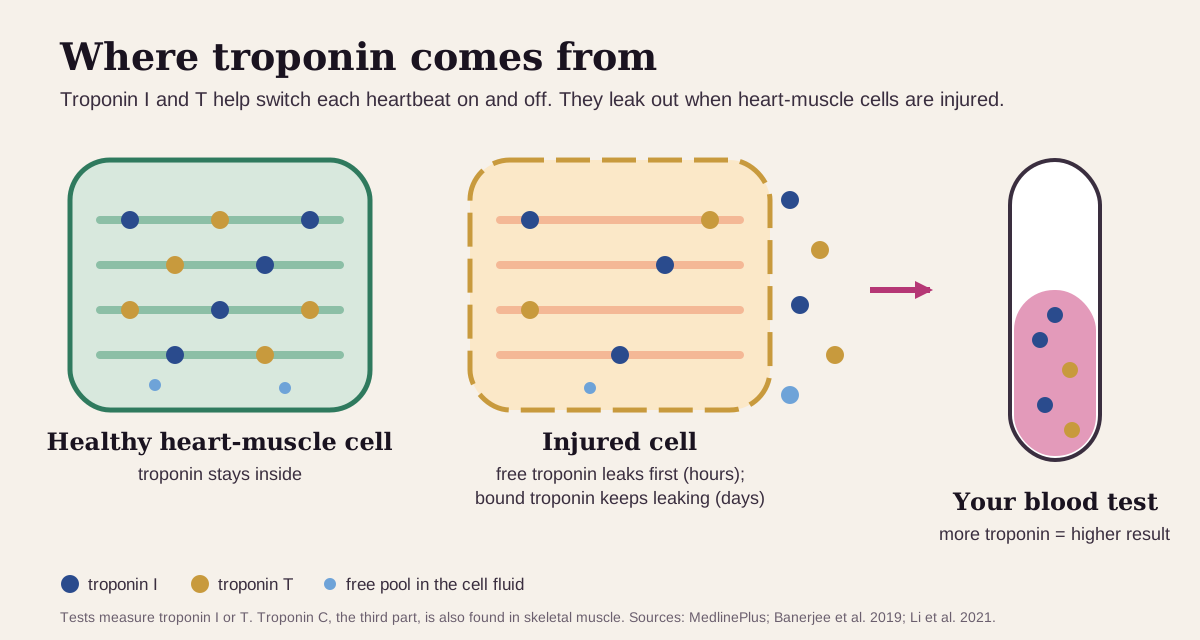
Cardiac troponin is a protein made only by heart-muscle cells, where it helps switch each heartbeat on and off. When those cells are injured, troponin leaks into your blood. So a high troponin means your heart muscle has been injured, and it's the main blood test doctors use to check for a heart attack.12
The short version
- Normal: at or below your lab's flag, the level that 99 of 100 healthy people stay under. The flag depends on the test. On two common FDA-cleared tests it's 17 ng/L for women and 35 for men (Abbott troponin I) and 14 and 22 (Roche troponin T).34
- High means heart-muscle injury. A heart attack is the cause doctors rule out first. Heart failure, kidney disease, a very fast heart rhythm, a lung clot, severe infection and a long endurance race can all raise it too.51
- Urgent: chest pain or pressure, trouble breathing, or pain spreading to your arm, back, neck or jaw. Call 911, whatever an earlier test showed.1 A level that rises or falls over a few hours means the injury is happening now.5
- Troponin I and troponin T are different tests with different numbers. Compare a result only with earlier results from the same test.5
What troponin is
Troponin is part of the machinery that makes muscle contract. It's a set of three proteins, C, I and T, that sit on the thin filaments inside each muscle cell and work as a calcium-controlled switch for each contraction.67 Heart muscle makes its own versions of troponin I and T, so blood tests measure one of those two. Troponin C is left out because skeletal muscle has it too.6
Most troponin is bound to that machinery, and a little floats free in the cell fluid. When heart-muscle cells are injured, the free troponin comes out first, within hours. The bound troponin keeps leaking as the damaged structure breaks down, which is why levels can stay up for 10 to 14 days after a heart attack.2
Troponin is mostly tested in the emergency room when someone has chest pain, and before and after heart surgery.1 Today's high-sensitivity tests can also measure the tiny amount most healthy people carry: across 28 studies, 80% of people had a measurable level.8
What's a normal troponin?
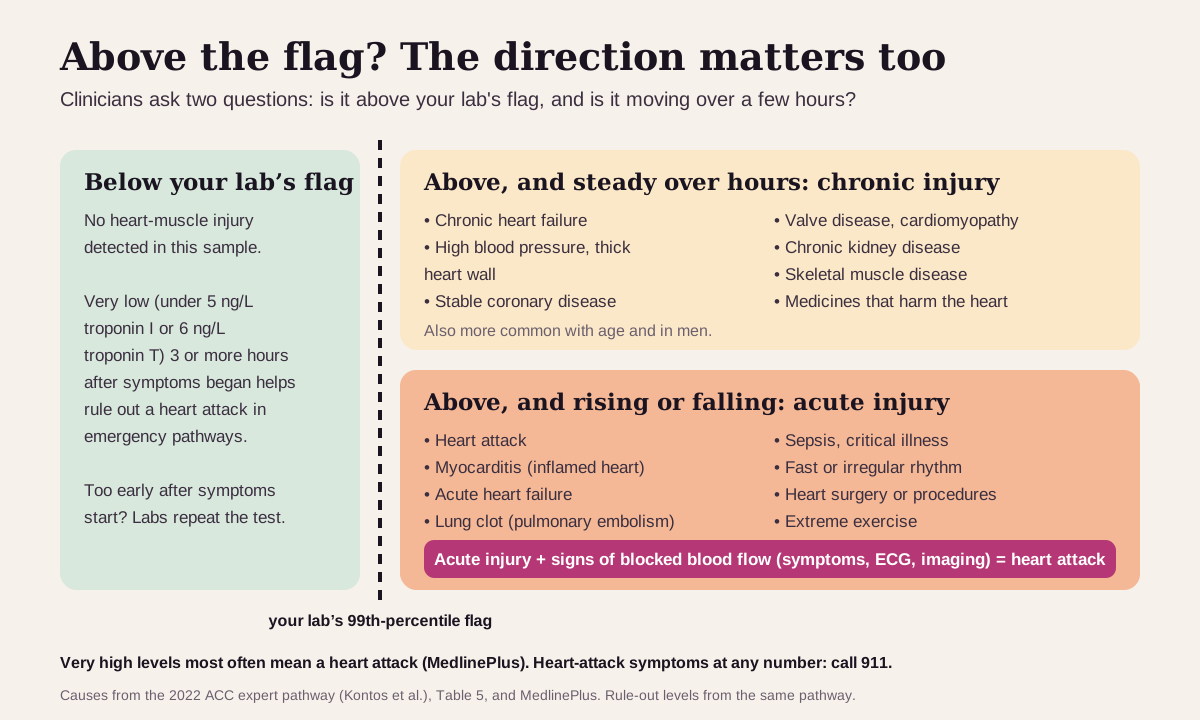
Normal means at or below your lab's flag. That flag is the 99th percentile: the level that 99 of every 100 healthy people in a reference group stay at or under. A result above it is called myocardial injury, which means heart-muscle injury.5
The flag depends on the test. Troponin I and troponin T are different proteins, and each test's maker sets its own flag from its own group of healthy people. Numbers and cutoffs from one test don't carry over to another.5 Two common high-sensitivity tests show the spread:
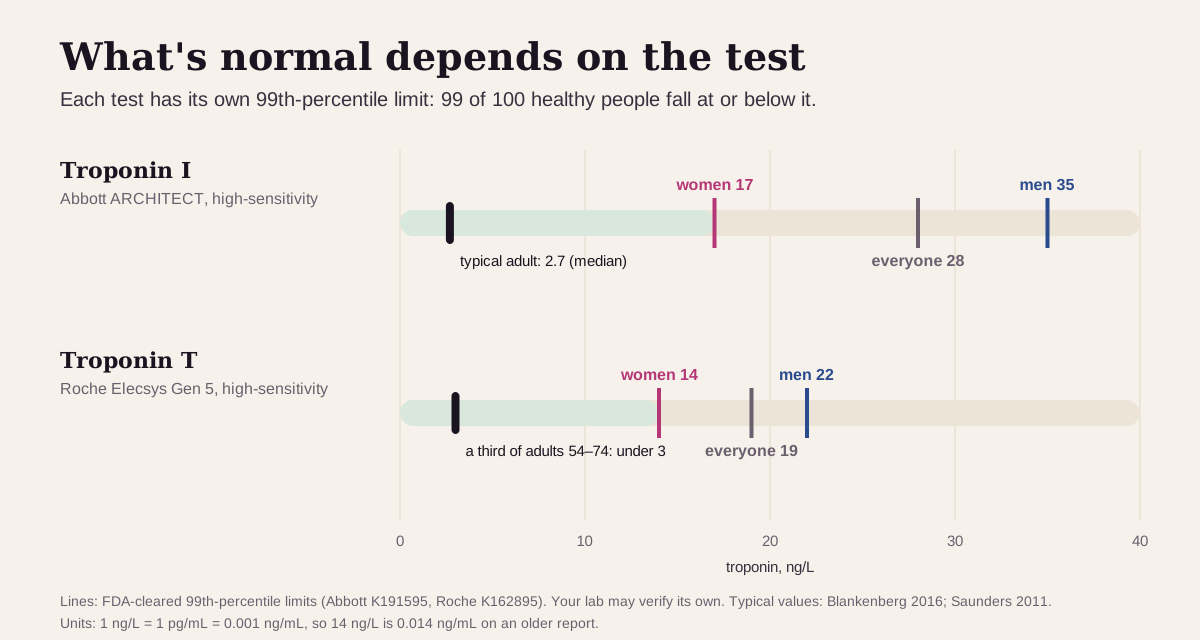
- Abbott ARCHITECT high-sensitivity troponin I: 17 ng/L for women, 35 for men, and 28 as a single cutoff, from 1,531 healthy U.S. adults.3
- Roche Elecsys Troponin T Gen 5: 14 ng/L for women, 22 for men, and 19 as a single cutoff, from 1,301 healthy U.S. adults.4
Most healthy adults have a little troponin in their blood. In 74,738 Europeans, the median troponin I was 2.7 ng/L.9 In the ARIC study, a third of adults aged 54 to 74 had troponin T too low to measure (under 3 ng/L).10
Men run higher than women, and levels rise with age.5 In the Dallas Heart Study, a measurable troponin T turned up in 37% of men and 13% of women, and in 14% of people under 40 versus 58% of those 60 and older.11 That's why U.S. experts endorse separate flags for men and women: they catch more heart attacks in women and cut false alarms in men.5
"Optimal" troponin: what health optimizers aim for
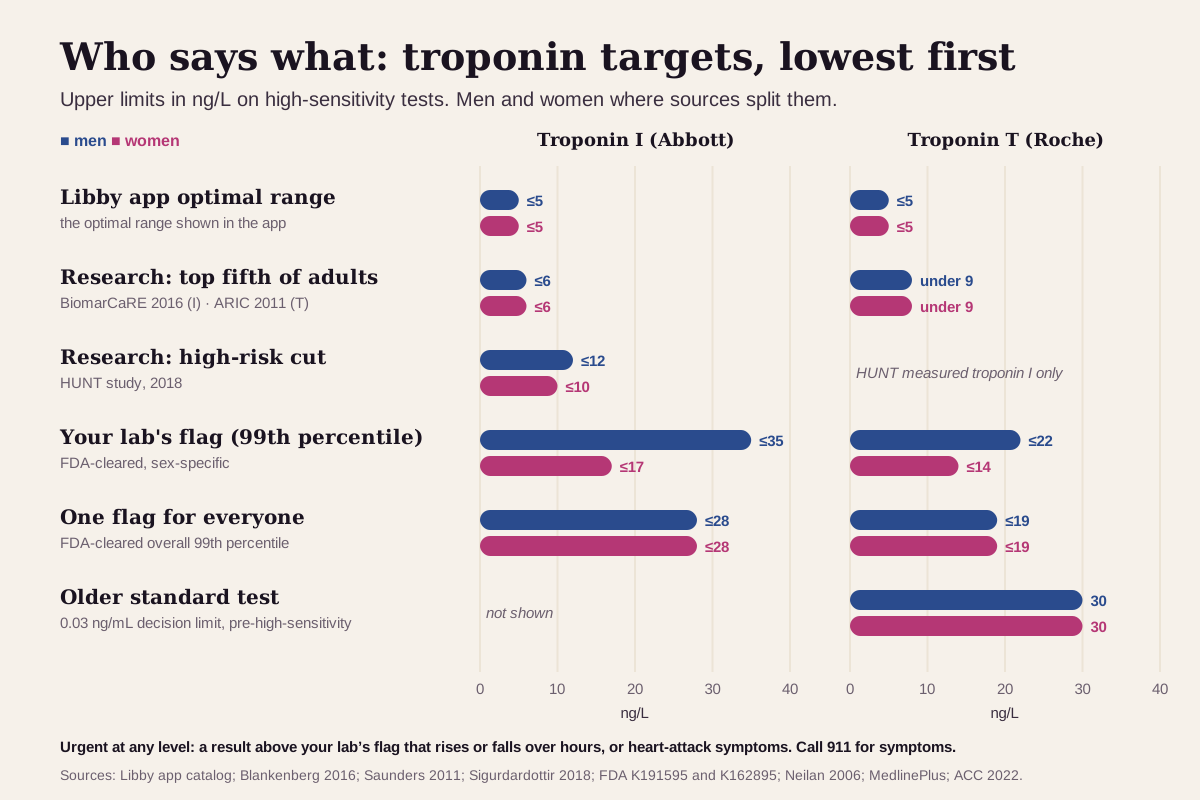
For troponin, optimal means low. Population studies show risk climbing well below the lab's flag, so the Libby app and several research groups draw their lines far under it. Here's who uses which number, from lowest to highest:
| Target | Troponin I (men / women) | Troponin T (men / women) | Who uses it |
|---|---|---|---|
| Libby app optimal range | 5 ng/L or less for both | 5 ng/L or less for both | The optimal range shown in the Libby app: one line for both tests and both sexes, lower than the research cut points below |
| Research: top fifth of adults | 6 ng/L or less for both | under 9 ng/L for both | BiomarCaRE's cut point for troponin I;9 in ARIC, the top fifth of troponin T started at 910 |
| Research: high-risk cut | 12 / 10 ng/L or less | n/a (HUNT measured troponin I) | The HUNT study in Norway12 |
| Your lab's flag (sex-specific) | 35 / 17 ng/L | 22 / 14 ng/L | FDA-cleared 99th percentiles, and the line that defines heart-muscle injury345 |
| One flag for everyone | 28 ng/L | 19 ng/L | The same tests' single cutoff34 |
| Older standard test | n/a | 0.03 ng/mL (30 ng/L) | The decision limit before high-sensitivity tests13 |
| Urgent | above the flag and rising or falling | same | Acute injury; with symptoms, call 91151 |
Why the low targets aren't just a trend:
- Across 28 studies and 154,052 people without heart disease, those in the top third of troponin had 43% more heart attacks and strokes and 67% more deaths from them than those in the bottom third. The authors' conclusion: a high troponin within the normal range carries risk.8
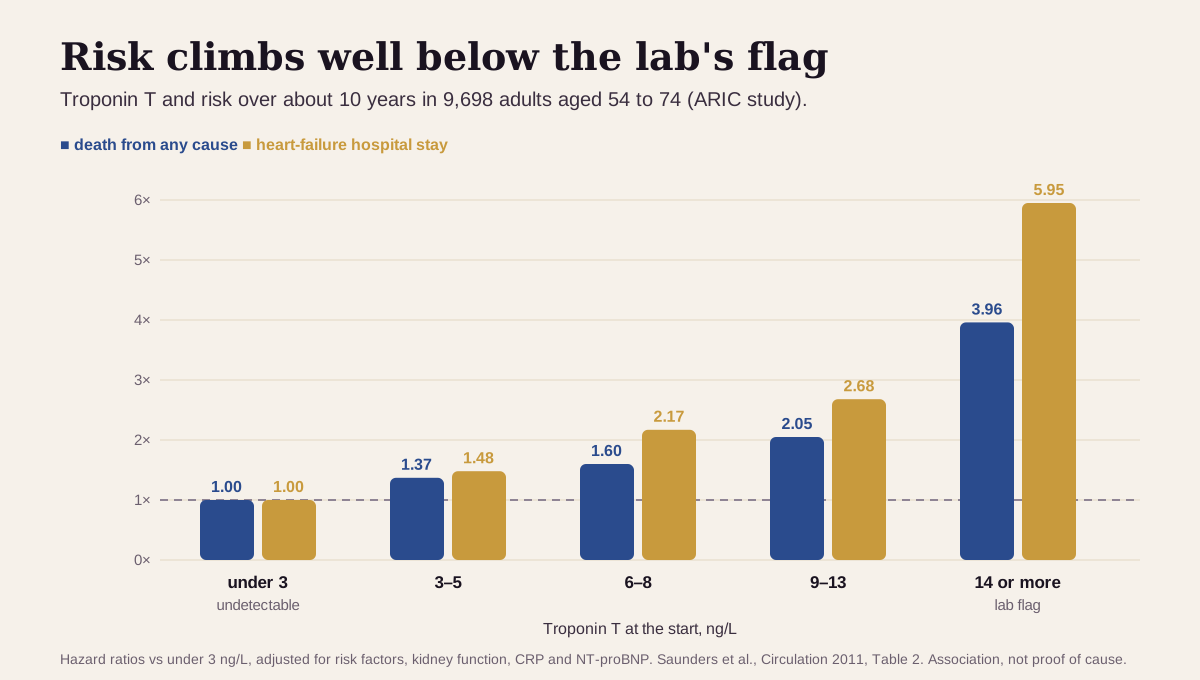
- In the ARIC study, 9,698 adults aged 54 to 74 were followed for about 10 years. Compared with people whose troponin T was too low to measure, those at 9 to 13 ng/L, still under the flag of 14, had about twice the risk of dying (2.05) and 2.7 times the risk of a hospital stay for heart failure. That held after accounting for blood pressure, cholesterol, diabetes, kidney function, CRP and NT-proBNP.10
- In BiomarCaRE's 74,738 Europeans, troponin I above 6 ng/L (the top fifth) came with 1.87 times the risk of dying of cardiovascular disease.9
- In Norway's HUNT study of 9,005 adults without heart disease, troponin I above 12 ng/L in men or 10 in women came with 3.6 times the risk of a heart attack, a heart-failure hospital stay or cardiovascular death over a median of 13.9 years.12
Keep "optimal" in perspective. These cut points come from population studies: they flag risk, and they're no diagnosis. Troponin is a sign of strain on the heart muscle, so it's the strain you treat, not the number. The U.S. emergency-care pathway puts it plainly: detectable troponin is "a continuum of risk," so no detectable level counts as truly normal.5
The number can move. In the WOSCOPS trial, a statin lowered troponin by 13% in a year, and men whose troponin fell by more than a quarter had the lowest coronary risk: 1.4% over 5 years.14 In ARIC, higher troponin traveled with high blood pressure, diabetes and lower kidney function,10 which is where the levers are.
What a high troponin usually means
Start with how you feel. If you have symptoms of a heart attack right now, skip the reading and call 911.
Get care now: call 911 if you have chest pain, heaviness or discomfort; pain in one or both arms, your back, shoulders, neck or jaw; trouble breathing at rest or with light activity; nausea or vomiting; dizziness; or heavy sweating for no reason. Symptoms can be mild or intense, and they can come and go over several hours.1
Then look at two things: how far above the flag it is, and whether it moves over a few hours. A result above the flag is heart-muscle injury. If it rises or falls between tests a few hours apart, the injury is acute, meaning it's happening now. If it stays about the same, it's chronic.5
In the emergency room: rule out a heart attack first
Hospitals test troponin on arrival and again 1, 2 or 3 hours later, using a pathway built for their exact test.5 A heart attack is diagnosed when troponin rises or falls above the flag and there are signs of blocked blood flow: typical symptoms, new ECG changes, or a new wall-motion problem on heart imaging.5 Very high levels most often mean a heart attack.1
Many high results turn out to be something else. When U.S. emergency departments applied rapid troponin pathways to broad groups of patients, only 20% to 50% of those flagged turned out to have a heart attack.5 Other causes of a sudden rise include myocarditis (an inflamed heart muscle), acute heart failure, a lung clot, sepsis, a fast or irregular heart rhythm, a spike in blood pressure, heart surgery or procedures, and extreme exercise.51
Kidney function changes the odds. In 46,927 people tested for a possible heart attack, troponin I was above the flag in 10% of those with normal kidney function (eGFR 90 or more) and in 66% of those with eGFR under 30. Among people with a high result, the share who'd had a classic heart attack fell from 74% to 35%.15
On a routine test when you feel fine: usually a heart under long-term strain
A small, steady rise on a routine panel usually points to a heart that has been working harder for a long time. In the Dallas Heart Study, 48% of people in the highest troponin T group had a thickened heart wall, versus 7.5% in the lowest group; weak pumping and chronic kidney disease also climbed with troponin.11 In ARIC, people with higher troponin were older, more often men, and more likely to have high blood pressure, diabetes and lower kidney function.10
The usual suspects:
- High blood pressure and a thickened heart wall (left ventricular hypertrophy).115
- Heart failure or a weak heart pump. NT-proBNP is the companion test.516
- Chronic kidney disease. Troponin, and NT-proBNP with it, climbs as kidney disease advances.615
- Stable coronary artery disease, valve disease or a cardiomyopathy.5
- A long, hard endurance effort in the past two or three days. After a marathon, troponin T peaked at the finish and was back to baseline within 72 hours.17
- Less common: antibodies against troponin. They turn up in 2% to 20% of people and can keep a result high without new injury (see below).7
A result above your lab's flag, even with no symptoms, is worth a prompt call to your clinician. The usual next steps are a repeat test to see whether it's moving, an ECG, a heart ultrasound (echocardiogram), and kidney tests.5
What a low or undetectable troponin means
Lower is better. In ARIC, the third of adults whose troponin T was too low to measure had the lowest risk of heart disease, heart failure and death.10 A report that says "<6" or "undetectable" means your level was below the smallest amount that test reports as a number; for Roche's troponin T in the U.S., that's 6 ng/L.5
In the emergency room, a very low level helps rule out a heart attack: under 5 ng/L of troponin I or under 6 ng/L of troponin T, measured 3 or more hours after symptoms began, with a normal ECG.5 Timing matters. Troponin usually takes 2 to 3 hours to rise after a heart attack begins, so an early normal result gets repeated.1
Troponin reads best next to its neighbors
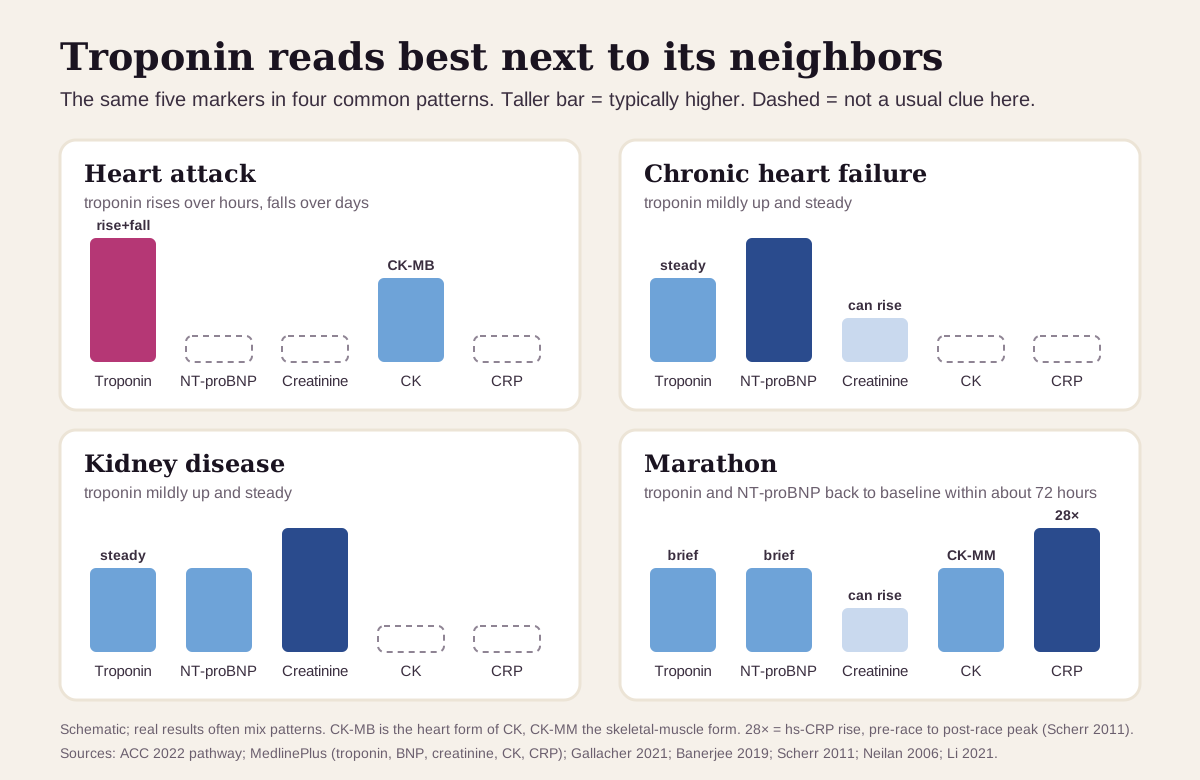
A high troponin usually means heart-muscle injury. The markers around it help show why:116
| If you see… | It often points to… |
|---|---|
| Troponin rising over hours, CK-MB up, with chest symptoms or ECG changes | a heart attack: call 9115161 |
| Troponin mildly up and steady, NT-proBNP high | a heart under strain, often heart failure516 |
| Troponin mildly up and steady, creatinine high (eGFR low), often NT-proBNP up too | chronic kidney disease61516 |
| Troponin, NT-proBNP, CK and CRP all up after a marathon | a race effect; troponin and NT-proBNP usually settle within about 72 hours171316 |
| Troponin high for weeks, in a pattern that fits nothing else | antibody interference (macrotroponin): ask the lab to check7 |
How fast troponin changes
In a heart attack, troponin rises over hours and lingers for days. It usually starts rising 2 to 3 hours after a heart attack begins and can keep rising for about 24 hours.1 In studies summarized by Li and colleagues, troponin T was above the 14 ng/L flag by 2.8 hours after symptoms began, peaked around 12 hours at a median of 212 ng/L (range 17 to 5,600), and can stay above the flag for 10 to 14 days.2
After a long race, it spikes and settles fast. In 102 men who ran a marathon, troponin T was a median of 31 ng/L at the finish and 3.6 ng/L 72 hours later.17 A meta-analysis of 1,421 athletes found the same shape: a rise within an hour, a peak about 3 hours after the midpoint of a 2.5-hour run, and a return to normal in 2 to 3 days.2
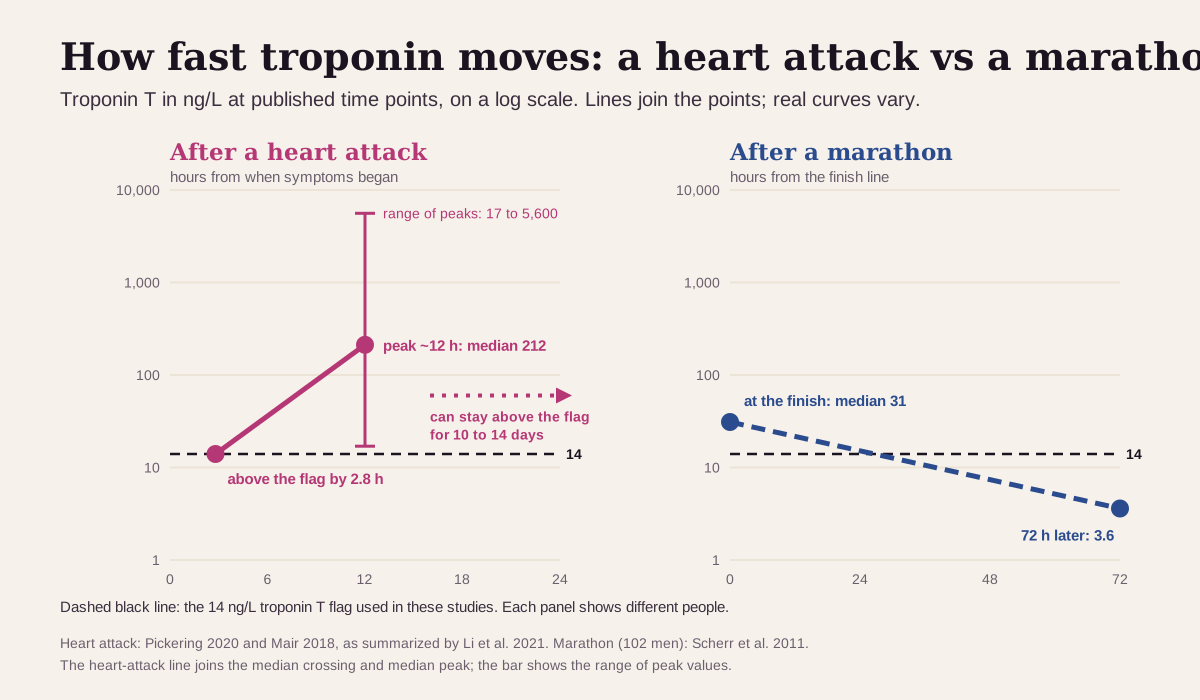
What that means in practice:
- Timing is part of the result. Hospitals repeat the test within a few hours because an early normal value can come before the rise.51
- Mention hard exercise when you're tested. In one study of Boston Marathon runners, more than 60% were above the flag after the race.13 A marathon or other long, hard endurance effort in the past three days is worth telling your clinician about.171
- Trends beat snapshots on routine tests. In healthy people, troponin varies by about 4% to 5% in the short term and 11% to 15% over longer stretches, so a small change is usually noise.18 A bigger, lasting change matters: in WOSCOPS, men whose troponin rose by more than a quarter over a year had far more coronary events than men whose level fell.14 Compare results from the same test, ideally at the same lab.5
Going deeper: the tests behind the number
What "high-sensitivity" means. A test earns the label when it's precise at the flag (imprecision of 10% or less at the 99th percentile) and can measure troponin in at least half of healthy men and women.5 The jump was big: in the Dallas Heart Study, the older standard test found troponin T in 0.7% of adults, and the high-sensitivity test found it in 25%.11
Why the flag itself is an estimate. Each flag comes from a reference group of healthy people, and for some tests it can shift when just 1 or 2 people with high values are dropped from that group.5 Abbott's own data put its 99th percentile for men at 35 ng/L, with a 90% confidence range of 27 to 44.3
Acute versus chronic, in numbers. The Fourth Universal Definition of Myocardial Infarction calls injury acute when troponin changes by 20% or more between samples, with at least one value above the flag. Near the flag, a fixed change in ng/L, set for each test, works better, and that's what rapid pathways use.5
Two things that can fool the test.
- Biotin (vitamin B7) and supplements that contain it can make troponin read lower than it really is. Tell whoever orders the test if you take it.1
- Antibodies against troponin. Antibodies that bind troponin turn up in 2% to 20% of people. They can make a test read high, or join troponin into a large complex called macrotroponin that lingers in the blood. Labs check by retesting on a different troponin test or by precipitating the antibodies out of the sample.7
Questions worth asking
- Was this troponin I or troponin T, and what flag does this lab use for my sex?
- How far above the flag is it, and did it rise or fall on a repeat test?
- Could hard exercise, my kidney function or a recent illness explain it?
- Would an ECG, a heart ultrasound or an NT-proBNP test help?
- What are my blood pressure, cholesterol and blood sugar doing, and what would lower my heart risk?
- If the number fits nothing else, could the lab check for antibody interference?
FAQ
What is a normal troponin level? At or below your lab's flag, which depends on the test. On two common FDA-cleared tests, the flags are 17 ng/L for women and 35 for men (Abbott troponin I) and 14 and 22 (Roche troponin T).34
Does a high troponin mean I had a heart attack? It means heart-muscle injury. A heart attack also needs a rise or fall over hours plus signs of blocked blood flow. Heart failure, kidney disease, fast heart rhythms, lung clots, severe infection and endurance races can all raise troponin.51
Can exercise raise troponin? Yes. After a marathon, troponin T was a median of 31 ng/L at the finish and 3.6 ng/L 72 hours later.17 Mention recent hard exercise when you're tested.
What troponin level is optimal? Lower is better. The Libby app's optimal range is 5 ng/L or less on both troponin I and troponin T, for men and women. In large studies, risk climbed from about 6 ng/L of troponin I and 9 ng/L of troponin T.910
This guide is for education. It can't diagnose you or replace care from a clinician who knows your history.
Footnotes
-
National Library of Medicine. Troponin Test. MedlinePlus. What troponin is, heart-attack symptoms and when to call 911, the 2–3-hour rise and 24-hour climb, causes of a high result, and biotin. MedlinePlus ↩ ↩2 ↩3 ↩4 ↩5 ↩6 ↩7 ↩8 ↩9 ↩10 ↩11 ↩12 ↩13 ↩14 ↩15 ↩16 ↩17 ↩18
-
Li F, Hopkins WG, Wang X, Baker JS. Kinetics, Moderators and Reference Limits of Exercise-Induced Elevation of Cardiac Troponin T in Athletes: A Systematic Review and Meta-Analysis. Front Physiol. 2021;12:651851. 13 studies of 1,421 athletes; its discussion summarizes heart-attack time courses (Pickering 2020; Mair 2018). PMC ↩ ↩2 ↩3 ↩4 ↩5 ↩6
-
U.S. Food and Drug Administration. 510(k) decision summary K191595: ARCHITECT STAT High Sensitivity Troponin-I (Abbott), September 13, 2019. 99th percentiles of 17 ng/L (women), 35 (men) and 28 (overall) in 1,531 healthy U.S. adults. FDA ↩ ↩2 ↩3 ↩4 ↩5 ↩6 ↩7 ↩8
-
U.S. Food and Drug Administration. 510(k) decision summary K162895: Elecsys Troponin T Gen 5 STAT (Roche). 99th percentiles of 14 ng/L (women), 22 (men) and 19 (both) in 1,301 healthy U.S. adults aged 21–89. FDA ↩ ↩2 ↩3 ↩4 ↩5 ↩6 ↩7
-
Kontos MC, de Lemos JA, Deitelzweig SB, et al. 2022 ACC Expert Consensus Decision Pathway on the Evaluation and Disposition of Acute Chest Pain in the Emergency Department. J Am Coll Cardiol. 2022;80(20):1925–1960. The U.S. cardiology pathway: the definitions of injury and heart attack (from the Fourth Universal Definition), the causes table, rule-out levels, high-sensitivity criteria and reporting rules. PMC ↩ ↩2 ↩3 ↩4 ↩5 ↩6 ↩7 ↩8 ↩9 ↩10 ↩11 ↩12 ↩13 ↩14 ↩15 ↩16 ↩17 ↩18 ↩19 ↩20 ↩21 ↩22 ↩23 ↩24 ↩25 ↩26 ↩27 ↩28 ↩29 ↩30 ↩31 ↩32 ↩33
-
Banerjee D, Perrett C, Banerjee A. Troponins, Acute Coronary Syndrome and Renal Disease: From Acute Kidney Injury Through End-stage Kidney Disease. Eur Cardiol. 2019;14(3):187–190. The troponin complex, and higher troponin and NT-proBNP with more advanced kidney disease. PMC ↩ ↩2 ↩3 ↩4 ↩5
-
Salaun E, Drory S, Coté MA, et al. Role of Antitroponin Antibodies and Macrotroponin in the Clinical Interpretation of Cardiac Troponin. J Am Heart Assoc. 2024;13(12):e035128. How often antitroponin antibodies occur, how they distort results, and how labs confirm them. PMC ↩ ↩2 ↩3 ↩4
-
Willeit P, Welsh P, Evans JDW, et al. High-Sensitivity Cardiac Troponin Concentration and Risk of First-Ever Cardiovascular Outcomes in 154,052 Participants. J Am Coll Cardiol. 2017;70(5):558–568. Meta-analysis of 28 studies of people without heart disease. PMC ↩ ↩2
-
Blankenberg S, Salomaa V, Makarova N, et al. Troponin I and cardiovascular risk prediction in the general population: the BiomarCaRE consortium. Eur Heart J. 2016;37(30):2428–2437. 74,738 people in 10 European cohorts, measured on the Abbott ARCHITECT test; median 2.7 ng/L and a proposed cut point of 6 ng/L. PMC ↩ ↩2 ↩3 ↩4 ↩5 ↩6
-
Saunders JT, Nambi V, de Lemos JA, et al. Cardiac troponin T measured by a highly sensitive assay predicts coronary heart disease, heart failure, and mortality in the Atherosclerosis Risk in Communities Study. Circulation. 2011;123(13):1367–1376. 9,698 adults aged 54–74; hazard ratios by troponin T group in Table 2. PMC ↩ ↩2 ↩3 ↩4 ↩5 ↩6 ↩7 ↩8 ↩9 ↩10
-
de Lemos JA, Drazner MH, Omland T, et al. Association of troponin T detected with a highly sensitive assay and cardiac structure and mortality risk in the general population. JAMA. 2010;304(22):2503–2512. 3,546 adults aged 30–65 in the Dallas Heart Study. PMC ↩ ↩2 ↩3 ↩4
-
Sigurdardottir FD, Lyngbakken MN, Holmen OL, et al. Relative Prognostic Value of Cardiac Troponin I and C-Reactive Protein in the General Population (from the Nord-Trøndelag Health [HUNT] Study). Am J Cardiol. 2018;121(8):949–955. 9,005 adults free of heart disease, median follow-up 13.9 years. PubMed ↩ ↩2 ↩3
-
Neilan TG, Januzzi JL, Lee-Lewandrowski E, et al. Myocardial injury and ventricular dysfunction related to training levels among nonelite participants in the Boston marathon. Circulation. 2006;114(22):2325–2333. 60 runners, measured with the older troponin T test (99th percentile 0.01 ng/mL, decision limit 0.03 ng/mL). PubMed ↩ ↩2 ↩3 ↩4 ↩5
-
Ford I, Shah AS, Zhang R, et al. High-Sensitivity Cardiac Troponin, Statin Therapy, and Risk of Coronary Heart Disease. J Am Coll Cardiol. 2016;68(25):2719–2728. The WOSCOPS trial, with troponin I measured at the start and after a year in 3,318 men. PMC ↩ ↩2
-
Gallacher PJ, Miller-Hodges E, Shah ASV, et al. Use of High-Sensitivity Cardiac Troponin in Patients With Kidney Impairment: A Randomized Clinical Trial. JAMA Intern Med. 2021;181(9):1237–1239. 46,927 patients with a suspected heart attack at 10 hospitals in the High-STEACS trial. PMC ↩ ↩2 ↩3 ↩4
-
National Library of Medicine. MedlinePlus lab-test pages for troponin's neighbors: Creatine Kinase (CK-MB rises with heart attack; CK-MM with intense exercise), Natriuretic Peptide Tests (high in heart failure and kidney failure), Creatinine Test (high with kidney disease, with heart failure, or after intense exercise) and C-Reactive Protein Test (a marker of inflammation). ↩ ↩2 ↩3 ↩4 ↩5 ↩6 ↩7
-
Scherr J, Braun S, Schuster T, et al. 72-h kinetics of high-sensitive troponin T and inflammatory markers after marathon. Med Sci Sports Exerc. 2011;43(10):1819–1827. 102 healthy men; troponin T, NT-proBNP and CRP before and 0, 24 and 72 hours after a marathon. PubMed ↩ ↩2 ↩3 ↩4 ↩5 ↩6 ↩7
-
Diaz-Garzon J, Fernandez-Calle P, Sandberg S, et al. Biological Variation of Cardiac Troponins in Health and Disease: A Systematic Review and Meta-analysis. Clin Chem. 2021;67(1):256–264 (erratum 2022;68(3):477). Short-term variation of 4.3% (troponin I) and 5.3% (T); long-term 15.1% and 11.3%. PubMed ↩
Educational content, not medical advice.Libby is a personal record tool, not a medical service — it doesn't diagnose, treat, or prescribe. Reference ranges vary by lab and by person. Talk to a qualified healthcare professional about your results.
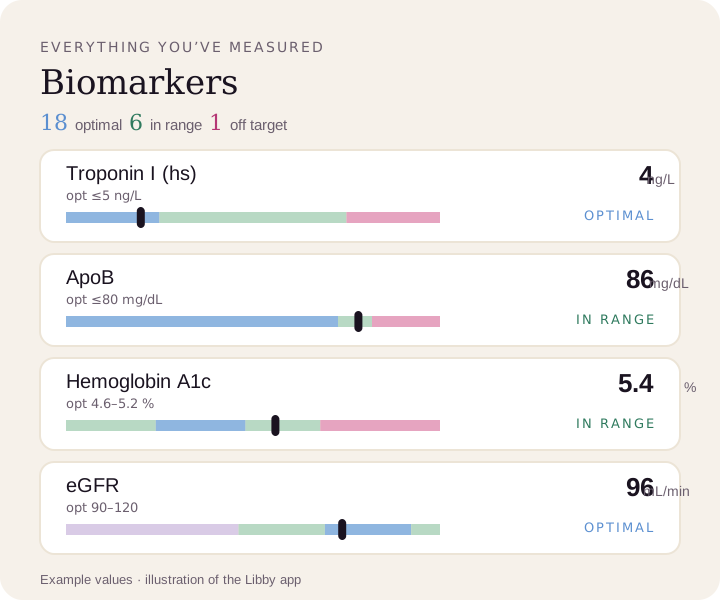
Compare your results to optimal ranges.
Upload a lab PDF or a photo of your report. Libby puts every marker on your lab's range and the optimal range, and tracks your trends over time.
View your troponin ›