Ceruloplasmin test: normal range, low and high results
Ceruloplasmin carries most of your blood's copper. What a normal level is, what low and high results usually mean, and when to think of Wilson disease.
Ceruloplasmin is the protein your liver uses to carry copper through your blood. It holds most of your blood's copper and helps move iron out of storage. A low level is the classic clue to a copper problem: copper deficiency or, rarely, Wilson disease, an inherited copper buildup. A high level usually means inflammation, pregnancy or estrogen.12
The short version
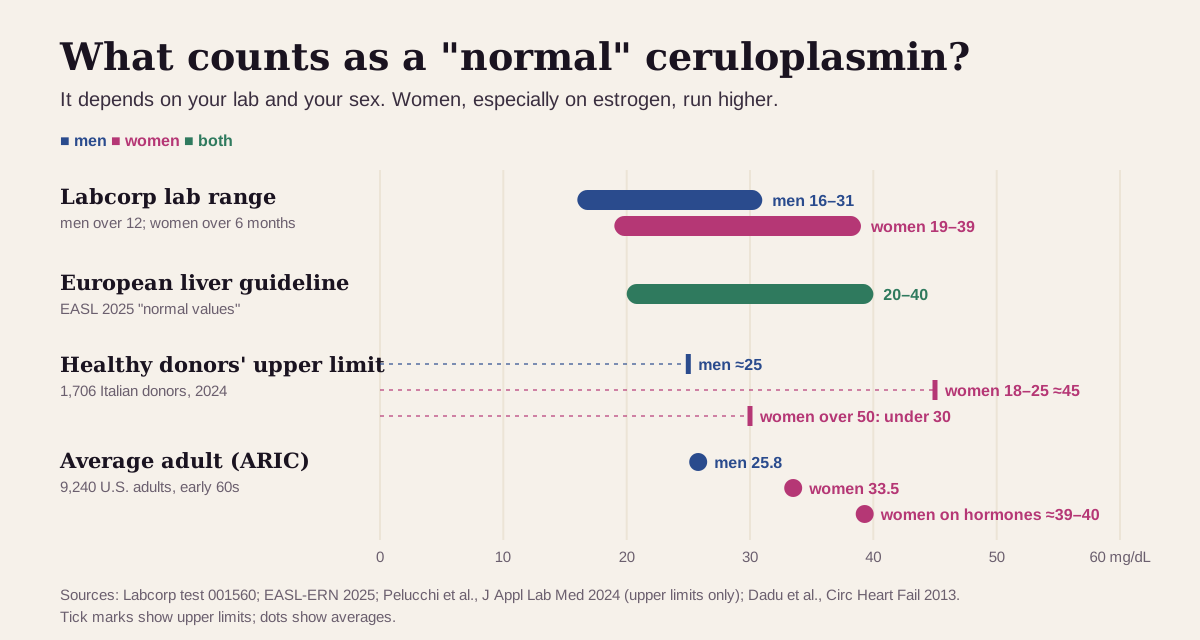
- Normal: about 20–40 mg/dL, according to the European liver society. Labcorp uses 16–31 mg/dL for men and 19–39 for women. Women run higher, especially on estrogen.34
- Low (under 20) usually points to copper deficiency (often from extra zinc or stomach surgery), protein loss, advanced liver disease or, rarely, Wilson disease.21
- Very low (under 10 mg/dL) is a strong Wilson disease signal. Ask for prompt follow-up, especially with yellow eyes, belly swelling or a new tremor.31
- High usually means inflammation, infection, pregnancy, birth-control pills or estrogen therapy. Copper in your diet rarely explains it.14
What ceruloplasmin is
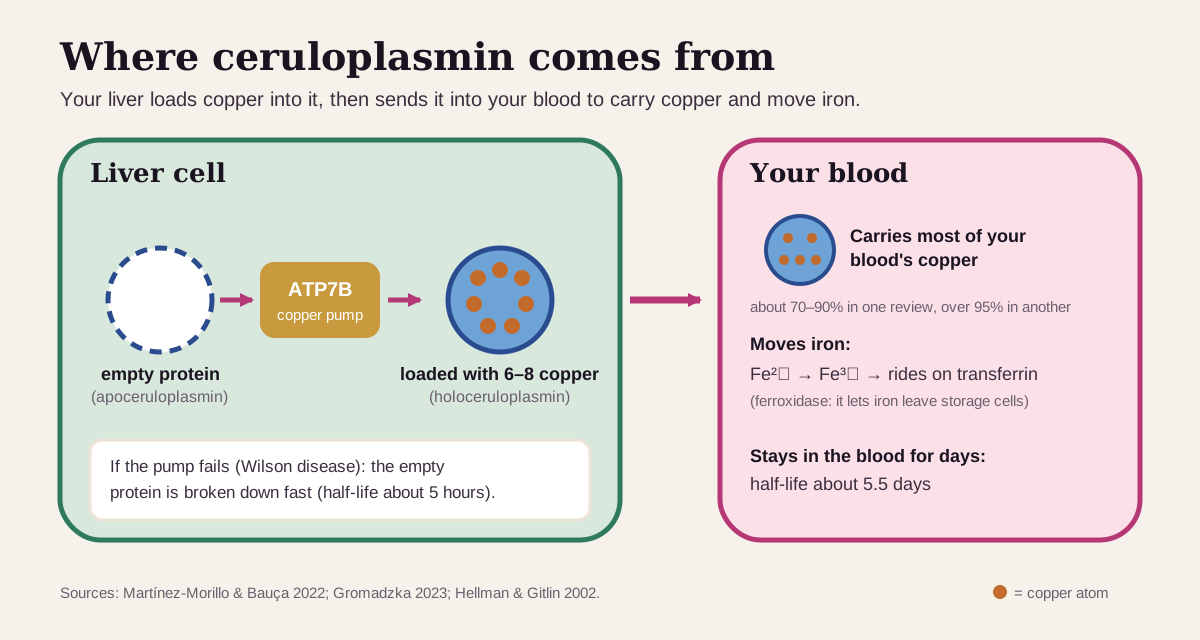
Your liver makes ceruloplasmin as an empty protein. A copper pump inside liver cells, called ATP7B, loads 6 to 8 copper atoms into it, and the loaded protein goes out into your blood.2 It carries most of your blood's copper: about 70–90% in one lab-medicine review, and more than 95% in another.26
Its main job is iron handling. Ceruloplasmin is a ferroxidase: it converts iron into the form that can leave cells and ride in the blood on its carrier protein, transferrin.62 A copper shortage can cause an anemia with small, pale red cells.4
When the copper pump fails, as in Wilson disease, the empty protein is broken down within hours, so blood levels fall.25 Routine tests measure the amount of protein, and they count the empty and loaded forms together.2 That's why some people with Wilson disease still have a normal result.3
What's a normal ceruloplasmin?
Start with the range printed on your own report. Efforts to standardize ceruloplasmin tests across labs haven't succeeded, so each method needs its own range.7
- Labcorp, a large U.S. commercial lab, uses 16–31 mg/dL for men (over age 12) and 19–39 mg/dL for women.4
- The European Association for the Study of the Liver (EASL) lists 20–40 mg/dL as normal in its 2025 Wilson disease guideline.3
- Some assays run wider: one heart study's lab used 20–60 mg/dL.8
Women run higher than men, and estrogen pushes it up further. In the U.S. ARIC study of 9,240 adults in their early 60s, women averaged 33.5 mg/dL and men 25.8. Women on hormone therapy averaged about 39 to 40 mg/dL, versus 29 for women not taking it.9 In 1,706 healthy Italian blood donors, the healthy upper limit leveled off near 25 mg/dL in men. For women it reached about 45 in young adults and fell below 30 after age 50.7
Babies are born with low levels, so an infant's result needs an infant range.2
"Optimal" ceruloplasmin: what health optimizers aim for
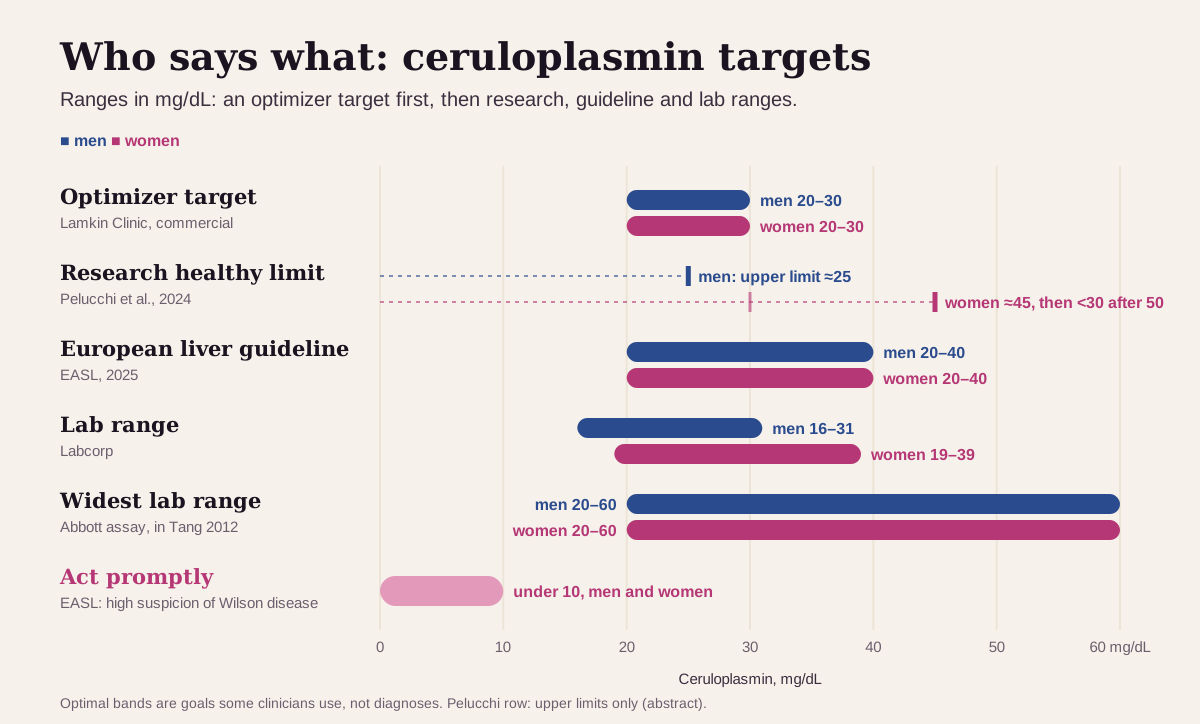
Ceruloplasmin cuts both ways. Too low points to a copper problem, and too high tracks inflammation. So "optimal" here is a band with a floor and a ceiling. Here's who says what, from optimizer targets to lab ranges:
| Target | Men | Women | Who uses it |
|---|---|---|---|
| Optimizer target | 20–30 mg/dL | 20–30 mg/dL | Lamkin Clinic's "FM optimal" range10 |
| Research healthy limit | upper limit about 25 | upper limit about 45 (young adults), under 30 after 50 | Pelucchi et al., 1,706 healthy blood donors7 |
| European liver guideline | 20–40 mg/dL | 20–40 mg/dL | EASL 2025 "normal values"3 |
| Lab range | 16–31 mg/dL | 19–39 mg/dL | Labcorp4 |
| Widest lab range | 20–60 mg/dL | 20–60 mg/dL | The Abbott assay used in Tang et al.8 |
| Act promptly | under 10 mg/dL | under 10 mg/dL | EASL: "high suspicion" of Wilson disease3 |
Why there's a floor: Wilson disease. The AASLD, the U.S. liver society, says values in Wilson disease are typically under 14 mg/dL, with normal above 20.11 The Leipzig diagnostic score gives no points above 20 mg/dL, 1 point for 10–20 and 2 points under 10.3
Why there's a ceiling: two large studies linked higher ceruloplasmin to heart trouble, at levels many lab ranges call normal.
- In 4,177 people having a heart X-ray (coronary angiography), those in the top quarter (27 mg/dL or more) had 2.35 times the 3-year risk of death, heart attack or stroke of those under 19.9. After adjusting for other risk factors and CRP, it was 1.50 times.8
- In ARIC's 9,240 adults without heart disease, followed for 10.5 years, the top quarter (33.8 mg/dL or more) had 1.44 times the risk of heart failure and 1.38 times the risk of death from any cause, after full adjustment.9
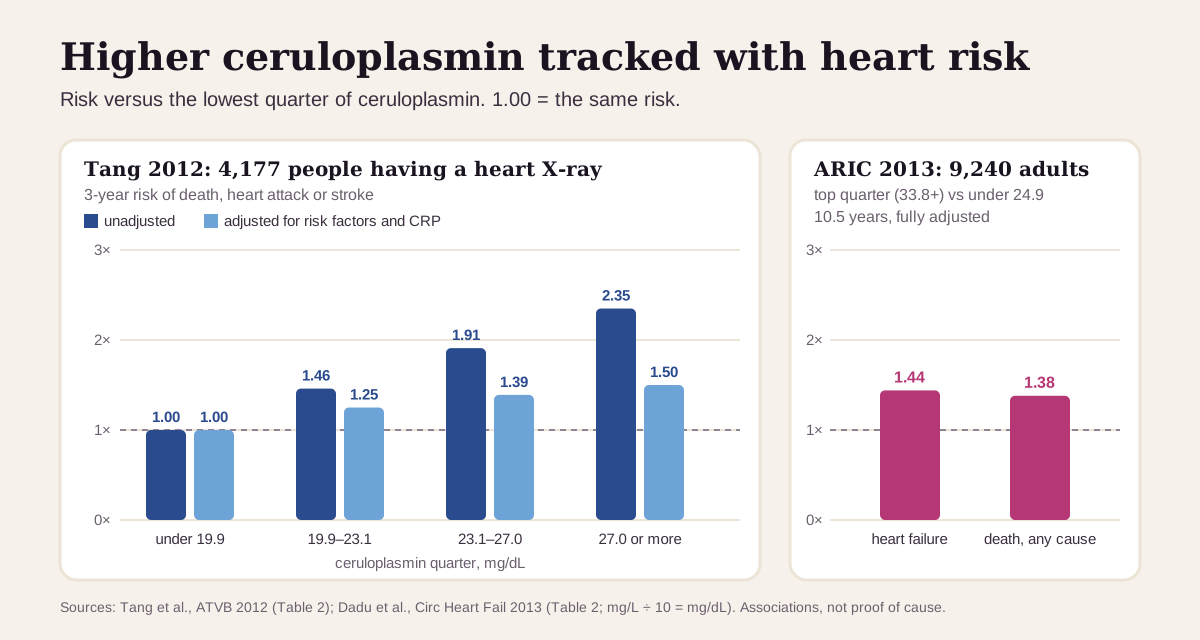
Keep "optimal" in perspective. Ceruloplasmin rises with inflammation (it tracked CRP closely in Tang's study). A gene variant that raises ceruloplasmin wasn't linked to heart disease or heart failure in these studies, which points to inflammation rather than the protein itself.89 Men also measure lower than women: men in ARIC averaged 25.8, and the donor study put healthy men's upper limit near 25.97 For a man, a result in the low 20s is common. The cut points specialists act on are 20 and, especially, 10.3
What a low or high ceruloplasmin usually means
Which side of the range you're on, and how far, is the first clue.
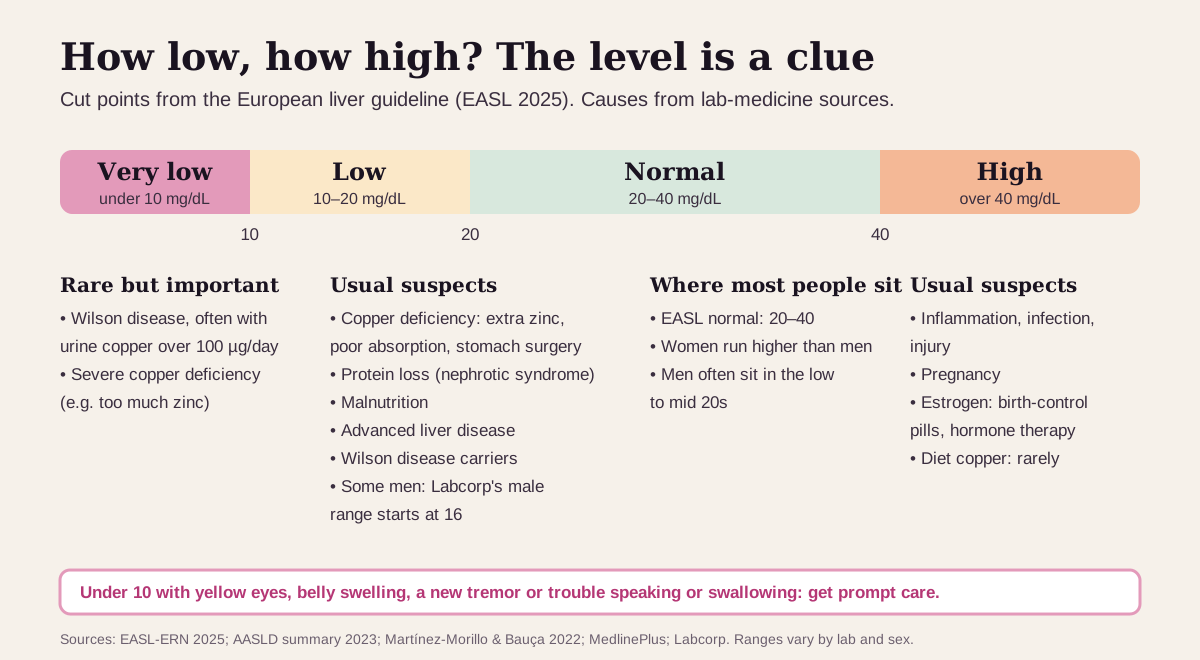
Mildly low (about 10–20 mg/dL)
The usual suspects:
- Your sex and your lab. Labcorp's male range starts at 16, so a man at 17 or 18 is inside it.4
- Copper deficiency. It's uncommon, but it happens. The usual routes are too many zinc supplements, poor absorption (celiac disease, for example), and gastric bypass or other stomach surgery.12 Signs include low neutrophils (a type of white cell), anemia, tiredness, pale skin and tingling in the hands and feet.14
- Protein loss or low protein production: kidney disease that leaks protein (nephrotic syndrome), malnutrition, and advanced liver disease.42
- Wilson disease carriers. About 1 in 90 people carry one Wilson gene variant,11 and some carriers have low ceruloplasmin.2
- Rare but important: Wilson disease. It affects about 1 in 30,000 to 50,000 people.3 Copper builds up in the liver, brain and eyes. Symptoms usually start between ages 4 and 40.1
- Very rare: Menkes disease in babies, and aceruloplasminemia, an inherited lack of working ceruloplasmin.126
Very low (under 10 mg/dL): check for Wilson disease
EASL treats a value under 10 as a "high suspicion" of Wilson disease.3 The next tests are usually a 24-hour urine copper, liver tests and a blood count, a slit-lamp eye exam for copper rings (Kayser–Fleischer rings), a neurologic exam, and genetic testing for ATP7B.11 A ceruloplasmin under 10 together with urine copper above 100 µg a day is "strongly suggestive" of Wilson disease.2
Get prompt care if a low ceruloplasmin comes with yellow skin or eyes, swelling in your belly or legs, a new tremor, or trouble speaking, swallowing or with coordination. If a parent, brother or sister has Wilson disease, ask about testing even without symptoms.1
Up to 20% of people with Wilson disease have a normal ceruloplasmin, so symptoms and family history still count when your result is normal.3
High (over about 40 mg/dL)
Ceruloplasmin is an acute-phase protein: your liver makes more of it when your body is fighting something.
- Inflammation, infection or injury. Rheumatoid arthritis, heart injury and some cancers can raise it too.12
- Pregnancy, birth-control pills that contain estrogen, and estrogen therapy.14
- Copper in your diet rarely causes a high ceruloplasmin.1
Ceruloplasmin reads best next to its neighbors
Ceruloplasmin rarely tells the story alone. The pattern with copper, urine copper, CRP and your blood count usually says much more:241
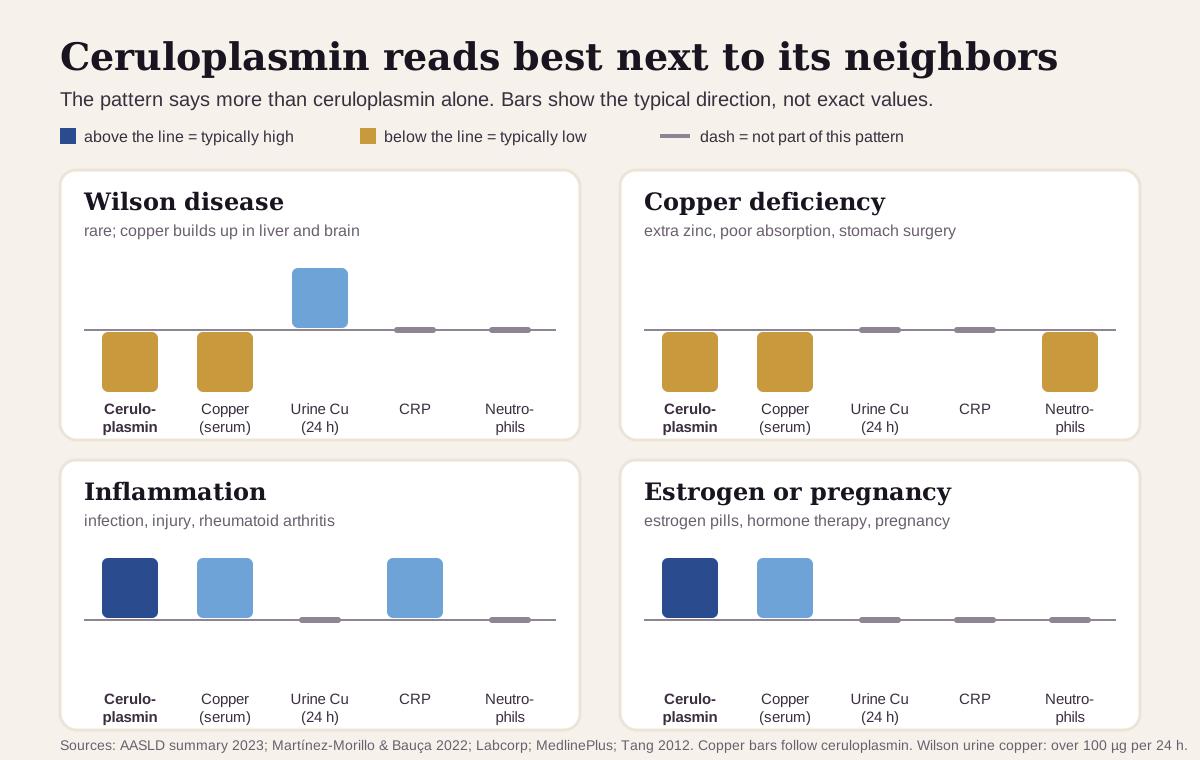
| If you see… | It often points to… |
|---|---|
| Low ceruloplasmin, low copper and high 24-hour urine copper (over 100 µg) | Wilson disease: the classic triad112 |
| Low ceruloplasmin and copper with low neutrophils or an anemia with small, pale red cells | copper deficiency, for example from extra zinc or stomach surgery42 |
| High ceruloplasmin with a high CRP | inflammation or infection28 |
| High ceruloplasmin and copper in someone pregnant or taking estrogen | the estrogen effect21 |
Serum copper usually moves with ceruloplasmin, because ceruloplasmin carries most of it.2 Some websites subtract one from the other to estimate "free copper". Lab specialists advise against those formulas.2
How fast ceruloplasmin changes
The loaded protein lingers for days. Its half-life in the blood is about 5.5 days. The empty form lasts about 5 hours.5 Animal studies disagree on how different the two really are.12
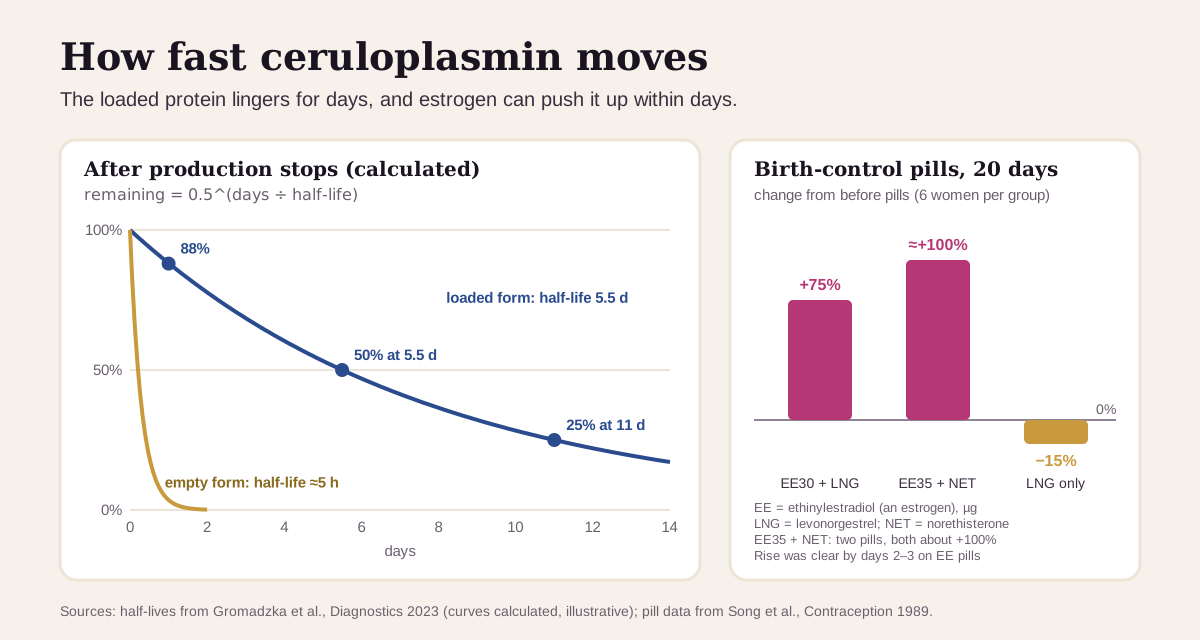
What that means in practice:
- Estrogen moves it within days. In a small 1989 study, ceruloplasmin was clearly higher 2 to 3 days after starting a combined birth-control pill and kept rising for the 20 days of pills. It peaked about 75% higher on one pill and about 100% higher on two others. On a progestin-only pill it fell about 15%.13 Mention any hormone use when you're tested.
- Inflammation moves it more slowly than faster acute-phase markers like CRP.4 Mention any recent illness or flare when you're tested.
- Copper deficiency from zinc can take a long time to reverse, even after the extra zinc stops.4
- Trends beat snapshots. Use the same lab when you can, because methods differ.7 A very fatty (lipemic) sample can distort the result, so labs reject them.2 MedlinePlus lists no special preparation for the test.1
Going deeper: copper, iron and the Leipzig score
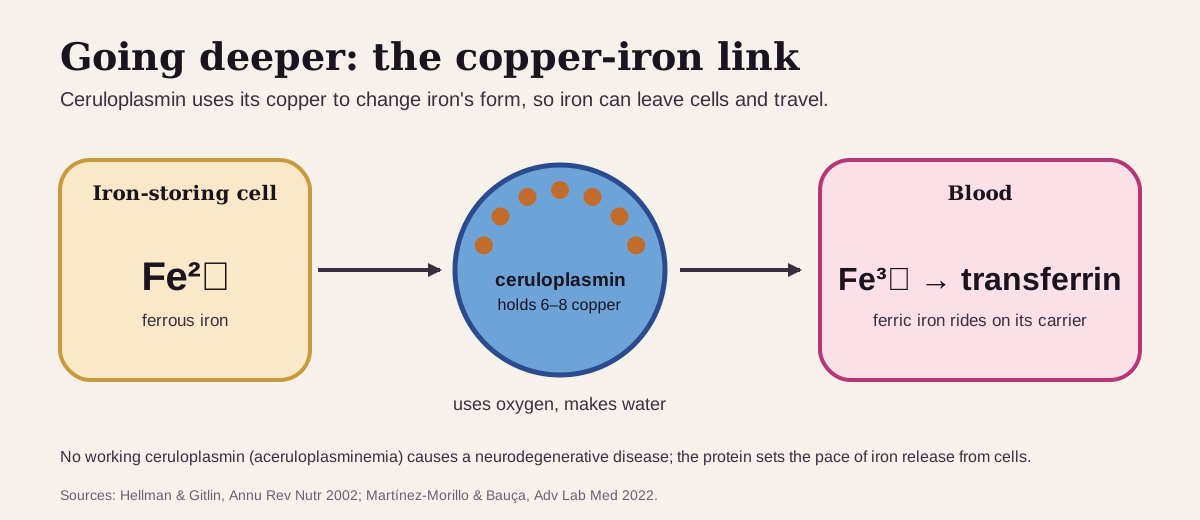
Ceruloplasmin belongs to the multicopper oxidase family. It uses copper to turn ferrous iron (Fe²⁺) into ferric iron (Fe³⁺), which sets the pace at which iron leaves cells that store it.62 People born without working ceruloplasmin (aceruloplasminemia) develop a neurodegenerative disease.6
Routine immunoassays count both the empty (apo) and loaded (holo) forms. An enzyme test that measures ceruloplasmin's oxidase activity reads only the working protein. EASL prefers it, but few labs offer it.3
The Leipzig score is how specialists put the pieces together:3
Leipzig score = points for eye rings + nerve symptoms + hemolysis + urine copper + liver copper + ceruloplasmin + ATP7B variants
Across studies, a ceruloplasmin cutoff of 14–20 mg/dL caught 77–99% of Wilson cases, with a specificity of 56–83%.14 Dropping the cutoff to 10 mg/dL catches fewer cases (65–79%) but gives far fewer false alarms (specificity 97–100%).2 That's the trade-off behind the two thresholds you'll see.
Questions worth asking
- Is my ceruloplasmin low or high for my sex, my lab's method and my hormone use?
- What do my serum copper, CRP and blood count show next to it?
- Could zinc supplements, a past stomach surgery or poor absorption be lowering my copper?
- If it's under 20, should I have a 24-hour urine copper and an eye exam?
- Does anyone in my family have Wilson disease or unexplained liver disease?
- When should we repeat it, and what result would change the plan?
FAQ
What is a normal ceruloplasmin level? It depends on your lab. EASL lists 20–40 mg/dL as normal; Labcorp uses 16–31 for men and 19–39 for women.34
Does a low ceruloplasmin mean Wilson disease? Usually not. Wilson disease is rare, and low values also come from copper deficiency, protein loss, liver disease and being a carrier. A value under 10 with high urine copper is the strong signal.32
What causes a high ceruloplasmin? Most often inflammation, infection, pregnancy, birth-control pills or estrogen therapy. Copper in your diet rarely causes it.1
Can zinc supplements lower ceruloplasmin? Yes. Too much zinc blocks copper absorption and can drive ceruloplasmin very low, with anemia and low white cells. Recovery can take a long time.41
This guide is for education. It can't diagnose you or replace care from a clinician who knows your history.
Footnotes
-
National Library of Medicine. Ceruloplasmin Test. MedlinePlus. Causes of low and high results, copper-deficiency signs, and Wilson disease symptoms. MedlinePlus ↩ ↩2 ↩3 ↩4 ↩5 ↩6 ↩7 ↩8 ↩9 ↩10 ↩11 ↩12 ↩13 ↩14 ↩15 ↩16 ↩17 ↩18 ↩19
-
Martínez-Morillo E, Bauça JM. Biochemical diagnosis of Wilson's disease: an update. Adv Lab Med. 2022;3(2):103–125. A laboratory-medicine review: how the protein is made and measured, causes of low and high values, serum copper, lipemic samples, and cutoff performance. PMC ↩ ↩2 ↩3 ↩4 ↩5 ↩6 ↩7 ↩8 ↩9 ↩10 ↩11 ↩12 ↩13 ↩14 ↩15 ↩16 ↩17 ↩18 ↩19 ↩20 ↩21 ↩22 ↩23 ↩24 ↩25 ↩26 ↩27 ↩28 ↩29
-
European Association for the Study of the Liver. EASL-ERN Clinical Practice Guidelines on Wilson's disease. J Hepatol. 2025;82:690–728. The European liver society's guideline: normal values (20–40 mg/dL), the under-10 high-suspicion level, the Leipzig score, prevalence, and the share of patients with a normal result. PubMed · DOI ↩ ↩2 ↩3 ↩4 ↩5 ↩6 ↩7 ↩8 ↩9 ↩10 ↩11 ↩12 ↩13 ↩14 ↩15 ↩16 ↩17 ↩18
-
Labcorp. Ceruloplasmin (test 001560). A commercial laboratory's test catalog: its adult reference ranges (men 16–31, women 19–39 mg/dL), causes of low and high values, and zinc-induced copper deficiency. labcorp.com ↩ ↩2 ↩3 ↩4 ↩5 ↩6 ↩7 ↩8 ↩9 ↩10 ↩11 ↩12 ↩13 ↩14 ↩15 ↩16 ↩17 ↩18 ↩19
-
Gromadzka G, Grycan M, Przybyłkowski AM. Monitoring of Copper in Wilson Disease. Diagnostics (Basel). 2023;13(11):1830. Half-lives of the empty (about 5 hours) and copper-loaded (5.5 days) forms. PMC ↩ ↩2 ↩3 ↩4
-
Hellman NE, Gitlin JD. Ceruloplasmin metabolism and function. Annu Rev Nutr. 2002;22:439–458. Ceruloplasmin holds more than 95% of plasma copper and sets the rate of iron release from cells; aceruloplasminemia. PubMed ↩ ↩2 ↩3 ↩4 ↩5 ↩6 ↩7
-
Pelucchi S, Risca G, Lanzafame C, et al. Reference Values of Ceruloplasmin across the Adult Age Range in a Large Italian Healthy Population. J Appl Lab Med. 2024;9(6):1053–1063. 1,706 healthy blood donors aged 18–65; upper limits by sex and age, and the lack of assay standardization. PubMed ↩ ↩2 ↩3 ↩4 ↩5 ↩6 ↩7
-
Tang WH, Wu Y, Hartiala J, et al. Clinical and genetic association of serum ceruloplasmin with cardiovascular risk. Arterioscler Thromb Vasc Biol. 2012;32(2):516–522. 4,177 patients having coronary angiography: 3-year risk by quarter, the link with CRP, and the assay's 20–60 mg/dL range. PMC ↩ ↩2 ↩3 ↩4 ↩5 ↩6 ↩7 ↩8
-
Dadu RT, Dodge R, Nambi V, et al. Ceruloplasmin and heart failure in the Atherosclerosis Risk in Communities study. Circ Heart Fail. 2013;6(5):936–943. 9,240 U.S. adults followed 10.5 years: averages by sex and hormone use, and heart-failure and mortality risk by quarter. PMC ↩ ↩2 ↩3 ↩4 ↩5 ↩6
-
Lamkin Clinic. Ceruloplasmin: Optimal Levels, Reference Ranges & Copper-Iron Interpretation. Updated April 14, 2026. States a "FM optimal" range of 20–30 mg/dL. A commercial source, listed as what some optimizers use. lamkinclinic.com ↩ ↩2
-
Alkhouri N, Gonzalez-Peralta RP, Medici V. Wilson disease: a summary of the updated AASLD Practice Guidance. Hepatol Commun. 2023;7(6):e0150. The U.S. liver society's guidance: typical values under 14 mg/dL, urine copper cutoffs, the recommended workup and the 1-in-90 carrier estimate. PMC ↩ ↩2 ↩3 ↩4 ↩5
-
Linder MC. Apoceruloplasmin: Abundance, Detection, Formation, and Metabolism. Biomedicines. 2021;9(3):233. Reviews the animal turnover studies, which disagree on the two forms' clearance. PMC ↩
-
Song S, Chen JK, He ML, Fotherby K. Effect of some oral contraceptives on serum concentrations of sex hormone binding globulin and ceruloplasmin. Contraception. 1989;39(4):385–399. Four groups of six women over 20 days of pills. PubMed ↩ ↩2
-
Salman HM, Amin M, Syed J, et al. Biochemical testing for the diagnosis of Wilson's disease: a systematic review. J Clin Lab Anal. 2022;36(2):e24191. Cutoffs of 0.14–0.2 g/L across 4,281 people: sensitivity 77.1–99%, specificity 55.9–82.8%. PMC ↩
Educational content, not medical advice.Libby is a personal record tool, not a medical service — it doesn't diagnose, treat, or prescribe. Reference ranges vary by lab and by person. Talk to a qualified healthcare professional about your results.
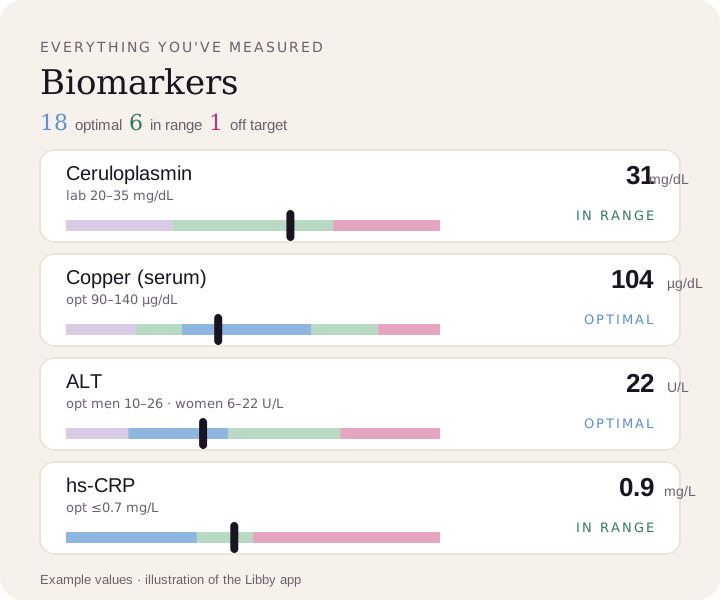
See every result against your lab's range.
Upload a lab PDF or a photo of your report. Libby shows each result on your lab's range and tracks it over time. Markers like copper and ALT also get an optimal range.
View your ceruloplasmin ›