Chloride blood test: normal range, low and high causes
Chloride is sodium's salt partner. Here's the normal range, what low or high chloride usually means, how to read it with sodium and CO2, and when to act.
Chloride is sodium's partner in salt, and the main negatively charged mineral in your blood. You take it in mostly as salt, your kidneys keep the level steady, and it helps hold your body's water and acid-base balance in place.12 Chloride usually moves in step with sodium. When it moves on its own, it most often signals an acid-base change, and the CO2 result next to it shows which way.3
The short version
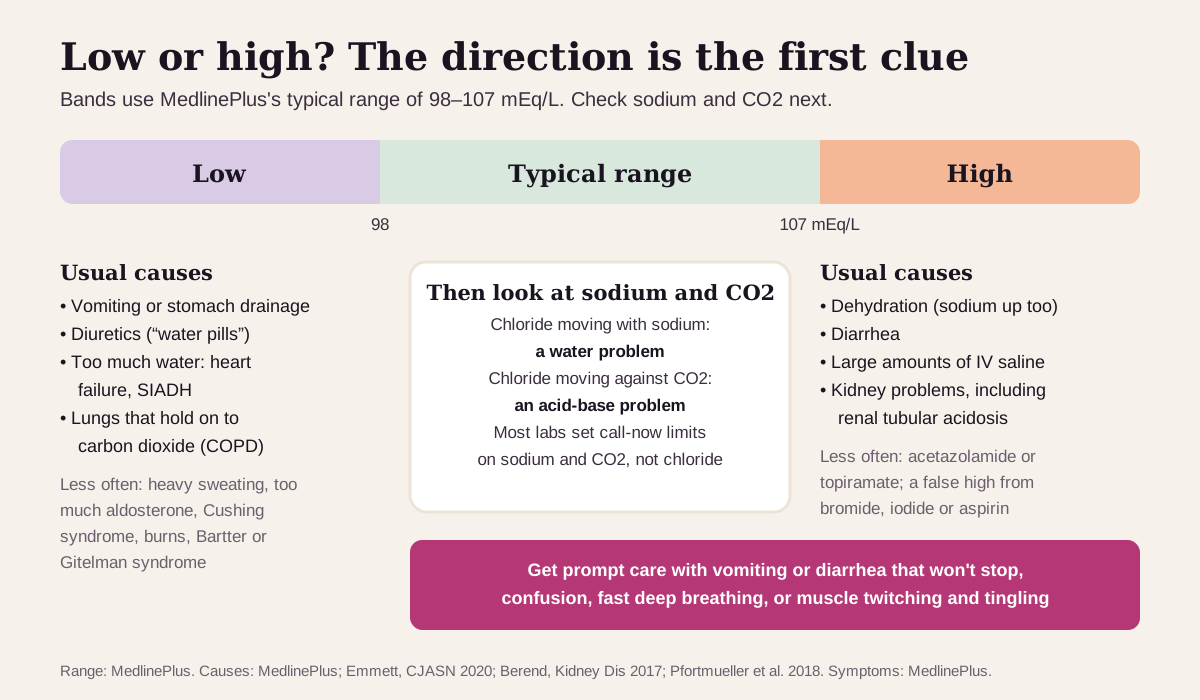
- Normal: about 98 to 107 mEq/L, according to MedlinePlus. Labs differ by a few points: Labcorp uses 96 to 106.14
- Low usually comes from vomiting, diuretics ("water pills"), extra water diluting the blood (as in heart failure), or lungs that hold on to carbon dioxide. High usually comes from dehydration, diarrhea, large amounts of IV saline, or kidney problems.356
- Urgent: a low or high chloride with vomiting or diarrhea that won't stop, confusion, fast deep breathing, or muscle twitching needs prompt care.71 Labs set their call-now limits on its partners: ARUP calls right away for sodium under 120 or over 160 and CO2 under 10 or over 40.8
- Read it with sodium and CO2. Chloride moving with sodium points to water balance. Chloride moving opposite to CO2 points to an acid-base problem.3
What chloride is
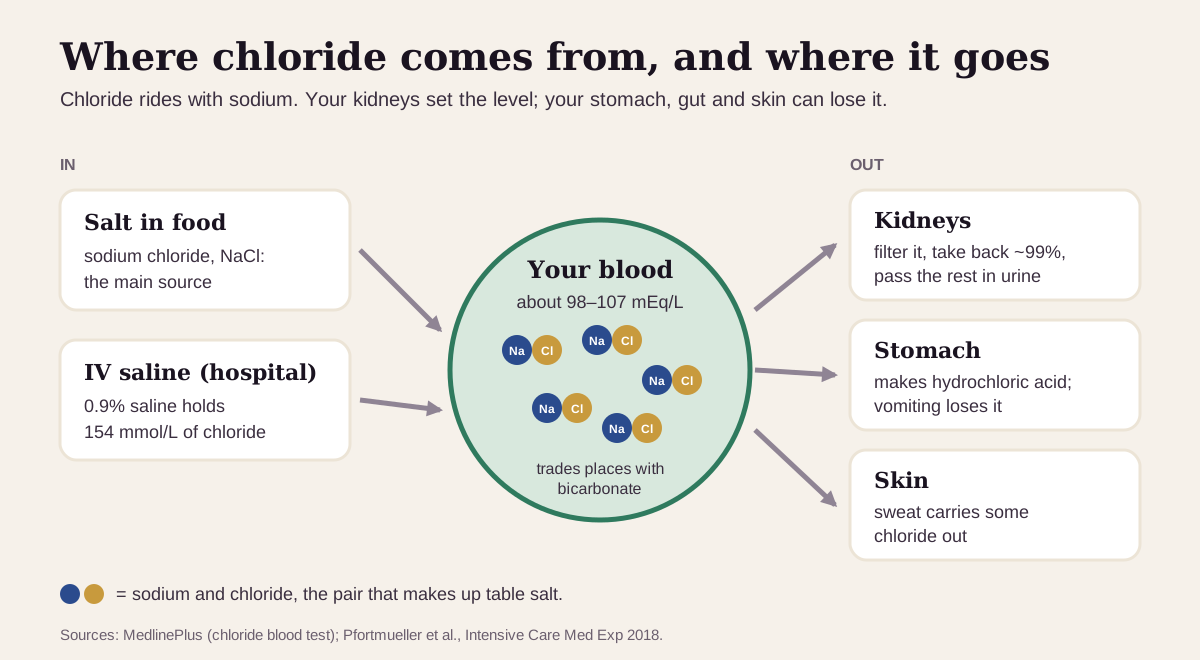
Chloride is an electrolyte, an electrically charged mineral dissolved in your body's fluids. It's the main negatively charged ion outside your cells, and it travels with sodium, the main positively charged one.21 Together they help control how much fluid your body holds, and with it your blood volume and blood pressure.1
You get chloride mainly from salt (sodium chloride) in food. Your kidneys filter it and take back about 99%, passing the rest in urine, which lets them fine-tune the level day to day.16 Your stomach uses chloride to make hydrochloric acid, and your red blood cells swap chloride for bicarbonate as they carry carbon dioxide to your lungs. (More on that at the end.)6
Chloride comes on the basic and comprehensive metabolic panels (BMP and CMP), next to sodium, potassium and CO2, so most people first see it on routine blood work.1
What's a normal chloride?
Start with the range printed on your own report. Labs use different machines and reference groups, so their ranges differ by a few points.1
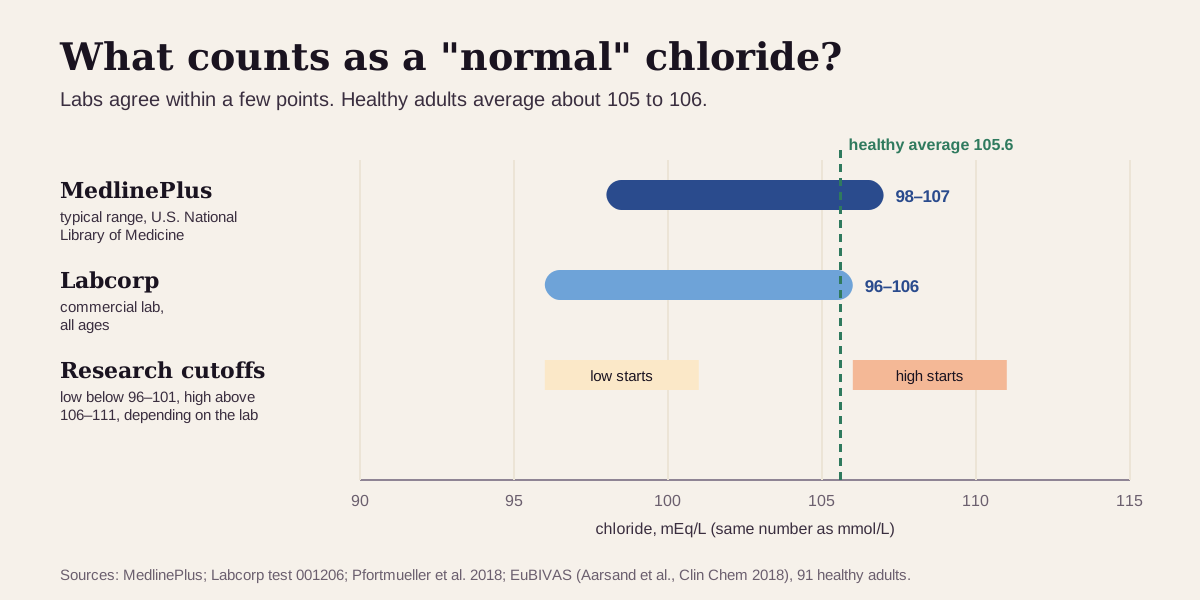
- MedlinePlus, from the U.S. National Library of Medicine, gives a typical range of 98 to 107 mEq/L.1
- Labcorp, a commercial lab, uses 96 to 106 mmol/L for all ages.4
- Research papers usually call chloride low below 96 to 101 and high above 106 to 111, depending on the lab.6
- In 91 healthy European adults tested every week for 10 weeks, the average was 105.6 mmol/L: 105.5 in men and 105.7 in women.9
Men and women run the same. None of these sources splits chloride by sex, and in the healthy-adult study the averages differed by 0.2.9 Your own level is steady, too: week to week, a healthy person's chloride moves only about 1%.9
"Optimal" chloride: what health optimizers aim for
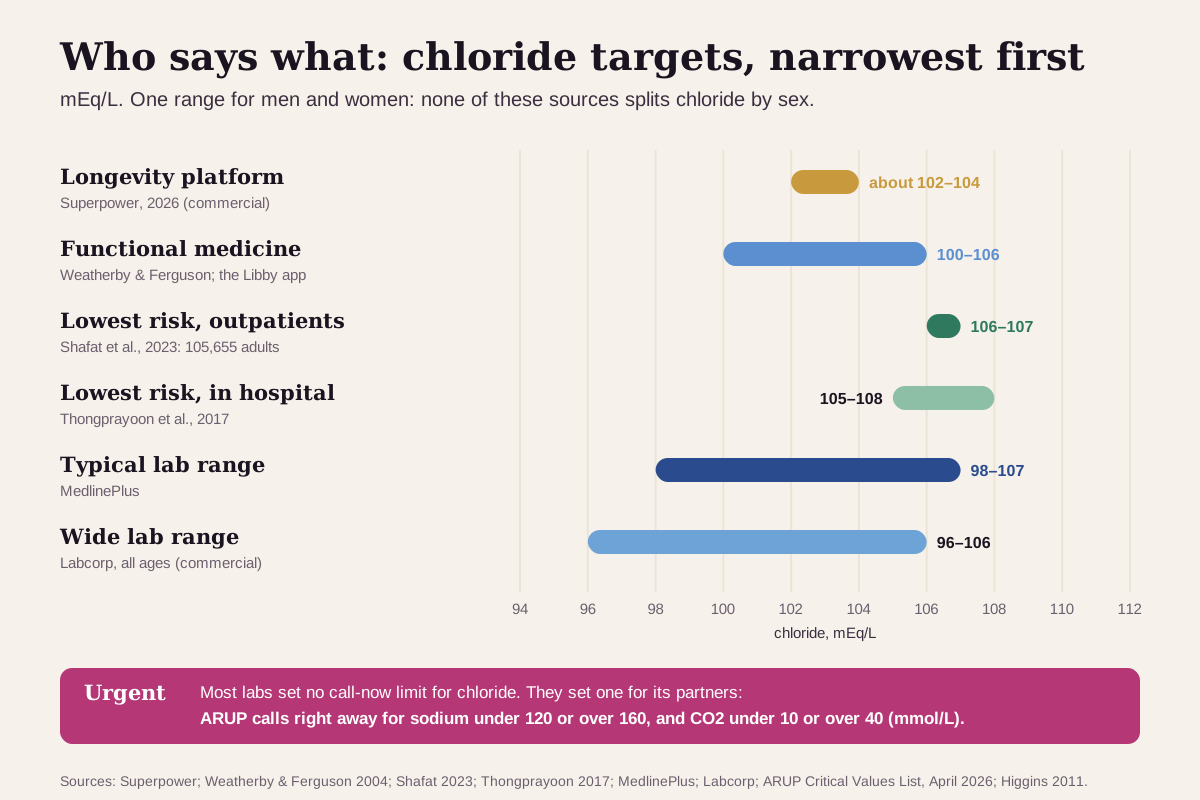
Longevity platforms and functional-medicine practitioners aim for the middle of the lab range. The largest outcome studies point a little higher, toward the top of it. Here's the ladder, from the narrowest target to the widest range:
| Target | Range | Who uses it |
|---|---|---|
| Narrowest (longevity platform) | about 102–104 mEq/L | Superpower, whose guide says many people "feel and perform best" around 102–10410 |
| Functional medicine | 100–106 mEq/L | The standard functional-medicine textbook,11 and the optimal range shown in the Libby app |
| Lowest-risk zone, outpatients | 106–107 mmol/L | 105,655 adults in Israel: death rates were higher at every cutoff from 105 down, and from 108 up12 |
| Lowest-risk zone, in hospital | 105–108 mmol/L | 76,719 Mayo Clinic hospital admissions13 |
| Typical lab range | 98–107 mEq/L | MedlinePlus (U.S. National Library of Medicine)1 |
| Wide lab range | 96–106 mmol/L | Labcorp, all ages4 |
| Urgent | set by sodium and CO2 | Only a minority of labs list chloride among call-now results.14 ARUP calls for sodium under 120 or over 160, or CO2 under 10 or over 408 |
Why the evidence favors the upper half of the range:
- In 105,655 adults in southern Israel, tested outside the hospital and followed for a median of 10.8 years, a chloride of 97 or lower carried 2.4 times the death rate of other results, after adjusting for age, illnesses, sodium and kidney function. The extra risk shrank with each point but lasted all the way up to 105 or lower (1.22 times). On the high side, only 108 and up raised it (1.14 times). The authors put the lowest-risk zone at 106–107.12
- In 12,968 people with high blood pressure in Glasgow, followed for up to 35 years, the lowest fifth of chloride (under 100) carried a 20% higher death rate. Each 1 mEq/L higher meant about 1.5% lower risk.2
- Among 76,719 hospital admissions at Mayo Clinic, a chloride of 105–108 had the lowest hospital death rate. Under 100 and over 108 both predicted a higher one.13
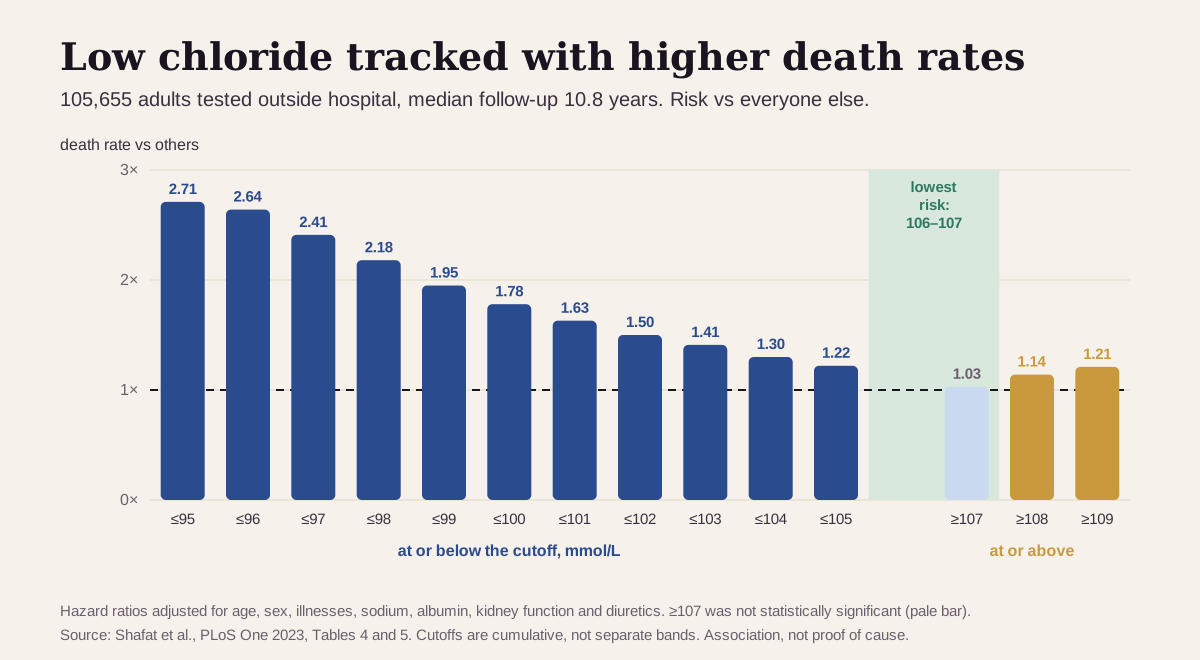
Keep "optimal" in perspective: these are targets, not diagnoses. In the outpatient study, people with low chloride were older and more often had heart failure, kidney disease or low albumin, so a low result often marks an illness rather than causing one.12 Risk also rose at the high end (108 and up), so the aim is the upper middle, not as high as possible.12 Note that the research sweet spot (106–107) sits at the top of the app's functional range and above Superpower's 102–104.
What a low or high chloride usually means
Two questions sort most results: did sodium move with it, and which way did CO2 go? When chloride and sodium move together, the cause is usually water: too much (both low) or too little (both high). When chloride moves on its own, the cause is usually an acid-base change, and CO2 moves the opposite way.35
Low chloride: the usual suspects
- Vomiting or stomach drainage. Stomach acid is hydrochloric acid, so losing it takes chloride with it, and bicarbonate (CO2) rises.3
- Diuretics ("water pills"). Loop diuretics such as furosemide, and thiazides, make the kidneys lose chloride, and potassium often falls too.36 Keep taking a prescribed medicine unless your clinician changes it, and bring your full list to the visit.
- Too much water. When extra water dilutes the blood, sodium and chloride fall together. Heart failure and SIADH (a hormone problem that makes the body hold water) are classic examples.13 In the Israeli outpatient study, about half of the low-chloride results came with a low sodium.12
- Lungs that hold on to carbon dioxide. In chronic lung disease such as COPD, the kidneys keep extra bicarbonate to balance the carbon dioxide and let chloride go.36
- Less common: heavy sweating (for example in cystic fibrosis), too much aldosterone, Cushing syndrome, burns, and inherited salt-wasting disorders (Bartter and Gitelman syndromes).13
High chloride: the usual suspects
- Dehydration. Losing water, or not drinking enough, pushes sodium and chloride up together.51
- Diarrhea. Diarrhea carries bicarbonate out through the gut, and chloride rises to take its place. Severe diarrhea is the most common gut cause of this pattern.5
- IV saline. A standard saline drip (0.9% saline) holds 154 mmol/L of chloride, well above the level in your blood. In very sick hospital patients, it's the most common cause of a high chloride.6 In healthy volunteers, 2 liters over an hour pushed chloride above 105 in every one of them.15
- Kidney problems. Kidney disease, and kidney tubule disorders (renal tubular acidosis), can let bicarbonate slip away while chloride is kept.15
- Less common: acetazolamide and topiramate (medicines that block the enzyme carbonic anhydrase). A false high is rare: bromide or iodide can fool the test into reading chloride as high as 175, and large doses of aspirin (salicylate) can read falsely high too.51
Get prompt care if a low or high chloride comes with vomiting or diarrhea that won't stop, confusion or unusual sleepiness, or fast, deep breathing.71 With a low chloride, also watch for muscle twitching or spasms, and numbness or tingling in the face, hands or feet.7
Chloride reads best next to its neighbors
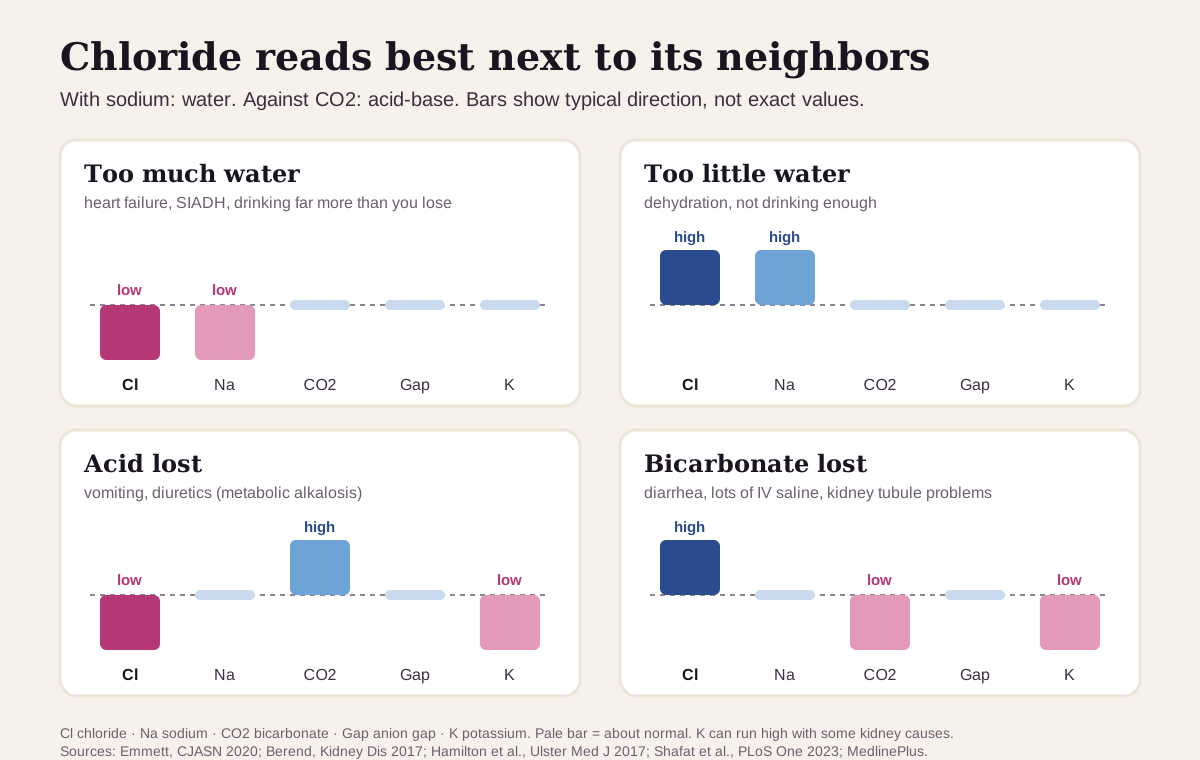
Chloride rarely comes alone. The pattern with sodium, CO2, the anion gap and potassium says far more than chloride does by itself:316
| If you see… | It often points to… |
|---|---|
| Chloride and sodium both low, CO2 about normal | extra water diluting the blood: heart failure, SIADH, drinking far more than you lose |
| Chloride and sodium both high, CO2 about normal | water loss: dehydration, or not drinking enough |
| Chloride low, CO2 high, potassium often low | acid being lost: vomiting or diuretics (metabolic alkalosis) |
| Chloride high, CO2 low, anion gap normal, potassium often low | bicarbonate being lost or replaced: diarrhea, lots of IV saline, kidney tubule problems |
The third row has a twin. Lungs that hold on to carbon dioxide (COPD, for example) give the same low chloride and high CO2. A blood pH from a blood gas, read with the clinical picture, tells them apart: high-normal or high with vomiting or diuretics, low-normal or low with lung disease.316
When CO2 is low but chloride stays put, check the anion gap. A high gap usually means an acid has built up, most often ketones (for example in uncontrolled diabetes), lactic acid, or kidney failure.16 Hamilton's review suggests looking for a cause once the gap is over 14 mmol/L (over 18 if your lab adds potassium), and calls a gap over 20 always high.16
How fast chloride changes
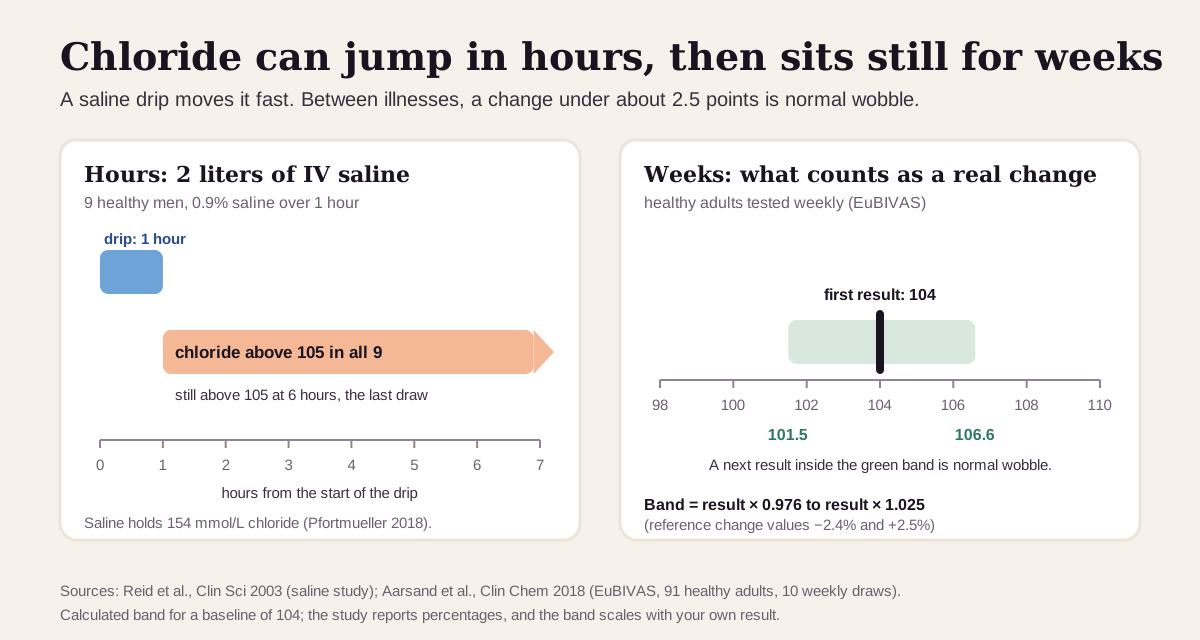
Chloride can shift in hours. In nine healthy men given 2 liters of IV saline over 1 hour, chloride rose above 105 in every one of them, and it was still above 105 six hours later, at the last blood draw.15 Vomiting, diarrhea and diuretics move it through the gut and the kidneys.6
Between illnesses, it barely moves. In healthy adults tested weekly, chloride varied only about 1% from week to week. The study's cutoff for a real change was a fall of more than 2.4% or a rise of more than 2.5%. At a chloride of 104, that means a next result below about 101.5 or above about 106.6.9
What that means in practice:
- A single mildly off result is often repeated. Mention recent vomiting, diarrhea, heavy sweating, IV fluids or new medicines when you get tested.1
- A change of more than about 2.5 points between two tests is bigger than normal wobble, even when both sit inside the range.9
- Trends beat snapshots. Compare results from the same lab when you can, because ranges and machines differ.1
Going deeper: chloride's balance sheet
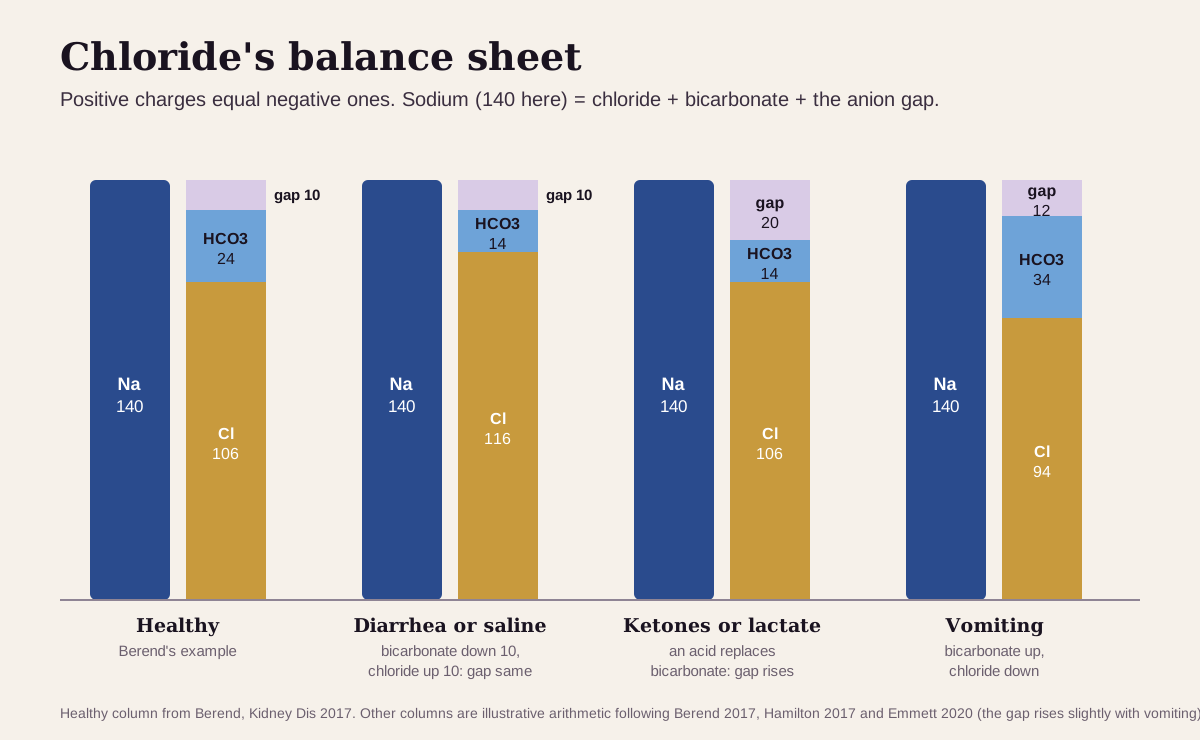
Your blood stays electrically neutral: its positive charges equal its negative ones. Sodium carries most of the positive charge. Chloride and bicarbonate carry most of the negative charge, and the rest, mostly albumin, is the anion gap.165
Anion gap = sodium − (chloride + CO2)
That's why chloride and bicarbonate are tied together. If bicarbonate drops by 10 and chloride rises by 10, the anion gap stays the same: the "normal-gap" acidosis of diarrhea and saline.5 If an acid such as ketones or lactate uses up the bicarbonate instead, chloride stays put and the gap rises.16 With vomiting, it runs the other way: bicarbonate rises, chloride falls, and the gap creeps up a little.3
The chloride-to-sodium ratio. Chloride normally runs at about 1 to 1.4 against sodium, and in pure water problems the two move in that ratio.3 A chloride-to-sodium ratio above 0.79, in someone without diarrhea, is one clue clinicians use to look for renal tubular acidosis.5
Chloride on the move. Your red blood cells swap chloride for bicarbonate across their membranes as they carry carbon dioxide from your tissues to your lungs, a trade called the "chloride shift". Your stomach secretes chloride as hydrochloric acid to digest protein.6
Questions worth asking
- Is my chloride off by itself, or did my sodium move with it?
- What does my CO2 show, and what's my anion gap?
- Could vomiting, diarrhea, heavy sweating or IV fluids around the test explain it?
- Could any of my medicines, such as a diuretic, acetazolamide or topiramate, be involved?
- Is my potassium low too?
- Should we repeat it, and would a blood gas or a urine test help?
FAQ
What is a normal chloride level? About 98 to 107 mEq/L according to MedlinePlus, though labs differ by a few points. Labcorp uses 96 to 106.14
What causes low chloride? The usual causes are vomiting, diuretics, extra water diluting the blood (as in heart failure or SIADH), and lung disease that retains carbon dioxide.31
What causes high chloride? Dehydration, diarrhea, large amounts of IV saline, and kidney problems are the common causes.56
When is a chloride result urgent? When it comes with vomiting or diarrhea that won't stop, confusion, fast deep breathing, or muscle twitching. Labs usually set their call-now limits on sodium and CO2, which move with chloride.7148
This guide is for education. It can't diagnose you or replace care from a clinician who knows your history.
Footnotes
-
National Library of Medicine. Chloride test - blood. MedlinePlus Medical Encyclopedia. Reviewed May 19, 2025. And: Chloride Blood Test. MedlinePlus Medical Tests. Updated November 5, 2024. The typical range (98 to 107 mEq/L), the lists of causes of high and low chloride, where chloride comes from (mainly salt) and how it leaves (urine), and why ranges vary by lab. Encyclopedia · Medical Tests ↩ ↩2 ↩3 ↩4 ↩5 ↩6 ↩7 ↩8 ↩9 ↩10 ↩11 ↩12 ↩13 ↩14 ↩15 ↩16 ↩17 ↩18 ↩19 ↩20 ↩21 ↩22 ↩23 ↩24 ↩25
-
McCallum L, Jeemon P, Hastie CE, et al. Serum chloride is an independent predictor of mortality in hypertensive patients. Hypertension. 2013;62(5):836–843. 12,968 people with high blood pressure followed for up to 35 years; the lowest fifth (under 100 mEq/L) had 20% higher mortality. Also describes chloride as the major extracellular anion, accompanying sodium. PubMed · DOI ↩ ↩2 ↩3
-
Emmett M. Metabolic Alkalosis: A Brief Pathophysiologic Review. Clin J Am Soc Nephrol. 2020;15(12):1848–1856. Chloride changes in proportion to sodium (about 1 to 1.4) in water disorders and against bicarbonate in acid-base disorders; vomiting, diuretics and the other causes of low chloride with high bicarbonate; pH separates metabolic alkalosis from chronic respiratory acidosis. PMC ↩ ↩2 ↩3 ↩4 ↩5 ↩6 ↩7 ↩8 ↩9 ↩10 ↩11 ↩12 ↩13 ↩14 ↩15 ↩16 ↩17
-
Labcorp. Chloride (test 001206). Test catalog, accessed September 23, 2026. Reference range 96 to 106 mmol/L, verified for all ages. A commercial laboratory's published range. labcorp.com ↩ ↩2 ↩3 ↩4 ↩5 ↩6
-
Berend K. Review of the Diagnostic Evaluation of Normal Anion Gap Metabolic Acidosis. Kidney Dis (Basel). 2017;3(4):149–159. Diarrhea as the most common gut cause, saline, renal tubular acidosis, acetazolamide and topiramate, dehydration raising sodium and chloride, the healthy anion-gap example, the 0.79 chloride-to-sodium clue, and false-high chloride from bromide, iodide or salicylate. PMC ↩ ↩2 ↩3 ↩4 ↩5 ↩6 ↩7 ↩8 ↩9 ↩10 ↩11 ↩12 ↩13 ↩14 ↩15
-
Pfortmueller CA, Uehlinger D, von Haehling S, Schefold JC. Serum chloride levels in critical illness—the hidden story. Intensive Care Med Exp. 2018;6(1):10. Kidney handling (about 99% reabsorbed), stomach acid, the chloride shift, research definitions of low and high chloride, the causes of each, and saline's 154 mmol/L of chloride. PMC ↩ ↩2 ↩3 ↩4 ↩5 ↩6 ↩7 ↩8 ↩9 ↩10 ↩11 ↩12
-
National Library of Medicine. Metabolic acidosis (reviewed October 1, 2025); Alkalosis (reviewed November 6, 2025). MedlinePlus Medical Encyclopedia. Symptoms: rapid, deep breathing and confusion or lethargy with acidosis; confusion, tremor, muscle twitching, spasms, and numbness or tingling in the face, hands or feet with alkalosis. Metabolic acidosis · Alkalosis ↩ ↩2 ↩3 ↩4
-
ARUP Laboratories. Critical Values List, CORP-APPEND-0104A, Rev. 46, April 2026. Sodium under 120 or over 160 mmol/L; bicarbonate (total CO2) under 10 or over 40 mmol/L. The list has no chloride entry. ARUP is a commercial reference laboratory, and this is its own call-now policy, not a guideline. aruplab.com ↩ ↩2 ↩3 ↩4
-
Aarsand AK, Díaz-Garzón J, Fernandez-Calle P, et al. The EuBIVAS: Within- and Between-Subject Biological Variation Data for Electrolytes, Lipids, Urea, Uric Acid, Total Protein, Total Bilirubin, Direct Bilirubin, and Glucose. Clin Chem. 2018;64(9):1380–1393. 91 healthy adults, 10 weekly samples: chloride mean 105.6 mmol/L (men 105.5, women 105.7), within-person variation 0.98%, reference change values −2.4% and +2.5%. PubMed · DOI ↩ ↩2 ↩3 ↩4 ↩5 ↩6 ↩7
-
Superpower. High Chloride Blood Test: Causes & What It Means. Published April 18, 2026; updated August 31, 2026. Says many people "feel and perform best" with chloride around 102–104 mEq/L. A commercial source, listed as what the optimizer community uses. superpower.com ↩ ↩2
-
Weatherby D, Ferguson S. Blood Chemistry and CBC Analysis: Clinical Laboratory Testing from a Functional Perspective. 2nd ed. Bear Mountain Publishing; 2004. ISBN 978-0976136712. Widely used functional-medicine reference. The Libby app's marker catalog credits its 100–106 optimal range to this book (range as recorded in the catalog; the book was not opened for this article). ↩ ↩2
-
Shafat T, Novack V, Barski L, Haviv YS. Community-based serum chloride abnormalities predict mortality risk. PLoS One. 2023;18(2):e0279837. 664,253 outpatient chloride tests from 105,655 adults, median follow-up 10.8 years; hazard ratios by cutoff (Tables 4 and 5), the 106–107 lowest-risk zone, and the share of low-chloride results with low sodium. PMC ↩ ↩2 ↩3 ↩4 ↩5 ↩6 ↩7 ↩8
-
Thongprayoon C, Cheungpasitporn W, Cheng Z, Qian Q. Chloride alterations in hospitalized patients: Prevalence and outcome significance. PLoS One. 2017;12(3):e0174430. 76,719 adult admissions at Mayo Clinic; chloride of 105–108 mmol/L had the lowest hospital mortality. PMC ↩ ↩2 ↩3
-
Higgins C. Critical values in laboratory medicine. acutecaretesting.org. January 2011. Summarizes a 2002 survey of critical-value policies at 623 U.S. laboratories: chloride appeared on only a minority of critical-test lists. acutecaretesting.org ↩ ↩2 ↩3
-
Reid F, Lobo DN, Williams RN, Rowlands BJ, Allison SP. (Ab)normal saline and physiological Hartmann's solution: a randomized double-blind crossover study. Clin Sci (Lond). 2003;104(1):17–24. Nine healthy men given 2 liters of 0.9% saline over 1 hour all developed chloride above 105 mmol/L, sustained for more than 6 hours. PubMed · DOI ↩ ↩2 ↩3
-
Hamilton PK, Morgan NA, Connolly GM, Maxwell AP. Understanding Acid-Base Disorders. Ulster Med J. 2017;86(3):161–166. The anion gap, its 14 and 20 mmol/L thresholds, and the common causes of normal-gap and high-gap acidosis. PMC ↩ ↩2 ↩3 ↩4 ↩5 ↩6 ↩7 ↩8
Educational content, not medical advice.Libby is a personal record tool, not a medical service — it doesn't diagnose, treat, or prescribe. Reference ranges vary by lab and by person. Talk to a qualified healthcare professional about your results.
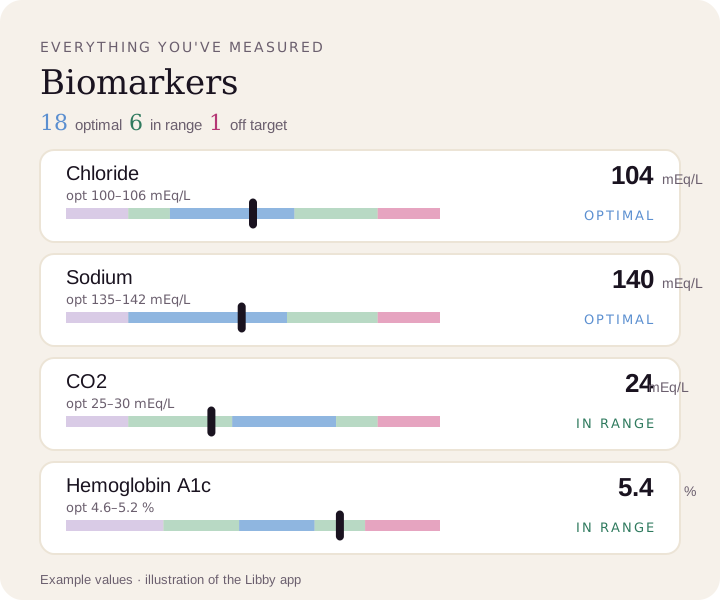
Compare your results to optimal ranges.
Upload a lab PDF or a photo of your report. Libby puts every marker on your lab's range and the optimal range, and tracks your trends over time.
View your chloride ›