Lactate blood test: normal range, high causes, next steps
Lactate is a fuel your cells make and burn all day. Here's the normal range, what raises it, how to read it with pH and bicarbonate, and when it's urgent.
Lactate (often reported as lactic acid) is a fuel your cells make from glucose and burn all day long. Your blood level shows the balance between how fast lactate is made and how fast your heart, muscles, liver and kidneys use it up. A high lactate means it's being made faster than it's cleared, most often because tissues are short of blood flow or oxygen, or because of a hard effort like a seizure or an all-out workout.12
The short version
- Normal: check the range on your report. Labcorp's range from age 6 is 4.8–25.7 mg/dL (about 0.5–2.9 mmol/L), and most hospital studies call anything above 2.0–2.5 mmol/L elevated.32
- Mildly high (2–4 mmol/L) is common. Hard exercise, a recent seizure, diabetic ketoacidosis, some medicines and infection are the usual reasons.234
- 4 mmol/L or more in someone who is sick is a warning sign. In one emergency-department study, 28% of infection patients at that level died, versus 5% below 2.5.4 That needs care right away.
- The key distinction: a high lactate with a normal blood pH is hyperlactatemia. A high lactate that has made the blood too acidic is lactic acidosis, which is more serious.5
What lactate is
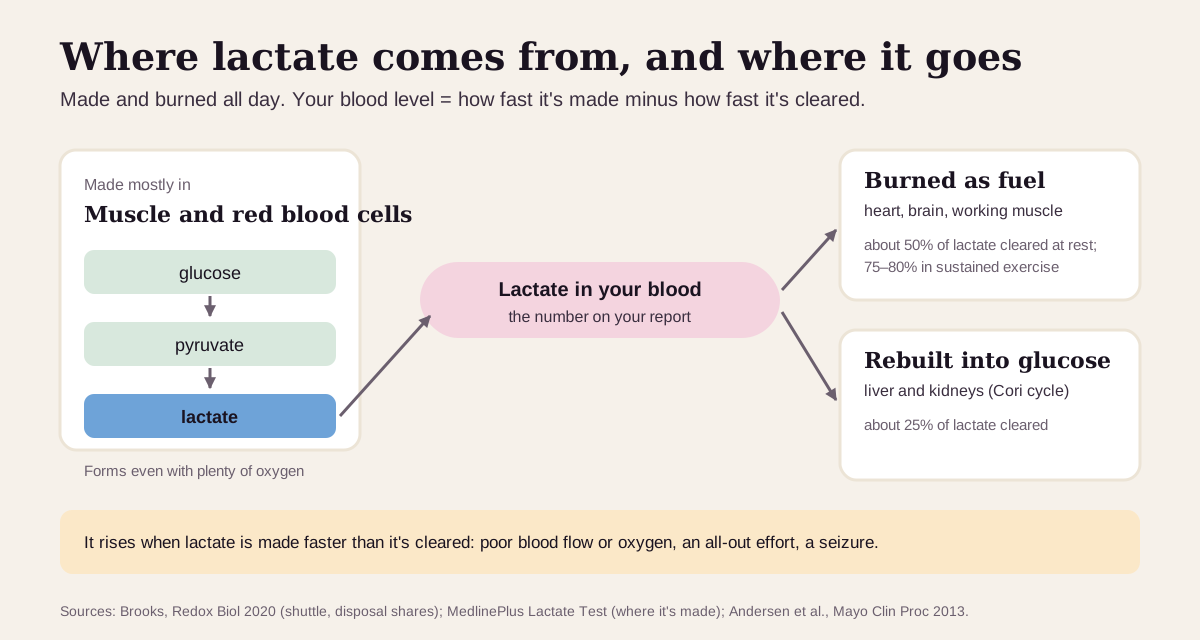
Every cell that burns glucose first splits it into a smaller molecule called pyruvate. Some of that pyruvate becomes lactate. Lactate was long blamed on a lack of oxygen, but we now know it forms even when oxygen is plentiful, and it's one of the body's main fuels. Your heart, brain and working muscles burn it, and your liver and kidneys turn it back into glucose.15
Most lactate is made in muscle and red blood cells.5 At rest, about half of the lactate your body clears is burned for energy and about a quarter is rebuilt into glucose.1 So the number on your report is a snapshot of traffic: made in one place, used in another.
A lactate test is mostly a hospital and emergency test. Doctors order it when someone might be in shock or have sepsis (a body-wide reaction to infection), after a seizure, or to work out why the blood is too acidic. Sepsis guidelines suggest measuring it in anyone who might have sepsis.537
What's a normal lactate?
Start with the range on your own report. Labs use different methods, and some report mg/dL while others use mmol/L.3
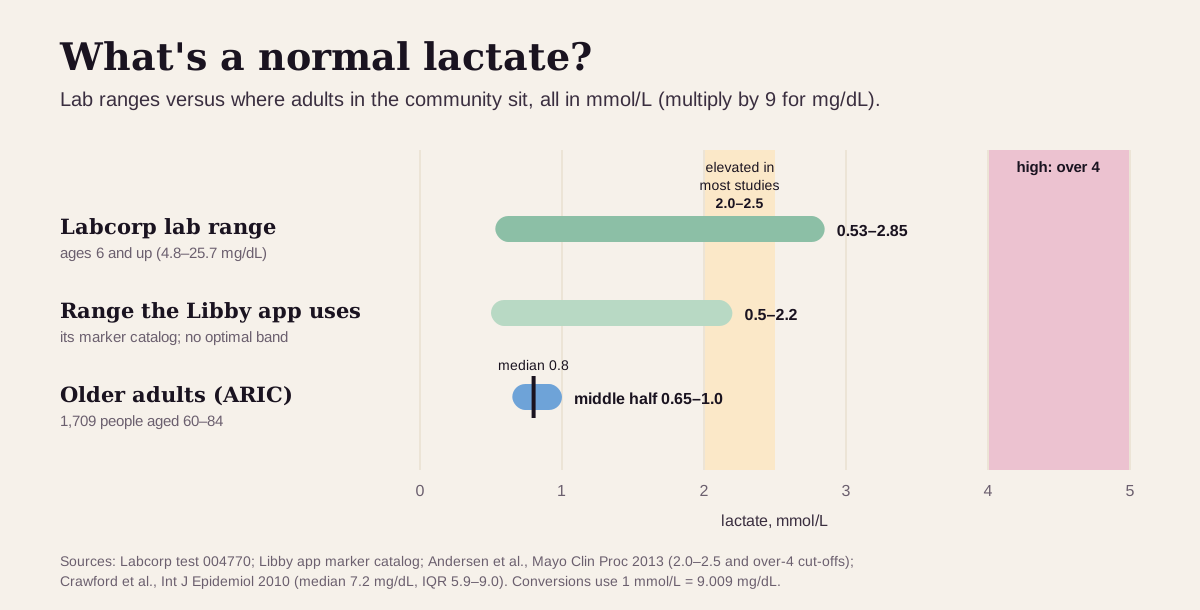
- Labcorp, a large commercial US lab, lists 4.8–25.7 mg/dL (about 0.53–2.85 mmol/L) for anyone 6 or older, with higher ranges for babies and young children.3
- Hospital studies mostly treat 2.0–2.5 mmol/L as the top of normal. "High" usually means over 4 mmol/L.2
- Adults in the community sit well below those limits. In 1,709 adults aged 60–84 in the US ARIC study, the median was 7.2 mg/dL (about 0.8 mmol/L), and half had values between 5.9 and 9.0 mg/dL (0.65–1.0 mmol/L).8
How the blood was drawn changes the number. Blood from a vein usually reads a little higher than blood from an artery. Across nine emergency studies the gap ran from 0.18 to 1.06 mmol/L, and it grew as lactate rose. A venous value of 2 mmol/L or less reliably rules out a high arterial value.9 Clenching your fist during the draw can push lactate up, and the plasma has to be separated within about 15 minutes, because a sample left sitting reads falsely high.532
Men and women share the same ranges. None of the sources here sets separate limits by sex.32
"Optimal" lactate: what health optimizers aim for
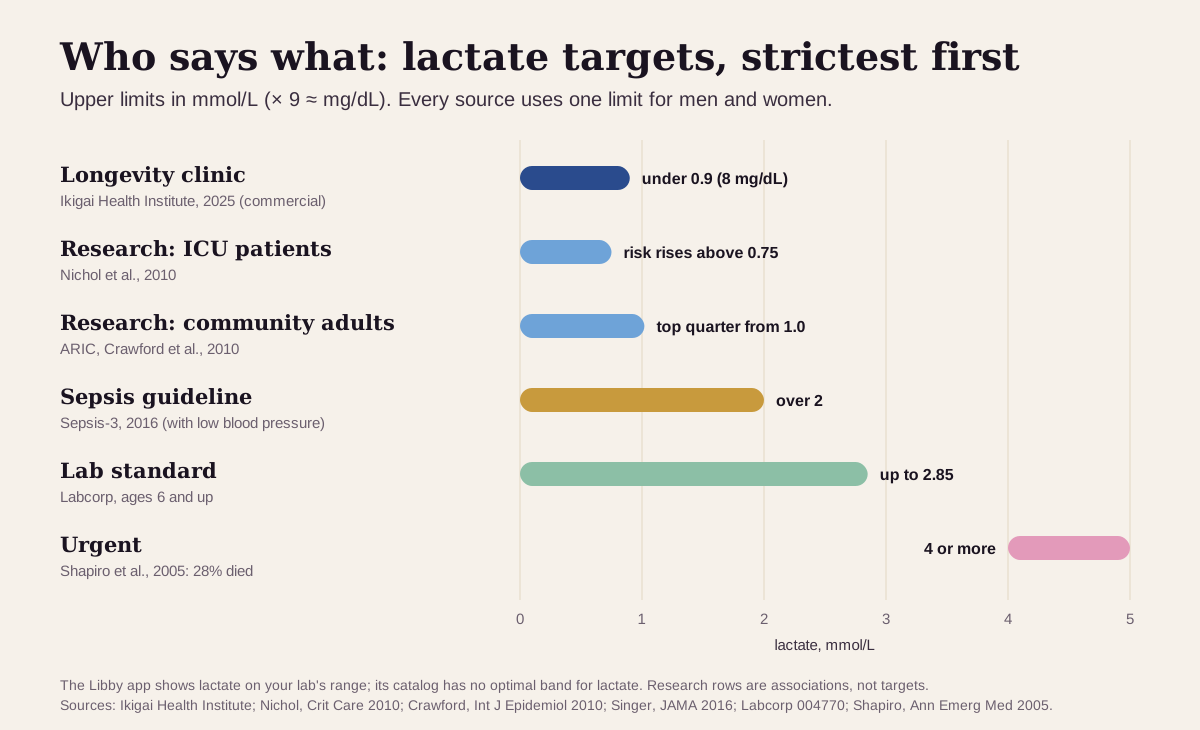
Some longevity clinics now track resting lactate as a sign of metabolic fitness.10 Here's the full ladder, from strictest to loosest. The Libby app shows your lactate against your lab's range; its marker catalog has no separate optimal band for lactate.
| Target | Men and women | Who uses it |
|---|---|---|
| Strictest (longevity clinic) | under 8 mg/dL on a lab draw (about 0.9 mmol/L); under 1.0 mmol/L at rest | Ikigai Health Institute's published resting target10 |
| Research: risk inside "normal" | above 0.75 mmol/L | In ICU patients, the risk of dying started to climb above this level11 |
| Research: community adults | top quarter, 9.2 mg/dL or more (about 1.0 mmol/L) | ARIC: 30% had type 2 diabetes, versus 11% in the bottom quarter8 |
| Sepsis guideline | above 2 mmol/L | Part of the Sepsis-3 definition of septic shock, together with low blood pressure that needs medicines6 |
| Lab standard | up to 25.7 mg/dL (about 2.85 mmol/L) | Labcorp's range for ages 6 and up3 |
| Urgent | 4 mmol/L or more | 28% of emergency patients with infection at this level died4 |
Why the low targets aren't just a trend:
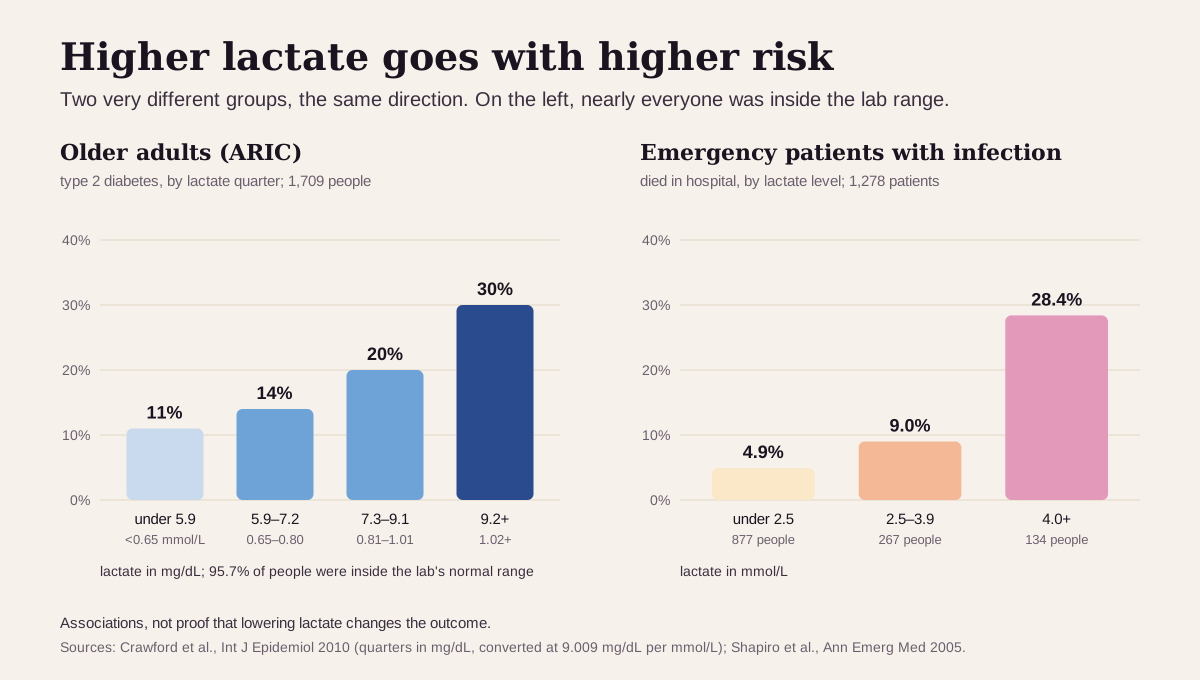
- In the ARIC study of 1,709 older adults, type 2 diabetes rose steadily across lactate quarters: 11%, 14%, 20% and 30%. Almost everyone in the study (95.7%) was inside the normal lab range. After accounting for weight, waist size and exercise, the top quarter still had 2.2 times the odds of diabetes.8
- In 7,155 ICU patients in Australia, a higher lactate inside the normal range (under 2 mmol/L) was linked to a higher risk of dying in hospital (odds ratio 2.1). The rise began above 0.75 mmol/L.11
- At the other end, in 1,278 emergency patients with infection, deaths climbed from 4.9% below 2.5 mmol/L to 9.0% at 2.5–4 and 28.4% at 4 or more.4
Keep "optimal" in perspective. A resting lactate near 1.0 mmol/L is a nudge to look at weight, waist size and blood sugar, and no guideline treats it as a diagnosis. One reading also moves a lot: in ARIC, repeat samples from the same person on different days varied by about 25%.8 Trends from the same lab beat any single value.
What a high lactate usually means
The level is the first clue. Most studies call lactate elevated above 2.0–2.5 mmol/L and high above 4.2 Labcorp sorts the causes the same way: the everyday ones usually stay under about 45 mg/dL (5 mmol/L), while shock and severe oxygen shortage push it higher.3
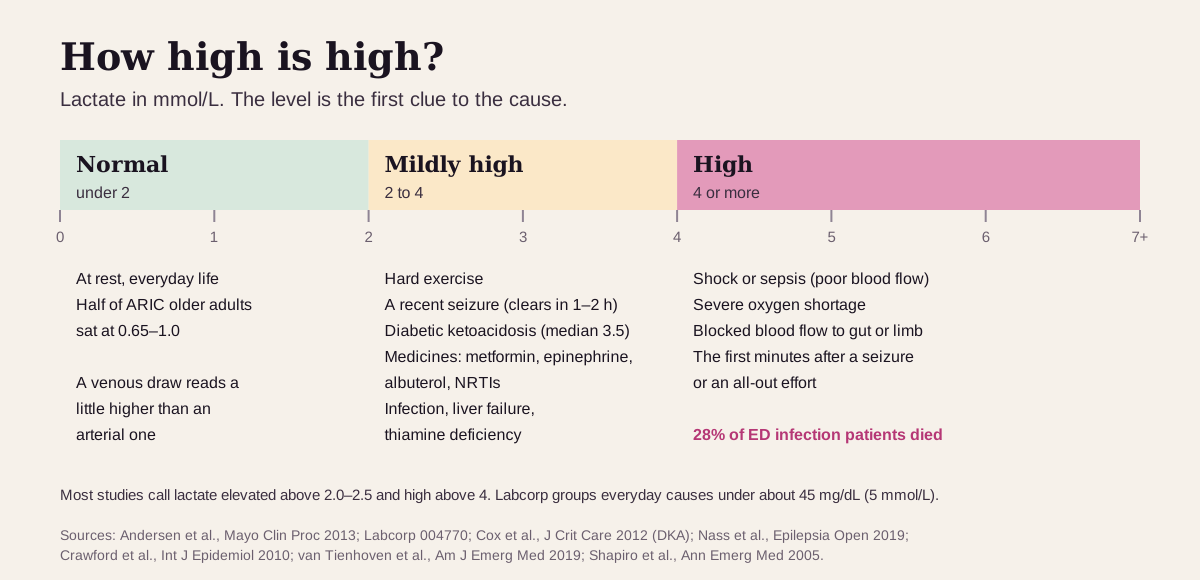
Mildly high (2–4 mmol/L): common, often temporary
The usual suspects:
- Hard exercise. Lactate climbs with any all-out effort. In 13 trained men after a maximal treadmill test, venous lactate peaked at 14.2 mmol/L six minutes after they stopped and was still 7.4 mmol/L at 30 minutes.13 Among marathon runners who collapsed, lactate was elevated in 95%.2 Labs ask you to rest and skip exercise before the test.5
- A recent seizure. After a tonic-clonic ("grand mal") seizure, lactate jumped 8.7-fold on average and was more than twice the upper limit in 90% of seizures. It was back to baseline within 2 hours.14
- Diabetic ketoacidosis (DKA). In one hospital series, 68% of people in DKA had lactate above 2.5 mmol/L and 40% above 4.12
- Medicines. Metformin, aspirin and some HIV medicines (NRTIs) are linked to high lactate, and so are epinephrine and beta-2 agonist asthma medicines like albuterol.52 Don't stop a prescribed medicine on your own. Bring your full list to your clinician.
- Less common causes: liver failure, thiamine (vitamin B1) deficiency, alcohol, some cancers, carbon monoxide or cyanide poisoning, and inherited mitochondrial diseases.23
High (4 mmol/L or more): look for shock or sepsis first
Poor blood flow to tissues is the most common cause of a high lactate. Septic shock, heart failure, major bleeding, a blocked blood vessel to the gut or a limb, and a cardiac arrest all do it.23 In emergency patients with infection, the level tracks risk: deaths rose more than fivefold from under 2.5 to 4 mmol/L or more.4
Get care now if a high lactate comes with shortness of breath, nausea or vomiting, sweating, belly pain or muscle weakness. Those are the symptoms of lactic acidosis.5
Lactic acidosis vs. hyperlactatemia
A high lactate on its own is hyperlactatemia: the level is up, but the blood pH is still normal. When lactate builds up enough to make the blood too acidic, it's lactic acidosis, which needs treatment right away.5 Clinicians usually reserve "lactic acidosis" for a pH under 7.35.2 That's why the pH and bicarbonate next to your lactate matter so much.
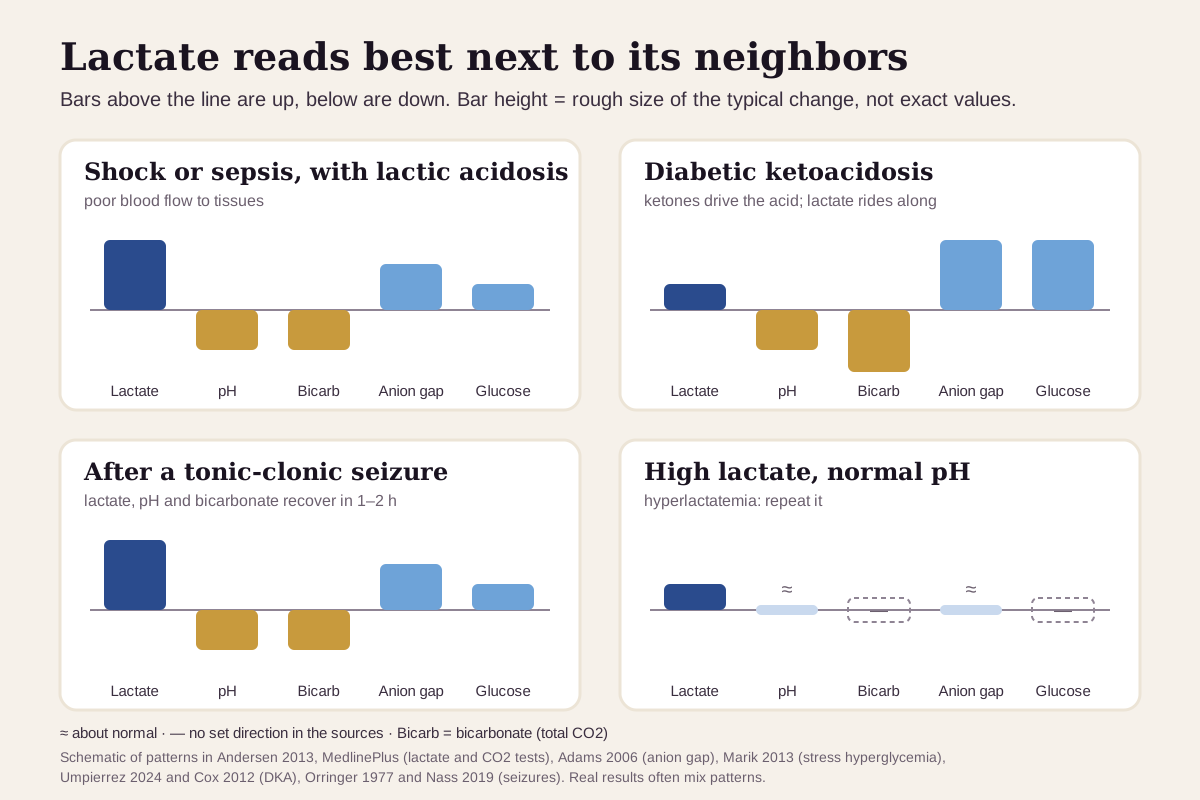
Lactate reads best next to its neighbors
A lactate result usually comes with a blood gas (pH) and a metabolic panel (bicarbonate, anion gap, glucose). The pattern across them says far more than lactate alone:
| If you see… | It often points to… |
|---|---|
| Lactate well above 4, low pH, low bicarbonate, high anion gap | lactic acidosis from poor blood flow: shock or sepsis |
| Glucose above 200 mg/dL, ketones (beta-hydroxybutyrate) 3 mmol/L or more, low pH and bicarbonate, lactate often up too | diabetic ketoacidosis, where the ketones drive the acid and lactate usually rides along |
| Very high lactate, low pH and bicarbonate that recover within an hour or two | a tonic-clonic seizure or an all-out effort: in one study, pH went from 7.14 to 7.38 in an hour after a seizure |
| Lactate 2–4 with a normal pH | hyperlactatemia: early illness, medicines, or exercise; worth repeating |
A normal anion gap won't rule out a high lactate. In one emergency study, an anion gap above 12 caught only 58% of patients with lactic acidosis, and the authors recommend ordering lactate directly when shock is suspected.16
Is a low lactate a problem?
Usually not. A low lactate is rare, and MedlinePlus lists it as not a medical concern.5
How fast lactate changes
Lactate moves in minutes to hours. Your body clears it fast once the cause stops, so the timing of the draw matters.
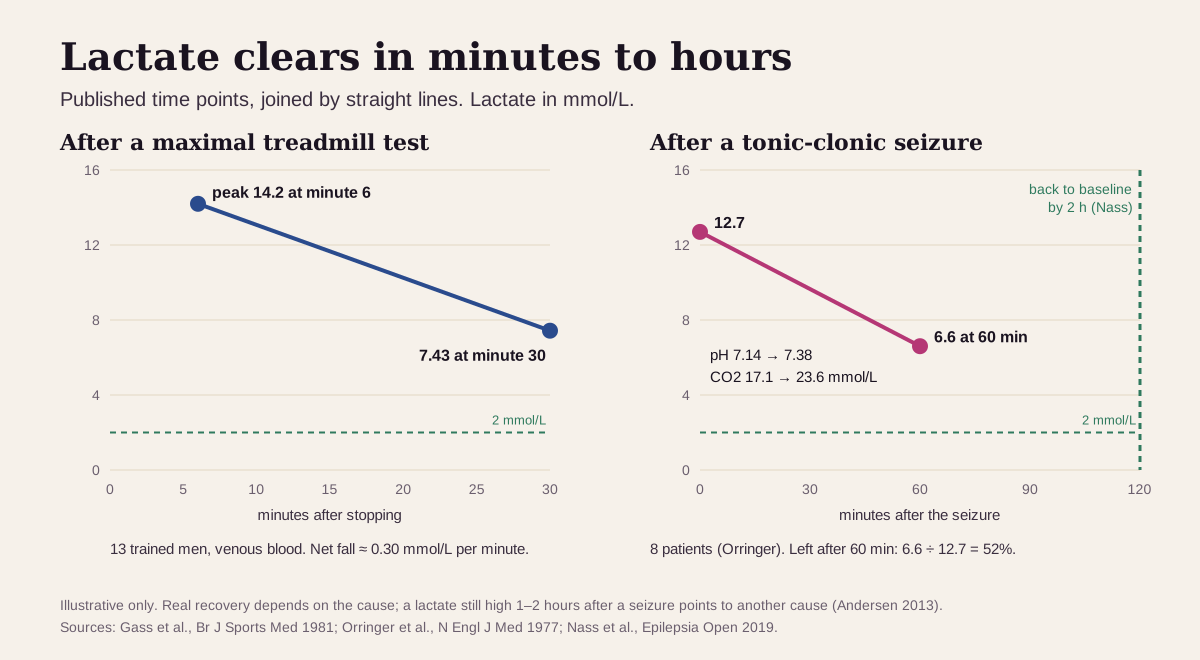
What that means in practice:
- A single high result after exertion is often repeated. A hard workout, a seizure, or even clenching your fist during the draw can push it up briefly.514
- A lactate that stays high is the one that matters. If lactate is still up more than 1–2 hours after a seizure, clinicians look for another cause.2 In sepsis, guidelines suggest repeat lactates to guide treatment, with fluids adjusted to how the lactate falls rather than given until it normalizes.7
- Trends beat snapshots. Compare results drawn the same way (vein vs. artery) at the same lab, because venous values run higher.9
Going deeper: the lactate shuttle
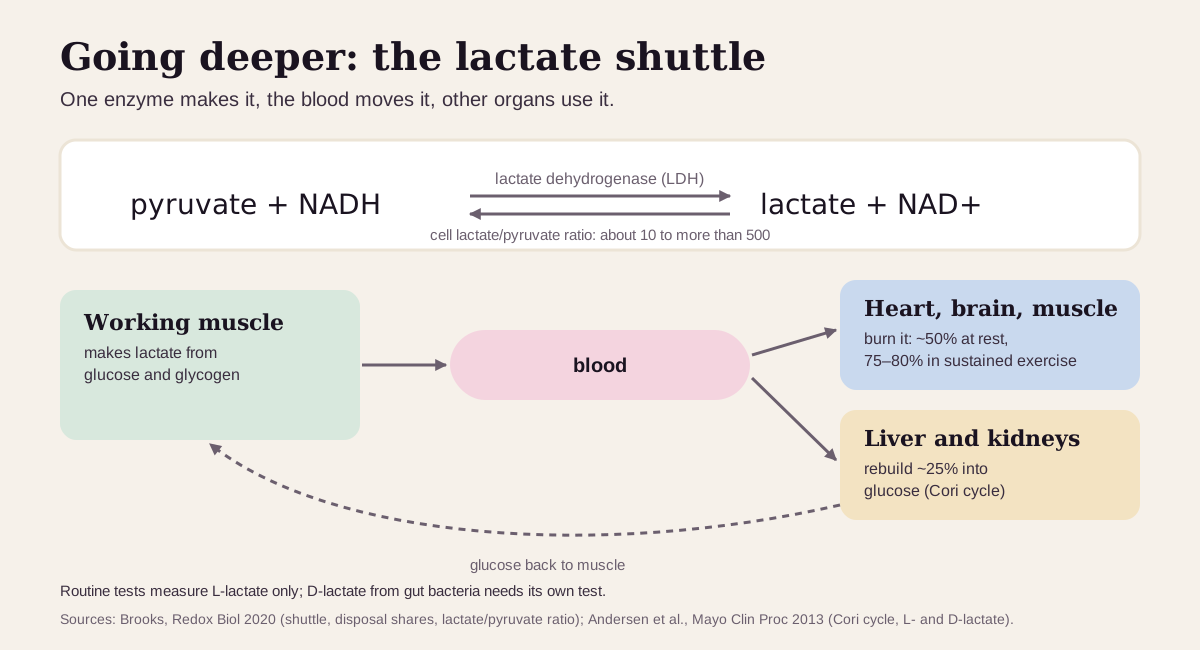
The enzyme lactate dehydrogenase (LDH) turns pyruvate into lactate and back, trading NADH for NAD+ as it goes. The lactate-to-pyruvate ratio in a cell ranges from about 10 to more than 500, and those swings shift the cell's NAD+/NADH balance. That's one way lactate works as a signal as well as a fuel.1
Lactate then travels. Researchers call this the lactate shuttle: muscle fibers that make lactate hand it to neighboring fibers, the heart and the brain, which burn it. At rest about 50% of lactate is burned this way, and 75–80% during sustained exercise. About 25% goes to the liver and kidneys, which rebuild it into glucose: the Cori cycle.1
One lab note for the curious: routine tests measure only L-lactate, the form your body makes. Gut bacteria can make D-lactate in people with short bowel syndrome, so it needs its own test.2
Questions worth asking
- Was my sample from a vein or an artery, and was it processed right away?
- How high was it, and what were my pH, bicarbonate and anion gap at the same time?
- Could exercise, a seizure, or anything during the draw explain it?
- Could any of my medicines, such as metformin or an inhaler, be involved?
- Should it be repeated, and how soon?
- If it stays high, what would we look for next?
FAQ
What is a normal lactate level? It depends on your lab. Labcorp's range for ages 6 and up is 4.8–25.7 mg/dL (about 0.5–2.9 mmol/L), and most hospital studies call anything above 2.0–2.5 mmol/L elevated.32
What is the most common cause of a high lactate? Poor blood flow or oxygen delivery to tissues, as in shock or sepsis, is the most common cause in hospital patients. Hard exercise, seizures and diabetic ketoacidosis are other common causes.23
Can exercise raise lactate? Yes. After a maximal treadmill test, lactate peaked at 14.2 mmol/L and was still 7.4 mmol/L half an hour later.13 Labs ask you to rest before the test for that reason.5
When is a high lactate an emergency? A lactate of 4 mmol/L or more in someone who is sick needs care right away. So does any high lactate with shortness of breath, vomiting, sweating, belly pain or muscle weakness, the signs of lactic acidosis.45
This guide is for education. It can't diagnose you or replace care from a clinician who knows your history.
Footnotes
-
Brooks GA. Lactate as a fulcrum of metabolism. Redox Biol. 2020;35:101454. The modern view of lactate: formed under fully aerobic conditions, a major fuel, the main raw material for new glucose, and a signal. Source for the shuttle and the disposal split (about 50% oxidized at rest, 75–80% in exercise, about 25% to glucose). PMC ↩ ↩2 ↩3 ↩4 ↩5 ↩6 ↩7
-
Andersen LW, Mackenhauer J, Roberts JC, Berg KM, Cocchi MN, Donnino MW. Etiology and therapeutic approach to elevated lactate levels. Mayo Clin Proc. 2013;88(10):1127–1140. The standard review of causes. Source for the 2.0–2.5 and over-4 cut-offs, the pH under 7.35 definition of lactic acidosis, hypoperfusion as the most common cause, the medicine list, the 1–2 hour post-seizure window and D-lactate. PMC ↩ ↩2 ↩3 ↩4 ↩5 ↩6 ↩7 ↩8 ↩9 ↩10 ↩11 ↩12 ↩13 ↩14 ↩15 ↩16 ↩17 ↩18 ↩19 ↩20 ↩21
-
Labcorp. Lactic Acid, Plasma (test 004770). Test catalog. A commercial reference laboratory's own test page: the age-based reference range (4.8–25.7 mg/dL from age 6), collection rules (ice, no fist clenching, plasma separated within 15 minutes) and its grouping of causes above and below 45 mg/dL. labcorp.com ↩ ↩2 ↩3 ↩4 ↩5 ↩6 ↩7 ↩8 ↩9 ↩10 ↩11 ↩12 ↩13 ↩14 ↩15 ↩16
-
Shapiro NI, Howell MD, Talmor D, et al. Serum lactate as a predictor of mortality in emergency department patients with infection. Ann Emerg Med. 2005;45(5):524–528. 1,278 admitted patients with infection: in-hospital deaths 4.9% (lactate under 2.5), 9.0% (2.5–4.0) and 28.4% (4.0 or more). PubMed ↩ ↩2 ↩3 ↩4 ↩5 ↩6 ↩7 ↩8 ↩9
-
National Library of Medicine. Lactate Test. MedlinePlus. Where lactate is made, hyperlactatemia vs. lactic acidosis, symptoms of lactic acidosis, test preparation (no exercise, no fist clenching), medicines linked to high lactate, and low lactate. MedlinePlus ↩ ↩2 ↩3 ↩4 ↩5 ↩6 ↩7 ↩8 ↩9 ↩10 ↩11 ↩12 ↩13 ↩14 ↩15
-
Singer M, Deutschman CS, Seymour CW, et al. The Third International Consensus Definitions for Sepsis and Septic Shock (Sepsis-3). JAMA. 2016;315(8):801–810. Septic shock: vasopressors needed to keep mean arterial pressure at 65 mm Hg or more, plus lactate above 2 mmol/L (18 mg/dL) without low blood volume; hospital mortality above 40%. PMC ↩ ↩2 ↩3
-
Prescott HC, Antonelli M, Alhazzani W, Møller MH, et al. Surviving Sepsis Campaign: International Guidelines for Management of Sepsis and Septic Shock 2026. Crit Care Med. 2026;54(4):725–812. Suggests measuring lactate in possible sepsis and using serial lactates to guide resuscitation, with fluids individualized rather than given until lactate normalizes (conditional, low certainty). SCCM · DOI ↩ ↩2
-
Crawford SO, Hoogeveen RC, Brancati FL, et al. Association of blood lactate with type 2 diabetes: the Atherosclerosis Risk in Communities Carotid MRI Study. Int J Epidemiol. 2010;39(6):1647–1655. 1,709 adults aged 60–84: median lactate 7.2 mg/dL (IQR 5.9–9.0); diabetes 11%, 14%, 20% and 30% across lactate quarters (under 5.9, 5.9–7.2, 7.3–9.1, 9.2 or more mg/dL); adjusted odds 2.23 in the top quarter. PMC ↩ ↩2 ↩3 ↩4 ↩5 ↩6 ↩7
-
van Tienhoven AJ, van Beers CAJ, Siegert CEH. Agreement between arterial and peripheral venous lactate levels in the ED: A systematic review. Am J Emerg Med. 2019;37(4):746–750. Nine studies: venous higher by 0.18–1.06 mmol/L, poorer agreement at high levels; venous 2 mmol/L or less rules out arterial hyperlactatemia. PubMed ↩ ↩2
-
Behning T. Understanding Lactate: Your Real-Time Metabolic Health Biomarker. Ikigai Health Institute. Published December 2, 2025; updated March 10, 2026. States a target of "below 8 mg/dL" on a lab draw (about 0.9 mmol/L) and that "resting lactate should be below 1.0 mmol/L." A commercial source, listed as what the optimizer community uses. ikigaihealthinstitute.com ↩ ↩2 ↩3
-
Nichol AD, Egi M, Pettila V, et al. Relative hyperlactatemia and hospital mortality in critically ill patients: a retrospective multi-centre study. Crit Care. 2010;14(1):R25. 7,155 ICU patients; higher lactate inside the reference range was independently linked to hospital death, first detectable above 0.75 mmol/L. PMC ↩ ↩2 ↩3
-
Cox K, Cocchi MN, Salciccioli JD, et al. Prevalence and significance of lactic acidosis in diabetic ketoacidosis. J Crit Care. 2012;27(2):132–137. 68 patients in DKA: 68% had lactate above 2.5 mmol/L, 40% above 4; median 3.5. PMC ↩ ↩2 ↩3
-
Gass GC, Rogers S, Mitchell R. Blood lactate concentration following maximum exercise in trained subjects. Br J Sports Med. 1981;15(3):172–176. 13 trained men: venous lactate peaked at 14.2 mmol/L at minute 6 and fell linearly to 7.43 at minute 30 (about 0.30 mmol/L per minute). PMC ↩ ↩2 ↩3
-
Nass RD, Zur B, Elger CE, Holdenrieder S, Surges R. Acute metabolic effects of tonic-clonic seizures. Epilepsia Open. 2019;4(4):599–608. 39 recorded seizures: lactate up 8.7-fold, over twice the upper limit in 90%, back to baseline within 2 hours; glucose up 14%. PMC ↩ ↩2 ↩3 ↩4
-
National Library of Medicine. CO2 blood test. MedlinePlus Medical Encyclopedia. Reviewed May 19, 2025. Lists lactic acidosis and ketoacidosis among the causes of a low bicarbonate (CO2). MedlinePlus ↩
-
Adams BD, Bonzani TA, Hunter CJ. The anion gap does not accurately screen for lactic acidosis in emergency department patients. Emerg Med J. 2006;23(3):179–182. An anion gap above 12 detected 58.2% of emergency patients with lactic acidosis (lab upper limit for lactate 2.5 mmol/L). PMC ↩ ↩2
-
Marik PE, Bellomo R. Stress hyperglycemia: an essential survival response! Crit Care. 2013;17(2):305. High blood sugar is common in critically ill patients, including those with sepsis. PMC ↩
-
Umpierrez GE, Davis GM, ElSayed NA, et al. Hyperglycemic Crises in Adults With Diabetes: A Consensus Report. Diabetes Care. 2024;47(8):1257–1275. Current DKA criteria: glucose 200 mg/dL or more, beta-hydroxybutyrate 3.0 mmol/L or more, pH under 7.30 or bicarbonate under 18, anion gap above 12. PMC ↩
-
Orringer CE, Eustace JC, Wunsch CD, Gardner LB. Natural history of lactic acidosis after grand-mal seizures. A model for the study of an anion-gap acidosis not associated with hyperkalemia. N Engl J Med. 1977;297(15):796–799. Eight patients: lactate 12.7, CO2 17.1 and pH 7.14 right after a seizure; 6.6, 23.6 and 7.38 an hour later. PubMed ↩ ↩2
Educational content, not medical advice. Libby is a personal record tool, not a medical service — it doesn't diagnose, treat, or prescribe. Reference ranges vary by lab and by person. Talk to a qualified healthcare professional about your results.
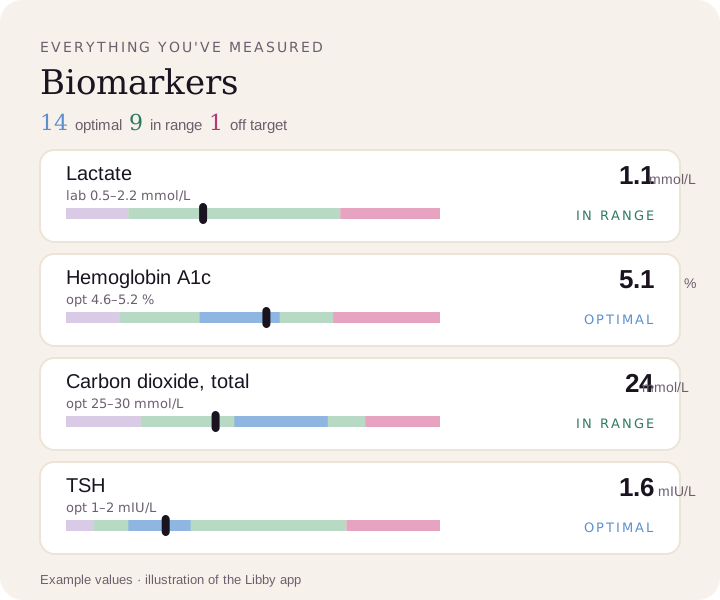
See every result against your lab's range.
Upload a lab PDF or a photo of your report. Libby puts every marker on your lab's range, adds the optimal range where one exists, and tracks your trends over time.
View your lactate ›