Neutrophil percentage: normal range, high, low and NLR
Neutrophil % is the share of your white cells that are neutrophils. The normal range, why it runs high or low, the count to check, and what NLR adds.
Your neutrophil percentage is the share of your white blood cells that are neutrophils, your body's main defense against infection. In most adults it runs about 40–60%.123 Because it's a share, it can rise when neutrophils go up or when lymphocytes go down. The absolute neutrophil count (ANC) on the same report tells you which, and it's the number clinicians act on.34
The short version
- Normal: about 40–60% of your white cells, per MedlinePlus and American Family Physician.23 Printed lab ranges vary. Labcorp prints no range for the percentage at all and flags the absolute count (1.4–7.0 ×10⁹/L) instead.5
- High usually means infection, stress, a steroid medicine or smoking pushing neutrophils up, or fewer lymphocytes, from steroids, HIV or older age.23
- Low usually means a recent virus or a medicine lowering neutrophils, or extra lymphocytes, as in mono.26
- The urgent number is the count, not the share. An ANC below 0.5 ×10⁹/L is severe neutropenia, and with a fever it needs care right away.47
What neutrophil percentage measures
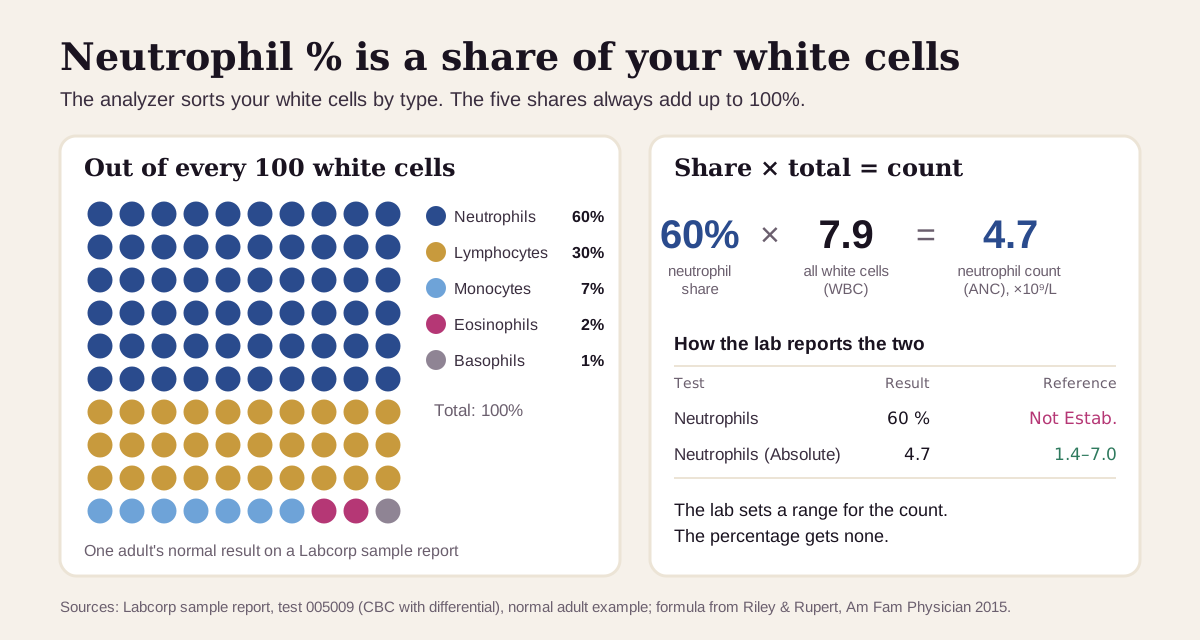
Neutrophils are the most common type of white blood cell and your body's main defense when bacteria, viruses or other germs get in.1 A complete blood count with differential sorts your white cells into five types (neutrophils, lymphocytes, monocytes, eosinophils and basophils) and gives each one as a share of the total.2
The five shares always add up to 100%. That's the key to reading them. When one type rises, the others' shares fall, even if their own numbers stayed put. MedlinePlus puts it plainly: "an abnormal increase in one type of white blood cell can cause a decrease in the percentage of other types."2
Most reports also list each type as an absolute count. The math is short:3
ANC = white blood cell count (WBC) × neutrophil % ÷ 100
On one Labcorp sample report, a white count of 7.9 with 60% neutrophils gives an ANC of 4.7. Labcorp, a U.S. commercial lab, prints "Not Estab." (not established) as the reference interval for each of the five main white-cell percentages and gives each count a range instead.5 The American Family Physician review makes the same point: it helps to think in absolute rather than relative (percentage) terms.3
One more number comes from the same two cells. The neutrophil-to-lymphocyte ratio (NLR) is the neutrophil count divided by the lymphocyte count, a simple read on the balance between inflammation and the adaptive immune system.8 More on it at the end.
What's a normal neutrophil percentage?
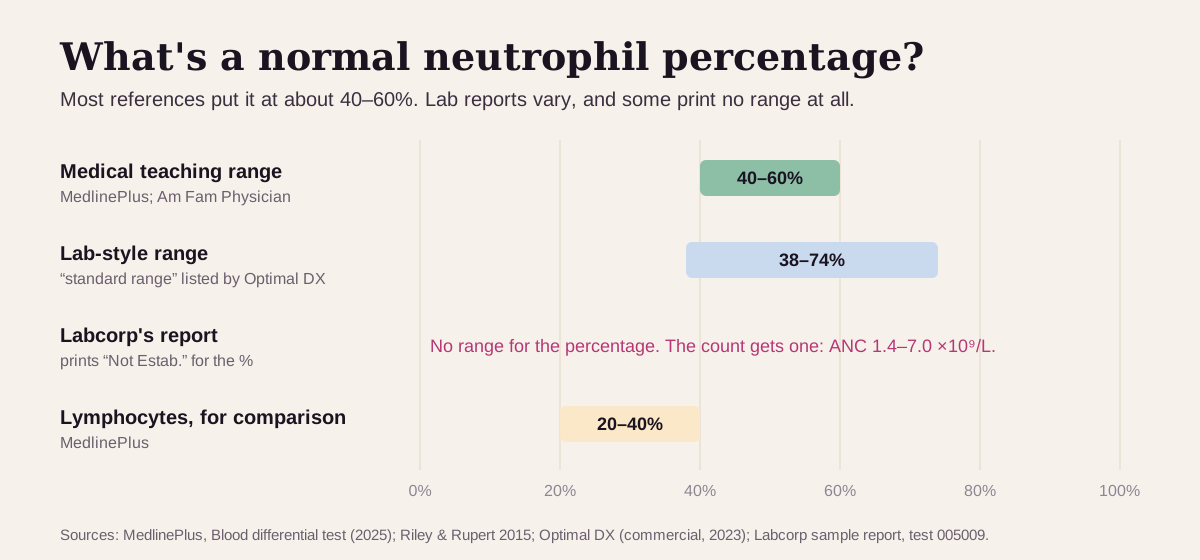
About 40–60% is the adult range MedlinePlus and the American Family Physician review give, with lymphocytes making up most of the rest at 20–40%.23 Printed lab ranges run wider and differ from lab to lab. A "standard range" of 38–74% is one example, listed by the functional-medicine software company Optimal DX.9 Labcorp prints no range for the percentage.5
Two shifts are normal:
- Age. Young children's white cells lean toward lymphocytes. The balance tips toward neutrophils through childhood into the teens and adulthood.3
- Pregnancy. The white count rises through pregnancy, with a slight shift toward a higher neutrophil percentage.3
Men and women share one range in these sources, and the Libby app uses one band for both.
"Optimal" neutrophil percentage: what health optimizers aim for
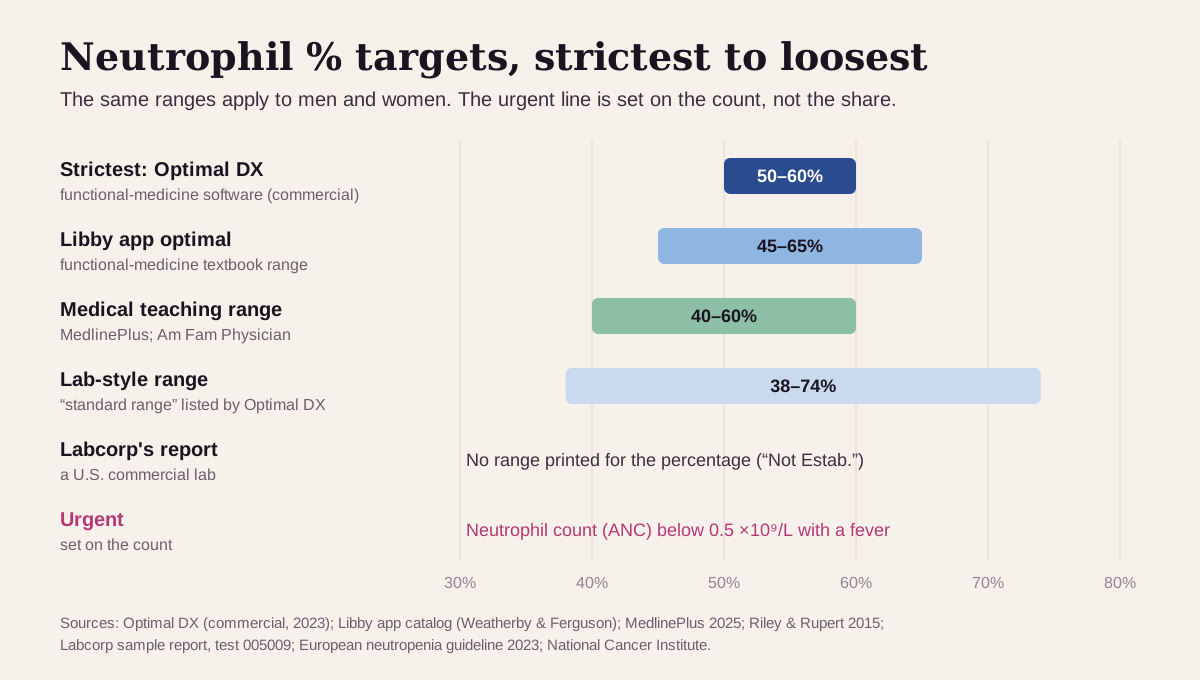
Functional-medicine practitioners aim for the middle of the lab range and trim both ends. Here's the ladder, from strictest to loosest:
| Target | Neutrophil % | Who uses it |
|---|---|---|
| Strictest (functional-medicine software) | 50–60% | Optimal DX's published "ODX range"9 |
| Functional medicine | 45–65% | The optimal range shown in the Libby app, recorded in its catalog from the Weatherby & Ferguson functional-medicine textbook10 |
| Medical teaching range | 40–60% | MedlinePlus and American Family Physician23 |
| Lab-style range | 38–74% | The "standard range" Optimal DX lists9 |
| Labcorp's report | none printed | Labcorp flags the absolute count, 1.4–7.0 ×10⁹/L, instead5 |
| Urgent | set on the count | An ANC below 0.5 ×10⁹/L is severe neutropenia; with a fever, get care now47 |
Why aim for the middle? The evidence is about inflammation, and most of it runs through the balance of neutrophils and lymphocytes:
- In 14,114 adults at a Taiwanese hospital health check, a higher C-reactive protein (CRP, a blood marker of inflammation) went with a higher neutrophil percentage and a lower lymphocyte percentage.11
- In the Rotterdam Study of Dutch adults aged 45 and older, the 3,462 people with a CRP test who had a raised CRP (above 10 mg/L) averaged an NLR of 2.24, against 1.61 with a normal CRP.12
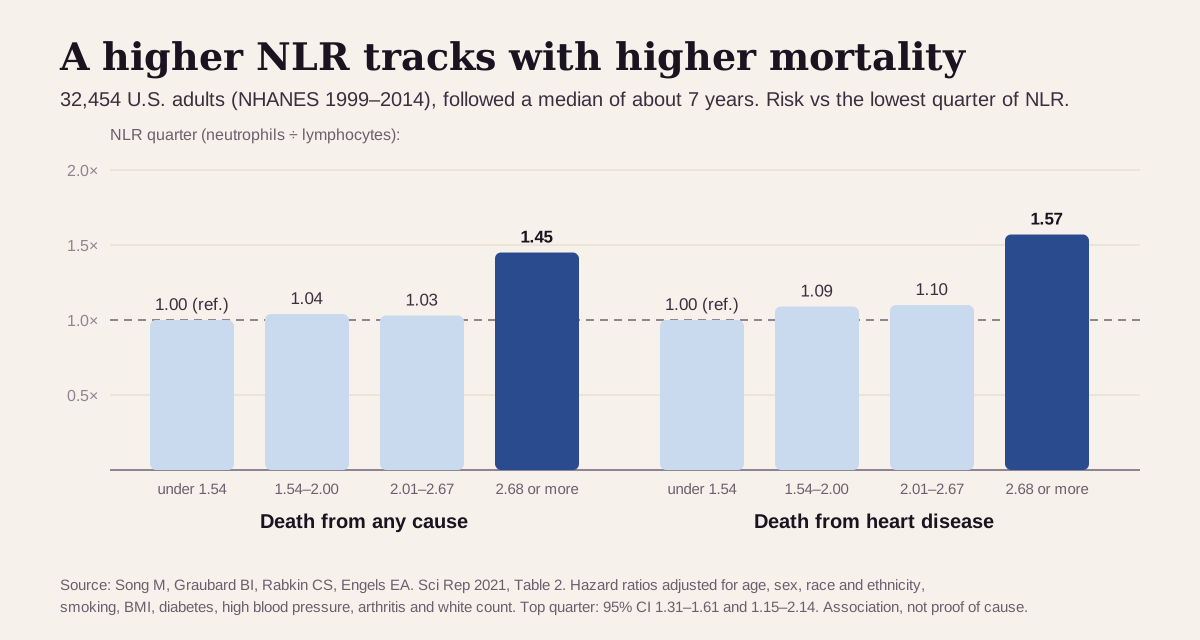
- In 32,454 U.S. adults followed for a median of about 7 years, people in the top quarter of NLR (2.68 or more) had a 45% higher risk of dying from any cause and a 57% higher risk of dying from heart disease than those in the bottom quarter (under 1.54). That held after adjusting for age, smoking, weight, diabetes and the total white count. The two middle quarters carried no clear extra risk.8
Keep "optimal" in perspective: these are targets, not diagnoses. A single high-normal percentage can come from a hard workout or the time of day (see how fast it changes).6 Lower isn't automatically better, either. A low percentage can mean too few neutrophils, the one direction with a real safety threshold.4 The Libby app's optimal band for the NLR, 1.2–2.5, is recorded from the Institute for Functional Medicine.13
The percentage trap: read the count first
A neutrophil percentage can change without a single neutrophil changing. The shares add up to 100%, so more lymphocytes push the neutrophil share down and fewer lymphocytes push it up.2
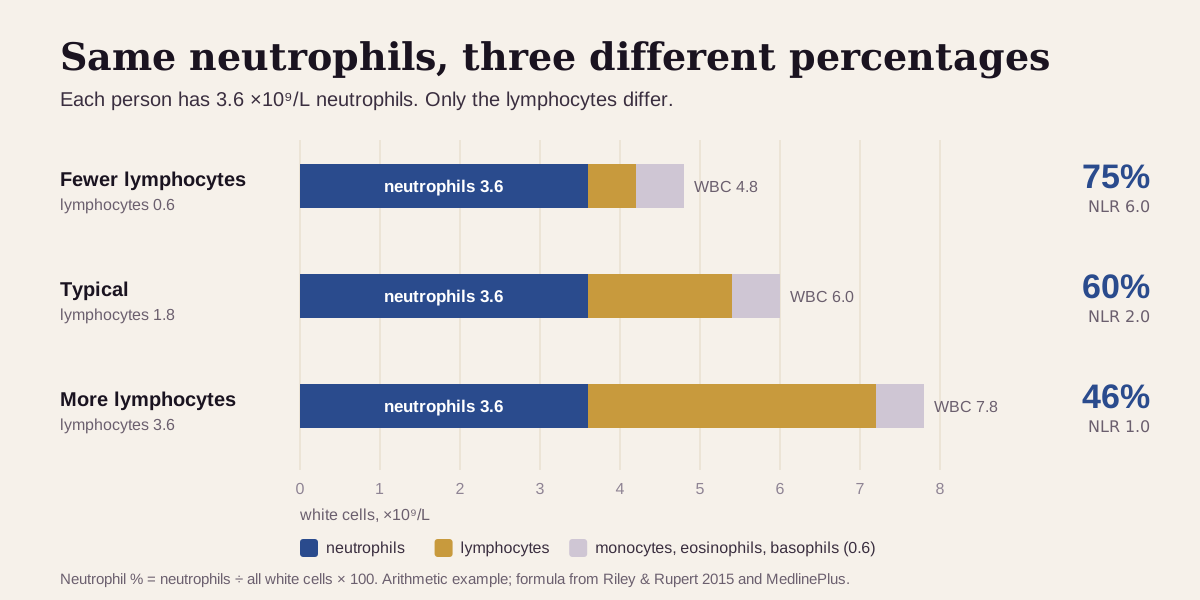
All three people in the figure have the same 3.6 ×10⁹/L neutrophils, right in the middle of the Libby app's optimal count range of 2.3–5.2.10 Their percentages run from 46% to 75%. The 75% sits above a 38–74% lab-style range and could come back flagged high, when it's the lymphocytes that moved.9
When your percentage is flagged:
- Find the ANC on the same report. It answers the real question: too many or too few neutrophils?35
- Find the lymphocyte count. If the ANC is normal, the lymphocytes usually explain the percentage.2
- Check the white count, the total the shares are taken from.3
Our absolute neutrophil count guide and white blood cell count guide cover those two numbers in depth.
What a high or low neutrophil percentage usually means
Sort it into one of four boxes first. A high or low percentage comes from a change in neutrophils, a change in lymphocytes, or both.2
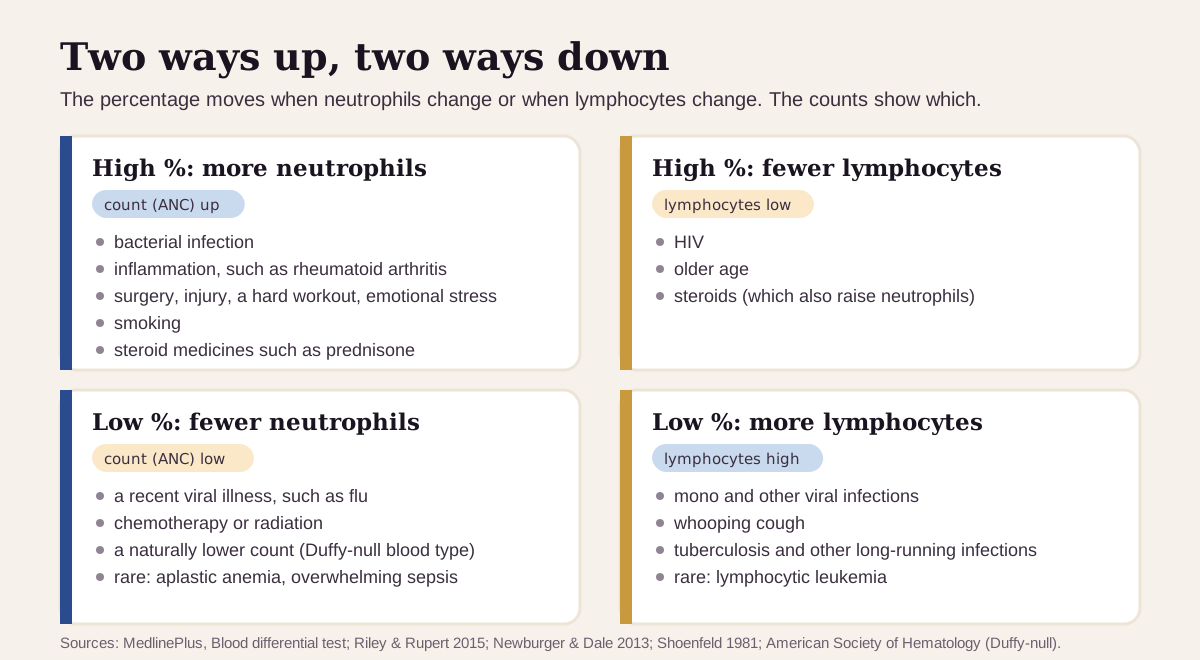
High percentage, above about 60–65%
With a high ANC too, neutrophils really are up. The American Family Physician review lists the usual suspects roughly in order of how common they are:3
- Infection, especially bacterial.
- Stress on the body or mind, and smoking: surgery, an injury, hard exercise or emotional stress. The white count can double within hours as stored cells are released.
- Chronic inflammation, such as rheumatoid arthritis.2
- Medicines, above all steroids such as prednisone, which can push the white count above 20 ×10⁹/L from the first day, mostly as neutrophils.14
With a normal ANC, look at the lymphocytes. HIV and older age both lower the lymphocyte share.2 Steroids do two things at once: they lower lymphocytes and raise neutrophils.214 Chemotherapy, radiation and severe infection (sepsis) lower lymphocytes too, but they can also move the neutrophils.26
Low percentage, below about 40%
With a low ANC, neutrophils are down (neutropenia):
- A recent viral illness is the most common cause of a short-term dip, and almost any virus can do it.6
- Chemotherapy, radiation and some other medicines.26
- A naturally lower count. People with the Duffy-null blood type often have a lower ANC with no added risk of infection.15
- Rare but important: aplastic anemia, and an overwhelming bacterial infection that drains the bone marrow's reserve.26
With a normal ANC, extra lymphocytes are pulling the share down. Mono is the classic example. In the typical case lymphocytes make up at least 50% of the differential, and mono is unlikely with a lymphocyte count under 4.0 ×10⁹/L.16 Other viral infections, whooping cough and tuberculosis can do the same.32
Get care now if your ANC is below 0.5 ×10⁹/L, or you're on cancer treatment, and you have a fever of 100.5 °F (38 °C) or higher, chills, a sore throat, mouth sores, a cough or pain when you urinate.47
Neutrophil percentage reads best next to its neighbors
The percentage is one of five numbers that belong together: the white count, the neutrophil and lymphocyte percentages, and the two counts behind them. These are the four most common patterns:
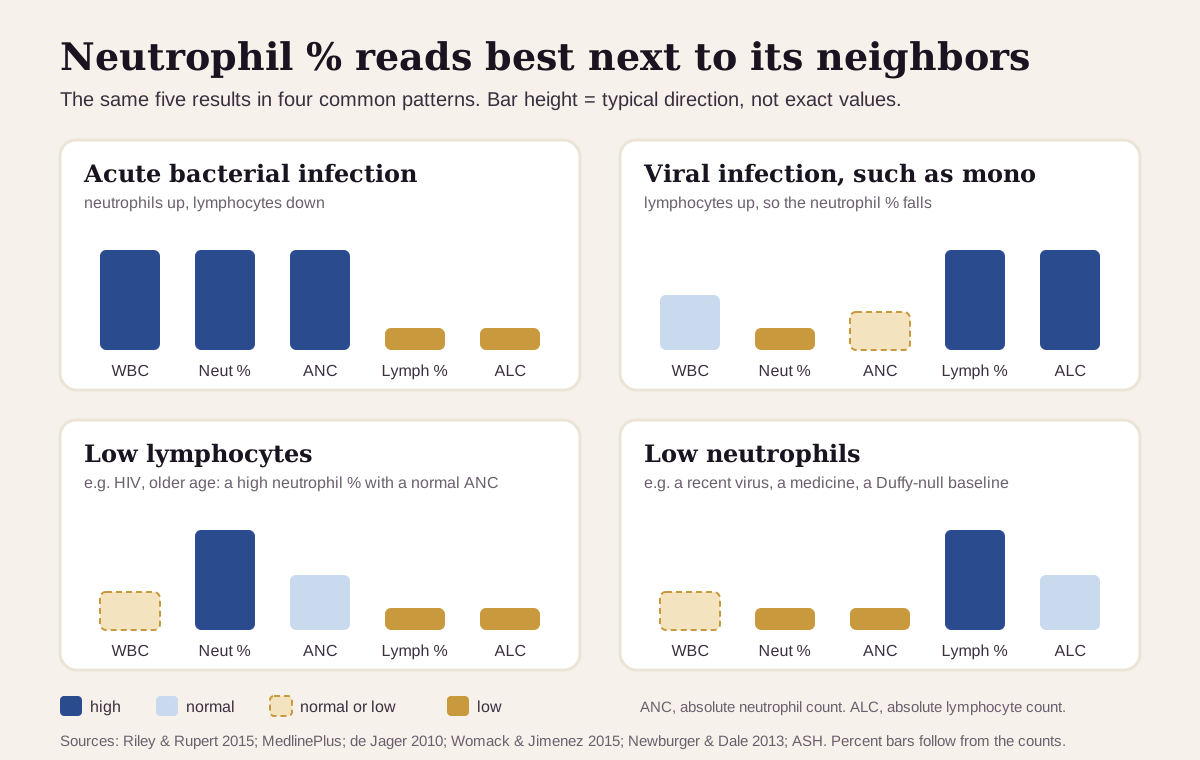
| If you see… | It often points to… |
|---|---|
| Neutrophil % and ANC up, lymphocytes down | an acute bacterial infection |
| Neutrophil % down, lymphocyte % and count up | a viral infection, classically mono |
| Neutrophil % up, ANC normal, lymphocytes low | a lymphocyte story: HIV, older age, or another cause of low lymphocytes |
| Neutrophil % and ANC down, lymphocyte count normal | a truly low ANC: a recent virus, a medicine, or a Duffy-null baseline (a normal variant) |
The lymphocyte side often carries the signal. In one emergency-room study of 92 people with bacteria in the blood and 92 similar patients whose blood cultures were negative, the lymphocyte count and the NLR each scored 0.73 on a 0.5–1.0 scale of how well a test separates two groups. The neutrophil count scored 0.57 and the white count 0.53.17
How fast neutrophil percentage changes
Within minutes. Neutrophil counts "may vary considerably over short periods of time," with activity, exercise, eating or just the time of day, and steroids and extreme anxiety move them further.6 The percentage shifts too, pushed by neutrophils and lymphocytes moving in opposite directions.18
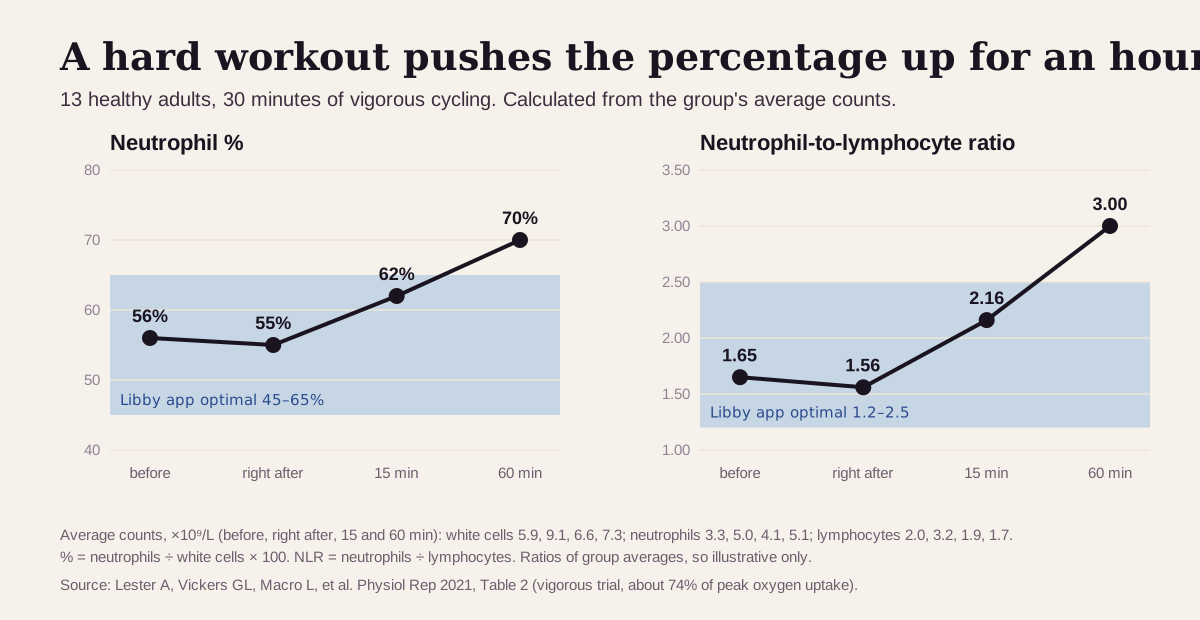
In a study of 13 healthy young adults who cycled hard for 30 minutes, lymphocytes jumped right after the ride and then fell below their starting level, while neutrophils stayed up.18 Worked out from the group's average counts, the neutrophil share went from 56% before to 70% an hour later, and the NLR from 1.65 to 3.00. The authors note that in the hours after exercise lymphocytes can fall to about half of normal, recovering within 24 hours.18
What that means in practice:
- Repeat a test under the same conditions: the same time of day, no hard workout beforehand, and ideally not while you're sick. Mention recent illness, exercise, smoking and medicines, especially steroids.6
- One result rarely settles it. Several measurements are needed to define how low a count really is.6
- Trends beat snapshots. Follow the ANC and the lymphocyte count over time, with the percentage as a pointer to them.
Going deeper: why the NLR survives the trap
A single percentage misleads because its denominator, the white count, moves. A ratio of two percentages from the same report is safe, because the white count cancels out:3
NLR = ANC ÷ ALC = (WBC × neutrophil %) ÷ (WBC × lymphocyte %) = neutrophil % ÷ lymphocyte %
In the trap figure, the three people share one ANC, and their NLRs of 6.0, 2.0 and 1.0 track exactly what their lymphocytes did. That's why researchers use the NLR as a one-number read on neutrophils (acute and chronic inflammation) against lymphocytes (adaptive immunity).8
Reference points for the NLR:
- Rotterdam Study (adults 45 and older): average 1.76, with 95% of people between 0.83 and 3.92. It ran higher in men (1.88 vs 1.68) and rose with age, from 1.63 at 45–54 to 2.13 over 85.12
- NHANES (U.S. adults over 30): average 2.3, with the upper three quarters starting at 1.54, 2.01 and 2.68.8
- The Libby app's optimal band: 1.2–2.5, recorded from the Institute for Functional Medicine.13
How the percentages are counted. Labcorp's analyzers sort cells with flow cytometry. When the machine flags something unusual, a lab scientist reviews a stained blood smear and may count the cells by hand.5
Questions worth asking
- What's my absolute neutrophil count, and is it in range?
- If my percentage is high, is that more neutrophils or fewer lymphocytes?
- What's my neutrophil-to-lymphocyte ratio, and how does it compare with my earlier tests?
- Could a recent illness, a hard workout, smoking or a steroid medicine explain it?
- Are my hemoglobin, platelets and other white cells normal?
- When should we repeat it, and under what conditions?
FAQ
What is a normal neutrophil percentage? About 40–60% of your white cells, though printed lab ranges run wider. The Libby app's optimal range, recorded from a functional-medicine textbook, is 45–65%.2310
Is a high neutrophil percentage bad? It depends on the count. If your ANC is high too, the usual causes are infection, stress, steroid medicines or smoking. If your ANC is normal, low lymphocytes are usually the reason.32
Should I look at the percentage or the absolute count? The count. Cut points such as neutropenia are set on the ANC, and some labs print no range for the percentage at all.45
What is a normal neutrophil-to-lymphocyte ratio? In a large Dutch study of adults 45 and older, 95% of people fell between 0.83 and 3.92, with an average of 1.76. The Libby app's optimal band is 1.2–2.5.1213
This guide is for education. It can't diagnose you or replace care from a clinician who knows your history.
Footnotes
-
National Library of Medicine. Blood Differential. MedlinePlus Lab Tests. Updated October 9, 2024. What each white-cell type does. MedlinePlus ↩ ↩2
-
National Library of Medicine. Blood differential test. MedlinePlus Medical Encyclopedia. Reviewed February 3, 2025. Normal shares (neutrophils 40–60%, lymphocytes 20–40%), the causes of a higher or lower share of each cell type, and the note that a rise in one type lowers the others' percentages. MedlinePlus ↩ ↩2 ↩3 ↩4 ↩5 ↩6 ↩7 ↩8 ↩9 ↩10 ↩11 ↩12 ↩13 ↩14 ↩15 ↩16 ↩17 ↩18 ↩19 ↩20 ↩21 ↩22 ↩23 ↩24 ↩25
-
Riley LK, Rupert J. Evaluation of Patients with Leukocytosis. Am Fam Physician. 2015;92(11):1004–1011. Normal neutrophil share (40–60%), the absolute-count formula and the advice to think in absolute terms, causes of neutrophilia in rough order of frequency, lymphocytosis in viral illness and pertussis, and the age and pregnancy shifts. AAFP · PubMed ↩ ↩2 ↩3 ↩4 ↩5 ↩6 ↩7 ↩8 ↩9 ↩10 ↩11 ↩12 ↩13 ↩14 ↩15 ↩16 ↩17 ↩18 ↩19 ↩20 ↩21 ↩22 ↩23
-
Fioredda F, Skokowa J, Tamary H, Spanoudakis M, et al. The European Guidelines on Diagnosis and Management of Neutropenia in Adults and Children: A Consensus Between the European Hematology Association and the EuNet-INNOCHRON COST Action. HemaSphere. 2023;7(4):e872. Neutropenia is defined on the absolute neutrophil count; below 0.5 ×10⁹/L is severe. PMC ↩ ↩2 ↩3 ↩4 ↩5 ↩6 ↩7
-
Labcorp. CBC With Differential/Platelet, test 005009: test page and sample reports (a commercial laboratory's own documents). The sample reports print "Not Estab." as the reference interval for every differential percentage and 1.4–7.0 ×10³/µL for absolute neutrophils; the normal adult example shows WBC 7.9, neutrophils 60%, ANC 4.7. The test page describes flow-cytometric analysis with smear review and manual differentials when flagged. Test page · Sample report (PDF) ↩ ↩2 ↩3 ↩4 ↩5 ↩6 ↩7 ↩8 ↩9 ↩10
-
Newburger PE, Dale DC. Evaluation and management of patients with isolated neutropenia. Semin Hematol. 2013;50(3):198–206. Viral infections as the most common cause of a temporary dip, overwhelming bacterial infection draining the marrow, and the short-term variability of neutrophil counts. PMC ↩ ↩2 ↩3 ↩4 ↩5 ↩6 ↩7 ↩8 ↩9 ↩10 ↩11
-
National Cancer Institute. Infection and Neutropenia during Cancer Treatment. Signs of infection, including a fever of 100.5 °F (38 °C) or higher, that need urgent attention. cancer.gov ↩ ↩2 ↩3 ↩4
-
Song M, Graubard BI, Rabkin CS, Engels EA. Neutrophil-to-lymphocyte ratio and mortality in the United States general population. Sci Rep. 2021;11(1):464. 32,454 NHANES adults; hazard ratios by NLR quarter (Table 2). PMC ↩ ↩2 ↩3 ↩4 ↩5
-
Optimal DX. Biomarkers of Immunity: Neutrophils. Published April 3, 2023; updated November 6, 2023. States an "ODX range" for neutrophils of 50–60% against a "standard range" of 38–74%. A commercial source, listed as what the optimizer community uses. optimaldx.com ↩ ↩2 ↩3 ↩4 ↩5 ↩6
-
Weatherby D, Ferguson S. Blood Chemistry and CBC Analysis: Clinical Laboratory Testing from a Functional Perspective. 2nd ed. Bear Mountain Publishing; 2004. ISBN 978-0976136712. Widely used functional-medicine reference (ranges as recorded in the Libby app's marker catalog; the book was not opened for this article). The catalog records it as the source of the Libby app's optimal neutrophil range, 45–65%, and optimal absolute neutrophil range, 2.3–5.2 ×10³/µL. ↩ ↩2 ↩3 ↩4
-
Huang ZS, Lo SC, Tsay W, Hsu KL, Chiang FT. Revision in reference ranges of peripheral total leukocyte count and differential leukocyte percentages based on a normal serum C-reactive protein level. J Formos Med Assoc. 2007;106(8):608–616. 14,114 health-check participants; CRP rose with neutrophil percentage and fell with lymphocyte percentage. PubMed ↩
-
Fest J, Ruiter R, Ikram MA, Voortman T, van Eijck CHJ, Stricker BH. Reference values for white blood-cell-based inflammatory markers in the Rotterdam Study: a population-based prospective cohort study. Sci Rep. 2018;8(1):10566. 8,711 adults aged 45 and older; NLR reference values by sex, age and CRP. PMC ↩ ↩2 ↩3
-
Institute for Functional Medicine. Clinical practice guidelines and Advanced Practice Modules (range as recorded in the Libby app's marker catalog; member-only modules not opened for this article). The catalog records it as the source of the app's optimal NLR band, 1.2–2.5. https://www.ifm.org ↩ ↩2 ↩3
-
Shoenfeld Y, Gurewich Y, Gallant LA, Pinkhas J. Prednisone-induced leukocytosis. Influence of dosage, method and duration of administration on the degree of leukocytosis. Am J Med. 1981;71(5):773–778. 80 patients: white counts above 20,000 from the first day, mostly neutrophils, with a variable drop in lymphocytes. PubMed ↩ ↩2 ↩3
-
American Society of Hematology. Duffy-null Associated Neutrophil Count (DANC). People with the Duffy-null blood type often have a lower ANC with no increased risk of infection. hematology.org ↩ ↩2 ↩3
-
Womack J, Jimenez M. Common questions about infectious mononucleosis. Am Fam Physician. 2015;91(6):372–376. The Hoagland criteria (lymphocytes at least 50% and atypical lymphocytes at least 10% of the differential) and the 4,000 lymphocyte cutoff. AAFP · PubMed ↩ ↩2
-
de Jager CP, van Wijk PT, Mathoera RB, de Jongh-Leuvenink J, van der Poll T, Wever PC. Lymphocytopenia and neutrophil-lymphocyte count ratio predict bacteremia better than conventional infection markers in an emergency care unit. Crit Care. 2010;14(5):R192. Areas under the curve: lymphocyte count 0.73, NLR 0.73, neutrophil count 0.57, WBC 0.53. PMC ↩ ↩2
-
Lester A, Vickers GL, Macro L, Gudgeon A, Bonham-Carter A, Campbell JP, Turner JE. Exercise-induced amplification of mitogen-stimulated oxidative burst in whole blood is strongly influenced by neutrophil counts during and following exercise. Physiol Rep. 2021;9(17):e15010. Randomized crossover in 13 adults; average white-cell, neutrophil and lymphocyte counts before and after 30 minutes of cycling (Table 2). PMC ↩ ↩2 ↩3 ↩4
Educational content, not medical advice. Libby is a personal record tool, not a medical service — it doesn't diagnose, treat, or prescribe. Reference ranges vary by lab and by person. Talk to a qualified healthcare professional about your results.
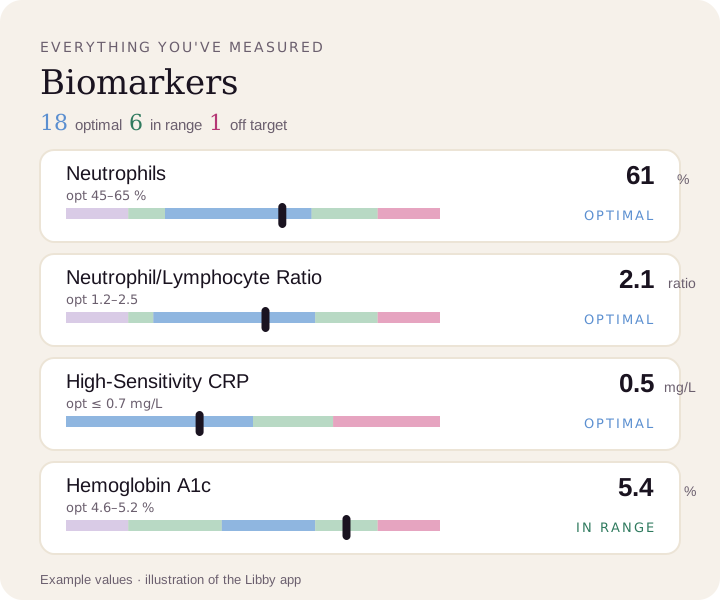
Compare your results to optimal ranges.
Upload a lab PDF or a photo of your report. Libby puts every marker on your lab's range and the optimal range, and tracks your trends over time.
View your neutrophils ›