Ammonia blood test: normal range, high causes, next steps
Ammonia is a waste product your liver turns into urea. Here's the normal range, what raises it, how to read it with other tests, and when it's urgent.
Ammonia is a waste product your body makes whenever it breaks down protein, and your liver's job is to turn it into urea so your kidneys can flush it out. When the liver can't keep up, or the urea-making machinery is broken, ammonia builds up in the blood and acts as a poison to the brain. That's why the test is usually ordered for someone who is confused or unusually sleepy, has serious liver disease, or is a newborn who is suddenly very sick.1
The short version
- Normal: check the range on your report. The adult upper limit is 33 µmol/L at one hospital lab cited here and 50 at the other. Newborns in their first week run higher, up to about 82.234
- High: the most common reason is liver disease, especially cirrhosis. Kidney failure, some medicines (valproate most often) and rare inherited urea-cycle disorders are the others.156
- Above 150 µmol/L is flagged for immediate attention at both hospital labs cited here, and a high ammonia with new confusion, drowsiness, vomiting or a seizure needs care right away.231
- The key distinction: the tube matters. Blood cells keep making ammonia after the draw, so a sample that sits too long or is damaged reads falsely high. At one children's hospital, 48% of high results that later came back normal were probably false alarms.78
What ammonia is
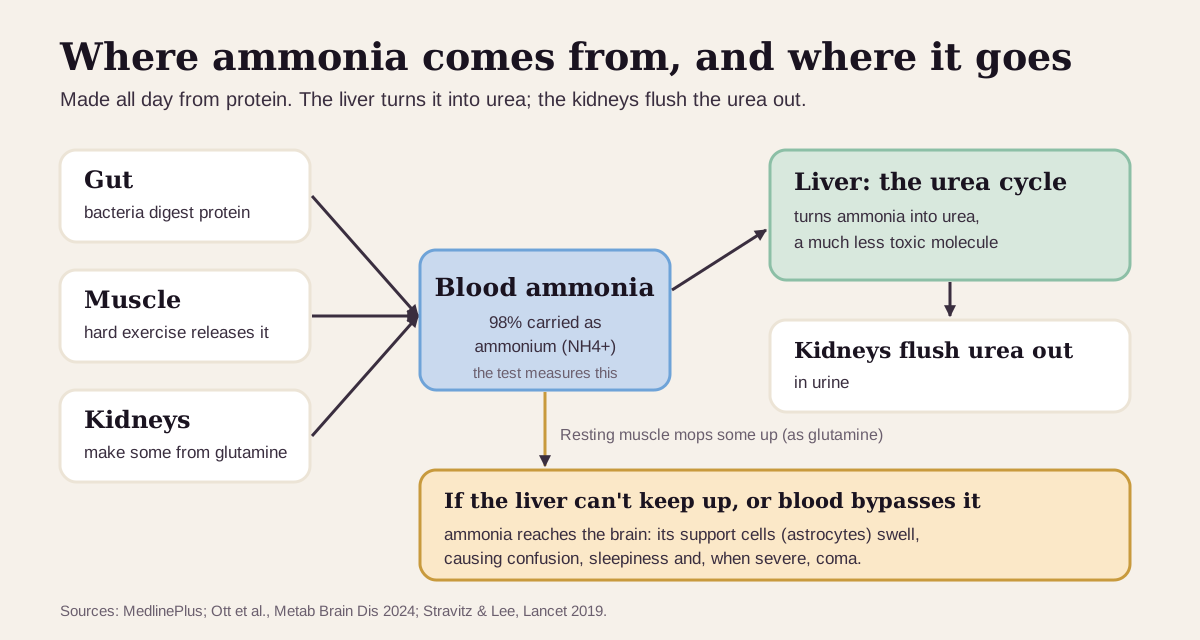
Ammonia is the nitrogen left over when protein is broken down. Gut bacteria make it as you digest the protein in your food, and cells all over the body make more, especially in the intestines, liver and kidneys.111 In your blood, about 98% of it sits in a charged form called ammonium (NH4+).12
Your liver clears it. It builds ammonia into urea, a much less toxic molecule, through a chain of reactions called the urea cycle. Your kidneys then pass the urea out in urine.1 Muscles also mop up ammonia at rest, though they pour it out during hard exercise.12
The brain is the organ that suffers when ammonia builds up. High levels cause confusion, sleepiness and, in severe cases, coma.1 That's why the test is mostly a hospital test. Specialists recommend measuring ammonia in anyone with an unexplained change in alertness, an unexplained neurological illness, liver failure, or a suspected poisoning.6
What's a normal ammonia?
Start with the range printed on your own report. Ammonia ranges depend on the lab's method, the type of sample and your age, and the AASLD/EASL guideline on liver-related confusion says to judge each result against the matching normal.10
- Children's Minnesota lists under 33 µmol/L for adults and under 51 for children older than a month.2
- Newcastle Hospitals in the UK uses 0–50 µmol/L from age 4 weeks.3
- Labcorp, a large US commercial lab, reports µg/dL with separate ranges by age and sex. For men aged 41–70 it lists 40–200 µg/dL; for women 51–70, 34–178 µg/dL.9
- Newborns run higher. In 127 hospitalized babies in their first week, the median was 32 µmol/L and researchers proposed an upper limit of 82.4 Children's Minnesota's range for the first 13 days is 64–107.2
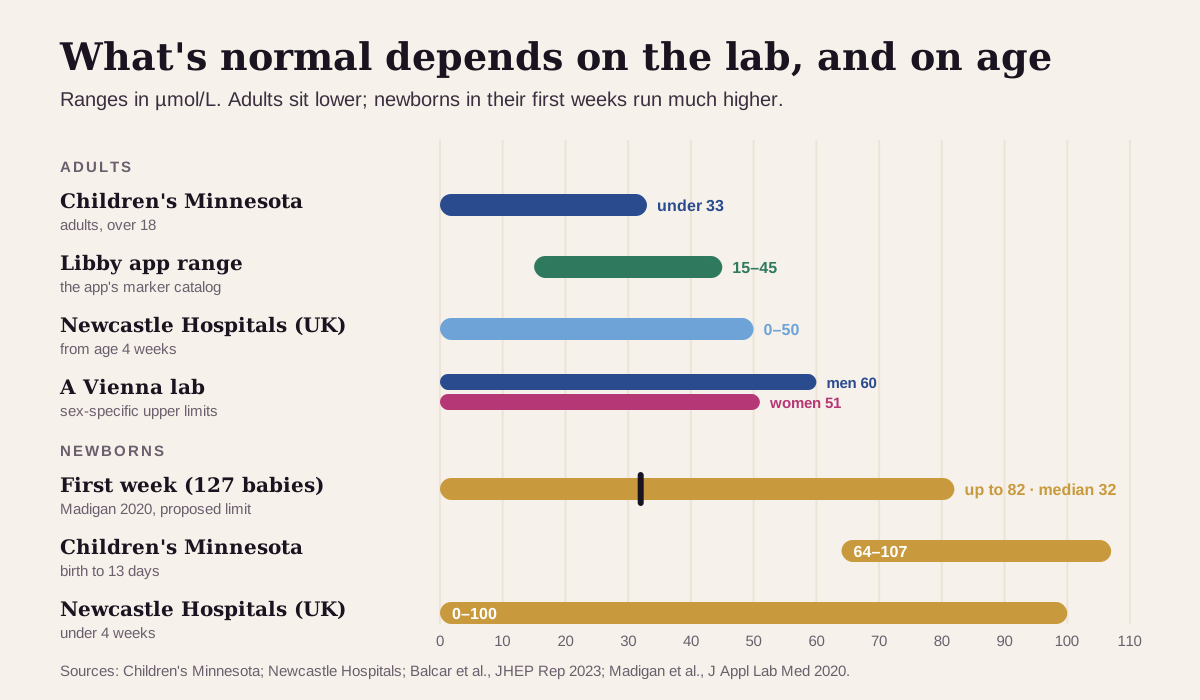
Some labs split by sex. Labcorp's ranges run higher for men, and the Vienna lab in one cirrhosis study used upper limits of 60 µmol/L for men and 51 for women.913
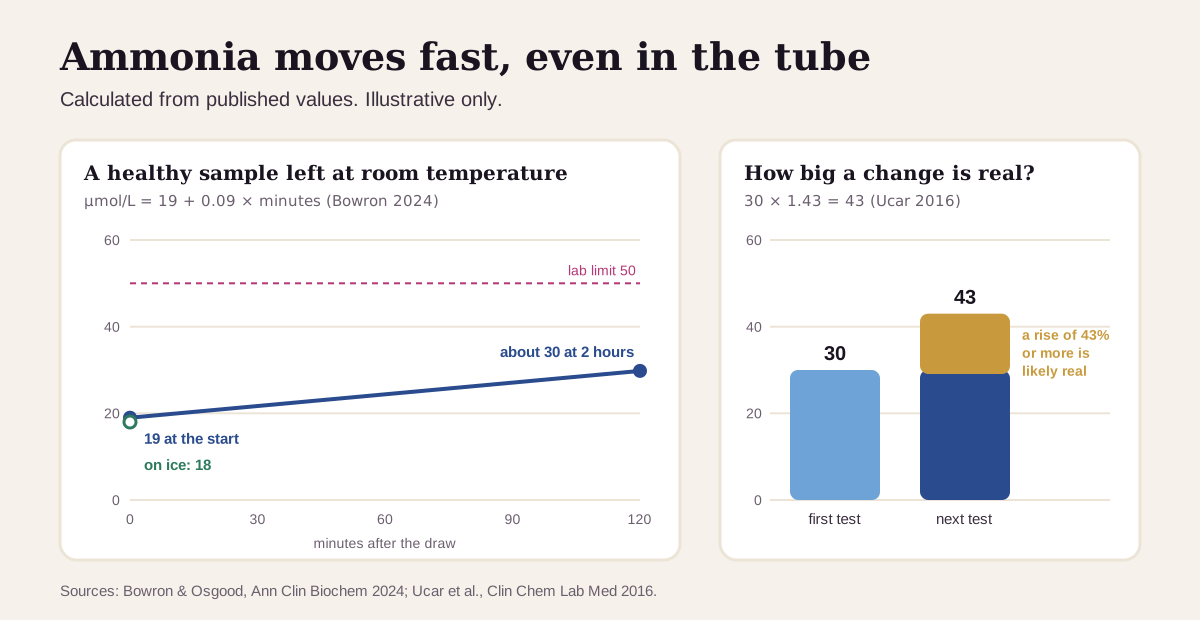
How the blood is handled changes the number. Labs ask for a lavender-top tube put on ice right away, plasma separated within 15 minutes, no fist clenching, and no smoking nearby. A damaged (hemolyzed) sample also raises ammonia.92 In older experiments, ammonia more than doubled in badly handled samples, and the time plasma spent sitting on the blood cells mattered most.7 Newer work is more reassuring: in 11 healthy people, samples left at room temperature crept up by 0.09 µmol/L per minute, from 19 to 30 over two hours, and none crossed the lab limit of 50.14 In 19 patients with high ammonia, the rise over two hours was up to about 15%, and ice made no difference.15
"Optimal" ammonia: no wellness target, clear danger lines
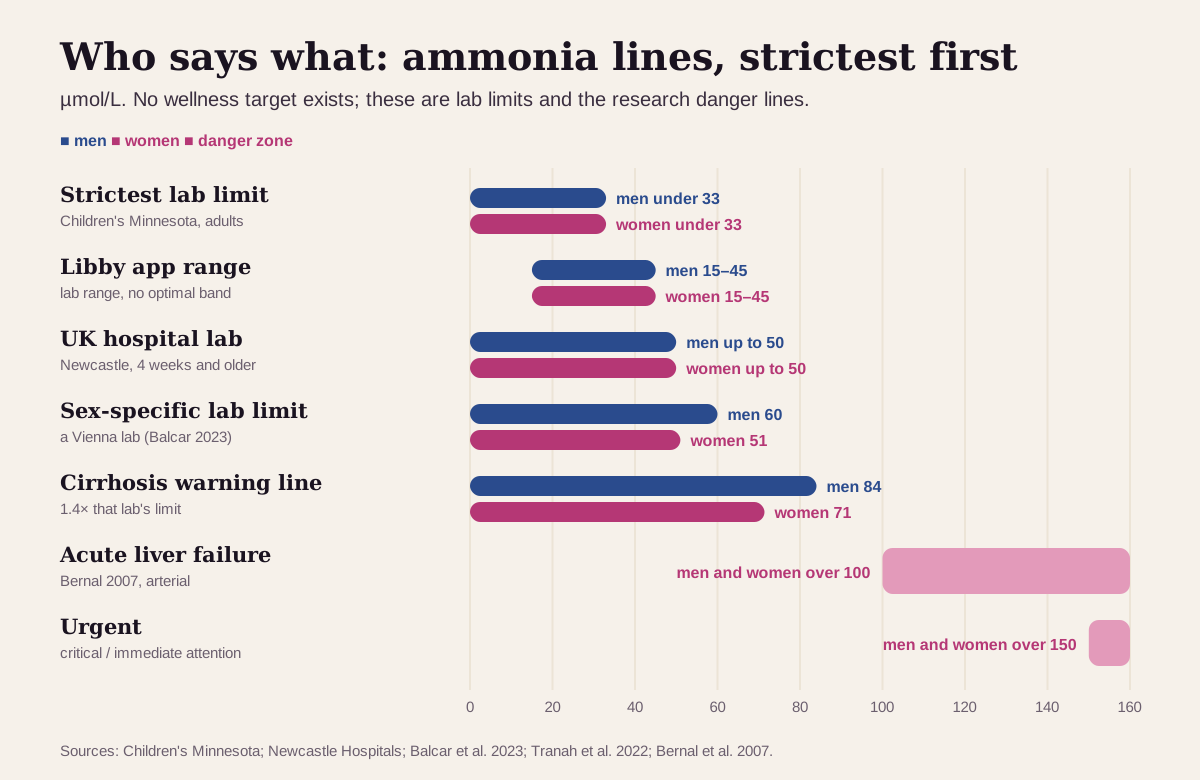
Longevity platforms don't publish an ammonia target, and the Libby app shows your ammonia against your lab's range; its marker catalog has no separate optimal band for ammonia. What the research does give is a set of lines that matter, from the strictest lab limit to the urgent ones:
| Target | Men | Women | Who uses it |
|---|---|---|---|
| Strictest lab limit | under 33 µmol/L | under 33 µmol/L | Children's Minnesota, adults2 |
| Libby app range | 15–45 µmol/L | 15–45 µmol/L | The lab range in the Libby app's marker catalog, with no optimal band |
| UK hospital lab | up to 50 µmol/L | up to 50 µmol/L | Newcastle Hospitals, age 4 weeks and older3 |
| Sex-specific lab limit | up to 60 µmol/L | up to 51 µmol/L | The Vienna lab in Balcar et al.13 |
| Cirrhosis warning line | 1.4× the upper limit (84 on that lab) | 1.4× the upper limit (71) | Stable outpatients with cirrhosis1613 |
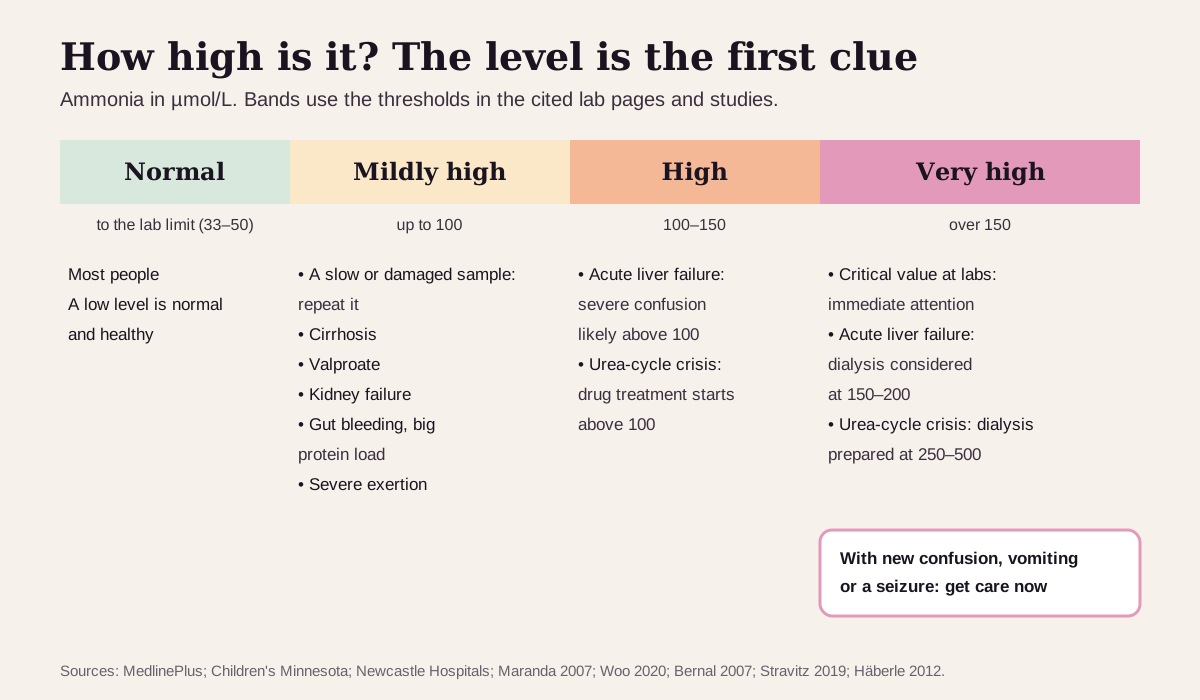
| Acute liver failure | over 100 µmol/L | over 100 µmol/L | Predicted severe confusion with 70% accuracy17 |
| Urgent | over 150 (over 200 in newborns) | over 150 (over 200 in newborns) | Critical value at Children's Minnesota; "immediate attention" at Newcastle23 |
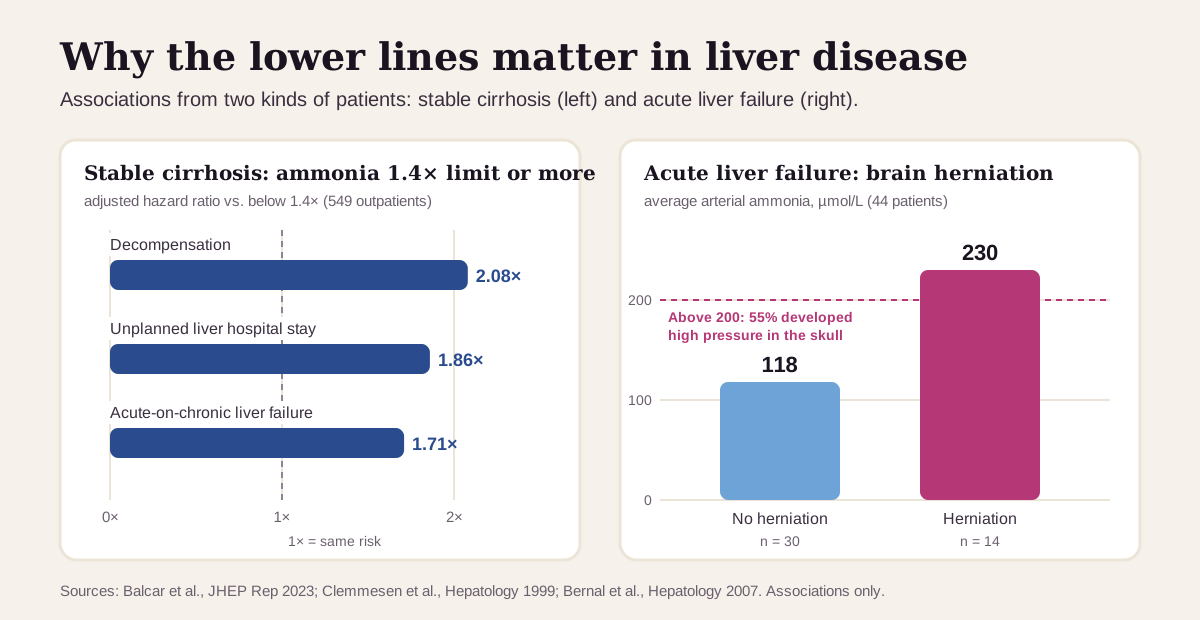
Why the lower lines matter for people with liver disease:
- In 754 stable outpatients with cirrhosis, a higher ammonia relative to the lab's upper limit predicted hospital stays for liver complications (hazard ratio 2.13) and death (1.45). The best cut-off was 1.4 times the upper limit.16
- A second group of 549 outpatients confirmed it: at 1.4× or more, the risk of decompensation (the point where cirrhosis starts causing major problems such as fluid in the belly or bleeding) was 2.08 times higher, even after accounting for liver pressure and inflammation.13
- In acute liver failure, the danger is brain swelling. People whose brain herniated had an average arterial ammonia of 230 µmol/L, versus 118 in those who didn't.18 Above 200, 55% developed dangerous pressure inside the skull.17
Keep "optimal" in perspective. These lines come from people who are already sick. For a healthy person, a low-normal ammonia is simply normal, and MedlinePlus calls low levels "normal and healthy".1 The number that matters most is the one read with symptoms and with the rest of the panel.
What a high ammonia usually means
The level is the first clue. A result just over the lab limit often comes from the sample itself or a slower cause such as liver disease or a medicine.85 Above 100 µmol/L in someone with symptoms, guidelines call for treatment right away, and above 150 labs flag the result as critical.6172
The usual suspects
- Liver disease. It's the most common cause.1 A scarred liver clears less ammonia, and blood from the gut can slip around it. About 30–40% of people with cirrhosis have at least one episode of hepatic encephalopathy (confusion caused by liver failure), usually set off by an infection, bleeding or constipation.10 Ammonia climbs with how confused people are,20 but the AASLD/EASL guideline says a high level alone adds no diagnostic value, and a normal level in someone thought to have hepatic encephalopathy calls the diagnosis into question.10 In 2026 the International Society for Hepatic Encephalopathy and Nitrogen Metabolism (ISHEN) published the first international consensus on how to measure it in cirrhosis.21
- Medicines. Valproate, an epilepsy and mood medicine, is the classic one. In 252 adults taking it, 28% had a high ammonia, but only 0.7% became confused from it, and the rise wasn't linked to their liver function.5 Diuretics, opioids, barbiturates, acetazolamide and alcohol can also affect the result.11 Don't stop a prescribed medicine on your own. Bring your full list to your clinician.
- The sample itself. A slow trip to the lab, a hemolyzed tube or a fingerstick sample can all read high. That's why a surprising result is usually repeated before anything else happens.83
- Other causes: kidney failure, bleeding in the stomach or gut, a very high protein intake or nutrition by vein, and severe muscle exertion.111
- Less common causes: inherited urea-cycle disorders, which can first show up at any age after an infection, fasting, surgery, childbirth or a big protein load; other inherited metabolic diseases; Reye syndrome; aspirin (salicylate) poisoning; and a urinary infection with Proteus mirabilis.6113
Very high: act fast
Above 100 µmol/L in acute liver failure, severe confusion becomes likely.17 In that setting, liver specialists consider dialysis-type treatment at 150–200 µmol/L or a rising level.19 In urea-cycle disorders the outcome tracks how high ammonia gets and for how long, so guidelines ask labs to return the result within 30 minutes.6
Get care now if a high ammonia comes with new confusion, unusual sleepiness, slurred speech or trouble walking, vomiting, or a seizure. In a baby, watch for fast or grunting breathing, floppiness or unusual sleepiness.1
Ammonia reads best next to its neighbors
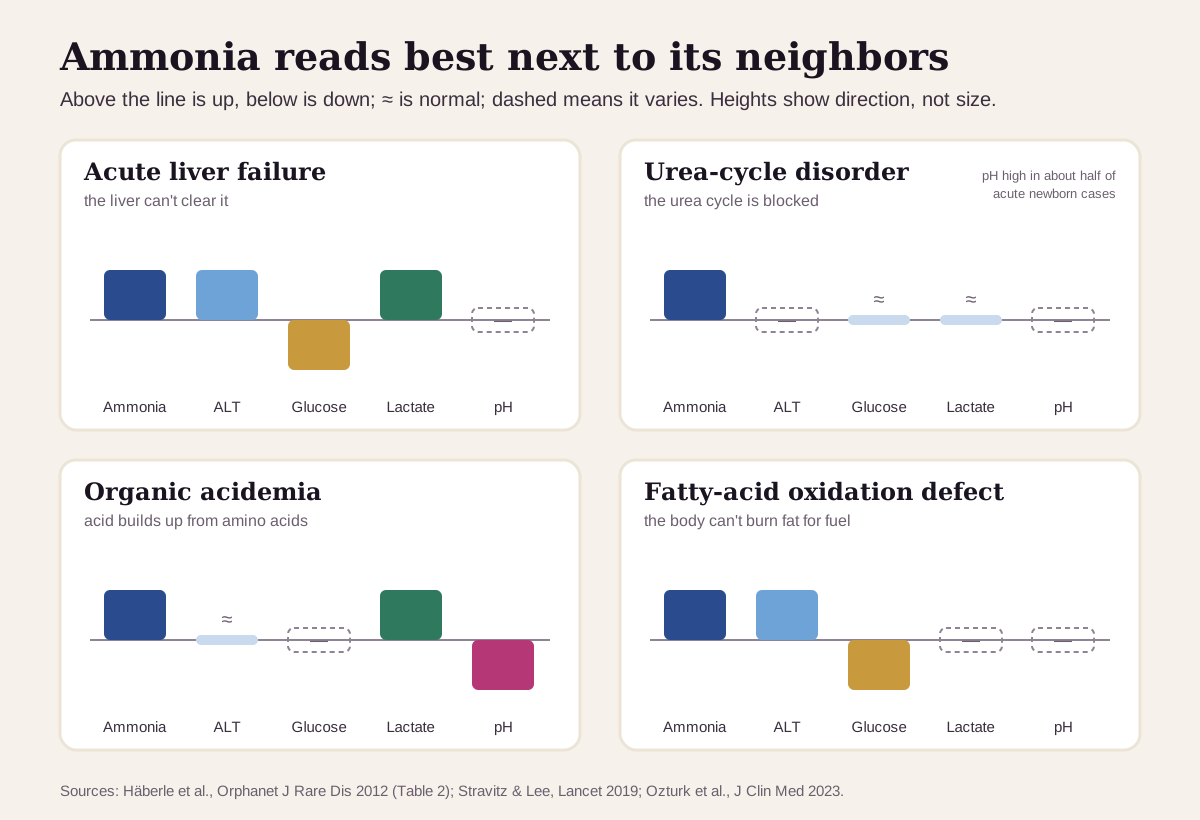
A high ammonia is a starting point. The tests drawn with it (liver enzymes, blood sugar, lactate and a blood gas for pH) sort the cause, and the UK Newcastle lab lists them among the first tests to add.3
| If you see… | It often points to… |
|---|---|
| Ammonia up with ALT often over 10 times the upper limit, INR 1.5 or more, and new confusion in someone without known liver disease | acute liver failure, which also often brings low blood sugar and, in severe cases, a high lactate2219 |
| Ammonia up in someone with known cirrhosis who is confused or drowsy | hepatic encephalopathy, usually set off by infection, bleeding or constipation; the number alone won't confirm it10 |
| Ammonia up, liver tests often normal, pH not low (sometimes high), normal glucose and lactate | a urea-cycle disorder: in newborns with an acute crisis, about half have a high pH from fast breathing6 |
| Ammonia up with a low pH (acid blood), high lactate and ketones in the urine | an organic acidemia, an inherited problem breaking down certain amino acids6 |
| Ammonia up with low blood sugar, raised ALT and raised CK (a muscle enzyme) | a fatty-acid oxidation defect, an inherited problem burning fat for fuel6 |
| Ammonia up in someone taking valproate, liver tests normal | valproate-related high ammonia: common, and it rarely causes confusion5 |
Is a low ammonia a problem?
No. MedlinePlus notes that normal levels vary with age, and that in general low levels are normal and healthy.1
How fast ammonia changes
Ammonia moves in minutes. During exhausting leg exercise, the muscle's ammonia output fell as soon as the effort stopped and had settled within about 20 minutes; blood ammonia peaked 2–3 minutes into recovery.23 In a tube on the counter, it keeps rising.14
What that means in practice:
- A single mildly high result is often repeated, ideally drawn cleanly and carried to the lab on time.83 Mention a hard workout, a big protein meal or smoking before the draw.111
- Small swings are noise. In healthy people, ammonia varied about 14% from day to day. Two results had to differ by about 40% or more before the change was likely real: 43% in healthy people, 41% in patients with high ammonia.2415
- Trends beat snapshots. In acute liver failure, ammonia stayed high in patients who went on to develop brain swelling and fell in those who didn't.17 Compare results from the same lab, drawn the same way (vein vs. artery).10
Going deeper: the urea cycle and the brain
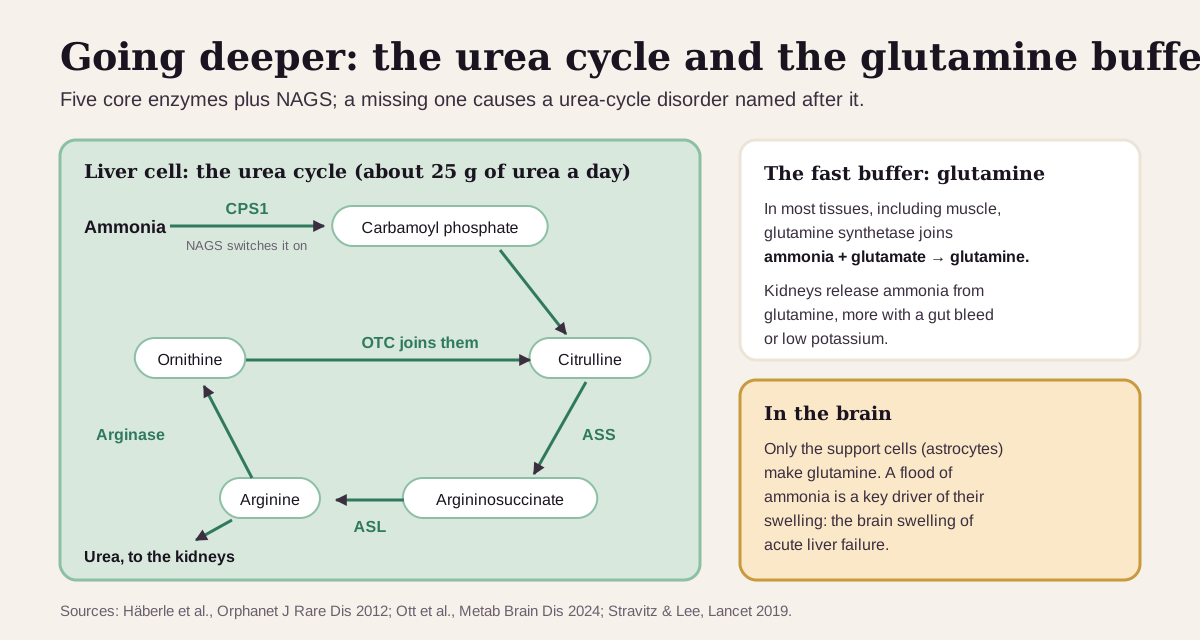
The urea cycle runs on five core enzymes, CPS1, OTC, ASS, ASL and arginase, plus NAGS, which makes the molecule that switches CPS1 on. A missing or weak one causes a urea-cycle disorder named after it, and OTC deficiency is the most common. Together these disorders affect an estimated 1 in 8,000 to 1 in 44,000 births, and about half show up shortly after birth.6 Your liver makes about 25 g of urea a day this way.12
There's a second, faster buffer. Almost every tissue can attach ammonia to glutamate to make glutamine, using an enzyme called glutamine synthetase. In the brain, only the support cells called astrocytes do this, and a flood of ammonia is a key driver of their swelling.1219 Kidneys, meanwhile, release ammonia made from glutamine into the blood, and they release more during a gut bleed or when potassium is low.12
Questions worth asking
- Was my sample from a vein or an artery, put on ice and tested quickly?
- How far above the lab's limit was it, and should it be repeated?
- What did my liver tests, glucose, lactate and pH show at the same time?
- Could any of my medicines, such as valproate or a diuretic, be involved?
- If I have cirrhosis, is my ammonia above 1.4 times the upper limit, and what would change the plan?
- If no liver cause turns up, should I be tested for a urea-cycle disorder?
FAQ
What is a normal ammonia level? It depends on the lab and your age. The adult upper limit is 33 µmol/L at one hospital lab cited here and 50 at the other, and newborns in their first week run up to about 82.234
What is the most common cause of a high ammonia? Liver disease, especially cirrhosis, is the most common cause. Kidney failure, medicines such as valproate, bleeding in the gut and rare inherited urea-cycle disorders are others, and a badly handled sample can read falsely high.158
Does a high ammonia mean hepatic encephalopathy? Not on its own. The diagnosis rests on symptoms and an exam. A high level supports it, and a normal level in a confused person with cirrhosis makes clinicians look for another cause.10
When is a high ammonia an emergency? Above 150 µmol/L, or above 200 in a newborn, labs flag the result for immediate attention. Any high ammonia with new confusion, drowsiness, vomiting or a seizure needs care right away.231
This guide is for education. It can't diagnose you or replace care from a clinician who knows your history.
Footnotes
-
National Library of Medicine. Ammonia Levels. MedlinePlus. Where ammonia comes from, the urea cycle, liver disease as the most common cause, symptoms in adults and newborns, test preparation, and "low levels are normal and healthy." MedlinePlus ↩ ↩2 ↩3 ↩4 ↩5 ↩6 ↩7 ↩8 ↩9 ↩10 ↩11 ↩12 ↩13 ↩14 ↩15 ↩16
-
Children's Minnesota Laboratory. Ammonia (NH3). Test catalog. Adult range under 33 µmol/L, age-specific ranges for children and newborns, the critical value (over 150 µmol/L), and collection rules. childrensmn.org ↩ ↩2 ↩3 ↩4 ↩5 ↩6 ↩7 ↩8 ↩9 ↩10 ↩11 ↩12 ↩13
-
Newcastle upon Tyne Hospitals NHS Foundation Trust Laboratories. Ammonia, plasma. Test directory, updated September 15, 2025. Ranges (0–50 µmol/L from 4 weeks; 0–100 under 4 weeks), the "immediate attention" levels (over 150, or over 200 in newborns), causes, and the first-line tests to add. NHS ↩ ↩2 ↩3 ↩4 ↩5 ↩6 ↩7 ↩8 ↩9 ↩10 ↩11 ↩12 ↩13 ↩14
-
Madigan T, Block DR, Carey WA, Kaemingk BD, Patel R. Proposed Plasma Ammonia Reference Intervals in a Reference Group of Hospitalized Term and Preterm Neonates. J Appl Lab Med. 2020;5(2):363–369. 127 newborns in their first week: median 32 µmol/L; proposed limit 82 µmol/L or less. PMC ↩ ↩2 ↩3 ↩4
-
Woo PYM, Woo AWY, Lam SW, et al. Incidence, Presentation, and Risk Factors for Sodium Valproate-Associated Hyperammonemia in Neurosurgical Patients: A Prospective, Observational Study. World Neurosurg. 2020;144:e597–e604. 252 adults on valproate: 28% had hyperammonemia, 0.7% encephalopathy; no link with liver function. PubMed ↩ ↩2 ↩3 ↩4 ↩5
-
Häberle J, Boddaert N, Burlina A, et al. Suggested guidelines for the diagnosis and management of urea cycle disorders. Orphanet J Rare Dis. 2012;7:32. The bedside table that separates urea-cycle disorders, organic acidemias and fatty-acid oxidation defects; respiratory alkalosis in 50% of acute newborn cases; results within 30 minutes; triggers (including valproate) and presentation at any age; the urea-cycle enzymes. PMC ↩ ↩2 ↩3 ↩4 ↩5 ↩6 ↩7 ↩8 ↩9 ↩10 ↩11 ↩12
-
Howanitz JH, Howanitz PJ, Skrodzki CA, Iwanski JA. Influences of specimen processing and storage conditions on results for plasma ammonia. Clin Chem. 1984;30(6):906–908. Ammonia more than doubled under some handling conditions; contact time between plasma and cells mattered most. PubMed ↩ ↩2
-
Maranda B, Cousineau J, Allard P, Lambert M. False positives in plasma ammonia measurement and their clinical impact in a pediatric population. Clin Biochem. 2007;40(8):531–535. Of 86 children whose high ammonia later normalized, 41 (48%) most likely had a false positive; capillary samples and delays were suspected. PubMed ↩ ↩2 ↩3 ↩4 ↩5
-
Labcorp. Ammonia, Plasma (test 007054). Test catalog. A commercial reference laboratory's own test page: its age- and sex-specific ranges in µg/dL and its collection rules (ice, plasma separated within 15 minutes, no fist clenching, hemolysis raises ammonia). labcorp.com ↩ ↩2 ↩3 ↩4
-
American Association for the Study of Liver Diseases; European Association for the Study of the Liver. Hepatic encephalopathy in chronic liver disease: 2014 practice guideline. J Hepatol. 2014;61(3):642–659 (also Hepatology. 2014;60(2):715–735). High ammonia alone adds no diagnostic, staging or prognostic value; a normal value calls for re-evaluation; use the matching normal range; overt HE in 30–40% of people with cirrhosis. PubMed ↩ ↩2 ↩3 ↩4 ↩5 ↩6 ↩7
-
National Library of Medicine. Ammonia blood test. MedlinePlus Medical Encyclopedia. Reviewed February 13, 2025. The medicines that can affect the result and the list of causes of a high ammonia, including gut bleeding, a high-protein diet, nutrition by vein, kidney disease and severe muscle exertion. MedlinePlus ↩ ↩2 ↩3 ↩4 ↩5 ↩6 ↩7
-
Ott P, Eriksen PL, Kjærgaard K, Sørensen M, Thomsen KL, Vilstrup H. Down the road towards hepatic encephalopathy. The elusive ammonia: what determines the arterial concentration? Metab Brain Dis. 2024;40(1):48. NH4+ is 98% of ammonia at body pH; glutamine synthetase and astrocytes; muscles clear ammonia at rest and release it in hard exercise; kidney release rises with a gut bleed or low potassium; about 25 g of urea a day. PMC ↩ ↩2 ↩3 ↩4 ↩5 ↩6 ↩7
-
Balcar L, Krawanja J, Scheiner B, et al. Impact of ammonia levels on outcome in clinically stable outpatients with advanced chronic liver disease. JHEP Rep. 2023;5(4):100682. 549 outpatients; lab upper limits 60 µmol/L (men) and 51 (women); at 1.4 times the limit or more, hazard ratios 2.08 (first complication), 1.86 (unplanned liver-related hospital stay) and 1.71 (acute-on-chronic liver failure). PMC ↩ ↩2 ↩3 ↩4 ↩5 ↩6 ↩7
-
Bowron A, Osgood V. Acceptability of plasma ammonia results when samples are not transported and processed under ideal conditions. Ann Clin Biochem. 2024;61(3):230–232. 11 healthy volunteers: room-temperature samples rose 0.09 µmol/L per minute, from 19 to 30 µmol/L at 2 hours, all under the 50 µmol/L limit. PubMed ↩ ↩2 ↩3
-
Mercer-Smith GW, Appleton M, Hanon ÉA, Bowron A. Blood samples for ammonia analysis do not require transport to the laboratory on ice: a study of ammonia stability and cause of in vitro ammonia increase in samples from patients with hyperammonaemia. Clin Chem Lab Med. 2025;63(6):1132–1138. 19 patients: a peak rise of 14.9% over 2 hours, no benefit from ice, reference change value 40.8%. PubMed ↩ ↩2
-
Tranah TH, Ballester MP, Carbonell-Asins JA, et al. Plasma ammonia levels predict hospitalisation with liver-related complications and mortality in clinically stable outpatients with cirrhosis. J Hepatol. 2022;77(6):1554–1563. 754 outpatients: hazard ratios 2.13 for complications and 1.45 for death; best cut-off 1.4 times the upper limit. PubMed ↩ ↩2 ↩3
-
Bernal W, Hall C, Karvellas CJ, Auzinger G, Sizer E, Wendon J. Arterial ammonia and clinical risk factors for encephalopathy and intracranial hypertension in acute liver failure. Hepatology. 2007;46(6):1844–1852. An arterial ammonia over 100 µmol/L predicted severe encephalopathy with 70% accuracy; 55% of patients over 200 developed intracranial hypertension; levels stayed high in those who did. PubMed ↩ ↩2 ↩3 ↩4 ↩5 ↩6 ↩7
-
Clemmesen JO, Larsen FS, Kondrup J, Hansen BA, Ott P. Cerebral herniation in patients with acute liver failure is correlated with arterial ammonia concentration. Hepatology. 1999;29(3):648–653. 44 patients: arterial ammonia 230 ± 58 µmol/L with herniation versus 118 ± 48 without. PubMed ↩ ↩2
-
Stravitz RT, Lee WM. Acute liver failure. Lancet. 2019;394(10201):869–881. Rapid rise in aminotransferases, confusion and abnormal clotting; respiratory alkalosis from fast breathing and later lactic acidosis; kidney replacement therapy considered at an ammonia over 150–200 µmol/L; astrocyte swelling. PMC ↩ ↩2 ↩3 ↩4 ↩5 ↩6
-
Ong JP, Aggarwal A, Krieger D, et al. Correlation between ammonia levels and the severity of hepatic encephalopathy. Am J Med. 2003;114(3):188–193. 121 people with cirrhosis: ammonia rose with severity (arterial r = 0.61, venous r = 0.56); venous samples were adequate. PubMed ↩
-
Ballester MP, Gallego-Durán R, Shalimar, et al. Ammonia measurement in cirrhosis: International Delphi consensus recommendations from ISHEN. J Hepatol. 2026;85(2):238–256. The first international consensus on how to measure and use ammonia in cirrhosis. PubMed ↩
-
Ozturk NB, Herdan E, Saner FH, Gurakar A. A Comprehensive Review of the Diagnosis and Management of Acute Liver Failure. J Clin Med. 2023;12(23):7451. INR 1.5 or more defines acute liver failure; low blood sugar and a high ammonia are often present. PMC ↩ ↩2
-
Graham TE, Bangsbo J, Gollnick PD, Juel C, Saltin B. Ammonia metabolism during intense dynamic exercise and recovery in humans. Am J Physiol. 1990;259(2 Pt 1):E170–E176. Eight men: arterial ammonia peaked 2–3 minutes after exhausting exercise; muscle release recovered in about 20 minutes. PubMed ↩
-
Ucar F, Erden G, Ozdemir S, Ozcan N, Bulut E, Ozturk A. First data on the biological variation and quality specifications for plasma ammonia concentrations in healthy subjects. Clin Chem Lab Med. 2016;54(5):857–863. 20 healthy adults: day-to-day variation 13.8%; reference change value 43.4% for fresh samples. PubMed ↩ ↩2
Educational content, not medical advice. Libby is a personal record tool, not a medical service — it doesn't diagnose, treat, or prescribe. Reference ranges vary by lab and by person. Talk to a qualified healthcare professional about your results.
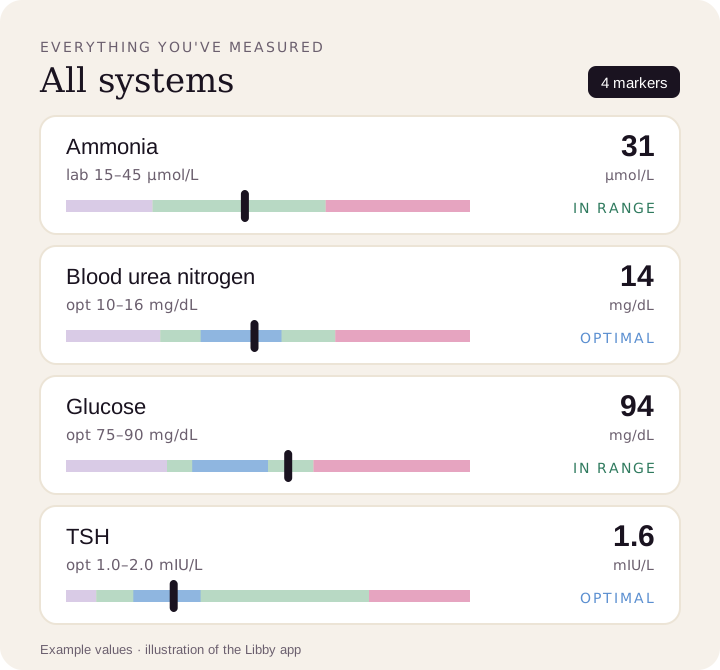
See every result against your lab's range.
Upload a lab PDF or a photo of your report. Libby puts every marker on your lab's range, adds the optimal range where one exists, and tracks your trends over time.
View your ammonia ›