Potassium blood test: normal levels, causes, next steps
Potassium keeps your heart and muscles firing. Here's the normal range, the lowest-risk zone, the usual causes of low and high results, and when it's urgent.
Potassium is the electrolyte that keeps your heart, nerves and muscles firing. Almost all of it sits inside your cells, and your kidneys hold the small amount in your blood inside a narrow band. Too little or too much can upset your heart rhythm, which is one reason potassium is among the ten most commonly ordered lab tests.123
The short version
- Normal: most labs use about 3.5 to 5.0–5.2 mmol/L. In a study of 1.2 million people, the lowest risk of dying sat at 4.0–4.5 mmol/L.456
- Low (under 3.5) usually comes from water pills (diuretics), vomiting or diarrhea, often with low magnesium.27
- High (over 5.0) usually comes from kidneys that clear it slowly, blood-pressure and heart medicines, or uncontrolled diabetes. A rough blood draw can also push the number up.63
- Urgent: a potassium over 6.0 or under 2.5, or any abnormal result with chest pain, palpitations, trouble breathing or new muscle weakness, needs care the same day.274
What potassium is
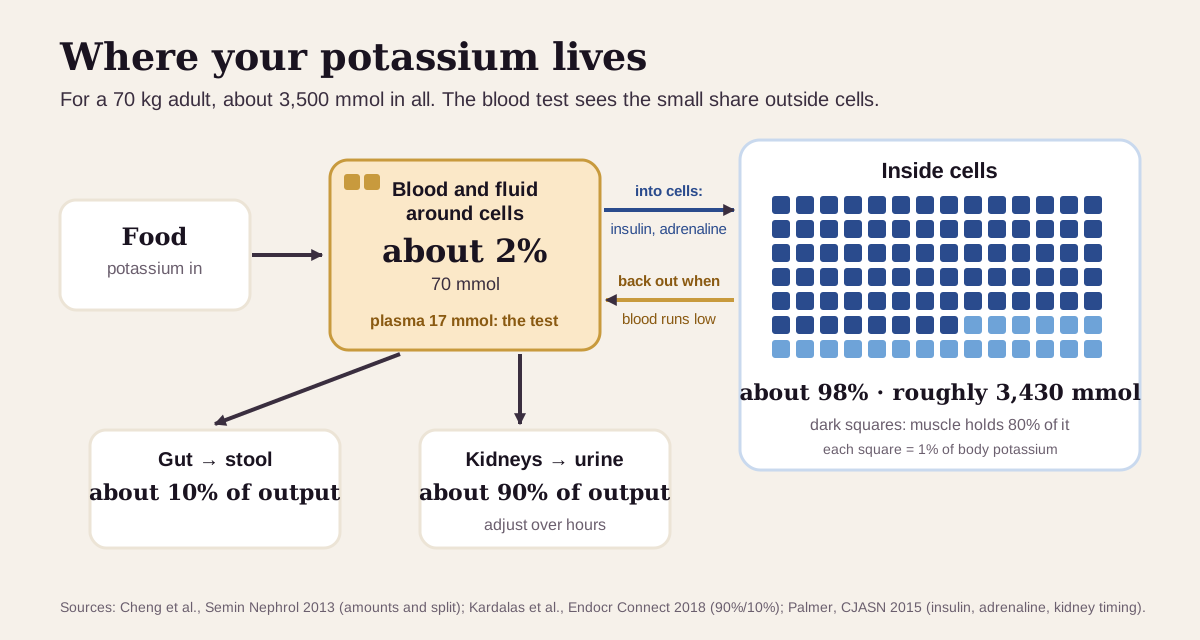
Potassium is the main positively charged mineral inside your cells. A 70 kg adult carries about 3,500 mmol of it. About 98% sits inside cells, mostly muscle, and only about 2% (70 mmol) is outside them. Just 17 mmol is in the liquid part of your blood, and that's what the test measures.1
Cells pump potassium in and sodium out. The difference in charge across the cell wall is what lets nerves fire and muscles, including your heart, contract.8 Too little or too much potassium in the blood changes that charge, which is why both can trigger dangerous heart rhythms.2
Your body balances potassium on two levels. Minute to minute, insulin and adrenaline move it into muscle cells, so a meal's potassium gets parked in muscle before it can pile up in your blood. Hour to hour, your kidneys match what leaves to what you ate: about 90% leaves in urine and about 10% in stool.87
Potassium is part of the electrolyte panel on routine blood work, so most people see it next to sodium, chloride, CO2, glucose and creatinine.97
What's a normal potassium?
Start with the range printed on your report. Labs differ a little: MedlinePlus lists 3.5 to 5.1 mmol/L, and the commercial lab Labcorp's adult range is 3.5 to 5.2.45 Kidney specialists define low potassium as under 3.5 and high as over 5.0, or over your lab's upper limit.2
Serum, the liquid left after blood clots, runs about 0.36 mmol/L higher than plasma, because platelets release potassium while the blood clots.3 So a result from a different tube or lab can move a little with nothing changing in you.
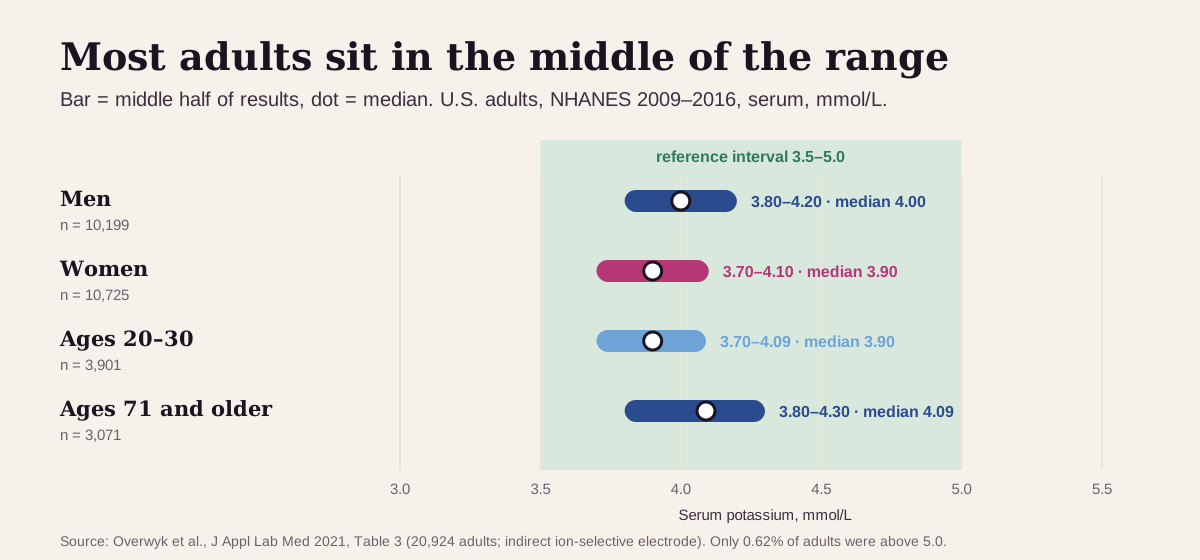
Most healthy adults sit comfortably in the middle. In the national NHANES survey of 20,924 U.S. adults, the typical potassium was 3.99 mmol/L, and the middle half fell between 3.79 and 4.19. Only 0.62% were above 5.0.10
Men run a little higher than women (averages of 4.03 and 3.93 mmol/L), and potassium rises slowly with age, from 3.92 at ages 20–30 to 4.10 after 70. High results were most common in people with kidney disease or diabetes and in those taking certain heart and blood-pressure medicines.10
"Optimal" potassium: what health optimizers aim for
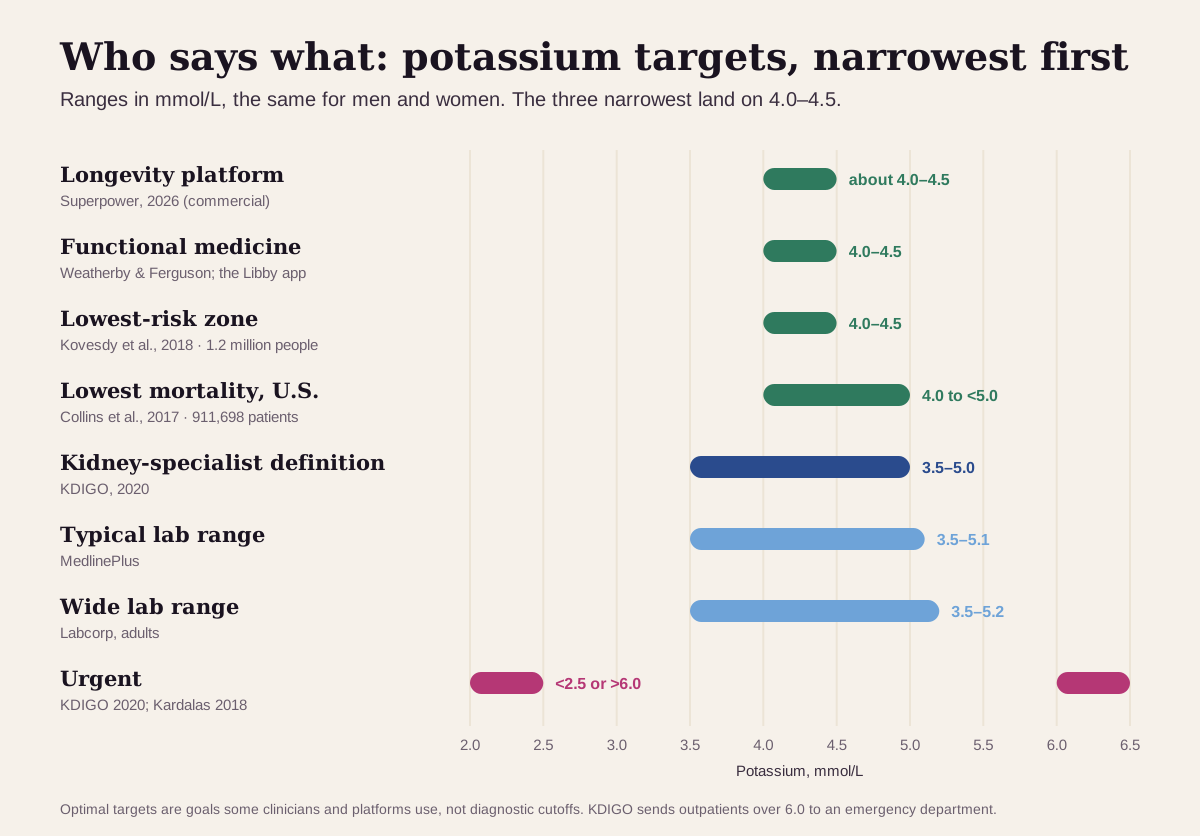
For potassium, the optimizer target and the research agree unusually well: the middle of the normal range. Here's the full ladder, from narrowest to widest:
| Target | Range (men and women) | Who uses it |
|---|---|---|
| Narrowest (longevity platform) | about 4.0–4.5 mmol/L | Superpower, which says blood-pressure control and muscle and nerve function work best there11 |
| Functional medicine | 4.0–4.5 mmol/L | The optimal range shown in the Libby app, from the standard functional-medicine textbook12 |
| Lowest-risk zone, 1.2 million people | 4.0–4.5 mmol/L | CKD Prognosis Consortium, 27 cohorts6 |
| Lowest mortality, U.S. patients | 4.0 to under 5.0 mmol/L | 911,698 people in U.S. medical records, in those without heart disease, kidney disease, diabetes or high blood pressure13 |
| Kidney-specialist definition | 3.5–5.0 mmol/L | KDIGO, the global kidney-guideline group2 |
| Typical lab range | 3.5–5.1 mmol/L | MedlinePlus (U.S. National Library of Medicine)4 |
| Wide lab range | 3.5–5.2 mmol/L | Labcorp, a large commercial lab, adults5 |
| Urgent | under 2.5 or over 6.0 mmol/L | Severe low (Kardalas); KDIGO sends outpatients over 6.0 to an emergency department72 |
Why the middle of the range, and not just "normal":
- The CKD Prognosis Consortium pooled 1,217,986 people from 27 cohorts and followed them for about 7 years. Risk of death was lowest at 4.0–4.5 mmol/L and rose outside 3.5–5.0. Compared with 4.2, a potassium of 3.0 carried 1.49 times the risk and 5.5 carried 1.22 times.6
- In 911,698 U.S. patients, death rates were lowest between 4.0 and 5.0 in people without heart disease, kidney disease, diabetes or high blood pressure. More than a quarter (27.6%) had a potassium under 4.0.13
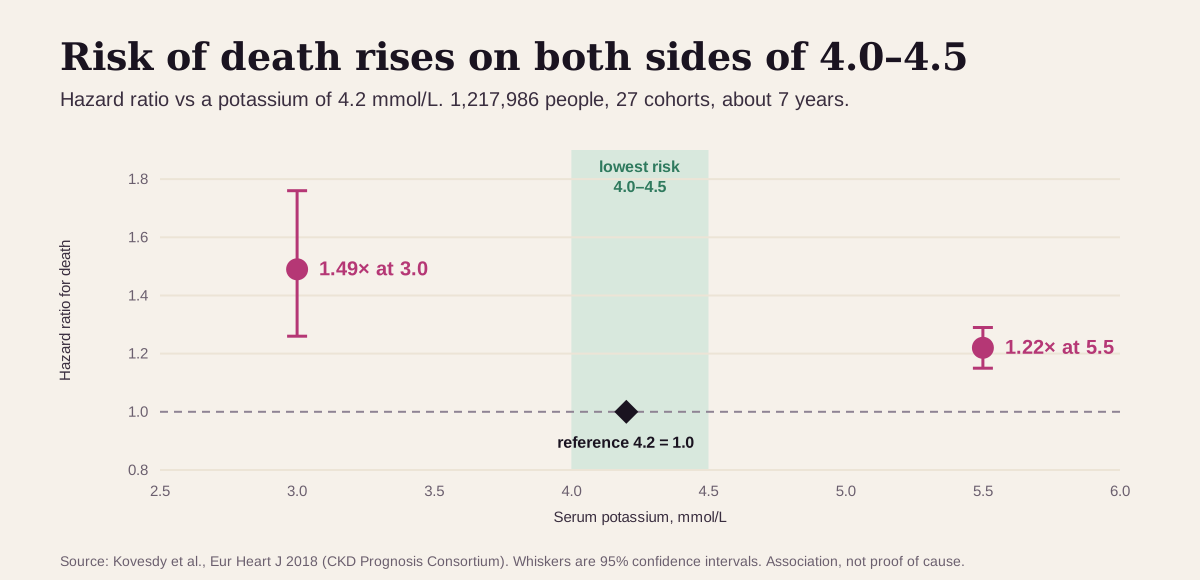
Keep "optimal" in perspective. Potassium is a tightly controlled number, and where it sits mostly reflects your kidneys, your medicines and your hormones.86 A result of 3.8 is a reason to look at water pills, a recent stomach bug and magnesium; a 5.1 is a reason to look at kidney function and medicines. Both ends matter: the risk curve is U-shaped, so pushing potassium high is its own problem, especially with weak kidneys.62
What a low or high potassium usually means
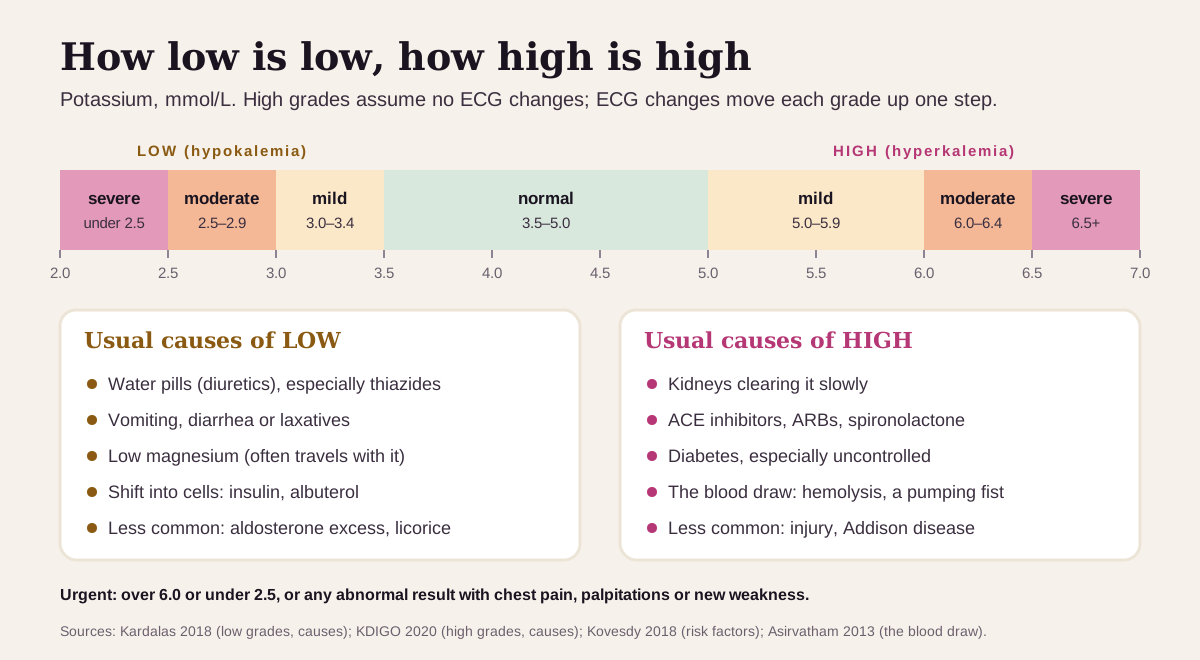
Distance from normal is the first clue. Kidney and endocrine specialists grade potassium by how far it has moved:72
Low potassium (under 3.5): the usual suspects
Low potassium is common: about 1 in 50 adults in the general-population cohorts had a result under 3.5, and nearly 1 in 4 were under 4.0.6 The usual reasons:
- Water pills (diuretics). Kidney losses from medicines are a common cause, especially thiazide diuretics, which raise the risk about 5-fold.2 Loop diuretics do it too.7
- Vomiting or diarrhea. The gut loses potassium directly, and vomiting also makes the kidneys waste it. Laxative overuse works the same way.714
- Low magnesium. More than half of people with a clinically important low potassium also have low magnesium, which makes the potassium harder to correct.7
- A shift into cells. Insulin, asthma inhalers such as albuterol and, occasionally, an overactive thyroid move potassium from the blood into cells without any leaving the body.7
- Less common: too much aldosterone (primary aldosteronism, a cause of hard-to-control blood pressure), natural black licorice, and inherited kidney conditions such as Bartter and Gitelman syndromes. Low intake by itself is an uncommon cause.79
Symptoms usually start below about 3.0: muscle weakness or cramps, constipation, fatigue and skipped heartbeats.74 Screening for primary aldosteronism is recommended for anyone with high blood pressure and a low potassium.7
High potassium (over 5.0): the usual suspects
- Kidneys that clear it slowly. High potassium tracks with lower kidney function: 17.9% of people in chronic kidney disease cohorts had a potassium over 5.0, versus 3.3% in general-population cohorts.6
- Medicines. ACE inhibitors, angiotensin receptor blockers (ARBs) and potassium-sparing diuretics such as spironolactone all raise potassium.613 Don't stop a prescribed medicine on your own. Bring your full list, supplements and salt substitutes included, to your clinician.4
- Diabetes. Diabetes is a risk factor on its own, and uncontrolled diabetes pulls potassium out of cells.615
- The blood draw. Potassium can leak out of cells in the tube. See the next section.3
- Less common: injuries, burns or muscle breakdown that spill cell potassium, Addison disease, and potassium supplements or salt substitutes taken with weak kidneys. Food alone rarely does it.94
High potassium often causes no symptoms at all. When it does, they include palpitations, a slow or irregular pulse, chest pain and nausea.4
When the tube raised it
Because blood holds only about 2% of your potassium, a little leakage from cells shows up fast. The ratio inside to outside cells is about 40 to 1, and a shift in that ratio of just 2.5% raises the result by about 0.1 mmol/L.3
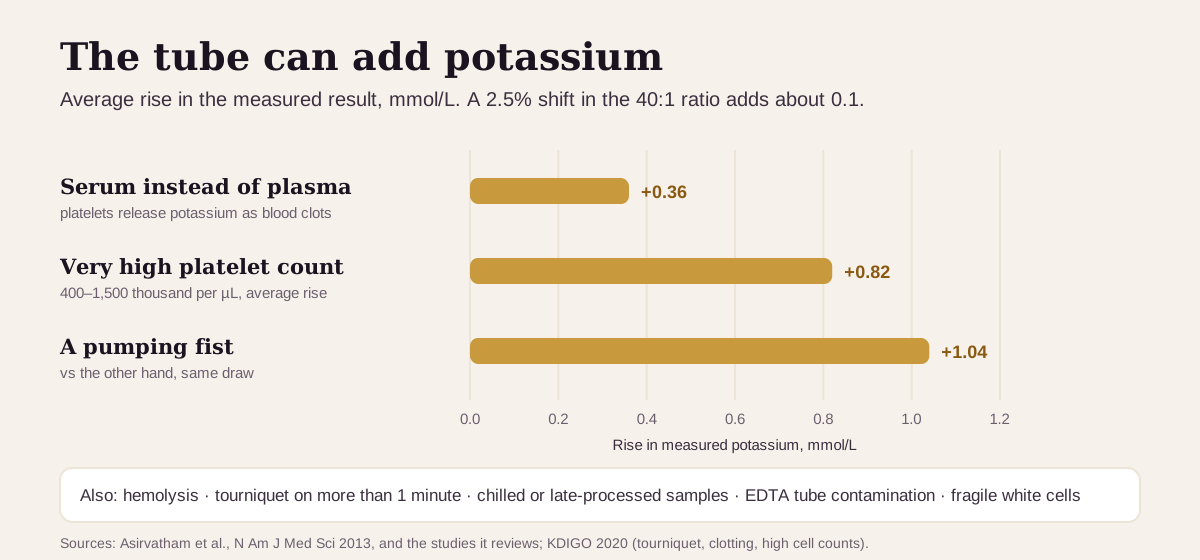
- Fist clenching. In one study, potassium from the pumping hand ran 1.04 mmol/L higher than from the other hand.3 A Japanese hospital that switched 171,053 outpatients to a no-fist blood draw cut its rate of unexplained results of 6.5 or more about 14-fold.16
- Hemolysis. Red cells broken during a hard draw spill potassium. Labs measure a hemolysis index, and Labcorp rejects hemolyzed samples for potassium.35
- Very high platelet or white-cell counts, a tourniquet left on more than a minute, and samples chilled or left unspun too long can all leak potassium into the tube.32
A high result from a hemolyzed sample, with no ECG changes, is a classic reason to repeat the test.3 KDIGO leaves that call to clinical judgment, weighing the chance of a tube problem against the risk of delaying treatment.2
Get care the same day if your potassium is over 6.0 or under 2.5, or if any abnormal potassium comes with chest pain, trouble breathing, palpitations, a slow or irregular pulse, fainting, or new muscle weakness. If the lab or your clinician calls you about a result, follow their timing.274
Potassium reads best next to its neighbors
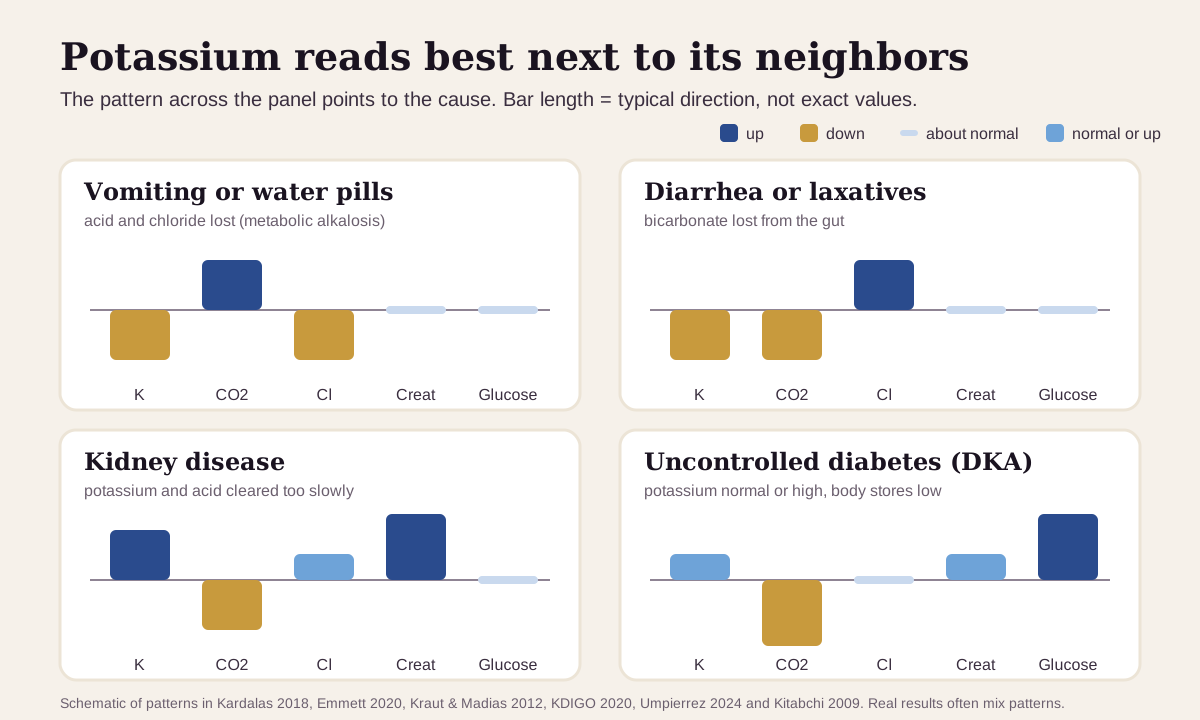
Potassium rarely moves alone. The same panel usually holds CO2 (bicarbonate), chloride, creatinine and glucose, and together they point to the cause:7
| If you see… | It often points to… |
|---|---|
| Potassium low, CO2 high, chloride low | acid and chloride being lost: vomiting or diuretics (a "metabolic alkalosis") |
| Potassium low, CO2 low, chloride high | bicarbonate being lost from the gut: diarrhea or laxatives |
| Potassium high, creatinine high, CO2 often low | kidneys clearing potassium and acid too slowly, often with blood-pressure medicines on top |
| Glucose very high, CO2 low, potassium normal or high | uncontrolled diabetes (diabetic ketoacidosis): the body is actually short of potassium, even when the blood level looks high |
| Potassium high, everything else normal, sample flagged as hemolyzed | a tube problem is likely: ask whether to repeat |
Low potassium with high blood pressure deserves its own line: it's the classic clue to primary aldosteronism.7 And in diabetic ketoacidosis, most people arrive with a normal or high potassium even though their bodies have lost 3–6 mmol of potassium per kilogram.15
How fast potassium changes
Potassium moves on several clocks at once. That's why one result is a snapshot and a trend is more useful.
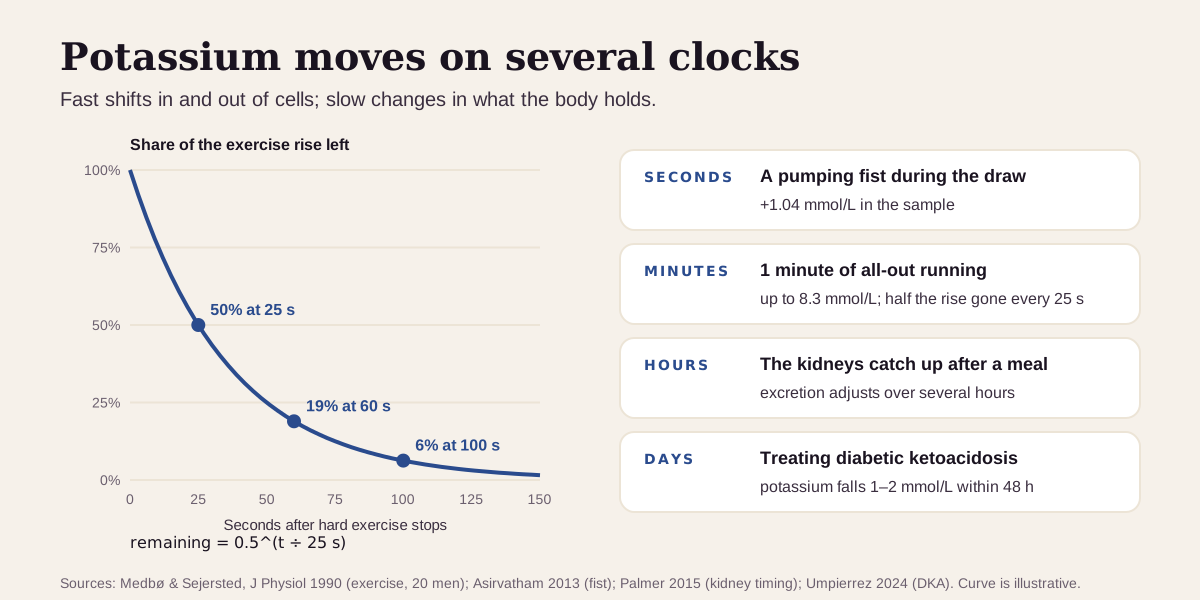
- Seconds to minutes. In 20 fit men, one minute of all-out running pushed plasma potassium to about 8.3 mmol/L. Half of the rise cleared every 25 seconds, and three minutes later potassium sat 0.5 below where it started.19 A pumping fist can raise the sample within the draw.3
- Hours. The kidneys adjust potassium excretion over several hours, so insulin parks a meal's potassium in muscle until they catch up.8
- Days. Rebuilding a real shortage is slow: each 1 mmol/L fall in blood potassium reflects a body deficit of roughly 200–400 mmol.7 During treatment for diabetic ketoacidosis, potassium typically falls 1–2 mmol/L within 48 hours.15
What that means in practice:
- Mention recent vomiting, diarrhea, a hard workout, a new medicine or a difficult blood draw when you get tested. Each can move the number.37
- A result that stays abnormal is worth working up. That usually starts with kidney function, magnesium, a medicine review and, for a low potassium, the CO2 and blood pressure.72
- Trends beat snapshots. A potassium that creeps up over several tests as kidney function drifts tells a different story than one high result with a hemolysis flag. Compare results from the same lab and tube type when you can.36
Going deeper: the pump and the kidney
Every cell runs a sodium-potassium pump that pushes 3 sodium out for every 2 potassium in. It is so busy that it burns an estimated 20–30% of your body's energy at rest. Muscle holds potassium at about 160 mmol/L inside the cell, and the ratio inside to outside cells is roughly 40 to 1.13
Insulin and adrenaline speed that pump up, which is why both lower blood potassium.8 It also explains how the blood level and the body's total can disagree: in diabetic ketoacidosis, a normal or high blood potassium sits on top of a large deficit.15
The kidney filters potassium freely, then reclaims most of it early in the tubule: less than 10% of the filtered load reaches the last stretch. There, cells in the collecting duct secrete potassium into the urine, driven by aldosterone and by how much sodium and fluid flow past.87 That's the common thread behind many causes: diuretics and aldosterone excess speed potassium into the urine, while ACE inhibitors, ARBs and spironolactone slow it.717
When the cause is unclear, clinicians look at two things: how much potassium is in the urine (kidney loss versus gut loss or a shift) and the acid-base pattern (CO2 high or low).7
Questions worth asking
- Is my potassium low or high enough to need action today, or can we repeat it?
- Was the sample hemolyzed, and was it serum or plasma?
- What do my creatinine, CO2 and magnesium show next to it?
- Could any of my medicines, supplements or salt substitutes be involved?
- If it's low and my blood pressure is high, should I be checked for primary aldosteronism?
- When should we recheck it, and what would change the plan?
FAQ
What is a normal potassium level? Most labs use about 3.5 to 5.0–5.2 mmol/L. In 1.2 million people, the risk of death was lowest at 4.0–4.5.456
What is the most common cause of low potassium? Usually the cause is clear from the history: water pills (diuretics), especially thiazides, or losses from vomiting or diarrhea. Low magnesium often travels with it.27
What is the most common cause of high potassium? Reduced kidney function, often combined with medicines such as ACE inhibitors, ARBs or spironolactone. A hemolyzed or fist-pumped blood sample can also read falsely high.63
When is potassium an emergency? Over 6.0 or under 2.5 mmol/L, or any abnormal potassium with chest pain, palpitations, trouble breathing, fainting or new weakness. KDIGO advises an emergency department for outpatients over 6.0.274
This guide is for education. It can't diagnose you or replace care from a clinician who knows your history.
Footnotes
-
Cheng CJ, Kuo E, Huang CL. Extracellular potassium homeostasis: insights from hypokalemic periodic paralysis. Semin Nephrol. 2013;33(3):237–247. The source for total body potassium (~3,500 mmol in a 70 kg adult), the 98%/2% split, 17 mmol in plasma, muscle's 80% share and the pump's energy use. PMC ↩ ↩2 ↩3 ↩4
-
Clase CM, Carrero JJ, Ellison DH, et al. Potassium homeostasis and management of dyskalemia in kidney diseases: conclusions from a Kidney Disease: Improving Global Outcomes (KDIGO) Controversies Conference. Kidney Int. 2020;97(1):42–61. Definitions (under 3.5, over 5.0), hyperkalemia severity grades, the over-6.0 emergency advice, thiazide risk and causes of false high results. PubMed · KDIGO full text ↩ ↩2 ↩3 ↩4 ↩5 ↩6 ↩7 ↩8 ↩9 ↩10 ↩11 ↩12 ↩13 ↩14 ↩15 ↩16 ↩17 ↩18 ↩19 ↩20
-
Asirvatham JR, Moses V, Bjornson L. Errors in potassium measurement: a laboratory perspective for the clinician. N Am J Med Sci. 2013;5(4):255–259. Serum–plasma difference, fist clenching, platelets, hemolysis, temperature and the 40:1 gradient. PMC ↩ ↩2 ↩3 ↩4 ↩5 ↩6 ↩7 ↩8 ↩9 ↩10 ↩11 ↩12 ↩13 ↩14 ↩15 ↩16
-
National Library of Medicine. High potassium level (reviewed October 1, 2025) and Low blood potassium (reviewed May 19, 2025). MedlinePlus Medical Encyclopedia. The 3.5–5.1 mEq/L range, symptoms, and when to get emergency care. High · Low ↩ ↩2 ↩3 ↩4 ↩5 ↩6 ↩7 ↩8 ↩9 ↩10 ↩11 ↩12
-
Labcorp. Potassium, test 001180. Reference range for age over 1 year: 3.5–5.2 mmol/L. A commercial laboratory's published test page, opened September 23, 2026. labcorp.com ↩ ↩2 ↩3 ↩4 ↩5 ↩6
-
Kovesdy CP, Matsushita K, Sang Y, et al. Serum potassium and adverse outcomes across the range of kidney function: a CKD Prognosis Consortium meta-analysis. Eur Heart J. 2018;39(17):1535–1542. 1,217,986 participants in 27 cohorts; lowest risk at 4–4.5 mmol/L; HR 1.49 at 3.0 and 1.22 at 5.5 versus 4.2; prevalence and risk factors. PMC ↩ ↩2 ↩3 ↩4 ↩5 ↩6 ↩7 ↩8 ↩9 ↩10 ↩11 ↩12 ↩13 ↩14 ↩15
-
Kardalas E, Paschou SA, Anagnostis P, et al. Hypokalemia: a clinical update. Endocr Connect. 2018;7(4):R135–R146. Normal range, mild/moderate/severe grades, causes, the magnesium link, the 90%/10% urine/stool split, the 200–400 mmol deficit per 1 mmol/L and the aldosteronism screening advice. PMC ↩ ↩2 ↩3 ↩4 ↩5 ↩6 ↩7 ↩8 ↩9 ↩10 ↩11 ↩12 ↩13 ↩14 ↩15 ↩16 ↩17 ↩18 ↩19 ↩20 ↩21 ↩22 ↩23 ↩24 ↩25 ↩26 ↩27 ↩28
-
Palmer BF. Regulation of potassium homeostasis. Clin J Am Soc Nephrol. 2015;10(6):1050–1060. Review of internal balance (insulin, catecholamines), the kidney's hours-long adjustment and distal potassium secretion. PMC ↩ ↩2 ↩3 ↩4 ↩5 ↩6 ↩7 ↩8
-
National Library of Medicine. Potassium Blood Test. MedlinePlus. Updated November 12, 2024. Causes of high and low results, licorice and fist clenching. MedlinePlus ↩ ↩2 ↩3
-
Overwyk KJ, Pfeiffer CM, Storandt RJ, et al. Serum sodium and potassium distribution and characteristics in the US population, National Health and Nutrition Examination Survey 2009–2016. J Appl Lab Med. 2021;6(1):63–78. Table 3: percentiles by age and sex among 20,924 adults. PMC ↩ ↩2 ↩3
-
Superpower. Potassium: Why Blood Levels Can Hide Low Stores. Published November 15, 2025; updated August 31, 2026. States that optimal function "tends to sit closer to 4.0–4.5 mmol/L". A commercial source, listed as what the optimizer community uses. superpower.com ↩ ↩2
-
Weatherby D, Ferguson S. Blood Chemistry and CBC Analysis: Clinical Laboratory Testing from a Functional Perspective. 2nd ed. Bear Mountain Publishing; 2004. ISBN 978-0976136712. Widely used functional-medicine reference. The 4.0–4.5 mmol/L optimal range is as recorded in the Libby app's marker catalog, which cites this book; the book was not opened for this article. ↩ ↩2
-
Collins AJ, Pitt B, Reaven N, et al. Association of serum potassium with all-cause mortality in patients with and without heart failure, chronic kidney disease, and/or diabetes. Am J Nephrol. 2017;46(3):213–221. 911,698 U.S. patients; lowest mortality at 4.0 to under 5.0 mEq/L in controls. PMC ↩ ↩2 ↩3 ↩4
-
Emmett M. Metabolic alkalosis: a brief pathophysiologic review. Clin J Am Soc Nephrol. 2020;15(12):1848–1856. Vomiting removes hydrochloric acid, raising bicarbonate and lowering chloride, with kidney potassium loss. PMC ↩ ↩2
-
Umpierrez GE, Davis GM, ElSayed NA, et al. Hyperglycemic crises in adults with diabetes: a consensus report. Diabetes Care. 2024;47(8):1257–1275. DKA criteria (glucose 200 or more, bicarbonate under 18), normal or high potassium at presentation despite a 3–6 mmol/kg deficit, and the 1–2 mmol/L fall during treatment. PMC ↩ ↩2 ↩3 ↩4 ↩5 ↩6
-
Seimiya M, Yoshida T, Sawabe Y, et al. Reducing the incidence of pseudohyperkalemia by avoiding making a fist during phlebotomy: a quality improvement report. Am J Kidney Dis. 2010;56(4):686–692. Unexplained potassium of 6.5 or more fell from 0.0081% to 0.00058% of outpatients after a no-fist protocol. PubMed ↩
-
Kraut JA, Madias NE. Differential diagnosis of nongap metabolic acidosis: value of a systematic approach. Clin J Am Soc Nephrol. 2012;7(4):671–679. Diarrhea and chronic kidney disease: bicarbonate falls as chloride rises; potassium low with diarrhea, high with kidney disease. PMC ↩ ↩2
-
Kitabchi AE, Umpierrez GE, Miles JM, Fisher JN. Hyperglycemic crises in adult patients with diabetes. Diabetes Care. 2009;32(7):1335–1343. Table 2 admission values in DKA: glucose 616 mg/dL, bicarbonate 9.4, potassium 4.5, creatinine 1.1. PMC ↩
-
Medbø JI, Sejersted OM. Plasma potassium changes with high intensity exercise. J Physiol. 1990;421:105–122. 20 trained men; peak 8.34 mmol/L after 1 minute of exhausting running, half-time 25 s, 0.5 mmol/L below baseline at 3 minutes. PMC ↩ ↩2
Educational content, not medical advice. Libby is a personal record tool, not a medical service — it doesn't diagnose, treat, or prescribe. Reference ranges vary by lab and by person. Talk to a qualified healthcare professional about your results.
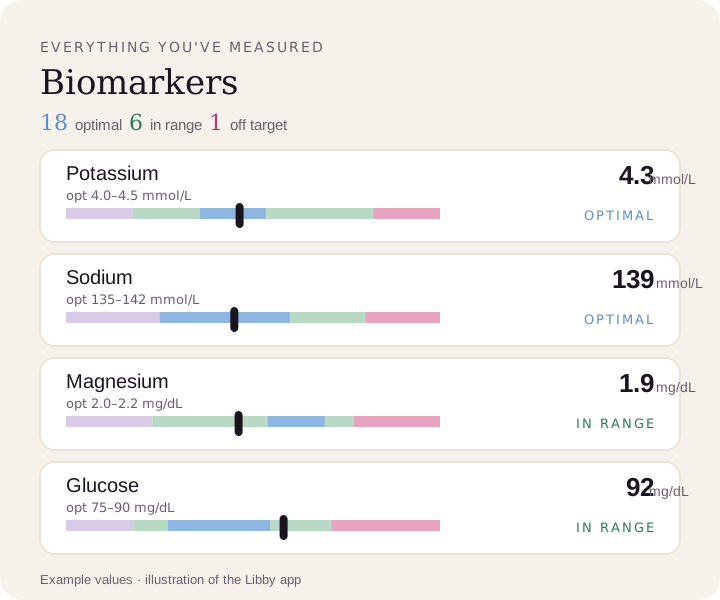
Compare your results to optimal ranges.
Upload a lab PDF or a photo of your report. Libby puts every marker on your lab's range and the optimal range, and tracks your trends over time.
View your potassium ›