Iron panel: serum iron, TIBC and saturation explained
An iron panel shows the iron in your blood, the room to carry more and how full the carriers are. Here's what's normal, optimal, and what patterns mean.
An iron panel is a set of blood tests that shows how much iron is moving through your blood right now, and how much room your blood has to carry more. Its key number, transferrin saturation, is the share of your iron carriers that are loaded. A low saturation usually means iron deficiency or inflammation. A saturation that stays high can mean iron overload, such as the inherited condition hemochromatosis.123
The short version
- Normal: check the ranges on your report. MedlinePlus lists serum iron of 59–158 µg/dL for men and 37–145 for women, and transferrin saturation of 20–50% for men and 15–45% for women.4
- Low saturation (under 20%) means your marrow is short of iron. The usual reasons are iron deficiency (heavy periods, bleeding from the gut, pregnancy, low intake) and inflammation, which locks iron away. Ferritin tells the two apart.52
- High saturation (over 45%) can simply be an iron pill taken a few hours before the test. If it stays high on a repeat test with a high ferritin, the next step is usually a test for hemochromatosis.63
- A suspected iron overdose is an emergency at any blood level, especially in a child. Call Poison Control at 1-800-222-1222 or 911.78
What an iron panel measures
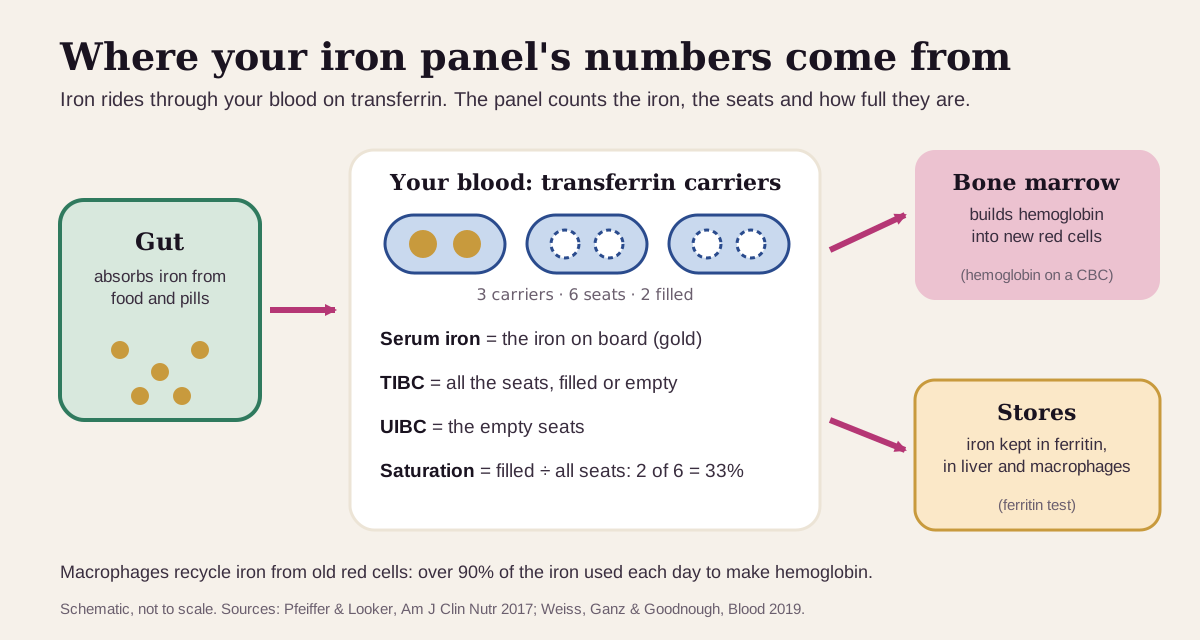
Iron from food and supplements is absorbed in your gut, then travels through your blood bound to transferrin, a carrier protein made by the liver. Your bone marrow takes iron off transferrin to build hemoglobin, the protein in red cells that carries oxygen. Extra iron is stored inside ferritin, mostly in the liver and in scavenger cells called macrophages.1
Most of the iron you use each day is recycled. Macrophages break down old red cells and hand their iron back to transferrin. That recycled iron covers over 90% of the iron your marrow needs daily to make hemoglobin.2
The panel describes the transport step:19
- Serum iron: the iron riding on transferrin at the moment your blood is drawn.
- Transferrin, or TIBC (total iron-binding capacity): how many seats your carriers have, filled or empty.
- UIBC (unsaturated iron-binding capacity): the empty seats. Many labs measure UIBC and add serum iron to it to get TIBC.
- Transferrin saturation (TSAT, also printed as "iron saturation" or "% saturation"): the share of seats that are filled, serum iron ÷ TIBC × 100.
- Ferritin is often ordered alongside. It reflects stored iron.
Iron runs out in a set order. Stores empty first (ferritin falls), then the supply to the marrow runs short (saturation falls), and hemoglobin drops last, which is iron deficiency anemia.1 So an iron panel can show a problem well before a blood count does.
What's a normal iron panel?
Start with the ranges printed on your own report. Labs use different methods, so their ranges differ.4
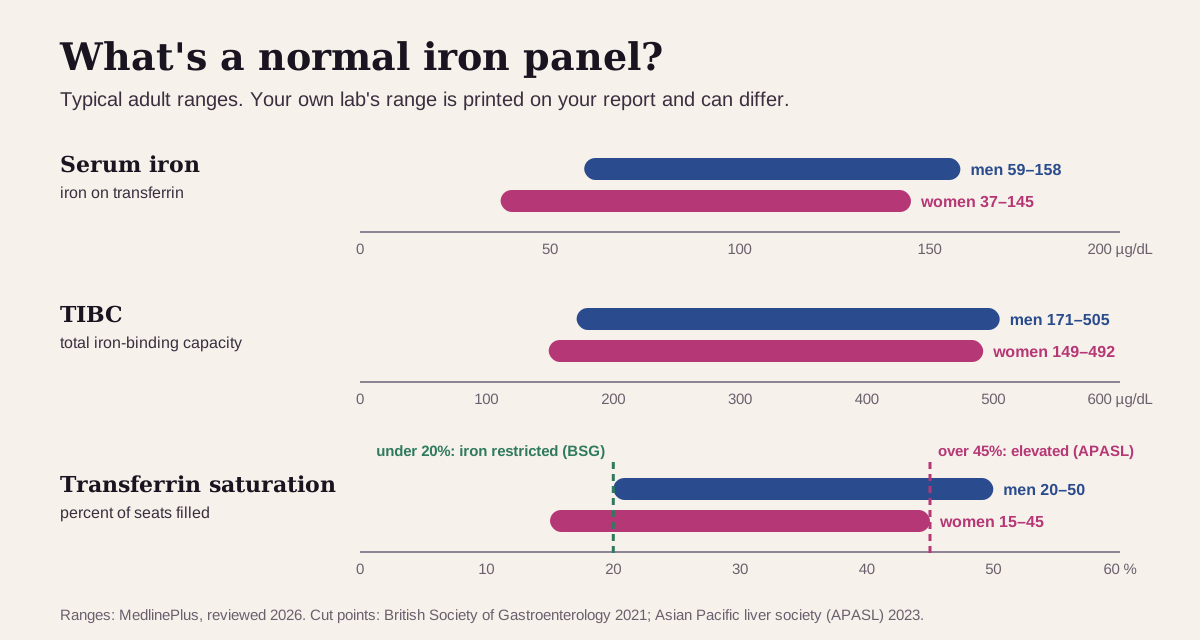
- Serum iron: 59–158 µg/dL for men and 37–145 µg/dL for women, per MedlinePlus.4
- TIBC: 171–505 µg/dL for men and 149–492 µg/dL for women. TIBC runs higher when iron supplies are low, and in late pregnancy.10
- Saturation: 20–50% for men and 15–45% for women.4
Two cut points on saturation matter more than the printed range. The British Society of Gastroenterology (BSG) says a saturation under 20% indicates restricted iron supply.5 The Asian Pacific Association for the Study of the Liver (APASL) treats a saturation over 45% as elevated in both men and women.3
"Optimal" iron saturation: what health optimizers aim for
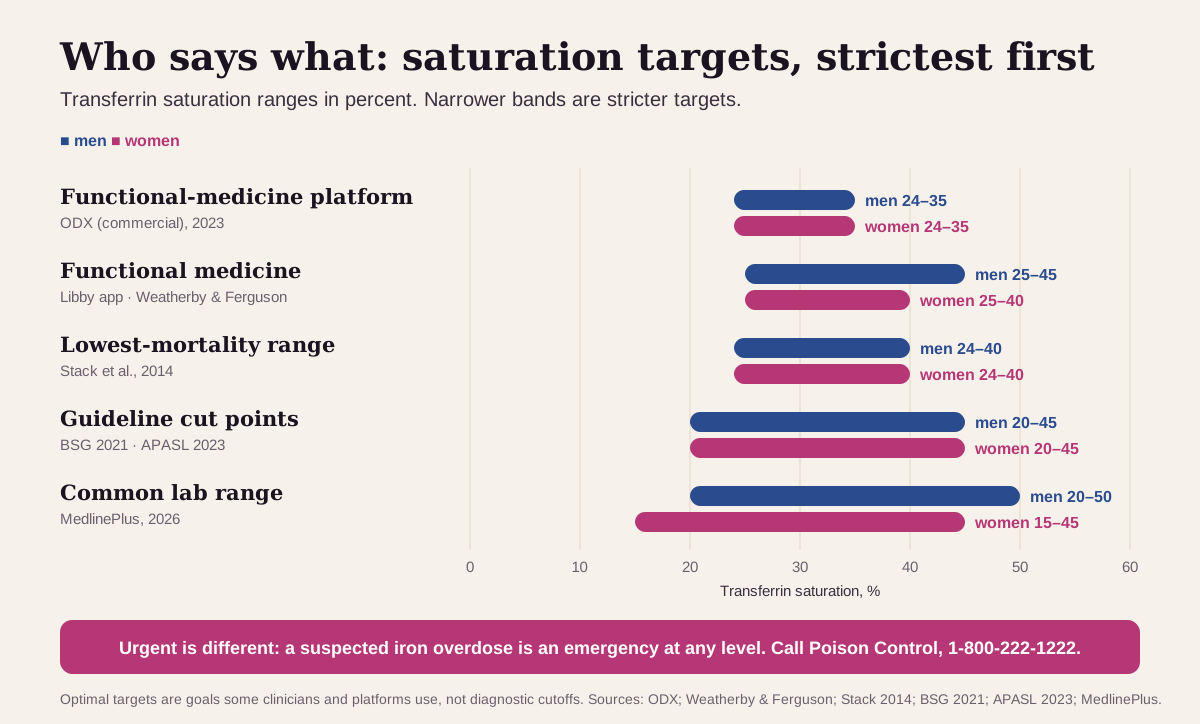
Functional-medicine practitioners and some testing companies aim for the middle of the lab range, away from both edges. For the panel's key number, transferrin saturation, here is the ladder from strictest to loosest:
| Target | Men | Women | Who uses it |
|---|---|---|---|
| Strictest (functional-medicine platform) | 24–35% | 24–35% | ODX's published range11 |
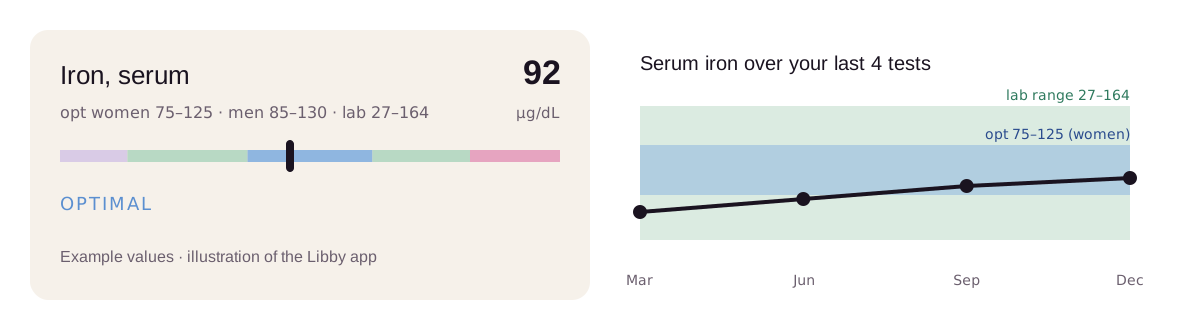
| Functional medicine | 25–45% | 25–40% | The optimal range shown in the Libby app, from Weatherby & Ferguson's functional blood-chemistry textbook12 |
| Lowest-mortality range | 24–40% | 24–40% | Stack et al., 15,823 U.S. adults followed to 200613 |
| Guideline cut points | 20–45% | 20–45% | Under 20% is restricted iron supply (BSG);5 over 45% is elevated (APASL)3 |
| Common lab range | 20–50% | 15–45% | Typical ranges listed by MedlinePlus4 |
| Urgent | any suspected iron overdose | any suspected iron overdose | An emergency at any blood level: call Poison Control78 |
The Libby app shows an optimal band for the rest of the panel too. These come from the app's marker catalog:
| Marker | Optimal range in the Libby app |
|---|---|
| Serum iron | men 85–130 µg/dL, women 75–125 µg/dL (Weatherby & Ferguson)12 |
| TIBC | 250–350 µg/dL (Weatherby & Ferguson)12 |
| UIBC | 150–300 µg/dL (Weatherby & Ferguson)12 |
| Ferritin | men 70–150 ng/mL, women 50–120 ng/mL (Institute for Functional Medicine)14 |
| Transferrin | 220–340 mg/dL (the catalog lists no source for this band) |
Why aim for the middle:
- In 15,823 U.S. adults from a national health survey, followed to 2006, both ends of the range carried more risk. Compared with a saturation of 23.7–31.3%, people under 17.5% had 1.45 times the risk of dying from any cause and 2.09 times the risk of dying from cardiovascular disease. People over 31.3% had 1.23 and 1.59 times the risk. The authors put the range with the best survival at 24–40%.13
- In 45,159 Danish adults followed for up to 18 years, a saturation of 50% or more carried 1.4 times the risk of death compared with under 50% (1.3 in men, 1.5 in women).15
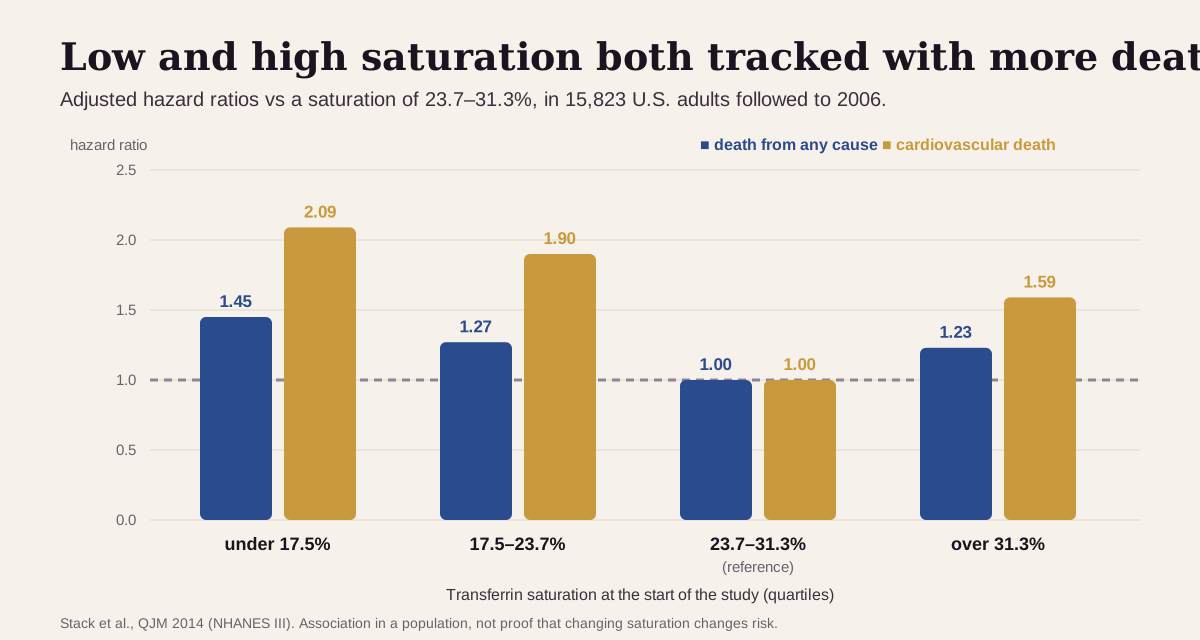
Keep "optimal" in perspective: these are targets, not diagnoses. Serum iron swings about 30% from one day to the next in the same person, so one saturation inside a band means less than a steady trend.1 Both floors and ceilings exist for a reason: too little iron and too much iron each carry their own risks.1315
What a low or high result usually means
Saturation is the first clue, and ferritin is the second. The cut points below come from guidelines. Low-side causes are listed with the most common first.
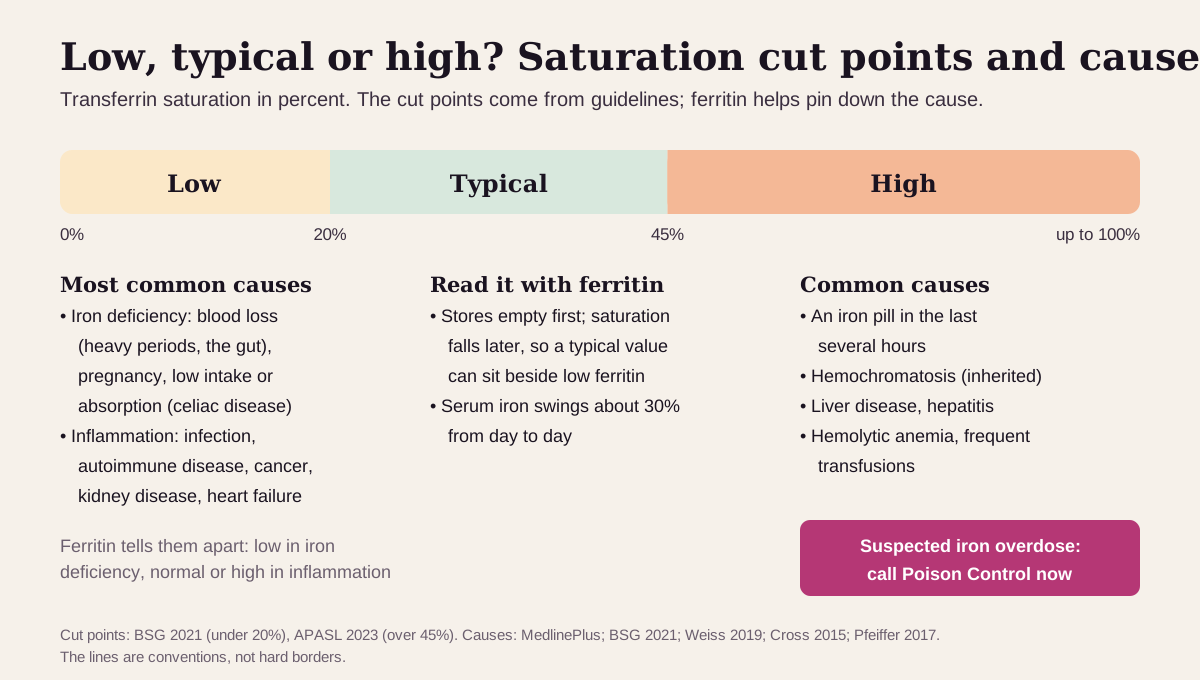
Low iron and low saturation
The usual suspects:
- Iron deficiency is the most common cause of anemia worldwide.2
In it, serum iron and saturation fall while TIBC rises, because the
body makes more carriers to catch what iron there is.1510
The main reasons:
- Blood loss. Heavy periods are a common cause in younger women. In men and in women after menopause, it's often slow bleeding from the gut: about a third of them have an underlying problem, most often there, so guidelines recommend a look at the stomach and colon.5
- Pregnancy.54
- Low intake or poor absorption. Celiac disease turns up in 3–5% of people with iron deficiency anemia.5
- Inflammation is the second most common cause. Infection, autoimmune disease, cancer, kidney disease, heart failure and obesity can all cause it. Inflammation raises hepcidin, the hormone that blocks iron absorption and traps iron in macrophages.2 Serum iron and saturation fall, but TIBC falls too and ferritin is normal or high.210 In heart failure, 40–70% of people have some iron deficiency by ferritin or saturation.5
Low iron can cause tiredness, weakness, dizziness and shortness of breath.16
Get care now if a low iron comes with black or tarry stools, a lot of blood in your stool, vomiting blood or material that looks like coffee grounds, dizziness from bleeding, or chest pain or trouble breathing.17
High iron and high saturation
Common causes, starting with the easiest to check:
- An iron pill before the test. In 48 healthy men, one 130 mg dose of iron raised saturation from 42% to 76% four hours later.6 In women given 60 mg, saturation peaked 2–4 hours after the dose and was still above baseline at 8 hours.18 Ask whether to take your iron after the blood draw.
- Hemochromatosis. In this inherited condition the gut absorbs too much iron.19 It's one of the most common genetic disorders in people of northern European descent;20 the main type, HFE hemochromatosis, affects about 0.5% of northern Europeans.19 A saturation over 45% with a high ferritin usually leads to a gene test for HFE, the main hemochromatosis gene.3
- Liver disease, including hepatitis, and red cells breaking down early (hemolytic anemia).4
- Frequent blood transfusions.4
Too much iron can cause joint pain, belly pain, tiredness and gray or bronze skin.16
A high ferritin with a normal saturation is a different story. Only about 10% of high ferritins seen in practice come from iron overload. The rest are reactions to inflammation, metabolic syndrome, heavy drinking, cell damage or cancer.19 Among people with a high ferritin who lack the main hemochromatosis gene pattern, fatty liver and alcohol are more common than hemochromatosis.20 A normal saturation still leaves some chance of overload, so a ferritin that stays high is worth following up.19
Get care now for any suspected iron overdose, especially a child who swallowed adult or prenatal vitamins. Call 911 or Poison Control at 1-800-222-1222, or use the Poison Control online tool. Early symptoms include nausea, vomiting (sometimes blood), diarrhea and black or bloody stools.78
An iron panel reads best next to its neighbors
No single iron number settles the question. The pattern across serum iron, TIBC, saturation, ferritin and hemoglobin usually narrows it down:1
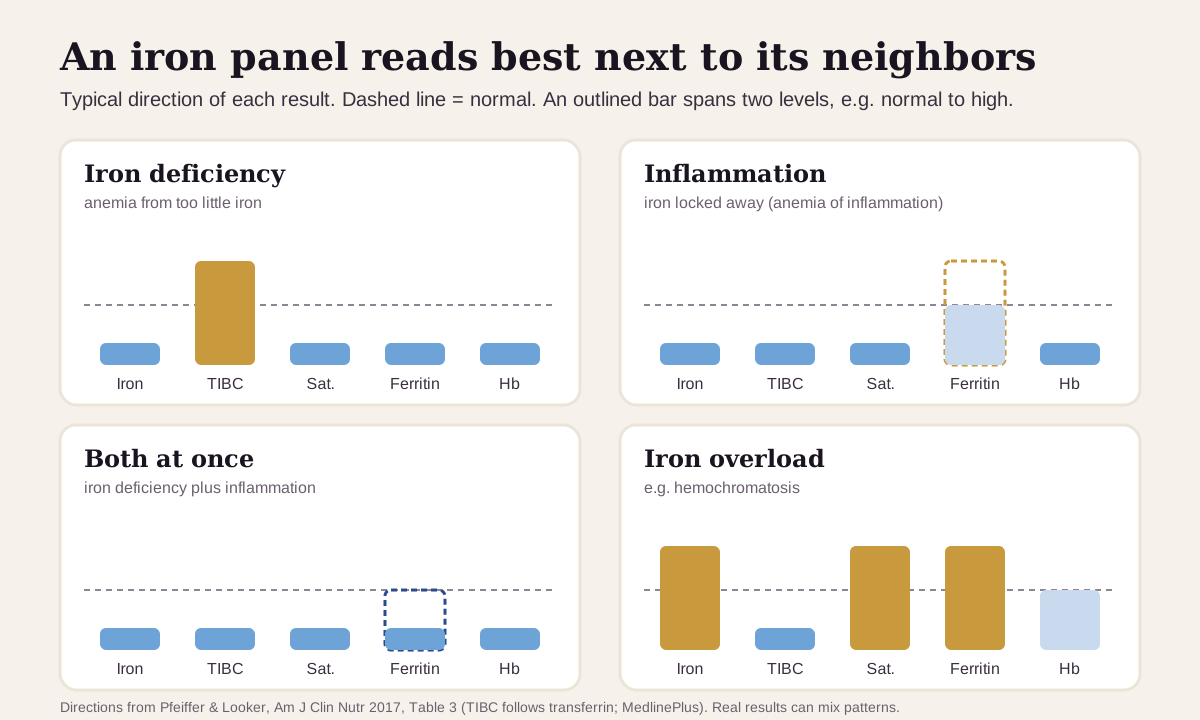
| If you see… | It often points to… |
|---|---|
| Low iron, high TIBC, low saturation, low ferritin, hemoglobin low or heading there | iron deficiency: stores ran out first15 |
| Low iron, low TIBC, low saturation, ferritin normal or high (often over 100), with signs of inflammation | anemia of inflammation: iron is there but locked away210 |
| Low saturation with ferritin low to normal and signs of inflammation | iron deficiency and inflammation together, the hardest mix to read12 |
| High iron, high saturation, high ferritin, normal hemoglobin | iron overload such as hemochromatosis13 |
| High iron and saturation a few hours after an iron pill | the pill: ask about retesting before your next dose6184 |
| High ferritin, normal saturation | usually a reaction to inflammation, fatty liver or alcohol rather than hemochromatosis, though a normal saturation still leaves some chance of overload1920 |
When inflammation muddies the picture, clinicians add CRP and look at saturation and how pale the red cells are. A trial of iron can help settle it: a hemoglobin rise of at least 1 g/dL in 2 weeks strongly points to iron deficiency.52
How fast an iron panel changes
Serum iron and saturation move within hours. Hemoglobin takes weeks, and stores take months.
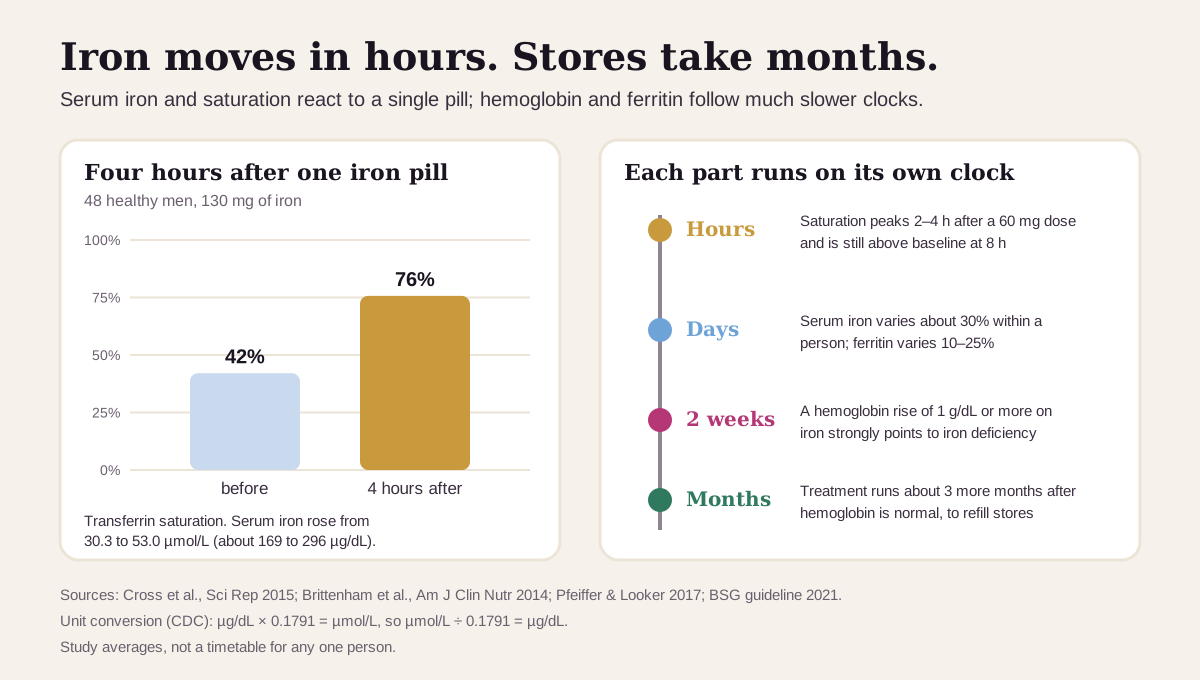
What that means in practice:
- Mind the timing of iron pills. A dose in the hours before your draw pushes serum iron and saturation up.618 Ask your clinician whether to take it after the test, and keep taking prescribed iron unless they say otherwise.
- One high or low value is often repeated. Serum iron varies about 30% within the same person, against 10–25% for ferritin, so clinicians look at more than one sample. Fasting samples showed no advantage over random ones in the studies Pfeiffer and Looker reviewed, though your lab may still ask you to fast.116
- Treatment works on a slower clock. On iron, a hemoglobin rise of 1 g/dL or more within 2 weeks is a good sign. The BSG advises checking in the first 4 weeks and continuing for about 3 months after hemoglobin is normal, to refill the stores.5
- Trends beat snapshots. Compare results from the same lab, because two TIBC methods differed by about 34 µg/dL on average on the same blood (see below).21
Going deeper: the panel's math
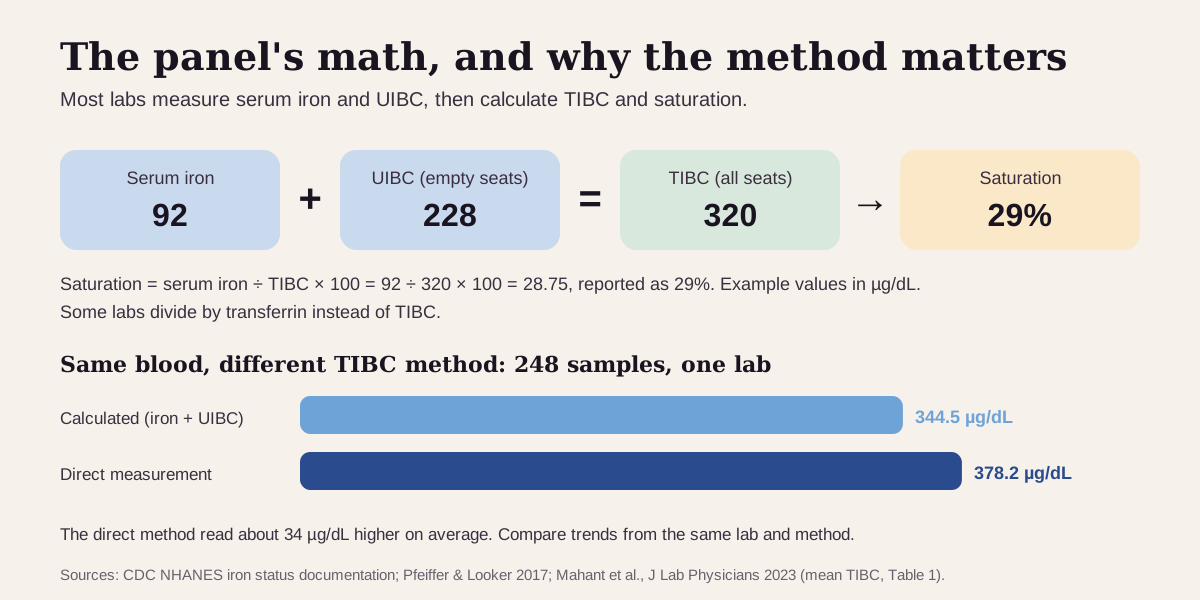
Most labs measure two things with a color reaction: serum iron and UIBC. The other two numbers are arithmetic:19
TIBC = serum iron + UIBC
Saturation (%) = serum iron ÷ TIBC × 100
So one measured input moves more than one reported number. A lower TIBC, from inflammation or liver disease, raises the saturation even when serum iron stays the same.101
The method matters. In one lab study of 248 blood samples, TIBC averaged 344.5 µg/dL when calculated from iron plus UIBC and 378.2 µg/dL when measured directly, a gap of about 34 µg/dL on the same blood.21 That's one more reason to compare trends from the same lab.
Why inflammation lowers iron. Inflammatory signals such as interleukin-6 make the liver release hepcidin. Hepcidin shuts the door that lets iron out of gut cells and macrophages, so serum iron drops while stored iron stays put and ferritin rises. Hepcidin also rises when saturation and stores are high, which is how the body normally limits absorption.2
Questions worth asking
- Is my saturation low, typical or high, and is it the pattern of iron deficiency, inflammation or overload?
- What does my ferritin show next to it, and should we check CRP?
- Did I take iron or a multivitamin before this test, and should we repeat it?
- If my iron is low, what is the likely source: periods, my gut, my diet or absorption?
- If my saturation is over 45%, should I have an HFE gene test?
- When should we repeat the panel, and from the same lab?
FAQ
What is a normal iron saturation? MedlinePlus lists 20–50% for men and 15–45% for women. Guidelines treat under 20% as restricted iron supply and over 45% as elevated.453
What does a high TIBC mean? It usually means your body is short of iron and making more carriers. It also rises in late pregnancy.10
Can an iron pill change my results? Yes. In healthy men, one iron dose raised saturation from 42% to 76% within four hours.6 Ask whether to take your iron after the blood draw.
When is a high iron result an emergency? A suspected iron overdose is always an emergency, whatever the lab value. Call Poison Control at 1-800-222-1222 or 911.78 A saturation over 45% with a high ferritin calls for a planned workup for hemochromatosis, not an emergency visit.3
This guide is for education. It can't diagnose you or replace care from a clinician who knows your history.
Footnotes
-
Pfeiffer CM, Looker AC. Laboratory methodologies for indicators of iron status: strengths, limitations, and analytical challenges. Am J Clin Nutr. 2017;106(Suppl 6):1606S–1614S. The source for the three iron compartments, how TIBC and saturation are calculated, the pattern table behind the neighbors figure, and the within-person variation of serum iron (~30%) and ferritin (~10–25%). PMC ↩ ↩2 ↩3 ↩4 ↩5 ↩6 ↩7 ↩8 ↩9 ↩10 ↩11 ↩12 ↩13 ↩14 ↩15 ↩16 ↩17
-
Weiss G, Ganz T, Goodnough LT. Anemia of inflammation. Blood. 2019;133(1):40–50. Iron recycling by macrophages (over 90% of daily needs), hepcidin, and how inflammation and iron deficiency differ: ferritin under 30 in true deficiency, normal or over 100 in inflammation, and transferrin low in inflammation. PMC ↩ ↩2 ↩3 ↩4 ↩5 ↩6 ↩7 ↩8 ↩9 ↩10 ↩11 ↩12
-
Crawford DHG, Ramm GA, Bridle KR, et al. Clinical practice guidelines on hemochromatosis: Asian Pacific Association for the Study of the Liver. Hepatol Int. 2023;17(3):522–541. "A transferrin saturation over 45% in both males and females is considered elevated"; suspected overload leads to HFE testing. PMC ↩ ↩2 ↩3 ↩4 ↩5 ↩6 ↩7 ↩8 ↩9 ↩10 ↩11
-
National Library of Medicine. Serum iron test. MedlinePlus Medical Encyclopedia. Reviewed January 10, 2026. Normal ranges for serum iron, TIBC and saturation, and causes of high and low iron. MedlinePlus ↩ ↩2 ↩3 ↩4 ↩5 ↩6 ↩7 ↩8 ↩9 ↩10 ↩11 ↩12 ↩13
-
Snook J, Bhala N, Beales ILP, et al. British Society of Gastroenterology guidelines for the management of iron deficiency anaemia in adults. Gut. 2021;70(11):2030–2051. Saturation under 20% as restricted iron supply, causes of iron deficiency, the 2-week hemoglobin response and the 3 months of treatment after hemoglobin normalizes. PMC ↩ ↩2 ↩3 ↩4 ↩5 ↩6 ↩7 ↩8 ↩9 ↩10 ↩11 ↩12 ↩13 ↩14 ↩15 ↩16 ↩17
-
Cross JH, Bradbury RS, Fulford AJ, et al. Oral iron acutely elevates bacterial growth in human serum. Sci Rep. 2015;5:16670. 48 healthy Gambian men given 130 mg of elemental iron: saturation rose from 42.1% to 75.7% and serum iron from 30.3 to 53.0 µmol/L four hours later. PMC ↩ ↩2 ↩3 ↩4 ↩5 ↩6 ↩7
-
National Library of Medicine. Iron overdose. MedlinePlus Medical Encyclopedia. Reviewed October 14, 2025. Why iron overdose is dangerous for children, early symptoms, and when to call 911 or Poison Control. MedlinePlus ↩ ↩2 ↩3 ↩4
-
National Capital Poison Center. Iron poisoning: A simple but serious mistake. Poison Control. From 1983 to 1990 iron was the leading cause of death from medicines in children under 6; call 1-800-222-1222 or use the online tool. poison.org ↩ ↩2 ↩3 ↩4
-
National Center for Health Statistics. Iron Status - Serum (P_FETIB), NHANES 2017–March 2020 pre-pandemic data documentation. CDC. Calculated TIBC = iron + UIBC; saturation = iron ÷ TIBC × 100; µg/dL × 0.1791 = µmol/L. CDC ↩ ↩2 ↩3 ↩4 ↩5
-
National Library of Medicine. Total iron binding capacity. MedlinePlus Medical Encyclopedia. Reviewed January 10, 2026. TIBC is higher when iron supplies are low and in late pregnancy, and lower with inflammation, liver disease, low blood protein and malnutrition. MedlinePlus ↩ ↩2 ↩3 ↩4 ↩5 ↩6 ↩7
-
Optimal DX (ODX Research). Biomarkers of Iron Status: Transferrin Saturation. Published October 16, 2022; updated November 1, 2023. States "The ODX Range: 24 - 35%" against a standard range of 20–48%. A commercial source, listed as what the optimizer community uses. optimaldx.com ↩ ↩2
-
Weatherby D, Ferguson S. Blood Chemistry and CBC Analysis: Clinical Laboratory Testing from a Functional Perspective. Bear Mountain Publishing. ISBN 978-0976136712. Widely used functional-medicine reference, recorded in the Libby app's marker catalog as the source of its optimal ranges for serum iron, TIBC, UIBC and saturation (range as recorded in the catalog; book not opened for this article). ↩ ↩2 ↩3 ↩4 ↩5
-
Stack AG, Mutwali AI, Nguyen HT, et al. Transferrin saturation ratio and risk of total and cardiovascular mortality in the general population. QJM. 2014;107(8):623–633. 15,823 adults from NHANES III (1988–94) followed to 2006; a J-shaped curve with the best survival at 24–40%. PMC ↩ ↩2 ↩3 ↩4 ↩5
-
Institute for Functional Medicine. Clinical practice guidelines and Advanced Practice Modules (range as recorded in the Libby app's marker catalog; member-only modules not opened for this article). https://www.ifm.org ↩
-
Ellervik C, Tybjærg-Hansen A, Nordestgaard BG. Total mortality by transferrin saturation levels: two general population studies and a metaanalysis. Clin Chem. 2011;57(3):459–466. 45,159 Danish adults; saturation of 50% or more vs under 50%, hazard ratio 1.4. DOI ↩ ↩2
-
National Library of Medicine. Iron Tests. MedlinePlus. Last updated April 10, 2024. Symptoms of low and high iron, and test preparation. MedlinePlus ↩ ↩2 ↩3
-
National Library of Medicine. Gastrointestinal bleeding. MedlinePlus Medical Encyclopedia. Reviewed January 24, 2025. When to call 911 or go to the emergency room. MedlinePlus ↩
-
Brittenham GM, Andersson M, Egli I, et al. Circulating non-transferrin-bound iron after oral administration of supplemental and fortification doses of iron to healthy women: a randomized study. Am J Clin Nutr. 2014;100(3):813–820. 32 healthy women; after 60 mg of iron, saturation peaked at 2–4 hours and had not returned to baseline by 8 hours. PMC ↩ ↩2 ↩3 ↩4
-
Sandnes M, Ulvik RJ, Vorland M, Reikvam H. Hyperferritinemia: A Clinical Overview. J Clin Med. 2021;10(9):2008. Only about 10% of high ferritins in practice come from iron overload; HFE hemochromatosis affects about 0.5% of northern Europeans. PMC ↩ ↩2 ↩3 ↩4 ↩5
-
Kowdley KV, Brown KE, Ahn J, Sundaram V. ACG Clinical Guideline: Hereditary Hemochromatosis. Am J Gastroenterol. 2019;114(8):1202–1218. The U.S. gastroenterology society's guideline: hemochromatosis is one of the most common genetic disorders in people of northern European descent, and, in people with a high ferritin who are not C282Y homozygotes or C282Y/H63D compound heterozygotes, fatty liver and alcohol are more common diagnoses than hemochromatosis. PubMed ↩ ↩2 ↩3
-
Mahant H, Jain S, Patel A, Lapani B. Appropriate Method of TIBC Estimation in Reference to Serum Transferrin Levels. J Lab Physicians. 2023;15(1):25–30. 248 serum samples; mean TIBC 344.51 µg/dL calculated vs 378.20 µg/dL direct (Table 1; the abstract gives 378.24). PMC ↩ ↩2 ↩3
Educational content, not medical advice. Libby is a personal record tool, not a medical service — it doesn't diagnose, treat, or prescribe. Reference ranges vary by lab and by person. Talk to a qualified healthcare professional about your results.
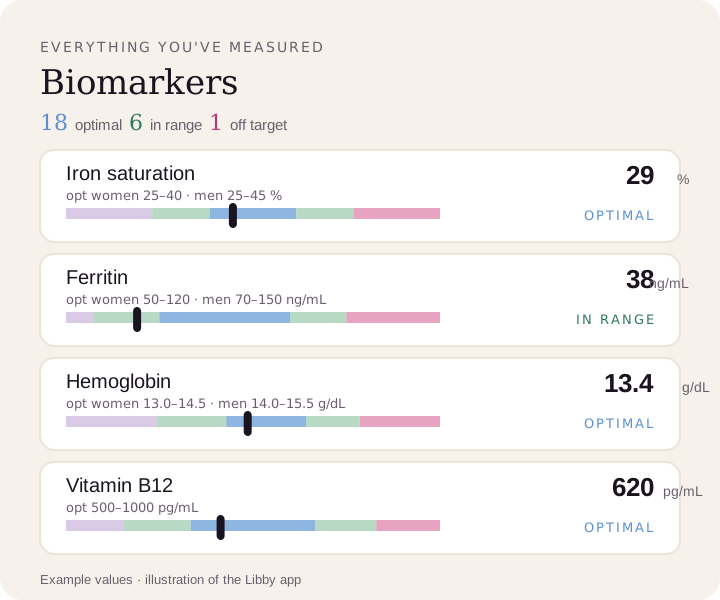
Compare your results to optimal ranges.
Upload a lab PDF or a photo of your report. Libby puts every marker on your lab's range and the optimal range, and tracks your trends over time.
View your iron panel ›