LH blood test: normal levels, high and low causes
LH is your brain's signal to the ovaries and testes. See normal LH by sex and cycle phase, what high or low LH usually means, and how to read it.
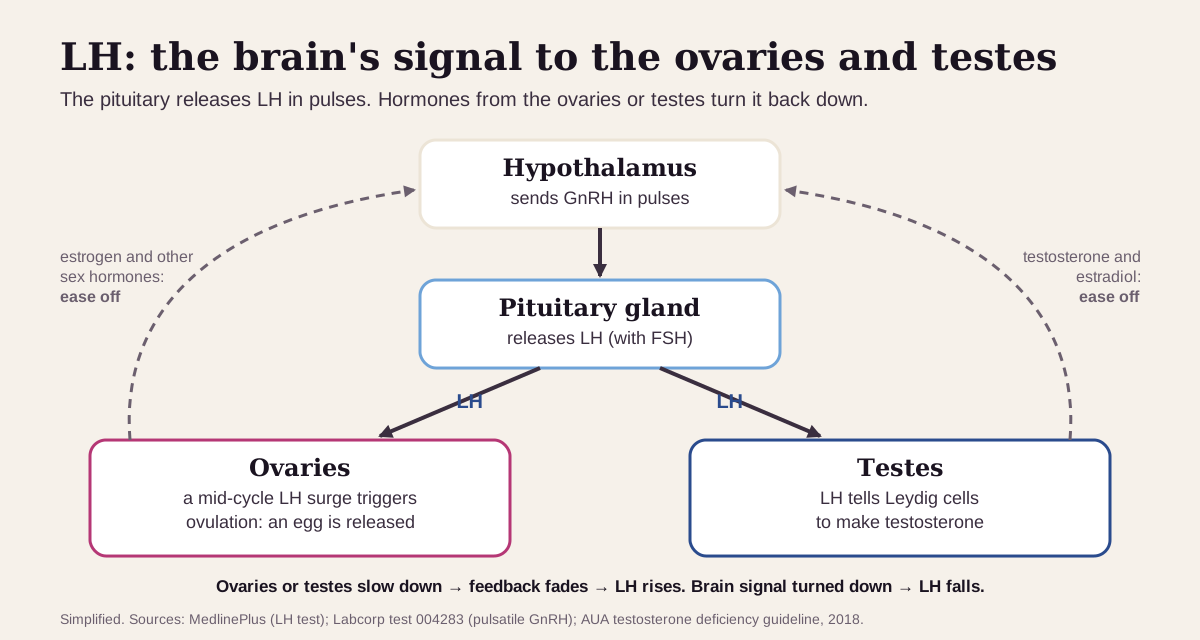
LH (luteinizing hormone) is the signal your brain sends to tell the ovaries to release an egg and the testes to make testosterone. The pituitary gland releases it in pulses, and the sex hormones that come back from the ovaries or testes turn it down again. So a high LH usually means the brain is pushing harder because the ovaries or testes have slowed, and a low LH usually means the signal itself has been turned down.12
The short version
- Normal depends on your sex and the day you test. Labcorp's ranges are 1.7–8.6 mIU/mL for adult men, 2.4–12.6 in the first half of the menstrual cycle, 14.0–95.6 around ovulation and 7.7–58.5 after menopause.3
- A mid-cycle spike is normal. The LH surge is what triggers ovulation: the egg is released a median of 32 hours after LH starts to rise.4
- High LH outside the surge usually means the ovaries or testes are winding down: menopause, ovaries that stop early (POI), or testes that make too little testosterone. In PCOS, LH often runs higher than FSH.52
- Low LH usually means the brain has turned the signal down: under-eating, hard training or stress, a high prolactin, testosterone or opioid use, or a pituitary problem.52
What LH is
LH is a hormone made by the pituitary gland, a pea-sized gland at the base of your brain. The hypothalamus, just above it, sets the pace with pulses of a releasing hormone called GnRH. The pituitary answers with LH and its partner, FSH (follicle-stimulating hormone).13
- In the ovaries, LH helps run the menstrual cycle. A sharp rise shortly before mid-cycle, the LH surge, triggers the release of an egg (ovulation).1
- In the testes, LH tells the Leydig cells to make testosterone, which sperm production depends on. Testosterone and estradiol then tell the brain to ease off.21
That loop is the key to reading the test. When the ovaries or testes slow down, their feedback fades and LH rises. When the brain or pituitary turns its signal down, LH falls.2
LH is usually ordered with FSH: for irregular or missing periods, trouble getting pregnant, low testosterone or a low sperm count, and puberty that starts early or late. At-home ovulation kits measure LH too, in urine.1
What's a normal LH?
Start with the range printed on your report and the date of your last period. LH has different normal ranges for men, for each phase of the menstrual cycle and after menopause.3
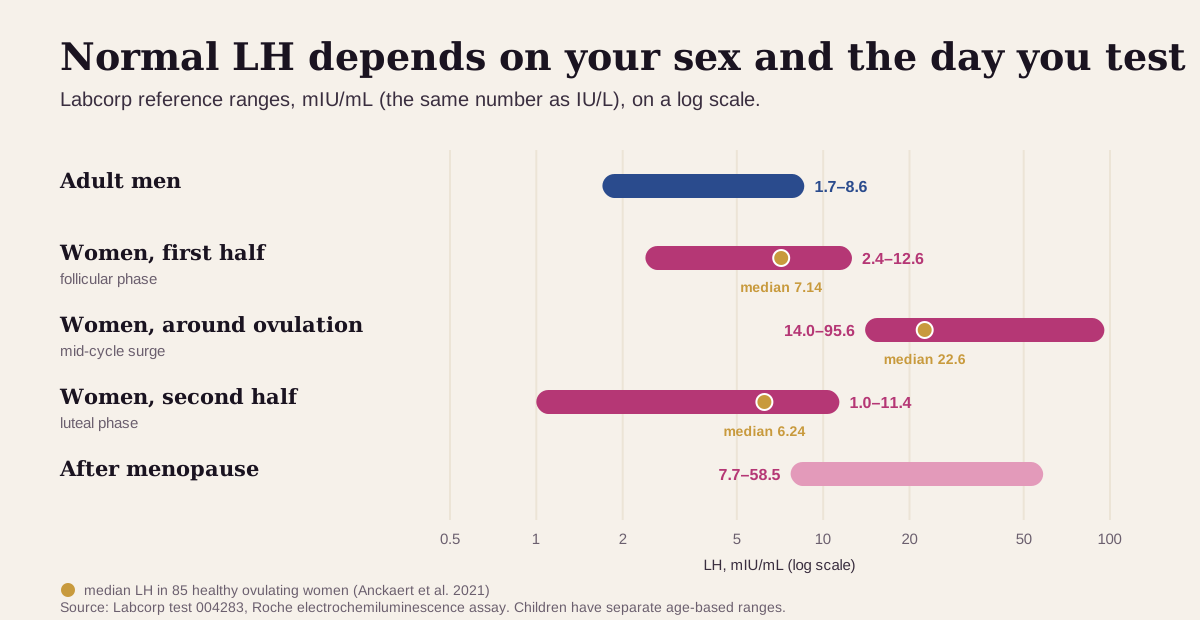
- Adult men: 1.7–8.6 mIU/mL.
- Women, first half of the cycle (follicular phase): 2.4–12.6. Around ovulation: 14.0–95.6. Second half (luteal phase): 1.0–11.4.
- After menopause: 7.7–58.5.3
A 2021 study sampled 85 healthy women through a whole cycle on the same Roche method. Median LH was 7.14 in the first half, 22.6 around ovulation and 6.24 in the second half, and the middle 90% of first-half results ran from 4.78 to 13.2.6
In children, LH stays low until the years before puberty, then rises along with the sex hormones.1 Labcorp publishes separate ranges by age for children and teens.3
"Optimal" LH: what health optimizers aim for
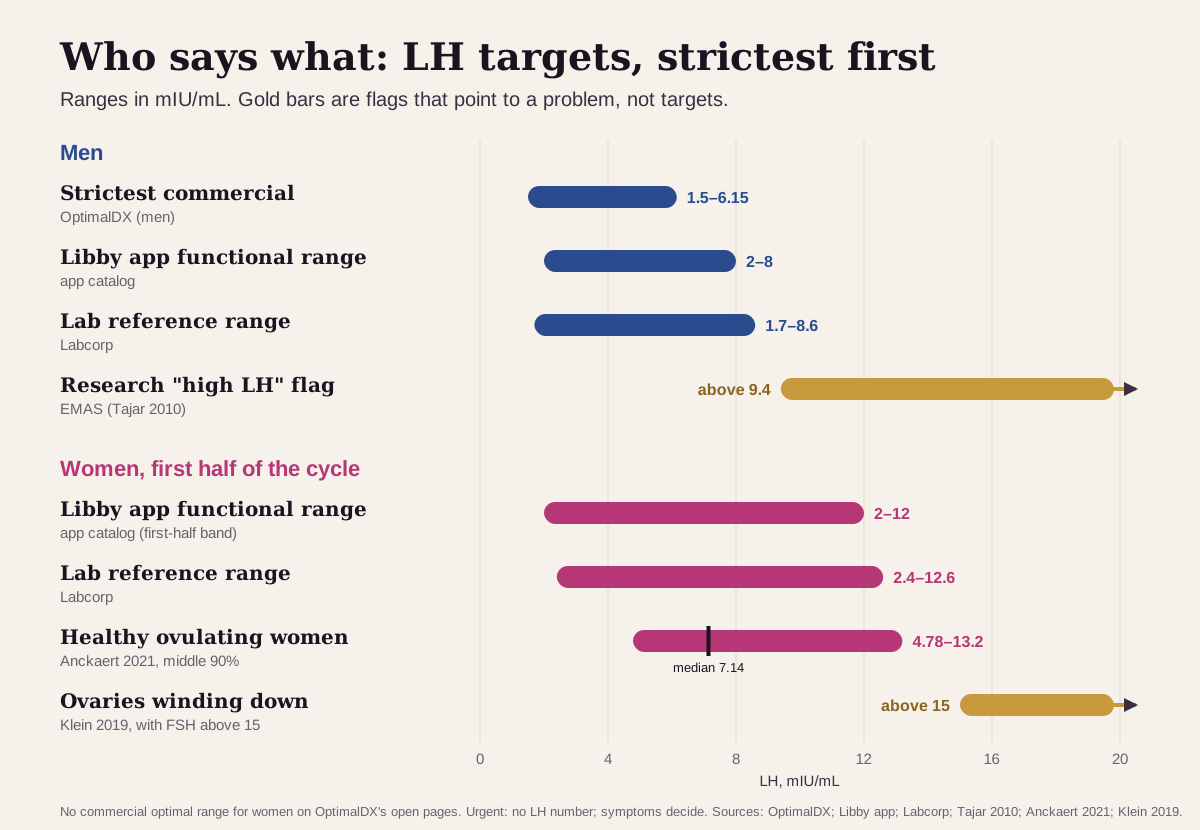
LH is a messenger, so "optimal" means a signal that matches what the ovaries or testes are doing. In a man whose testes work well, LH stays low, because testosterone keeps telling the brain to ease off.2 In a woman, it depends on the day. Here's the ladder, strictest first:
| Target (mIU/mL) | Men | Women (first half of cycle) | Who uses it |
|---|---|---|---|
| Strictest commercial target | 1.5–6.15 | none published | OptimalDX's optimal range for men7 |
| Functional range (Libby app) | 2–8 | 2–12 | The optimal range shown in the Libby app; the women's band is a first-half-of-cycle band8 |
| Lab reference range | 1.7–8.6 | 2.4–12.6 | Labcorp, the lab range the app also uses3 |
| Healthy ovulating women | none set | 4.78–13.2 (median 7.14) | The middle 90% in a 2021 cycle study6 |
| Research "high LH" flag | above 9.4 | none set | The European Male Ageing Study (EMAS)910 |
| Ovaries-winding-down pattern | none set | above 15, with FSH above 15 | Menopause and POI in a family-medicine review5 |
| Urgent | none by number | none by number | Symptoms decide: see the box below |
Why a high LH gets attention in men:
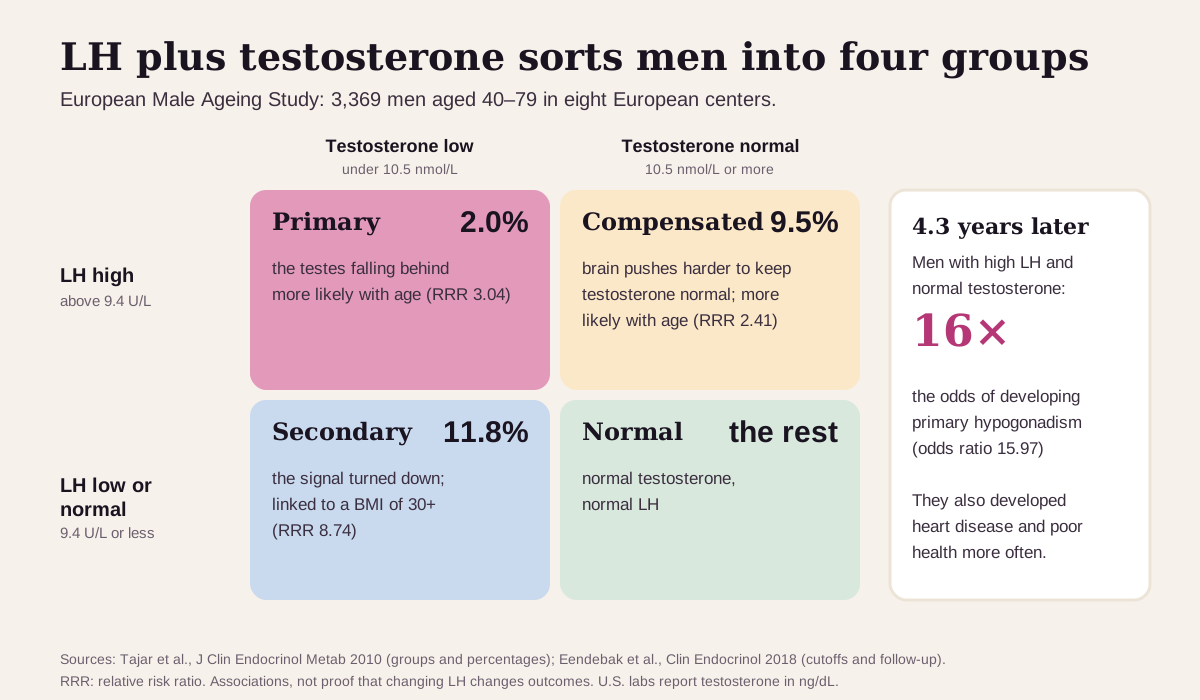
- In the European Male Ageing Study of 3,369 men aged 40–79, reading LH with testosterone sorted men into groups. 11.8% had low testosterone with low or normal LH, 2.0% had low testosterone with high LH, and 9.5% kept a normal testosterone only with a high LH ("compensated").9
- Over the next 4.3 years, men with an LH above 9.4 and a normal testosterone had about 16 times the odds that men with a normal LH had of developing full primary hypogonadism (low testosterone from the testes), and they developed heart disease and poor health more often.10
- In 3,637 men aged 70–88 followed for about 5 years, men with a higher LH had a 15% higher hazard of ischemic heart disease events, and 8% after adjusting for other risk factors.11
Keep "optimal" in perspective: LH is a signal, not a score you train. A low LH on testosterone therapy or hormonal birth control reflects those hormones switching the signal off, not healthier testes or ovaries.212 Pushing a high LH down directly has a poor track record: in a randomized trial of 106 women with repeated miscarriages and high LH, suppressing LH before conception gave no better live-birth rate (65% vs 76%, a gap within chance).13 And the app's women's band is a first-half-of-cycle band, so a mid-cycle or postmenopausal result will read high against it.83
What a high or low LH usually means
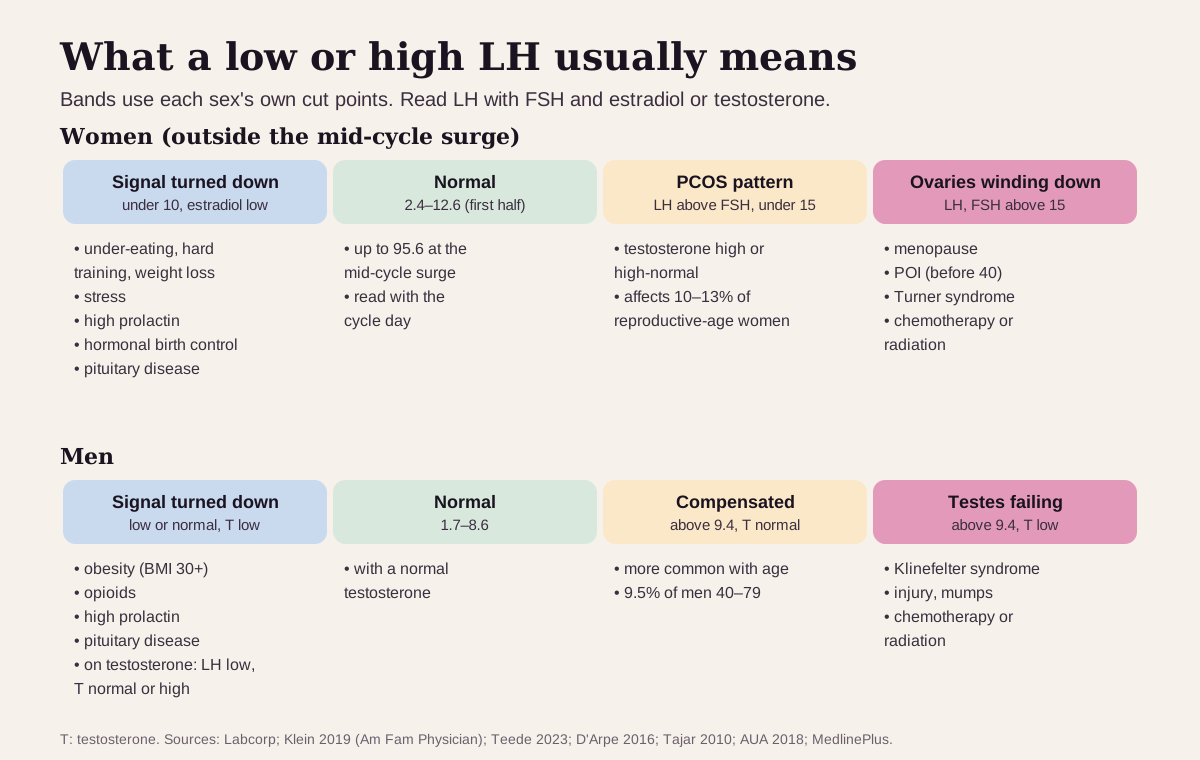
The direction is the first clue. LH goes up when the ovaries or testes stop answering, and down when the brain or pituitary stops asking.21
High LH in women
First, check the date. A high LH around mid-cycle is usually the normal surge: Labcorp's ovulation range runs up to 95.6.3 Outside the surge, the usual suspects are:
- The menopause transition. At 45 or older, a high LH usually means menopause is approaching. After menopause, Labcorp's range is 7.7–58.5.13
- PCOS (polycystic ovary syndrome). It affects an estimated 10–13% of women of reproductive age.14 LH often runs higher than FSH (a ratio above 1), with testosterone high or high-normal.5
- Primary ovarian insufficiency (POI). This is the ovaries winding down before 40: LH and FSH both above 15, with a low estradiol.51
- Less common: Turner syndrome, ovaries that never developed normally, thyroid or adrenal disorders, and damage from chemotherapy, radiation or autoimmune disease.1
High LH in men
- Testes that make too little testosterone (primary hypogonadism). LH is high because the brain is pushing on testes that are falling behind. Klinefelter syndrome, a chromosome disorder, is the most common inborn cause.21
- Damage to the testes from an injury, mumps, chemotherapy or radiation, or autoimmune disease.1
- Age. A high LH with a normal testosterone gets more common with age: it was 9.5% of men aged 40–79 in EMAS.9
- Less common: germ cell tumors of the testis.1
Low LH, or normal LH when it should be high
An LH that is low, or merely "normal" while estradiol or testosterone is low, points to the brain or pituitary.21 When periods stop, rule out pregnancy first.5 Then the usual reasons are:
- Under-eating, hard training, weight loss or stress, often together. This is called functional hypothalamic amenorrhea.5
- A high prolactin, from a small pituitary tumor (prolactinoma), medicines such as antipsychotics or opioids, kidney disease, or an underactive thyroid.5
- Hormone medicines. Hormonal birth control lowers LH, FSH and estradiol.12 In men, testosterone therapy shuts the signal down, and with it the testes' own testosterone and sperm production.2
- Opioids and extra weight (men). Long-term opioid use is a recognized cause of low LH and low testosterone.2 In EMAS, a BMI of 30 or more made the low-testosterone, low-or-normal-LH pattern 8.7 times as likely.9
- Less common: pituitary tumors, surgery or radiation, iron overload, head injury, and inborn GnRH deficiency such as Kallmann syndrome.25
Get prompt care if an abnormal LH comes with new headaches, vision problems, or nausea and vomiting, which can signal a pituitary tumor;15 milky nipple discharge when you're not breastfeeding;5 a painless lump or swelling in a testicle;16 or signs of puberty before age 8 in girls or 9 in boys.1 If your periods have stopped for 3 months (or 6 months if they were already irregular), book a visit.5
LH reads best next to its neighbors
LH is almost always read with FSH, plus estradiol in women or testosterone in men. When periods stop, the pattern across five tests usually points to the cause. Estradiol is low in all four patterns below, so the other four markers do the sorting:5
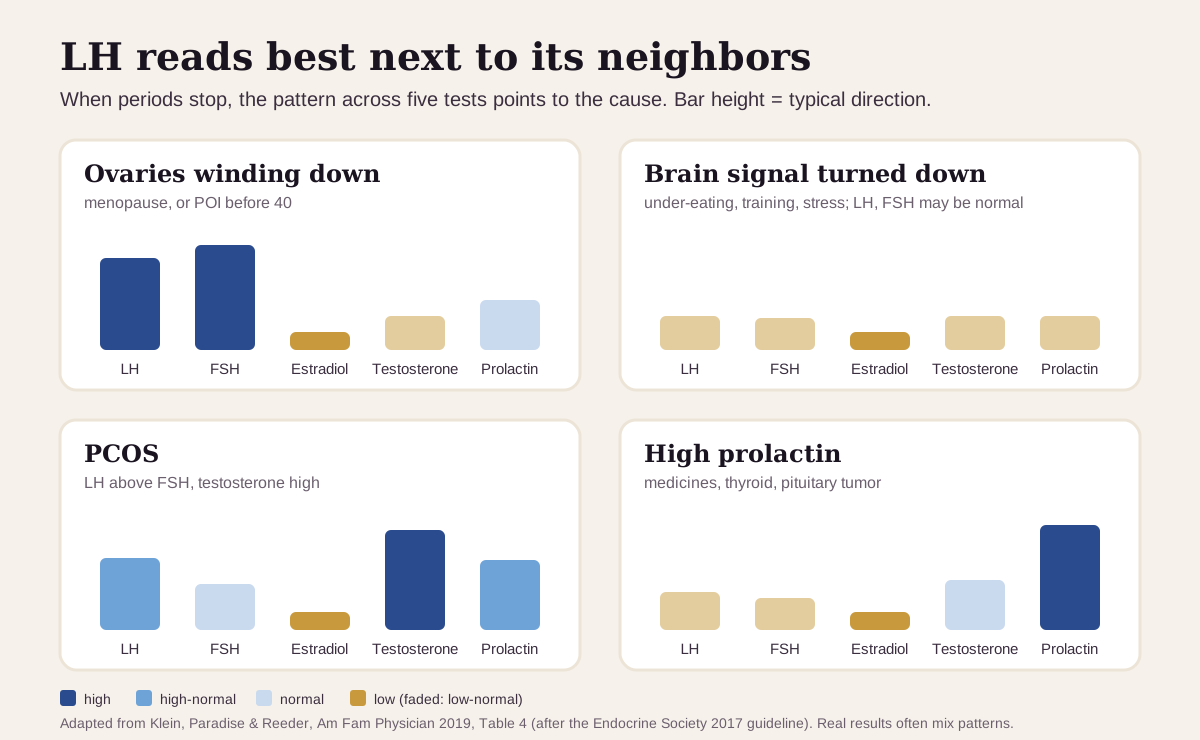
| If you see… | It often points to… |
|---|---|
| LH and FSH both above 15, FSH higher, estradiol low | the ovaries winding down: menopause, or POI if you're under 405 |
| LH and FSH under 10 (they can also be normal) and about equal, estradiol low, prolactin not high | the brain turning the signal down: under-eating, hard training or stress5 |
| LH higher than FSH (LH under 15), testosterone high or high-normal | PCOS; a morning 17-OHP test checks for a look-alike adrenal condition (late-onset CAH)5 |
| Prolactin high, LH and FSH under 10 | high prolactin: medicines, an underactive thyroid or a pituitary tumor5 |
| Men: testosterone low, LH high | the testes falling behind (primary hypogonadism)92 |
| Men: testosterone low, LH low or normal | the pituitary or hypothalamus under-signaling (secondary hypogonadism); prolactin is checked next92 |
| Men: testosterone normal, LH high | "compensated": the brain pushing harder to keep testosterone normal910 |
| Men: LH low while taking testosterone | the medicine switching the signal off, which can also stop sperm production2 |
How fast LH changes
LH moves on three clocks.
- Minutes to hours. The pituitary releases LH in pulses, and your own LH has a half-life of about 90 minutes.173 In a study of 266 people sampled repeatedly over several hours, LH was the most variable reproductive hormone: it swung 28% around its average, versus 8% for FSH. The day's average ran 18.4% below the first morning value.18
- Days. Across the cycle, LH climbs through the first half, spikes around ovulation and falls in the second half.6 Ovulation comes a median of 32 hours after LH starts to rise and 16.5 hours after it peaks; in 90% of women it came 16–48 hours after the first rise.4
- Weeks. Men are steadier: in 38 healthy men tested weekly for 10 weeks, LH varied about 22% around each man's own average.19
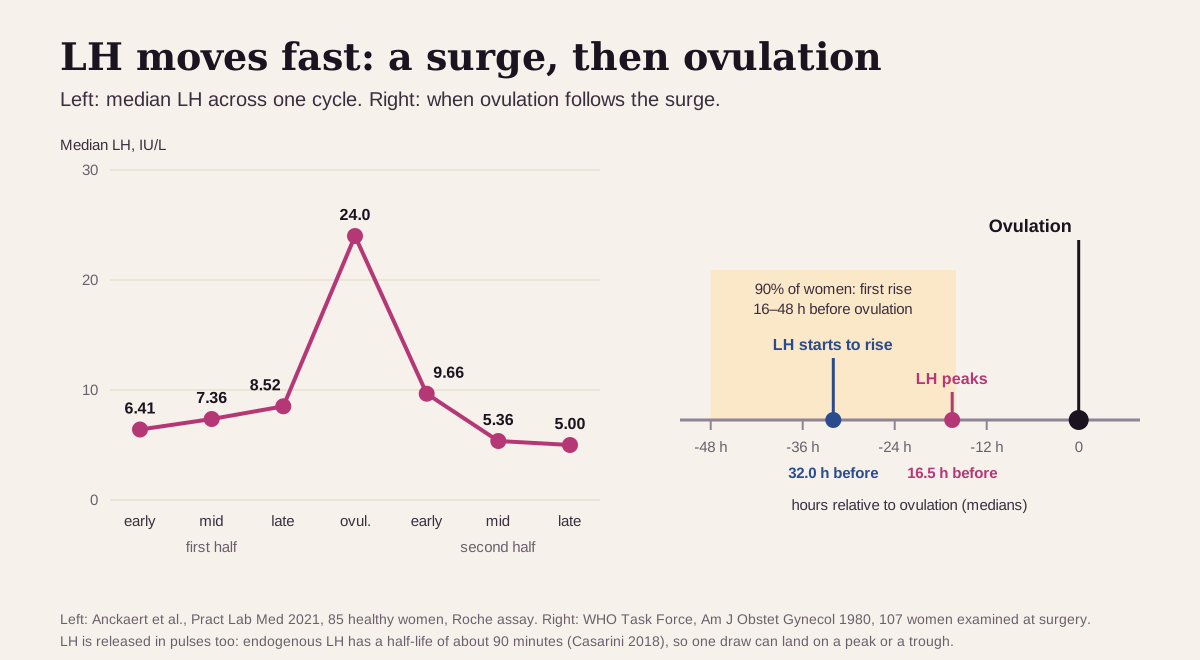
What that means in practice:
- Know your cycle day. The same LH of 15 is high in the first half of the cycle and normal at mid-cycle.3
- One LH is a snapshot. Pulses mean a single draw can land on a peak or a trough. Labcorp notes that some protocols pool samples drawn 15–30 minutes apart.3
- Compare like with like. Morning values run higher than the rest of the day, so repeat tests at the same time of day.18
- Trends beat snapshots. Because a man's LH swings about 22% from week to week, a steady climb over several tests says more than one higher result.19
- Urine ovulation kits catch the surge 1–2 days before ovulation. They give indirect evidence, vary by brand, and can give false positives in PCOS, where baseline LH can run high.20
Going deeper: LH, hCG and the LH-to-FSH ratio
LH is a glycoprotein, a protein coated with sugars. Its closest relative is hCG, the pregnancy hormone: the two molecules are about 85% identical and act on the same receptor (LHCGR).17 The difference is timing. Pituitary LH comes in pulses and clears in about 90 minutes, while hCG from the placenta lasts for hours and supports the progesterone-making cells of the ovary in early pregnancy.17
The LH-to-FSH ratio. In PCOS, LH typically runs higher than FSH (a ratio above 1). In menopause and POI, FSH runs higher than LH (a ratio below 1).5 The ratio is a clue, not a diagnosis. The 2023 international PCOS guideline diagnoses PCOS from two of three features: irregular cycles, high androgens, and polycystic ovaries on ultrasound (or a high AMH). LH is not one of them.14
Reading LH with testosterone in men. The EMAS researchers used an LH above 9.4 U/L and a testosterone below 10.5 nmol/L to sort men into the four groups in the figure above.109 U.S. urology guidelines define low testosterone as below 300 ng/dL on two early-morning tests. They recommend an LH test for every man with low testosterone, and a prolactin test when LH is low or low-normal.2
Questions worth asking
- Which day of my cycle was this drawn on, and which range applies to me?
- What did my FSH and estradiol (or testosterone) show next to it?
- Could birth control, testosterone, opioids or another medicine be affecting it?
- If my LH is high and my testosterone is normal, when should we recheck both?
- If my LH is low and my estradiol or testosterone is low, should we check prolactin and thyroid?
- If I use ovulation kits, do my results fit the rest of my cycle?
FAQ
What is a normal LH level? It depends on your sex and, for women, the day of your cycle. Labcorp's ranges are 1.7–8.6 mIU/mL for adult men, 2.4–12.6 in the first half of the cycle, 14.0–95.6 around ovulation and 7.7–58.5 after menopause.3
What does a high LH mean? Around mid-cycle, it's usually the normal surge that triggers ovulation. Outside it, a high LH usually means the ovaries or testes have slowed, as in menopause, POI or primary hypogonadism. In PCOS, LH often runs higher than FSH.452
What does a low LH mean? Usually that the brain or pituitary has turned the signal down: under-eating, hard training or stress, a high prolactin, testosterone or opioid use, or a pituitary problem.52
How long after an LH surge do you ovulate? In the WHO study, ovulation came a median of 32 hours after LH started to rise and 16.5 hours after the peak. Urine kits pick up the surge 1–2 days before ovulation.420
This guide is for education. It can't diagnose you or replace care from a clinician who knows your history.
Footnotes
-
National Library of Medicine. Luteinizing Hormone (LH) Levels Test. MedlinePlus. What LH does in women, men and children, why it's ordered, and the conditions linked to high and low levels, including the ages that define early puberty. MedlinePlus ↩ ↩2 ↩3 ↩4 ↩5 ↩6 ↩7 ↩8 ↩9 ↩10 ↩11 ↩12 ↩13 ↩14 ↩15 ↩16 ↩17
-
Mulhall JP, Trost LW, Brannigan RE, et al. Evaluation and Management of Testosterone Deficiency: AUA Guideline. J Urol. 2018;200(2):423–432 (validity confirmed 2024). The American Urological Association's guideline: low testosterone below 300 ng/dL on two early-morning tests; measure LH in men with low testosterone and prolactin when LH is low or low-normal; testosterone and estradiol feed back to suppress LH; Klinefelter syndrome as the most common congenital cause of high-LH hypogonadism; chronic narcotic use, prolactinoma and pituitary disease as causes of low-LH hypogonadism; exogenous testosterone suppresses the axis and sperm production. AUA · PubMed ↩ ↩2 ↩3 ↩4 ↩5 ↩6 ↩7 ↩8 ↩9 ↩10 ↩11 ↩12 ↩13 ↩14 ↩15 ↩16 ↩17 ↩18 ↩19 ↩20 ↩21
-
Labcorp. Luteinizing Hormone (LH), test 004283. Roche electrochemiluminescence assay. Reference ranges: adult male 1.7–8.6 mIU/mL; female follicular 2.4–12.6, ovulation 14.0–95.6, luteal 1.0–11.4, postmenopausal 7.7–58.5; separate pediatric ranges. Notes that LH is pulsatile and that pooling samples drawn 15–30 minutes apart has been suggested. Labcorp is a commercial laboratory; these are also the lab ranges the Libby app uses. labcorp.com ↩ ↩2 ↩3 ↩4 ↩5 ↩6 ↩7 ↩8 ↩9 ↩10 ↩11 ↩12 ↩13 ↩14 ↩15 ↩16 ↩17
-
World Health Organization, Task Force on Methods for the Determination of the Fertile Period. Temporal relationships between ovulation and defined changes in the concentration of plasma estradiol-17 beta, luteinizing hormone, follicle-stimulating hormone, and progesterone. I. Probit analysis. Am J Obstet Gynecol. 1980;138(4):383–390. 107 women analyzed; ovulation a median of 32.0 hours after the LH rise and 16.5 hours after the peak; 90% between 16 and 48 hours after the first rise. PubMed ↩ ↩2 ↩3 ↩4 ↩5
-
Klein DA, Paradise SL, Reeder RM. Amenorrhea: A Systematic Approach to Diagnosis and Management. Am Fam Physician. 2019;100(1):39–48. Table 4, adapted from the Endocrine Society's 2017 guideline, gives the LH, FSH, estradiol, testosterone and prolactin patterns used here; Tables 1–3 list causes of amenorrhea and of high prolactin; secondary amenorrhea is 3 months without periods (6 if irregular). AAFP · PubMed ↩ ↩2 ↩3 ↩4 ↩5 ↩6 ↩7 ↩8 ↩9 ↩10 ↩11 ↩12 ↩13 ↩14 ↩15 ↩16 ↩17 ↩18 ↩19 ↩20 ↩21 ↩22
-
Anckaert E, Jank A, Petzold J, et al. Extensive monitoring of the natural menstrual cycle using the serum biomarkers estradiol, luteinizing hormone and progesterone. Pract Lab Med. 2021;25:e00211. 85 healthy women, Roche assays; median LH 7.14 IU/L (5th–95th percentile 4.78–13.2) in the follicular phase, 22.6 at ovulation, 6.24 in the luteal phase, plus sub-phase medians. PMC ↩ ↩2 ↩3 ↩4 ↩5 ↩6
-
OptimalDX. Hormone Biomarkers: Luteinizing Hormone in Men. Published September 21, 2023; updated November 1, 2023. Lists a standard range of 1.5–9.3 mIU/mL and "The ODX Range: 1.5 – 6.15 mIU/mL". A commercial source, listed as what the optimizer community uses. optimaldx.com ↩ ↩2
-
Libby Health app marker catalog: LH optimal range 2–8 mIU/mL for men and 2–12 mIU/mL for women (a follicular-phase band), with lab ranges 1.7–8.6 and 2.4–12.6. The catalog attributes the optimal bands to Endocrine Society clinical practice guidelines (various publications); no single guideline stating these numbers was identified for this article. Endocrine Society ↩ ↩2 ↩3
-
Tajar A, Forti G, O'Neill TW, et al. Characteristics of secondary, primary, and compensated hypogonadism in aging men: evidence from the European Male Ageing Study. J Clin Endocrinol Metab. 2010;95(4):1810–1818. 3,369 men aged 40–79; secondary 11.8%, primary 2.0%, compensated 9.5%; age linked to primary (RRR 3.04) and compensated (RRR 2.41) hypogonadism; BMI 30 or more linked to secondary (RRR 8.74). PubMed ↩ ↩2 ↩3 ↩4 ↩5 ↩6 ↩7 ↩8 ↩9 ↩10 ↩11
-
Eendebak RJAH, Ahern T, Swiecicka A, et al. Elevated luteinizing hormone despite normal testosterone levels in older men—natural history, risk factors and clinical features. Clin Endocrinol (Oxf). 2018;88(3):479–490. EMAS, 4.3 years: high LH defined as above 9.4 U/L with testosterone of 10.5 nmol/L or more; these men developed primary hypogonadism more often (odds ratio 15.97) and developed cardiovascular disease and poor health more often. PubMed ↩ ↩2 ↩3 ↩4 ↩5
-
Hyde Z, Norman PE, Flicker L, et al. Elevated LH predicts ischaemic heart disease events in older men: the Health in Men Study. Eur J Endocrinol. 2011;164(4):569–577. 3,637 men aged 70–88, mean follow-up 5.1 years; higher LH linked to fewer event-free years: hazard ratio 1.15 unadjusted and 1.08 adjusted. PubMed ↩
-
D'Arpe S, Di Feliciantonio M, Candelieri M, et al. Ovarian function during hormonal contraception assessed by endocrine and sonographic markers: a systematic review. Reprod Biomed Online. 2016;33(4):436–448. Across 48 studies, hormonal contraception lowered serum FSH, LH and estradiol. PubMed ↩ ↩2 ↩3
-
Clifford K, Rai R, Watson H, Franks S, Regan L. Does suppressing luteinising hormone secretion reduce the miscarriage rate? Results of a randomised controlled trial. BMJ. 1996;312(7045):1508–1511. 106 women with recurrent miscarriage, polycystic ovaries and high LH; live birth 65% with LH suppression vs 76% without (not significant). PMC ↩
-
Teede HJ, Tay CT, Laven JJE, et al. Recommendations From the 2023 International Evidence-based Guideline for the Assessment and Management of Polycystic Ovary Syndrome. J Clin Endocrinol Metab. 2023;108(10):2447–2469. PCOS prevalence 10–13%; diagnosis by two of hyperandrogenism, ovulatory dysfunction, and polycystic ovaries on ultrasound or AMH. PMC ↩ ↩2 ↩3
-
National Library of Medicine. Pituitary Tumors. MedlinePlus. Symptoms include headaches, vision problems, and nausea and vomiting. MedlinePlus ↩
-
National Library of Medicine. Testicular Cancer. MedlinePlus. Symptoms may include a painless lump or swelling in either testicle. MedlinePlus ↩
-
Casarini L, Santi D, Brigante G, Simoni M. Two Hormones for One Receptor: Evolution, Biochemistry, Actions, and Pathophysiology of LH and hCG. Endocr Rev. 2018;39(5):549–592. LH and hCG share the LHCGR receptor and the two molecules share about 85% identity; pituitary LH has a half-life of about 90 minutes, hCG of hours. PubMed ↩ ↩2 ↩3
-
Abbara A, Adams S, Phylactou M, et al. Quantifying the variability in the assessment of reproductive hormone levels. Fertil Steril. 2024;121(2):334–345. 266 people with detailed sampling; LH coefficient of variation 28% vs FSH 8%; the daily mean LH 18.4% below the first morning value. PubMed ↩ ↩2
-
Itkonen O, Jonker N, Aarsand AK, et al. The European biological variation study (EuBIVAS): Biological variation data for testosterone, follicle stimulating hormone, prolactin, luteinizing hormone and dehydroepiandrosterone sulfate in men. Clin Chim Acta. 2024;555:117806. 38 men sampled weekly for 10 weeks; LH within-person variation 22%. PubMed ↩ ↩2
-
Practice Committee of the American Society for Reproductive Medicine. Fertility evaluation of infertile women: a committee opinion. Fertil Steril. 2021;116(5):1255–1265. Urine ovulation kits identify the LH surge 1–2 days before ovulation, give indirect evidence, vary by product, and can give false positives with a high baseline LH in PCOS. PubMed · ASRM ↩ ↩2
Educational content, not medical advice. Libby is a personal record tool, not a medical service — it doesn't diagnose, treat, or prescribe. Reference ranges vary by lab and by person. Talk to a qualified healthcare professional about your results.
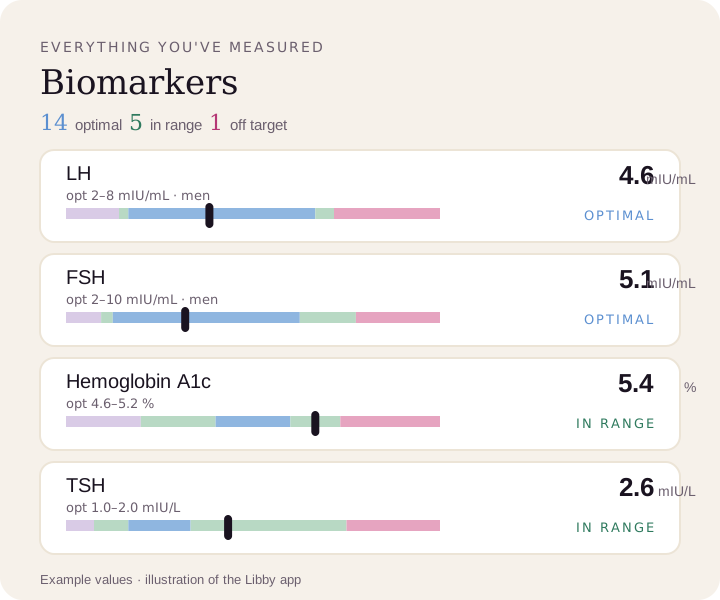
Compare your results to optimal ranges.
Upload a lab PDF or a photo of your report. Libby puts each marker on your lab's range and, where the app has one, an optimal range, and tracks your trends over time.
View your LH ›