Progesterone blood test: normal levels, low and high causes
Progesterone shows whether you ovulated. See normal levels by cycle phase and pregnancy, what a low day-21 result means, and how to read it with LH and FSH.
Progesterone is the hormone your ovary makes after it releases an egg. It readies the lining of your uterus for a pregnancy, and if no pregnancy starts, the level falls and your period begins.1 That makes a progesterone test, taken about a week before your period is due, the standard blood test for checking that you ovulated.2 In pregnancy the level keeps climbing. In men and after menopause it stays close to zero.3
The short version
- Normal depends on the week of your cycle. Labcorp's ranges run 0.1–0.9 ng/mL in the first half of the cycle, 1.8–23.9 in the second half (the luteal phase), 0.0–0.5 for men and 0.0–0.1 after menopause.3
- Did you ovulate? On a test about 7 days before your period (day 21 of a 28-day cycle),2 a level above 3 ng/mL is the classic sign that you did.4 In one study of 107 women, a level of 5 or more almost never appeared before ovulation (98.4% specificity).5
- Low on a well-timed test usually means you skipped ovulation that cycle. The usual reasons are PCOS, under-eating or hard training, perimenopause, and a high prolactin.16
- High usually means the luteal phase, pregnancy (11–44 ng/mL in the first trimester) or fertility treatment.37 In early pregnancy, a low level with pain or bleeding needs same-day care: it can mean a miscarriage or an ectopic pregnancy.89
What progesterone is
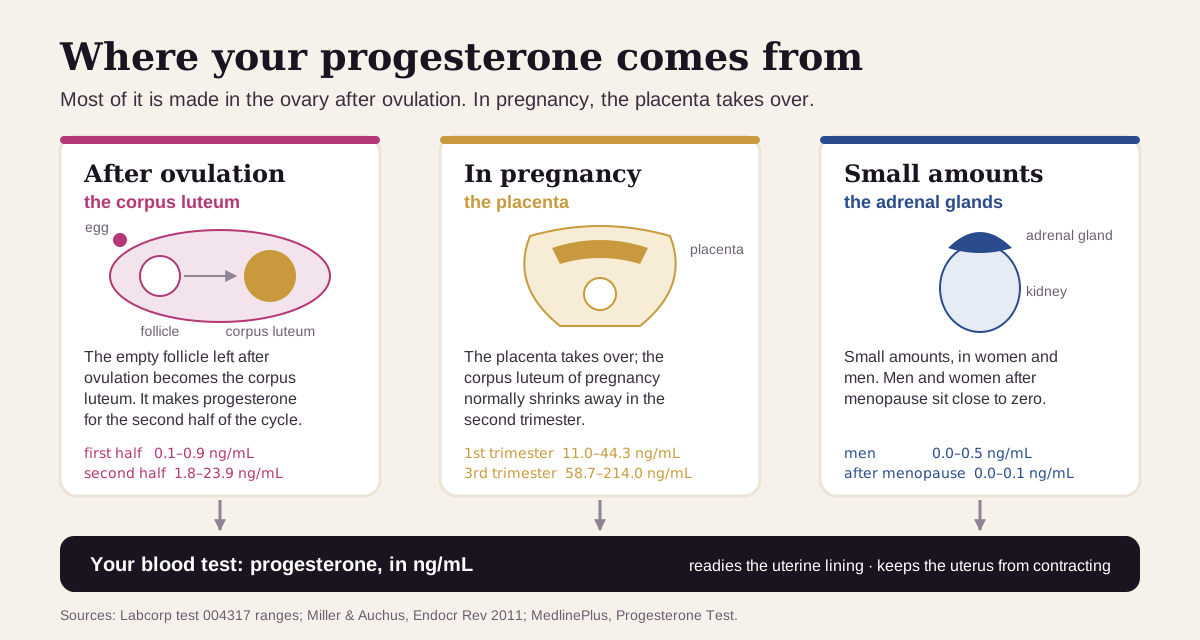
Each month, one follicle in your ovary releases an egg. The empty follicle left behind turns into a small gland called the corpus luteum, and its main product is progesterone.410 The level starts rising about a day before ovulation and stays high through the second half of the cycle, the luteal phase.3
Progesterone's job is to prepare the uterus. It turns the lining into tissue a fertilized egg can attach to, and it keeps the uterus from contracting.1 If no pregnancy starts, progesterone falls and the lining sheds as your period.1
In pregnancy, the level keeps climbing. The corpus luteum carries the early weeks. Then the placenta takes over, and the corpus luteum of pregnancy normally shrinks away in the second trimester.101 Your adrenal glands make small amounts too, in women and men.1 Men and women after menopause sit near zero.3
Progesterone is also a building block: your adrenal glands use it on the way to cortisol and aldosterone.10 (More on that at the end.)
You might get this test in a fertility workup, in early pregnancy with cramps or bleeding, or while checking out irregular periods or abnormal bleeding.1
What's a normal progesterone?
There is no single normal. Your result only makes sense next to the day of your cycle it was drawn, and whether you could be pregnant.1 Labcorp, for example, uses these ranges:3
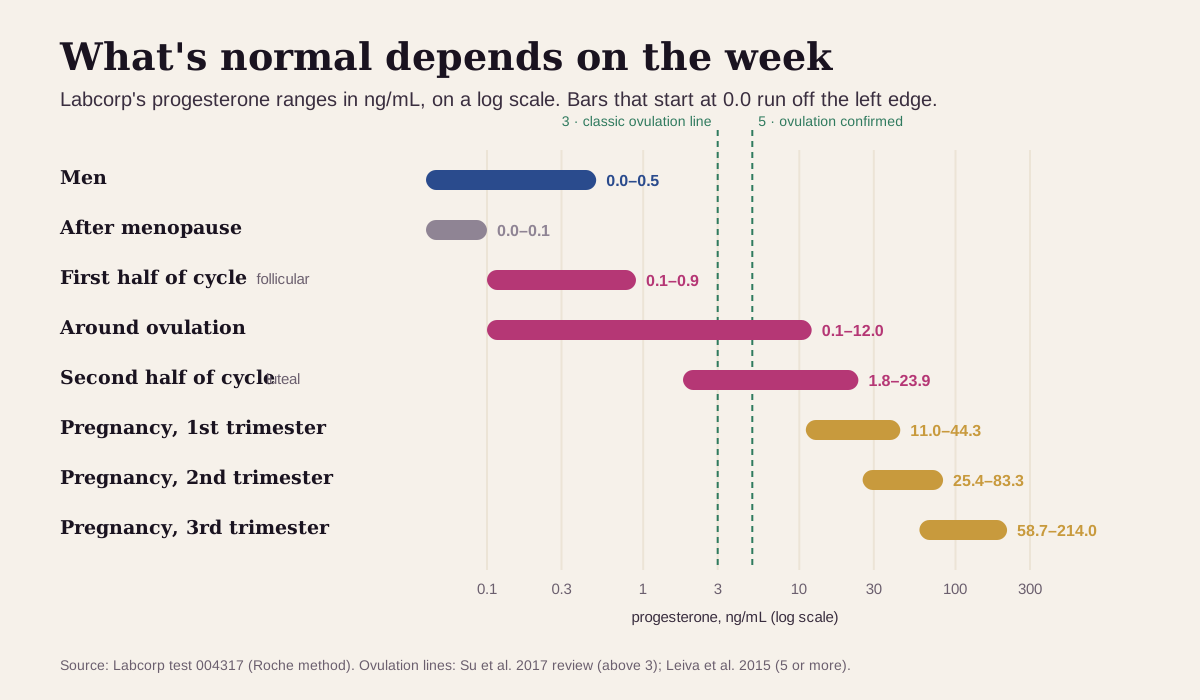
| Who / when | Labcorp range (ng/mL) |
|---|---|
| Men | 0.0–0.5 |
| Women, first half of the cycle (follicular) | 0.1–0.9 |
| Women, around ovulation | 0.1–12.0 |
| Women, second half of the cycle (luteal) | 1.8–23.9 |
| After menopause | 0.0–0.1 |
| Pregnancy, first trimester | 11.0–44.3 |
| Pregnancy, second trimester | 25.4–83.3 |
| Pregnancy, third trimester | 58.7–214.0 |
The luteal range is wide. One reason is that a single result can swing a lot within the same day (see how fast it changes).11 Use the ranges printed on your own report.
"Optimal" progesterone: what a good luteal level looks like
For progesterone, "optimal" means one thing: a mid-luteal level high enough to show you ovulated, measured about 7 days before your period.2 Here's the ladder, from the highest floor to the lowest, for a well-timed test in women:
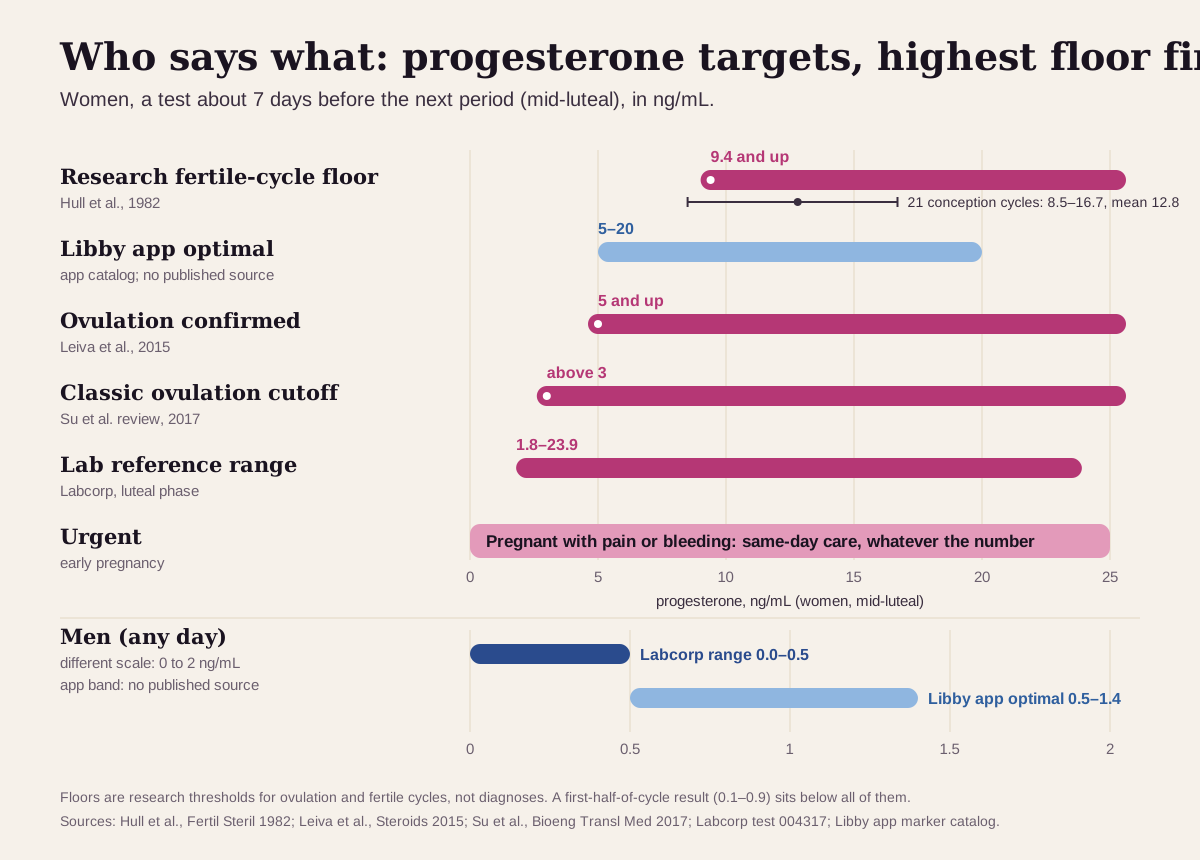
| Target | Women (mid-luteal test) | Men | Who uses it |
|---|---|---|---|
| Research "fertile cycle" floor | 9.4 ng/mL or more | – | Hull et al.: all 21 natural conception cycles fell between 8.5 and 16.77 |
| Libby app optimal | 5–20 ng/mL | 0.5–1.4 ng/mL | The optimal range shown in the Libby app. The app's catalog records no published source for this band, and notes the women's band is a luteal-phase range |
| Ovulation confirmed (research) | 5 ng/mL or more | – | Leiva et al., checked against ultrasound5 |
| Classic ovulation cutoff | above 3 ng/mL | – | The long-used mid-luteal threshold4 |
| Lab reference range | 1.8–23.9 ng/mL (luteal) | 0.0–0.5 ng/mL | Labcorp3 |
| Urgent | early pregnancy with pain or bleeding | – | Get same-day care, whatever the number89 |
Why the floors sit where they do:
- In 21 natural conception cycles, Hull's group found mid-luteal progesterone between 8.5 and 16.7 ng/mL (average 12.8). They proposed 9.4 ng/mL as the floor for a "potentially fertile" cycle, and noted the fertile range had a ceiling as well as a floor.7
- Leiva's group tracked 107 women over 326 cycles and pinned the day of ovulation with ultrasound. A single level of 5 ng/mL or more had a specificity of 98.4% for ovulation and caught 89.6% of ovulatory cycles.5
Keep "optimal" in perspective. A mid-luteal level of 3 to 10 means you ovulated. It's weak evidence of a "weak" luteal phase, because the level pulses: one study saw levels from 2.3 to 40.1 ng/mL over a single day of sampling.11 The American Society for Reproductive Medicine describes luteal phase deficiency as a short luteal phase (10 days or less), and says it hasn't been proven to cause infertility or repeat miscarriage.12 The Libby app's women's band is a luteal target, so a result from the first half of your cycle (0.1–0.9) will read below it. That's expected.
What a low or high progesterone usually means
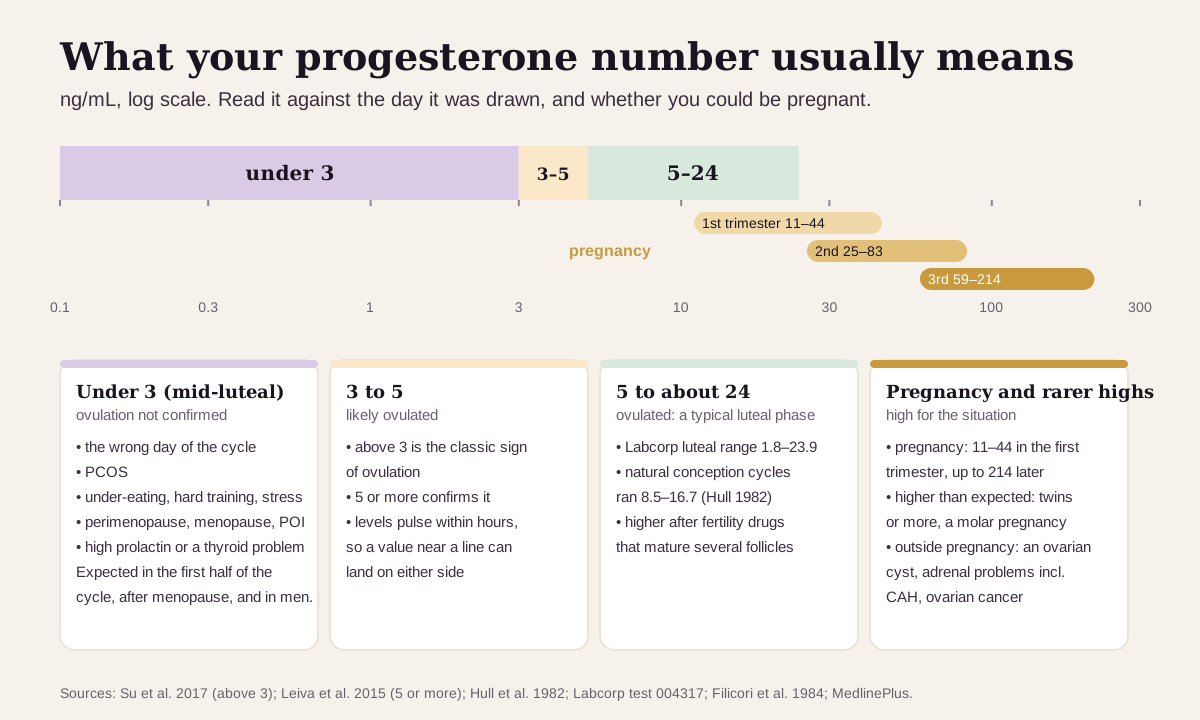
Start with timing. A progesterone result is read against the day it was drawn and whether you could be pregnant.1
Low on a mid-luteal test: the usual suspects
- The wrong day. Check this first. Day 21 fits a 28-day cycle. With a 35-day cycle, NICE, the UK guideline body, suggests testing around day 28 and repeating weekly until your period starts.2
- PCOS (polycystic ovary syndrome). It's the most common hormone condition in women of reproductive age, affecting 10–13%. Skipped ovulation is one of its three hallmarks, and the international guideline uses a progesterone test to confirm it.13
- Under-eating, hard training or stress. The brain turns down the signal to the ovaries (functional hypothalamic amenorrhea), and ovulation stops.146
- Perimenopause, menopause and POI. Perimenopause is a common reason for a low result, and after menopause the level sits at 0.0–0.1 ng/mL.13 When the ovaries wind down before 40, it's called primary ovarian insufficiency (POI), found in up to 3.5% of women in recent studies.15
- A high prolactin or a thyroid problem. Both can stop periods, which is why doctors check prolactin and TSH early in the workup.613
Low in early pregnancy: can be urgent
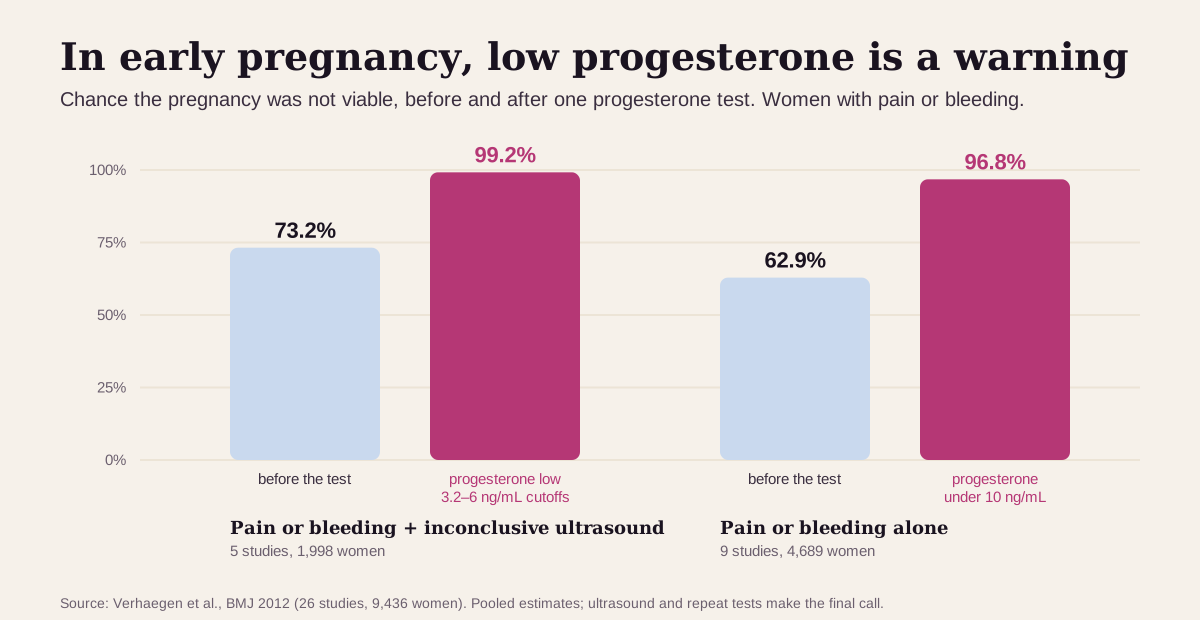
Here, progesterone helps sort out whether a pregnancy is likely to continue. A 2012 meta-analysis in the BMJ pooled 26 studies of 9,436 pregnant women:8
- In women with pain or bleeding whose ultrasound was inconclusive, a low level (cutoffs of 3.2–6 ng/mL) raised the chance the pregnancy wasn't viable from 73.2% to 99.2%.
- In women with pain or bleeding alone, a level under 10 ng/mL raised it from 62.9% to 96.8%.
Get care the same day if you're pregnant, or could be, and have vaginal bleeding, pain on one side of your pelvis or lower belly, shoulder pain, or feel faint. These can be signs of an ectopic pregnancy, which can be life-threatening.9
High: usually expected
- The luteal phase. A mid-luteal level in the teens is normal: Labcorp's luteal range reaches 23.9, and natural conception cycles in Hull's study averaged 12.8.37
- Pregnancy. First-trimester levels run 11–44 ng/mL and rise to as high as 214 by the third trimester. A higher-than-expected level can mean twins or more.31
- Fertility treatment. Drugs that stimulate the ovaries (clomiphene, gonadotropins) can mature several follicles, and each adds progesterone, so treated cycles run higher.7
- Less common but important: an ovarian cyst, an adrenal problem such as congenital adrenal hyperplasia (CAH), a molar pregnancy, or ovarian cancer.13
Progesterone reads best next to its neighbors
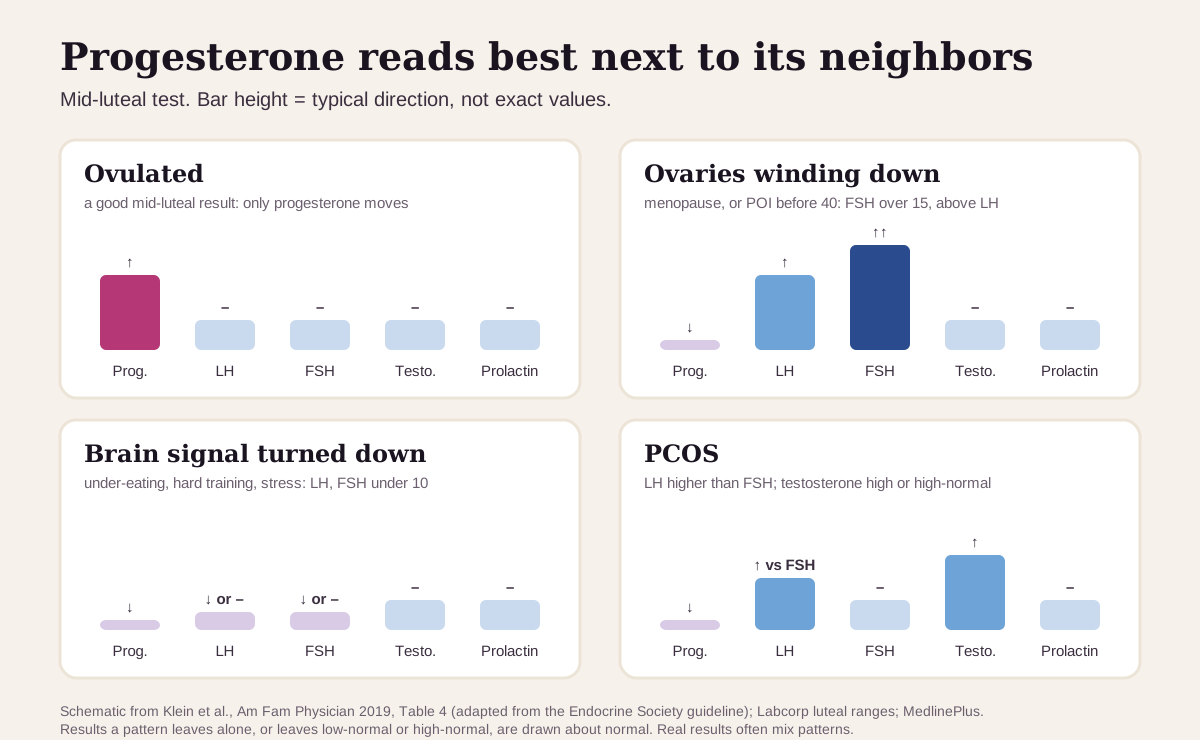
A low progesterone says "no ovulation this cycle". The hormones next to it usually say why: LH, FSH, testosterone and prolactin do the sorting.6
| If you see… | It often points to… |
|---|---|
| Progesterone above 3–5, LH and FSH in their usual range | you ovulated this cycle4516 |
| Progesterone low, FSH and LH both above 15, FSH the higher of the two | the ovaries winding down: menopause, or POI if you're under 40 (the POI guideline's cutoff is FSH over 25)615 |
| Progesterone low, LH and FSH under 10 (they can also be normal), prolactin not high | the brain turning the signal down: under-eating, hard training or stress614 |
| Progesterone low, LH higher than FSH, testosterone high or high-normal | PCOS613 |
| Progesterone low, prolactin high | high prolactin: medicines, an underactive thyroid or a pituitary adenoma6 |
| Progesterone high (11–44 in the first trimester), pregnancy test positive, estradiol in the hundreds or thousands | pregnancy3166 |
| Pregnant, progesterone low, with pain or bleeding | a pregnancy that may not continue, or an ectopic pregnancy: same-day care819 |
How fast progesterone changes
Within hours. In the middle and late luteal phase, the corpus luteum releases progesterone in bursts that follow the pulses of LH from the pituitary, about 25–55 minutes behind. When researchers drew blood every 10 minutes for 24 hours, levels ranged from as low as 2.3 to peaks of 40.1 ng/mL, often changing within minutes.11
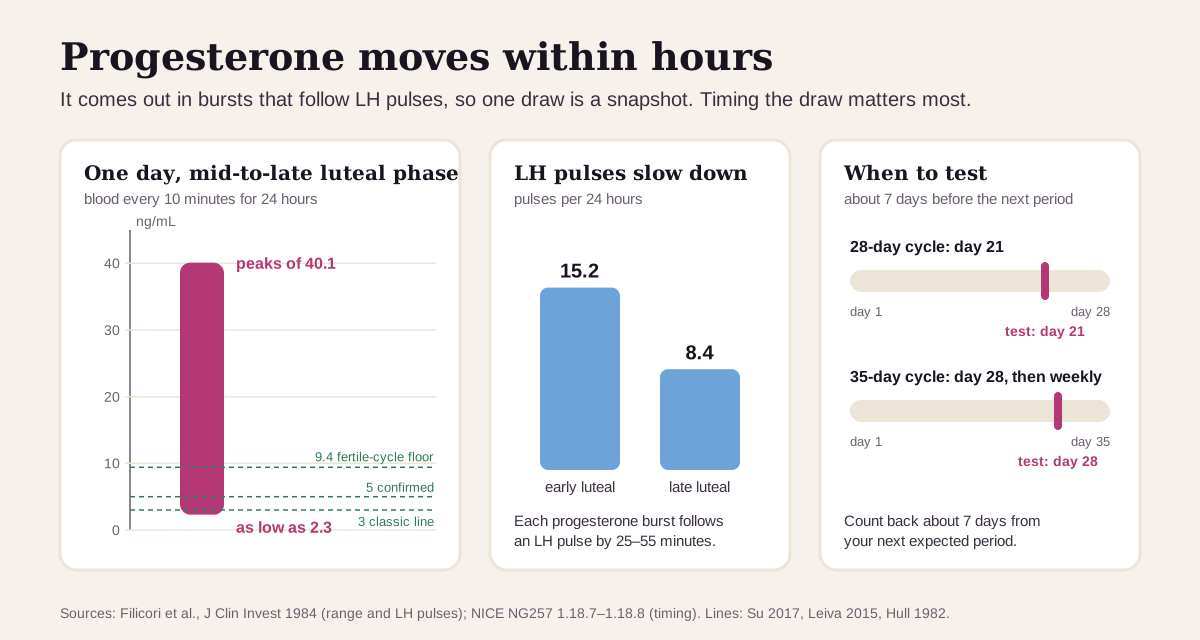
Across the cycle. Progesterone is barely detectable in the first half, starts rising about a day before ovulation, and stays up through the luteal phase.3 Without a pregnancy it falls before your period.1
What that means in practice:
- Time the test to your cycle, not the calendar. Count back about 7 days from when you expect your next period.2
- One result near a cutoff can go either way. Because of the pulses, a value just under 3 or 5 on one draw could land above the line an hour later.11 A clearly high result is the reliable one: levels of 5 or more almost never appear before ovulation.5
- Trends beat snapshots. One low result can be a single skipped cycle or a mistimed draw. For irregular cycles, NICE advises weekly tests until the next period, not one draw.2
Going deeper: progesterone as a building block
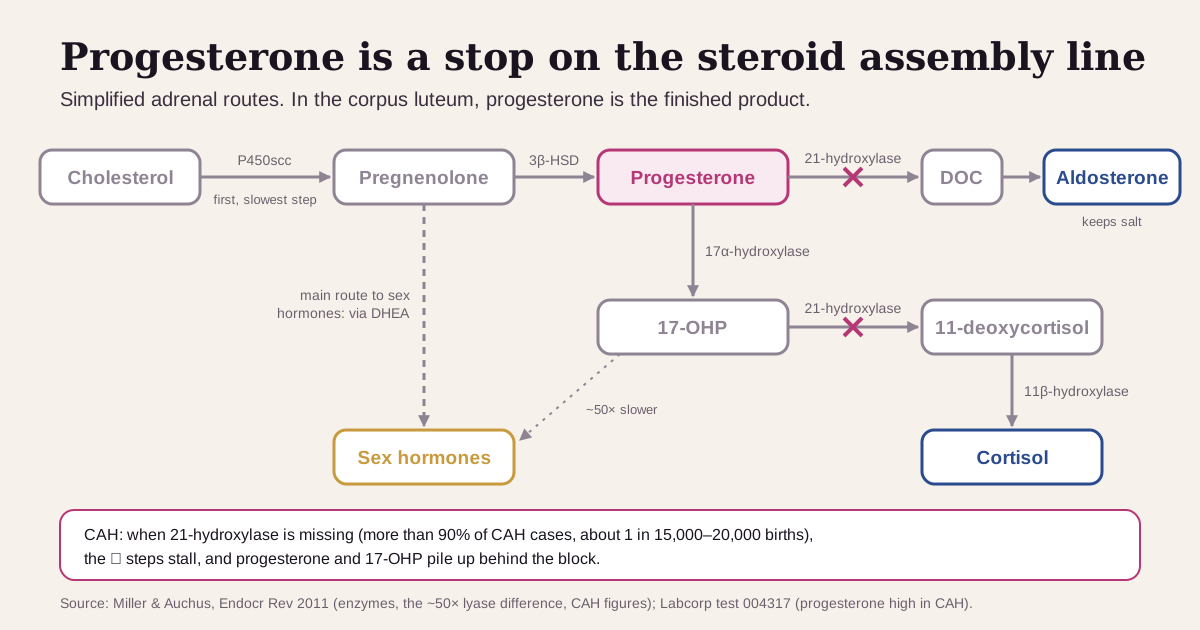
Every steroid hormone starts as cholesterol. The first and slowest step turns it into pregnenolone, and one more step makes progesterone.10 In the corpus luteum, progesterone is the finished product. In the adrenal glands, it's a stop along the way:10
- To aldosterone, the salt-keeping hormone, through the enzyme 21-hydroxylase.
- To cortisol, through 17-hydroxylation to 17-hydroxyprogesterone (17-OHP), then 21-hydroxylase again.
- Sex hormones mostly branch off earlier, through DHEA. The enzyme step that would turn 17-OHP toward testosterone runs about 50 times slower.
That layout explains a rare cause of high progesterone. In congenital adrenal hyperplasia (CAH), most often a missing 21-hydroxylase (more than 90% of cases, about 1 in 15,000–20,000 births), the steps before the block back up, and progesterone and 17-OHP pile up.103 The 17-OHP test is a separate test, the one used to screen for the late-onset form.613
Questions worth asking
- What day of my cycle was this drawn, and when is my next period due?
- Is this level high enough to show I ovulated?
- Should we repeat it next cycle, or weekly if my cycles are irregular?
- What do my LH, FSH, prolactin, TSH and testosterone show next to it?
- Could PCOS, under-eating, training load or perimenopause explain a low result?
- If I'm pregnant: what do my hCG trend and ultrasound show?
FAQ
What is a normal progesterone level? It depends on the day of your cycle. At Labcorp, the first half of the cycle runs 0.1–0.9 ng/mL and the second half 1.8–23.9. Men run 0.0–0.5.3
What progesterone level confirms ovulation? On a test about 7 days before your period, above 3 ng/mL is the classic sign.4 In one ultrasound study, 5 ng/mL or more had 98.4% specificity for ovulation.5
Does taking progesterone prevent miscarriage? For bleeding in early pregnancy, the largest trial gave 4,153 women vaginal progesterone (400 mg twice daily) or a placebo. Live births were 75% with progesterone and 72% with placebo, a difference that fell short of significance.17 Bring the question to your obstetric team.
When should I get a progesterone test? About 7 days before your next period: day 21 of a 28-day cycle. With longer cycles, test later and repeat weekly until your period starts.2
This guide is for education. It can't diagnose you or replace care from a clinician who knows your history.
Footnotes
-
National Library of Medicine. Progesterone Test. MedlinePlus. What progesterone does, where it comes from, and the common causes of low and high results. MedlinePlus ↩ ↩2 ↩3 ↩4 ↩5 ↩6 ↩7 ↩8 ↩9 ↩10 ↩11 ↩12 ↩13 ↩14 ↩15 ↩16 ↩17
-
National Institute for Health and Care Excellence. Fertility problems: assessment and treatment (NG257), recommendations 1.18.7–1.18.8. The UK guideline for timing a mid-luteal progesterone test. NICE ↩ ↩2 ↩3 ↩4 ↩5 ↩6 ↩7 ↩8
-
Labcorp. Progesterone, test 004317. Roche electrochemiluminescence method with cycle-phase, pregnancy and male ranges, and a 72-hour biotin warning. Labcorp is a commercial reference laboratory; its ranges apply to its own method. labcorp.com ↩ ↩2 ↩3 ↩4 ↩5 ↩6 ↩7 ↩8 ↩9 ↩10 ↩11 ↩12 ↩13 ↩14 ↩15 ↩16 ↩17 ↩18 ↩19 ↩20 ↩21 ↩22
-
Su HW, Yi YC, Wei TY, Chang TC, Cheng CM. Detection of ovulation, a review of currently available methods. Bioeng Transl Med. 2017;2(3):238–246. Review of ovulation tests, including the mid-luteal progesterone cutoff above 3 ng/mL. PMC ↩ ↩2 ↩3 ↩4 ↩5 ↩6 ↩7 ↩8 ↩9
-
Leiva R, Bouchard T, Boehringer H, Abulla S, Ecochard R. Random serum progesterone threshold to confirm ovulation. Steroids. 2015;101:125–129. 107 women, 326 cycles, ovulation day confirmed by ultrasound; a single level of 5 ng/mL or more had 98.4% specificity. PubMed ↩ ↩2 ↩3 ↩4 ↩5 ↩6 ↩7 ↩8 ↩9 ↩10
-
Klein DA, Paradise SL, Reeder RM. Amenorrhea: a systematic approach to diagnosis and management. Am Fam Physician. 2019;100(1):39–48. Table 4, adapted from the Endocrine Society's guideline, gives the hormone pattern for each cause of missed periods. AAFP ↩ ↩2 ↩3 ↩4 ↩5 ↩6 ↩7 ↩8 ↩9 ↩10 ↩11
-
Hull MG, Savage PE, Bromham DR, Ismail AA, Morris AF. The value of a single serum progesterone measurement in the midluteal phase as a criterion of a potentially fertile cycle ("ovulation") derived form treated and untreated conception cycles. Fertil Steril. 1982;37(3):355–360. 21 natural conception cycles ranged 8.5–16.7 ng/mL; proposed floor 30 nmol/L (9.4 ng/mL). PubMed ↩ ↩2 ↩3 ↩4 ↩5 ↩6 ↩7 ↩8 ↩9
-
Verhaegen J, Gallos ID, van Mello NM, et al. Accuracy of single progesterone test to predict early pregnancy outcome in women with pain or bleeding: meta-analysis of cohort studies. BMJ. 2012;345:e6077. 26 cohort studies, 9,436 pregnant women. PMC ↩ ↩2 ↩3 ↩4 ↩5
-
National Library of Medicine. Ectopic pregnancy. MedlinePlus Medical Encyclopedia. The warning symptoms. MedlinePlus ↩ ↩2 ↩3 ↩4 ↩5
-
Miller WL, Auchus RJ. The molecular biology, biochemistry, and physiology of human steroidogenesis and its disorders. Endocr Rev. 2011;32(1):81–151. The steroid pathway, the corpus luteum and placenta, and 21-hydroxylase deficiency. PMC ↩ ↩2 ↩3 ↩4 ↩5 ↩6 ↩7 ↩8
-
Filicori M, Butler JP, Crowley WF Jr. Neuroendocrine regulation of the corpus luteum in the human. Evidence for pulsatile progesterone secretion. J Clin Invest. 1984;73(6):1638–1647. Blood every 10 minutes for 24 hours: progesterone from 2.3 to 40.1 ng/mL, following LH pulses by 25–55 minutes. PMC ↩ ↩2 ↩3 ↩4 ↩5
-
Practice Committees of the American Society for Reproductive Medicine and the Society for Reproductive Endocrinology and Infertility. Diagnosis and treatment of luteal phase deficiency: a committee opinion. Fertil Steril. 2021;115(6):1416–1423. PubMed ↩
-
Teede HJ, Tay CT, Laven JJE, et al. Recommendations from the 2023 international evidence-based guideline for the assessment and management of polycystic ovary syndrome. J Clin Endocrinol Metab. 2023;108(10):2447–2469. Prevalence 10–13%, progesterone to confirm skipped ovulation, and the tests that rule out look-alikes (TSH, prolactin, 17-OHP, FSH). PMC ↩ ↩2 ↩3 ↩4
-
Gordon CM, Ackerman KE, Berga SL, et al. Functional hypothalamic amenorrhea: an Endocrine Society clinical practice guideline. J Clin Endocrinol Metab. 2017;102(5):1413–1439. Chronic anovulation linked to stress, weight loss and excessive exercise. PubMed ↩ ↩2
-
Panay N, Anderson RA, Bennie A, et al. Evidence-based guideline: premature ovarian insufficiency. Hum Reprod Open. 2024;2024(4):hoae065. The ESHRE/ASRM guideline: loss of ovarian activity before 40 with high gonadotropins and low estradiol; prevalence 3.5%. PMC ↩ ↩2
-
Labcorp. Luteinizing hormone (test 004283), follicle-stimulating hormone (test 004309) and estradiol (test 004515). Cycle-phase, postmenopausal and first-trimester ranges. Labcorp is a commercial reference laboratory. LH · FSH · estradiol ↩ ↩2 ↩3
-
Coomarasamy A, Devall AJ, Cheed V, et al. A randomized trial of progesterone in women with bleeding in early pregnancy. N Engl J Med. 2019;380(19):1815–1824. The PRISM trial, 4,153 women at 48 UK hospitals. PubMed ↩
Educational content, not medical advice. Libby is a personal record tool, not a medical service — it doesn't diagnose, treat, or prescribe. Reference ranges vary by lab and by person. Talk to a qualified healthcare professional about your results.
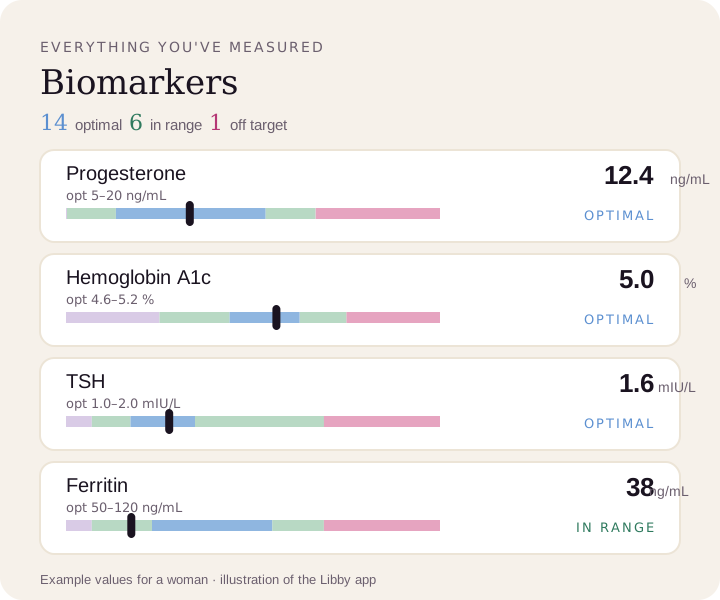
Compare your results to optimal ranges.
Upload a lab PDF or a photo of your report. Libby puts every marker on your lab's range and, where one exists, the optimal range, and tracks your trends over time.
View your progesterone ›