Red blood cell count: normal range, low and high causes
Your RBC count is how many red cells are in your blood. Here is what is normal, what low or high usually means, and how to read it with MCV.
Your red blood cell (RBC) count is how many red blood cells are packed into a set amount of your blood. Red cells carry oxygen. A low count usually travels with anemia, and the most common reason is low iron.12 A high count most often means your blood has less fluid in it, or that your body is making extra red cells because of smoking, altitude, a lung or sleep problem, or testosterone.31
The short version
- Normal: check the range on your report. A common adult range is 4.2–5.7 million cells/µL for men and 3.8–5.1 for women.1 The optimal range shown in the Libby app is 4.5–5.5 for men and 4.0–4.9 for women.4
- Low usually goes with anemia. The usual causes are iron deficiency (about half of all anemia), inflammation or kidney disease, B12 or folate deficiency, blood loss and pregnancy.251
- High most often means less plasma (dehydration, or even standing before the draw) or extra red-cell production from smoking, altitude, lung disease, sleep apnea or testosterone. A rare bone-marrow disorder, polycythemia vera, is the one to rule out.63
- Read it with MCV (average red-cell size). A high count of small cells often points to thalassemia trait, an inherited trait that usually causes only mild anemia. A low count of small cells points to iron deficiency.78
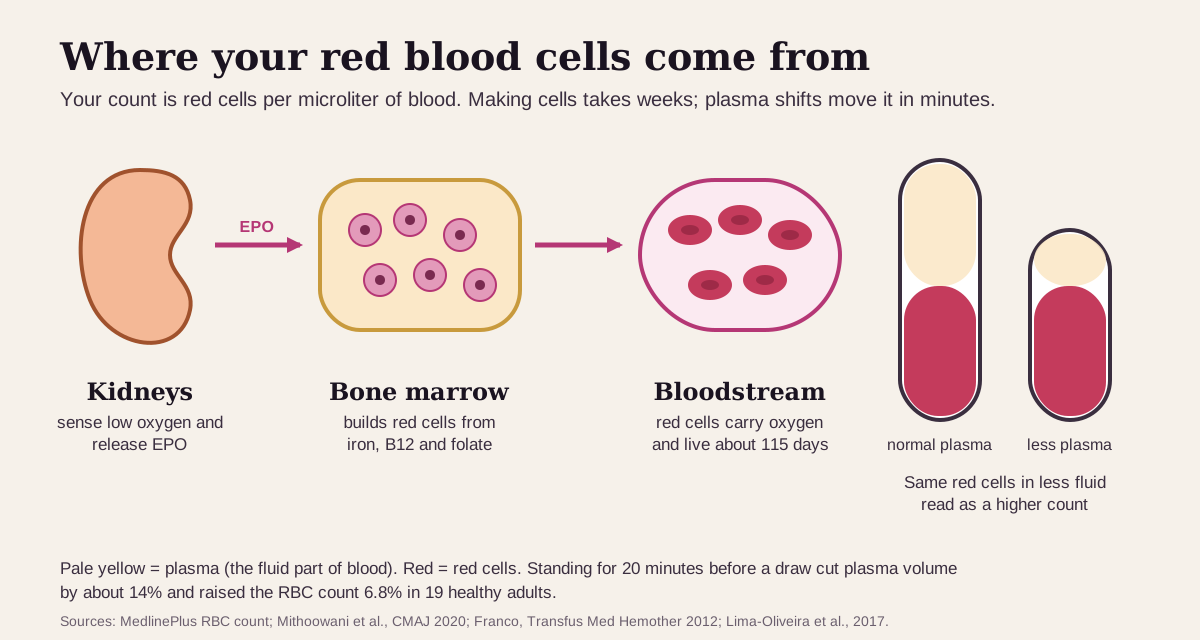
What your red blood cell count is
Red blood cells are made in your bone marrow. When your kidneys sense that your tissues are short of oxygen, they release a hormone called erythropoietin (EPO), and the marrow speeds up production. That's why kidney disease, which cuts EPO, can lower the count, and why smoking, lung disease and altitude, which lower oxygen, can raise it.13 The marrow needs iron, vitamin B12 and folate to build the cells.1
Each red cell circulates for about 115 days before it's cleared, so your body replaces a little under 1% of them every day.9
The count is a concentration: cells per microliter of blood. So it moves when the fluid part of your blood (plasma) changes, even if you haven't made a single new cell. Hematologists call a high count from lost plasma "relative" erythrocytosis, and a high count from extra red cells "absolute" erythrocytosis.3
The RBC count is part of every complete blood count (CBC), next to hemoglobin, hematocrit and the red-cell indices (MCV, MCH, MCHC and RDW). In people with normal-size cells, hemoglobin in g/dL runs close to three times the RBC count: a count of 4.7 goes with a hemoglobin of about 14.10
What's a normal RBC count?
Start with the range printed on your report. Labs use different measurements, so their ranges vary a little.1
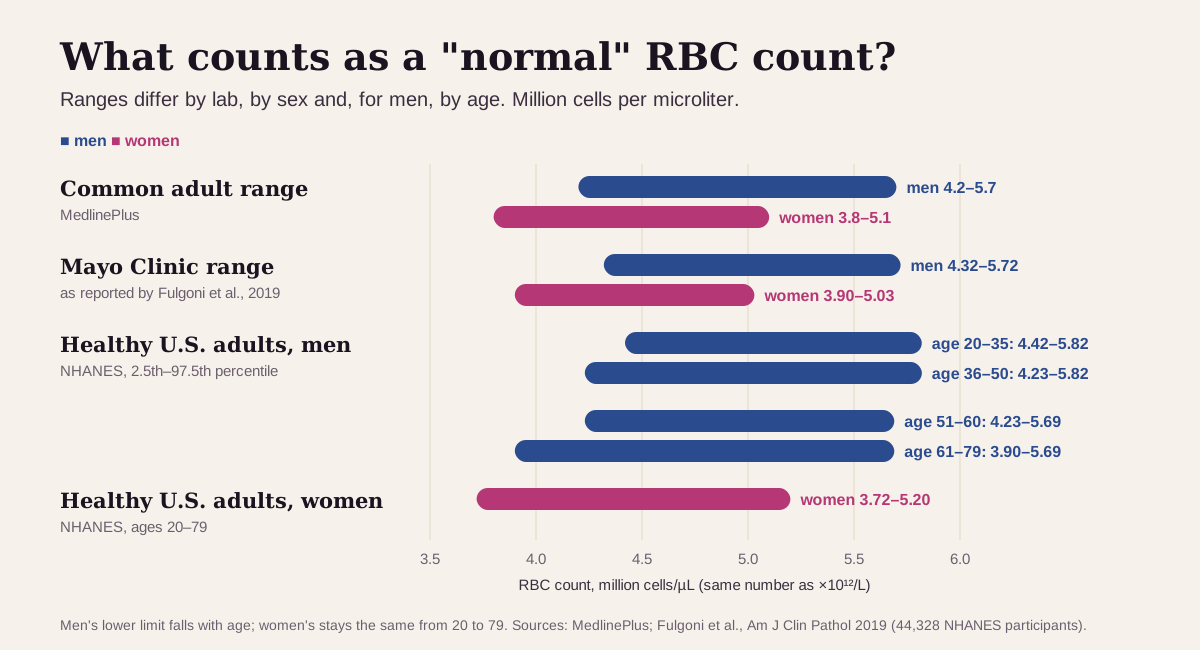
- MedlinePlus, the National Library of Medicine's health site, gives a common range of 4.2–5.7 million/µL for men and 3.8–5.1 for women.1
- Mayo Clinic's range, as reported in a 2019 study, was 4.32–5.72 for men and 3.90–5.03 for women.11
- The same study worked out ranges from 44,328 people in the U.S. national health survey (NHANES), using their medical data to keep only healthy people. For men, the range was 4.42–5.82 at ages 20–35 and 3.90–5.69 at ages 61–79. For women it held steady at 3.72–5.20 from 20 to 79.11
Men run higher than women, and a man's count drifts down with age. A count of 4.1 means something different for a 30-year-old man than for a 70-year-old man.11
"Optimal" RBC count: what health optimizers aim for
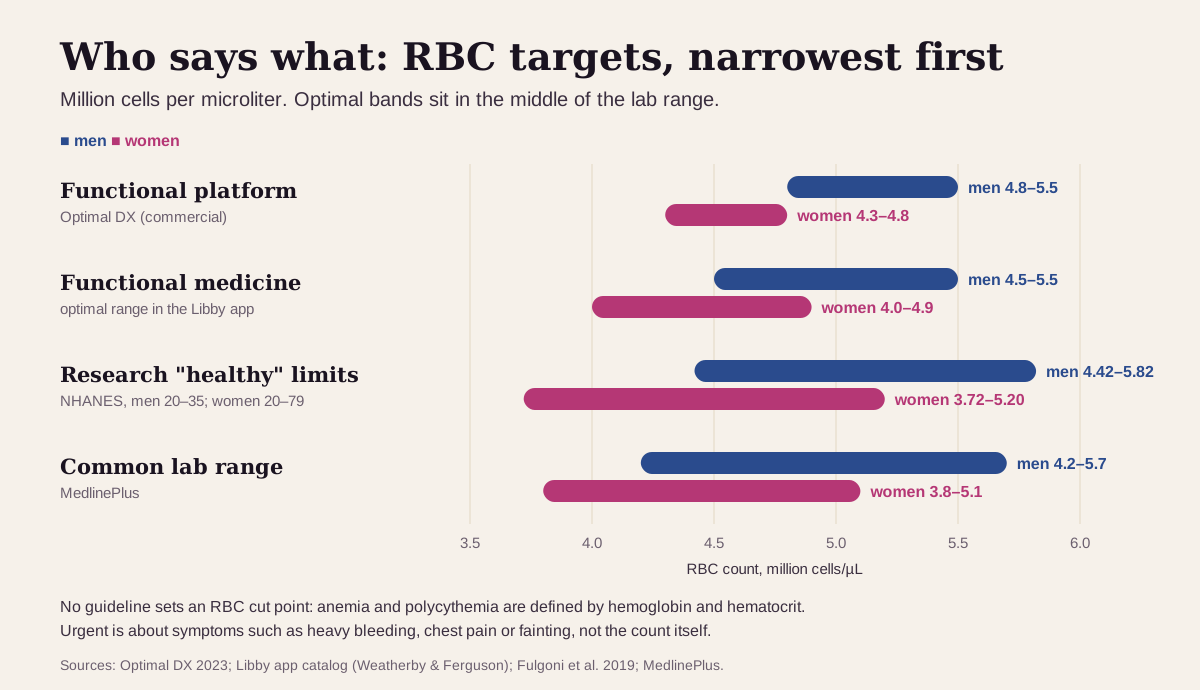
Functional-medicine practitioners aim for the middle of the lab range, away from both ends. Here's the ladder, from narrowest to widest:
| Target | Men | Women | Who uses it |
|---|---|---|---|
| Narrowest (functional-medicine platform) | 4.8–5.5 | 4.3–4.8 | Optimal DX's published optimal range12 |
| Functional medicine | 4.5–5.5 | 4.0–4.9 | The optimal range in the Libby app, from the Weatherby & Ferguson textbook4 |
| Research "healthy" limits | 4.42–5.82 (ages 20–35) | 3.72–5.20 | NHANES healthy adults11 |
| Common lab range | 4.2–5.7 | 3.8–5.1 | MedlinePlus1 |
| Guidelines (use hemoglobin, not RBC) | anemia under 13 g/dL; polycythemia vera considered over 16.5 | anemia under 12 g/dL; over 16.0 | WHO anemia line;5 WHO polycythemia vera criteria3 |
| Urgent | symptoms, not a number | symptoms, not a number | Heavy bleeding needs emergency care.13 Transfusion is considered under a hemoglobin of 7–8 g/dL.5 |
RBC values are in million cells/µL.
Why the middle, and why the floor matters:
- In 114,496 Korean adults tested at routine checkups and followed for an average of 3.3 years, men in the lowest quarter of RBC counts (average 4.49) had a death rate of 1.22%, versus 0.29–0.42% in the other three quarters. After adjusting for other risk factors, men in the higher quarters had 42–56% lower risk of death.14
- Among those low-count men, the death rate was highest in the ones whose hemoglobin was also under 14 g/dL: 2.3%, versus 0.8% at 14.0–14.9 and 1.1% at 15 or more.14
- Women showed a weaker, inconsistent pattern that faded once age was factored in.14
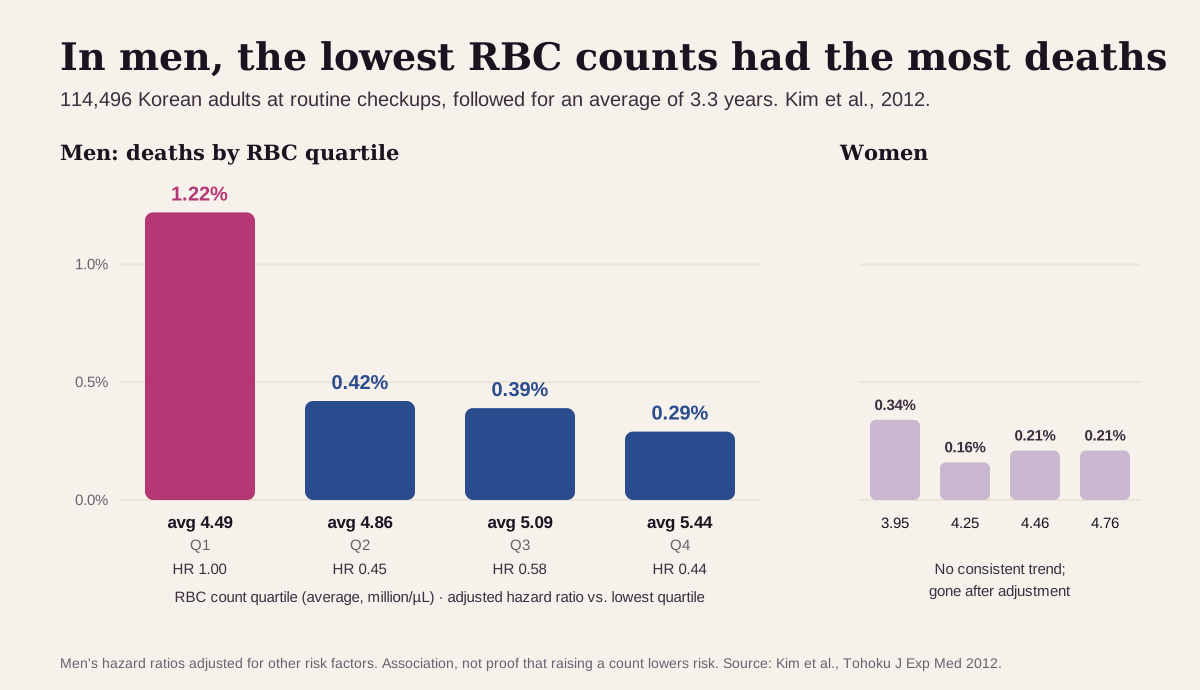
Keep "optimal" in perspective: these are targets, not diagnoses. The men with the lowest counts in that study were older on average (54 vs 45 years), so a low count is often a sign of something else going on.14 Higher isn't always better either. In the same cohort, counts rose with each added feature of metabolic syndrome, such as a large waist, high blood sugar, high blood pressure and high triglycerides.14 And in polycythemia vera, keeping hematocrit under 45% is the treatment goal, to lower the risk of blood clots.3
What a low or high RBC count usually means
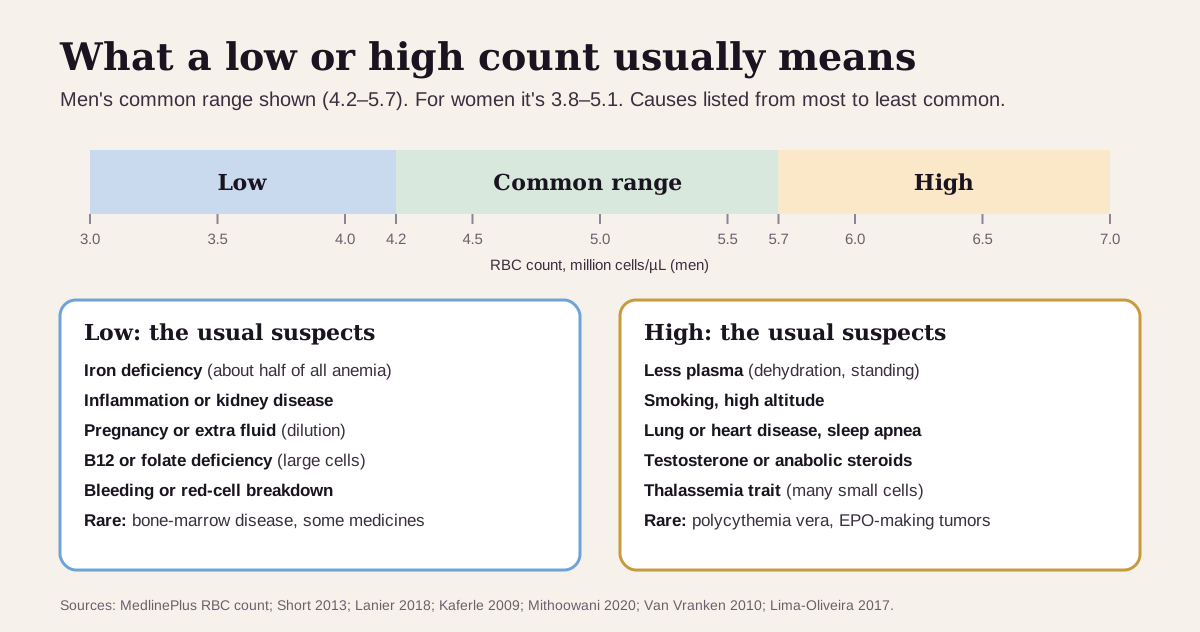
Direction first, then cell size. A count outside your lab's range sorts into a short list of common causes. MCV, the average size of your red cells, narrows it down.715
Low: the usual suspects
- Iron deficiency. It accounts for about half of all anemia, and a ferritin test is the most accurate way to confirm it.2 It's the most common cause of small red cells in the U.S. Heavy periods are the usual source in women who menstruate. In men and in women past menopause, doctors look for slow bleeding in the gut.7
- Chronic inflammation or kidney disease. In older adults, about a third of anemia comes from one of these, a third from a nutritional shortfall and a third has no clear cause.5 Kidney disease lowers the count by cutting EPO.1
- Pregnancy or extra fluid. More plasma dilutes the red cells.1
- Vitamin B12 or folate deficiency. The marrow makes fewer, larger cells (MCV over 100).15 Long-term metformin or acid-reducing medicines can cause low B12.5
- Blood loss or red-cell breakdown (hemolysis). The marrow answers with a burst of young red cells, which shows up as a high reticulocyte count.515
- Less common causes: bone-marrow problems such as leukemia, multiple myeloma or marrow failure, and some medicines, including chemotherapy.1
High: the usual suspects
- Less plasma. Dehydration, for example from severe diarrhea, and diuretics concentrate the blood.13 Even posture counts: in 19 healthy adults, 20 minutes of standing before the draw raised the RBC count 6.8% compared with lying down.6
- Smoking and high altitude. Both lower the oxygen your tissues get, and your body makes more red cells in response.31
- Lung disease, heart disease and sleep apnea. Extra red-cell production shows up in 6–8% of people with COPD and 2–8% of people with sleep apnea.3
- Testosterone and anabolic steroids.31
- Thalassemia trait. This inherited trait makes many small red cells, so the count runs high-normal or high while hemoglobin is normal or mildly low.7 In one study of children with small-cell anemia, 95% of those with thalassemia trait had a count over 5.0, versus 29% of those with iron deficiency.8
- Rare but important: polycythemia vera, a bone-marrow disorder that makes too many red cells, often with high white cells and platelets. It affects about 22 in 100,000 people, and a JAK2 gene mutation underlies 98% of cases. It raises the risk of blood clots.3 Kidney and liver tumors that make EPO are another rare cause.3
Get care now if a low count comes with black or tarry stools, a lot of blood in your stool, vomiting blood or material that looks like coffee grounds, dizziness from bleeding, or chest pain or trouble breathing.13
RBC count reads best next to its neighbors
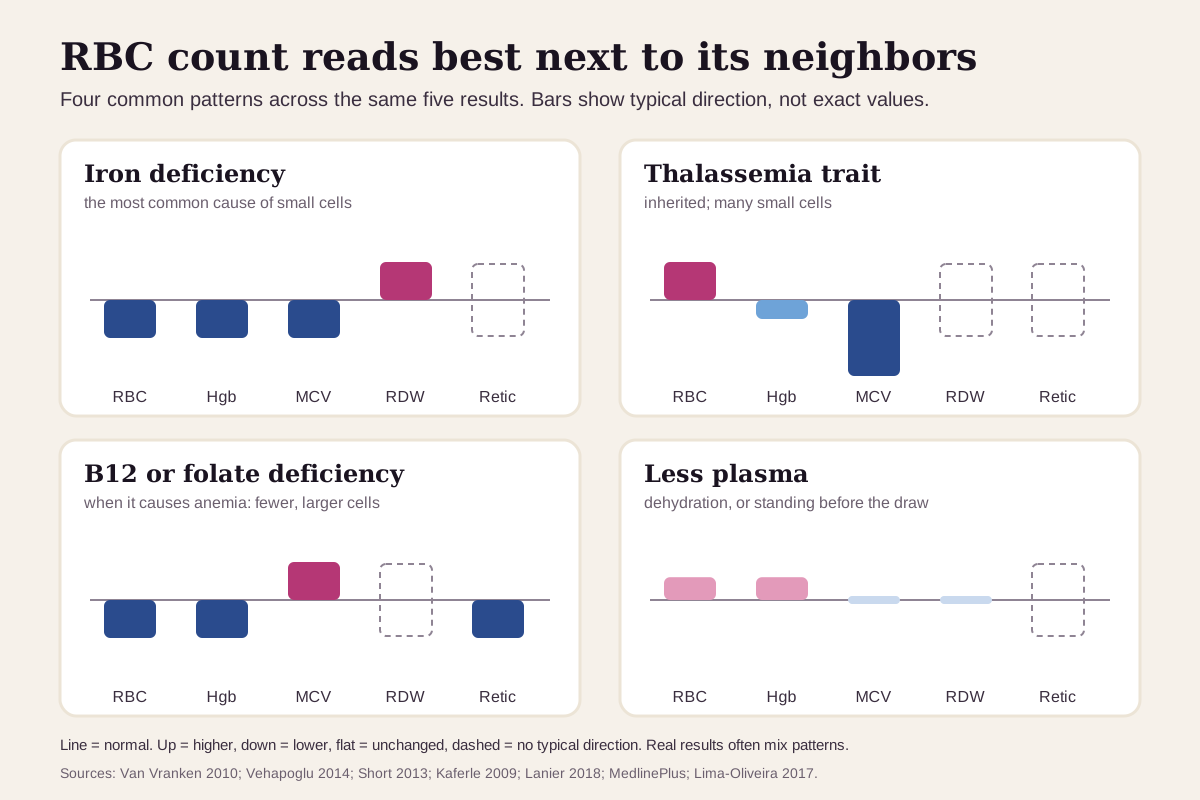
The RBC count tells you how many red cells you have. The rest of the blood count tells you what kind, and that usually points to the cause:7155
| If you see… | It often points to… |
|---|---|
| Low RBC count, low hemoglobin, small cells (MCV under 80), high RDW | iron deficiency, the most common cause of small cells721 |
| High or high-normal RBC count, very small cells, hemoglobin normal or mildly low | thalassemia trait, especially with a Mentzer index under 13 (see below)78 |
| Low RBC count, large cells (MCV over 100), low reticulocytes | B12 or folate deficiency. Alcohol and some medicines also enlarge red cells.155 |
| Low RBC count, high reticulocytes | recent bleeding or hemolysis, or recovery from anemia515 |
| RBC count and hemoglobin both a little higher, MCV and RDW unchanged | less plasma: dehydration, or a long stand before the draw63 |
| High RBC count and hemoglobin, plus high white cells and platelets | worth ruling out polycythemia vera3 |
The next tests follow from the pattern: ferritin when cells are small or close to normal size (MCV under 95),2 a hemoglobin electrophoresis when thalassemia trait is likely,7 and a B12 level, reticulocyte count and blood smear when cells are large.15
How fast your RBC count changes
Two clocks set the count. Plasma shifts move it in minutes. Making or replacing red cells takes weeks to months.
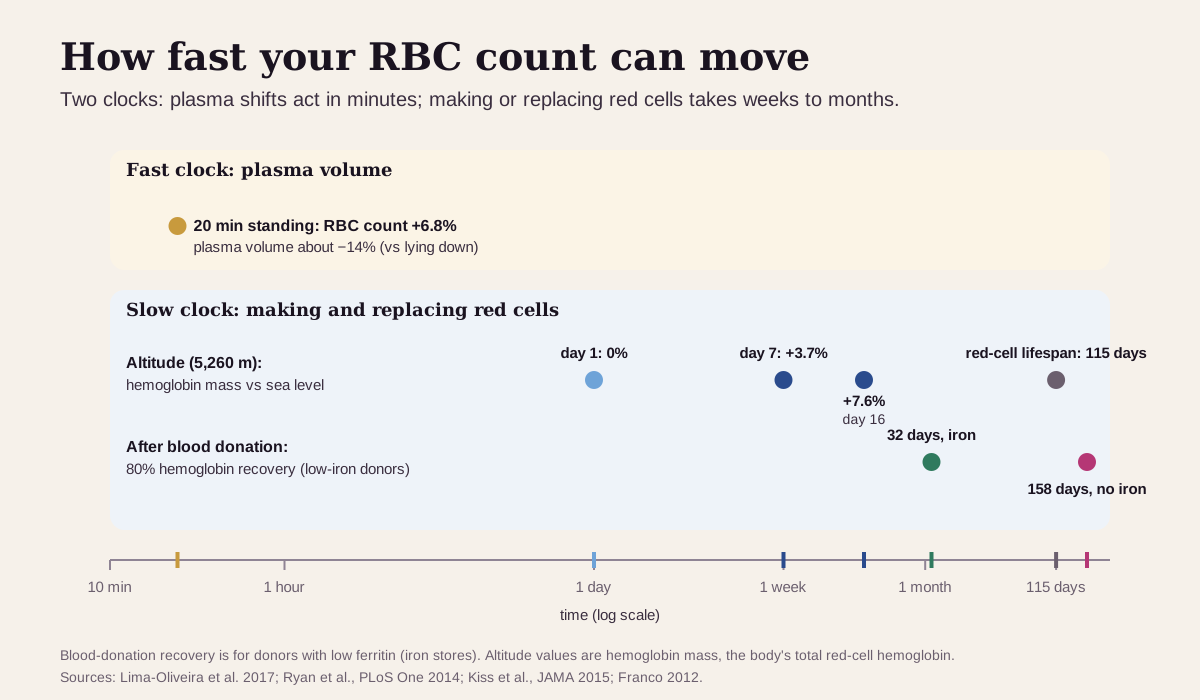
- Minutes: posture and fluid. Standing for 20 minutes shrank plasma volume by about 14% and raised the RBC count 6.8% in healthy adults. Cell size (MCV) and RDW stayed the same.6
- Days to weeks: altitude. At 5,260 meters, the body's total red-cell hemoglobin was unchanged on day 1, up 3.7% by day 7 and 7.6% by day 16.16 MedlinePlus notes the count rises for several weeks at altitude.1
- Weeks to months: after blood loss. In a trial of blood donors with low iron stores, getting back 80% of the hemoglobin drop took 32 days with iron supplements and 158 days without.17
- About four months: full turnover. Red cells live about 115 days on average, with a normal spread of 70 to 140 days.9
What that means in practice: have blood drawn in the same position each time (lab standards call for seated or lying down), and mention recent illness, a blood donation, travel to altitude or a new medicine.6 Trends beat snapshots, and comparing results works best from the same lab, because ranges and methods vary.1
Going deeper: the Mentzer index
When red cells are small, the RBC count helps tell the two most common causes apart. Thalassemia trait makes many small cells; iron deficiency makes fewer small cells. The Mentzer index puts that into one number:8
Mentzer index = MCV ÷ RBC count
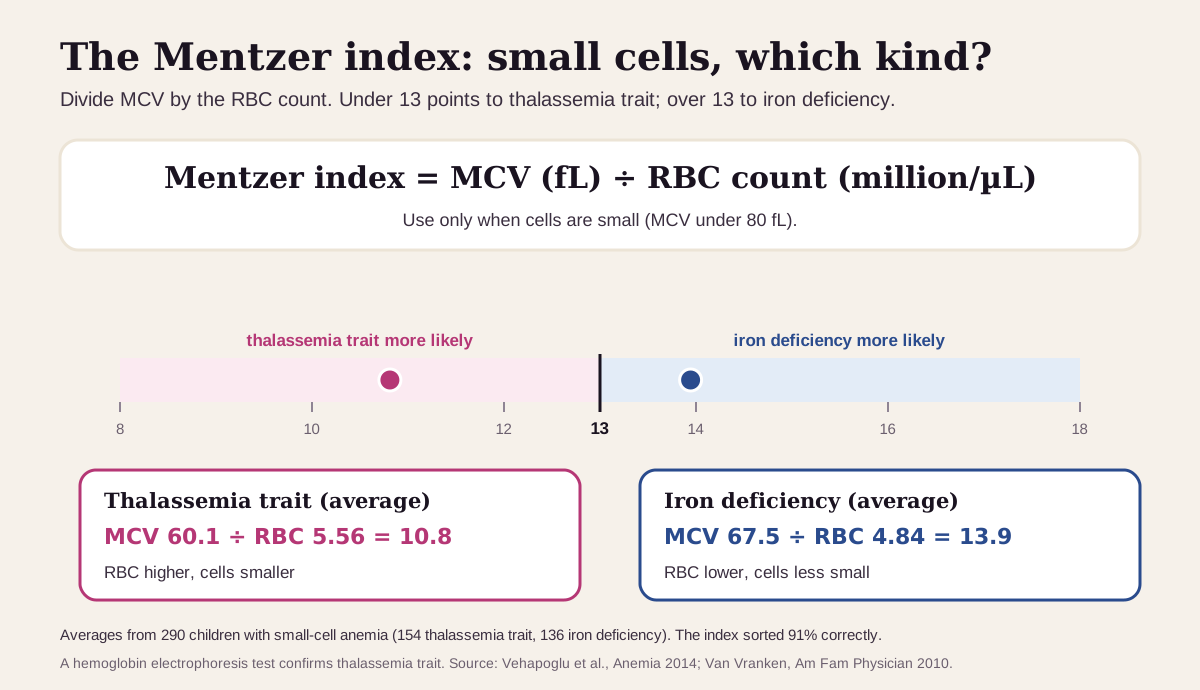
In 290 children with small-cell anemia, the Mentzer index sorted 91% correctly, the best of the 12 formulas tested. The RBC count alone came third, with a cutoff of 5.0.8 The index is a screening shortcut: a hemoglobin electrophoresis test confirms thalassemia trait, and iron deficiency has to be corrected first because it can mask the result.7
The rule of three is a built-in check. With normal-size cells, hemoglobin is about 3 × the RBC count (within 0.3). When the numbers break that rule, the cells are usually small or large, or the sample has a problem. One known problem: cold-reacting antibodies make red cells clump, so the analyzer reads a falsely low RBC count and a falsely high MCV. Labs fix it by warming the tube to body temperature and running it again.10
Questions worth asking
- Is my RBC count outside my lab's range, or only outside the optimal band?
- What do my hemoglobin, MCV and RDW show next to it?
- Should I have a ferritin test, and if my cells are small, a Mentzer index or hemoglobin electrophoresis?
- If my count is high, could dehydration, smoking, sleep apnea or a medicine like testosterone explain it?
- Do my white cells and platelets look normal?
- When should we repeat it, and should I be seated and well hydrated for the draw?
FAQ
What is a normal red blood cell count? It depends on your lab's range. A common adult range is 4.2–5.7 million/µL for men and 3.8–5.1 for women.1
What is the most common cause of a low RBC count? Iron deficiency, which causes about half of all anemia. Inflammation, kidney disease, B12 or folate deficiency, blood loss and pregnancy are the other common causes.251
Can dehydration raise your RBC count? Yes. Less plasma concentrates the red cells. Even standing for 20 minutes before a blood draw raised the count 6.8% in one study.63
Why is my RBC count high but my hemoglobin low? That combination, with small red cells, is typical of thalassemia trait. A Mentzer index under 13 points that way, and a hemoglobin electrophoresis confirms it.78
This guide is for education. It can't diagnose you or replace care from a clinician who knows your history.
Footnotes
-
National Library of Medicine. RBC count. MedlinePlus Medical Encyclopedia. Reviewed February 27, 2026. Common adult ranges (men 4.2–5.7, women 3.8–5.1 million cells/µL) and the causes of a high and a low count. MedlinePlus ↩ ↩2 ↩3 ↩4 ↩5 ↩6 ↩7 ↩8 ↩9 ↩10 ↩11 ↩12 ↩13 ↩14 ↩15 ↩16 ↩17 ↩18 ↩19 ↩20 ↩21 ↩22 ↩23 ↩24 ↩25
-
Short MW, Domagalski JE. Iron deficiency anemia: evaluation and management. Am Fam Physician. 2013;87(2):98–104. Iron deficiency accounts for about half of anemia cases; ferritin is the most accurate test. PubMed ↩ ↩2 ↩3 ↩4 ↩5 ↩6 ↩7 ↩8
-
Mithoowani S, Laureano M, Crowther MA, Hillis CM. Investigation and management of erythrocytosis. CMAJ. 2020;192(32):E913–E918. Relative vs absolute erythrocytosis, the causes of secondary erythrocytosis, the WHO 2016 polycythemia vera criteria and the hematocrit target under 45%. PMC ↩ ↩2 ↩3 ↩4 ↩5 ↩6 ↩7 ↩8 ↩9 ↩10 ↩11 ↩12 ↩13 ↩14 ↩15 ↩16 ↩17
-
Weatherby D, Ferguson S. Blood Chemistry and CBC Analysis: Clinical Laboratory Testing from a Functional Perspective. 2nd ed. Bear Mountain Publishing; 2004. ISBN 978-0976136712. Widely used functional-medicine reference and the source of the optimal RBC range in the Libby app (men 4.5–5.5, women 4.0–4.9 million/µL, as recorded in the app's marker catalog). ↩ ↩2 ↩3
-
Lanier JB, Park JJ, Callahan RC. Anemia in Older Adults. Am Fam Physician. 2018;98(7):437–442. The WHO anemia definition, the thirds breakdown of causes in older adults, reticulocyte patterns and the transfusion threshold. PubMed ↩ ↩2 ↩3 ↩4 ↩5 ↩6 ↩7 ↩8 ↩9 ↩10 ↩11 ↩12
-
Lima-Oliveira G, Guidi GC, Salvagno GL, et al. Patient posture for blood collection by venipuncture: recall for standardization after 28 years. Rev Bras Hematol Hemoter. 2017;39(2):127–132. 19 healthy adults; RBC count 4.7 lying down, 5.0 after 20 minutes standing. PMC ↩ ↩2 ↩3 ↩4 ↩5 ↩6 ↩7 ↩8 ↩9
-
Van Vranken M. Evaluation of microcytosis. Am Fam Physician. 2010;82(9):1117–1122. Iron deficiency is the most common cause of small red cells in the U.S.; the RBC count is often high-normal to high in beta-thalassemia trait. PubMed ↩ ↩2 ↩3 ↩4 ↩5 ↩6 ↩7 ↩8 ↩9 ↩10 ↩11 ↩12
-
Vehapoglu A, Ozgurhan G, Demir AD, et al. Hematological indices for differential diagnosis of Beta thalassemia trait and iron deficiency anemia. Anemia. 2014;2014:576738. 290 children (154 thalassemia trait, 136 iron deficiency); Mentzer index cutoff 13, correct in 91%. PMC ↩ ↩2 ↩3 ↩4 ↩5 ↩6 ↩7 ↩8
-
Franco RS. Measurement of red cell lifespan and aging. Transfus Med Hemother. 2012;39(5):302–307. Average red-cell lifespan of about 115 days, ranging from 70 to 140. PMC ↩ ↩2 ↩3 ↩4
-
Gulati G, Uppal G, Gong J. Unreliable Automated Complete Blood Count Results: Causes, Recognition, and Resolution. Ann Lab Med. 2022;42(5):515–530. The "rules of three" and cold-agglutinin interference. PMC ↩ ↩2
-
Fulgoni VL 3rd, Agarwal S, Kellogg MD, Lieberman HR. Establishing Pediatric and Adult RBC Reference Intervals With NHANES Data Using Piecewise Regression. Am J Clin Pathol. 2019;151(2):128–142. 44,328 NHANES participants; age- and sex-specific RBC ranges, with Mayo Clinic's range for comparison. PMC ↩ ↩2 ↩3 ↩4 ↩5 ↩6
-
Optimal DX. CBC Biomarkers: Red Blood Cell (RBC) Count. Published August 25, 2023; updated November 1, 2023. States an optimal range of 4.8–5.5 m/cumm for men and 4.3–4.8 for women. A commercial source, listed as what the optimizer community uses. optimaldx.com ↩ ↩2
-
National Library of Medicine. Gastrointestinal bleeding. MedlinePlus Medical Encyclopedia. When to call 911 for bleeding. MedlinePlus ↩ ↩2
-
Kim YC, Koo HS, Ahn SY, et al. The low number of red blood cells is an important risk factor for all-cause mortality in the general population. Tohoku J Exp Med. 2012;227(2):149–159. 114,496 adults at routine health checkups, followed for an average of 39.8 months. DOI ↩ ↩2 ↩3 ↩4 ↩5 ↩6
-
Kaferle J, Strzoda CE. Evaluation of macrocytosis. Am Fam Physician. 2009;79(3):203–208. Causes of large red cells (MCV over 100) and the role of the reticulocyte count. PubMed ↩ ↩2 ↩3 ↩4 ↩5 ↩6 ↩7 ↩8 ↩9
-
Ryan BJ, Wachsmuth NB, Schmidt WF, et al. AltitudeOmics: rapid hemoglobin mass alterations with early acclimatization to and de-acclimatization from 5260 m in healthy humans. PLoS One. 2014;9(10):e108788. PMC ↩ ↩2
-
Kiss JE, Brambilla D, Glynn SA, et al. Oral iron supplementation after blood donation: a randomized clinical trial. JAMA. 2015;313(6):575–583. PMC ↩ ↩2
Educational content, not medical advice. Libby is a personal record tool, not a medical service — it doesn't diagnose, treat, or prescribe. Reference ranges vary by lab and by person. Talk to a qualified healthcare professional about your results.
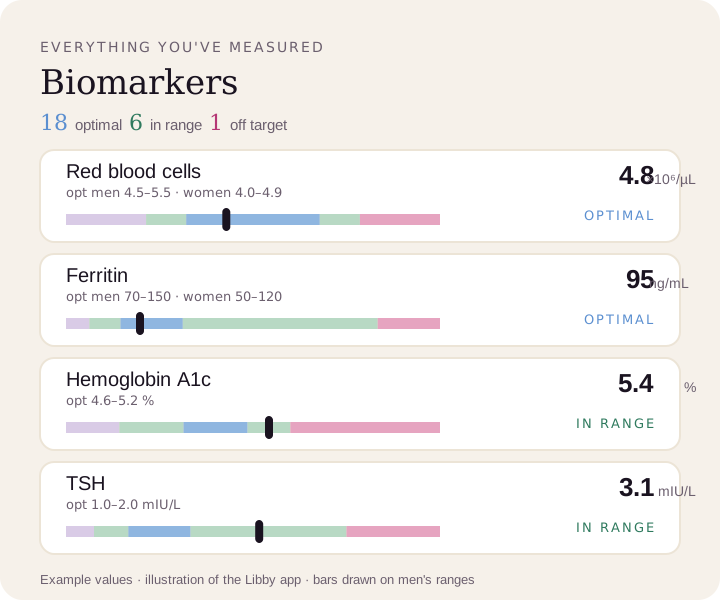
Compare your results to optimal ranges.
Upload a lab PDF or a photo of your report. Libby puts every marker on your lab's range and the optimal range, and tracks your trends over time.
View your RBC count ›