Haptoglobin blood test: low and high levels explained
Haptoglobin mops up hemoglobin from broken red cells. What's normal, why it runs low or high, how to read it with LDH and bilirubin, and when to worry.
Haptoglobin is a protein your liver makes to mop up hemoglobin that spills out of broken red blood cells. Each time it grabs some hemoglobin, the pair is cleared from your blood and the haptoglobin is used up. That makes a low haptoglobin one of the main blood signs that red cells are breaking down faster than normal, which doctors call hemolysis.12
The short version
- Normal: use the range on your own report, because labs differ a lot. Labcorp's adult ranges start between 17 and 42 mg/dL and top out between 278 and 370 mg/dL, depending on age and sex.3
- Low, especially 25 mg/dL or less, most often means hemolysis. In a classic study of 100 hospital patients, that cutoff picked out hemolysis 87% of the time.4 Liver disease, severe B12 or folate deficiency and an inherited low-haptoglobin gene are the other usual reasons.32
- High usually means inflammation. Haptoglobin is an acute-phase protein: your liver makes more of it during infection, injury and inflammatory disease.35
- The twist: inflammation can hold haptoglobin in the normal range even while red cells are being destroyed. That's why it's read with LDH, bilirubin and a reticulocyte count.23
What haptoglobin is
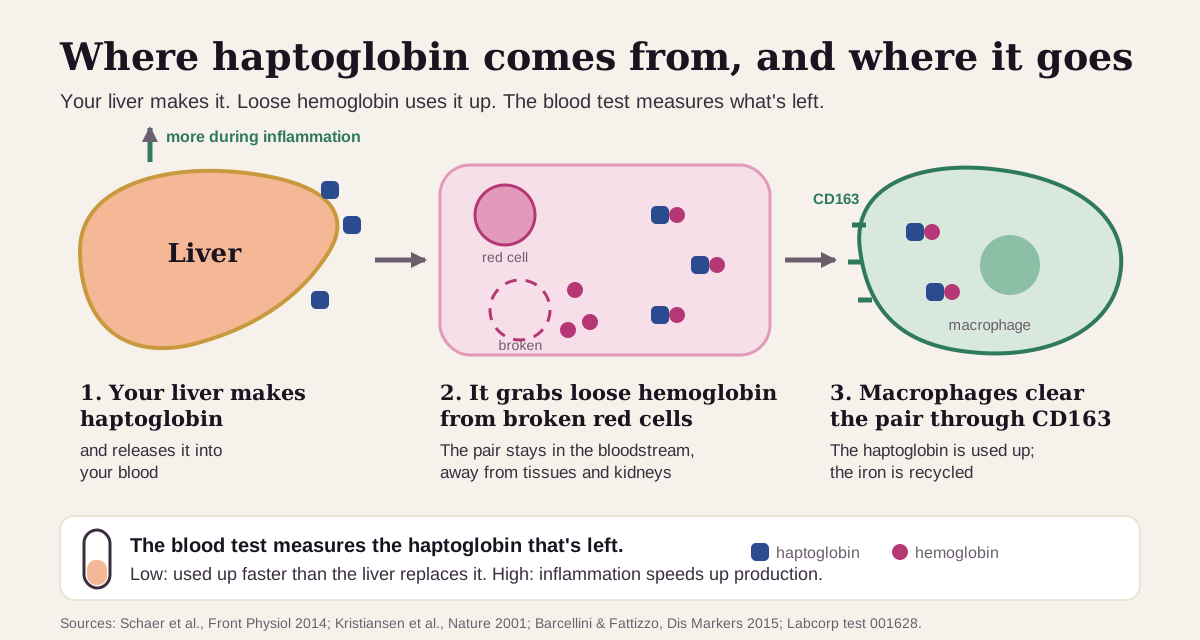
Your body retires about 2 million red blood cells every second, and a little of their hemoglobin leaks into the blood as it does.5 Loose hemoglobin is harmful: it drives oxidative damage, and its smaller pieces slip through the kidney's filters.5
Haptoglobin is the cleanup crew. Your liver makes it and releases it into the blood.1 It clamps onto loose hemoglobin and forms a large pair that stays in the bloodstream, away from your tissues and kidneys.5 Immune cells called macrophages then catch the pair with a receptor named CD163, break it down and recycle the iron.63 The haptoglobin is used up in the process.2
So the blood test measures the haptoglobin that's left. Two forces set that number: how fast it's being used up by red-cell breakdown, and how fast your liver makes it, which speeds up during inflammation.53
Doctors order haptoglobin mostly when they suspect hemolytic anemia, and sometimes after a blood transfusion to check for a reaction.7
What's a normal haptoglobin?
Start with the range on your own report. Labs use different methods and reference groups, and your genes shift your baseline too, so printed ranges vary widely.83
- Labcorp, a large commercial U.S. lab, prints ranges by age and sex. For adults 18 to 40 it's 17–317 mg/dL for men and 33–278 mg/dL for women, and the lower limit rises with age.3
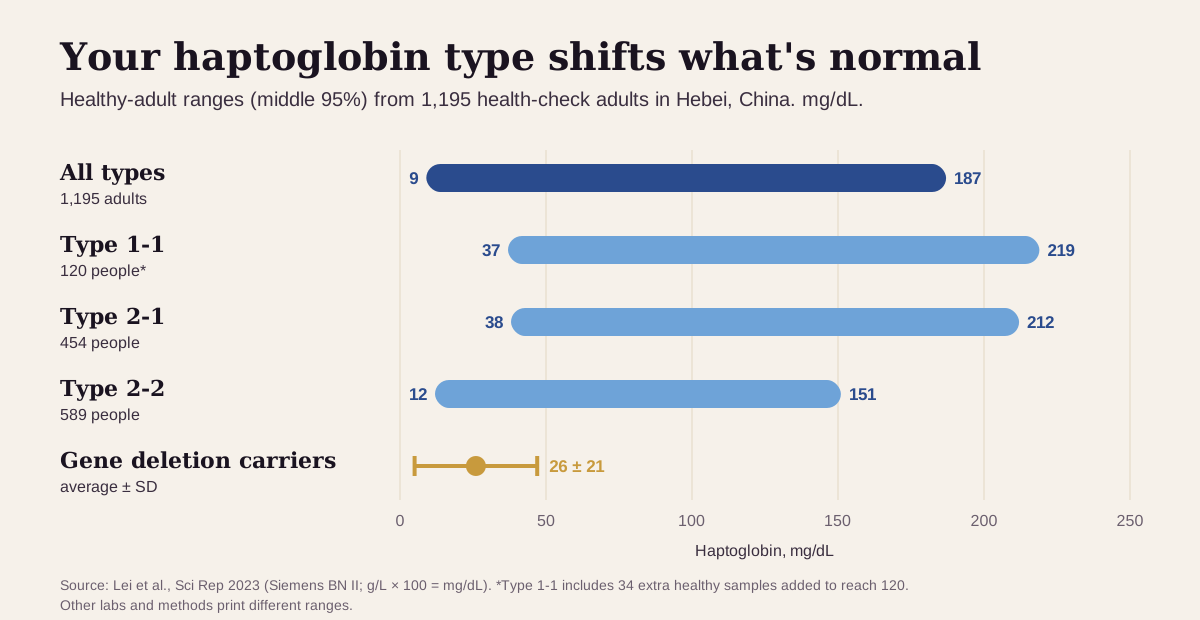
- A 2023 study of 1,195 healthy adults in Hebei, China, found a range of 9–187 mg/dL. Women averaged a little higher than men (92 vs 83 mg/dL), but the gap was too small to need separate ranges by sex or age.8
- Babies under 6 months normally have low haptoglobin.7
Your genes matter. Two common versions of the haptoglobin gene give three types: 1-1, 2-1 and 2-2.2 In the same study, healthy people with type 2-2 ran lower (12–151 mg/dL) than types 1-1 (37–219) and 2-1 (38–212). Healthy people carrying a rarer deletion of the gene averaged only about 26 mg/dL.8
"Optimal" haptoglobin: what health optimizers aim for
For most markers, optimizers aim lower than the lab. Haptoglobin works differently: the goal is a middle band. High enough shows your red cells aren't being consumed; low enough shows no smoldering inflammation. We found no longevity clinic or at-home testing company that publishes a haptoglobin target, so the ladder starts with the app's band.
| Target | Men | Women | Who uses it |
|---|---|---|---|
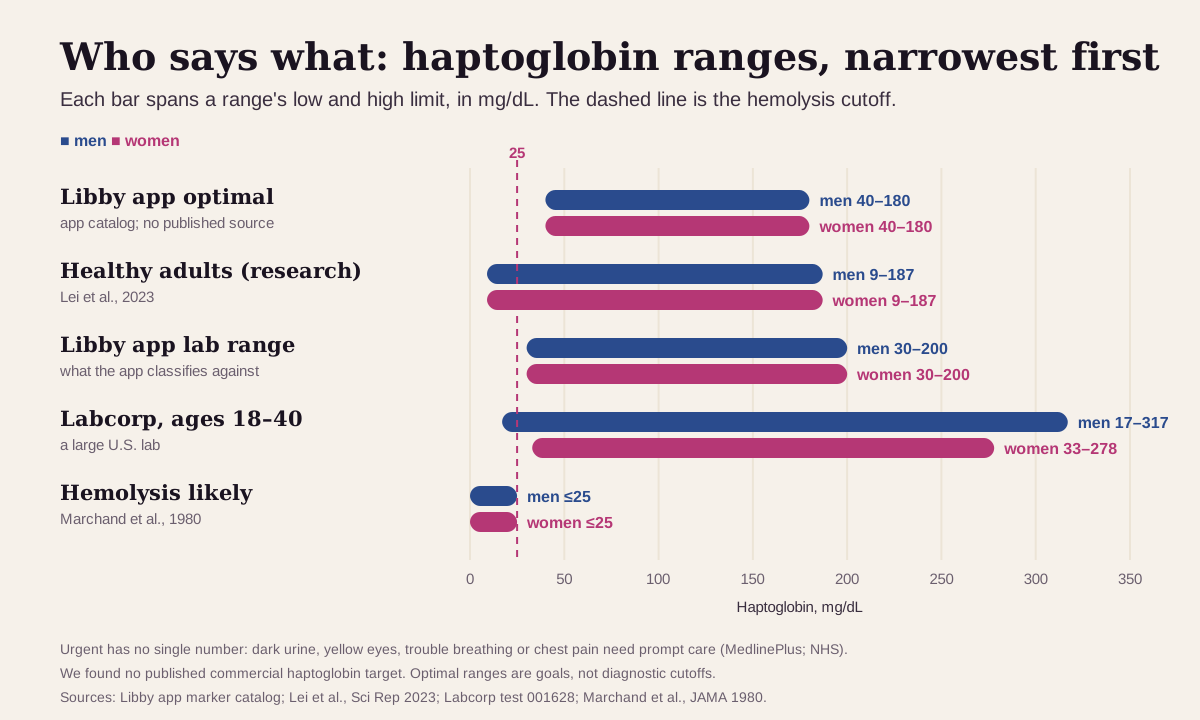
| Libby app optimal | 40–180 mg/dL | 40–180 mg/dL | The optimal range shown in the Libby app. The app's catalog records no published source for this band |
| Healthy adults (research) | 9–187 mg/dL | 9–187 mg/dL | Lei et al., 1,195 health-check adults; by type 37–219 (1-1), 38–212 (2-1), 12–151 (2-2)8 |
| Libby app lab range | 30–200 mg/dL | 30–200 mg/dL | The reference range the Libby app classifies results against |
| Labcorp, ages 18–40 | 17–317 mg/dL | 33–278 mg/dL | A large commercial lab's printed range; the limits shift with age3 |
| Hemolysis likely | 25 mg/dL or less | 25 mg/dL or less | Marchand et al.: a result at or below 25 predicted hemolysis 87% of the time4 |
| Urgent | no single number | no single number | Symptoms decide: dark urine, yellow eyes, trouble breathing or chest pain, especially after a transfusion79 |
Why both ends of the band matter:
- The low end. In Marchand's study of 100 hospital patients, a haptoglobin of 25 mg/dL or less separated hemolysis from other illnesses with 83% sensitivity and 96% specificity.4
- The high end. In the Swedish AMORIS study of 342,125 people followed for about 12 years, higher haptoglobin predicted heart attack, stroke and heart failure. People in the top quarter for both haptoglobin and total cholesterol had 4.2 times the heart-attack risk of people in the bottom quarter for both.10
Keep "optimal" in perspective: it's a target, not a diagnosis, and no published source backs the app's exact limits. The direction of travel and the company a result keeps say more. A haptoglobin that falls from 120 to 35 while LDH and bilirubin climb tells a different story than a steady 35 with everything else normal.2 Very low is never the goal, since haptoglobin is your defense against loose hemoglobin. And people with an inherited low level run low all their lives.58
What a low haptoglobin usually means
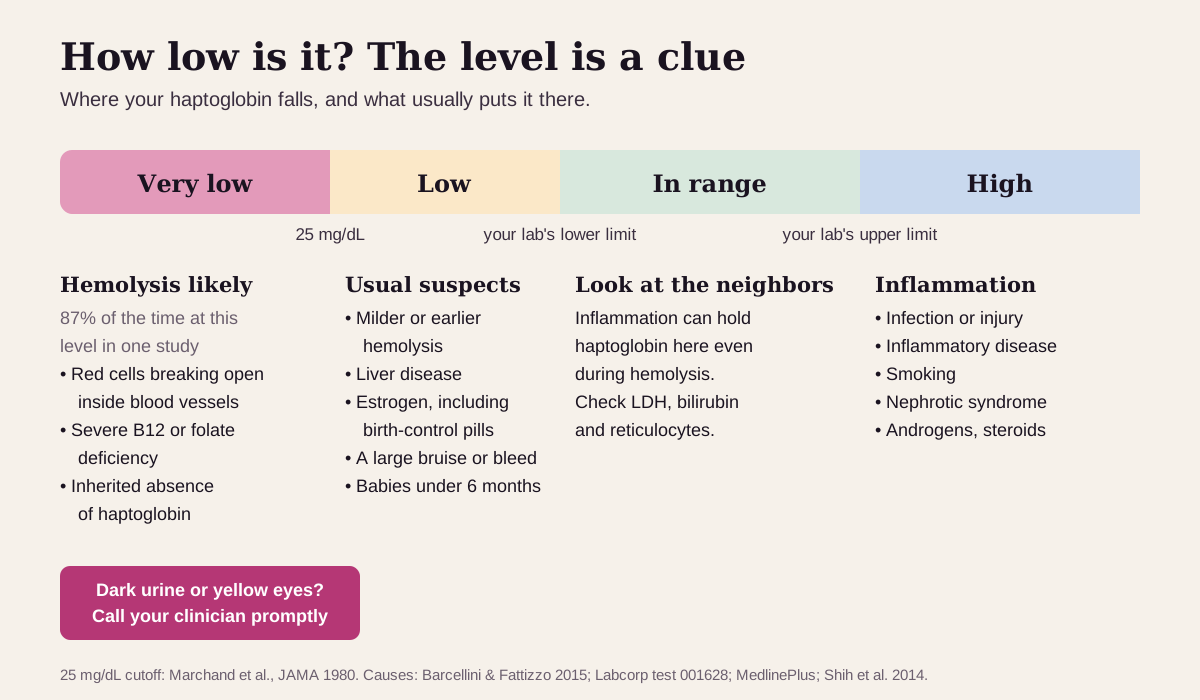
How far it has fallen is the first clue. At 25 mg/dL or less, hemolysis is the likely reason.4 Levels fall furthest, often to undetectable, when red cells break open inside blood vessels.3
The usual suspects
- Hemolysis. This is the reason doctors order the test.7 Red cells can be destroyed early by an immune attack (autoimmune hemolytic anemia), inherited red-cell conditions such as sickle cell disease, thalassemia, hereditary spherocytosis or G6PD deficiency, infections, some medicines and toxins, a mismatched transfusion, or wear from an artificial heart valve.11122
- Liver disease. Your liver makes haptoglobin, so a struggling liver can make less.32
- Severe B12 or folate deficiency. Labcorp lists the megaloblastic anemias as a cause.3 Red cells die in the bone marrow before they're released, so haptoglobin falls and LDH can soar, while the reticulocyte count stays low for the degree of anemia.1314
- An inherited low level. Some people carry a deletion in the haptoglobin gene and run low all their lives.83
- Less common causes: a large bruise or bleed into tissue, infectious mononucleosis, estrogen (including birth-control pills), dilution from IV fluids, and malnutrition.312
- A recent blood transfusion. Some transfused red cells break down. In a small study of 21 transfused patients, mean haptoglobin dipped right after transfusion, from about 130 to 120 mg/dL, and 3 people fell below the normal range.153
Call your clinician promptly if a low haptoglobin comes with dark urine, yellow skin or eyes, shortness of breath, a racing or irregular heartbeat, or dizziness.711 After a recent transfusion, a fever or shivering, very dark or bloody urine, yellow eyes or lower back pain need an urgent call. Severe trouble breathing, a swelling throat or chest pain is an emergency.9
What a high haptoglobin means
A high haptoglobin is usually your liver answering inflammation. Signals such as interleukin-6 switch on haptoglobin production, the same way they raise CRP.58 The common causes:
- Infection, injury and tissue damage, including recent surgery or a burn.38
- Inflammatory diseases such as ulcerative colitis or rheumatic disease, and advanced cancer.73
- Smoking and nephrotic syndrome (a kidney condition that leaks protein).2
- Medicines: androgens and corticosteroids push it up.31
- Diabetes is also on MedlinePlus's list.7
A high haptoglobin marks inflammation without naming its cause. Read it next to CRP and whatever else is going on. The bigger risk is the one it hides: a high baseline can keep a hemolysis-driven drop inside the normal range.23
Haptoglobin reads best next to its neighbors
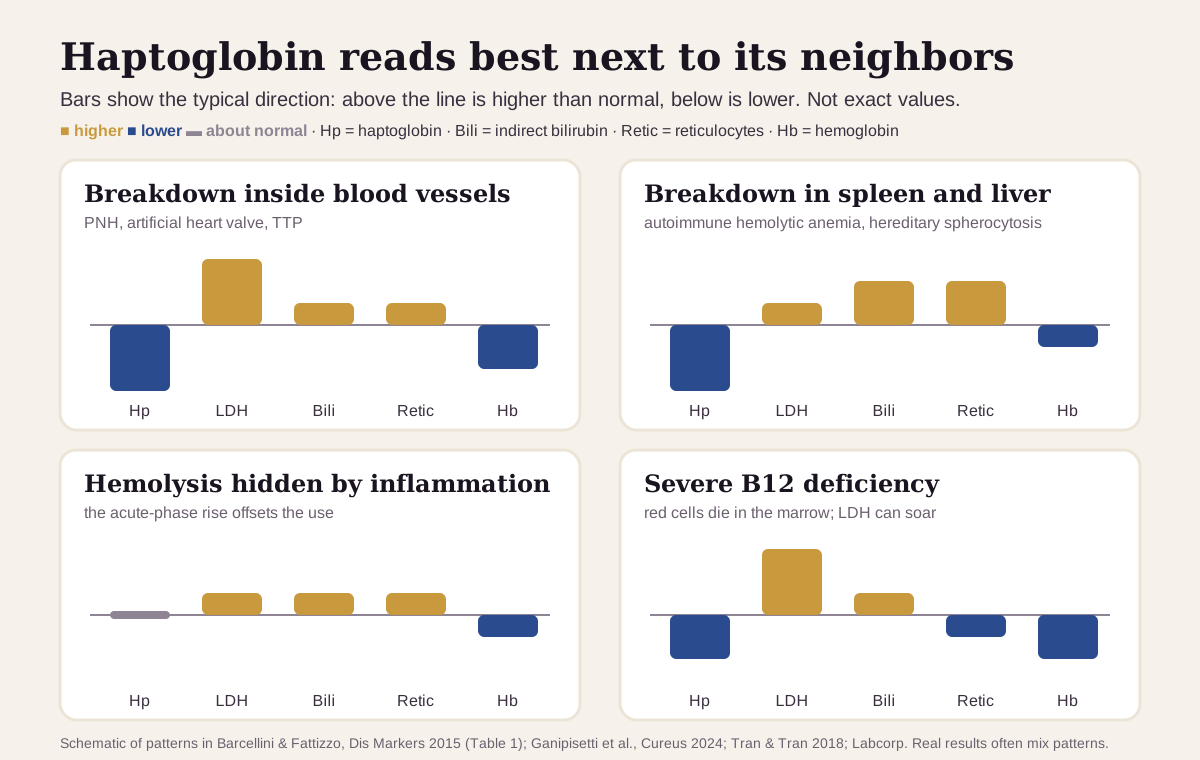
Haptoglobin is one of the standard hemolysis markers. The others are LDH, an enzyme that spills from broken red cells; bilirubin, the yellow pigment made from hemoglobin; and the reticulocyte count, young red cells that show whether your marrow is making more. Read with hemoglobin, the pattern says far more than haptoglobin alone:2
| If you see… | It often points to… |
|---|---|
| Haptoglobin low to very low, LDH very high (often 4–5× the upper limit), hemoglobin down, sometimes brownish urine | red cells breaking open inside blood vessels (intravascular hemolysis): PNH, an artificial heart valve, or TTP |
| Haptoglobin low, bilirubin up, LDH only mildly up, reticulocytes usually high | red cells cleared in the spleen and liver (extravascular hemolysis): autoimmune hemolytic anemia, hereditary spherocytosis |
| Haptoglobin normal or high, but LDH, bilirubin and reticulocytes up, hemoglobin falling | hemolysis hidden by inflammation: extra haptoglobin production offsets the loss |
| Haptoglobin low, LDH very high, reticulocytes low for the degree of anemia, large red cells (high MCV) | severe B12 or folate deficiency: red cells dying in the marrow before release |
| Haptoglobin high with a high CRP, the other hemolysis markers normal | an acute-phase response: infection, inflammation or injury |
| Haptoglobin low with abnormal liver tests, reticulocytes normal and no other sign of hemolysis | low production from liver disease. Low for years with normal liver tests can mean an inherited low level |
The reticulocyte count is the tiebreaker between destruction and poor production. It climbs when the marrow is replacing lost cells, and stays low when the marrow itself is the problem.214
How fast haptoglobin changes
Haptoglobin drops fast and refills slowly. Once it grabs hemoglobin, the pair is cleared with a half-life of a few minutes.15 Breaking down only 25 mL of blood lowers haptoglobin for two to three days.3 Unbound haptoglobin lasts about five days in the blood.15
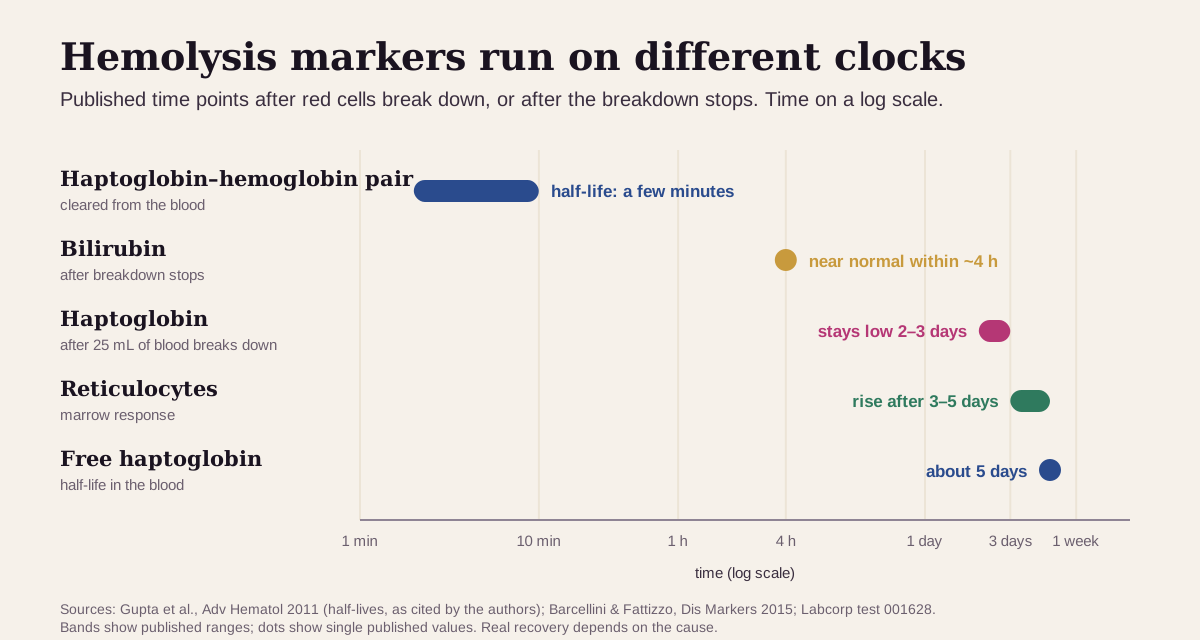
The neighbors run on their own clocks. Bilirubin is back to normal, or within 10% of it, about 4 hours after hemolysis stops, and the marrow's reticulocyte response takes 3 to 5 days to show.2 In autoimmune hemolytic anemia, Barcellini and Fattizzo report from their own experience that haptoglobin is the last marker to recover.2
What that means in practice:
- Skip the workout before the draw. Labcorp asks patients to avoid exercise before collection. A rough blood draw that breaks cells gets the sample rejected.3
- Mention any transfusion or recent bleed. Both can pull the number down for days.315
- Trends beat snapshots. A haptoglobin falling across tests while LDH climbs points to ongoing breakdown. A steady low level with quiet neighbors fits an inherited or liver cause.28 Compare results from the same lab, because ranges and methods differ.38
Going deeper: haptoglobin types and your genes
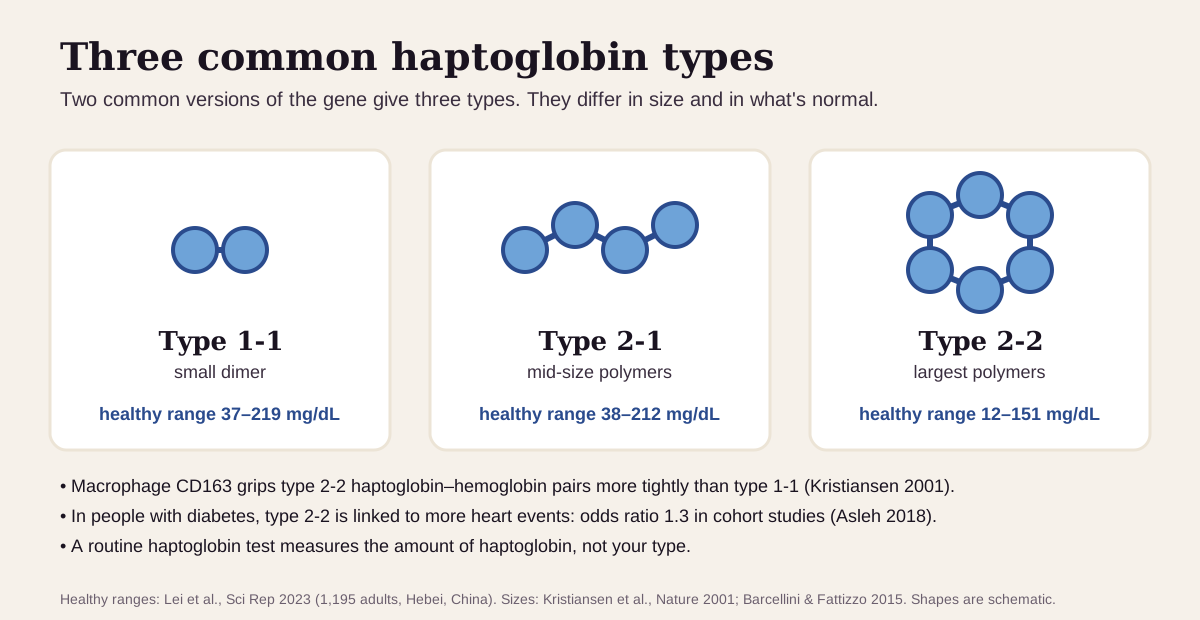
Haptoglobin is built from two pairs of chains, alpha and beta.3 The gene comes in two common versions, 1 and 2, so everyone is type 1-1, 2-1 or 2-2.2 Type 1-1 makes a small two-part molecule (a dimer); the 2 version builds larger chains of units (polymers).62
The types behave differently. Macrophage CD163 grips type 2-2 pairs more tightly than type 1-1 pairs.6 In people with diabetes, a 2018 meta-analysis of 13 studies linked type 2-2 to more heart events (odds ratio 1.3 in cohort studies, 2.2 in case-control studies). One of its authors holds a patent on haptoglobin typing.16
Haptoglobin also explains a line on another test. It sits in the alpha-2 band of a serum protein electrophoresis, so a low alpha-2 often comes from hemolysis or liver disease lowering haptoglobin.3 And when haptoglobin runs out, a second liver protein, hemopexin, picks up the free heme.5
Questions worth asking
- Is my haptoglobin low enough to suggest hemolysis?
- What do my LDH, bilirubin and reticulocyte count show next to it?
- Could inflammation be hiding a low level? What does my CRP show?
- Are my liver tests and my B12 and folate normal?
- Could a medicine, a recent transfusion or a bleed explain this?
- If it has always been low, could I have an inherited low haptoglobin?
FAQ
What is a normal haptoglobin level? It depends on the lab. Labcorp's adult ranges start between 17 and 42 mg/dL and top out between 278 and 370 mg/dL, by age and sex. A study of 1,195 healthy adults found 9–187 mg/dL.38
What does a low haptoglobin mean? Most often hemolysis, red cells breaking down early. A level of 25 mg/dL or less predicted hemolysis 87% of the time in one classic study. Liver disease, severe B12 or folate deficiency and an inherited low level are the other usual causes.43
What does a high haptoglobin mean? Usually inflammation. The liver makes more haptoglobin during infection, injury and inflammatory disease, and androgens or steroids raise it too.35
Can haptoglobin be normal during hemolysis? Yes. Inflammation and steroid treatment can keep it in range while red cells are breaking down, so clinicians read it with LDH, bilirubin and a reticulocyte count.32
This guide is for education. It can't diagnose you or replace care from a clinician who knows your history.
Footnotes
-
Shih AW, McFarlane A, Verhovsek M. Haptoglobin testing in hemolysis: measurement and interpretation. Am J Hematol. 2014;89(4):443–447. doi:10.1002/ajh.23623. Review of the test and its pitfalls: falsely low results with cirrhosis, high-estrogen states and dilution; falsely normal results with androgens and corticosteroids. PubMed ↩ ↩2 ↩3 ↩4 ↩5
-
Barcellini W, Fattizzo B. Clinical applications of hemolytic markers in the differential diagnosis and management of hemolytic anemia. Dis Markers. 2015;2015:635670. doi:10.1155/2015/635670. The source for the marker patterns (Table 1), LDH at 4–5× the upper limit in intravascular hemolysis, the bilirubin and reticulocyte timing, and the causes of low and high haptoglobin. PMC ↩ ↩2 ↩3 ↩4 ↩5 ↩6 ↩7 ↩8 ↩9 ↩10 ↩11 ↩12 ↩13 ↩14 ↩15 ↩16 ↩17 ↩18 ↩19 ↩20 ↩21 ↩22 ↩23 ↩24
-
Labcorp. Haptoglobin, test 001628. Immunologic method; reference ranges by age and sex (adults 18–40: men 17–317, women 33–278 mg/dL). Also the source for the causes of low and high results, the 25 mL figure, the α2β2 structure and the pre-test instructions. Labcorp is a commercial reference laboratory; its ranges apply to its own method. labcorp.com ↩ ↩2 ↩3 ↩4 ↩5 ↩6 ↩7 ↩8 ↩9 ↩10 ↩11 ↩12 ↩13 ↩14 ↩15 ↩16 ↩17 ↩18 ↩19 ↩20 ↩21 ↩22 ↩23 ↩24 ↩25 ↩26 ↩27 ↩28 ↩29 ↩30 ↩31 ↩32 ↩33
-
Marchand A, Galen RS, Van Lente F. The predictive value of serum haptoglobin in hemolytic disease. JAMA. 1980;243(19):1909–1911. 100 hospital patients; a cutoff of 25 mg/dL or less gave 83% sensitivity, 96% specificity and an 87% probability of hemolysis. PubMed ↩ ↩2 ↩3 ↩4 ↩5 ↩6 ↩7
-
Schaer DJ, Vinchi F, Ingoglia G, Tolosano E, Buehler PW. Haptoglobin, hemopexin, and related defense pathways: basic science, clinical perspectives, and drug development. Front Physiol. 2014;5:415. doi:10.3389/fphys.2014.00415. Red-cell turnover, why loose hemoglobin is harmful, and how inflammation raises haptoglobin. PMC ↩ ↩2 ↩3 ↩4 ↩5 ↩6 ↩7 ↩8 ↩9 ↩10
-
Kristiansen M, Graversen JH, Jacobsen C, et al. Identification of the haemoglobin scavenger receptor. Nature. 2001;409(6817):198–201. doi:10.1038/35051594. The discovery that macrophage CD163 clears haptoglobin–hemoglobin pairs. PubMed ↩ ↩2 ↩3 ↩4 ↩5
-
National Library of Medicine. Haptoglobin (HP) Test. MedlinePlus. Updated June 10, 2024. Uses, symptoms of hemolytic anemia, causes of low and high results, and the infant exception. MedlinePlus ↩ ↩2 ↩3 ↩4 ↩5 ↩6 ↩7 ↩8
-
Lei D, Hu S, Guo M, et al. Genotype-specific reference interval of haptoglobin tests in a Chinese population on the BN II System. Sci Rep. 2023;13(1):577. doi:10.1038/s41598-022-20496-x. 1,195 health-check adults in Hebei, China; overall range 0.09–1.87 g/L and ranges by haptoglobin type. PMC ↩ ↩2 ↩3 ↩4 ↩5 ↩6 ↩7 ↩8 ↩9 ↩10 ↩11 ↩12 ↩13 ↩14
-
NHS. Blood transfusion. Page last reviewed January 16, 2025. Which symptoms after a transfusion need an urgent call and which need emergency care. nhs.uk ↩ ↩2
-
Holme I, Aastveit AH, Hammar N, Jungner I, Walldius G. Haptoglobin and risk of myocardial infarction, stroke, and congestive heart failure in 342,125 men and women in the Apolipoprotein MOrtality RISk study (AMORIS). Ann Med. 2009;41(7):522–532. doi:10.1080/07853890903089453. Followed for 11.8 years. PubMed ↩
-
National Library of Medicine. Hemolytic anemia. MedlinePlus Medical Encyclopedia. Reviewed January 29, 2026. Causes, symptoms and when to contact a clinician. MedlinePlus ↩ ↩2
-
National Heart, Lung, and Blood Institute. Hemolytic Anemia. Last updated March 24, 2022. Causes, including inherited conditions such as sickle cell disease and thalassemia. NHLBI ↩
-
Ganipisetti VM, Maringanti BS, Lingas EC, Naha K. Adult vitamin B12 deficiency-associated pseudo-thrombotic microangiopathy: a systematic review of case reports. Cureus. 2024;16(3):e55784. doi:10.7759/cureus.55784. High LDH (mean 3,165 U/L), low haptoglobin, raised indirect bilirubin and a low reticulocyte index. PMC ↩ ↩2
-
Tran PN, Tran MH. Cobalamin deficiency presenting with thrombotic microangiopathy (TMA) features: a systematic review. Transfus Apher Sci. 2018;57(1):102–106. doi:10.1016/j.transci.2018.01.003. 41 cases; the reticulocyte production index was under 3% in every patient. PubMed ↩ ↩2 ↩3
-
Gupta S, Ahern K, Nakhl F, Forte F. Clinical usefulness of haptoglobin levels to evaluate hemolysis in recently transfused patients. Adv Hematol. 2011;2011:389854. doi:10.1155/2011/389854. 21 patients given 47 units of red cells. Also states the half-lives (serum haptoglobin about 5 days; the haptoglobin–hemoglobin pair a few minutes), citing earlier work. PMC ↩ ↩2 ↩3 ↩4 ↩5
-
Asleh R, Briasoulis A, Berinstein EM, et al. Meta-analysis of the association of the haptoglobin genotype with cardiovascular outcomes and the pharmacogenomic interactions with vitamin E supplementation. Pharmgenomics Pers Med. 2018;11:71–82. doi:10.2147/PGPM.S159454. 13 studies of people with diabetes; one author discloses a patent on haptoglobin typing. PMC ↩ ↩2
Educational content, not medical advice. Libby is a personal record tool, not a medical service — it doesn't diagnose, treat, or prescribe. Reference ranges vary by lab and by person. Talk to a qualified healthcare professional about your results.
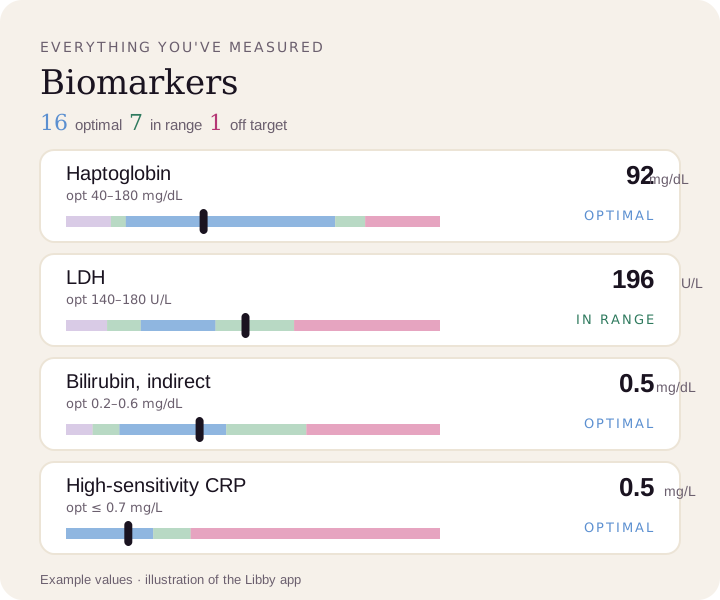
Compare your results to optimal ranges.
Upload a lab PDF or a photo of your report. Libby puts every marker on your lab's range and the optimal range, and tracks your trends over time.
View your haptoglobin ›