Yeast in urine: contamination, candiduria and next steps
Yeast on a urinalysis can be vaginal yeast in the sample or harmless colonization. Here's who gets true candiduria, how it's confirmed and when it's treated.
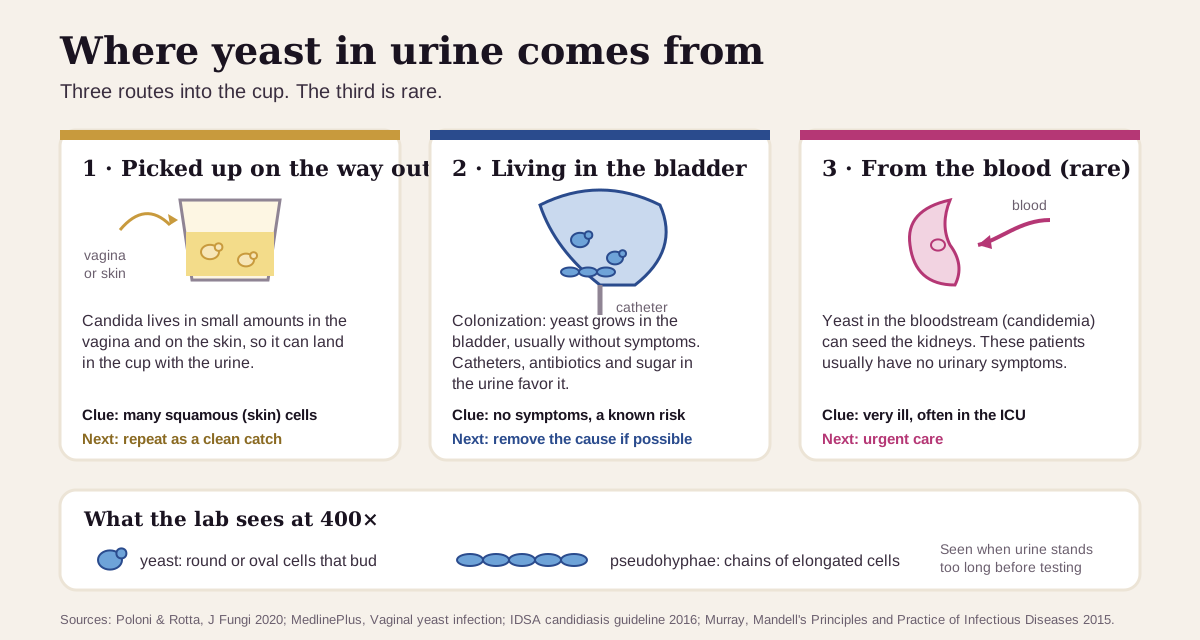
Yeast in urine means the lab saw yeast cells, almost always Candida, when it looked at your urine under the microscope. Candida normally lives in the vagina and on the skin, so yeast in a sample can simply mean some got into the cup on the way out. True yeast in the bladder, called candiduria, mostly turns up in people with diabetes, a urinary catheter, recent antibiotics or a long hospital stay. Without symptoms, it almost always means the yeast is living there (colonization), not infecting.123
The short version
- Normal: none. Labcorp's reference interval for yeast is "None seen", and a result of "Present" is flagged abnormal.4
- A stray result can be the sample. Yeast from the vagina or skin can land in the cup. The first step is to repeat the urinalysis and send a urine culture, ideally on a clean-catch sample.15
- True candiduria clusters in hospital patients. Among 861 of them with yeast in the urine, 83% had a urinary catheter or drain, 90% had received antibiotics or other antimicrobial drugs, and 39% had diabetes.6
- Without symptoms, it's usually watched, not treated. The Infectious Diseases Society of America (IDSA) reserves antifungal medicine for people at high risk of spread: very low white-cell counts (neutropenia), very-low-birth-weight babies, and anyone about to have a urologic procedure. Get care right away for fever, chills, or back or side pain.37
What yeast in urine is
Yeasts are single-celled fungi. Under the microscope they look like round or oval cells that multiply by budding, and many Candida species also grow chains of elongated cells called pseudohyphae that look like strings of sausages.8 In urine, the yeast is almost always Candida. In a study of 861 hospital patients, Candida albicans made up 51.8% and Candida glabrata 15.6%.6
Candida albicans normally lives in small amounts in the vagina, mouth and gut and on the skin, usually without causing symptoms.2 The urinary tract is different: Candida is a normal resident of the vagina, while the urinary tract is normally sterile.1 That's why yeast in urine raises one question first: did it come from the bladder, or from the skin on the way out?
Yeast is part of the microscopic exam in a complete urinalysis. The lab spins down the urine and looks at the sediment at 400× magnification, where yeasts appear as pale, smooth-walled oval or round cells.1 On Labcorp's sample reports, the normal one has no yeast line at all, while the abnormal one reads "Yeast: Present", flagged abnormal against a reference interval of "None seen".4 Function Health, a commercial testing membership, lists "Yeast, Urine" in its urine panel, tested twice a year.9
What's a normal result?
None. Yeast is normally absent from urine. Labcorp's reference interval is "None seen", and "Present" gets an abnormal flag.4 The Libby app reads graded results on a none, few, moderate, many scale and treats only "none" as in range.
There are three ways a lab can report yeast, and they answer slightly different questions:
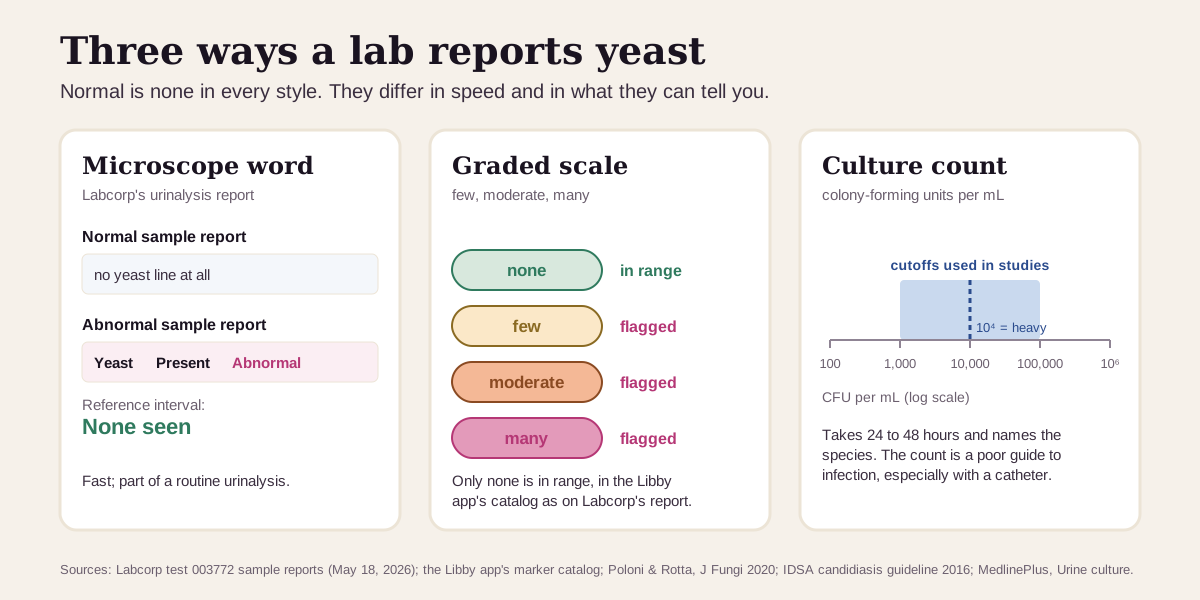
- Microscope: a word, from "None seen" to "Present", or a grade. It's fast and it's what shows up on a routine urinalysis.41
- Culture: the urine is plated to see whether yeast grows, and which kind. This takes 24 to 48 hours. A "positive" culture means bacteria or yeast grew.10
- Colony count: studies define candiduria anywhere from 10³ to 10⁵ CFU per mL (1,000 to 100,000). The IDSA guideline and the standard diagnostic review both warn that the count is a poor guide to whether yeast is causing an infection, especially with a catheter.135
"Optimal" yeast in urine: none seen
For a marker that's normally absent, "optimal" is simple: none seen. The useful ladder is what each source says once yeast appears, from the strictest reading to the loosest.
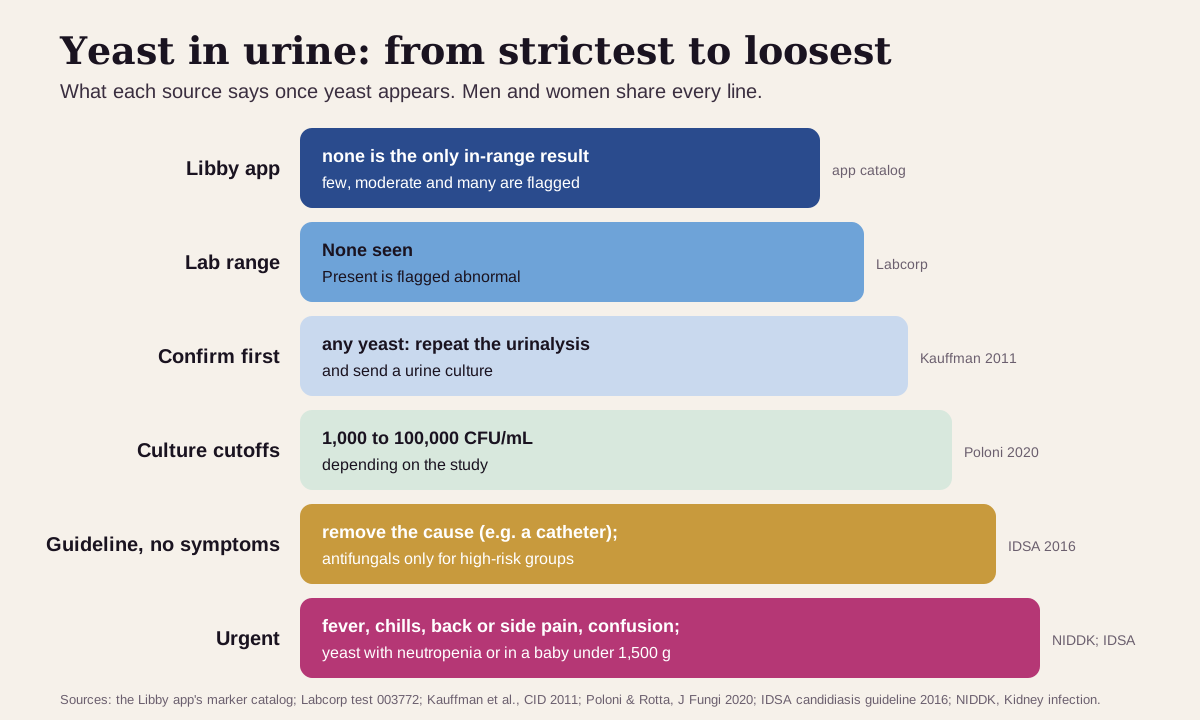
| Line | What it says | Who uses it |
|---|---|---|
| Libby app | "none" is the only in-range result; few, moderate and many are flagged | The app's marker catalog, which shows yeast against your lab's range with no separate optimal band |
| Lab range | "None seen"; "Present" is flagged abnormal | Labcorp's reference interval4 |
| Confirm first | any yeast: repeat the urinalysis and a urine culture | Kauffman et al., the standard diagnostic review5 |
| Culture cutoffs | 10³ to 10⁵ CFU/mL, depending on the study | Poloni & Rotta's review of urine findings1 |
| Guideline (no symptoms) | remove the cause, such as a catheter, when possible; antifungals only for high-risk groups | IDSA 2016 candidiasis guideline3 |
| Urgent | fever, chills, back or side pain, confusion; or any yeast in someone with neutropenia or in a very-low-birth-weight baby | NIDDK;7 IDSA3 |
What the IDSA guideline says, exactly. For candiduria without symptoms, the first recommendation reads: "Elimination of predisposing factors, such as indwelling bladder catheters, is recommended whenever feasible." The second: "Treatment with antifungal agents is NOT recommended unless the patient belongs to a group at high risk for dissemination; high-risk patients include neutropenic patients, very low-birth-weight infants (<1500 g), and patients who will undergo urologic manipulation." Both are strong recommendations based on low-quality evidence.3 For symptoms of a bladder or kidney infection caused by Candida, the same guideline recommends antifungal treatment.3
Why watching usually wins:
- In the 861-patient study, yeast cleared on its own in 75.5% of the 155 patients who got no treatment. Removing the catheter as the only step cleared it in 35.3%, and antifungal medicine in 50.2%. Only 1.3% had documented yeast in the blood (candidemia).6
- In the only placebo-controlled trial, 316 hospital patients with few or no symptoms took fluconazole or a placebo for 14 days. Yeast cleared by day 14 in 50% vs 29%, but follow-up cultures at 2 weeks showed similar rates in both groups, and the authors found no clinical benefit.113
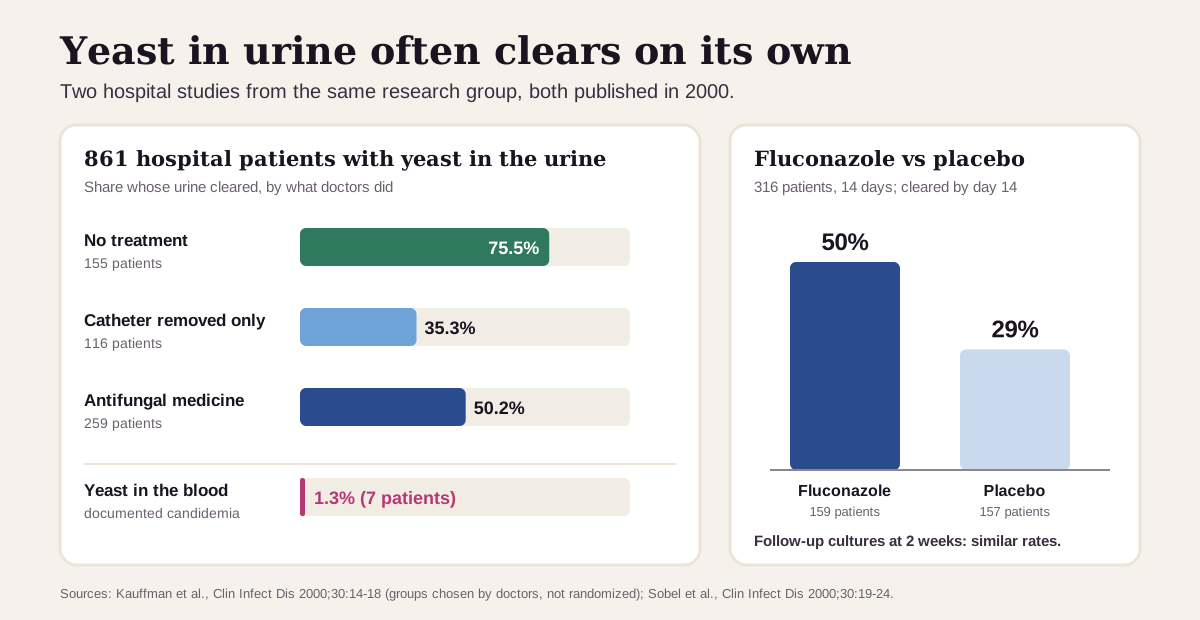
Keep "optimal" in perspective: "none" describes one sample, and a single "few" is a reason to look at how the sample was collected and whether you have symptoms. Death rates run high in these hospital studies (19.8% in the 861-patient study), and both the study authors and the IDSA put that down to the patients' serious underlying illnesses rather than to the yeast.63
What yeast in urine usually means
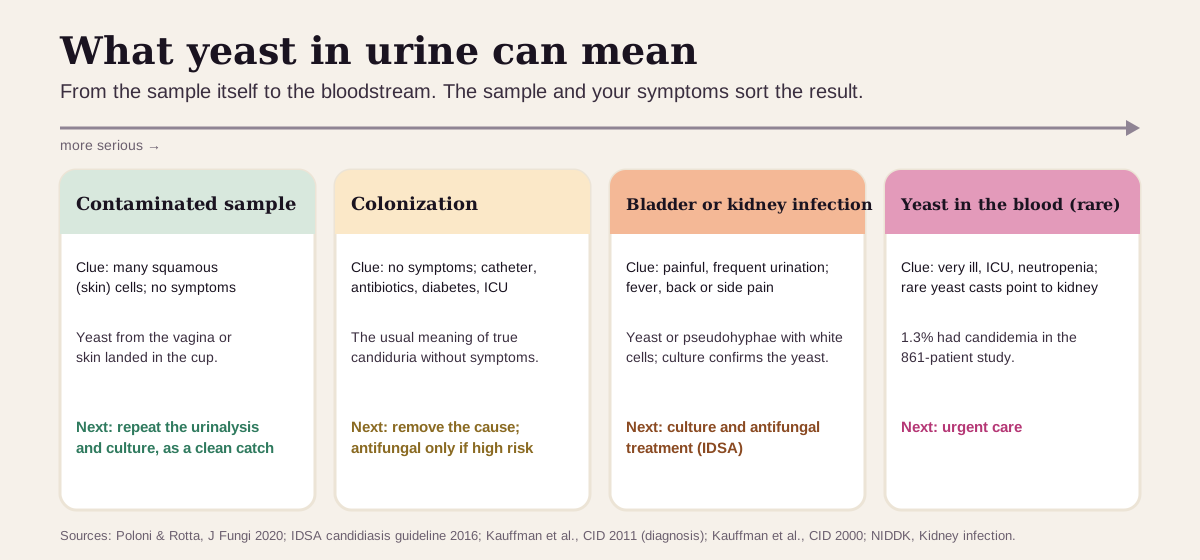
Start with two questions: how was the sample collected, and do you have symptoms? The answers sort a result into one of four groups, from the sample itself to the bloodstream.53
A contaminated sample: rule this out first
Candida lives in the vagina and on the skin, so urine can pick it up on the way into the cup.2 Yeasts and pseudohyphae in urine can simply be contamination, mainly when the sample is collected poorly. The telltale sign is a crowd of squamous cells, the flat skin-type cells that also line the vagina: large numbers of them mean the sample wasn't collected cleanly.1 Our guide to epithelial cells in urine covers them.
The usual next step is a repeat clean-catch sample. MedlinePlus describes it:12
- With a vagina, spread the labia and wipe front to back. With a penis, wipe the head, pulling back the foreskin first.
- Start peeing into the toilet, stop, then catch the middle of the stream in the cup.
A midstream clean catch is usually adequate for both men and women.13
Colonization: yeast living in the bladder
For true candiduria without symptoms, this is the usual meaning. In the IDSA's words, "in the asymptomatic patient, candiduria almost always represents colonization." The people most at risk are older, female, diabetic, have a urinary catheter or other device, are taking antibiotics, or have had surgery.3
- Catheters and antibiotics. In a 2024 hospital series of 207 positive cultures, 72% of patients had a urinary catheter, 76% had taken antibiotics, 58% had diabetes and 37% were in intensive care. Fewer than half (42%) had related symptoms such as painful urination or fever.14
- Intensive care. In a Spanish study of 1,765 patients who stayed in the ICU for at least a week, 22% grew Candida in their urine.15
- Diabetes and sugar in the urine. Glucose feeds yeast: in the lab, Candida grew to more than 10 times the numbers in urine with added glucose (3,000 mg/dL) than in plain urine.16 In people with type 2 diabetes, studies find candiduria in 2.3% to 30%, more often in women. In one study the review summarizes, uncontrolled diabetes, a higher fasting blood sugar and glucose in the urine were each linked to it.17 See our guide to glucose in urine.
- SGLT2 inhibitors. These medicines, such as dapagliflozin (Farxiga), lower blood sugar by sending glucose out in the urine: about 70 grams a day in people with type 2 diabetes, which turns a urine glucose test positive by design. The Farxiga label warns of a higher risk of urinary tract infections and genital fungal (mycotic) infections.18 In the 2024 hospital series, 37% of people with candiduria were taking an SGLT2 inhibitor.14 Don't stop a prescribed medicine on your own; bring the question to your clinician.
For colonization, the IDSA's first step is removing the cause, above all a catheter, when possible.3
Infection: bladder or kidney, with symptoms
A Candida bladder infection (cystitis) or kidney infection (pyelonephritis) feels much like one caused by bacteria: painful, frequent urination, and with the kidney, fever, chills and back or side pain.57 Under the microscope, a fungal urinary infection typically shows yeasts or pseudohyphae together with white cells.1 White cells on their own are a nonspecific finding, and in someone with a catheter they leave infection and colonization looking the same.53
A repeat urine culture confirms that yeast is really growing, and further tests name the species.510 The species matters for treatment: C. albicans is relatively easy to treat, while fluconazole-resistant C. glabrata and C. krusei can be extremely difficult.3 Clumps of yeast ("fungus balls") can block the bladder or kidney, and an ultrasound or CT scan can find them.3
Rare but important: a sign of infection elsewhere
Candida can also reach the kidneys through the bloodstream in someone who has candidemia. These people usually have no urinary symptoms.3 In critically ill patients, candiduria should first be regarded as a possible marker of invasive Candida infection.5 Yeast-filled casts, tube-shaped plugs formed inside the kidney, point to kidney infection but are rarely seen.51
Get care right away if yeast or any urine infection comes with fever and chills, pain in your back, side or groin, nausea or vomiting, or signs of sepsis such as confusion, fast breathing or a racing heart.7 Yeast in the urine of someone with neutropenia, or of a baby born under 1,500 g, needs prompt medical attention.3
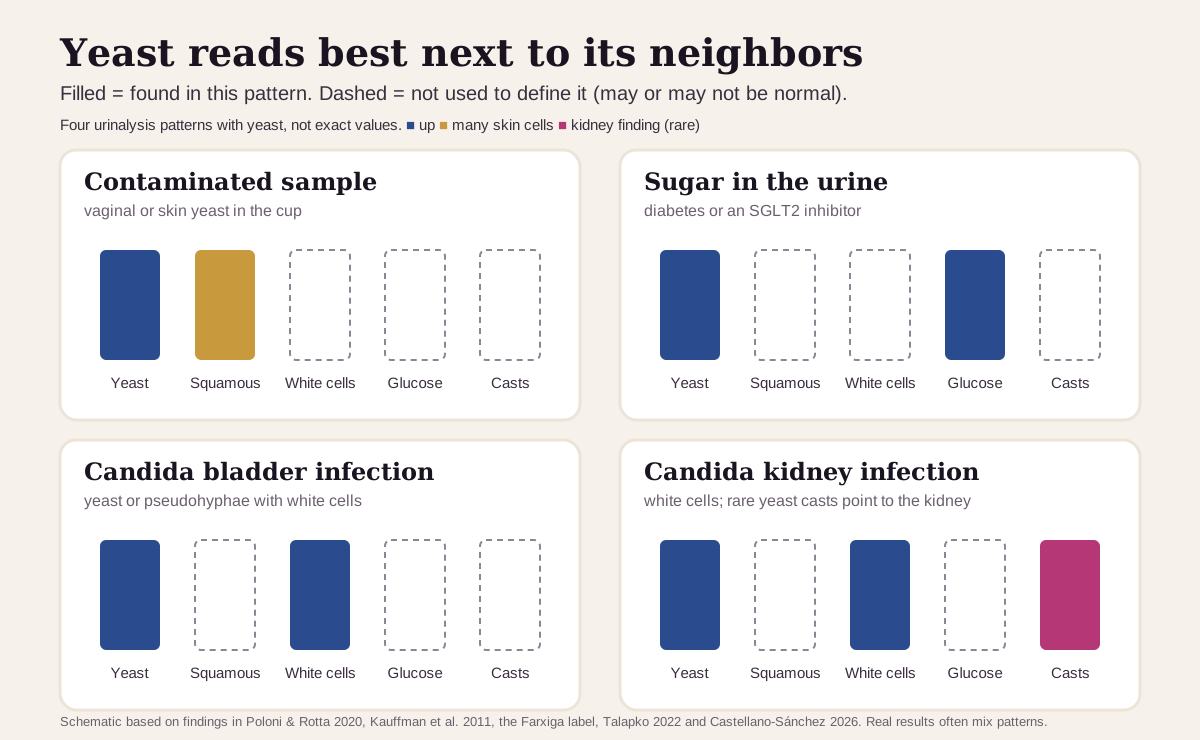
Yeast reads best next to its neighbors
The rest of the urinalysis can hint at which story you're in:
| If you see… | It often points to… |
|---|---|
| Yeast with many squamous cells | a contaminated sample: repeat it as a clean catch1 |
| Yeast with glucose in the urine | high blood sugar, or an SGLT2 inhibitor, which puts glucose in the urine by design1718 |
| Yeast with a catheter and no symptoms | colonization, usually; removing or changing the catheter often clears it314 |
| Yeast or pseudohyphae with white cells, plus burning or urgency | a Candida bladder infection: a repeat urinalysis and culture confirm the yeast is really there, and symptoms plus white cells point to infection15 |
| Yeast inside casts, with fever or side pain | kidney infection: rare, and a reason for prompt care57 |
White cells in urine get their own guide: white blood cells in urine. For bacteria on the same report, see bacteria in urine.
How fast it changes
A sample goes stale fast. Urine should be examined within 2 hours or refrigerated; longer delays often give unreliable results.13 Yeast left standing on the bench can sprout abundant pseudohyphae.1
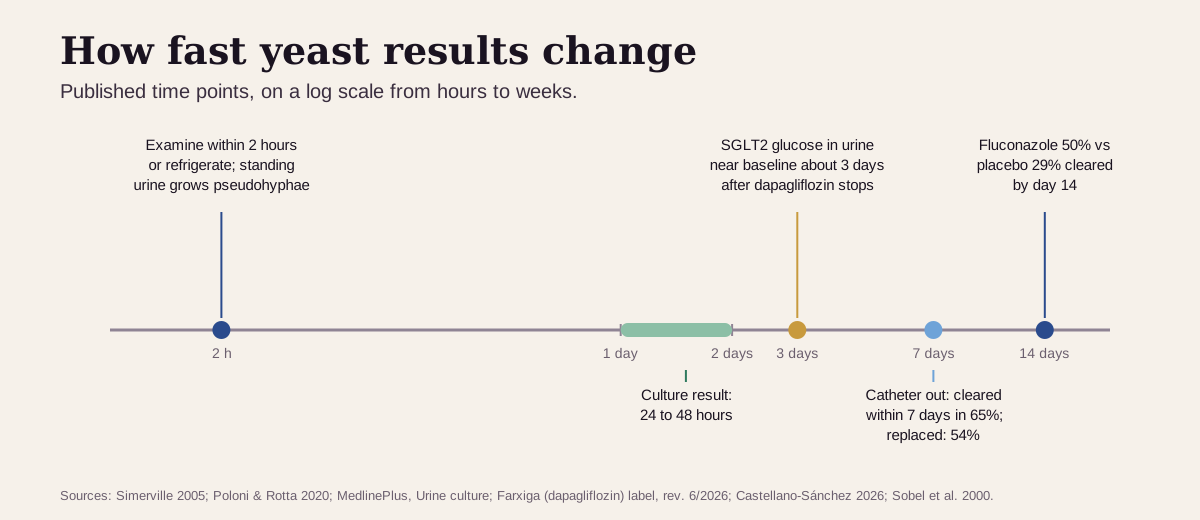
- A culture takes 24 to 48 hours to show whether yeast grows.10
- Catheter changes work quickly. In the 2024 hospital series, candiduria cleared within 7 days in 65% of patients after the catheter came out and 54% after it was replaced, without antifungal medicine.14
- SGLT2-driven glucose fades within days. After dapagliflozin stops, urine glucose falls back toward baseline in about 3 days.18
- Treatment effects can be short-lived. In the fluconazole trial, the day-14 gap (50% vs 29% cleared) had closed two weeks later.11
- Trends beat snapshots. One "few" on a poorly collected sample means little; yeast on repeat clean-catch samples, or yeast that keeps coming back with a catheter in place, is worth a closer look.53
Going deeper: what's on the slide
Look-alikes. Yeast cells can resemble red blood cells, fat droplets, calcium oxalate monohydrate crystals and especially acanthocytes, a misshapen type of red cell. Telling them apart takes training and a good microscope.1
The species is shifting. C. albicans is still the most common cause of fungal urinary infection.3 It was 68.4% of isolates in the Spanish ICU study.15 But in the 2024 hospital series, the leader was Nakaseomyces glabratus, the new name for C. glabrata,19 at 42%, versus 33% for C. albicans. N. glabratus was tied to older age, diabetes and SGLT2 inhibitor use.14 Its look under the microscope can hint at it: yeast morphology may separate C. glabrata from other species.5
Machines can miss yeast. Many labs now run urine through automated analyzers. Compared with a trained eye at the microscope, their yeast detection ranged widely in two studies summarized by Poloni and Rotta:1
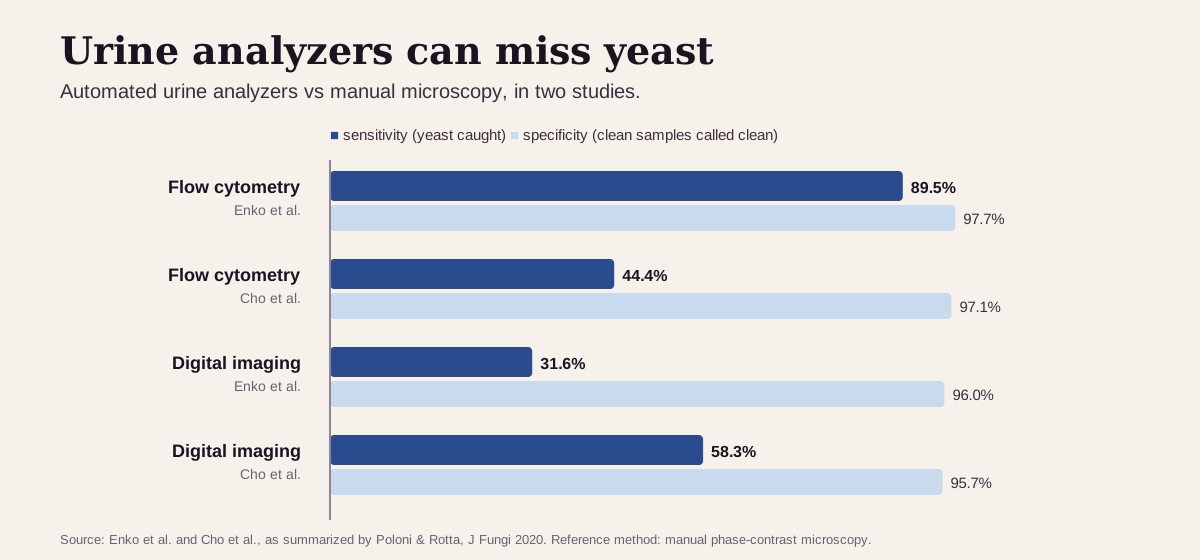
In both studies the machines rarely flagged yeast that wasn't there (specificity 95.7% to 97.7%), but they missed anywhere from about 10% to 68% of yeast-positive samples.1 On culture, heavy growth (above 10⁴ CFU/mL) has been tied to wider Candida colonization of the body.1
Questions worth asking
- Was this a clean-catch sample, and did the report show many squamous cells?
- Should we repeat the urinalysis and send a urine culture?
- Do my symptoms point to an infection, or does this look like colonization?
- Could my blood sugar, or a medicine such as an SGLT2 inhibitor, be feeding the yeast?
- If I have a catheter, can it come out or be changed?
- Do I fit any of the IDSA's high-risk groups for treatment?
FAQ
Is yeast in urine normal? No yeast is expected. Labcorp's reference interval is "None seen".4 A small amount in one sample can come from the vagina or skin, and the first step is a repeat clean-catch sample and a culture.15
Does yeast in urine mean I have an infection? Usually it means colonization or contamination. Without symptoms, candiduria almost always represents colonization, according to the IDSA. A Candida bladder infection feels like any urinary infection, and a repeat urinalysis and culture confirm the yeast is really there.35
Can diabetes cause yeast in urine? It raises the odds. Sugar in the urine helps Candida grow, and studies find candiduria in 2.3% to 30% of people with type 2 diabetes. SGLT2 inhibitors put glucose in the urine on purpose.161718
When is yeast in urine treated? When it causes symptoms of a bladder or kidney infection. Without symptoms, the IDSA recommends antifungal medicine only for people with neutropenia, very-low-birth-weight babies and people about to have a urologic procedure.3
This guide is for education. It can't diagnose you or replace care from a clinician who knows your history.
Footnotes
-
Poloni JAT, Rotta LN. Urine Sediment Findings and the Immune Response to Pathologies in Fungal Urinary Tract Infections Caused by Candida spp. J Fungi (Basel). 2020;6(4):245. What yeast looks like in urine sediment, contamination versus infection, culture cutoffs, look-alikes and automated analyzers. PMC ↩ ↩2 ↩3 ↩4 ↩5 ↩6 ↩7 ↩8 ↩9 ↩10 ↩11 ↩12 ↩13 ↩14 ↩15 ↩16 ↩17 ↩18 ↩19 ↩20 ↩21 ↩22 ↩23 ↩24
-
National Library of Medicine. Vaginal yeast infection. MedlinePlus Medical Encyclopedia. Review date August 18, 2025. Where Candida albicans normally lives, and the common risk factors. MedlinePlus ↩ ↩2 ↩3 ↩4
-
Pappas PG, Kauffman CA, Andes DR, et al. Clinical Practice Guideline for the Management of Candidiasis: 2016 Update by the Infectious Diseases Society of America. Clin Infect Dis. 2016;62(4):e1–e50. The U.S. infectious-disease society's guideline. Section XIV covers candiduria: recommendations 97 and 98 (no symptoms), the risk groups, and why colonization is the usual meaning. PMC ↩ ↩2 ↩3 ↩4 ↩5 ↩6 ↩7 ↩8 ↩9 ↩10 ↩11 ↩12 ↩13 ↩14 ↩15 ↩16 ↩17 ↩18 ↩19 ↩20 ↩21 ↩22 ↩23 ↩24 ↩25 ↩26
-
Labcorp. Urinalysis, Complete With Microscopic Examination (test 003772), test page and sample reports (date reported May 18, 2026). The yeast result (LOINC 5822-2) and its reference interval, "None seen". A national commercial lab's published report. Labcorp ↩ ↩2 ↩3 ↩4 ↩5 ↩6 ↩7 ↩8
-
Kauffman CA, Fisher JF, Sobel JD, Newman CA. Candida urinary tract infections: diagnosis. Clin Infect Dis. 2011;52(Suppl 6):S452–S456. The standard diagnostic review: repeat the urinalysis and culture first, colony counts and white cells are nonspecific, and yeast casts mean kidney involvement. PubMed ↩ ↩2 ↩3 ↩4 ↩5 ↩6 ↩7 ↩8 ↩9 ↩10 ↩11 ↩12 ↩13 ↩14 ↩15 ↩16 ↩17 ↩18
-
Kauffman CA, Vazquez JA, Sobel JD, et al. Prospective multicenter surveillance study of funguria in hospitalized patients. Clin Infect Dis. 2000;30(1):14–18. 861 patients from the NIAID Mycoses Study Group: risk factors, species and outcomes. DOI ↩ ↩2 ↩3 ↩4 ↩5 ↩6
-
National Institute of Diabetes and Digestive and Kidney Diseases. Symptoms & Causes of Kidney Infection (Pyelonephritis). Last reviewed October 2024. When to seek care right away, and the signs of sepsis. NIDDK ↩ ↩2 ↩3 ↩4 ↩5 ↩6
-
Murray PR. The Clinician and the Microbiology Laboratory. In: Mandell, Douglas, and Bennett's Principles and Practice of Infectious Diseases. Elsevier; 2015. The standard infectious-disease textbook's description of yeasts, budding and pseudohyphae. PMC ↩
-
Function Health. Urine biomarkers. Lists "Yeast, Urine" among the urine tests included in its membership, tested twice a year; no target is published. A commercial source. functionhealth.com ↩
-
National Library of Medicine. Urine culture. MedlinePlus Medical Encyclopedia. Review date October 9, 2024. What a culture looks for and how long it takes. MedlinePlus ↩ ↩2 ↩3 ↩4
-
Sobel JD, Kauffman CA, McKinsey D, et al. Candiduria: a randomized, double-blind study of treatment with fluconazole and placebo. Clin Infect Dis. 2000;30(1):19–24. 316 hospital patients with few or no symptoms; clearance at day 14 and two weeks later. DOI ↩ ↩2 ↩3 ↩4
-
National Library of Medicine. Clean catch urine sample. MedlinePlus Medical Encyclopedia. Review date July 23, 2024. MedlinePlus ↩
-
Simerville JA, Maxted WC, Pahira JJ. Urinalysis: a comprehensive review. Am Fam Physician. 2005;71(6):1153–1162. Collection technique and the two-hour rule. AAFP ↩ ↩2 ↩3
-
Castellano-Sánchez L, Rosales-Castillo A, Olvera-Porcel MDC, Gutiérrez-Fernández J. Characteristics and Clinical Relevance of Candiduria in Hospitalized Patients. J Clin Med. 2026;15(5):1881. 207 positive urine cultures from a Spanish hospital, February to August 2024. PMC ↩ ↩2 ↩3 ↩4 ↩5 ↩6 ↩7
-
Alvarez-Lerma F, Nolla-Salas J, León C, et al. Candiduria in critically ill patients admitted to intensive care medical units. Intensive Care Med. 2003;29(7):1069–1076. 1,765 patients in 73 Spanish ICUs. DOI ↩ ↩2
-
Hiyama Y, Sato T, Takahashi S, et al. Reduction of susceptibility to azoles and 5-fluorocytosine and growth acceleration in Candida albicans in glucosuria. Diagn Microbiol Infect Dis. 2022;102(1):115556. Laboratory study of Candida growth in urine with added glucose. DOI ↩ ↩2
-
Talapko J, Meštrović T, Škrlec I. Growing importance of urogenital candidiasis in individuals with diabetes: A narrative review. World J Diabetes. 2022;13(10):809–821. Candiduria rates in type 2 diabetes and the SGLT2 inhibitor link. PMC ↩ ↩2 ↩3 ↩4
-
AstraZeneca. FARXIGA (dapagliflozin) tablets, prescribing information. Revised June 2026. DailyMed, National Library of Medicine. Urinary glucose excretion (about 70 g a day), positive urine glucose tests, genitourinary infection warnings, and the 3-day return to baseline. DailyMed ↩ ↩2 ↩3 ↩4 ↩5 ↩6
-
Basmaciyan L, Alvarez-Rueda N, Aldebert D, et al. Immunological fitness of echinocandin-resistant Nakaseomyces glabratus (former Candida glabrata): The impact on the management of candidemia. Virulence. 2026;17(1):2665015. Cited for the species' new name. PMC ↩
Educational content, not medical advice. Libby is a personal record tool, not a medical service — it doesn't diagnose, treat, or prescribe. Reference ranges vary by lab and by person. Talk to a qualified healthcare professional about your results.
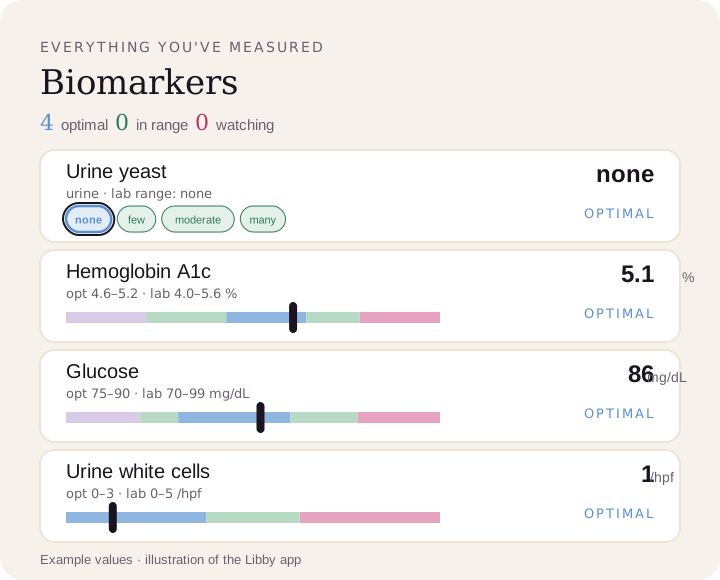
See every result against your lab's range.
Upload a lab PDF or a photo of your report. Libby shows each urinalysis result against your lab's range and keeps every result by date, so a repeat sample sits right next to the first.
View your urine yeast ›